Ask ChatGPT
 Working Hard with Grace Beverley
3 Nov 2025 · 57m
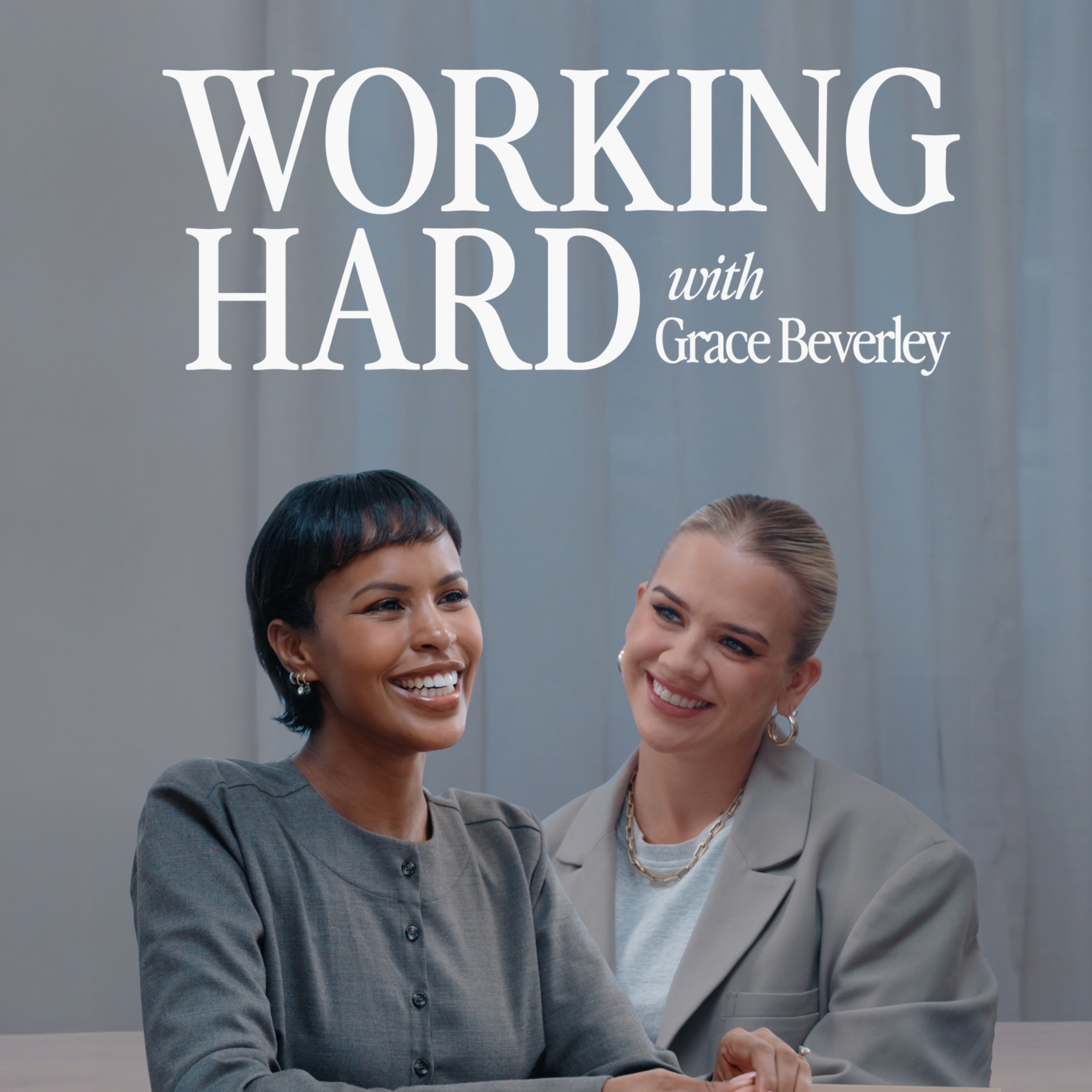
In this episode of "Working Hard," host Grace Beverley speaks with Sabrina Dhowre Elba, an entrepreneur, UN Goodwill Ambassador, and co-founder of S’ABLE Labs. Their discussion centers on the journey of entrepreneurship, the importance of finding one's voice, and the necessity of adapting one's career path towards personal passions and values.
Written by AI. May contain mistakes.

Get the gist, explore an idea or ask about something said.
 Claude
On Working Hard with Grace Beverley, what are the key points of this episode?
Searching your listeningAutomatic transcript. May contain errors.
0:11What is up? I'm Grace Beverley and welcome back to Working Hard. the podcast-shaped guidebook on how to improve your own life and achieve what you actually dreamed of doing. Because life's too short for boring podcasts and bad advice.
0:25What is up and welcome back to Working Hard. Today's guest is Sabrina Dore-Elba. She's an entrepreneur, a UN Goodwill ambassador, and the co-founder of Sable Labs, the wellness and skincare brand that she runs with her husband, Idris Elba. In this episode, we talk about how she found her confidence, what it's really like being in business with your partner, and how she has built her businesses all around her passions and what she really cares about. Before we get into it though, don't forget to follow the podcast wherever you're listening. Every Monday I release a new episode on how to improve your life, whether that is mindset, health or work, whatever it is.
0:55And if you haven't joined already, come over and join on Instagram at Working Hard Pod for extra clips, interesting articles, resources, basically anything that I find that I feel like relates to the episode and actually improving your life overall. And before we get into the episode, please make sure to subscribe to the channel. It really helps the podcast and means that you get the episode where you want it every single Monday.
1:18Sabrina Dore Alba, are you currently more working hard or hardly working? Oh my god, working particularly hard. Yeah, is it a particularly like tough period right now? It is, but I also think anyone who's gone into entrepreneurship, I have so much respect for you. It is, yeah, it's a tough one. I feel like I'm in tough mudder, like climbing my way out and I'm like oh my god the holes just got bigger it never ends and I feel like the biggest thing as well is like you never know what's coming next not even just in the way of kind of like oh today could be so interesting there's all of these things it's like every time shit hits the fan it's like oh I yeah I would I I couldn't have guessed that in a million years but like thanks so much like really happy that's come my way like I mean business is all planning for the unknown and hiring people who can handle the unknown and what's coming and everyone just going well yeah I guess it's happening anyways and that's to a T a good old um lesson in problem solving yeah exactly and you've said before that you were very shy growing up so what was what were you might not seem like it now but what I guess were your if you were super shy and that was something that you you know knew about yourself and was a kind of defining part of your personality how would that kind of fed into what you wanted to do when you grew up well interesting I always thought I was going to go into law when I was younger I did a philosophy degree which why else do you ever do a philosophy degree if not to do well in the LSAT um and I was like okay it's fine I'll be in an office heads down like I am also in a big family I have tons of cousins I have two brothers two sisters so I also felt like I was comfortable and especially I think when you're a tall girl, I don't know, other tall girls can relate.
3:02You kind of get this tall poppy syndrome where you're like, I just want to like get by and do the things. And like, and it wasn't until I started dating Idris and all of a sudden was like at a party and then at another party and then at a reception. And I was like, shit, I need some people skills. And I'm a Gemini. So I do feel Gemini reflects what we're given. So generally I'm quite good at faking it. Like if someone's really happy and smiley to me, there, I will give you all the things. But I was like, no, I need to actually like develop some real skills because I don't think I knew it exactly then.
3:35But for where I am today, the way that I want to use my platform, I mean, speaking to people is probably one of the things I need to nail down, you know. And I do feel like I'm in a much better place. But if it wasn't for the lifestyle that I come into into my late 20s, I actually don't even know how I would have equipped myself with the right skills. because it's hard and I can only imagine now people on their phones were so isolated. How are you talking to people? I needed literally people to drag me onto the dance floor for me to develop those social skills. I actually have a girlfriend here, Emma Weymouth.
4:11It was my first friend I made in London. I always remind her of that. And she was like, who are you? Let's dance. And I was like, oh, great. Okay. Someone wants to talk to me. I was a Canadian like I found Brits a little hard to talk to yeah you need a nice breaker you know there's not just the pleasantries off the bat so yeah that was that was a little bit difficult I was just thinking when you were saying that that actually I wonder how our conversational and people skills are going to be affected by the amount like young people are on phones now and I was just thinking that because actually I don't think that I realized until my kind of mid-twenties that I actually needed to work on a lot of the not necessarily the people skills but kind of like conversational skills and like how you engage someone and how you make sure you're I don't know like when you're sat next to someone who you genuinely don't have anything in common with like how do you still have a good conversation all of those things and that was something that I genuinely put work into trying to make better but I think that But even as an extrovert, it's funny, like you grew up thinking that you just talk and that's how like you end up having a conversation or whatever.
5:25But you have to get really good at talking to people and being able to engage with people straight off the bat. Like networking, a lot of the time you go up to someone and have to make a conversation from absolutely nothing. Totally. And it's about how you make people feel as well. And I also think going into business, nobody tells you how important that is. The people side of it, that is the biggest thing, right? It's how do you make the people around you feel? How do you deal with other people's feelings as well? That is such an important piece because you're right. An extrovert doesn't mean you're inherently good at networking or conversation.
5:59It might mean you're quite chatty, you're talkative, or it comes easier to you. But that is a skill that you need to develop. And I think it's so important for young people. And I do worry. Like my brother, he hates when I speak about him on podcasts, but he's my Gen Z brother, you know, always online. And I'm like, how do you do it? Like, how do you if I was your age now? Like, I don't like I remember through COVID thinking these are the formative years of your life and he's inside. And I thought I had it hard, you know, so it's a real worry. I think it should be a worry for all of us. Yeah, I definitely think so.
6:36And you've spoken before as well about how you kind of assumed a little bit of a parental role with your siblings and your family. And how did that kind of shape who you were as a person? Because you've spoken about how you're shy and introverted. And I think that sometimes, you know, that parental role almost forces you to not only be a little bit more kind of assertive and everything, but really have to come into yourself in terms of knowing how to keep everything together. Yeah, I think I matured very quickly. I mean, my mom was always doing humanitarian work growing up. So she'd go back to Africa a lot.
7:12She'd go back to Somalia in particular. So I found myself, you know, 19 being like, cool, mom, I've got it. No, I didn't. You know, I had to mature really, really quickly. But I think probably what I took from that the most was that, you know, this sense of responsibility that I started carrying. And I find now if I'm like bird's eye viewing my life, oh, gosh, that's kind of spread. Like I think in everything I do, even in beauty, I'm like I have a sense of responsibility. I have a duty of care to others. And maybe I wouldn't have had that quite as much as I do now if I hadn't have gone through what I've gone through with my siblings.
7:53because I have an older sister, by the way. But I'm like, why was I the one who was like, I'll make dinner. Like, you know, there was something maybe in me that I always wanted to take on that role. And I'm seeing it flushed out now, but it was such an important part of my life. I love my siblings, but they're siblings. I've still got a little sister stealing my sweater. I've got like a brother I've got to take to school. Oh gosh. I mean, there's nights I've had with my friends and it's like, I can't, I'm going to do school run tomorrow. So I'm like, you know, they're like, why? You can't stay?
8:25Like things like that. It's like it happened very quickly for me. But I also think it probably was one of the best experiences I've ever had. And do you feel like that kind of really helped you to build your confidence? Yeah, 100 percent. Definitely with them. Right, sure. It doesn't necessarily apply to everyone else. It doesn't necessarily apply to everyone else. But it's funny if there is, even today, if I see someone having an argument or if I see like this sort of like I will interject and I'm like why am I interjecting and that's so un-British right but I will and I think it is because of that having to like manage people thing that I was essentially doing really on early on in my life.
9:07And obviously you've spoken about how you thought that you wanted to do corporate law and you thought that then maybe you wanted to do a corporate job and then you realized that a nine-to-five wasn't necessarily for you. How did you realize that definitely wasn't for you? Because I'd also think there's a difference between realizing you don't enjoy every day at work, which obviously lots of people don't, versus being like, no, no, this is gonna, this is not gonna be for me. Yeah, you're right. It wasn't necessarily that. It wasn't that I couldn't sit in an office, you know, because I actually love the idea of being at the office.
9:39I love being around people. But it was more so that I wanted the freedom to make my own choices in life, but also in work. I wanted that liberation of being a decider in some way, because I think actually it's very exhausting putting out a lot, like doing a lot of output when you don't have control over the decisions. It's mentally exhausting, right? And I found that very quickly being, and maybe also because of my past, but wanting to make those decisions because then the work didn't seem as exhausting. If you're working, working, working to an end goal that gets, the goalpost gets moved all the time or something without your controller deciding input.
10:23I honestly, I'm like, I can do that. I can do it. I was like, nope, just let me do it. And also I think I probably was one of those people that was like, I would just love to do it. You know, like it was calling to me. I was like, I want to be, I want a proper seat at the table. And so how did that feel at the time? Because obviously having this idea of what your career is going to look like and then that just being kind of shattered because that's obviously not what you're going to end up doing. How did that feel to have that realization? Yeah, I actually, to me, it wasn't shattered. It was breaking free.
10:56I wanted to like break in and just see what was out there, for one. Also, I had a bit of a travel bug at the time because I realized how much I was learning from a lot of like philanthropic traveling I was doing, you know, meeting communities in rural communities. I was learning so much. I was like, I don't even know who I am yet. And I'm sitting here and letting, you know, just working for someone else. Like, I need to know who I am. I needed that self-discovery, that journey. So you can only do that. Obviously, it was an extremely privilege to be able to do that. But you can do that when you can make certain decisions in your life, you know?
11:31Yeah. And so what did you do? Talk to us about like the point that you realized that's not what you were going to be doing and what happened next. Yeah, I was working for an amazing PR agency with Chloe Francis at Francis & Co. Love Chloe because she gave a random girl with a philosophy degree a chance and she does purpose PR, which I loved. And it was PR for NGOs and organizations that are doing the right thing. and I think I just one day said to her and she I think she saw it coming and she was like I get it and I was like I've just got to go I don't know where I'm going I've just got to go I remember I told Idris I was like look I don't exactly know what I want to do yet I feel I might go back to school but I also just want to go on this journey of self-discovery and how lucky was I to have this like cushion right to just be like oh I can do that because not everybody gets that chance And I did take full advantage of that.
12:24I did travel. I started working with all the NGOs I wanted to work with. I learned so much about myself, about industries that I was interested in. I had time to learn about, you know, the industry that I'm in now. But it wasn't like a shattered like, oh, I feel bad. It was literally like, let's do it. So at this stage in your career, obviously you had this previous idea of what the rest of your career would look like. And that's been changed. And you know that you want to travel a little bit. You know that you want to start working for some NGOs. What was your kind of, how would you have described if we talked to you at that time, what you were doing and what you wanted to do?
13:00Like, what did you see for your future career at that stage? I mean, I very much was admittingly to myself in a journey of self-discovery. I was in a phase of I don't know. And I kind of let myself marinate in that. I wasn't like, this is what I have to do or that's what I have to do. Like I even like I had applied to school and then didn't go. And then like I'd done a lot and I was OK with that. And actually, I was talking about this to a friend the other day. Just being OK with not knowing that's it was actually that was probably the most liberating thing about that time is that I didn't like put any like I didn't make that beautiful mood board of like, this is what I'm going to do, the vision board, right?
13:42I didn't even do that. Like, I literally was like, let's go day by day, see what I like, explore and learn. And I was like an obsessive student. You know, I went through uni, like sitting front row next to the teacher, like, oh my God, tell me more. Like, I love learning. And I just kind of let myself do that. I will say though, I did hit, like, I'm making it sound all daisies and roses, but I did hit a little bit of a burnout, of like overwhelmed by some of the work that I was doing. There was a point in time where I was like, I hate anything material. I'm going to move to Africa. I'm just going to help people.
14:16There was a point in time where I was like, oh gosh, like I want to start seven different businesses. Like there was this feeling of like, where do I go? Because I had been so free. I didn't know how to make the path anymore. I didn't know how to like go in a line, you know? so that can happen right but I wouldn't have changed it I loved that period of my life so you've obviously met Idris at this stage this is kind of like a big leap to move across the world to not necessarily know people yeah you're moving how did that feel and tell us a little bit about the kind of story of making that decision because that's a huge decision to be making especially so young god it was it was really scary but then my best friend Tara was like just go if it doesn't work out you can sleep on my couch I was like that's that's pretty sweet deal I was like hold that couch for me I don't know and I'm I'm glad I took the risk um might I have prepared myself a bit more looking back yeah like I moved into London not an easy town to live in, you know, quite expensive.
15:26I was in a high rise in Shoreditch, looking down at all these young people having such great fun. And I was lonely in my flat, like, I don't even know anyone. And I knew no one, right? And I actually had never been to Europe before. So it was such a big move for me. I thought I was well-traveled going through North America. That is not the same. You know, North Americans live in a little bit of like a bubble. We're like, oh, there's so much to see. God, we haven't seen anything. And so many different kinds of people. And like, obviously, people are so different compared to Canada. I mean, everywhere you go, right, there's so much cultural difference.
16:02I, that was a very sad time in my life before I like settled down and made some friends and found community. And it really makes you realize how important community is. And how did you manage to find community? Because like I, for lots of people, I can imagine going from knowing no one somewhere to actually feeling like you have community that feels like a huge leap. A huge leap. And like looking at me now, I'm like, how did I do that? Like I love, like my, so many of my friends are here. But I do have a secret. I actually have some of my Canadian friends moved to London. So I cheated a little bit.
16:35And why do we do that? We find the diaspora, right? We do. We're like, who else is Canadian? Hi. Can we relate? What's the icebreaker, right? So I did. A year in, one of my besties moved, the one who was holding the couch to London. I actually came and stayed with myself and Idris at that point. We'd moved in together. But for me, it was the events that really helped. Like putting yourself in an uncomfortable position. Someone seating you at a dinner table next to someone you don't know. Like all those kind of things adding up. And I was being courageous. just I thought like hey do you want to go to a movie next week although wildly inappropriate in the UK if you don't really know the person you know I think I remember we moved in to Nonny Hill when we moved in together as well and I had a neighbor who she was like one of the street and I was one of another street but we're at an intersection I don't want to say the name of the street because we still own that house but um easily confused by every courier every male person right?
17:36So I felt bad that she was getting all of our new stuff, like our furniture. And I was like, I'm going to make her cupcakes. Like, that's what you do, right? Oh, God. I went to her door. I had cupcakes. She like opened the curtain and was like, I closed the curtain. No. I ate my cupcake and walked back home. It was so sad. And like at this point, I was like, oh, I never make friends here. It's fine. But like, there's also an assumption you can have on like making friends isn't easy for anyone but don't assume people like you know it's okay if someone doesn't want to talk to you that's also something I've had to learn in my life because I can be also quite like hi hi hello um so it's about finding your tribe finding the right people you don't have to make a thousand friends community is about people you actually want to spend time with and actually want to hang out with the people who have your back shared interests or whatever that is um so I took it took time maybe unwillingly but I got there in the end so it's all right what type of work were you was the first type of work that you were doing when you were over in London so that was the PR yeah and it's funny I think I went into that PR because I guess because she was doing purpose PR and I knew I wanted to do some philanthropic work it felt like the right thing but also it was stability like oh my god you know like I just want stability you kind of will take anything at that point and it's not like I had a PR background and Chloe thank you took me in and taught me some stuff.
19:01You know, I find that so resonates probably for so many people. You plan your life, you do school, you do all the things, and you probably end up somewhere you didn't even know you were going to end up, right? Like that was exactly my life. I mean, talk about never thinking I would move to London. And you've just got to learn how to adapt and make the best of it. And then also learn how to make some serious decisions. Like when I left that job, I was like, shit, this is my only, sorry, can I say shit? Yeah, absolutely. This is my only stable thing. I'm actually going leave you know and it's it's courage it's patience it's all the things now I sound like a mom no that's all important stuff how did you learn to start saying yes I guess to some of those bigger decisions because there were it feels like there were a lot in a row there was the moving to the UK there was you know deciding to start that job in a completely new industry that was deciding to leave that job there was you know going from there into what you did next yeah funny I think feel I actually ran out of time, which people always tell you, you're never going to run out of time.
20:04You're never going to run time, but you can't help but feel you're running out of time. The whole world is telling you you're running out of time. You've got to settle down. You've got to do this. And like, that was an immense social pressure on myself. And I mean, I still in some ways have that pressure. You know, I'm a stepmom to kids I love, but I don't have my own yet. I feel those like world pressures of you're a woman. You need to get your stuff together. You need to like buy the house by the state and like do you know so I think that's what made me go okay I've just got to like make some decisions I think where I fell into with my business I'm so happy that it didn't feel I think there was a lot of decisions that I could have put myself in in that time that would have been forced um you know job offers I'd got or whatever but I'm happy that I kind of went no my gut feels like this is the right thing to do and I'm just gonna do this and to be able to do that at that time with all those pressures that's something that I'm like okay I'm happy I did it and I think to anyone who's thinking about starting a business that feeling that like gut just do it because it does pay off because even if it doesn't work out what's the alternative having been stuck in something else and never having made that leap that's not really what I wanted to do you know it's not that's not what life I want to look back and remember and so talk me through that decision then deciding to start the business because that's something that you and Idris started together.
21:23Yeah. And I'd love to hear... I'm like my little buddy. Come with me, I'm scared. So I'd love to hear like the decision-making process and the kind of concept behind that. Like what made you, I know that you kind of had this idea that you wanted to be making more decisions and be the person who was being able to kind of decide what was happening next with the business and everything. But what, how did you know what you wanted that business to look like? Yeah. And funny enough, I probably didn't know exactly what I wanted it to look like, but I knew what problem I wanted to solve because I'd been beauty obsessed sort of my whole life, but more so because I had problems I couldn't figure out how to treat.
22:01It wasn't like, oh, I love this lip combo since I was 16. Like, I don't mean that kind of beauty obsessed. It was like, how do I fix my skin kind of beauty obsessed? And I'd gone to Durham's or whatever, but I was also the only black girl in my high school growing up in Vancouver, Canada. But I didn't have melanin-rich skin friends around me to kind of go, oh, is that what we're supposed to do? Or it wasn't TikTok where everything's democratized now where I can go, oh my gosh, I love this. You know, high school. I know. It's crazy. It is crazy, isn't it? I look back and I'm like, that's crazy.
22:30Were you in a small town? I'm not that old. You know, this is like the 40s. Yeah. Yeah, arguably small town. Right. God, that must have been really formative for you, the effect of that. But, you know, funny enough, I had minority friends. They just weren't of African descent. You know, my best friends were like Persian and Vietnamese and Korean and Indian. And that was there was an influx of cultures. Right. So it wasn't like I never felt like I guess you don't know what you don't have. Yeah. Right. So to me, us sharing all these different kinds of lunches and like, oh, my gosh, I'll never forget my friend bringing in her like pistachio cream cheese sandwich.
23:07And I stole one every day. Like I still had to me cultures that I was like, oh, love this, love that. I felt spoiled for that. But, you know, when I speak to like American friends about it, to them, they're like, huh? Yeah. Like, what? That can happen? That's like a thing? You're weird. So it was quite formative, I guess, in that sense, but without me knowing it. But where it was formative for like the issues that I was really frustrated about, particularly with my skin, was that I didn't have anyone to communicate the problems to. So I went on this self-mission of like begging my mom to take me to the derm, right, and buying tons of Proactiv and Clearacel and Neutrogena and making my skin so much worse because I was just kind of thinking what works for, you know, my lighter skin friends would maybe work for me.
23:53Also, you need to be skin intuitive. What works for Sally doesn't work for you. Like, you know, I didn't have any of that. I wasn't equipped with any of this knowledge. So I found myself really, really frustrated when I would have like hyperpigmentation and it'd be there for a couple days. and I was just making my acne worse and worse. Later on in life, so this is at the point where, like, you know, I've done my traveling and I've done all these things. No one tells you you're going to start breaking out again in your late 20s. Like, why does nobody tell you that? I had about four good years. Like, when I was, like, 23, I was like, ooh.
24:21I had, like, maybe 20 to 24 or maybe, like, 19 to 23. And then, like, shit hit the fan. Mine was probably, like, 23 to 27, 28. And it was great. And then, of course, all of a sudden I'm on a red carpet and I'm breaking out. And I was like, no, it's back. I thought I dealt with this. And at this point in my life, like, I'm thinking I know more. But I started to realize all of these products I was buying into, everything I was doing, it wasn't actually me that was a problem. It was the industry not effectively dealing with some of the issues that melanin-rich skin suffer so easily, like hyperpigmentation, inflammation, sensitivity.
24:56And that's because a lot of products are loaded with things that are sensitizing ingredients for melanin-rich skin. You know, our skin is more sensitive. It is more prone to inflammation. And I started doing a bunch of research. And it was when I had this like aha moment of, wait, if my skin needs a bit more because it's more prone to sensitivity and inflammation and can be a little bit drier, then if you formulate for me, everyone else can benefit. It's like buying a dry, damaged hair shampoo. Right. Right? I was like, why is that not a thing? This idea of melanin-inclusive skincare, which is what we called it, is, you know, looking at the needs of the most sensitive subgroup for the wider audience.
25:34And I was like, I got to do this. I've got to do it. I was talking to Andrew, so I was like, please do it with me. He was like, what are we doing? I was like, you don't get it. Like, this is so important. And we started trialing and testing. And as he was testing and inputting, I think he fell in love. But it was definitely me kind of going, I can do something about this. that decision-making power, you know, and also probably a bit of that duty of care, that responsibility to like, there's something out there. How have we not figured this out? Let me tell as many people as I can. Yeah. And so what made you want to do it together?
26:05Because that's a big leap for a relationship too. Yeah. Lots of people love working with their significant others. Lots of people absolutely do not. So what was that? And I have both of those things. I like love it and then I hate it, you know, like I'm like, love it, hate it, love it. it can be hard like I'm not gonna sugarcoat it or candy coat it having proper boundaries when you work with someone is really hard you've got to constantly remind yourself oh my god it's 6 p.m it's dinner I'm not gonna bring up that email so it was probably a great thing for us in that it was a learning curve you know it was kind of probably first year into our marriage so I was like we could do this we got this COVID happens we had time to sit and think and like for us COVID was a real bonding time because we'd been like traveling so much and doing so much.
26:52It was like, oh, we're stuck together. It was so nice. So we had time to like think and talk. And I think probably what worked for us that may, you know, I think some couples either have it or you don't, when you really want that other person's dream to succeed. And I could just tell that he was looking at me and going, you want this, you really want this. And I think you can do it. And I want to help you do it in the same way that, you know, previously for him, with all the businesses you started, I would go, you want this, how can I help? And wanting to see each other thrive, but also having like a shared common goal of just creating and disrupting.
27:25That really helped us and still helps us today. And so I've heard you speak before about how lots of people assume that Idris does the large majority of the business related stuff on the business rather than you. How does that make you feel when that assumption's made? I mean, you're a woman. You know what it's like. We kind of just go, yeah, and we kind of just go, little do you know. And I actually find it kind of funny now where, you know, and especially now where we're going through a period trying to raise, walking into a room, and people don't expect you to be as equipped or as knowledgeable or as, you know, and it's kind of like, really?
28:06Are you okay? Like, what's happened in your life? Like, Like, who best you all that you don't realize how smart women are or how savvy women are? Like, it's just kind of – and it's always projected onto me by men in my – but actually, I have had instances where women have been like, oh, okay, so you are the CEO. Okay, right. And I'm like, yes. Like, you know, and I think there's just an assumption there that's irritating but also kind of funny. Yeah, and I think it is – I mean, it's always just pretty classic. It's just like, of course. But we love proving them wrong, right? Yeah, no, 100%. But I also think that like, it's, I don't know, it always feels so strange to me, like, as I've grown up now that I genuinely, I think like, you, are you telling me you genuinely haven't been surrounded by women who make very good decisions and are smart and think things through and empathetic, have a really high EQ and like all this stuff?
29:01Are you genuinely telling me you haven't seen that? Because if you're telling me that, I think you're blind to it. Like, I can't actually assume that you haven't seen that. They haven't wanted to see it. Yeah, 100%. And so many areas are still, it's completely blocked out. So, of course, they wouldn't see it because it's not allowed in. And so, you know, I can understand that. I think they choose not to see it. I think you can have people who are surrounded by all of that, but still, you know, inundated with whatever's on their TV or their Twitter feed or whatever. and they decide to choose that.
29:31You know, I do think it's a decision. I think there's enough information out there that you know you're deciding to be that way. I do agree with that. I think it's one stage like you're deciding to be blind to this. What advice would you give to someone who is constantly being underestimated in their career? You can do it. I promise you, you can. You will be underestimated, by the way, forever. You know, it doesn't just go away. You just got to keep going. And I do wish someone had said that to me. I remember like there was a point really early on in the business where actually I became the reason that I was like failing and stuff.
30:12Because I, you know, in the way that we source our ingredients, for instance, was trying to figure something out. Didn't want to hear no for an answer. And I was like, oh, maybe I'm just wrong. I literally almost gave up. Because I was like, if I can't do this business the way I want to, if I can't responsibly source my ingredients. because I was equipped with so much agricultural knowledge. I was like, I don't want to be part of a bad supply chain. I'm not going to do it. And my girlfriend was like, I've just called 10 more labs who I actually started the business with. And she's like, no, we've got this.
30:40We can do this. We're going to get a yes. We're going to work with B Corp. They'll care, you know? And it's like, because I'd been hearing no so much, I became my own enemy because I fell into it. And I made a promise to myself. And like anyone on the team will tell you this, now if I hear no I'm gonna pretend it doesn't exist like I'm literally that person now I'm like yeah but because I had to like talk myself off that because it literally almost stopped me from creating one of my favorite things like the best experience most feeling experience of my life because I was like oh you know I can't do this so just keep going yeah don't don't be don't become your own enemy yeah I think that's a really great piece of advice I do think that when you hear know enough times sometimes you end up internalizing it and be the being the one that's delivering those no's back to yourself whereas actually you just need to make sure that you are never in that position and what are some of the hardest obstacles that have come up in in growing Sable Labs?
31:39You know interesting enough one of the hardest obstacles for us so backtracking a little bit to the conversation we just had about melanin-inclusive skincare and how you know it can be better for all skin types. There is a real misconception with black founded brands that those products are just for black skin. And I hear it all the time. It's crazy. Like, I will go through the products with someone to their face and tell them how, I'll say exactly what I said to you. And they'll go, I have so many black clients I can use this for. I was like, what did I say? What did I do wrong? And we don't have that with other, we don't go, K beauty is only for Koreans and Ayurvedic beauty is only for Indian people.
32:19what is it about black beauty or black founded brands that feels segmented to one population, you know? And I do have a theory that retailers have kind of propagated this because if you go into a Boots today or you go into a Target or Walmart, wherever you're from, there's a black aisle. There's black moisturizer in a black aisle. What does that even mean? Moisturizers, hair washes, hair wash. If you're looking for a shampoo, why do you have to go in a separate aisle that's still a thing and I hate that it's so weird to me and I've been trying to like fight that with this massive educational curve that that's brought on to our products and I'm still finding it's that it's relevant in our everyday it's crazy that it's still relevant and I think about this a lot in the guise of the fact that since well however long when marketing has used skinny white models for everything it means that people seem to only be able to shop from skinny white bubbles like as in like that's the only way that they're able to kind of or they dismiss brands completely there's the other side of it right where they go oh that's only for that kind of girl that's true it's like we are we have fallen victim to what we see it's so prescribed to us that we what we've gone to trust that system and lost that sense of exploration like what how did that even happen you know but i do think now even myself when i'm shopping brands And I see like Net-A-Porty, for instance, has introduced plus size models.
33:43I still go, oh, wow, like it's still a shock because we're so inundated with like the same type of model all the time. It should not be a shock. It's so weird. It shouldn't be a shock. And we should be able to shop off a much wider variety of people. I think that we've done ourselves a disservice by constantly having this whitewashed and as small as possible view on both how we shop clothes and beauty and everything to a point that we feel like, as you say, you know we feel like we can't shop off different skin tones like that's just ridiculous and as you say like when the whole concept behind your business about being able to like the lowest common denominator in terms of sensitivity you should be able to shop towards that and that should be good for everyone yeah like it's the same as you know like when you buy a moisturizer and it's like as you say for extra dry or whatever i'm like perfect i'm not extra dry but maybe it will help me yeah exactly it must be better right so what is that it just must be all of the marketing that we're inundated with.
34:38This brand was so much an unlearning for me. I remember there was things I was saying in the formulation period at the beginning that our chemists would just go, that's not true. Where did you get that? I'm like, but this brand told me that on their ad. There's so much marketing lies and jargon and stuff. And we actually really take that seriously and try to cut that out. We're not a brand that's going to be like, you're going to look six years younger uh you know in two weeks like that's just not I think people need realistic targets and realistic approaches in marketing that the world is just failing us on yeah no I completely agree with that and how have you found the raising process because you mentioned you're raising now yeah it's hard it's hard because first you know you see so little representation in first of all women in those initial rounds getting actually backed, right?
35:34So it makes you kind of inherently go, is anyone even going to believe in the idea? And I do think there is a slight bias there, because obviously the figures show that women do get less funding, right? And outperform when they do get funding. Yes. They do much better. Right. I think like twice as much or something. Yeah, two times as much. Yeah, exactly. Which is crazy. So why is it that women get so little funding? So I think that is in the back of my head going is anyone gonna care gonna believe me um but I also think now we've come to the point where you know I was very much bullheaded in that we're gonna do this ourselves we don't need anyone and then I think you forget that like the rest of the beauty brands I shouldn't over generalize but so many are owned by like eight people yeah who have lots of money to spend on marketing multi-billion and you're not gonna compete you know and I was like it was like this realization of like if I want this business to grow if I want to do justice by this business let me try and you know raise the right money for it and and I believe in it so I've just got to find someone else that does right but I'm making that sound easy because it's not that easy because then you've got to like do the meeting and do the ask and like someone looking at you and going oh but I'm just trying to remind myself they're presented with the opportunity I'm presenting them with an opportunity right so you're either in for the ride or you're missing out Yeah, I once got some really good advice that was when you're going for investment, you're not asking someone for money.
36:58You're, as you said, giving someone the opportunity to get really rich. Like the whole point of this is like, we're going to grow this brand over the next few years, whether you are involved or not. So we're giving you the opportunity that the general public does not have. Like we're giving you the opportunity to be part of that. yeah so you know like that's the like when you position it in that way it's kind of you're the one who's going to be doing the hard work to make their money their money's just exactly but gosh when you're doing this for the first time it's really hard to look at it that way yeah yeah no it definitely is yeah and how have you found because obviously so this is your first funding round for the business how how long has it been how how have you found the pitches is there anything that you've kind of learned from it that you've been surprised about?
37:43Yeah, I love the pitch, actually. I love the pitch because it is that feeling of like, oh, wow, you know so much. Like I do always like, yes, I do. I know my things. I know my brand. But we're three years in. We've made all the decisions on our own. We've done everything, you know, without someone else telling us what to do. I'm a little worried about the idea that someone might not understand the business. And that's why not all money is good money, right? And I think I want to find investors who want to see the ethos of the brand survive, especially when it comes to, you know, we're B-Core status now, but our sustainable mission, I know we hate that word, but it is so important.
38:27Like the impact that we want to leave with this brand is something that's really important to us, especially as two founders who take that quite seriously. isn't someone going to come in and go well your cogs would be a bit better if you know you didn't use pcr or if and like that would be like my worst nightmare but i'm not i haven't found that situation and actually you know we've been speaking to people who've been recommended to us and the conversations i've had have been amazing amazing and i think that that's really i think it's it's great to see i think that raising post um revenue is such a different experience as well as raising like before you've got that revenue and I think it's such like if you can do that there's a real advantage to that where you already when you're raising a seed round there's the assumption that you both know like both you and the investor know the same amount about the business because neither of you know that much because it's not actually off the ground yet whereas when you are post-revenue it's like you really can't tell me that much about this that I do not know yeah exactly and so I do think that as much as it's a it is a huge privilege to be able to get to that stage without having raised.
39:33I think that the position of that almost gives investors less ability to cop out based purely on the fact that they don't quite understand the business because it's skincare and they have to speak to their wife and, you know, this, that, and the other. Oh, I hate that. Why is that? Oh, I think my wife's heard of it. All right, let me talk to my wife. You invest in beauty and you don't know brands? Like, are you kidding me? Just say you don't do your research. Yeah, exactly. Just say that. I hate when someone says that. I'm just like, that makes me want to walk out of the room because what are you doing?
40:05Ask yourself what you're doing. Like, this isn't like just these are real businesses. And actually, I feel beauty in particular, there's a massive opportunity still. Like, people know that. Like, people were saying beauty industry is declining. I don't think so. I think people really care about their skin. They're just looking for better products. And I think maybe what was working before isn't necessarily working, but I believe it is a massive opportunity. Yeah, there's always space when there's bean space. It's about how you kind of approach it and solve the problem for the customer. And what would you say are the best and worst parts of working with Idris?
40:40Hmm. Best parts is I have never met a creative like him. Like he is a million miles a minute. He's got ideas that make you go, huh? Like in the best way possible. and you know a lot of the brand actually was in its formative years was really the way it is because of him like for instance you know we have a toner that's in a spray bottle which people love but that was literally him going why would I use a cotton pad why can't I just put it on and I was like well you can yeah that does make sense so he's just one of those people that just asks all the questions but like questions that no one really thinks to ask which is amazing where I do find it difficult um and he knows is that he when he's not in work mode he's not in work mode and I can flex I'm like one of those people that I don't need to like 8 p.m I'm shutting my laptop off and I'm sitting and watching Netflix like I don't know I can like cool down but also pick up an email yeah whether or not people want to say that's good for you or not I can always like I'm happy to have a creative discussion at any time.
41:50Like, I sometimes call my team, like, I feel really bad. But like, sometimes I've just got something I really want to talk about. Did you see this? Oh, my God. Look at the Shopify right now. Like, you know, like just things like I'm happy to do that. He's not like that. He's like proper boundaries. No, it's dinner. No. I just have one burning little question. Like just one thing. What do you think? And he's the best sounding board, which is actually my other favorite thing about him, is when he is in that mode, he will listen and give you really, really good advice with anyone. In fact, he should start a podcast.
42:25He should. And so obviously you've built this kind of whole career in the public eye, which can't be easy, especially when everyone has an opinion. How do you kind of, how do you stay grounded and how do you stay focused on the mission of what you want to do when you know that there are all of these different opinions and all of this different noise. The funny thing is for that, like, I think it was only a couple years ago that I realized I've only talked to like 10 people. I don't mean literally only 10 people, but like I'd be beating myself up about, oh my gosh, I've said this and then this person doesn't like it and da-da-da.
43:00It's such a small number compared to like the actual, like, and that's why they say in business, you've got to like say the same message again and again and again and again until you're exhausted because it feels like you've said it to everybody. I feel like I've told everyone about my brand. I have not. I feel like I've talked to everyone. And I think that's made me realize public opinion, although it matters when it comes from our consumer, our customer, you know, customer service is really important to us. You don't know. Why do you have all the answers? You're one person in like a million.
43:35I don't know. I'm just going to do it. And also, I hate the idea of ever becoming a brand that just goes, oh I saw that that really works for that brand so we should just do that right I don't want to do that if it doesn't work at least it didn't work because I did it the way I wanted to do it yeah and I think a really good way of like looking at and thinking about that that you kind of alluded to is like there's data which is customers being able to get feedback being able to get insights and then there's noise yeah and like really being able to differentiate between the two is both a skill and also incredibly important to do like yeah if you're just having all this noise all the time you're going to feel like all your products are hated you're going to feel like or all of them are loved when some of them aren't or whatever it might be and actually realistically it's like how can I get the data from the people that matter and the actual insights of like what people are buying what people are repeating on what they're buying again like whatever it might be rather than just this kind of noise which is so easy to receive so much of especially with social media that's such a good way to put it it is noise it is and everyone wants to say something and sometimes I feel you know there's a lot of rage baiting there's a lot of because I watch videos about products that I love and hear someone say something and I'm like but that's not even true you know like I that you don't know that brand and if I can see that about other brands and why would I take it seriously about my brand all the time you know you've just got to be able to kind of filter things out and see who has right intentions and genuine intentions when it comes to feedback because the people who do care about you your community which we work so hard to build they want to give genuine feedback they they do care and we had a community shoot the other day um which I loved because we did it started it with a roundtable master class and to be able to just ask questions like should I change the logo like it was the best room to be in because it was people who did genuinely care and want the brand to to succeed it wasn't coming from a place of I need TikTok views yeah and how does all of this and your kind of passion for the business fit in with the other type of work you're doing, for example, the work with the UN?
45:40Yeah, funny. The two are actually really linked because of the way we source our ingredients. So I was really, really fortunate to do the work that I'd done with the UN and learn as much as I could about rural people when it comes to agricultural work, because I don't think so many people realize like billions of people in the global south, rural people, are like feeding the world essentially, and also taking care of the world because they protect the biodiversity of their crops. They actually rewild certain areas for certain crops. It's not like big aggro where they're like tearing down and overproducing.
46:13And also what that does for rural communities, it allows them to send their children to school or to have more child nutrition in their lives or just a path to economic independence. So the reason I started working with the UN is because it was so different with EFAD particularly than the aid model. It wasn't like, okay, we're going to put a bandaid on a solution right now, it was like, no, I'm going to give you a fishing rod and teach you how to fish. Right. And I was like, I love that. So I was obsessed with that idea of empowering rural people already. So that's why I was saying when I started the brand, I wasn't then going to source ingredients in a way that was detrimental to those communities that didn't acknowledge those communities that underpaid, caused unsafe working conditions, had child labor involved.
46:55Like that was all stuff that I was like, no, I know too much. I know too much. And also when was the last time you picked up a moisturizer and went, oh, I wonder who farmed this shea. We don't ask ourselves that, right? Like we talk about fast fashion. We talk about, you know, the food system being as in critical condition as it is, but we don't really talk about it when it comes to beauty. There are people behind the products that we are buying and consuming and we forget that. So I wanted to protect that. So we had to, you know, meet communities face-to-face, business person to business person.
47:24I always say like, it's not just about a handout or anything. It's not us wanting to do it because we're trying to just do a bit of philanthropic work. It's actually, they've got the best products and we want to meet them. And whether that means we need to help them fill out a DHL form at the very least, or a safety sheet, or just get those ingredients on the European portal for other beauty brands to access, like that has become so much entwined with my philanthropic work. And we have a give back mechanism with Farm Africa who kind of help us source those communities as well. But one of the reasons I think I'm also so passionate about it is those ingredients that we are sourcing, like we are an A beauty brand, almost by accident.
48:01It's really because African botanicals are the best antioxidants. So we were just like, of course we have to use them. The climates are really harsh. So the ingredients have to be like really resilient. But those ingredients stories have been a little bit appropriated. So if you go to like Whole Foods and you see Baobab, do you know it's an African ingredient? No, right? Like those stories haven't really been brought out in the same ways as other ingredients. So we went on this intense mission to like change that narrative and teach people about these ingredients put them on the front of the bottle so people can learn them learn them for their efficacy but also understand that there's a community there's people behind it there's culture behind it so much ancestral knowledge and wisdom so we can bring those stories out to the forefront and I want a beauty to become like a household name so I think in the same way that I'm wanting to source responsibly I'm wanting to change narratives and both those things are tied so much to my philanthropic work I love that and I love how you've been able to tie those together because I think that sometimes we think of these things so separately.
48:58And actually, whenever you have a passion about anything, being able to bring that into the rest of what you're doing, like that's how you can amplify it. And what you said there about beauty and ingredients and we don't think about that. I hadn't thought about that really at all other than kind of cruelty free versus not cruelty free, like various different things like that. what should people be looking out for then when they're kind of shopping beauty and when they want to know that it's been sourced in a kind of ethical way yeah I mean I think b-core is an easy you know one to look at although I will still say to do research on top of that if a brand doesn't talk about their sourcing at all we should question why that is you know and it's not commonplace for brands to talk about it but I will be talking about it a lot and pressuring as many brands as I can to talk about it.
49:47And actually what would be great as well as there's like this thing in the industry where people don't share supply chain for obvious reasons, right? It's like I'm going to protect my source or whatever that is with other beauty brands. That needs to like die because it doesn't matter. Also, there's enough to go around, right? If you're not sharing, it makes me instantly conscious. And I'm kind of like, do I want to buy that brand? But also, So I think you can kind of tell by a founder as well. How much does that founder care? And that's why people love founder-led brands, right? Because we get a sense of that person's ethics and values.
50:20So we can buy into a brand not just because of the products, but because we believe in what that person's mission is. And that's so much easier than trusting big box, unfortunately, because they've led us wrong. And I'm not hating on any of the big conglomerates, but there's a little bit of transparency that I think community and public are calling out for it that doesn't exist. Right. And would go a long way. Yeah. And with all of this different type of work, what does a kind of average day in the life look like for you now? Oh, gosh. You know what? Bananas. Like every day is a bit crazy because it's not.
50:53And sometimes I do wish I could do founder and not do CEO, you know, but we're not in a position right now where those two things can coexist. Because in some sense, that founder side of it does involve a lot of public facing work. but it also involves like a certain level of keeping up you know and that's exhausting like I just want to go and work and do the work yeah but I understand how much important that is the keeping up side so there's a lot of like scrambled days I don't know what I'm doing until and I am not one of those people that like looks really far in advance I'm overwhelmed easily so I will look at what I'm doing tomorrow and like it'll mean I've got you know a public thing in the morning and then an afterschool run and then I'm like running to the office and then I've got to go and meet Idris somewhere.
51:42And like, it's just so unorganized and hectic. So if anyone has ever looked at me and thought, oh my God, we're an organized person. No, I am not. If I didn't have my PA in my team, I would fall apart. And there is like this weird thing about women having to be so strong and organized and like, do it all. No, you can't do it all probably. That's like such a weird expectation. I am a mess, but I'm a good mess. I get things done. I am a functioning mess and that's okay. I would consider myself a functioning mess. And we always end by asking everyone the same question. So could I ask you what is the best piece of advice that you've ever received?
52:26Oh, I do say it a lot actually, because I mean, obviously it's really resonated with me, but my mom said to me like a couple of years into my relationship where I was getting really self-conscious about speaking out about things and just speaking out in general because I felt everyone's like oh it's just his wife like why does she have an opinion I don't know and my mom was like dish metaphorical slap you know she was like you have a platform how dare you not use it do never be afraid to use your voice never let someone silence you and I was like wow that is so important because she's so right if you have the opportunity to talk to anyone someone across from you to dinner table that is such a privilege it is such a privilege and I think some point we kind of forgot that and it's easy to like shy away but we need to just always speak up I love that well thank you so much for joining me you've been amazing thank you great to be able to hear about the whole journey and the business this has been good girl chat yeah yeah and good luck with the raise thank you yes can't wait to see the big announce when it comes I really appreciate it thank you so much for having me Bye.
53:59Thank you.
54:29Thank you.
54:59Thank you.
55:29Thank you.
55:59Thank you.
56:29Thank you.
57:00Thank you.
Sabrina is an entrepreneur, UN Goodwill Ambassador, and co-founder of S’ABLE Labs with her husband Idris Elba.What I love most about her story is how honest she was about the iterations of her career, and the big decisions that have led to where she's at today.
And instead of forcing her future, she changed direction. Which sounds simple, but when you’ve built your whole identity around a plan, it’s one of the hardest things to do.
I loved our chat and I hope you do to!
+
SABRINA ELBA
IG: https://www.instagram.com/sabrinaelba/?hl=en
S'ABLE Labs: https://uk.sablelabs.co/?gad_source=1&gad_campaignid=22847910183&gbraid=0AAAAAoySwxYfK7ZB2JUoTd-4nv866EAza&gclid=Cj0KCQjwvJHIBhCgARIsAEQnWlC21dQ0pUvz3uWuB7SIgefkWBl6d7KHXbjAdtDY7W8ox3EcQNJm4ucaAsaWEALw_wcB
+
SIGN UP TO THE WORKING HARD NEWSLETTER: https://graceb.myflodesk.com/k0sfhlac34
+
FOLLOW THE PODCAST
Instagram: https://www.instagram.com/workinghardpod/?hl=en
TikTok: https://www.tiktok.com/@workinghardpodcast?lang=en
+
DILEMMA SUBMISSION
If you'd like to submit any dilemmas to the podcast to be answered in the bonus episodes, please send them to [email protected] with the subject beginning DILEMMAS or DM us @workinghardpod on instagram!
+
MY LINKS: https://gracebeverley.komi.io/
+
RETROGRADE, SHREDDY, TALA and THE PRODUCTIVITY METHOD are my own businesses, therefore any mention of them - whilst not being a sponsorship - is monetarily endorsed. As usual, sponsorships do not change my opinions nor my honesty, but I will always disclaim to make sure motives are clear 😊
Hosted on Acast. See acast.com/privacy for more information.