Ask ChatGPT
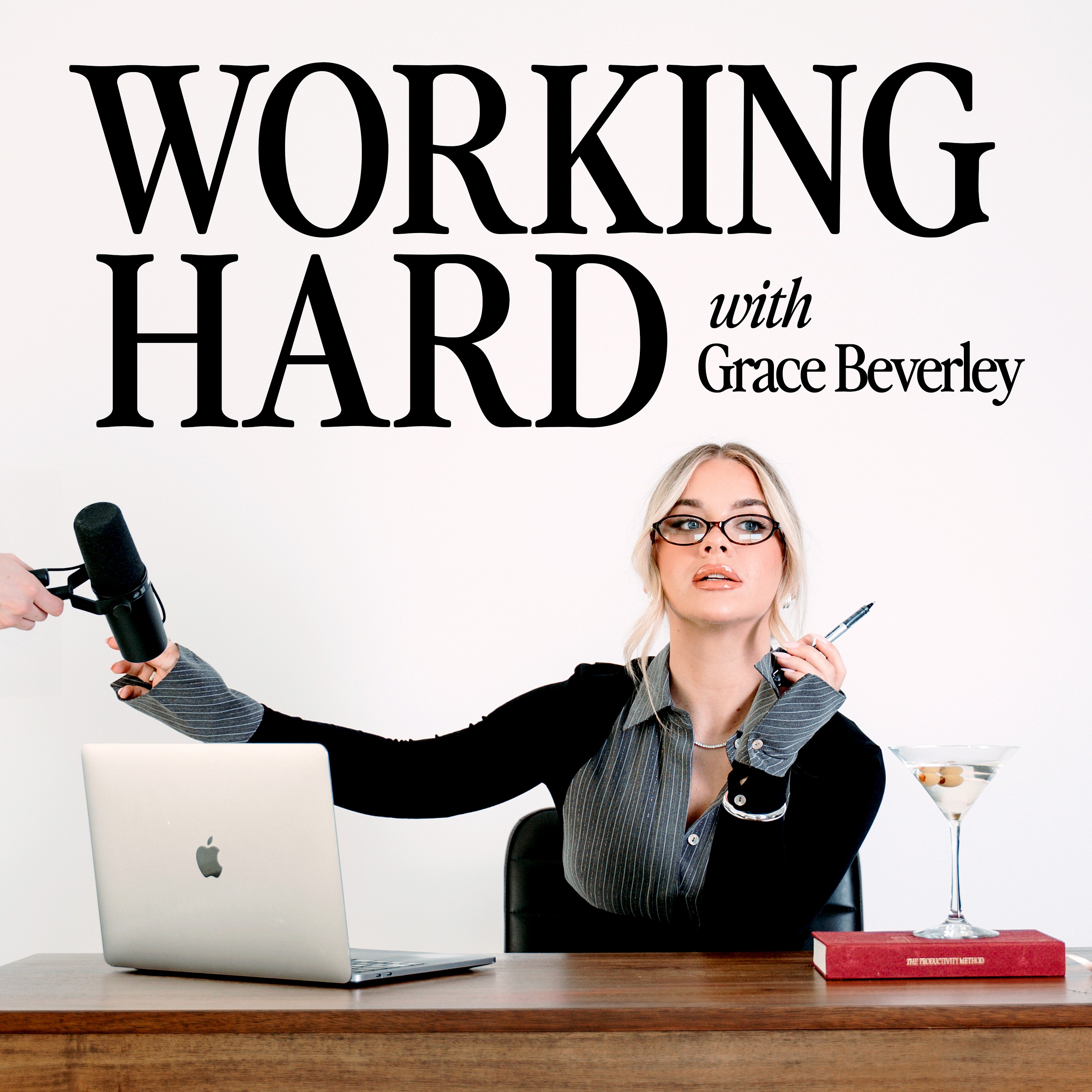
 Working Hard with Grace Beverley
8 Sep 2025 · 1h 1m

In this episode of "Working Hard" with Grace Beverley, the focus is on women's health, specifically hormone health, featuring Professor Annice Mukherjee, a leading expert in this field. The discussion aims to demystify hormones and their impact on various aspects of women's health, as well as provide actionable insights for listeners.
Written by AI. May contain mistakes.

Get the gist, explore an idea or ask about something said.
 Claude
On Working Hard with Grace Beverley, what are the key points of this episode?
Searching your listeningAutomatic transcript. May contain errors.
0:00The market's uncertain. Revenue's tied and hiring on hold. That's why results-driven companies are using Upwork to keep work moving. Go to Upwork.com today and start hiring proven freelance talent fast. No bulky overhead. No rigid long-term contracts. Just the right expert right when you need them. Work smarter and faster with Upwork. Go to Upwork.com now and find your freelance expert. That's U-P-W-O-R-K.com. Post a job for free and get started today. If you're a maintenance supervisor at a manufacturing facility, and your machinery isn't working right, Grainger knows you need to understand what's wrong as soon as possible.
0:38So when a conveyor motor falters, Grainger offers diagnostic tools like calibration kits and multimeters to help you identify and fix the problem. With Grainger, you can be confident you have everything you need to keep your facility running smoothly. Call 1-800-GRAINGER, click grainger.com, or just stop by. Grainger, for the ones who get it done.
1:02Hi friends, Grace from the Working Hard podcast here. When you're stretching every dollar, Alilla goes a long way and Walmart Business is here to help. They make it easy to order what you need from tech and cleaning supplies to everyday essentials, all at low prices and with helpful tools like spend tracking and tax exempt purchasing for eligible organizations. Because when your operations are smooth, your impact can be bigger. Visit business.warmart.com to get started. This episode is sponsored by Adobe Express. Adobe Express is the quick and easy create anything app, which allows you to make stunning social posts, images, videos, flyers, and so much more.
1:33We all know that building trust with your customers is imperative in all businesses, and running community events or pop-ups is a great way to do this. With Adobe Express, you can create everything you need all in one place, from posters, invitations, business cards, and more. You can even use Adobe Express's print and deliver feature, which allows you to order a high-quality physical product straight to your door without leaving the app. You can also get free shipping in the UK. Adobe Express is available on desktop, or you can download the mobile app and start creating today for free.
2:12What is up? I'm Grace Beverley, and welcome back to Working Hard, the podcast-shaped guidebook on how to improve your own life and achieve what you actually dreamed of doing, because life's too short for boring podcasts and bad advice.
2:26What is up and welcome back to Working Hard. Today's episode is one I am so, so, so excited about. We're talking about women's health again, and more specifically, hormones. Whether it's energy, sleep, mood, metabolism, fertility, how we age, hormones impact everything. Yet, I personally barely understood them beyond our GCSE biology and knowing that they were like a little messenger. So if you've listened for a while, you'll know that this podcast has never been just about getting the biggest names. It's been about bringing you conversations that really matter with people leading in their field and things that will genuinely change how you think and live.
3:00One of our most popular recent episodes was our recording with Dr. Hazel Wallace all about PCOS and the response to that episode made it very very clear just how much we all value real practical conversations that are backed by science and particularly ones about women's health. So I wanted to go even deeper into this area today and today's guest is the perfect person to guide us. Professor Anise Mukherjee is a consultant physician, endocrinologist and professor. She is literally the person to go to when it comes to hormones. I knew I wanted to get her specifically for this episode because she's not one of those people that's just about kind of the big buzzy hormone stuff on social media.
3:36In fact, she's the complete opposite. She's doing the thing day to day. She is the principal investigator for the UK's first ever National Women's Health Data Registry and was named in the Financial Times Women of 2022 from her work on endocrinology. the whole idea for this episode was to create a hormone 101 what do you need to know about your hormones as a woman what should you be doing to improve your hormone health and we go further into PCOS specifically as well as well as a number of other conditions and there are things on PCOS that I learned from Professor Anise in this episode that I have never heard before and that is exactly why I'm so grateful to be able to talk to people like this and what I love most about Anise is that she has a gift for really making the science very practical and understandable and she is here to help us understand how hormones really work and how we can rebalance them to feel healthier, stronger and more ourselves.
4:24Before we get into my chat with Professor Anise, I'd be so grateful if you could hit subscribe. The deal is you subscribe and then I put out a super interesting episode every single Monday to help you improve your life in many different ways and to start your week right. And also a quick PSA, we have a podcast Instagram and it is so much more than just clips. It's kind of a hub for the working hard community. So we post so many extra tips, We post extra resources. We post BTS. There'll be a lot that deep dives into what we've been talking about on this episode. So make sure you're following us over there.
4:56Professor Anise Nakajee, are you currently more working hard or hardly working? Well, I'm working in the field of women's health, so you can guess what the answer is. Doing the work that should have been done. Yes, we're on catch up. So I think working hard, but I also play hard. Okay, good. I love that. And you've been doing some incredibly, incredibly important work that, I mean, I know the breadth of all the work that you've done over time, but also I know on a personal level, you've helped me when it comes to my hormonal health and everything. But for anyone who's, I guess, not familiar with your background and the type of work you do, could you talk us through that a little bit yeah so I have been qualified for nearly 30 33 years is it now um and I I trained in medicine at university and then I specialized in hospital medicine and if you work in hospital medicine you tend to train to be a specialist so I trained quite early on in the field of endocrinology which now people are starting to have heard of but most people think what's that but it's basically being a hormone specialist and people think of hormones as being all to do with reproduction but there's many different hormones in the body and I've specialized in that for many years and worked in the NHS for 27 years and I've had a huge interest in women's health for 25 years I would say in the types of work I've been doing so in 2019 I left my NHS post because I wanted to work more nationally on helping women on a bigger scale than just in my clinics.
6:33And that's what I've been doing for the last six years now. And lots of people, I guess, think mainly about hormones as kind of puberty or menopause. Can you, I guess, give us a better introduction as to what hormones actually are and why they're important throughout your whole life rather than in those times? Well, of course, I mean, puberty and menopause and reproduction are very important, but yeah, hormones are so much more than that. A hormone is essentially a chemical messenger released by one hormone gland into the bloodstream, but it has actions across the whole of the body at different distant sites in cells and organs all over.
7:16So there are many different types of hormones. We know about 70 plus hormones that have been discovered already. The first hormone was only discovered in about 1901, on but of course hormone you know about puberty and and reproduction but hormones also can control our stress response our metabolism uh pregnancy you know so many different things um and they're just very very far reaching so there isn't really a system in the body that can work independently of hormones so obviously i'm biased but um they're very important it's obviously the most important specialty of all obviously yeah and what are signs then that our hormones are out of balance are there kind of common symptoms that you'll see feel there are but it's difficult because many of the symptoms particularly in females from you know puberty throughout reproductive life and beyond, the symptoms are quite non-specific.
8:20So if I said one of the symptoms of a hormone imbalance might be bloating, well, men get bloating, you know, or weight gain. They're non-specific to, and they can be caused by thyroid problems, adrenal problems, period type hormone problems. They can be caused by many different things. So the evaluation can be challenging particularly for doctors who haven't been trained well and for women to try and find out for themselves it can be really difficult because many women are just told you know it's your hormones get on with it that's a something that's been happening you know through history and that is changing now big time but it's changed rapidly in the last five years with with social media raising awareness and social media has been great for raising awareness in many respects so that's a really good thing but with that there's also a lot of you know misinformation around in relation to hormones so it's a confusing issue for women today I think the most important thing is if you're worried about anything to do with your health speak to a trusted health professional first get some guidance from them and if you go online cross-check your facts don't just go to the first glossy health branded website that you see because they may have conflicts they may take you down a path that isn't right so if someone is noticing i guess different symptoms that they feel like might be hormonally related but maybe they go to the gp and it's dismissed or or you know they say oh well it's probably just you know it's just your period or whatever it might be what would you recommend for them being able to i guess advocate for themselves or track the symptoms or anything that can get them further with that care?
10:06So it depends on where you are in in your life so in puberty there can be lots of different things and and you know changes in the periods heavier lighter longer shorter cycles any additional symptoms like weight changes headaches or any other symptoms that are really concerning that are severe like fatigue or you know wild fluctuations in your symptoms through your menstrual cycle those are take your list to to your health professional ask them and if if you know what we don't want is for people to be fobbed off and if you if you're just told oh it's it's just your hormones you know there's nothing that can be done I would say you need to say well tell me what hormones you know tell me what I need to look at if I if you're not going to do anything for me tell me which websites I should look at where can I get more information?
10:57Because we know that there's a lot of information out there now. And really, GPs, if they don't really know how to help an individual with hormone problems, they need to signpost. They need to be at least your health advocate to help you find the right information. So, you know, to just be fobbed off and say there's nothing wrong is not okay. And that's a red flag. And you can go to another doctor in that practice if you don't feel that the first doctor you've seen is helpful. I wouldn't say it's necessarily about going to a male doctor or a female doctor because sometimes female doctors can be unsympathetic as well.
11:32So I think, and don't get too upset if the doctor shrugs their shoulders because people like me and many specialists in women's health and hormones are desperately trying to educate GPs. GPs want to be educated, but they have a big job to do. They're looking after so many different things so um i think just being persistent taking going armed going armed with information about what your symptoms are um remember gps have got very little time in their consultations and you know if you can't get all the information across in one book again but it is difficult because i hear so many women saying no i'm just bobbed off i've been gaslighted i've been i've had i've been dismissed i've been told there's nothing wrong and then you know as a consequence of that we know that many hormone conditions take years to be diagnosed and quite often aren't I mean there's many women walking around today with symptoms who have got hormone problems which can be helped who are not getting any support yeah that needs to change yeah no absolutely and obviously you're doing incredible work to make that happen I also think one of the things that you opened my eyes to that I didn't necessarily know about before was there are much more there are many more available and more affordable options as well than there used to be in that I've been private before and paid thousands for specific blood tests and tests to get and when I came to see you you were able to even recommend me to just get blood tests like somewhere near me specific kind of fertility slash reproductive package or whatever it was and then be able to have those actual results as well which makes a big difference to actually knowing what's happening obviously you don't want to kind of go to the GP and then have to go back to them having paid hundreds for some results but there are actually much more options I think than there used to be it's definitely there are kind of lower barriers to entry when it comes to actually getting real results or kind of real health data on yourself yeah I mean there are lots of high street labs now that that are proper you know laboratories that where you can get a whole panel of blood tests done the the difficulty i think is getting that interpretation because sometimes nhs gps will say we're not looking at any private blood tests even though you know it's very easy to tell whether that well it's very easy for people like me or or doctors to tell if that laboratory is a proper laboratory or not.
14:06But it is becoming more accessible to get testing done. And, you know, GPs are absolutely more forthcoming with checking hormone tests, even though often they do slightly more limited panels of blood tests initially. It's still a starting point to get a diagnosis if you've got symptoms. Yeah, absolutely. And I want to speak a little bit about kind of everyday hormone health before we come on to some of the more specific kind of hormonal issues that some people might be having. So what would you say the biggest things are that are disrupting our hormones day to day? Well, it's different from what it was 50 years ago.
14:46I can tell you that. And I mean, I haven't been practicing for 50 years, but I can see the severity of symptoms with various different medical conditions is more noticeable. More women are having diagnosis of PCOS and other female-specific conditions, endometriosis and premenstrual tension, premenstrual dysphoric disorder, which is a very severe form of premenstrual syndrome. And that's not just because we're diagnosing it more. It's because these symptoms are definitely more widespread across, you know, women's, adult women now. Why is that? Well, we haven't got 100 % evidence of why, but we know there's something called epigenetics, which is, you know, our genes tend to respond and our genes often control hormone production through life.
15:45And epigenetics is where our environment and our behavior impacts on our genes and therefore our hormones and our environment and our behavior has changed dramatically in the last 50 years we are more sedentary we sit and look at screens all day um we do less movement within our daily life i mean people are trying to do more exercise but actually 90 70 to 90 percent of um western populations you know barely do any exercise on or or walking even on a daily basis and our food environment has changed beyond recognition so processed and ultra processed foods are the norm for the majority of people and quite often as i ask my patients you know what's your diet what's what sort of food you eat and most people will say well I eat out once or twice a week I have you know a takeaway once or twice a week and I'll say do you eat much in the way of processed or ultra processed foods and they say no and I said would you never have bread pasta cakes biscuits pizza pastry or noodles and they go oh yeah I have those but they are processed and then there's even worse the ultra processed type foods so that we all have them now you only have to go into a supermarket and see that's what all the food is and then there's a little area for nice fresh fruit veg and lean protein so that has changed and that is a fundamental change in our environment and that is impacting on hormones.
17:14Then we have things called endocrine disruptors which have been around for a long time and we don't really understand the impact of them on reproductive health. But the problem for women is that our hormones are moving during reproductive years. Our hormones are moving every single day of every single month. They're going up and down. They're controlled by clocks, The ultradian rhythm is your female reproductive clock. That's why we have a period approximately every month. It varies from woman to woman. So our whole lifestyle has changed in 50 years. More people are working shifts. We don't all get up and go to bed at the same time.
18:00And that impacts our body clocks. That impacts our stress control, our female hormones. It's quite complicated. It's not one thing. It's like onions have layers. You know, it's layers. It's multiple factors, which is affecting everyone. And I've also read a lot about how exercise affects your hormones, both in terms of obviously you've spoken about the fact that we're living more sedentary lifestyles, which is detrimental to our kind of hormonal profiles. But also I've heard a lot about high intensity exercise affecting our hormones for women. Could you speak a little bit to that? I mean, it's a controversial issue.
18:41There's lots of evidence that suggests, if I look at the big picture, exercise is good, movement is good. What type of exercise, strength training is good. Some cardio is good. But then there's lots in the media and social media that isn't backed by strong evidence, for example, don't push yourself as much when you're coming up to your period. It's kind of, there's not evidence for it, but it's logical if you're feeling jaded and exhausted or you're bleeding and you're, you know, you're just not feeling right, your body won't be as resilient to the immediate stress of a high intensity workout.
19:17So it's sort of logical not to push yourself to an extreme when you're not feeling so good. But to say you should never exercise at certain days in your month is a bit extreme and there's not much evidence for it and I think with lots of lifestyle approaches you do have to to a large extent listen to your body. I'm going to read this to make sure that I get this right. You're leading the UK's first National Women's Health Real World Data Registry. What are you learning from that so far because I'm very interested in that. Yeah so that's a really big deal and what I've learned from it so far is really all in the setup because it's only recently launched.
19:56So it's a long-term study looking at women's real lives in the real world. So what I've learned very much is that historically, and I knew this anyway, but it's one of the things that's really absolutely clear and really important and many people don't know, that most of the research in women over the last 30, 40 years. And remember, there's not that much research in women, but most of the research that's been done has been in generally pretty healthy women. I mean, maybe not perfect health, no one has perfect health, but generally women without very significant health issues. So, you know, women with complex metabolic issues, living with obesity, type 2 diabetes, cancer, even women with PCOS and complex gynecological problems, they're generally excluded from research.
20:52So you've got this beautiful clean group of women. When I say clean, I mean, they're generally, they've had to tick so many boxes as being the healthiest type of woman possible and they get into the studies. The outcomes for those women is not going to necessarily be representative of real women. And also a lot of the studies that have been done have been done 20, 30 years ago, not recently. And we've changed. I've just talked about how we've changed. Our environment has changed. We are living in an obesity pandemic really across the Western world. So we're all bigger than we were 30 years ago.
21:28It's a fact. There's a diabetes pandemic as well, actually. Many more people are developing diabetes. So we don't have evidence. We don't have evidence for women's health outcomes in women with adversity, with complex health issues. We have, I mean, women from ethnic minority groups, it's almost an evidence-free zone. There's just nothing. So I'm leading this registry. I'm the chief investigator. And we wanted specifically to get outcomes for women who we don't have data on. So women with poor metabolic health, type 2 diabetes, women living with obesity, we're probably going to have an entry point for PCOS as well in that part of the registry.
22:15We're also looking at women with cancer diagnosis, particularly gynecological and breast cancer, because again, those women just get left behind in research. Oh, you've got cancer. So that's it. We're not doing any research on you. We're just ignoring you. Women who are given complex hormone protocols like implants, hormone implants, testosterone, we're looking at, because testosterone is a buzzword at the moment everywhere in men and women everybody thinks testosterone is a miracle is it is it really a miracle for everybody there isn't the data but there's a lot of convincing people online and then um and then we're looking at a whole thread of women with um complex gynecological problems such as endometriosis um heavy menstrual bleeding which is everywhere and it's just nobody talks about it and women are suffering and they can't get access to good care so what what i'm learning is that women want to know want answers doctors want answers everybody recognizes that research is needed getting funding for research is near on impossible it's really difficult and even now you'd think that the the organizations who are funding research would want to support research into women's health but it's just not forthcoming I'm working with several other groups on different projects across the UK it's really difficult to get funding even with really high quality you know proposals so it's it's we're not there yet we're struggling but this particular registry the way we've set it up it's women who are collecting their own data and specialists can add data but we can get if a woman gives consent to her gp records being put into the registry we dovetail it all and it's quite an easy process so in 6 12 18 months two years we're going to have a very rich data set and then we start to publish it but you know research you don't get research results overnight yeah it's really slow but it's happening yeah and that's i mean incredible that it's happening and I'm kind of feel very overdue but also feels just so exciting that we're actually going to be getting that data it's also just still absolutely insane to me that it is still hard to get funding for women's issues when we also know that like it's such an underserved industry so surely by cracking a few um I don't know issues within it surely there's so much money in that I don't even understand it from that perspective but I guess there just it doesn't seem to be the incentive no i mean that there is there is some brilliant research going on which is you know through with difficulty i think with funding difficulty but there is some incredible research in in women's health and recent breakthroughs in in hormones um centers actually the uk are leading on that a center in france i can talk you through those but they're all different different aspects i mean i can talk about them now if you want me to there's some really interesting work looking at brain hormones um we call them the candy neurons in the brain kiss peptin dynorphin and neurokinin b these are new new neurotransmitters related to fertility and reproduction that we've only discovered in the last decade or so and there's a group at imperial college london who have led the work on that and they found a new drug which well they've developed a new drug which is a which is this um it's called a neurokinin 3 receptor antagonist it's got a long name yeah it's catchy but it's it's got a trade name now but it's an actual treatment for the menopause vasomotor mechanism so it's what causes the hot flushes so they've actually found the the cause of the hot flushes in women and this this medication is you know transformational for women treating hot flushes and it's particularly good for women who can't have hormone replacement therapy because that also treats the hot flushes but this is the actual directly addressing the cause of the hot flush and in those neurons there's also really interesting data coming through on PCOS and impacting the the sort of the pulsatility of the hormones in the brain that can that can be affected by PCOS and that can cause fertility issues where the eggs are not being released as they should be.
26:38And there's some really interesting data that's coming through. It will be coming through. The research is underway and it's coming through in the next few years. Okay, well, that's amazing. That's very good to hear that these types of things are coming.
27:06term contracts. Just the right expert, right when you need them. Work smarter and faster with Upwork. Go to Upwork.com now and find your freelance expert. That's U-P-W-O-R-K.com. Post a job for free and get started today. What's up? Grace from the Working Hour Podcast here, and I want to tell you about something exciting. You're watching every dollar and Walmart business helps you stretch each one. From office supplies to snacks and cleaning gear, you'll get everyday low prices, plus easy bulk ordering and fast delivery. And with tools like spend tracking and multi-user accounts, staying organized is simple.
27:39Save time, money, and hassle at business.walmart.com. It's free to sign up. If you're a custodial supervisor at a local high school, you know that cleanliness is key and that the best place to get cleaning supplies is from Grainger. Grainger helps you stay fully stocked on the products you trust, from paper towels and disinfectants to floor scrubbers. Plus, you can rely on Grainger for easy reordering so you never run out of what you need. Call 1-800-GRAINGER, click grainger.com or just stop by. Grainger, for the ones who get it done.
28:17And I think maybe perhaps because people feel it's so hard to get the information they need about their bodies there's also so much online in terms of kind of encouraging you to do this that and the other to balance your hormones there's seed cycling all the way to kind of general biohacking what do you think is actually worth it and what would you say are probably more just hype there's a lot of hype there's a lot of hype and the problem is that it can be very powerful when you're watching something and if you then try it and it works for you you can almost be evangelical about something if it works for you but a lot of these a lot of these programs that are online don't actually have good quality research evidence backing them and that's fine if you don't care about the money that you're going to lose when you do the click button to pay or as long as it doesn't have any risk but for a lot of people that they're spending money that is you know in a cost of living crisis where you know you don't really have the money but it's so convincing you think this is going to be this is going to fix me it's going to fix everything and you know the women who don't do well with all these protocols you know I see them in my clinics they've tried everything they spent loads of money and then they go well nothing worked really it was all a bit of a scam and now I'm here but they don't they don't shout about that so so you get this bias of the anecdotes and the these glossy brands looking amazing and a lot of the time it's it is just hype actually women women's hormones as i said even 50 years ago were not in as bad a shape as they are for many women today and why is that because of the environmental change and our behavioral change and we have a lot more agency and control over our hormone health than we're led to believe now when we look online you know there's no I've got to use this cure I've got to do this hit regimen or I've got to do this seed cycling or I've got to do this other protocol of something and it's all of it generally costs a lot of money and yet actually the things that you need to do that truly help often don't cost a lot of money.
30:35Yeah, no, absolutely. And obviously we've spoken about the lifestyle factors and, you know, the things that tend to help. If you were to put together, I guess, a more exhaustive list in terms of things to make sure you're ticking off before you necessarily go for the more extreme options, what would you say those are in terms of nutrition sleep stress okay so i mean this is really lifestyle medicine so you you know nutrition is important there isn't one diet there isn't one diet that works for everybody everybody's got different intolerances there's lots of food intolerances now people have different preferences what i would say is if you have a real exclusion diet you need to make sure that if you're excluding any particular groups that would provide specific micronutrients you need to fill those in with supplements or whatever.
31:25And really the rainbow diet, whole food, whole food, lean protein, high fiber carbohydrates, preferably, and minimizing ultra processed and processed foods, not excluding necessarily because it's almost impossible and it's not necessarily sustainable, but minimizing those and filling yourself up with healthy food. So good quality nutrition is important, but no one is perfect. No one has a perfect diet. And if they say they have, it's not sustainable or they're lying. Then yes, movement in your daily life is really important. Sitting all day long is bad for your stress hormones, your adrenal glands, your cortisol.
32:12It has knock-on effects on sleep. It has knock-on effects on your reproductive hormones. So moving in your daily life is really important. And exercise is really important for strength and cardiovascular health. So, you know, you have to find what works for you. There isn't a correct exercise regimen. I mean, if my partner plays golf, he's managed to get me to play golf once in our 35-year relationship. I don't like golf. I like, I love HIIT. I love doing HIIT training. I love doing strength training. But that isn't for everybody. Some people will do hit training and feel worse or get a migraine.
32:48You have to find what works for you for the long game, because it's a long game. We need to stay fit and healthy for our whole life. And then sleep is very important. I talked about body clocks and the fact that all of our hormones follow different clocks. So if you have no routine, these body clocks for cortisol, for sleep, for female hormones they get they get out of whack and so you know we know that people who do night shift work have you know they get more cardiovascular disease in the long term and and why is that and it's all linked with stress and stress responses and not having enough quality sleep so sleep patterns if you can have a regular sleep routine that's a good start and also if you have good quality sleep you produce various hormones and neurotransmitters in your sleep that suppress appetite.
33:38So you're less hungry the next day if you have a good night's sleep. If you don't sleep well, you're more hungry the next day and you don't crave an apple, you crave a donut, right? So you're going to eat less healthily. So these things are all interlinked. You know, toxic substances, so hard or soft or whatever, drugs, smoking, alcohol, they're all bad. So, you know, and again, I'm not expecting everyone to go cold turkey on having a glass of are now and then but but these things are not good for us and we need to recognize that if you smoke or drink or take drugs it's going to have an effect on your health on your hormones across the board and then um you know the stress management laughter and social connection is really it's profoundly important and multi-generational social connections are really really positive you know not just having one small group but but multi-generational groups and you know and laughter so it doesn't have to be a partner it can just be you know it can be a group of people who do an exercise together whether it be at the gym or at the golf club or tennis or paddle or whatever having those social connections is really good as a stress reliever and it's really important part of lifestyle medicine.
34:58Social isolation is negative for everything to do with health. And all health is interconnected. It's not like you can say your hormone health will be good, but it won't help your cardiovascular health. It will, because if your hormone health is good, your weight management will be better, your wellbeing will be better. You'll be more motivated to do the things you want to do. You'll have a better quality of life. That's so interesting. And I think that But it really rings true for me because I've tried so many years before to make significant changes to my lifestyle and my health in general. And I think probably one of the biggest changes I didn't make was my relationship with work and how much I was working and how stressed I was and how constant and unrelenting that was.
35:42And I think that, A, it probably made it easier for me to fall off that routine because there was one thing that was requiring all of my attention and all of my energy. but I have no doubt as well that my like no matter how much walking I was doing or eating well or whatever it might be it wasn't going to outdo how much stress my body was under so I think that for me I mean anyone could have told me and I still wouldn't have listened to them but well that's the problem I think you have to embrace and understand I mean you have more agency if you understand it you understand it's complicated and you know people blame cortisol I I mean, there's, you know, there's so many cortisol cures online, you know, and actually it's not the cause of responding to what's going on outside.
36:25It's not the cause. And but if you have got this, if you're in a rat race and if you've got unrelenting standards, and I think generally for women, women take a lion's share of today work and anything at home. You know, you're expected to be everything to everybody. And something has to give and it does impact on your hormones. stress cortisol suppresses all your healthy hormones um and it's not that with stress it's not that you've got a disease of of the cortisol gland the adrenal glands it's that the cortisol is high when it should be low and low when it should be high so you wake up exhausted you go to bed wired you crave sugar it's it's because you're stressed you crave the sugar you want to eat more sugar you don't want to eat an apple when you're stressed so it has such a huge ramification.
37:14And, you know, I don't ever tell my patients, I don't say, get rid of all the stress, get rid of your job and just go and, you know, meditate all day long because that's not real life. And most people wouldn't necessarily want to choose that. But it's about having moments of downtime across your day. And actually, when you're under stress, chronic stress, high intensity exercise is harder because your stress response with the exercise goes against you. So if you can just have moments here and there through the day, downtime, every day, it can help with balancing your hormones and actually improve your sustainability for whatever it is you want to do long term.
37:57And with so much advice out there, how can people, I guess, make sense of conflicting advice when it comes to hormone balancing and hormone health online? So I guess it's very difficult today and there's something you might want to remove this bit but there's there's something that I it really chimed with me when I when I saw it there's something that a colleague of mine shared with me and it's called the bullshit asymmetry hypothesis and it was it was an internet it was an economist I think who coined the phrase a few years ago the amount of effort it takes to refute bullshit is an order of magnitude higher than it was to create the bullshit in the first place and this is an example of health on social media the brands are brilliant they're ahead of the curve they're glossy they're amazing they've got their click buttons to pay here and pay here and they've got amazingly beautiful people in beautiful places promoting their products and they're ahead and then people like me who are at the coalface working doing my clinics doing my research go what's going on and and i've recognized this particularly in the last five years and i've that in my spare time whereas the health brands that are making money are doing it as a full-time job to get people to buy their products and so it is very difficult for me to come along you know and say oh that brand that um I mean there's there's some hilarious ones I just think are funny but they clearly are making a lot of money but they just talk nonsense there's so many of them there and but it's very if I come along and say this is not good they've got you know 50 times more followers than me and people think a high following must mean that they're good and it doesn't it's not the case for health it's just not the case for health and what types of things are they selling so all sorts I mean lots of hormone stuff but there's a lot of nutritional stuff exercise that do it but but the women's health industry has exploded in the last five plus years it really went wild in the pandemic when everybody went online and people were furloughed and weren't working and and um it's just everywhere and the red flags it's really so going back to what you said it's very difficult the red flags are if something looks too good to be true it's almost certainly too good to be true if there's buttons to press that um you know will help you buy something immediately a package just be careful just pause and just think about it just because a brand is glossy online and has a high following if they're selling products around health if you can cross check your facts outside of social media google something go online and google national organizations for whatever the topic is you know there are some really good national organizations but all different things to do with women's health that you can cross check your facts.
40:55The problem is it's so convincing and it takes effort to then go out of social media and then look for solutions online. And it can be confusing, but be discerning. Critical thinking is crucial in everything in today's world because of AI and lots of misinformation around everywhere. And I'd like to speak specifically about a few issues that I feel like come up again and again that women aren't getting answers on or that seem to be incredibly common in women. So the first one being thyroid issues. I know they are incredibly common, particularly in women. Could you tell us a little bit about what they are and how they might present?
41:39So yeah, autoimmune thyroid disease is the most common organ-specific autoimmune disease. So it's really common. It's most common in women between the ages of 40 and 60 at presentation, but it can occur at any age. It can occur in children, you know, in older adults. It's more common in women because women have a more vigilant immune system than men through estrogen. So it's a kind of a mistake that the immune system makes. And the commonest type of thyroid problem is where your immune cells that respond to infection think your thyroid is a virus and creates an antibody to damage it. So the most common is damaging antibodies that stop your thyroid working.
42:26There are some unusual types of thyroid conditions where the antibodies switch on the thyroid and make it go overactive and that's a little bit rarer. But the symptoms of an underactive thyroid are quite non-specific and it can happen gradually as well. It doesn't happen always overnight. You don't suddenly have no thyroid working. It can happen for a while where your thyroid's trying to work but not quite coping. So again, it can be really confusing because you can have some days when you feel okay and then other days when you don't. The symptoms of an underactive thyroid are quite nonspecific, like lots of hormone problems like tiredness, weight gain, dry skin, constipation.
43:08These are common bloating. These are common symptoms across society. It's very easy to have your thyroid blood test checked with your GP. So that's a starting point. But if the thyroid blood tests are normal, it doesn't necessarily mean you haven't got a low grade thyroid problem. So then you need more tests. so again thyroid you know online is another pandora's box there's lots of of companies that do testing and that will put people on thyroid replacement before conventional doctors would i think what people want is answers if it's my thyroid and you don't think i need treatment just help me understand what i need to do that's what women want to know or that's what anyone wants to know who has a thyroid problem um so again if your doctor says it's not your thyroid then I say okay if it's not my thyroid what are these symptoms due to don't tell me what it's not tell me what it is and you know work it out from there um overactive thyroid is generally a bit easier to diagnose because you lose loads of weight or not everyone does but often there's weight loss anxiety insomnia shaking palpitations so that one is is kind of quite dramatic symptoms so that is usually picked up on a blood test um and the problem is if you've got thyroid problems It can affect your periods.
44:24So you can have heavier periods with an underactive thyroid. You can have lighter periods with an overactive thyroid. And because it's 40 to 60 is the highest range for presentation in age, thyroid problems often coincide with perimenopause. So it can be really confusing what symptoms are due to what. So, again, it would be go and see a doctor, tell them what your symptoms are, ask if you need a test. and unfortunately I mean I wish healthcare was much more proactive it is very reactive but nowadays at this point in time and I wish I didn't have to say this you do have to be your own health advocate as a woman because you do have to kind of do the due diligence look up you know what the symptoms could be and we all know Dr Google can make terrible mistakes we know that AI can hallucinate so it can give you a really wrong end of the stick so whilst you know I think people have to do that.
45:20It's not ideal. You need really to have a health professional who's your advocate. Yeah. And on, I guess, a similar topic, PCOS is obviously one of the most common hormonal conditions, but is still unfortunately misunderstood a lot of the time. What's actually happening hormonally for someone who has PCOS? So PCOS is really a metabolic condition, but it's a spectrum. There are women who have very mild PCOS, very minimal symptoms who might never know they have it. And some women who have very severe symptoms, but on the severe form of the spectrum, it manifests differently in different women and differently at different stages in your life.
46:01So, you know, it might cause periods to be infrequent. It might cause, the periods might be regular and it might cause acne or excessive hair growth on the body and and hair thinning on the scalp. And so some of the manifestations are through the effects of insulin, which is one of the sort of metabolic hormones. So you might think what's insulin got to do with the ovaries, but it's not, the ovaries is a manifestation, but not necessarily the cause, it's a metabolic condition. The impact on the ovaries is through the hormone axis right from the top of the brain where there's this sort of luteinizing hormone which is one of the hormones that controls the the fertility cycle isn't being released correctly and you get this sort of higher level of androgen drive rather than the the fertility drive because you've got two two bits to your your hormone axis you've got the the the hormones and then the fertility bit the egg bit and that there's a sort of a dominance of the androgens so even if the hormone levels look normal you can get manifestations in you know acne excessive hair growth changes in um other things and it's it's it's a very poorly understood condition because it manifests differently in different people my patients will often often undiagnosed until they see me you know in the 20s, 30s, they can be diagnosed.
47:32Usually it will present around puberty. But if you don't know what it is and your doctor says there's nothing wrong or you don't go to your doctor, how do you know? Yeah. And there's also a lot of online advice around PCOS. So as someone who's worked with lots and lots of people who've had PCOS, what have you found most successful in terms of managing the symptoms? So the first thing I always talk about is lifestyle. And this is what the international organizations that support women with PCOS always say as well, because there's insulin resistance, because there's an androgen drive, you know, a healthy lifestyle helps.
48:12And we've talked about this. It's the same for all hormone conditions. It really does help with the sort of hormone balance. Beyond that, the treatment depends on the stage in life and what the symptoms are because you might have a so in women with pcos one of the problems with the hormone cycle means that you get you don't always release an egg every month you've still got the eggs they're still there they're just kind of locked in so you can get womb thickening because you need to release the egg and then the the progesterone to thin your womb lining down each month so if you get womb thickening that's bad over 10 years that can increase the risk of abnormal cells in the womb.
48:52So any woman who's not having any periods or having less than four periods a year, we really need to be thinking about helping her to, you know, have those periods. And there's different ways of doing it. There are contraceptive pills that are often used, certain types, some types of contraceptive pills are awful for PCOS, they'll make acne worse, but there's more modern types, which are really good for acne and hair growth management while you're on them, only while you're on them though. But they also clear the womb lining out. So that can be great at a certain stage in life, if that's suitable for that particular woman and she doesn't have any risks to having that.
49:30There's progesterone only pills that can help clear the womb lining out. There are also other medications like metformin, which is really targeting the metabolic side. And metformin can help if women aren't having periods, it can sometimes improve the regularity of your periods. Metformin is not so good with managing hair growth and acne. Because metformin helps regulate the periods, it can be helpful in women who want to get pregnant. And so, you know, at one point in your life, you might not want to get pregnant. Another time in your life, you might want to get pregnant. Women with PCOS who are having regular periods may well fall pregnant.
50:09You know, if you're having a period, you're likely releasing an egg most months but if you're not having a period sometimes extra support is needed to help with that so I have a few questions around that first of all around contraceptive options because I feel like as a woman you are presented different contraceptive options as a kind of pick and choose between what works for you and your lifestyle in terms of like are you going to forget to take a pill would it therefore be better to have the implant or the injection or an IUD whatever it might be I don't think I was ever presented the option in terms of what is going to be detrimental to this other condition that we know you have what is the I guess the data or kind of what have you found when it comes to recommending contraceptive options to people with PCOS because I remember when when I told you that I'd been on the implant also having had issues with um obviously with my PCOS and with acne and all of that you were kind of like well I definitely wouldn't have put you on that but I never knew like as in I was presented these are you know your five contraceptive options that you can access and I went for the one that felt easiest to me yeah so the implants are great if you if you it's you don't want to have to take a tablet every day you know it's one of the options the problem with PCOS is that there is generally a tendency to metabolic health problems so it's easier to gain weight for women with PCOS because of the insulin the effects of insulin and it's also because of the effects of androgens much easier to get acne much easier to get excessive hair growth and the implants are very old-fashioned progesterone progestogens so synthetic progesterone which tend to make all of those things worse so I don't use those I don't recommend those for women with PCOS or women, any woman who's struggling with, you know, weight gain.
52:06I mean, of course, you've got to balance that with an unwanted pregnancy, but there are several different options. So there are hormone coils now. And for younger women, there's hormone coils that will last three years that are a smaller device than the ones that are often used. The Mirena coil is the longest, you know, lasts for five years or even up to seven years for contraception but um it's a bigger device and it's usually used in in women who've had children for example not always there's different options but if you're a younger woman you could have a and you might want to get pregnant at some point you could have a three-year one of course you can get them taken out but the advantage of the hormone coils is that they're not going through your whole body they're really delivering the hormone to the neck of your womb it doesn't mean none will go into your body but much much less okay so there's less side effects um and then the oral contraceptive pills there's there's loads of them and the most popular one is a combination of synthetic estrogen and estrogen is more likely to contribute to weight gain and progestogens which are very androgenic so they can cause acne so i don't use those types in my patients with pcos on the other hand, there's newer formulations that contain synthetic oestrogen plus a progestogen called drosperinone, which is an anti-androgenic progestogen.
53:28It's still synthetic, but it helps with acne. So that can be good, but you've still got the potential weight gain of the synthetic oestrogen. So now we've got a whole new set of, again, this is good. This is research that's happened and we've now got new drugs as a consequence. Combine contraceptive pills that contain natural estrogen, not synthetic estrogen. So there's a new pill called Drovellis, which has got brilliant results. It's an estrogen called Estatrol, which is actually a fetal estrogen. So it's not estradiol that's used commonly in contraceptive pills, but it's a natural estrogen.
54:10And it's a very interesting oestrogen because it seems to be quite beneficial for bone density, possibly more so than other forms of oestrogen. It's neutral to breast tissue because lots of women go on the pill and say they get sore breasts and breast engorgement. And it seems to be quite neutral. And the Dravelis combines that natural oestrogen with drospirinone, which is this good anti-androgenic progesterone. So that's a really good option. You do have to take it every day, though. So if you're forgetting. You know, you can't really forget your pill if you want it for contraception. But, you know, so there are new.
54:46And then there's a progesterone only pill, which has just got that drospirinone, which is progesterone. But it's an anti-androgen one. And that is widely available in the NHS now. That stops your periods altogether. So if you're somebody who's had heavy periods or if you've had no periods but womb thickening, that would be a very good option. it really depends on the exact circumstances that that woman is in at that time in her life as to what you would use but there are different types and there are some that will not serve women with pcos very well at all but the natural oestrogens are also more weight neutral so it's crazy because it's like i i was on the implant for what like 11 12 years like multiple different implants and i went to multiple different doctors multiple like as in i was still in the endocrinology pathways like in that time and would constantly say that was it and not one person said do you know what this could actually be making all of these things worse like not it's seen it feels like contraception for women is the whole thing is just oh let's not get pregnant which is great and obviously a privilege in lots of ways I mean should be a right is a privilege But I think that I just find that absolutely crazy that I kind of been through so many pathways within that time.
56:05And you were the first person to say to me this year, maybe wouldn't put you on that one, despite having been on that for, you know, well over 10 years since I was a teenager. And that could have actually made some of your symptoms worse over that time. Yeah. The market's uncertain. Revenue's tied and hiring on hold. That's why results-driven companies are using Upwork to keep work moving. Go to Upwork.com today and start hiring proven freelance talent fast. No bulky overhead. No rigid long-term contracts. Just the right expert right when you need them. Work smarter and faster with Upwork. Go to Upwork.com now and find your freelance expert.
56:46That's U-P-W-O-R-K.com. Post a job for free and get started today.
56:55and another thing i'm really interested in is fertility when it comes to pcos i think there's a huge amount of fear when you have pcos in terms of you know you spend your whole life trying to avoid getting pregnant and then you probably spend the whole next rest of the time worried that you're not going to be able to get pregnant what would you say to women with pcos who are listening to this now who either know they want to get pregnant in the near future or have anxiety about when they will decide to get pregnant, just knowing the fact that PCOS doesn't have a great rep when it comes to fertility?
57:27So lifestyle makes a big difference. And I know I've said this several times, but it's a very boring statement, but it is really important. So if you've got a body mass index over 30, your fertility will be reduced, but also your risk during pregnancy will be higher. So if you're carrying excess weight, it's going to be beneficial for you to try to improve your lifestyle and move that in a downward direction. That's going to be good potentially for your fertility, for falling pregnant and for a healthy pregnancy. So that's important. If you're not having regular periods, you need to really, and you're thinking about having a pregnancy in the medium term, you need to talk to your doctor about why you're not having regular periods is it have then you need hormone checks to see if there's something else going on exclude other things and you may need to have a scan of your womb to see if you've got womb thickening because i see many women who come to me and they say i didn't have any periods for seven years and then i found out i had pcos but i said did you not go to a doctor and ask about and they say yeah i did but they just said don't worry about it i mean or they've even been told don't worry about it it's your PCOS yeah but actually if you're not coming back when you want to get pregnant but you get thickening of the womb and over you have you should be given you should have in some way when I say given we often if a woman doesn't want any regular hormone treatment we can give you a short course of progesterone every three to four months to clear the womb lining you know so we can do minimum treatments even if a woman doesn't need to have contraception or want it so but you you need to be checked out um as to why you're not having periods if you've got a thickened womb lining that's not going to be good for getting pregnant you need to have your womb lining normal basically and if you're not having a bleed every month there's something wrong with it either it's too thin and that might be a different condition or it might be too thick in which case that needs to be addressed so and you know think about what your symptoms are in relation to the pcos and women with pcos are more likely to get gestational diabetes so if you've got a diet that's very high in sugar that is going to potentially increase your risk of getting gestational diabetes which is diabetes in pregnancy it often goes away after pregnancy but diabetes in pregnancy is quite a dangerous condition for the baby and for the mother so and it's it's you have to be monitored very closely so if you want to reduce your risk of that, reducing high sugar, you know, refined sugar is going to be definitely beneficial.
1:00:08And if you do get pregnant, you're not eating for two. You don't have to eat double because you're eating for two. Actually, the baby will take all the nutrition from you. So, you know, because it's easy to gain a lot of weight in pregnancy. And if you've got PCOS and then you think, right, I'm now pregnant. I can now eat what I want to because I need to eat as much as possible to grow the baby that's not necessarily right and you need to stick to your sort of healthy eating through the pregnancy okay i think that's really really helpful and i think it's very i don't know as we've talked about there's so much contrasting advice out there and actually it's just i think that so many women with pcos spend their whole life just being absolutely terrified that when the time comes they're not going to be able to have children but at the same time just keep getting sent away again and again saying come back when you have kids or like come back if you find it hard to have kids and that type of thing and it's just not that.
1:00:57But we can pretty much predict who's going to have difficulty having kids by looking at what their symptoms are and and you know what their hormones are doing. And what would you say is one thing that you wish people knew or kind of wish people understood about their hormones that would be able to improve their everyday lives? Every hormone system interacts with every other so online there's these you know do this test or do that test and it's all very simple and one plus one equals two and it just isn't like that so the systems are complicated but you have more agency over improving your hormone health through lifestyle than you're ever led to believe if you look online they will always be saying you've got to do this you've got to do that here's a miracle cure just spend this money and you'll be fixed I mean it's just not true and you know the simple things like you know not there's no such thing as perfection and I'm not trying to ask anyone to be perfect but wherever you are eating a bit healthier doing a little bit more movement trying to regulate your sleep patterns a little bit trying to have some social connections you know these things are really important stress management stress is probably the worst thing because it controls everything else in our modern world no one has any downtime anymore if we've got downtime we're sitting looking at screens and that's not downtime so and and of course it's the the blue screen is stimulating so if you're looking at a screen late at night it's going to impact on your sleep at night so those simple things addressing them even by 10 in small areas can make a huge difference and before we end i ask everyone this question and I'd love to hear from you it can be related to your work or otherwise but what is the best piece of advice that you've ever been given well this is particularly relevant with the online world we're in at the moment um life is full of ups and downs um it's never plain sailing it's never stays the same so when you have those ups when you have those highs you've got to embrace them and enjoy them because they've got to keep you going through the lows everyone has the lows and when you get the lows you have to remember the highs and you have to believe and understand the lows won't last forever and if anyone says to you or if anyone looks like their life is perfect and everything's perfect for everyone else it's fake agree I like that she doesn't mince her words but I also I really love that quote that nothing lasts long like good things or bad things nothing lasts long so it's kind of enjoy the good ones and the bad ones will be gone soon.
1:03:39Yeah. Well, thank you so much. You've been incredible and really grateful to you for sharing all your knowledge, both personally and with everyone else on the podcast. Thank you. Thanks for having me.
1:04:08conveyor motor falters, Grainger offers diagnostic tools like calibration kits and multimeters to help you identify and fix the problem. With Grainger, you can be confident you have everything you need to keep your facility running smoothly. Call 1-800-GRAINGER, clickgrainger.com, or just stop by. Grainger, for the ones who get it done. What's up? Grace from the Working How Podcast here, and I want to tell you about something exciting. You're watching every dollar and Walmart business helps you stretch each one. From office supplies to snacks and cleaning gear, you'll get everyday low prices, plus easy bulk ordering and fast delivery.
1:04:43And with tools like spend tracking and multi-user accounts, staying organized is simple. Save time, money, and hassle at business.walmart.com. It's free to sign up. Summer's heating up and so is the action with Chumba Casino and 2311 Racing. Whether you're trackside with Bubba, Riley, and Tyler or cooling off at home? The fun never stops at Chumba Casino, the online social casino packed with free-to-play games like slots, blackjack, and more. Jump into summer at chumbacasino.com and score your free welcome bonus. Two million free gold coins and two free sweeps coins. No purchase necessary. VGW group void where prohibited by law.
1:05:18CT &C is 21 plus sponsored by Chumba Casino.
Today’s episode is one I’m really excited about, because we’re talking women’s health again, and more specifically hormones. Whether it’s energy, sleep, mood, metabolism, fertility, or how we age, hormones impact everything, yet I personally barely understand them beyond our GCSE biology.
Joining me today is Professor Annice Mukherjee. Annice is a consultant physician, endocrinologist, and professor, and she’s one of the UK’s leading experts in hormone health. She’s the principal investigator for the UK’s first-ever national women’s health data registry.
Annice's Instagram: https://www.instagram.com/the.hormone.doc/?hl=en
+
This episode is sponsored by Adobe Express - you can check it out for free here: https://adobe.chrd.ly/ExpressGracePodcast
+
SIGN UP TO THE WORKING HARD NEWSLETTER: https://graceb.myflodesk.com/k0sfhlac34
+
FOLLOW THE PODCAST
Instagram: https://www.instagram.com/workinghard...
TikTok: https://www.tiktok.com/@workinghardpo...
+
DILEMMA SUBMISSION
If you'd like to submit any dilemmas to the podcast to be answered in the bonus episodes, please send them to [email protected] with the subject beginning DILEMMAS or DM us @workinghardpod on instagram!
+
MY LINKS: https://gracebeverley.komi.io/
+
RETROGRADE, SHREDDY, TALA and THE PRODUCTIVITY METHOD are my own businesses, therefore any mention of them - whilst not being a sponsorship - is monetarily endorsed. As usual, sponsorships do not change my opinions nor my honesty, but I will always disclaim to make sure motives are clear 😊
Hosted on Acast. See acast.com/privacy for more information.