Ask ChatGPT
 Working Hard with Grace Beverley
2 Jun 2025 · 1h 9m
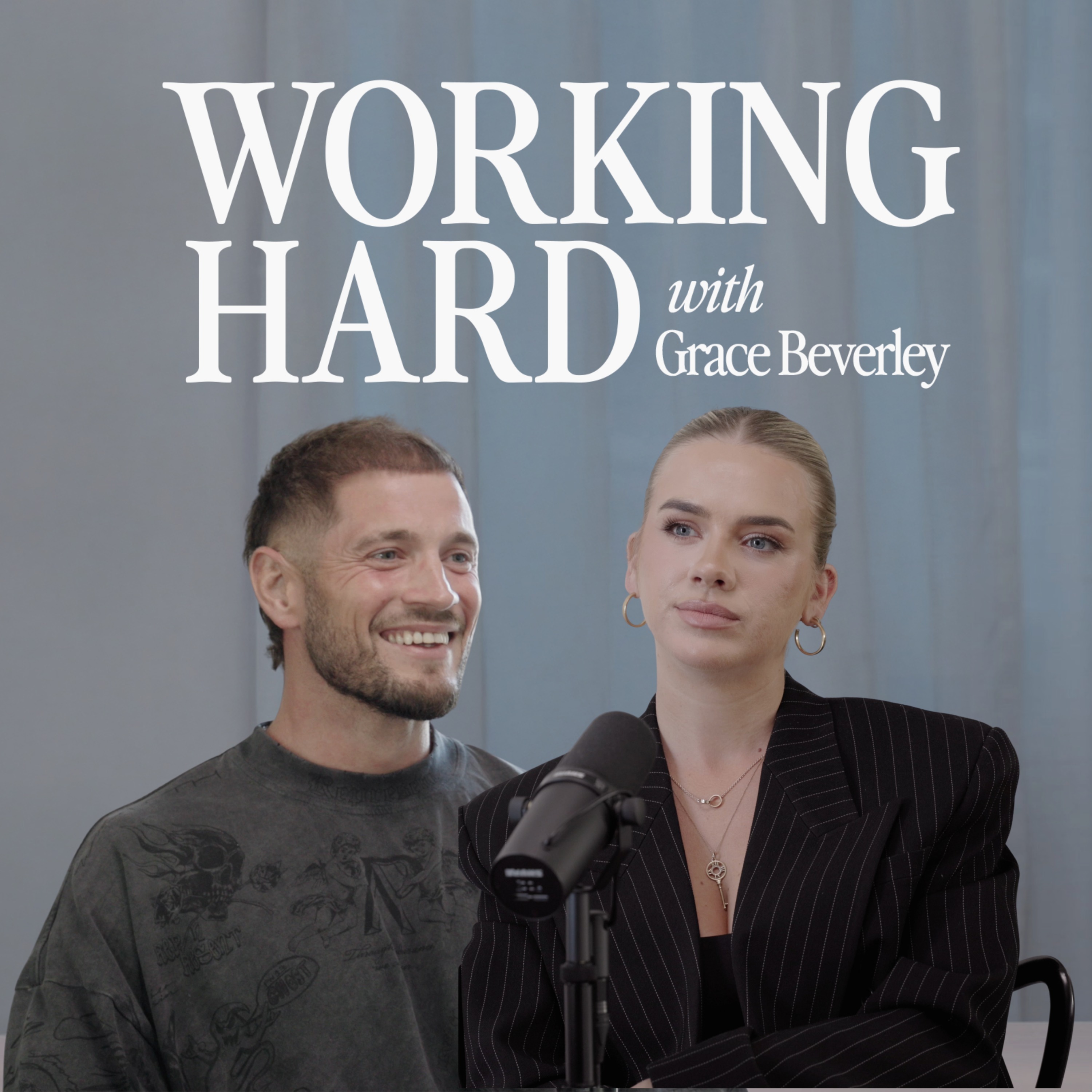
Host: Grace Beverley
George Heaton, Founder of Represent and 247
George Heaton discusses his journey with Represent, the importance of discipline in business and life, and how he transitioned from an early entrepreneur to leading a successful fashion brand.
Written by AI. May contain mistakes.

Get the gist, explore an idea or ask about something said.
 Claude
On Working Hard with Grace Beverley, what are the key points of this episode?
Searching your listeningAutomatic transcript. May contain errors.
0:28Hey, it's Adam Grant from WorkLife, a podcast from TED. software, you'll work smarter, not harder. Freshworks uncomplicates. Learn more at Freshworks.com.
1:00Go to Upwork.com now and find your freelance expert. That's U-P-W-O-R-K dot com. Post a job for free and get started today. Hi, friends. Grace from the Working Hard podcast here. When you're stretching every dollar, a little goes a long way, and Walmart Business is here to help. They make it easy to order what you need from tech and cleaning supplies to everyday essentials, all at low prices and with helpful tools like spend tracking and tax-exempt purchasing for eligible organizations. Because when your operations are smooth, your impact can be bigger. Visit business.warmart.com to get started.
1:43What is up? I'm Grace Beverley and welcome back to Working Hard, the podcast shape guidebook on how to improve your own life and achieve what you actually dreamed of doing. Because life's too short for boring podcasts and bad advice.
1:57What is up and welcome back to Working Hard. I seriously can't believe this podcast is old enough to have returning guests but after we had our first ever guest Connor Walker back on so many of you asked for similar episodes with our earliest guests and so I've been so excited to talk to George Heaton founder of Represent today. When I spoke to George back in 2021 Represent was a huge cult success but to be totally honest I'd only just discovered them and now you would struggle to find anyone with any sort of interest in fashion who hadn't heard of them. And in the last year alone, they opened flagship stores in Los Angeles and Manchester, grew their team to over 100 and are projecting turnovers of over 100 million.
2:32But what I'm most excited to talk to George about is his approach to his lifestyle and the discipline that rules his every day, which is now entrenched in his business too. And before we get into this episode, if you could just go and follow the podcast on the app you're listening to it on right now, it is not something you might think of doing, but it actually helps the podcast a huge amount. And it also means that You get the podcast exactly where you want it every Monday morning so that we can give you the weekly boost you need.
3:03Thank you so much for joining me. Thank you. Cheers for having me. In person for the first time ever. Big growth for, I guess, for both of us actually since last recorded about four years ago. I can't believe it's been that long. I know. It really doesn't feel like four years. But how much have you done since then? I mean, we'll be going into how much you've done. And I feel like with the business's growth in that time, even at that time, Represent felt like it was really having a moment. And I think the way you've been able to sustain that growth since then, and also you as a personal brand and just seeing the whole movement really go from strength to strength, I think has been really, really amazing.
3:44I think that was the start of like where we're at now, really. That exact moment was like the start of the huge growth that we had. Yeah. And I can't wait to get into it. So first of all, I always ask every guest whether you feel like at the moment you're more working hard or hardly working. Come on. Please. Always working hard. Yeah. Only setting you have? I guess so. Yeah. Try to relax from it, but I can't. And do you feel like you're able to get like little bits of relaxation in say a week or a month? Or are you the type of person that fully switches off in some settings or are you fully always on?
4:19I think I'm fully always on within. So like in the mindset, yeah, fully always on. I can detach myself physically and do other things, but I don't think you can get away from it within your mind. I'm sure you're the same. Yeah. And I think there is, I mean, we'll go into it and we'll go in a lot into your routine and the business, but also personal brand. And I think that there is this real catch 22 when it comes to building a business that is somewhat tied to your personal brand, or even if it's not to your personal brand, your kind of ethos and the way you live your life and all of that and the downsides of that and how we can really create success that's lasting success whilst also understanding that we are human.
5:02Right. And there are some limits there. Yeah. it's a double-edged sword isn't it there's like duality to it because you set yourself these crazy standards and you have to live to that persona that you've like put out there and that's your image so then that gives you this opportunity to actually do that um but at the same time it does weigh heavy on you when you know everything has to revolve around that yeah of course and i want to dive into what your hard work actually looks like you've spoken a lot about routines and what you stand for and kind of what you see as not just this view of work but this view of kind of what your whole life should look like when living this kind of optimal life what does your kind of daily routine look like now it depends where I am I spend 70 % of my time in the US 30 % in the UK so like when I'm in the UK we have a gym and stuff in the office so at the mornings I'm in the gym and then we just work throughout the day it's office till 6 7 p.m and because I'm there for only a short period of time you've got to cram a month's worth of stuff into one week every month but over here it's the opposite like when I wake up here obviously I'm eight hours behind the UK so I've got to catch up with everyone that's finishing their day in the UK so I'll wake up super early here so it's like 4 a.m till midday yeah oh because I a lot of my calls start at like seven and even then i try and get like some sort of morning routine in before that seven seven's five p.m at home right so then i'd prefer to like be on the home time zone and not have to have them wait for me um and i think that's just like a disciplinary thing but over here yeah it's work until around midday then i'll train get my training and whether that's one or two hours and then my la day will start everyone starts later here they start at like 11 so i can go to the office here in the afternoon and it seems like morning and get the day of LA done so some days feels like two days yeah I was about to say great so you get two yeah which is great but then by the weekend there's no days yeah do you take full weekends off um it depends what we're doing a lot of the times out here and we're doing a lot of creative stuff so it shoots and campaigns usually I'll do them on the weekends so it doesn't disrupt the week even though it's part of the the work yeah of course we're so gonna have a good time talking about burnout here um and how does your routine look now I guess versus what it looked like last time we spoke like what would you say are the key differences um I the what happened in 2021 was I hired a CEO so I stepped out of the role of trying to do everything within the business and he allowed me to just be in what I wanted to do which is product creativity and content.
7:49And I really leaned into that over the past four years and put all my effort into those things. So it's not like I don't have to do finances. I don't have to do monthly, like weekly check-ins. I don't have to see how people are getting on and what's going on in different departments. So I'll have a lot more creative freedom within what I do. And what about the kind of what you do outside of work or I guess not so much outside of work, because it feels like you have this kind of work-life integration rather than kind of like this is me living this is work and everything but what would you say is the key difference in the things that you do as a person in your routine so things like working out I don't know how you eat like how you maintain I guess this what you've put out as kind of I don't want to just be someone who works hard I also want to be someone who's super healthy who's super fit all of that kind of built the brand around my lifestyle so like i put 247 out actually just after i'd met you on that podcast and that was like my way of being able to put my physical work my mental work and like my training my diet my exercise into the brand so that could like become something that was intrinsically linked to the brand but also me improving myself and i guess it feels kind of like selfish when I look back at it like why I did that but if it made me feel better and it made me be able to include every hour of the day into represent and now that has its own whole ecosystem where that's like a brand for itself so what I try and do is like whenever there's something that I'm into or enjoy if I can bring that into the brand then it can make something of itself then I'll do that yeah and I think you know you can always look at something as selfish but I think if we were to look at that as selfish, then we'd also look at a lot of the great brands that have been built as selfish.
9:40Same with great products, all of this, like so many of the best products and best brands have come out of the founders need for that brand or product to exist. So yes, it is entirely self-serving, but it's so self-serving that there was enough passion to actually be like, do you know what? I'm not just going to go out and try and find this product. I'm actually going to make it. I'm going to make my whole life around it. I'm going to try and make it something big all of that especially like if we go back down the route of what 247 is and represent like it changes people's lives people dm me every day about how it changes their lives and if that's just something that i'm passionate about that i can do for other people then why wouldn't i do that yeah i definitely say actually you're one of the most motivated people that i know and it very clearly comes across in everything you're doing and all parts of your life where would you say that motivation comes from i think from an early age definitely my grand my grand dad and my dad.
10:34Like all I would ever see them do is work. They would drop me off at school and they would work. And my mom had picked me up and I wouldn't see them until they were going, coming home. And I'm going to bed at eight, 9 PM because they've been at work all day. And that was seven days a week. So I was like, that was kind of bred into me. And then when I actually wanted to build the brand, I had to then live up to that standard because my dad had set it in the family and he, and I didn't want to go into the family business. So I was like, okay, how, how do I match that standing and how do I make something of myself that wasn't through him um so I just felt like I had an obligation to do that and I think after so many years of doing it yourself you just kind of fall into it and I would say become obsessed with it yeah no I totally see that I also think that there's two kind of schools of thought when you grow up with parents who work all the time there's one side seeing that as a positive and being like they worked super hard that's now ingrained into me and there's the other side of kind of there being an absence and then kind of being like you know say if you're saying they were they'd pick you up from school and then they'd work the whole rest of the day and you wouldn't really see them I could also see why you would see that as a negative yeah why do you think you specifically saw their hard work as something that was positive and I guess I don't know whether it allowed extra freedom rather than it being something that you could also see as like I never saw them and isn't it important I think it just I think it depends personally on how you take it doesn't it and well with my my dad I was like he had a sick car and like his house was better than my friend's houses so for me it was motivating I'd be he'd pick me up in this Range Rover and my friends would always be like oh well your dad's car's fucking huge and sick and I'd be like it kind of made me proud and then like you know if your kids would come home for dinner after school they'd like come through your gates and be like whoa your dad's house is amazing yeah coming through gates for sure and i would sit there and think like shit yeah that's why you work so much but then there's levels to everything and that's something you realize later on down in your life and like my dad used to take us to this little place called abasoc in wales and like compared to what at school where everyone thought like we was like the big dogs we'd go there and like we were nothing compared to everyone there and then you'd realize like whoa it was like these people must work 10 times harder than what my dad would work um so it's just like a lot of realization and I think he showed me how to like understand I can kind of guess levels of wealth of where you go and who you'd meet and what you'd see and I think unless you see things for yourself in person you can never get to that point yeah yeah no I think that's I think that's really true I think also as someone who like I don't know when I was younger I never saw my mom like she was always always working and I think it's that definitely rubbed off on me too at the same time there's parts of that when you're kind of looking at the type of life you want to build in terms of you know a family and being able to kind of see them or whatever it might be I also don't think I've necessarily got that balance right I'm like I've definitely inherited the like hard work like you know able to do long hours able to really work for what you want but on the other side I'm like hmm do you feel like that'll ever change because I always feel like, is there a point in your life where then you actually flip that switch and you become the family person that you want to be?
13:57I mean, hopefully. I think, you know, like there's the, I guess, when any of us are working for something, the majority of the time, we're probably working for more freedom or the ability to choose what we do with our time. I think there's definitely a kind of tripwire there where a lot of us, what is enough gets more and more and more and therefore it's very hard to kind of ever be like oh yeah do you know what I've got enough of all of this and I'm going to concentrate on something else or I think a lot of us like for me so much of what I do like I love it so much like it is somewhat of a game to me like not in a negative sense like it is it is stimulating it is fun it is the ability to build something that you yourself have created and dreamed up and spend time on that like that is such a huge privilege yeah that I also want to do that I think it's you know there's always trade-offs yeah yeah I always think about it like I watched my granddad work himself literally to his grave and it's like when do you when do you actually turn that off or like I mentioned earlier is it just levels to everything where you always want more like when are you able to actually realize like, all right, this is enough now.
15:13Yeah. So let's zoom out a little bit and we'll come on to speaking a lot about kind of ideas of balance and things like burnout and things like, you know, when is it enough? For anyone that didn't listen to our first episode four years ago, I'm pretty sure it was four years ago. I'm now going between four and five years ago, somewhere in that vicinity. When did you decide to start Represent and what was the initial idea for you kind of in your head what spur do you want to really want to start this brand there was a few things I was doing graphic design at college so I was heavily into like graphic t-shirts and west coast brands that I thought were cool streetwear was huge that was like really blowing up in the culture and Instagram was just starting so I kind of had those things to like bring a bit of luck to me um wanted to build a website and just sell products and thought like is it possible for me to make money with my art because I remember my brother went into a um a lecture in his uni and he came out with it with two things he was like most artists only make money when they're dead and I was like I'm not fucking I'm not doing that and then he also said the average salary for a graphic designer was 40 ,000 a year and I wanted my dad's car and I was like that's not gonna pay for that you as well that's got three years to make up my dad's car and that's if I'm find nothing else and I don't live anywhere.
16:32So I thought, right, I need to do something here where I can actually make money and enjoy doing it. And that was, that was the beginning of it really. And so how did that go from an idea of this kind of lifestyle you wanted to build from your, for yourself to actually a business that was selling physical products? Walk me through that process. Well, it started off as just, I wanted to make a bit of money, right? And I knew that I knew a guy who owned a screen printing place and I knew that Big Cartel had just started which was like the Shopify of the 2000s so I put a few t-shirts on the Big Cartel that I printed and sold it to friends and then sold that to friends and then everything was on PayPal back then so my PayPal balance was just building up and building up and I was going to uni whilst this was happening and I would take my orders to the post office before it and then I'd come home and I'd design after it and I even put everything I did at uni was based around the brand so like we just spoke about like my whole life is based around represent now i was doing that back then and i didn't even realize like every like uh degree like subject that i would do it would be like how do you bring women's wearing to represent how do i make this garment for this price so intrinsically i was just like building the brand whilst i was still working as a like a uni student mike came into the brand as well and after those three years of university i thought to myself like right i'm probably going to need to get an accountant here and make a limited company because i think i've made over 70 000 in the bank or whatever so i went to my dad's um who was it now my dad's accountant who was just like he would write everything down on paper because it was so like backwards and my dad's business was so small back then and he was like did all this accountancy stuff for me and he was like george if you've not got like a hundred grand in the bank i would stop doing this and i just i remember going home with mike and was like checking paypal and looking at the bank and being like we should probably carry on then and uh that's when we realized like okay this this can be a business and i employed a few of my friends um one of them which is still at the brand now um done very well for himself and like we did we just did everything together we lived every single minute of our lives together um printing t-shirts like sewing labels and taking them to the post office and just looking for suppliers, trying to figure out what Instagram was at the time, how we could use the brand through Twitter and other things like that.
19:00And after like six or seven years of doing that, the brand had grown significantly where like I could have a full team and I could go and get myself a unit and start holding stock because before then it was just like scattered around my mom's house in the garden shed and like it wasn't, it didn't feel real so the moment where it actually felt real was when I moved into this like warehouse unit thing and I was like fuck we'll never fill this thing and showing off in a year it was full so I think that was like the beginning and I think it's such a good testament to like if there's so much we can see about other people's business journeys online now that we couldn't see you know 15 years ago I think it's easy to really look at other people's businesses and think you have to start with a big idea.
19:47And I think it's fair to say that you didn't start with a big idea. You literally just started. And I think the importance of just starting over starting with something that's like completely conceptualized, like very clear, this is what we do. Like you're going to learn so much about your customers the second you're actually selling products. And I reckon those first few years of like everything not necessarily being official and it just being like, well, we're making a t-shirt, someone's buying it, I'm taking it to the post office. that was so i reckon that was so pivotal and actually truly understanding your customer in the longer term right but you so easily could have put that off for three years and been like no i'm gonna make sure that i'm very very clear on exactly what we do and don't do and only start when we can afford a warehouse or a unit or whatever yeah like i didn't even make a present presentation deck till seven years into the business there was no there was nothing couldn't be me i love a little presentation i'd make one for everything but yeah never even did that never realized like what most people started businesses like like for me it was just go and do something and just do it and do it and do it until something works and then do that more yeah well i think that's a really good ethos and i think it applies to a lot of things um i really do think especially in the world of social media you can over plan so much like it is so easy to spend so much time doing things that isn't actually doing the thing and i think that this information overload you get on anything like you can spend i don't know three years like looking on youtube about how to start investing money and until you actually start there is zero value in anything you're doing and as much as it's important to educate ourselves i really do think that like it's tough now because yes you have all of this availability but actually it's overwhelming yeah it creates this like kind of decision paralysis and action paralysis when you're kind of not just being like, do you know what?
21:40I'm just going to put this in here, work out how it works and go from there. The market's uncertain, revenues tied and hiring on hold. That's why results driven companies are using Upwork to keep work moving. Go to Upwork.com today and start hiring proven freelance talent fast. No bulky overhead. No rigid long-term contracts. Just the right expert right when you need them. Work smarter and faster with Upwork. Go to Upwork.com now and find your freelance expert. That's U-P-W-O-R-K.com. Post a job for free and get started today. Wix. It's where website creation meets AI and where your boldest ideas become real.
22:21It just takes one platform to build a site that looks great and does everything you need it to. And it just takes one person, you, to start taking care of business like a 10-person team. With AI tools for creating an entire website from scratch or testing new ways to make money, Wix is there with you from day one. Try it out now at Wix.com. In business, communications is everything. That's why I use Ultitel. With voice calling, video conferencing, messaging, chat, fax, and more all in one, I get unified business communications that work wherever I do. All powered by AI and for just$18 a month.
23:00Request a demo today by calling 1-844-858-2835 or learn more at ultatel.com.
23:11And I guess if you looked at the business over the past 15 years and charted the kind of success of the business and different inflection points, what would you say the biggest points of change were and what did they look like? um i'm gonna say the biggest point was like personal growth and like really leaning into myself and trying to actually like become a better person and putting that into the brand and then realizing this can work as a thing that helps grow the business and i remember back in 2020 like we were at a point where we'd done the same thing for three years same revenue like not much profit we were kind of stuck and we thought everyone else in the business was like oh this is just how it is you just get to this point and then you start another brand or something and i thought there was no way like we can't grow this substantially from there and i spent like that whole year just luckily covid happened and i was stuck in my house and all i would do was read books read books listen to podcasts trying to understand like how businesses get from one point to another point um what makes like perennial sellers how do we like replenish stock like what do we actually do to to like get more of a market share or go to a different category or to go to a different geography and that year was like the inflection point where the brand just took off um and that was like the hockey stick time so we'd already been going like nearly 10 years then and not really done much at all i think we were stuck at like around eight nine million pounds in revenue and then we went 20 then we went 50 then we went 18 then we went 100 so um that that was the point that like a lot changed and I learned a lot about myself and learned a lot about like how you actually work a business and what were the key things you changed in the business at that time like if someone was listening to this and they've been at a sticking point in their business for a few years what were the things that you implemented then that you would recommend they implement well it's obviously every different every business is different even in fashion but like for me it was supply chain so it was I was so obsessed with like making things in the UK and it had to be this way and like we would print a t-shirt then it would get shipped to a supplier where it would get washed and then it would get the label put in then it get packaged and it come back to us and i was just realizing like we realized how much money we were losing on all these little things that didn't matter to anyone um so we eventually moved all our production to portugal got a much quicker supply chain we're able to do much more better quality everything like that at a lower price point and we'd already built the brand on this uh retail price point where people wanted to buy it like they knew it was like luxury and now we were able to give them more for their money and quicker and easier um and we just started putting products out like that and it gave us more time to do other things and then that really blew the business up yeah i think that's really interesting and like from my own experience within businesses and especially like e-commerce businesses i think it's so easy again to look at all of these 100 things that you could be doing and actually like the core of your business at that point was selling t-shirts right i'm gonna guess um so how can you make that process of even if it's just that process of selling t-shirts how can you make that one process as profitable as possible as quick as possible as replicable as possible as scalable as possible like even if you just double down on that one thing i think one of the biggest moments that i guess i learned like do less better like really really double down on like what are you doing and how can you make that thing that you're doing so much better and better for the company as well.
26:43And I think, again, it's one of those things where you could have been like, oh, we're going to try this huge new category or we're going to try this huge new thing. And we're going to spend so much money on it rather than just being like this one thing, the main crux of our business, the margin's not strong enough and it's not scalable enough. Focus on that first and then move on. All you need to do is a few things to make something so much better. And we did that, but we did it multiple times. So at first it was product, then it was like warehousing, then it was shipping, then it was social media.
27:13And each one of these things just grew the brand significantly over and over. Yeah, that's really interesting. And I think obviously last time we spoke, I think we were at that 20 million year. So you'd kind of, you just, I assume, like over doubled in revenue from the previous year, but you weren't to know that you would have been pretty much doubling every year since then, which is incredibly, incredibly impressive. that was one thing you did you know really doubling down on your main business and working out how the margins could be better how the supply chain could be better what do you think you did and the business did in the next few years to maintain that massive growth every year and mean that you weren't just hitting another ceiling first of all it was hiring a ceo that then gave myself and mike this creative freedom that was a huge thing then he hired a full c-suite which we never had, which then obviously delegated their teams into doing different things and flourishing the business in ways where we couldn't do it because we didn't have the capacity.
28:11And there was people in the business then that could do things that we couldn't do. We didn't know how to do it. There was so much better than us at it, whether that is supply chain or it's logistics or it's finance, whatever. And then we went out to wholesale as well and we were prepared now. Like we had good suppliers. We had good terms. We were able to produce stuff on time in full. went out to all the retailers selfridges having nickels harrods like every one of those managed to deliver to them on time everything sold through they doubled their orders then that happened over and over again and now the business has a scale where like there's so many things happening now that i feel like i'm there's that my my ceo says is like you feel like you're the you're the captain of the ship but you don't know how to fucking slow the ship down and there's so many things going on that like if something breaks in the hull of the ship, you don't even know it's broken.
29:01Within that time, I can imagine there have been so, so many issues as well as so many things that have gone right. How have you made sure that even though you're hiring really great people, I guess, and being clear on what your growth trajectory is, how have you made sure that each of those decisions is the right decision at any point like that ceo was a great decision it also could have been a terrible decision and you only would have known by actually doing that how have you made sure that you've stayed close enough to that whilst also giving yourself the extra freedom to create um i think it's by having like brand values i know it sounds corny and like you read nike's brand values are apple's brand values but if you can put them in front of a person that you're going to hire who's a big role and they can bleed them values into their team then everyone should be on the same wavelength and should know how to get from a to b and if they don't look they got to go people people that'll get you to 100 million can't get you to 250 million in most cases so then you've got to hire again and do the same thing and bleed them values into other people um but i feel like i did i did get lucky with the ceo that was someone that i'd known five years before it and we'd always like talked about it if we'd ever grown to this size and like i'm not a great people person.
30:19I'm not great at hiring at all. Um, but he is, and he is like, he's exactly what I'm not. And I'm exactly what he's not. His creative skills are absolutely terrible. Um, but my skills on like, yeah, geography and territory and hiring is not great either. So I think it's about finding the right people who are good at what you're not good at. Yeah. And really understanding your strengths as well. Cause I can imagine and your weaknesses, cause I can imagine if you didn't have the right self-awareness around that, then you're not going to be hiring around too. Yeah. And you know, I'd go into finance meetings or management meetings, whatever it is.
30:48And they would suck me at my energy within an hour that the rest of the day, I couldn't do anything. So I was just wasting my time and wasting Mike's time by sitting in these meetings and just not getting anything from it and not being able to work on improving the business because we were just doing mindless stuff that we're not good at. Yeah, it's so funny because this is... I mean, I'm definitely out of some of this stage, but I'm still in this stage in some aspects too. And I think that for me, the real mental block has been the fact that anytime I'm avoiding things that I don't enjoy and that I'm not good at, I feel like I'm not being negligent, but I feel like I'm kind of, I still should be like, you don't just get the good sides of the business.
31:30So anytime I've been like moving more away from the logistics and the finance and the, you know, things like territory expansion and the very like granular aspects of the business, I feel like... you're doing something wrong. I'm doing something wrong. But I think like there's, you have people in them places to do those things. So just have an overview of it. Yeah. Or just ask the person who's in charge of it at the end of the day, like, how did that go? What happened? Can I see which way you've gone with it? And they're always happy to tell you because they know you're interested then. You could just leave it and not think about it.
32:04I think it's so funny though, because like building a business, you have so many things that go wrong. And I think early on in the business, I put so much trust in people that I shouldn't just because they looked the part and I didn't like I was the 21 year old like running around in leggings being like well we should do this and like they were like we've been in this business you know like we've been in this industry for however many years and just I that was so to the detriment of the business that I think still now I struggle being like do you know what it's actually good for me to be concentrating on the things that only I am good at even though I know in my head that's the right thing because I so don't want to make the same mistakes again and at the same time then I'm just half the time I'm micromanaging and I'm also just I'm zapping my own energy what were the mistakes that you made you mean you hired people with great resumes that didn't actually contribute to the business yeah and just went right for the business and didn't hold the same moral and kind of as you say brand values that I really had for the business.
33:09I think like, you know, when you've built a business based on very specific values, it's natural that as a business grows, those values kind of flex with time or kind of get, you just understand them better and you understand the nuances of them better. And I think I was almost convinced at that stage that sometimes you just lose values as you grow and that absolutely was not true so it literally took me two years and so much money to re-instill those values in the business purely and I was like oh my god that like why did I even do that but it was because I thought I was doing the right thing for the business I think we're different in that way that like I me and Mike worked 10 years before we hired like anyone big into the brand so we kind of done everything and we knew what was good and what was bad in every aspect of the business to a certain degree to like this this level here so when we were hiring people we knew what they could do and what they couldn't do um but you look you're always gonna have the wrong choices in life like you just got to move on from it quick yeah i think it also really shows how much self-doubt can actually not just get in your way in terms of like not taking opportunities and all of that but it can get in your way by you not backing yourself and actually putting right backing other people when why do you not have that same doubt about them because you've proven to yourself more times that you can do the hard thing than they've proven that to you and actually really understanding your sense of self and understanding your strengths and your weaknesses and like just knowing yourself can really help to actually you know it's not just nicer for yourself mentally but it actually really helps you to be able to build a good business because you you back yourself and you understand what you can do yeah and you build that confidence over how many years you've done it and you've proven successful over and over again right so you should know really but like I still have that problem now like especially in the creative side of things sometimes it can take two years to build someone up to the level where you wanted them to come in at um like I have this story about my so Mike does graphics he's like all in on graphics and he has like a left-hand man to him called Will this guy came into the business and for two years Mike was like fuck don't he's not doing it right he can't get it he's not getting it like can we get rid of him like can we do this like he's just not working do you want to put him in somewhere else and now he's like the best graphic designer fucking in the world and like does everything that mike was doing to a better degree and now it's like this thing things just take time a lot of time and you gotta have patience yeah no absolutely and what would you say the best days in the business have been since we last spoke as in not in terms of revenue or whatever but your best days in the business oh what like breakthrough moments yeah whichever I don't know I'm always like level-headed with everything whether it's good or bad I'm always kind of in the same mood and same mindset there's been amazing launch nights where we're just like fuck I didn't even know that many people would come on your website and like see what you're doing and look at it and buy it I think one of the best moments is we built a relationship with like Liam Gallagher's team and then Oasis got back together and like we already had the presentation ready to give them to see if we could do a collab and then that happened and within like three months it's online ready to go and we like had one of the best sales nights ever so I'd probably say that I think that was so like intrinsically linked to us and what we'd done over the past years so yeah I think it's so funny because I think that every time you ask like a business owner which the best days are they're never like I don't know the day you got secondaries or like any of that it's always like the true days that reflect the passion and the moment like and the kind of reason that you started the business in the first place.
36:50Like, I totally understand why that would be your absolute best day. But it's so funny because at the same time, anyone else looking in could be like, oh, surely the day you got like this much in your bank account or whatever it might be. Yeah, but that wasn't the best day. It was just a strange day because it's so different to the norm that like you don't actually know what to do with yourself and endpoints. Yeah, no, absolutely. And what would you say were the worst days of the business since we last spoke? um i always have a lot of fear and doubt with everything we do whether it's products or categories or like launching women's wear that's been like an 18 month thing that we've kept under the shadows for so long and then did it um and that's going to take so many years for it to grow to be something substantial like the men's wear um but worst days man i don't know it's so hard because I'm actually pretty pessimistic.
37:45I'm not an optimistic guy. I'm pretty pessimistic. I'm a realist, right? I kind of understand how things are going to go before they happen. And my CEO is the absolute opposite. He's so optimistic about everything. And even if we've had a bad week of sales, he's so happy about it. And he says, well, you have to do this and do this and enjoy that and look at this. It's doing well. So I don't know. I try to just stay on the same wavelength, whether it's things are good or bad i try not to change my mood too much and not have many many highs and lows yeah i think that's a really good point i think we've spoken a lot on this podcast before about um the the ben horowitz quote that in a business you're either in a state of euphoria or terror at all the time and i do think first of all i think that's true and that was definitely like my experience so you got to keep that within yeah exactly like that was definitely in my experience at the beginning but like learning how to be up within the down and just be able to and also not allowing those huge moments to kind of give you too much of a high sounds mean like of course you want to be happy and you want to celebrate it but even on I would say the best like sales days we've ever had or whatever we've probably had some of you know some real logistical challenges we've had some real you know might be bad news or bad reviews or like whatever it might be that like you're so up and down if you actually were to ride all of those waves you actually you'd be like it would be like you're on drugs all the time like it would be so intense on your nervous system you have to like i feel like the first few years i really let that i was like up and down and up and down it actually makes you ill yeah it truly truly does i think that like our nervous systems are not equipped to deal with it you know what is it like those um memes that are like unfortunately my body doesn't know the difference between me being like chased by a bear and an email and it is literally that within a business it's kind of because a lot of the yeah and a lot of the news you get is like by the way this is going to cost us 300 grand right and you're like oh okay like that's you know that's a fucking load of money sometimes you know i mean could easily sink a business like all of these different things it is so up and down this ability to develop this level-headedness i feel like is pretty essential i think it's a muscle isn't it and you grow the muscle and you've got to maintain that muscle and you can't you can't step away from it um but it's such a funny thing like with me you like all the guys I talk to and girls that I talk to that are in this position we all feel the same everyone has that same like fear and also like commitment to that fear and worry and like it keeps you up at night but it's also good because it makes you know you're going in the right path, I guess.
40:31And you've said that in everything you do and new categories and everything the business does, you have a lot of fear and doubt and you've said you're naturally a pessimistic person. At the same time, the business has done so incredibly well and there have been huge wins as part of that. Could you tell me a little bit about how that kind of fear and doubt manifests? Is it in the lead up to a launch? Is it generally around what you're doing? Is it kind of a constant to be able to keep your mindset in like a level place? Yeah, I think so. I think it's like, you know, I've seen brands come and go so many times throughout the 15 years that we've been doing it.
41:10And I've seen brands blow up and then disappear. And I've seen brands get to great levels where they then go into too many categories and lose what they were good at. And then just the whole brand image just changes and then the customer disappears and then they're back to zero. so I always have that fear whenever we're doing new things um whether the customer will perceive it well whether the team will perceive it well like whether it's the right direction to go like when you're at the the helm of it like them decisions can't they weigh on you right so yeah I always have that fear and it's not something I shy away from and I'll always tell the team like I'm worried that this will happen or this will happen and which way do we go from here um so it's just yeah it's always in the back of your mind and do you find that the you're fine carrying the mental load of that based on the fact that you know yes of course it's your business but carrying that every single day is a lot especially when you're constantly proving to yourself that you know you're doing really well I completely agree I personally always have like a little bit of existential dread just like as a halo around me yeah and I think it's it's good like i agree so many businesses fail so it's important to like have that in the back of your head at the same time it's a lot for you to always be carrying that even on the good days i think with myself it's double-edged sword i think it's half fear and half confidence um because i do have a lot of confidence in the business and i know where i'm going with it i know what i want to do but there's just always that lagging fear and i think with us especially like very like social media driven you know what a product's going to do when you put it out there and you see the reaction from customers and you read your dms or whatever it is and like if that thing isn't there then you realize like okay this is probably not going to work so well um and then that's when it that's when it starts to creep in have you ever had it like in the lead up to a launch like incredibly overwhelmingly like is there any moment that you can remember having that kind of doubt almost a form of dread in the lead up to something around percent we're doing um not really because i'm i'm very like product focused like i keep my hand in the product at all times so um it's like kind of led by me so i kind of know what i want to do and and when i have given off times where like i don't i've not touched something and usually they do fail and i know it sounds bad but like i need to keep trying that because there's going to be a point where I'm not the brand and the brand isn't me and like although maybe majority to this day like the customers want to dress like me and want to wear what I'm wearing and want to do what I'm making see what I'm making and buy what I'm making but the brand has got to grow beyond that um and I think like we've proved ourselves with that in some areas and we've proved ourselves wrong in some areas with that um so it's just about finding that balance of whether it's right or wrong and that I think that's the struggle like we have this collection called owner's club which is like logo on the front large logo on the back um really good quality jersey but the people that buy that aren't the people that follow the brand's story like through and through and understand who we are like I can see 20 people wearing that hoodie in the street and none of them know who I am but then I'll see someone wearing anything else and they're always like oh can I get a picture love the brand love the story like so we've kind of built different uh customers in different areas And so how do you know which of those things is right for the brand?
44:37Because I can understand. We've just got to keep testing. I think we've just got to keep testing over and over. Yeah, that's fair enough. And you've obviously said which are some of your best hires in that your CEO and C-suite in general was a huge turning point for the business. What hiring mistakes have you made? Hiring mistakes? I think in product, because that's where I'm majority. I think hiring people that have their own vision of product that isn't aligned with the brand is a mistake. And when someone has not, maybe it's an ego, maybe it's just like it's what they want to wear, but it's not exactly what our customer sees the brand as and not what they've grown up with.
45:14That can always be a problem. So, yeah, definitely in products, I've made some hiring mistakes. Yeah. And I think that's one of those areas where like, as a founder, you're constantly trying to work out what you're in too much and what you're not in enough and trying to work out how many things you can delegate whilst also not losing the soul of the business. And I think it's really easy from the outside to, you know, I get DMs all the time, for example, when I'm like, this is my schedule at the moment, don't actually know how to change it, would love it not to look like this, but this is what it's like.
45:44And people are like, just delegate, delegate. And it's like, cool. so let me talk to you about where that goes wrong like yes delegating is incredibly important and i absolutely need to do it more at the same time you can't just delegate everything is product one of those things that you've realized that you will never properly fully be able to delegate um i would hope to do it but i don't at the moment no at the moment like the vision has to come from myself and i have to kind of like tweak everything along the way um which always causes problems in a team because people want to own stuff and they want to design stuff themselves and they want to have their own saying things so I do try my best to like not be so involved with it fully but I also kind of know what our customer wants because I'm sit there and I listen to them all day every day and I talk to them and I look at them and all of this stuff so like I do know what they want um so I'd love to be able to find a group of people just like me that can do the same thing as me and like understands our market um on a product level like designer level yeah let me know if you have a point yeah it would be in the market but it is interesting too because i often think about like what could at the same time we need to be delegating so what could someone in the team be doing more to get to reflect that better and then at the same time i'm like i live and breathe this every single second of every single day like i could be i don't know the sickest I have ever been and I will literally still be consuming different areas of the industry and everything I'm consuming through a lens of the business because it's so ingrained.
47:16So it's like, at the same time, I don't think the majority of the time that it is a team downfall, like that it's something that, of course, they should really understand the brand. They should really understand what we stand for and all of this. But at the same time, this gut feeling I have of whether something is taller or not, that's going to take them the equivalent six years to build and every single second of every day looking at every single part of social media in the exact eyes of the brand and that's just exactly what a founder does that's the hardest part and i don't think you'll ever get out of that until the brand becomes way bigger than you um and i look forward to that day where like i don't have to do anything and the brand just like does what it should do like a well-oiled machine yeah um but that day is not yet but i don't know i i really don't know you see it when like creative directors step down and brands just tank it or the founder disappears and then the brand disappears and i think that's one thing in this fashion industry that like people can't get around and i try and like look at case studies like who's actually been able to build a brand and then step away from it and the brands still go yeah do you know emily vice glossier oh i've seen their store on melrose actually i think that's one example but you know that's consumer product like lipstick and yeah so if yeah you're right you're totally right you know how much of like a purse persona is in lipstick i think i wonder how involved someone like aneen bing is for example like i think she you know you can so tell like if you follow her personal brand you can so tell where that's been integrated into the business, but that business is so much bigger than it once was.
49:01I reckon they've been able to do that well. But I completely agree. I look, I mean, fashion is literally the hardest business to be in just in terms of like logistics and multiples and margins and, you know, all of that. I, yeah, maybe we'll go out and try and find them. And I want to come on to talking about really like transforming your life and discipline. Obviously this is something that has been a thread through everything you've done, but has really become part of the business and become part of the business's ethos. You said in an interview recently that doing hard things makes you happy.
49:39And I really like this idea. And I talk about this type of thing a lot on the podcast when it comes to discipline and habits. Could you explain a little bit more what you meant by that? Yeah, I mean, doing hard things, whether that's, yeah, having to have a hard conversation with someone or running a marathon or like whatever it is that you find difficult and a step further than what you used to. I feel like if you can do that every day or at least as much as you can, it keeps you level-headed and it keeps you going. And that's how you're going to grow as a person, right? You can't grow if you stay in the same circle, do the same thing every day and never step out of your comfort zone.
50:17And whether that is, yeah, booking a local 10k or it's having to have a hard conversation with someone that works for you. Just doing them things will actually open up your mind to realize like doing hard things really works for yourself. And just like relaying that into the business, especially in like a work level, is something I love. And when did you start to really implement that in your personal life, I guess? Like, has that been the case for the past 15 years or has it been more recent? Never. Like I would shy away from it. I would shy away from it. But until like 2020, when I spent a lot of time looking in and doing my own thing and understanding like how to get from A to B, I guess I just became more unapologetic in myself and how I set my standards and how I expect people to live to those standards.
51:05And me living that myself always has like a trickle down effect, especially within a business. Like if I hired a CEO and then three days of the week I was playing golf, like he would be the same. He wouldn't live and breathe it, but because I live and breathe it and like, I'm so bought into it and Mike's so bought into it, like the whole team is like that. And it just creates this like essence of everyone working hard together. Yeah. Yeah. No, I think that's really powerful. And does it ever weigh on you a lot that you've got this kind of brand that is tied so into this ethos that you have around discipline and hard work and doing hard things?
51:46and you're also, you know, your personal brand is hugely behind that. And you're also blogging around it and you're doing like a lot of this kind of 360 content. Does that weigh on you? How much of that comes back to you? Yeah, it does. But also at the same time, I get to do it. And like anyone else would kill to be in this position. And I've been able to build myself into this position and like build up the confidence to be able to do it over all these years that like, I can't do it. So why should I complain about doing it when like, this is such a big privilege. And I think it keeps me in check.
52:18The way I've shown up on social media keeps me the way I'm in real life. And I think when them two things change, that's when it'll be a problem. But I don't think it can change for me. And if someone was listening to this and thinking, do you know what, I actually don't make myself do a lot of hard things. And I am currently in a bit of like a rut when it comes to my life in general and where I'm trying to get to and the type of business I'm trying to build what would you say to them in terms of actually making themselves do hard things like putting themselves in the positions where they are doing that as a habit I think one thing that I did that changed it a lot and on that term was this like it was a challenge called 75 hard and it was like work out twice a day drink this much water read 10 pages don't drink alcohol whatever stick to a diet and just did that over and over and over again and it just made me made my mind so much clearer with work and when then I was like seeing the progress in the running that I was doing and the training and then like once you start seeing progress then you get addicted to it and I think that's the same with anyone if they're in a rut and like they feel unhealthy like just start eating better and you'll see progress and then you'll you won't want to go back to the old things right so I think it's just creating habits and making them last yeah i spend a lot of time thinking about how obviously nowadays we're all we're all aiming for convenience in a lot of things like you know it's really easy to get your food delivered or even your groceries delivered or like whatever it might be that's the literal one example i can think of at the moment but everything is kind of convenience based we all want to do more things that require less energy in this expectation that we're able to spend more time doing things we love, which I don't think always happens.
54:03I think sometimes we increase the amount of convenience we have and increase the amount of ease we have around everything we need to do without then adding on, I don't know, a hobby or doing something hard or yeah, like something that gives you that kind of dopamine hit. And I do often think about the fact that we're kind of cheating ourselves of that dopamine hit that we get from saying you're going to do something and actually doing it just that simple thing every day if you can cheat that by doing some sort of shortcut instead don't get me wrong some of these convenient options are so helpful for when you're living like a very full life but at the same time if you are waking up just going to the kitchen working from home all day not leaving the house much like not making yourself do any hard things it is to me to me it would be very hard to do that and also feel good about yourself yeah yeah and i don't know if that's just me and i don't mean anyone with dependents who finds it a lot easier to work from home so that they can spend time with their kids or like whatever it might be i think we almost use that as a defense a bit too much and then we're kind of wondering why we're not happy right when we're literally doing three steps a day yeah sitting in the same place yeah getting things done but kind of feeling like a machine and then watching some tv and going to sleep yeah but like again it's a double it's a double-edged sword you got to do the hard thing to be able to enjoy the easy thing right and i think you've got to just um train your brain into realizing that like you can't go and order that uber eats unless you've done that 10k run or whatever it is even if it's something so small like go out and go for a walk and listen to a podcast that'll give you the reason to be able to eat the cookie whatever it is just always put something at the other end of the spectrum to make it worthwhile and i think that's how you can get them dopamine hits and like actually um kind of enjoy life more i feel like it gets very stale when you're just doing the same thing every single day and not like progressing towards anything right it's like that there's like a graphic that's like do easy things have a hard life do hard things have an easy life like yeah short-term pain long-term yeah gain short-term game short term I don't know once we perfect this we can sell t-shirts the market's uncertain revenues tied and hiring on hold that's why results driven companies are using Upwork to keep work moving go to Upwork.com today and start hiring proven freelance talent fast no bulky overhead no rigid long term contracts just the right expert right when you need them work smarter and faster with Upwork.
56:44Go to Upwork.com now and find your freelance expert. That's U-P-W-O-R-K.com. Post a job for free and get started today.
56:57Let's talk about burnout because the way you've talked about your schedule, it's obviously very, there are parts of it that are very intense and you're waking up at 4am and you're doing UK hours and LA hours, which I'm also doing at the moment and understand you know where the downfalls are of that have you ever experienced proper burnout i don't think so i really don't think so because i've i've read about it and i've heard about it a lot and i've never felt that like low from something um and i think that's because it's rewarding what i do is rewarding whether it is the the training aspect of it or the work aspect of it as long as i'm putting that effort in then something's going to come out of it whether it's in three weeks or three years or 30 years like I don't I don't ever feel like I've felt like it so I can't really talk on it that much do you ever feel it I guess to a smaller extent when say it's been like a few really tough weeks in a row and really full-on hours or whatever it might be yeah definitely and I just have conversations with people and that really relieves it from me I think just like letting steam off with whether it's your partner or your brother or anyone even if it's like I keep mentioning my CEO like I will just rant to him on like a Sunday night and he'll just tell me like how it should be and what what I should be doing and then I'm just feel relieved of it yeah yeah I've never really had anything deeper than that yeah which is obviously great I think that in terms of like being able to truly build a routine where you can have intensity without having the downfalls of intensity around truly burning out or completely zapping your creativity.
58:39I guess instead of then like true mental burnout, given you're doing a lot of creativity based things, I can imagine when you're having like a super busy travel schedule and also, I don't know, back to back meetings or whatever it might be. What do you do to increase creativity when you're feeling a little bit stunted based on how busy your life's been? I just use my notes pad on my phone and I'll just write down everything that I'm always thinking about. Whether I've got the time or not to then go and design it or put it to the team. I'll just make sure I just make them notes so that when their meetings are over or them flights are done or we're on a different place in a different time zone, I can just go back to them and then that'll then create the spark that then goes, ah, that's what I wanted to do.
59:21Let's go and try and do it now. Let's spend two hours doing it. But I never like block time out for things. That's not something. And I read and listen to a lot of people that do that where it's like, okay, every hour is, but like four hours of just, we're just going to design. I can't do that. Right. I'm just not that type of person. Yeah. But that's what I think is so important because like understanding the type of person you are in the type of position that gets you to do your best work is one of the most important things we can do. Because if someone listens to my method, for example, and they're like, absolutely not, that would ruin my day or like whatever it might be.
59:54But then that's like the important thing is that you know that. And I think a lot of, especially again, it's like with this huge influx of information from all different sides. It's like you can spend so much time consuming all of this and thinking you need to work like this or thinking you need to work like that. And actually, as long as you find a way that works for you and maintains what you need to maintain without completely rinsing yourself, then like truly that's what matters. And I think just create deadlines for yourself, even if they don't need to matter too much. which I think as long as there's a deadline there, then you're going to work towards something to get it done.
1:00:27Yeah. Rather than just letting it go or just doing it half-assed. I think if you put like, okay, this needs to be done by Tuesday, then at least instead of having to time block three hours every day until then, like eventually it'll just come together before Tuesday and you have to get it done by then. Yeah. And obviously back in September, was it? You sold a minority shareholding at the company. Yeah. has your life changed at all since that point because I can imagine you were paid a pretty good amount of money that came over to you and I you know I can see a lot of people looking at that and being like okay great he's gone clear he can do whatever he wants tell me about your life before then versus now I think something I've always done all my life is like go against what people expect me to do so like you would read that and think oh he's just gonna probably just leave the brand now and go and fucking enjoy his life and like you can pretty much have whatever you want to an extent but then that for me that i'd be like okay now so i'll do the opposite of that um and it's been look it's it's great having enough money to be able to buy your family houses and like retire your parents and stuff fantastic but at the end of the day i've been doing the same thing for 15 years and i won't stop doing it until it gets to a point where like we told like we talked about earlier the brand is way bigger than me I want that to happen I want it to be like a legacy so it for me personally it's not changed anything and do you think you will know when it's been like enough like as we've spoken about when is enough yeah I don't know what you can if you can put like a number on it or a size or whatever that is I don't think so I think it's just when you feel like all right I've done it now yeah and maybe that is what we're like when people constantly ask they're kind of like surely that's enough now I guess when the motivation isn't financial obviously it's a benefit but when the motivation isn't financial the end goal isn't going to be financial so you suddenly having x money doesn't change the fact that you enjoy building this brand every day and I'd assume and kind of what you said from the best days within the business those best days have been around legacy and brand and building rather than yeah financial absolutely like you know at the start I started it because I wanted to make money and I wanted to prove my dad wrong but like after a few years it becomes way more than that and like yeah no matter how much money you're going to get paid like I love doing what I do so it doesn't really motivate me to that like again getting customers that say fuck 247 has changed my life or I've lost 20 kilos because of your clothes that's what's like exciting to me yeah and do you think you have work-life balance no do you want work-life balance i remember i went on steven's podcast and his first question was like do you believe in work-life balance i said no it's bullshit and everyone hated it but no i don't believe in it because i've i've literally made my life around my work and obviously that will take its toll on like partners and stuff like that like girlfriends whatever but like everything I do is intrinsically linked to the brand so there's not really a balance there for me yeah and I think that we can hate for others what we wouldn't want for ourselves but I do think having exposure to like why you say that your reasoning behind it the type of life you're living all it needs to be okay for is you like as long of course like the people around you and family and as you've said like relationships like these are the things that really affect but being truly able to be like this is what I have chosen and this is what it looks like and understand both sides of that and what you would choose for yourself I feel like is what really matters I think where it becomes problematic is when you're saying you know if you were saying to people no one should have work-life balance because otherwise you're you know like yeah whatever I do believe that when you're starting out you you shouldn't really have a balance I think that like you've got to be obsessed you've got to be all in on it um for a period of time until you can let things go but like for me I've built an ecosystem which I didn't realize I was building over the past however many years where like my best friends work in the brand so like when we're doing stuff we're doing stuff for the brand like my best friend's filming me right now my other best friend lives with me and we're fucking having a good time whilst we're doing campaigns and building the brand so yeah I get my enjoyment out of everything that is also involved with that yeah and before we finish I want to chat quickly about the decision to launch women's wear because I think it's such a great kind of microcosm of the fact that you have been really clear on what your strengths and weaknesses are and obviously also four years ago you said you and Mike were really designing for yourself as a target customer so obviously bringing that to women I assume you're not designing for yourself anymore um how was that process i guess building the brand from that point to a different target customer maintaining the ethos of the brand maintaining what your motivations were behind it and all of that whilst also knowing where your limits were and you know bringing women's wear designers into the business or whatever it might be well we did it because the brand was growing exponentially at the time and like for me i love a challenge and i love something that is going to scare me than that is worrying and that is the biggest scare that i've had over the past like two years when we've been doing it um but we hired a team that have extreme like capabilities and they've managed to build collections that are way beyond what we've been able to do in menswear so we're also able to take that experience and that knowledge and that craftsmanship into our teams so we can't we kind of get the best of both worlds where we're building something here that's going to stand for itself but then we can implement that into what we've already got to make ourselves better in menswear and i'm not going to sit here and pretend like it's oh the launch has been amazing and it's so successful and it's like it's not it's going to be a struggle for the next few years like we're starting from zero in a market where we've had no success whatsoever not done anything our price points are pretty high like how are we going to stand out it's going to take at least three seasons of data and then maybe four seasons for tony and her team to really understand what the brand is about but if we don't do it now and we keep delaying it and we don't ever do it then we'll never know where we get to with it no i think that's really powerful and i also think it's such a testament to the fact that like you're very clearly both yourself and a brand you're not just chasing quick wins right and i think anyone could see the point that you've got to and go why would you not just keep chasing quick wins because i assume there's a lot of i don't know i'd assume if you did your owner's tea for example in every single color under the sun i'm pretty sure there'd be some great cash there and like whatever but like really working out what what does what builds this brand for the next 10 years rather than what gets us the next right 1 million yeah 10 million whatever it's not even the next 10 years it's the next 100 years like we've got to realize that this is going to this has to surpass us and what we're good at um so we've got to try and test things and look we can sit here inside the business and get all worried and think like what are people going to perceive this like but at the end of the day no one cares as much as you do so if you make a mistake or you go down the wrong path you can easily just correct it um so i like to test a lot of different things yeah no that makes complete sense and you can really tell that there's that synergy between the way that you work and also how you approach your personal life yeah i saw what the other day to do a big high rocks competition yeah yeah that feels like a big commitment to be doing outside of working 24 7 yeah but like it's this constant pushing it's this constant like how can i challenge myself how can i get to the next level and that to me is when it feels like a game and i don't say that in a negative way i say that in a like when we have a life to live and we are trying to keep ourselves like stimulated and excited and genuinely enjoy like feel alive understanding what makes you feel alive and pursuing that I feel and not feeling ashamed of that just because that might not be what works for other people I feel like has been so important for me I think I definitely actually probably had more moments of burnout when I felt like my view of work-life balance was different from everyone else's and therefore I was doing it wrong and I'm not saying that to be like oh I work so hard and like you know all of this but it is important like it's important to know what you want what what makes you feel alive what challenges you and it might be completely the opposite from what it is for me or what it is for you but understanding that getting to the like the crux of that and replicating that and putting that into every day like that to me is doing a service to yourself and the life you want to live absolutely i think like for competition like high rocks and marathons and stuff for me that's that's where I feel like I'm most alive but also like throwing myself in at something that I'm just not not ready for not good at but I love doing that and I love the other side of it when you come out of it and you realize like oh shit we just won that oh we've done amazing here or I got to where my body didn't think it could get to um and also it pays tribute to the brand like 247 is built on that if I'm able to show up and do that myself then the athletes that are our ambassadors will also think highly of me and will also want to be part of the brand.
1:09:56They wouldn't want to be part of the fitness brand if I was a guy that just sat behind a computer all day. I've got to live the brand, right? Yeah. God, I'm glad I'm getting my steps in today. Yes. And what would you say is the best piece of advice that you've ever received? Best piece of advice I've ever received? I've got a lot of advice over the time. I think the way you do anything is the way you do everything is one of my favorite quotes. um and again apply that to anything whether that is that high rocks or it's the design we're putting out there or it's the content that we show up with yeah everything you've got to do is to the standard that you portray i guess yeah i love that well thank you so much for joining me what's your um piece of advice um okay let me think i really like do less better that's good for me because my default setting is to try and do everything but my default setting is also trying to do everything to a very high standard.
1:10:55And I think that's like my biggest flaw. And I know that sounds like the biggest like interview answer when you're like, oh, perfectionism is my biggest flaw. But genuinely like that's what I run myself into the ground doing that. Too much. And so I really need focus and I really need to be able to double down rather than constantly getting the benefit of the dopamine hit of new over and over and over. And that's something that I've like tried to instill in myself because I've benefited from doing lots and doing lots to a high standard, but there are definite limits to that. Right. So I think that's definitely a very important one.
1:11:32I think that's hard in fashion though because things can dial up and down and trends can change. Yeah. Like we used to sell 200 pairs of jeans online every single day without any marketing when back in the day when it was like 2015. And then one day it just stops. Right. So then you've got to have your other lanes ready. I know. And so I think I do it as a defense mechanism. Like I do it as a, how can I be most prepared for the future within the business, within my life, within all of this? Like if I do as much as possible, then I allow myself the ability to decrease exposure to risk, basically.
1:12:06But there is some point that stops and you can't be doing everything. Don't give me more ideas. I don't know. There's a good line you can walk. Yeah, it's true. and it's definitely, I should also appreciate where that has got me out of shit whilst being like, also need to not do that all the time. Yeah, I like that. Thank you. You've been great. Thank you. Thanks for having me again.
1:12:45When you think of skyrocketing brands like Aloe, Allbirds, or Skims, it's easy to credit their success to great products, sleek branding, and brilliant marketing. But here's the overlooked secret. The real magic lies in the engine behind the scenes, the business powering their business. For millions of brands, that engine is Shopify, making selling seamless for them and shopping effortless for us. upgrade your business and get the same checkout aloe yoga uses sign up for your one dollar per month trial period at shopify.com retail all lowercase go to shopify.com retail to upgrade your selling today shopify.com retail how many times have you wished you could be in two places at once with wix you practically can wix's website builder is packed with powerful ai tools to make running your business online easier.
1:13:39Build a full site just by talking with AI. Get an AI agent to manage your sales and marketing, or work like a 10-person team, even if it's just you. So you don't need superpowers to get everything done. You just need Wix. Try it out for yourself at Wix.com. Morning people wake up for peace and quiet. McDonald's breakfast people, we wake up for the sweet rush of getting that warm, delicious breakfast right before it ends. With McValue at McDonald's, get any size pumpkin spice iced coffee for just 99 cents until 11 a.m. And try our pumpkin and cream pie. They're spiced and priced, so very nice. Price and participation may vary.
1:14:20Cannot be combined with any other offer. Ba-da-ba-ba-ba.
Just before I left LA, I managed to have a chat with George Heaton, the founder of Represent & 247. We spoke 4 years ago now when the podcast was just starting out, and when Represent was really beginning to take off. Now it's a 9 figure business. George is one of the most disciplined people I know, so this episode is a real boost of motivation & hard work.
+
GEORGE HEATON
Represent: https://uk.representclo.com/
Instagram: https://www.instagram.com/georgeheaton/?hl=en
+
MY LINKS: https://gracebeverley.komi.io/
+
RETROGRADE, SHREDDY, TALA and THE PRODUCTIVITY METHOD are my own businesses, therefore any mention of them - whilst not being a sponsorship - is obviously monetarily endorsed. As usual, sponsorships do not change my opinions nor my honesty, but I will always disclaim to make sure motives are clear 😊
Hosted on Acast. See acast.com/privacy for more information.