Ask ChatGPT

 Working Hard with Grace Beverley
4 Aug 2025 · 1h 2m
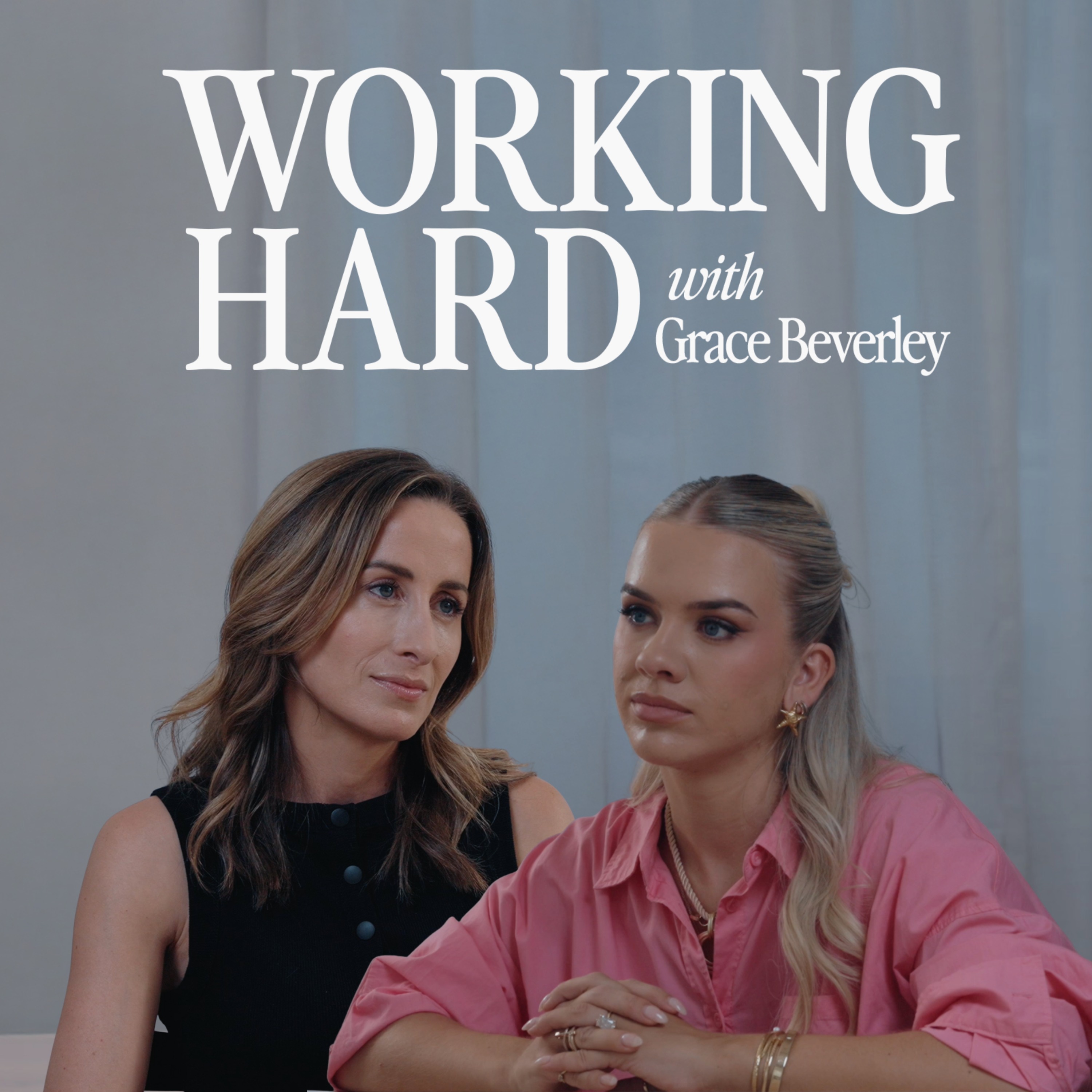
In this episode of the "Working Hard" podcast, host Grace Beverley interviews Dr. Julie Smith, a clinical psychologist and bestselling author. The conversation focuses on mental health, burnout, self-sabotage, and the importance of developing a healthy mindset. Dr. Smith shares her personal experiences and offers valuable insights on navigating life's challenges.
Written by AI. May contain mistakes.

Get the gist, explore an idea or ask about something said.
 Claude
On Working Hard with Grace Beverley, what are the key points of this episode?
Searching your listeningAutomatic transcript. May contain errors.
0:28Hey, it's Adam Grant from WorkLife, a podcast from TED. software, you'll work smarter, not harder. Freshworks uncomplicates. Learn more at Freshworks.com.
1:00Go to Upwork.com now and find your freelance expert. That's U-P-W-O-R-K dot com. Post a job for free and get started today. Hi, friends. Grace from the Working Hard podcast here. When you're stretching every dollar, a little goes a long way, and Walmart Business is here to help. They make it easy to order what you need from tech and cleaning supplies to everyday essentials, all at low prices and with helpful tools like spend tracking and tax-exempt purchasing for eligible organizations. Because when your operations are smooth, your impact can be bigger. Visit business.warmart.com to get started.
1:43What is up? I'm Grace Beverly and welcome back to Working Hard, the podcast shape guidebook on how to improve your own life and achieve what you actually dreamed of doing. Because life's too short for boring podcasts and bad advice.
1:57What is up and welcome back to Working Hard. Today's guest is someone that I am so excited to have on, not just because she's a world-renowned clinical psychologist, but because I have followed her work for years and I think she is absolutely incredible. Dr. Julie Smith is a best-selling author, an NHS-trained psychologist, and one of the most trusted mental health voices on the internet. Her videos on mindset, anxiety, and emotional resilience have reached millions. What I really wanted from today's episode is basically your mindset bootcamp. So if you've been feeling stuck or self-critical or overwhelmed, just a bit off, or especially if you've been feeling burnt out, this one is for you.
2:33Before we get into my chat with Dr. Julie, I would be so grateful if you could hit subscribe. The deal is over here that if you subscribe, I will put out a super interesting video every Monday to help you improve your life and start your week on the right foot. Also, a PSA, we have a podcast Instagram and it is so much more than just clips on there. Think of it as a hub for the Working Hard community where we break down the episodes, do giveaways, get into topics like burnout, productivity, friendships, emotional habits. It's all over there and I use that place to post a lot of my favourite resources, books, articles, all of that.
3:04So come and join us on at Working Hard Pod.
3:16Dr Julie Smith are you currently more working hard or hardly working? Oh how long have you got? This is quite a long answer for me. I'm on a bit of a journey with this. At the moment I would say I'm hardly working but that is a very conscious decision given the last sort of five years or so for me. I used to work in the NHS and once I had a couple of children. I left the NHS so that I could control my time more and have flexibility and work around the family and that kind of thing so that I could work less and be a parent more. And it was during that time I was running a really small private practice and being a mum.
3:48And during that time was when I started sharing all my videos online. And within a few weeks, it all started to go really wild. And before I know it, I was kind of doing all the social media stuff and all these great opportunities came along and I was writing books and speaking and doing all these different wonderful things but with that all the balance was gone right you know I was working more than ever yeah trying to do it in a very unsustainable way because I didn't want it to affect the children so I was you know working silly hours like late at night and early in the morning so that I could still do the mum thing in the day yeah very unsustainable and then last year I had a brush with an early stage breast cancer that then threw everything out again and that was just before I handed in the manuscript for Open Wham, this latest book.
4:33And so once I'd had my surgery, it was sort of straight back on the train of finish the book, promote, all of that kind of thing. And so that came out in January. So now we've got to the point we've done lots of promotional stuff and here, there and everywhere. And now I kind of thought, do you know what? Now I need to stop. And here's the balance. Yeah, no. And that makes subtle sense than I can imagine because you stepped back from the NHS to get more balance and then obviously ended up having an amazing career change but obviously like a huge difference in terms of what you thought you were building for yourself in terms of a routine did then that breast cancer diagnosis did that change your mindset because I feel like those big moments especially something so life-changing in terms of what really matters and kind of being like yeah this is great and love running with the success that my career has brought me but also when it all comes down to it like gotta take it a little bit slower yeah yeah and and you know I felt like I already had a good sense of you know what was most important and what mattered most and and for me that was kind of being present as a parent and family life and things like that and so I kind of felt like I had work in good perspective but then it also kind of taught me that even knowing that sometimes isn't enough.
5:50You know, when life's throwing amazing opportunities at you and they, you know, are good for the family as well as me and all of those things, you can easily just lose that balance again. And you don't always get to choose the timing as well because I think that's what it really shows you when it's like, no, the universe is good or like whatever you believe, like it's going to decide it for you. Because I think that in my head, I've always hated the saying that's like, if you died today, would you be like happy with how your life currently is? And I'm like, no, because I'm specifically putting in this much work so that I can have a little bit more freedom at X, Y, Z point.
6:23And so, no, I wouldn't be happy because I spent my entire day in meetings and I haven't like done anything other than Sarah's laptop. But also you can't really live every day like it's your last. And then I do think there are some of these things that are like, OK, well, I do need a little bit more balance that makes it a little bit more like I wouldn't think, God, that was all a waste if today was my last because it's kind of like I needed to put that work in, but I also got some balance. And I think you get certain wake up calls with that in terms of you might have a mindset. But if you're not actually acting how that mindset is, then you don't necessarily get the luxury of, you know, being able to benefit from having all of that balance.
7:01You have to live as if you have a future, don't you? Sure, of course. And you get something out of doing the work, and especially if what you're doing is kind of meaningful in some way and positive for you and you're enjoying the process of kind of working hard. And I've never regretted, you know, even that sort of period of time where everything blew up online and we had all these amazing opportunities thrown at us. And we kind of sense that, you know, this could end all tomorrow. You know, everything could switch off tomorrow. Everyone could stop following or not be interested. so let's just you know do as much as we can while we can and and enjoy it and do some something positive and so we did work in an unsustainable way that kind of took its toll but I don't regret that because it's got us to where we are now and so yeah I think you always have to kind of have both of those things in mind because it's a constant thing isn't it you know if I always think of you know someone actually on a balancing beam while there is that kind of sweet spot somewhere in the middle that is kind of balanced actually you're never there for very long so if you're moving forward you will always be by sort of nature of that kind of shifting all the time and and I think it's key to just sense when you've gone too far one way you notice it and then you just pull yourself back and then you go too far the other way and then you pull yourself back and so you're just constantly kind of moving with the flow yeah I really like that analogy and I think that that's such a good way of explaining it because I think that sometimes it feels like balance means well balance never means stasis basically like balance isn't just about staying still and being like okay well I've got my 15 % of this 15 % of this 30 % of this whatever I'm not going to keep going because otherwise I'm going to go over 100 and it's going to be embarrassing but I think that actually in reality when you are moving forwards there's always going to be this push and pull of work and life and things you weren't expecting and and often terrible things happening and often really good things happening and something happening to someone else where you need to be there to support them and I think it's really easy for us to constantly try and just like maintain this one picture of balance that looks good one day of the week and actually that's when you're going to fall short because in reality that might not work for next week or it might not work for your next promotion or it might not work for the next time you go through a breakup or whatever but it's about having a toolkit of kind of being able to pull yourself back and and balance that out.
9:16Yeah. And you know, I did a video not long ago where we looked at, okay, we had sort of glasses that represented all the different areas of your life and all the different things that you want to put yourself into. And then we had a small jug of liquid that kind of represented your energy and resources that you have to give. And the key is that there's not enough in that jug to fill all of the glasses completely all of the time. So, you know, sometimes your friends might really need you. And so you give them extra, you know, resources and energy and time. And then sometimes your family might need you or your work really needs your focus.
9:51And so you're constantly just shifting that energy around. But I think half of it is the acceptance and the recognition that there will always be something that gets less of your time and energy at any given point. And that's okay, if you're aware of it, and you've made a conscious decision to do that. And sometimes that kind of listen, I mean, I talked to you a minute ago about that sort of mum guilt I felt kind of, you know, sending my son off to school and then getting on the train. And sometimes you need to kind of listen to those feelings because they are information, essentially, about, you know, whether you are living in line with your values or having that balance.
10:27But sometimes it's just the feeling that comes naturally or is a kind of echo of the past, maybe something less than helpful. so if you can experience that feeling ask is this warranted and do i need to listen to it sure then you know sometimes that guilt will say actually do you know what you haven't seen your friends in six months because you've had been in the office all the time or you know you haven't seen a gym because you're not looking after your health and so sometimes that kind of feeling will be information to say redirect you know it shouldn't be a source of self-loathing and self-criticism but a real sense of better check that area because you haven't really touched on that for a while.
11:05Yeah, I think that's a really good way of looking at it. And for anyone who's not familiar with your work and what you do, could you give us a little overview of what that is? Yeah, so I'm a clinical psychologist by trade. So I was in the NHS for 10 years, worked in all different kind of areas of care in adult mental health over the years, started in sort of military trauma and working when we were in Afghanistan and Iraq, working with people that came back at the time. But then, yeah, worked in all different kinds of services and then run a really small private practice. And it was during that time, during that private practice work, that I noticed a lot of people were coming to therapy that didn't really need long-term, in-depth therapy.
11:45People don't realise that you do a lot of talking in therapy, but you also learn a fair bit about how your brain works, how to impact on your mood and your relationships and that kind of thing. And so many people, once they had that educational stuff, they were raring to go. They were saying, well, that's where the title of my first book came from, is why has nobody told me this before? You know, this is not rocket science, but when I take it seriously and I put it into my daily life, it's making a massive difference. And then people were, I always used to say to people, I felt like I needed some pom-poms down the side of my chair for those moments where people go, I think I'll be all right.
12:18I think, I think I can do this. And it wasn't that their life got any easier or they didn't have any problems anymore. It was because they, they felt this sense of agency in their own capacity to deal with stuff and to face whatever came up. So, yeah, I'm going to do this really difficult thing. And I know I'll be anxious or scared about it, but I think I'll get through it and I can use the tools I've got now. And so I used to, you know, harp onto my poor husband about how this stuff should be more available. People should have access. You know, they shouldn't have to pay to come see someone like me to find out how their own brain works.
12:49And so he said, well, you know, make it available then. Go on. And so we made a few terrible YouTube videos and stuff. And then we discovered TikTok at the time, same time as everybody else. and he said, well, why don't you make some kind of bite-sized nuggets? And at first I kind of said, no way. Couldn't find anyone else on there who was sharing anything sort of educational. I will not do a dance. Like do not get me to swing my hips. Yeah, it was full of like comedy and dancing and all this fun stuff and lots of young people expressing their distress, but nobody sharing anything of value in return to kind of respond to that.
13:24So we thought, well, let's just have a go. And if nobody listens, which we're pretty certain they wouldn't, or we'd get trolled out of there, then we would just close it down and pretend it never happened. So I would come home from the school around a couple of days and put my phone on the table and just kind of say something that had come up in therapy or that I was thinking about. And yeah, within a couple of weeks, people were emailing and messaging and, you know, what's the next step on this? And I'm trying this with my partner and that's really helping. What's the, you know, details on that?
13:51So there was just this kind of hunger for more and more of the information. Yeah. So we just kept going. And the idea was, you know, if it was way out of my comfort zone, I'm like really shy, private person normally, like I was really comfortable with my one-on-one in the therapy room stuff, but we realised there was a possibility of impacting people in a positive way through that stuff. So we just sort of said, well, we'll carry on until no one's listening. Yeah. I really love that. And I think that one of the most important things about that is obviously when you're running a private practice and even just in terms of your industry in general, it benefits from people obviously needing to come and talk to a psychologist or whatever it might be and actually i think there's so many things as a base level that we as a society can make more readily available so that the barriers to entry in all of these it might be i don't know it might be getting into a certain industry it might be just knowing more about your brain like whatever i think that's one of the best things that social media has changed in terms of democratizing information so that you can self-serve this type of thing and there is so much out there now that if you have a problem, you can self-serve a lot of the answers.
14:56When, as you said, I think in the past, it's often been like, oh, well, if you need to fix this, well, I guess that's, you know, a hundred quid a session or whatever on your health insurance and all of these types of things. And obviously lots of people will need further therapy or whatever it might be. But actually, if you do want to solve something at the moment, there is so much information out there that you can go and solve that with. Yeah. And I think that's the key, you know, a huge factor in having good mental health is having a sense of agency. So, you know, not only feeling well, but believing in your own capacity to manage fluctuations in your mental health.
15:33And a big part of my message online has been that, you know, fluctuations in your mental health are normal. And it's a part of being human, you know, having a bad day or a bad week or a bad month doesn't mean there's anything wrong with you. It might mean that the context is out, you know things are happening to you and life is hard at the moment and that would be normal but there is also this arsenal of tools that you can use to help you get yourself through it and so that's been the kind of aim of the game is to say here have some tools and I know a few and and just to kind of throw them out there and I really want that for this episode too I want someone to be able to listen to this when maybe they haven't learned all the things that they could learn about you know these tools and the things to be able to keep in their toolbox to be able to use when when they need it, when they're having a poor day, week, month, as you say.
16:20So I've got a load of questions that I feel like will form a kind of mindset boot camp based on the amazing things that I've heard you speak about before. So the first thing I want to ask is if someone's currently feeling stuck in their mindset and they're not really sure what it is, they just, you know, when you're just feeling stuck and you're feeling like you're thinking about the same things over and over and you don't really know how to solve things all of that where do you even start with getting out of that kind of stuck mindset yeah well what happens in therapy is we will kind of formulate it so stuck for one person when we completely something different to you know stuck for another person so we'll look at okay what on earth is going on lay it all out and you can do that by yourself with you know pen and paper or you can do that with a friend and have a different perspective you know so if you don't have access to therapy to do that there are other ways to kind of look at but it takes a degree of courage actually to really be honest with yourself because sometimes when you look at those situations it has to also take into account what you might be doing that's not in your best interest and how you might also be contributing to keeping yourself stuck so it's not as easy as it sounds and you know so you have to have a degree of bravery to kind of really be honest with yourself and often the questions that you ask will bring up answers that you don't really want to hear uh so you know It's not a sort of just do that and you'll be fine and your mindset will be great.
17:44It's looking at, OK, well, what's going on in the context of my life at the moment? What do I feel like are the barriers and what am I aiming for that I feel like I'm not getting towards? And, you know, what's keeping me stuck? But also, what am I doing that is, you know, continuing that stuckness and keeping me stuck? And it might be that you notice you're doing a lot of people come to therapy with this. and they'll say, I know I'm doing that every single time, but I just can't stop. And I don't, I don't know what's going on. And often then what we do in therapy is we literally kind of draw it out like a map.
18:18So you say, okay, I tend to, this happens and then I feel this, which makes me do that. And then I feel that and I feel better for a while, but then I feel stuck again and I come back around. And often what you notice is most of those things that go around and around and around, you can plot it on a cycle and then you can see, oh, you get this kind of bird's eye view and it's quite an incredible experience to kind of see, because when you're in it, you're like, it's being stuck in the woods, isn't it? You can't really see which way is out. But when you get a kind of map and you go, oh yeah, well, that's much simpler now.
18:50I can see the way. And that's what happens when you formulate in therapy is you look, you can kind of then see, oh, I'm doing that every time. And it makes me feel better straight away, which makes it addictive. And that's why I do it every time. But in the long run, then it keeps me stuck. And so, for example, if the stuckness is around mood. Often if someone feels low in mood, well, low mood gives you the urge to do the things that make you feel relief right now, but keep you stuck in the long run. So for example, if you, you know, you feel low and so you switch off your phone, you close the curtains and you stay in bed or you say no to invites and you call in sick at work or those sorts of things.
19:29In the moment, the moment you decide to do that, I have to deal with it today. I have to face the world. But then you've got this stretch of the day where you get to lay in bed and ruminate on stuff and feel worse and worse and worse. So then you need to do the same again tomorrow and the next day. And so the process in therapy is we'll kind of look at that. Okay, well, look, then when you do this, you feel that. And so being able to see it for what it is and the cycle, you then get to plan where you're going to exit on that cycle in advance because in the moment it's really difficult that's why you're not doing it so once you can kind of plan in advance that this is you know i know that when i feel that the way out is to do x y or z immediately and then then you can kind of do something different and you speak a lot about inner critics and people having their kind of inner critic for whatever reason it might be what you've just spoken about and falling into criticism about that type of thing or just a general kind of louder inner critic?
20:35Why is that so loud for some people? Yeah. For some people, it started very early on. So, you know, if when you're growing up, the dialogue you hear around you or the way that you're spoken to is hypercritical, then what happens is you internalize that, right? The way that people speak to you becomes your template for how you speak to yourself and other people in the future. So, you know, often people who are highly self-critical had some sort of hypercriticism coming from outside of them before and it's interesting actually when when I work for people in therapy who are just hugely self-critical a lot of them will try and hold on to it actually and you know they want to deal with the low mood and the anxiety but they think okay if I'm not hard on myself I'm going to lose all my drive to succeed and and and they attribute all of their success so far to how self-critical they've been and how perfectionist they've been that's so me literally all of my bad traits i think have got me to where i am so i like try and fix them whilst also trying to preserve them while being like well if i yeah i do know that makes me miserable but i also you know i wouldn't be here and so it's so tough because you yeah yeah it's it's a cycle that you get into yeah and thing is you can you can access a sense of drive from a very kind of threat based place, which is the if you don't do this, then you're that or you'll never be good enough.
22:00And all the kind of threat stuff that sort of means that anxiety and depression accompanies the drive and success. Or you can come at it from a place of self acceptance. So I am enough, but I also want the best for myself. and therefore I want to see where my limits are and go past them a bit further and a bit further. And when you go on that route, you can still experience drive and success and enjoy the ride, but you're much less likely to feel kind of anxious and depressed along the way. Yeah. And so I also want to know then how we kind of combat that negative self-talk without that also turning into toxic positivity.
22:42Because I also think, you know, there really is another side and that's not necessarily beneficial as well. Yeah. And I think that's the key is lots of people misinterpret the idea of self-compassion with self-indulgence. Sure. So, you know, self-indulgence might be, I don't know, let's say one of my kids decides he doesn't want to go to school today because he doesn't really feel like it. Self-indulgence for him might be me saying, okay, let's take a day off. And when you feel like it, we'll go back. Compassion would be, okay I get that you don't feel like it what's that about but also here's why being consistent with your education is really important and that's why we're going to push through that feeling today and do it anyway and touch base later and so compassion is actually doing the thing that is hardest now because you have your best interest in the future so you know often people think well if I'm kind to myself I'm letting myself off the hook from stuff that's good for me and it's really not that that would be indulgence uh so you know actually compassion can be really difficult it's often the hardest thing now that leads to the better outcome in the long run i feel like that ties in quite well to the idea of motivation then as well because i think that you know a lot of people's motivation comes from different sources because obviously that negative self-talk might be motivation for some people um or it might be like that that's what leads to them being disciplined but i think one question we get again and again on this podcast is like on motivation versus discipline and what you really need to cultivate and what is the difference between them and what should we rely on what's your take on that motivation you can't rely on because it's a feeling like any other so it will come and go and there will be days when you feel like yes i'm i'm going for it and and there might be lots of different things that have contributed to that feeling happening that day but there also will be days when you just don't feel like it And then you have to notice the urge to not do the thing that's good for you and act opposite to the urge to do that.
24:39So linking that to the self-criticism stuff. If you're always getting down on yourself, for example, the days you don't feel motivated. I don't feel like it today. I'm such a loser. I'm so awful. I'm never going to succeed. Take that kind of idea of the way you might speak to yourself in your head on a bad day. I just need to be disciplined. I'm, you know, lazy. Compare that to how, let's say, an elite athlete would work, right? So an elite athlete... That kind of pointed at me when you said that. In what? I was like, really? Am I? Do I give that back? Well, let's say like, I don't know, a tennis player.
25:13They have to train so hard, right? Every day. But they don't feel like it every day. And so they all employ a coach. Now, an elite athlete would never employ like the high school bully to be their coach for them, right? Yeah, they're not going to employ someone to be their coach who would come around on those difficult days and say, you're never going to succeed. Just quit. You know, they're going to employ someone that is honest with them, but has their best interests at heart and believes that they are capable of more than they think they are. and is willing to nurture them towards that, to say the things that will help them pull themselves up off the ground when they're really struggling or when they've just experienced a failure or whatever it is.
25:55And I kind of, whenever I'm working with someone who either is struggling with motivation or high self-criticism or a combination of the two, usually because high self-criticism, you know, trashes your motivation because you think, well, what's the point? I'm worthless. Instead of thinking about, okay, what should I say to myself instead? You just get this feeling of, well, if that internal dialogue for me was going to sound less like a bully and more like a coach for an elite athlete, because it works, right? Elite athletes are the best in the world and we want to be our best. So how could that internal dialogue sound more like a coach in a way that's going to help me kind of peel myself off the bed in the morning when I really don't feel like doing this or, you know, step into that really difficult scenario that makes me, you know, scared out of my wits.
26:40but I know I could do it if I really tried. And often you then get a sense of it. So it doesn't have to be specific words. You just get a sense of how differently you would approach yourself. And that can be super, super helpful.
27:10Just the right expert, right when you need them. Work smarter and faster with Upwork. Go to Upwork.com now and find your freelance expert. That's U-P-W-O-R-K.com. Post a job for free and get started today. What's up? Grace from the Working Hour Podcast here, and I want to tell you about something exciting. You're watching every dollar, and Walmart business helps you stretch each one. From office supplies to snacks and cleaning gear, you'll get everyday low prices, plus easy bulk ordering and fast delivery. And with tools like spend tracking and multi-user accounts, staying organized is simple.
27:41Save time, money, and hassle at business.walmart.com. It's free to sign up. Summer's heating up and so is the action with Chumba Casino and 2311 Racing. Whether you're trackside with Bubba, Riley, and Tyler or cooling off at home, the fun never stops at Chumba Casino, the online social casino packed with free-to-play games like slots, blackjack, and more. Jump into summer at chumbacasino.com and score your free welcome bonus. Two million free gold coins and two free sweeps coins. No purchase necessary. VGW group void where prohibited by law. CT &C is 21 plus sponsored by Chumba Casino.
28:19Why then for some people, actually for most people, I would say all people, is consistency so much harder than we think it's going to be? Because we can get all of this in our head and say, you know, I need to coach myself better. I need to make sure that I'm being disciplined and all of that. And yet, even everywhere you look on social media, everything is like looking for the one quick fix that gets you there whereas we know that pretty much to like what lies between you and where you want to get to is probably always consistency in something it's just consistency it's not intensity and like I will say for one I'm really good at intensity like I'm less good at consistency yeah so why is consistency so hard to maintain for most people yeah because we've got this kind of culture of I will work myself to the absolute bone I'm I will work myself to the absolute bone for these few months for this big project.
29:10And then I'll crash out and do a two week holiday and everything will be better. But our stress system is not built that way. So the stress system is really, really helpful. And, you know, it's probably our most important system that keeps us alive. It enables us to allocate the resources and the energy to meet the demands that are placed on us. So if I'm sat here and I'm dehydrated and I see a river over there, my brain will allocate enough resources that will give me a stress response to give me enough drive to go over there and get some water. So I'm giving something of myself to get there, but I get something in return in the way of hydration, which keeps me going.
29:49And so it's a short term stress response and I get replenishment for it. And the same with any other situation where we have an allocation of stress response. So, you know, maybe I'll come in here and I'm, you know, doing an interview and I've got a certain degree of kind of heightened alertness because I know I'm being filmed and that kind of thing. So I got a certain level of stress response. And then I know that afterwards I will need to replenish in some way. I'll need to kind of rest my mind, have some quiet time or something like that. So it's built for that short term meeting of demands.
30:19But what we do in modern life with all these kind of amazing inventions that were supposed to make life easier is we've kind of raised the bar. so you know you can have emails instead of checking your posts at the beginning of the day you can be on emails all day in between every other job you do and so why open one letter when you could check an email every single minute of every single day exactly and every time you do it's you know if you've got 10 minutes between meetings and instead of having some quiet time you're checking your emails what you're doing is you're kind of setting off new stress responses because you're essentially checking your to-do list that you don't have time to do yet and you're You go, oh God, yeah, I shouldn't have done that and I haven't got time to do that yet, but I'll do it later.
30:57So you're getting this new stress response. You can't do anything with it because then you're going into the next meeting. And what could have been 10 minutes of sort of non-sleep, deep rest or, you know, a little bit of breath work or even just sitting still and not thinking of anything. I walked to Big Ben and back. Well, not even now. I walk up to a bench and then I circle around it and loop. Perfect. Perfect. About 10 minutes. Yeah, that's it. And because sometimes it can be reactive. Sometimes it can be deep rest. But either way, or sometimes it can be social connection as well, which is really, you know, replenishing for us stress wise.
31:28But we've just kind of filled all of these in between moments. And so we're not respecting the stress response for the way it was built to be used. And that's when, you know, you get burnout because you, I mean, sometimes I've been to talk to these kind of, you know, big law firms or big corks where they're, you know, they're just working, working, working, working, and then crashing and burning. And we're just not built for that. But, you know, there are ways to put things into your daily life that prop you up in ways you didn't imagine. You know, we underestimate the power of the small stuff because it feels small.
32:00Yeah. But actually, those are the sort of pillars of our good health. Well, I think one trap that I've always fallen into is I don't believe in 10 minutes of stopping because I feel like I, as I said, I'm better at intensity than consistency. And I feel like I have a huge amount of energy to give every day. But when it stops, it stops. So I know very clearly that like I'm really good at deep work in the morning. Then my focus like switches a little so I'm better at meetings. And throughout that time, I have always prided myself in being able to give such intensity. And like if there's 15 minutes between a meeting, I will get like a good amount done in that time.
32:40And that's something that I have always prided myself in. Like I'll always be like, and then I went to this and then I did this and then I did this. It's just, I mean, it's definitely a dopamine thing. Like I love taking things off in case it's not obvious. And actually, well, definitely allowed to burn out. And definitely like it's a default of mine. So consistently does. But I would just say if you told me a year ago that I should like go on a little, not even 10 minute walk, like leave the building, go loop around a park bench and come back, I would have just told you that that was the biggest waste of time because I would have genuinely believed that that's a waste of time.
33:15and still sometimes now I believe that is a waste of time like I literally look at my watch and I'm like in that eight minutes am I actually going to go down on the lift walk around that park bench and come back and I still kind of am forcing myself to do it at the moment because I'm like there's something different like there's something different about your measure of success not only being how many small things can you tick off in that 15 minutes and don't get me wrong it's a skill to be able to do and I'm proud to it to an extent but it's like I definitely think for years I've never honoured that need for respite in the day just because I'm like, I have that intensity and I have that ability to attack a day with pure force.
33:53And so I've always valued my time and my productivity and my output entirely on my ability to do that. Yeah. And I think often then we don't see rest as part of the work. Sure. Which again is different to athletes. So you look at any kind of elite athlete, they will do the hardcore training and then they will put as much seriousness into the rest part as they do to the training because it's so essential for being able to then perform at their best again after. And in the next session, you know, if they're training at the beginning of day and the end of the day, then the middle of the day, a lot of them would go to bed and be very serious about full on rest.
34:31And even, you know, if you're in a creative industry, something like a walk around the block where your mind is allowed to clear is possibly the greatest time for enhancing creativity and new ideas and all of those kind of things. But we've been taught to kind of believe that that's wasted time and not part of the work. And I think a lot of it as well is like what you value yourself for, because I think that I value myself for my ability to like I can get so much done. Like I really like I really think I value myself based on I've always just got a lot of kudos for that. Like the fact that I'm able to do lots of things at once and very fast.
35:11And therefore my value for the day rather than me being like, oh, well, yeah, maybe I will have a better idea if I go out and do that 10 minute walk. But I could also get four things ticked off in my list, which to me in my head is like of higher self-worth, if that makes sense. Like that is more valuable because more people can see the benefit of those four things than just me having one better idea when I was on that walk, which actually they don't always equate and they don't need to balance out. And actually, maybe that walk gave you three things that you didn't even see. But I just think until this year, I've had zero ability to see that.
35:46Like not one single thing. Yeah. And I guess you live and learn, don't you? Sure. Sometimes we have to kind of learn by noticing those fluctuations in our health or when we start to feel overwhelmed by everything. And it's often because we've not been listening to our body and, you know, doing the things that we need to do. And sometimes there is, you know, a need for that kind of intensity, isn't there? And, you know, there is this big project or this big deadline and, you know, you've got the energy and the drive, so you just go for it. But it's then acknowledging, isn't it, that, OK, this is huge and I'm probably going to be mentally exhausted.
36:20I'm physically as authored after this. So I need to take that time or, you know, so now, for example, you know, I had surgery last year and then I went straight into getting this book out into the world. And then first half of the year was all just kind of shouting about the book and doing all these wonderful things. And now I need to kind of take the summer to slow everything down, focus on my own health. And, you know, if that's not a wake up call, I don't know what is, but, you know, just focus on all of those things. And then, you know, the next project will be another kind of wave and that's OK.
36:51But as long as it's sort of, you know, there's a listening going on about I'm in this and it's not I'm not here for all of it. It is also here for me and it's got to work for, you know, for everyone.
37:13This episode is sponsored by Adobe Express. When you're starting out on your business journey, you are usually doing absolutely everything from design to copy to strategy. And let me tell you about a real secret weapon for those early days. Adobe Express is the quick and easy create anything app, which allows you to make stunning social posts, images, videos, flyers and so much more. You can choose from thousands of free high quality templates for whatever you're creating. Schedule posts for your socials and even design, print and have posters, business cards and even football shirts delivered to your door in just a few clicks.
37:45It is literally perfect for elevating your business and creating on-brand content that actually stands out. It streamlines so much your marketing. It is such a no-brainer. Adobe Express is available on desktop or you can download the mobile app and start creating today for free.
38:08So I wasn't even going to take this in this direction, but now I'm going to. um so why does some of us not learn because asking for a friend like I go into this cycle again and again and again like for example to take this summer I opened a store I'm getting married I'm moving house I'm currently doing a few big things like one very big thing for one business and just like running them at the same time and just doing all of this other stuff and literally earlier this year I gave myself health issues because I was so like burnt out so why like why do I not learn because that that's happened again and again it's not that it happens regularly it's not new I do think that I maybe perhaps took it a little bit too far this time but it's something that's you know I've had burnout in the past I think I had it really badly I can't remember when it was it would have been just just after COVID I think I had it pretty badly and felt you know it took me a good amount of time to recover from that I restructured one of my whole businesses and it nearly went under and just like had like the most intense six months of my life and then was able to come out of that and felt about like two and a half years later like obviously I was still working at pretty full capacity within that time but I felt like I was coming out of it like I felt like I was coming out of a bit of a fog so then I did it again to the point that I mean I gave myself adrenal fatigue like my body wasn't producing cortisol in the way that it should because it was so exhausted and literally a doctor looked at it and said the last time I saw this I recommended they take six months off work and I would recommend the same to you and I was like perfect thank you for that information now like obviously took it slower for a bit but I'm here again so why why why why help so you didn't take the six months no I I didn't take the six months.
39:55Why was that? Because I don't think I can. Yeah. Like I unfortunately have structured my work in a way that I can't. But also I think that usually like I gave myself a week off and then I felt the ability to continue. So it's just enough to then. Yeah. To get out of work. Yeah. Yeah. So is that the plan forever? I don't think it's going to work. Like as in like I know full well that it doesn't work that way and it won't work that way. and I think it was a bit of a wake-up call this year I mean I got even some other medical results as well that were like you know very suggested the fact that like I think I've done this to myself but I don't think I've helped so I know I can't and I think that was a bigger thing than because I really realized I was like oh okay this is going to mess up my ability to do things like start a family and all of these different things which I was just like you know actually I don't want to do that I don't want to be in that position but also it kind of feels perhaps like a default which I know that's such a cop-out because it's like you can change it and it where do you think that default came from that's a big question yeah a big question no I think I I think lots of different things I think I'm very very dopamine driven I have ADHD um and I think that you know is kind of part of my settings but I also I yeah I think I'd always very much been valued for what I have done and been able to do and like that's always been what's then got me to you know out of bad situations or whatever it might be has been my ability to work really hard so that I don't need to rely on anyone so it's like you know it's the that's my freedom I guess is working so hard that you can't you know I'm entirely of my own ruling because I can you know I have the money to be able to do what I want or be where I need to be or whatever it might be but it's not always survival mechanism because I'm not at a state where I need to be like doing that to survive now yeah I think it's just a only setting yeah so it's interesting isn't it it's for freedom and yet you feel trapped in it oh yeah that is interesting
42:08and sometimes it's just about that growing awareness isn't it that already you are not where you were five years ago yeah because you're already aware of the pattern and sometimes almost like with addictions sometimes you need to be aware of the pattern several times around before you start to do something different and I do think like this giving myself credit I think this year has been the time where I've changed the most of my working habits than I ever have before like you never could have told me before this year that I would do things like like I have a lunch break most days now and I know that sounds probably normal for some people like I never had before I never would and would have considered that a waste of time and indulgence and all of that and I at the moment I'm working relatively normal hours and have a lunch break and yes I'm doing lots of different things and lots of my high stress but like those things never would have existed before and I would have made sure they didn't exist because to me that was like space to start another business or something.
43:03So you're already kind of making certain changes. This rate of change has to speed up because someone's going to explode and she might be sitting right in front of you so you feel like you're kind of heading that way well I just I know I did I think I've made big changes this year that have made a big difference but I do just think it's like I for someone who can I consider myself pretty self-aware in all other ways and it's like this is just something that I cannot I think it's like this so yeah it's just something that I cannot yeah break or maybe I am I do think I am I'm slowing it down but it does lead to lead to burnout as we've seen yeah and yeah i need to not do that and sometimes there's i mean there's a really great um exercise that we're doing therapy around kind of values and and getting clarity on your values because often when you do something like like you do whether there's just so much amazing opportunity that that you've taken and ran with and and there's lots of wonderful celebration and recognition for that and rewards for that that that you kind of it's easy to get kind of swept up in it isn't it And then to the neglect of kind of other things that you might otherwise value, like your health.
44:13Yeah. And so there's a great exercise that we do. It's really quick. And I actually do it myself probably every, I don't know, six months or so or when I'm just feeling out of sorts, where you kind of put down the different areas of your life. So you might have health in one box, career, lifelong learning, family, relationships, friendships, all of that kind of thing. Everything you can think of and you put it on a big piece of paper. And then you go through each box and you ask yourself, what matters most to me in this area of my life? So not what I want to happen to me, but how I want to show up there.
44:48Well, the kind of person I want to be, what I want to represent to those other people or to that part of me. And so you end up with a kind of few words or a few sentences in each box. And then you go around the whole page again and you rate each one out of 10. So how important are these values to me in this area of my life? so it might be that you know my health is 10 out of 10 important to me because i know i'm kind of you know going in this wrong direction or actually my career is 10 out of 10 important to me or you know something you know all those different things and and then you go around again and you rate yourself again out of 10 but this time uh you're rating how much you feel you're living in line with those values at the moment so in the last couple of weeks and it creates this real kind of map for you where you go, do you know what, if I've put my health down as 10 out of 10 important to me, but two out of 10 and how much I'm living by those values, that indicates I need to change direction at the moment.
45:47And, you know, maybe something else is kind of less important, but I'm putting everything into it or, you know, and it kind of just can be a real indicator of that when everything's out of whack and it's not sort of weighted well and the parts of you that are being neglected and it kind of because you have to think for a minute about opening your eyes to what is it that's important to me about my health and and sometimes i think with the way the world is set up today is we're kind of taught to kind of ignore a lot of it until you know stuff happens and you know even when that happened to me last year with the with the breast cancer thing i think i got straight back into work and yeah we've got a book coming out And then early on this year, I thought, whoa, yeah, that's enough.
46:34And because almost you can work so hard that you're kind of numbing out what's just happened. You know, your doctor's telling you you need six months off and you need to kind of really look after your health here. But, oh, I've just got this project. I'll just do that. And then you're on another roll. You're on a momentum and you're in it. and then you that'll need another wake-up call for you to go whoa hang on let's just get some clarity here because if i don't have my health i can't have the rest of it either and you know it will all grind to a hole at some point if i don't stop and reprioritize and we prioritize within work right you know within a business you kind of very strategic about you know what you're working on next and why and what's the priority and why and and if there's something that is a fundamental to sustaining the business.
47:20It will always be a priority if it's not quite right. And yet we don't treat ourselves and our health in the same way. We kind of see it as negotiable and then it comes back to bite. Does indeed. Damn. So I'd like to talk then quickly about burnout because I think that, well, I get a lot of questions about it and I think that it's a hard topic to know much about until you've been there. And then when you are there, you're like, oh my God, how do I stop this? or, you know, how do I solve it? What are the signs of burnout? They can be different for everyone, but generally it's a bit more than, you know, being tired.
47:54So, you know, you can be tired and then a rest will replenish you. But if you're waking up tired every day, no matter how much sleep you get, or, you know, even after a week's rest, for example, then something else is going on. And often there'll be lots of more subtle signs. So maybe you're arguing more with your partner because you're more irritable and angry a lot of the time or you're anxious or maybe you're struggling to sleep so you can be kind of you have this tired but wired thing so you are exhausted you're emotionally exhausted but you're at this sort of height of stress all day so you're kind of up here you're alert doing doing doing and then you get to bed and you're kind of whoa and you're still up there and it's kind of alertness because all this stress is still in your system and you're probably checking emails late at night or you know thinking about what you need to do tomorrow and there's no switch off time so that stress response isn't able to kind of come back down so that you can replenish there might be changes in appetite changes in weight gut issues aches and pains you might be getting ill a lot and not you know struggling to kind of get well again lots of different kind of signs that hey everything is kind of not okay here and your body's kind of almost shouting at you like stop just give us a minute and so yeah it could come out in kind of different ways for different people so then I assume that the majority of the time burnout for most people is work related thinking a lot as well about how much we've even like I had this really interesting article discussed the other day which was talking about how much like women have taken on obviously so many more working hours if you look at the past 30 years but they've not really reduced the amount of housework or other things they're doing.
49:38So the amount of primary caregiving, the amount of, I don't know, washing, cleaning around the house, all of those things. Women as a demographic then are doing more than ever because they're holding both of those sides of things, which obviously is great in lots of ways and not great in other ways. So how do we fight burnout when something like work and all of those other responsibilities that we kind of have to do to stay alive and well and also keep balance? Like you want to be able to see your friends, you want to live in a clean house, all of those different things. How do you fight it when you need to keep going on all those things?
50:10I think it's a massive issue for women. And certainly, I think probably my first experience of that kind of that overwhelm you get when you're starting to burn out was once I had a couple of children and I was also trying to work at the NHS. And, you know, and you kind of, it wasn't unusual to be up in the night several times, you know, someone's got to have a sniffle or a cold and you're up. And I remember looking at my watch one night and I'd been up for hours sort of tending to children. And then I realized it's 5am, my alarm's going off at six. And then I've got a day of patience and you just think, oh, I can't.
50:47And your whole body is saying enough that I can't do it all. And, you know, and then people get kind of well into the caffeine, right? So there was a point at which I was having a coffee or a tea before each patient because I I didn't want to yawn in anyone's face, but I was exhausted. And then you come home from work and that's not off time either. That's being mum time and you've got to be enthusiastic and present and all of those things. And then into the night it carries on because they're not sleeping or whatever. And so it's a huge issue. And the reality for most women is they don't have a lot of options.
51:21They have to go to work to put food on the table and keep a roof over everyone's head. And so there isn't this kind of, oh, just do this and everything will be OK. You know, it isn't something that women are getting wrong. It's the way that the world is set up. And while it's wonderful that women have opportunities to do things, you know, having it all does mean doing it all for a lot of people. And I think for some people that I've worked with in burnout, it's been about making small changes and taking back control where you can. So in between moments and making certain changes. So, you know, where can this thing give a little so that I can give something back to myself and replenish?
52:00and for other people it's been about bigger more dramatic life changes so you know shifting jobs and you know I left the NHS so that I could have control over my time and and you know you know manage things and that was a good thing for me at the time so that I could do things in school hours and stuff like that so that was kind of a big change but at other times like now I will kind of you know structure my week so that I have pockets of time in there for myself or to you know make sure I've got a good night's sleep before I go and do something or all of these different things. So it can be a mix of the big life changing decisions and the smaller in between things when you don't have that control.
52:40But it's definitely not something women are getting wrong. It's the way that, you know, the world is set up that, you know, being a parent used to be considered a full time job. And now it's something you do around your full time job. And yeah, it's not easy yeah and it's so i mean even in that article i read it's astounding because the the difference in hours that men have picked up in housework and caregiving around that time is actually nowhere near as much as you'd think it is in terms of average changes so over that time like yes we've come so much further in our careers and are earning more and all of these different things but also on the other side it's like okay well now we're holding a job and you know often being the primary earner and relationships and all of this and then also doing you know all the housework all the caregiving like whatever it might be and it's like how do we this is you know a whole separate topic but it's like how do we solve that whilst also understanding that we do want choice and we want careers and we want all of these different things when it's like the systems just aren't set up to stop women getting so burnt out.
53:49Like I complain or say, say the traps that I fall into again and again, that's me as someone who now has like financial security and an ability to hire teams or, you know, a very, very helpful partner who does much more than I do at home or any of those things. And I just like, don't know how we're going to survive this whole next generation of people who have this 24 hour news cycle on their phones, this constant inbound information, holding these jobs, also often having side hustles to even be able to afford, you know, your kind of average price house or not even that, and children and things like nursery and all of that.
54:28Going to work, doing the home stuff. How can everyone not be burnt out with that? I think my burnout issues would be the least of those struggles when looking at like how much that lack of help as well kind of makes that so much worse I just I really fear for yeah and I think um you know often people talk about the answer as being in having more child care and actually I don't I don't really buy into that because as someone who was so focused on my career before I had children uh as soon as I had my daughter I felt like I had this shift in perspective. You know, you see those pictures of like the earth from space and you go, oh, wow.
55:10Yeah. All my problems are really small. I felt like, you know, something fundamental shifts in you when you have a baby and, and you realize all the things you thought was so important are not as important as you thought they were. And, and so I had this monumental shift, you know, in my thoughts about my career, once I had my children and I realized that was the most important thing to me. And so I wanted flexibility and I wanted to be at home more. And in line with that, I realized it was very clear to me that if I wanted flexibility and, you know, part-time hours or anything like that, then I was stunting my career hugely.
55:49And, you know, I was told I shouldn't go for certain jobs because they needed to be full-time and those kind of things. So I immediately realized, wow, I can't go in my career where I wanted to go originally. And so you have this kind of re-evaluation of how important is that in comparison to wanting to be present for my children and those kind of things. And so, you know, I made those decisions and lots of women do. And in going, you know, in sacrificing things in your career to be a parent, which is a really positive thing to do, you then naturally take on more of the things at home. And you're naturally doing it because you're there a little bit more, not all the time, because you're still maybe working part time.
56:29home and so you're then and it sort of naturally builds up to I'm doing everything at home because I'm part-time but then I'm trying to cover a sort of a full-time job in a part-time hours and and so it's sort of this trap of oh my gosh I'm doing everything and why am I so overwhelmed because I'm not at work as much as everybody else but also I'm not at home all the time so I shouldn't feel over and we kind of trick ourselves into thinking that we should be able to do it all um and actually doing two full-time jobs yeah and i think that it really then comes down to making sure that we have the systemic support in place to be able to ensure that people can make the choice and can feel supported and can feel like they could do more of a career or stay more at home or whatever it might be which is just we just it feels like we're so far away from but all of this to me really points to the fact that we all need a lot of mental resilience like to be able to get through all of the different, you know, hardships we've discussed in this conversation from terrifying medical diagnoses, as you kind of went through to really trying to make sure that we're having a positive mindset.
57:33And even when you get kind of setback up to setback or whatever it might be. So how do we build resilience without necessarily feeling like you're building into the type of person who, you know, as I said, just like pushes through again and again and again and doesn't necessarily have that compassion for themselves. Yeah. Well, sometimes it's about pushing through, right? And sometimes it's about being able to hold yourself back up when you're down. And I think certainly when I was doing all of this stuff and it was way out of my comfort zone, I had no kind of ambitions to be a public person or do all these kind of live TV and things like that.
58:09And I realized the only way that I was willing and able to do that is if I really made a conscious effort to have a good relationship with failure. So this idea of, you know, if it goes wrong and you're, I don't know, on TV or wherever, and there's prospect for public humiliation in the minimum, the only way I was willing to kind of take those risks and do those things was if I was willing to not kick myself when I was down. So if it goes wrong and when it goes wrong and things happen, I am going to have my own back. And, you know, we talked about the idea of the coach and the, you know, I have got to be there for myself because who else is going to pick up the pieces if I don't?
58:54And when you're, if you're going to take risks and do scary things and exceed your limits, then resilience isn't about making sure that no mistakes happen or no failures happen. It's knowing that whatever happens, you've got your own back and you're going to pull yourself up again and look after yourself in the way that you need. And often it's about asking yourself in the moment when you're really struggling, what does this tell me about what I need right now? And then acting on it and giving yourself what you need in the moment. And that's a huge part of what people learn in therapy. If you sort of gloss over the details is being able to listen to that, you know, all feeling is information.
59:34So if you're overwhelmed or if you're super anxious all the time, or if you're starting to get depressed, is being able to listen to that feeling and ask yourself, what does this tell me about what I need now? And often if you're willing to listen to the answer and then turn that into action, what you've got is a resilience to be able to go, whoa, we're slipping down here, let's pull it back up again. Or I know what I need to do here because I've been doing that. And it's just that constant awareness that you can respond to. But if we live in a life where we have all these feelings but we numb them numb them numb them and carry on then that's when we crash and burn um so you know i think a big part of resilience is being able to listen to your body listen to your emotions not squash them but use them for what they're supposed to be used for which is information yeah and i think it's easy to confuse resilience or like what you think you're aiming for with resilience it's often like in my head like it's all about force it's about movement it's about like just getting back up again and I like the nuance there of kind of actually resilience isn't just about kind of pushing pushing pushing it's about knowing when to step back and knowing when you know you need that little bit of rest or reassurance or whatever it might be yeah and I feel like the inner coach thing is very good I feel like my inner coach needs some work perhaps to be fired um before we finish I just love to ask what the best piece of advice is that you've ever been given?
1:00:58Probably the best piece of advice I've been given goes back to when I was at university, actually, and probably needs a little bit of context. So at the end of clinical training, you do a sort of a viva exam. So it's an interview with some experts and you have to defend your research and that kind of thing. A super anxiety provoking, terrified in the waiting room. The girl that was in there before me comes out in floods of tears. So I'm then, oh my gosh, this is going to be awful. And just at that moment when I'm about to go into the exam, a tutor comes over and says, oh, you know, good luck. Enjoy it.
1:01:29You know, what? Enjoy it? And he said, well, this is the only time, you know, and some experts are going to really take a good interest in what you've been learning. And it's your chance to kind of show off and talk about all the things that you're interested in and that you've been researching. And in that moment, what he did in just those words of enjoy it in a situation that I just thought was terrifying. He reframed it. So it's the same situation. It still has all the risks and vulnerabilities attached to it. But I realized I can walk into this situation as a rabbit in headlights, or I can walk in ready to enjoy the process and make the most of it for what it is.
1:02:09And so I did. I kind of really took that into the exam and it was still, you know, difficult and stressful my stress was high still but it shifted how the whole process felt I was and I absolutely then used that in my experience with the cancer diagnosis and the surgery is I knew that I you know when you get that kind of diagnosis and there's instant kind of uncertainty in your life you don't know what the future holds because you find out in kind of bits and bobs you don't know what you know what's going to happen for a while and i felt like that rabbit in the headlights like oh my god this thing's attacking me and i don't know what and i thought no no i i don't i don't want to feel that way i don't want to be dodging risk and and be the victim and be the prey this thing isn't coming after me i'm coming after it i'm going to be the predator here and so this cancer better watch out because and every time you know i i then at the time i was editing Open When, the chapter on when fear shows up.
1:03:15And I read the chapter and I thought, this isn't what I want to hear at all. And so I deleted the whole thing, rewrote it there and there with all this stuff about the predator and prey and choosing to shift your perspective on even the worst of situations, right? You're facing your own mortality. And every time I then read that chapter, I did something in the service of my own rescue. So I made some calls I got advice from people I know who are medics I searched out the best surgeons I you know did all these things and I was still in the same situation it was still stressful but it felt fundamentally different because I was on the front foot and not the back foot and that's all because of reframing which is what that guy did for me just before that exam was whatever the situation positive or negative you get to choose how you're going to approach it and how you're going to look at it still being honest with yourself you're not trying to kid yourself about you know it being a lovely situation but you're just choosing how you're going to approach it oh I love that well thank you so much that was very that was a very long winded I think that was really really great and I think it's so true and I think there's so much of what we're doing that we can reframe without it but that's not toxic positivity at all like it feels like really helpful reframing in terms of like why am i doing this how am i approaching this and all of that and i think that yeah i'm definitely gonna you know it's toxic positivity if it's not honest sure and that's the key i think yeah i love to be positive but always be honest with yourself well thank you so much what's up grace from the working how podcast here and i want to tell you about something exciting you're watching every dollar and walmart business helps you stretch each one From office supplies to snacks and cleaning gear, you'll get everyday low prices, plus easy bulk ordering and fast delivery.
1:05:00And with tools like spend tracking and multi-user accounts, staying organized is simple. Save time, money and hassle at business.walmart.com. It's free to sign up. Your sausage mc muffin with egg didn't change. Your receipt did. The sausage mc muffin with egg extra value meal includes a hash brown and a small coffee for just$5. Only at McDonald's for a limited time. Prices and participation may vary. At Capella University, learning online doesn't mean learning alone. You'll get support from people who care about your success, like your enrollment specialist who gets to know you and the goals you'd like to achieve.
1:05:37You'll also get a designated academic coach who's with you throughout your entire program. Plus, career coaches are available to help you navigate your professional goals. A different future is closer than you think with Capella University. Learn more at capella.edu We've been fantastic and I feel like I've learned a lot and I've got a lot of work too Thanks for having me Thank you so much
Dr. Julie Smith is a bestselling author, NHS-trained psychologist, and one of the most trusted mental health voices on the internet. Her videos on mindset, anxiety, and emotional resilience have reached millions across TikTok, YouTube and Instagram, helping people feel seen, supported, and actually equipped to make a change.
Today’s episode is basically your mindset boot camp, if you’ve been feeling stuck, self-critical, overwhelmed, burnt out, or just a bit ‘off’, this one is for you.
+
This episode is sponsored by Adobe Express, you can find my pitch deck template on Adobe Express here, for free: https://adobe.chrd.ly/GraceBeverleyxAdobeExpressYT
+
SUBSCRIBE TO THE WORKING HARD NEWSLETTER HERE: https://graceb.myflodesk.com/k0sfhlac34
+
FOLLOW THE PODCAST
IG: https://www.instagram.com/workinghardpod/
TT: https://www.tiktok.com/@workinghardpodcast?lang=en
+
MY LINKS: https://gracebeverley.komi.io/
+
DR JULIE SMITH
IG: https://www.instagram.com/drjulie/?hl=en
TikTok: https://www.tiktok.com/@drjulie?lang=en
Website: https://www.drjulie.uk/
Open When Book: https://linktr.ee/drjuliesmith
Why Has Nobody Told Me This Before?: https://linktr.ee/drjuliesmith
+
RETROGRADE, SHREDDY, TALA and THE PRODUCTIVITY METHOD are my own businesses, therefore any mention of them - whilst not being a sponsorship - is monetarily endorsed. As usual, sponsorships do not change my opinions nor my honesty, but I will always disclaim to make sure motives are clear 😊
Hosted on Acast. See acast.com/privacy for more information.