Ask ChatGPT
 Working Hard with Grace Beverley
23 Jun 2025 · 56m
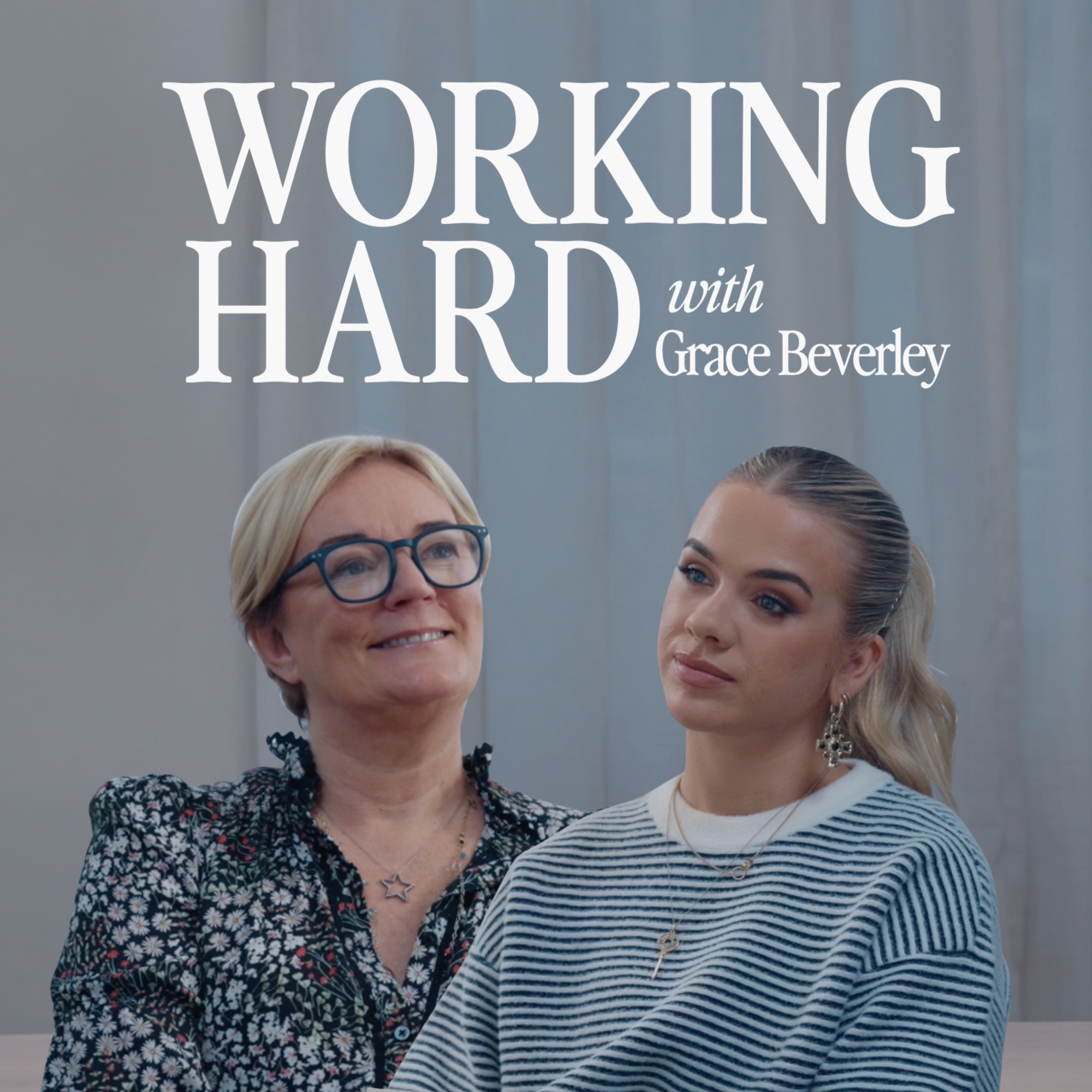
Host: Grace Beverley
Jo Malone CBE
Written by AI. May contain mistakes.

Get the gist, explore an idea or ask about something said.
 Claude
On Working Hard with Grace Beverley, what are the key points of this episode?
Searching your listeningAutomatic transcript. May contain errors.
0:00If you're a custodial supervisor at a local high school, you know that cleanliness is key. and that the best place to get cleaning supplies is from Grainger. Grainger helps you stay fully stocked on the products you trust, from paper towels and disinfectants to floor scrubbers. Plus, you can rely on Grainger for easy reordering so you never run out of what you need. Call 1-800-GRAINGER, click grainger.com, or just stop by. Grainger, for the ones who get it done. The market's uncertain, revenues tight, and hiring on hold. That's why results-driven companies are using Upwork to keep work moving.
0:38Go to Upwork.com today and start hiring proven freelance talent fast. No bulky overhead. No rigid long-term contracts. Just the right expert right when you need them. Work smarter and faster with Upwork. Go to Upwork.com now and find your freelance expert. That's U-P-W-O-R-K dot com. Post a job for free and get started today. Hi friends, Grace from the Working Hard podcast here. When you're stretching every dollar, Alilla goes a long way and Walmart Business is here to help. They make it easy to order what you need from tech and cleaning supplies to everyday essentials, all at low prices and with helpful tools like spend tracking and tax exempt purchasing for eligible organizations.
1:17Because when your operations are smooth, your impact can be bigger. Visit business.warmart.com to get started.
1:34what is up i'm grace beverly and welcome back to working hard the podcast shape guidebook on how to improve your own life and achieve what you actually dreamed of doing because life's too short for boring podcasts and bad advice what is up and welcome back to working hard i think i could safely say that today's guest is a living legend i'm speaking to the incredible fragrance pioneer and founder joe malone cbe from creating an international empire from her kitchen table to building a second global brand from scratch joe's story is genuinely one of incredible resilience reinvention and relentless creativity joe has synesthesia a rare neurological condition that means she experiences the world in a multi-sensory way blending colors smells and sounds it's a superpower that shaped her entire creative process and given her an extraordinary edge in the world of fragrance that was once guarded by master perfumiers.
2:24But behind the enormous success, Jo's journey is the most incredible story. I won't spoil too much, but it all starts in a council estate in Bexley Heath, and it's not a straightforward business journey or overnight success. Jo's journey has been shaped by major personal challenges, from extreme illness when she was given nine months to live, to the complicated process of separating herself from the brand that she walked away from that still carries her name, something she's still working through to this day. This was such an interesting conversation, and I absolutely loved hearing her story and I'm so grateful to Jo for being so incredibly open in the time we had together.
2:54Before we get into the episode I have a special PSA. We have started a podcast Instagram and no it's not just one of those Instagrams that just puts out clips. I wanted it to act as a real hub for everyone who listens every Monday and everyone who likes the theme of life improvement and learning more about things that are going to help us get to where we want to in life. We've been doing giveaways, having big conversations about topics like dating and phone addiction and just generally breaking down every episode. And I would love for you to join us there. We are at Working Hard Pod on Instagram.
3:32Jo Malone, CBE, are you currently more working hard or hardly working? I'm working very hard at the moment on several new projects. I love working hard. actually time off for me is when I'm smelling and I'm working so I've just spent two days in Paris spelling 72 notes just one after the other and I just it's it's what makes Jojo and I love that kind of you know pushing I love that hard work I love dreaming and actually when I'm doing nothing um I get more stressed in a weird kind of way and I think it's because it's not my job it's not a business for me anyway it's my best friend and just like you like spending time with your best friend I love my best friend is creativity so I love spending time um just sitting under the trees smelling dreaming not being conformed by anything but it's um it's certainly the hardest work I've ever known but I but yeah I think I'm going to go to my grave still kind of with a paper in my hand or spraying something or tasting something or all of those things.
4:43Yeah, it's funny you say that because I think even you just saying you don't find it that fun doing nothing, like that's not relaxing to you. I think for a very long time I was striving to be a certain, to have a certain type of balance between work and not working that actually ended up with me taking away all the parts of work that I enjoyed because the other parts were more essential. So I ended up spending a huge amount of time at my laptop and all of these things and taking away lots of meetings, for example, because they were less productive. But that was the stuff that really made me feel alive.
5:16And that was the stuff that, you know, talking with the team, coming up with new products, brainstorming, all of these things that like, yes, it could be more productive if we all spent 15 minutes doing that ourselves. But is that productivity always going to make magic? Is that productivity always going to mean that we come out of that day feeling really fulfilled? I think that was a big misconception I had at one point when I was just trying to get this so-called balance. I don't think it exists. I don't think it exists. I think it's another impossible thing to strive for that is different for everyone too.
5:48So one of the key things I would say after living on this earth for 60 years is be in the moment. Be 100 % present. Like right now, I am 100 % present in this moment. and you know well how did I deal with being a mom and running a business and all of those things I was in the moment I lived in the moment and so I wasn't thinking when I'm in a meeting oh my god I must get back to pick Josh up and I've got to be there for sports day and whatever when I was doing those things everything else was in a compartment it was boxed and then I would live a hundred percent with Josh at sports day and then when I left I would then pick up everything else I needed to do.
6:31But when you have a young business, you often are the marketing, the PR, the MPD, the operational, you're doing everything, aren't you? So it's not as easy sometimes when you're first starting out. But I think it's important to enjoy as well, enjoy your business, enjoy building, because it's been a huge part of my life and it's been a huge adventure. Every single day, my life is different. I create something or I think about something, also give yourself space, space to think and dream. And you know what? I think when you're younger and you're a young kid, your imagination is incredible. You can create something magical from a cardboard box.
7:16And then as we get older and older and older, we conform ourselves. Don't hold on to that naivety and that innocence of creativity because often with that you'll find such great answers and it will make your mind think in a much more agile fashion. No, I think that's so right and I really love what you said about being in the moment there because I think that the times where I at least personally feel most overwhelmed are when I'm trying to balance too many things in my head when actually in reality all I need to be doing is be there in that moment either getting that thing done or being with that person or whatever it might be and you end up wishing away that time to make sure you're balancing a million other things and actually it's a fallacy because you think you're dealing with those things whilst you're also doing another thing actually what you're doing is being in neither place and that's something I've had to really back down from where I thought it was more productive to be like that and actually it was definitely creating more issues for me and making me feel constantly overwhelmed because I was in a million places at once and you don't do anything really brilliantly then you do so I have this system I'm dyslexic severely dyslexic so I can't have I can't turn a computer on I can't do lots of things so I have a graph and at the moment we're working on about 30 projects at the moment 35 projects and so I have a colour code system so if a project is imminent like your launch of your brand and open your shop that would be a red dot for me and red dot means it's right at the top of the list it needs action it needs attention just a red the the color red means um it's active and it's emotional and it needs some but it's not imminent launch um green is green shoots so new ideas but they're actually productive there is something going on blue sky is big dreams and possibilities and the yellow one is a yellow light bulb so just something I've just thought of it might be a new product and so every week Katrina and I sometimes twice a week we look at the colour code system and we can see which one needs attention which one has come off the list which one is you know needs just um probably needs a lunch a little bit of nurturing and all of that and it's really helped me to really concentrate and I've I've been more productive with that because I can look at it straight away and see the colours and the beginning of each week is like, okay, I've got two red dots.
9:42I've got two reds, one red dot. This is a busy week. Everything else now has to fall around that. Yeah, I really, really love that. And I think so much of that is about just finding systems that work for you. You've always been known for your entrepreneurial spirit, but I'd love to know where that came from. Can you tell us a little bit about your first kind of sense of business, your first sense of, I guess, either entrepreneurship or just realising that you might have that kind of entrepreneurial spirit? I don't think I even knew what an entrepreneur was, if I'm really honest. But I think a lot of entrepreneurs become entrepreneurs because of survival, having to survive.
10:26And I grew up in a council estate in Bexley Heath in Kent. And I had two very creative parents, but there was very little money in our house. so my mum was part of the beauty industry she was actually a manicurist for Revlon and then she went on to work for a woman called the Countess Labati. Her influence in my life was huge at the age of six seven. My dad was a brilliant man he was an architect so he built like when Hampton Court burnt down and Tower of London my father was called in to help in the architecture of rebuilding so he's a brilliant man he was a painter he was a gambler and he was also a magician he was part of the magic circle so you can see that there's all these sort of touch points and I loved my dad so much I mean I was always sort of at his side and helping so I would go to the markets on a Saturday and we'd have to sell his paintings and my mum would say to me as I walked out the door there is no money and we used to have gas and electric meters there's nothing to put in the gas meter there's no food in the fridge you have to sell a painting today and my father being very creative if he didn't like somebody would put an extraordinary price on a painting of course they wouldn't buy it so I would set the stall up and I would send my dad off to go and get breakfast and by the time he came back I had to sell that first painting and then I knew we could eat so I was 11 years old and then 9 10 11 um I was also the magician's assistant so we would do magic shows and I would look after the white rabbits and I had a pet dove called Suki and she would sit on my shoulder and she would coo at me.
12:09So I know how people are sawn in half and all that. And then the really eclectic one was my father taught me to read marked cards in a poker game. So I would sit in the corner of the room and I had long hair, long plaits, and I would read everyone's cards and then I would signal to my father who had a royal flush, who had a couple of jacks who had and i could play poker better than any man i know yeah i've completely forgotten it all now thank god but it was such an eclectic childhood but i knew i was the adult at 11 yeah so i had these two amazing parents with creativity but no domestic kind of thing so it was up to me to make sure there was always three meals in the fridge there was always money for the electric and gas meter.
12:56And I just taught myself how to make face creams. I would watch my mum make face creams. And what I realised was my sense of smell was incredible. And I knew if my dad was painting with oils, just by walking in the front door, I knew if it was painting with watercolours, whether he was soaking the canvases upstairs in the bathtub with cold tea. I could tell everything by my sense of smell. I could also tell if we were making a face cream and my mum picked up the wrong oil from almond oil to avocado to jojoba to sunflower oil and when the waxes would go in I'd be able to tell when it was burning point and just before so my senses were always very alive and very used and I think I'm so grateful to my mum and dad for not being the mum and dad in a funny way because I grew up knowing the responsibility of putting food on the table.
13:56So obviously having such an eclectic childhood and kind of also parents with different careers and different passions rather than necessarily the more kind of traditional one career path pursuing this for 40 years and this is where I'm going. How did that influence your career aspirations what i saw as success was survival at 11 years old yeah i left school at 15 because i'm severely dyslexic i've got no qualifications i don't can't even remember sitting a or o levels at all i think i did mocks but i there was so awful and because of my dyslexia um i remember in one exam i cheated i i looked at the girls it was a multiple choice and I just couldn't bear to be the last in class again.
14:47I was so humiliated by what I felt was my lack of education and I was caught and made to stand on my chair and my teacher said to me, you are lazy and stupid, Jo Malone, and you will never make anything of your life. And I can remember the emotions of that young girl standing on her chair, I can remember my sock falling down my leg and I can remember the boy called Richard standing behind laughing. and I thought to myself I'm not lazy and I'm not stupid I just can't learn in the same way as other people and I think by the time I got to 14 15 I felt I know how to make money and actually building something and making your own money and supporting because it was all about supporting my family at the time it's nothing to do with myself by doing that I have freedom and I have and I can choose where, when and how.
15:39And I think from that young age, I had my first job at 16 in a flower shop. I earned£29.15 a week. And I was there from the sun going up to the sun going down. It was hard work. In the evenings, I would wash dishes. I would go into hotels, make beds. I would wash up after dinner party. I mean, anything I could do to earn money and to be creative. So I think that was my success, that I didn't have to worry. I still supported my family, but I left home at 16 years old as well, so I left home very young. Yeah, and there is this kind of real autonomy that being able to hack your way into some form of entrepreneurship, whether it is selling something at a stall or babysitting or, you know, newspaper round.
16:30Yeah, it's like your first viewers of work almost is this form of micro entrepreneurship because you're deciding your path, you're going and getting that thing, you're getting the exchange of money and you're knowing what you're making of yourself just to be able to make ends meet or buy yourself some freedom or whatever it might be. And I think that's always so interesting because I think there are so many really incredible entrepreneurs I've spoken to who that like their first taste of entrepreneurship, almost in being like a young, basically kind of self-employed like teenager was what really.
17:05Gave them the appetite. Yeah, and put that instinct in them that they basically put two and two together and they said, as long as I can do something that I can exchange for money and I can build something that can be an exchange for money, I'm always safe. And I think that's so interesting. That was definitely me. Yeah. I think we should teach it in schools, by the way. I completely agree. Because, you know, compared to, I'm sorry, French or thinking like an entrepreneur, which one is more valuable at the moment? Yeah. and actually thinking like an entrepreneur, which is why I did the BBC Maestro course.
17:39I was asked, would I teach people how to think like an entrepreneur? And that was why. That was why we did it, but it should be taught in schools. Yeah, I completely agree. I completely agree because I also had no idea what an entrepreneur was and I didn't see it as success because I had no idea what it was and I didn't see it as an option because I had no idea what it was And actually, I think it always would have been so suited to me, but I just didn't. How old were you when you first did your first entrepreneurial business? Well, I always babysat from the second I moved to London at 13. So I babysit almost every single night.
18:15And I had so many different clients that I would get to the point that they would try and book me on different nights. And then I'd kind of say, I can't do it, but, you know, my friend can do it and all of this. So you had your own little company. yeah collective of babysitters so I did that but I sold my first like digital products when I was just 18 so just turned 18 um how fantastic is that but I remember the first year when I sold those because the next year when I sold those then that was when things really started to take off but the first year when I sold those they made oh like almost nothing but that difference in not being nothing was the difference like I remember being able to just you know I sold them for five pounds there were two recipe ebooks and I sold them for five pounds each or you could buy both of them for eight pounds um and I just remember just like each time being able to like push and get a sale and all of that like that was especially because it was a 100 margin product because it's a digital product I just remember thinking I was like I'm it didn't matter that it was five pounds I was printing five pounds like the difference between that and the fact that when I was babysitting I I charged seven pounds an hour.
19:28Like that was the fact that I could just, but that's the thing. I was like, I can get that. And I'm not even on the other side of London cleaning someone's nappy. So I was like, this is amazing. I'm printing money. And it was that freedom aspect that you almost were able to generate that for yourself that I think had a huge impact for me. So let's talk about the start then of your first business because you've left school and gone into kind of the working world. You've obviously, as you said, you left home pretty early on at 16. So how did that then turn into starting what became an enormous, enormous business?
20:08It's in little chunks. My first job was in a flower shop, actually not far from where I am right now. So I started in Pimlico on Ebree Street. I worked in a flower shop. And again, that was, well, at the time it wasn't as smart as it is now. It was still chic, but it wasn't like it is. We didn't have Peggy Portia and Oliver Carne and all of that. None of that was there. And, of course, it was my sense of smell. And I loved, absolutely loved that. And I would sit there with all of these, you know, the Casablanca lily opening up or the white country roses, the geraniums, lemon-scented geraniums.
20:51Everything had a smell. So everything had a story to me, and I loved more than anything. Have you ever been to Nine Elms in the morning? Yes. Oh, the Covent Garden flower market. Covent Garden flower market. And those doors would open, and this waft of smell, and you'd walk round with a bacon sandwich, a cup of tea, and you'd make all your orders, and then the East End lads with their trolleys would load up your van and back you'd come so it was a really very very happy time and then I um had a 16 year old moment one hot Monday morning I think it was and my manager would just she was snapping at me and I'd worked so hard and I threw a bucket of water over her which was probably not the nice sense but I don't but it was the bucket of water that I had uh watered all the plants so it was leaves in her hair and she went you're fired and I went Too late, I quit.
21:45A moving moment. I think I was. And I stormed up the road to... Because the man that owned them all was Justin De Blanc. And I stormed up the road to the deli, walked into his office with this poor woman running behind me and she screamed and she said, She's fired, she's fired. And I said, I quit, I quit. And Justin just went to me, go downstairs, put a penny on and work in the shop downstairs. And I think he saw... You didn't care about the wet lady behind you. Well, you dealt with it. She never spoke to me again. Rightly so. And so I was put downstairs to work in the food shop in the delicatessen.
22:23And yet again, there were smells everywhere. So the, I mean, always avocados to me were a face mask. And the first time I'd ever seen anyone eat an avocado was, and I said, what are you doing? And they said, well, it's avocado. Yeah, but it's a face mask. You mix it with yoghurt and it's great for your skin. No, no, no, Jo, actually, you eat it. And I learned what artichokes were, aubergines and all of these fresh herbs and everything. And everything would come down from the kitchen. And I would say, what's that smell? So I did this almost my own life university, working in shops and absorbing it.
23:03And then from there, my mum then got very, very sick. My mum often had really severe breakdowns. and she had a really big one. And so I then left. It wasn't just since I was working at Paul Brook and Gould at the time, flower shop again, and I left there to go and help. And that's when I realised, at the age I was 17, 18 years old, she had a huge debt, and I had to pay it all off. And so I jumped in and took over a beauty business, nothing to do with fragrance, only skincare. So I was a facialist for a very, very, very long time. And then she got better, felt very threatened by me. And so I left.
23:50I was newly married. And that's where I set up my first facial business in a tiny little flat in Chelsea. Rented it, no furniture, a piece of blue foam was Gary and my bed, no curtains. So we could never do anything in the dark. We had to do everything before it became dark. and I would make all my plastic jugs, all my face creams and everything. And that's where my, I think at that point, that was where my life changed. And it was a crossroads for us. Gary and I didn't have a penny. And of course, every penny I had was going to pay her debt. And it was, it was tough. It was really, really tough.
24:29Yeah, I can't imagine. I can't remember having all of those things happen at once and then being in a whole new place and trying to start a business from scratch. and make that work, I can imagine that that was a very tough time to be able to get through and also to be able to persevere in terms of wanting to create something that wasn't just day to day and wasn't just something that could kind of really get you through. But I can imagine you had a bigger vision for this business in terms of kind of where you wanted to take it. I go back to survival. Yeah. You know, every single week when I had enough money to pay my rent and I never once, never once owed a bill.
25:09And I would work just as long as the day, I would work to make sure. And then I started to see that my, being a sort of sole trader, Gary was a surveyor at the time and we started to see this business really start to take off. And it was when I started to create fragrance. Now, I've just been to Paris in the last two days. and in fact I went back to the house that I, fragrance house, that I went when I was about 21 years old in Paris in May and I went back to the same house in the last 48 hours and I just took me back to the young woman that went to Paris with her sandwiches and sat in the office all day long until somebody and I said look please someone help me I can smell fragrances in my head but I can't create them, will someone help me?
26:04And this man walks by, I've been sitting there for hours and they said, no one can help you, all the perfumers are busy and I sat there and said, come back tomorrow and I couldn't, I had to do it then. And this man walks by with this black cashmere sweater and I went, excuse me, and they went to me, don't speak to him. I said, why, that is Monsieur Suzak, he is a master perfumer and it was like, oh, okay. And of course, Jean-Louis Suzac is one of the great master perfumers of our time. But eventually somebody said, that woman's not going anywhere. So, OK. And they took me to a little room. And that's where my journey of fragrance started.
26:43So did you set off going to Paris there specifically because you wanted to start this business? You'd kind of clocked on to the fact that you had far better smell than everyone else and could kind of smell these fragrances and wanted to make something of that for either your kind of practice that you had at home or you knew that you wanted to turn that into more of a business. I was tiptoeing through something thinking, can I? What if? And actually that's where a lot of entrepreneurs start. What if I could? If I can do that, what else can I do? So it was that kind of attitude. And then as I started to work, everything I created, everything, people were hungry for it.
27:26And what I didn't realize at the time, that this young, untrained British girl was being watched by all the great houses of Gola, Chanel. All of them were looking at the work that I was creating because I was creating these simple fragrances and calling them, you know, what you see is what you get kind of thing, which is very much my character. And everything I was making was selling. And then one day one woman ordered 100 bottles of bath oil because I couldn't make fragrance because I didn't have a spirit license. So I had to take the fragrances I was creating and find other avenues. And she said, can I buy 100 bottles of bath oil?
28:06And I said, yeah. And I was so excited, you know, but it was terrifying because did we have enough money to make 100 bottles before it was paid for? Another big thing with entrepreneurs, isn't it? You know, don't go too big too fast. Anyway, we did. And we sat in the kitchen with plastic jugs, Gary and I, filling these bottles. And it went to a place at a party. And within one month, 86 out of 100 people wanted the product. They had no idea it was being made in a kitchen. They thought it was a nice, smart laboratory in London somewhere. And I used to type the labels, go to Pronto Print for my labels, bought the simple plastic bottles, everything.
28:48and that's when I knew it was a business. That's when that point where, you know, people were ordering like 50, 75 bottles and I found that the facials were taking up so much time, a bit like your babysitting and your cookery book story, and yet if we made batches of these product, my husband then quit his job and he came in and it was when Gary and I became business partners as well as husband and wife. That's when the business changed because then he said, we need a shop. We can't do this from here any longer. And I don't want to shop. I like it, you know, because my life was suddenly really great.
29:28I knew that I could pay my rent monthly, not weekly. I could pay all my bills. We had enough money for Chinese food and a bottle of wine at the end of the week. It was all kind of really great. But he said, no, we need a shop. We need to now build it. And he brought strategy into the business. I'm good at making money and I'm good at creative. but I'm not good at the rest of it. So what happened is we had left and right together and as a team, and it still works today, that team. You open the fridge, there's nothing there. So what's it going to be? Greasy pizza? Sad drive-thru burgers? Dish by Blue Apron is for nights like that.
30:08These are the pre-made meals of your dreams. At least 20 grams of protein, no artificial flavours or colours, No chopping, no cleanup, no guilt. Keep the flavor. Ditch the subscription. Get 20 % off your first two orders with code APRON20. Terms and conditions apply. Visit blueapron.com slash terms for more. If you're a maintenance supervisor at a manufacturing facility and your machinery isn't working right, Grainger knows you need to understand what's wrong as soon as possible. So when a conveyor motor falters, Grainger offers diagnostic tools like calibration kits and multimeters to help you identify and fix the problem.
30:44With Grainger, you can be confident you have everything you need to keep your facility running smoothly. Call 1-800-GRAINGER, click Grainger.com, or just stop by. Grainger, for the ones who get it done. I'm no tech genius, but I knew if I wanted my business to crush it, I needed a website now. Thankfully, Bluehost made it easy. I customized, optimized, and monetized everything exactly how I wanted with AI. In minutes, my site was up. I couldn't believe it. The search engine tools even helped me get more site visitors. Whatever your passion project is, you can set it up with Bluehost. With their 30-day money-back guarantee, what have you got to lose?
31:23Head to bluehost.com to start now. And we opened our first shop in Wharton Street, 154 Wharton Street. On the first day, a gentleman walked in. We had a wonderful piece, I think, in Vogue. I remember the heading. It was written by Kathy Phillips, and it was called Center of the Universe. and then Lucia Vanderpost wrote something for the FT and those two pieces went round the world. A guy jumped on the plane and the night before we were in the shop getting everything ready. Next morning in there opened the doors and this American gentleman's standing there and he said, Miss Malone? And I said, yes, thinking, our first customer, how wonderful.
32:05And I said, please come in, please come in and he came in. What I hadn't realised is we'd put all the bottles onto wet paints on the shelves so that overnight everything had stuck to the shelves. So we spent the first hour of jemmying everything off with screwdrivers. And I said, can I help you? And he said, I've been sent by my client from America to offer you$1 million to sell your business today. No. Yep. First day you opened. First day of opening. And all I could think about was, oh, I could buy a bed. You know, we don't just sleep on a piece of blue. That's a big old bed, that is. That was my first thought.
32:38And then I thought, don't do it, Jo. And I said, thank you very much, but no, thank you. And he said, are you sure? Are you sure? Now, it was either truthful, it was either a journalist, or it was a set-up. I don't know. I never saw the man again, and I never regretted saying no. And in five years, we built... God, did we work hard. And we built a team. I carried on doing what I was good at. Gary did the running. You know, without Gary, there would not be a Jo Malone London, let me tell you, at all. He made everything, all the nuts and bolts kind of click together. And then within five years to the day, we sold it to the biggest global giant in cosmetics to Estee Lauder.
33:21Huge, huge. And that's when the adventure started. Yeah, I can imagine. And obviously, you know, this has all come about because you have a specific talent and put that into creating products. and then you know as soon as you had this shop front which I'm you know hoping I'll have the equivalent as of today when we open this store but do you feel like it first kind of really took off purely because of obviously you got those those kind of journalist pieces but in terms of was it really word of mouth was it really just the product was the marketing yeah word of mouth I mean that is the most precious thing in marketing is if you but you know what people love it's so simple don't don't overthink it it's about stories it doesn't matter who you are where you come from in this world people love stories authentic real stories that they can identify with and um and that's really was that was the secret of it and that continuous dedication of passion creativity and resilience and thinking if we had so little money um and i think one of of the most genius ideas.
34:35So from that little shop, we really grew out. But Gary came up with this brilliant idea. So we were in New York, about to open in Bergdorf Goodman, and had no money left for marketing and PR. I said, well, how am I supposed to do this? And we were opening in October, and this must have been August, September. And he was in hotel room and he'd ordered a whole lot of empty bags and he was making them up with bows and everything. I said, what are you doing? He said, I'm making up bags. I said, there's nothing in them. Nobody else knows that. And so what we did is we employed people to walk up and down, up and down, holding 20 empty bags.
35:20So by the time we opened in October, everyone thought the brand was more prominent, that the brand must be much bigger. But in fact, we converted New York City and made our first million based upon empty bags. And we call it walking the dogs. And it's a gift to anyone listening to this podcast. Make your product visible. Think in that entrepreneurial fashion. If you've got 10 pounds, make that 10 pounds count. If you've got 1 ,000 pounds, make that 1 ,000 pounds count. But often, the 10 pound idea will be more successful than 1 ,000 pound so it's allowing your mind to think in that pivotal fashion and you know now being where I am in life um I can we continue to do that and you know we often walk around with empty bags so that people go what's that I saw that about five minutes ago and but you have to have a lot of them yeah and then it stands out I love that well if you see lots of people walking with like 20 tarla bags around carnaby street just walk in the dark mind your business everyone mind your business oh that's such an incredible story and so obviously you loved this business so much and you'd created this out of true passion as you say what made you get to the point where you were excited to sell the business it was growing it was growing very fast and it and often you know sometimes you bring in a partner and it was it was just time it was time to let it you know let it go and I at the time of selling I thought I was going to stay forever you know and again never make life-changing decisions on a bad day and wait when you're selling your business and especially when your name is attached to it by the way look at the whole landscape think about what is it that you really want?
37:09Because often we start a business because we want to work for ourselves. Then we bring partners and shareholders in and suddenly you wake up one day and think, I've got a job again. So really think through those implications. And I think when I share my story, I think it's really important to hear that. Think, do you really want to sell? I did. I absolutely did. It wasn't something, but I thought I was going to stay forever and of course my life took a very different take yeah and I can imagine as well like something like exit and selling a business is heralded as this huge made it moment which it is of course it is it's an incredible achievement but at the same time I've seen it take lots of different shapes in for lots of different people I've seen some people sell their businesses and stay for years and years I've seen lots of people sell their businesses and never talk about it again and I I can imagine having my own business, I can imagine that it's at times incredibly, you know, both exciting and painful at the same time.
38:14And being able to let go of something that you built, that you have this incredibly specific vision for and see that go in all different directions must be incredibly hard. Well, I'm no longer involved in anything and I haven't been for, well, since 20, I mean, nearly 20 years. So I don't have any creative involvement any longer or anything to do with it. But when you sell it, it's like having a child and they're being brought up by two different parents at different parts of its life. So you must respect. And I do respect. You know, the fact is Jo Malone London belongs to Estee Lauder. And their creative thing, that isn't me.
39:00That isn't what I do. And I don't represent that company. When I first sold, I thought I was going to stay forever. And of course, my life took a turn. The hard bit was realising that my life would be very different. If I walked away, I had to realise that my life would never go back to being the same again. And I struggle with that today as well. So, you know, that is something. And if I had my time again from walking away and signing that deal, I probably would have done it very, very differently. And I think that the law is going to have to catch up because what's happening now, when you used to sell your business, it was either a third generation.
39:45Often when people built businesses in my parents' generation, they handed them, didn't they, to their children? Of course. And it was like first generation, second, third. You look at great companies, Estee Lauder being one of them. Entrepreneurs don't do that anymore. Entrepreneurs build their first business, sell it, and then use that money to build the second or the third. And I could name, you know, so many people that have done that. The law needs to catch up with that process because that's going to get more and more prominent. But as it stands at the minute, you know, it's kind of, it's almost archaic where it is.
40:23So what made you want to walk away from it completely? So two years into the deal, I was diagnosed with breast cancer and I was given no months to live. And if it hadn't been for the amazing late Evelyn Lauder, I wouldn't be sitting here right now with you. That's for sure. I had a very aggressive form of breast cancer. I was only 38 years old. Josh was four at the time. And that night, I can remember it so kind of vividly, that night I sat there and was diagnosed. and I saw the doctor's face. I went home and I thought, you know, I'm not ready to, what about Josh and Gary? And at that point, business was aside.
41:07I didn't care about business. I was looking at my son and my poor husband. And then I thought, Jo, you've never listened to anyone in your life about who they think you should be. Why on earth are you going to let someone tell you when you're going to die? And so I thought, yeah, okay, well, what am I going to do? I've got to fight. I've got to fight for my life. And I went to New York, and my doctor was the amazing, incredible Dr. Larry Norton of the Sloan Kettering. And I walked in to his office, and he said to me, okay, this is going to be a rough journey. There are two people that walk into this room, one that says, don't hurt me, and the other is, keep me alive no matter what.
41:51Which one are you? and I was definitely the second and I then went on to a very new regime and a new protocol that he had created and I've only realized just recently how close to death I actually came and I took chemotherapy every five six days for nearly 18 months I had surgery after surgery I lost my hair but what I told nobody is I'd lost my sense of smell the chemo I was on was so powerful and so strong it had taken my sense of smell. And actually he told me just recently, he said, I'm going to tell you now because you're, I mean, I'm nearly 20 years all clear because of that man. There was a protocol he was working on that he had no idea would work, but there were certain breast cancers that even if you do chemo, it comes back, and even if you do a mastectomy, it can come back.
42:44And he put a protocol together, and he had chosen 30 women that he knew would not have survived. And I was one of them. And the brilliance of this man is today all 30 women are still alive. And he told me that a month ago in Dubai when I was having dinner. So I'm very lucky to be here. And that's why I feel like when my sense of smell went, I was half of Jo. And I thought, I can't stay in a fragrance business. I can't stay here. and every day be reminded that I can't smell. And I can't do that to the people that bought this company either. And so I quit and I left. And, of course, I had a five-year lockout, completely reasonable.
43:31And as I was the last person turning the key in the lock and I walked down the street, I realised to myself I probably made one of the biggest, or so I thought, mistakes of my life at that moment because I realised in those days running up to it, fragrance was my best friend. It wasn't a business. It wasn't a job. I literally get up in the morning and it's the thing I live to create and find a bottle and be able, and I can do it so brilliantly and so naturally. So for five years, I didn't do anything. Estee Lauder continued to grow the brand very successfully, but I had nothing to do. I had no creative, I had no voice there, nothing.
44:15And I would walk past some of the, I couldn't even walk past or go in the shop. I can't imagine that. I couldn't. And I would see my name and think, my God, what have I done? What on earth have I done? And then as that five years came up closer and closer, I thought, if I don't try again, I'm going to regret this. And I fought for my life so hard. I've got to try again. Because, I don't know. I just, I love doing what I do. And so almost as the clock ticked away, we sat there at a kitchen table, a bit like this one, actually, having spaghetti with Josh. And I said, I want to try again. And I tried other things, but I wasn't brilliant at them.
44:58And so that night we're sitting there and Josh must have been seven at the time. He had little glasses, looked like little mini Harry Potter. And he was sitting there and we were thinking of names, you know, I can't be joe malone and i still struggle with this because i you look at me who do you see yeah exactly and i know that i am but it and it i catch myself the whole time and then this little voice goes i know mum why don't you call yourself joe loves because you love fragrance and fragrance loves you and it just was so simple and so honest and i had no idea that i was i didn't know what i wanted to do i knew I wanted to go step back into a global arena.
45:39That's what I really knew I wanted to do. It wasn't about creating 100 bottles again. And as we started to build, oh my goodness, it was so tough in those first two years. And I thought naively, I could jump straight back in where I left. You can't, you can't do that in life. You have to go right back to the beginning and put all the protocols, all the platforms, all the disciplines in place. And I mean, Joe Loves has been going a long time now. And it wasn't until we got our first shot, which is rather prominent for you at this moment. And I'll just show you something. So it was my birthday and Gary gave me a little box.
46:23And I thought, well, it's not a car because I can't drive. And I got my diamond earrings. So I don't think that's pretty cool. Well, I was married at that point. Another ring? But it was a key. And I thought, I like a key present. I like a key. And it was a shop. And he took me down. But look at this. That was Justin DeBlanc. That was the first shop. No way. Yes, it's the same shop. So I returned. What a man. What a man. What a man. He was a great man as well, Justin DeBlanc. and that was the one that said go downstairs and just work. But I came back to where I first started and I walked into the...
47:09And I love that when life does that and it brings you all the way back and that, you know, tonight when you open that door and the world sees you, it's like you've put the best musical on, the best stage and you feel like... It's like having a child. It is. Well, one thing that I basically realised when we were going for this talk, because obviously retail and especially on something like Carnaby Street is very competitive and we I basically when I went there I realized that that store was the American apparel that when I was a teenager I used to go to all the time and American apparel was extremely expensive and I remember people used to I like such a hard be a sob story but like I didn't really get like pocket money for you know as in to be able to buy clothes it would be saving up from babysitting money all of this and a lot of people who I went to school with got lots of cash and kind of went down and would always get the new American apparel things and I remember I literally just used to go to that specific store and we used to stand around I used to just like stand around and be like oh yeah that's really nice and all of that and it's now yours now and that's now the Tala store and it's like such a you know it's obviously not that big of a thing but it's just so So, like, I used to get the central line, get out of the station, like, walk on down there and all of that, and that would be the place I would go.
48:30And that being our store now, it's, yeah. Oh, well, I mean. Such a full circle moment. I love full circle moments because it's almost as though life goes, it's yours now. It was always meant to be yours, but now it is, and go make it work. And having Jo Loves has just, it's a very different experience, though, for me. and I always knew, I've always felt I was really meant for something really big in this world. And I haven't achieved it yet and I know I haven't achieved it. You've achieved lots of very big things. I've done great things. But there is something I am meant to do on this earth and I'm really close to it now.
49:09That I do know and I can feel it. And it might be the five senses of Joe that I'm building now or it might be something completely different. I don't know. But I know I'm meant to do it and I know life is very close wherever it is right now. I love that. And yeah, I'm building Joe Loves, you know, travelling the world, doing all those things again.
49:49contracts. Just the right expert, right when you need them. Work smarter and faster with Upwork. Go to Upwork.com now and find your freelance expert. That's U-P-W-O-R-K.com. Post a job for free and get started today.
50:06But not being able to use my name, it kind of mentally plays with me. because I am a person that wants to do the right thing all the time.
50:19And I just struggle. I just struggle sort of not. I don't want to put my name on the front of anything, but I want to sign my work. You know, I am the person. And, you know, my country recognised me with a commander of the British Empire as Jo Malone. Yeah. I must. Anyway, there has to be a way through it. Yeah. without harming, you know, the brand that was part of my life when I was younger. But so many people had no idea that I'm not there. Why? Because my name, I suppose, is my name. Yeah, no, I completely agree. And I think I always think about this as the fact that, you know, no one. So my job title, for example, at Tala is founder.
51:03And I remember at one point, I can't remember. I don't think it was Tala, actually. it was somewhere we were like do we do I move from founder to blah blah role and I was like oh that founder role well it can never be anyone else's like that is always going to be my role I can imagine there's that part of that identity that you have that's like almost because you built something so big it's almost come back to bite you in a way that actually you built it so if you'd built something small very important yeah it wouldn't matter so much and actually it matters more to you and it matters to them more because it's it's your name and you built that and you made that mean something but then not being able to own that part of your identity I can imagine it's really tough that's the bit it's not I don't I don't I don't want to cause harm it's owning my identity you've actually hit the nail on the head and because I don't recognize myself in my married name and my husband doesn't get upset by that yeah at all I mean I very rarely use it and I don't identify as that and you know it's just um it is something that is that we you know we're trying to and I think you know be respectful so that we don't harm each other but we you know I must be allowed to be the person to use your name yeah I mean it's as if like I'm thinking about it now because I'm I'm keeping my last name when I get married and I'm it's almost as if if someone told me I couldn't do that if I've worked so hard to make Grace Beverly mean something like I've worked so hard to mean that it's associated with x y and z and if I had to like if I wasn't allowed that name I had to change it then it there's part of that that feels like all of this stuff that I built under that name is well I find this really moving this conversation yeah it's really kit that you just articulated exactly what I have not been able to articulate but you've articulated it in such a that's it you've hit the nail on the head for me it's um and yeah thank you no I mean it makes a lot of sense to me why that would affect you in that way and I think that it is your work that's got it to mean that and I think that it must it must just be really hard yeah yeah of course because I've still you know I've still got more jobs to create more things to create more touches in in the world and I don't want to sit on a beach yeah even though I live in Dubai I want to look at the beach every day I look I have it's called my blue office oh lovely and I look at the sea so but I don't want to do that I've still got so much more to give so much more to teach and um yeah I that's what life is yeah isn't it and I'd love to ask how you feel like having that really kind of extreme cancer diagnosis as well right in the middle of the most you know what other people would look at and think is the kind of your career's reaching new heights and new heights and this brand's kind of completely blowing up how did receiving that diagnosis then change your outlook on life and work now you know you walked away and now building Jo loves?
54:15I think when I first came out of it, it was, and so many people go through, I didn't want anyone in my life that was a drain. That's not real life, honestly. And as I mean, I'm 20 years on now, but because I'm older and I don't let things get to me like I used to. I live in the moment and I try and wake up with a smile on my face every day and 10 positive things I want to achieve that day. It's made me very responsive. And if I don't want to do something, I'm not frightened of saying no. And I think that's what the cancer diagnosed. But every day is a gift. And if I had fought for my life so hard, as Larry told me I did, I've got to make every day count.
55:02And I'm not going to waste my time doing things I don't want to do. And I don't mean that in a spoilt way, but I want to get up every day and be useful. I want to make someone else smile. I want to make sure I've got an elephant conservation project in Tula Tula. I want to make sure my elephants and the rhinos are safe. I want to make sure that Magic Breakfast, that more children in this country have breakfast. I've reached a point in my life where I'm so blessed and so lucky and provided for myself and my family and surrounding. But there's more good to do. I've still got a lot of work to do and I'm able to do it without asking anyone's permission.
55:46I could just sign a check or I can do something and concentrate. And I think that's what it's done to me and at this point in my life. But I know I had to change my life about four years ago. I knew there was a point at which I could miss. You know that feeling where you feel opportunity and you think to yourself, where is it? It's somewhere around here. And I couldn't find it. And I thought I'm standing in the wrong place. And I thought to myself, where is there opportunity? And I'd been to Dubai and I was sitting there and I could see entrepreneurial. This is four or five years ago. So this isn't where Dubai is now, by the way, which is off the scale.
56:25And I thought, there's a banquet of opportunity there. I want to sit at that table. I'll pull up a stall if need be, and I'm going to join it, and I'm going to see. And if I can't do it, then at least I tried. But I can't sit here and do nothing. So my husband and I decided we'd live there for six months, see what happened. And it's been four years now. I can't ever see myself coming back to the UK and living permanently, but I still build businesses in the UK. That's a difference. So I'm still providing jobs, still paying tax. That's important to me as well. But we have our business now and five senses of Joe, within 12 months I would have hit every sense with a business and I would never have done that here.
57:11I know I wouldn't have done. The opportunity wasn't there. The appetite wasn't there. and now living there, feeling so happy, so creative. I mean, I sit under the trees. I might go down to the old town, sit by the old creek, and everyone knows me. It's my name. So they'll come and go, are you Jo Malone? And I go, yeah, do you want to come and smell with me? Would you mind? Can I come? Can my daughter? Yeah, yeah, come and smell. And we sit and we smell. And I tell them stories or I go into the desert and we travel. and I'm, you should never tell people how happy you are apparently in life. Yeah.
57:49But sort of that. I'm really happy. Oh, I love that. And, you know, I really am. I'm the happiest I've been. I feel so fulfilled as a person. And if this thing with my name is the one thorn in my side I have to live with, I have to live with it. I'll have to find a way through because that is who Jo is, you know, that my, you know, you hit it on the head so beautifully. And I want to help others and say to them, these are my footprints, walk in them. And hopefully it will take you to the inspiration. I have a compass, which is inspiration, innovation, integrity, instinct, ignition. You activate all those five, you're well on the way to thinking like an entrepreneur.
58:38I think that's very powerful. and before we end can I ask what the best piece of advice is that you've ever been given I have a favourite quote which is for man to discover new oceans he must first have the courage to lose sight of the shore and sometimes when you're building a business you have to pull up your anchor leave the safety of the harbour and find new lands and that's where the true entrepreneurial adventure starts. It's so true. And you've done it more than once. Hopefully a few more times. And hopefully a few more times. And I have no doubt they'll be just as kind of big and fulfilling as you'd like them to be because it's very clear you have a very specific magic that you bring to them.
59:20And I can't wait to see where that goes. And good luck with you. Thank you. Opening up the first door. Thank you so much. And thank you for your time.
59:48We'll be right back.
1:00:04You have everything you need to keep your facility running smoothly. Call 1-800-GRAINGER, click grainger.com, or just stop by. Grainger, for the ones who get it done. At Capella University, learning online doesn't mean learning alone. You'll get support from people who care about your success, like your enrollment specialist who gets to know you and the goals you'd like to achieve. You'll also get a designated academic coach who's with you throughout your entire program. Plus, career coaches are available to help you navigate your professional goals. A different future is closer than you think with Capella University.
1:00:43Learn more at capella.edu. Riley Herbst from 2311 Racing Checking In. Got a break in between team meetings? Sounds like the perfect time for some fast-paced fun at Chumba Casino. No waiting, just instant action to keep you going. So next time you need a pick-me-up, fire it up, and take a spin. Play now at chumbacasino.com. Let's Chumba! No purchase necessary. VGW Group. Voidware prohibited by law. CT &C's 21 Plus. Sponsored by Chumba Casino.
Jo Malone CBE has long been high up on my dream guests list for this podcast. Not only because she's built two incredible global brands but she's also faced more than your average person's challenges along the way (to say the least). From losing her sense of smell after battling aggressive breast cancer, to the continuing complexity of separating herself from the brand that still carries her name, Jo is so candid in this episode.
If you've got a dream of building anything, or you just want a pod that puts a kind of fire in your belly, this is episode is for you.
+
JO MALONE CBE
Jo's BBC Maestro Course: https://bbcm.co/3FgMSnQ
Jo Loves: https://www.joloves.com/?srsltid=AfmBOoroGHKNPDIycAgepC2h0hZCnsLAV-D2o7SGN7VBafnvVtBvVArN
+
MY LINKS: https://gracebeverley.komi.io/
+
RETROGRADE, SHREDDY, TALA and THE PRODUCTIVITY METHOD are my own businesses, therefore any mention of them - whilst not being a sponsorship - is obviously monetarily endorsed. As usual, sponsorships do not change my opinions nor my honesty, but I will always disclaim to make sure motives are clear 😊
Hosted on Acast. See acast.com/privacy for more information.