Ask ChatGPT
 Working Hard with Grace Beverley
26 Jan 2026 · 25m · 12 chapters
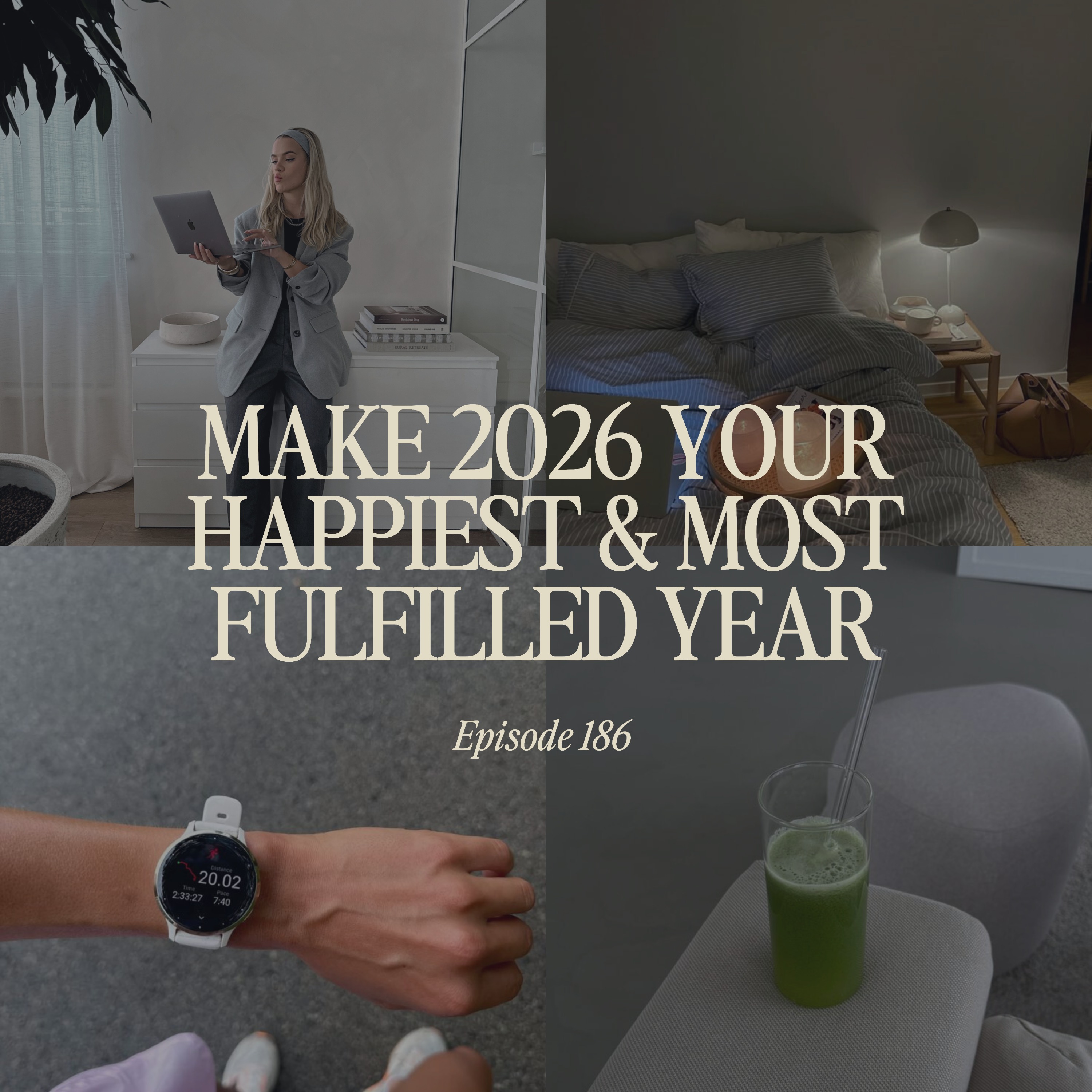
Episode Description: Grace Beverley offers actionable advice for achieving personal and professional goals in the new year, based on what works in real life.
In this episode, Grace Beverley discusses seven essential rules aimed at helping listeners reset their lives and achieve their goals for the year ahead. The episode is a culmination of insights gathered throughout the New Year Reset series, focusing on practical, real-world applications of these concepts.
Written by AI. May contain mistakes.
Grace reflects on the importance of setting intentions and consolidating rules for a successful year.
“learning that information and also then going back again and again to make sure you're properly implementing it into your life is like the biggest marker of success for me.”
Grace discusses how relying solely on motivation can be detrimental to achieving goals.
“Okay, so the first reminder is one that comes up for me every January without fail.”
Grace introduces the concept of a 'to-be' list to align daily actions with desired qualities.
“where I've thought if I had to rely on feeling inspired to get this done I would still be sitting in bed.”
Grace shares Jerry Seinfeld's strategy for consistency through habit tracking.
“Tomorrow, I will then get back to the goal.”
Grace emphasizes the importance of automating tasks to preserve energy for important decisions.
“I'm going to go back to it again and again.”
Grace explains how to curate your environment to support positive habits and behaviors.
“and if everything in your life always demands conscious effort you will burn out so take away that friction where you can.”
Grace advocates for scheduled check-ins to maintain awareness and prevent overwhelm.
“Number four is that we review before we spiral.”
Learn the four key components that shape our self-trust and confidence.
“Sade said about how you need to be aware of where you're lacking.”
Discover the importance of adjusting your goals to maintain consistency.
“my interpretations, my responses, how I react when someone tries to undermine me or undercut me, we feel this incredible sense of personal power.”
Understand how to prioritize effectively to avoid burnout and maintain focus.
“is not ruined by doing less, it's ruined by stopping altogether because you didn't do it perfectly and we are not doing that is so unhelpful.”
Explore why critical thinking is essential for self-improvement and navigating today's information overload.
“What is the historical context that is important here where we can work out why we're feeling like that?”
Learn how slowing down can enhance your overall effectiveness and well-being.
“We talked about this with GQ Jordan too.”

Get the gist, explore an idea or ask about something said.
 Claude
On Working Hard with Grace Beverley, what are the key points of this episode?
Searching your listeningAutomatic transcript. May contain errors.
0:11What is up? I'm Grace Beverly and welcome back to Working Hard. the podcast shared guidebook on how to improve your own life and achieve what you actually dreamed of doing because life's too short for boring podcasts and bad advice.
0:25What is up and welcome back to Working Hard. Firstly, thank you so so much for all the love on the New Year Reset series. These episodes have been such a joy to make and it's been so lovely to see how many of you have been sharing them and bookmarking them but most importantly have been listening to them and listening to them over and over. Like to me, as someone with a podcast, that is the most useful metric because seeing you genuinely take that information and enjoy learning that information and also then going back again and again to make sure you're properly implementing it into your life is like the biggest marker of success for me.
0:59So I just wanted to say that if you've been listening along this whole time I appreciate you so much and I cannot wait to see what this year looks like for you and for me because really if you've listened to all of these episodes you're very much set. Your 2026 is going to be exactly what you want and this episode is very much going to make sure of that. So what I really wanted from today's episode was to end the series with something that consolidates everything we've learned and with something a little bit more personal too because I have been on this new year reset journey with you. That has been the full aim of my January and over the past few weeks while these episodes have been released I've been I guess kind of jotting the things down from conversations we've been having over on the Instagram or conversations with the guests or things I've read or just shower thoughts hours after recordings.
1:45Because it's all well and good taking in a huge amount of advice, but really what do we need to consolidate? What do we need to think about again and again to really have our list of rules for 2026? Like what makes up that list? Because we can't do everything. We can't change every single part of our lives. But there are some pretty specific things that if you get right, it's pretty hard not to have a good year or a year at least where you learn a lot about yourself and progress in the right direction. Anyway, so these are the things that over the past few weeks have been genuinely helping me to show up better, to stay focused, to stay on the course for the 2026 I want and to actually enjoy the process.
2:24So if January generally didn't feel like the big fresh start that you'd hoped for, do not worry. We're going to go over that in this episode. And you haven't missed anything by starting a little later. I'm a big fan of just starting a little bit later if your mindset requires it. But knowing you're listening to this episode, I assume you want to have a really great 2026. I assume you are now in the headspace to take on this new year. So let's go through the rules and make sure 2026 is everything we want it to be.
2:57Okay, so the first reminder is one that comes up for me every January without fail. and that is you will have heard of it before but genuinely you have to internalize this motivation is going to get you pretty much nowhere it is not the thing that's going to get you the future you want it is not the thing that is going to help you reach your goals it is lovely when it's there but it is very much nice to have it is inconsistent it is unpredictable it is flaky it's not going to be there most of the time when you need it particularly when a lot of these resolutions or what you're trying to get to doesn't come naturally to you because they're not as easy as scrolling or whatever and I don't mean that in a rude way I mean that because scrolling is easier and an easier way of getting dopamine than pretty much everything else in our lives so what was once fleeting aka motivation is now much more fleeting and I've already had so many moments this year where I've thought if I had to rely on feeling inspired to get this done I would still be sitting in bed.
3:55So instead, I've been doubling down on the systems that generally remove friction and make the right thing the easiest thing for me to do at any one moment. Every time this has happened, it's really reminded me of what Dr. Sade said about the knowing doing gap in her episode from right at the beginning of this month. I'm just going to drop it in for you here if you've forgotten.
4:18So what we typically see is people are really aspirational, which is beautiful. It's great. They have this vision of who they want to be. But here's the problem. That vision of who they want to be, when we really get down to it, they don't fundamentally believe that they can. They don't have the trust in themselves that they can. And so that self-image that they have is so far removed from who they believe they are now. And so that's why they give up. That's why they hesitate. That's why they don't follow through, because there is a fundamental mismatch between who they are now, who they want to be.
4:46They become afraid by this gap, and then they keep themselves small. And so what's really important to do is to visualize, again, visualize where you want to be, who you want to be. Okay, so we have this little exercise we love to share with people, which is, you know, I love a to-do list. Some people are against the to-do list. I love a to-do list. I love ticking things off my to-do list. My first line on my to-do list is write to-do list. So I get to tick it off as the first thing. It's great. Dopamine here is fantastic. I encourage people to have a to-be list. Okay, so know where you want to go, but then who are you going to be when you get there in terms of the qualities that you're going to have developed and exhibited to get there, right?
5:25So these are the qualities like courageous, considerate, innovative, generous, whatever that looks like, disciplined. Write down your to-be list and remind yourself that you can align behind these things each and every day. It's like, you know, we started with what do you do in the year and then what do you do each day? This is the same principle. Where you want to get to, you need to be super clear on that. We know from the research around having this positive, they call it positive fantasies in the literature. Like visualize where you want to go. But then also, who are you going to be to get there?
5:54And then what that allows you to do is that every day, even if you don't achieve the goal that you set for yourself, you don't get critical. You don't attack yourself. You just go, okay, well, did I at least align behind these two B qualities? And if you did, you say, fantastic. Tomorrow, I will then get back to the goal. A lot of people will find that, let's say they want to do 21 days of exercise, and then they don't do day five, and then they give up. Why? Why did you give up? Go back to it the next day. It's like if you forget to drink water one day. You know, sometimes we do. We're so busy.
6:23And you're like, well, okay, I'm just not going to. I've done that forever now. Right? We do this to ourselves. You can get back onto things. In fact, there's this great strategy from Seinfeld, Jerry Seinfeld, the comedian. When he was learning how to do standout, he had this big calendar that he'd stick on his wall. It's like a big, ugly calendar. and every day he would practice, whether he would go to a stand-up club, whether he would be at home in the mirror and every day that he practiced, he would put a big green tick in that calendar box for the day. And so what that did, it did two things.
6:50He would visually see this progression of ticks that made him feel really good about progress and, you know, he's doing it. Also, if he missed a day, he didn't say, oh, well, that's it, no more green ticks. He just picked up the next day and it made him want to not break the chain. And that idea of being able to visually track what you're doing, also making it so small that you can't not do it. So some people as well, like if we use the example of exercise, because I think a lot of people set these kinds of health goals and get fitter and look better, whatever it may be. We might say, OK, I want to do one hour of yoga every day.
7:26And then the next day comes and we're like, oh, no, I overslept. I've only got 20 minutes left. Oh, well, that's 20 minutes you could have spent doing yoga. You don't have to set these arbitrary limits. It's just about the person you want to be. If on your to-be list it was disciplined, I'm going to get up and do the 20 minutes. I'm going to get up and do the two minutes. So at least I can put the take there. So that's something to think about when people are setting these goals.
7:52That episode was so popular out of the New Year Reset episodes. And I knew the second we finished recording, like, that is going to be one. I'm going to go back to it again and again. I will see from the stats that people will go back to again and again and I'm so glad that people loved it as much as I thought they would. Honestly if you haven't listened to that one yet go there because it kind of embodies exactly what trying to be the type of person you want to be this year is all about in like a very effective behavioral science way. So rule number two we automate to protect our energy not to control our lives and it wasn't an obvious one for me at the beginning of when I was writing together everything that I wanted to include in this episode but it came up for me when I noticed how many things I was repeating every single week without thinking.
8:37So booking the same meetings, planning the same tasks, forgetting the same errands. And it was sparked by Abby Foster talking about how we should be automating our finances and saving in her episode a few weeks ago. I'm just going to throw that clip in here as a reminder.
8:54So if you think it's disappearing each month and it's not going to the places you want to go, I would say right at the beginning of the month, automating out things like your savings, or you're investing, having things like your pension just kind of done automatically through your pay slip can be a really good idea, just so that you know that you are paying yourself first. And on day one, you're starting with what you're willing to spend in the month, not what everything that's there. Because people would get into this habit of saying, I'll just save what's left. And you never have anything left because it's life.
9:24And you, you know, you want to spend for fun and you think, oh, I've got some left, I'm just going to spend it. But if you start with what you are willing to spend, i.e. so your net income less all of the things you're putting away, like your savings and whatever, then it's just a much easier way to kind of keep control of your finances. Would you then recommend that people should be making their savings for the month and investments for the month on payday? Yes, I would. I would say setting up an automation as well makes that 10 times easier. if you do that at the beginning of the month so that a percentage of your salary or a specific number you have in mind gets put into a savings pot and then an investment pot it's done for you and it makes sense to do at the beginning of the month so that it's just happening um so that you don't have to think about the less legwork we can put into finance the better because again the other thing i think is one of the things we don't talk about women are actually better with their money statistically than men because we're good at just letting things go like we don't constantly look And that's really great because we can just have something happen and then walk away from it because we're actually busy.
10:28So when I talk about automation, I don't mean turning your life into like a productivity machine. I mean, recognizing that your energy is finite and you should not be wasting it on the same low level decisions again and again. It doesn't make any sense. You don't need to have like built a fucking robot to benefit from automation. automation for me looks like recurring workouts booked in advance standing admin slots or email slot or automatic savings calendar reminders for the things i always forget and having default plans so that i actually see my friends otherwise we will never find time in the diary and this isn't because i want to control every second of my day it's because i want to preserve my energy for the things that genuinely require creativity judgment or emotional presence there is so much tech out there now that can help you be your own assistant and if you're not using it you are taking away from the energy that you could use to do your job better or just do other things with your life and if everything in your life always demands conscious effort you will burn out so take away that friction where you can.
11:30Rule three we are designing our environment with intention. I have noticed again and again that my behavior has far more to do with my environment than my willpower. if my phone is next to my bed I scroll if my journal is on my pillow I write if I see snacks I eat snacks it's very shocking I know I'm a simple being but over the last few weeks I've been trying to more consciously design my environment to support the version of me that I want to be so my planner is always open on my desk in the morning to make sure that I plan my day properly rather than just running into things because I'm really stressed and then feeling shit at the end of the day.
12:04I try my very best to put my phone in a different room to charge it at night. I make sure my Kindle is always on my bedside table so I'm reading before bed every night. I've unsubscribed from content that derails my focus and made sure my notifications don't pop up. Like I don't get WhatsApp notifications popping up at the top of my screen anymore because I know I am the type of person who will lose focus very quickly and all of this is really small stuff but together it creates a version of my space that nudges me in the right direction and again this isn't about being perfectly disciplined it's about knowing your defaults and designing for them.
12:39Number four is that we review before we spiral. This one came straight from personal experience. I'm actually an expert in spiraling so you're welcome being here. It is so easy to have a habit of only checking in with myself when I'm already overwhelmed which I've learned over the years is not the best starting place so I've started scheduling more time for that. For me, that looks like weekly check-ins on a Friday morning. It looks like monthly planning mornings. It looks like a little financial check-in on the last Sunday of every month. And I feel like when I do this regularly, it keeps me out of spiraling mode and stops small things becoming big problems.
13:14Because also in your head, you can kind of be like, well, I know I have enough time to audit my life. So I know that I can think about that then. You can dump it in a note on your phone. You don't need to be constantly thinking about all of these big parts of your life. You can just deal with them on a Friday morning or you can deal with them on the last Sunday of every month or whatever it might look for you. And I feel like so many of these things hang over us because they're just like in the ether or they're just in our brains coming back again and again. And as long as you have the right time to audit, sorry audit makes it sound so boring, but it is really auditing your life.
13:45It is checking in with yourself. If you have that time, you know you're going to be able to make that happen. You know you're checking in with yourself enough so you don't need to be worried about every single thing all the time. And for this awareness really is the most important thing. Again, this reminded me of what Dr. Sade said about how you need to be aware of where you're lacking. And she says this in her doubt profile, but you need to be aware of that before you build self-trust and therefore before you build confidence. So I'm going to slot that in as a reminder for us all now.
14:17I was having a look at what is self-trust because if we can distill what it is, then we know how we can build it. It's not a feeling. It's not bravado. It's not just, I can do this. What the literature shows, what my own research has found, is that it fundamentally comes down to four things that shape how we see ourselves. Because how we see ourselves determines whether we take that first step. It determines whether we keep going when that obstacle comes up. It determines how we bounce back when we experience failure. And it determines whether we achieve that New Year goal or whether we give up.
14:51because if we fundamentally deep down don't believe that we can or we're worthy of it or we can control everything about it, we're not going to do it. And the piece of control is a big one. A lot of the time we will not do something unless we feel like we have certainty. The only certainty we have is about what we can control. And if we constantly remind ourselves, hey, I can control my thoughts, my interpretations, my responses, how I react when someone tries to undermine me or undercut me, we feel this incredible sense of personal power.
15:25Rule five is that we change the scope, not the goal. When life gets messy, most of us either push ourselves unrealistically hard or give up entirely. And the reality is that both of those usually lead to at some point you feeling like shit and you falling short. So this year I am reminding myself that consistency does not mean doing the same thing at the same intensity forever. It means staying aligned with your goal even when circumstances change and I always remind myself that if you can't do the full version of something you can do the smallest version that still keeps the habit alive. That is exactly what breeds consistency.
16:03So that might mean a 10 minute walk instead of a full-blown workout, allowing yourself a shift in goalposts when something out of your control happens or changing your wake-up time by 10 minutes when you know you are exhausted and you are going to be so exhausted in the morning. The mistake we often make is thinking that small efforts don't count or thinking that if we don't achieve 100 % of the goal we didn't achieve it at all and that gets us into a failure spiral because we didn't do it right and therefore we're just like well I might as well give up. But you need to have smaller versions of things, smaller defaults or substitutes that you go to that keep the momentum going because progress is not ruined by doing less, it's ruined by stopping altogether because you didn't do it perfectly and we are not doing that is so unhelpful.
16:45Along these lines rule six we are getting brutally clear on what actually matters. So every time I felt burnt out it hasn't been because I was lazy or incapable it was because I was trying to move in too many directions at once without any real prioritization and everything felt so important nothing felt grounded everything felt like number one priority and this year I am being so much stricter with myself about clarity and prioritizing what actually matters in the moment, whether that's a work blog, spending time with friends or a meeting. If something doesn't support the priority in that moment, it doesn't automatically get my time.
17:21And I think in a world of notifications and things flying around left, right and centre and like having a business, there are 100 million problems at once. It doesn't mean that they all need to be dealt with in that moment. And that's one of my big aims this year is like self-regulation around what I can control in any given moment. Just because something's gone wrong it doesn't mean I need to fix it this very moment. Of course I have a duty to fix most things at some point but I think I spend so much of my life jumping from one thing to another trying to make sure everything's sorted and everything's perfect in a way that means that I show up less well for the things that are important and that doesn't mean that something that comes up is unimportant it just means that it can't compete for focus right now and clarity removes guilt because you've already decided what matters and so you're not constantly renegotiating with yourself or wondering if you're doing enough and that is so important.
18:13Rule number seven is that we start thinking properly and this one, I don't know, it might sound kind of obvious but it's actually one of the most important things on my whole list and one of the most important things on my mind at the moment because it's not just about like improving your routine or feeling more in control of your time but it's about the quality of your thinking and And that influences everything else. Like, you know, on this podcast, I try to make sure that we're not just talking about life improvement in terms of our own lives and our own glow up and all of that, but genuinely like, what is the context that we're operating within?
18:46What is the political landscape? What do we need to care about? What is going to affect our lives? What is the historical context that is important here where we can work out why we're feeling like that? all of that is because it is so important to build the muscle to think well we cannot have a glow up in a vacuum if you are trying to live a better life or run a business or create content or lead a team or even just navigate the world intentionally learning to think clearly and critically is not optional we are surrounded by fast takes we are surrounded by constant noise surface level content, secondhand opinions, none of that is intrinsically bad, but it's at an insane volume and it is also not always factual.
19:31And it is often presented in a way that is factual and it's becoming more and more scary every single day. Like I don't mean to sound little tin hat about it, but it's so important to think critically and we are scrolling past a thousand ideas a day and we are convincing ourselves we are learning when actually we're just reacting and we're not truly having discourse around many things that need discourse but taking things in black and white when they're actually really nuanced because that's what does well on social media and therefore we automatically feel like it's what we should be paying attention to because it resonates with us but real clarity does not come from performing opinions it comes from sitting with complexity long enough to understand it and debating things and not just taking things as read and that's the skill that most of us aren't practicing enough and I think it's starting to really show in our social media feed.
20:17I know I'm not the only person who has started to think like, where is the critical thinking? But I think it's getting worse and worse. And if we're thinking about having a great career in the world of AI, if we're thinking about developing our minds and self-improvement in the guise of actually getting where we want to get to, you need to think about these things because you cannot do that without critical thinking. You can't even use AI without critical thinking because it might give you completely the wrong answer. It's not less useful because we now have the technology. It's now so much more important.
20:46So this year I'm trying to spend a lot of time consuming things that challenge me and give me something to chew on, not just confirm what I already think. So that means reading long-form content instead of relying on tweets or headlines and listening to people I disagree with who are fact-checks so that I can actually understand why they believe what they do and zooming out to actually understand the systems I'm working in. Thinking critically also means knowing when to pause instead of rushing to react and that is something again I'm again and again coming up this year on mine and my friend's vision board was like self-regulation understand when to respond versus when to react quickly when to make something a top priority when to throw out all your feelings on something and when to just take a step back and be able to self-regulate and this really means questioning you know why something feels urgent or important before automatically responding and running off from the task that you were already on and also making space in your week to actually sit with your thoughts instead of filling every spare second with noise like sit on the tube without listening to or reading something just for one day a week I rebut the idea that we need to be bored a huge amount more but I do think we need to be bored a little bit more like we can't just sit with this much going into our brains the whole time I like feel it I feel it when I'm just like I need to listen to nothing right now and it might not be as glamorous as a new morning routine or as satisfying as hitting a big goal but I feel like this is the stuff that separates people who build lasting things for their lives rather than people who end up spinning their wheels and I have been both of those people and I'm really intentionally trying to be the former so that I can get what I want out of my life without constantly feeling at the mercy of whatever's about to pop up in my notifications and whatever information I'm fed.
22:31We talked about this with GQ Jordan too. Her advice slow down to speed up has been very much stuck in my head ever since the episode.
22:42Slow down to speed up. I think we've mentioned it in this podcast, but in every aspect of my life, whether that was retraining to be a nutritional therapist and leaving my career in pharma or, you know, my fertility journey, becoming a mom, building up my brand and everything, slowing down to speed up has really been something that has been ringing in the back of my mind, almost like a little bit of a mantra or maybe a safety barrier. But I think you can apply it to every aspect of your life. I think we're constantly trying to keep going and we talked about it at the start, you know, there is a slight dopamine hit in achieving but there's also a calmness in slowing down and it gives you a lot of consideration and yeah, just helps you in the long run.
23:30So this year we are thinking properly and it is going to show in everything that we do by force. So that is how we are going to live as the people we want to live as in 2026 how we are going to get to where we want to get to in 2026. It's not through like perfect routines. It is through small changes, consistent systems and self awareness. And if your year hasn't started the way you thought it would, that is more than fine. You haven't missed anything. You don't need a January miracle. You just need one habit, one change, one system that actually works for you and then you build from there. I have also read a lot around a lot of these things and found some things really helpful.
24:07So I will leave some articles related to this in this week's newsletter. And of course, if you liked the episode or the New Year's Reset series as a whole, please do send it to a friend. It helps the podcast more than you know, really. And it means that we can keep creating this type of content. So I'm really excited for this year. I feel like I went into the year not necessarily feeling the most motivated. I went into this year feeling really burnt out, actually a lot more burnt out than I wanted to. but I'm feeling optimistic and I am feeling like we are going to get to where we want to get to so I am excited for that and I have my rules now and I can't wait to see what it has in store for us.
I wanted to close off our new year reset series by giving you a step-by-step guide to actually feeling good this year, based on what’s been working in real life, not just on paper.
So if your New Year plans went off the rails or you’re still in soft launch mode, give me 20 minutes of your time, I promise you won't regret it.
+
SIGN UP TO THE WORKING HARD NEWSLETTER: https://graceb.myflodesk.com/k0sfhlac34
+
FOLLOW THE PODCAST
Instagram: https://www.instagram.com/workinghardpod
TikTok: https://www.tiktok.com/@workinghardpodcast
+
DILEMMA SUBMISSION
If you'd like to submit any dilemmas to the podcast to be answered in the bonus episodes, please send them to [email protected] with the subject beginning DILEMMAS or DM us @workinghardpod on instagram!
+
MY LINKS: https://gracebeverley.komi.io/
+
RETROGRADE, SHREDDY, TALA and THE PRODUCTIVITY METHOD are my own businesses, therefore any mention of them - whilst not being a sponsorship - is monetarily endorsed. As usual, sponsorships do not change my opinions nor my honesty, but I will always disclaim to make sure motives are clear 😊
Hosted on Acast. See acast.com/privacy for more information.