Ask ChatGPT
 Working Hard with Grace Beverley
6 Jul 2026 · 1h 4m · 20 chapters
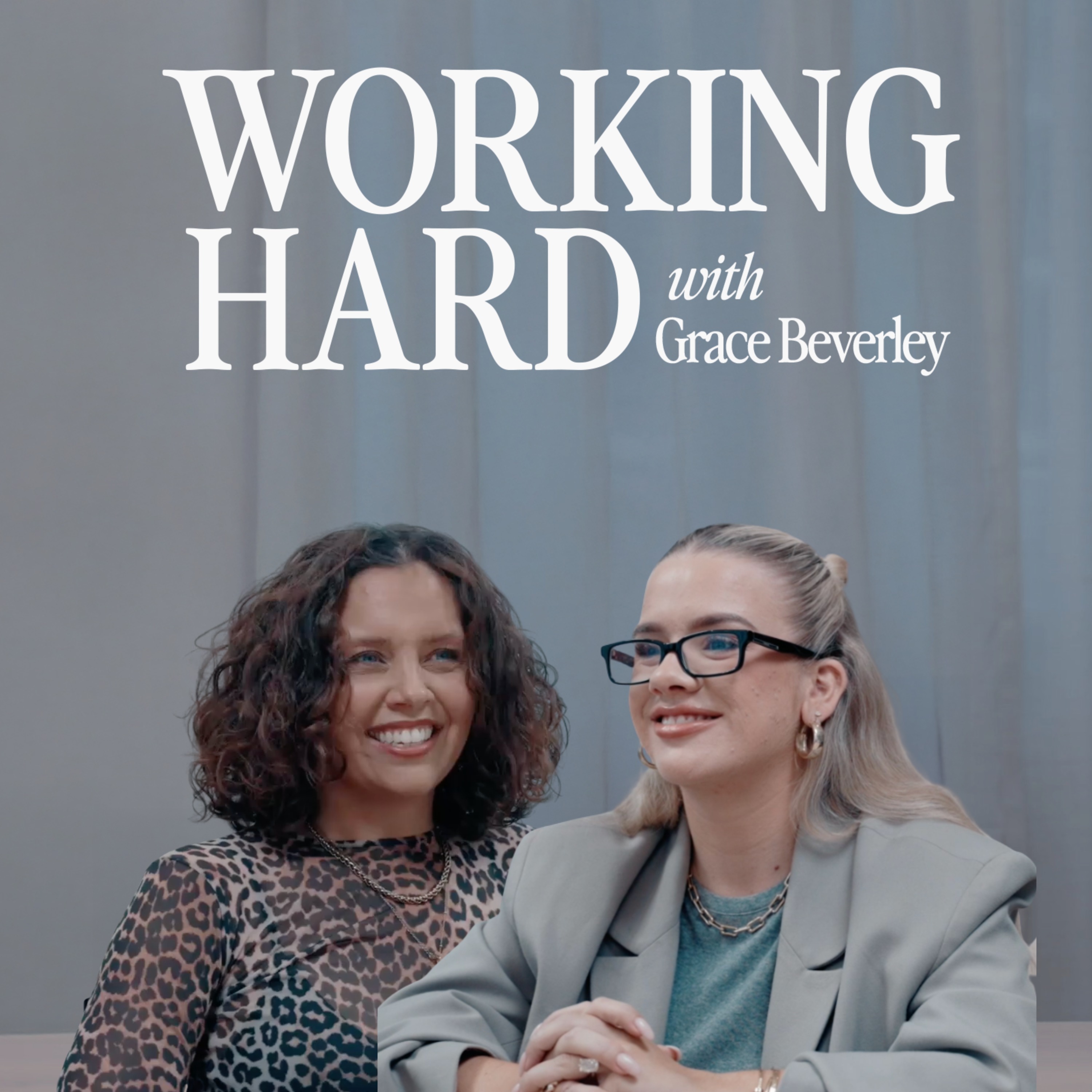
How to start and scale a fashion brand, from defining a customer and product-market fit to manufacturing, sampling, contracts, pricing/margins, marketing, and early team building.
Elizabeth Stiles, a fashion brand consultant with ~15 years in major retailers/brands. She previously worked at Next (trainee buyer) and Miss Selfridge (Arcadia group), where she describes a toxic, bullying culture under Philip Green and short lead times. She later became known as a “friendly face in fashion,” emphasizing respectful success and practical business knowledge.
Written by AI. May contain mistakes.
Grace introduces Elizabeth Stiles, a fashion brand consultant with extensive experience.
“But I wanted to make sure that I could have a really in-depth conversation on exactly this.”
Elizabeth shares her experiences in the fashion industry, including past jobs and toxic environments.
“Elizabeth Stiles are you currently more working hard or hardly working?”
Discussion on the misconceptions of the fashion industry and its economic significance.
“But also I learned about how to trade very, very quickly.”
Exploring the crucial initial steps in building your own fashion brand.
Understanding the importance of tech packs and how to approach manufacturing.
Learn about the foundational steps and risks in launching a fashion brand.
“And so factories aren't replying to them because the factory knows that they're not in a position to work with them.”
Discover how to effectively budget and manage cash flow when starting a fashion business.
“And another point on that is also make sure you have a perfect sample before going to production.”
Explore strategic approaches to marketing and launching products in the fashion industry.
“that I would give to anyone to ever launch a business without ordering MOQ.”
Learn why following relatable mentors can enhance your business journey.
Understand how to manage perfectionism when launching your products.
Explore when to wear multiple hats in your startup and when to delegate.
“Whereas I think people saw like the quality is really shit or it's falling apart or the zip doesn't do up or whatever.”
Learn to recognize your strengths and how to leverage them effectively.
“So obviously at this point, we've discussed the fact that someone's put their savings into certain area of manufacturing.”
Discover the essential roles to hire as your fashion brand begins to grow.
Learn how to determine the hero product for your fashion brand and the importance of iteration.
“tech comes in and make sure everything fits okay to avoid all your returns.”
Discover strategies for pushing your bestsellers and understanding customer demand.
Understand the complexities of pricing and how to set the right price for your products.
Learn why focusing on quality rather than price is crucial for fashion brands.
“What we are very conscious of is we believe that the aloes and Lululemons, like Lululemon in particular, really nails quality a lot of the time.”
Discover strategies for scaling a fashion brand and avoiding complacency.
“Another one I've noticed is where founders are always on that slight edge of comfort where they've got a feeling of being like, I feel a little bit nervous.”
Understand the importance of research and action when starting a fashion brand.
Learn the vital advice of assuming the best in others to drive success.

Get the gist, explore an idea or ask about something said.
 Claude
On Working Hard with Grace Beverley, what are the key points of this episode?
Searching your listeningAutomatic transcript. May contain errors.
0:11Grace Beverley: What is up? I'm Grace Beverley and welcome back to Working Hard, the podcast shape guidebook on how to improve your own life and achieve what you actually dreamed of doing. Because life's too short for boring podcasts and bad advice.
0:25Grace Beverley: What is up and welcome back to Working Hard. If you've ever thought about starting a fashion brand, this video was put together exactly for you. Hi, I'm Grace, and if you've just found me through the podcast or a few videos, you might not even know this, but back in 2019, I founded fashion and activewear brand Tala. It is what I spend a lot of my time doing. It's now seven years old, we have over 80 employees, and it is the love of my life. And I kind of squeezed these videos in around that. And last year, we opened our first two London stores, and over the past seven years, It's gone from making a few leggings in my uni room to a proper scale up business.
0:58Grace Beverley: Anyway, I get asked all the time how to actually build a fashion brand. So from the team that you should have to pricing, to manufacturers, to sampling. And honestly, it's just something I've always wanted to do an episode on. But I wanted to make sure that I could have a really in-depth conversation on exactly this. So for this episode, I've brought in someone who spent years in the industry across different brands to put together a proper kind of guide. I'm joined by Elizabeth Stiles who is a fashion brand consultant she advised businesses on how to grow and scale and between the two of us I wanted to really break down exactly how a fashion brand actually works how to start one what you should be concentrating on with your first money how to scale it how to grow it what to make a real proper lasting business rather than just a flash in the pan.
1:45Grace Beverley: Elizabeth Stiles are you currently more working hard or hardly working? I'm working pretty hard actually but I'm breaking it up with little mini breaks and I feel like mini breaks are going to become almost like a personality trait at this point oh I love that so that's your like you feel like that refreshes you yeah yeah because I feel like as much as I like a mini break it just the day you're back to work it feels like you never had a break like I feel like sometimes you just need something where you're actually like there's a little bit more time to breathe whereas I constantly try and like cram in that type of thing and then I'm like wow I'm actually more exhausted than I am.
2:20Grace Beverley: You seem to be better at it than I am. I need to write a blog about mini breaks. But you spent about 15 years working in some of the industry's biggest brands and you've described it as kind of devil wears Prada on acid. So I'd love to hear a little bit more about that. Like what is that like? What was that like? What are your experiences within the fashion industry before we dive into people starting their own kind of fashion thing okay I mean let's try and condense 15 years into like 15 seconds but I actually won my job at Next as a trainee buyer so I won a competition at uni which was amazing so obviously trying to find a graduate job is pretty hard and I loved it at Next everyone was so friendly it was up north everyone was like hey up chalk in the morning it was like happy do da and then I was actually in a long distance relationship with my boyfriend and we'd already done long distance for eight years so I thought no I need to come back to London get on with life and I got a job at Miss Selfridge which is part of the Arcadia group or was and I thought I'd made it you know I was rocking up on Oxford Street in the morning it was just such a cool reception and I waited and then these two girls came out to get me and the second I met them I knew I'd made a massive mistake really yeah it was just a horrible environment and I got given a tour and the first thing she said to me before we even stepped into the office she said on your left here is where the toilet you can go for a poo or a cry and I thought oh no how am I gonna need to cry turns out I did and it was just pretty brutal and I it was run by Philip Green at the time there was a lot of toxic workplace culture that was being pushed down it was a very like bullying environment and I think only in hindsight did I realize that I was part of workplace bullying it's something that you maybe don't realize in the moment and during the time working there my mum broke her ankle and my first reaction was that I was jealous that she had broken her ankle and I remember thinking on the way home that I wonder how many steps I could throw myself down the escalator at Oxford Circus Station to just hurt my ankle and not hurt myself so that I could stay in bed with my mum which is that terrible because at the time saying it out loud now makes me sound insane but at the time I thought that is a really really good idea to get out of that's my only route for a day off yeah yeah it was rough and we would have selection like sign off meetings and one day Philip Green came in and said if you guys don't pull your socks up and sort your sales out I'm going to throw you all out of the window I know and it sounds funny but he was I don't think he was joking he was deadly serious it was rough tough times but that was the section of Devil Wears Prada on acid and it was only a maternity cover contract and at the end of the 12 months they said look this woman's coming back the sales aren't doing that great as a business as a whole we won't be able to keep you on I was like that is fine don't worry it comes my day off didn't even have to break my ankle yeah um and they had been like but you you won't have a job and I said I get it it's fine I'm ready to go and then the day I on the way home from my last day at Miss Selfridge I got my next job and do you think there's anything from that time like that the more intense probably horrible maybe shouldn't have gone through do you think there's anything from that time that you learned that you think that you couldn't learn anywhere else about fashion about work definitely however bad it was I walked out of that building a very different woman to the girl I walked in I was so naive walking in there just assuming that everyone was so sweet and friendly and actually there I learned that you don't need to be a bitch to work in fashion I realised then that I wanted to let other people know that as well and I could see girls coming out of uni going into that job and turning into a bitch because they thought that that's how you needed to get ahead and I was like no you don't I was like the Pied Piper in there being like come out the back with me you just need to get out of this building this is toxic there's other places you can work that are lovely and when I wanted to quit the supplier side and go freelance and do what I do now I had this little notebook that I would carry around in my bag and I was listening to podcasts business podcasts business books and just absorbing as much information as I could and I wrote down the friendly face in fashion and I thought oh god that's really cringe I don't know and it took me about two years to actually write that on my Instagram bio and I'm so glad that I did because that's kind of what I am known for now is that being that friendly face in fashion and knowing that you don't have to be nasty to get ahead in that industry that has such a bad reputation from Devil Wears Prada and fashion-y films.
7:28But also I learned about how to trade very, very quickly. I think the reason, another reason why it was a tricky place to work is because they had such short lead times. And so constantly we were always trying to come up with the newest thing and that comes with its own pressures so a lot of people do tell me now you work really fast and I was like well try working fast fashion and you have no other choice yeah no I can imagine
7:52Grace Beverley: yeah and what do you feel like some of the biggest misconceptions are of the fashion industry from the outside that being one of them I if we look more broadly I think people don't take fashion seriously as a whole when in fact it's in the top five money-making industries in the UK so I don't know why we're not taking it so seriously I know why go on because women outperform in it compared to other industries and so of course we don't take it seriously it's the same as influencer like anything that anything where women statistically make up the bulk of the workplace or tend to outperform is seen as unimportant bimbo land kind of yeah it there's I don't think I can think of a single industry that's not taken seriously that's not predominantly women-based and I want to come on to speaking about like the foundations of building a fashion brand and starting your own business because I think a lot of the people listening to this episode will either be interested in just knowing the behind the scenes or genuinely have sat on an idea for a long time and don't necessarily know how to put two and two together to actually get there like how do you create your own version of one of these brands how do you take off in the same way that some of these ones have online so starting at the very beginning imagining that someone for example has maybe a name for the brand or a logo or a concept where would you go from there like what's the next thing you would do you've got to think about this is so boring and you hear it in every single marketing book but who is it that you're selling that product to and knowing your customer really well and I don't mean girl in her 20s mum in her 30s going and really understanding who that ideal person is and I sometimes do find those questionnaires of finding your ideal customer avatar a little bit ambiguous so an easy way to do it is pick an influencer your dream person who you couldn't imagine buying from you or wearing your thing you would scream if that they wore your product that's your ideal customer and then you kind of maybe work backwards from there because then you've got a tangible person that you're working with and every time you're making a design decision a naming decision you know naming something a fabric composition a label you're always just coming back to that one person thinking would this one person buy that thing and it keeps you very focused because otherwise you can get really overwhelmed and distracted because there is so many things to think about alongside your manufacturing and also your marketing and they're two very very different concepts but you need to run both in equal measure because if you have a really good product but nobody knows about it and you haven't done the marketing then you're not going to make any money but if you have really good marketing and not a very good product then your business isn't going to last so you need to make sure that you're focusing on both in equal measure but not necessarily at the same time you might sort of flip between the two and then starting off to think about factories finding a factory do you want to do it by made to order or do you want everything pre-made ready to send out there's no right or wrong it's just two different types of business models thinking about how much quantity you want to buy what your budget is I've worked with one girl she got given 18 000 pounds for her 18th birthday wow lucky her and she hired me because she wanted to use that 18k to start her fashion brand and she'd been to speak to different manufacturers and they told her they have really low quantities but their really low quantities were 300 units yeah that's low for River Island maybe it's not low for somebody that has no following online and it's just maybe clicking into place that if I have 300 followers when I start out I'm probably not going to sell 300 units of something which sounds so obvious again when you say it out loud but a lot of people don't put two and two together and so I said okay well if you did 10 items at 300 units each you've basically blown your 18k before you've even got a website models photography anything so just be careful not to spend all of your money on stock and then you don't have any money for anything else and that was a bit of a light bulb moment for her and what would you say are some of the things that people often don't think about that early conceptualization stage that come back to bite them when they actually you know are starting the brand and maybe they got money going out yes having a tech pack so if you don't know what a tech pack is it's a very clean line drawing of the garment that you have in mind with dimensions and measurements and very clear instructions on how to make that garment which is so important if you're making overseas and maybe there is a bit of language barrier there but it's up to you to tell that factory what it is that you need in order for them to really be able to create it is that's your responsibility not theirs and somebody described a tech pack I guess as an Ikea manual if you were to get given a flat pack furniture without any instructions that would be very difficult to put together that if you almost have this instruction manual to be able to put it together it doesn't really matter what language you speak you'd still be able to follow that so just being very very clear in your communication about how you're speaking about the product and if you don't know how to do it that is absolutely fine you can just hire somebody to help you yeah so let's talk about that a little bit more in depth because I think that this is one of the areas that really terrifies people when they are thinking about starting a fashion brand so they might have the fully conceptualized customer or as we say name logo aesthetic all of these different things but actually where do you even start with manufacturing I think is a one of the questions that seems to like haunt people and is one of the biggest barriers I would say to actually getting people to start their business so say you're in that position where should a founder even start when it comes to finding manufacturing sampling actually getting a product into their hands and then into their customers hands I think people get nervous because they're reaching out to factories that are too big for the stage that they're at.
14:23And so factories aren't replying to them because the factory knows that they're not in a position to work with them. And then people get frustrated at the lack of reply. They maybe get a bit disheartened. And when you're starting out, again, let's go with the example that you have about 300 followers when you're starting out. You might only need 10 garments to test to begin with. You don't need a factory to make you 10 garments. You might just need someone with a sewing machine. And so coming right back, scaling it right back, not trying to run before you can walk. You either maybe need somebody with a sewing machine or a sample unit.
15:00And there might be some in Manchester, there's some in London, some in the Midlands, where they can make you 10, 30, 50 units that you can just test. and there was a really good program on iPlayer a few years ago about Adam Frisbee who ran the one of the fast fashion businesses that doesn't exist anymore and he came up with such a good example he said he started his brand with six dresses and he bought more of the ones that worked well and put the other ones in the sale and then did it again and again and again and that's how he grew it into this multi-million pound business but sometimes people are seeing these multi-million pound businesses online and thinking how am I going to do that when actually it started from six dresses some sold some didn't that's really normal don't be disheartened when some things don't sell and some things do you just do more of what works well and less of what doesn't which sounds really obvious but it can be that simple if you just start small and grow it from
15:58Grace Beverley: there yeah no I totally agree and what would you say are the biggest risks at this stage that people maybe don't see coming not having a contract with your factory sometimes you might have started out and you're just so grateful that somebody has replied to you to make your product and then one thing leads to another you're in the sampling stage all of a sudden you might be sending some money overseas the product is getting made it comes back it doesn't look like how you wanted it to because the communication has broke down somewhere along the way either they've not understood what you wanted or maybe you haven't been too like super super clear in what it is that you need and then if you don't have any kind of paper trail or evidence or contract that you have paid for something that looks different to what you've ended up with you've not got a leg to stand on and I have emails all the time from people saying that this has come back it doesn't look like how I wanted it to if you don't have a contract I can't help you I mean I'm not a lawyer I couldn't help you anyway but I'd pass you on to a lawyer and that's the first thing that they would ask so even if you are very friendly with them it's come through a friend of a friend a contact don't be afraid to get a contract into place I always think about with manufacturing it is honestly like dating you get the prenup involved if they're ghosting you you ghost them that's a red flag if they're disinterested it's a red flag you want to be with somebody and bring somebody into your business that wants to work with you as much as the other way around yeah and one thing I would just add to that in terms of the contract as well is like not just contracts for sampling but like as soon as you're paying for things to be made so the actual bulk of the product being very very careful that you haven't essentially that you have uh lined in the contract around things like getting a sample from bulk production before you know before it is even sent to you all of these different things because I've heard so many horror stories about people who just don't have these contracts in place and you know they could receive a thousand units of something that's completely wrong or their factory decides to send them a thousand units and bill them for it because they didn't have something in a contract that said no it's only this amount of units and it can sink lots of businesses before they've even started and that's what feels so terrifying about it and that's what I've always been so big on is like use these factory templates use these contracts like do not work with someone do you like you wouldn't pay a few grand for a you know address or something without knowing that their trust pilot said a certain thing or they're actually going to get it to you or whatever it might be and there are trading standards like you wouldn't just put that out onto the ether and yet it happens so much when it comes to starting a business yeah and i also think people think well what's the point if it's in china i probably don't have a leg to stand on anyway and i think well you definitely don't if you don't have a contract So let's at least put something in that they probably will sign.
18:58A hundred percent. Yeah. And if they don't, it's also a bit of a red flag because what in that contract do they not want to agree to? And another point on that is also make sure you have a perfect sample before going to production. Sometimes I had a client previously who said that she had a puffer jacket and she said, I just want it to be a bit thicker, go to production. Her a bit thicker was very different to their a bit thicker. Yes. And then she had to hand stuff all these jackets when they came into the UK, wiped out all of her margin from the cost of the padding and the time that it took.
19:33And there might have been no reason to actually sell that jacket in the end. So try and avoid any fluffy language when you're talking to factories as well. So 3cm wider, for example, rather than a little bit thicker.
19:46Grace Beverley: Yeah, no, 100%. I mean, I think about the days where I was originally dealing with samples and I'd literally like my first few rounds, I'd be like, oh yeah I just think we need like the sleeves a little slimmer or like the cuff a little looser or whatever it might be. Just a bit nicer. Yeah exactly and you'd get the samples you'd get back I'd just look at them and I'd be like huh this is a bit of a Frankenstein situation here and you get very quickly used to the fact that like you are bleeding money if you are continuously going back and forth on stupid things you end up being very efficient and you but you need to give yourself the runway to actually get to that point without falling over and I want to talk about that a little bit I want to talk specifically like money so say someone has five thousand pounds and they've saved that up and they want to start a fashion business and this is their dream where would you start and what would you encourage them to spend that five thousand pounds on first of all I would say whilst you're working on getting the product out please work on building your audience as much as possible because e-com I don't want to say the more followers you have the better it will do because that isn't true your followers and your turnover don't necessarily need to correlate but you might have a slightly better chance of launching to an audience of people who are actually interested in what it is that you're doing I would try and document everything because the more you can document the more grateful you're going to be to your past self when you come to those days when it's raining outside and you've got nothing to post but you still need to keep showing up online so that's my first tip is to document the lot however boring you think it might be it's going to be super interesting to somebody else then I would also get your pricing correct because I've worked with brands who are turning over multi-six figures having selling thousands of units but haven't actually been making any profit off the back of it which is so heartbreaking and soul destroying when you have to sort of present that back to them and say that yes your numbers look good on paper but there isn't actually that's why you've got no money left at the end of the month because there's no profit in the business so as a general rule we want to be working to around 60 to 70 percent margin at least a lot of um high street retailers will be working higher than that that's significantly higher than that as in like as in like in my dreams but like as in genuinely it is so easy to I think start a business and think okay well this cost me 20 pounds to produce so if I sell it for 40 pounds I get 20 pounds in between and that feels good feels good until you're running a business like until you need to be able to pay for marketing spend which is far more expensive than it ever used to be until you need to pay for any staff for any of the taxes like there's so many different things that won't come into that cost price that you don't think of and I think when I started my business at the beginning I was like well easy like if I'm if half of that is margin then like great yeah and actually that is not even close enough to be running the business to be able to create the good products that you want to create yeah even Shopify fees yeah pretty hefty and card fees and like payment um percentages that you need to pay to the processors like all of that it's it adds up yes definitely so having if you're running at 50 % margin and you're just doubling your income, all that will happen is that the business will wipe its own face.
23:15So once you get up to sort of 60, 70, maybe even 80 % margin, if you're lucky, then that's where everything else gets paid for in that gap above the 50%. But maybe that's too much for this stage. And actually, it's just about making sure that you're covering your expenses and coming up with a product that is a commercial price point. and just not buying too much stock. That's one thing. People buy way too much stock at the beginning before they even know anything. Test, test, test, test, test, learn, repeat, test, learn, repeat, do more of what works well, less of what doesn't. I can't hammer home that message enough.
23:52Grace Beverley: I mean, we still have products we buy on MOQ and like we're seven years in and have a pretty large customer base. Like there are so few examples that I would give to anyone to ever launch a business without ordering MOQ. because if you and sorry for anyone who doesn't know moq is a minimum order quantities and we've talked about how moq might be still too much for you so you need to find one that has maybe like an under 100 um moq or whatever it might be but genuinely it's like you could sink your business from the first launch if you buy as you say 300 of something 300 if we look at percentages like genuinely you're probably going to need 30 ,000 pretty engaged eyes to even get a chance at selling 300 like that would be a strong conversion percentage yeah and so it's like it's it's hard and it's it's easy to think oh well you know 10 would be so few if you get 10 and they sell out fantastic like that's your marketing yeah that's your marketing for the next few months like you do not need to run before you can walk because that is what is going to end up syncing you and of course later down the line when we get a lot of these conversations online around like oh this brand is just ordering too little because they want to sell out like all of this yes some of them will be a marketing tactic a lot of them when you are fast growth you cannot actually keep up with even like cash flow wise you can't keep up with the amount that numbers are changing between launches and also you probably ordered them six nine months ago so actually you know you can't do that as much but that is a problem that you can deal with when you get there yeah it's like your demand is your first and biggest and most existential issue and maybe try not to launch everything at once as well I always think of it as like a poker game that you're showing your cards and once you've laid all your cards out on the table everyone's like what's next and you think I haven't got anything next because I've spent all my money on these things and you need that momentum in order to keep people interested so if you do launch with six items maybe launch with four and then a couple of weeks later you drop the next one and a couple of weeks later you drop the sixth one I'm a big fan of launching with one like I believe so strongly in heroing and like becoming famous for something and becoming known for that one specific thing I think it goes so far and I think it's one of the things that I would actually do differently were I to start again is heroing is not just one way of selling a product it's a way of becoming known for something.
26:20Grace Beverley: It's a way of giving consumers an easy in. We all know the stat that shows that essentially, if you have five products on a site, for example, you're less likely to buy something than if you have one. Like the decision is another step in the customer journey that you don't necessarily need to have. And particularly at the beginning, when both selling that product and building up brand recognition for one thing is so useful, like build one of the perfect something, become known for that and then you have license to expand even if you've already sampled all of these others and you're like perfect i got my next six products to go trying to find that hero in early stages i would say is like one of the biggest things that ends up paying dividends if you're looking for something predictable and low friction over the long term public markets may be a suitable option but the moment you want different investment characteristics it may be time to consider the private markets.
27:14See how your wealth can work smarter at creativeplanning.com slash access. Yeah.
27:21Grace Beverley: And along those lines, would you say that there's any brand that you've seen that's a smaller brand where you feel like they've really aced these early stages and that set them up for success beyond that point? Yeah, definitely. On that hero point, Gymshark did that. Amy of Muse did that. Lucy from Lucy and Yak did that. They got known for their dungarees. And a newer brand, I would say, is Alice at Mile Off Running. I don't know if you've seen it. Yeah, yeah, no, I have. And it's all over TikTok. And she just went all in on running and also documented everything. Didn't buy too much, built the audience, got it to sell out, built the wait list, grew her mailing list, not just her audience on socials.
28:02So she's covering both angles. she went and visited her manufacturer really early over in China documented that took everyone along with the journey just assumed that people were actually interested I think sometimes people think nobody's gonna be interested in that when actually they really really are never ever underestimate how nosy people are because they are nosy and social media wouldn't exist if people aren't nosy like the proof is there yeah so definitely go and check her out I think is somebody who's not been going that long but is already very successful so you can don't have to scroll back too far to figure out how she did it as a bit of a template yeah and that's i guess like
28:42Grace Beverley: hand in hand with some of the other advice which i always give which is like try and find as many people as possible like whether a mentor or just people you follow like try not to this sounds mean try not to aim too high and i don't mean that like absolutely aim for the stars like have your big dreams go after them all of this you might be racing through it but it is not helpful to be following only like these massive business owners like billion pound business owners yeah and being like that's who I want to be I'm going to follow in their footsteps if you haven't launched your business yet follow someone who launched a year ago like talk to them they will have the issues that you will be having and they will have the journey that is actually much more reflective of where you are like if I try to do the tactics that Gymshark did for example back in the day when I launched it wouldn't have worked because it it passed that area of the internet or it passed that time those those certain multiples you were getting on certain things same with like if people just try and like copy and paste like skims right now or whatever it might be like you have to be able to see things that reflect your marketplace and be able to actually use that as inspiration which I think some people sometimes get wrong like you get that like that kind of peer-to-peer advice is going to be far stronger in my opinion than someone who is five ten years ahead of you yeah and there's a difference between taking inspiration and copying like you said it's like you took inspiration and just having your there's like a difference between having your artist hat on and your scientist hat on and I think if you have your artist hat on and you you end up comparing and going oh that's what I haven't done whereas if you have your scientist hat on you think that's how they've done that they've done this then this then this that was their launch date let me work backwards they posted something about unboxing something about a countdown something about this and so then you look at it from more of an analytical point of view and you're less likely probably to fall into a comparison hole and imposter syndrome and all the rest yeah absolutely and how many rounds of samples would you say someone should realistically expect before they are getting it right and able to go to production?
30:47I think that if you are sampling more than three times there is either an issue with the factory or an issue with you where you're maybe being are you being a perfectionist or is there a problem with the production because perfectionism can really hold you back from launching thinking oh that button's not quite in the right place maybe I should do it again and it's all tactics to put off launching and I just think just get it to market as quickly as possible that is as good as it needs to be it's not going to be perfect and just accept that when you first launch and go from there let your audience tell you what's perfect rather than you trying to dictate what's perfect yeah I agree and there's like the I mean
31:34Grace Beverley: it's a reflection of the MVP method isn't it is it's like if you're getting out to market with your minimum viable product you are able to learn at a much earlier stage than if you spent tens of thousands of pounds getting to your ideal product getting out to market you're still going to get so much feedback and you're still going to have to change things there is like the thing i think sometimes miss people misunderstand about this is like minimum viable product is still it still needs to be viable like it still needs to be a reflection of what you actually want to do So, for example, if you wanted to create this gorgeous, like, cinching jumper and it doesn't cinch and it doesn't look nice, then it's not viable.
32:13Grace Beverley: Whereas I think people saw like the quality is really shit or it's falling apart or the zip doesn't do up or whatever. That's not actually viable. So I think sometimes people listen to this advice and they think, well, why would I launch with something shit? and it's not that it's how little can you spend to get to a point where you can launch in a way that reflects the product you want to create the audience that is going to be buying it and therefore you can at that point still get more data because you're going to sell that piece and you might not be a hundred percent happy with it you might be like oh god i wish that just cinched a tiny bit more or fit a little bit more like this or whatever it might be you're going to have those moments like i still have those moments and i'm like it's often just happen when I'm like ah maybe ah you know just like like that one tiny little thing but when you're at that early stage you have to as you say you have to avoid perfectionism like high quality and high standards are different from perfectionism perfectionism will hold you back and probably sink you because you're paying for each sample versus like you know high quality which is necessary to actually create the viable product for your customer.
33:23Yeah.
33:24Grace Beverley: Just get it to a place where it's good enough and then you're done. Yeah. Test, learn, repeat. Which I think can be said for so many things as well. Yeah. So obviously at this point, we've discussed the fact that someone's put their savings into certain area of manufacturing. They probably placed the order. They've maybe sold the first few things. At this point, maybe they are now suddenly involved in the marketing, the logistics, the customer service, like every single hat you can possibly wear in the business. At what point do you think this is a good thing to be doing? And at what point do you think that that starts holding you back?
33:59Good question. I was thinking about it and people think doing it themselves is free when it's not. If you're really good at designing and you design a product that can go on to create six figures, that is where you need to be spending your time. if you're really good at photography then spend your time doing that lean into the things that you're good at and throw a little bit of money at the things that you're not good at because one it's not free to do it yourself and two when you try and do things that you're not very good at and that you don't enjoy it doesn't make you feel great about yourself and then that feeling of sort of slightly suppressed self-confidence self-esteem leaks into the things that you are good at and so if you've been trying to do your accounts on your own without an accountant and you've gotten a pickle and you've spent all day doing it but the next day you were meant to be designing your new collection and you feel like shit because you've not been able to do that thing it ends up having a bit of a knock-on effect so just really notice how you're feeling about the jobs that you're doing and if you're really excited about doing them amazing sometimes you might not be good at something but you're really keen to learn so maybe with social media it's not something that comes supernaturally to you or you've never done it before but you're like I really want to figure it out that energy that goes into it will be fine whereas if you think how on earth am I going to do my accounts I was in the bottom set at maths and I don't know how what I'm doing and I'm scared that I'm not going to do it all wrong just really think about the different roles and what you're good at and what you're not good at and there's somebody who is desperate to do your accounts for you because they love doing the accounts and that's where they should be and this is where you should be so it's very confronting running a business somebody said to me before that starting a business is like the most brutal form of therapy because it makes you face all of the things that you're really good at but it also brings up all the things that you're not good at which you probably haven't had to do if you've been hired in a job in a corporate role you're just doing that one job that you're really good at that you got hired for but then when you start a business you've got to do all these other things that you're not very good at and it can
36:03Grace Beverley: just make you feel a certain way so yeah no absolutely I think there's a really good nuance that you pointed out there in terms of like yes you should mitigate your weaknesses and I do think mitigating your weaknesses is really important like you cannot be running a 30 50 80 person business if you aren't able to see if someone's pulling the wool over your eyes like if you are if you don't have a baseline understanding of each sector of the business like it is important to learn over time and to make sure that that is the case. I have had many, many issues based on trusting people too much at the wrong stages that have been essentially blown up in flames because I've thought, do you know what, this is the right thing because I'm not good at that, so I just need to fully delegate it.
36:44Grace Beverley: And delegation is important, so is due diligence, so is making sure that things are covered. Like Facebook ads, for example. Like you might want to give that out to somebody, but you need to be able to talk to that Facebook ads person to understand what they're doing with their money exactly that and understanding what the metrics are understanding what the data is because i think that the there is a big big difference between knowing your strengths and playing to them and also making yourself very easy to take advantage of um and i think that that's something that particularly solo female founders need to be very aware of i would also completely back up the fact that strengthening your strengths is always going to be the quickest way to success like if you're really great at talking to camera or you're really great at doing the marketing plans or designing the product or doing the accounts and the financials like whatever it might be playing to your strengths is going to have a bigger multiplier on your business than just making sure that you're doing all of these things that you actually really hate just because you feel the need to yeah and I feel like understanding and like upskilling and doing as much as you physically can to be the best at those possible things is important too because I also have times where I've thought okay well now I'm the owner of this business and now we've got 30 people or 50 people or 80 people now I need to not ever do the marketing or I need to not ever do the um you know talking to camera or I need to do yeah or the fit comments or all of that I've also had those times where I've been like oh maybe I should move away from this point and actually if you're good at something in my opinion stay on it particularly when it's your brand and I'd love to talk about then specifically what would you say a good team would look like at that very early stage maybe a few years in making you know hundreds of thousands in revenue versus making millions yeah the first person you hire tends to be a bit of a do-it-all a brand assistant is what they're usually called because it's very loose on what that job description actually is whether it's going to the dry cleaner buying the model lunch on the photo shoot day or placing po's you kind of need them to do a little bit of everything just to take the load off of you because it does get a lot quickly then that person will end up niching into something that they're pretty good at and then they want to start offloading some stuff onto somebody else so you really want somebody in the manufacturing sort of side and whether that's to do with chasing all your samples get back getting all your production in on time ringing DHL where are the products it ends up being slightly less of a creative role and chasing everything chasing everything in to keep it moving and then you probably need somebody who's a little bit more creative if you need some support on that side so social media somebody who maybe would talk to camera on your behalf if you're not really that confident although I would recommend you do it personally um and even if it's coming up with creative ideas writing more of your emails making sure that your email is going out weekly so then just making sure you're covering off a little bit of operations and a little bit of marketing and making sure that those two things are balanced really well and then as it scales what tends to happen is you might end up with the roles getting a bit blurred because you've brought all of these people in that you need at that point but they're not really actual roles that a fashion brand needs so for example I worked with a brand the other day and she said I've got this creative product manager it was something like a title like that I was like sorry what I'm actually unsure you could be designing an app you could be literally like what's that person doing and they go oh they're doing a bit of this and a bit of that and I said the reason everyone's confused is because you need the very specific roles at this stage she was doing a few million and I thought okay you've got some freelancers you've got a mix of freelancers and people on the payroll you need a designer a buyer a merchandiser and a garment tech on the product side and then you also need the marketing team which we can come to at a later date but that was where the sticky points were and each of those people have a very different role.
41:04And can you describe the differences between those roles for anyone who might be confused? So a designer is where it starts and the designer let's say is the person who looks to the future all of the trends what's coming what's on the catwalks then you at the other end of the scale you have a merchandiser who is looking at the past what has sold well what did do well last year then you have a buyer in the middle who's almost like the mediator between the two because there's quite often a personality clash between a designer and a merchandiser one's looking to the future one's looking to the past whereas the buyer is the commercial eye in the middle that's looking at what's going on right now what are our customers needing right now what are other people doing now what's in selfridges now and then you need to pull together those things and come up with a commercial range between making everybody happy and then once everybody's happy and they've signed off the range that's when the garment tech comes in and make sure everything fits okay to avoid all your returns.
42:05Grace Beverley: And we've talked about heroing which we both agree is very important but I'd like to talk a bit more about specifics because I don't think that you can just launch with one product and expect it to be your hero. I do think that there are some examples where when you launch the business around a product it is likely to be that. So for example if you wanted a tank that looks very specific or works very specific for big busts or small busts or whatever it might be like your specific reason for being of the business yes that's probably going to be your hero in other examples when you are just starting a business and you're like well I guess this is our first product it may not be the thing that lasts forever and that becomes like the thing you are known for so what would you say creates that difference between a kind of one-off viral moment versus like backbone of business hero bestseller?
42:58Yeah it's almost like a Venn diagram between comfort and confidence if it's comfortable and makes you confident it is very likely to become a bestseller also on top of that is when it has the potential to be reiterated multiple times in different ways so I work for the brand in Australia that has a dress and it was her bestseller it fit really well it had all these incredible seams down it it fit multiple sizes it just looked good on everybody and so then she tweaked it to have a slightly scoop neckline because here it was higher up and then she did a scoop next time she did it as a mini then did the mini with the high neck then the low neck and I think what people don't realize is that you don't really need to reinvent the wheel every time you're doing something it's just tweak it tweak it tweak it and I actually worked with Lucy and Yak years ago when they were growing and we went to Amsterdam to get some inspiration for shopping and they obviously were doing really well with their dungarees they were always looking for new prints so that was the thing that kept moving those dungarees on and we found this vintage sunflower print and we did it as a limited edition I think they sold like a thousand units did really well then did it again and again and again then they put it in socks they put it in bras they put it in bed linen they put it on absolutely everything and that sunflower print that was found in a random vintage shop in Amsterdam probably made them like close to seven figures
44:27Grace Beverley: right so I think what's a really good like example there is like your hero is what you expect your hero to be and so in that example it was the dungarees at the same time it might actually be that you are 90 % of the way there and that 100 % is like a tiny iteration so that ability to tweak it so if it's a um I think odd music is a really good example of this for example if it's a like specific cinch dress you're known for how can you like that started with a blazer so they were really close to that but it then became the dress and actually realistically that's what people wanted I mean not that they didn't want the blazer but like that's what led to the big like viral moment and actually had you stopped just at the blazer moment there's a school of thought that would say that's the thing to do because it's the hero but actually iterating that and getting closer and closer and closer to what your customer wants at the same time there might be iterations you do and people are like yeah this worked in a trouser but it absolutely doesn't work in a skirt or whatever it might be and so I think that that like volume of iteration and it's like the rate of experimentation has to be pretty high.
45:33Grace Beverley: At the same time, I do think it's easy to, or I think it's possible to over-iterate and maybe dilute your message. How would you explain the difference and like how someone can predict whether they're doing that or iterating enough? Yes. I can always tell when somebody has a design background because they don't over-design it. and it's really tempting to sort of throw the kitchen sink at it when you think oh it's doing really well let's make it put sleeves on it and put a zip on it and do this and do that it's very much like a science experiment you have to only ever change one thing say your top with the different um black white gray neon if you launch that with a neon and it sold well is it the neon they like or is it the fit that they like let's try it again with the gray branding they still like it okay they like the top if you change the fit and the color that now you don't know you're stuck whether which is it that they like or that they don't like and so if you're changing too many things you'll end up really confused and you've got to make it as simple as possible for yourself you don't need to redesign it multiple times if it's selling well again like the girl with the dress just change the neckline put it out again then see they still like it okay let's do a mini version they still like it now let's change the print they still like it and I also think people don't necessarily always have the confidence to keep repeating something they assume that people are bored of it because you're bored of it and everyone is bored of their best sellers let me tell you oh god we've got to do another version of that top again and I don't know if you remember that vest I'm sure you will that was in top shop years ago and it had the scallops around the edge and it was just a vest with scallops it did so well but it was so simple it was almost impossible to move that on because every time we moved it on everyone was like no we just want scallops just keep giving it to us over and over again I think they must have repeated that like four years in a row just over and over again slightly different fabric slightly different color a little bit longer a little bit shorter but just keep going if they're telling you they want it keep giving it to them and as long as you're growing your audience at the same time and you're not trying to just sell the same product to the same people, you will continue to do well as long as you're selling the new things to the same people and the same things to new people as well.
47:57Grace Beverley: No, I totally agree with that. And I think that kind of building on what you said there, if you're not bored of your best sellers, you're not pushing them enough. Totally. I think that people truly underestimate. Like if you're paying for meta ads or just generally doing some good marketing or whatever, so many of the people who come to your page are new. and it's really tempting to think I think you know people always think this with fashion brands they're like but we've seen this last month in a different color like why do we need it again it's like it's actually not for you we're not selling to the same person like as in it's literally like of course it's the same customer base but it's like I'm not expecting someone to have every single color of something unless they are like a big fan of something something it's like how can we tweak this product to tick the box for that specific person and it's like that that real doubling down is so essential like you should it should be so easy to go on your page and see exactly what you are famous for and why and if not because you're like oh but we talk about that so much good you're missing them up yeah you should be talking about it that much and just really look after them 80 % of your sales will come from 20 % of your stock so like I said with those six dresses that Adam had some did well and some didn't there was probably one that outperformed all the rest of them and that's very normal and I think people think that you've got a good range when everything sells out but that's not actually the case it's when one thing performs really well and you've got the data to go deeper into that one thing whether it's like variations or just repeating it and repeating it as quickly as possible so that you're building the momentum on it people think oh maybe i'll just wait for some of these other things to sell before i replace that one and it's like no replace that one no 100 i always say that when it's like oh we need to give this a push because it's not doing well no yeah it's not doing well like push the thing that does well like as in like buy 10 times the amount of this one and start pushing that way not it's not an equal opportunities across all product business like as in you can probably sell a hundred times the amount of a best seller than you can of something that like just does like okay you just need to double down on it because there's clearly something that is clicking with people but it's really easy to be like oh well the bra sold really well but the top didn't so we're we're going to spend all week pushing the top and it's like no spend all week pushing the bra and get the biggest customer base ever the biggest like waitlist ever or the biggest sell-through ever on this specific thing like strengthen your strengths over and over and over i think that's one of the things that's absolutely missed and i think i say one thing yeah no absolutely obviously now you've got your store as well it's like the thing that you would put on the mannequins is the thing you put in the window is the thing you put on ads is the thing that you gift to all the influencers please don't put ads on things that aren't selling thinking the ads are going to make it sell yes such a good point influences things that don't sell because they're not going to sell them nobody wants it it's fine move on go go for it yeah a hundred percent I could not agree more and I think that that's something that is also within fashion brands less well understood and it makes sense like it makes you know if you had a if you were at a bake sale and you had I don't know 10 cakes and only the pink ones were going it makes sense that you're like trying to get rid of the other ones 100 % if you're trying to build a business on that go to every bake sale with just fucking loads of the pink cake and like make sure people are talking about the pink cakes make sure and i think that's something that it's like it kind of is nonsensical so at the beginning you don't do that like i used to go around being like and these ones are really good and it's like no people want that one product double down on it as you say create campaigns around it make everything around the hero i completely completely agree and i think with fashion with beauty that's really easy because and obviously like everyone's going to think different things in different industries are easy but like with beauty it is easy because you you release products at far slower cadence that you are able to like really double down on what makes something worse it works same with skincare so like it's really easy to be like this is what we're known for at the same time in fashion the cadence is faster and that is what is expected of the business and so it's really easy to just like constantly try and move on or constantly try and be doing the next thing and all of that and I I totally agree that that's like, that's where you miss the mark.
52:17Grace Beverley: Yeah, and that's how you scale. And I think another thing people don't talk about is pricing architecture, which is really tough when you're launching a brand because you, as I've said, you feel like just stamping a random price on it. And there are different parts of it. There's what the market thinks it's priced at. There's what your margins are. All of these different things. What do you think people get wrong when pricing their products first time? They people please. They put it at what they think people can afford. and actually it's none of your business what people can or can't afford you have to price it at what that product is worth and then let people decide whether it's worth that or not and if you think about the structure of a product-based business the only place money is coming into that business is the gap between your cost price and your sale price there's no money coming in anywhere else other than that gap so you have to get your cost price as ethically low as possible and your sell price as commercially high as possible to create the widest gap whilst it's commercial and ethical and that's basically what a buyer's job is is where they come in and figure that out but you can do that as well when you're starting out and when I was I did work experience at Miss Selfridge funnily enough when I was at school and my job was they gave me product to walk around the office with a clipboard and say how much do you think this should be how much about taking the cost price multiplied by 3.5 and that's your sell price because you could actually end up with any number that's not commercial it's work figure out what you think that should sell for and work backwards and i think what that also answers is some products you cannot make like as in like some products you cannot make for your customer and like there are so many products i would fucking love to make for our customer however we are so big on making sure that our customer can afford it like we are so much cheaper than the lululemons and the aloes and like we make we do a real big point of making sure that we're hitting that quality mark without asking for that much money from you and that means that there are certain things we just cannot do and we will bring to we will sample and everyone in the office will be like this is so annoying like this is such a good product but it's an active wear piece and it would have to sell for 125 it's it's not for us like it is not our business and I think that that is the difference I think particularly early on like we talked earlier about margins yes you should be aiming for probably like a 75 margin at some point within your business but at the beginning you might be closer to a 50 margin like you might be and that might that's probably going to be because the amount you're paying per product because you don't have the economies of scale is not going to be high enough and that's that's fine it's annoying but it's fine like amazing if you're in a more luxury space fantastic don't feel really great for you.
55:05Grace Beverley: It sounds like a little fun. But I think that that, you know, you can evolve it over time. Some of the margins we started from were absolutely dire and you can evolve it. You can't evolve your customer as much as you can evolve your cost price, nor do you want to be evolving your customer in that way. But I think that that's what it's easy to try and do too low margin first. It's easy to try and do too high margin first. I think you need to truly understand your customer to know what is a product that we should be doing and what is a product that we simply cannot do because we would never be able to get it to the price that our customer would pay for it and unfortunately particularly in a world of fast fashion like we find ourselves particularly around like outerwear season and all of that there are all these beautiful things that we've sampled and we've just been like we can't make this because zara is going to sell a version a bit for 50 quid and we could only sell it for 200 and it's shit it is also the realities of fashion and it's the realities of not compromising certain things around fabrics and ethics and all of that that you know we're hot on and I think that as long as you know your customer it's always worth it because you know what they care about yeah was that a conscious choice to compete on price or is it something that's evolved we never our usp is never competing on price as in I think that if you're competing on price in fashion, you're never going to win because we're in an industry of Shein, Timu, Boohoo, Zara, all of these things.
56:36Grace Beverley: We're never going to compete on price. What we are very conscious of is we believe that the aloes and Lululemons, like Lululemon in particular, really nails quality a lot of the time. we with our experience in space feel like we are incredibly close to them if not neck and neck in terms of quality and that's what our customer tells us over and over so there is an element of like quality at this price that our customer knows us for value for money exactly yeah exactly without saying that because we don't want to sound like a supermarket but like we were never I've worked at a supermarket and the word cheap was banned yeah oh I can imagine yeah exactly I it's never cheap it's great value yeah exactly and um and i think that that is i don't know it's become part of our ethos because we care about our customer being able to particularly like we have such a big market share in the uk we're really conscious of the fact that like the uk doesn't have the disposable income of the us like even for like peer-to-peer jobs so like what makes sense for aloe and lululemon over there is not going to make sense for tarla customers here they're certainly not going to be getting it more than once a year and maybe for you know a birthday or christmas present or like whatever it might be that is the reality just based on average salary disposable income cost of living all of those different things it is just different and so we try and be truly understanding of like our customer base and that's why we're so double down on the UK as well as obviously we've been doing a lot about of our international expansion but like it doesn't change those things and I think that you know that's I mean I like to think why we've been able to tick our box as well is because actually she we know that she deserves to have good active wear and to feel fucking great in it and also at the same time not to pay fucking 100 pounds for playing yeah those kick flares are great as well thank you so yeah I do well what do you think the difference is between a brand that actually manages to scale and one that gets stuck maybe at that early stage maybe plateauing a little bit yeah well one of them we already touched on was definitely scaling your bestsellers that is a really easy way to do it it just like you said it feels counterintuitive but it is actually the way to forward to grow the business.
58:56Another one I've noticed is where founders are always on that slight edge of comfort where they've got a feeling of being like, I feel a little bit nervous. I feel a little bit nervous doing this. Me every time I place an outerwear order. That's why you've done well because you're sort of pushing the edge of comfort. People will always plateau when they stay in their comfort zone. And I watched a documentary years ago about M &S, how they did that. And they become so complacent about having such a huge market share in underwear specifically and then everybody overtook them because they became complacent and then they've had to work so hard even only now are people are like mns is nice isn't it and that's taken probably about 15 to 20 years of them just like crawling crawling back without being complacent if they had never become complacent in the first place they wouldn't have got had to work so hard to be in the position that they're in now so I think don't get complacent push really hard work really hard it's not an easy job to run a fashion brand but it's a very rewarding job when you get all of the testimonials in you know I'm sure you get people saying you know wearing this product has finally allowed me to feel confident to go to the gym all of those things that you are genuinely changing people's lives it's really
1:00:13Grace Beverley: important yeah no I totally agree and I think that that what you say about being at the edge of your comfort zone usually probably the place where you start to get some imposter syndrome incidentally is like exactly where you should be because it is like it is terrifying like i remember placing our first outerwear order and i was like i can't even physically tell you how terrified i was i was waking up with nightmares for months and months and months because we had to pay so much of it up front and it was taking so long to ship because it's like heavier stuff we definitely you weren't going to air it like we were you know I was just so terrified that it was going to sink the whole business cash flow wise because it was a risk yeah I think that's the other thing people take risks yeah and it was our biggest ever launch I think it was at the time and like that was the one that then went on to do the million pound hour and has been like a real backbone of our business and has become like the thing I maybe see most people wearing out I don't know whether I think I see most people wearing out because it's outerwear so you're more likely to also see it versus like the day flex flares or whatever which are the like massive massive bestseller um but i think that that it's it's those moments of like being a little bit terrified like that is the difference between you being able to actually satiate that demand and create a moment and do the activations you want to do you obviously shouldn't do them too quickly but i do think that that like is 100 % the difference yeah considered risk not telling anyone to go mad with the risk disclaimer disclaimer yeah but yeah just the borderline oh should I do this that's a good feeling and we'll probably push you in the right direction follow the fear I love that and so for anyone who's listening to this who might be thinking god yeah now I've got my energy I'm here I'm ready I've wanted to do this ages I want to start this fashion brand immediately after this episode where should they focus their energy first I think you can never ever do enough research but don't let the research stop you from taking action and it might be a little bit of a vague answer but just start somewhere with and lean into your strengths like we've said earlier so if you're really good at photography book a photography studio for three months time and then you've got a deadline to do something by that date if you're really good at designing design something and get on google and find somebody who can sew whether it's a local sewing group or it's somebody that you know personally that could potentially help you make a phone call make a connection maybe tell somebody that you want to do it that you trust somebody positive never anyone that's gonna like oh you sure you want to do that and that's gonna get in your head that's gonna maybe hold you accountable to take action so either hold yourself accountable by booking something or tell somebody to get them to hold you accountable yeah what I'll just say on the back of that I think because it's such good advice is you don't actually need anything more than something like this like as in like once you've listened to this you actually have enough information to go and do the thing yeah so and I mean that about any research like as you say don't get stuck in the research phase like you now know enough you just need to do some things like you just need to start somewhere yeah literally anywhere but wherever you feel confident don't start somewhere that you know nothing about yeah make yourself feel good to get the momentum going 100 that building momentum i think is so important and before we end i'd love to ask you what the best piece of advice is that you've ever received the best piece of advice is assume the best if somebody hasn't replied to email maybe they're busy it's not that they hate you or they never want to hear from you ever again if somebody if you've reached out to an influencer to wear your products maybe they've not seen it or maybe they saw it and it says seen but their baby started crying when they're about to reply just assume that people are actually interested in you they are interested in what it is that you're doing because the second you assume that they're not you might as well give up if you think no one's interested we put out these very sweeping statements no one cares no one's buying anything at the moment no one has any money at the moment we're so easily led down these paths if that's the case don't bother but it's not the case it's not actually true so assume the best and it will take you forward i love that well thank you so much you've been fantastic and thank you for all your knowledge
I get asked all the time how to actually build a fashion brand, from roles to pricing to manufacturers, and honestly it’s something I’ve always been a bit hesitant to cover on my own because I only have my perspective from building TALA.
The reality is, fashion looks quite glamorous from the outside, but behind the scenes it’s a completely different story.
So I wanted to bring in someone who’s seen it across loads of brands. I’m joined by Elizabeth Stiles, a fashion consultant who’s worked across some of the biggest brands in the UK and now advises businesses on how to grow and scale.
Between the two of us, we’re breaking down exactly how a fashion brand actually works.
+
FOLLOW ELIZABETH
- Website: https://www.elizabethstiles.co.uk/
- Her IG: https://www.instagram.com/elizabethstilesuk/?hl=en
+
SIGN UP TO THE WORKING HARD NEWSLETTER: https://graceb.myflodesk.com/k0sfhlac34
+
FOLLOW THE PODCAST
Instagram: https://www.instagram.com/workinghardpod/?hl=en
TikTok: https://www.tiktok.com/@workinghardpodcast
+
DILEMMA SUBMISSION
If you'd like to submit any dilemmas to the podcast to be answered in the bonus episodes, please send them to [email protected] with the subject beginning DILEMMAS or DM us @workinghardpod on instagram!
+
MY LINKS: https://gracebeverley.komi.io/
+
RETROGRADE, SHREDDY, TALA and THE PRODUCTIVITY METHOD are my own businesses, therefore any mention of them - whilst not being a sponsorship - is monetarily endorsed. As usual, sponsorships do not change my opinions nor my honesty, but I will always disclaim to make sure motives are clear 😊
Hosted on Acast. See acast.com/privacy for more information.