Ask ChatGPT
 Working Hard with Grace Beverley
28 Jul 2025 · 20m
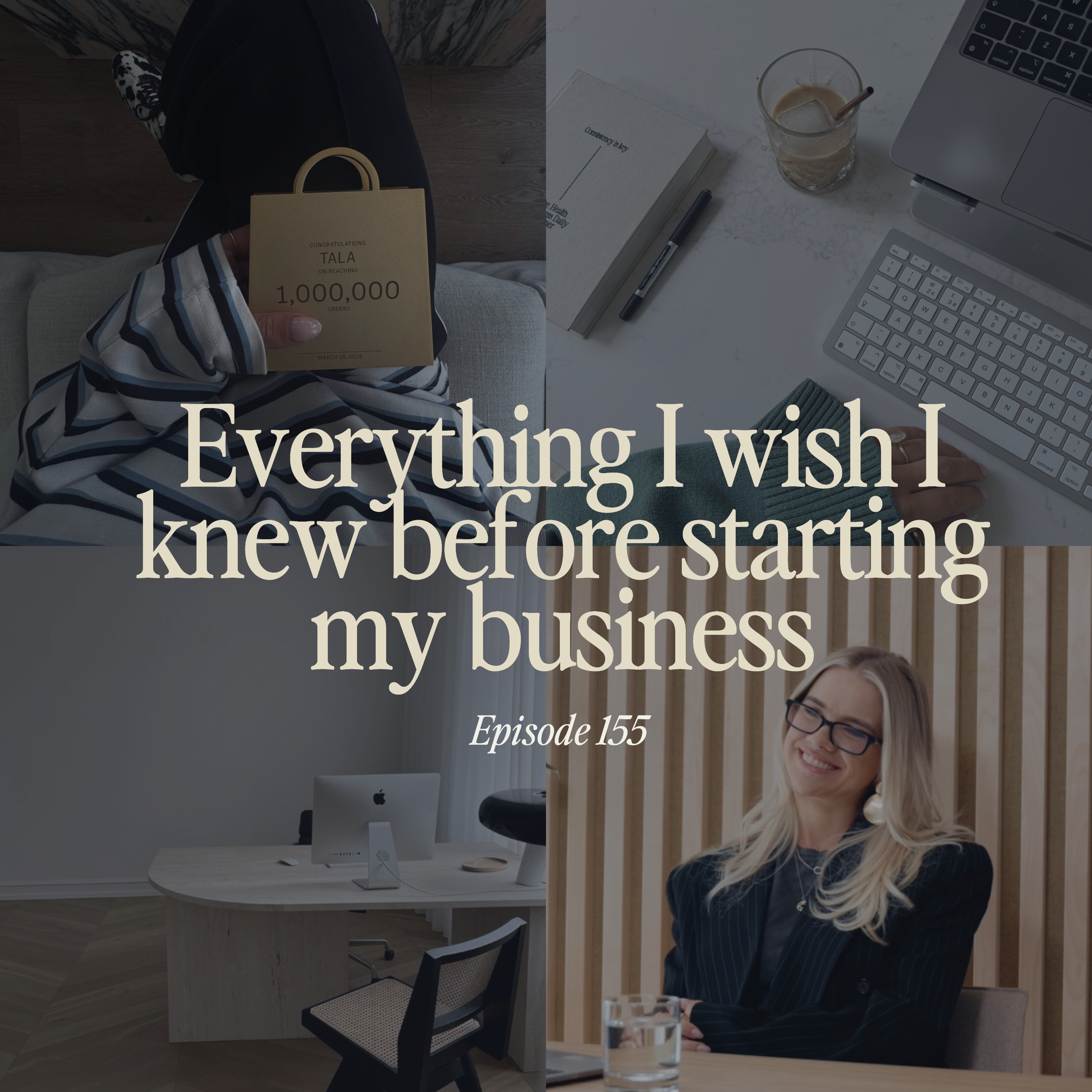
In this episode, Grace Beverley shares pivotal lessons from her entrepreneurial journey, particularly aimed at early-stage business owners. She highlights four key insights that can help aspiring entrepreneurs navigate the challenges of starting a business, emphasizing the importance of learning from mistakes.
Written by AI. May contain mistakes.

Get the gist, explore an idea or ask about something said.
 Claude
On Working Hard with Grace Beverley, what are the key points of this episode?
Searching your listeningAutomatic transcript. May contain errors.
0:28Hey, it's Adam Grant from WorkLife, a podcast from TED. software, you'll work smarter, not harder. Freshworks uncomplicates. Learn more at Freshworks.com.
1:00Go to Upwork.com now and find your freelance expert. That's U-P-W-O-R-K dot com. Post a job for free and get started today. Hi, friends. Grace from the Working Hard podcast here. When you're stretching every dollar, Alilla goes a long way, and Walmart Business is here to help. They make it easy to order what you need from tech and cleaning supplies to everyday essentials, all at low prices and with helpful tools like spend tracking and tax-exempt purchasing for eligible organizations. Because when your operations are smooth, your impact can be bigger. Visit business.warmart.com to get started.
1:43What is up? I'm Grace Beverley and welcome back to Working Hard, the podcast shared guidebook on how to improve your own life and achieve what you actually dreamed of doing. Because life's too short for boring podcasts and bad advice.
1:57what is up and welcome back to working hard today's episode is a bit of a different one but i asked what episodes you'd like me to touch on and cover in these types of solo episodes and i got so many requests to do one on tips for early stage business owners so this has been on my episodes to record list for months now and today we're finally sitting down and actually getting it done but i think if we truly exhausted the list of mistakes that i have made and what I've learned from we would be here for days. Maybe we'd manage to break the record for the longest podcast of all time and beat Jerrogan but that wouldn't be so enjoyable for anyone.
2:29So I've picked my four most important lessons to go through in this episode and if you find it useful we can definitely do more of these types of solo episodes. And just before we get into this episode if you will allow me a few seconds for a little promo because you can now actually sign up to the brand new Working Hard newsletter. We have been talking about launching a newsletter for forever but I didn't want to do it until we knew that it could be the most useful it could possibly be and also be consistent so we finally set it up and I'm really really excited about it I'm personally very much against like inbox filling fluff I'm only signed up to newsletters that I actually read and actually find really useful if you are signed up to newsletters that you genuinely do find useful they are incredibly helpful and incredibly good at like keeping you in the know and keeping you educated on things and like getting little tidbits into your inbox that you wouldn't necessarily otherwise find.
3:14I'm such a big fan of the concept of like surrounding yourself with the type of person you want to be or the type of career you want to have. And for example, when I started originally wanting to read the news more and find out more about the world or find out more about the stock market and finance and all of that, signing up to newsletters as well as like following accounts on Instagram made such a big difference to me kind of passively learning as I go through the day. I feel like combining the fact that we spend a lot of time on technology, on our phones, in our emails, on our Instagram feeds, with what can actually help you educate yourself and the things that you want to get educated on is one of the most effective ways to make sure that you are actually learning even when you're maybe doom scrolling for a very long time.
3:54So obviously the brief of the Working Hard newsletter was a three-minute read that helps you consume smarter, not longer. So you don't need me to tell you that we waste actual years of our life scrolling. So I wanted to create a newsletter that was actually packed full of recommendations, hacks extra bts from the podcast things i've learned resources if you've been following the working hard instagram recently you'll have seen that we do a like things to consume instead of scrolling for the week and it's got really interesting books tv series podcast episodes articles all of that and even just the exercise of finding those and writing about those has brought me so much joy and hopefully brought you more content that you actually want to consume that isn't just like mindlessly scrolling on your feed so i hope you enjoy it you can sign up via the link in the description of this episode.
4:39And I can't like to see you there and I hope you enjoy it. Please give us all feedback. We want it to be perfect. But let's get into the episode.
4:49So the first thing I wish I knew before starting a business was that you should launch as soon as possible with just the earliest stage of your concept. And this is also known as the MVP method. So you might have heard me talk about the MVP method before. I think I mentioned it in our business compilation episode we did earlier this year. But that's because I will die on the hill that it's a concept that every single business owner should know before they start. I'm going to explain the concept to you very quickly. MVP stands for minimum viable product and it basically means launching the most simple and easy to produce version of your product or service to test the market before you go all in.
5:22It is so easy as a new entrepreneur to think that you need to have something big that reinvents the wheel to make an impact or you need the absolute perfect version for your business with the perfect branding and the perfect website and all of these things to actually launch. But in reality, the most effective way to build a business is about finding the easiest and cheapest way to prove your hypothesis first. So it's all about proving the concept before you go all in. And in my opinion, the biggest benefit of this MVP approach is that you are not deciding all the factors yourself. And instead, you are focused on gathering feedback from your audience and building your product or service based on what your customers actually want, not what you think they want.
5:59So many entrepreneurs spend hundreds of thousands, if not millions, building something that is the version of the perfect business that they think it is in their head before they've got any of that information from the customer. And that's because the truth is that you can have the most knowledge of your target market of out of anyone in the world, but you will not know whether your product hits the spot until you've launched. And there'll be so many little nuances that you won't be able to actually know before you've got it out there and before you've started gathering feedback and before people are using the product or service in different ways from how you use it and they are their perception of it is different their use case of it is different what they want from it is different and it is so important to learn those things as early as possible so the idea is basically to spend as little as possible to get something out there and then to be able to spend the rest of your money basically refining that before you've spent all of your money on the version of a business that no one's even told you that they actually want, you just think they want.
6:55And I feel like this was something that I had to learn especially quickly at the beginning. For example, when we were launching the BND resistance band way back in the day, the OGs will know what I'm talking about. I'm still sent them many a time on Instagram every day. I wanted to launch our bands in three different resistance levels and five different colours. I felt like that was one of the big issues with the version of the product in the industry was that, yes, they were expensive, but also they were in like just black and blue and they were used for male bodybuilders and physios. They were just not very exciting.
7:26And what I wanted was to make them in these fun colours. But actually, I was talking to a fellow founder about it and they stopped me right in my tracks. They told me to launch it in two colours, in two resistances maximum. And that was to test out if there was actually any demand and then to be able to go all in. Because also you're going to gather so much more feedback that you couldn't even anticipate from that launch. And they couldn't have been more right. We ended up with I don't know how many colors total probably like 15 colors total and four different strengths and that was great but that was great down the line once we've been able to gather experience and evidence from our customer so that we're not just blindly spending money on things that they haven't even told us that they definitely want.
8:05Also I think a big thing to remember that I still need to remind myself of now and we talk about a lot in the team here for example at Tala is lots of the time people say they want something and what they will actually spend money on is different. A good example that is sending me fucking crazy at the moment is the fact that every single person says that they don't want front seam leggings, right? Everyone says they don't want this seam down the front of their leggings and they comment on it on every post and we see videos about it the whole time. We see comments about it. Yet 80 % of our sales are on our front seam leggings on the exact same legging.
8:39We have the exact same legging, no front seam and front seam. And like 80 % of our sales are on the front seam one. even when we've boosted the no front scene one up the website we've made sure it's always recommended all of these things so that's just an example of the fact that people will often say things and comment things and in reality there are lots of secret customers that aren't as vocal that actually act in a different way and it's so important that you get real-time customer data and real-time customer feedback before you've spent all your money and it might be tempting to spend your money on pretty packaging and to make sure that you're launching in the best version of what you can do.
9:11But unless you have loads of cash lying around or you have loads of investment and stuff to spend on launching in like more of your perfect version or you have pressure to do that, like if you were launching with a big platform, I would really spend more time just launching, getting more customer data and being able to come back with maybe the second version of your product is a little bit closer to where you want it to be. Don't get me wrong, the first version has to do what it says it does, but it doesn't need to be the absolute perfect version of it. In fact, it won't be until you've got customer data.
9:43You obviously just don't want to be in a place where you are investing far too much money upfront in a product that is not yet proven or a concept that is not yet proven and taking unnecessary financial risk for yourself. I will be the first to tell you that from firsthand experience and I think so many other business owners will too. So in conclusion, when you're starting out, the MVP method is your best friend. Done is often better than perfect because your version of perfect won't be the version of perfect that you know exists after So you've sold your first 100 products and you have customer feedback.
10:13The market's uncertain. Revenue's tied and hiring on hold. That's why results-driven companies are using Upwork to keep work moving. Go to Upwork.com today and start hiring proven freelance talent fast. No bulky overhead. No rigid long-term contracts. Just the right expert right when you need them. Work smarter and faster with Upwork. Go to Upwork.com now and find your freelance expert. That's U-P-W-O-R-K dot com. Post a job for free and get started today. At Capella University, learning online doesn't mean learning alone. You'll get support from people who care about your success, like your enrollment specialist who gets to know you and the goals you'd like to achieve.
10:56You'll also get a designated academic coach who's with you throughout your entire program. Plus, career coaches are available to help you navigate your professional goals. A different future is closer than you think with Capella University. Learn more at capella.edu. Summer's heating up and so is the action with Chumba Casino and 2311 Racing. Whether you're trackside with Bubba, Riley, and Tyler or cooling off at home, the fun never stops at Chumba Casino, the online social casino packed with free-to-play games like slots, blackjack, and more. Jump into summer at chumbacasino.com and score your free welcome bonus.
11:33Two million free gold coins and two free sweeps coins. No purchase necessary. VGW group void where prohibited by law. CTNC is 21 plus sponsored by Chumba Casino.
11:46The second thing I wish I knew was how to build a good pitch deck. One of my biggest bugbears in the industry is that there is such a lack of access to information on how to build good pitch decks and actually get investment in your business. The barriers to entry are so high and they're made higher by the fact that no one talks about what they do. No one talks about what their pitch deck looks like. No one talks about what's actually in there and what really clinched the investment. For some context, we pitched for our seed funding round at Tala two years into our business journey. And I remember so clearly sitting there with a blank slide deck in front of me thinking like, what do I do now?
12:21And looking for resources on how to build a great pitch deck without finding anything at all. Like I only found huge businesses, like huge pitch decks for Uber back in the day or Airbnb or something. And it was just like, this is clearly not the pitch deck they used to secure their first round of investment. It was quite clearly a successful business before this point. And the thing is that if you want to go for investment, your pitch deck needs to be great. Investors often see hundreds of these a day. They might be spending 30 seconds going through yours. And so if yours doesn't totally encapsulate what your business stand for, why it's different to competitors, getting interest is not going to be easy, especially in those early seed funding rounds when really you're all competing just to show a really good concept because you're not necessarily showing a huge amount of revenue yet.
13:01But you obviously might be listening or watching to this now saying, but Grace, a pitch deck is only something that's useful for investment rounds and I don't want to go for investment. And that is so fine. Like definitely don't go for investment if you don't want to go for investment. But let me tell you also that creating a pitch deck for your business is one of the most useful exercises you can do to get really clear on your business, your business proposition, how you make money, what makes you different from everyone else within the industry at any stage. When I made my first pitch deck, I was literally sitting there thinking like, why have I not done this before?
13:31Like, why have I not set aside an afternoon to actually do this, to encapsulate the business in a few slides? Because it is so important to get really, really clear on what that actually looks like and how you even talk about that to other people. It's obviously so easy when you're first starting out and you have a really small team or no team at all to feel like you are so engrossed in the day-to-day that you don't have time to take stop and create something like this. But when you are early on, actually taking a couple of hours out of your day or setting aside an afternoon or maybe an hour a week for a month to build out a deck means that you have clarity on your vision, your differentiation, your monetization strategy, your mission, all in one place.
14:08So if you haven't done this before, I would really recommend doing it, but then also putting in an hour every quarter just to go back and update your pitch deck with your latest wins, your updated stats and all of that so that you always have a deck there for you. It can be incredibly useful not just for investment, well even for investment, you might think you don't want investment then you might meet the absolute perfect investor you want to work with and you don't want to have to clear your schedule for the next day or two to actually pull all of these stats together or you might even use this just as your kind of brand book with a little bit of extra information in there.
14:37But spending time on this and creating the time to spend some time on the business when I know especially at an early stage you're spending all of your time in the business can be one of the most helpful things you can do and can give you so much clarity about your business that you might not realize you're missing. And if you're wondering what to actually put in a pitch deck I've made a point of doing YouTube videos speaking through the entire pitch decks for both our Tala Seed round and also our Tala Series A funding round which I will link in the show notes to this episode. One of my biggest bugbears when it comes to entrepreneurship is that there's like zero knowledge sharing and what that means is that there are huge barriers to entry for people who don't know how to create a pitch deck or don't know how to go for something like that versus people who might have been trained in that or have exposure to that in other ways.
15:19So what I've always really wanted to do is to make sure I am completely transparent around things like those pitch decks. Like it's not very orthodox to walk those through on YouTube, but actually I think it is incredibly, incredibly important to share details of those things because I was fortunate enough to get help from other entrepreneurs when it came to, you know working out what that actually looked like and I think the only way we can get more people in entrepreneurship who might not have otherwise been exposed to it and might not have the network is to resource share and knowledge share and so I've talked through both of those and they're in a lot of detail they're definitely not videos that appeal to the masses but they should be really helpful for you if you have a business and also I've not been paid to say this but as part of my partnership with Adobe Express I've created a free pitch deck template that absolutely anyone could use as a guide to create one for their business.
16:06And I've clarified on different slides like what things would be good for if you're pitching for investment versus just good things to sort out for your brand, all of these different things. And the idea behind this is to take those videos a step further and actually mean that you can just fill it in really easily and get your own full brand pitch deck absolutely for free. This has been such a passion project and I hope you really like it, but I will link it in the show notes. Okay, so now we're on to number three of things I wish I knew and don't get too excited, but it is to do with operating procedures.
16:34And that might not be sexy, but it might be the biggest lesson I have learned while I've been growing teams. And that is to set SOPs from the beginning. So SOPs stand for standard operating procedures. When you're starting out, you obviously have like a list of procedures, or you might not even call them procedures, a list of things you do as a business in your head. For example, like on a Monday, I go to the post office to post orders. On Tuesday morning, I review the social assets from our freelancer and so on and so forth. But the longer you leave that in your head, the more you are holding yourself back for when you want to expand and grow the team.
17:07And you're making your business too reliant on yourself because you're not codifying the way you already do things to be able to allow someone else to be able to take those over one day. Or if you were ill, I like to do this by creating a master SOP doc, which I basically split by section of the business. So logistics, product, marketing, social, etc. And then in every section, I would write down exactly how the processes work for that area. So who approves what, what are the deadlines, what key cons need to be sent. This means that as soon as you begin to grow your business and therefore your team, you do not need to spend hours and hours writing out every single process for your new hire.
17:44It's all there in one document and all you need to do is update that document and add them into the processes and then they can add their processes onto as the capacity of the business expands. I had a sort of SOPs doc when I started my first business and I have a much more official one now eight years on. It is my ride or die document and I don't know what I could have done without it. In fact we have a template for it in my business method course. Let me link it below and you can access it because it is my pride and joy and it will make your life so much easier and it really will future-proof your business.
18:13And now finally number four. This is all about hiring for your skill gaps not your comfort zone. So hiring is the thing that I get most questions on from business owners who are starting out and that is because quite frankly it is the hardest bit. It is always the hardest bit, it never gets easier but finding those people who are going to grow the business with you, who want to take a punt on an idea especially in the early stages is never easy but over the years I found one thing that really rings true. It is so tempting especially when you're starting out to hire the people who have the same skills as you or who are very like you and resonate with you on everything because they do the same things and they have the same skills and they have the same interests.
18:55And don't get me wrong, it is important to click with someone in an interview. It's important to mesh with them well, especially if it's going to be just the two of you or just three of you or whatever it might be. And they might nod along to your vision and have the exact same values as you. And that is great for culture. And that is great for vision of the business. Like that is very important. I'm not saying that's not important. but that's not always necessarily what your business needs. What I've learned the hard way is that the best hire isn't someone who mirrors your strengths. It is someone who plugs your weaknesses and I don't mean that in a brutal way.
19:28You just need to be honest with yourself. Like maybe you're great at creative strategy but absolutely allergic to spreadsheets and finances and logistics or you can ideate for days but hate execution. That's fine. Yes, you probably need to mitigate some of those weaknesses and I've spent years and years and years mitigating some of my weaknesses so I am better at them but I really wouldn't recommend hiring another version of you after the second hire I would say that sometimes and actually how I started was getting like a mini me like someone who was good at all the things I was good at who could just increase all of our capacity because the things I was good at were the things that my business was good at and I hired them at the beginning and that was fantastic beyond that we did not need any more people with strengths in those areas before we'd mitigated more weaknesses the way I would do this now if I was starting again is embarrassingly simple.
20:17I would map out everything I do in the business from the big stuff like the marketing strategy to the tiny boring admin that still somehow takes hours and I would then put a star next to everything I'm either not good at or I dread doing. You can colour code those differently. That basically becomes your first job description. Hiring for your gaps means that your team becomes well-rounded, not kind of lopsided or super good at one thing. Now don't get me wrong, I believe that it's very important for a business to have strengths and you don't need to be a business that's good at absolutely everything.
20:47You could be a business that's super social first and maybe you're just not so good at bigger, more professional campaigns, for example. Like that's fine. You can have your specialties and have the things you specialize in as a business, but you cannot have like huge gaps in the business, like all of your logistics or all of your execution or all of your finance that you're just not good at and isn't getting done. That is the way to sink your business. Another great thing about this is that you will get to spend more time doing what you are great at while knowing that other essential pieces are being handled by people who thrive in those areas.
21:15And those things probably take you a lot longer too, so you get a lot of time back. But I do know it's really easy to fall into the trap of just trying to like hire a huddle of people that are just like you and you're all like, oh, all believe in the same things and all good at the same things. And actually that can only last for so long. So I would say that next time you're thinking, I need to clone myself, pause. You don't. You probably need your opposite. And I promise your business will very much thank you for it. And that is all. I really hope this episode was useful. I know this podcast isn't just for founders, but I've been wanting to record this specifically for so long.
21:48And if you know me, you know that I am a specialist in creating like not so sexy content that maybe doesn't appeal to everyone. And I pride myself in the fact that yes, I've been very fortunate to like grow these platforms, but at the same time, that doesn't mean I need to always create content that appeals to like the most amount of people. I would rather make sure that I am creating content that plugs the gaps in industry knowledge sharing and stuff that's generally not talked about online. So if you have a friend who's a founder, maybe send this to them. And if you'd like more of these business focus episodes, just let me know because quite clearly I'm very happy to do them.
22:26And finally, a huge thank you to Adobe Express for sponsoring this video. You can try out my pitch tech template by hitting the link in the description. I hope you really love it. It took a very long time and I'm really, really proud of it.
22:49At RxBar, they believe in simple nutrition without the BS. That's why they said no to artificial ingredients and yes to deliver intentional, transparent nutrition. Try their original 12-gram protein bar, the Nut Butter and Oat Bar or Mini's. RxBar, the proud sponsor, of no BS. Use code RxBar on RxBar.com for 25 % off. Subject to full terms and conditions and to change. Valid until September 30, 2025 and may not be combined with other offers. See RxBar.com for full details and limitations. At Capella University, learning online doesn't mean learning alone. You'll get support from people who care about your success, like your enrollment specialist who gets to know you and the goals you'd like to achieve.
23:32You'll also get a designated academic who's with you throughout your entire program. Plus, career coaches are available to help you navigate your professional goals. A different future is closer than you think with Capella University. Learn more at capella.edu. Bubba Wallace here with Tyler Reddick. You know what's more nerve-wracking than waiting for qualifying results? Waiting for the green flag to drop. Instead of pacing, you rev up with Chumba Casino's weekly new releases. It's like a fresh set of tires for your brain. Play for free at JumbaCasino.com Let's Jumba! No purchase necessary. VGW Group.
24:10Voidware prohibited by law. CT &C's 21 Plus. Sponsored by Jumba Casino.
Today’s episode is a bit of a different one. I asked what episodes you’d like me to touch on, and I got so many requests to do one on tips for early-stage business owners. It’s been on my ‘episodes to record’ list for months now, and today, we’re finally sitting down and doing it.
I think if we truly exhausted the list of mistakes I’ve made and what I’ve learnt from we would actually be here for days, maybe we’d break the record for the longest podcast of all time (and beat Joe Rogan), but that wouldn’t be enjoyable for anyone, so i’ve picked my 4 most important lessons to go through in this episode, and if you find it useful, we can definitely do more of these type of solo eps!
+
PITCH DECK TEMPLATE
This audio episode is not sponsored by Adobe but I am working in partnership with them at the moment, and as part of that partnership, we've worked together on a pitch deck template which you can find here: https://adobe.chrd.ly/GraceBeverleyxAdobeExpressYT
I know pitch deck best practice is individual to every industry, but I really hope this will help if you're considering investment for your business! Let me know if you use it i'd love to see.
+
PITCH DECK YOUTUBE VIDEOS
Seed: https://youtu.be/G6-J6ipeO4g?si=KwGHi5WwOp0HORfV
Series A: https://youtu.be/9Z3N41LrLck?si=3BJ4-xSh9Zey6_3X
+
WORKING HARD NEWSLETTER
You can now sign up to the brand new working hard newsletter! We’ve been talking about launching a newsletter for forever, but I didn’t want to do it until we knew it could be the most useful it could possible be!
I am personally very against inbox filling fluff, and I’m very picky with what I sign up to, so the brief for the Working Hard newsletter was a 3 minute read that helps you consume smarter, not longer. You don’t need me to tell you we waste actual years of our lives scrolling, so I wanted to create a newsletter that was packed full of recommendations, hacks & extra bts from the podcast.
You can sign up here: https://graceb.myflodesk.com/k0sfhlac34
+
SOP doc from my business course, The Business Method: https://thebusinessmethodsop.notion.site/Defining-Your-Business-SOPs-23e68a33e31280b7bc88c758acdbadcd
+
MY LINKS: https://gracebeverley.komi.io/
+
RETROGRADE, SHREDDY, TALA and THE PRODUCTIVITY METHOD are my own businesses, therefore any mention of them - whilst not being a sponsorship - is monetarily endorsed. As usual, sponsorships do not change my opinions nor my honesty, but I will always disclaim to make sure motives are clear 😊
Hosted on Acast. See acast.com/privacy for more information.