Ask ChatGPT
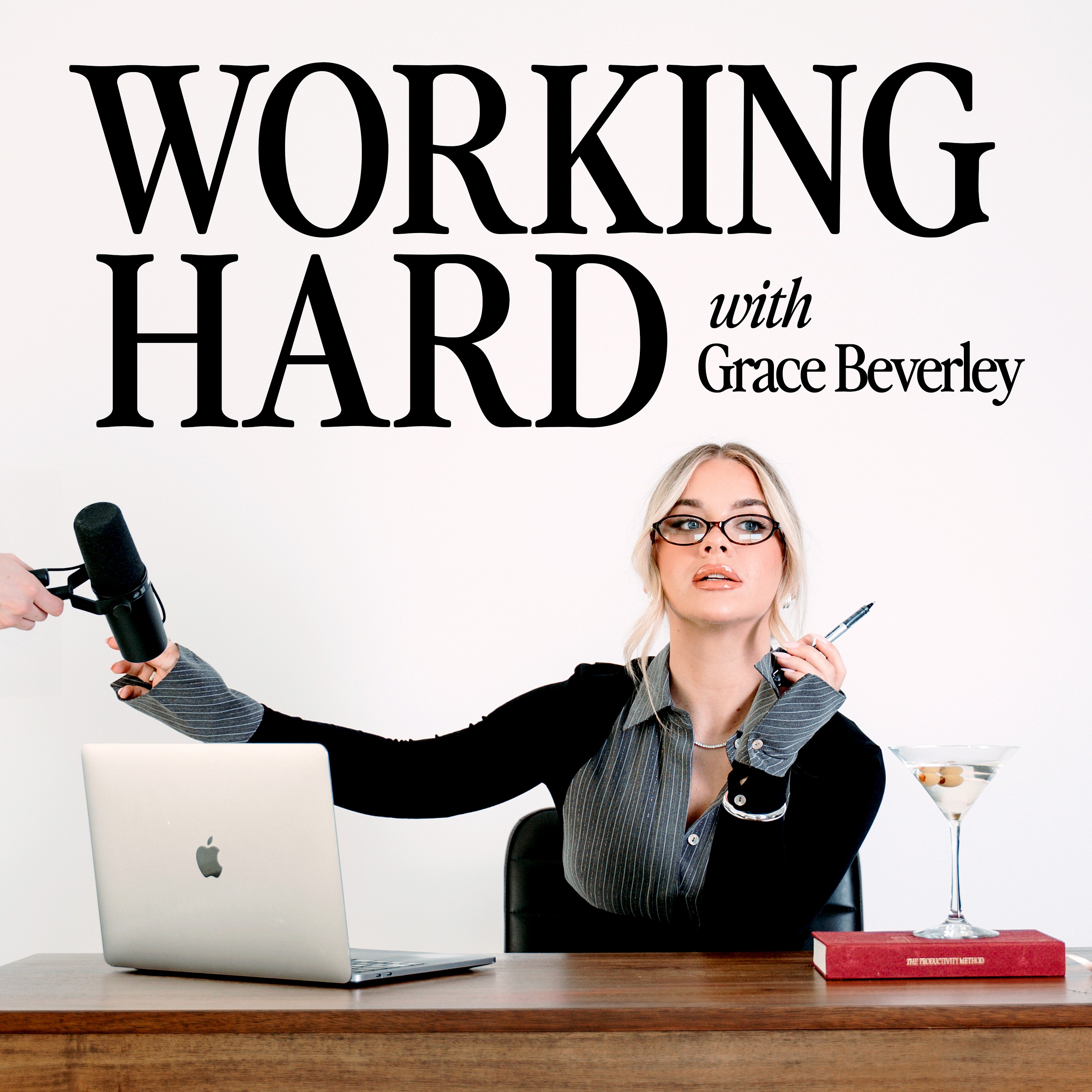
 Working Hard with Grace Beverley
16 Jun 2025 · 1h

Host: Grace Beverley
Laura Bates
In this episode, Grace Beverley and Laura Bates delve into the current realities of sexism and misogyny, highlighting issues such as incel culture, the role of algorithms, and the impact of deep fake technology. Bates, an activist and founder of the Everyday Sexism Project, sheds light on the pervasive nature of sexism and provides statistics to challenge the notion that gender equality has been achieved.
Written by AI. May contain mistakes.

Get the gist, explore an idea or ask about something said.
 Claude
On Working Hard with Grace Beverley, what are the key points of this episode?
Searching your listeningAutomatic transcript. May contain errors.
0:00Does it ever feel like you're a marketing professional just speaking into the void? But with LinkedIn ads, you can know you're reaching the right decision makers, a network of 130 million of them, in fact. You can even target buyers by job title, industry, company, seniority, skills, and did I say job title? See how you can avoid the void and reach the right buyers with LinkedIn ads. Spend$250 on your first campaign and get a free$250 credit for the next one. Get started at linkedin.com slash campaign. Terms and conditions apply. When fall is finally here, you're ready for a wardrobe refresh. And Nordstrom has you covered with the best of fall fashion.
0:36Stay ahead of the hottest trends and discover new favorites from top brands like Reformation, Veronica Beard, Favorite Daughter, Free People, Mango, Madewell, and more. And the best part? Free shipping, free returns, and easy in-store pickup. So get ready to shop in stores on Nordstrom.com or download the Nordstrom app today. Hi friends, Grace from the Working Hard podcast here. When you're stretching every dollar, Allila goes a long way and Walmart Business is here to help. They make it easy to order what you need from tech and cleaning supplies to everyday essentials, all at low prices and with helpful tools like spend tracking and tax exempt purchasing for eligible organizations.
1:14Because when your operations are smooth, your impact can be bigger. Visit business.warmart.com to get started.
1:31What is up? I'm Grace Beverley and welcome back to Working Hard, the podcast shared guidebook on how to improve your own life and achieve what you actually dreamed of doing, because life's too short for boring podcasts and bad advice. Welcome back to Working Hard. Today's guest is someone I was so excited to speak to. Even if the topic is a little bit more serious, it's very, very important. So Laura Bates is a writer, activist, and the founder of the Everyday Sexism Project, a platform that started as a simple space to collect people's experiences of sexism. and exploded into a global movement with a quarter of a million stories of sexual harassment, workplace sexism, and the kind of things that so many of us just accept as part of our daily lives.
2:14If you've ever felt like you're overreacting to something sexist, Laura's work is the reason that so many people now realise they are not alone and they are not imagining it. She is also the best-selling author of seven books on sexism in cell culture and online misogyny and has become one of the most prominent voices pushing for structural change, not just surface level feminism. Her new book, The New Age of Sexism, looks at how AI plays into this too. This episode is essentially everything you need when a man tries to tell you that sexism no longer exists and that we've reached gender equality.
2:43It is actually jam-packed with incredible statistics. Unfortunately the statistics themselves are not incredible but the statistics are very good to be having and we get into the reality of modern misogyny including the rise of incel culture, the influence of algorithms, the terrifying reality of deep fake culture and the stats that you need to have on hand to be able to prove that actually things are bad in your workplace and this is why and this is what you're currently facing. What I really wanted from this podcast was an episode that shows you exactly what sexism is like nowadays. I think so many times I have sat down and talked to someone and they've been like oh well because sexism no longer really exists or the gender pay gap no longer really exists and therefore sexism doesn't exist and in your workplace, you're probably blah blah blah blah.
3:25And what I really wanted from this was for it to be something where we are able to recognize how sexism has evolved and how it is now happening in our everyday so that we can actually be armed with the correct statistics but also really understand what is happening to us when it is happening to us and therefore how we can act around it. I so strongly believe, and you know this if you are here, I so strongly believe that knowledge is power and we cannot make change if we do not know what is wrong and we cannot make change if we do not collectively come together and know that actually all of these anecdotes that all of us have, that is data.
3:59That is data and that is true experience and that is therefore something that exists. It's not just like little anecdotes of stories that we all each have. It's important to be able to talk about and I feel like from this episode, this conversation was so enlightening in so many different ways and really took my understanding of everyday sexism to the next level and I feel like if you are actually no not just if you're a woman if you're a man you definitely need to listen to this more than the women but if you are a woman I feel like this will be incredibly incredibly helpful to truly be able to understand what sexism looks like nowadays how it will be affecting you even if you don't know it is so that you could be armed properly to be able to get through life as painlessly as possible.
4:47That being said as part of this conversation we do discuss sexual violence and sexual assault so if that is triggering for you please do switch off now.
5:05Laura Bates are you currently more working hard or hardly working? It's both in in some ways working hard because I'm in the middle of a book tour so I'm doing a different event in a different city every night to talk about my new book but it is hardly working because it's such a joy to get to meet with readers and it's it's often quite hard sad difficult stuff that I research so meeting with a group of brilliant furious hopeful passionate women to talk about it afterwards is kind of a real bomb and in that sense it doesn't feel like work yeah I love that I feel like it's funny because some of the stuff that I get most invested in in my mind and in in the moment are both the most exhausting but also the most fulfilling sometimes you come out of those moments feeling like and you have just been completely in your flow whether it's in a conversation or like getting angry about something whatever it might be and you're kind of like I'm completely zapped from that but at the same time I feel alive and I want to do 10 more things and all of that and I feel like as much as possible as you can get that into your life to me that's what really makes work more worth it yes that's so true and I really feel I get that from other women yeah that sense of sparking off each other's ideas and coming away with a thousand new ways of thinking about something that you'd never even considered and it kind of drives you forward as well yeah and that must must be so interesting in your work as well because so much of it yes it's research led but then it's also experience led Yeah, absolutely.
6:35I mean, it really is the kind of personification of the personalist political, because when you hear so many of these stories, it fires you up and it makes you angry. But it is also data. The Everyday Sexism Project is the largest data set of its kind that exists. And so when you put those stories together, you start seeing patterns and themes. And that is, it makes you furious, but it's also useful because it gives you a sense of what the problem looks like and how to fix it. And that's really important. And let's talk then about the context for everyday sexism. Can you remember when the idea first came about?
7:10Yeah, very clearly. It was 2012. I was living in London and I had a really bad week where a man followed me home, really refusing to leave me alone, refusing to let me go, insisting that he would know where I lived, that, you know, there was nothing I could do. I was a few nights later sexually assaulted on a bus by a man who grabbed me between my legs. And when I said what was happening out loud, everyone on the bus heard and everyone looked out the window. No one said a word. No one challenged him. no one no one even made eye contact with me and I got off the bus at the next stop feeling ashamed and embarrassed and all the feelings that belonged of course with the perpetrator and a few days later I was walking down the street and some men started shouting about me comments about my body and and so on and the moment was at the end of that week when I thought about these three things and the thing that struck me about them was that if they hadn't all happened so close together I might never have thought twice about them I might never have told anyone because I was so used to it it was normal it was the first time I ever stopped to ask myself why is this normal I mean I think that's incredibly powerful and I think that obviously it's terrible that those things happen to you I also think what's so terrible is the fact that it doesn't even shock me anymore and I think that this is what's such a universal experience of women kind of feeling so sad about something happening and also so kind of in our stride so as you say like if those hadn't happened back to back you may well have just been like oh well that's just living in a city being a woman and kind of all of those things and it's just so horrific that that is the case and even more horrific that that is the case and it is almost expected Absolutely.
9:07And that's not because women are, you know, stupid or not noticing. It's because we are trained and taught from really early childhood. Don't make a fuss. It's just boys being boys. He dislikes you. Don't be difficult. Don't be uptight. Don't be abrasive. Take it as a compliment. Lighten up. Get a sense of humor. You're imagining it. That didn't happen because you were a woman. Maybe you just weren't good enough. Maybe you didn't speak up enough. Or worse still, they've been asked questions like, well, what were you wearing when it happened? You know, maybe you've been drinking. did you make eye contact perhaps you led the poor guy on so the reason that that normalization and that acceptance of it happens is because society forces us into that place and actually it was talking to other women and girls afterwards that that showed me that because they had hundreds of stories to tell me of course but just like me many of them said wow until you asked me directly I've never told anyone any of these stories before because it's normal.
10:03It's just the way things are. I remember one woman who said, yeah, the guys in my workplace go to a strip club at lunchtime and take clients there. So I guess I just miss out on a couple of deals each day. But it's just, you know, if I made a fuss about it, I'd be seen as the one with the problem. I'd be the uptight prude, you know. There was another woman I remember who said in those very early conversations when women were being interviewed to join her team, her male colleagues used to print their photos off from the application forms and hold them up and give them ratings out of 10 across the office but she said you know if i make a fuss about this i won't have a long career at this yeah and i'll be shut out and siloed and kind of seen as the like one who ruined all the fun or whatever it might be yeah the one that couldn't take a joke because everybody else laughs it off so yeah and everyone else isn't impacted by the joke it's not kind of you know when you have something that's so weighted in a kind of misogynistic sense if you are the minority by being there as a woman it you know not only are you the one who you know if a man kind of whistle blow it and said you know we shouldn't be doing this then they're just ruining all the fun whereas like if it's a woman they're ruining all the fun and it's just like boring because like yeah we've got to go back like come on men are always meant to be in the workplace like having fun and like just don't you know boys will be boys type thing yeah and they're probably a feminazi harpy ball breaking manhater like that no wonder they haven't got late you know like yeah exactly they're probably just on their period exactly exactly god it's so um it's so insane and like what's most insane about this i find is that every time anyone tells me a story like this i think of in my head like a hundred times that friends have told these types of experience so whether it's something on public transport or in you know out in the world and then they've thought instantly what was I wearing like could it have you know I should just shouldn't go around wearing xyz or like whatever it might be or on the other side the workplace thing that instantly made me thought of the fact that I remember going to someone's birthday a few years ago and there was someone there who I'd known from school a guy who I'd known from school and I was like how are you like how's you know how's work and he was like yeah it's great it's such a good culture at my workplace and I was like oh amazing like what's it like and he was like well you know it's just like it's just as it should be really it's just like kind of quite fun and like laddy and we don't really have any women on our team so it does just mean that we're able to be kind of like you know we're just able to have fun and like we're able to just like be like this was talking about a major investment bank and I was like and I was also like and you're talking to me like this as it's as if it's genuinely like how things should be and what things should be and a benefit of being in a completely undiverse workplace and I was just like sat there like and we're boasting about this too so like also the self-awareness is on the floor as well as as well as the actual thing being like pretty dire and kind of just talking about the fact that like oh yeah well it is just an investment bank so like we do just get to do boy things and play with our money and our like little trucks and all of that and it's just I was kind of just sat there I was like ha cool I literally did not know what to say at all and it's just so it's wild that this has been so many women's experience for so long and also it would have been much worse even like you know we talk about statistics like the fact that in the 1980s you couldn't even have a bank account if you if it wasn't co-signed by your dad or your husband or like whatever it might be it's really not that long ago so the amount that we've had to undo in that time is kind of crazy but also the amount it's taken us all of that time to undo because for so long we've taken things as standard so we've increased the amount women are in the workplace and earning and contributing quote-unquote to society in like financial ways by being the workforce all of these different things and yet we've just taken the like we're like oh well we can't have everything so I guess we're just gonna have to have like our boobs grabbed on the tube sometimes as like a penance for wanting to be able to be financially independent and it's just it's just unbelievable that we're still here yeah I think that a lot of people don't recognize the sheer extent of how bad gender inequality remains the sheer extent of sexual violence of male violence against women and girls in this country there is so much happening that people aren't aware of and yet there is a general perception of sexism doesn't exist anymore women are equal now more or less you girls have got nothing left to complain about and those are things that you hear quite often yeah and what I really want from this episode when we were kind of briefing this with the team and really thinking about like what we wanted to get out of this because you've done so much incredible work is we wanted an episode where people could go on their walk and come back genuinely feeling like they were armed with a plethora of both statistics and experience and all of this to be able to use next time someone says gender equality doesn't exist anymore or it's just about gender equity and we balance that out by doing this that and the other and I think it's funny because I think that I learned a lot at school but one of the things that I did learn as well was that gender equality now existed and inequality didn't exist anymore and there wasn't really a pay gap and all of these different things because we've introduced that you have to disclose it and blah blah blah blah and so I think it took me a very long time after kind of coming out of school and becoming an adult actually not that long to realize that it obviously wasn't the case but to really realize that it wasn't the case and it also wasn't just anecdotal evidence we actually have very clear evidence and you shouldn't just by looking at one metric and being like well actually women are earning blah blah blah and then we're educated and all of these things it doesn't just create this one picture of equality and actually when we're fearful of going outside without being assaulted or you know there's this whole thing about I always see the comment like you wonder why we choose the bear um but based on that kind of thought experiment of would you rather be left in the woods with a man or a bear and also asking people's partners asking men would you rather she be left in the woods with another man or a bear and people choosing the bear is like just unbelievable but also so believable which is what makes it so depressing and for anyone who is unfamiliar with the project of everyday sexism Could you tell me a little bit about how it's set up and kind of what the aim is?
16:33So it's a very simple concept, which was trying to give other people the experience I had when I heard all of those women's testimonies suddenly flooding out. And it really opened my eyes to the scale of the problem. I wanted other people to see that, too. I wanted to put an end to the sexism doesn't exist anymore. I didn't think I could fix sexism overnight, but I thought maybe I could force people to see it. so it's a very simple website where people can share any experience of any kind of gender inequality that they've experienced or witnessed it might be something like street harassment workplace discrimination all the way through to different forms of sexual violence and I thought that if 50 people shared their stories it would be something to point to but what actually happened was that over a quarter of a million testimonies have been shared they've come from people in all different walks of life they've come from people all over the world and what that means now is that while the project does continue to raise awareness and talk about the public conversation and discourse around these issues we're also able to take subsets of those entries and use them to drive real world change.
17:37I love that and I think one of the things that's most powerful about that is that women are so often told that their experience is both individual and anecdotal and therefore it's not data and by being able to take these anecdotes and make them into data based on the fact that you have the sheer quantity that you have it is data like you coming along and saying i feel like i experience sex sexism every day because of xyz and other people being like well statistically you're actually fine yeah is first of all so unhelpful but also so common and i think being able to do that kind of power in numbers and power from saying no experience is data and we're going to take that and we're going to make it data and we're going to create these subsets and we're going to be able to actually do something about this by making it so glaringly obvious I think that's so powerful yes I think that collective voice does that it gives a sense of magnitude to the problem and it it undercuts that issue of well she's probably overreacting or she imagined it or I don't believe her or she's making it up for attention so when you're trying to persuade the government for example to change the national curriculum so that young people are learning about consent and healthy relationships at school it's very helpful to be able to take with you 10 ,000 stories in young women's own words of their experiences of sexual violence and gender inequality at school.
18:58And of course, there is also some really good existing data out there that doesn't always get the cut through because it's hard for people to relate. It's hard for people to think about what it really means. So the other thing is to bring those two things together, to take existing data, for example, about the epidemic of male violence against women in the UK and to match it with real women's stories about the devastating effect this has on their lives. And that really helps to, I think, help people to recognise the scale of the problem in a way that perhaps those statistics on their own don't always achieve.
19:29Right, absolutely. And for anyone who's listening and maybe wondering where and how sexism is affecting them, maybe without them realising it. Where do you think sexism kind of goes under the radar a little bit? I think it goes under the radar everywhere. I think there is this perception of things are kind of fine now, aren't they? We live in a country where only 40 % of our MPs are women and around a quarter of the members of the House of Lords, only around 18 of our 108 High Court judges and seven of our 38 Lord Justices of Appeal and around three times as many men named John are running FTSE 100 companies as all the women put together so when it comes to power control decision making wealth people who are essentially affecting the rest of our lives in different ways on a day-to-day basis those people are not representative of the communities that they serve but you can also look in the sort of other areas where quite often when I give those statistics people will say oh you're cherry picking you're choosing politics and business which are male dominated areas but look at the media you know look at the arts you'll find that women outnumber men there and the reality is that if you look at the national gallery you find that the collection has 2 300 works of art and just 21 by women when you look at the 573 listed statues around the uk you find that only 15 of them are of women and just two of a named black woman when we go to the movies every year only 28 of the time we hear women speaking, but they're three times more likely than men to have to take their clothes off on screen.
21:01If you open a newspaper, only a quarter of the front pages you read will have been written by women and 84 % of those front pages will be about a man, a male subject or expert. You don't need to cherry pick because women are only a tenth of our engineers. They're only a fifth of our architects. Literally, the buildings that we are living and working in, the cities that we move through each day have been overwhelmingly designed by men. So it is everything, it is every part of our societies, it is the architecture of our day-to-day lives and I think perhaps most importantly and most soberingly there are very extensive numbers in terms of the impact, the ongoing impact of violence.
21:40You know we know that every three days on average a woman is murdered by a man. There is a phone call to the police every minute about domestic violence and a quarter of women in England and Wales are affected in their lifetime. Around 100 ,000 women are raped every year and half a million sexually assaulted. On average, one rape per day of the school term is reported to police from UK schools and a third of girls say that they experience unwanted sexual touching, aka sexual assault at school. So when you look at the picture together, it is impossible to argue. We don't need to think about this.
22:14Women are equal now. There are no structural problems remaining because the statistics just don't bear that out. I mean first of all I want to say that I think that is incredibly powerful and all of those statistics. I feel like each of these statistics that you've mentioned has someone sitting seething about it that there's also so much more depth to it and I think you know it's because of all of these reasons that 97 % of all the data we have on the human body is based only on the male body. Like it is because of these things because money makes that happen so a company that's doing health scans or whatever it might be is make is getting these data sets and turning these into useful health data which is based only on men and it's just like how do we prevent this when the wealth is held over on the male side then and also no one's doing anything to fucking stop it yeah yeah i mean that is exactly what my new book is about is the fact that what we're then doing is building a new world that is inextricably intertwined with the inequalities and the discrimination of our previous world.
23:17And instead of increasing diversity, instead of improving things, we're not just rewriting and recoding bias into this AI driven future, but we are actually amplifying the bias. And you're right, it becomes a complete vicious circle. We know that when women apply for venture capital funding, specifically for AI firms, there's six times less funding going to them than it is to male-driven, male-founded firms. And what that means then has a devastating real-world impact on women's lives. You mentioned healthcare, which is a great example of this. So, for example, in healthcare, AI has been used to identify cancerous cells in kidney cancer, in blood tests, but it's half as likely to detect the cells in women's blood samples as it is in men's for exactly the reasons that you've just described.
24:02Or, in fact, if we're thinking about where that money goes and where the money comes from, We have a$17 billion global gender credit gap. And yet big global financial services firms are using AI already, AI tools to determine who should be given credit, who should be allowed loans, which we know actively discriminate against women. And when we think, OK, we can change this, we need to get more women into the room, we need to get more women into these positions of power. Well, guess what? 99 % of Fortune 500 companies are using AI in their recruitment processes. And what we know that that AI does is it actively discriminates against women because what it is designed to do is ingest vast amounts of data and then guess at what it hopes is the most likely possible result that they're looking for.
24:48So what they'll say to big firms is, we can whittle down this pool of 3 ,000 applicants. You haven't got time to wade through them. We'll tell you the 50 people to interview. And the way that we'll do that is not just picking the best CVs. we're going to work out the people who are the best fit for your company which sounds very appealing until you wonder why how are they going to do that and what they're going to do is they're going to look at the cvs of all the people who already work for you and who is successful at your company and who's sitting in the c-suite and then surprise surprise they're going to replicate that by looking for probably white privately educated men and then the companies will say don't worry don't worry we can just turn off the gender and the race will make it gender blind will make it race blind problem solved but of course what the app then does is it's going to start finding proxy ways to discriminate.
25:32So it will look for the word netball in CVs and realise that not many people working high up in that company were on their school netball team. Nothing to do with gender except that of course it is. Or it'll start weeding out CVs that have the names of historically black US colleges on them. Because when AI tries to replicate and to guess at the best possible answer, what it's doing really is eliminating outliers. And eliminating outliers is the exact opposite of what our society needs. It makes me want to cry and also like laugh. Makes me laugh when people rely on that statistical argument because no statistician would touch that with a barge pole.
26:09Like do you honestly think you can argue that there are almost three times as many men named John who are qualified and going to be good at leading FTSE 100 companies as all the 30 million women in the country. That's terrible statistics. If you believe that there is no bias going on here, and at present, we have a level playing field. And what you and I are talking about is unfairly giving women a leg up so we get less qualified women. You have to believe that, for example, at one point, there were more men who happened to go to school with our Prime Minister qualified to be in the cabinet than all the 30 million women in the country.
26:45It doesn't add up you look you are the one that looks stupid when you are making that argument so if you were right now sat at a pub in a pub garden and you're sat next to someone who you've just met and they go well actually the gender pay gap now has kind of you know it's mostly gone so um actually gender inequality no longer exists what are you saying to them oh I love a well actually I mean And I'm moving away from that dude. Yeah, first of all, we're going to get a drink. I'm not giving him the time of day. I mean, we know the gender pay gap remains. We know it still exists. I think it's around 11 % at the moment.
27:22That is significant, not nothing. We know that that has a really significant impact. We also know that it's complicated. You know, there are all sorts of different ways to measure it. It goes up and down depending on what type of work you're looking at, whether you're looking at full-time work, part-time work and so on. But there's also a lot of stuff it doesn't take into account. It doesn't take into account the broken childcare system. It doesn't take into account the fact that 56 ,000 women a year lose their jobs to maternity discrimination. There is so much driving that gender pay gap. So I would say, first of all, we know it does still exist.
27:53But second of all, there's so much worse out there. The thing that frustrates me when you talk about the gender pay gap is people who suggest that it can be explained by the fact that women make different choices. Women have different priorities. So people will often say, well, actually, you know, if you really look at the data, what you can see is that it starts to happen around the time of maternity. So women are choosing to leave the workforce or they're choosing to take time out. And of course, there's an inevitable impact on their careers financially. And the implication there is, there we go, we've explained it.
28:22There's no longer a problem. And what people don't always say is, well, don't we think that's a problem? if a couple a heterosexual couple is choosing to have a child and it's having a devastating knock-on effect on that woman financially and in terms of her career I'm not sure that is an acceptable explanation actually maybe we need to look at flexible working maybe we need to look at shared parental leave maybe we need to look at the paltry statutory paternity leave and the way in which the current situation is set up meaning that for many couples it doesn't make any sense for anyone except the woman's career to take that hit you know that isn't a kind of end of the conversation, that should be the beginning.
28:58Great if we found a driving factor behind the gender pay gap, but then let's tackle it. Let's not just sit back and accept that that's natural and normal. Yeah.
29:37When fall is finally here, you're ready for a wardrobe refresh. And Nordstrom has you covered with the best of fall fashion. Stay ahead of the hottest trends and discover new favorites from top brands like Reformation, Veronica Beard, Favorite Daughter, Free People, Mango, Madewell, and more. And the best part, free shipping, free returns, and easy in-store pickup. So get ready to shop in stores on Nordstrom.com or download the Nordstrom app today. There's a part of me that everyone sees. I'm Howie Mandel, the comedian. Apparently, I know what funny is. Funny bought me a house, but I also know what isn't funny.
30:14OCD. I've lived with OCD my entire life, and people throw the term around like it's no big deal. But OCD is severe, often debilitating. It's a mental health condition that involves unrelented, unwanted thoughts that can make you question your character, your beliefs, even your safety. General therapy can help with some things, but for OCD, it can actually make things worse. That's why I want to tell you about NoCD. NoCD is the world's largest treatment provider for OCD and is covered by insurance for over 155 million Americans. Their licensed therapists specialize in ERP, the most effective treatment for OCD.
30:54If you think you might be struggling with OCD, go to NOCD.com to book a free 15-minute call. They are here to help. Once we start noticing this stuff, how do we deal with it both internally and also in terms of kind of the way we talk to other people about it, the way we kind of deal with the mental load of it without just getting completely overwhelmed. So I think it's really important to talk. I think communication is really important, having a network of women that you can talk to. But I also think we demand structural and systemic change. For too long, it has been suggested that all of these problems and inequalities are driven by women themselves in a million different ways.
31:39You know, if we see statistics around sexual violence, we're told that women just need to be a bit more careful. you know they should be getting cabs home and not the wrong kind of cabs and you know they need to text each other when they're home safe or maybe they should download a particular app that traps your journey or you know when Sabina Nessa was murdered they gave out 200 attack alarms to local women they didn't stop local men to talk to them about their attitudes towards women and I think in the workplace that's very true as well women are bombarded constantly with the idea of well maybe maybe I don't have such high pay as my male colleagues doing the same job because I didn't negotiate hard enough.
32:11Maybe I don't have a seat at the table on that project because I wasn't vociferous enough in asking about it. And women are encouraged to think that because we send them on assertiveness courses and we teach them that they need to actually lower their voices a bit and then they'll be taken more seriously. We'll do everything to suggest that women themselves are the problem when the reality is that that is absolute nonsense. It's the systemic structures of the world that they're working in. So when it comes to the workplace, I think we need to be strong and this is something we can demand collectively particularly about demanding policies practices and structures that work for us this is not about telling women just to step up or to lean in because what we do know is that when women do that they're treated worse as a result when men exhibit behaviors that are considered to be leadership and authoritative behaviors they're rewarded they do get pay rises they do get given positions of authority but when women do exactly the same thing which we're constantly told it's our own fault if we don't guess what we're seen as abrasive we're seen as difficult and a little bit too up ourselves and we tend to lose out on jobs and pay as a result so it doesn't even work but what we can do is change our recruitment processes and materials and where we're looking for the talent pool we can change our promotion practices we can look at those policies around flexible working shared parental leave maternity support we can be doing so much more I think to support women in the workplace that is systemic and I think asking for those things and sharing campaigns and working together on those things can be a way to kind of protect your sanity when thinking about this stuff yeah and I think what you've really highlighted there is using the anger and using the kind of being armed with statistics as a kind of springboard to actually get more action because I think that the more we've seen historically that when there is so much anger around something that it physically you know disrupts everyday life for a country or for workers or whatever it might be that is when change happens absolutely and i would say also become aware of your rights because a lot of the women who i speak to or who share their stories with the everyday sexism project are describing discrimination they are describing maternity discrimination they are describing workplace sexual harassment they don't use those terms to describe it because our society has taught them to think maybe I'm overreacting maybe I imagined it so have a look at things like you know the Equality Act have a look at the duties that your employer is actually under to protect you from certain things and that might embolden you to recognize actually that something is unacceptable and that you do have a right to to make a complaint about it if you want to joining a trade union is another great way to get support and awareness of your rights.
34:54And I think the other thing here is that we need men. We need men to step up. We need men to notice when this is going on in their workplaces. We need men in positions of power to be taking action on those systemic points around leave and around flexible working. It doesn't have to always be exhausting labour that is driven by women. There is a lot that male allies can do here as well to educate themselves to become part of this conversation and actually to role model through their own behaviour because there is a world of difference between a company that has a great parental leave policy on paper that sits in a draw gathered dust and a company where senior men take parental leave that makes a difference that shifts the dial yeah no absolutely I think that's very very valid and I think that it is I mean across everything that has systemic bias allyship is so incredibly important and often often can end up being, I don't want to say more powerful, but the fact that when you have the bias that is putting certain people in power, like you need the buy-in from those people in power.
35:58Otherwise, it's just kind of like knocking on the window rather than like actually changing things from within. Absolutely. So I want to talk about the online world because I feel like that has a big part to play here, especially nowadays. Is that built for men too? Yeah, I mean, it's built by men and it's largely built for men in the ways in which it operates. And we can see that in terms of adoption of technology. You know, if a world is built for men, more men are going to engage in that world. And so we can see it very clearly in the stats. Again, if you look at the 18 to 24 year old cohort within that age group, 71 % of men say they're using AI weekly and only 59 % of women say the same.
36:39That's a dramatic gap when you think about the skills that we are building for a kind of future world and a future economy, it really matters. I mean, I think that social media is a very good microcosm through which to think about a lot of technology and the ways in which it works, the ways in which we use it. It is now integral to many of our lives, our working lives, our social lives, our love lives, our family lives, not just the way that we work and socialise, but the way we get our news, the way we learn about politics, the way politics is communicated to us. It is inextricable from our day to day lives for many of us.
37:11And yet from the early days of social media before we reached that point women have been raising the alarm particularly black women raised the alarm about inbuilt bias about the inefficacy of these spaces in terms of abuse in terms of threats in terms of racism and misogyny that really had a significant impact on women in marginalized groups using them those voices were largely ignored and brushed off and we now have a situation where social media is so enormously powerful so integrated in our day-to-day lives and so profitable that it is almost impossible to compel those who run and profit from it to create the substantive foundational shifts we would need to see for those platforms actually really to be safe and enjoyable for women and girls to use.
37:58So how do you think that online then is making more men sexist? Because I do think that like One of the things I'm thinking about a lot at the moment is this polarization, not just between everyone, but between especially young men and women and young boys and girls in terms of their belief systems, in terms of what they stand for, all of these different things. It feels like 10 times more terrifying a time to be a teenage girl, for example, than it was even when I was a teenage girl. How is that happening and how is online contributing to young boys and young men becoming more sexist? It is a form of algorithmically facilitated mass radicalization.
38:38We know this. We have the statistics to demonstrate this. For example, if you set up a TikTok account and you tell it that you're a teenage boy, on average, it takes 17 minutes before the first piece of extreme misogynistic content will be promoted to your feed. and this is something people don't understand they think that inherently teenage boys must be going looking for this stuff there's something inherently misogynistic about them of course there isn't of course there's not it's coming to them they don't need to go looking for it because content promoters have recognized that the algorithm has recognized that this type of content is profitable partly because it gets people excited and it gets people passionate and it gets people commenting and sharing and liking but also partly because every metric that we have shows that what keeps people watching for as long as possible keeps eyeballs on screens when it comes to social media is increasingly extreme content and it's not just TikTok that's why across social platforms gradually increasing the extremity of what's promoted to people is what the algorithms are ruthlessly trained to do they're not promoting the best quality or the highest relevance in their content they're just trying to get people more and more hooked in with extreme and increasingly extreme content.
39:47What that means is they were never designed as mass radicalization machines, but that is the unintended consequence and side effect of what we're seeing. And the scale of that, I think people still don't necessarily understand. Of course, there's always been misogyny. Of course, there's always been backlash. But what we are seeing now is on a scale we've never imagined before. If you look at just one extreme misogynist, if you look at just Andrew Tate, who is very much the tip of the iceberg, he is one of millions. But if you look at his content and you look at just one social media platform like TikTok, for example, alone, his content there has been viewed 11.4 billion times, more than the number of people on the planet.
40:26and that's why for the first time in history what we're seeing with all of the big attitude surveys that are done around public sentiment although there has always been misogyny and there have always been regressive attitudes towards women it always used to be that whenever they did those surveys the cohort with the strongest views about those sorts of things were the oldest cohort surveyed now for the first time in history again and again what we're seeing is that those most extreme misogynistic regressive views about women are most powerful and strongly held in the youngest male age group surveyed and that is so worrying yes shit i feel like we're definitely going in the wrong direction i just don't know how we get anywhere positive from here like when we're being our attention is being vied for by these billion dollar companies and they're winning but they're not just winning with funny little cat videos they're winning with content that leads to extreme misogyny racism violence all of these things it's like how where do we go from here yeah i mean you're absolutely right that is exactly what's happening and you're also so right that teenagers are uniquely vulnerable to this they are vulnerable to grooming and radicalization and that is what we are seeing happening to teenage boys just at the moment when they most need support particularly around their mental health i mean part of what we do I think is we start describing it for what it is we describe it as radicalization and grooming we don't describe it as controversial influences right um partly it's about recognizing that we need regulation we can't fight this on our own there's a lot of focus on what should parents be doing what should schools be doing and that is absolutely all very well and positive but what about demanding accountability what about demanding that our government regulate these platforms when they are flagrantly breaching their own terms and their own standards.
42:19So it is partly about getting a grip on the extent to which social media platforms are able to get away with creating obscene wealth off the back of spreading hatred to billions of people that figures like Donald Trump have been able to trade on actually as a means of attracting voters. And again, that is inextricably linked to social media. If we look at the Cambridge Analytica scandal and the whistleblower Christopher But Wiley, one of the things that we know for a fact was that Steve Bannon actively courted incels as a specific demographic voting bloc for Donald Trump. So these two things, the politics and the technology, are inextricably intertwined, but it is also a cultural issue.
42:59What that means, I think, is that the solution is both technological and cultural. And we can do that as citizens by voting with our feet. It is too late for many of us when it comes to the ways in which social media is inescapable in our lives for work and that kind of thing. But it isn't too late for us to refuse to step into the metaverse, for example, until we've seen adequate safeguards and equity guarantees in place. But it is also about a collective democratic responsibility to call on our elected representatives to be taking regulatory action. the big problem that we're seeing with that is how on earth do we do that when the leaders of these companies are standing in the Oval Office yes that that one it's like just getting worse and worse and worse and getting more and more and more power and as the power is coming more becoming more and more corrupt the ability to buy your way into a lack of legislation and a lack of kind of regulation is terrifying like I don't see a world in this presidential term in which any of that legislation comes into play because it would be costly to the companies and the companies are you know that they're where they need to be in order to have that favor.
44:13Yes there are exciting things happening in Europe the Council of Europe is acting on this without fear or favor what's really worrying and depressing I think is looking at our government who have a really important global role to play here in stepping up and recognising these risks, but instead are throwing themselves wholesale into the kind of AI arms race. And this isn't to say don't innovate, don't, you know, invest in research and development. But when at the AI summit in Paris, for example, hundreds of countries came together to make a declaration that AI should be fair and safe. It wasn't just the US government that refused to sign that declaration.
44:50It was the UK government too. Perfect. So they are sending a powerful message, you know, when they said that they would be prepared to water down provisions in the Online Safety Act if that was what it took to secure a favourable trade deal with Trump. Those two things shouldn't have been on the table together, but it gave us a very clear picture of where their priorities lie. yeah god i think it's i mean and this is not really on topic but we've isolated ourselves obviously so much from europe with brexit that this whole idea of you know we'll just like we're both english speaking we'll just make sure we're on the side of this huge trade deal that we were meant to get anyway as a result of kind of brexit that never really came to light and then just being like well we'll just roll over on all of our morals to to make this happen because we want this big trading partner which is so far not paid off for us really at all like yeah anyway um I'd like to flip the conversation a little bit still online but I really would like to speak about the trad wife movement online because that's obviously been a lot of just like talking about this has made me think of actually how much of the radicalization content or maybe that's too extreme to use but the the content that puts us back maybe a little bit from where we thought we were is not just it's it's not always avert like sometimes it's kind of veiled in just content that performs well and and kind of kind of portrays a certain type of life that perhaps we as women should aspire to what do you think of the rise in the trad wife movement on online and that kind of being glamorized as a righteous path for the women.
46:33I mean, I think it is emblematic of a certain type of very regressive adherence to outdated gender norms that we know is prominent within certain kind of nationalist movements. So in some ways, it isn't surprising that we're seeing an increase in that kind of content and sentiment whilst those kind of populist movements are gaining power and momentum around the world, really. What I think we can say, and it's important to say, is that this is not an equal and opposite effect to the rise of extreme misogyny and male influencers spreading disinformation and misconceptions about feminism and about women, because we can see in the statistics that it isn't having anywhere near the same impact.
47:17You know, we can see that polarisation. If we look at attitudes amongst young people, we can see that women are moving to the left. Young women are informing themselves, they're becoming angry about the state of the world. Young men are moving towards the right and really kind of clustering towards that sort of extreme misogyny and those traditional gender roles. That isn't something that we're seeing happening with women more widely. So I think I would question the portrayal of this as a kind of equal and opposite powerful movement. Yes, of course, we're seeing some individual women buying into this.
47:46Yes, of course, that's frustrating and it's upsetting. Is it the biggest problem we face? No, but it will be portrayed as such because our society loves to suggest that women are their own worst enemies. And it was Gloria Steinem, I think, who put this best. She said, women don't have the power to be their own worst enemies. Keep your eye on where the power is. yeah no I think that's I think that's very true and I think that often that the it's tough because I want to talk about it as part of the conversation and at the same time it feels so like women fought for the right to choose so we fought for the right to choose the ability to stay at home or to go to work or to do like not have children to do whatever whatever we as humans want to do and so there's it feels almost anti-feminist to be like telling people oh well you can't do this kind of more trad wife thing of course you can I think that we're also doing a disservice to ourselves were we not to discuss the impact of that especially on young women and especially as a kind of almost a to me at least it feels like almost a status symbol now especially because so many households have to have two parents working in order to be able to make ends meet now just statistically they do based on house prizes based on a lot of other things I think it's almost becoming this status symbol to be this I mean it always has been a status symbol to some extent to be a stay-at-home mum but I think that more and more so it's definitely going into this like this is what you and women should aspire to as like a made it type lifestyle yeah yeah and it is a kind of there are just so many different ways in what we're seeing the glorification of something that we have moved away from as something that women have no choice about right and you're right you know this isn't for one second about saying women shouldn't milk cows in white dresses if that's what they choose to do but it is about tackling the notion that that is considered to be uniquely empowering for all women as a group and it goes along with a whole load of ideologies that are kind of concealed behind that pretty aesthetic right so it's not just you should milk a cow in a white dress it's you should milk a cow in a white dress and you don't need to look after your money your husband can do that you should trust him men and women are different and they have different roles in society and that's natural and it's right and it's the way that you know these things were meant to be and suddenly you're kind of straying into a whole load of very very aggressive outdated ideas but you're right that they're tied up in a very compelling aesthetic And in some ways, that does mirror the techniques that we see used by the far right and by extreme misogynists online who use GIFs and memes and cultural touch points and humor to kind of smuggle their point across.
50:29So it is important that we talk about it. But I think it is significantly less of a problem in terms of scale and impact than the extreme misogyny that we're seeing online. The market's uncertain. Revenue's tight and hiring on hold. That's why results-driven companies are using Upwork to keep work moving. Go to Upwork.com today and start hiring proven freelance talent fast. No bulky overhead. No rigid long-term contracts. Just the right expert right when you need them. Work smarter and faster with Upwork. Go to Upwork.com now and find your freelance expert. That's U-P-W-O-R-K.com. Post a job for free and get started today.
51:13so I'd also like to talk about deep fakes because I think this is something I don't know anywhere near as much about and I know you talk about it a lot in your book and it makes me feel like I'm very glad that it wasn't around when I was in school for example but still you know as you've talked about is a huge risk to women's safety can you talk a little bit about why it's such a risk to women's safety. Yeah I mean the scale and the impact of what we're seeing is enormous for anyone who doesn't know a deep fake is essentially an image or a video that is made to make someone look like they did or said something that they haven't really done or said.
51:47So the early iterations of it used face swapping technology so you could take a video of someone for example milking a cow and put someone else's face on it so it looked like it was them doing it. The technology has evolved very quickly since then and now you can again ingest vast data sets of images and videos of a particular person and then create entirely new videos and images that are indistinguishable from reality. But you can also download apps and find online sites where you can very quickly create highly realistic looking images and videos of anybody just using one screen grabbed, fully clothed picture of them from social media or from the internet or anywhere else.
52:26So when you might have heard this stuff hitting the headlines, very often there is a focus on political disinformation and the potential risk this poses to democracy. That's the focus of law enforcement. There was a Europol report on this, 22 pages long, how we tackle the threat, how we police it. And it focused on that idea this could disrupt the fabric of our society. That 22 page report used the word women once and there were two very brief paragraphs on sexual deepfakes. So you might be forgiven for thinking that it's a very small part of the problem. The reality is that 96 % of all deepfakes are sexual images or videos and 99 % of those are of women.
53:05So the reality is that the vast majority of this problem as it currently exists is impacting women and girls' lives. It is having a devastating impact on girls. It is rife at schools across the country. It's just that it's under the radar. People don't know about it. When cases do hit the headlines, schools are hiring fancy PR firms and focusing on reputational damage limitation over supporting female pupils. Boys aren't facing any repercussions, largely speaking. People are acting with impunity. There are entire sites with hundreds of thousands of users where you can request deep fake images of any woman that you know.
53:41And it is giving men a sense of entitlement, not just to women and to their bodies, but to their fantasy of the made real, made flesh in front of them. And the implications of this are really significant. For example, the man who was arrested and convicted of plotting to rape and kidnap Holly Willoughby, the TV presenter, had 200 deep fake pornographic images and videos of her on a hard drive at his home. we're seeing politicians subjected to this female politicians for example there were 30 high profile female politicians and a website hosting hundreds of deepfake of them in the UK was viewed 12.3 billion times it has a devastating impact what we're seeing is that the fact that the images are synthetic doesn't really make much of a difference in terms of the effect it's just so So, I mean, it sounds incredibly difficult to police and have laws around, but it also feels incredibly urgent to have those laws around.
54:42It is urgent and we are moving forward in terms of the law. So the UK has said it intends to make the creation and distribution of these images illegal, of sexual deepfakes illegal. The problem is what that will look like in practice, because by the end of this year, we're on course to see 8 million new deepfakes created. and referral links to the sites that host them have increased 2 ,000 % on social media platforms over the last year. So what is that going to look like in practice? Is it actually going to have a deterrent impact? Because at present, there are thousands of these websites that are local, where local women are named and requests are made for images of them, their addresses are shared alongside them.
55:23This is having a devastating impact on women's lives, on their careers, on their families, on their mental health. One young woman I interviewed for the book had developed PTSD after having an experience with this. You know, it has a devastating effect on girls in school who you see dropping out, leaving school altogether after these images created by their male peers are circulated on WhatsApp groups or on social media. It's having a devastating effect on female teachers who are falling prey to it themselves. And we need to get grips with it we need to recognize that it's not just about criminalizing and kind of taking down the images we need to have a preventative lens instead how can we stop this happening in the first place why are these apps so readily available to teenagers to download for free why is google making them so easy to find in its search listings why are the app stores hosting them why is for example visa or stripe allowing the transactions to pay for them to go through their platforms so there are a lot of pressure points here if we chose to use them but largely speaking it's gone ignored and under the radar because it is just another evolution of abuse against women and girls that we are so inured to yeah it feels like what you've told me about it it feels so urgent it's just something that needs to be dealt with now and it needs like the impact of that you know legislation takes a long time to go through but they manage to do it when they need to so as you say yeah just used to women facing the brunt of kind of these technological changes and quote-unquote advancements although it doesn't feel like going in the right direction um and we're just so immune to that like we just expect it to happen and i there is no world in which i can imagine if the 99 statistic that you used 99 of sexual deepfakes are based on women if that was on men there is no way that this would not have been dealt with and if it was on men to an extent as well that like obviously layers and layers of sexism because men wouldn't be treated in the same way if that did happen they wouldn't have the same disdain towards them or kind of violation because i mean of course i'm not saying that it wouldn't be harmful and it hasn't been harmful of course it would be but we don't have the same vitriol for men being naked or having bodies than we do for women and the kind of just everything that loads and kind of compounds on top of that absolutely and this is so gendered that most of the apps that you download or sites you visit don't even work on men's bodies oh perfect so we can do the tech we can do the tech for women then we can make it possible to make um deep fake sexual imagery and videos of them we can't make tech for women anywhere else unfortunately never mind health conditions yeah exactly so just don't worry about the health issues you have yeah you can make fake nudes of yourself i feel really good um i i feel like we could talk about this forever um but there was one question that i had on the the workplace and workplace sexism how do you see this kind of likability and approachability at work affecting women when it comes to like them progressing through their careers them trying to get as far as possible but knowing this kind of inverse correlation between success and their ability to be liked it's an absolute double bind because you are damned if you do and you're damned if you don't if you're seen as unlikable you are less likely to be promoted you're less likely to be um considered a good team player you're less likely to be invited onto projects.
59:07So that doesn't happen in the same way for men. There is a real sense in which women's personality is seen as a form of workplace currency. So there is a sense that even before you take into account the societal pressure that we have as women to be pleasant and pretty and pliant and, you know, likeable, there's an additional factor in the workplace where you can't really get away from that. The trouble is that when women lean into that, or if we do then become likeable and try to be helpful and, you know, nice and friendly and pleasant a whole number of negative repercussions can come from that either we're seen then as not being heavyweight not being serious not having the necessary graphitas or authority for leadership roles or worse still we're accused of you know leading people on we're accused of being flirtatious or inappropriate and then you know we might experience sexual harassment and it is absolutely impossible to tread the right line because there isn't a line the right line to tread is being a man you know there isn't anything that we can do and it is so important I think that we recognize the sheer scale of the number of women who continue to experience workplace sexual harassment which we know from research that I did with the Everyday Sexism Project in the TUC is over half of all women and particularly two-thirds of young women experience workplace sexual harassment within that context this becomes an even more fraught question it is absolutely impossible and what happens as a result for many young women is that they withdraw because we know that the support and the help isn't there because we know that reporting often doesn't feel like an option particularly early on in your career there is a sense in which we self-censor and we find coping mechanisms and they might include withdrawing from interactions with certain clients they might include not putting ourselves forward for certain projects we're just trying to keep our heads down or in the case of one eighth of women which is a significant chunk we'll leave the job we'll leave the job because of the sexual harassment so the impact of all of that is I think the kind of hidden underlying context to that question as well that we need to be aware of yeah absolutely and so what can we do as women or someone who's listening to this who wants to progress in their career knows that being likable is helpful for that as a well as a woman or a man but also knowing that the more successful they get statistically the less likable they'll be anyway but also needing to keep that on side whilst not being too likable that people start harassing you yeah what what i mean that way that way madness lies doesn't it sure yeah it's an impossible unwinnable rabbit hole i think my advice would be to try not to think about it because we know that it is an impossible bind so the only way forward really is for women to act how they damn well choose and not try I know it's an easy thing to say but try not to worry about projecting any particular degree of likability because the reality is that the way that we are treated isn't really so much to do with us and what we're putting out there anyway as it is to do with the structures and the systemic discrimination that we're up against.
1:02:13I think that I would suggest banding together where there are particular issues that can be identified, reporting them as groups can be really useful. Recognizing that actually documentation can be really good as well, particularly if there are kind of low level instances of repeated sexism, microaggressions, the kind of thing that it feels too small to report in and of itself. Actually keeping a record of what's said, what's happened, keep emails, keep communication make a note of who said what and who was present at the time so that you will end up with a dossier of evidence if it should be something that you choose to make a formal complaint about and that can be helpful to show the cumulative effect yeah right that is incredibly helpful and before we wrap up i would love to know maybe on this topic i feel like would be super helpful what you would say is the best piece of advice that you've ever been given i think recognizing that you are never as alone as you think you are and that has a million different ways in which it resonates and it matters because once you realize that you're not alone you realize a whole host of other things as well that come from that you realize that it wasn't your fault you realize that you weren't asking for it you realize that you haven't done anything wrong you realize that you are supported that there is a community out there to catch you you realize that there's strength in numbers that stepping up and standing up to this stuff together can be easier and less scary than doing it on your own but I think most of all you realize that it is not and never was your fault and there is something incredibly empowering in that yeah well thank you so much you have been absolutely incredible and the aim of getting this to be an episode where people feel armed and ready to tackle the world and be angry about it but be kind of feel like they have the backing of the statistics I feel like has well and truly been achieved thank you Thanks to your amazing knowledge and all of your work.
1:04:06So thank you so much. Thank you.
1:04:21When fall is finally here, you're ready for a wardrobe refresh. And Nordstrom has you covered with the best of fall fashion. Stay ahead of the hottest trends and discover new favorites from top brands like Reformation, Veronica Beard, Favorite Daughter, Free People, Mango, Madewell, and more. And the best part? Free shipping, free returns, and easy in-store pickup. So get ready to shop in stores on Nordstrom.com or download the Nordstrom app today. Is it time to reimagine your future? The right business skills may make a difference in your career. At Capella University, we offer a relevant education that's designed to focus on what you need to know in the business world.
1:05:01We'll teach professional skills to help you pursue your goals, like business management, strategic planning, and effective communication. And you can apply these skills right away. A different future is closer than you think with Capella University. Learn more at capella.edu. Summer's heating up and so is the action with Chumba Casino and 2311 Racing. Whether you're trackside with Bubba, Riley, and Tyler or cooling off at home, the fun never stops at Chumba Casino, the online social casino packed with free-to-play games like slots, blackjack, and more. Jump into summer at ChumbaCasino.com and score your free welcome bonus.
1:05:39Two million free gold coins and two free sweeps coins. No purchase necessary. VGW Group Voidware prohibited by law. C.T. & C.'s 21 Plus sponsored by Chumba Casino.
This episode is everything you need for when a man tries to tell you that sexism no longer exists. We really into the reality modern misogyny, including the rise of incel culture, the influence of algorithms, and the stats you need to have on hand.
Laura Bates is a writer, activist, and the founder of the Everyday Sexism Project, a platform that started as a simple space to collect people’s experiences of sexism and exploded into a global movement with hundreds of thousands of stories. If you've ever felt like you're "overreacting" to something sexist, Laura's work is the reason so many people now realise, they're not alone, and they’re not imagining it.
+
LAURA BATES
Website: https://www.laurabates.co.uk/
The New Age of Sexism: https://www.waterstones.com/book/the-new-age-of-sexism/laura-bates/9781471190483
Everyday Sexism: https://everydaysexism.com/
+
MY LINKS: https://gracebeverley.komi.io/
+
RETROGRADE, SHREDDY, TALA and THE PRODUCTIVITY METHOD are my own businesses, therefore any mention of them - whilst not being a sponsorship - is obviously monetarily endorsed. As usual, sponsorships do not change my opinions nor my honesty, but I will always disclaim to make sure motives are clear 😊
Hosted on Acast. See acast.com/privacy for more information.