Ask ChatGPT
 Working Hard with Grace Beverley
21 Jul 2025 · 1h 6m
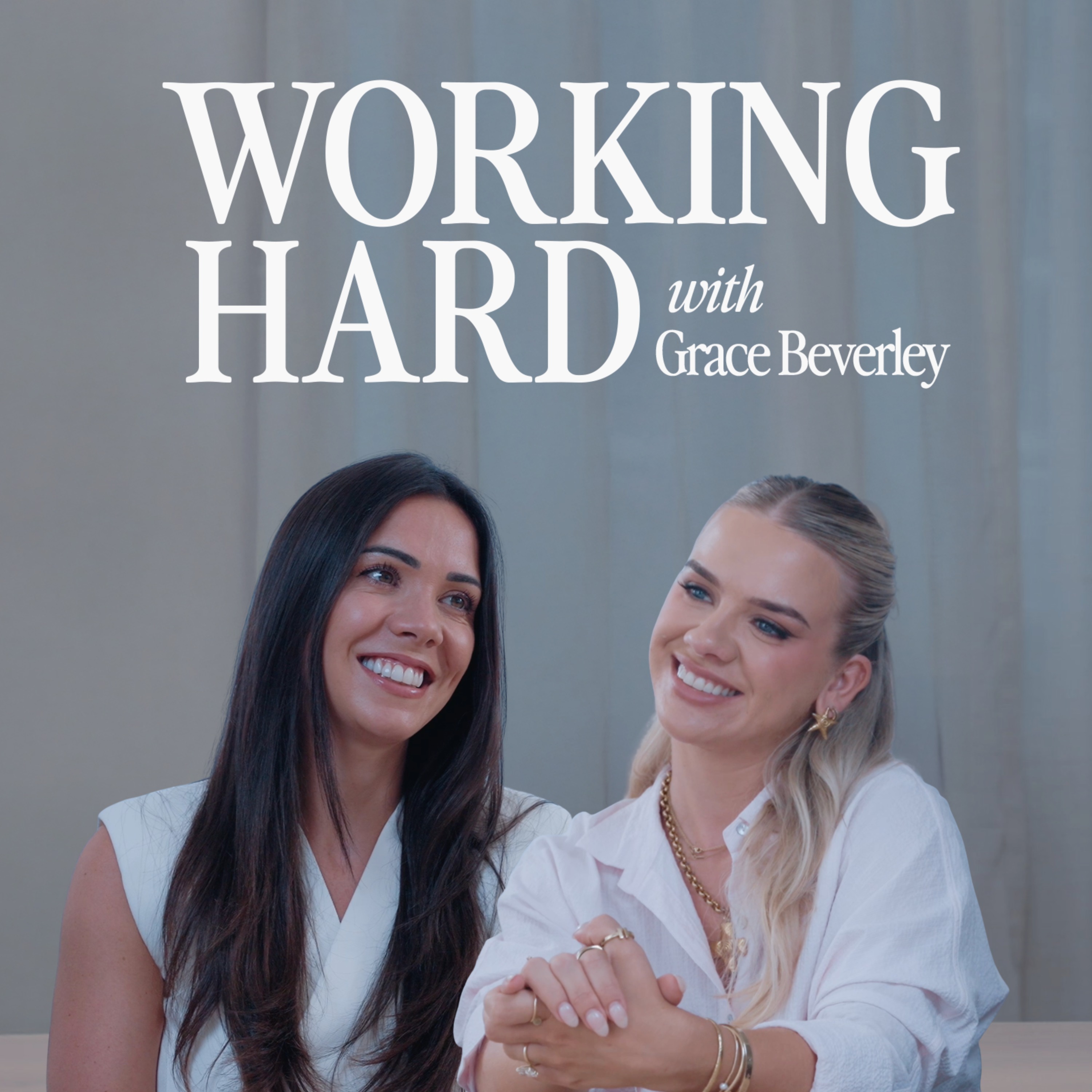
In this episode of "Working Hard with Grace Beverley," the discussion revolves around Polycystic Ovary Syndrome (PCOS), a condition affecting millions of women. Host Grace Beverley speaks with Dr. Hazel Wallace, a medical doctor, nutritionist, and best-selling author, about her personal experiences with PCOS, the challenges of diagnosis, and effective management strategies for symptoms.
Written by AI. May contain mistakes.

Get the gist, explore an idea or ask about something said.
 Claude
On Working Hard with Grace Beverley, what are the key points of this episode?
Searching your listeningAutomatic transcript. May contain errors.
0:00Why does every recipe I try need 18 ingredients, including a jar of something paste I'll never use again, but will sit in my fridge for 9 months. I just want dinner in the oven fast. That's why I love Blue Apron's new one pan assemble and bake meals. They send you fresh ingredients that are already chopped. All you do is put it all together and bake. That's it. No chopping, no weird leftovers, just delicious, easy to make meals. Get 20 % off your first two orders with code APRON20. Terms and conditions apply. Visit blueapron.com slash terms for more. Hey, it's Adam Grant from Work Life, a podcast from TED.
0:34This episode is brought to you by Freshworks. Freshworks believes that complexity is the enemy of efficiency. So stop wrestling with bloated expensive service software that takes forever to implement an update, where ROI is someday, not today. You've been overcharged and underserved for way too long. Uncomplicate with fresh service for IT and fresh desk for customer support. And with Freshworks AI-assisted service software, you'll work smarter, not harder. Freshworks Uncomplicates. Learn more at Freshworks.com.
1:43what is up i'm grace beverly and welcome back to working hard the podcast shape guidebook on how to improve your own life and achieve what you actually dreamed of doing because life's too short for boring podcasts and bad advice what is up and welcome back to working hard this week it is the return of one of our most requested guests, not just because she's one of the most trusted voices in women's health right now, but because she is doing vital work in helping people actually understand their bodies, their hormones, and their health. Dr. Hazel Wallace, previously known as the food medic, is a medical doctor, best-selling author, nutritionist, and an expert in women's health and hormones.
2:19In today's episode, I really, really wanted to dig into a topic that impacts millions of women, but still isn't widely understood or talked about, polycystic ovarian syndrome or PCOS. It's a personal one for me as I've had PCOS for well over a decade now. And whenever I search up information on the condition, I'm faced with Reddit threads rather than professional advice because so little research is done into PCOS and conditions like it. And I don't think a lot of people have had the best experience when it comes to healthcare and PCOS and diagnosis and actually mitigating symptoms and all of that.
2:50So I really wanted to create a special resource, something specific, like a whole episode dedicated to this for people who are struggling to understand what they're going through with PCOS and desperate for information on what it is, how to help, what they can actually do around it. So today we are talking symptoms, diagnosis, lifestyle changes that actually help and how to advocate for yourself when you're not being heard. And because PCOS is so often confused with other conditions like endometriosis, we're also going to bust some myths on that too. So if you've ever struggled with your cycle, your skin, your mood, or been gaslit by the GP about your pain, this episode is for you.
3:25Before we get into my chat with Dr. Hazel, I would be so grateful if you could hit subscribe. And we know that the deal is around here. If you subscribe, I will put out a super interesting episode every single Monday to help you improve your life and start your week right. And also a big PSA, we now have a podcast Instagram and it is so much more than just clips. It's more like a hub for the working hard community where we do breakdowns of what we learned in episodes, giveaways, get into topics like burnout on productivity and emotional habits and ah a fly just landed on my head and life improvement in general and you can join us over on at working hard pod there's so much discussion over there and it's just a nice place to be
4:11dr hazel wallace are you currently more working hard or hardly working definitely working hard you don't seem too happy about it I am I am a little bit overwhelmed I'm not gonna lie but it's all really good stuff I was just speaking to someone about it and I can't complain but I am like very excited to come to the end of this busy period right because you've obviously just released a new book so that's always hectic it's always hectic but then all you want for your book is to perform well and for people to want to talk about it so it's great that I am doing all these interviews but yeah it's just riding the wave.
4:47Busy period. Yeah. For anyone who might know you as the food medic can you describe the work you do now? Yeah so I'm gonna try give you the short story because I feel like there's a lot of backstory. Essentially I lost my dad when I was 14 and that experience made me want to become a doctor which I did and I studied in Wales and I I was really interested in how our lifestyle nutrition impacts our overall health because dad died from a stroke. And lo and behold, we didn't learn very much at medical school in terms of nutrition. So I retrained as a nutritionist and I set up the Food Medic blog 13 years ago now, which is a really long time.
5:29And that started as blog, Instagram page, a podcast. But over the years of working in the NHS and I guess my own health experience as well, I realised that women are treated a little bit different in health and healthcare and that most of the research that we have is based on male bodies, male cells, male mice and disregards the female body or assumes that we're just small men. So I wrote The Female Factor, which was my first women's health book, really as an overview of like what is the state of health and healthcare for women, how and why we're neglected in research and what this means. And it really just was the tip of the iceberg and I found that I just had more and more DMs, more and more questions, more and more emails from women who felt like they were being almost like gaslit when they went to see their doctors because they were told what they were experiencing was either just normal or just part of being a woman, like painful periods, supposed to be normal, irregular cycles, normal, all of those kind of things.
6:31And so then I decided to write Not Just a Period because it's not just a period, there's so much more that happens across that 23 or so days of your cycle. And also we shouldn't just dismiss women assuming that because it's a period, we should accept those symptoms. So now I don't work in the NHS anymore. I have my own clinic and I work as a nutritionist just with women. So seeing women with PCOS, endometriosis, period loss, primarily those issues. And I should mention, because it's relevant to our conversation that I also have PCOS. And so my experience of getting a diagnosis also made me realise like how hard it is to advocate for yourself because even as a doctor I was diagnosed in 2018 and it took me two years from onset of seeing my doctor the first time to getting my diagnosis and I had all the symptoms irregular cycles excessive hair growth acne and I was told I didn't fit the PCOS picture because I wasn't overweight or obese and so they just kept sending me away and then I finally got a referral to gynecology they did a scan did blood tests and I'd like barn door PCOS so that was a really frustrating experience but also when I speak to more women about it it's almost as if so many of us are told the same thing either come back when you want to get pregnant just try the pill or there's not really anything we can do maybe go on metformin yeah and I think I think I mean first of all 100 % agree with everything you've said, I also just think that it's one of those things where, okay, so maybe the PCOS diagnosis is easier to get than endometriosis, for example, which I know is something like 12 years on average to get diagnosed.
8:13But at the point that it's then diagnosed, there's so little help you get. So I've been both NHS and private, and I'm still in the NHS with the endocrinology department and still have like regular appointments and everything that I get kind of letters for and all of this. the amount of movement we've had over the past three years it's like zilch like the only thing is that i was put on metformin which i have found is super helpful just for insulin resistance and like food noise generally um and found that like a lot better i used to get really shaky throughout the day and all of that which i found has been helpful other than that genuinely it's like oh yeah you have it and then it's just like radio silence yeah like there's no kind of oh where do you go from here all of this all of the changes that I've made that have improved my PCOS have been self-researched like spending hours on Reddit spending hours on TikTok like all of these things which is I would rather have got that information from a doctor but I think it's so funny because we often hear a lot of this kind of almost like talking down on women for getting so much of their information from the internet and kind of being like oh yeah well of course you saw that on TikTok like on all of this it's like well I go to the doctor and like you know I've been through this thing for three years as in like I've just been through this one endocrinology department for three years and like we've had so little movement so it's like where am I going to get this information I'm going to have to source it myself but that's why I really wanted to do this episode as well to make sure that there was a resource where people felt like they could really self-serve and just feel educated and empowered on the topic so that at least they know about it like at least they know what their kind of I don't know just just know more about it in general because it's taken so many hours and so many years of of this and I mean I was diagnosed over 10 years ago so like 13 years ago so I am really excited to kind of get into that with PCOS I want to start really like all the way back to basics what is it and why is it so misunderstood?
10:16So PCOS stands for polycystic ovary syndrome. And actually, there's a big call to change that name because not all women with PCOS have polycystic ovaries. And if you have polycystic ovaries, it isn't diagnostic of polycystic ovary syndrome. And really, it's more of a hormonal metabolic condition. So you have hormonal imbalances, namely testosterone a little bit raised. And also from a metabolic point of view, 80 % of women have insulin resistance. So it's more like it's a really all encompassing condition. And as you've probably experienced yourself, it doesn't just impact your periods. And the main impact on your periods would be irregular and some women absent periods, but it affects your skin and hair.
11:00So you can have some hair thinning. It affects your skin from oily skin, acne. It impacts even your metabolism. It impacts weight gain it impacts body image anxiety there's even a higher risk of disordered eating in women with PCOS because there's such a tightly like such a tight relationship with food and our relationship with lifestyle as well so there's quite a few symptoms that impact it and also it does increase the risk of long-term complications like difficulty getting pregnant and also if you have insulin resistance there's the risk of type 2 diabetes and cardiovascular disease. The good news is it's completely possible to get to a really good place and mitigate those risks with the help of lifestyle.
11:44And medication does have a place. If you look at our PCOS guidelines, it does say very clearly that lifestyle is like top priority and all women should be given that advice. Unfortunately, as you've experienced, not many women are given that advice. But what I see firsthand, even with myself working with clients, is that nutrition can be so transformative. And I know we're going to talk about that in a minute. So that's the main thing. The reasons why it's, I guess, misunderstood is a lot of people think it's because of the name of PCOS can sometimes cause maybe some misunderstanding between people.
12:21they're not going to go to the GP because they don't think that acne and hair loss would be related to a women's health condition or irregular cycles are sometimes not really taken seriously when you go to your doctor's appointment. And I don't want to throw anyone under the bus, but sometimes people are told that it will just regulate over time or it's because you're stressed or because of X, Y and Z. But it's really important that women who have those symptoms and do think they have PCOS, go and get diagnosed because of those long-term complications. And so how do most people then end up getting diagnosed?
12:56Like what is the pattern to diagnosis and why is it so hard for some people to get a diagnosis? Because I think I was first sent to the doctor about it when I was like, I think around 13. And I remember they, you know, I was just like having various of these symptoms. And I remember that I had waited about six months for an appointment and I went there and they literally looked me up and down and said you're not fat and you're not hairy so you probably don't have PCOS which was like my six-month wait and all of this and then waited for years to obviously find out that I did and these were all the reasons again exactly kind of like your story what leads to a diagnosis and why are some women finding it so hard to get diagnosed so we have this criteria called the Rotterdam criteria for diagnosing PCOS and you have to have two of the three things.
13:45So one of them is irregular or absent periods. One of them is polycystic ovaries on a scan. And then the third thing is either raised testosterone or male androgens on a blood test or evidence that you have raised androgens. So that would be things like excessive hair growth in areas typical for a man and hair thinning and things like that. So you can be diagnosed with two of three of those things. I think, you know, when we take a step back, it could be quite easy to get diagnosed if you had irregular cycles because all you need is a blood test. For some women, they do have normal bloods and they may not have very obvious hirsutism or acne.
14:27And so the next step will be getting that ultrasound. And that's usually the part that requires a referral, which doesn't always happen. I do think there's a lot more awareness of PCOS now and endometriosis as well. As a side note, endometriosis is a lot longer to diagnose, eight years, because the gold standard for diagnosing is laparoscopic keyhole surgery. So that's obviously very invasive, requires, I think someone said to me they're on a waiting list for 12 months at the moment to get that surgery, to have a look inside their tummy. So it's really painful when you hear that. But I think also as a culture, we normalise symptoms related to menstrual cycles and we don't take women seriously when it comes to those things.
15:08And sometimes symptoms are quite subtle. You know, when I went to med school, we learned about like this phenotype of what a PCOS woman looks like. And they were like, she's fat and hairy. And that was the phenotype. And so I imagine that people who went to med school when I went to med school have this idea of what a woman looks like with PCOS. But what I've learned clinically and also personally is that women with PCOS can look multiple different ways. There can be a lean phenotype and an obese phenotype. There can be an insulin resistant phenotype. There can be an androgen dominant phenotype.
15:42People can look very different and present very differently. And even their bloods can look very different. So I think I would love to see a reshaping of our narrative around PCOS because I think that's what holds us back from diagnosing it. Yeah, no, I think that makes complete sense. And I think that it's outrageous that it's still at this stage. I think that it's, you know, there would be, there's no way that if endometriosis affected men, there'd be an eight year diagnosis time or the fact that you could only diagnose it by literal surgery. Like there, you just cannot convince me that that would be the case.
16:14But for people who might be confused, I guess, about the difference between PCOS and endometriosis, because I think that sometimes because they're women's health conditions, they can't be lumped together, maybe just in kind of public media type things when being talked about. What are the main differences between them? So PCOS primary symptoms are irregular cycles. That's usually what people notice first when it comes to PCOS. And that's a hormonal and metabolic based condition. endometriosis usually presents with very painful periods or pelvic pain pain when opening your bowels or going for a wee painful sex sometimes bleeding and so pain would be the primary symptom of an endometriosis typically not in PCOS but that doesn't mean pain can't be present in PCOS and so with endometriosis you get basically growth of endometrial like tissue so the tissue that lines of room similar to that would grow in other parts of the body typically the pelvis but it can be in areas like the lung it's been found in the eye and that's a really debilitating condition and so you can get it where pcs and endometriosis coexist in the one person and that can be really difficult but i see it more more times than not lately i feel like i'm seeing a lot of that and maybe it's because there's a lot more awareness people are getting diagnosed but they're very different conditions and they're kind of very different etiology and presentation.
17:43And so I'd like to come on to speak about lifestyle factors a little bit because of course you've talked about how important they are in mitigating PCOS symptoms because am I right in thinking you can't reverse PCOS? Yeah so we say that you can't reverse or cure and you'll read that in textbooks but I'm starting to think otherwise. I'm starting to think that we can at least make it dormant or that your symptoms are you're basically asymptomatic because I would say that I'm essentially there with my own PCOS now and I see it in other women as well so I think you can get to a place where maybe you're less symptomatic than you were before and your quality of life is much more improved.
18:27Yeah and if it's diagnosed by a list of symptoms then surely if you're asymptomatic it can kind of be somewhat not like undiagnosed but you know if the issue with the symptoms and you don't have the symptoms then that's it so what are the main lifestyle factors that do make a big difference because i've heard of lots of people just being told to kind of lose a bit of weight which obviously is a lot harder for people with pcos as well so what are the lifestyle changes that can make a big difference okay so let's tackle weight loss first because i mean i'd say like nine out of ten women even those who are of normal body weight will be told to lose weight it is in our guidelines that five to ten percent of weight loss can be effective if you are of a certain BMI in an overweight or obese category.
19:08And I do see it in practice where women do lose weight who are of a certain body weight to improve their symptoms. It doesn't work for everyone. And I guess the whole topic of weight loss can sometimes be a bit controversial. But in this situation, in certain women, yes, it is effective, but it doesn't need to be a huge amount. Like I said, it's five to 10 % of body weight. Then there's a group of women who are of what we'd say a normal BMI or healthy BMI and there are some limitations to a BMI as well like it doesn't tell you how much muscle mass you have or how healthy you are. I've always naturally sat on overweight and they kind of like the amount of times I've had doctors be like is this your weight and I've kind of been like yep that's that's just what BMI does.
19:49That's it if you're not very tall as well you know and I do find I get some clients who really fixate and trying to get just into that healthy BMI category and they might be a smidge over and And I'm like, you know, convincing them you've got healthy cycles, you've got regular cycles. All of these other factors are really great. So I think I always take a BMI with a pinch of salt and also look at everything else. But when we talk about guidelines, it's the easiest measure that we can have. So weight loss can be effective in some people. As you've mentioned, weight loss is more difficult in women with PCOS.
20:21And also women with PCOS tend to have like stronger cravings as well. They tend to have like more erratic blood sugar levels. and worse body image. And then they're more at risk of eating disorder behaviours. So it's really easy to get trapped into some of the fatty diets when it comes to PCOS. And really, like, I can completely understand because it's only coming from a place of desperation. I'm not getting the information from my doctor. So I'm going to turn to TikTok and try this extreme fad. I was speaking to a client today and she was like really open and honest with me about it. She's getting married soon, but also we're getting her PCOS under control.
20:56and she just said like I just fell into this really toxic cycle this week of seeing what other people were doing because I felt like my results were not happening fast enough and I just think with PCOS you have to do a lot of silent work to get to the place where you want to be and it can be very frustrating but the results do pay off so that's weight. Nutrition irrespective of weight loss is really important and I would always start there with every woman. There is no single best diet. So you can take the principles that I'll give you now and kind of adapt it to your own way. But the main kind of thing that seems to be the most helpful is opting for a Mediterranean style diet and making that a low GI diet.
21:37So low glycemic index. When we say glycemic index, we mean how much your blood sugar responds to a piece of food. So if you were to have, say, some Haribo, you get a really big spike. If you were to have a dry piece of rye bread, not very yummy but it would be very slow and controlled if you were to have avocado or something completely protein like a chicken you wouldn't get much of a rise and that's just how our body responds so when we have a blood sugar spike just for clarity it's not a negative thing it's not inherently bad but if you're someone with pcs especially insulin resistance and you're getting lots of rapid spikes or really prolonged spikes your your energy is just going to be all over the place and insulin resistance can drive raised androgen so it kind of is a toxic cycle it kind of increases your PCOS symptoms so if we can work backwards and manage your energy levels through your diet then we can in theory improve your cycles and it does work in practice so what might that look like um instead of cutting carbs completely and we've got evidence to say that low carb diets aren't superior to like moderate carbs and i actually have found that some women with pcos who go super low carb can increase their cycle length because we need carbs for hormone production and so what i'd say is keep carbs in the diet but we're talking about that we want to think about what quality of carbs so instead of our refined versions we want to be opting for things like brown whole grain so our quinoa our brown rice our sweet potato our normal potatoes um brown pastas and pairing that with protein and healthy fats because when we pair our carb with protein and healthy fats we mitigate that big blood sugar rise it's also a much more enjoyable way to eat a meal and much more satiating as well so if you are trying to lose weight adding in more fiber with your veggies your plant-based foods your high fiber complex carbohydrates will really help with that as well.
23:42Other things alongside that, getting in your omega-3s. I don't think you eat oily fish, but if you don't eat oily fish, having an omega-3 supplement, omega-3s are amazing for inflammation and PCOS is really an inflammatory condition. So if you can get your oily fish in twice a week, if you can't take a supplement, it's one of those supplements that I think really fantastic for PCOS girlies. I actually started eating fish again specifically for my PCOS because I just felt like I well first of all with insulin resistance I found that so like on a vegan diet and all power to anyone who can do it and has no issues with it I did it for what like seven years so you know won't take any shit for I've done my time and like but actually because it was such a high carb diet and because there was not a lot of balancing out and you can but it's harder with fats and protein that was making all of my symptoms 10 times worse and I didn't realize it was that and also I found that so many of the proteins that I was getting were from such processed sources that I found that they were causing the other issues as well so even just introducing fish like I still don't have dairy but even just introducing fish for example made such a big difference to my like regulation of blood sugar generally how I was feeling lack of brain fog like inflammation all of these things, I noticed such a difference.
25:04And I think, you know, I, for years and years now, any way that I've looked at, like, I've always been pretty pragmatic when it comes to diet and what that looks like. And I'm pretty, I don't know, I feel like I'm quite well educated on it because I spent so much time in the fitness space that I know so much about, you know, exactly what I'm putting into my body and everything. And I think that this, you know, especially this past year has been the first time that I've dieted specifically for something that's like, I have ended up losing a good bit of weight I've lost I think nearly like 20 pounds now but actually in that time this was the first time I was actually focused on specifically improving my PCOS symptoms and improving by um my health generally and I think I would have told you that I was a few other times and that would just happen to be by eating less and less processed foods and all that but specifically this time I even like there are certain times where I eat more now like I didn't used to eat breakfast i now have breakfast and i now make sure that it's high protein breakfast and like all of these different things a lot of the time i'm eating more specifically because i'm adding on fats and protein into something that i'm eating rather than ever eating naked carbs yeah and i think that's just made such a big difference for me and i it's so funny because i've spent so many years watching or looking at what i eat as so many women have and i was like why the fuck wasn't this information out there because I could have at least been looking at what I was eating in a more productive way and helping this rather than just doing everything in the name of losing weight and actually causing bigger problems elsewhere with inflammation or whatever it might be.
26:40Yeah absolutely absolutely. Can I ask if you found like big results from what you've been doing? Yeah so I got really serious about I changed a lot in my diet and everything I had some bad health results in like December. And from that point, I got quite serious about like, okay, this is not where I want to be. I know I want to start a family in the near future. And like all of these different things. I was like, this is, this is not, this is not good. This is not where I want to be. And I, you know, people, I had professionals agreeing that this was not where I wanted to be. And so like, I put in a lot of work to make a big difference to how my body was and where my hormones were and all of this.
27:20And that included lots of other things too. I didn't realise how much inflammation could cause much worse PCOS symptoms, for example. And I'd never really thought of inflammation really as a thing. I'd only thought of inflammation as something like, I don't know, after a flight or whatever. I'd never really thought of how much my kind of lifestyle is causing me inflammation or certain things I eat are causing me inflammation. So I spent a lot of time, first of all, concentrating on getting that inflammation down and just empowering myself in terms of like learning the things around like what I can do to decrease my blood sugar spikes and all of these different types of things and introducing breakfast so that I'm not stressing my body out right at the beginning of the day because I'll go straight into like intense work and exercise and all of these things and it just wasn't good for my body I think it's so funny because I think so many of us have spent so long trying to concentrate on like all of these different things like what's best for my body and there's so little information out there in terms of what's good for women and what exactly we should be doing and what we shouldn't be doing.
28:18Well, there's loads of that information out there, but it isn't necessarily correct. Yeah, I completely agree with you. And I think, I just think like, I really wish all women had that information because it's not just PCOS. There's so many other conditions where nutrition can be really complementary to even like mainstream medical advice. And even if you don't have a women's health condition, like just eating differently compared to men there are some you know while most healthy eating practices hold true for both sexes there are some like niche differences and I just think like we just need more research like it's about time and like it's the results speak for themselves so I think it's fantastic that you've experienced that and every time I see someone goes through that transformation with their PCOS I just think like how is this not common knowledge but what the kind of practices that you've talked about as well completely agree with and the regular eating window is really important as well you know having your regular meals per day that can help manage your energy levels manage your glucose levels not skipping meals or doing fasted exercise which is something that is people always come back like or kind of question when I say don't do fasted exercise but I've never seen it benefit a woman yeah and that's that's what the I mean I'm preaching it to the choir here but like when we see all of like first of all all main media is like it's very male represented but then you're also looking at alternative media like podcasts and all of this and there's so much that it's like all of this biohacking stuff for example but it's like don't get me wrong there's so much interesting stuff in there and I have no doubt that loads of it is really beneficial but at the same time like we know that what 90 % of the data we have on the human body is only based on the male body so chances are that what they're saying is specifically also based on the male body and like we just don't know how we react and all of these trends fly around in the way they do and actually something like fasted exercise I literally have done I'm not a breakfast person I'm never hungry for breakfast actually I'm now hungry for breakfast which is apparently a good sign and I always thought I'm not hungry for breakfast it's just like a chronotype type thing rather than the fact that like oh that's probably a bit of alarm bells and your hormones probably aren't like doing what they need to do and it's it's funny as well she says funny like through tears um because I spent my whole teenage years with doctors being so confused because I had such blood sugar issues like I would get like convulsions from how and they thought I was hyperglycemic they thought I was diabetic like I had all of these different tests all the time I was like allowed to take fucking blueberries into exams with me because like I would get such bad shakes and it was clearly all PCOS or it was something that I've managed to magically solve through doing things that would help for PCOS and it's like if we only had better research someone could have looked at me as a 15 16 year old being like oh you're not just having these giant convulsions for no reason it's actually tied back to this and let's try and eat like this probably don't try this diet for you and it's just it's the research it's not there it really is i always talk about it i'm like there's such a lack of lack of research but there is more research coming out and i feel like there is quite a bit of research around nutrition and pcos and we should really be like making that common knowledge put it in nhs guidelines please because i think everyone should have access to that because it's hugely transformative of like it changes people's health.
31:52The market's uncertain. Revenue's tied and hiring on hold. That's why results driven companies are using Upwork to keep work moving. Go to Upwork.com today and start hiring proven freelance talent fast. No bulky overhead. No rigid long-term contracts. Just the right expert right when you need them. Work smarter and faster with Upwork. Go to Upwork.com now and find your freelance expert. That's U-P-W-O-R-K dot com. Post a job for free and get started today. At Capella University, learning online doesn't mean learning alone. You'll get support from people who care about your success, like your enrollment specialist who gets to know you and the goals you'd like to achieve.
32:35You'll also get a designated academic coach who's with you throughout your entire program. Plus, career coaches are available to help you navigate your professional goals. A different future is closer than you think with Capella University. Learn more at capella.edu. Riley Herbst from 2311 Racing checking in. Got a break in between team meetings? Sounds like the perfect time for some fast-paced fun at Chumba Casino. No waiting, just instant action to keep you going. So next time you need a pick-me-up, fire it up, and take a spin. Play now at chumbacasino.com. Let's Chumba! No purchase necessary.
33:13VGW group void where prohibited by law. See T &C's 21 Plus sponsored by Jumbo Casino.
33:21So I don't want to go off topic and miss the question that you did ask in terms of lifestyle because we covered weight loss, we covered nutrition, but like supplementation is another kind of really big area of PCOS. There are a lot of supplements out there. There are a lot of very bad supplements out there for PCOS and for women in general and they just create a pink tab and say that it's for women and it does nothing. But there's one really great supplement that's evidence-bactin that's inositol that you've probably come across. I don't know if you're taking it yourself. I think it's fantastic and it's really beneficial even from a blood sugar regulation but also for regulating your menstrual cycle.
33:59And there's a specific ratio of 40 to 1 myo-inositol to dichiro-inositol. A lot of the formulations actually don't have that formula and even though they all say on their label like PCOS support or something. So you want that. which they're not even allowed to say in the UK. As someone who has supplements, like there are very strict rules around what you're allowed to say in the UK, even if there's like evident, well, it's very specific, like claims and evidence and like your own surveys and all of this. I look at some supplements and I'm like, there is no way, like there is no way you're actually allowed to say that based on like the wild things I see in terms of bloating, in terms of this, it's like you literally can't legally say that.
34:35Yeah, that's it. And it just preys on like vulnerable women who are like really struggling. So you want your 40 to 1 mild to dichyra. There are quite a lot of supplements now available that you can do that. The kind of other supplement that I want you to think about, especially in the winter months, is your vitamin D. Because we just don't get enough here in the northern hemisphere. And then there are a few others, but are more like depends on your situation. So like for you, example, well, actually, no, we've clarified you have your omega-3s. But if there is someone who doesn't have oily fish, I'd 100 % add in omega-3.
35:09and then some of my other clients will add in other ones that are like less evidence back but we have a discussion about it like magnesium because there's some evidence for magnesium for painful periods and pms as well and if they have that we might add it in but i would generally start with food first and then those may be three depending on your needs there are a few others like coming out in the research but i think it's not super strong yet if you are having a healthy balanced diet you should be in theory getting enough that way um like i said if i was to sit down with you and do a kind of complete food diary i might say okay we'll add in this supplement or we'll add in this i think start with food first and acetyl is an amazing supplement um and then after that we're looking at exercise is hugely important hugely important like think of your muscles like a glucose sponge so the more muscle that you build the better for PCOS um I feel like strength training is now no longer trendy so a lot of women aren't doing it they're doing a lot of Pilates does actually fall into the strength category but for a lot of women I think it actually doesn't meet the amount of stimulus so I'd love if you if there are Pilates girlies listening do that but try go to the gym too yeah at least twice a week yeah weight training yeah Yeah.
36:26And then getting in your cardio, there is a lot of claims that you shouldn't do high intensity exercise if you've PCOS. Now, there is no research to say that. And actually, there is some research to say that HIIT can be good for PCOS. So we're at a bit of a tricky situation because I know a lot of women will say anecdotally, actually, it didn't help them. I think if you're a really stressed person, so you've got very high cortisol levels, maybe you've got a really demanding job and kids and a demanding family life, then maybe high intensity exercise is actually just not beneficial for you in general it's probably not the PCOS or in a certain group of women if they're under fueling even if they've PCOS even if they're not underweight that can still drive irregular cycles so it's the stimulus and the amount we don't want like a ton of high intensity exercise but a little bit isn't going to do you any harm and I kind of say that to a lot of girls because I find them in my DMs I'm a runner and they always say like how are you running with PCOS and that's absolutely fine once it's fueled and once it's not something that you're doing every single day yeah right it's funny because I'm trying to work out like I had suddenly a few weeks ago I got like a big breakout and I hadn't had one for a while because I've like been so clear with getting everything under control and like that's one of my big PCOS symptoms and I'm trying to work out specifically what it was and one thing that I did introduce back in was high intensity exercise but I really don't like I this may sound so stupid I enjoy high intensity cardio so much that I don't believe it because like I do okay so say I do like a peloton class or barry's or like whatever I genuinely do not release that much like serotonin oxytocin fuck no it's what is it endorphins in general like wow no brain um like through anything else and i'm like that can't be bad for me but i'm currently on a journey of trying to prove to myself that it wasn't high intensity exercise by moving other things out i think it's eggs for me but that's just a food sensitivity thing yeah i mean and sometimes it's it's just your hormones your hormones weren't playing ball that month and unfortunately with pcs you can have these big hormonal breakouts that can be really angry or you were really stressed but I think on the high intensity thing like for some women it just doesn't benefit them because I mean I used to do CrossFit once upon a time at 5am in the morning before going on a 12-hour hospital shift and I would drink like two cans of knocko the caffeine drink beforehand like of course that wasn't good for me but like is running on a Sunday I can envision it on the Instagram right now You can just like so, the era is like, I can see it in my mind.
39:07I'm so glad I've moved past that. But I think like, you know, is going up, going for a run and then having like a balanced breakfast afterwards and having a snack before you go, going to harm your hormones. Absolutely not. Like, I think we create so many barriers for women in exercise already. So like, let's not tell women with PCOS they can't do exercise. That's high intensity. Yeah, no, I really like that. And I also think one of the biggest messages out of that is like learn your own body. Yes. Because I think that it's so easy to look at what's going viral and what you should and shouldn't do that's flying out from all directions and suddenly apply that all to you.
39:44And I think for so long then I'd just done that for PCOS and tried to solve all of these things. And actually I was missing some of the essential parts. Like I was not doing high intensity exercise and I was not doing specific things, but I hadn't sorted out the fact that like my diet was mostly processed. You know, I was having a lot of naked carbs without having other things on them. I wasn't eating breakfast, like all of these things. I think it's really easy to grab the things that feel like the quick fix hack when actually it might well be a combination of all of these things. And learning your body and learning truly what you respond well to is so important.
40:19like that's exactly why I'm taking this time and of course yeah it could have just been my hormones but I have a feeling that it was like something specifically in this two weeks that just made like suddenly really really angry and I wasn't particularly stressed and all of this but that's why I'm spending the time trying to eliminate and really figure it out because I've now spent the time getting to know my body so it's like I really want to know that because I want to know specifically what I can do that's not going to be that next time but I think before I would have just been like oh well none of this is working so you know throw it all away might as well do xyz yeah 100 i think like the individual approach is so important yeah no absolutely and so the type of exercise you're doing for pcos it does matter or it doesn't matter it doesn't matter like it like i said it's so important that you're including strength training in there and like that could come in the form of going to the gym it could be using like weights at home resistant band it could be a class it could be certain types of strength classes or pilates classes but i'm not entirely sure if all of them really reach the stimulus but we want to build muscle so and it's not about having a ton of muscle it's just having more muscle mass it's about improving our body composition because that will improve our insulin resistance and then on top of that we just want to essentially move as much as possible so that we're not having long periods of sitting down and so including cardiovascular training in whatever form you like if that's walking if that's running if it's doing whatever classes you enjoy is really beneficial because again that just feeds into the blood sugar regulation if we're getting up and moving we're going to help improve those metabolic markers which unfortunately are all tied up in pcrs as well but you could basically I think you could take most types of workout routines and shape that in because I just don't want again women to feel like this has to be a prescriptive thing for PCOS like if you're doing two gym workouts a week and then maybe you do Pilates on the weekend with your friend maybe you go for like a run club on a Sunday and then walk on the other days that's absolutely fine yeah it's the same as like when I mean fitness is still a big thing on Instagram and everything but I feel like when it was really, really having its like era, I think there was so much around like, you should do this.
42:38You shouldn't do this. You should do this. You shouldn't do this. And actually like at the end of the day, the best workout plan is the one that you can stick to. And like, yes, it might be more effective for you to do the same workouts four weeks in a row and to do this and this and this. But like, if you don't enjoy that, you're not going to do that for that long. You're not going to be consistent with it. You're not going to make an actual lifestyle change. So even now, like, I feel like I'm almost inhibited by the amount of time I spent in the fitness industry. So the amount I understand like, oh, if I want these results, I should do X, Y, Z.
43:05And I know that's the best way to get there. And it's like, that might be the best and quickest way to get there. But as someone who's like, that's not all you're doing, if that's not enjoyable to you and that doesn't fit into your lifestyle, do it another way. Like spend double the time getting there and actually enjoy it because you're going to get, you're probably more guaranteed to actually be able to make a difference to your body. Yeah. And like, if we look at any of the kind of summary umbrella research papers when it comes to PCOS and exercise, they basically just summarise that. Like, all exercise is beneficial.
43:35There's no one superior type. Do what you're going to be consistent with. And so you've kind of summed that up. You open the fridge. There's nothing there. So what's it going to be? Greasy pizza? Sad drive-thru burgers? Dish by Blue Apron is for nights like that. These are the pre-made meals of your dreams. At least 20 grams of protein, no artificial flavors or colors, no chopping, no cleanup, no guilt. Keep the flavor. Ditch the subscription. Get 20 % off your first two orders with code APRON20. Terms and conditions apply. Visit blueapron.com slash terms for more.
44:18So what about stress? Because I've had a really conscious effort in trying to reduce stress in my life over the past however many months um quite hard um but i have heard that it makes a big difference for pcos so i would love to hear your view on that yeah so stress impacts the menstrual cycle anyway so our menstrual cycle's kind of influenced by the hormones in our brain and they signal to our ovaries and we release those hormones cortisol actually down regulates that pathway so So, you know, we experienced this during lockdown where like loads of women lost their periods because everyone was just globally stressed and then they returned.
44:59And so that can happen to anyone, whether you've got PCOS or not, where if you've got any stress, whether that's a physical or psychological stress, that can downregulate your periods. With PCOS, we're more at risk of that because there's some evidence that women with PCOS have slightly higher kind of basal levels of cortisol. not all women there's not a ton of research on it but if we're slightly more stressed in general then add in other stresses in your lifestyle that is going to lengthen your cycle length because of that pathway regardless of if you've got PCOS or not it's really important that we're managing our stress levels but I would see stress management as a really core pillar for PCOS and I think with stress management is very individual because for some people that's going for a walk and listening to a podcast for some people that's having a bubble bath for some people that's you know doing absolutely nothing and watching tv it can be super individual and I think like having little pockets of stress management in your day if not across your week can be really beneficial and so I've also been trying to include this and it's just going for max 20 minute walk in the morning because that's all the time I have.
46:13But I know if I do that first thing, I'm less likely to scroll on my phone. I'm getting morning sunlight. I'm just being outside with my partner, having a conversation and then coming back and starting my day. So it's like finding just little pockets like that that can make a big difference. You could do that on your lunch break. You could do it after work. You could commute part of the way walking. Or it might be that you do five minutes of headspace or cam before you go to bed at night. So finding those little moments to help bring down stress because we cannot avoid stress completely um but you can help reduce those buckets of stress a little bit when i started to talk about like things i was doing to mitigate my pcos symptoms online it's so funny because i was like i'm doing this i'm doing this i'm doing this like the amount of comments being like so when i quit my job i actually all of my pcos symptoms disappeared and i was like um i was like really it's just not really available to me like i but like the amount of people that were just like go yeah it's stress I know and I mean I've had I think I've had one or two clients who have actually taken leave from work when they came to see me to be like I'm doubling down on my PCOS for the next three months and of course like not many people can do that but it just really illustrates like how debilitating these conditions are that women have to stop work to look after their health.
47:35So stress is 100 % involved. But if you have a really stressful job like yourself, or maybe you do work in a hospital and you just cannot quit your job, it's just finding ways that you can help improve that. And one of the biggest things is if you can get enough sleep, you're going to massively make yourself more resilient as well. Yeah. And one question I forgot to ask before was, how do you know if you have insulin resistant PCOS versus non-insulin resistant PCOS because for example I have like one of my closest friends has PCOS and our symptoms look completely the opposite like completely the opposite and I always find that so interesting because we're both like complaining about our PCOS and we're like are we talking about two completely different things here yeah but we seem to have two opposite forms yeah so most people do have an element of like insulin resistance and you should really get blood tests to check and it should be done annually, but it's not often done.
48:37And so we want to look at your blood sugar levels and there's a couple of ways that we can do that. Typically in the NHS, we do something called a HbA1c, which looks at your average blood sugar over three months. Sometimes you have a fasting glucose or fasting insulin or random glucose. So there's a couple of different tests we can look to kind of paint a picture of insulin resistance. they're not the perfect tests there are other tests that they use in research that can be more directly look at insulin resistance but they are a crude measure and they let us know so I generally recommend all women that I speak to get a HbA1c at least to have a look at that that said it doesn't mean that you're kind of completely in the clear and most of the principles that we talked about today still apply to you.
49:26So it's not like we would change the protocol completely if you do or don't. It just means that maybe around carbohydrate management and those food principles of pairing, we want to be a bit more cautious of that with someone who does have insulin resistance. And also I'd want someone who, if they have a regular blood test, to be followed up quite regularly so we can get those blood tests back down to normal. And where do medications like the pill or like metformin come into all of this? So they're the two options that you'd be given when you go to your GP. Metformin is like a insulin sensitizing medication and so we give it to people who have diabetes or insulin resistance and it has the benefit in PCOS where because it improves insulin sensitivity it can improve things like appetite control and then it can improve things like your cycle regularity so it can make them shorter so it's a really positive thing and it's not suitable for everyone so there are specific criteria and you won't not everyone will be offered it and it can cause some side effects so things like nausea is the kind of main side yeah I'm on the slow release one and like I remember a few people message me at the beginning being like i took this and shit my pants i was like wow okay they were like ask for the slow release ask for the slow release and i've been fine fingers crossed guys it can be yes and you can i mean you can start at a low dose and titrate upwards as well and and then the pill is often something that women are offered and i get a lot of women who are outraged that they're offered it but there is a place for the pill in pcs the pill can help for PCOS in a couple of ways.
51:11It's usually prescribed for women to help keep their womb lining thin because if a womb lining builds up over time that can increase the risk of something called endometrial hyperplasia. That's more important in women who are maybe having only a handful of cycles a year as opposed to those who are having maybe 40 day cycles. But there's other benefits in that you get a regular bleed which some women just like. It's not a real bleed, It's a fake bleed, but some people like having that and also has the benefits of improving some symptoms of PCOS like acne and the hair sinning. Now, I think some women feel like they're offered it just as a band-aid solution and it's not going to cure PCOS and it's not going to balance your hormones.
51:58So that's like we can just put that aside, but it may improve some of the symptoms in some women. but then some women find actually then it masks their PCOS symptoms and they're unable to maybe track how they're improving so if you are someone who's trying to improve your cycle length and you're trying to improve your acne or your hair thinning the pill will mask that so you won't really know what's working and what's not and also there's obviously risks to being on the pill it's not like inert there are risks associated with that so I think not everyone can take it not everyone should take it.
52:31Some women absolutely love it and it's so beneficial for them. I think we should have more nuanced conversations because there's a lot of pill bashing online. So it's not a one size fits all. What about spironolactone? Because I've had a lot about that recently. Yeah. So spironolactone is prescribed off-label for PCOS. It's actually not, it wasn't developed for that, but there seems to be a benefit in that it helps improve acne and hair related symptoms of PCOS. And that's because it targets the androgen receptors in the skin. Sometimes it's prescribed for a non-PCOS related hormonal acne, but it's typically kind of kept in the PCOS space.
53:13And it needs to be prescribed typically by a dermatologist. So you'd have a referral from your GP, but your GP can manage it. Again, it isn't going to solve your PCOS but it may help with your symptoms typically the skin and the hair symptoms and it's not something you'd stay on for years and years and years and also you need to have regular blood tests to check your kidneys while you're on it so there are some side effects. So I guess commonly what I'm saying here is there are some medications that work it's very individual it depends on what your main symptoms are and you generally need to have them monitored and tailored by your doctor.
53:49Have you tried any of those? So I've never been on metformin. I haven't needed it. But I have tried spironolactone. And that was really fantastic for me. Really? Yeah. It just shows how individual it is because I've always shared like, oh, I've now been put on metformin or I've now been put on spironolactone or whatever. And I don't I haven't always done a follow up because I haven't wanted to like put anyone off if that's the right thing for them. But it's because I've on the pill, I can't go on the pill because thrombosis runs in my family. So I can't do that. um but spironolactone sent me insane I was so like hyperactive that I could I couldn't concentrate on anything like I could not sit still I couldn't think of myself I had so much energy I couldn't think of myself sitting on like an exercise bike because I would be in the same place for too long whereas metformin I've loved and has been a very subtle difference but made enough of a difference for me to be like no do you know what this is a really good like consistent difference it's made a lot easier for me not to be thinking about food all the time not for me to be fixate like I would constantly be thinking because I used to get those convulsions I'd constantly be thinking like when am I gonna get this next like snack when am I gonna do this like what was the last time I ate like what did I eat all of this which just made it was just too much to think about food yeah it is super individual and like I have speak to women who don't get on what metformin like you said in your dms for various reasons or some people find it drops their blood sugar too much and spiro can cause a lot of side effects like you pee all the time and breast tenderness and things but when I was prescribed it it was early on in my diagnosis and I just raging acne so it just really helped get on top of that so I think it's so individual and I really when it comes to the whole PCOS narrative I really want to be balanced because I think there's such a place for medicine but there's a really big place for nutrition and lifestyle and like I would even if you're doing all of the medication things, do all of the nutrition and lifestyle things as well.
55:48Yeah. And as someone who always wants the quick fix, me, I went for the medication options, as in, you know, I've obviously been trying to solve this for years and I've always gone for those and nothing's made a bigger difference than me just changing the lifestyle things. And that's from someone who already had like a relatively healthy lifestyle. The ways that my lifestyle wasn't healthy is like long periods of being sedentary, like not necessarily looking at my blood sugar. Like I was still exercising. I was still eating relatively healthy. But it was those different changes that made more of a difference than medication.
56:23So I think you always think in your head, one of them's the quick fix. And usually it's the other one if you actually were just like consistent with it. Yeah. And like we said earlier, I've seen a TikTok on this girl who is PCOS and she was just saying like, as a PCOS girlie, you have to do so much silent work. And I just feel that every day, like this one in my clinic. And I just, I can just feel the frustration because like when you have PCOS you think it's just going you know three three weeks or three months of doing healthy diet and trying to go to the gym and getting your steps in will solve it but it really is a bit of a lifelong long-term journey and while we've both sat here and say like we've got to read a good place you still think about those things and you still need to put in that work and it's only at a good place because I'm still doing that like I'm still acting like that today and it's so and I think one of the things that frustrates me the most and I think is so such a nightmare about it is that like we as women have spent our whole lives fighting focus on food and focus on exercise and focus on body image and then the one thing you can do to solve PCOS is actually kind of hyper fixate on some of those things and make sure you are eating really healthy and you are living pretty textbook when it comes to like what is good for your body and like decreasing stress and inflammation and alcohol and like all of these things and it's like, may I go live?
57:39Like, I've spent so many years fixating on what I was eating and like counting calories and all of these different things. Come out of that, have a healthy relationship with food. Then it's like, oh, this healthy relationship with food actually doesn't really work with your body. You've actually got to think about all these things. And it's like, for fuck's sake, like give a girl a fucking break. And it's just so hard for so many women to now constantly have to think, oh, do you know what? Like, I do need to be really healthy. And then you're seeing, you know that comes with starting to think a lot more about food and then you start seeing all the things on tiktok again about like you know health eating and all that and then you get into that more and then you're too fixated on being healthy yeah and it's like but that is the right thing for your body all of this it's just like why do we have to think about fucking food again i know i know it's why there's that increased risk of disorder and disorder eating behaviors in women with pcs and like i see some women who come to me and they've they're so terrified of like going near a carb because they've been told it's so harmful to them and it's just like relearning those things and trying to develop a healthy relationship because you also have to live your life and I think like going around and having that real fear around food can also be harmful in itself yeah I want to go into some listener questions yes because the girlies have questions and they need answers um so one of them is my sister has PCOS how can I best support someone who has it?
59:03I think educating yourself on what PCOS is so that you have a good understanding of what it is, how it impacts her and what she needs is a really good place to start. I do have a book, Not Just Period, which is just out now. And I cover PCOS specifically. So do have a look at that to kind of understand more about what it is, how it impacts them. And then, you know, it's likely that you're going to be having lots of meals with her. Maybe you live with her, you spend a lot of time with her so thinking about how her nutrition needs might impact that like if you're cooking for her make her a PCOS friendly meal and just support her in that way because there's nothing worse when you have to eat in a certain way and someone's difficult about it or suggest going somewhere that is just like not going to suit your needs so I think that's the best thing that you could do really and I also think like being quite unapologetic about making sure like like it doesn't need to be your friends and all of that but for example I send my fiance say shit about PCOS the whole time I'm like if I have to understand this this deeply because I have been forced to have this then you're gonna like as in like I want you to in the same way as like I would understand if you had like a nut allergy or like something like that obviously that's well very serious in lots of ways but it's like when it becomes such a big part of your life and women carry so much mental load around these things and really thinking about all the things you're doing around it it's like make it a thing for your household like this is should not just be a thing for you to think about in your head if you're hopefully splitting some of the household work or it might be the cooking or whatever it might be it's like understand these things understand what a hormone disruptor is like understand what's going to make the these big differences and make sure your partner understands it too and like that's for them to do the work as well yeah and i think that especially like i know it's generalizing but like we as women would spend a lot of time getting to know that if it was like on the other side so i think it is one of those things where it's like, no, by force, you will know a lot about PCOS.
1:00:52You are welcome. Yeah. Does having a regular cycle mean that your hormone levels are normal? Not necessarily. It's a good sign. Like I talk about in Not Just a Period how your menstrual cycle is essentially like a vital sign. So it teaches us so much about how healthy you are. So if you have a regular cycle and that's anything between 21 to 35 days coming every month, that's a really good sign but it doesn't mean that you don't have any hormonal imbalances so if you are having other symptoms say you know like technically with the PCOS diagnosis because you only need two of three you could have regular cycles but you could have two of the other kind of signs and symptoms so it's if you've regular cycles and you've got no signs and symptoms and you're actually fine you're probably fine but if you're having big dips in energy you're having raging hormonal acne, you're losing your hair, maybe there's a hormonal imbalance.
1:01:46I use that term loosely because your hormones are always in flux, but there could be something hormonal going on. And yeah, when you say your hormones are always in flux, what I've often heard is like, because, so say on the NHS, if they're putting a blood test in, it might be on a random day in your cycle. They're not asking when it is in your cycle, all of these different things. At least they haven't asked when I've done it. But obviously your hormones kind of change throughout the month so it might be that you have elevated androgens but on that day in your cycle they weren't elevated versus the norm is there like a way that you can advocate for yourself when it comes to getting the right type of blood test or the right type of testing in general yeah definitely like usually they will document the day of the cycle that you've had them on if they're not i would ask about that like do you need to do this at a certain day of my cycle that can be tricky if you've got PCOS because sometimes the girls don't know when their period's coming.
1:02:38Usually the timing's really important for progesterone, that one blood test. But with the others, once you're documenting at what point in your cycle, we can look at the ranges for that particular phase of your cycle. So it's just really important that we have that information. If they're not asking, just offer it up. One of the questions is how can I learn to advocate for myself at the doctors when it comes to PCOS? Yes. I think the most important thing is going in there with like a cycle tracker or symptom diary because that's usually what they diagnose menstrual related issues with if they have some of your evidence there.
1:03:13So if you use Clue, Flow, whatever app you use so that you can show kind of your cycle length if it's a regular cycles that you're experiencing and then any other symptoms you have on top of that. If you find that you're going in, you're not getting listened to. You could go in with the guidelines if you wanted to be really punchy. You could bring someone with you. Sometimes just having someone there allows us to be a bit more confident or sometimes I've had patients come in and they've just had like someone on the end of the phone and said like, oh, my cousin's listening in. And I guess that makes me feel like I need to explain it really well for both people.
1:03:49And so it can be a bit helpful. Also having a list of questions. obviously you've got 10 minutes in a gp consultation in the nhs but if you go in with your most important concern like i'm concerned this is pcos because of this this and this i also want to get pregnant in this the next year what does that mean for me so that they can like really streamline what your issues are i also think it is really helpful saying what you think it is because then they can address that first um because oftentimes i feel like people kind of have done their research but they don't want to say it out loud so just say it um and if you're not happy ask for a second opinion or ask to see another GP.
1:04:25Someone else has said I'm not a PCOS girly but what are your best tips for reducing PMS symptoms? So PMS is premenstrual syndrome and 20 to 40 percent of women get that. So it's the one to two weeks before your period and then it should get better when your period arrives or disappears and there are over 150 I think different symptoms that you could experience like physical and psychological. So the psychological ones are usually like tearfulness, anger, mood swings, and then the physical symptoms like bloating, breast tenderness, and people get cramps and things like that. So with PMS, a couple of things can help.
1:05:02And all of it is lifestyle related. So what you'd be looking at is nutrition first and foremost, and similar principles to PCS in that we want to manage blood sugar levels and just from an energy point of view, make sure that we're not having big dips in energy. the other kind of side of things is supplements so there's certain types of supplements that have some benefit in pcs but they're not super strong in terms of their evidence so there's some evidence for the use of calcium and vitamin d i would start with food first before you start supplementing and then there's some evidence for things like magnesium and then another one called chasperi but that also can't be taken by everyone so i do list out some of the other supplements that can be beneficial but the main ones are calcium vitamin d chasperi and then magnesium um another kind of thing to think about is exercise exercise has been shown to be beneficial for pms but you have to do it consistently and it would be doing it like three times a week as opposed to just when the PMS hits.
1:06:15So exercise, supplements, nutrition. Then if it is really severe, you can look at certain types of medication, which you can discuss with your doctor. There's a smaller group of women who get a really severe form of PMS called PMDD. And that is a diagnostic mood disorder. And it's about three to 8 % of women who get that. For that, some of the PMS principles can help, but you really are looking at medication and that could be hormonal-based contraception and also other types of hormonal-based methods and your antidepressants as well because you get such severe mood changes. Some women actually feel suicidal because of it.
1:06:54So that's something that there's not much awareness about, but it would present similar to PMS before your period and improve once your period starts or disappears here's once your period begins. But the mood swings would be the most severe part of the symptoms there. Well, that concludes our listener questions. I actually think we have about a million more, but unfortunately we can't answer all of them. But I feel like our chat has made it very, very clear how much everyone's health is individual. And particularly when we come to women's health, like obviously we want to be talking about it and we want to be raising awareness and all of these things.
1:07:28But also it's so specific to the person and that's why we need to be able to have support from GPs and research by getting more out there. But if there was one thing that you would suggest to every listener to do today to support their hormonal health, what would that be? I would start tracking your menstrual cycle because that will tell you a lot more about your hormonal health than TikTok will because it is super individual. And I think Like there's a lot of conversation about hormones and it can be easy to assume that, you know, your hormones are imbalanced. But if you don't actually have the data, you could just be kind of going down a rabbit hole.
1:08:10So track your cycles, not just when your period comes, but other things like how your energy is, your cravings, like how strong you feel in the gym, how you sleep. All of those things are impacted by the cycle. If you find that they're off, then like start to figure out what works for you. and to end could you tell me what the best piece of advice it's that you've ever been given I should have known that this was the question that you're going to ask me um that is a really hard one I had a consultant once upon a time tell me to not be afraid to be a black sheep because at the time I was really pursuing the food medic but I was also doing my junior doctor kind of foundation years and I was just really afraid of what all the other doctors thought of me and it it worked out in the end so not being afraid to be different I really like that and I'm a big believer in not being afraid to like try in public yeah and like yeah that probably comes with failing in public too but just if you want something and you have to do it in public to be able to get there then just do it like the only other thing that you could do is not do it and not get where you want to get and i just feel like that's it's so scary now because there's such an audience for everything yeah but actually that's also the benefit there's such an audience for everything like make it make it count yeah i love that you've been absolutely fantastic and i feel like this episode will be so helpful for so many people so thank you so much for coming back on thank you um and talking to us all about pcos thank you
1:10:18We'll be right back. and start spreading the holiday cheer. Shop my hand-picked Birch Lane collection and more classic styles at birchlane.com. Morning people wake up for peace and quiet. McDonald's breakfast people, we wake up for the sweet rush of getting that warm, delicious breakfast right before it ends. With McValue at McDonald's, get any size pumpkin spice iced coffee for just 99 cents until 11 a.m. and try our pumpkin and cream pie. They're spiced and priced, so very nice. Price and participation may vary. Cannot be combined with any other offer. Ba-da-ba-ba-ba. McCormick knows unbeatable flavor starts with the right spices.
1:11:03It's why we created Flavor Sealed. So anytime you peel back the seal of McCormick herbs and spices, you can be confident they will pack the same amount of flavor as the day they were packed. The kind of flavor that brings out the best of your favorite recipes and keeps everyone coming back for seconds. Or maybe even thirds. McCormick. Flavor sealed for unbeatable flavor.
In today’s episode, we’re digging into a topic that impacts millions of women, but still isn’t widely understood: Polycystic Ovary Syndrome or PCOS.
It’s a personal one for me, as I’ve had PCOS for over a decade now, and whenever I search for information about the condition, I’m faced with reddit threads rather than professional advice, because so little research is done into PCOS and conditions like it. So, I wanted to create a resource for people like me, who are struggling to understand what they’re going through and desperate for information.
So today we’re talking symptoms, diagnosis, lifestyle changes that actually help, and how to advocate for yourself when you’re not being heard.
So, If you’ve ever struggled with your cycle, your skin, your mood, or been gaslit at the GP about your pain, this episode is for you.
+
DR HAZEL WALLACE
Her new book, Not Just A Period: https://www.waterstones.com/book/not-just-a-period/hazel-wallace/9781035049592
Instagram: https://www.instagram.com/drhazelwallace/?hl=en-gb
Website: https://www.drhazelwallace.co.uk/
+
CHAPTERS
0:00 Introduction
02:06 Working Hard or Hardly Working
02:45 Hazel’s PCOS journey
05:12 The difficulty of getting a diagnosis
8:13 What is PCOS and why is it so misunderstood?
11:42 PCOS diagnosis requirements
14:39 PCOS vs Endometriosis
16:00 Can you reverse PCOS?
16:55 Weight loss & PCOS
19:30 Nutrition tips for PCOS
23:46 Grace’s PCOS journey this year
27:59 Fasted exercise & women’s health
30:26 PCOS supplements
33:00 Exercise & PCOS
40:57 The impact of stress
44:39 Insulin resitance
46:42 Metformin & spironolactone
52:36 Medication vs Lifestyle
56:00 Listener questions
58:11 Regular cycles & hormones
1:00:15 How to advocate for yourself at Drs
1:01:47 Reducing PMS symptoms
1:05:10 Her biggest lesson
1:05:50 Best piece of advice
+
MY LINKS: https://gracebeverley.komi.io/
+
RETROGRADE, SHREDDY, TALA and THE PRODUCTIVITY METHOD are my own businesses, therefore any mention of them - whilst not being a sponsorship - is obviously monetarily endorsed. As usual, sponsorships do not change my opinions nor my honesty, but I will always disclaim to make sure motives are clear 😊
Hosted on Acast. See acast.com/privacy for more information.