Ask ChatGPT

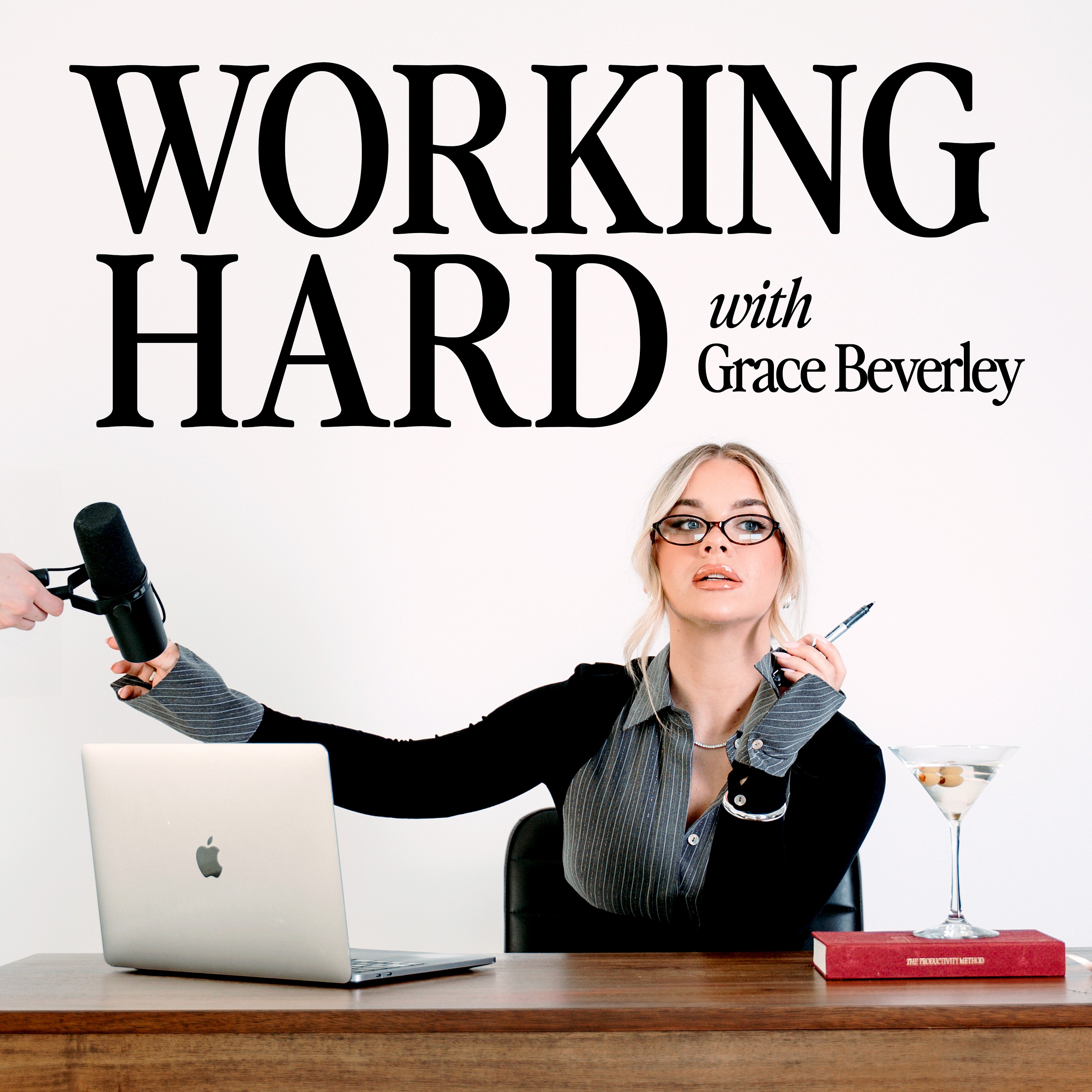
 Working Hard with Grace Beverley
24 Nov 2025 · 31m

In this episode, Grace Beverley engages in a candid discussion about building deep, meaningful friendships as adults. She emphasizes the importance of effort, vulnerability, and intentionality in forming genuine connections.
Written by AI. May contain mistakes.

Get the gist, explore an idea or ask about something said.
 Claude
On Working Hard with Grace Beverley, what are the key points of this episode?
Searching your listeningAutomatic transcript. May contain errors.
0:11What is up? I'm Grace Beverley and welcome back to Working Hard. the podcast-shaped guidebook on how to improve your own life and achieve what you actually dreamed of doing, because life's too short for boring podcasts and bad advice.
0:25What is up and welcome back to Working Hard. Today, I want to talk about something that I have been thinking about for so long and I've wanted to do an episode on for so long because I feel like it's something that a lot of us crave but don't necessarily know how to build. and I also think the landscape has changed a lot in the past few years. So I wanted to talk about how to build amazing friendships and what it really takes to build them. And I don't just mean having lots of friends. I do not mean that at all. I mean building real, supportive, close friendships as an adult. So not the catch-up coffee once a quarter kind of friendship and not the kind of I will go out with this person but wouldn't necessarily tell them my deepest darkest secrets but friendships that feel like a village the ones where people show up for you and you show up for them even when it's inconvenient because that I feel is the secret to build community which close friendships are like I found myself really craving community as an adult you have to inconvenience yourself and you have to go first and you have to be a little bit too keen in a way that wasn't encouraged at all at school or definitely would have felt at school a little bit too much.
1:38That is exactly how you build genuine community and genuine friendships. And honestly, I think it's one of the most rewarding things that you can do. And also one of the things that we as humans want more and more and more, particularly in the world of social media, particularly in a world where we are in touch with people all the time, but don't necessarily have the type of close friendships that we would have had when we as humans operated in a more kind of village-y type lifestyle. Like the whole saying, it takes a village, was about the fact that you would have a community that would do lots of different things for you and you would do lots of different things for them.
2:12And we no longer need that, so I feel like the whole friendship element of that has shifted hugely. And I wanted to talk about how in this day and age you can build a close-knit friendship group, even if you didn't have a close-knit group at university or school. And this is coming from the perspective of someone who has friends from university and school, but I was never part of a big group and that group staying the same throughout everything. I think that people who have been have such good luck and I think it's an amazing thing, but I have really built my friendships as an adult and I really wanted to talk about how to do that for people who want to have that sense of friendship and community that doesn't necessarily come as easy to us anymore.
2:51Before we get into this episode, if you're listening on Spotify or Apple Podcasts, please tap follow. Every single Monday we drop a new episode that hopefully makes your commute or morning walk a little bit more meaningful and fulfilling and hopefully will help improve your life and this will just appear in your feed automatically if you do follow us you don't even have to remember and also it really supports us it takes a huge amount of time to research script and put together these episodes and that's one of the best ways you can support us if you just follow the podcast on the app you're listening to it on also we're now on instagram at working hard pod it's where we talk more about episodes share everything i've been reading and consuming this week research behind lots of the episodes further conversations, dilemmas, we talk as a community.
3:27And so if this episode resonates with you and if you're trying to build better friendships yourself, come and say hi over there and we will welcome you with open arms.
3:39So with these episodes, I always like to start with the context. And today in particular, I wanted to start somewhere that might not even seem connected to the topic, but I promise you I'll get there. And this is why I've been thinking about these types of friendships over and over and over. So I alluded to this a little bit. I've been thinking a lot recently that so many of us have become allergic to inconvenience. I'm very much including myself in that. We have become so used to a culture of convenience, of food deliveries and any content being available at the click of a button and AI that works out a lot of things for us and we don't need to do it ourselves.
4:12And this means that we can fully live lives of convenience to ourselves if we want to. And don't get me wrong, this is important and it is helpful. And in theory, it should make a lot of life more accessible and also allow us to have more leisure time. The whole idea behind a lot of these different areas of convenience is that you don't need to walk half an hour to get this because you can get it delivered to your door. You don't need to spend 45 minutes working this out because something can do it for you. Convenience is important and it allows barriers to be broken down between different classes.
4:42It allows a democratization of lots of different things. But I also really worry about what this convenience has done to our brains because I feel like I've definitely felt myself avoiding inconvenience in recent years. Like I will sit at home starving rather than go to the shops that's literally five minutes away. I think that's something that can be pretty natural, particularly if you're an ADHD girlie. But I also think that it's something that has got worse and worse because we expect so little inconvenience in our lives. I was listening to an episode recently as well from Shameless and they were talking about friction in your lives and this is something that I've thought about for such a long time.
5:19I haven't called it friction but this has really resonated with me. Like we've removed so much friction out of our lives that we don't need to have this friction or inconvenience or whatever it might be and that gets us used to it and also it makes us very bad at coping with inconvenience. And so as I've said a lack of friction in certain areas is important and democratizes a lot of things. But I think it gets our brain used to a lifestyle that isn't necessarily rewarding for us. First of all, it removes a lot of the dopamine hit of actually overcoming anything and feeling like you've accomplished things and building self-trust and all of that.
5:51But second of all, it takes away a lot of the joy generally out of your life. I think one of the main reasons this can kind of be a negative is that it takes away the joy of overcoming things to get somewhere. That's a lot of where we as humans get fulfillment. And I don't know. I feel like I will, after consuming so much self-care content online, I'll convince myself that leaving the house two nights in a row is a personal attack. But I feel like as much as we are more tired than past generations, because we're working more hours in lots of areas, because working more hours isn't necessarily leading to certain things, and because we're consuming a 24 hour news cycle and a much more frequent social media cycle, I don't think this is all about being lazy or being tired.
6:33I think we've started treating everything in our lives based on how convenient it is, how easy it is, how efficient it is, how effortless it is. And I think that mindset is fine in certain areas where we can optimise our lifestyle, like things like automation that make you more productive. But I think it's leaked into how we treat other things that absolutely cannot be automated, that absolutely should not have the friction removed out of them. Things like friendships. And this is how it kind of links back and what I want to talk to. So I think we expect deep fulfilling loyal friendships to just exist without any inconvenience, without any awkwardness, without any real effort.
7:10I think the large majority of people want to have a village without necessarily being a villager. And then we feel sad or left out or disconnected when these friendships or communities don't magically appear. But the truth is that adult friendships are hard. Everyone is busy, everyone is tired, everyone is in their own little world trying to keep up with work, relationships, family and maybe sleep if they're lucky and also everyone begins to be in very different stages of life the second you enter your 20s. People are going into all different areas, some people might be going off and not joining the workforce for a few years and travelling around the world, some people might immediately get married and have kids, some people might be studying, some people might be starting in the workforce.
7:50It gets very disjointed and it becomes very easy to want to remove everything that doesn't line up to your version of what your life looks like and your version of a convenient life. And I also think that it's so easy to look around and think that everyone else has their perfect group, like their village, while you're just stuck feeling left out of one. And I actually think this is one of the reasons why I wanted to do this episode in particular. I've posted a lot on TikTok or on social media about my friendships and about girlhood and about my amazing hen do where all my friends really showed up for me or where me and my friends went to surprise our friend who just had a baby and kind of deep cleaned her house dressed as maids or whatever it might be, like all of these different kind of girlhood type things.
8:29And I could totally understand why someone would look at that and think, oh God, they're so lucky having that group of friends. If I talked to you about the relationships between all of those different people, you would see that each of those people has come from a completely different place of where I've met them, of where we've encountered each other, of whether we've hit off on the first go or whether we've met years later and formed a solid friendship, whether we've had mutual friends, whether we've just got on really well, whatever it might be. None of those friendships were based on a big group at school or university.
8:57And I don't say that to say anything other than the fact that I always used to think I was one of those people that didn't get one of those groups, that didn't have one of those like school groups or uni groups or whatever it might be. And I always really resented that because I just thought that looked so amazing to have this group that's known you since you were 18 or 15 or 13 and being able to live adulthood with you. Every single one of those friends. Some of them more likely one from 13, one from 15, one from 18, one from 22, whatever. And the work has been done to make that into not just a friendship group but to make that into a village that will really serve each other and each of those people has their individual villages too.
9:33It's not just one insular friendship group. And in reality most people do not have that. And that's not because we don't deserve it but because deep friendships don't just happen. They are built. They are built slowly. They are built on purpose. They are built through effort and showing up over and over and over again on both sides. And I think I've realised this year that that is where the magic really is. I think my friendships have deepened this year more than they have any other year in my life. And I think that that has been because I've had a really vulnerable year and I think I've needed for people to show up for me.
10:06And I think I've also just kind of stopped caring about the level to which I'm showing up to people if it's too keen or if it's too much. Because I think to have a community that shows up for you, you have to start by being the person who shows up first. And I wanted to dedicate some time to properly talking about that. So before we get into the different theories, because I like to speak about different theories and research and everything, as well as my own kind of opinions in these types of episodes, I want to explain to you why friendship is so important, why so many of us crave it. Now this is a scary stat and I promise I'm not here to fearmonger you.
10:39But if you are unconvinced that friendship is worth a whole episode or worth dedicating time in your life to improve, listen to this. A YouGov study found that one in five adults in the UK feel lonely most or all of the time. And loneliness doesn't just make you sad, it literally affects your physical health. So studies from Harvard and the National Institute on Aging have shown that loneliness can increase your risk of heart disease, depression, and even early death. Basically, being lonely is as bad for you as smoking 15 cigarettes a day based on your health. And I think we all feel that. Like, we as humans, and we have belonging needs.
11:14We need to feel part of something. We need to feel supported. Like, we are pack animals. And so I do think we feel this every day. And I don't say that stat to kind of terrify you. I say that because I think we need to invest time into friendships like we would into building our finances or into building our career. You have to invest time into it and you have to invest effort and thought into it. It does not just happen. On the flip side, the longest running study on happiness from Harvard found that the single biggest predictor of long-term well-being and health was not money or success or exercise.
11:43It was having close, meaningful friendships. Friendships literally help keep us alive longer. So it is wild that we treat it as optional or not even optional. I feel like just as an extra area of your life, like something that happens if there's time, when really it's something that needs to be prioritised in the same way we prioritise our work or our goals or our gym sessions. And caveat there, I do think I worry about it more and more, particularly for this next generation that has spent so much time on their screens and on their phones and get so much dopamine over hitting certain goals, like wellbeing and health and going to the gym, that they're foregoing so much connection, real in-person connection and vulnerability and accidental conversations and all of these things based on concentrating on your own goals and your selfish goals.
12:30And I will be the first person to say that goals are important and I have many, many selfish goals, independent of my marriage, independent of my friendships, all of these different things. I have many, many independent goals. But I would highly, highly recommend to include friendship goals in that because I think we can tell how important it is and I don't think it's something that we naturally invest in in the way that we should. So why does it feel so hard to build proper friendships as an adult? You'd think the answer would be obvious. Time, logistics, work, family. And yes, those things do matter a lot.
13:02But underneath all of that, there is also something deeper going on. As well as the convenience point I mentioned earlier, we are living in a culture that quietly praises self-sufficiency above all else. We are told in big and small ways that the goal is independence. Don't rely on anyone. Build your own life, your own routine, your own emotional resilience and do it all without being a burden. But that kind of hyper individualism is not strength. It is isolation dressed up as self-improvement and it tells us to focus inward and manage our needs alone and to only reach out when we can offer something perfectly packaged, never messy, never needy, never too much.
13:34And the irony is we're desperate for closeness. We want people who get us, who turn up unasked, who sit on our sofa and eat pasta out of the saucepan with us, who play aggressive games of articulate with us on a Monday night. But I feel like I've realised that we are terrified to be the person who initiates that or who needs that because if we try and the energy isn't matched we'll look like we care too much. I've always thought that part of this and I think that this has led to me not necessarily having amazing friendships in the past. I'm always happy to show up and be something for someone.
14:04That is my love language. I'm very acts of service. I'm very about showing up. I'm very about big gestures. There is a study that I read a long long time ago so I probably won't get it exactly right but that says that the best way to make someone like you and to feel close to you and to feel connected to you is to ask them to do a favour for you. It gives you this reciprocal relationship that, oh, they asked me to do a little favour so I can ask them and maybe we're close, maybe they think we're close, that's why they asked me to do a favour. And I think on both sides we're so terrified of being someone who needs something and being vulnerable and also on the other side being someone who shows up and does a lot and makes a big effort and all of these different things.
14:43So this fear leads to what psychologists call the reciprocity problem. We wait for the other person to go first. So to invite us to open up, to send the text, because if they do it, then we're safe to respond. But what happens when both people are waiting? Both of you are waiting here, wanting this closeness, but not having it. Nothing. It's like two people standing at a door saying like, after you, after you, after you, just forever and ever. And on top of that, there is the vulnerability paradox. The very thing we need, emotional honesty and shared experience, is the thing we are most afraid to offer.
15:15Because vulnerability means risk. And it means admitting that you want more from a friendship than the occasional meme exchange on Instagram. It means saying, I need people, which for some of us feels like admitting weakness. But the truth is, none of this is weakness. This is the foundation of every close relationship we admire. This is the foundation of the village. The whole village was based on the concept of needing each other. So the groups that show up for each other didn't magically sync their calendars and their personalities They built closeness through awkward first steps through going out of their way through being a bit too much until it didn't feel like too much anymore That is what builds emotional safety not silence not independence but acts of care over time The kinds that aren't always reciprocated immediately the kinds that feel one-sided at first The kind that require you to go first again and again until the pattern shifts and the closeness sticks So I wanted to get practical on this because I know it's easy to hear to have the village You need to be the village I think that's something that's not talked about anywhere near enough But I do think it's easy to hear that and go Okay, but how do I do that?
16:16Or I've been doing that over and over but I haven't been getting that back So I want to get practical How do you actually build better friendships as an adult? Especially when time is limited and everyone's a bit emotionally maxed out So I would suggest that you start by choosing your people intentionally And I will be the first person to say this You absolutely do not need 50 friends In fact, trying to maintain that many friendships usually leads to none of them feeling properly close. Pick a handful, maybe three to five, that you genuinely want to invest in, and that already feels like a lot to me.
16:43People who you'd love to have deeper, more consistent, more honest relationships with, and then commit to doing the work to build with them. That might mean, for a while, being the person who always texts first, who offers help before it's asked for, who organises the dinner, who remembers the hard day at work or the anniversary of something painful. It means showing up in all the small human ways that friendship is built. You might want to, at this point, tell your friends that you are looking for more than just catch up friendships. You might also feel like you could never say that to anyone.
17:12And that is fine too. I think intentionality is important, but I think that what you also need to bear in mind is if you don't tell your friends that this is something you are working towards building more of, it can take a long time to change. Like you can be the person who does the first things more and more and more, and then other people need to pick it up over time and different people have different amounts of self-awareness and giving and all of these different things but it might be that it takes time to change and that is totally fair enough because essentially you're changing something in your life that requires their buy-in and that might be a gradual change over time.
17:43I think I started trying to get more meaningful friendships a good few years ago and I think the work is really starting to pay off now and we'll come on to whether some people are right or wrong but I do think that you need to be patient with it and you can't expect everything back straight away. So Once you've chosen your people, this is where you need to start doing actionable things. So you need to do things like put them in your calendar. And I know this sounds unromantic, but it's one of the only ways it works. Everyone is so busy. No one is hanging around waiting for a spontaneous moment to become best friends.
18:10You have to schedule it. So I mean this both in terms of how you support them and in terms of the things you're going to do. One of my closest friends, her and I, clearly have a very similar calendar approach to friendship in that there has never been a time where I have had an anniversary of a hard day or a birthday or whatever it might be that she has not remembered and that is because it is in her calendar and I have the equivalent for everyone. I have every single person's birthday in my calendar. I have the worst memory in the world and I want to write down when my friend has an interview and I will specifically text them after that and that is not because I have a good memory, it is because I care and I would want them to do that for me and therefore I make an effort to put things in place to mean that I am not going to forget.
18:51Also it's important to schedule things in, in terms of how you're actually going to see them. So I love having standing versions of things. And what a standing version of something is something that replicates. So I personally love having a weekly dinner. For some people, that might be way too much. So I have that with a friend who I live 10 minutes away from. And every single Monday, we have a weekly dinner. It's four of us. We all come pretty ugly. We come with our hair wet. We come in pyjamas. Sometimes we watch a movie and sometimes we have a big old chat. It's different every week, but but it's really just a placeholder to mean that we're never just having a brunch where we're just like, and what's been going on with you?
19:23What's been going on with you? What's been going on with you? Round and round in circles. We actually get to have deeper conversations. This for you could look like a weekly walk with someone who you live close to, or a 10 minute FaceTime with someone who you don't, or a monthly dinner on the first Tuesday of every month. Literally whatever you can do, make it real, make it routine and make it non-negotiable. Because that consistency builds closeness in a way that big occasional meetups just don't. And one of the really good examples of this is that when you have siblings, you are so close to them growing up because you see them every day, you're able to exist in tandem with them rather than just when you see them catching up.
19:59And this is one of the things that I've always wanted to get with my friends. Like I've wanted to be able to see them and it not just be about catching up with them. And I've gone out of my way therefore to make sure I'm seeing them as much as possible in ways that don't need to be big deals or big occasions. And I think that's really important. And all of this helps to build rituals, not just random catch-ups. So instead of constantly sending the let's do something soon text into the void, try to create moments that repeat. Like if you intentionally, just as if you were starting a relationship, you could not have a relationship if you were only seeing that person once a month.
20:33Like you just wouldn't go into that. So I don't understand why we don't have the same approach with our friends. I know we're busy but as I've said it can be a FaceTime. Like when you're getting ready for work on a Friday working from home you FaceTime each other or Wednesday when you're cooking dinner, you FaceTime each other, or if you're lucky enough to live close to people, you can actually do that in person and I would encourage that as much as possible. But like, maybe you're the Sunday night pasta person. Maybe it's a monthly wine class or a shared gym class, something that doesn't require the energy of always planning over and over but becomes its own rhythm over time.
21:01And that rhythm is where closeness starts to settle in. There's one of the most important shifts I think you can make. Giving without keeping score. And I know that is easier said than done, especially if you've been in friendships before where you gave and didn't get anything back, which is the number one cause of friendships having ended in my life. But at its best, friendship is not transactional. You don't do kind things so someone owes you later. You do them because that's who you've decided to be. You've decided to be someone who shows up, someone who cares, someone who leads with generosity.
21:29And this is something it is hard to wire into ourselves, particularly if you didn't have the best friendships at school. I always found that at school I shied away from effort because I was someone who was really happy to give a lot of effort and it would be seen as very keen. So I didn't necessarily want to be that person because I saw it as inherently uncool. I saw it as something that would make people not want to be friends with me. Whereas in reality, the right people will absolutely want to be friends with you if you're that type of person and they will give that back. I believe the same here as I do in relationships.
21:58High effort people should be friends with high effort people. Low effort people should be friends with low effort people. You want different things from different people. Low effort people probably would not like this type of friendship at all. Maybe they would. But You want to build the type of friendship that you want and that also works with your friends. So if you are a high effort person, you should have some high effort friends. Otherwise, you're always going to feel like their love is falling short for you versus what you're giving then. And I want to be really clear here. Just because you're giving, it does not mean you should not receive.
22:25Friendships cannot be one-sided forever. So yes, give without expectation at first, but also stay tuned in. Pay attention to whether it's coming back to you over time. Maybe it's not in the same way, but in some way. and if after a while, after multiple moments of showing up, you still feel like nothing is being reciprocated, not the care, not the time, not the energy, then it is okay to protect yourself. It is okay to know that this is not a person you are going to have a high effort friendship with. I have so many friends who I love who I do not have this type of friendship with. It doesn't make you cold.
22:56It makes you someone who values their time and emotional energy and you deserve to be in friendships where the love flows both ways. Building better friendships takes effort, a lot of effort. But when you get it right, when you're in community with people who show up for you like you show up for them there is nothing better that is the village and that is the goal and just remember this might be super important to you and not so important to someone else different people have different level of community if you grew up with a super close-knit family you might not need this so much I'm someone who grew up really wanting this friendship community because I don't have as close-knit a family so this was something that I really really wanted like this was my number one thing and I've put so much work into making sure that I have that community and that I have that village and I know that throughout my life that will develop into what it needs to be because we have given for each other.
23:43Like there are people that I have gone to an insane amount of effort for and they might not have done that for me yet but I know they would and they might have done little bits because it's just we're in different areas of our life so far and I know for sure that when that moment comes they will be doing that and for anyone who I don't believe that with we probably just don't have as close to friendship and that is more than fine. You don't need this level of high F friendship with everyone but I do think that community in a genuine village where you would inconvenience yourself for someone and they would for you is incredibly important.
24:10You know I always want to speak to an expert on these episodes so I spoke to Michelle Ellman who we've had on the podcast before because she's written a brilliant book on friendship. I started by asking her what the key to deep meaningful friendships is. Excitement or would you rather have excitement without intimacy to know which one is most important? So often when we're younger we're just hold to make friends, but we don't actually break it down into steps. So starting with the first piece of do you actually interact with strangers on your average week? If not, then you need to start inserting things into your week, whether it's going to a local club, going to a book event, going to one of your favourite influencers events, and actually creating opportunities to be in the same room as strangers.
24:49The next step is to ask yourself, when you're in rooms with strangers, let's say you got invited to your best friend's birthday party, are you always talking to the people you already know in the room or are you actually making an effort to talk to the people you don't know? When you are in rooms like that, then you need to ask yourself what you're doing differently in the interactions with new people that you're not doing the extra further step of turning it into a friendship. So it could just be a tack-on sentence at the end of a conversation of, I really enjoyed this conversation, would love to get your Instagram.
25:19So it's a way of keeping in touch and you can actually further that by then sending a DM later being like, would you like to go for coffee? And it sounds really obvious when I teach people these steps because you never really got taught how to make friends. But actually, if you break it down to what's the micro thing within those processes that is preventing you, it's actually more actionable to then pick one of those things and go, okay, so it's the fact that I don't meet anyone new throughout the week. So of course, I'm not making new friends. One of the things I talk about in Bad Friend is that inconvenience is the price you pay for good friendship.
25:51And one of the examples I used was I have a very strict boundary when I'm writing a book of not picking up the phone or not replying to texts from my friends until I've written 2000 words. And one day it was like 10 o 'clock in the morning and I was getting this call from a friend. And instead of ignoring it, which I normally would, I just had this gut instinct to pick it up. And I was just going to pick it up to go, Hey, are you okay? I'm going to call you back after I've hit my word count. But the moment I picked up the FaceTime, I could see my friend was like in floods of tears. And And turns out what she was about to say was, I've just broken up with my boyfriend.
26:24And it was like a three-year relationship, very serious relationship. And of course, in that moment, if I followed my really strict boundaries, I would have put the phone down and be like, can I call you back later? But in that moment, it was inconvenient for me to be like, oh, I was actually in the middle of a workflow and I was writing and I was in a really good headspace with my writing. But in that moment, I had to be like, what's more important in my life? My friend is more important. She's in distress. I need to be there for her. And so I forgot about my work. And it was just one day out of what, eight months where I'm writing a book.
26:55But that's kind of the example of what I mean of like, friendship is not always going to come at the perfectly timed moment. And sometimes you are going to have to make sacrifices, whether it's like your work count for the day, or whether you miss a work event to be able to be there for your friend. But if you don't show up, then don't expect other people to show up for you. Adult friendships are hard because we are all tired. And I think it's this thing of if you wait until you have enough time and energy to prioritize your friends, there will never be enough time and energy. And so if you're not used to making effort in your friendships, what I would do is start doing practical things.
27:30Put reminders in your calendar, actually put their birthday in your calendar, make it easier to remember things like someone's birthday or the fact that their parents got a divorce on the same day the previous year and wanting to check in a year on whether that date's hit them. Actually those physical reminders count a lot more than our memory and I think if you rely on your memory you're more likely to forget and if your natural course of action and how you've always been in your friendship is low effort you're not going to suddenly become high effort without doing something different. It can be really nerve-wracking to interact with strangers but the sentence I always keep in my head is people don't say hi but they always say hi back and I think it's this idea that everyone else is so confident in the room and that you're the stranger standing in the corner of the room with your phone.
28:14But everyone's been that person in a room and you're always so grateful for that person coming up to you and being, including you in their friendship group or making sure you're included in the conversation. And so when you're in rooms like that, pay attention to the people who are alone. And I always believe that it's quite a karmic thing of if you do that for other people, then other people will do that for you. I think when you're standing alone in a room, it's so natural to go pick up your phone, but that's actually what is making you unapproachable. And I think if you're able to just have that five seconds of confidence to just stand up, look around the room and show that you are open for conversation, it might seem really vulnerable, but vulnerability is actually how you start building connections.
28:54When you show your vulnerability, other people feel open to be vulnerable with you as well. And I just think it's about having those like, you don't need to be confident the entire time you're in the room. You just need five minutes of confidence where you can stand there without your phone. And I think anyone who's going to judge you for standing alone in a room and looking weird, that's just a projection of their own insecurity if they had to stand alone in the room. No one likes going to events alone. No one likes being the one stood alone in the corner. And so if they're going to judge you, that's not a person you want to interact with anyway.
29:24I think my general message, especially after writing Bad Friend, is that we need to raise the priority of our friendships. We need to see them as important as romantic relationships and stop using it as like this bottom rung of our like priorities when it comes to our time and energy. If we actually start treating friends like they're disposable, they will be disposable. And so we need to actually treat them like they are important in our life. Because at the end of the day, they're the people there when your relationships chop and change. And they're the people you go to. I love Michelle, you should go give her a follow if you love this kind of stuff.
29:57So that is today's episode, how to build amazing friendships as an adult. If there is one takeaway, it is this. Friendships are not found. They are built. And you might be a lucky type of person who got your group at uni, and then it might have fallen apart a few years later. You might be the type of person who never had friends at school, and you've been able to find your village. Either way, both of those outcomes, you will only have that village if you build it. And sometimes building means being a little bit awkward, a little bit too available, and a lot more intentional. I hope you enjoyed this episode.
30:26Thank you for listening. I will put all my extra reading recommendations in this week's Working Hard newsletter and send this to a friend if you enjoyed it. And if you maybe want to start off a little bit more of a high effort relationship with them, be very on theme if you did. I don't know. I feel like I've had lots of really good conversations with my friends about the type of friendships that we want to build. And I think a lot has come from that. So I highly recommend also getting this type of thing into your New Year's goals and really thinking about what you want to build, not just in terms of your career, not just in terms of your finances, but in terms of your community and how you are going to do the things that you can control to make that happen.
This is a bit more of a chatty one than usual, but it's something I've been thinking about a lot over the past few weeks.
Today I want to talk about how to build amazing friendships and what it really takes.
It’s about building real, amazing friendships as an adult. Not the catch-up coffee once a quarter kind of friendship, but the ones that actually feel like a village. The ones where people show up for you, and you show up for them, even when it’s inconvenient.
+
A huge thank you to Michelle Elman for being my expert for this episode, you can find her links here:
IG: https://www.instagram.com/michellelelman/?hl=en
TT: https://www.tiktok.com/@michellelelman?lang=en
Bad Friend: https://www.michelleelman.com/bad-friend/
Michelle's Episode of WH: https://www.youtube.com/watch?v=mi3n-4fAhtk
+
SIGN UP TO THE WORKING HARD NEWSLETTER: https://graceb.myflodesk.com/k0sfhlac34
+
FOLLOW THE PODCAST
Instagram: https://www.instagram.com/workinghardpod/?hl=en
TikTok: https://www.tiktok.com/@workinghardpodcast?lang=en
+
DILEMMA SUBMISSION
If you'd like to submit any dilemmas to the podcast to be answered in the bonus episodes, please send them to [email protected] with the subject beginning DILEMMAS or DM us @workinghardpod on instagram!
+
MY LINKS: https://gracebeverley.komi.io/
+
RETROGRADE, SHREDDY, TALA and THE PRODUCTIVITY METHOD are my own businesses, therefore any mention of them - whilst not being a sponsorship - is monetarily endorsed. As usual, sponsorships do not change my opinions nor my honesty, but I will always disclaim to make sure motives are clear 😊
Hosted on Acast. See acast.com/privacy for more information.