Ask ChatGPT
 Working Hard with Grace Beverley
29 Sep 2025 · 18m
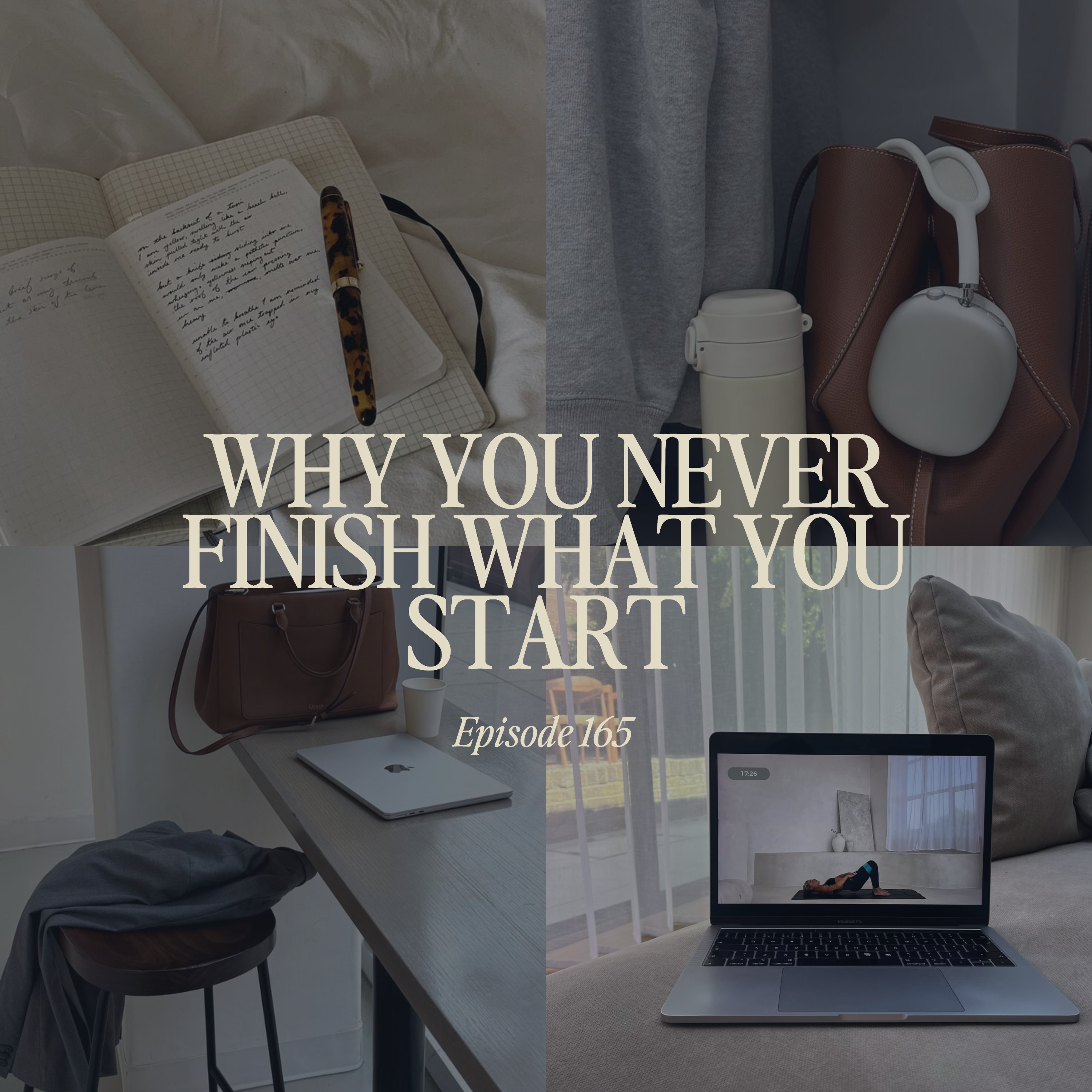
In this episode, Grace Beverley discusses the common tendency to start new projects or routines with enthusiasm but struggle to see them through. This phenomenon is explored through the lens of neuroscience, specifically focusing on "dopamine loops" and how they affect our motivation and productivity. Grace provides actionable strategies to help listeners break the cycle of starting and stopping, ultimately leading to successful completion of their endeavors.
Written by AI. May contain mistakes.

Get the gist, explore an idea or ask about something said.
 Claude
On Working Hard with Grace Beverley, what are the key points of this episode?
Searching your listeningAutomatic transcript. May contain errors.
0:00The market's uncertain. Revenue's tied and hiring on hold. That's why results-driven companies are using Upwork to keep work moving. Go to Upwork.com today and start hiring proven freelance talent fast. No bulky overhead. No rigid long-term contracts. Just the right expert right when you need them. Work smarter and faster with Upwork. Go to Upwork.com now and find your freelance expert. That's U-P-W-O-R-K.com. Post a job for free and get started today. If you're a custodial supervisor at a local high school, you know that cleanliness is key and that the best place to get cleaning supplies is from Grainger.
0:39Grainger helps you stay fully stocked on the products you trust from paper towels and disinfectants to floor scrubbers. Plus you can rely on Grainger for easy reordering. So you never run out of what you need. Call 1-800-GRAINGER, click grainger.com or just stop by. Grainger for the ones who get it done.
1:02Hi friends, Grace from the Working Hard podcast here. When you're stretching every dollar, a little goes a long way and Walmart Business is here to help. They make it easy to order what you need from tech and cleaning supplies to everyday essentials, all at low prices and with helpful tools like spend tracking and tax exempt purchasing for eligible organizations. Because when your operations are smooth, your impact can be bigger. Visit business.warmart.com to get started.
1:35What is up? I'm Grace Beverly and welcome back to Working Hard, the podcast-shaped guidebook on how to improve your own life and achieve what you actually dreamed of doing, because life's too short for boring podcasts and bad advice.
1:48What is up and welcome back to Working Hard. I hope you're all good. Today's solo episode is about one of the most frustrating productivity struggles out there. Why we absolutely love starting things, but somehow never finish them. If you know, you know. Like, you will know exactly what I mean. That buzz when you've got a fresh new idea, a brand new notion template, a gorgeous planner, the start of a new fitness routine, or even a side hustle you swear is going to absolutely change your life and your financial position forever. And then a week later, there's tumbleweeds. The project is gathering dust, you're scrolling TikTok, and you're already on to the next big idea.
2:20And I'll get this in there early. It's not because you're lazy. It's literally how your brain is wired. What you're feeling is called a dopamine loop and once you learn to understand it you can also learn to hack it. So today we're getting into the actual science of why your brain loves beginnings and hates endings and more importantly what you can actually do about it. Before we get into it I looked at our stats this morning. I love statistics and it said that only 24 % of people who listen to the podcast every single week follow us on their podcast app which I think is a tragedy. So if you can go and hit that follow button on whatever app you're listening to the podcast on This means that we will be exactly where you need us every single Monday morning.
2:59And on a personal level, just being completely transparent and honest, each follower means that we can get bigger and bigger guests and keep committing time to the podcast. So I would be so very grateful if you could just hit that follow button.
3:13Let's, as always, start with the context. We all know that starting something new feels amazing. You can actually feel it in your body. It's full of possibility. It's the vision board stage. It's the part where you're picturing the end results without actually having to do the hard, boring middle bit. But actually doing the thing is where resistance shows up. It's where things get repetitive. It's where you hit the boring grind of progress that, to put it bluntly, isn't quite so Instagrammable or shareable or exciting to talk to everyone about. And most of us were never actually taught how to deal with that, both in our brains and in our actual actions.
3:47So here's what's going on. Starting something new gives you a massive spike of dopamine. That's the brain chemical linked to motivation and reward. But dopamine doesn't actually hit when you achieve something. It hits in anticipation of reward. So to give you an example, your brain isn't excited about the actual marathon finish line. It's excited about the shiny new running trainers you just bought to get you there and being able to tell everyone that you just finished a marathon. It is why the novelty fades fast and why you're on to the next thing before the first one is even finished. And this doesn't just mess with your productivity.
4:16Over time, it also messes with your self-worth because you start telling yourself, I never follow through. I'm bad at finishing. I'm not disciplined. But the good news actually is, once you understand the loop, you can start to interrupt it consciously. So, why does this even happen? Let's get into the science first. Here's what's actually happening in your brain when you start something new and why it feels so different to finishing. Firstly, dopamine, which we've talked about. Most of us think of dopamine as a reward chemical, but it's actually more like a motivation chemical. And if you've listened to this podcast before, you'll know that motivation is an unreliable little feeling.
4:47Basically, your dopamine spikes not when you get the reward, but when you anticipate that reward. A 2001 study from the University of Michigan showed that dopamine neurons fire at the possibility of a reward, not the actual outcome. Which is why buying a brand new planner feels incredible, as it should. A little plug for the productivity method, they are gorgeous. But actually filling in week six of it can start to feel like pulling teeth if you haven't made it a habit. Starting something new is pure anticipation, so your brain is buzzing with what if this changes everything. But once the novelty wears off, the dopamine fades and your brain starts scanning for its next hit of excitement.
5:19That's what people mean when they talk about dopamine loops. You're wired to chase the spark, not the slog. And of course, the slog is what actually gets you to the finish line for most things worth doing. Now, add to that something called the Zygarnik effect. Back in the 1920s, a pioneering female psychologist called Bloomer Zygarnik noticed that waiters could remember unpaid orders far more vividly than completed ones. This is because the brain is literally better at holding on to unfinished tasks, like their unresolved cliffhangers, which means that when you start a project and abandon it, it doesn't just disappear.
5:48It sits in the back of your mind, quietly nagging you, draining your focus and making you feel guilty. Which means this kind of becomes a lose-lose. Then there's also the problem of reward systems. Decades of research from psychologists like B.F. Skinner and later Nir Eyal, who I've spoken to on this podcast before, shows that unpredictable rewards are the most addictive kind. Think slot machines, TikTok feeds, Instagram likes. Starting a new project works the same way. You don't know how it will turn out yet. And that uncertainty is exactly what keeps your brain hooked. But as soon as things get predictable, the repetitive training runs, the endless Google doc drafts, the thrill disappears and you're left with boredom.
6:26Put all of this together and you can see the trap. Your brain is wired to overvalue the start of a project and undervalue the finish. Starting, writing the to-do list, setting intentions gives you an immediate dopamine rush and unfinished tasks nag you with stress. Uncertainty keeps you chasing novelty and finishing just feels kind of boring, not to mention the work you need to do to actually get there. But the good news is, as we've discussed, once you understand the cycle, you can start to hack it as long as you do the work, which means turning finishing into something that gives you as much satisfaction as starting.
6:55But before we get into how to actually change that, let's have a quick break.
7:16contracts. Just the right expert, right when you need them. Work smarter and faster with Upwork. Go to Upwork.com now and find your freelance expert. That's U-P-W-O-R-K.com. Post a job for free and get started today. What's up? Grace from the Working Hour Podcast here, and I want to tell you about something exciting. You're watching every dollar and Walmart business helps you stretch each one. From office supplies to snacks and cleaning gear, you'll get everyday low prices, plus easy bulk ordering and fast delivery. And with tools like spend tracking and multi-user accounts, staying organized is simple.
7:48Save time, money, and hassle at business.warmart.com. It's free to sign up. If you're a maintenance supervisor at a manufacturing facility and your machinery isn't working right, Grainger knows you need to understand what's wrong as soon as possible. So when a conveyor motor falters, Grainger offers diagnostic tools like calibration kits and multimeters to help you identify and fix the problem. With Grainger, you can be confident you have everything you need to keep your facility running smoothly. Call 1-800-GRAINGER, clickgrainger.com or just stop by. Grainger, for the ones who get it done.
8:25So, how do you escape the start-stop cycle? Here's how I put it into practice. Firstly, you need to set minimum viable tasks. If you've got a big scary project, break it down into the smallest possible unit. You can't, for example, have on your to-do list, write the book. You need to have write one paragraph or write one page or write a thousand words. Start breaking it down into the smallest possible unit that you understand and operate within. Don't put finish 24-week workout plan. Just put do two workouts this week, do three workouts this week, do one workout today. Completion gives dopamine too, but only once momentum kicks in.
9:01So to build up your completion reward loop, you need to start small and actually start achieving those things. Next, and this is one I find really tricky, you need to delay the novelty hit. When you get a new idea, don't start it straight away. And I know that goes against what lots of people say when they say just start it now, now is better than ever. If you know you're the type of person who constantly gets a hit with the effects of this dopamine loop, do not start it straight away. Do not allow yourself to only enjoy this based on the dopamine rather than the practicality of actually doing it.
9:31Write it down in what I call a cooling off folder. If you still care about it in 48 hours or a week, then plan to take action. Half of your ideas won't actually make the cut for this cooling off period, which also saves you from a load of half-finished chaos and means that you can start committing to yourself when you actually start things. Also, if you're the type of person who gets a huge hit from the dopamine of thinking of something new and starting on something new and spending a whole afternoon on it never to look at it again, it just starts saving you lots of time. Because it's not that biting the bullet and actually doing things straight away is a bad thing.
9:58Of course that's a good thing, but if you know that you do that at the expense of doing anything for a long period of time or actually finishing something, that's when it becomes a problem. My next piece of advice is to reward completion, not initiation. We usually celebrate when we start something. So I've signed up for a marathon, but your brain needs to link satisfaction with actually finishing something. So I like to parent myself a little bit, for example, saying no to Netflix or a TikTok scroll or a fancy coffee until you've actually finished the thing. And of course, that doesn't need to be six months down the line when you've done your first marathon, but it can very much be I'm not allowed to do x in the day until I've actually done the run I said I would do or until I've actually done the workout I said I would do or until I've actually done the page of writing I said I was going to do.
10:38You basically need to teach your brain that follow through is where the reward is and you can really effectively teach your brain this. Let me tell you I am the first person to say that I am taken over by the dopamine loop and I have delayed gratification for so long to kind of hack my brain in the other direction because I know I'm the type of person who gets super excited by a new project and super excited about telling everyone I'm doing x y and z I just simply do not allow myself to do that anymore do the thing then talk about it don't allow yourself to get so excited that all the dopamine's gone about this one thing before you actually did anything and an important part of this is reframing finishing as identity building instead of saying for example I need to finish this try saying I am the kind of person who finishes what they start it sounds very cheesy and very not like me but identity is powerful and you'll start to see yourself differently and then act differently.
11:27And this is a bit of a chicken and egg situation because you need to start acting differently to see yourself differently too. So you need to break it down into small things and know that you are the type of person who does what they say they are going to do. Finally, and I think this is really important, you need to track things visually. Brains love seeing progress. So instead of just creating to-do lists that track what you want to do, use a habit tracker like the one we have in the planners or a whiteboard or even a scrappy post-it note system. Every tick becomes its own little dopamine hit and suddenly finishing starts to feel addictive too, not just starting.
11:58For example, when I was starting my workout plan in the lead up to my wedding, this was literally a year ago, I wrote on a whiteboard downstairs every single workout that I would be doing and I gave myself a lower threshold. I didn't need to tick them all off, but I did need to put a cross there after every workout I did and you feel so good about it. Now obviously I did what I always do and I wanted to understand how our relationship with dopamine has changed over the last few years and why this seems to be so much more of a problem now. So I called up Nir Eyal, the author of Hooked and an incredible researcher, and here is what he had to say.
12:28So what does dopamine do? What is the purpose of dopamine in the brain? Dopamine is a reinforcer that tells you to pay attention. It is a neurotransmitter that when we do something that is rewarding, it reinforces that reward, not necessarily by making us feel good, but by making us pay attention. Giving someone a hug releases dopamine. Playing tennis releases dopamine. Taking a walk releases dopamine. Eating some chocolate releases dopamine. Everything releases dopamine. It doesn't mean that this is some kind of chemical that is addicting you and hijacking your brain. That's nonsense. And it's not very helpful.
13:04And I'll tell you why it's not helpful. Because when we use this neuro vocabulary and we pathologize everyday behavior, it becomes something that people have a very tough time disconnecting from their sense of agency, meaning that when we use this language, this medicalization terminology for everyday normal behavior, it sends this message that there's nothing you can do. The dopamine squirts are doing it to me. I'm checking Instagram and TikTok and the news incessantly, not because I want to, but because of the squirts happening in my brain, the hit that's going into my veins. That is not true, not helpful.
13:36A much better approach to understand is that this is a problem for the rich. It is only because we live in an age of such abundance that we have solutions now for things that used to plague our ancestors. It is the most first world of first world problems that we have extra time on our hands to spend online. And so that's not necessarily a problem, that's progress. Now with each blessing, there is also the potential for a curse. The reason I wrote Indistractable is because I was struggling myself with all these good things that we have. But the solution is not to tell these product makers, Netflix, stop making interesting shows.
14:12I like to watch them. Apple, stop making your devices so user-friendly. No, that's what these devices are for. So it's really, I believe, on us as consumers of these products, of users of these products, to learn how to use the products as opposed to allowing the products to use us. The good news is it's not that hard. It's only hard if you think it is. If we have this mindset, there's nothing we can do about it, guess what? We don't do anything about it. But if we believe, wait a minute, we do have agency. It's just Candy Crush. It's just TikTok. It's just our phones. If we realize the root cause of the problem, and this is the big misunderstanding around dopamine, people think people do things because it feels good.
14:47I want that high. I want that rush. As I mentioned earlier, complete rubbish. Not true. We do them not to feel good. We use these products and we get distracted because we are avoiding feeling bad. This is really, really important. The root cause of distraction, not a character flaw, not a moral failing. It's not even the devices are designed to addict us. It's simply that we haven't learned how to deal with discomfort in a healthy way. So if you sit down at the table with your family and you can't help but check your phone like I used to, I'm embarrassed to tell you, you know what? It wasn't the phone.
15:17It wasn't the dopamine. It's that I didn't know how to deal with boredom. And so I was trying to click it away and scroll it away and drink it away as opposed to learning how to deal with the discomfort. So if we keep blaming dopamine, thinking we do things because we feel good, we want to feel good, we're not getting to the root cause of the problem, which is that we don't know how to deal with feeling bad. If you really want to summarize my research over the past 15 years, it's really in one mantra. And what I learned was that the antidote to impulsiveness is forethought. That's it. Chew on that for a minute.
15:46The antidote to impulsiveness is forethought. Distraction, procrastination, there's nothing wrong with you. It's simply a skill. If you never learned to ride a bike or swim, how can you be expected to start pedaling or be thrown into the pool? You're going to drown. You have to learn this skill. And so what we have to do is not wait till the last minute. If you don't have a plan in place, you're going to fail. If you wait till the last minute, if you're on a diet and the chocolate cake is on its way to your mouth, you're going to eat it. If the cigarette is in your hand, you're going to smoke it.
16:12If you sleep next to your cell phone every night, it's going to be the first thing you reach for in the morning, right? Because it's too late. They're going to get you. And we love to blame the thing that's in our hands for the distraction, but really it's our failure to plan ahead. And so what I started to learn by reading the research into why we get distraction is that it is simply an impulse control issue. That's all it is. There's nobody conspiring against you. Your brain isn't failing you. It's simply a skill set to learn, hey, when I feel lonely, bored, indecisive, fatigued, scared, what am I going to do?
16:41Am I going to try and click it away and escape it or drink it away? No, I'm going to learn something to do. I'm going to have a technique ready. I'm going to open this toolbox of different techniques that I can use so that when I want to check email or scroll the news, worry about somebody's problems thousands of miles away so I can escape my discomfort, I can say to myself, oh, wait a minute, what do I really want to do here? Okay, I can feel that I want to get distracted. I can feel that I'm trying to escape boredom, loneliness, fear, uncertainty, insecurity. I can feel that that's why I'm trying to escape.
17:08And now I'm going to do something that leads me towards traction as opposed to trying to escape it with distraction. The biggest mistake that people make is they give up before they even begin. As Henry Ford said, whether you believe you can or you can't, you're right. So if you believe in, no offense, these dopamine loops, if you believe that there's nothing you can do, that the technology is hijacking your brain, you're not going to even try. So don't believe that. You have agency. You can do something about it. Now, what can you do? Let me give you some of my favorite techniques. Something that I do every single day is called the 10 minute rule.
17:37Now I didn't invent this. This has been around for decades. It's really, really effective. Here's how it works. When I feel I'm going to get distracted. For me, it's writing. I've been a professional author now for 15 years. And all I want to do when I write is anything but the writing. I want to go check the news. I want to look at email. I want to look at stock prices and sports scores, anything but the hard work of writing, but I got to write. So what do I do? I don't give into that impulse. What I do instead is I allow myself to give into that distraction, whatever the distraction might be.
18:03I want to check the news. I want to check YouTube, whatever it is. I'm trying to diet and I don't want to eat the unhealthy food. I can give into it, but not right now. I'm going to give into it in 10 minutes. And so I set a little timer. I said, okay, set a timer for 10 minutes. And now I just have to surf the urge. Surfing the urge comes from acceptance and commitment therapy. It acknowledges that these sensations, these urges, they're like waves. They crest and they subside. And so if you can just get back to the task at hand and tell yourself, I can get back to that distraction. I can check my email.
18:30I choose not to for just 10 minutes. That's it. And if that's too long, do five minutes, do two minutes. It doesn't matter. The reason this works is that you're teaching yourself. Yeah, you know what? I waited 10 minutes and nothing terrible happened, right? I just worked on the thing for 10 more minutes and then I gave into the distraction. What you're doing is over time, the 10 minute rule becomes the 12 minute rule, becomes the 15 minute rule, becomes the 20 minute rule. And you realize, wait a minute, these technologies aren't that powerful. I can do something about this. Look, I just did.
18:56I waited 20 minutes before I gave into the distraction. And now you realize you're in the driver's seat, not the distraction. So that is everything on dopamine loops, why we're addicted to starting and how to finally train your brain to finish. This one really changed how I think about my own distractions and my tendency to jump from shiny new thing to shiny new thing. And I realized that so many of the tricks I've been using for the past few years to stop me doing this are actually backed by neuroscience. So clearly I'm like an undercover neuroscientist without even knowing. But genuinely, I do not allow myself to see excitement in starting because that is fleeting and it never lasts.
19:29It might be the thing that gets you up out of bed and jumps out of bed. Fine, use it that way. But do not use it as a replacement for the dopamine you get from actually finishing. Delay gratification when you need it. Delay reward. Like, do not let yourself do the things that you want to do until you've done some of the things that you said you were going to do, especially if you know you're consistently bad at this over and over again. Like, you owe it to yourself to start delivering what you say you are going to do. We have one life. You have lots of goals. Saying to yourself over and over and over, I'm going to do this, and getting dopamine for doing fuck all, just saying you're going to do something, is a waste of your own time.
20:03Stop wasting your own time. It's bad for you. It's bad for your self-worth. It's bad for your future. Just start committing and start making it easier on your brain. And I have no doubt LinkedIn with what Nir Eyal said that our decreasing attention spans and things like TikTok and short form content and everything that rewards us really, really quickly is really affecting this. So also don't do any of that before you've done the things you actually need to do for the day. Like don't start your day scrolling on TikTok. I know it's boring to say and I know it's very like pick me, but just don't waste your time doing that because you'll fuck up your brain for the whole day to use the scientific term.
20:33If you do want to go deeper on this, subscribe to our Working Hard newsletter and I'll be sending out my further reading recommendations on there. If you thought it was helpful, send it to that friend who has 19 Google Docs and zero finished projects. And please also let me know any hacks that you have to help you actually get things done because I am all ears. We have all been that person. Have a lovely week and I will see you very soon.
21:19We'll be right back. Grainger for easy reordering so you never run out of what you need. Call 1-800-GRAINGER, click grainger.com, or just stop by. Grainger, for the ones who get it done. What's up? Grace from the Working Hour Podcast here, and I want to tell you about something exciting. You're watching every dollar, and Walmart business helps you stretch each one. From office supplies to snacks and cleaning gear, you'll get everyday low prices, plus easy bulk ordering and fast delivery. And with tools like spend tracking and multi-user accounts, staying organised is simple. Save time, money and hassle at business.walmart.com It's free to sign up.
21:57Hello, I'm here during the lunch rush with Janice who owns her own food truck. Best cheese steaks in town. Janice traded up to Geico Commercial Auto Insurance for her food truck business. We're here where she needs us most. They sure are. We make it so easy for her to save with customised coverage that grows with her business. Sorry, I just get so emotional talking about saving folks money. Not this onion I'm chopping? It's just so beautiful. Oh yeah, nice, the onion. Get a commercial auto insurance quote today at geico.com and see how much you could save. Get more with Geico.
From side hustles to workout plans to the endless new Notion boards, we all chase the high of beginning something fresh, then abandon it when the shine wears off. And it turns out that’s not a personality flaw, it’s neuroscience.
So in this episode, I’m breaking down dopamine loops, the studies that explain them, and the tricks you can use to finally become someone who actually finishes what they start.
Thank you to our amazing expert Nir Eyal, for his help with this episode!
+
NIR EYAL
Indistractable: http://geni.us/indistractable
Blog: NirAndFar.com
LinkedIn - https://www.linkedin.com/in/nireyal/
Youtube - https://www.youtube.com/user/nirandfar
Instagram - http://instagram.com/neyal99
+
SIGN UP TO THE WORKING HARD NEWSLETTER: https://graceb.myflodesk.com/k0sfhlac34
+
FOLLOW THE PODCAST
Instagram: https://www.instagram.com/workinghard...
TikTok: https://www.tiktok.com/@workinghardpo...
+
DILEMMA SUBMISSION
If you'd like to submit any dilemmas to the podcast to be answered in the bonus episodes, please send them to [email protected] with the subject beginning DILEMMAS or DM us @workinghardpod on instagram!
+
MY LINKS: https://gracebeverley.komi.io/
+
RETROGRADE, SHREDDY, TALA and THE PRODUCTIVITY METHOD are my own businesses, therefore any mention of them - whilst not being a sponsorship - is monetarily endorsed. As usual, sponsorships do not change my opinions nor my honesty, but I will always disclaim to make sure motives are clear 😊
Hosted on Acast. See acast.com/privacy for more information.