Ask ChatGPT

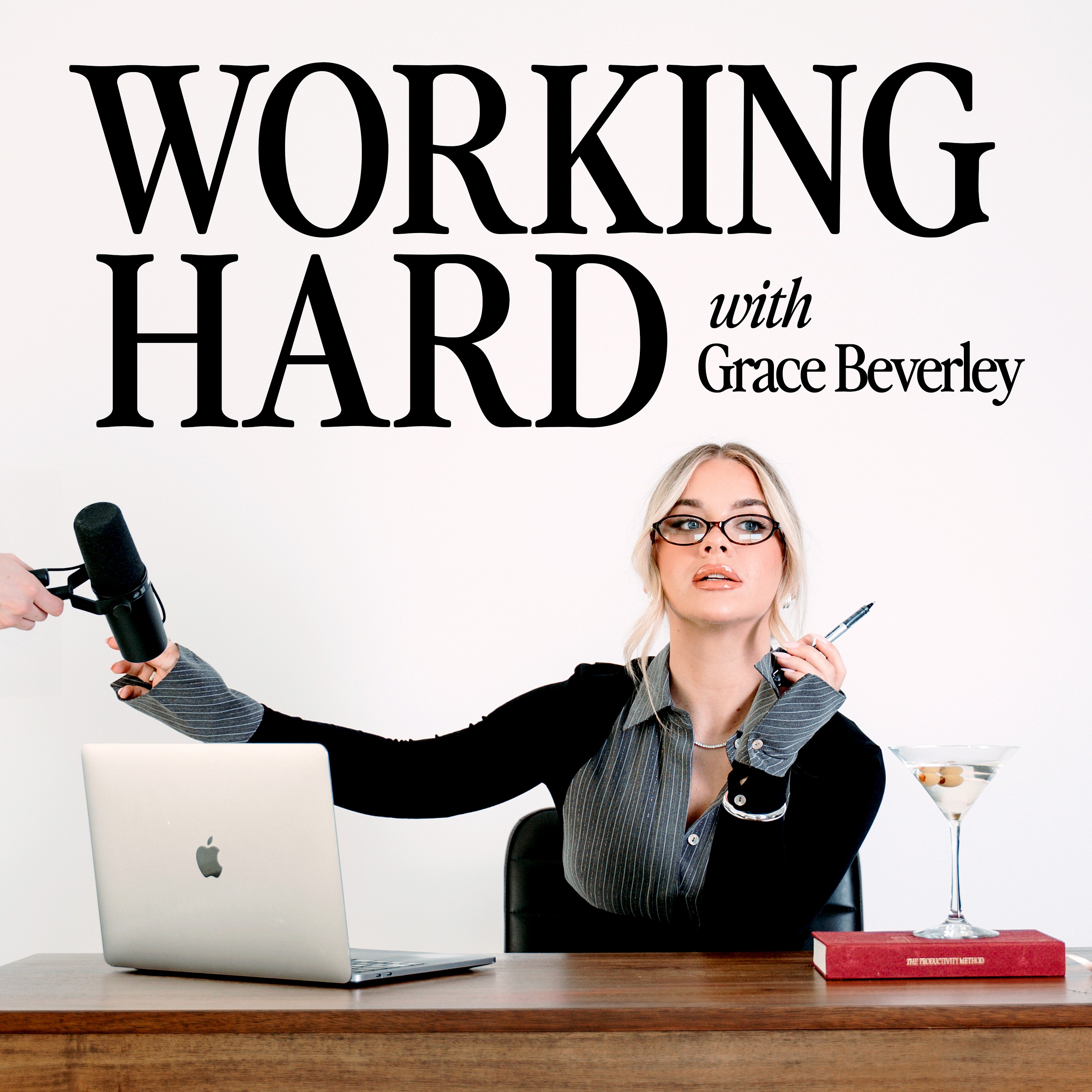
 Working Hard with Grace Beverley
17 Nov 2025 · 21m

Host: Grace Beverley
A podcast series that explores diverse journeys and provides actionable insights on success, entrepreneurship, and personal growth.
In this episode, Grace Beverley discusses money management, addressing budgeting, saving, investing, debt, and mindset in a relatable and achievable manner. The episode aims to empower listeners to take control of their finances, regardless of their starting point or background.
Written by AI. May contain mistakes.

Get the gist, explore an idea or ask about something said.
 Claude
On Working Hard with Grace Beverley, what are the key points of this episode?
Searching your listeningAutomatic transcript. May contain errors.
0:11What is up? I'm Grace Beverley and welcome back to Working Hard. the podcast shared guidebook on how to improve your own life and achieve what you actually dreamed of doing, because life's too short for boring podcasts and bad advice.
0:25What is up and welcome back to Working Hard. Today's episode is what I've been wanting to make for ages because it's about something that most of us never really learned enough about at school, but it affects literally every single part of our lives, whether we like it or not, and that topic is money. Now, before we get into it, I want to make something very, very clear. I am not a financial advisor. This episode is based on what I have learned through my own experience, research and conversations with proper experts. It is for education only, not personalized financial advice. Everyone's situation is different so if you are making big decisions please speak to a qualified professional.
0:58I will say the reason I always want to do these types of episodes is the access that each of us have had to conversations about money and expertise about money is so dependent on privilege and dependent on the types of environments we grew up in and the types of education we got. And speaking about money is one of the most important things that I think we can do to start level more playing fields and start allowing each of us to be able to rewrite our future no matter where we came from and be able to really have control over our money in the way that we want to. Now we've covered that, let's get into it.
1:29Today we are talking about budgeting, saving, investing, debt and money mindset. Not in the usual kind of cut your ice latte and buy a house way but I wanted to tackle it in a way that actually feels achievable empowering and grounded in reality because whatever stage you're at in your career journey and whatever starting point you've come from money stress can take over your whole life if you do not have a system and let me be clear with you managing your money like a pro does not mean becoming a spreadsheet obsessed finance bro there are so many tools out there and so much assistance out there now that you never really need to become like that unless you want to.
2:03It just means creating a plan that works for you and using the tools that work for you. So let's get into talking about how you can take control of your finances without absolutely losing your mind. If you're listening to this on Spotify or Apple podcast, please do us all a favor, yourself included, and tap follow on the app you're listening to it on. It is the easiest way to make sure that you get our new episodes every single Monday. Plus, it really, really helps us to get bigger and better guests. So if I may say so myself, it feels like a real win-win for both of us.
2:36I feel like growing up, so many of us, especially women, are taught that money management is something that we'll learn later. When I started my first jobs as a teenager, I definitely didn't know where to start or what half the jargon meant or whether I was doing any of the budgeting stuff right. And let's be honest, personal finance content can feel very gatekeepy, filled with shame or just awkward, or you need to know a billion things before you actually get into this community that's talking about money. According to a 2023 report by the Money Charity, over half of UK adults say they feel anxious or overwhelmed when thinking about their finances, and nearly 8 in 10 people do not feel confident managing their money long term.
3:11I think avoiding this topic because it's sensitive is exactly the opposite of what we should be doing. It leads so many of us to having a really bad mindset around money, bottling up worries or concerns, and not taking actions because we're unsure of what good money management looks like. Add this to the fact that research from the University of Cambridge shows that our core money habits are set by the age of seven, which means that most of us are carrying around financial patterns shaped in childhood that we have never really challenged. And in reality, so much of money management is about mindset and patterns.
3:39And I'm not saying that you can manifest your way out of credit card debt, but you can take control with the right information and the right mindset to set yourself on the right path. So let's get into the steps that you can take to get better at managing your own money. Number one is track before you tweak. Here is the thing. Most of us say I'm terrible with money, but what we actually mean is I have no idea where it is going and I have no idea why it's going places so fast. But the truth is that you cannot fix what you cannot see. And the easiest place to start before you make any changes to your money habits is simply tracking.
4:12So if you're in this place, I've got an exercise that I would really recommend. For one month, write down every single expense in your notes app or on a spreadsheet. And yes, every little thing counts. The coffee, the Uber, the random Amazon and TikTok shop order, you swear, you needed. And at the end of the month, you can group everything into categories and take a look at it. You can even use things like ChatGPT to be able to give you a breakdown of where you're spending everything. Depends what you want to do and which way you are so inclined, but there are many easy ways and many tools you can use to start tracking things like this.
4:41I'm sure there's an amazing app out there that you can just put it all into. Nine times out of ten, you will spot a pattern you didn't even realize was there. And suddenly it's not this vague kind of I'm bad with money thing anymore. It's a very clear I spend£400 a month on food delivery. This is so important because awareness gives you power. Because once you see it, you can actually decide whether it's worth it. It's not about shaming yourself for your expenditure or stopping spending on things you enjoy. It's just about knowing where your priorities currently are and working out if they are in line with where you want your money to be going and what you want your money to be doing for you.
5:13Right, we're on to step two, which is to automate the basics. If you've been around these parts for a while, you know that I am obsessed with automation because it removes the need for willpower entirely. If your bills, savings and debt repayments leave your account the day after payday, then you're basically managing your money on autopilot. You don't even need to think about it. No guilt, there's no temptation, there's no negotiation, there's no remembering halfway through the month that you were meant to save but you've already spent it all. It is just done. It will take you a while to work out exactly how much you can afford to save or invest every month, and we'll get into that later in the episode.
5:44But the only way of guaranteeing you're actually going to get there and get to understanding your money better and being able to use these tools like automation is you starting somewhere. So don't feel shame for the fact that you don't understand it yet. We will get into it. I like to think of automation as basically outsourcing boring admin to a system that never forgets. The more you can take out of your hands, the easier it all becomes. For me, I find this can go even further when you get really good at automation and you can start adding things like subscriptions in. You know how much you spend on coffee beans a month or on razors or on your skincare.
6:12So many things you can subscribe to now. And I think one of the most important things for me actually in this is not just the fact that things come when you need them and you know how much you're going to be spending on them every month. It's that you stop thinking about those things. Like I don't think about my skincare every month because I know that it is coming on subscription. I don't think about which razors I'm going to get so I don't suddenly start paying double for them because I decided to get a fancy one that month just because I was in like a trigger happy mood when I was at the pharmacy.
6:37You just stop thinking about things that should be automated. And to me, that gives me less of an opportunity to be impulsive around upgrading that and maybe spending more than I should. Now, on to number three, at the risk of sounding like a stuck record, you need to start investing small and early. This is the step that most people put off because it feels too intimidating, but you really do not need to start big. In fact, you probably shouldn't start big. Even£10 or£20 a month into a low fee index fund can get you in the game. The earlier you start, the more time compound growth has to do its magic.
7:10And yes, here is the important disclaimer. This isn't me telling you what to invest in. Investing always comes with risk and you should do your own research or speak to a professional before diving in. But the principle is simple. Starting small is better than not starting at all because you're building a habit as much as a portfolio. It's about making your money work for you whilst you're busy doing other things, which is really, to be frank about it, how the rich get richer. This is also something I knew absolutely nothing about before I started this podcast and why I've spent so much time putting together resources that could get you into investing for the first time.
7:42In terms of resources on investing, I personally love Simran Kaur's weekly stock market tea newsletter for Market Insight and our episode with her, I think it's episode 93, is a great starting point if you're looking to start investing. Before that episode, I had absolutely no clue about how to start investing, what people were talking about when they were talking about index funds and now I genuinely know and I've made sure to surround myself virtually with things that get me more educated. So I follow friends that invest on Instagram. I'm in lots of different subreddits on finances and the type of finances I want to build and the type of investing I want to get into, just surrounding myself with it.
8:18So I'm just staying in the know. It's like staying up to date with the news. It's just about making sure it's there and it's visible and actually spending time on these subreddits, which I think is one of the most powerful pieces of advice I can of you, I wasn't even into Reddit like this time next year. And actually now I'm in all of these finance Reddits as well as other things. People are really transparent. They're really helpful. They're really, you can see people posting every day with, I don't know, it might be they're trying to get out of a huge amount of debt, or it might be that they're trying to save for their first house, or it might be that they are trying to retire early.
8:48There is so much detail and so much transparency because everyone is anonymous. And I found it super, super helpful in terms of really creating aspiration around the type of life I want to build and the type of finances I want to have. So you'd be surprised at how many people on there basically say, I didn't get into this until I was 45 and now I'm in this position and blah, blah, blah. And I would just say it's so motivational and one of the best things you can do to actually start surrounding yourself with the types of money talk you want to know more about. Step four is to build an emergency buffer.
9:19This is such important advice. Maybe this should have gone before the last step because it's something you need to do first. Before you even think about throwing loads of money into investments or making aggressive debt over payments, you need to build yourself a buffer. Start with one month's worth of essential expenses in a separate account you don't touch, then aim for three months, then some people say you should even aim for six months. This is your kind of life happens fund. The car breaks down or you lose a freelance client or your boiler decides it's time to quit. You've got it covered without a total panic and without having to throw everything else into the mix.
9:51Even if it takes you over a year to build up, it is very much worth it. That security is what gives you breathing space and confidence to make bigger moves later. And it's exactly this type of fund that you have for yourself that allows you to make the decisions you want in your life and for you to have control over your life and your decisions. There are terrifying statistics about the amount of women, for example, who are stuck in relationships because they can't leave due to finances. And same with jobs that are sucking the living daylights out of you. You do not want to be in that situation and building a fund to mean that at a pinch you never have to is incredibly important.
10:23One thing I would also say with this, I said that this is important for you to do before investing but do make sure that this is in a high yield savings account. I think a lot of the time we think just a regular bank account is enough and your money is not working hard for you when it is in a bank account so getting it into something high yield is incredibly important so that you are still making interest on it. Money saving expert is actually really really great at working out at kind of comparing different bank accounts. You want it to be easy access because that's the point of the fund. You don't want it to be locked away in like a yearly bond for example but making sure it's working for you is still very important.
10:54Okay so we've got one more tip to go but let's take a quick break to make the podcast to the money. Now we're on to tip number five which is to set a monthly money date with yourself. Once a month treat your finances like a performance review. Sit down with a cup of tea, open your banking app and pretend you are both the boss and the employee. Ask yourself what went well? Did you actually stick to your food budget or did deliveroo become your flatmate again? What was stressful? Was it that one unexpected bill or the fact that you panic bought three dresses in a single week because you didn't know what to wear to that wedding and then you forgot to return them?
11:24And most importantly, what needs to change next month? It doesn't need to be dramatic, you are not firing yourself and you do not need to spend hours on it. But you might need to give yourself some feedback like, great effort on cancelling the subscriptions you don't use, but we really need to address the why do I spend£200 on bland sandwiches issue. Think of it as holding yourself accountable without the scary HR meeting and as always, don't make it too big a deal. Otherwise, you're not going to stick to it. I have a notification for one hour on the last Sunday of every month that I do this. I do it early in the afternoon.
11:53It's not going to take over my whole Sunday. I'm not allowed to procrastinate it but it's just in the diary. It's not a whole day. Don't make yourself think it's a whole day or you'll overthink it. Over time though, those little monthly reviews mean that you actually know what is going on with your money instead of burying your head in the sand and praying for payday. If you have dependents or a long-term partner that you have a joint account or even a home with, I would recommend doing this together at least every three months. Money can be so taboo even in the closest of relationships but if you don't know where your partner spends you don't know what your household outgoings look like and if you want to plan for things in the future like a wedding or a big trip away or a house for example you need to know what is feasible from both sides and you need to make sure you have full transparency around money in a relationship too.
12:32I cannot tell you how many times I've seen stories on things like the GoFundYourself page of people who have realised 10 years into a marriage that someone's been spending huge amounts on something and hiding it away or whatever it might be. And if you've listened to the Katie Lopez episode on our podcast, you'll know the story of her finding out that her husband was in a million pounds worth of debt after years and years of marriage. So transparency in relationships when it comes to money is very important. And I've definitely included this in an episode before, but I don't think I can talk about finance planning without including a section from my episode with Vivian too, because it is the most succinct description of how to financially plan.
13:08And frankly, I couldn't do it better. To answer the question of how do I get rich AF, I always say you have to strip. And then everyone's like, what did she just say? So strip is an acronym and it is just a really simple process of how to bootcamp your finances. So S stands for savings. I always encourage people to have three to six months of living expenses set aside in a high yield savings account. So the money being set aside for a rainy day can earn a little additional interest. Three to six months is the basic. But if you are head of household, you got kids, you have inconsistent income, you may want to look at something closer to six to 12.
13:49Up next, T is total debt. I'm an Aries, so I'm very impatient. And what I like to do with debt is rank it from highest to lowest interest rate. So you'll see stuff like credit card debt at the very top because that has an interest rate of 20 to 35%. Then you've got maybe like mortgages somewhere in the middle here. Right now they're hovering around 7 % in the US. And then if you graduated college, when I graduated college, federal student loan debt, you could get a federal student loan with like a 3 % or 4 % interest rate on it. So that might be a little bit at the bottom. Whatever your stack looks like, make the minimum payment across everything.
14:27And then any additional dollars that you have for debt pay down, put towards the debt at the highest level of interest rate. This is going to help you pay your debt down the fastest while paying the least in interest. Up next, retirement. For my U.S. friends, this is something like your 401k at work or a traditional or Roth IRA individual retirement account. For our friends in the U.K. listening to this, this could be something like your stocks and shares ISA, your lifetime ISA, and potentially even a little bit of that cash ISA just to have money there. Just have it there. This is going to get you tax benefits.
15:11We love tax benefits because we are always looking for the legal ways to pay as few taxes as possible. I think that is just across the board good advice. Up next, I, invest. It is not enough to open these accounts and chuck some cash in. A lot of people do that and they're like, I'm done. No, you're not. You didn't buy anything. You just have cash sitting in a special purse. OK, you got to take that cash and you actually have to buy stuff. And so when it comes to buying stuff, I typically recommend index funds that track the broader stock market, a target retirement fund that'll be diversified and planned out based on when you're going to retire.
15:53Or if all of this is making your head spin, just Google best robo-advisor 2024 and sign up with a robo-advisor. You take a quick quiz about your money goals. So how much do you earn? How much do you have? How old you are? What your family structure is going to look like? What do you want to do in retirement? Then they will spit out an investment portfolio built for you. Wow. And then you take the quiz every year in case you start to make a lot more money or you have a child or you get married or something changes in your life. And this is great because it takes all of the guesswork out. And then last, P, we have to plan.
16:29You don't get to have happily ever after. You don't get to ride off into the sunset if you don't have a plan and know how to get there. And the easiest way to do this, I say, is to calculate your FU number. So what you do is you, when you're in a good mood, you sit in a room and you think about what does my perfect life look like for one year? Where do I live? Am I driving some sort of car? What does that look like? Do I have a family? Do I have pets? Do I have a partner? Do I want to travel? Do I want to buy retail products? Do I want to, you know, take care of my parents and their old age? Think about all of that and then back out what roughly that would cost.
17:14then you take that number and divide it by 0.04. For all of my friends who are not good at math, you get a bigger number. And that number is what you would have to have invested in a conservative investment portfolio. That 0.04 represents 4%. You would have to have that bigger number invested, earning you 4%. And that would essentially throw off enough investment returns so that you could live the exact perfect life you want. Vivian is incredible. That episode is so good. So I'd highly recommend listening to that as well as the Simran Kaur episode. There are so many brilliant actual experts on this stuff that I'd recommend following.
17:52So I'll put a list of them in the description of this episode and also send my favourites out in the newsletter. I wanted to finish by speaking about how we should be splitting our salaries each month, but I didn't want to do it without speaking to an expert. So I've enlisted the help of the brilliant finance expert, Abigail Foster, to help us work out what to do when our salaries actually hit the bank. To do when your salary hits the bank account. Here is my four-step payday routine. Step one, check your payslip. Your payslip is your responsibility and there are three things I'd urge you to look at.
18:20Number one is your tax code. The standard and most common is 1257L. If yours isn't that, please look into why because you could be over or underpaying tax. Secondly is the future you pot, also known as your pension. Due to auto-enrolment, you'll be contributing and so will your employer. Some employers may match up higher, so check that you're getting the best contributions. And then thirdly is your deductions. If you went to university, chances are you may have taken out the student loan and you will see the student loan deductions on your payship. But you want to check that you're on the right plan.
18:51All of this can take two minutes but save you hundreds over time. Step two, pay yourself first. The moment the money hits my bank account on payday, I move out things like my investments and my savings money directly into those accounts. So that what's left in my current account is what I have to spend on everything else in the month. Chances are if you wait till the end of the month to put away savings and investments, there's going to be nothing less. Step three is I do a quick financial check in of the previous month. I'll look through my bank statements and check for any money leaks. So subscriptions I'm no longer using or places that I've overspent that maybe I could cut back on this month.
19:25It's not about guilt. It's just about awareness. Step four, don't forget to enjoy the rest. Budgeting can feel really restrictive and really stresses people out when people follow the 50-30-20 and there's nothing left for them. But actually, what I would urge everyone to do on payday is a lot a certain amount of money away that's just investing in you and your happiness. Whether that's buying new makeup or whether that's investing in a course that's going to help you level up or just buying new books. It's so important that budgeting doesn't make you feel restricted, but gives you so much confidence for your financial future.
19:57So the next time your salary lands, don't scroll past it. Don't forget, check, move, plan and enjoy the rest. I'd really recommend following Abigail if you're interested in learning more about personal finance. Her new book is great too. So those are the main tips I've learned so far from experts about managing your money like a pro. I've left all the resources in the show notes, as always, if you want to keep learning. And just one final reminder, this episode is for information and education, not financial advice. Everyone's situation is unique, so if you're making big financial decisions, please get professional guidance and not guidance from your local unqualified person.
20:29And please remember, financial confidence is not about being perfect. it is about being proactive and having visibility. I will see you next time.
Today we are talking budgeting, saving, investing, debt, and mindset. Not in the usual “cut your iced latte and buy a house” way, but I wanted to tackle it in a way that actually feels achievable, empowering, and grounded in reality.
Because whatever stage you’re at in your career journey, and whatever starting point you’ve come from, money stress can take over your life if you do not have a system.
+
ABIGAIL FOSTER
IG: https://www.instagram.com/abigailrosefoster/?hl=en
Book: https://www.penguin.co.uk/books/468579/the-money-manual-by-foster-abigail/9781529147032
Youtube: https://www.youtube.com/channel/UCk7VL4QPvtByiCg2QoPaU0Q
+
SIGN UP TO THE WORKING HARD NEWSLETTER: https://graceb.myflodesk.com/k0sfhlac34
+
FOLLOW THE PODCAST
Instagram:
TikTok:
+
DILEMMA SUBMISSION
If you'd like to submit any dilemmas to the podcast to be answered in the bonus episodes, please send them to [email protected] with the subject beginning DILEMMAS or DM us @workinghardpod on instagram!
+
MY LINKS: https://gracebeverley.komi.io/
+
RETROGRADE, SHREDDY, TALA and THE PRODUCTIVITY METHOD are my own businesses, therefore any mention of them - whilst not being a sponsorship - is monetarily endorsed. As usual, sponsorships do not change my opinions nor my honesty, but I will always disclaim to make sure motives are clear 😊
Hosted on Acast. See acast.com/privacy for more information.