 Zero to Well-Read
3 Nov 2026 · 1h 22m

 Add vo to ChatGPT or Claude to ask about everything you hear
vo listened to this episode to put together the overview and transcript, so there may be the odd mistake.
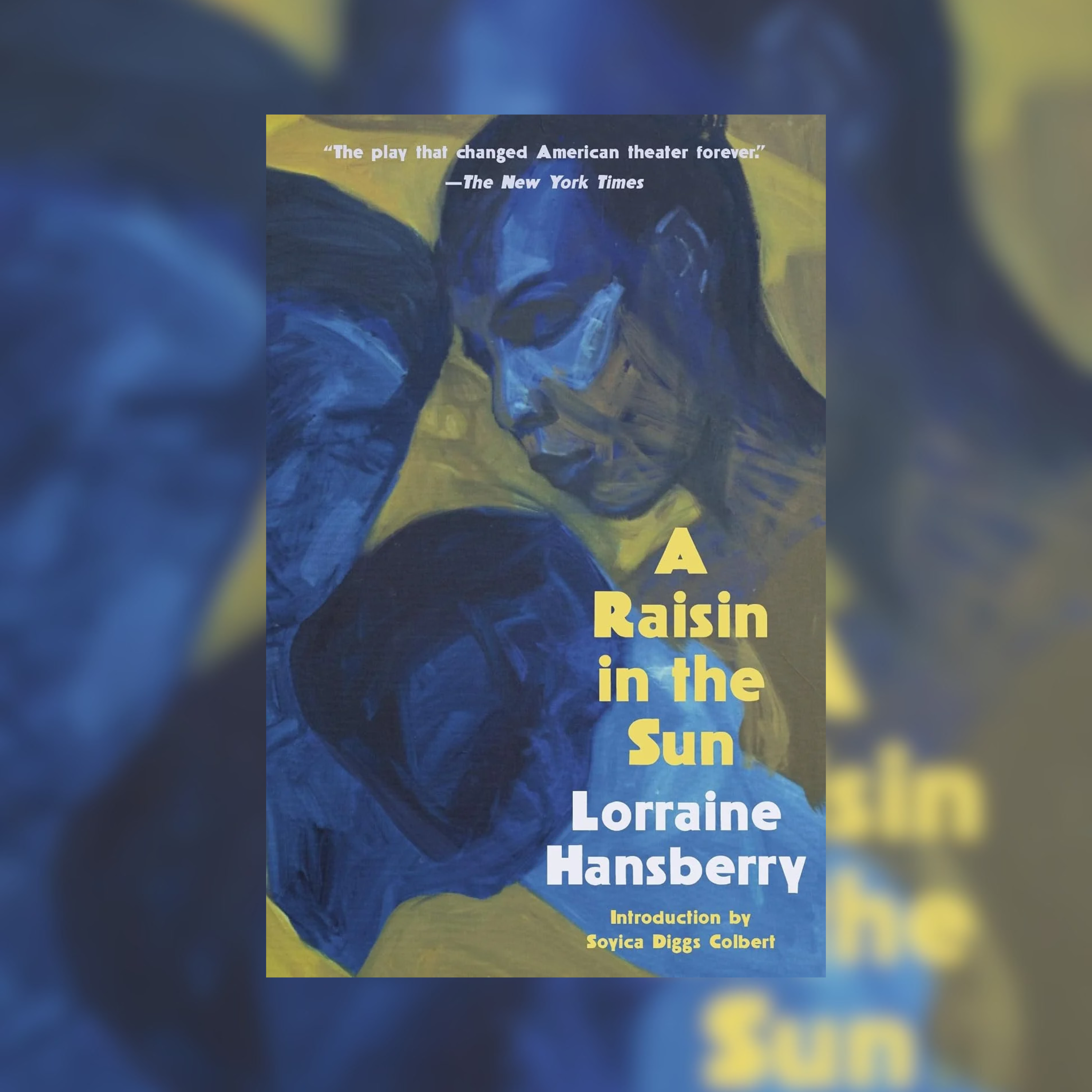
Lorraine Hansberry’s play A Raisin in the Sun, set in late-1940s/1958 South Side Chicago, about a Black family’s struggle for housing, dignity, and “upward mobility” after receiving a $10,000 life-insurance check.
No episode guests are mentioned. Hosts are Jeff O’Neill and Rebecca Shinsky.
The play shows how the American dream is “fraught” for Black people because segregation and housing discrimination taint even hopeful moves. It argues that dreams can be deferred or transformed at great cost, and that assimilation vs. heritage is a central tension (Benita’s hair and her suitors’ competing visions). The episode highlights Hansberry’s historical breakthroughs: first Black woman’s play on Broadway, first Black director on Broadway (Lloyd Richards), and Hansberry as the first Black playwright to win the NY Drama Critics Circle Award for Best Play; she died at 35 of pancreatic cancer.
Mama buys a house in a white neighborhood using $3,500 as a down payment; a white neighborhood association offers a premium to stop the move; Walter squanders remaining money on a liquor-store scheme with Willie and Bobo, then the family ultimately refuses the buyback deal. The episode connects the play to Langston Hughes’s “Harlem” (“What happens to a dream deferred?”) and to Chicago’s Cicero race riot context.
0:01This episode of Zero to Well Read is sponsored by Thriftbooks.com. Talked about a lot of books that you can find on Thriftbooks. Editions, special editions, mass market paperbacks, whatever, all that's here. And you can get all that for Raisin in the Sun. You can get a really nice mass market paperback for six bucks. But just want to highlight too, you can get movies on Thriftbooks.com. And one of those things you could find is a Criterion Collection edition of the 1961 film starring Sidney Poitier. the one that really brought this play to the general public can get it for 14 bucks if you want a blu-ray you can set a reminder when they get one in there they get one from time to time and find them holiday season's coming up physical media is in include thriftbooks.com in your physical media buying all right time for the show
0:56welcome to zero to well read a podcast about everything you need to know about the books
1:00Jeff: you wish you'd read i am jeff o 'neill and i'm rebecca shinsky and today we are diving into lorraine hansbury's groundbreaking play a raisin in the sun you can click the link in the show notes real quick to become a member for access to guided read-alongs early ad-freed episodes episodes and bonus content. That's patreon.com slash zero to well read. Rebecca, as of this morning, we're looking at 990 Apple ratings there. We're bopping around in the top 10 for our top five for books this morning, which is nice to see. So if you're new to the show, thank you and welcome for coming. You can always shoot us an email.
1:36Tell us how you found out about the show, you know, what you thought of the episodes, what your favorite ones were. Had someone email recently with kind of an itemized list of their responses to the different books, which is kind of cool. Whatever energy you want to bring, a positive energy, positive energy, of course, to the mailbag at zerotowellreadatbookrad.com. Some of those things we'll discuss later in the mailbag. Some of you just want to give us some feedback. That is all welcome. And remember, it doesn't have to be a recent show. If you just started or you just got back to Gatsby or Their Eyes Were Watching Gods or something from the very early days last fall, we're ready.
2:10We're sitting here ready to talk about these things, Rebecca. That's kind of the point of the show in some degree.
2:14Jeff: It is. These books are evergreen. They're always interesting and always relevant to what's going on in our lives. And that means that you can read them as we read them. You can pick them up a year later or four years later or whatever it is. That's also the magic of podcasting being an asynchronous art form. And we do want to hear from you. It's really fun to hear from folks about their own experiences with these titles. And also a thank you again to everyone who has rated and reviewed the show. We've been cruising on this mission towards a thousand ratings. And by the time this episode airs, we will have crossed it.
2:45Jeff: I guess that's right. Yes, you're right. I forget that there's going to be some delay there. Yeah. Thanks to everybody for helping us get there. That also means that we will have had voting on our listeners choice episode. So keep an eye out for what happens there. All right. So Raising the Sun, I think this is our, is this our fourth play that we've done so far? Let's see. We did Oedipus, Hamlet. Marcus, Rosencrantz, and Guildenstern are dead. And this one, yes. I think this is our fourth trip to the stage. Yes. And I guess I'll save this. Let's do your thing. We did much to do about nothing.
3:18Oh, there we go. Two shakies at the same, under one author there. Okay, so this is our fifth. Rebecca, we'll get into where this book comes, where this play comes from, who wrote it, and all the things we normally do. But first, what's it all about?
3:34Jeff: Today's episode is brought to you by Random House Children's Books, publishers of Camp Half-Blood, The Wild Zone by Rick Rorden and Annabelle O. Katie Kim may be a newcomer to Camp Half-Blood, but even she knows they weren't supposed to be running through the wild zone, the forest that's off-limit to campers and staff. Why then, you might be wondering, did Clarice, head counselor of the Aries cabin, take her and four other newbies there in the dark of night and tell them to race back to camp by morning? Good question. Well, Clarice's threat was scary enough, but when Katie's half-brother Grant goes missing, his disappearance sparks the arrival of vicious monsters and a mysterious curse.
4:12Jeff: And it's up to Katie and the three other newbies to brave the Wild Zone again and uncover its dark and deadly secrets. If you've ever wondered what goes on in Camp Half-Blood in between Percy Jackson's legendary quests, you can find out now in the start of a new series from number one New York Times bestselling author Rick Rorden and an all-star team of co-authors, which includes Annabelle O., Kyle Lukoff, Jade Adia, and Pablo Cartaya. Start with the first one, Camp Half-Blood, The Wild Zone by Rick Rorden and Annabelle O., and thanks again to Random House Children's Books for sponsoring this episode.
4:49Jeff: This episode is sponsored by Bowl and Branch. I think one of the best things about holiday gift giving is getting to treat the people you love to little luxuries they probably wouldn't splurge on for themselves, something that makes their everyday life just a little nicer. And that's why I think Bull and Branch makes such great gifts. I've had their throw blankets on my couch for the last several years, and as soon as cozy season rolls around, they are in constant use. They're incredibly soft, they look beautiful draped over the furniture, and they are perfect for curling up with a book on a chilly evening or, you know, an entire chilly weekend.
5:22Jeff: And that's exactly the kind of thing I love giving, something beautiful and indulgent that also gets used all the time. Bowl & Branch has gorgeous organic cotton sheets, plush robes, and velvety soft towels too. These are the kinds of things that make everyday routines feel a little more luxurious, and I think they're especially nice gifts because people don't always think to upgrade those things for themselves. I can tell you from experience, a Bowl & Branch throw blanket is a gift I'd be very happy to receive. Upgrade your sleep now with Bowl & Branch during their best sale of the year. Get 25 % off plus free shipping and extended returns at bowlandbranch.com slash wellread with code wellread.
6:01Jeff: That's bowlandbranch, B-O-L-L-A-N-D, branch.com slash wellread, code wellread to unlock 25 % off. Exclusions apply.
6:15Jeff: Today's episode is brought to you by Vault Comics, the best fantasy, sci-fi, horror, and lit RPG graphic novels, publisher of Godfather of Hell by Kevin Scott, illustrated by Pius Bach. So if you like The Sopranos, but you also like Lucifer, and you like, would want like a merging of the two kind of thing, little supernatural horror crime drama, Godfather of Hell is what you need to get into. In it, Dario Santini lived a charmed life as an enforcer for the mob until he's shot dead. Waking up in hell, he faces a future of pain and suffering unless he can turn eternal damnation into a business opportunity.
6:56Jeff: The devil's in the details and Dario's dealing a dangerous hand when gambling with the biggest guy down below, aka Satan himself. It's a high stakes game that he can't afford to lose. The question is, can this center become a winner neo-noir hellfire from new york times bestseller kavin scott and bram stoker award-winning artist pious bach pick up godfather of hell for a cross-genre graphic novel that combines horror thriller mystery crime supernatural noir all the things girl make sure to pick up godfather of hell and thanks again to vault comics for sponsoring this episode this is a slim play it's about a my paperback copy is 160 pages the full production of the play takes about three and a half hours but it is incredibly substantial set between the end of world war ii and 1958 that's the vague timeline that's given on the south side of chicago it's about lena younger she's known as mama to her family and she lives with her immediate family in a cramped two-bedroom apartment that she and her husband acquired decades or at least decades prior.
8:06Jeff: Didn't think they'd be in for very long, but she has been there. Her husband is deceased, and now they are all waiting on a check from his life insurance that is supposed to change their lives. It's for$10 ,000, which would be about$115 ,000 today, so a substantial amount of money. Mama's 35-year-old son, Walter Lee, has really big dreams, but he has had to settle for working as a rich white man's chauffeur. Walter and his wife Ruth have a 10-year-old son named Travis and a baby on the way that they just find out about as the play begins. And they are not sure what they're going to do about this because the family's financial situation is so strained.
8:44Jeff: Walter has been growing increasingly. Do you think desperate is a fair word here, Jeff? He's almost manic, I would say. Let's put a pin in that because it's worth talking about. But yeah, Yeah, there's a lot going on with Walter. He's really struggling with the gap between what he wants for his life and what he feels is his lot in life, what he has had to settle for. And he wants Mama to give him a chunk of this life insurance money to invest in a liquor store scheme that his friends Willie and Bobo have cooked up. Walter's wife Ruth and Mama are not having this. They're not into it. Walter's younger sister Benita, she's just 20.
9:22Jeff: She also lives with them. She dreams of becoming a doctor, and she is about to become the first member of the family to go to college. Mama has promised some of the life insurance money for Benita's tuition. In the meantime, she's being courted by two guys. One is a wealthy, well-educated, and deeply assimilated fellow named George Murchison, and the other is named Joseph Asagai. He's a student from Nigeria, and he wants Benita to move back to Africa with him. The life insurance check comes. Mama uses$3 ,500 of it, unbeknownst to anyone, as a down payment on a house in a white neighborhood because they're cheaper in white neighborhoods.
9:57Jeff: So she finds the best house she can get with her money, but a Black family in that neighborhood was recently bombed out. Still, the youngers are ecstatic. This is the opportunity to move on up and out into a space of their own. They won't have to share the hallway bathroom with neighbors. They will have more space to live their lives. Sun, notably, as in the stage directions, they have like one little window. That's an important metaphor. Natural light, yeah. Yeah. As moving day is approaching, Walter's desperation, his drive to find something better for himself also drives him to near constant drinking.
10:35Jeff: And while he is spiraling down, a representative from the neighborhood association where the new house is located, a white man, shows up to make an offer to the family. If they will agree not to move, the current residents will buy the house back from them for more than they paid. They're defiant, they refuse, and then Walter jeopardizes everything by taking the remaining money, which he had promised Mama he would put in the bank, and giving it to Willie for the liquor store. Willie skips town. And then they have, I mean, I guess we're really getting to the end here, so this is real spoiler territory.
11:12They reconsider the offer. to sell the house back at a premium. They're going to make a little bit of money on the transaction, but it's humiliating. And there's a really, um, see a, a pathos filled scene where Walter has a change of heart on screen, like kind of on his kneel is about to take the deal and then stands up and says, we're not going to do this. Um, mama gives like, this is not, you are not your father son if you do this this is not what we want and they decide to stay in um the deal and the last scene is sort of mama closing the door on the apartment and biting her fist uh and in a in a i don't know if i want to get to this but and there's multiple ways of reading this and there's multiple ways of staging this and there's multiple ways of interpreting those various stagings um but it's hopeful and dangerous at the same time too because yes the life that awaits them is not, this is not the other side of the rainbow.
12:09Well, that didn't go great for Dorothy's, I guess. But this is not, this is not utopia that they're going to. There is a consequence and a whole, a terrible, awful risk they are taking. But one, I think the, the viewer and reader of this play understand. I think most consumers, audience members, listeners, this play versus reading things going to mess me up throughout the whole show today, understand and also are apprehensive of this move they have to do, this choice they have to make. And I think that is to a large degree, maybe the point of the play is how fraught for Black people at this time and still in way too many places, it is to venture forth outside of the role that has been legally, violently, and economically redlined for you.
13:01Jeff: That the great promise of America is the possibility of upward mobility, especially following emancipation and coming out of Jim Crow for Black Americans. But that is a much more complex reality than the promise makes it sound like. And it often comes at huge risk and great price, as you're saying. And what begins as a celebration for them, like I found this to be one of the most heartbreaking things in the play, is that they get such a short window of being excited about what this is going to mean for their lives before the guy shows up and says, we really don't want you to move here. And then before Walter does what he does and they have to really reconsider and now they're going to move.
13:45Jeff: But it's not the big celebratory victory and the milestone that it felt like it was going to be. It's so tainted by all of by the direct racism that they've experienced and then by the compromises that they've had to make around it. There's a litany of firsts around this play. And we'll get to Lorraine Hansberry, her own biography here in a second. but it is, let's see, the first play by a black woman to be performed on Broadway. The first play with a black director, Lloyd Richards, to be performed on Broadway. Hansberry was the first black playwright to win the New York Drama Critics Circle Award for Best Play.
14:22Has our branding improved on the NYDCCA? That's tough. It is tough. And the youngest then to win an award, nominated for four Tonys, including Best Play and Best Direction. Did not win those, has been revived many times. There's many filmed adaptations. And in Hansberry, this was her first Broadway play. She had other productions. Another play would come to Broadway a little bit later. But sadly, Rebecca, I think we should say this now, she dies young. She dies at the age of 35 of pancreatic cancer. So if you don't know Lorraine Hansberry, I'll save my hot take for a little bit about that. But this is one of the reasons why is that she did not get to have a long career.
15:04It's a terribly fascinating what if to think about if she had a long career to be like the Neil Simon or Arthur Miller of people that were writing around the same times. in the heyday, I should say, really of American dramatic theater. You know, Death of a Salesman, I think, is 1949. I'm going to talk about that a little bit later. This is when, you know, this is the theater is really, really important. Like even when we're talking about salary, remember Carrie Fisher says like restaurants are what restaurants are. To people in the 80s what theater was. To people in the 60s. Yeah. Right. And this is ushering in this era.
15:42There's exciting work happening on the American stage. And we have this figure who breaks out, writes this dynamic, popular, well-regarded play, exposing audiences to a particular reality of black life that's also universal in many ways, which we'll talk about. That's part of what we do on the show. And then she passes away. It's horrible, Rebecca. I can't really think about it too much without getting horribly sad.
16:10Jeff: It's really tragic. And I was thinking, you know, she was ahead of her time and like about a decade ahead of where the cultural conversation was, that the play deals with segregation, deals with housing discrimination. It is certainly about race just overtly. And it's also dealing with questions about assimilation versus holding on to your heritage and honoring it. Deals with standards of beauty. At one point, Benita cuts her hair really short and she wants to let it go natural. And they have a conversation about, is that pretty or is it not? And she's an activist as well, comes from an activist family, is acquainted with James Baldwin, who, if you heard our episode about Maya Angelou and I Know Why the Caged Bird Sings, Baldwin and Angelo were friends.
16:57Jeff: And just like a few years later, in 1968, Baldwin takes Maya Angelou to a party after, because she's so sad after Martin Luther King dies, he invites Angelo to a party to cheer her up. That's where Angelo meets the person who kicked off her publishing career. And I felt like Hansberry was in that same social group. She's connected to these same people and she could have had a career like Angelo's or like Toni Morrison's. I think that this play alone marks the kind of voice that would have continued to be important in commenting on Black life and American life and culture for decades. And it's so sad that we don't really have much more work from her.
17:37Yeah, think of what she would have done when the 60s, the cultural idea of the 60s really gets fired up in like 66, 67 Vietnam and the Summer of Love and the things that come a little bit after. You know, I was looking here because you have the note that the play was published in 1958, open on Broadway in 1959. Took a long time to get the funds put together, to find a theater, to rent to a majority of Black production. Hansberry's own biography, the reception there. there's this movie coming out about um you know the making of the rocky movie this fall i play i do like uh a production a movie a book a play about the making of something i think this would be a terrific and limited series or a movie about getting a raise in the sun off the ground um or like you know tick tick boom is the one about jonathan larson writing rent i think um and it has a similar like he you know famously passes away the night of the previews this unrealized promise of a life cut short, but then everything that goes into what happened here, like, I was trying to look for it.
18:39I don't know if you found it, Rebecca, like, who did write these checks? Where was this money coming from? And I would be fascinated to see all that. The inner workings of the theater is fascinating.
18:48Jeff: Yeah, I couldn't find a lot of detail about the finances of the first production. There's a lot of documentation, especially Robert Nemiroff, who was Lorraine Hansberry's husband, and he They stayed, the couple divorced just a few years before she died, but he was her literary executor and he tended to her legacy for decades after. Writes about how just almost impossible it was to find a theater that would rent to the production because they didn't think that a story about a Black family was going to resonate with the predominantly white audiences on Broadway. And then they kind of, they didn't know what to do with the idea that like maybe Black Black people would come to the theater, which they did.
19:29Jeff: This production brought more Black people out to the theater than any previous production, because, of course, representation matters. Like, it's not surprising and it shouldn't be surprising, but it was surprising in 1958, 1959, that audience, that Black people saw themselves on stage and saw their experience. But that audiences that weren't Black recognized something universal in this family. And that has that's a bit of a double edged sword in how this goes down, because there is something particular to the black experience about what this family is going through. And white audiences tried to gloss over that.
20:07Jeff: Hansberry really struggled with audiences kind of Cosby-fying their their response to it. like, well, oh, well, they are just like us. And she was like, yes. And these people have to deal with something that you white people will never have to deal with and need to recognize. The play had a few scenes cut from the original production, mostly just to meet run times and keep it from being five hours long. And Hansberry added those back into later productions because they complicate the narrative enough that she felt it created some productive tension and some friction for The folks who were tempted to lean into like basically a colorblind response to a play that is clearly about race and color.
20:52and it's so interesting to see because some of what I think the play is reckoning with is happening in the how this play does get to be put on Broadway because Sidney Poitier plays Walter who is he was a movie star at the time but he was also a groundbreaking movie star so that I'm guessing probably once he agreed to do it maybe some people started writing checks kind of like in modern Hollywood today it's like oh if Sidney's going to be in it that's going to draw some people in, that's going to be more, I don't know, comfortable or recognizable, or just a draw for a wide audience who have seen Sidney Poitier on screen before.
21:26And I think there's this progress of taking these steps and you've got to break some ground, but then you have to keep breaking ground after that groundbreaking, because there's still so much more ground to be broken at the same time. Let's see. So the film came out in 1961, Special Award at Cannes, nominated for Best Adapted Screen played there. I have here in Chicago, and this is one of those things like there's so much American history and so much of it gets glossed over. And so much of that which gets glossed over is the nasty stuff. But in 1951, there was this thing called the Cicero Race Riot.
22:03We could do a whole pod about this by itself. I was just looking at that timeline you had, Rebecca, of like end of World War II. So that's 1945, 46 to 1958. If you put something sort of right in the middle, you're looking at like 1951 and 1953. And this is where black families were moving out of the predominantly black neighborhoods on the south side of Chicago, looking for places with better schools, more light, more air, more green space, but also that were cheaper. And this is a plot point in the play because of the de facto segregation that was enforced by bombs and checks. It was more expensive to rent in these neighborhoods than to move out to these other neighborhoods that were predominantly white.
22:49Because you pen them in and then you charge them more for penning them in. And I think that's where a lot of the Walters mania is coming from. frankly, the sort of existential schizophrenia or gaslighting of some kind of like, yes, this is what's happening, but there's nothing I can do about it myself. And no one seems to agree with me that this is a big deal. And I feel it in my soul. Anyway, there was a landlord that wanted to rent to a black guy. He is an army veteran. He's graduated Fisk. Not that you have to be that, but like checked all the boxes that like Jackie Robinson checking a box is like, this is like, should be the kind of model citizen you'd want in any neighborhood, no matter the race.
23:31And the neighborhood didn't like it. And basically 4 ,000 people stormed this apartment. And it's a horrible situation. 1919 Tulsa, there's so many of these, but this was literally about someone just moving into your apartment. That's what the stakes were.
23:44Jeff: And there are chapters about these same issues. This happens in Chicago. It happened in New York in the Warmth of Other Suns by Isabel Wilkerson, where she's tracking the families that move from the South and up North and East coming out of Jim Crow and seeking a better life. And Mama is of that generation. Like she says at one point that she's from five generations of Americans who everyone before her had been slaves and sharecroppers and that she and her husband moved from the South. So we don't know if Walter and Benita have memories of the South or if they were born in Chicago, but Mama was part of the Great Migration and is living in also the tension that exists between the generation that made that migration who were like, their idea of freedom was one thing, was getting out of the South and being literally free.
24:34Jeff: And then their children want something bigger. And that is both what those parents want for their kids and also a real source of friction between them because like, now we don't understand each other. I got you here and got you freedom and space to yourself and like, and I'm now I'm buying you a house. Like, isn't that enough? Haven't we, haven't we done it yet? And of course, like there is more to want and watching that unfold is painful and powerful here. Also one of the great titles of all time, A Raising the Sun, coming from, inspired by Lifted, I don't know, it's a reference to, I guess, is how we would say this.
25:18Langston Hughes' poem Harlem. It was published in 1951, so it would have been relatively new at the time, within the last 10 years. Should we do the poem now, Rebecca, or do you want to save it for later? What do you want to do with the poem?
25:30Jeff: Sure, we can do the poem now. Let me... Yeah, I've got it right here, if you don't mind. What happens to a dream deferred? Does it dry up like a raisin in the sun, or fester like a sore, and then run? Does it stink like rotten meat, or crust and sugar over like a syrupy sweet? maybe it just sags like a heavy load or does it explode um probably langston hughes most famous poem question mark um at the same time and then a raisin in the sun further burnishes its reputation i i don't know the answer this langston hughes was already super famous and he would be langston hughes even today but is this poem his most famous poem if there's not a play called a raisin the sun that comes out in 1959.
26:13No way to know. It's an amazing poem.
26:15Jeff: Yeah, it's a feedback loop for sure, though. At the same time. And I don't think we'll do this here, but we sometimes kick around if you want to write a paper. So all these questions about what happens to the dream deferred, are they all represented by characters and situations in the play? It's so funny. Hive mind, Jeff, because this is one of my stray thoughts. It's like how many English class papers have been... Did you have that in there? Maybe I picked it up from you and I just assimilated it to put a chariote to me. Yeah, like how many English students have tried to map the different possibilities from the Hughes poem onto the characters of the play.
26:49Jeff: And I think you could actually do it. Yeah. And then where are there gaps and slippages and emendations of those particular reformations there at the same time? Let's see. I think we kind of did the play's production itself. We've done a little bit of Hansberry, Rebecca, but let's do a little bit more on Lorraine Hansberry's all-too-beef life. Yeah, she was born in Chicago in 1930. She's just 28 at the time that the play is published. Her mom was a teacher. Her father was a real estate agent. And the family were involved in local politics. When she was eight, her parents bought a home in a predominantly white neighborhood.
27:26Jeff: And they were met with such resistance that their case ultimately ended up before the Supreme Court. And it resulted in a decision that found that that neighborhood's restrictive covenant, which functionally prevented Black people from moving in, violated due process and the 14th Amendment. Because of course it does. Of course it does. Yeah, but not just a politically active family, but like people really willing to go to the mat for their rights and this principle and who broke ground as standing up for themselves. So both parents active in Chicago politics. The family is friendly with a lot of prominent figures.
28:02Jeff: W.E.B. Du Bois is just like around the house. Langston Hughes, Paul Robeson, Duke Ellington and Jesse Owens, just among many others. Yeah. What a household to be a part of. They could all show up in our limited series about the making of Raisin in the Sun. They totally could. They could all make cameos. They could. And news just broke last week that Marlon James is writing a biopic of James Baldwin based on Nicholas Boggs' book. So Baldwin can show up here. Maybe we can get Marlon James. Those are all the best words I've ever heard. I know. Welcome back from vacation. Hansberry attended the University of Wisconsin at Madison.
28:39Jeff: She was also politically active on campus and she integrated a dorm. and then she left Madison in 1950 to go to New York where she attended the new school. She pursued a writing career and she joined the staff of Freedom, which was a Black newspaper, and there she worked with W.E.B. Du Bois and other activists. So like from quite a, like this is quite a pedigree for both a political activist and a Black literary figure. Really incredible. She was also a member of the Communist Party and at the time she considered her work against white supremacy to be connected to the Communist Party's work. She was married to Robert Nemiroff, as I mentioned earlier.
29:19Jeff: He was a producer and a songwriter. They got married in 1953, and he earned so much money from a successful pop song he wrote that she was able to start pursuing her writing full-time. They divorced in the early 60s after a long separation, but they stayed professionally connected until her death in 1965, and he cared for her work for the rest of his life as well. I did a little research on Robert Nemiroff because like, what song did this, did the money come from? I think, I can't draw a direct line. I believe it's Cindy O. Cindy, which was a 1956, I'm sorry, performed by the Weavers during their influential 1955 Carnegie Hall concerts and then popularized by the Kingston Trio, which is like a folk band that my dad used to listen to that I actually kind of like.
30:08Anyway, I love these sort of, these little nuggets and inter-evening tentacles of culture at the same time. Yeah, dies a pancreatic at the age of 34. I was reading Baldwin writing about Lorraine Hansberry, and he's not... He thinks something about the culture did something to her at the same time, too. It's worth reading Baldwin on Lorraine's Hansberry and the end of her life and all that she went through. Pancreatic cancer is the worst, but also health care for women, let alone black women, has always been substandard in the 60s. I can't imagine that she got the highest possible care. A real sad moment for sure.
30:45Jeff: Baldwin did review the play and also said, never before in the entire history of the American theater has so much of the truth of Black people's lives been seen on stage. It's like, you get a hell of a blurb like that from James Baldwin. It's extra tragic that we don't have more of Hansberry's work. Our own first exposure, Rebecca, when was the first time you encountered this? I saw a production of this in high school, but this was my first time reading it. What about you? This is my first time reading as well. I saw the original movie production, the Poitier version, during an old movie kick in high school or watched a bunch of.
31:18Okay. I think we did a, Michelle and I watched like To Serve With Love, Guess Who's Coming To Dinner, which one of her family's favorite movies and A Raising the Sun, kind of in short order as we were getting stuff from. The local Dillon's VHS rental, a dollar in movie rentals on Tuesdays. Don't make them like that anymore.
31:35Jeff: I also remember Dylan's Tuesday movie rental. Yeah. Very important to us as our courtship, but also my cultural education of things in the mess. You know, I was thinking about this the other day. This is a stray thought within the non-stray thought area. Like, even though it's easier, you can get, you could, I could go raising this on right now from Apple TV, probably for$3 or something. Like it's more available, but there's something different. I guess it's the bookstore thing of like wandering. The serendipity. Yeah. of just like looking at, like literally walking past them where now there's so much presented to you that's recommended for you, that's hot for you.
32:13There's no scarcity, right? Because a lot of things, I'm sure this happened to you. We are now in the same cohort. You have joined me in this cohort. We're both old enough now. Sometimes you couldn't get the movie you wanted to see. Yeah. Right? So you had to get something else. No one does that anymore. Unless it's a 70 millimeter the Odyssey screening, everything else is always available to you. So I do, there's something to that. Um, where you got to go for your fourth choice and you discover something that you wouldn't have tried if you had every, all of your AAA choices available to you at all times.
32:44Yeah.
32:45Jeff: Or that even like by the time you and Michelle were coming to this, it was well after the 1961 film was made. And there's something in the cultural water that tells you this is a movie that's worth going back to discover what it's about. And we have lost monoculture. Like we haven't completely lost that there are films and works that are culturally significant. That's part of why we're making this show. But there, I think it's harder and much harder for folks in younger generations. And it will only get harder as we go forward for us to have a real sense of what has an enduring, what made an impact and what has had an enduring impact because people's algorithms are so different.
33:25Jeff: And that directs so much of our media consumption today. That was a fun little journey around. I remember Poitier being unbelievable as Walter in the movie. I don't remember much else about it. I was reading that when they were getting ready to put the play up on Broadway, there was some conversation about should it focus on Mama or should it focus on Walter? And without changing a single word of it, Like this is what choices in an actor's performance and in direction can produce. They decided to make it more about Walter. And I have to believe that has to do with the power, with what Poitier can bring.
34:00Right.
34:01Jeff: Like if you get Sidney Poitier, you're like, let's make it about him. It's like if you get Florence Pugh, we now have the Kathy Ames cut of East of Eden. 100%. Not a dissimilar dynamic at the same time. So what's it like to read this? What's it all about? I'll start a little bit on mine, which is a little bit longer. So I think part of this is about old Walter's life insurance as something that's passed down from generation to generation. And then, of course, mama's shared sacrifice in that. That's not all of his labor that's going in. Just think of what they did. They were paying premiums for years on that life insurance policy.
34:39They thought to get a life insurance policy. And so much of this plays about that generation who came up from the South out of Jim Crow, out of the sharecropping reconstruction. Like these people's grandparents were probably slaves. Maybe some of their parents, honestly, if you do the math that way. And they came North to, they did the thing they came North to do, Rebecca. That's something that occurred to me this time. They got out of those places. They had jobs. They had a family. They had, to quote Virginia Woolf, a room of one's own, though there's more of them in that one and a half maybe room that they have.
35:17And they got a little bit of a toehold. Right. They got into a place where their daughter could get an education that could lead to medical school. Impossible for them to have imagined if they stayed where they were. And then they poured all of their excess earnings, such as they had them into paying the premium on this life insurance. They have no savings. They could never get together a down payment. That's essentially what this is. They didn't actually buy the house outright with this money. They just did enough to do the down payment. But the premiums on the mortgage were about the same as the rent on this apartment.
35:49So that's the flip over. But what to do with the inheritance of that generation, of this generation of black people, that's the thing that kept coming up to me. And then you see Travis and Benita and young Walter all taking sort of different, they all represent different ways of taking that in the future. Travis is so young. He's the youngest of the children that he's just a kid and he wants to get candy and he wants to do the thing and get the 50 cents for school. Young Walter wants to have the kind of man in gray flannel suit life that gets parodied later in like the 70s of I'm going to have secretaries and we have an office and we're so busy.
36:26Like his daydream seems so quaint, not the quiet room, but quotidian maybe. He wants an office job and to have so many meetings and feel like a part of the main of the American cultural machine.
36:39Jeff: It's deeply intoxicating to him, though. This feeling that his dream that he's been holding onto for so long is maybe finally within reach. Like he's high on it. And I think that drives that manic feeling that you identified in him. and then Benita um which I have a whole thing on names here coming in a minute uh she has she seems I don't know what your take on it but she seems to have a little little less of the weight that Walter is feeling of that kind because he's a little bit older and he's a family so I think there is the the responsibility that comes with that in his own relationship with Ruth he feels emasculated because he can't provide the things they all want um and Ruth doesn't have much to offer him except scrambled eggs and you know maybe we should try something else.
37:24But Benita has a dreamer quality to her. She tries a bunch of different activities and hobbies, and she wants to be a doctor. And she's dating kind of a couple of guys over the course of that. I don't think we said this, but this play only happens over the course of a couple weeks or something like that.
37:38Jeff: Oh, that's right. Yeah, good thing to mention. So it happens pretty quickly. And in the course of that, there's this one guy, George, who is, I guess, a representation of a certain kind of black respectability. He has money. He has the white shoes of a college boy. He's the one you're supposed to marry. He's the one you're supposed to marry. And he wants her not to have ideas. I have a quote about books and reading. We'll get to it in a little bit. And then she meets this other guy, Joseph Asagai, who's Nigerian. And he has a completely different world. He comes outside of, while he's living here, of course, he's within the paradigm of American racism, but he has a different perspective because he has this African perspective on it.
38:21And he has different ideas of, would you like to do, would you like to come with me to Africa and be a doctor and go there and help people there? Which is not something that I think the original migration generation would have thought about. And I think that's something else that's going on in this text is they didn't even know what dreams were possible then. And so So what happens to a dream deferred is another interesting question. What happens to a dream realized?
38:47Jeff: Or transformed. Or transformed. And so you see these multiple manifestations of this dream, this new possibility. None of it is full liberation. I think that should be clear, too. All of them have constrictures. Some of them is biological, right? Because Ruth gets pregnant, nonplanned. And they're thinking about what to do about that. And so they have to go to, I think, some sort of underground doctor. It's a woman. It's a nurse. that the gender of her caregiver is a woman is assigned to the people in the play, that this is some other kind of health care system. So that's all there at the same time.
39:22It's so fascinating for something that's so economical.
39:25Jeff: Yes. It's such a rich text. It's about all these intersecting components of race and gender and how the economy works and what the history of racism in this country is and what opens up opportunities and what limits them. But as you mentioned, Walter is tied up in this, like his identity, his masculinity, his manhood is so tied up in trying to have some kind of success and something to show for himself as a man where Benita is like, she's just pushing against the assumption that she should want to get married. Like these two guys are competing for her. And at one point she says to her family, like, well, if I ever get married and mama and Ruth both go, if if right yeah right because that to them is the brass ring for her because that's stable and safe it reminds me a lot of the progression um in their eyes were watching god out of this safety alone or not even safety because she wasn't safe in some of those homes economic security and then safety and then something like self-actualization like we're moving up the maslov's hierarchy of needs here um as we go and that as the younger generations start to move up into those, the older generations that paved the way kind of don't know how to respond to it.
40:40Jeff: I thought so much about Janie and her grandma in their eyes were watching God, where her grandma is like, you're going to marry this guy, even though we know he's terrible, but that will give you some, you will have security with this terrible man that you won't have out there on your own. And Janie rejects it and wants to take the risk. And this is just an incomprehensible decision to her grandmother. And that happens between especially Benita and Mama, that there's, even though there's like technically one generation, Mama is Benita's parent. It feels like two cultural generations because Walter sits in between them.
41:19Yeah. And the grace that is exhibited by the movie really does come from Mama where she, she does take the 30, it's her money to do whatever he wants with. And there's some discussion amongst the family about that. Like some people more than others have claims, Like Walter's like, give me the money and we'll open this liquor store. And then what's so beautiful is Ruth says, take the money and go to Europe. Right. It's a kind of have an experience. Go have an experience. You never got to do this before. Don't worry about us so much. And mama is sort of, she comes to a compromise where she's going to split the money up.
41:49That's who wants to do 3 ,500 to get us into the house. We're going to put a chunk aside for Benita for medical school. And then the rest, Walter, I will give to you to do whatever you want with. Right. There's no kind of strings attached. Walter decides to then take the whole thing and get into this very cockamamie, naive plan to open a liquor store. And essentially he gets hoodwinked by one of his business partners who was going to take this money to grease the palms of people with the liquor license. But he just, you know, heads to a farm upstate with it. Side note, never get involved in a financial transaction with guys named Willie and Bobo.
42:26I don't know that it ever goes well. Just don't do it. Willie and someone else, but Willie, really no one in Bobo. Sorry to all the Bobos out there, but I don't like that.
42:35Jeff: Bobo's the one who shows up, though. Yeah, Bobo's the one that shows up. I guess, but just that Willie and Bobo, I was like, wait a minute. Let's, if those words, let's rethink it. Let's just slow down here a little bit and check the boxes here. Yeah, I mean, Hansberry, she's definitely doing things with names here. And I think it's notable that Bobo's name doesn't appear until much later in the text. We mostly just hear that Walter is working on something with Willie, and then Bobo shows up and you're like, dude, you got into a deal with a guy named Bobo? Yes. So this is under the maestri thought here.
43:08Bobo the clown, right? That's what I know Bobo, the name Bobo from. Are you thinking Bozo the clown? No, there's a clown. A clown who's Bobo, Bobo Barnett. His name was Chester Eugene Barnett. His clowning career lasted from the 1920s into the 1970s. So I think Lorraine Hansberry might be actually referencing the original Bobo the Clown.
43:32Jeff: Okay. So there you go. The more you know. I just learned about Bobo the Clown. I went deep on the names and it's going to come out in unusual and maybe awkward ways as we continue through the rest of the show. I mean, Benita is just like, it's right there. It's right there. All right. You still have more about what this is all about and other things. Let's get some more of those. I just found this play. It feels so remarkably relevant and modern that there are components of this that are not the same now as they were in 1958. But the issues on the page and on the stage are still present in American life and culture.
44:10Jeff: And the way that it's written, the voices of the characters, it feels fresh and like very alive. And almost nothing makes me more excited than to read something that feels alive. And it's not just the words that they say to each other. It's Hansberry's stage directions are incredible.
44:32Jeff: This episode is sponsored by Vinted. I have a theory that most of us wear about 20 % of our wardrobes 80 % of the time. I don't know if this is actual science, but it certainly feels true when I open my closet and I find myself reaching for the same handful of things over and over. And it raises a question. How much money is just hanging in there in the form of perfectly good clothes that I'm not wearing? That's where Vinted comes in. Vinted is a secondhand marketplace app that makes it easy to give those clothes a second life and earn some extra money in the process. Listing on Vinted is quick and simple.
45:04Jeff: And once an item sells, Vinted creates the prepaid shipping label for you. And here's the really appealing part. Vinted has no seller fees, so you keep everything you earn. The Vinted app is also free to download. I love the idea of having a closet that's full of things I actually wear instead of things I feel vaguely guilty about not wearing. And a Vinted can help me make some money while I'm getting there even better. So take a look at what's hanging in your closet. You might be surprised how much you can earn with Vinted. Download the Vinted app for free to start listing with no seller fees.
45:36Jeff: That's the Vinted app, V-I-N-T-E-D. Download it for free to start listing with no seller fees.
45:46Jeff: this episode is sponsored by quince one of my favorite things about getting dressed this time of year is that you can make almost anything feel festive with the right pieces in your wardrobe and i recently added one from quince that is going to get a lot of use this holiday season it's their mongolian cashmere ribbed turtleneck mini dress and i love how versatile it is it's cozy and comfortable but also really polished i can wear it with tights and boots for a regular day out, dress it up with jewelry for a holiday party, or throw a coat over it for dinner. I wore it all over Glasgow, Scotland a couple of weeks ago, and I really can't wait to wear it through the rest of the winter.
46:21Jeff: It's exactly the kind of piece I love having in my closet because it works for so many occasions. That's what Quince does so well. Beautiful, everyday essentials in premium materials like Mongolian cashmere without the luxury price tag. They work directly with ethical factories and cut out the middlemen, so everything is priced 50 to 80 % less than similar brands. I shop with Quince all the time, and whether you're shopping for yourself or looking for a gift someone will really love, I highly recommend checking them out. Give the gift of quality this holiday season. Download the Quince app for app exclusive offers or go to quince.com.
46:56Jeff: Get free shipping on your order and 365 day returns, now available in Canada and the UK too. And when Quince asks where you heard about them, let them know it was zero to well-read. It's the best way to support the show. They are so incredible. Like at the opening of the play, she's describing the room that we're going to see in the apartment and the things in the room. And just one of the lines is, these things have clearly had to accommodate the living of too many people for too many years and they are tired. And if you go see a production of the play, you don't ever hear those words. That's just Hansberry telling the stage manager and like, you know, set designer what to do.
47:39Jeff: But like her description of the place and of the people is... Like the carpet, like how the carpet is worn, but you can tell it's been moved around to hide the wear, but even that's not enough. Like it seems unnecessarily beautiful, the stage direction, because like the actual production designer, I think would probably get it with left. It's like, it's worn, like it's clean, but it's worn. Probably would have done the job, but there's so something else is going on. Wonderfully specific. There's a description of Mrs. Johnson, who's this nosy neighbor who drops by and she's described as a rather squeaky, wide-eyed lady.
48:13Jeff: This is a woman who decided long ago to be enthusiastic about everything, in all caps, in life, and she is inclined to wave her wrist vigorously at the height of her exclamatory comments. Yeah, it's not just stage direction, it's like direction direction of how the character should be played and acted out. It's wonderful. The tension between assimilating and honoring your heritage is both really overt and we see different interpretations of it through the different characters. And that's, I think, such a genius decision to make this a multi-generational household where we're watching all of this happen, not just in a family, but in a family that live in very close quarters with each other.
48:57Jeff: which is, of course, historically accurate as well. But there are a lot of ways you could have explored these issues and that Hansberry takes all these people and tosses them into the stew together. And we get to see the dynamics that they've developed over decades with each other. And like what is in this family's shared memory, what's in their shared way of speaking to each other and understanding each other. Like lots of moments of Walter is over like acting a fool and you see Benita or Ruth and mama like roll their eyes at each other. And it's like, Walter, just, he must just do this all the time.
49:29Jeff: And they're used to it. And we're just getting a window onto this one day of it. And I found that to be, she communicates so much with these really specific stage directions, but with like very economical dialogue between the characters. I mean, one thing I like so much about plays is I think you, like me are like, we're like dialogue people. We like language, we like talking. And so a play really gets to the point. And so a lot of this play is just people bouncing off of each other. It has the short story's beautiful economy of the check being this, it's not a MacGuffin in sort of a Hollywood sense, but this is the inciting incident, right?
50:05We enter into this family's dynamic because the check is coming, like in a day. Everyone's like, where's the check? Where's the check? Yeah, it's a cure yet. There's a really nice, like in media res where you don't learn for a while what the check is. and I do remember the first time I saw this and maybe I've been so trained by culture somehow to think that something's going to go wrong with the check it's gonna be like 50 bucks um and so when it actually does come there's elation but even they the characters themselves are worried about are they going to get scammed out of this somehow you could imagine a version of this like she was technically entitled to the 10 ,000 but because of some reason the insurance company doesn't pay out or whatever else so that tension there is really interesting at the same time but the within that The inciting incidents that tells us something about Ruth and young Walter's relationship is Travis is asking for 50 cents to do something for school.
50:53If you have kids, you know, there's always something at school you're trying to pay for. And Ruth says, I don't have we do. We don't have it. She's marshalling the family's literal resources. And that's how close to the bone they're living. Walter hears this. And not only does he pull out the 50 cents, taking it from what meager resource they have that Ruth is already in the calculation. we don't, we can't afford. But then his own ego gets involved and gives him another 50 cents. And right in that little gesture, we understand so much about the dynamic of the household. And that's all you really need to understand.
51:23These are people who are proud and holding on and reasonable, but they're at their limit of being reasonable. They're at their limit of just getting by.
51:31Jeff: And there's real gender stuff going on in who gets to engage with their dreams and with the possibility of wanting more and who has to pay the price for that or at least just push their own desires down and be practical to manage the household. And this is a, like, Hansberry is commenting on a well-established dynamic that happens between men and women. But like Toni Morrison writes about this in Song of Solomon as well. There are great passages of these older Black women kind of rolling their eyes at the shenanigans and foolishness of younger Black men. And the women take it as read that the thing they're going to do is keep the family on track.
52:14Jeff: And the thing these men are going to do is be off and pursue the things they're pursuing. They're not trying to correct it. No one has ever said to Walter, you better just be glad that you're a limo driver and you have a job to pay the bills. And let's be grateful for our situation here and just steady as she goes. No one's criticizing that he wants more. They seem to take it as given that, of course, a man wants more, which sure, but that they are not allowed to because if he's going to be doing the cockamamie schemes and trying to like get rich quick functionally, somebody has to be the practical one.
52:51I wonder if it felt radical given all that, Rebecca, to have mama's splitting of the pie, have that carve out for Beneath's education. Oh, that's a great question. Which they're not really, I didn't get the feeling, I don't know if you did that, she wasn't expecting that as to be like a return on investment sort of situation. It was like giving her a pot of money to go do whatever she wants to do, essentially. And that, it wasn't the totality of what she had, but it also did have space for her to do her dreaming or wandering or, you know, go do four years at a college at some point. um all right i think we're ready for stray thoughts where would you where do you go we've done some of these already we've mixed them in but where do you want to hit before we oh gosh okay there's a moment where walter comes home drunk and ruth offers him a glass of hot milk to settle his stomach and she says it as if this is obvious like you're gonna need something to
53:47Jeff: settle your stomach how about some hot milk is this a thing people used to do like i know that people would give kids warm milk like if you couldn't sleep with the idea that just drinking something warm will soothe you. But hot milk on like a whiskey stomach? What are we doing? I had to like, is she trying to kill him? What's in the hot milk? Little nightshade in there? Little Sula? Little Morrison Sula-ness in there? No, I just, absolutely not. I mean, steamed milk by itself, I wouldn't drink under any occasion. just if i'm feeling fine i don't want hot milk that's me and then it's described as hot like it would have been bad if she had said do you want some warm milk on your you know rumbly whiskey stomach but a hot hot milk yeah like this is a normal thing to do let me let me do some of my name stuff just because i have to do this yeah get it in there uh so uh walter walter comes from the Germanic word Wald means ruler or powerful one.
54:50So there is a sense that these are the patriarchs of the family. But we have old Walter and young Walter, that they have the same name is fascinating in how they deal with that. Ruth, of course, is the symbol of biblical patience. Patient as Ruth is a cliche, something that people say. Those are relatively more straightforward for me. As far as I can tell, the name Benetha is a Hansberian invention. And I say, that feels like a trap because I don't want to try to make a reading out of that except to note it and let the listener, reader, audience member, say English undergrad, write about what the Benita reference might be.
55:30The one I really got stuck on was Travis.
55:33Jeff: Oh, interesting. It comes from the French word for toll collector. So they would be the boatmen that would charge you to pass from one side of the river to the other. And Travis here collects a toll from his parents that initiates this. You're right. I don't know if that's intentional or not. I don't care. I just thought it was fascinating. Hansberry was thinking about things, I think is obvious. Yeah, I think at the same time. Yeah. So that's a little bit more English major bullshit for you. Good homework there. On the other side of the corn, this is going back to the original poem. I've always thought about this.
56:03Shouldn't it be like a grape in the sun?
56:07Jeff: Let's just copy edit Langston Hughes. I mean, a raise in the sun sounds better. It scans better. It does. It's iambic. try a trameter. You can't, a grape in the sun sounds terrible, but the grape in the sun is the thing that dries. It had the juice. The raisin was happens after the grape. The raisin in the sun is good. You've made a good thing. If you put a raisin in the sun, does anything happen to it, or does it just become more raisiny? Do you make its raisin essence even more potent? I think if you go back and read the poem, there's a little bit of evidence. Like there, maybe there's literally like, what does happen to this raisin?
56:39Does it explode? Like it heats up and it blows up? Does it crust over itself? But like the grape has already turned into a raisin and the raisin is still in the sun.
56:49Jeff: I love that your dander is up about this. No, my dander isn't up. My eyebrow, I just was thinking about this, right? Like if we're doing English major bullshit, we can also do fifth grade science fair bullshit. Like get your poster board out and do a raisin in the sun, question mark. What does happen to the raisin in the sun? A grape in the sun is good, but maybe a raisin the sun is bad it's already too dried out i kind of went in circles there a little bit um let's see what else do i have here i think we got the term revenge dinner from our episode in the corrections remember yes the dinner of revenge yeah i caught this here while walter is getting up he's been drinking and ruth is kind of pissed off at him and rightly so um they live in this small house he's up at all night all hours talking to willie and bobo about their cockamamie schemes ruth asked walter how he wants his eggs done he says anyway but scrambled and then she just scrambles them Hell yeah, Ruth.
57:39Ruth doing what she can.
57:41Jeff: You're cooking for a bunch of people. You don't have to be a short order cook for everyone's preferred egg method. Walter, I ain't poaching. You're getting scrambled like Travis did. Scrambled is a crowd pleaser. Sit down, Walter. Anyone who doesn't like scrambled eggs but likes other preps of eggs, I don't understand that. I never will. I kept thinking of Diary of Anne Frank because people essentially locked up together. There's a world in which this thing is like a prison that they're paying for. It feels rare. It's very claustrophobic, right? And they've been penned in by redlining white America.
58:11And it doesn't have the same sort of institutionalized regimented violence of the Holocaust. But the Franks are up in this thing because that's the only place they go. They go anywhere else they're going to get killed. But I was also thinking there's an element of a play which leads itself, I think, with a few characters. There's a claustrophobia on the stage where the stage itself becomes a character. So I wonder if plays that are sort of about being trapped are even more powerful because of the nature. Because Hamlet, he's trapped. Like he's trapped. He's rattling around to Elsinore. Rosencrantz and Gilder are trapped.
58:45Jeff: Yeah, that you feel that these people have been living in this apartment together for 20 years. Yes, 20 years. What must happen? Like Travis sleeps on the couch because it's only two bedrooms. Mama and Benita share a bedroom. Walter and Ruth have a room. Travis is on the couch. They're just on top of each other all the time. And you're going to drive each other down the hall. Yeah. You got to stick your it's like I remember it made me think about freshman dorm life where like we had shared bathrooms on our floors and you would like stick your head out the door to figure out like, is there a shower open or is that person who leaves toothpaste on the sink in the bathroom right now?
59:20Jeff: And who had burritos last night? And how long do I have to wait until that situation is cleared up? Yeah. And like, you know, if you're running late for work and now you're going to be even later because Mr. Johnson is still in the goddamn bathroom. And that just like that grind, like getting out from just having to share their space is one of the biggest appeals of mama buying this house for them. It's like we will be like we're going to have sunlight and we won't have to share the bathroom. and that those are small aspects of daily life, but they become so significant when they're just the daily repetition of having to deal with that.
59:57Yeah. Are we sure the liquor store wasn't a good idea?
1:00:00Jeff: Jeff, Willie and Bobo. Naively executed, maybe. But the idea of a liquor store. Do we think that there was actually a plan for a liquor store at all? Or is Willie just a grifter? I think it's a great question. I think it's a great question because part of what makes Walter susceptible to the grift is the dream. There's no one easier to con than a dreamer, right? And he has the dream. He understands that he makes a case for the sort of underlining stability of the alcohol industry. Like people are always going to drink, not a bad plan. But then he has a naively sophisticated view of how this needs to happen.
1:00:42We got to grease some palms to get the liquor license. But he doesn't really know. And there's this thing in American culture, like no one wants to be a sucker. But sometimes that makes you even a bigger sucker. Because the people telling you, don't be a sucker, are the ones that are going to con you. So anyway, but like the idea of a liquor store, that's honest trade. Good business. You'd be in the community. Anyway, that was a straight thought.
1:01:06Jeff: When Bobo shows up and is like, Willie skipped town with our money. He went to grease the palms and he never returned. I thought, Willie never went to grease those palms. There were no palms in the first place. You really got to trust Willie with your$6 ,500 plus whatever Boba would put in it. Maybe what I want is like a spinoff where we get to like a spinoff series of Willie the con man. Like is he just going from town to town, finding a Walter in each place? Oh. Finding a desperate man that he can... Music man, but for liquor store schemes. Interesting. My last one is, do we think Benita makes it through medical school?
1:01:42What happens to Benita, do you think?
1:01:45Jeff: Interesting. I don't know. Unanswerable. It is unanswerable. Someone tried to answer it in the, I believe in the 80s. Let me find it in my notes. There is a play called Benita's Place that came out in 2013 by Kwame Kwe Arma, in which Benita moves to Nigeria with Joseph Asagai. And instead of becoming a doctor, she ends up as the Dean of Social Sciences at an unnamed California university. so we're not the only ones to wonder what happens to her do you think that willie's obsconction should have us cause doubts about joseph's plan do we think he's the real mccoy like how much is she trusting post to i think we're supposed to have one eyebrow up about every man in this play yeah i think that's and you know what very fair uh on the same time all right Notable quotes.
1:02:39You have the number one Goodreads link. I didn't even see it, Rebecca. What is the number one Goodreads link?
1:02:44Jeff: Oh, this is Mama talking to Benita, who's been, who's frustrated. Or maybe it's to Ruth, but they're frustrated with Walter. Oh, it is Benita. And Benita says, love him. There's nothing left to love. This is after Walter has lost all the money. And Mama says, there's always something left to love. And if you ain't learned that, you ain't learned nothing. Have you cried for that boy today? I don't mean for yourself and for the family because we lost money. I mean for him, what he had been through and what it done to him. Child, when do you think is the time to love somebody the most? When they've done good and made things easy for everybody?
1:03:21Jeff: Well, then you ain't through learning because that ain't the time at all. It's when he's at his lowest and can't believe in himself because the world done whipped him so. When you start measuring somebody, measure him right, child, measure him right. Make sure you've done taken into account what hills and valleys he come through before he got to wherever he is. And I think real insight from Mama for this younger woman about why Mama and Ruth and Black women as a broader group do endure and tolerate this kind of wild dreaming from the men in their lives. Yeah. They see the world, what the world is subjecting them to at the same time.
1:04:03The one that really caught me, we talked about this a little bit before, where mom is talking about the dreams of the younger generation. He's talking to Walter. Now come you and Benita talking about things we ain't never thought about, hardly me and your daddy. You aren't satisfied or proud of nothing we've done. I mean that you had a home, semicolon, that we kept you out of trouble till you was grown, that you don't have to ride to work on the back of nobody's streetcar. So she's wrestling with their kind of interesting thing about parenting, I think, is like how much and why do you want your kids to be able to appreciate something they can't appreciate because they didn't see the thing of before?
1:04:46They can't appreciate it. Maybe intellectually, but they can't feel it in their heart and the bones. Like everything you've done to get them to a place where they're hopefully happy, healthy, and they have all the... The world is their oyster. They can kind of do the things they want to do. It might just be part of the Faustian bargain of doing that kind of parenting where you provide for your children, put them in a position where they can go forth, that they can't really see the thing that they're standing on. They just can't see it.
1:05:17Jeff: Yeah, there's a moment. Oh, go ahead. And for this generation especially, that must have been particularly difficult to wrestle with, right? You literally have no—it was so hard. And why does it matter that it's so hard? Because you want them to respect that sacrifice, I guess, or that struggle. But is that for them or is that for you? I don't know the answer to that question. Yeah, there's a moment where mama says to them, once upon a time, freedom used to be life. Now it's money. Yes, now it's money. I guess the world really do change. And I think that really gets to that, that the thing she and old Walter wanted was just to be free and to live for themselves and for their kids just to have their own lives and to have that freedom.
1:05:59Jeff: And now this next generation, they don't take it. They're not grateful on a daily basis, just that they get to be alive because they didn't have to fight for it in the way their parents did, which is exactly what their parents fought for, for their kids to not have that daily struggle. but they can't relate to each other directly. Yeah. And I think the other thing is that that migration generation had come so far that where they ended up felt like freedom to them. Because it's certainly fewer than where they were, but the deferred dream is still there in this room. They're stuck in this room and they're bouncing off the walls and they're literally limited by what they could do and where they can go.
1:06:35And the next generation's job is to bristle against those boundaries and to push them for the generation that comes after and that comes after all the way down. All right. What has literature meant? Or do you have any quotes you want to do something else? Because you have a wonderful, what is the literature metaphor here?
1:06:48Jeff: Okay. There's just so many because this play is all dialogue. So there's so many great moments of people talking to each other. But I loved when Benita tells Joseph Asagai that she wants a real connection with someone, a real relationship. And he says, between a man and a woman, there need be only one kind of feeling. And he tells her he feels that feeling for her. You all know what that feeling is. Yes. And she says, I know. And by itself, it won't do. I can't I can find that anywhere. Like she wants substance. She wants to marry war. She wants to marry war. She does. And he says for a woman, it should be enough.
1:07:22Jeff: And she says, I know, because that's what it says in all the novels men write. Sick. So I'm just going to toss that's what literature is metaphor over to you. Mama has this plant. So I don't know what it is about me as a observer of plays, but I bristle against this sort of obvious metaphor. Maybe it's because it's like literally instantaneously, but like she's taking care of this plant and it seems a little obvious. So I would move one and that's where I'm going to bridge into AI could never, things that are too original and weird for an LM to cook up. I'll extend that because the idea of the garden I think is fascinating.
1:08:02And, and I mean, we moved again, my situation is nothing like theirs, but when Michelle and I left New York, like one thing is we wanted some, some space, some green. You want some outdoor space. You want some natural light. And so they're moving to this house and Travis, how old is he? Seven? He's 10. He's 10. Okay. Thank you. He gives his mother, he gives his grandmother a gift, right? Like, we're moving. Here's his gift. And he gives her this ridiculous gardening hat that everyone else is sort of snickering and laughing at is how ridiculous, but mama loves it. A, cause it's sort of funny but b she sees through his eyes he's so naive and so pure that this beautifully stupid big hat is something he wants to give her grandma so she can enjoy while gardening and i just don't think an lm can sort of get the particular sweetness of a kid giving you an appropriate but bad gift that's like a uniquely kid thing to do that you love anyone else gives it to you you're like uh did you keep the receipt but it's almost better than if he had given her like an actual proper little like yeah demurely stylish hat that is gaudy and ostentatious it's a gardening hat of a kid's dreams and he wants that to give that to his grandmother i love it
1:09:10Jeff: so much yeah yeah thank you i thought that the the plant thing is a little obvious and i'm kind of surprised because hansbury is so deft with everything else but that mama like this is this one other living thing that she's been trying to keep alive and it does not seem that mama has a great green thumb. So it kind of adds to the sweetness of the Travis thing that he has faith, like this woman who's lived her entire life in a city. Now she can take care of a plant. But now she's going to have a yard and it's going to be magical and she'll have this big, ridiculous hat. Great. And in a shorter work, like a play, especially something you could, you could rent a movie of, I think our opportunity cost differential is low because just try it, This is not what you're going to do 10 hours of Vineland or something else like this.
1:09:59You have here interest in history and evolution of Black American art and storytelling. I think that's right. I think it just works as a play. It's very classical in its construction. It's going to feel, I think it will feel modern and elemental at the same time. It's got a couple of those things.
1:10:16Jeff: Yeah, it's of its time and also still incredibly relevant and modern. I'm pretty hard pressed to come up with a this isn't for you if answer. I think this is worth your time and attention. I think so too. The immortal questions that are asked, which are primary here. What is the good life? What do I have my neighbor? Who is my neighbor? How do I know what I know? Is this all there is? How to deal with the certainty of death? What else might there be? What's the deal with good and evil? Free will, real or no? Who am I? Who are my people? And what are the nature? What is the nature of justice, Rebecca?
1:10:45Do any of these jump out to you at this particular point?
1:10:48Jeff: Oh, yeah. I mean, what is the good life? Is this all there is? Are the real. Is this all there is? Yeah. The real central ones. And they seem to have reached the answer that this is not all there is. They want something more. And that's something more as part of the good life. You get some of the what do I owe my neighbor? Or really, what does my neighbor owe me in this situation? And how they respond to the white man from the Neighborhood Association and his offer to them. a little, not quite good and evil, but like, why do people do the things that they do? Because he presents it as like, we're all just going to be cordial.
1:11:27Jeff: And Walter says something later about, he invited us to like sit down and fellowship and have a nice hate session with each other, but to be nice while we did it. Yeah. I think, I mean, different characters might be asking different questions, but I think Benitha's is what else might there be? She has not yet found a model, as you said before, for a model of male, female relationship that's satisfying to her. it's not like she she's like i saw that movie and i want that she hasn't even seen the movie that that represents the kind of thing that she wants at this particular yeah and like george is stable but dumb and she doesn't want to be with him and joseph just wants both of these men don't want her to like try to actualize herself they just want to suppress her in different ways yeah are we sure this isn't about art and writing it's a little bit about art and writing um benita wants to play the guitar and she says, I just want to, that's all.
1:12:20Jeff: And mama's like, oh, you're always flitting between hobbies. And she says, I don't flit. I experiment with different forms of expression. It's really good. It's really good. So this is George talking to Benita and she's talking about she likes to read books and wants to talk about ideas. And he says, you read books to learn facts, to get grades, to pass the course, to get a degree, to get a degree. That's it. It has nothing to do with thoughts stage direction a long pause beneath a i see he starts to sit good night george so just that's that's she's done she's done done could you get most of the gist from watching the signal adaptation rebecca yeah i think the signal adaptation yes the gist um the 1961 film with sydney poitier is the signal adaptation but real heads including robert nemaroff prefer the unabridged 1989 American Playhouse production, which is three hours.
1:13:13Jeff: It's on YouTube. So you can go there. Yeah. We're going to skip over movie, musical TV series or Muppets because something that's meant to be adapted into a play kind of answers all those questions. We did the trivia about it's not really trivia. It's in it. But go read Harlem by Langston Hughes. The most recent high profile adaptation, though, Felicia Resat, I think won a Tony for playing mama unfortunately the lead walter is played by sean combs which is aged about as bad as anything could ever aid so we are due for a remake yeah and i believe that's available you can find filmed versions of that but for reasons that oh my gosh should be obvious no one henry make it happen i think we could we could do something with this at the same time all right time for hot takes rebecca what do you got get in the time machine and give lorraine hansbury the pulitzer prize for drama You cowards.
1:14:05I didn't even want to go back and look to see what won. I didn't even want to look. I did.
1:14:07Jeff: It was not something I had ever heard of. And that tells you everything you need to know. Yeah. Hansberry should have won the Pulitzer. This is an incredibly critical work of American literature. And it was obvious at the time. What were we doing? I have a nested one. I was like, I think this has to be one of the most underrated works of American literature. works by women and black women in particular are overlooked more often than they should be. But also because it was, she died so young and didn't have a long career. She didn't have the chance to have the, even if this turned out to be her best play, being around for another decade of workshopping and panels and awards and Presidential Medal of Freedom and all that kind of stuff would have burnished the reputation of this play.
1:14:55I think my real hot take is swap out To Kill a Mockingbird in any syllabus for this?
1:15:01Jeff: Yes. That's my hot take. We support it. Okay. Further reading, Rex, for readalikes books inspired by this one, etc. What do you have, Rebecca? Okay. There are two plays inspired by this one that have come to be called The Raisin Cycle together. They're by different playwrights. One of them is that 2013 play called Beneath's Place by Kwame Kwe Arma that I mentioned earlier. The other is from a few years prior. It's 2010, Clyburn Park, which is the name of the neighborhood that the family - fascinating idea for I have no idea what this thing is it a play or it's yeah it's a play by Bruce Norris and it depicts the white family that sold their house to the youngers fascinating um I have one you have a couple more I was thinking of death of a salesman Arthur Miller I think it's doing a lot of the same things it's 1949 so it's you know it's a good decade before and Hansberry would of course have known about it I assume it had been lingering over but it's not dissimilar.
1:15:56There's a family dynamic and Willie Loman, the main character, has worked his ass off doing what he thought he was supposed to be doing. It basically comes to end and there's nothing there and it's hollow. And I think you could do an interesting side-by-side about this hollowness of a certain version of the American dream. What if you applied the dream-deferred idea to Willie Lohman. It's an interesting idea, but I was thinking about Arthur Miller a lot and Death of a Salesman. Yeah, it's a good one.
1:16:28Jeff: Fences by August Wilson works in the tradition of Hansberry, deals with daily black life in America. And then The House on Mango Street by Sandra Cisneros is a different kind of family, but having a similar experience. And the house being literally and figuratively important for the family's sense of themselves. is certainly a house on mango street other zero to well-read titles it connects to i was thinking about oedipus rex um because i was like okay other plays but this idea of plays that are about being trapped might be doubly good and oedipus is certainly about that sort of existential trappedness and like complicated family inheritance yeah but i was also thinking about walter's hubris like walter's hubris is he thinks he understands the world well enough to pull off this liquor store thing.
1:17:17And Oedipus has a similar hubris where he thinks he's smart enough to walk up to the Sphinx and beat the riddle of the Sphinx. And I think Walter thinks he can beat this trap he's in much like Oedipus does. And it humiliates them both. They are both humbled by it, but they have radically different reactions to that humbling. Whereas Oedipus, you know, blinds himself and becomes this tragic figure. Walter's reaction to that humbling is to be noble, is to then stand back up and say, okay, I've learned something here, but I'm not going to be defeated by this. We're going to sally forth and try this thing and go out into this dangerous world with the hope, expectation, understanding that it has a risk, but if it pays off, there's something better for us on the other side of it.
1:18:06Jeff: I'm constructing a master's thesis while you're talking called Oedipus Rex, Walter Lee Younger and Dunning Kruger in the dramatic tradition. There you go. That's right. That's really good. I like that. Holler at us if you use that, kids. Yeah. We've mentioned, I think, all of these other books that you put. I was going to put the same book, so it's not you, but Warmth of Other Suns, Go Tell It on the Mountain, The Bluest Eye. We've all mentioned them in relationship here. There's so much tied to Go Tell It on the Mountain that you get that close family, multi-generations. Some of the generations came through the Great Migration and the youngest ones, the main kid in Go Tell It on the Mountain is wanting something bigger for his life.
1:18:46Jeff: So no surprise there. James Baldwin and Lorraine Hansberry were literally in conversation with each other, not just artistically in conversation with each other. I couldn't come up with any good cocktail party crips. That wouldn't fall into just the, hey, did you know about Lorraine Hansberry in the first and the first and the first. You have some nice things here, Rebecca. So why don't you take this one? I think if you're trying to talk about this play at one of these imaginary cocktail parties or whatever, like the idea that a family member has to die in order for everyone else to have a shot at not even liberation, but just an improvement in their lot in life sort of tells you everything you need to know about the ways that the American system is structured against black people.
1:19:25Jeff: And we've, we've also hit on this idea that like that Walter is engaged in this cockamamie plan and that it appeals to him. He doesn't see that it's cockamamie and those kinds of ideas become really dangerously compelling when you don't have access to real resources and real opportunities, but you're high on the feeling that maybe the thing is within your reach. It's almost like you went on a gambling bender or put it all on a horse, right? Like when you don't feel like the reality of that, that even sort of a, not a normal, a regular, just put in the work every day and eventually a payoff. the idea that that isn't possible then makes you take bigger risks right um that's a good one our final beat our zero to well-read score each one gets a score from one to ten with ten being the highest our categories are historical importance readability current relevance of central questions book nerd read cred and oh damn factor historical importance is both higher and lower it's this one's a little bit difficult because we don't get it's the first of the Hansberry and thing.
1:20:30It's like bluest eye. You get all of the Morrison that comes after. But first we did all the first before and it holds up Rebecca. So what are we going to do with historical importance?
1:20:39Jeff: It's like, it should be a nine. Yeah. A shadow nine. Yeah. But it did not get to live that life, but it should be a nine. So we could do whatever qualifications. We're in charge. We're in charge. Readability is like 10, 9, 10. It's really high. It's really high. It's easy to follow. You always know who's talking. Hansberry gives that rich detail of direction. I mean, it does both the specific moment and more universal things about as well as anything you're going to find. The central questions are more relevant in American politics and cultural life than Hamlet or Much Ado About Nothing or Oedipus Rex.
1:21:24I think it ate. I think so. Super current, but like a seven or eight, somewhere in there.
1:21:29Jeff: And you can map a lot of, not the exact same experiences, but a lot of similar experiences onto like what immigrants deal with today. Yes, yes, yes. Book nerd read cred, Rebecca? I think this is an interesting kind of question. I think this is high because the book, the play is underrated and under celebrated. So if you're just hanging out telling me you recently read A Raisin in the Sun, respect. So I read it twice. I read it a week ago and I read it on the plane last night because I wanted to, I was in New York for work and it sort of put me in a time warp where I felt like I'd forgotten everything.
1:22:04And I had a moment of like, I was reading it on my phone. I was like, I'm reading Lorraine Hansberry's Raising the Sun on the plane on my phone. This has to be relatively rare for people to do. Just like, you know, like. Nobody else was doing that on that planet, I promise you. And I thought about the book nerd read. I was like, I think that's pretty high. Not that I'm trying to give myself any read, but I think it's like a nine, maybe.
1:22:26Jeff: Yeah. I have read books for this show on planes where I'm like, I am not the first. I'm probably not the only person on this flight reading this thing right now. But Raisin in the Sun, it's not nearly as in the conversation, just among readers as it should be. I think it's still happening in literature classes and probably like black history and culture classes. But outside of academia, there's not nearly enough conversation about how important this work was and how truly groundbreaking it was. So I'm going with a nine for Book Nerd Week. I think we've stumbled upon even just reading plays has a high floor for this thing, because that's very unusual what people do that aren't sort of dramaturgs or actors or stuff like that.
1:23:09So that's interesting. Oh, damn factor, Rebecca.
1:23:15this is tough because we've read you and i specifically have read so much of the work that comes after raisins in the sun that it's kind of like people that have seen all the work that like pulp fiction inspired and then they go back and watch pulp fiction because it felt it does feel familiar to there were some surprises for sure but i didn't have like the big oh damn factor like some of the things I'm I'm feeling like a seven is what my heart is saying tell me if that
1:23:42Jeff: feels right or that's too high or too low I think seven maybe an eight is right there were some like where it went was not surprising to me but there were some like really funny moments yes and some good zingers and the oh damn moments happened for me in a like Lorraine Hansberry gets humans and I mean I think the stage directions like you said to me that was where I was the most like blown away by, and it made me think about the Lorraine Hansberry novel. Would that be something she ever would have turned her hand to? So carefully observed all these details. Let's go with seven and a half for the odium factor.
1:24:19Jeff: Yeah, I'm fine with that. Okay. Yep. All right. Well, that is our episode on Raising the Sun by Lorraine Hansberry. You can go to patreon.com slash zero to well read for guided readalongs and other membership options and some bonus content as well. You can follow us on the socials at Zero to Well Read podcast everywhere there is really a social presence. Probably that's our handle if we're there at all. Shoot us an email. ZeroToWellRead at BookRad.com. We always get some nice emails when we do a play because people have acted in them or they've seen them on stage. If you've been in a production of this, if you've seen one, love to hear about your story there.
1:24:52Thanks to Thrift Books for sponsoring this season of Zero to Well Read. And Zero to Well Read is a proud member of the Airwave Podcast Network. Rebecca, thank you so much.
1:25:03Jeff: Always a pleasure.
Jeff and Rebecca discuss Lorraine Hansberry's groundbreaking play—the first by a Black woman to be performed on Broadway—and trace her continuing impact on American theater.
Join us on Patreon for access to guided read-alongs, bonus content, and ad-free listening.
Follow Zero to Well-Read on Instagram, TikTok, and YouTube.
Email us: zerotowellread@bookriot.com
Thank you to ThriftBooks for being the presenting sponsor of this season of Zero to Well-Read!
Zero to Well-Read is a proud member of the Airwave Podcast Network.
This content contains affiliate links. When you buy through these links, we may earn an affiliate commission.
Thanks to our sponsor Boll & Branch. Get 25% off your first order plus free shipping and extended returns at BollAndBranch.com/wellread with code wellread. Exclusions apply.
Thanks to our sponsor Quince. Download the Quince app for app-exclusive offers, or go to Quince.com. Get free shipping on your order and 365-day returns. Now available in Canada and the UK, too.
Thanks to our sponsor Vinted. Download the Vinted app for free to start selling with no seller fees.
Learn more about your ad choices. Visit megaphone.fm/adchoices
Scan the code with your iPhone camera
Listen in the app.