 Ask ChatGPT

Discussion of Yaa Gyasi’s debut novel Homegoing (2016), focusing on its multi-century structure, economy of language, and how it depicts the long aftereffects of British colonization and American chattel slavery across Ghana and the United States. The hosts also cover the book’s publication history, critical reception vs. reader popularity, and why it’s become a college-syllabus staple.
Sharifa Williams (podcast colleague; returns for this Listener’s Choice episode). Backgrounds mentioned in the episode: Jeff O’Neill and Rebecca Shinsky are the hosts; Sharifa is described as having strong audiobook/reading experience and prior reactions to the book.
The novel covers roughly 250 years and 14 characters in about 300 pages by using linked, Bible-like “scenes” that echo across generations. It reads with momentum because it functions like a collection of linked short stories rather than a slow saga. Critics often fault characterization as “totemic,” but the hosts argue this is a deliberate trade-off that enables historical scope. The book’s title and origin are tied to Gyasi’s research trip to the Cape Coast Castle and the “door of no return.”
Effia married to British soldier James Collins; Essie captured and sold into slavery; the cocoa-bean farming story as an Aesop-like fable layer; the Marjorie character near the end as an immigrant perspective.
Written by AI. May contain mistakes.
Hosts introduce the novel 'Homegoing' by Yaa Gyasi and its significance.
“This episode is sponsored by Aura Frames.”
Discussion on the voting process for the Listener's Choice episode and the selection of 'Homegoing'.
“And this week we are discussing Homegoing by Yaa Gyasi for our very first Listener's Choice episode.”
Announcement of upcoming episodes and membership benefits for listeners.
“But then at some point, Homegoing just took over on both votes and it stayed taking over.”
Hosts explore the narrative structure and themes of 'Homegoing'.
“So that also then, I think Rebecca did the only thing you can do there because within that there are stories and stories within stories and then stories about the stories that are being told between people.”
Exploration of the ambitious narrative scope and historical depth of Yaa Gyasi's Homegoing.
“with such grace, such economy and power all at the same time.”
Discussion comparing Homegoing with other notable literary works on American slavery and the challenges faced by debut authors.
“And I think the responsible reaction would be like, oh, boy, let's see how this is going to go.”
Examination of Homegoing's impact on readers, its critical reception, and its integration into academic settings.
“My forever hot take is that it should have been on that list because I was literally, that was one of the first books I went searching for when that list came out.”
Discussion on the plurality of Black experiences as represented in Homegoing and the significance of its multicultural perspective.
“that her own story of immigration is not, when we say the Black experience, that's a monolith, and Black experience is not a monolith that way.”
Discussion on the portrayal of African and African-American characters in the book.
“over time, written by someone who is an African immigrant and whose story feels the most familiar, as she said in an interview in the character of Marjorie, who comes at the end and she is an immigrant.”
Analysis of the significance of the slave fortress setting in the narrative.
“This slave fortress, penitentiary castle, literally where the British would both rule from and then had these dungeon elements.”
Discussion on the development of the story's structure and themes.
“I think we should talk about homegoing as a word and the title is very fascinating to think about.”
Hosts share their experiences listening to the audiobook and its impact.
“I also want to mention to her agent, it is Eric Simonoff.”
Discussion on the pacing and structural elements of the narrative.
“So now it's time for the heart of the show.”
Exploring character relationships and the historical backdrop of the stories.
“So it is a more unflinching sort of situation.”
Exploring critiques of character development in 'Homegoing' and its narrative style.
“about the historical moment that they are illustrating for us.”
Discussing the engaging reading experience and the author's confident storytelling.
“how consistently the characterization is critiqued in the big mainstream reviews like Kakutani gets at it, Wilkerson gets at it, Laura Miller gets at that in her review of it, which was either Slate or The New Yorker.”
Analyzing the ending of 'Homegoing' and its themes of connection and historical context.
“you can imagine what it smelled like you can feel the ants crawling on your skin sitting by the fire in one of the villages like so all these moments really come to life but she doesn't try to it's not packed.”
Discussion on the title 'Homegoing' and its significance in the narrative.
“And I was taken by it, too, because I didn't I remember not knowing where it was going to end.”
Analysis of the evolution of character perspectives in 'Homegoing'.
“If we go back to the opening, I wanted to mention that where to start a book, right?”
Reflections on the competitive nature of publishing and its impact on writers.
“All right, let's go on to Stray Thoughts.”
The hosts discuss the competitive nature of publishing and the impact on emerging writers.
“But that narrative alongside emerging amazing writer, yeah, Jesse, like I think those stories fed each other.”
The conversation shifts to the challenges of writing long novels similar to classics and their reception.
“I was like, I was thinking about a couple of different things here.”
The hosts analyze significant quotes from the book and their implications on the narrative and themes.
“We believe the one who has power, he is the one who gets to write the story.”
The hosts reflect on the presence of love stories as a vehicle for generational narratives in the book.
“I think it's, I mean, I think that there are definitely some quotes that feel intentional.”
The discussion emphasizes the importance of rereading the book to appreciate its historical context better.
“like people find their partners and they have babies, but it doesn't feel like reading a collection of love stories.”
The hosts delve into specific quotes that encapsulate the book's core themes and character motivations.
“that I just kept wanting to go back to those parts and, and to, to learn more about those stories.”
Discussion on the literary techniques used in the book and their philosophical implications.
“the feeling of time of having been a part of something that stretched so far back was so impossibly large that it was easy to forget that she and he and everyone else existed in it, not apart from it, but inside of it.”
The hosts share humorous anecdotes from characters in the book, highlighting their insights and quirks.
“the long shadow of Morrison for writers, but especially black writers is fascinating to think about.”
Explore how characters in 'Homegoing' use naming to express identity and critique society.
“he had better find himself a place to be.”
Discuss the historical context in which characters navigate complex social dynamics.
“So he says in the mornings before Jonah and Anna went off to work, Joe made the children practice showing their papers.”
Evaluate why 'Homegoing' serves as an excellent choice for book clubs due to its rich themes.
“So I would absolutely recommend this one for any book club.”
Understand how 'Homegoing' inspires readers to explore their family history and identity.
“I'm not saying that it wouldn't, but I kind of get it.”
Delve into the deeper questions 'Homegoing' raises about identity and belonging.
“I assume that these are mostly Black American readers who are like, do I have roots in a story like this?”
Discussion on Yaa Gyasi's writing process and themes in 'Homegoing'.
“It accrued more than outlined, which I find fascinating.”
A conversation about the book's recognition and impact compared to other authors.
“But that so often it gets flattened in cultural representations down to you're black.”
Examining how 'Homegoing' represents different experiences within the Black community.
“The follow-up book was good, but not elite, like Transcendent Kingdom.”
Suggestions for books that are inspired by or relate to themes in 'Homegoing'.
“That's one of those things we'll never know.”
Analyzing 'Homegoing' in the context of other literary works and historical fiction.
“It is not like it's not going to be the best debut novel you've ever read.”
Discussion on how Toni Morrison influences modern writers like Yaa Gyasi.
“Vineland being this back and forth over time, one battle after another is like maybe the best synopsis of it.”
Summarization of the key insights and lessons learned from 'Homegoing'.
“And there are callbacks to things from Beloved in this book.”
Discuss the differences between commercial and literary historical fiction.
“The question of history is central to the artistic project.”
Evaluate the book's historical importance and readability scores.
“I think I would maybe give it, am I allowed to give a.5, 7.5?”
Analyze the book's current relevance and discuss the 'Oh Damn' factor.
“But maybe you then get points for going back to something that was hot 10 years ago, people were talking about, and now you get cred for it.”

Get the gist, explore an idea or ask about something said.
 Claude
On Zero to Well-Read, what are the key points of this episode?
Searching your listeningAutomatic transcript. May contain errors.
0:00Rebecca Schinsky: This episode of Zero to Well Read is sponsored by Thriftbooks.com. Today on the show, Yaa Gyasi's titanic, epic, astonishing debut novel, Homecoming. Boy, this is one of the great books we've read this century. It's 10 years old. And what that means, it got a huge advance. There were a lot of first edition copies printed, which means you can get a really good first edition for not that much money. I'm seeing them in acceptable condition on Thriftbooks.com for like seven bucks. You can get a new one, I would check this, for$22 even today. This is a really cool edition to have on your shelf. I don't love the paperback version of it.
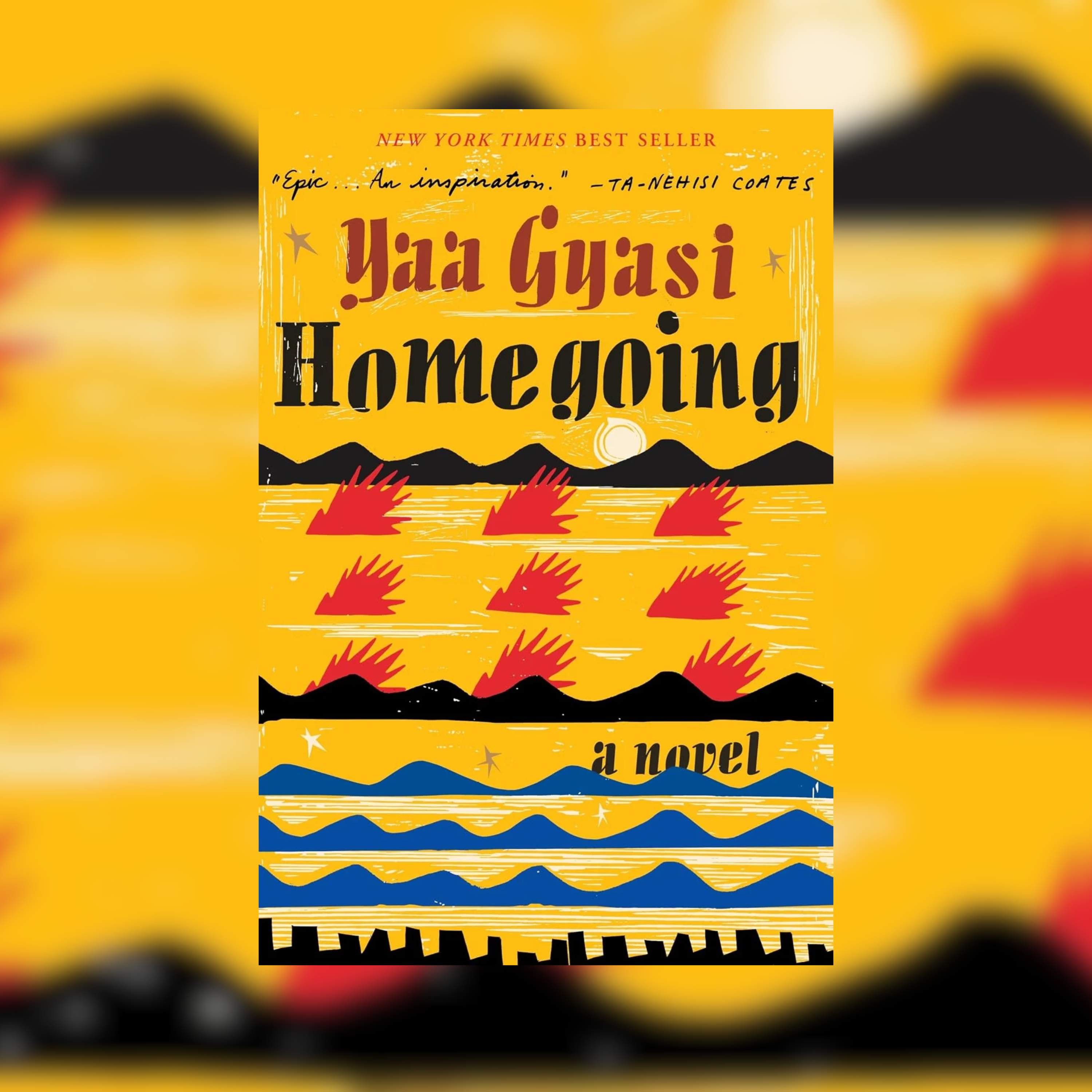
0:40Rebecca Schinsky: They changed the cover design to the paperback. I think the hardcover first edition, used, new, whatever, get it now at thriftbooks.com. Time for the show.
0:50Jeff O'Neal: This episode is sponsored by Aura Frames. I travel a lot and I take a ton of pictures when I do. Beautiful scenery, interesting buildings, great meals, the people I'm with, all the things that you want to remember about a trip. But I've realized that the pictures that bring me the most joy aren't necessarily the ones I choose to print and put in a frame. Sometimes it's a funny candid shot or a completely ordinary moment that just takes me right back to how it felt to be in a really magical place. And those pictures deserve to be seen too. That's what I love about aura frames. They make beautiful digital picture frames that let you enjoy all those photos that would otherwise just sit in your camera roll.
1:28Jeff O'Neal: You can add photos right from the Aura app and they appear on the frame automatically. And if you're giving a frame as a gift, you can preload it with photos before it even arrives, then keep adding new memories throughout the year. I think that's such a lovely gift, a way to revisit favorite shared experiences with the people you love and share those memories with them in real time without having to choose just one picture for the frame. Aura is the number one digital frame loved by millions of families and their Black Friday and Cyber Monday deal is the best of the year. For a limited time, visit AuraFrames.com and get up to $50 off select frames plus an additional$5 off your order with the promo code WELLREAD.
2:07Jeff O'Neal: That's A-U-R-A, frames.com, promo code WELLREAD. Support the show by mentioning us at checkout. Terms and conditions apply.
2:21Rebecca Schinsky: Welcome to Zero to Well Read, a podcast about everything you need to know about the books you wish you read. I am Jeff O 'Neill.
2:27Jeff O'Neal: And I'm Rebecca Shinsky. And this week we are discussing Homegoing by Yaa Gyasi for our very first Listener's Choice episode. Thanks to everybody who voted, who helped get us over the thousand rating line on Apple Podcasts, which was our benchmark for unlocking Listener's Choice. We're so stoked to be talking about Homegoing and we are even more stoked that our colleague Sharifa Williams has come back to join us for this conversation. Sharifa, welcome back to Be A Little Bit. Yeah, I'm so excited to talk about homegoing. I was so happy when I got your ask to be on this one. Yeah, this is one of your enduring favorites of the last decade.
3:06Jeff O'Neal: So we couldn't do this without you. It just seemed natural. Well, thank you.
3:10Rebecca Schinsky: I don't remember, you mentioned it recently-ish. Were we talking about Warmth of Other Suns on this show or somewhere, Sharifa? You mentioned it again. And then so when Rebecca and I saw it rising the ranks. I don't know if Rebecca, we can talk about behind the scenes, but the ebb and flow of the voting was pretty interesting. It was. Homegoing won both from our Patreon voting and our non-Patreon voting, but it didn't start there, right? Didn't it like sort of come from the middle of the pack all the way up?
3:36Jeff O'Neal: Yeah, I gave the Patreon members their own survey so that we could apply extra weighting to paid members if we wanted to do that. And for a while, This Is How You Lose the Time War by Amal El-Matar and Max Gladstone was in first place on Patreon. Homegoing was in first place on the public voting. I would have been happy with either of those. I was mostly just really thrilled that y 'all did not put us in the dunk tank to read ACOTAR, which we will have to do.
4:02Rebecca Schinsky: Which is what I thought was going to happen, honestly. That's what I thought we were going, which is what I would have voted for. I think that tells something about me.
4:09Jeff O'Neal: Yeah, and I did get some messages, some private messages from listeners who were like, I'm so sorry, but I did have to vote for ACOTAR. And I was like, you know what? We knew that's what we were doing. We made the option available probably when the final book in the series comes out. That is when we'll do.
4:22Rebecca Schinsky: Or adaptation maybe.
4:23Jeff O'Neal: Yeah. That's when we'll do the first one here on the show. But then at some point, Homegoing just took over on both votes and it stayed taking over. And it was really steady. We had five titles on there. And Homegoing won the vote with 28 % of all the votes across five titles. and so really much more than its one-fifth fair share would have been if votes had come in across and this makes sense to me this is a really like if you are a book lover this is a book that you
4:50Rebecca Schinsky: love yeah and if you're listening to this kind of a show yeah maybe the um the dunce cap but not dunce cap necessarily but like if you like the more twilight version of not one of our personal favorites it's not going to be taught in sort of english or western lit 101 for a million years but it has its own place. Like, Agatar is worth talking about. I don't want to besmirch. Sort of is a cultural phenomenon. But for our purposes, it might be a little bit more of a, we got to put our hard hats on to enjoy that kind of work, but it's still worth doing. All right, let's do some more frontist matter here.
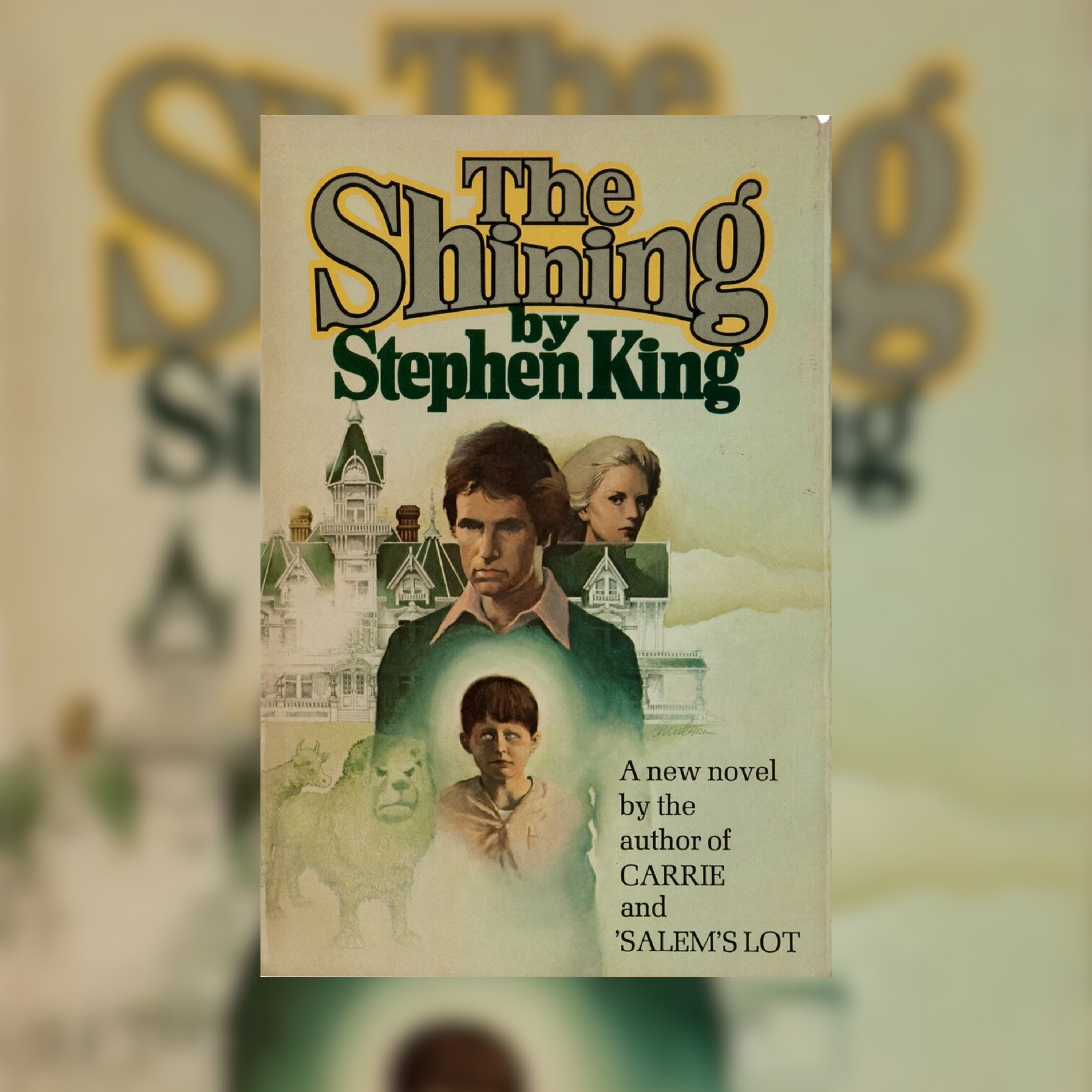
5:25Rebecca Schinsky: You can click on the link in the show notes. Become a member for access to guided readalongs, early ad-free episodes, and bonus content, including recently our Shining Watch of Stanley Kubrick's 1980 adaptation of the Stephen King book. we did in the feed. We have another adaptation evaluation coming soon this month. I guess we can say now what it is, Rebecca. We will be doing the first book of The Hunger Games next week we're recording, and then that will be in the main feed for everyone, the regular kind of show we do around a book, and then we will be watching. I don't think we've signed up to watch all three movies.
5:57Rebecca Schinsky: I certainly haven't, but at least the first book, the first movie in that series we'll be watching.
6:01Jeff O'Neal: Actually, as this episode lands, The Hunger Games will already be in the feed. Okay, terrific.
6:06Rebecca Schinsky: So everyone already knows this, and I'm just repeating you from the past. I'm so sorry.
6:11Jeff O'Neal: Time is a flat circle.
6:12Rebecca Schinsky: I will never be able to keep this straight. We're more than a year into this, and I can't do this time-like thing. Anyway, again, thank you everyone who has rated and reviewed the show and helped us to get to 1 ,000. They keep coming. The ratings review keep coming. It still helps us that 1 ,000 is a nice round number, but if you do have a moment and you enjoyed the show, that's a very easy way to kick in a little bit to keep the thing going. you can always email us at zero to well read at book rat.com. I guess this is especially obvious hook here for those of you who voted for homecoming. Tell us why had you not read it.
6:43Rebecca Schinsky: You heard about it. It's one of your favorites. I'd love to know more about your voting out there and everything going on with it. Rebecca, anything else before we get into the book itself? No,
6:53Jeff O'Neal: that does it. All right.
6:55Rebecca Schinsky: So I guess I could just pass it right back to you because this is where you really shine. What's it all about, Homegoing by Yaa Gyasi? Today's episode is brought to you by Canopy. Stream smarter, use your library card. With the holidays approaching, we're kind of getting into cozy, tucked in movie marathon time. But the thing is, the streaming services are getting more and more expensive. but Canopy lets you use your library card to stream holiday movies or any movies really for free. All you have to do is download the Canopy app and all you need is a library card to watch festive movies on your smart TV, tablet, phone, or computer.
7:43Classic holiday movies, family favorites, romances, and even a festive fireplace is available to stream for free with no ads. keywords no ads and this is all thanks to your public library visit canopy.com to find a library near you and stream for free today again that's canopy.com and find the local library near you and stream for free today thanks again to canopy for sponsoring this episode
8:16Jeff O'Neal: this episode is sponsored by vented i have a theory that most of us wear about 20 of our wardrobes 80 of the time i don't know if this is actual science but it certainly feels true when i open my closet and i find myself reaching for the same handful of things over and over and it raises a question how much money is just hanging in there in the form of perfectly good clothes that i'm not wearing. That's where Vinted comes in. Vinted is a secondhand marketplace app that makes it easy to give those clothes a second life and earn some extra money in the process. Listing on Vinted is quick and simple, and once an item sells, Vinted creates the prepaid shipping label for you.
8:53Jeff O'Neal: And here's the really appealing part. Vinted has no seller fees, so you keep everything you earn. The Vinted app is also free to download. I love the idea of having a closet that's full of things I actually wear instead of things I feel vaguely guilty about not wearing. And a Vinted can help me make some money while I'm getting there even better. So take a look at what's hanging in your closet. You might be surprised how much you can earn with Vinted. Download the Vinted app for free to start listing with no seller fees. That's the Vinted app, V-I-N-T-E-D. Download it for free to start listing with no seller fees.
9:31Today's episode is brought to you by Vault Comics. The best fantasy, sci-fi, horror, and lit RPG graphic novels. Publisher of Godfather of Hell by Kevin Scott. Illustrated by Pius Bach. So if you like The Sopranos, but you also like Lucifer and you like, would want like a merging of the two kind of thing. Little supernatural horror crime drama. Godfather of Hell is what you need to get into. In it, Dario Santini lived a charmed life as an enforcer for the mob until he's shot dead. Waking up in hell, he faces a future of pain and suffering unless he can turn eternal damnation into a business opportunity.
10:12The devil's in the details and Dario's dealing a dangerous hand when gambling with the biggest guy down below, AKA Satan himself. It's a high stakes game that he can't afford to lose. The question is, can this sinner become a winner? Neo-noir Hellfire from New York Times bestseller, Kevin Scott and Bram Stoker Award winning artist Pius Bach. Pick up Godfather of Hell for a cross genre graphic novel that combines horror, thriller, mystery, crime, supernatural, noir, all the things girl. Make sure to pick up Godfather of Hell and thanks again to Vault Comics for sponsoring this episode.
10:51Jeff O'Neal: So this is a 2016 debut novel, a really stunning debut novel. It begins in the mid 18th century on the Gold Coast of Africa in what would become Ghana. And unbeknownst to them, the first two characters we meet are half sisters. They're born to an Asante woman named Mame and raised by their fathers in different villages. One of the sisters, Effia, is married off to a British soldier named James Collins, and she moves into the Cape Coast castle with him. The other, Essie, is later captured from her village. She's held in the castle's dungeon with dozens of other women and sold into slavery, eventually departing through the infamous door of no return.
11:28From there, we split off.
11:31Jeff O'Neal: Each chapter follows a different descendant of either Effia or Essie, moving up through centuries and across continents to explore the enduring impacts of British colonization and American chattel slavery on the next six generations of Africans and African-Americans. So you get a chapter from one of Effia's descendants, a chapter from one of Essie's, a chapter from one of Effia's, a chapter from one of Essie's, and we're moving up in time constantly in pretty big jumps, like usually 30 to 50 year jumps. We meet the next descendant when they're well into their lives for the most part. And then at the very end, two descendants meet each other.
12:08Jeff O'Neal: They don't know that they have this connection in common, but we, the readers do. And so the story comes full circle.
12:15Rebecca Schinsky: So we're looking at what, 250 years of history, right? Somewhere in that, somewhere in that book. All right. So that also then, I think Rebecca did the only thing you can do there because within that there are stories and stories within stories and then stories about the stories that are being told between people. And I think maybe I'll jump one of my points from what it's out about what it's like to read this. I think it's very helpful to think of this as a reading experience of more like a Bible than a novel, where individual scenes are related, sort of echo or rhyme with other scenes, but also sort of stand on their own two feet.
12:57Rebecca Schinsky: It is not necessarily, even though there's a lot of begats here, Bible-like, like, you know, this person begat, this person begat this person, the linkages between them are not as important as this moment of time and how it connects to the macro. So it's a long way of saying the plot matters less than you think and also more than you think on a micro and macro level. And I think that's one of the things here. I don't know if Rebecca mentioned already. I'm sorry. I was following along. Do not play a drinking game with this episode where we say debut novel, but for a debut novel, it is unbelievably concise and compact.
13:31Rebecca Schinsky: And this is probably the biggest takeaway as you get into it. The amount of time covered, the amount of individual historical episodes covered, the amount of characters covered in 330-ish pages, something like that. I actually didn't look at my count.
13:46Jeff O'Neal: Yes, my paperback was like exactly 300.
13:48Rebecca Schinsky: 300. It's unbelievable. And we'll get more into what that means and the stylistic of it. But I think that is actually sort of what it's about, is how do you get, how does Yaa Gyasi literally and figuratively get her arms around this kind of history and do it with such grace, such economy and power all at the same time. Yeah.
14:11Jeff O'Neal: I'm so glad that you made that point right up top because this is 250 years of history, 14 characters. And we do go from like the 1760s up to like almost present day. Yeah.
14:26Rebecca Schinsky: Sharif, I'm guessing you responded probably, Rebecca and I have talked about homecoming a little bit over time. I don't think we ever got to talk to you directly about it. I'm guessing you probably had similar reactions to the brutal economy, the grandeur, the miniature grandeur of homegoing. Yeah, I really didn't think that it could be accomplished. Like if somebody had told me that someone was going to try and tackle this subject over such a long period of history, I would have said, I don't think so. especially and then if they had told me it was going to be a debut by a 20 something year old I would have said absolutely not there's no way this can happen and I think that the shock of that has stayed with me that Jesse managed to do this and like to do what I felt was the impossible and there are of course which I'm sure we'll cover like there are its flaws and there are difficulties with trying to trade-offs at the very least trade-offs yeah but it doesn't make it any less miraculous and breathtaking yeah ambitious is a word that comes up in almost
15:43Jeff O'Neal: every review of this and sometimes when you see critics say like this is ambitious what they mean is like this person took a really big swing and they didn't quite make it but that is not trying to bake a wedding cake that is also ambitious yeah but that's not what's going on here it's like this was ambitious and look at this 26 year old pull this off like to pull off like getting her arms around that big scope of history and doing it with a real economy of language and like that's not any better or worse than doing it in a big sprawling novel like jeff and i just both read the new mingen lee novel american hag one which is like two and a half generations of a couple of families in 650 pages.
16:23Jeff O'Neal: There are compromises to doing it that way as well. But to see Jesse be able to pack in so much history and not just like ringing the bells of important historical eras, but taking us deep inside of them, like every moment does feel intimate, even if we don't spend, you know, a hundred years in the life of one character.
16:45Rebecca Schinsky: I think there's this idea in math that sticks with me. It's that some infinities are bigger than other infinities, which is a real mind twister. And in this kind of a book, and I think you're right, Rebecca, to put it alongside some of the other things we'll read. We'll, of course, get to this. But to put in context what the scope of the project is and what the difficulties of the project are, you have to think in terms of like war and peace. 100 years of solitude only covered 100 years. Ain't no 260 years of solitude, right? And they're much larger. There is something to look at when what are the trade-offs and what are the virtues of one versus the other.
17:22Rebecca Schinsky: Because I think the thing we all reacted to when we read this are the same things that the people that voted for this are reacting to. The people who got into this, you know, famously, Rebecca, we covered, I think, the advance Jesse got for this, the seven-figure advance, multi-ten-way auction. And I think we knew something of the description. So our first encounter with the book, really, Rebecca, is more than a million dollars from a huge big five publisher, from a debut novelist about this multi-century continent culture spanning work. And I think the responsible reaction would be like, oh, boy, let's see how this is going to go.
18:03Jeff O'Neal: That is how we felt any time that there's one of these big announcements. And once or twice a year, Publishers Weekly will have something like this. Like, look at this giant debut deal, all eyes on. And is the person going to be able to land the plane? And the deal was announced in 2015. Homegoing comes out in 2016. And that's how it felt in publishing at the time. It was like, will this live up to the seven-figure advance hype? Is there a there there? And there's so much of it there. It wins the National Book Critics Circle John Leonard Prize for first novel that goes to a different debut novel each year.
18:43Jeff O'Neal: It was a runner-up for the Dayton Literary Peace Prize. It was shortlisted for the Center for Fiction's first novel prize. It was nominated for the Andrew Carnegie Medal for Excellence in American Fiction. Jesse was selected as one of the National Book Foundation's five under 35 honorees in 2016. It got two reviews in the New York Times book review. Which is a very rare feat, even rarer for a debut novel. And they were by Isabel Wilkerson and Michiko Kakadani. Wow. She must have been stressed when those reviews came out. And in the time profile about her, which came out just shortly before the book actually released, she did point out that she was really worried because of how public her deal was and because of that very thing that all eyes would be on her.
19:34And maybe there would be a lot more scrutiny to her debut work because of how big her deal was. Yeah.
19:43Jeff O'Neal: And there were several high profile debuts in 2016. That fall, like that summer and fall was really big. But Jessie, I think, was the biggest publishing deal going into it. And then she absolutely won the year. Like this was the debut novel story, not just of 2016, but of like half of a decade, really. Yeah.
20:01Rebecca Schinsky: And so I think all of, so this is going to be the youngest writer we will have talked about. And it may be the youngest writer we talk about for some time, Rebecca, especially when you think about the debut and how recent this is. I'll bring my hot take up here because I was looking around. I love the Underground Railroad, as you both know. Yes. I think this is a better book. I think this is a better book. And I'll say it in this way, Rebecca, you know my TV theory, which is TV and movie with guns versus movies that don't have guns. And that gun is a symbol for violence, death, whatever, is a lower degree of difficulty for maintaining audience interest than something like Mad Men or Succession or something like that.
20:47Rebecca Schinsky: even Succession has the billion dollar stakes up. But I am coming to the point as literary fiction has, as speculative literary fiction has become sort of the award darling, like that's the A24 version of books and reading. I am now giving higher degree of difficulty awards to books that do not have a speculative element. So that's kind of, in revisiting this, we talked about Underground Railroad recently. I think it's one reason maybe, and I don't have been able to articulate it, that I prefer Nickel Boys to Underground Railroad. Again, this is just, you We're at a very high level here. But when you look at the economy, the difficulty, the groundedness of something like this, I think you have to do better than what if the world ended or what if there were actually a railroad under Mississippi.
21:29Rebecca Schinsky: But that's something I realized this reading that I found myself reacting to.
21:33Jeff O'Neal: I mean, I had this in one of my stray thoughts, but this is the same year that Underground Railroad.
21:37Rebecca Schinsky: That's why I was bringing it up. Yes, yes, yes. Yeah.
21:39Jeff O'Neal: And I wondered, like, this was a huge book, but how much higher would it have risen if it was not in the conversation competing against Colson Whitehead in the same year? We're ready to crown with one of these, right?
21:51Rebecca Schinsky: We've been waiting for a Pulitzer Prize worthy book from Colson Whitehead.
21:54Jeff O'Neal: And like, it should not be true that there can only be like one big book about American slavery in a given year. Sadly, for the way that media and people's attention functions, that's kind of how the discourse goes. But there were two big books about slavery, like very prominent in the discourse. The fact that people were excited to hold both of those really says something. But like Whitehead said, and we talked about it in our Underground Railroad episode, he couldn't have written that book in his 20s. He had been thinking about the Underground Railroad for 10 years. He was in his 40s when he wrote it.
22:26Jeff O'Neal: The fact alone that Jesse did this at 25, published it at 26, I think is a strong case for your argument there. Really, really incredible. And readers responded, critics responded. It was named to the New York Times 100 Notable Books of 2016. It's number 21 on the New York Times Reader's Top 100 Books of the Century. It didn't make the critics' picks, which I know, Sharifa, you have some feelings about. My forever hot take is that it should have been on that list because I was literally, that was one of the first books I went searching for when that list came out. And I was like, I agree.
23:02Rebecca Schinsky: I think you're right. But Rebecca, we all had, did you, did you vote for it Sharifa? Did you put it on your list? Yes, I put it. I did not. And I'm not so sure that was correct. I mean, we only, we only get 10, so we didn't get to do the full hundred. If it goes 12, 15, I'm sure it would have been on my list. And I'm always recency, Jeff recency bias, O 'Neill, like the last book I read, I'm like, it's better than anything I've ever read before. So I need to be careful out there. But in looking at that again, I think I agree. No, I know I agree with you Sharifa that it is an odd omission, especially gets in the seventies, eighties.
23:31Rebecca Schinsky: Really? it's not better than that book, but this is all subjective here. Rebecca, I think this is your note, or maybe Sharif, I don't know, about how it's been pretty quickly adopted by the academic complex.
23:44Jeff O'Neal: This is me. And thanks to Friend of the Pod, Laura McGrath, for pointing me in this direction. I should have known.
23:50Rebecca Schinsky: This had the stank of McGrath all over it.
23:53Jeff O'Neal: Stank complimentary. Yeah, Laura, the stank of McGrath. So in addition to just being hugely popular with readers, this has 432 ,000 Goodreads ratings with an average of 4.46 stars, which astronomical. You don't do much
24:08Rebecca Schinsky: better than that.
24:09Jeff O'Neal: That's really incredible. It's also become a mainstay on syllabi, especially in college classes. And Alexander Manchel has this book called Writing Backwards, Historical Fiction and the Reshaping of the American Canon. There's a wonderful chapter in there about the rise of the multi-generational family saga, not just in American fiction, but particularly in the classroom. and that it has this dual appeal that meets a dual mandate that many colleges now have, that your lessons in your classroom need to be cross-disciplinary. So if a book in an English class can also teach you something about history or philosophy or theology, that's even better than just being a great work of literature.
24:48Jeff O'Neal: And Homegoing does that. It rings the literature bell. It rings the history bell, both in really significant ways. So it appeals to professors. It can also tie in with like race studies and gender studies. And even in her review in Vogue, Megan O 'Grady said no novel has better illustrated the way in which racism became institutionalized in this country. So you get to do a lot of educational work, again, in a really economical, very well written 300 pages. It's been on more than 110 college syllabi. And those are the ones that have been tracked through something called the Open Syllabus Project.
25:23Jeff O'Neal: So those are just the ones that we know of. And it's been chosen by dozens of communities and colleges for their all campus or like one book, one city read. So just in 10 years, this book has developed and maintained a significant legacy in the public reader's mind and imagination.
25:42Rebecca Schinsky: And it's happened quick. Like we're looking at 10 years of homecoming. It turns out that, you know, the listeners voted for this to be in a 10 year window. Jessie herself, she was just 26 at the time the book came out. She'd been working on it for a few years. She was born in Ghana, but grew up in Huntsville, Alabama. Her mother was a nurse, and her father was a professor of French, I think, at the University of Alabama, Huntsville. So this is going to be important for our own, as you read this, but for our own discussion, that her own story of immigration is not, when we say the Black experience, that's a monolith, and Black experience is not a monolith that way.
26:21But it is not sort of the Georgias or maybe the Wilkerson version, right?
26:27Rebecca Schinsky: The Warmth of Other Sun version that becomes sort of the dominant narrative. And there are so many, right? Like when it comes to numbers of people, more black people have experience like that. But there's all other kinds of black experience. And Jessie herself in the interviews, I read a bunch of her contemporary interviews, which I thought were fascinating. she thought that there was something afforded to her to be of this story but not in it in the way that maybe you know if she was an African-American born and raised in America by people who had been here for centuries but that she had this crossing back and forth in this different kind of experience where I think one thing that might surprise people is how much of this happens in Ghana and then stays in Ghana and things that would be Ghana, right?
27:11Rebecca Schinsky: A more conventional version of this. A lot of us have read books that deal with similar kinds of issues. Once the main character bloodline got on a ship, I think we wouldn't have been surprised to see the story stay in America. Yeah. And that's one thing, I don't know, Sharif, if that makes sense to you. I know, I think this is something you have a little bit further down in the notes about the plurality of black experience. But that's one thing that struck me again here. It's like, oh, we go back to Ghana And we followed this other bloodline in Ghana and how different than that is than many stories we get about African-American and black people.
27:43Yeah, I mean, I have so much to say about this, but I will I will keep it to if I were in a book group with African-American readers and African immigrants. A question I would pose is, what do you think about this book, which covers, you know, a lot of an African-American history in the U.S. over time, written by someone who is an African immigrant and whose story feels the most familiar, as she said in an interview in the character of Marjorie, who comes at the end and she is an immigrant. And it's because there is this distinction. And I think it's it's kind of a there are parts of it where it does feel like like Isabel Wilkerson critiqued her portrayal of African-Americans compared to how she portrayed Africans in Ghana and their how their stories were told compared to the African-Americans in the U.S.
28:49But also, Jessie is in this really specific and special place of being able to speak to both sides, not in the same way on the African-American, like, came up from slavery and that side of the story. but she has the Ghanaian side to tell, which is much rarer to find in stories. So it's like, you know, you take some things and you leave some things, but I felt this tension even in my reading of like, oh, this is somebody who doesn't have that history necessarily telling these stories. And obviously I still loved the book, but it was there with me the whole time I was reading it. Yeah.
29:41Rebecca Schinsky: I think, I think Wilkerson's critique is interesting and worth as a reader, you might seek that out because she, she sees a, I don't know, Sharifa, it's been a while since I looked at, I remember reading at the time, but like a little harder on the black experience in America, they don't get the sort of the, the same sort of communal representation that some of the people get in the the canadian sections but she's looking at the long history um at the same time and so you know sharifa mentioned that the the marjorie character that we kind of end the story with one of the two carries we end with that in a lot of ways is auto fiction for yeah jesse because essentially the genesis of this idea is she does take a sponsored research trip to this place i think probably the castle is the most iconic setting in this book.
30:28Rebecca Schinsky: This slave fortress, penitentiary castle, literally where the British would both rule from and then had these dungeon elements. You can't make the allegory shit up about this, honestly. It's too on the nose to be made up. Who goes back later as an adult. And yeah, Jessie says she was there the week after Obama was there. And the people there were a lot of African-Americans or black people from the diaspora coming to this place as like a pilgrimage site, like a Auschwitz kind of a thing where even if you don't know if someone came through there, it became totemic for this is representative of a larger unknown, unknowable kind of experience and her going back and then going back to a place she'd never been, right?
31:16Rebecca Schinsky: I think we should talk about homegoing as a word and the title is very fascinating to think about. That's the genesis of this. It went through a lot of different manifestations. Originally, it was going to be just focused on those two characters, a love story, and there'd be flashbacks to their earlier history. But as she realized that she wanted to do something else, it became a, how did we, like literally, how did we get here? Literally, figuratively, humanly, and psychologically get here. Jessie herself described herself as a shy child who found something in books. Sound familiar to anyone?
31:46Rebecca Schinsky: Literally everyone we talk about has done something like this. Initially loved the great English classics like David Copperfield and Jane Eyre. I think that's interesting. But then reading Song of Solomon unlocked a different experience for her. And we get a narration of a reader looking, like a teacher telling your reader in the book, at some point you're going to read a book that does something different. You're going to feel like a step change. And I don't, does that happen in the book? Do we get the name of the book? I think there's some, I don't think we quite get that activated. So I read this after I'd gone through the book and I didn't find it back in there.
32:15Rebecca Schinsky: But at the very release, that for her with Song of Solomon, unlocked a different experience for her, especially about black people, about black narration and how to tell different kinds of stories at the same time. At 17, she won this Reading Rainbow Short Story Award with a citation by the man himself, LeVar Burton, who's not just Reading Rainbow, but also, of course, played Kunta Kente in Roots, which is another great story, an epic story of the transatlantic slave trade. She went to Stanford for undergrad and she worked at a startup for about a year while trying to make progress on the manuscript that would become homegoing.
32:49Rebecca Schinsky: It was hard for her to do it. She enrolled at the Iowa Writers Workshop. She got a lot of support there. I think this is one of the great MFAs are good stories, actually. In reading about her talk about her MFA experience, I'm like, oh, okay. I don't have a dog in this hunt. I really don't care. But this is one that she really got something. She got the time. She got the support. She got the book deal. She got the new... Well, she had the goods. She got the goods, too. Yeah, yeah, yeah.
33:12Jeff O'Neal: Yeah, this is where an MFA can make a difference. It's like a writer who already has the goods and then will benefit from careful mentorship by people who have gone before. Like Marilynne Robinson's teaching at Iowa when Jesse is there. It cited in the acknowledgments, I noted. Yeah, but she delivers on it.
33:32Rebecca Schinsky: I guess we haven't talked about she has one follow-up novel transcendent kingdom which is a fascinating curve a much smaller contemporary story about stanford and science and um some of the same issues are still interesting to her but after homecoming I had no sense of what she was going to do next um and it seems like she got she didn't get small but she got contemporary and I'll be, it's been six years now. Yeah, it's time. Anytime now.
34:01Jeff O'Neal: Let's hear from her again.
34:02Rebecca Schinsky: I also want to mention to her agent, it is Eric Simonoff. This can happen with a book deal of this size, but Eric Simonoff, Edward P. Jones, Jonathan Lethem. That's an important piece. I guess if we're thinking about McGrath again for a moment about sort of agents can be a signaling function to publishing into the world, especially as these early things happen. And the seven figure book deal, So I don't know that anyone thought this book deal would earn out. For a debut novelist, that's a lot of, we want to be in the Ya Jesse business. Yes. We want to have this book and establish this relationship and be in this for the long time.
34:37Rebecca Schinsky: And so that's something to say here. It's like drafting a star quarterback. Yes, that's right. That's right. Our first exposure. Sharifa, when was your first time taking this on? I'm pretty sure that the second I heard about this book. I did wait until it was published because I wanted to listen to the audiobook because I was deep in my audiobook era. And I'm so glad I did because the audiobook is really, really excellent. It's narrated by Dominic Hoffman, who also narrated James and having a Nearth grocery store. Some voice might sound familiar. Just an expert. That's a lineup right there. Yeah.
35:14And it was so good. I could not stop listening. It was kind of similar to my Lincoln and the Bardo experience where I was literally just driving around the city desperately trying to hear.
35:28Rebecca Schinsky: I guess I have to go to the dry cleaners across town today. Yeah, I was just like, nobody likes driving in L.A., but it says something about how good it was that I was just like, I'm just going to keep driving because I can't stop listening to this. It's so good. Okay. Rebecca?
35:44Jeff O'Neal: I read it right before it came out in 2016. And I do remember being like, oh, this is going to be fun. But I couldn't believe it was someone's first novel. This is an impressive book from anybody at any point in their career. But again, a 26-year-old debut novelist just knocked my socks off.
36:03Rebecca Schinsky: Yeah, I read it right after it came out. I couldn't believe it at the same time. I think we talked about it probably on the pod. I'm sure we did. We didn't do book club episodes of the BR pod back then, but I'm sure we talked about it and we're both delightedly astonished at what had been wrought before us. All right. So now it's time for the heart of the show. What's it like to read this? What's it all about? We can popcorn around. Rebecca, you're first on the agenda. So what do you have at the top of mind here?
36:31Jeff O'Neal: I mean, we've already talked about just the fact of the economy of language that the book manages to be like really sweeping and also packs a lot of power into these 300 pages. But it is like it's so vivid. It's so visceral. It feels really embodied. Like we hear so much about these characters' bodies and like and some of that is a byproduct of writing about slavery. But some of it is what's happening to their bodies when they are in their villages in Ghana or what is happening to their bodies when they are working in New York, having fled during the Great Migration. But that it's so connected to like the deep humanity of it.
37:10Jeff O'Neal: Sharifa, I don't know how you listened to this. Like there are parts that are just so wrenching on the page that the like the idea at my heart would have just been fully in my throat, I think, having to hear it. Yeah, I mean, I was much more hardened when I listened to it. I think if I listen to it today as an older person, as, you know, going through the parental thing and stuff, I I have a feeling I would be crying a lot. I don't think I could listen to it. I think I would have to read it the second time around because I agree. Like as I was thinking about it, I was like, am I going to be able, do I have to brace myself in a different way for this story than I did the first time I listened to it?
37:54And I think the answer is yes.
37:56Rebecca Schinsky: It's funny. There is a, you can sort of read between like, you know, like watching a movie between your fingers. You can sort of do a version with that with text. Like you kind of fuzz out or you skip over a paragraph or like you kind of I'm going to find the next line of dialogue to get through this. There is no place you can, there's no redoubt. There's no redoubt you can hide to with audio in that same particular way. So it is a more unflinching sort of situation. I see we all have something all related to pacing to some degree. Rebecca mentioned something there. Sharifa, you have something.
38:31Rebecca Schinsky: I have pacing. Sharifa, can you talk a little bit more about the pacing? Well, I was shocked because I am always searching for books that do a really good job of telling a big historical story, a sweeping generational saga. and I am always, I always go into those books worried that it's going to be slow. It's going to lag because it is, there's so much to cover and there are so many characters and how are you going to keep it interesting? And I think, I think Rebecca dropped this in the notes somewhere that it feels like a collection of linked short stories. And I, I, I hadn't thought about that when I was reading it.
39:19But I think that that is what really helped me feel the momentum of this story because it is so well linked. The stories are so well linked that it is just, you just feel like you're gliding through the stories of these characters in a way that I think is unusual for a book like this. So that was the pacing, what the pacing felt like for me at least.
39:45Rebecca Schinsky: Yeah, you have that note too, Rebecca. And you also have sort of, I don't know if it's a follow-on or a counter, but you have the note that it's also, you think maybe it'd be best just not to, even though you could read it as standalones, to get a few of them under your belt. Because there's a momentum and a flow and an accumulation. That's part of the story too. Whereas a real short story collection, you could really pull them out, like the Lahiri, right? We talked about the Interpreter of Maladies, which again, if you read the totality, that's one experience. But you could have a pretty good experience with each individual of those.
40:13Rebecca Schinsky: But there is a, the whole is greater than the sum of us parts here. That is not true of many short story collections.
40:19Jeff O'Neal: Yeah. I think ideally you would read this in one sitting.
40:23Rebecca Schinsky: I think there, or isn't there a part two? Doesn't it break into a part two?
40:27Jeff O'Neal: There's a part one and part two, but like, I could not figure out why divide it into two parts.
40:34Rebecca Schinsky: I don't know. I didn't clock it in terms of geography, history, emotional topography. I I didn't. I was just I was flying. So I didn't. Yeah. I have to say.
40:42Jeff O'Neal: But I think ideally the reading experience of this would be all in one go so that you do just flow through because you get you're weaving between the two different bloodlines. And Jesse is letting you know who's who. Also, there's a family tree at the front of the book and you do need to bookmark it. bookmark that family tree but you don't need to remember like every detail of every character's story because she will tell you when we get to the chapter about h she will drop enough hints about h's parents or like details that pull back from those previous stories to remind you who you're with and what's important to them i think if you can't do it all in one go which i could not just by life scheduling do it three chapters at a time so that you get like an effia bloodline and se bloodline and feo one so you're kind of closing the loop you get that braid you get a whole braid yeah yes which this is just the thing that i developed like it's what i ended up doing by the end of it reading the book over the course of several days was trying to do like three at a time so that you get that the feeling of that braid and letting it happen um and i think just giving yourself over to the fact that these you're not going to spend enough time with any one of these characters to get deeply attached to them.
41:58Jeff O'Neal: It's less about the characters and more about the historical moment that they are illustrating for us. And some of the critics don't like this. They kind of saw the characters as more like totems or kind of paper dolls. I didn't have that experience. I liked being with each of these people and each character felt fully realized. And I actually, I found myself more drawn into the chapters set in Africa, I think because I've read so many books that deal with American slavery and American history. And in our writing traditions, at least, you don't get a lot of the representation of how colonization worked and the way that the British involved African tribes in the practices of slavery and incentivized them to do it kind of before they all realized really what they were getting into and then how almost impossible it is to get yourself and your community out of that.
42:56But seeing the representations of the impact of slavery across both continents and that it has
43:04Jeff O'Neal: a centuries-long impact in Ghana as well, which of course it does. But when you're a white kid in Kansas, they're just barely teaching you about what happened in the U.S. And so I remember the first time I read it, really appreciating how grounded it is in the history that happens outside the U.S. as well.
43:23Rebecca Schinsky: I do want to push back is the wrong phrase. I guess I want to reframe the character development critique, because I think what that kind of critique misses is, as we said the top of the show, it's actually more about a trade-off than a mistake. Because what do you get for this, right? If you're doing Anna Coretina, right, where you're spending 800 pages, like four characters, you get way down deep into their psyches and what this particular letter meant and how they felt about this one particular slide and everything. That cannot hold in a book like this. You couldn't do, or it would have a different kind of effect here.
44:03Rebecca Schinsky: This is more like, almost more like Aesop's Fables. It's more like Herodotus. It's more like history. The thing that Jesse does, I think, quite well, and I didn't find myself bumping against it all, is having these sort of fable-like elements. The one that really stuck out to me is the cocoa beans, right? We have this character that's been failing at farming for like four years. And this town has said, if your crops don't yield or your daughter gets pregnant within seven years, you got to get out of here because you're a bad omen. He hears about this new plant, one village over, goes, gets the cocoa beans, brings about this huge success.
44:38Rebecca Schinsky: And we think everything's fine, but we learned that he's made this deal, right? Sort of a O. Henry, Gift of the Magi, Rumpelstiltson-like deal. So we get the history of cocoa beans and farming and sort of British colonialism, but we get this like Aesop fable-like layer. And Jesse jamming those two things, not jamming, because it's more elegant that layering collaging those elements together reminds me more of marques and hundred years of solitude of these like he uses speculative fiction fable like these are much more grounded sort of stories so having more characters that are not flat necessarily but they're totemic right they're stand-ins for something else they're more flexible you can get in and out of them but then you can have more characters that you see over time oh how is this person like this person?
45:27Rebecca Schinsky: How is Orestes like Odysseus or not like Odysseus in these places? So I think it has a different level of character involvement. And I think it also speaks to where do we have missing pieces in these stories? Yeah, Jesse can't write an Anna Karenina-like character for someone who was in the castle because those stories don't exist. And it would be a fabrication of the highest order to say, I can really get inside for this character for 700 pages, there's no documentation that will allow her to do that. She's not writing a contemporary story about that. So I think rather than critiques, like what is the utility of this kind of representation of a character versus that kind of representation of a character?
46:04Rebecca Schinsky: Now, you may have a preference for one or the other, and I'm not going to argue against that, but this is one of the cases, Rebecca, we do this over and over again. Like, okay, look at your preferences. Might that be a feature rather than a bug of what this author is trying to do?
46:17Jeff O'Neal: That was one of the surprising things about doing the research for today was seeing how consistently the characterization is critiqued in the big mainstream reviews like Kakutani gets at it, Wilkerson gets at it, Laura Miller gets at that in her review of it, which was either Slate or The New Yorker. I can't remember which publication she was at. But this comes up over and over in the critics' responses to it. But readers, it did not matter to readers. Yeah, it doesn't matter. It doesn't matter to me. Readers love this book. And I think that is connected to the fact that it appears on readers top 100 of the century and pretty high in readers top 100 of the century, but not in the critics top 100, because the ideas and the like the language and the heart that Jesse brings to this make this land so well that readers don't care if like technically the characters aren't executed the way that they're quote unquote supposed to have been like.
47:14Jeff O'Neal: And I do think it's a great point, Jeff, like what she's doing here. Jesse's aims are different maybe than what some of the critics are holding her to.
47:23Rebecca Schinsky: It sounds like that's something she found in Iowa that she thought she was writing a more conventional story, but she thought there's this other way of telling this story. So maybe I'm biased. This is something she found rather than stumbled into. And oh, I wish I would have made my characters more like Ahab or something like that. I don't know if that works. I don't think this could have been. I've been thinking about this a lot. Like, Like, wow, this book was really successful. It had such broad appeal while also being on all these, you know, college syllabi. And it's hard to, you know, walk that tightrope of being something that is so intellectually sweeping.
48:01But also, like, it's a commercial fiction book that a lot of readers would pick up and learn a lot from. And I think that's why it's so great is because this isn't that kind of book where you're going to go 800 pages to really immerse yourself in every single character. And not every book has to be that or should be that. And I think it is very successful because of the way she executed it and the way that she just moved on from character to character. And like you were saying, made it very fable-like. Like it makes it more accessible to a general reader. What is a very challenging, difficult concept, what is a long sweep of time suddenly becomes a lot more accessible to the general reader.
48:49And I think that's a wonderful thing and probably not something the critics are necessarily thinking about or worried about, you know?
48:55Rebecca Schinsky: Yeah, I think that's really interesting too. And I think one thing that we're all circling to is that the reading experience is extremely, as difficult as the subject matter is, and it's as hard as any subject matter you're ever going to encounter at times, you always feel almost an issue girl. like, and I use that very carefully, confidence in the author after about 40 pages. It doesn't take long, Rebecca. You know you're in good hands. I see this is in Sharifa's notes all the way through. And I find that to be one of the more difficult things to close read and find in the text is that feeling that accrues over multiple characters.
49:40Rebecca Schinsky: You have to move across a few different timelines. But at some point, you're like, almost disengaging from a critical consciousness to be like, I feel comfortable here. Like I've let go a little bit and I can just experience the thing.
49:54Jeff O'Neal: You just know she's going to land the plane. And that is, it's a delightful, wonderful experience in any novel, especially in someone's first novel. Like one of the things we talk about a lot, especially in the Book Grant podcast is debut novel problems. Yes. And one of the things that can happen in a debut novel is that someone tries to like it's everything in the kitchen sink. Every idea they've ever had, every big issue that they've wanted to cover, they cram it all in. It ends up being 700 pages long. It just feels or it feels like it's 700 pages long because a book can get really baggy. And Jesse does not do that.
50:27Jeff O'Neal: Like this could have been four times as long to try to tell this kind of story. but that she makes the choices that she makes to give us just these glimpses of time with these characters she's the details are really potent so you know like what it felt like in that dungeon you can imagine what it smelled like you can feel the ants crawling on your skin sitting by the fire in one of the villages like so all these moments really come to life but she doesn't try to it's not packed. It's not overstuffed. And that, I think, also makes it really manageable. You want this kind of story to reach readers and to reach as broad an audience as possible, and that it's only 300 pages, that it's not dense in its language or in the representation of characters, that it doesn't feel like she jammed in everything she Googled about this time period.
51:22Jeff O'Neal: It avoids almost all of the debut novel problems are just really remarkable. How often do you find a young writer with the confidence to just... I'll never understand this.
51:32Rebecca Schinsky: I'll never understand how this was possible. I can't think of an analog. I really can't think of analog of someone trying to do this. I do enjoy that. I think Jesse is very self-aware about the project in her interviews about it, but you even see that self-awareness in the text because we do get this character trying to write this history of Black Diaspora, and he's just like, then it leads to this thing and then it leads to this thing and I don't know where to end and I don't know where to begin and and that character that sort of like and then and then and then there's turtles all the way down she's aware of that it's not quicksand necessarily but it's difficult to wrangle that much spaghetti like there's just no way of separate and she resists it and I guess I want to talk um Sharif has a note about the end and I have a note about the beginning so maybe we'll talk about what is the project here we've talked around this is a representation of multiple families that come out of one family in Ghana.
52:24Rebecca Schinsky: So it only can be one kind of story, though it's trying to, I think, in an almost metonymic way, give us a sense of like, this is one snow globe, but you may be able to infer the existence of other snow globes by reading this particular family. But we start, you want to start at the end or the beginning? because I was thinking in both, both are interesting to me. Maybe Sharifa, you had a note about finding the ending satisfying. Where does this book end and what does that tell us about what Jesse's trying to do, do you think? I mean, what I found really satisfying about the ending was that I do have like a weakness for wanting the connection to happen.
53:07Like I don't, I love literally -
53:10Rebecca Schinsky: It's not a weakness, Sharifa. Come on. Why is it a weakness? You like that? That's okay to like that. It's just, you know, like sometimes. Yeah, resolution. I love resolution. You don't always get that from literary fiction. And I think that's a thing as well. Like I appreciate what literary fiction tries to do as well. But I really, in this story, I wanted that connection to happen. And even though Marjorie and it was in Marcus come together at the end and they don't necessarily know their relationship to each other. It was just like coming together at the ocean with this sense of like there's this trope, you know, that black people can't swim, which I pointed out in my notes where it's like, well, now you might understand where that comes from.
54:01because we have this whole story and you don't really, you know, a person wouldn't think to connect it to the transatlantic slave trade and, you know, the horrors of crossing the ocean for enslaved people. But you have these two characters who come together and it just feels like everything that has been, all of the little details of the story, all of the little moments are finally coming together in these two characters who have led very different lives. but find this sort of joining point. And I just thought it was so beautiful. I teared up at the end. I was like, I wanted the connection, but I didn't think it would be this good.
54:44Rebecca Schinsky: It's quite gentle, right? Because it's not, I mean, I think if I remember right, this was originally going to be a love story between these characters. That's not what this kind of connection is at the end. They're there for similar reasons to sort of get a sense, see the thing, go back to the origin as they understood. of course, they don't know that there's origin before that. We'll get to the beginning. And it's not, this is not, it's all happy and fine, but it's also not a story of it's over, right? There is a kind of... And bittersweet is way, way too light. A forward-lookingness that also includes all the horrible shit that's happened and all the realities of it.
55:24Rebecca Schinsky: But it's not just that. But it's also not everything's fine and everything is shit forever. It finds a way to give us both that I think is quite satisfying from a readerly point of view. But I also think from a historical point of view, it's satisfying. It's like, yeah, black people are still around. They're living full lives. History goes forward. It doesn't begin and end here. At the same time, it is also trying to have a mythic element of these. They go into this water that they were subject to, that they were afraid of, at sort of a sunset moment that joins the fire of the sun and the water.
55:57Rebecca Schinsky: And they laugh together in that moment. And I was taken by it, too, because I didn't I remember not knowing where it was going to end. I didn't like Rebecca said, I trusted we were going to go some. But I was like, how is she going to land this plane? I guess I'll throw it back to you, Rebecca. What is the plane that she's trying to land? Like, what is your sense of the plane she's trying to land here?
56:17Jeff O'Neal: This is where I want to talk about the title, because homegoing is a term in Black American Christian traditions. Often a funeral service is referred to as someone's homegoing. And it has its roots in slavery times when enslaved people often viewed their death as the moment of freedom. They were literally being freed from bondage. They were going back to heaven, back to their home with God. And so you get that happening. Jessie is absolutely pulling on that thread in Homegoing as a title. But when Marjorie and Marcus go to Ghana and they go back to the Cape Coast castle, there is a coming home to their history.
57:01Jeff O'Neal: There's a coming home to a more full sense of who they are and where they are from and also of where they are going. But it's an acknowledgement of roots and of where you came from. And I think that that is the project here is looking at trying to create a more comprehensive view of what the diaspora experience is for many Black people, for Africans and African Americans, with this feeling that these two characters are here and they're going to have some kind of future together in some way. Like probably not as a couple, but they will be connected to each other's lives. And then the braid continues into the future that you can imagine that the next chapter in the book would be, you know, Marjorie's kid.
57:50Jeff O'Neal: And the chapter after that would be Marcus's. And are they raised, are their kids kind of raised together as friends or cousins of a sort? And what does that healing look like and represent? And sort of these individual moments of healing as a macro as a microcosm of a more collective acknowledgement, like also impossible not to talk about that. this comes out in 2016 at the end of the Obama era. But like June of 2016, when this comes out, is still kind of in this big historical moment of like Black Americans, especially having really never been more in touch with celebrating their history, acknowledging their history, and everyone else in America being willing to look at those things.
58:36Jeff O'Neal: Like we had some progress had happened, the arc of the moral universe had bent a little bit further towards justice at that point in 2016, and that Jessie is situating her characters from the knowledge that she has in that time, I think is significant. Today's episode is brought to you by Sourcebooks Landmark, publisher of All the Little Secrets by May Cobb. Do you like big hair, but like bigger secrets? Divas from Texas who are scheming and perhaps scamming to get to the top? Well, got something for you. From the best-selling author of The Hunting Wives, which is now a hit Netflix series with season two coming later this month, comes the deliciously wicked follow-up to All the Little Houses in scandal-soaked Longview, Texas.
59:25An unexpected death leaves the town's social crown up for grabs. There's a scheming trad wife, an ambitious daughter, and plenty of secrets threatening to surface, and everyone is plotting their next move. And no one is innocent, girl. Like, everybody got some dirt on them. So in the land of big hair and even bigger mischief, murder, ambition, and betrayal go hand in hand. Because in Texas, getting what you want always comes with a little collateral damage. Make sure to pick up All the Little Secrets by May Cobb and get into the thick of it, the mess of it. Ah, I live. Thanks again to Sourcebooks Landmark for sponsoring this episode.
1:00:33Jeff O'Neal: comfortable, but also really polished. I can wear it with tights and boots for a regular day out, dress it up with jewelry for a holiday party, or throw a coat over it for dinner. I wore it all over Glasgow, Scotland a couple of weeks ago, and I really can't wait to wear it through the rest of the winter. It's exactly the kind of piece I love having in my closet because it works for so many occasions. That's what Quince does so well. Beautiful everyday essentials in premium materials like Mongolian cashmere without the luxury price tag. They work directly with ethical factories and cut out the middlemen, so everything is priced 50 to 80 % less than similar brands.
1:01:08Jeff O'Neal: I shop with Quince all the time, and whether you're shopping for yourself or looking for a gift someone will really love, I highly recommend checking them out. Give the gift of quality this holiday season. Download the Quince app for app-exclusive offers or go to quince.com. Get free shipping on your order and 365-day returns, now available in Canada and the UK too. And when Quince asks where you heard about them, let them know it was zero to well-read. It's the best way to support the show.
1:01:38Today's episode is brought to you by Small Town Secrets. Visit smalltownsecrets.com forward slash riot and start your investigation today. But what am I talking about? Well, Small Town Secrets is for the armchair detectives, the amateur sleuths, the murder mystery lovers, and even the puzzle book solvers. Let's get into it. So Small Town Secrets is a 20-week online murder mystery that turns avid readers into armchair detectives. Welcome to Bellwether, a small town with big secrets. After a charity fundraiser, respected real estate developer Daniel Mercer vanishes without a trace. By morning, his truck has been found abandoned at the old Mill Lands, a property at the center of a bitter redevelopment battle.
1:02:25His ex-wife is saying one thing. His business partner is saying something else. Now we have to figure out what really happened. So listeners of this podcast can read episode one completely free. And if you're hooked, which you will be, you can unlock the rest of the investigation with an exclusive 40 percent discount. Now, we love a sale. We love a deal. We love a coupon, okay? Play solo, solve it with a partner, challenge friends and family. Have a good old time. Just make sure to start your investigation at smalltownsecrets.com forward slash riot. Again, that's smalltownsecrets.com forward slash riot.
1:03:04Thanks again to Small Town Secrets for sponsoring this episode.
1:03:10Rebecca Schinsky: If we go back to the opening, I wanted to mention that where to start a book, right? Where to end and start a book that is about the intertwineness of history through time is fascinating. So we begin where the British slave trade is certainly underway. But our opening sentence is about this fire, and it's about the reaction to this fire. We get a fire throughout as sort of an elemental displacing force. Like, we got to get out of here because there's a fire. And that slavery, especially British chattel slavery and American chattel slavery specifically, is probably the nadir of this human will to dominate.
1:03:48Rebecca Schinsky: This is something that humans do, and it's present in Ghana in this inter-tribal warfare. It's different. It doesn't, this chattel slavery stuff is meaningfully different to the point where we almost need different words. We need different words for love, like we need different words for slavery because there's different ways of it expressing itself. But I think one thing that Jesse is wrestling with is how to tell this story that is around slavery, but also the characters within it are not only subject to it all the time, even if they are at specific moments and characters are, and how do you move back and forth between people being more or less subject to racism, structural racism?
1:04:30Rebecca Schinsky: And then where are the successes and failures of resisting it? I was surprised to get a thing about unions here, right? Right. Two Shovel H, one of the great nicknames of all time, Two Shovel H, who works in a coal mine, initially sold into essentially slavery in the carceral system in the American South, gets out and then continues that trade, but then joins a union to fight for better wages and find some solidarity there. And that moves into the future, too, at the same time. What is this back and forth? And how is it just not just slavery is so bad and so terrible and American racism is so bad and so terrible.
1:05:07Rebecca Schinsky: It is. And yet there's humans making lives amongst those things all the time. And how do you represent that? But the fire is always there. They're always managing that fire of slavery, of racism, of human domination. And this idea, and I think that connects so nicely to the end of where Marcus and Marjorie are together in solidarity, in the water laughing. That is sort of the opposite of slavery. To have freedom over yourself, to engage with other people, to do silly things. Also kind of a baptism. Or just to have a moment of levity in a baptism.
1:05:42Jeff O'Neal: A home going as a funeral, a ritual on one end of life, but a baptism as a ritual for a birth or a rebirth.
1:05:49Rebecca Schinsky: A baptism of your own choosing, because we get a baptism that kills a lady, right? The missionary makes her get baptized, holds her underwater too long, and she dies. That's a very neat parallel to can you liberate yourself? And how can people work at that over time? I think is part of the plan she's trying to land here. I'm itchy to get to straight thoughts. What else do you guys have that you want to clear the notebook from?
1:06:11Jeff O'Neal: See what Sharifa is about to say. I was just going to say I really liked that healing a rift is a great way to say it because especially when the two characters come together, that moment does feel like a healing. And this whole concept of like all of these characters, yes, they're being, you know, slavery is always at their heels. Racism is always at their heels. There's always going to be something. But they do have to just like, there's this sense of like, they're all working so hard to get to this place of freedom. And what does it look like? And finally, you get to the end. And it's not like, again, it's not like all of the problems are gone in any way, shape or form.
1:06:54but you get the sense that you are suddenly realizing this moment through these two characters at the end. All of this work and, you know, scrapping and surviving and making life for themselves.
1:07:08Rebecca Schinsky: The effort of generations to get to the point where they can be there in that moment in that way. Yeah, where they have the ability, Marcus and Marjorie, to find their way back to each other, to find their way back home and to really look at their roots and where they came from and who they are. That to me was like, okay, now we finally have this moment that is very powerful where we finally get to see it. You have this moment of catharsis with these two. I had one more observation. It could have gone in straight thoughts or here, but I think one thing people might notice, they might feel before they notice it, is that the narration gets closer to the characters as time progresses.
1:07:54Rebecca Schinsky: So we are much closer to the internal feelings and thoughts in a modern way of interiority for Marcus and Marjorie than we are for, say, Essie earlier on, or certainly their parents or their people. Part of that, I think, is historical record situation. It is literally farther from Jessie, and she doesn't... I think she's very careful not to overextend the identification with people that existed 260 years ago in these tribes or in these sort of moments that there's really not much historical record around. She did a lot of research. It's mostly about British colonists. We all can imagine the limits of that.
1:08:29Rebecca Schinsky: But another thing that happens at the same time then, one outcome of that is it feels like the book emerges as we go forward. It feels like it's coming out of the mists of time. You can see the characters more clearly as you go, which it gives us a sense of momentum. But it also, I don't know, it adds to that fable-like or myth-like quality. It's like you start sort of pre-quote-unquote history because these people weren't allowed their own stories to a place where these people can write their own stories. They are literally writers and artists and storytellers and playwrights of their own kind.
1:09:01Rebecca Schinsky: And that transition is really interesting. All right, let's go on to Stray Thoughts. Who wants to go first? Rebecca, you want to lead us off with Stray Thoughts?
1:09:10Jeff O'Neal: I've referred to mine already up top, but just how much higher, how much bigger, even though it was huge, would this book have been if it were the only book trying to tell this kind of story in the year? Like competing against the Underground Railroad, against Colson Whitehead, like is nobody should have to do that. It's not fair. And the Underground Railroad, like I remember that book announcement coming out of like, he's going to do this and it's going to be a literal railroad. So you're going to get magic realism elements inside this story of American slavery. And can Colson Whitehead land that plane?
1:09:45Jeff O'Neal: Like this was the level up in the Colson Whitehead career trajectory as well. Like he was on the path and like people knew that he was one of our great writers. But we weren't having Colson Whitehead great American novelist conversations until the Underground Railroad happened. And that like that's well deserved. We love him.
1:10:04Rebecca Schinsky: Yes.
1:10:05Jeff O'Neal: But that narrative alongside emerging amazing writer, yeah, Jesse, like I think those stories fed each other. But there is only like, you know, to some extent, it's a zero sum game in publishing. And certainly readers time and attention is a zero sum game that like. Or only one Pulitzer.
1:10:24Rebecca Schinsky: I mean, that's the ultimate scare. Yes. Like something around that.
1:10:27Jeff O'Neal: Yeah. Like Whiteheads winning all the awards in 2016. and Jessie, I think, really would have had a shot at some of those bigger awards in a different year. Just in a publishing year where marquee names didn't have big books out as well. Yeah, the odds really were stacked against her. There were just so many layers of like, you've got the established writer writing about similar subject matter. I don't know how she could have competed, but she still did so well. Yeah. Yeah, I think she's doing okay, but yeah.
1:10:58Rebecca Schinsky: Yeah. Yeah. I was like, I was thinking about a couple of different things here. What's the version of this that is like War, Peace, and Moby Dick that has giant, these giant store stoppers that if you haven't read War and Peace or Moby Dick, there are these interstitial chapters that are like kind of just history, right, of the whaling trade or the wars in Russia. Like, is there a version of that that people would tolerate? I guess it's maybe something more like Roots. I've never read Roots. I just went back to look at it. I don't know like if that does that. But even like, you know, Beloved or The Middle Passage by Edward P.
1:11:32Rebecca Schinsky: Jones, an 800, like a big, big sucker, like an 800 pager. Andersonville by McKinley Cantor, which is about the Andersonville prison and civil war. I'm just, would anyone try this? Or maybe it's been tried and I just haven't seen it.
1:11:46Jeff O'Neal: I think it would be a really tough sell to readers because like.
1:11:50Rebecca Schinsky: Talk for this Moby Dick about whaling. I mean, they're all tough sells, I guess what I'm saying.
1:11:53Jeff O'Neal: This is an emotionally difficult place to spend 800 pages, more than Moby Dick for sure. Pachinko is my best guess for this. And Alexander Manchel refers to that quite a bit in his chapter on multi-generational family sagas. But like, I think Pachinko's in the what, 650-ish range. But I think it would have just been more detail about the aspects of daily life, a little more time with each generation. I continue to think 300 pages is the right length for this book for a book that wants to do what Jesse wants to do
1:12:27Rebecca Schinsky: for the book she wants to do I'm saying if someone wanted to do something different around the same time zone or even the same historical places and names it just got me thinking about what the trade-offs would have looked like then I only had one real debut moment novel of over-explaining and when the teacher does the who gets to write the history lesson yeah it's like okay a little on the nose a little but that was the only thing and that and that's not even something a debut novel like that could that's a real temptation for a book like this is just to say the thing that the book is saying you didn't need to say it we got it we didn't need to say that i
1:13:05Jeff O'Neal: mean you'll be shocked to know that that is also goodreads's number one quote from the book oh
1:13:09Rebecca Schinsky: Oh, really? I didn't even look at that. Good read, Gene. You're almost there.
1:13:16Jeff O'Neal: We believe the one who has power, he is the one who gets to write the story. So when you study history, you must ask yourself, whose story am I missing? Whose voice was suppressed so that this voice could come forth? Once you have figured that out, you must find that story too. From there, you get a clearer yet still imperfect picture.
1:13:35Rebecca Schinsky: Sharifa, do you think I'm being too hard on it? Maybe I'm being too hard on it. I think it's, I mean, I think that there are definitely some quotes that feel intentional. Like these are meant to be the ones that help you figure out what this story is. And I really don't have a problem with it as much. Like I'm okay with it. The quote that I kept seeing repeated was one of those kind of as well, because it's just like it tells you exactly what the book is trying to say. And I think that's helpful, especially when you are trying to reach a broad audience to just say the thing and have these anchoring points that are like, oh, yes, this is why I'm reading this book.
1:14:19This is why it's important to know the stories of these individuals. But I get it also. I get that it's like, OK, is that necessary?
1:14:30Rebecca Schinsky: I guess the thing I always think about is if that's what you're trying to say and you have to say it in the book, did you actually do the thing? That's where I come down on this sort of a situation. But I'm not too mad at it. I like this note that I found that in one of the manuscripts, her MFA advisor noticed that each section revolved around a love story. And Jessie said, yeah, because I need people to have babies so I can call a generation.
1:14:52Jeff O'Neal: You know, that's so interesting because like, I guess technically the, each chapter does have like people find their partners and they have babies, but it doesn't feel like reading a collection of love stories. Like that's not the focus.
1:15:08Rebecca Schinsky: Those Jennifer Aniston anthology rom-coms like New York or like Valentine's day. New Year's Eve.
1:15:14Jeff O'Neal: Yeah. It's not that. Horror show.
1:15:16Rebecca Schinsky: Um, let's see. Yeah. I guess that's really anybody. What else do you guys want to hit from straight thoughts before going to notable quotes that was a good segue that i stepped on i i definitely i was looking at everybody else's uh reading experience and i remembered that i kind of i don't think i gave the parts about african-qanadian history as much attention as i gave the parts about african-americans in the u.s because you know i'm like i i want to read the stories that oh you need to like write it as preamble to the the main there's like appetizers to the main course or something like that i don't know i don't know how i took it but i i want to reread it for numerous reasons because i you know i have read a lot of fiction that is you know about african-american history and non-fiction as well and now more than ever i feel like i i know more than i did when i read homegoing the first time and i want to both recognize those moments in history that she plots along the book but I also want to give more attention to the chapters set in Africa because I don't I did not give them as much attention because I was so at the time interested in African Americans in the U.S.
1:16:39that I just kept wanting to go back to those parts and, and to, to learn more about those stories. So I don't really do rereads, but I think that if I could brace myself for another read of this one, I, I would absolutely do it and try to pay more attention.
1:16:58Jeff O'Neal: Maybe in print this time.
1:16:59Rebecca Schinsky: Yeah, you can, you can read it through your fingers and the really worst stuff. Rebecca, are we ready to move to quotes?
1:17:04Jeff O'Neal: Yeah, let's do quotes. We already did Goodreads as number one. Um, gosh, there are several that I like, but I think near the end in the Marcus chapter, um, Jesse tells us her thesis through Marcus, what he wanted to capture with his project was the feeling of time of having been a part of something that stretched so far back was so impossibly large that it was easy to forget that she and he and everyone else existed in it, not apart from it, but inside of it. And Marcus is talking about his own work, But I do believe that that's Jessie there telling us what she's trying to do. And I think she succeeds in doing it, that she reminds all of us, especially here in the U.S., that we live inside this story and will continue to live inside it from different perspectives.
1:17:54Jeff O'Neal: But that we are situated in it inextricably. Really potent there. I also thought this was just funny from Sonny and understandable and justifiable. For Sonny, the problem with America wasn't segregation, but the fact that you could not in fact segregate. That's in it's in New York around like Harlem Renaissance time, I believe. Like somewhere between the 20s and the 50s was my reading of that character's chapter. And that he's like he just wants to be away from white people. And man, I get it. And he can't. And that it's that it's just that succinctly illustrated. that you could not in fact segregate.
1:18:37Jeff O'Neal: Let's see, one more maybe. The self-fulfilling prophecy of dehumanization. This is early on. Ness is, I think, our first character who is in the American slavery system. And she meets this man. She is married against her will or without her consent to this man named Sam. But she had spent the night hidden in the left corner of the room watching this man she's been told is her husband become the animal he's been told that he is. And there are just really sharp moments like that, where the big ideas come together with literary writing that goes right to the heart of what these issues are and what the history is.
1:19:21Rebecca Schinsky: I have a couple here. The old lady said that only bodies died, spirits wandered. They found Asimondo or they didn't. They stayed with their descendants, to guide them through life, to comfort them, sometimes to scare them into waking from their fog of unloving and unliving. And I think you could apply this to maybe something of the project here is Jesse sort of conjuring these spirits to awaken people that they exist, to find themselves in history, that you are a part of history, that even if those histories are obscured, hidden, taken by force, or by the sort of erosion of time, they're always there for you to engage with and see yourself in the great web.
1:20:02Rebecca Schinsky: And that can give you a different kind of clarity about where you exist on this particular web. You know, Jesse, in her interview, she was like, so the long shadow of Morrison for writers, but especially black writers is fascinating to think about. And she was like, I know I can't do what Morrison does on the figurative language level. So I didn't try to, but I think Jesse, when she, she can do this, but more often than not, she gives it to a character or to a sort of collective wisdom so here just a couple of examples so it says essie grew up in bliss the villagers called her ripe mango because she was just on the right side of spoiled but still sweet like that's really beautiful but like that's not in free indirect discourse of like just jesse describing that she gives that to a care she gives that sort of the collective wisdom of the village there's another moment i don't know if i have it here but i remember it in my mind where someone is saying like i had this dream and people are going to be crazy if I said this.
1:20:58And I think the grandma says, well, you know, the blind don't
1:21:03Rebecca Schinsky: call those with vision crazy for seeing. It's like sort of beautiful in its own way, but she gives it to a different, she offers that to a character for that moment of beauty and clarity and concision all at one time. She doesn't try to, she doesn't go overboard to try to jam it into the sentence. Like she wants to have the people have the insights. And I think that was really cool at the same time um i think that was really kind of where it's because on the sentence level they tend not to jump out at you yeah in this particular way kind of to slow down to notice the seamlessness of it i think if that's if if i have to argue for colson whitehead winning the
1:21:44Jeff O'Neal: awards in 2016 that's the place i'm making the argument is that whitehead does the history even if he has the tool of magic realism. But the literary writing is just, like the writing is just better. There are more moments of greater beauty in a Whitehead novel. Also, he's 20 years older than Jesse at the time these books are coming out. Like it's not a knock on Yaa Gyasi at all. But this, like some books are more about the ideas they're conveying than they are about how beautiful the language is. And this is one of them. And the book is still really beautiful, but it is less about the experience of the language than it is about being with these characters and moving up through these times.
1:22:23Rebecca Schinsky: I laughed out loud once. I'm sorry, go with Shreve, but I'll get to my... I just had my one quote was, it definitely does illustrate that because it's not like, it is a metaphor and it is trying to engage in language in a way, but it is more about the sentiment behind it. And it was pulled a lot in other places in interviews, reviews, but the quote is, when someone does wrong, whether it is you or me, whether it is mother or father, whether it is the Gold Coast man or the white man, it is like a fisherman casting a net into the water. He keeps only one or two fish that he needs to feed himself and puts the rest in the water, thinking that their lives will go back to normal.
1:23:09No one forgets that they were once captive, even if they are now free. And it is like it's another one of those quotes that that is you know telling you what the story is and why the story is important but there is something that's more about not necessarily the vibes that jesse is putting into the book but it's like the philosophy of what what it is she's trying to convey to people that i think is more powerful than the language itself maybe yeah i think there's
1:23:40Rebecca Schinsky: just a wonderful sense of humility to the project. And I think that shows up in the non-showiness of the language. I laughed out loud at least once, but I thought this line was as good as it gets. This is describing a character who may have left some things in his wake. It says, he learned if his women were after him and his mama was singing gospel, he had better find himself a place to be. I just thought that was really funny at the same time.
1:24:08Jeff O'Neal: all right AI could never Rebecca these are things that are too original and weird for an LLM to cook up there were many like I actually this is the thing I've started noting in my books as I go along and I found several as I was going back through my notes but these characters Kay and Richard when they are young men they name anything bad Richard because Richard is a white man's name and the white man is bad and this is happening in the Africa storyline do you think this is where we get that he's such a dick from something like this it's like it originates with um these two in the story these two guys are like they're young boys and they're having a snail race and one of them names his snail richard which first of all is hilarious and richard loses and he's like well richard was bad anyway and they have this conversation but you can just imagine that like these boys grow up to be men who are friends for the rest of their lives and that they're going to have these side conversations about like that guy's a real Richard.
1:25:06Jeff O'Neal: It just really struck me. There's also a moment in one of the New York timelines. Is it New York? I don't remember. Kojo and anyway, it doesn't matter who the characters are. I don't think they're in New York
1:25:20Rebecca Schinsky: yet. I don't think they are.
1:25:21Jeff O'Neal: You're right. Yeah. But they're going to a white church or going to a Christian church. And Kojo and his grandma get kicked out of church because he's a young boy. He has found a frog outside. He's like carrying it in his hands into the church. He's showing it to people and the pastor kicks them out of church because he thinks they're doing African witchcraft.
1:25:40Rebecca Schinsky: And I think that he catches the frog because he wants to give it to a girl he likes because he learned from his parents. If you like a girl, you have to bring them gifts. And all he's got is this frog he can catch.
1:25:49Jeff O'Neal: It's just so, I mean, so human and idiosyncratic and just the kind of thing that you're like, yeah, a machine is never going to snag on a moment like this.
1:25:57Rebecca Schinsky: Yeah, mine was, this is in one of the Baltimore section, and the Fugitive Slave Act has been passed, and the patriarch of this family doesn't have legitimate papers, but his children and wife do. And so they're prepping them, right? Right. So he says in the mornings before Jonah and Anna went off to work, Joe made the children practice showing their papers. He would play the federal marshal hands on his hips, walking up to each of them, even little Gracie and saying in a voice as stern as he could muster, where are you going? And they would reach in the pockets and had sewn into their dresses and pants.
1:26:29Rebecca Schinsky: And without any backtalk, always silently thrust those papers into Joe's hands. It's like that's devastating and banal on a quotidian basis. And then calls forth into like, you know, Coates was an early adherent of this book. Coates has this kind of conversation with his own son about being a black man. Driving while black. Driving while black. All right. For you, is it not for you? What do you think, Rebecca, on the for you tip?
1:26:57Jeff O'Neal: I mean, you love a sweeping generational saga and you want to see it executed at a very high level. it's for you. Also, if you're interested in a modern classic that continues the lineage of great Black American writers, and I don't know which one of you put this note in, but I think this one is great. If you're looking for an excellent book club, say more about this as a book club book, Sharifa. I just think there is so much to talk about and dissect and analyze. And some of this is just because, you know, you have so many different kinds of stories telling so many pieces of history but it's also there's so much to debate and to to discuss with each character there are flawed characters in here and I I just think that you would not be able to stop talking about this book this is one of those where you wouldn't even have to try coming up with questions for your book club or discussion points because it's just so rich in discussable topics.
1:28:02So I would absolutely recommend this one for any book club. Yeah.
1:28:07Jeff O'Neal: It's shocking that this wasn't a celebrity book club pick in 2016. Yeah. I think Oprah did something. It was notable. Like favorites of the year. Yeah. But it wasn't like a book club selection, if I recall correctly.
1:28:24Rebecca Schinsky: Well, I think that might go into Sharifa, the maybe not we have here. I mean, all the content warnings, like, you know, some of the book clubs have been willing to take on harder subject matter. But I think the same kind of critiques that mainstream reviewers were leveling at this could have been leveled by them by a big book club. Like, I don't get to get attached to the characters. There's not one big story. You know, like, I can kind of see it. I can kind of see it.
1:28:47Jeff O'Neal: On the flip, though, Joy Luck Club is also linked short stories that do a similar thing.
1:28:54Rebecca Schinsky: The subject matter is not as hard, though. That's true. It's not as hard. I think both of them together, I think it would have been a good book club. I'm not saying that it wouldn't, but I kind of get it.
1:29:06Jeff O'Neal: There are teacher's guides and book club guides for this. And my hot take is if you're going to take this to your book club, take the teacher's guide instead of the book club guide. the questions will be better.
1:29:18Rebecca Schinsky: Oh my God.
1:29:19Jeff O'Neal: Nice. It's a good tip.
1:29:20Rebecca Schinsky: The book club questions are sort of uniformly terrible whenever we encounter them. The immortal questions that aren't asked, which of these are primary? Here's our candidates. What is the good life? What do I owe my neighbor? How do I know what I know? Is this all there is? How to deal with the certainty of death? What else might there be? What's the deal with good and evil? Free will, real or no? Who am I? Who are my people? And what is the nature of justice? One kind of jumps out to me. I'm curious if it jumps out to y 'all too.
1:29:45Jeff O'Neal: Sharifa's making a face, so I'm going to put her on the spot. I just knew it jumped out at me.
1:29:49Rebecca Schinsky: What jumped out at you, Sharifa? The who am I, who are my people? Yes, me. That's what jumped out at me too. Yeah. Like, I think up the note somewhere was talking about how Jessie said that a lot of readers told her that they did the 23andMe thing because of reading. Oh, that's an amazing detail. Oh yeah, that's in my trivia. That was you, yeah. And I was just like, yeah, like this book is so such a powerful motivator to help people or to compel people to learn more about themselves, where they came from, how they're tied to history, you know, what their ancestors did to bring them to the place they are today.
1:30:34Like it is so rich in that compelling factor that I was like, well, that's the one that I was thinking the most about the whole time I was reading this book. Today's episode is brought to you by Ryan Aurelius and Ethan Valt, the best in fantasy, sci-fi, horror and lit RPG. Publisher of Path to Transcendence, book one, Will of Mana by Ryan Aurelius. grief took his family fate gave him another life he suddenly finds himself reborn in an unfamiliar world his soul merged into the young boy Julius von Hyperius but this world is different from the one he knew it's ruled by the strong and powerful where might equals right it's a world where magic and godlike beings exist a place where tears and skills dictate life's path monsters can kill you at any moment there's a brutal fairness to it all you could say Born rich or poor, everyone has the opportunity to transcend their fate.
1:31:36One merely needs the will and stubbornness to do so. Julius must adapt fast to survive. So this cutthroat world, it's like the Kingkiller Chronicle meet Avatar, The Last Airbender. In Path to Transcendence, the action fantasy adventure and popular web serial with nearly 20 million reads is now in print, a hardcover and widely distributed for the very first time. Make sure to pick up Path to Transcendence, book one, Will of Mana by Ryan Aurelius. And thanks again to Ryan Aurelius and Ethan Valt for sponsoring this episode.
1:32:14Jeff O'Neal: This episode is sponsored by Bowl and Branch. I think one of the best things about holiday gift giving is getting to treat the people you love to little luxuries they probably wouldn't splurge on for themselves. Something that makes their everyday life just a little nicer. And that's why I think Bowl and Branch makes such great gifts. I've had their throw blankets on my couch for the last several years, and as soon as cozy season rolls around, they are in constant use. They're incredibly soft, they look beautiful draped over the furniture, and they are perfect for curling up with a book on a chilly evening or, you know, an entire chilly weekend.
1:32:47Jeff O'Neal: And that's exactly the kind of thing I love giving, something beautiful and indulgent that also gets used all the time. Bowl & Branch has gorgeous organic cotton sheets, plush robes, and velvety soft towels too. These are the kinds of things that make everyday routines feel a little more luxurious, and I think they're especially nice gifts because people don't always think to upgrade those things for themselves. I can tell you from experience, a Bowl & Branch throw blanket is a gift I'd be very happy to receive. Upgrade your sleep now with Bowl & Branch during their best sale of the year. Get 25 % off plus free shipping and extended returns at bowlandbranch.com slash wellread with code wellread.
1:33:26Jeff O'Neal: That's BollandBranch, B-O-L-L-A-N-D, branch.com, slash wellread, code wellread to unlock 25 % off. Exclusions apply. Yeah, to talk about that a little more, Jessie does mention it in an interview from 2018 that a shocking number of readers had told her after the fact that they had started looking into family history. I assume that these are mostly Black American readers who are like, do I have roots in a story like this? And then just in a wonderful moment of bookish serendipity, I'm currently listening to LeVar Burton's new memoir, Take My Word for It. And in the section I listened to last night, he was talking about acting as Kunta Kinte in Roots and that the same thing happened to him after the eight night miniseries hit that it wasn't 23andMe at the time, but it was genealogy that there were like just tons and tons of people getting interested in their genealogies for the first time.
1:34:23Jeff O'Neal: So a story having like real, real world impact, not just artistic world impact. I agree. I think it's who am I? Who are my people? And then Jesse hits on almost all of these. Like, what is the good life is under all of this and the pursuit of a good life and a free life. I think she takes free will real as a yes. But how do you exercise that in systems that try to rob you of it? But one of the marks of great literature, like we haven't done an official mapping, but we could of like the one the books that are the best that like stand to the test of time, ring more of these bells than other ones and ask more of these questions.
1:35:03Jeff O'Neal: And there's not a single one on this list that Jesse doesn't touch on.
1:35:06Rebecca Schinsky: Yeah, they have to do sort of a salt, acid, sugar, heat thing or whatever that thing is. You need multiple of those things all at the same time. I say this as I sit in front of a huge pile of my daughter's Halloween candy and I'm like, I will eat that all. And that is only one thing. So what you need is chocolate, tart, nougat, sour. Are we sure this isn't about art and writing?
1:35:30Jeff O'Neal: It's absolutely about storytelling and history. But not so much about art.
1:35:38Rebecca Schinsky: There is a book, like there is that book that gets written in it, but about the writing itself. But I think coming out of oral traditions, like literacy is absolutely at stake. who can write and who can write what. So in that regard, it may absolutely about who can write because that is the nature of history, is who got to write the politics and power dynamics of the written record. Could you get most of this just watching the statistical adaptation option 2024? Still TBD, who knows? Sounds like it's a development situation.
1:36:09Jeff O'Neal: Sony Pictures has the rights for it.
1:36:12Rebecca Schinsky: Movie, musical, TV series, or Muppets? I think Sharifa has the right idea. She put it in first, and I'm going to cede it to you here. I love a limited series. And I think for something like this, it would have to be. Like, it's almost like I haven't watched Root since I was a small child, forced to watch it in a room. But I think that it would have to have, like, it can't just be a movie. There's just too much going on. We need a limited series. We need it to be really high quality because this kind of story deserves that. So that's what I would hope to see from an adaptation.
1:36:48Jeff O'Neal: Yeah, I agree. Something along the lines of what Barry Jenkins did with the Underground Railroad. Yes.
1:36:53Rebecca Schinsky: This was my stealth hot take, Rebecca, and I haven't watched the full Underground Railroad. I watched the first episode and I was like, oh, my God, it's too much. If I could snap my fingers, I kind of wish that Barry Jenkins did that level of adaptation for this book.
1:37:08Jeff O'Neal: I agree. I think it would be easier to watch on the whole because you're moving up through history and back and forth in the moment. So there would still be big moments of horror and painful things to see, but it's less sustained in Jesse's work. Yeah.
1:37:26Rebecca Schinsky: Miscellaneous. This is for trivia adaptations, just other stuff that we found. I think you did the, we already did some of this. Yeah, I think the only thing that we haven't talked about so far is that I found that she did not outline this. But you did not know that. Completely bananas. How? She just pantsed it. How do you pants it look like this? Well, I guess what's next? Well, this is my understanding of how it works. She would go from one scene or story or moment to the next one and then figure out what that felt like it should be and then went to research that historical moment. and they sort of built on each other.
1:38:05Rebecca Schinsky: It accrued more than outlined, which I find fascinating. It's amazing. I can't fathom it, but I'm so glad that she has that power.
1:38:14Jeff O'Neal: When authors can pull that off, it should be like on a prologue page of the book. It should be like BT dubs, what you're about to experience is really amazing and it's even more amazing because the author did not work from an outline. Just take that with you. Yeah, don't give a humble brag, just brag.
1:38:29Rebecca Schinsky: No, 100%. That's just a straight brag. Nah, I just sort of made it up as I went along. Though, I forgot to put this in there, but it feels germane. She said in an interview that she started the book with a question that she put at the top of my screen. I don't know what that means. Was that a post-it note? What is in the Word document or whatever? I'm not really sure. But the question is, what does it mean to be Black in America? This book is me thinking through a lot of these issues of racial and ethnic. I mean, not a surprise, but there was a guiding star rather than an outline. And where that took her is interesting.
1:38:59Jeff O'Neal: That moment with Marjorie where Marjorie, as an immigrant from Ghana, is talking to one of her teachers about like, but I'm not African-American. And her teacher is like, you're black in America. You're African-American now. And I would guess that Jesse had a similar kind of interaction and experience and is trying to interrogate all these different ways of being black in America. But that so often it gets flattened in cultural representations down to you're black. It's one thing, even though black people come from all over and have all kinds of histories.
1:39:33Rebecca Schinsky: Yeah. Hot take, Sharifa. You already did yours at the top, I think. I did. But you want to reiterate it here to keep it in the fire. It should have been on the New York Times Best Books of the Century, the critics list, just because it was like it. Absolutely. Absolutely. It's just like, after talking about it so much, I think everybody else understands, I hope, why I am baffled by it. I am trying to think about why it wasn't because it got a lot of publicity. It's extremely good. I even find myself still, I still can't believe this book exists. And I don't know if that is at play here, but there's a part of me that can't believe this book exists.
1:40:15Jeff O'Neal: I think it's just a product of that. We only got 10 that when you voted, you only got 10 books. And there were like, I just pulled up my long list from when I did that ballot. And it's on my long list. But there are 40 other books on my long list. And to try to narrow it down to 10. It was just tough. It probably would have like you said at the top, Jeff, it probably would have been 12 or 13 for a lot of us.
1:40:40Rebecca Schinsky: There's no adaptation. The follow-up book was good, but not elite, like Transcendent Kingdom. I wonder if it was even when we were voting on this five years ago, if we're still trying to make sense of Yaa Gyasi and her career.
1:40:52Jeff O'Neal: And I remember also doing some, like, I want to have a James McBride on my list, which James McBride should it be? Like, The Good Lord Bird is on here, and so is The Heaven and Earth Grocery Store. This is better than any James McBride novel, though, Rebecca.
1:41:05Rebecca Schinsky: Don't you think? This is better than any single James McBride? You know, go first, Sharifa. I'm not going to speak to that because I'm not going to wade into those waters. But I will say I can understand. I think that if I'm trying to reason through it, I could understand where it would be hard for people to put a debut title that high up the list. A debut. It's like, oh, it's so amazing that this book is a debut written by a young writer. But at the same time, I could see why that would also make people think like, well, I want to put some more like established writers who really need to get their flowers.
1:41:44Rebecca Schinsky: And, you know, I think that's a good point. I think that's like like Rebecca said, I want a James McBride because I want James McBride represented. But that's sort of the casualty of that is a book like this, which there isn't there is a there to Jesse book.
1:41:57Jeff O'Neal: Yeah. Or like if the Times had applied now, we're just rewriting history. But if the Times had applied some rules of like you can only get an author on there once. Like maybe Jesse would have made it in, but there are multiple George Saunders novels. There are multiple books by other writers or multiple George Saunders books. I think there's a short story collection and a novel, but like you get multiple mentions of a couple of different writers. And if there had been like, I don't know where Jesse landed in the overall voting. That's one of those things we'll never know. But the readers love it.
1:42:25Jeff O'Neal: And that it's so it's number 21 on that list. Like this is still really living in readers imaginations 10 years after it came out. And most books, especially most debut novels, don't have that kind of staying power. So I think we can say 10 years out, like, I'm pretty confident we'll be talking about this in another 10 years. And that's incredible.
1:42:46Rebecca Schinsky: I think the syllabi stuff gives it all kinds of lift to be on if there's another list in 20, 25 years. My hot take is I think this is the best debut novel that I've ever read upon publication. Like, I was around for the publication of it. I went through a quick list and there's nothing that's really even close. And I find myself, I think you both are healing me struggle to like, this book is extraordinarily good. And I think it's underrated. I think it's underrated. I mean, not in the readers, but like, you start looking at the New York Times best list, the Pulitzers, the adaptations, like, it's a remarkable book.
1:43:19Rebecca Schinsky: And there was something about it. I remember thinking the first time, but the second time is the control and the restraint. I think under that, that tends to be less rewarded than the showy stuff. And that's, I think, one thing that's happening here.
1:43:37Jeff O'Neal: Looking at the I just pulled up the National Book Awards finalists from 2016 and Whitehead won for the Underground Railroad. But the other finalists were The Throwback Special by Chris Batchelder, which I have no memory of. News of the World by Paulette Giles, which I remember being a thing. And The Association of Small Bombs by Karin Mahajan. Long list had What Belongs to You by Garth Greenwell. Imagine Be Gone by Adam Hazlitt. The Portable Veblen by Elizabeth McKenzie. and Sweet Lamb of Heaven by Lydia Millett. So out of that collection.
1:44:10Rebecca Schinsky: I've read several of those, but this is a joke. I mean, this is a joke.
1:44:12Jeff O'Neal: Yeah, out of that collection of - Jessie was, she should have at least been on the long list. For sure. Yeah.
1:44:20Rebecca Schinsky: That's insane. Okay. Wow. Rebecca, you did yours with Celebrity Book Club Pick. Do you have anything else there before we move on? Okay. That's it. Further reading wrecks for read-alikes, books inspired by this one, et cetera. We've name-checked a couple of these routes, Beloved, Pachinko, The Seven Daughters of Dupree. Who is that? Which one of you did? Yeah. Yeah. Yeah. By Nikesha Elise Williams. This was another debut novel. It is not like it's not going to be the best debut novel you've ever read. But I think it does a really good job of doing a similar thing of following generations of family and showing how enslavement really impacted generations.
1:45:02It does use a speculative tool, so it is in that camp. But I thought that I have, of course, been looking all my life for another home going because I just want that experience again. And this one scratched a little bit of that itch. But only in the U.S. It does not deal with the African side of things.
1:45:28Rebecca Schinsky: You know, I had one more that I just thought of as you were talking, Sharifa. It's called In the Upper Country by Kai Thomas. It was also a debut. It's about freeborn blacks and fugitive slaves in this town in Canada that went all the way up. That's often talked about in these, but it's the story of this town. Again, it doesn't have the same scope, but it's another one of those kind of like when we under in the American popular imagination about slavery, like there's Africa and there's the Gold Coast and whatever. There's also the idea of going all the way north. I think one thing that Jesse does is give specificity to that myth making and like the fuzziness of our historical understanding.
1:46:05Rebecca Schinsky: Kai Thomas is doing something similar to that. The other side, the ultimate freedom, which is Canada. Spoiler alert. It's not all sunshine and rainbows up there. Rebecca, what other zero to well-read titles does it most directly connect to?
1:46:19Jeff O'Neal: So many. The Warmth of Other Suns by Isabel Wilkerson, which Sharifa also joined us for a wonderful conversation last year. Go Tell It on the Mountain by James Baldwin, Their Eyes Are Watching God by Zora Neale Hurston, To Kill a Mockingbird by Harper Lee, James by Purcell Everett, The Underground Railroad by Colson Whitehead, which we've name checked several times. And then Gilead by Marilynne Robinson, which deals deeply with both like Civil War era history and like how race relations have continued up into the 1950s, particularly around an interracial relationship. Then Jeff, I see you have 100 years of solitude in here.
1:46:54Rebecca Schinsky: Well, so 100 Years of Solitude is trying to do, it's not trying to do a simple thing, but it is taking on similar questions of how do you take on in fiction big historical timelines? Marquez, and also we've talked about this with both Vineland and One Years of Solitude, taking a look at the individual vignettes and looking how they comprise the whole. Even something like Midnight's Children is doing something similar. Like, how do you take these big things? Vineland being this back and forth over time, one battle after another is like maybe the best synopsis of it. Just like these ebbs and flows and regressions and aggressions.
1:47:35Rebecca Schinsky: And how do you look at them? And those are all much more showy, right? 100 Years of Solitude, Vineland, and My Knit's children are, and Rush even said this of himself, these are people showing off to show what they can do.
1:47:47Jeff O'Neal: Yeah.
1:47:48Rebecca Schinsky: The thing that really strikes me as Jesse is how she's not interested. either if she was interested, she chose against that kind of showiness of that precociousness. This is a work of precociousness embodied by great restraint and pacing, which is the work of a master that would come much later in someone's career, as Rebecca said. So that's why I continually blow away. This is the thing. Her first novel would have been something showy, like a David Foster Wallace thing. And then later you get to Never Let Me Go by Kazuo Ishiguro or Claire and the son. It came first. It just blows my mind. People can hear me.
1:48:24Rebecca Schinsky: I've said this like six times, the same thing six times.
1:48:26Jeff O'Neal: It is. It is. And I'm glad that you are circling around that because when Namwali Serpell was here and talking to us about how to get into reading Toni Morrison, one of the things that we talked about was that Morrison is known for being difficult and that Morrison in some ways prided herself on being difficult, like letting the work be difficult and letting herself be difficult. She had a reputation as kind of a prickly person, which complimentary, injury but like part that's definitely part of the that's one path though yeah that's one that's that's just an acceptable path yeah and that is one way to enter into doing your work as an artist but jesse is making different choices she's not trying to be the next tony morrison as you said sharifa that like she recognizes that yeah that she she can do yeah like whoa one to she who tries to be the next Toni Morrison.
1:49:15Jeff O'Neal: Many have tried. Many have failed. But she's clearly informed by Morrison. And there are callbacks to things from Beloved in this book. There's a character named Etha, which sounds a whole lot like Setha. Ness has these markings on her back that are a lot like, or scars on her back, that are a lot like Setha's and Paul D's in Beloved. It's like she's got her Morrison in there, but she's not trying to do that. And that is, I think, a real gift to readers. Like Morrison gives us gifts and Jesse gives readers a gift in saying like, we're going to handle some really difficult stuff. We're going to do it together.
1:49:51Jeff O'Neal: And I'm going to do this with you in a way that is not meant to be hard for the sake of being hard.
1:49:58Rebecca Schinsky: Right.
1:49:59Jeff O'Neal: Right.
1:50:00Rebecca Schinsky: All right. Cocktail Parade of Cripsheet, three to five takeaways. I think we all have one. I can't really tell who's is who's. I'll go last. Who has something? Okay.
1:50:08Jeff O'Neal: The first one is me. Americans in American literature often forget that slavery is not just an American story, but an African story too, and that the U.S. isn't the only country that it reshaped. And Jesse really illustrates that powerfully here. I think the next one in the notes is also me, that one of the mainstays of colonization and of exploitation of a people. Is this you, Sharifa? Oh, this is me. Yeah. Okay. I was like, these are not my words. I can feel them as they come out of my mouth.
1:50:37Rebecca Schinsky: That is not me. I was like, I didn't write this. Yeah, this is the thing that really stood out to me is that why is Jessie telling this story? Why is she making it such a point to say that it is important to tell these stories? And it just hearkens to this fact that, yeah, one of the mainstays of colonization and exploitation is that there's this tool of control, which is to punish them for retaining their culture, their language, and oral traditions. It's happened with enslaved Africans. It's happened with indigenous people around the world. And it's just this horrid, powerful tool that makes it really hard for people to connect to their roots and to find their way back home.
1:51:23And that was my big takeaway from the book. It's a great one.
1:51:28Rebecca Schinsky: That's a good one. Yeah, and the work of sort of artistic imagining is to fill in the gaps as best as you can. Recognize that it's not the same as having those records, but it's what's available to you in those moments. And mine is simple. Pound for pound, this is just about as good as it gets for epic historical fiction. And I almost, this is almost bled into a hot take. Like we need a word for a book like this because historical fiction is now such a catch-all. It covers things like World War II lady spies, which is fun, and people have a great time with that. But this is historical fiction that is trying to...
1:52:02Rebecca Schinsky: History isn't a setting. The question of history is central to the artistic project. And I need a different word for this. So if you guys got one, great, but I don't have it. But for this kind of thing, this is as good as it gets.
1:52:15Jeff O'Neal: We almost need demarcations of commercial historical fiction and literary historical fiction to talk... Because read all the World War II lady librarian spies that you want,
1:52:25Rebecca Schinsky: But those books are doing something different than what this book is trying to do. Final Beat, our zero to well-read score. Each one gets a score from one to 10, with 10 being the highest. Our five categories are historical importance, readability, current relevance of central questions, book nerd, read cred, and oh damn factor. Historical importance is tough because, as we said, it hasn't quite got the shine, but the seeds have been planted in syllabi across the land that over time I think this number will grow. But I'm not sure where it is right now, Rebecca. What do you think?
1:52:59Jeff O'Neal: Sharifa. Oh.
1:53:03Join me on the hot seat. Okay. I think I would maybe give it, am I allowed to give a.5, 7.5? Sure, yes. You're the guest. Absolutely here. We give half stars. We were doing that before Goodreads was. Us and Goodreads now do you have half stars.
1:53:17Rebecca Schinsky: Yeah, right. We made the same joke. Seven and a half. You want to say more about that? Yeah. Yeah, it's like on its way, I think. It's on its way, but I don't think it has—it just hasn't gotten that oomph yet. And I think part of it is because it is underrated. I agree with that. I think if we rated it as highly as it should be, then it would be a higher number of historical importance. Okay.
1:53:45Jeff O'Neal: I agree. I think seven and a half is good.
1:53:48Rebecca Schinsky: Readability. I mean, with the trigger warnings having been put into place, I can't imagine something doing this kind of work could be more readable. Does that make sense to you guys?
1:54:00Jeff O'Neal: Yeah, yeah. And the family tree is immensely helpful. But also the fact that you don't need to become deeply attached to specifics about characters is helpful. Eight and a half, nine?
1:54:14Rebecca Schinsky: I think I'm comfortable with an eight and a half or nine. Yeah. Yeah. I think I like it then. Yeah. It was good. Okay. I mean, if you do ding it for the subject matter by a point, which I think is fair, right? Like, you know, Sharifa, we talked about it just to give you the own context. I know you've been on the show, but like ultimate readabilities, you're just flying through the pages. Let's like Dan Brown or something. Well, it's not that. Okay. Yeah. Right? So like. Yes. That makes sense. It has to be a little bit lower, just that right. Current relevance is central questions. This feels like a 10 to me.
1:54:41Rebecca Schinsky: I don't. Yeah. These are forever, sadly, forever central and relevant. Um, it makes for an interesting book nerd read cred situation because it's a relatively new book that, as we're saying, is underrated. But maybe you then get points for going back to something that was hot 10 years ago, people were talking about, and now you get cred for it. But on the other hand, number 21 on the list of readers, that means everyone's reading it.
1:55:07Jeff O'Neal: Underrated by the critical establishment, but not by readers. Readers are still talking about this. The book nerds are still on to, yeah, Jesse.
1:55:15Rebecca Schinsky: yeah this is one where a lower score is not really about the book it's about sort of where people are with it seven six i can be fine with a seven yeah yeah i don't think a six i don't think a six either um any any book any book that's like doing this kind of work on this topic cannot be lower than a than a six or seven i don't think yeah oh damn factor i guess i was sort of making the pace that the oh damn factor was it's like ball knowers no ball when it comes to this book like you've got to be watching that you got to be grinding the tape because it's not as flashy as some other kinds of books does that heighten or lower the oh damn factor i think i've talked myself into a pretzel
1:55:58Jeff O'Neal: help me oh i think there's just different kinds of oh damn factor what were you about to say in my mind i think i i and this is maybe me not being on this well you're driving around hollywood listening to it kick it out of the car so that's a different i think like it has the oh damn factor for me just because of like what she was able to accomplish yes with this like that to me that's a 10 i don't know if that exactly fits with this it fits whatever we want to do um but it's a 10 in the oh damn factor for me that's where i was gonna go nine and a half or 10 you have previously said that anything that's not ulysses can't get a 10 i believe i said anything that's not shakespeare can't get a 10
1:56:45Rebecca Schinsky: so and you know what i'm right it can't get a 10
1:56:52Jeff O'Neal: i can be good with a nine here i think okay what she does is really impressive and that she executes on what she is trying to do here and there are different oh damn factors that critics maybe wish she was going for and that they dock her for not reaching, but that's not the project that Jesse embarked on. So I think a nine, a nine is as high as we can go. That is no slag to give a book that's 10 years old,
1:57:18Rebecca Schinsky: a nine for oh damn factor. That's about as good.
1:57:20Jeff O'Neal: Like I love Yaa Gyasi, but I also could not go to like, really, we're going to give this the same thing we gave Hamlet?
1:57:25Rebecca Schinsky: No, can't do it.
1:57:26Jeff O'Neal: Oh yeah.
1:57:27Rebecca Schinsky: Can't do it. Or that we're going to give eventually Beloved, you know, a nine and a half. Right. Maybe it's like, can't do that.
1:57:33Jeff O'Neal: beloved having a significant anniversary next year. So we'll have to gird our loins. I think that's going to happen in 2027.
1:57:40Rebecca Schinsky: And that brings us to the end. Sharifa, thank you so much for joining us. It's a treat to have you. You can go to patreon.com slash zero to well read for guided read alongs and membership options. Follow us on socials at zero to well read podcast. Shoot us an email. Always. It could be about this. Could be about whatever that relates to the show books, reading zero to well read at book rack.com. Thanks so much to Thrift Books for sponsoring this season of zero to Well Read. And Zero to Well Read is a proud member of the Airwave Podcast Network. Thanks, Rebecca. Thanks, Rifa. Thank you all for listening.
1:58:13Jeff O'Neal: Thanks, y 'all.
Is this the best debut novel of the 21st century? In our first listeners' choice episode, Jeff and Rebecca meet up with Book Riot's director of content Sharifah Williams for a conversation about Yaa Gyasi's continent-spanning multigenerational saga about slavery and the enduring impacts of systemic racism.
Join us on Patreon for access to guided read-alongs, bonus content, and ad-free listening.
Follow Zero to Well-Read on Instagram, TikTok, and YouTube.
Email us: [email protected]
Thank you to ThriftBooks for being the presenting sponsor of this season of Zero to Well-Read!
Zero to Well-Read is a proud member of the Airwave Podcast Network.
This content contains affiliate links. When you buy through these links, we may earn an affiliate commission.
Thanks to our sponsor Aura Frames. For a limited time, visit AuraFrames.com and get up to $50 off select frames plus an additional $5 off your order with the promo code WELLREAD.
Thanks to our sponsor Vinted. Download the Vinted app for free to start selling with no seller fees.
Thanks to our sponsor Quince. Download the Quince app for app-exclusive offers, or go to Quince.com. Get free shipping on your order and 365-day returns. Now available in Canada and the UK, too.
Thanks to our sponsor Boll & Branch. Get 25% off your first order plus free shipping and extended returns at BollAndBranch.com/wellread with code wellread. Exclusions apply.
Learn more about your ad choices. Visit megaphone.fm/adchoices