 Ask ChatGPT

A discussion of Stephen King’s The Shining, focusing on its plot, why King’s writing resonates (especially with child/teen protagonists), and how King’s real-life alcoholism and publishing/film history shape the novel.
Gilbert Cruz, canon editor of The New York Times and a lifelong Stephen King fan. He first encountered King around 1990 via the TV miniseries It (Tim Curry as Pennywise), later took a break, then returned to King in his mid-to-late 20s after reading The Gunslinger on the Oregon coast at Cannon Beach. He also describes reading King as a child “stealthily,” including Salem’s Lot (bought at a Barnes & Noble in Grand Central Station).
Written by AI. May contain mistakes.
Gilbert shares his fascination with Stephen King's work and his reading journey.
“show, but I remember being really pleasantly surprised when I was like, we can talk about whatever you want.”
Hosts discuss Patreon, listener ratings, and upcoming episodes.
“When we get to a thousand, we're going to open up a listener's choice episode where we'll have some pre-selected finalists, but you'll be able to vote amongst those.”
Setting up the discussion about the plot and themes of The Shining.
“And as always, you can shoot us an email, zero to wellread at bookriot.com.”
A detailed synopsis of The Shining's plot involving Jack Torrance and his family.
“Jack's a recovering alcoholic and a struggling writer, and he thinks the months of seclusion are going to help him stay clean, and he's maybe finally going to finish the play that he's been working on.”
Gilbert recounts his first experience with Stephen King's work and its impact on him.
“Carrie, and this book becomes a huge success.”
Discover the significance of relatable characters in Stephen King's work.
“Isn't that the story, the version of Dye Gilbert?”
Learn about the transition from King’s earlier works to The Shining.
“Some of the main characters by the end of a book may no longer be with us, but there is, I think he has a lot of resistance inherently to ending a book in a nihilistic way.”
Understand why The Shining marks a pivotal moment in Stephen King's career.
“So this book comes out, it's his third book, Carrie First in Salem's Lot.”
Explore the literary influences and inspirations behind The Shining.
“It's his first hardcover bestseller, really cements him as a modern master of horror.”
Discuss Stephen King's personal background and the mythology surrounding his origin story.
“And this is also something about Stephen King I'm just going to put into the air.”
Analyze the character Jack's battle with addiction and its impacts in The Shining.
“You don't want to put that on the tourism promotional materials, like welcome to Boulder, inspiration for it.”
Discuss Stephen King's struggles with addiction and how they influenced his writing.
“He just had a horrible moment where he was drunk and got mad at Danny for messing up some papers in his office.”
Discuss the complex racial themes present in The Shining and King's choices.
Explore the musical inspirations behind Stephen King's work and his popularity compared to other authors.
“And the book is not lacking slurs of other sorts.”
Discuss the evolution of Stephen King's publishing career and his relationships with publishers.
“But there's, you know, we don't have the monoculture around these kind of big blockbuster authors anymore that we used to have.”
Delve into Stephen King's upbringing, early influences, and the origins of his iconic stories.
“I think he used to be a Doubleday hardcover publisher, I believe.”
Analyze the backstory of 'Carrie' and its significance in Stephen King's literary career.
“Castle Rock comes from Lord of the Flies.”
Reflect on Stephen King's legacy, the perception of his work in literary circles, and the evolution of genre boundaries.
“fishes that group of 20 pages out, dusts the cigarette, you know, ashes off of it and says, there's something here.”
Explore how time has influenced Stephen King's literary status.
“People like you more than they like Jonathan Franzen.”
Learn about King’s use of a pen name and his philanthropic efforts.
“And I'm glad that we are in a time in which we can understand it's a little bit more complex than they're just these two sides.”
Hosts share their first experiences reading The Shining.
“Can we get Steve Brown on Elena Ferrante?”
Discuss the slow build of tension within the narrative of The Shining.
“Just put a Joey from Friends and hide it in the freezer.”
Analyze the themes of family dynamics and perception in The Shining.
“And it is interesting because you could see The Shining sort of in the somewhat in the tradition of like a gothic house novel.”
Explore Danny's unique abilities and his family's dynamics in the story.
“That's Wendy, the mother's central concern.”
Discussing moments of humor and childhood innocence in Danny's experiences.
“But there are also really wonderful moments of comic relief where Danny gets to be purely a kid.”
Analyzing the emotional weight on Danny as a child with extraordinary perception.
“But there are still points in the book where Danny, there's at least one point in the book where Danny says, I shouldn't have to deal with this.”
Examining Jack's fears and the pressure of family responsibilities throughout the story.
“And it's so potent and so present in the book that it makes me wonder, like, is this one of the things that King was doing intentionally?”
Investigating the themes of poverty and dependency within the family dynamics.
“And I think the real terror for him is like the first order is that he's going to start drinking again.”
Discussing the complexity of characters and the social issues addressed in the narrative.
“He needs to do this or else they will not have a place to live.”
Discussion on racial epithets and the character Dick Halloran's significance.
“We're all products of the place we grew up in and the place we live.”
Analysis of the hotel's dark history and its impact on the narrative.
“when the hotel's id or whatever is trying to keep Halloran from coming back.”
Exploration of capitalism's relationship with the Overlook Hotel's evil.
“So there's a way in which, yeah, a lot of this is about this, you know, at the beginning of the book, the omen, the guy who's walking around and runs the hotel.”
Discussion on Danny's psychic abilities and their role in the story's events.
“When it is not dormant is when someone like Danny, who has the shining and in the metaphor that Stephen King uses, charges the battery of the hotel with his psychic power.”
Debate on the ethical implications of utilizing Danny's abilities in family matters.
“Rebecca, what was your first straight thought?”
Insight into Jack's descent into madness through his research on the hotel.
“And reading it this time convinced me that maybe you can research too much.”
Analyzing the frequency of sexual references and their narrative purpose.
“So there's a quote that says she had been married to him for nearly seven years.”
Discussion on the significance of the 'Red Rum' twist in the narrative.
“but there is just a gap between a hotel, a nice hotel and a fancy hotel.”
The hosts discuss the significance of 'red rum' and family dynamics in 'The Shining'.
“I guess I'm not good at words in reverse.”
The discussion delves into notable quotes and themes presented in the book.
“you and three people in this little hut for, I don't think that's going to work.”
They analyze how children perceive complex emotions and situations, particularly through Danny's perspective.
“Like I've got nine nieces and nephews and, you know, all my friends have kids.”
The hosts highlight the peculiar imagery and the unique writing style of Stephen King.
“Daddy's divorce thoughts were more complex, colored dark violet and shot through with frightening veins of pure black.”
They discuss the immersive reading experience of 'The Shining' and its emotional impact.
“I mean, my one-liner for It's For You is if you're here for a good time and a long time.”
The conversation shifts to themes of free will and identity as explored in 'The Shining' and its sequel.
“I think my sense of it from my position is it doesn't feel extraneous.”
A discussion on the complexities of Jack Torrance's character in relation to alcoholism and evil.
“Whereas in the movie, as I think Gilbert alluded to before, Jack's just a bad guy and he has to just be killed.”
An analysis of the differences between Stephen King's book and Kubrick's film adaptation of The Shining.
“It is considered to be one of the great horror movies of all time.”
A humorous exploration of potential Muppet adaptations of The Shining and absurd character choices.
“The rope mallet in the book versus the hatchet in the movie.”
A dive into trivia surrounding The Shining, including historical references and adaptations.
“That's horrifying and the scariest thing that I've encountered this week and that includes reading The Shining.”
A discussion on Stephen King's influence in literature and his potential for the Nobel Prize.
“Oh, it's like a Game of Thrones ending situation.”
Learn about classic literature that explores haunted house themes.
“should read On Writing, which is just a great semi-autobiography, semi-book about just what it means to be a good writer.”
Discover connections between 'The Shining' and other literary works.
“but we have recorded it where it's this fantastical thing, but it's actually a domestic drama.”
Hear the scoring breakdown for 'The Shining' across various literary factors.
“And our final beat, finally, our final beat, our Zioto Well-Rod score.”

Get the gist, explore an idea or ask about something said.
 Claude
On Zero to Well-Read, what are the key points of this episode?
Searching your listeningAutomatic transcript. May contain errors.
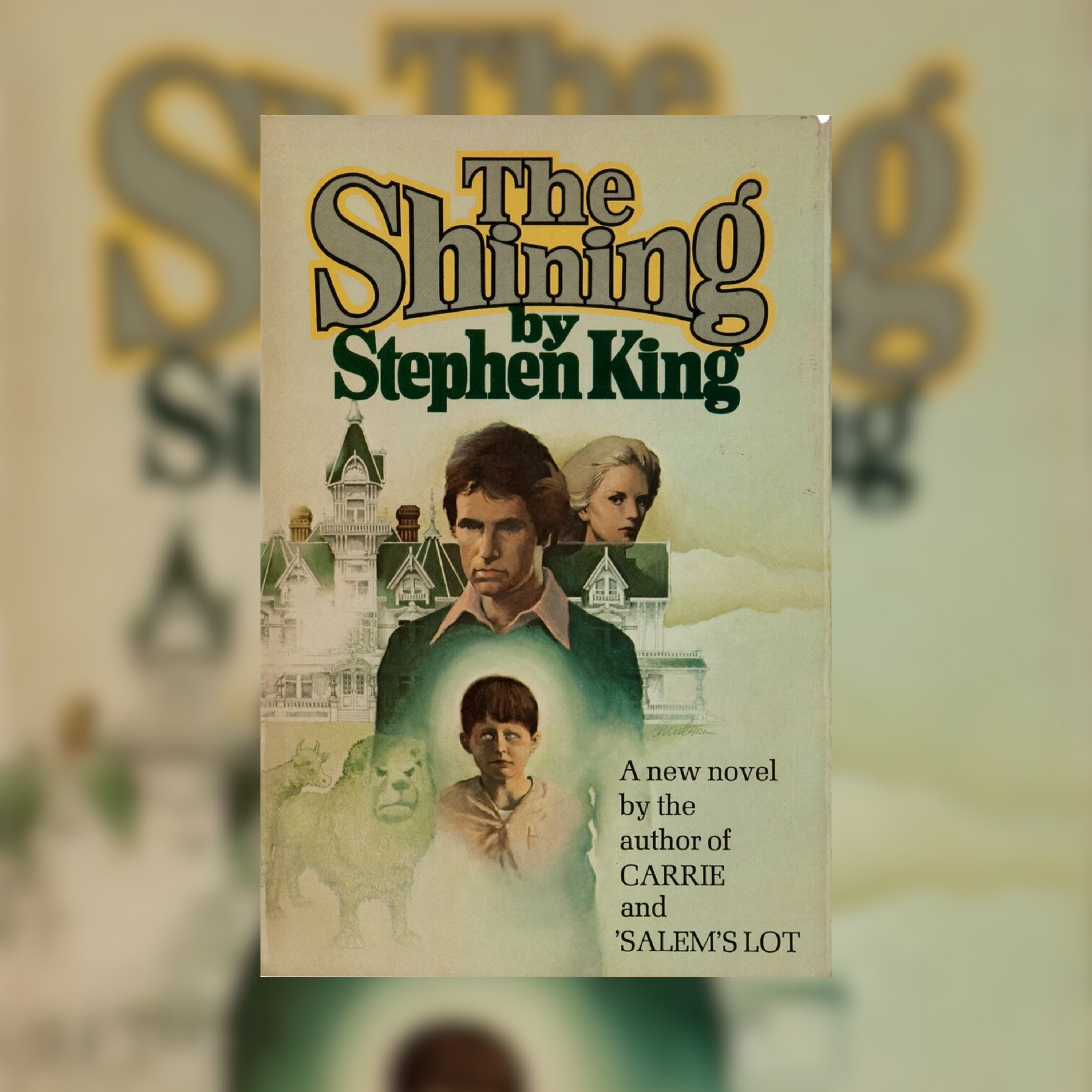
0:00Rebecca Schinsky: Today's episode of Zero to Well Read is sponsored by ThriftBooks.com and it's The Shining by Stephen King. And I think it's appropriate for one of the great masters of the mass market paperback to recommend a paperback edition. This one's actually been the paperback of record. Really looks like since 2013 from Vintage. Reprint again in July 2025. And it's not the original cover, but it's in the spirit of the original cover. I actually like it better than the original cover, which has some illustrations of the three main characters that I find kind of uncanny. But this one is an illustration over the overlook, and there's a snowstorm, and there's topiary animals, and more importantly, Stephen King in giant letters and a 70-ish font, and the shining in slightly smaller, and kind of a scream face built into the snow.
0:51Rebecca Schinsky: I just think it looks really cool, really befitting of this book, this author, and where it belongs on your bookshelf. You can get it at Thrift Books right now. Thanks to them for sponsoring the show. Let's get into it.
1:07Rebecca Schinsky: Welcome to Zero to Well Read, a podcast about everything you need to know about the books you wish you'd read. I'm Jeff O 'Neill.
1:13Jeff O'Neal: And I'm Rebecca Shinsky. This week, we are getting our thrills and our chills for spooky season with Stephen King's tale of the worst seasonal gig ever, The Shining. And we've got a very special guest joining us. Gilbert Cruz is the canon editor of The New York Times and a lifelong Stephen King fan. Gilbert, welcome back to Zero to Well Read. Oh, I'm so happy to see both your faces again. We're so glad to have you here. And, you know, I mean, we've been talking about this for months having you come on the show, but I remember being really pleasantly surprised when I was like, we can talk about whatever you want.
1:45Jeff O'Neal: Who's on your list? And you're like, well, it's got to be Stephen King. Got to be. Got to be. There was no other choice. I have a disease. I don't know why I have not only read all of his books, but read most of them more than once. When there's so many other books out there I could be reading, so many of them are so long, and yet I am who I am.
2:06Rebecca Schinsky: I think you're not alone in that. I think you might be alone in that on this particular podcast, Gilbert. I think Rebecca and I have, we're King aware, but not King acolytes necessarily. But there's so many people that love Stephen King, that have been influenced by Stephen King. We're going to get all to that. I'd love to hear your origin story with King Neer. But before we get into that little front matter, if you'd like to join our Patreon, patreon.com slash zero to well read. we have early ad read episodes at one level we have bonus content at one level i think we're doing something different for the shining rebecca are we talking about that now for this or not
2:40Jeff O'Neal: we're gonna watch the adaptation and our office hours bonus episode will be sort of a book versus
2:45Rebecca Schinsky: movie adaptation conversation yes so look forward to that coming soon also we're creeping close to a thousand ratings on apple podcasts so please a reminder to rate and review wherever you're listening. When we get to a thousand, we're going to open up a listener's choice episode where we'll have some pre-selected finalists, but you'll be able to vote amongst those. We're taking nominations. That does not guarantee it's going to be there. We're not going to do a Boaty McBoatface situation with the show, but we will allow some latitude for something that may be a little bit off our beaten path.
3:20Rebecca Schinsky: And as always, you can shoot us an email, zero to wellread at bookriot.com. remember the pod is there for you always. So you could be listening to a show from last summer, this episode where the mailbox is always there, just like the great books are always there for you. Okay, let's do our synopsis first, I think, Rebecca. Then I want to throw to Gilbert and hear about how he caught the virus, the King virus here a little bit. So do your thing.
3:47Jeff O'Neal: This podcast is supported by Quince. I have found my ideal fall uniform. And friends, it's cashmere. I recently got Quince's Mongolian cashmere sweatpants and the matching full zip hoodie, and I love them both together and separately. Worn as a set, they're basically the luxurious version of sweats. They're extremely cozy, they're pulled together enough that I don't feel like I'm wearing pajamas in public. Separately, the hoodie works as an easy layer with jeans, and the pants are great with a simple sweater or tee. This is going to be my fall and winter travel uniform. I know it sounds ridiculous and indulgent, but that's what Quince does so well.
4:24Jeff O'Neal: Elevated, everyday pieces in really beautiful materials, including Mongolian cashmere, at prices that make them much easier to work into your wardrobe. Everything at Quince is priced 50 to 80 % less than the similar brands because they work directly with ethical factories and cut out the middlemen. I use Quince all the time, and this cashmere set is going to be in really heavy rotation this fall. find the fall pieces you'll reach for most at quince download the quince app for app exclusive offers or go to quince.com get free shipping on your order and 365 day returns now available in canada and the uk too and when quince asks you where you heard about them let them know it's zero to well read it's the best way to support the show that's quince.com or download the quince app for app exclusive offers free shipping on your order and 365 day returns
5:16Jeff O'Neal: Today's episode is brought to you by Avocado House, a new imprint for works in translation. They're the publisher of La Place's Witch by Kaigo Higashino, translated by Stephen Paul. Two people die in hot spring towns in different parts of Japan from hydrogen sulfide poisoning. Investigating the case is geochemist Shushke Aoi, who witnessed the same mysterious girl named Madoka at both crime scenes. called one of the masters of japanese mystery hakaigo higashino is best known for his naoki prize winner and edgar award nominated novel the devotion of suspect x now laplace's witch is scientific genre bending mystery that follows a group of people as they uncover the mysterious murderous truth behind some nefarious gas accidents it's also the first entry in a trilogy it's perfect for fans of steve larson's the girl with the dragon tattoo as both series involved an outsider in the world of detective work, solving a murder case in partnership with a mysterious young woman with remarkable abilities.
6:20Jeff O'Neal: Make sure to pick up Laplace's Witch by Kaigo Higashino, and thanks again to Avocado House for sponsoring this episode.
6:30Jeff O'Neal: Sierra to Well Red is supported by Bowl and Branch. I'm entering what I like to call hibernation season. The days are getting shorter, the nights are getting colder, and suddenly staying home, putting on my jammies, getting into bed early and reading for a while sounds even better than it usually does. And if I'm going to be spending more time in bed, I want that bed to be really good. At the end of a day full of work and errands and cooking and all the other stuff life requires, getting into bed should feel restorative, not like an afterthought. That's why I love my bowl and branch bedding. Their signature organic cotton sheets are incredibly soft and breathable, which is especially important for me because I sleep hot.
7:11Jeff O'Neal: You get all that cozy hibernation season energy without waking up overheated, and the sheets actually do get softer the more you wash them. Bowl & Branch also makes pillows, blankets, and temperature-regulating comforters so you can build the whole cozy situation of your dreams. Hibernation season is coming. Make your bed somewhere you actually want to hibernate. Upgrade your sleep with Bowl & Branch. Get 20 % off your first order plus free shipping at bowlandbranch.com slash wellread with code wellread. That's bowlandbranch, B-O-L-L-A-N-D, branch.com slash wellread, code wellread to unlock 20%.
7:47Jeff O'Neal: Exclusions apply. All right. So after losing his job at a swanky private school in Vermont, Jack Torrance moves with his wife, Wendy, and their five-year-old son, Danny, to a remote mountain in the Colorado Rockies, where he's going to serve as the winter caretaker of a storied hotel called The Overlook. Jack's a recovering alcoholic and a struggling writer, and he thinks the months of seclusion are going to help him stay clean, and he's maybe finally going to finish the play that he's been working on. But he's not the only one with a haunted past, and The Overlook has ideas of its own. Before they even arrive, Danny, their little boy, he has a form of ESP that he comes to call The Shining, and he begins to see visions of horrors and violence that the Overlook has in store for him and for his parents.
8:35Jeff O'Neal: The snow piles up, the phones go out, and the Overlook turns up the terror. There are dead women in bathtubs, topiary animals coming to life, masked partygoers from decades past returning to the hotel bar, and the family begin to lose their minds and turn on each other. Rescued at the last minute by the Overlook's cook, whom Danny briefly met and bonded with over their shared shining abilities and was able to call back from Florida with his mind, Danny and Wendy escape just before the Overlook's famously temperamental boiler explodes and the hotel goes up in flames with Jack inside.
9:12Rebecca Schinsky: All right, we're going to get to the shining itself and the book and the whole discussion, but Gilbert, please educate us. be for us our avatar for the kind of reader who falls in love with Stephen King because America fell in love with Stephen King right around the time with The Shining, essentially. You have a note here about Carrie, the movie comes out, that's popular, and then by the author of Carrie, and this book becomes a huge success. And from there, it's off to the races. Where did you first encounter King? What was your first book? And literally, what's the deal with why we love Stephen King so much.
9:46Rebecca Schinsky: That's a lot of work to do, but I know you can do it. I'll try my best. I encountered Stephen King really for the first time, as far as I can recall, around 1990. So 1990 was when the TV miniseries version of It, starring the recently departed Tim Curry as Pennywise the Clown, came out on ABC over two nights. I was nine nine ten something I should know what year I was born I was around nine or ten and I watched it and and I had already been a child who had seen a bunch of horror movies to that point and it it it pushed me in the direction of Stephen King so I bought or I got the book somehow it was a quite large book it it's over a thousand pages I remember carrying it around I remember taking it to school I remember being very shy about but also excited about the various scenes in it that a kid should not be reading and disturbed greatly by other scenes.
10:50And that I think is what set me off. I was a child that already was predisposed towards liking the supernatural and sort of creepy things. And then I discovered this person who had written a bunch of books and who had had a bunch of those books adapted into movies, which is as important for the early story of Stephen King as anything else, that I was able to discover and sort of sink into. I had no idea how many of his books I would end up reading. I definitely took a break. I think once I got to high school or college, I just stopped reading Stephen King. There were many other things to read.
11:31And then at some point in my mid to late 20s, I got back in and I became obsessed once again.
11:37Rebecca Schinsky: How did you get back in? Do you remember? Like, what was it that got you back in? I was at the Oregon coast. Okay. At a place that I think I've ever talked to you about before, Cannon Beach, which we're recording this on the day of my wedding anniversary. Happy anniversary. Gilbert, you showed up for the pod on your anniversary. Thank you to your partner for letting you let us deal with you for a little while. That's relevant to this because we got engaged at Cannon Beach and we had been going there for a while and there's a wonderful used bookstore in Cannon Beach. And almost as in a dream, I remember one of these years I sort of just floated over to the used fiction shelf and I pulled out Stephen King's The Gunslinger, which is the book that kicks off his Dark Tower series.
12:25I'd never read it before. And I read it in a flash on the beach. It's a quite short book compared to his other ones. And I was just in. And I found myself going to the next one and the next one.
12:37Jeff O'Neal: Kind of a classic millennial story to be exposed to Stephen King way earlier than a kid should have. And I think that's where our paths diverge. I read The Shining when I was like nine or ten. I found my dad's paperback lying around. And those were like the halcyon days where your parents would just be like, go for it, kid. and it scared the crap out of me and I have not revisited The Shining since but I was talking with a friend just this morning whose kid is embarking on their own and he was like I know what's coming for him but I'm going to let him do it anyway it's a formative experience
13:12Rebecca Schinsky: so from It, did you know what the next one did you go back to the library or bookstore Gilbert to figure out what the next, I'm trying to think of what it would have been available or like Salem's Lot or The Stand maybe I think it might have been Salem's Lot I can't remember if the next one was precisely Salem's Lot, but I do remember at some point, I don't know if there's a good story to tell, but there was a Barnes & Noble that used to be in Grand Central Station. I grew up in New York. Oh, yes. I've lived in New York most of my life. There was a Barnes & Noble there. I remember buying the paperback copy of Salem's Lot, reading it, and then bringing it back and getting a refund, not because I didn't like it, but because I was a broke child and I wanted to spend my money on another book.
13:55Could I have taken it out of the library? Possibly. I don't know why I bought it.
13:59Rebecca Schinsky: Keeping the tickets on your prom dress? Isn't that the story, the version of Dye Gilbert?
14:04Jeff O'Neal: I feel like Stephen King would be fine with this. He's doing okay.
14:09Rebecca Schinsky: He's doing okay. He's doing more. But I remember feeling like I needed to not even break the spine. Like I needed to keep the copy perfect so I could take it back.
14:18Jeff O'Neal: So this was the plan all along. I know. Kids are weird. Yeah, kids are weird.
14:23Rebecca Schinsky: Young Gilbert needed a library card. But anyway, beyond that. Oh, you know what it was? I had a library card, but I did something bad. And so I got my library card taken away. That's what it was. I think we have an after dark with Gilbert. Driven to a life of crime. Yeah, literary miscreant. I still have a book over there that I might have taken from the library and never returned 35 years ago. It's possible I may have a book from the Columbia Library on my shelf that I am too sheepish to know what to do with still. Anyway, so Gilbert, I think your story is like so many stories of readers are ageous and even younger to this point where there were enough Stephen Kings on a bookshelf, at a library, at a bookstore, at a friend's house or something like this.
15:11You read one almost stealthily, scandalously, subterraneously,
15:19Rebecca Schinsky: and that's a third rail that people want to keep grabbing onto, and they grab it onto over and over again. And because he is so prolific, and there's been so many, you can really go down a rabbit hole. I know these things are hard to articulate but maybe I'll try to get you to articulate it it it's not just that it's horror with Stephen King like there's something else with it's horror plus King's own version of his own sensibility um do you have any sense of what it is that makes King King and not you know there are plenty of good horror writers but there's really only one Stephen King. Absolutely.
15:55I think, well, first to your first point, I think there was a way, and my family wasn't necessarily like this, but I've heard other people say this thing that Rebecca just said, but I saw them on my parents' shelf. I saw them on my friend's parents' shelf. And there also was a period in the 80s and 90s when King, John Grisham, Michael Crichton, they were just all these paperbacks like you know you could sort of Tom Clancy all of whom I read at that age you can sort of pull off.
16:25Jeff O'Neal: Yeah Daniel Steele we'll talk about that later. Absolutely but there's a way in which the reputation of Stephen King as someone who writes scary books horror books books that have a little bit of an adult feeling to them even though I think they are accessible many of them to kids I think that was the appeal for people our age you could you could have read as I did a time to kill and the firm but none of them have a clown biting someone's head off you know something it's just like that that drill of the this i shouldn't be picking this up right now but once you do pick it up um he just this is this is the thing that's always been true of him he just writes a lot about kids particularly in his early years i think less so as he as he uh got older, but he wrote, whether it's Carrie or It or The Shining or the story that the movie Stand By Me is based on, they're just a ton of stories that have young children or children or teenagers as their protagonists.
17:28And so there's sort of like a character or characters that young people were often able to sort of attach themselves to. And I also think he likes people. Like his characters are ones that you find yourself being able to inhabit. And it's so much true in The Shining in particular because he puts you right in the minds of each of these people. In many cases trying to say, I'm encountering something crazy. What am I going to do? And these are just normal people who are coming against killer clowns or haunted hotels or vampires in their small town. They're not superheroes. They're not special agents.
18:11They're just regular people.
18:13Jeff O'Neal: I think the everyman of it, like you really can't overstate how important that is and how effective it is in the writing. Like King rolls out some flashy vocabulary at a couple of points. But for the most part, it's really accessible, very personable. And these are people that we know, people that we might be. I had forgotten how much of it was about Danny and about the kid. And it made me wonder in that reading when I was nine or 10, like, was that part of what made this sticky and exciting for me? It's a great point.
18:45Rebecca Schinsky: I think, Gilbert, something you said about he likes people. There's a deep humanity to King the person, but also in these books, like he cares about these people. They're not disposable, right? Sort of cannon fodder or for a zombie or a demon or a fog. at some point there are people with real problems, real issues that get metaphorized or exaggerated or just get in sort of bad situations. But he's interested in when there's, I think the phrase I read this week is, he's interested in what if there's a crack in the mirror in your life? And what does that look like? And the crack could be large, it could be small.
19:19Rebecca Schinsky: And how do you deal with it? And that he also then bridges over into stories, like you said, with The Body, which is the short story that Stand By Me is based on, or Rita Hayworth and The Shawshake Redemption, which of course what The Shawshake Redemption is based on, is actually interested in people being, he's interested in friendship, right? I mean, I think that's one of his other great sort of teen into older adult sort of situations is people caring about each other, coming to each other's age. We get one of the great, like someone trying to come to someone's rescue, even though they have really no moral obligation to them in this book, which I, Like, you know, I'll talk about my own story here in a minute.
19:56Rebecca Schinsky: Like that really struck me as like the hero of this story is this. This guy who meets this family for like 45 minutes, he's summering in Florida and spends what must be an ungodly amount of money on two first class plane tickets the day of. We all know how expensive that must have been. And that's sort of the beating moral heart of this. But on the other hand, he has angels and demons, I guess what I'm saying, and that angels wrestling with demons literally and figuratively is what makes it i think for a kid especially interesting it could have worked if it's just straight up scary but it's also it's also relatable is not the right word but there is a it's not nihilistic i guess what i'm trying to say that's not that's not the mode yeah there's a warmth to it at the same time he he almost without fail um there is a quote happy ending or good wins out in the end of most of his stories.
20:53A lot of people might die along the way. Some of the main characters by the end of a book may no longer be with us, but there is, I think he has a lot of resistance inherently to ending a book in a nihilistic way.
21:08Rebecca Schinsky: Yeah. Right. And that's one thing where he's like, there's Poe all over his work and all over this particular book, but that's one way he meaningfully differs than say someone like Poe in a more traditional sort of Gothic situation. All right, let's move to talk about The Shining itself. So this book comes out, it's his third book, Carrie First in Salem's Lot. Carrie, famously, this prom scene in the movie is maybe the most indelible image from any Stephen King work, maybe outside of the idea of Pennywise, like the visage of Pennywise in various forms. And then Salem's Lot, which is a very good idea.
21:49Rebecca Schinsky: This would be a good idea today, like just vampires walking around and like what happens. So he does okay with those. Then The Shining comes out. The note here that Rebecca has, the hardcover advance for Carrie was$2 ,500. The paperback rights went to$400 ,000. That's two and a half million bucks today. Gilbert, do you want to talk about the movie Carrie in 76? Because it was your note that says, well, hold on a second there. This is not just book, book, book, blip, bam. There's this movie in the middle. So I think that the early, you know, Stephen King has been writing for 50. He's been publishing for more than 50 years now.
22:32And so we all think of him as someone who's been around forever. But the early story of Stephen King, I'm convinced, has to do with the intersection of publishing and film. He published Carrie, and the hardcover didn't particularly do that well. He was a new author. It was his first book that was published. As you noted, this paperback advance, and this always makes me think about how paperback publishers used to be different from hardcover publishers. It's a wild thing. There's a whole bifurcation there, and I'd really love to learn more about the history of that in American publishing. But he gets a lot of money for this.
23:11and his editor at the time, this guy Bill Thompson, who also was John Grisham's early editor, says before he publishes Salem's Lot, his second book, he gives him two manuscripts as the story goes. One is a book that would be published decades later called Blaze, which is not a horror novel, and the other one is this book about vampires. And Bill Thompson says, are you sure you want to do this? Because if you publish Salem's Lot, a book about vampires, after publishing this book about this girl with psychic powers, you're going to be the horror writer. It's going to be hard to escape that. He does, does fairly well.
23:47He goes on to write and publish The Shining. And it's Brian De Palma's hit, blockbuster version of Carrie that puts the name of Stephen King just out there in a way that it wouldn't have been if he had just kept publishing books. And it kicks off a decades long, but particularly the 80s run of Let's literally adapt everything that Stephen King has ever written from major books like The Dead Zone, which ended up being a movie directed by David Cronenberg, to the story Graveyard Shift, which is about big rats underneath a mill in Maine. and so as he continues to publish in the 80s he he and these movies some of which are not very good at all um start to come out like that there comes this reputation of whether or not like he is a schlock master and it's as much because of all these movies as is because of his books but by the time shining was published he said in an introduction uh to a new edition that he put back version of that edition here.
24:58He characterized this as a crossroads novel. And he thought at the time, this is a moment where I can just write the same way I've been writing before, or I can try to step it up a notch. And I think he does in this book, because the level, as we'll get into, I imagine, of psychology and interiority that he gets to into this book in particular, you can see flashes of it in Carrie and Salem's Lot, but it is just on a completely different level in The Shining. And so, you know, his first several books are just, in my opinion, they're just all bangers. He just had an amazing, you know, he goes from Carrie to Salem's Lot to The Shining to the first version of The Stand.
25:47There's a whole story about different, you know, longer version of The Stand being released in 1990, The Dead Zone. It's just incredible.
25:56Jeff O'Neal: And the run is continuing. Like last year, there were adaptations of Running Man and The Long Walk. And we just continue to get it. There is a TV adaptation coming out, a new TV adaptation coming out of Carrie. That's right. It's like a six or eight part series or whatever. It's directed by -
26:12Rebecca Schinsky: We're just second cycle adaptations. I hadn't quite put that together, but we're coming around for multiple bites of the apple. We're in the third cycle because Carrie has been remade already. This is the third remake of Carrie. And it's been done by this guy, Mike Flanagan, who's directed a bunch of Stephen King adaptations, including Dr. Sleep, the sequel to The Shining. So he is sort of like the man who Stephen King trusts now with his stuff. And he's, for the most part, pretty good. So I'd be interested to see whether or not this thing that works at two hours works over 10 hours or whatever it is.
26:47Interesting. That's so fascinating.
26:49Jeff O'Neal: I loved this note in the story about King understanding that The Shining was a crossroads moment for him and a decision point in his career. And like, boy, does it work? This comes out. It's his first hardcover bestseller, really cements him as a modern master of horror. And that happens to the tune of more than 10 million copies sold today. It's hard to find exact numbers, but this book flies off of shelves. critics are kind of mixed on Stephen King. I think that remains true. And it's one of the interesting pieces of conversation. But the original New York Times review by Richard Linkman calls him a writer of fairly engaging and preposterous claptrap.
27:31It's a word we don't use as much anymore.
27:34Jeff O'Neal: Can we bring back claptrap? Like that's incredibly useful. But I don't know that I would apply it to Stephen King. Fun little bits of backstory for the listeners just as we continue on into this. It's inspired in part by Stephen King visiting a hotel in Estes Park, Colorado called The Stanley in 1974, where he stayed in room 217, which is a room that becomes quite important in the story. Also inspired by his reading of a 1950 Ray Bradbury short story called The Veldt and wanting to write on his own a story about a boy whose dreams become real. Jeff, you mentioned a few minutes ago, like there's Poe all over this.
28:14Jeff O'Neal: Ray Bradbury has inspired it. There are literary references all over this book. Like King is a great reader as well.
28:21Rebecca Schinsky: I don't think we have that here, Rebecca. I meant to put that in. He's a wonderful reader, lifelong reader, and a very generous blurber and like advocate for other kinds of books.
28:29Jeff O'Neal: Like the blurber, I think. He is.
28:31Rebecca Schinsky: He really is. Yeah. He also is someone, and you see it in this book and you see it in the other ones, he cannot publish a book without referencing or having his characters reference like five other stories. It is something that is both wonderful because I think it leads people, you know, maybe to other books. But it also, once you've read all of them, you're like, all right, we got it. We got it. We get it. Yeah. Yeah. Is it you only write about people who have read, you know, and can reference at a moment's notice? Someone in this I noticed was reading E.L. Doctorow's In Hard Times, which is this like Western revenge story that no one would have heard of in 1970.
29:12Rebecca Schinsky: It's extremely obscure. that particular.
29:15Jeff O'Neal: But somehow it doesn't come off as pretentious. Like, I think this is one of the pieces of Stephen King magic is that you can get these references to pretty highbrow or classic literature, but you're like, yeah, okay, cool. Like, we're just going to quote Edgar Allan Poe forever.
29:27Rebecca Schinsky: Let's do it. Before we move on, Rebecca, I want to linger on the origin story. And this is also something about Stephen King I'm just going to put into the air. And about all writers, especially storytellers, musicians, people that are in the public, be careful what the stories they tell you about themselves and the origin stories, because I have a couple coming up in here in a minute. Because the further story that he tells is he and his wife, Tabitha, he says he wanted to get out of Maine, and he opens the Atlas and puts his finger down in Boulder, Colorado. I don't know if I can believe that as far as I can throw Stephen King, which wouldn't be very far.
30:01Rebecca Schinsky: And then he says he gets this big hotel. They're at the end of the season. They're the only two people in this huge hotel, and they're dining one night, and all of the other chairs are up on tables, and it's just them, and there's only one thing they could order at the menu because that's all they've got left in the kitchen. I don't know whether or not to believe that, but I think we can sort of hold that as the mythological making at the same time that he is taking ideas from the world and he pretty quickly puts them into stories. I think he is not averse to saying, what if this happened? What if there were giant rats in the town?
30:34Rebecca Schinsky: Let's see what goes with this. But I'd also be careful with King, who is probably our great storyteller, the story he's telling about those stories also be careful there at the same time it's a fun story and it kind of doesn't matter if it's true but i think it's interesting that this is also part of his own mythology about yeah it's hard to i mean i've i've read so many interviews with stephen king going all the way back to the 80s and 70s and i wonder if you went back to the first interview about this book like he told he tells the same story but he and his family they did moved to Boulder, Colorado for a time from Maine.
31:12They also moved to London for a time, which is where he met the author Peter Straub. And they discovered Maine is where we belong, and we just should not leave Maine. So they eventually went back. But it's interesting, his time in Boulder, Colorado was fruitful. He was inspired, so he says, to write The Shining. He also says he got the inspiration for the book It from his time in Boulder, Colorado. And so, you know, clearly he didn't like it enough to stay there. But it was fruitful in some way.
31:44Jeff O'Neal: You don't want to put that on the tourism promotional materials, like welcome to Boulder, inspiration for it. I mean, also the Boulder of now is very, I imagine, very unlike the Boulder of 1977 or whatever it was.
31:58Rebecca Schinsky: I wonder where you could put Stephen King where he wouldn't be inspired to write some crazy ass book. Like, is there literally any place in America he could have dropped and been like, you know what? I got nothing about Hayes, Kansas. I think he would have come up with something no matter where he was. Although that said, I feel like I would love to see more, and he's just not interested in doing this, more Stephen King books or stories set in Los Angeles or San Francisco or Chicago. You know, it's a fairly limited number of destinations. He's pretty uninterested in cities, actually, now that you say that.
32:32Rebecca Schinsky: Fairly uninterested in cities. for I think there are some structural reasons that's exaggerated in The Shining where the sense of isolation and there's nowhere else to go is important for a lot of how these books are put together with the city is like there's always somewhere else to go there's always people around there's always you know surveillance of some kind all right Rebecca let's continue on here what do we want to pick up oh let's do the alcoholism stuff we're going to get more into this You sounded a little too excited about that. It's super. I mean, it's super fascinating all along.
33:03Jeff O'Neal: I mean, so the main character, Jack, is a recovering alcoholic. He's white knuckling his recovery. We know that he hasn't had a drink in like almost two years, a year and a half, something like that. But it's been tough. And he's not like in the program. He just had a horrible moment where he was drunk and got mad at Danny for messing up some papers in his office. like yanked the son's arm and broke it and sort of had a come to Jesus moment. But also Wendy said she would leave him if anything like that ever happened again. So Jack gets clean and is clean when they begin this adventure caring for the overlook.
33:43Jeff O'Neal: But the like the call of a drink is always there. And as the horror turns up, his desire to drink, of course, increases. he like brings back the tick that he had when he was drinking of constantly wiping his mouth with a bandana there's like the threat that you're going to take another drink runs right alongside this feeling that he's losing his mind and the book can function as an allegory for like the ways that addiction can make you slowly lose your mind um but apparently he didn't know that that's what he was writing he didn't know that he was writing an allegory for addiction until many years later because King himself also did struggle with alcohol and has been sober since the 80s, but he was actively drinking through the 70s, like working during the day, drinking at night until an intervention with his family.
34:35Jeff O'Neal: And I know, Gilbert, you're interested in what's going on with that too. Yeah. I mean, he, as he writes in his book on writing, which is a wonderful sort of half early - One of the classics. We'll get to that at some point on this show too. And half, you know, like writing manual. Many writers do books of this sort. But he says in that he was the guy who had written The Shining without ever realizing that he was writing about himself. And as you rightly note, Rebecca, he is an alcoholic and a drug addict. Not only did he drink a lot, but he did a lot of drugs, particularly the wealthier he got.
35:15And he wrote in on writing that he, this might be somewhat of an exaggeration, but he just doesn't remember writing Cujo at all, for example, because he was so sort of blotto when he directed his one movie, Maximum Overdrive, which is a very curious film about trucks that come to life and then try to kill people.
35:38Rebecca Schinsky: Listen, I don't want to speculate what drugs you were doing, but if you were doing a lot of cocaine, you might make a movie called Maximum Overdrive about things that come to life. He did this and he also was like, I was really messed up. So there was an intervention. He has been sober for much of the intervening decades. He had a brief drug relapse, I believe, after he had his terrible accident in 1999. He got hit by a car or a truck while he was walking on the side of the road in Maine. It almost killed him. The one side of his body was all messed up. And they had to put him on painkillers. And he had to get off painkillers again.
36:27He was doing fine until he had this terrible accident and then he had a bit of a relapse. So this book about an alcoholic who doesn't know if his marriage is working, doesn't know if he's meant to be a good dad, is trying to figure out what it means to be a good dad because his father was also an alcoholic, was his life. And it's part of the reason that he, we'll touch on this later, maybe briefly, dislikes the film adaptation of The Shining, the Stanley Kubrick version, so much. Because in his mind, he was writing about a good man who loves his wife and child, but was struggling with addiction and with all of these problems.
37:12And that was very personal to him. And the film version of The Shining is about Jack Nicholson being crazy from the beginning of the film. And there's no love. It seems like there's no love in the family, certainly not between the husband and wife. And for all the other things, I believe the film's a classic, but you can definitely see why a story that is so personal to King as this one was, seeing that version of it on screen would annoy him. Yeah.
37:40Jeff O'Neal: The subconscious is wild. This podcast is supported by Quince. I have found my ideal fall uniform, and friends, it's cashmere. I recently got Quince's Mongolian cashmere sweatpants and the matching full zip hoodie, and I love them both together and separately. Worn as a set, they're basically the luxurious version of sweats. They're extremely cozy. They're pulled together enough that I don't feel like I'm wearing pajamas in public. Separately, the hoodie works as an easy layer with jeans, and the pants are great with a simple sweater or tee. This is going to be my fall and winter travel uniform.
38:16Jeff O'Neal: I know it sounds ridiculous and indulgent, but that's what Quince does so well. Elevated everyday pieces in really beautiful materials, including Mongolian cashmere, at prices that make them much easier to work into your wardrobe. Everything at Quince is priced 50 to 80 % less than the similar brands because they work directly with ethical factories and cut out the middlemen. I use Quince all the time, and this cashmere set is going to be in really heavy rotation this fall. find the fall pieces you'll reach for most at quince download the quince app for app exclusive offers or go to quince.com get free shipping on your order and 365 day returns now available in canada and the uk too and when quince asks you where you heard about them let them know it's zero to well read it's the best way to support the show that's quince.com or download the quince app for app exclusive offers free shipping on your order and 365 day returns
39:13Jeff O'Neal: Sierra Well Red is supported by Bowl and Branch. I'm entering what I like to call hibernation season. The days are getting shorter, the nights are getting colder, and suddenly staying home, putting on my jammies, getting into bed early, and reading for a while sounds even better than it usually does. And if I'm going to be spending more time in bed, I want that bed to be really good. At the end of a day full of work and errands and cooking and all the other stuff life requires, getting into bed should feel restorative, not like an afterthought. That's why I love my bowl and branch bedding. Their signature organic cotton sheets are incredibly soft and breathable, which is especially important for me because I sleep hot.
39:54Jeff O'Neal: You get all that cozy hibernation season energy without waking up overheated, and the sheets actually do get softer the more you wash them. Bowl and branch also makes pillows, blankets, and temperature-regulating comforters so you can build the whole cozy situation of your dreams. Hibernation season is coming. Make your bed somewhere you actually want to hibernate. Upgrade your sleep with BollandBranch. Get 20 % off your first order plus free shipping at BollandBranch.com slash wellread with code wellread. That's BollandBranch B-O-L-L-A-N-D branch.com slash wellread code wellread to unlock 20%.
40:30Jeff O'Neal: Exclusions apply.
40:36Jeff O'Neal: this episode is sponsored by vented i have a theory that most of us wear about 20 of our wardrobes 80 of the time i don't know if this is actual science but it certainly feels true when i open my closet and i find myself reaching for the same handful of things over and over and it raises a question how much money is just hanging in there in the form of perfectly good clothes that i'm not wearing. That's where Vinted comes in. Vinted is a secondhand marketplace app that makes it easy to give those clothes a second life and earn some extra money in the process. Listing on Vinted is quick and simple, and once an item sells, Vinted creates the prepaid shipping label for you.
41:13Jeff O'Neal: And here's the really appealing part. Vinted has no seller fees, so you keep everything you earn. The Vinted app is also free to download. I love the idea of having a closet that's full of things I actually wear instead of things I feel vaguely guilty about not wearing. And a Vinted can help me make some money while I'm getting there even better. So take a look at what's hanging in your closet. You might be surprised how much you can earn with Vinted. Download the Vinted app for free to start listing with no seller fees. That's the Vinted app, V-I-N-T-E-D. Download it for free to start listing with no seller fees.
41:50Rebecca Schinsky: I say that all the time. Yeah, right. Actually, I don't say
41:54Jeff O'Neal: that i just sort of feel it um wild stuff uh the title rebecca you have here comes from john lennon's
42:01Rebecca Schinsky: instant karma we all shine on king is also a great music lover music also appears all the time he makes references in interviews often will go to a musical analog usually it's a dylan one in my experience of reading uh stephen king interviews he's referencing dylan all the time um originally titled the shine but was convinced to change it because that was actually a racial slur which is interesting given the racial dynamics in this book, which are complicated.
42:28Jeff O'Neal: And the book is not lacking slurs of other sorts.
42:32Rebecca Schinsky: No, there's slurs in there of different kinds, but I guess that's different than putting it on the cover. And, you know, you have this here. We often do this. We go to Goodreads just sort of to check in with the Vox Populi. But I thought that it would be the most popular book. That's just what I have in my mind. But this one you say, or you did the research, and I believe that you looked at it correctly, is 1.78 million ratings with an average of 4.28 stars. But it is the other one that has more than a million.
43:03Jeff O'Neal: Yeah, actually, the thing that was most surprising to me about this, because I think when Gilbert and I had initially agreed that we would do Stephen King when he came on the show, I was like, well, let me go think about the Stephen King options. I looked at what's most popular, and that's part of the math we do here. It's not the entire math. But I was really surprised that only two Stephen King books top a million ratings on Goodreads. And my working theory is just that so many of them are older and predate the rise of Goodreads and people are reading Stephen King. But there's, you know, we don't have the monoculture around these kind of big blockbuster authors anymore that we used to have.
43:37Jeff O'Neal: And that was really interesting to me.
43:39Rebecca Schinsky: Well, but Gilbert, I think you said something earlier that I wanted to touch on too, that he wasn't John Grisham or Tom Clancy in terms of like individual titles selling 5 million copies. Really at any point, some of it was too many, but I think there was a ceiling to the audience because I read the Paris Review Art of Fiction interview he did. And he talks about like, even Stephen King is doing a little scoreboard watching with like John Grisham, who he says like, well, Grisham outsells me four to one. Like he's not jealous. He's like, that's the truth of it. and those books just had wider appeal because these books are freaking weird man they are i mean i think there was a point in the 80s when he was he was it he was that before before the grisham verse came in absolutely but then you know but then the the the early 90s came and john grisham michael crichton um tom fancy for sure uh and other authors and rice came into to sort of the popular fiction space.
44:38And he got a little jealous. I mean, there is a, I'm not going to tell the details precisely correctly, but he, I believe he switched publishers at points and renegotiated a contract or whatever because he was looking at someone like Tom Plancy and be like, why aren't you, why am I not getting what this guy is getting?
44:58Jeff O'Neal: The rarest of successes. How come I don't have it? And so even, you know, he was much younger than he is now, but even someone like Stephen King, you know, is also looking at the landscape and cares about success. He is one of the most popular authors that America has ever published. And yet, you know, publishing to him at times has not treated him right. Part of the reason that he left Doubleday, I recall to begin with, and Doubleday published his first several books, is because they weren't giving him the money that he thought he should be owed having sold so many copies.
45:36Rebecca Schinsky: He has a very unusual, and I don't know the details of it either, except to say that he has an unusual current publishing deal where he doesn't, I don't even know that he gets advances, but he has a huge piece of the back end with his current publisher. Like he gets whatever, you know, the standard royalty is. I think he gets triple that. So he gets the long tail more than the front end advance. He has switched publishers. Again, he's been publishing for 50 years. He has switched several times. I think he used to be a Doubleday hardcover publisher, I believe. He was at Viking for a while. And he has been at Scribner now.
46:10Scribner for a long time. Simon & Schuster. The home of, you know, Fitzgerald and Hemingway and all that for several decades.
46:15Rebecca Schinsky: Yeah, it's fascinating. He's a very interesting person. He was born September 21st, 1947, so happy birthday a few days ago, 79-year-old Stephen King. His father was a traveling vacuum salesperson, which is like something out of an Arthur Miller play. That's literally something that someone could be at some time. Left the family when Stephen was two. His mother moved them around really for the next decade with family members trying to find, purchase somewhere, a hardscrabble itinerant life. They eventually move back to Maine so that she can take care of her aging parents. They stay there after they pass away.
46:52Rebecca Schinsky: She works in a facility for people with mental health issues, which I guess is also very on brand for a Stephen King sort of origin story. But they were broke most of the time. And that's another I don't even know that it's subtext in The Shining, guys. I think this is super text in The Shining. Like how they ended up in this particular place. Money is a problem. He began by copying out panels of comic books when he was six or seven years old, voracious reader. His favorite book as a kid and an author that he cites frequently in later interviews is Richard Matheson's The Shrinking Man, which is actually better known as the movie The Incredible Shrinking Woman, which it got turned into.
47:33Rebecca Schinsky: Matheson said that this story of a man who shrinks down to the size of a bug is about post-war American masculinity. I think that's something else about King that I don't know if it's intentional or not with this one. He says it isn't. I don't know if I believe him. I'll hold that space for it. But the books are also, they're scary and they're horror, but they're all about something. Usually they're about some phenomenon or some question or some condition. And that's something he seems to have gotten from the very beginning. He says the first horror movie, he saw his first horror movie at the age of six or seven and that it was Bambi.
48:05Rebecca Schinsky: Again, that's a great line. I don't believe it. It's a great story. I don't believe it. Here's another one. I'm not quite sure. I believe that there was a bookmobile in a small town and he was reading like Nancy Drew and the Hardy Boys, you know, normal sort of readerly kid stuff. And he asked the bookmobile vendor, curator, librarian, whoever, is there any book about how kids actually are? And the bookmobile person gave him Lord of the Flies by William Golding, which again is a great story. I don't believe it for a second, but it's a good story. Well, he has said many times that Lord of the Flies is his favorite book.
48:40That I do believe. And he named the town that is in many of his stories and that eventually became the name of the town of Rob Reiner's production company. Castle Rock comes from Lord of the Flies. So it's very important to him.
48:54Rebecca Schinsky: So very important to him. So important that the kind of thing he might post facto make up a story about, Gilbert. That's what I'm saying. I think both of those things can be true. So suspicious.
49:02Jeff O'Neal: You are really suspicious today. I'm willing to believe this.
49:06Rebecca Schinsky: Okay, Rebecca, you can be credulous and I can be the conspiracy.
49:09Jeff O'Neal: If he weren't famous, we would believe it. Like all of us have important origin stories about the librarian or the teacher that gave us something.
49:17Rebecca Schinsky: A seven-year-old asking them how kids really are? I don't believe that for a second. Okay, anyway, we can disagree about our belief in that.
49:23Jeff O'Neal: Cold water, Jeff O 'Neill.
49:25Rebecca Schinsky: University of Maine at Orono on scholarship wrote for the paper, studied English, mentored by a professor named Bruce Hatlin who was hugely influential. So shouts out to all the English teachers out there on graduating. He got his teaching certificate, had a hard time finding a place to teach, but eventually ended up teaching at a private high school. That is also here with Jack Torrance. It's also here in Cary, like this coming out of this high school and all the dynamics there, both on the student side and the teacher side. And he begins selling stories in magazine, et cetera. He sells Cary.
49:58Rebecca Schinsky: the movie comes out, and then he's a professional writer, basically from that novel.
50:02Jeff O'Neal: We just need to linger for a minute on, he sells Carrie, that he comes out of the gate with that book. 199 pages. Yeah. So, I mean, it was an amazing first novel. Of course, as is the case with almost any author, it was not the first novel that he wrote. He had written four or five books before then, many of which ended up getting later published under a pseudonym. his Richard Bachman was the pseudonym that he used. A lot of those books get published later, but Carrie, which almost did not get published because again, Jeff to go to the legend, print the legend, print the legend.
50:42Rebecca Schinsky: Yeah. You know, he was working on Carrie, couldn't crack it, couldn't get into the mind of a teenage girl, obviously didn't really understand so much about what, like the mechanics of what it even would be to be a teenage girl who who experiences psychic phenomenon after getting her first period one day. He throws out the first, you know, 20 pages or so of the manuscript. His wife, Tabitha King, who's also an author, as are now several of his children, fishes that group of 20 pages out, dusts the cigarette, you know, ashes off of it and says, there's something here. You really should keep going.
51:20And he keeps going. And he publishes Carrie, which is a very interesting book. One of the shortest books he's ever written. He had to pad it out almost. There's a reason that there are so many like fake newspaper stories and and like reports from the society of the psychic phenomenon in that because he only had a hundred something pages of actual story. And he was like, I need to this needs to feel more like a novel. So you put all these other things in. Fascinating.
51:53Jeff O'Neal: Also, maybe one of the underrated wife guys of the 21st century, Stephen King, like will not miss an opportunity to talk about how awesome Tabitha is.
52:01Rebecca Schinsky: Still with her. Still with her. Let's see. So, yeah. So Carrie and then the following says left it well. The movie comes out. Then The Shining book does extremely well. And now he's Stephen King. At this moment, I think he's Stephen King is, again, you don't have multiple decades of him, but the brand Stephen King's alive as well. I didn't mention this before. Or his father's given last name was Pollock. And he changed it to King. Is Stephen King Stephen King if his name is Stephen Pollock? I think Stephen King as a brand just works. Is he 21 % less famous if his name isn't Stephen King? I don't know.
52:37Rebecca Schinsky: I feel like there's something there. It's an interesting prompt. I think it's easy. It was very easy in the early 80s to start calling him the King of Horror given his last name. Yes. It's right there.
52:48Jeff O'Neal: It does lend itself. really nicely to that.
52:52Rebecca Schinsky: I think of him as sort of the Archaeopteryx of sort of the popular to literary fiction continuum of the Archaeopteryx is like this bird dinosaur that's sort of both and neither at the same time. This has died down to some degree, but in the 80s and 90s, the Stephen King, is he good? Is he bad? Is it literature? Is it not? Is it claptrap? It's certainly preposterous, but is it preposterous claptrap? We don't really know. But so many of the authors I said have interviewed personally or heard talk about their own reading lives, Sight King, and especially the experience of picking up a giant King book off the library shelf and totally getting lost in it.
53:26Rebecca Schinsky: And he describes being grabbed by the throat by Lord of the Flies. And that's something he's been trying to do for readers for decades. And so many of the people that grew up loving books who are now in books like Gilbert and us and a whole bunch of other people, this is one of their people. And that his popularity has troubled that line and continues to trouble it to the point where I'm not even sure we have a distinct line like people were trying to enforce in 1987, or there's this famous 2003 National Book Award controversy where he gives a special commendation. He lists a bunch of authors he wished people would read, and Shirley Hazard gets up and said, well, we don't need Stephen King giving us lists of books to read.
54:06Rebecca Schinsky: It was still there 23 years ago, but I feel like that's really died down, and I I think it's because over time that his his popularity and his the place in the hearts of so many readers and writers has given him a patina that he didn't have in like 1983 of being considered a great American writer. This divide is is fascinating because, yes, early in his career, certainly, you know, the New York Times did a lot of this or they reviewed his books. They're like, you know, he's just pumping. We're not using a we, Gilbert, that you're not taking credit for this. I did not work for the New York Times in the 1980s.
54:41I'm very proud of my institution, but I was not there.
54:44Jeff O'Neal: Let me ride for Gilbert here. The Times book review under Gilbert's leadership covered a lot of genre. Yeah, that's fair. But the genre literary divide really, I think, came to a head, Jeff, as you point out, at the National Book Awards in 2003. Stephen King gets a Distinguished Medal for American Letters or something like that awarded by the National Book Awards. He gets up and he gives a speech called Building Bridges. Like he really is talking about building a bridge between popular fiction and literary fiction. It's a good speech. I have it linked down below. And a lesson the National Book Awards still have not learned.
55:22No comment. No comment. And then, as you say, Shirley Hazard, whose book The Great Fire or something like that, won the fiction award. She gets up and she says something. And burns the bridge with the fire. Unnecessarily nasty. But I think from both sides, it's like popular writers want to be taken more seriously. Literary writers would love for their books to sell. So they weren't broke all the time, you know, didn't have to work as professors teaching writing.
55:49Jeff O'Neal: We do this like every 10 years. We did it in 2015 when Jennifer Weiner and Jodi Pico were mad that Jonathan Franzen got two reviews in the New York Times and neither of them got any. And it's the same conversation about like, well, you're going to sell more books. People like you more than they like Jonathan Franzen. But the popular commercial success is not valuable enough on its own for some writers. They also want the critical acclaim. And I think, Jeff, you're right. I mean, the fact that there is a generation of people who have grown up on Stephen King and have now become authors, like Colson Whitehead talks about the influence of Stephen King on Answers.
56:26Yeah, Stephen Graham Jones. Who have become authors, who have become movie makers and TV makers and newspaper editors. Time changes the reputation, right? It happens all the time. Things that were considered to be, you know, not serious enough because they were popular eventually become seen as something closer to serious because time has passed. And the people who took that seriously when they were growing up are now the ones that are in control and are telling you this is good.
56:59Jeff O'Neal: Yeah. And like not for nothing, he is halfway in book sales to Shakespeare and Agatha Christie. Like they have both sold more than a billion. Stephen King is closing in on half a billion. And that's a club that he sits in with Dr. Seuss, R.L. Stine, Danielle Steele, J.K. Rowling, a couple other folks. You know, he is not anywhere near Toni Morrison. He's not anywhere near any of the genuine American literary greats that we have. But he also is not crap. And I think there's a way in which there are many people who still think that popular fiction automatically means that is of low writerly quality, does not deal with themes and metaphors, and doesn't try to sort of address things that are not crap.
57:50popular, that literary fiction do. And I'm glad that we are in a time in which we can understand it's a little bit more complex than they're just these two sides.
57:59Rebecca Schinsky: And this happens from time to time and they become unique writers that stand alongside the Shakespeare's and the whatever. It's like this happened with Mark Twain. Mark Twain, Huckleberry Finn, people thought it was garbage and crude and it was banned immediately from bookstores and people didn't like it. and then 50 years later Hemingway's like it all starts with Huck Finn happens with Dickens he's a hugely popular writer they think he's melodramatic and sentimental and he's still prolific now he's Dickens I think it'll be we're not going to be around in 50 years well maybe Rebecca she does yoga um uh but I'll be super interested in 50 years if this if like now where it seems preposterous that people like Twain's no good and Dickens is no good that'll seem as preposterous then because it's even starting to feel that way to me now yeah i mean jeff i think
58:46Jeff O'Neal: you've floated on some episodes of the book right podcast like could we toss stephen king into the
58:51Rebecca Schinsky: mix for nobel prize well wait for my hot take i think we need to wait for my hot take all right we'll put a pin on that one yeah all right let's get to the book here just a minute uh he's also a couple quick other stories published under a pen name richard bachman um as gilbert said so the story here is he wanted to see if it was luck or talent right so i was like okay i'm going to do these other books under a different name and see how they do. And there was, I think, three or four of them. One of them, the book that is The Running Man, that's become a couple of different movies. But there was this independent bookseller named Steve Brown, who was reading these Richard Bachman books.
59:22Rebecca Schinsky: He's like, God damn it, this really sounds like Stephen King. He goes to the Library of Congress and sees something attached to the name Stephen King in the records. And he writes the publishing saying, what should I do with this? And the publisher asked Stephen King, what do you want to do. And King gets in touch with this guy saying, I think you should write about this, how you figured it out, and I'll give you an interview about it at the same time. Which I think is just a really cool sort of example of what he does there at the same time.
59:50Jeff O'Neal: And also like an artifact of the 80s that you could take on a pen name and actually keep it a secret for a while.
59:55Rebecca Schinsky: Yeah. Can we get Steve Brown on Elena Ferrante? Maybe Steve Brown is already looking into it at some point. I think it's also worth mentioning here before we end with the kingness of it all. He is a huge philanthropist in Maine and elsewhere. One of the principal supporters of the National Poetry Foundation, his own foundation and Tabitha's foundation is like the sixth largest philanthropic giver in Maine every year, gives millions of dollars to libraries and public institutions, supports political causes, not afraid to take. I guess if you took, if you wrote The Stand, you shouldn't be afraid to take one.
1:00:29Rebecca Schinsky: And Stephen King
1:00:30Jeff O'Neal: Just a good citizen of the literary world. He supports a lot of literary causes. He's out there like defending copyright, arguing about AI. He was in court over the Penguin Random House, Simon & Schuster acquisition. Like he's interested in the health and future of the industry and invested in trying to pull it in what he perceives to be the right direction. All right.
1:00:52Rebecca Schinsky: So let's get back to The Shining again. Gilbert, we heard your King first encounter, but it wasn't The Shining. So where did The Shining happen? What do you remember about reading it? I almost certainly read it before I saw the movie. And I remember thinking... There's parts of what I thought upon rereading it recently, which is that there are some sections of it that are incredibly, incredibly tense and scary, and those remain so. I think what I didn't realize at the time was all of the things that I realize now as a parent and a grown-up, and I think I just missed a lot, as is the case with many books that you read when you were young.
1:01:41Jeff O'Neal: yeah probably for the best that you missed it as a kid probably Rebecca how about you I was 10 it was my dad's copy scared me yeah like fourth grade ish uh and I have a like visceral sense memory of holding that thick paperback and I don't think I was reading it like in secret I didn't take it to school I do remember that but like I was sitting in my room with it and probably reading like closer to bedtime than I should have. I have not revisited it since I've read a couple other Stephen Kings and Jeff, like we did an adaptation nation episode about Rita Hayworth and the Shawshank Redemption, but I have not read as much Stephen King as I would like to.
1:02:21Jeff O'Neal: I think going into the catalog is going to be like one of my retirement plans. I've seen the film a couple of times, but it's been a while and the bleed between the movie and what I was expecting the reread to be was an interesting experience.
1:02:32Rebecca Schinsky: Yeah. I'm a reading coward. I, Horror is not something I go to naturally. I read the first 100 pages after seeing the movie, like when I was 12 or 13. Michelle likes scary movies. Her folks would often have scary movies on when I'd go over there in high school and junior high. So I picked this up. I read 100 pages, got freaked out, and put it down, and I never finished it. So this is actually my first all-the-way go-through of The Shining at the same time.
1:02:57Jeff O'Neal: You told me you freaked yourself out too late at night earlier this week. Yes.
1:03:02Rebecca Schinsky: I definitely should not be reading this at night. Even now, at the grand old age of 48, I can still get freaked out and need to put the book away and put my feet under the covers after reading Stephen King for an hour at night. I'm not a proud man to say that, but it's true.
1:03:16Jeff O'Neal: Just put a Joey from Friends and hide it in the freezer.
1:03:19Rebecca Schinsky: Yeah. Okay. So the actual reading experience here, I think we can kind of maybe do this corporally. Rebecca, I think the note you have at the top was my first takeaway about how much of a slow burn this book is.
1:03:32Jeff O'Neal: It really is. It's a slow burn right up until it isn't. The first 200 pages out of about 650 are set up of background of the family, them getting to the hotel, getting the tour of the hotel. Danny's having some of the visions of what he thinks is going to happen. Nothing really scary happens in the first third of the book. And you get a little, or at least I got, a little bit comfortable, even though I know this is a Stephen King book.
1:03:59Rebecca Schinsky: We're just going to describe the turkeys for a while longer. I'm fine.
1:04:03Jeff O'Neal: Yeah, it's but then he like it reminded me actually a lot of those like the early setup scenes in Jurassic Park where you get the tour of the park and you don't realize on that first tour that this is just a preview of all the places where horrible things are about to happen. Like this gorgeous kitchen, you're going to get cornered by velociraptors and their tour of the overlook and their first couple of weeks getting settled in really felt like that to me. And then like then he puts the screws to you and he just like does not let up. Like once the bad shit starts happening, we get little moments of relief because we're bouncing out to another character or seeing somebody else's perspective.
1:04:40Jeff O'Neal: But that like baseline background hum of scary shit is happening and it's only going to get scarier. And really like it's a good gradual turn up that doesn't let up much. I really I loved that. And it is interesting because you could see The Shining sort of in the somewhat in the tradition of like a gothic house novel. Right. I think there's a reference in here maybe to The Haunting of Hill House. Yes. One of the greatest of all of those. There are elements of the turn of the screw where early on you're like, do you is it in his mind or is it not? But the thing that is necessary in many of these books, you know, down to a book like Hell House, like Richard Matheson's, to bring up his name again, book about haunted houses, is you need to set up the house.
1:05:31like the house needs to feel real to you and you need to have a sense of the geography and what it looks like and what it feels like to be inside so that when the hauntings start to happen in your mind it is grounded within four walls that feel somewhat real to you yeah and one of the great i
1:05:52Rebecca Schinsky: mean one of the reasons it makes for a wonderful movie and i can see why kubrick was um drawn to it is that kind of framing and camera work and establishing shots and also finding the site. There's actually a big hotel this is based on and you can go take a look at it, see what it likes at the same time. Is this unusual in the King Corpus Gilbert, this sort of long wading into the world? He doesn't mind a long book, so the pages are there and the publisher will take them. He often has a lot of setup. I think he is. People don't realize how like logical the progression of details and setup both big and small are like within the arc of a book, but also within an individual scene.
1:06:39He is very obsessed with and possibly too obsessed with in some places like making sure that something feels real so that when not real stuff happens. Yeah. It feels that much more impactful. And so just to think of another book, just to go to Salem's Lot, the book that he wrote before this, there's a ton of this is the town of Salem's Lot and these are the characters. And quite a while goes before you actually come upon a vampire. It's not uncommon.
1:07:08Rebecca Schinsky: And I see a note here from you, Gilbert, that this is – you say genuinely and scary in parts that ways that many of the novels are not despite the reputation. I find that interesting. Can you say more about that? Yeah, I mean, I address this later, but I think that he is known as the king of horror. And I think that is in part because of the books that he wrote early on. But at this point, if you look at his bibliography, I would argue that he is as much not a horror writer as he is a horror writer. And so a lot of people still think when I pick up a Stephen King book, I'm going to be scared out of my wits.
1:07:42And it has been arguably decades since that has been true. But if you look particularly at the early stuff, something like The Shining, it's not even scenes with like a monster or a murderer or anything like that. It is the building of tension, whether it's Jack going into room 217, Danny standing outside room 217 and getting scared of a fire hose. or Danny being outside in a concrete tube and some snow falls in and he thinks there's something in there with him. It's the things you don't see and how he builds tension over multiple pages where nothing actually happens. It's just the, I'm afraid that something is going to happen.
1:08:28That is so impressive in this book. And to me, that's where a bunch of the fear comes from. And that's where the tension is the scare. It is not the scare itself. Yeah.
1:08:39Rebecca Schinsky: I think that's a great way to put it. The other tension is not just that there's freaky shit going on in the house. It's there's freaky shit going on in this family system, right? Because that's the other thing that's established in this first 200 pages. We learn a lot about the Torrance family. And that is something that as an adult reader, I know, Gilbert, you said something about this. I'll just follow on and you can say if I got this right or what else you have to say. But like as an adult now and as a child of divorce, this Danny understands and sees more than we understand he sees is really fascinating.
1:09:09Rebecca Schinsky: And the shine as a kind of metaphor for that of like a kid's awareness of they know what's going on in a household. They can feel the things going on even if they don't know the specifics of it. And I know that's especially true, though it's not my own situation, of kids and families of alcoholics because they're always paying attention to their parents' mood. Are they drunk? Are they mad? what's going on they're using all of their sensory perceptions and sort of non-verbal clues and just vibes they're picking up on vibes and the shining itself is an over attenuation to vibes all the way down to sort of feeling down into the boiler room of 1945 mass party of the vibes of this hotel and that stuff I really think is interesting and then you know Danny himself is so subject like literally has had his arm broken by his father in a fit of rage um the whole family is wondering, A, if they're going to stay together, and B, is Jack going to do this again?
1:10:02Rebecca Schinsky: That's Wendy, the mother's central concern. Is my son safe? Even more than I am safe with Jack, I don't think at the beginning of this book, my son says she's afraid of him, but she's afraid of him on Danny's behalf. And what's going to happen there? And so Danny is very much attuned to things around him. And I think it's interesting to hear other people who have the shine, like Dick Halloran, who's a black man in white America in like the late 60s, early 70s, would have occasion to be extra sensitive to especially what white people and white men are thinking and feeling and acting in a way. And then Halloran sort of tells him too that he thinks all mothers have some part of the shine because they are trying to think on behalf and feel on behalf of their child and protect them.
1:10:45Rebecca Schinsky: So the people that don't get the shine interesting are like white guys. They're subject to it, right? But they don't have this. I mean, you get everything else. Having to think about how things are. You get everything else, but you don't like to think what other people are doing. They don't need this. Let everyone else have a little taste. And the hotel's preying upon their lack of self-awareness, right? All the people who really get sucked into the vortex of the hotel, I think I tracked it, are all white guys. Now, they hurt other people that aren't white guys, but the ones that become enthralled, sort of demon-autonomous ghost people, are all white guys, which is super interesting to me.
1:11:19Rebecca Schinsky: It is interesting.
1:11:19Jeff O'Neal: You know, I want to linger for a minute on the stuff around Danny. And like, he's kind of one of those kids who has to grow up too fast. He's so aware of his parents' situation, both because he's the only child and he's right in the middle of it, but also because he can hear their literal thoughts. But there are also really wonderful moments of comic relief where Danny gets to be purely a kid. Like, he spends a lot of the book misunderstanding presidential suite of the hotel as SWEET and like wondering where the candy is. there's a moment where his shine lets him hear into the mind of a like a rich old lady who's departing from the hotel on the day that he and his family arrive and she's looking at one of the valets and thinking man i'd really like to get in his pants and danny's like why why would she want to be in his pants and like the humor is she cold is she cold is she cold and when he goes and sits like when they've met Halloran, the cook, who detects that Danny has the shining and takes Danny and sits in the car with him before he leaves.
1:12:22Jeff O'Neal: And Halloran's telling him, like, you're not the only one. I have this, too. Some of us have it. If you ever need me, like, call out with your mind. You have more shine than I've ever heard anybody else tell. He's like, anything else? And Danny's like, yeah. Why would this lady want to get in someone's pants? And it's just this wonderful moment.
1:12:41Rebecca Schinsky: The smart dumbness of a five-year-old is amazing. It is a remarkable time.
1:12:45Jeff O'Neal: Childlike confusion and that innocence. And I think it makes the tragedy even sharper of the things that happened to Danny and all of the pain that he experiences because we've gotten to see him like also really be a kid. But the king taps into that like genuine affection for children on the page. And it seems really true here. yeah the the the danny part of it i really sort of it hit hard this time in a way that it it it didn't before um you know he's five in the book and at first i was like a five-year-old should not be thinking you're talking this way and then later there's a scene with the doctor the doctor is sort of presupposing that part of the reason danny is so advanced is because there's something like The Shining that he has.
1:13:30And so he's a little beyond his years. But there are still points in the book where Danny, there's at least one point in the book where Danny says, I shouldn't have to deal with this. I'm only five. I don't know what to do.
1:13:43Jeff O'Neal: It's like, what the hell, you guys? And it is, it broke my heart. Like, I felt so, so bad for this kid in a way, very stereotypically, that I never would have before I had a kid. Before then, I was like, who cares? about what a kid feels. As the child-free representative on the show, I just want to say not all child-free people, Gilbert. I'm talking about myself. I'm talking about myself. That's what I had said in the past. Now it's like, oh my God, this poor kid, this poor, poor kid who has to hear all these thoughts and feel all these things and see all these images and has no way to defend his mind from being invaded by all of this stuff.
1:14:28It's heartbreaking.
1:14:29Jeff O'Neal: It is. It is heartbreaking.
1:14:31Rebecca Schinsky: Maybe I'll be in the middle between screw them kids and care about the kids. Gilbert, you're on the screw them kids part. I don't know if you just know that's what just happened to you right there on Rebecca's side. But I think one thing having kids in my own house that I didn't realize is how subject they are to their parents. Right. I mean, just implicitly, especially at this age, they literally have no agency. They don't have, not only do they not have any sort of psychological armament to protect them, but they have to go where their parents go. And if they're going to abuse them, they can't do anything, right?
1:15:07Rebecca Schinsky: And that can also extend to just realizing how much my or my partner's mood is the weather that they're living in in a given day. And that is something I think it's hard to grok until you've done it day in and day out with young kids and see how much they are paying attention to how you're feeling, because that's kind of a limiting factor on how good they can feel, honestly. Yeah.
1:15:30Jeff O'Neal: And it's so potent and so present in the book that it makes me wonder, like, is this one of the things that King was doing intentionally? Is he thinking about this or is this another one of those like subterranean things that he knows, but he doesn't know that he knows it until decades later?
1:15:46Rebecca Schinsky: Yeah, I'm not sure either at the same time. Let's see, what else do we have here? I guess to say more, but this is my first experience at all with this book. The dialogue's quite natural. This is something I've always admired about King. It's not like Sorkin-esque or Billy Wilder fancy, but he's got a good ear for naturalistic language. The dialogue back and forth, it never feels wooden, it never feels contrived. And then there's really interesting descriptive writing of Danny Shine, of the vibe of the house in that long buildup. And especially as Rebecca said, that first 200 pages that could be quite beautiful at times.
1:16:19Rebecca Schinsky: And I think that's something if you're looking for it, you might see these passages that are winning and unexpected. This is a book about poverty and pride. There's a scene in which Jack has the ability to get them on a snowmobile and get them out of the house. They've agreed at some point, like before he's completely gone, he's not, well, he comes back at the end. But anyway, before he's sort of in his end stage version of being enthralled to the house, he's thinking about getting on a snowmobile, getting them all home. But the thing he's more afraid of than I guess them all being murdered by ghost demon butlers is showing up for food stamps.
1:16:54Rebecca Schinsky: yeah right and for him that is that is the nightmare and he'd be willing to roll the dice with whatever is dealing with the hotel in order not to have to face that yeah or to face like the
1:17:07Jeff O'Neal: reality that he's failed his wife and his kid like i guess i should have saved this for stray thoughts or hot takes like when this is set like it comes out in 77 so he's writing it in the mid late 70s like women couldn't get credit cards without their husband's permission until 1974 74. And like Roe versus Wade is also brand new. So Wendy is stuck and fully dependent on Jack. And Jack is aware that she's fully dependent on him and that he's on thin ice because if he gets drunk again or he hurts their kid again, she's going to leave him. And I think the real terror for him is like the first order is that he's going to start drinking again.
1:17:45Jeff O'Neal: But the second order is really what the result of that will be, that he will lose his wife and his son and have to like that it will be public, that everyone will know. And that having to go wait in line for food stamps is a symbol or a representation of that failure. He doesn't want it to all come out. He's actually done a kind of decent job hiding it to this point, other than hitting a kid and getting fired from his job. But that possibility of failure, that he's right on the brink and kind of always right on the brink. And the thread of that is really present through the text. And I thought, I think King presents it with so much empathy for the characters, which also fascinating again to realize that he didn't know he was writing a book about it, like an alcoholic.
1:18:31Rebecca Schinsky: You know, I always like to look, go ahead, Gilbert. No, go ahead. You know, Rebecca, I always like to look for where are there writing and text, other text in this. And Jack himself is thinking about his own empathy for his own characters in this fricking book. right he's like you know um but lately he'd begun to choose up sides and we're still come to loathe his hero gary benson in the old days he didn't want to wear the moral cloak and he says let the reader lay the blame in those days he hadn't wanted to judge the cloak of the moralist sat badly on his shoulders and i don't know that we're supposed i mean i think this is beyond jack is good jack is bad it's more complicated than that but i think the book is also about that like we're supposed to look at jack like what do you make of this guy who is an alcoholic and is has wits end And there's also demons, right?
1:19:17Rebecca Schinsky: He can't be his fault. They're demons. But also it feels at various points like he could have done something else. So it becomes a pretty fascinating. There's not really a bad guy is what I'm saying. Whatever the hotel is, it's just sort of a cloud of badness that evaporates at one point, which I kind of like. But it's the way that thing interacts with these preexisting conditions of this family that makes this a book, that makes this an interesting sort of family drama. Okay, go ahead. I talked over you before. No, not at all. I mean, they're all, you know, that part of it is also that that subtext that King was bringing from his own life.
1:19:51Right. The the idea, the memory, the sense memory of being broke for so long, like barely making any money teaching at a private school, wanting to be a writer, drinking a six pack every night and just not having enough money. having to work at night at a laundry store or at a donut store whatever he and his wife both did in order to and the farther the longer he gets on in his career no matter how strong his stuff is or is not that that sense is definitely lost like he he does not write about money in the same way obviously after becoming a millionaire that he does in these early books and it is it feels so real and it is just of course not something that fiction of any sort let alone genre fiction deals with very often like the fear of being broke the feel of the fear of being on on the dole on food stamps on what have you and it just feels so potent in this book here it is it is part of the thing again that is not dealt with in the movie you never get a sense of this is Jack's last chance here.
1:21:05He needs to do this or else they will not have a place to live. They will not have money. All of this stuff.
1:21:12Rebecca Schinsky: They have 60 bucks in a bug with a beat up fuel pump. Like that's literally their assets. I think he lists them off at some point. That the car is just like
1:21:18Jeff O'Neal: perpetually falling apart. I think that's one of the things that makes this book work so well and it makes it endure as well as it does is that it's not just a book about a haunted hotel, but that there are so many like substantial human issues. Like, I think there's a version of reading this that has a subtext about misogyny as a form or as an expression of madness that like Jack, when he's sober, loves Wendy, loves his wife when he is drinking again or when he's made intoxicated by the hotel, even though there's no alcohol present. he's cursing at her calling her all kinds of terrible sexist names and he's trying to harm her and there i found that to be really interesting and it kind of reminded me jeff of when um when the dad in gone girl is sinking further and further into dementia and he starts referring to women as that bitch like that that happens over and over here in the shining as well but we only see it like the misogyny is only happening when he's under the influence and like i i think Stephen King knows this, even if he doesn't know that he knows it once again.
1:22:25Jeff O'Neal: I don't think we can talk about the book without, also just to make sure we get this into the record. There is magical Negro stuff going on with the Halloran character. That feels like a real byproduct of it being 1977 when the book comes out. But the only significant Black character in the book happens to have magic powers and is the one who saves the day. Comes to the Aided Away family, yeah. Yeah, there's interesting writing on this. I was like, I can't be the only person who's had this thought. And indeed, I am not. So if that is something that is interesting to you. But I didn't find it to be, obviously, not an expert from this position, but I didn't find it to be like a dehumanizing representation.
1:23:05Jeff O'Neal: Halloran also gets to be like a pretty fully realized person.
1:23:09Rebecca Schinsky: He gets his own little sub story, right? We spend quite a bit of time in the last half of the book with him in his milieu and then sort of figuring out how to get back. And he gets pulled over by the cops unfairly at one moment, right? Like you have to blow into this balloon to take a breathalyzer test. Like King, I don't think it's as simple as the most crass deployments of it, but I can certainly imagine that there's a reading of it that's so difficult.
1:23:33Jeff O'Neal: Also, I think maybe challenging for some contemporary readers that like the N-word is present. And it's used in the way that it's intended to be used as a harmful word to sling at a person. And it's used like when the house or when the hotel is doing its fully haunted, terrible things. But it's also used in like casual conversation between some of the characters because it's the 1970s and that's how people spoke. But just like to get that into the record for listeners who are paying attention to those things or if that might be off-putting for you, that is happening in the text. It is. I mean, he is.
1:24:06We're all products of the place we grew up in and the place we live. Maine is one of the whitest states in the Union. It's where he's lived most of his life. And I think Stephen King is a fairly progressive person, but he grew up hearing that word used all the time. And I think if you read a lot of books from this period, words like that and other words are used more than we would feel comfortable using these days. So there's definitely a discomfort there, even if you know it's coming. It is interesting with Dick Halloran. He has appeared in a couple of other Stephen King books. Oh, I don't think I know that.
1:24:44He actually is in It. There's a whole thing in the book It where Dick Halloran lived in Derry, the town in which this takes place. And he is there when a club in town called the Black Spot, which is a place where African-American or African-American veterans would gather, gets burned down by a bunch of racist white people in town that are spurred on. They don't know it by Pennywise the Clown. And he is there for that. He actually, the character has just appeared last year in like the prequel series that is on HBO. Like he's like a younger version of him.
1:25:24Rebecca Schinsky: Does he use the shine in those? Like is he using the whatever? That's a good question. I can't recall. It might be referred to. I don't know if he's like, I'm going to save people with the shine. I don't know why, but we have to get out of here right now. Fascinating. Well, and Rebecca, something you said, there is probably the most intense deployment of racial epithets happens when the hotel's id or whatever is trying to keep Halloran from coming back. and there's just like this parenthetical, you know, one of the features of the text is the characters will think in parentheticals and then the hotel will like communicate in parentheticals and Danny and Dick will sort of communicate.
1:26:02Rebecca Schinsky: So there's a mixture of this extra sensory communication, subterranean text going on. And the hotel is trying to scare Halloran from staying and it just unleashes a barrage of racial epithets. And at that moment, and I don't have this in the notes, we don't have this at all in here, but maybe we should spend a minute on it. the sense of like what is going on with the hotel, like why is the hotel, right? I don't think it matters like the why, like where it came from, like forged in the, you know, the fires of Mount Doom or whatever. I don't really care about that. But like the specifics we get about it, that the origin story seems to be this August 1945 masquerade ball.
1:26:38Rebecca Schinsky: Like I think that's the earliest instance of like that's in the sort of a paranormal record that's going on here. I was having I don't have a good metaphorical reading like that this is the origin story the only thing I could come up with is maybe this is a VJ party the bombs were dropped August 8th and August 9th of 1945 and there was VJ day was like two weeks later but I don't think we had a specific date for this party but something about this party the red mask ball there's some subterranean sexual subdom furry thing going like there's something about this party that got the whole thing rolling and i don't know if you have a better i'd like to address that later when we get to the muppet
1:27:24Jeff O'Neal: section just okay yeah i just read this as like kind of that party is adjacent to like the eyes wide shut of it all like rich people with time and money do weird shit when you put them all together in fancy places with no supervision like i don't want to be in that room when that guy yells unmask and let's fuck. No, thank you. No, thank you. Just a great quote. So there's a way in which, yeah, a lot of this is about this, you know, at the beginning of the book, the omen, the guy who's walking around and runs the hotel. The officious prick. The officious little prick is sort of talking about the majesty of this and only the best people come here and only the richest people come here.
1:28:10And we have many presidents have visited. So there's a way in which like the evil of the overlook is related to like the capitalist sort of portion of it. And there's also a way in which the fact that mobsters used to run it and had killed a lot of people there or something or a lot of people have died. Those two things come together in some way that just makes this an evil place. And it's funny, in Salem's Lot, there's a house in Salem's Lot called the Marston House. And it's also a place where like a guy who was a mobster makes a deal with a vampire. And there's something about mobsters and Stephen King.
1:28:49It's very weird. But there is this, you know, some places are evil. And whether this place is evil because of the things that happened there or it is because it has drawn evil people to it. It doesn't matter. It is evil. And it is dormant for the most part. When it is not dormant is when someone like Danny, who has the shining and in the metaphor that Stephen King uses, charges the battery of the hotel with his psychic power. That is part of the reason why all this stuff is happening. If Jack Torrance had just had a kid without The Shining, he would have been fine, arguably. But he has this special kid, and it's the confluence of those things that leads to all this crazy stuff happening.
1:29:34I don't know. The ball sounds fun to me. I don't know why you're talking so much smack about the ball.
1:29:40Jeff O'Neal: What you do in your spare time is yours, Gilbert. Yeah. Zero to well-read after dark.
1:29:46Rebecca Schinsky: After dark. At some point, yeah, that the hotel then wants Danny because I guess he's especially can mobilize it, can animate in a way that's unable. And maybe it'll be able to escape even the bounds of its own walls, right? It has some sort of domain that's trying to get out at the same time. All right. Now it's time for my favorite part of the show and we get into straight thoughts. We have a lot of them here. Let's do them round robin style. Rebecca, what was your first straight thought? I think you have the best sort of segue from what I'm talking about.
1:30:15Jeff O'Neal: what actually is the ethical way to use your child's ESP abilities? Or is there one?
1:30:22Rebecca Schinsky: Where's the line you're saying?
1:30:23Jeff O'Neal: Yeah. Cause there are moments.
1:30:25Rebecca Schinsky: What about gambling?
1:30:26Jeff O'Neal: Well, so there are moments in the book where like Wendy is asking Danny what Jack is up to and what is he thinking? And is he drinking again? Cause she knows that Danny has access to Jack's secrets in a way that she doesn't because of the shining. And I was just like this poor kid, you know, are they driving? Wendy's driving him into town one day and asking him, like, are you happy here? Do you want to stay here? Or should should mommy and you leave? And we'll leave. Should we leave and we'll leave dad here for the rest of the season? And she's like asking this five year old kid to make this grown up decision for her.
1:31:01Jeff O'Neal: But she knows that he knows things that she doesn't know. And I'm just like, I thought, like, is there is there a line where it's OK to be like, OK, kid, what do you know? clue me in or probably an unanswerable question but i spent a lot of time thinking about this
1:31:16Rebecca Schinsky: if this is a metaphor for divorce i will say as the child of divorce there is no way in which this is ethical at any point to be like so what's going over at dad's house just don't just don't
1:31:26Jeff O'Neal: ask just that's much less like what's going on in dad's brain yeah let's just not do that at the
1:31:31Rebecca Schinsky: same time that's a really good one rebecca i love it okay gilbert you're up next so i think um And reading it this time convinced me that maybe you can research too much. Like a big part of Jack going mad is he discovers or is shown by the hotel a bunch of records in the basement, in the boiler room of all of the things that have happened at the Overlook. And he eventually switches his plan from finishing his play that he's been working on for a long time, which sounds dreadful, to writing a book about the Overlook Hotel, the sordid and dark history of the Overlook Hotel. And he just gets lost in the archives.
1:32:11He's just down there looking at all the clippings. Hours go by and he doesn't realize that hours are going by. I love to research as much as the next person, but I feel like Jack maybe went too far. I think that's a great point.
1:32:27Rebecca Schinsky: my first one is is this the most recent work of popular culture in which a character goes by the name dick unironically because i think by the 80s it's now like anyone who's named dick is like an old guy that the teenagers are making fun of in like a john hughes movie or something what about dick whitman madman no but like that is about the 50s though oh you say like contemporaneously contemporaneously i can't think of another one i didn't do research but that was my first thought Like this just doesn't happen anymore. I was also wondering, if there's maybe a Nixon thing, like tricky Dick Nixon, like I'm not going by Dick anymore.
1:32:59Jeff O'Neal: Well, anyway, I'm going to segue from that to you guys. I'm so sorry, but there are so many boobs in this book.
1:33:07Rebecca Schinsky: There are 29 instances, Rebecca. I did do the research for you.
1:33:10Jeff O'Neal: Yeah, I have had to say a lot of awkward things to you in our 15 years of working together, but maybe not as weird as earlier this week when I was like, hi, I need you to do me a favor and Kindle search the word breasts.
1:33:23Rebecca Schinsky: 29 times what was your over under what would you think i was gonna say dozens so i think i'm in
1:33:29Jeff O'Neal: the right place there like their breasts are just they're out they're described things fall between breasts and then there's there's like a scene where one of wendy's is exposed in a moment where she and jack are like first they're arguing about something and then all of a sudden he's like cupping it and then they're fucking and it's like this book there's just so many boobs in all the places and unexpectedly horny i didn't know what to do with that other than like stephen king knows how to keep people interested in what's happening and it's like this is scary so maybe every now and then we'll cut it with some sex but like just a noticeable frequency of mentioning breasts
1:34:11Rebecca Schinsky: i'm gonna skip you gilbert and you can come back because i'm gonna keep it weird for a second Please do. So there's a quote that says she had been married to him for nearly seven years. He had lain on her countless times in the thousands.
1:34:22Jeff O'Neal: Oh, my God. I'm so ashamed to admit that I actually did get the calculator out.
1:34:28Rebecca Schinsky: And I said, how do we feel about the math on this?
1:34:30Jeff O'Neal: On that one? So given the number of years that they've been married, they would have had to be having sex 285 times a year for that to be working out. You're saying the author should have fact-checked this? well I'm just saying if he did
1:34:43Rebecca Schinsky: then we learned something Gilbert check it with whom just done some basic calculations like you just did every day but some days
1:34:56Jeff O'Neal: although they are young they're only 30 when this is happening so they've got energy more power to them
1:35:02Rebecca Schinsky: I'm just saying that look Wendy and Jack got it on that's all I'm saying and if you're having sex that often maybe the breast is going to appear more often in your daily life. And so it's going to be, I don't know, Rebecca, I don't want to tell you. I did note that for the record.
1:35:18Jeff O'Neal: So many, it was just noticeable. I was like, why are we talking about breasts again? Not to keep this conversation going, but if you're talking about the usage rate, you know, over however many pages this is, like what is the actual ratio here?
1:35:32Rebecca Schinsky: Right. Of breasts per page. One every 20 pages. One every 20. That's a lot. I think that's more than we need. That's just me, but I'm a notorious prude, so that's okay. You know, we can differ. All right, Gilbert, take us literally anywhere else.
1:35:47Jeff O'Neal: This book doesn't have enough boobs in it. Blurb it. This book made me realize that maybe I've actually never stayed at a fancy hotel. Like the way they describe this hotel. I don't think I have either. I've stayed at many hotels. I've been to many weddings. I've been on many vacations. but there is just a gap between a hotel, a nice hotel and a fancy hotel. And this is just like a hotel resort in the Colorado mountains. And it just sounds ghost aside. It sounds glorious. And I feel like it, I have new goals in life. It's like, it's so luxurious.
1:36:30Rebecca Schinsky: It makes you into a bad person. That's how luxury is. I'm willing to take the risk. Yeah. Just like Jack, we'll roll those dice.
1:36:38Jeff O'Neal: I have news for you about how everyone around the pool at those places looks like a Republican. Oh, yeah. I think also everyone around the pool in these places probably is like on their phone in a really annoying way. Oh, that's right. It's the White Lotus sort of a situation. Yeah, yeah. Yeah. My last one, I was really wondering the whole time if people at the time the book came out were surprised by the reveal that Red Rum is just murder. backwards in the mirror. Because Danny sees it in the vision. There's like, you know, dad's got a mallet and something and red rum. And they spend all this time on it.
1:37:13Jeff O'Neal: And when I was a kid, and anytime people talk about The Shining, you hear about red rum. And that reveal at the end of the book or near the end that it's actually the word murder or like scrawled on something is supposed to, I think, be a big aha moment. And of course, this time around, I knew what it was, but it made me wonder, did it feel like a big reveal to people? That's a great question. Right? Or how many people saw it coming the first time Red Rum showed up in the text? All of us who read it when we were 10 aside and too young to pick up on it. I have no sense of it. Do you, Gilbert? No, no.
1:37:46I wish there were message boards back then. We could go back and check.
1:37:50Rebecca Schinsky: You could go back and see. People were generally surprised by Luke being Darth Vader's father, but you had the reaction in the movie theater. I wonder if people who were in the movie theater at the time who had read the book were like, oh when they finally turn it around that'd be the only thing to do if it came out now or 10 years
1:38:05Jeff O'Neal: ago would we have been on twitter like don't spoil red rum for people but like come back and tell me when you know what it means it also it's it's that that the red rum of it is is it just sounds it's like a good sounding word or like an intriguing sounding word and also there's the alcohol you know sort of like reference in inherent in there um but yeah i'm wondering Does someone read it and then it's like, mine explodes emoji? Or is it just like, huh, okay. Right. Yeah. How did that land? I guess I'm not good at words in reverse.
1:38:38Rebecca Schinsky: Figuring things out. Yeah. We're not going to be working for the CIA anywhere closely. I'm going to run through a couple here. Very tough look for the idea of staying with grandma as a backup plan, this book. Literally would rather do anything else than stay with grandma. Doesn't sound like fun. I said I appreciate that this is sort of a black cloud of badness. no origin story, no what am I, what I am monologue. We're kind of left to our own devices here. I have two snowmobile related ones. One is if my life depended on properly securing spark plugs into a snowmobile and getting the gap timings correct, me and my family and I would be dead.
1:39:12Rebecca Schinsky: We'd be eaten by whatever was the topiary lion or whatever. It would have gotten us for sure. Also, Dick Haran is going uphill towards a hotel at 50 miles per hour on a snowbill. If you've never driven a snowmobile, going 50 miles per hour on it is insane. And he would have absolutely died. Would not have survived that. That is an insane task to do at one point. I would not. I've never been on one. I couldn't have guessed.
1:39:38Jeff O'Neal: We got to get you to a fancy resort on a snowmobile. Yeah.
1:39:42Rebecca Schinsky: I drove an ATV in the snow at 25 and I almost took out an entire family. So I'm just saying that's what happened to me at one point. Do you guys have anything else? I've got one last one to ask all of us.
1:39:53Jeff O'Neal: I think that's, I got all my stray thoughts out.
1:39:57Rebecca Schinsky: Even without the demon, was there a chance that they make it to April and were like, you know what? We're glad we did that at the Overlook Hotel. We're glad we spent the time here. You know, I don't think so. I don't think so. I don't think so either. This is a bad idea. Yeah.
1:40:16Jeff O'Neal: Distance makes the heart grow fonder. and nine months in the middle of winter secluded in a hotel with two other people, one of whom is a five-year-old with magical powers, is like not, it's not going to work.
1:40:27Rebecca Schinsky: Listen, they don't even make it till St. Nicholas Day. They don't make it till December 5th. Like the hotel gets up. They still had six months to go.
1:40:36Jeff O'Neal: And like, I like winter. I love a build a big fire, be cozy, don't talk to people for a few days. But it's like nine months is too long. Okay, okay, okay. Do you think, A, he should have just gone on his own, or B, the corollary is, if either of any of us had gone on our own, would we have made it? Like, is that a thing you've ever wanted to do? I would like to be alone for several months.
1:40:59Rebecca Schinsky: Listen, I'm going to say something here. I think I would have done better by myself.
1:41:05Jeff O'Neal: Jeff's ideal state of being is head in a jar. Yeah. i think wendy should have divorced him and taken like the first time around and taken danny and then they never would have been in this situation to begin with oh so it's but i don't know it's actually danny's fault because if he didn't have the shine then the hotel wouldn't have been so lit up yeah drop all my hot takes at once um yeah i would i'm never i can't do one of those and i
1:41:34Rebecca Schinsky: mean i think if it was just me then i don't have to worry about other people are doing okay that's where like the Danny shine comes in, but like, you know, an Antarctica situation where it's just you and three people in this little hut for, I don't think that's going to work. Yeah. No,
1:41:45Jeff O'Neal: at the first sign of the elevator running itself, I'm out of there. Yeah, absolutely not.
1:41:52Rebecca Schinsky: All right. Let's move on to quotes, Rebecca. What is the number one quote on Goodreads?
1:41:56Jeff O'Neal: Sometimes human places create inhuman monsters. Okay.
1:42:02Rebecca Schinsky: Goodreads doing Goodreads things. Yep. That happens at the same time.
1:42:04Jeff O'Neal: And I guess Stephen King doing weird punctuation because there's a comma in between those two clauses that you don't really need, but I'm going to let that go.
1:42:12Rebecca Schinsky: Yeah, that's, you don't, you don't need that. That's just a timing pause. Um, let's see. I've got, uh, we do like a, uh, we have to have it out Joe moment where the air just gets cleared and sometimes polluted, uh, in the clearing of thereof. So I have, it was the first time the word divorce had been mentioned between us and alcoholism, alcohol, alcoholism, a word I can never say, right. And child beating three first in five minutes. I think that is maybe the climax of the story emotionally is when it all comes out that this is what everyone's been thinking about at the same time. A couple of good ones.
1:42:46Rebecca Schinsky: This is really Wendy's point of view. Someday her child would be a stranger to her and she would be strange to him, but not as strange as her own mother had become to her. Please don't let it be the way God let him grow up and still love his mother. Rebecca, what else?
1:43:01Jeff O'Neal: Well, here's the beautiful dream of it all. They would sit up here, in this deserted grand hotel, eating the food that had been left for them like creatures in a fairy tale and listening to that bitter wind around their snowbound eaves. Like it did start off as very appealing. I also loved when the doctor tells them all we adults have this unspoken agreement that children are lunatics. Especially kids in that age with Danny. Like I've got nine nieces and nephews and, you know, all my friends have kids. And that like four to six where they start understanding some stuff, but they still don't understand most things.
1:43:37Jeff O'Neal: And the stuff they say is just wild, like really, really a good summation of that. And then Halloran gets a good moment of wisdom with dying was a part of living. You had to keep tuning into that if you expected to be a whole person.
1:43:51Rebecca Schinsky: I had something similar to the in-betweenness of Danny at all in that childhood moment of like, this is the quote, and suddenly Danny had one of those flashes of understanding that frightened him most of all. It was like a sudden glimpse of some incomprehensible machine that might be safe or might be deadly dangerous. He was too young to know which he was too young to understand. And even when you're a kid, you have a sense that the world is big and you'll get these moments of like, oh my God, my parents are just people, or I'm going to die, or there's some flash of larger understanding, but it comes to you when you're not ready for it yet and you don't know how to process it.
1:44:25Rebecca Schinsky: And that's just the way of of growing up at the same time. All right, let's see. Anything else we want to do with quotes before we get to our new AI could never situation?
1:44:35Jeff O'Neal: This was such good timing for AI could never. Like read a 50 year old book and remember how weird and original writers can be. There's a moment describing Danny. He cocked a finger gravely at his temple, a small boy unconsciously burlesquing suicide and that word choice like that that's a i would never manner verbs baby manner verbs yeah now that we know what manner verbs are yes um let's see yeah i had a similar
1:45:02Rebecca Schinsky: one where he is described danny's describing how he's kind of understanding grokking shining on to his parents feelings they came to him only as colors and moods mommy's divorce thoughts centered around what daddy had done to his arm and what happened at stubbington when daddy lost his job that boy, that George Hatfield who got pissed off at daddy and put holes in their bug's feet. Daddy's divorce thoughts were more complex, colored dark violet and shot through with frightening veins of pure black. Like he doesn't understand. He's just feeling like he doesn't know what that means. He's just feeling in that moment at the same time.
1:45:35Can I? I totally missed this section. I'm sorry.
1:45:38Rebecca Schinsky: Yeah, that's fine. There is a there are two things that happen towards the end of the book that, you know, The writing aside just feels like I don't know that anything other than like a unique human mind could make things up. So one will be familiar to anyone who's seen the movie, but it's interesting the way it's put in the book. He turned the corner. There was a man on all fours halfway down the corridor between him and the stairs. He was dressed in some sort of silvery, spangled costume, a dog costume. It's just a very odd image. It's very odd. Yeah, that oddness is very strange.
1:46:45that they're laid on top of each other. It's just a great image.
1:46:49Rebecca Schinsky: I'm glad you caught that because I read that and it made me think of that scene in Sinners where the multiple eras of black music are all in the room, like in a positive way, but a similar sort of temporal collage. It's the timestamp over at the same time. When that Jimi Hendrix guy was at the masked ball, I was like, this reminds me of Sinners. This reminds me of something. Brian Coogler's The Shining is a fascinating idea.
1:47:13Jeff O'Neal: I would love to see Ryan Coogler's The Shining. I'd watch that.
1:47:16Rebecca Schinsky: All right. It feels like maybe for you, if maybe not, if we've kind of covered this to some degree. But Rebecca, take us through this.
1:47:24Jeff O'Neal: I mean, my one-liner for It's For You is if you're here for a good time and a long time. It's a chunky book, but I actually wanted to toss it to Gilbert because I think there are different entry points for King and different reasons that you might want to pick up The Shining if you've never read it. Yeah, I think you should pick up The Shining if you've never read Stephen King before and want to sort of jump in on one of his early greats. I think you should pick it up if you like stories about haunted houses. I think you should pick it up if you want to experience, because of the book and the movie, arguably like one of the horror stories of the past 40 plus years.
1:48:05Just like iconic. I hate that word, but this is one of those stories. It is.
1:48:09Rebecca Schinsky: I mean, the hotel is, I think, it rises to a level of iconic and sort of American 20th century pop culture imagination. I don't think that's unfair at all. If you're a scaredy cat like me, I guess this, I thought I would enter here. As an adult, since I'd seen the movie, I knew it was coming and it freaked me out, but not to the point where I was disturbed. Right. I don't know that I'm going to choose this as often, but it is a different kind of reading experience. I remember talking to S.A. Cosby and he was talking about King of like the thing about him, it was the first time that he was reading a book and the space time around him sort of falls away.
1:48:47Rebecca Schinsky: And I think one reason that especially kids and King is that it's so powerfully can do that, that you feel like you're tapping into what kind of art and especially writing can do where you're completely in this world where your eyes are making images out of these words printed on a page. but you're having this holistic sort of snow, like literally a snow globe experience in this one. And it's a singular example of that kind of reading experience.
1:49:11Jeff O'Neal: It is really absorbing. I'm glad you mentioned that. Like sometimes when I'm doing the homework for the show, I'm sort of parceling out my reading day by day of like, it's got to be 85 for the next five days or something.
1:49:22Rebecca Schinsky: Right, right.
1:49:22Jeff O'Neal: And once I started on The Shining, I did not want to get up from those reading sessions, even when I was scared because it does just kind of envelop you and the transition back to like, I need to go cook dinner now felt so strange after being wrapped in that world.
1:49:39Rebecca Schinsky: And we did the maybe nots for the trigger warnings. There's addiction, abuse, racial misogyny. It's all there. I think my sense of it from my position is it doesn't feel extraneous. It feels embedded. Like it's important for the setting. Some things could be done a little bit differently, but it's done in good faith, I guess. The book is written in good faith.
1:49:59Jeff O'Neal: But King's not like authorizing any of those terms or any of these ways of treating people.
1:50:04Rebecca Schinsky: Yeah. All right. We come to the immortal question that Art asks. Just if you don't know or you've forgotten, here are candidates. What is the good life? What do I am my neighbor? Who is my neighbor? How do I know what I know? Is this all there is? How to deal with the certainty of death? What else might there be? What's the deal with good and evil? Free will, real or no? Who am I? Who are my people? And what is the nature of justice? Gilbert, you rose your digital hand for one already in the notes here. Take it away. I did. I alighted on free will, real or no. A big part of this book is about Jack Torrance, the main character, being an alcoholic.
1:50:43And it's about his father also being an abusive alcoholic and him questioning, is this who I am? Is this who I am because my father was this way before me? It also, that idea gets teased out even more in the sequel to this book, which I don't think we have time to talk about. It's a book called Dr. Sleep, in which we find Danny Torrance as a grownup. He is a grownup, and he is also an alcoholic, like his father before him. And so across these two books, you have this idea of, am I inherently this person? Can I break out of this? If I'm Jack Torrance or even Danny Torrance, am I just tied to who I am because of the things that happened before me?
1:51:31Rebecca Schinsky: yeah I think too we haven't talked about the signal difference between the end of the book and the movie is at the very end Jack tries to intervene like on his own like there's this very physical violently grotesque moment at the end where the hotel is having him punch him and like basically the hotel makes him punch his own visage away meaning that Jack's identity is gone but immediately prior to that he had turned again like almost Darth Vader style at the return of the And Jed's like, okay, I'm going to have a moment of clarity and take care of this. But the hotel overrides him. Whereas in the movie, as I think Gilbert alluded to before, Jack's just a bad guy and he has to just be killed.
1:52:06Rebecca Schinsky: Right? Like he's, there is no troubling of this. How much is it the hotel slash alcoholism versus how much of his Jack and his humanity at that particular moment? So I think it's very much playing that out. That was the one mine went to. I had a couple other in mind. Rebecca, did you think of any others that maybe apply here?
1:52:23Jeff O'Neal: I think what else might there be is like, I mean. This is a book about people having extrasensory perception and the past coming back to get you. So King takes it as read for the start of the book that there is something other than just the reality that we know. And kind of built into that is also the is this all there is and how do I know what I know? What's what's real? Because one of the things that Halloran teaches Danny is not all of your visions will come true. So even the things that you think are messages from the future, messages from the hotel about what's going to happen, that's not necessarily – it's not written in stone.
1:53:00Jeff O'Neal: They won't all happen. So how do you – over time, like – does this come up in Dr. Sleep? Does he ever get better at dealing with the skills, Gilbert?
1:53:10Rebecca Schinsky: Spoiler alert for Dr. Sleep, Gilbert. A little bit. He becomes sort of a mentor to another character, a younger character decades later that has The Shining. And you'll find, whether it's explicitly stated or not, that actually over the course of Stephen King's career, like a lot of people have what is effectively The Shining. Interesting. It is. It's yeah, that's a whole other thing. But yeah, my last one here is that I think nested with it between betwixt those is what's the deal with good and evil, right? Like, I mean, even today, you know, we treat alcoholism as a disease now, but I know a lot of people have had alcoholics in their life.
1:53:46Rebecca Schinsky: They struggle with the attributing all the bad actions just to the disease. Like, where is the person in all this, right? Is there badness in them or is it just their free will? And then how does free will and good and evil go on? It's interesting, Rebecca, we have done. It'll be in the feed, but East of Eden is also about free will. It's also about good and evil. Interesting to see some parallels about how do we work through this trauma. Um, you know, Kathy's trauma leads her to be quote unquote, a monster that then also we have some sympathy for. I had trouble having a lot of sympathy for Jack throughout this book, just, just to be honest about it, except that when I could re-trigger, like he's dealing with forces beyond his control in the form of alcoholism and the house.
1:54:28Rebecca Schinsky: But at some level, where does that stop and when does it start? It's very difficult, I think, as humans to reconcile that, even if you understand the reality of people's experience. Having said that, are we sure this isn't about art and writing?
1:54:43Jeff O'Neal: Not a great endorsement of the writing life. Jack just suffers. it's definitely a little bit about writing i mean like many like many stephen king books the he the main character is an author um and he's trying to do so he doesn't do much writing in the end um again mostly researching who among us but uh yeah you know i spent because it's been 30 years 35 years since i read the book i but i've seen the movie more recently i spent my whole reading waiting to see all work and no play makes Jack a dull boy in the book. And then I got to the end and was like, oh, that must be a Kubrick invention. This is a good segue because we need to talk about the movie even just a little bit because I would argue it has become more famous than the book.
1:55:34It is considered to be one of the great horror movies of all time. I think it is. But it is something that Stephen King did not like. He has talked shit about this book so many times over the years. in order to make his version of The Shining, which he ended up doing for ABC in the 90s when ABC was in the Stephen King miniseries business. They did It, The Stand, The Tommyknockers, Storm of the Century. They did a version of The Shining starring Stephen Webber as Jack Torrance, Rebecca DeMornay as Wendy, and Stephen King wrote the screenplay and he had his version. In order to do that, I think this is true.
1:56:17he had to sort of enter into a loose agreement where he wouldn't talk shit about the original version of The Shining for a time because he did not own you know there was like a rights issue going on in terms of screen adaptations but the movie version the Kubrick version is masterful I can understand why Stephen King as the author does not like it that's his right and his truth should be known but it is just one of the greats It's one of the great things. Yeah, it's indelible.
1:56:46Rebecca Schinsky: It's tremendous. It doesn't, the Kings, I think, Gilbert, what you said is like what I feel about it too, is that it's a colder movie. It's a colder movie. I mean, not literally colder in a lot of ways where Jack's death, he freezes to death at the end versus going off in this explosion in which he kind of tricks the hotel into blowing himself up. And the family stuff is just different. The alcoholism stuff isn't there. It's more interesting because of the movie, the scenes and imagery, I think, are more legible to me than even some of the stuff in the book where you're not sure, is this a vision?
1:57:23Rebecca Schinsky: Is this actually happening? Who's having this? I think in the book it's usefully vague because it gives you a feeling without really knowing you're having it. But the camera can't lie like that. Like you are either seeing that thing or you're not, which brings a lot of Kubrick's. I also think Jack Nicholson's Jack is a different version of Torrance, but it's a shit ton of fun. Jack Nicholson looks like he's just having a ton of fun in that. And the scenes in the bar are tremendous when he's like, I like to know who's buying my drinks and all that stuff. But I can see why if you put your heart and soul into this book and you feel like your heart and soul is in this book in King's version, that is the thing that's missing.
1:58:00Rebecca Schinsky: And I can feel that being especially painful. I will ask you this, Rebecca. As Gilbert said, King has talked shit about this forever is I think it's probably the most famous writer hates their adaptation story Emily Wilson is making a run for it with with what she did with Christopher Nolan's The Odyssey
1:58:18Jeff O'Neal: yeah I think only with the caveat that Christopher Nolan didn't straight up adapt Emily Wilson's
1:58:24Rebecca Schinsky: version of The Odyssey she did not write The Odyssey but she she borrowed Jack Torrance's hatchet for sure she really did I missed the hatchet the roke mallet doesn't work as well as the hatchet, I will say. The rope mallet in the book versus the hatchet in the movie.
1:58:38Jeff O'Neal: Yeah, agreed. Do you think Emily Wilson thinks Rebecca should have been more boobs in the film version of the movie? She won more sex.
1:58:44Rebecca Schinsky: She won more sex and food.
1:58:46Jeff O'Neal: She did.
1:58:48Rebecca Schinsky: I bet. I think she did. You know what? Odysseus was on Circe's Island for seven years. Do you think they outbanged Jack and Wendy over the course of seven years? You're the math guy. Quickly do the math. Yeah, I don't know.
1:59:00Jeff O'Neal: I'm putting my money on Matt Damon. Let's go.
1:59:03Rebecca Schinsky: Immortals. Immortals probably do it longer. Musical movie TV series. That's a great point. No faucets. Musical movie TV series or Muppets. We always have the movie. I don't know that you'd want to do it again, Rebecca. But every time I think we can't get worse for Muppets, we do. And this is still worse.
1:59:25Jeff O'Neal: I'm going to set Gilbert up because he said that he had some thoughts about Muppets. I am willing to entertain a truly diabolical Muppets adaptation where Danny is the only human and he is played by Jonathan Lipnicki circa Jerry Maguire.
1:59:40Rebecca Schinsky: That is truly deranged ideas. That's a deranged idea. So I'm sorry. Remind me only one person. Only one character. Only one human. Played by human. Yeah. OK. So in the Muppet adaptation, we have to go down the middle here. I think Kermit, Piggy, and maybe Robin, Kermit's nephew. I like the trifecta there in the middle. And then the only human is instead of a rotting old lady in room 217, you have a rotting old Jack Nicholson in room 217. That's the only human we see. Amazing. And he'll have like old man boobs. I'm into it. That's horrifying and the scariest thing that I've encountered this week and that includes reading The Shining.
2:00:24Jeff O'Neal: The idea, not the old man boobs.
2:00:26Rebecca Schinsky: Just yeah. Yeah. All right. Time for trivia adaptations, rumored, misattributed quotes and more. Where do you want to go here?
2:00:33Jeff O'Neal: We'll just try to burn through these because we are running long here. The book originally included a prologue about the Overlook's history and an epilogue. Both were cut from the final. I went Googling because Jack refers to being on and off the wagon so much about like, where did the idea of on the wagon come from? It originated in the late 19th and early 20th centuries when horse-drawn wagons were used to carry water that would spray the roads down to keep them from being uncontrollably dusty. And people who were pledging to give up alcohol would joke like, I'd rather drink the water from the wagon than touch liquor again.
2:01:05Jeff O'Neal: And then it comes up again through the temperance movement. Those are mine.
2:01:10Rebecca Schinsky: I have a couple of quicks on it. It's mentioned they go to a Rexall. Rexall is an old drugstore that's important now because Joe Colombe worked for Rexall and he started a group of markets called Pronto Markets that they wanted to sell off. He bought them from them and renamed them after himself and that became Trader Joe's. So that's a little Rexall backstory for you. I need to learn more haircut names. They mentioned the quiff in the course of this and I thought it was some sort of racial epithet or misogynistic terms. It's like an exaggerated pompadour haircut.
2:01:44Jeff O'Neal: Oh, it's like a flock of seagulls situation.
2:01:46Rebecca Schinsky: Yeah, a flock of seagulls. I don't know haircut names. I know like three and I'm just caught unaware. All I could
2:01:50Jeff O'Neal: tell you is like the Rachel from 1997.
2:01:53Rebecca Schinsky: Yeah. And the pompadour and I'm kind of out at that point. I did mention the King's speech. I do want to mention in this speech, he especially mentions that Tabitha, his wife, if they were really struggling in the era before The Shining, and he says if she would have said you know what i'm sorry we're struggling we need to get real jobs and we can't be writers or whatever and she didn't do that and she he took time out of his speech to say they're cheering for you stand up i didn't tell you this was going to happen i didn't tell her i'm glad i didn't wife guys steven king so i just thought that was a nice moment i also looked up aaa because i had a similar thought rebecca's like what jack but But AA is like 1935 when it started.
2:02:34Rebecca Schinsky: It doesn't really gain popularity and popular culture until the 80s, like that where you'd have it referenced in a movie and people would know what it was. So I don't think Jack would have thought of AA as a place you can go. And when you think about that, that's a terrifying place for alcoholics to have been in. Right. The History of AA, the original book that came out, we could do a whole zero to well read on it. They call it the big book, how 100 men beat alcoholism. A fascinating story. Gilbert, you had something else you wanted to throw in there. I did want to mention, I briefly alluded to it, but if you are interested after, if listeners are interested after reading this book and they want more King, Doctor Sleep, again, the sequel, is just a fascinating sort of continuation of the story.
2:03:17even more interesting is the film version of it in which the director mike flanagan who again has done a bunch of king adaptations had to sort of square the circle between these two things that you mentioned jeff at the end of the movie version the shining is still standing at the end of the book version the shining burns down after an explosion and without giving too much away he has to recreate the overlook hotel in doctor sleep and sort of figure out like how do i make the book and the movie, both of which matter a great deal to me sort of come together.
2:03:50Jeff O'Neal: Oh, it's like a Game of Thrones ending situation. Yeah, yeah,
2:03:53Rebecca Schinsky: yeah, yeah. Time for some quick hot takes. Let's do one each, Rebecca. Where are you? Okay.
2:03:58Jeff O'Neal: The scariest sentence in the whole book is Jack saying, I don't think I've had real butter since I was a kid. Wow. Butter's expensive. Butter's expensive. 1970s home cooking was a fucking nightmare.
2:04:14Rebecca Schinsky: It's just margarine all the way down.
2:04:17Jeff O'Neal: Oleo. Yeah, no thank you.
2:04:18Rebecca Schinsky: And Jell-O. Gilbert, where do you have?
2:04:23Stephen King, horror writer. Let me say that again. Stephen King is known for writing horror, but I assert he is not a horror writer. And I think the stuff in here that works as strongly as anything else are the characters. That has nothing to do with being a horror writer. Yeah.
2:04:44Rebecca Schinsky: Yeah. I've said this in other places. I think King should win the Nobel Prize or at least be considered strongly for a Nobel Prize. As we have talked about many times, Rebecca, the only commandment in the founding documents for the Nobel Prize is some as a writer whose work has led literature in an ideal direction. and for someone who has inspired so many readers and writers over multiple decades, I don't know what you also want a writer to do in terms of keeping the torch going. Stephen King has done it as much, probably more than anybody else in multiple genres, a collaborator working multiple mediums, has been a steward and a good literary citizen.
2:05:22Rebecca Schinsky: I think he would be welcome. He probably won't, but I will be on the pro side if it ever does happened in the great online pro-con wars. Though I wonder how much blowback there would be anymore at this point, back to our earlier points. Okay. Last note. Well, no, we've got three more things here. Quickly, Gilbert, you wrote a piece on King's best books from last year. Give us a couple other places where you might want to go to with King and then other books that people might like if they like Stephen King. Sure. I'm sorry. I definitely jumped ahead. That's okay. As I said, Dr. Sleep. I think anyone who starts with this or is interested in reading more King at some point should read On Writing, which is just a great semi-autobiography, semi-book about just what it means to be a good writer.
2:06:12If you're interested in reading other books about haunted houses, we all know the classics, but if you haven't checked them out, The Haunting of Hill House by Shirley Jackson, The Turn of the Screw by Henry James, I would argue Hell House by Richard Matheson. And then it's mentioned so many times here, The Mask of the Red Death by Edgar Allan Poe. I believe it's in the preface to the book. There's a long quote from The Mask of the Red Death, which is just one of the great stories. I haven't read Edgar Allan Poe actually since I was a teenager when I went sort of hard on EA Poe. So I should dip back into that myself.
2:06:52Cool.
2:06:53Rebecca Schinsky: Rebecca, this is a newish addition to our lineup, which other Zero to Web Red titles does it connect to? I have one that came ahead to me, The Metamorphosis by Franz Kafka, which as of this listening, as of this recording hasn't been released yet, but we have recorded it where it's this fantastical thing, but it's actually a domestic drama. The actual tension and the actual horror is how the family reacts to Gregor Samza turning into whichever kind of bug that Kafka didn't want us to know what kind of bug it was. You had a couple of ideas, which I thought were both cool too.
2:07:22Jeff O'Neal: And the metamorphosis is in the feed by the time this episode comes out. So folks can find it. East of Eden, you mentioned it earlier in the episode, but both for the fathers and sons of it all, and also how to be good, the struggle to be good, the free will, real or no of it all. And I referenced Gone Girl earlier, but kind of a horror story around marriage, but in a different way.
2:07:44Rebecca Schinsky: Cocktail party, crepe sheep. If this comes up in conversation at a literary cocktail party that don't actually exist, maybe Gilbert's been to them. If anyone here has been to them, it's probably Gilbert. Here's a couple of things you could say. I did mine already, the hot versus cold deaths of Jack and the King Cooper versions. That would be mine.
2:07:59Jeff O'Neal: The real horror is not the dead woman crawling out of the tub or the topiary lion coming to life. It's the generational trauma you realize along the way.
2:08:07Rebecca Schinsky: Yeah, Gilbert, if someone asks you about The Shining, the book The Shining at a party or on the coast, what would you say to them in 30 seconds? What would be the thing that you bring up? I would say if you've only seen the movie, you don't know the full story. You should read the book. A great one. Good one. And our final beat, finally, our final beat, our Zioto Well-Rod score. Each one gets a score from one to 10, with 10 being the highest. Historical importance, readability, current relevance of central questions, book nerd, read cred, and oh, damn factor. Historical importance, Gilbert, I might leave this to you because this kind of depends on, you're going to have a finer tuned antenna for how much this books gave us to Stephen King that would become Stephen King's.
2:08:46Rebecca Schinsky: If not for The Shining, do we have Stephen King as we know them? If it's a yes, I'm willing to go nine or 10. But you tell me. I would put it on the... I would give it a six. I would give it a six. I think he was on his way, but I can't say this is the one. So maybe more of an accelerant than the actual launch. That's a good way to put it. um readability rebecca um maybe you and i who are coming to this fresh with fresher eyes to do this
2:09:13Jeff O'Neal: one seven eight ish like the text itself the language is really accessible it's just that
2:09:18Rebecca Schinsky: some of it's really scary and it's long yeah it's long current relevance of central questions yeah i think eight is good um i mean after we did the the the questions that art asked i'm like i'm pretty down with this being a relevant book. It's not timely for the time, but it's timeless in some way. Rebecca, where would you go for that?
2:09:40Jeff O'Neal: I think this is eight or nine on central questions, like overcoming or trying to overcome your personal demons.
2:09:48Rebecca Schinsky: Generational trauma is in. I mean, people talk about this. This is more talked about now than even then, I would say.
2:09:52Jeff O'Neal: Gilbert, do you co-sign my eight, nine?
2:09:54Rebecca Schinsky: I think that is a wise decision, Rebecca. All right. Book nerd read cred. Because it's Stephen King, it can't be as high as others. But because there's a movie, some people have only seen the movie. So you get some points. I'm going to float a six. Gilbert, what do you think about a six on the book nerd read cred scale? I guess when I think of a book nerd, this is a hard one. I got to be honest. This is the hardest one ever. Because you've deigned to read Stephen King. You want to see what the people are reading. Yeah. I love the people who deign to read a popular author. Fine. You annoyed me enough.
2:10:33I would put it maybe, I'd give it a five. I'd give it a five.
2:10:37Rebecca Schinsky: O'Dam Factor is fascinating. Not the first horror writer, but has written many of the signal horror novels, really of all time at this point. I guess this is more where do you place it amongst this? Is this the most famous haunted house story now? I think it is.
2:10:53Jeff O'Neal: Yeah.
2:10:53Rebecca Schinsky: I think I'm looking at an eight or nine for this, for me, for the ODM factor. That sounds right. That's great.
2:10:58Jeff O'Neal: Okay, let's go nine. Well, I'm going to err on the high side for Stephen King.
2:11:03Rebecca Schinsky: All right, that brings us to the end of the show. You can go to patreon.com slash zero to well read for guided readalongs and membership options. And at some point in the month of October, you'll have Rebecca and I watching and talking about The Shining. You can follow us on socials at zero to well read podcast. Shoot us an email, zero to well read at book read dot com. Thanks to Thrift Books for sponsoring this season of Zero to Well Read. And we are a proud member of the Airwave Podcast Network. We got it in in just over two hours, Gilbert. Thank you so much. This was an absolute delight. Well, I had such a good time.
2:11:33Thank you for having me on. This was terrific.
2:11:35Jeff O'Neal: And of course, you can find Gilbert at the New York Times.
2:11:38Rebecca Schinsky: Somewhere. Editing the canon. Just over there editing it. Every day. Every day. Thanks so much, everybody. We'll talk to you all later.
2:11:50Thank you.
New York Times canon editor and lifelong Stephen King fan Gilbert Cruz joins Jeff and Rebecca to discuss the king of horror's 1977 tale about a troubled family trying to outrun their demons at a haunted hotel. They explore the book's enduring appeal nearly 50 years later, King's impact and influence on generations of writers, and the personal experiences with addiction that informed this chilling story.
Join us on Patreon for access to guided read-alongs, bonus content, and ad-free listening.
Follow Zero to Well-Read on Instagram, TikTok, and YouTube.
Email us: [email protected]
Thank you to ThriftBooks for being the presenting sponsor of this season of Zero to Well-Read!
Zero to Well-Read is a proud member of the Airwave Podcast Network.
This content contains affiliate links. When you buy through these links, we may earn an affiliate commission.
Thanks to our sponsor Boll & Branch. Get 15% off your first order plus free shipping at BollAndBranch.com/wellread with code wellread. Exclusions apply.
Thanks to our sponsor Vinted. Download the Vinted app for free to start selling with no seller fees.
Thanks to our sponsor Quince. Download the Quince app for app-exclusive offers, or go to Quince.com. Get free shipping on your order and 365-day returns. Now available in Canada and the UK, too.
Learn more about your ad choices. Visit megaphone.fm/adchoices