 Ask ChatGPT


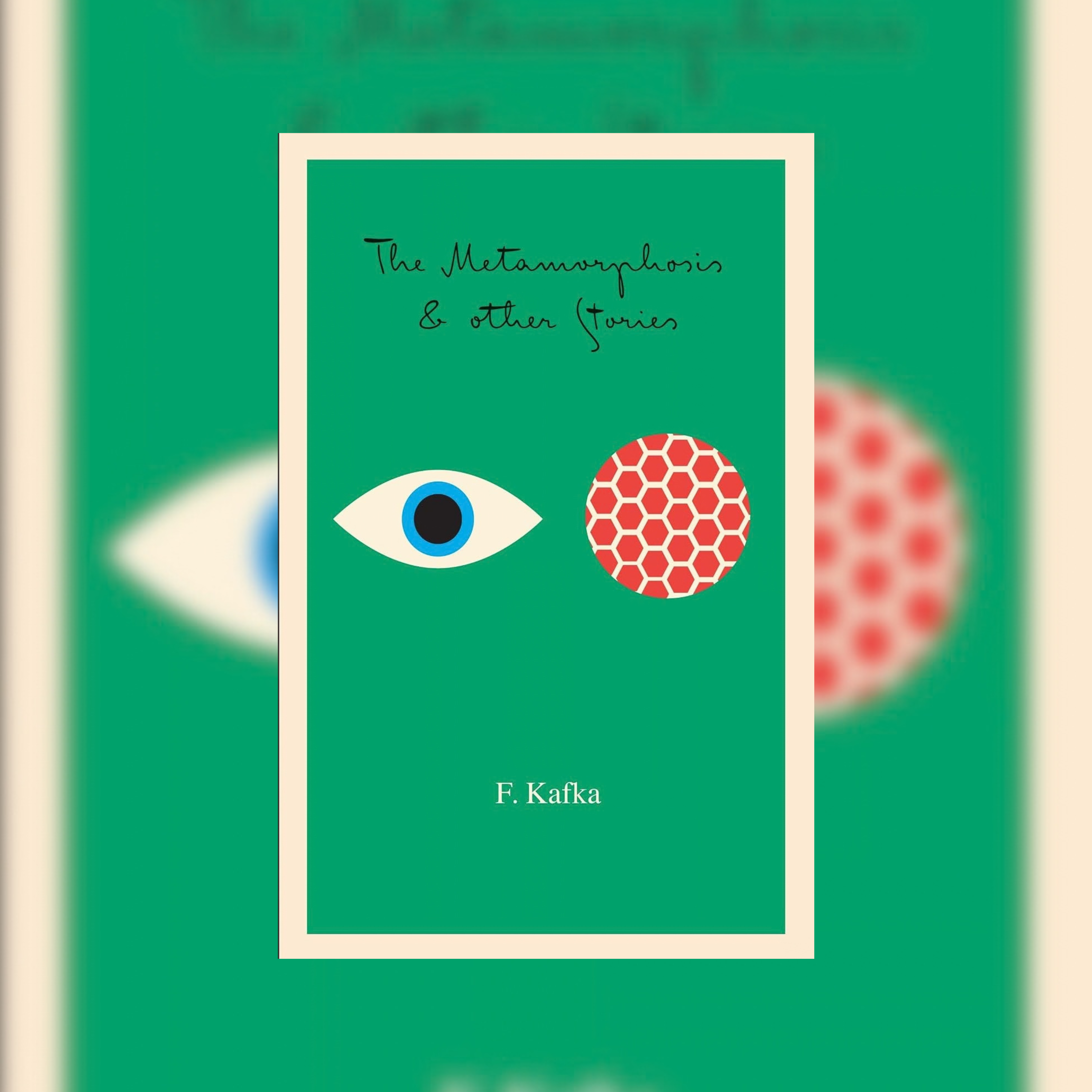
A discussion of Franz Kafka’s short story The Metamorphosis, focusing on Gregor Samsa waking up transformed into a giant insect and the psychological/social fallout within his family, framed as “Kafkaesque” critique of dehumanizing systems and failed communication.
No guests are interviewed. Hosts are Jeff O’Neill and Rebecca Shinsky (Zero to Well Read). The episode also mentions author/critic figures in the commentary (e.g., Max Brod, Vladimir Nabokov, Annie Lowry), but they are not present as guests.
Written by AI. May contain mistakes.
Discover how to support the podcast and vote for the Signal Awards.
“Insurance isn't a one-size-fits-all, and shopping for it shouldn't feel like squeezing into something that just doesn't fit.”
Discover how to support the podcast and vote for the Signal Awards.
“Listener's Choice Voting is open through October 15th.”
The hosts discuss their initial impressions and the significance of Kafka's work.
“The last time I touched it was in eighth grade.”
A detailed walkthrough of the plot and themes of Kafka's story.
“For office hours today, Kafka is one of the few writers that has an adjective, right?”
A deeper analysis of Gregor Samsa's transformation and its implications.
“The first line is, as Gregor Samsa awoke one morning from uneasy dreams, he found himself transformed in his bed into a gigantic insect.”
Explore how Gregor's transformation affects his family dynamics and his own psyche.
“And his sister then kind of turns on him and tells their parents that this creature is no longer Gregor, their son and brother, that they must get rid of it.”
Learn about Kafka's background, his struggle as a writer, and his relationship with literature.
“I need to figure out how to get a bed and account for my work.”
Understand how Max Brod influenced the posthumous fame of Kafka's works.
“He dies at the age of 40, I think in 1924.”
Discuss Kafka's complex relationships and his struggles with self-image and sexuality.
“So she's a lifelong paranoid fear that people found him repulsive, even though those who met him described him as like obviously intelligent, kind of quiet.”
Delve into the concept of Kafkaesque bureaucracy and its implications on modern life.
“but not only doesn't serve them, it makes things worse.”
Examine themes of isolation and communication in Kafka's writing and its reflections on his life.
“all of the time that we lose to bureaucracies.”
Analyze the themes of 'The Metamorphosis' and its enduring interpretations in literature.
“And he can hear them, but they cannot hear him.”
Discusses the various interpretations and cultural significance of Kafka's work.
“And it's not just the best known one, it's his longest short story.”
Explores how different critical lenses view Kafka's work over time.
“Nabokov rejected the religious and the psychological lenses sort of in real time when he was encountering them.”
Examines Kafka's intentional ambiguity and the significance of the title.
“stretch of the imagination, but I did look around for like, what were his influences?”
Rebecca shares her past experiences with reading Kafka's works.
“significant legacy, even if much like this bug, it's hard to pin down.”
Analyzes Gregor's transformation and its impact on his family relationships.
“One thing about the novels is they're not finished.”
Discusses themes of alienation and communication in Kafka's narrative.
“Maybe he hasn't been performing as well as work as at work as his bosses would have liked.”
Explores the emotional dehumanization of Gregor and its broader implications.
“He tries to say some things, but it's so transformed that he's either afraid they can't understand where they're such in shock, but he doesn't continue to try throughout the book.”
Reflects on Gregor's tragic fate and the consequences of family rejection.
“which is, this is a cry for help of someone who doesn't feel like he is understood.”
The discussion delves into Gregor's transformation and the emotional consequences of his isolation.
“and she brings him a little spread and he eats his rotten foods and then she takes away the rest.”
The hosts analyze the portrayal of workplace dynamics and societal expectations in the story.
“Like, you know, the, the grave's not, the dirt's not even like cold on Gregor's little tiny bunk bed.”
An exploration of the phenomenon of fainting in literature and its historical context.
“the boss sitting in one of those tall, high desks looking down on everybody.”
Discussion on the potential impact of mental health on creativity and artistic output.
“It was like her blood pressure would dip and then she would just pass out for a minute.”
A deep dive into the themes and implications of Kafka's story.
“Probably would have gone a long way for the dude.”
Discussion of significant quotes and their meanings within the story.
“Let's move on to notable quotes, Rebecca.”
Consideration of adaptations of 'The Metamorphosis' and the nature of Kafka's work.
“Unknown nourishment is not a bad descriptor of art, that unknown nourishment.”
Discusses the importance of support from others in the success of artists and authors.
“I like this note that you have about an adaptation.”
Discusses the importance of support from others in the success of artists and authors.
“Hey y 'all, Kelly Clarkson here with Wayfair.”
Explores unconventional adaptations and interpretations of 'The Metamorphosis'.
“Sorry, I'm stepping on my hot take, which is don't burn books.”
Links 'The Metamorphosis' to other literary works and themes.
“guy with a side part that's standing in the corner of the room with a notebook.”
Rates 'The Metamorphosis' based on various criteria.
“Others, your well-read titles it connects to.”
The hosts evaluate and score various aspects of Kafka's work.
“What if people hate me and I'm disgusting?”

Get the gist, explore an idea or ask about something said.
 Claude
On Zero to Well-Read, what are the key points of this episode?
Searching your listeningAutomatic transcript. May contain errors.
0:00Insurance isn't a one-size-fits-all, and shopping for it shouldn't feel like squeezing into something that just doesn't fit. That's why drivers have enjoyed Progressive's Name Your Price tool for years. With the Name Your Price tool, you tell them what you want to pay, and they show you options that fit your budget. Enough hunting for discounts, trying to calculate rates, and tinkering with coverages. Maybe you're picking out your very first policy. Or maybe you're just looking for something that works better for you and your family. Either way, they make it simple for you to see your options.
0:34No guesswork. No surprises. Ready to see how easy and fun shopping for car insurance can be? Visit Progressive.com and give the Name Your Price tool a try. Take the stress out of shopping and find coverage that fits your life on your terms. Progressive Casualty Insurance Company & Affiliates. Price and coverage match limited by state law.
0:59Jeff: Hey folks, Rebecca here with some big news and a quick request for a way that you can help out the show. We are really thrilled to share that Zero to Well Read is a finalist for the Signal Awards in the Best Arts and Culture and Best New Podcast categories. Listener's Choice Voting is open through October 15th and we would be super appreciative if you would take a minute to vote for us. Book Riot is a small independent media company and Jeff and I do all the reading and the research for the show ourselves. We have support from our colleagues who edit the show and create promotional content, and that's it.
1:30Jeff: There's no corporate backing or big behind-the-scenes production crew. We are so honored to be nominated, and a win in one or both of these categories would help Zero to Well Read gain visibility and remain competitive and stable in this landscape that is ruled by celebrities and major networks. Please go to vote.signalaward.com and search for Zero to Well Read to cast your votes for us in Best Arts and Culture and Best New Podcast. That's vote.signalaward.com. Listener's Choice Voting is open through October 15th. Thanks so much, and we'll see you on the pod.
2:11Welcome to Zero to Well Read, a podcast about everything you need to know about the books you wish you read. I am Jeff O 'Neill.
2:18Jeff: And I'm Rebecca Shinsky. This week, we are trying to pin down Franz Kafka's surreal short story, The Metamorphosis. Rebecca, this is one of those that you have an hour, you can knock this out. Do people know that, do you think? I don't know. The last time I touched it was in eighth grade. And I just remember that it was weird and I didn't really grok what was going on at the time. And I think that that experience is pretty common and that that experience can make a short story or a book loom larger in our memories and our imaginations than it actually is. So when I picked it up and I was like, oh, 80 pages?
2:54Jeff: Great. I was pleasantly surprised. I guess stay tuned for the is it for you or not section. If you've got an hour and some curiosity, the metamorphosis is right here waiting for you. Yeah. The sunk cost here is very low. Yeah. It's one of those where in terms of the zero to well-read of like the book nerd read cred and putting something into your brain and into your sort of artistic and reading soul, this is a very easy one to do. Because you get Kafka, right? You have experience. This is his most famous work. It's also a very famous setup. People know, generally, if they know about literature at all, they probably know something about this.
3:35And you're done. And you've got it. And you can move along. And if you're kind of a check the box person, that's how you read. I've read like this sometimes. I just want to know what that thing is. You've got it going. Now, I wouldn't say you've mastered all of Kafka because he is elusive and strange and a real one of one. One of the great one of ones of all time. and we'll get into the story of his life, his artistic legacy, and what he's interested in here in a moment. For office hours today, Kafka is one of the few writers that has an adjective, right? Kafkaesque, right? Kafkaesque story. So in office hours today, that's part of our Patreon.
4:08You can sign up at patreon.com slash jotawellread. We'll do 20, 30 minutes talking about other writers that do have those and maybe pitch a few that should, right? You can probably think of some of them. There aren't a bunch. I think there's six or eight that you can use one in conversation. And most people who care about this kind of stuff will get it or infer. But I think we could go one step farther, Rebecca. It's been a while since we've entered anyone into the literary canon of author adjectives. And I think it's time. We need to loosen the standards here.
4:38Jeff: And I hope I have some new ideas for it in the next hour and a half. Right. Because I pitched this to you five minutes ago. So I gave you lots of prep time. Your favorite game. Surprise me. It really is. A link in the show notes to become a member there. You can find it. Also, you can rate and review wherever you're listening. Since a shorter book this week, a shorter text this week, if you're one of those read-along people, you've got like seven extra hours if you're reading along with us every week because you didn't have to read that much. You can still leave six hours and 59 minutes in the can by taking a minute to rate and review the show.
5:12The rating takes five seconds. Just click the five stars and you're done. shoot us an email at zero to well read at book rat.com we always love stories about when you encountered these books what your own reaction was to them who was interested in your reading life or mailbags um and also just we're curious and want to know rebecca we just want to know
5:32Jeff: what's we do we always want to hear from other readers about their experiences also as our mission to get to a thousand ratings and reviews on our podcast continues we have confirmed that when we hit 1000, we're going to do a listener's choice episode. We're taking like, as we are recording this now in mid September, we are taking suggestions for what those listener's choice titles should be. We're going to narrow them down to like four or five, and then there's going to be a vote. So if this sounds like fun to you, make sure you do the rating or review, wherever you're listening, like whatever platform is helpful.
6:05Jeff: Apple podcast is the one that we're tracking for the thousand. And let us know if you have an idea. We're thinking of something like buzzy, discourse-generating, maybe not the kind of thing that would normally make it onto the show. If we hadn't already read Fourth Wing and Yesteryear, those would both be good contenders for this listener's choice. So just shoot us an email, let us know your suggestions, and then stay tuned for the public voting, hopefully within the next month or so. I would imagine the sort of three lanes people will float and or vote for. One is the kind of thing we do anyway, but they want to move it up the queue, right?
6:39I love this book and I just want to jump it up. The second one would be something like the Twilights or like, you know, you wouldn't normally do this, but I want to hear the zero to well-read format on this particular book. And the third one, and the one that might be the most frightening and also the most fun is sort of the dunk tank version, right? Where, you know, let's just, let's just, let's, I want to see them squirm and having to talk about the secret or the shack or I don't, you know, something of that nature, the let them theory by Mel Robbins.
7:11Jeff: Oh, we both read a lot of self-help. We would come prepared for that. Yes. So anyway, if that gives you some ideas, again, float them and then you'll have a chance to vote and we will do one of those there. Thank you all so much for listening. All right. With that, Rebecca, it is time for you to do your thing and tell us what is the metamorphosis about? This podcast is supported by Quince. I have found my ideal fall uniform, and friends, it's cashmere. I recently got Quince's Mongolian cashmere sweatpants and the matching full zip hoodie, and I love them both together and separately. Worn as a set, they're basically the luxurious version of sweats.
7:53Jeff: They're extremely cozy. They're pulled together enough that I don't feel like I'm wearing pajamas in public. Separately, the hoodie works as an easy layer with jeans, and the pants are great with a simple sweater or tee. This is going to be my fall and winter travel uniform. I know it sounds ridiculous and indulgent, but that's what Quince does so well. Elevated, everyday pieces in really beautiful materials, including Mongolian cashmere, at prices that make them much easier to work into your wardrobe. Everything at Quince is priced 50-80 % less than the similar brands because they work directly with ethical factories and cut out the middlemen.
8:28Jeff: I use Quince all the time, and this cashmere set is going to be in really heavy rotation this fall. Find the fall pieces you'll reach for most at Quince. Download the Quince app for app-exclusive offers or go to quince.com. Get free shipping on your order and 365-day returns. Now available in Canada and the UK too. And when Quince asks you where you heard about them, let them know it's zero to well-read. It's the best way to support the show. That's quince.com or download the Quince app for app-exclusive offers, free shipping on your order, and 365-day returns.
9:04Jeff: today's episode is brought to you by vault comics the best fantasy sci-fi horror and lit rpg graphic novels and i've got a couple graphic novels from vault comics to tell you about today one of them is the return of the room bound professor volume one by actus the other is an outcast in another World Volume 1 by Kamikaze Potato. So in Return of the Runebound Professor, someone murdered Magnus Vermeule, the most hated professor at Magic Academy. He would have disappeared from memory, if not for lost soul Noah Vines. Trans migrated into Vermeule's body, Noah assumes his runic powers and list of enemies.
9:46Jeff: But Noah has to teach class with no idea what magic is. Sounds like some shenanigans are about to ensue. Now, in an outcast in another world, Rob didn't think he was anyone special. But when a dark portal tried to wrap his best friend in chains, he jumped in and found himself ensnared instead, torn away from everyone he knew, kidnapped by an unknown force that leaves him with a note stating simply, good luck. I don't know about you, but I am into all of these mysteries, existential and otherwise, make sure to check out Vault Comics, the best fantasy, sci-fi, horror, and lit RPG graphic novels.
10:25Jeff: And thanks again to Vault Comics for sponsoring this episode.
10:32Jeff: Sierra to Well Read is supported by Bowl and Branch. I'm entering what I like to call hibernation season. The days are getting shorter, the nights are getting colder, and suddenly staying home, putting on my jammies, getting into bed early, and reading for a while sounds even better than it usually does. And if I'm going to be spending more time in bed, I want that bed to be really good. At the end of a day full of work and errands and cooking and all the other stuff life requires, getting into bed should feel restorative, not like an afterthought. That's why I love my bowl and branch bedding.
11:06Jeff: Their signature organic cotton sheets are incredibly soft and breathable, which is especially important for me because I sleep hot. You get all that cozy hibernation season energy without waking up overheated, and the sheets actually do get softer the more you wash them. Bowl & Branch also makes pillows, blankets, and temperature-regulating comforters so you can build the whole cozy situation of your dreams. Hibernation season is coming. Make your bed somewhere you actually want to hibernate. Upgrade your sleep with Bowl & Branch. Get 20 % off your first order plus free shipping at bowlandbranch.com slash wellread with code wellread.
11:41Jeff: That's Boland Branch, B-O-L-L-A-N-D, branch.com slash wellread, code wellread to unlock 20%. Exclusions apply. Well, you've heard the pitch before. The first line is, as Gregor Samsa awoke one morning from uneasy dreams, he found himself transformed in his bed into a gigantic insect. Gregor's been supporting his parents and his sister with his work as a traveling salesman. And he's alarmed by this change in himself, but he really takes it in stride to a surprising degree. Shocking amount. Shockingly cool about waking up. Yeah. He's like, oh, I guess I'm a bug now. How do I get out of this bed?
12:22Jeff: Like he has this long torso that's in a couple different parts. And now he has all of these like many tiny legs. They're not very good at bearing weight, at least upright. night and then he figures out that he needs to, you know, kind of be down on his stomach to be moving around. But he moves immediately into problem solving mode. He's already missed his train for work. His parents and his sister are calling through his locked bedroom door. And now his manager has shown up at his house, like real nightmare stuff, to find out why he wasn't at the office an hour ago. Gregor tries to respond. He thinks that he's talking back, but all the people on the other side of the door here are these incoherent sounds coming from him.
13:04Jeff: It's hard to tell in the reading what Gregor's family are more upset by, his transformation into a giant bug, or the fact that they're going to have to find a new source of income. They confine him to his room. He starts to get a little more comfortable in his new form, and he even starts to take some joy in scuttling around the walls and the ceiling. His sister pushes a chair over to the window for him so he can get the breeze and look out. And in fact, only this sister, Greta, will dare enter the room. For a few minutes each day, she leaves food for him. One day, the family's hired maid leaves the door to Gregor's room ajar.
13:40Jeff: He hears his sister playing violin for some new tenants his parents have brought in to help them make money. Gregor creeps into the room. The men spot him, and they are so disgusted by the presence of a giant bug that they immediately vacate the premises. They refuse to pay rent. they threaten legal action. Once again, Gregor's family are distressed by another dead income stream. And his sister then kind of turns on him and tells their parents that this creature is no longer Gregor, their son and brother, that they must get rid of it. And recognizing that he's no longer wanted, Gregor crawls back to his room and he dies of starvation overnight.
14:19Jeff: His family are so relieved. They take the day off of work. They go on a trip to the countryside and they start planning a move to a smaller apartment, all while talking about how maybe it's time to start looking for Greta to find a new husband. It's a weird one, and yet not weird at the same time. I think the thing that immediately strikes a reader, and it struck me again this time, was how cool Gregor plays it. Like, I guess I'm a bug now. I need to figure out how to get a bed and account for my work. On the other hand, how sick he is in the brain that that's his concern now that he's a giant.
14:55bug. Yes, that work is the first thing he's thinking about. That work is the first thing that he's thinking about here at the same time. Now, it sort of doesn't really sound like much on its own. It's, well, not much, like, there's not a lot of drama, right? This isn't The Fly, this isn't a science fiction novel where the, you would imagine, like E.T., where the government shows up and they put them in a big tent.
15:18Jeff: It's a small story. Yeah, it takes a place over the course of a couple months, right? He's essentially living in his room as a giant bug, almost like a pen or a cage or a zoo kind of a situation. And that's what it turns into. So why did this become a thing? It's a fascinating story, Rebecca, the Kafka of it all. So the highlights here for Kafka are someone who always wanted to be a writer, grew up a German speaking Jew in Prague. This was Bohemia at the time. Born in 1883. So pre Nazis, pre all of that. Pre Nazis, pre World War One, that whole stuff going on. Middle class family. He goes to school, gets a white collar working job.
16:04And his dad calls it a bread job because it's just to make enough money to write. And this is, he's, he's kind of the patron saint of the sad literary guy, but he actually did it. I think when people have it in their mind of like, he just wants to write and he's very sad. He's also very good. He's also handsomer than he thinks and he doesn't even know it. Um, and he's tortured and he hates his gigs and he tries all this different kinds of stuff. And this shows up again and again, his writing. Um, he publishes a few things, including the metamorphosis in a magazine or is it a literary journal or a journal across a couple of publications.
16:40Doesn't have much success, no notice whatsoever. He gets tuberculosis. He dies at the age of 40, I think in 1924. And the reason we know who Franz Kafka is is because of his boy, Max Broad.
16:54Jeff: Max Broad, yeah. Which is one of the undersung heroes of literary history because they were really good friends starting young. They could have a book club of two. They would read books together and talk about it. Kafka talked about like, he's my blood brother. A great literary bromance, truly. And then after Kafka died, well, before Kafka died, Kafka wrote his will and left all of his stuff to Brode. In the will, I'm going to leave this paper, but you need to burn, but you're supposed to burn it all. Including the stuff that had been published. He was supposed to get rid of all of it. Get rid of all of it.
17:30And Max Brode, A, was like, yo, I don't want to do that. And B, if you really wanted to do that, you could have burned it yourself and or given it to somebody else. Like a lawyer to say, burn it, they would burn it. So he's like, me thinks that the lady doth too much protest about burning my stuff. And Brode has been a fan. I mean, that's another thing. He always thought that Kafka had the goods. And so over the next 30 years, really, at least the next 20 years, he goes on to the business of collecting his works, trying to put them in order, finding publications of them, getting translated into other languages, getting the hell out of Europe as the Nazis roll through, like carrying a suitcase of them to Palestine.
18:13Like there's a really fascinating story here. And little by little, publication by publication, review by review, Kaffa becomes Kafka by like the 50s. Like this is not a 200-year-old literary legacy we're looking at, Rebecca. I think that's one of the things people aren't surprised by.
18:28Jeff: Nabokov becomes a great Kafka scholar and gives lectures. And like I read some of Nabokov's own commentary about Kafka, like one of the pieces of the lineage of modern literature, certainly of 20th century literature. And that, as you're saying, we don't have any of it if Max Brode had done what Kafka had requested as his dying wishes. A really incredible story. Let's see. So she's a lifelong paranoid fear that people found him repulsive, even though those who met him described him as like obviously intelligent, kind of quiet. But when he said something, it was funny and often profound. And he had this very cool demeanor.
19:08You know, he left behind something in addition to his literary works, Rebecca. I don't know if you want to say it or if you want me to. I feel like you're setting me up.
19:18Jeff: It's fine. Okay, go for it. So Kaka's never married. He had a, I think, pretty tortured relationship to sex. He often visited brothels. He left behind a really impressive and strange collection of porn and erotica when he died. Max Brod described him as tortured by sexual desire, but also filled with fear of sexual failure. He had a few close relationships with women, but that fear that you were talking about a minute ago, where he just really believed that nobody liked him. And in fact, that people were disgusted by him, like a self-esteem problem that has tipped into self-loathing and probably a diagnosable situation at that point.
20:02Jeff: But interesting, tortured, dark, broody guy. And he didn't say burn all my porn when I go, I guess. So that's interesting. Yeah, he's like, Max, do what you will at the same time. So he was diagnosed with tuberculosis in 1917. he died of it in 1924. Tough look for seven years of tuberculosis. All three of his sisters died in the concentration camps, were killed by the Nazis in the concentration camps. And probably Kafka would have been too if he had not contracted tuberculosis and died in 1924. Though maybe if Brode could have gotten out with the suitcase, maybe Kafka could have gone along with him at the same time.
20:43Kafkaesque. We talked about this at the top of the show. I think it and Dickensian are the top two author adjectives. And the metamorphosis is not the best example of what we mean by Kafkaesque or how we use it now. It's this terror of the bureaucracy of getting lost into an inhumane regimented system that's putatively meant to service human needs, but not only doesn't serve them, it makes things worse. So those experience you've had of like trying to get your medical bill covered by insurance, if you've ever felt like you've gone through the looking glass and like people are giving you double talk and they're there to not do their job, but perform during their job.
21:29So they don't help you. That is Kafka-esque. Now there's a more absurd. You don't know why things are the way they are. No one really seems to know why the system is that way. No one has agency to change it. Those are all part and parcel of it.
21:44Jeff: Yeah, I got into a doom loop a couple of years ago with a health insurance company who was requesting a form with information that literally didn't exist. And we were in a cycle where I was going, I can't provide that thing to you because it does not exist. The source from which I would get that does not exist. I cannot give it to you. And they would go, well, we can't do anything without it. And we would run it in cycles for a while before there was finally a solution. And that is Kafkaesque where you're like, how is this real? There has to be a solution, but it's just kind of a hallway with never ending doors.
22:19Jeff: And there's an unhelpful nightmare behind every single one of them. In a way it's, in some ways I find the Kafkaesque bureaucracy state apparatus that he describes, maybe not more terrifying than like an Orwellian big brother situation, but differently terrifying because the Orwellian political machine, you could overthrow that. I think Kafka's sense of these systems is that they are sort of a feature of civilization somehow. These are forces of nature that are beyond good and evil. They're not part of any specific regime. They grow out of complicated human systems and they take on these weird, nefarious lives of their own.
22:59Jeff: So I don't know. There's something about it that I find them even darker because they feel more elemental than Big Brother or Gilead and the Handmaid's Tale, which are terrifying. Don't get me wrong. But there's always hope you could overthrow that. In Kafka, there's no hope of overthrowing these systems. Yeah. And this persists, especially with the technology and the complexity of our governments today. Annie Lowry has a book out right now called The Time Tax that is about all of the time that we lose to bureaucracies. And the average American spends four days a year filling out forms for the government?
23:37Jeff: How is that the situation? How is this the best that we can do? And I think to me, that's the terrifying part is that like humans have so much intelligence and creativity and imagination. And yet the best we can do with these complex circumstances and systems of government that do require a lot of moving parts and a great deal of management are terrible. The best we can do is still a terrible solution. So he has an unusual relationship to the idea of authority. This is not the king must die kind of stuff, though he was a vowed socialist. It's a different flavor. He had daddy issues, I think is very fair to say.
24:14100%. He wrote at one point a 100-page letter to his father about how domineering he was and how that affected Franz. You know, on the one hand, good job being honest. On the other hand, 100 pages is a little much, and I'm not sure that is the way you're going to get to. Just to give you some sense of the idea. Writing a 100-page letter to your father saying, you know, ease up, is Kafkaesque too at the same time. Letters and bureaucracy. Like there's something to this at the same time. And I do think undergirding the metamorphosis, the castle, the trial, what I've read, and I've not read the complete Kafka.
24:49I shouldn't say that I have, is a sense of alienation in all forms, from the state, from yourself, from other people, of being alone and not being able to communicate and not being able to figure out a way to say the thing that will get the job done and find healing or understanding or just getting your permit approved for your extension or whatever you're trying to do. Yeah.
25:14Jeff: Or just that gap between, and I think for Kafka, it was a really significant gap between how people see you and how you understand yourself. And that very basic human desire to be seen and understood that with him in his real life comes out in this like fear that everyone thinks he's disgusting, even though people who know him say that he's like quite smart and charming. And in the book comes out as like, Gregor is in there. Gregor is in the bug. He has all of his same human thoughts, at least in the beginning. And the more comfortable he becomes in the new form, he does transform. He metamorphoses.
25:53Jeff: But so do the people around him. And he can hear them, but they cannot hear him. He can't communicate. He can't tell them anything about his situation other than with very basic actions. Like his sister carries in a bunch of different foods and then pays attention to which ones he eats. And that's a really rudimentary form of communication. But he can't just like, you know, tap the apple and say, that's the one that I want. He can't speak to her. He physically cannot be understood. And I think we can take that as an expression of how Kafka felt about his own life. Yeah. And that combination of a good hook, like this guy wakes up transformed into a bug, like what would actually happen?
26:34and this is a realistic portrayal, or at least a psychologically realistic portrayal of some kind. And then there's also an elusiveness there, because it doesn't map onto people are bad, and it's not just an easy metaphor for something else. That combination of being an easy short read and English class fodder, I think is one of the reasons it got picked up over time. It's easy to teach in a class, you can engage with it, and have a couple different reactions to it, but it also goes on to inspire, like Marquez talked about how he read Kafka and it's like there's different ways of doing things.
27:10And I didn't find a straight line between magical realism like the Latin American tradition and this, but you can see it, right? You know, you can see this book, you can see the metamorphosis is like a six page side quest sort of secondary story anecdote in 100 Years of Solitude easily.
27:29Jeff: Totally. Because when we talk about magic realism, the shorthand I always use is like your dead grandma shows up at dinner and nobody bats an eye. And your brother or your son turns into a giant insect and everyone just goes about their business figuring out how to make him comfortable. Like no one's trying to change him back. No one's panicked that Gregor is gone forever. It's just a pretty matter of fact acceptance. Well, like this is where we are now. Where we are now is my brother is a bug. Where we are now is my dead grandma is at dinner. and it does feel like those roots make some sense to me um i think the slipperiness of the story and that it lends itself to multiple interpretations is one of the reasons that it has stuck around for so long we talked about this a lot with bartleby the scrivener and melville as well like this is widely thought to be the best short story of all time many people are saying this is the best short story of all time um he started he wrote it in 1912 it was originally published in 1915.
28:26Jeff: And it's not just the best known one, it's his longest short story. I went and looked at Goodreads, and this is three times as popular as Kafka's next most popular work, which is The Trial. A lot of us read this in school. A lot of us come to it as the first thing when we decide that we want to experience some Kafka. And that blend of realism and the fantastic, using surrealism to critique modern life and bureaucracy. But also it opens itself up to like, is this about religion? Is it about personal psychology? Is this just daddy issues? Nabokov rejected the religious and the psychological lenses sort of in real time when he was encountering them.
29:08Jeff: But like, is it about the artist's struggle in a world that's filled with people who destroy him at every turn? That's what Nabokov saw on the page. And as you encounter all of these different interpretations reading through commentary, you can go back and see how each one can be argued successfully and each one can be mapped. When we talked about Melville, I was like, there are current architecture articles about Bartleby the Scrivener and the designing of the modern office. And you can do the same thing for Kafka, for the Metamorphosis. Whatever point you want to try to make about this story, you can find supporting evidence for in the text.
29:46Jeff: And that makes it really fascinating and a never-ending source of discussion. Yeah, it would be funny or not funny. It'd be interesting actually to track like as different critical regimes have come in and out of vogue, you know, what did the post-structuralists think? What did the new critics think? What did the new historicists think? What did the Freudians and Jungians think? I think that's one sign that you've got a durable work of art is that they can bear the load of scrutiny with different lenses and not be exhausted or otherwise compromised in some way. We don't know. One of the things I looked for, and again, I'm not a Kafka scholar by any stretch of the imagination, but I did look around for like, what were his influences?
30:26Like who were the people he were pointing to? And I didn't see a whole of that Rebecca. So I don't really know, but we do know a little bit of his intentionality here, which is to be elusive, right? Which is you may, I think probably in the, in the popular imagining of this, people think it's a cockroach maybe but it's vermin that like the germ like or translation monstrous vermin um a charwoman a maid comes in later who's wildly unaffected by it uh cool as a cucumber when she engages with that she's seen some bugs i guess okay yeah and he's like get away from me dung beetle and you know so that there's some it's some sort of bug but kafka didn't want to be specific about what it was to the point where the illustration for the story is like, told the illustrator, you shouldn't be able to tell what kind of bug it is.
31:17In fact, you shouldn't be able to see it up close. It should be like in the distance and blurry. So it doesn't matter. And that not mattering matters. So congratulations to us. That's where we are.
31:27Jeff: And even the title is elusive. Scholars have been arguing about this for a century now that the German title translates directly to the transformation. And some translators have gone with that instead and have have written translations of The Transformation by Franz Kafka, arguing that Kafka had read Ovid's metamorphoses in school, he was familiar with it, and if he had wanted the book to be called The Metamorphosis, he would have just titled it that, which I have to say is a pretty good argument. That feels like a checkmate to me a little bit. Like, yeah, like there is this word in German. Yeah.
32:02Jeff: Yes. Demetamorphose. Like there is a German phrase for the metamorphosis that translates directly so why is it called the metamorphosis instead of the transformation is a really great question and you can read academics have all kinds of fights about that on the internet if that's your jam um and again like navikov did extensive commentary uh on kafka declared him the best german writer of our time in the you know early to mid 20th century um just a really significant legacy, even if much like this bug, it's hard to pin down. Yeah. What was your experience coming into this with Kafka and metamorphosis or any of this stuff, Rebecca?
32:43Jeff: I read this in middle school, like seventh or eighth grade. Definitely teachers checking the box on this is a short story. Let's talk about things. I remember being like, this is weird and kind of passing the test, but being aware in my soul that I didn't totally get it. And I hadn't touched it since then. I really don't remember. I've read this, the trial and the castle, and then some of the letters and like, there's some diary stuff. There's a lot of, which is pretty amazing. Every now and again on social, you'll see a diary from, an entry from Kafka's diary is like, I tried to write for a while.
33:19I didn't write anything. Everything's terrible. And I was like, yep, I hear that. I believe that. So I think it was on my own in high school. I wouldn't have had it in college because by the time I was in college, I was doing American and British literature, you know, that standard English major stuff. And it doesn't get roped into that, generally speaking, because it's not English. And there's not, and Western Civ doesn't make the cut generally for the literature pieces, like you're doing Shakespeare and maybe that's it when it comes to capital literature. So I think I just did it on my own. I remember The Trial in the Castle.
33:53One thing about the novels is they're not finished. So there are these kind of ruins in, on the page. Um, that's my memory of it. None of them were finished and Brode kind of stitched some things together and did a little bit of patchwork on both of those. Um, yeah. So it's, it's been a long, long time, at least 20 years since I read any of this, at least 20 years, probably more like 25 at the least. And so I remember the, of course the story I did remember how strange it is. And I think this is the thing that will strike a reader immediately in the first five or six pages is that while his body is transformed, he is concerned about it only initially, Rebecca, because of what it means for his job and getting through this random Tuesday or whatever.
34:44Yes.
34:44Jeff: Like he's late for work. His boss is going to be mad. In fact, now his manager is in his house. Yeah. And what's going to happen to his family if he can't work anymore? Because his father has bankrupted them, has all these debts. And or at least that's what Gregor believes, that his family is in peril and he's got to work to support everybody. And he really just is directly into problem solving mode. Like one of the more heartbreaking moments of the story is when he overhears his parents talking and realizes that they haven't been straight with him about what's going on. And in fact, like maybe they all could have been working and they do go get jobs and find sources of income once he's not available to do that.
35:26Jeff: But that it is just this matter of fact, like, guess I'm a bug now. Well, shit. Like, what am I what are we going to do to pay the bills? How am I getting on the train to go sell the swatches or whatever he's selling? We never learned exactly what he's selling. He's been under a tremendous professional pressure. Maybe he hasn't been performing as well as work as at work as his bosses would have liked. but also he's sustaining the whole, it's like the Charlie Bucket house. They're all laying around and he's doing everything together. And you have a wonderful note here. I think this also augers for transervation rather than metamorphosis.
35:56Even in English, metamorphosis has more of a bodily change. Like we think of this as corporeal where transformation we think is being, we use that representative psychological, emotional, intellectual kinds of changes internally at the same time.
36:11Jeff: And like metamorphosis is also a scientific term that when when a bug is going through or an insect going through different stages of life, they're metamorphosing. But I think transformation makes a ton of sense, not just because it's the actual German phrase that Kafka used, but the story invites multiple readings and close consideration about who is being transformed because it's not just Gregor. His new form prompts changes in everybody around him. I think really significantly his sister over the course of the story. But everyone who has encountered Gregor as the bug is transformed in some way.
36:47Jeff: And there's almost a version of this that could be the transformations, but that might've been too on the nose. On the nose. Yeah. Right. Yeah. Yeah. And it's pretty sad because he is, as you say, he's still Gregor in there and he's unable to communicate. Or, I mean, it's a little unclear. He tries to say some things, but it's so transformed that he's either afraid they can't understand where they're such in shock, but he doesn't continue to try throughout the book. I thought that was notable. I didn't remember this. He doesn't spend a lot of time beyond the first effort or two to say something to them.
37:22Yeah.
37:22Jeff: It's not like a project Hail Mary where the guy, you know, here's the musical tones and it's like, let me get my computer and figure out how to translate your sounds to actual words and let's make a way. His family is like, well, he's in that room. We're just going to put him in his room and let him live his bug life. And they're, they don't try to communicate with him at all really after that. And he's not really trying to figure out how to communicate either. Sometimes he'll like try to get a sheet over himself so that they are more comfortable, but he never tries to figure out like a yes, no on, off, or any kind of like really basic.
37:56Can we, to signal to them that he's still in there may be more important than anything. Like Gregor scuttle up that wall. If you're Gregor, they never try any of that stuff.
38:05Jeff: They don't try any of it. Like none of the games that people play with their dogs on Instagram to figure out how much they really understand. Nobody is attempting that. And it's just occurring to me as you were talking about those scenes where he tries to cover himself with a sheet. Like Gregor believes himself to be disgusting and hard to look at. So he's trying to cover himself and prevent his family from having to see it. And what a heartbreaking thing to know comes from Kafka's own feeling about himself and people's reaction to him. just a literalizing of that fear that you're a monstrous vermin.
38:40Jeff: Terrible stuff. Well, I think that as much as I like the more complicated readings, I think to hold in your head that there's a plain text reading of this is like, this is about feeling like you're not worth anything. This is a feeling like people only like you because of what you can do for them. And once you stop being useful to them, they'll reject you. They'll talk bad about you. They'll move on with their lives. You're not worth anything. Like, I don't know, I think probably six hours of therapy and Gregor Samsa or, you know, I mean, Franz Kafka have kind of got this thing figured out to some degree.
39:14Cause I, I think it's also about other things beyond that, but there's a, there's a surface level that is interesting and heartbreaking in its own right, which is, this is a cry for help of someone who doesn't feel like he is understood. He doesn't know how to talk to other people. He is obsessive with literature and writing, which what is that, but a need to be understood and try to figure out how to talk to people and have them see you at the same time. But what if you are a giant cockroach? There's then nothing you can say at the same time. No haiku is going to get you out of being a cockroach if you're actually a cockroach.
39:47Jeff: And I think this is like a pretty common fear that people have to one degree or another that What if I'm secretly a terrible person and I don't realize it and no one around me realizes it? And Kafka uses this literal dehumanization of Gregor Samsa as a way to explore emotional dehumanization and what it feels like to be rejected, what it feels like to be seen as just a utility to your family, what it feels like to be betrayed and to be the object of cruelty. Like Gregor experiences, there's no way to describe it except cruelty at the hands of his parents and his sister as this story goes on. And then as they ultimately complete the dehumanization and refer to him as it and that we've got to get rid of it.
40:30Jeff: And he dies and then they get rid of the body, the carcass, I guess, at that point. And are like, OK, well, let's go have a picnic and talk about getting you married, Greta. I mean, it's a nightmare. That's everyone's nightmare is not only that it's true that once you're gone, they move on. and they're happier. Yes, they're relieved. They're relieved, right? Because he, I get the sense, tell me if you feel differently, that if they had been like, you know what? I'm not sure what's happened, but he's our Gregor and we're going to make the best of this. And we're going to decorate him a little cage.
41:01Jeff: We're going to decorate the room. And we're going to try to get on with our lives. He is not prone to existential dread about his condition such as it is. It's only when he hears them say, he's not one of us anymore, that he starves himself. It happens overnight. It's pretty quick. I mean, I think Kafka's getting to the end. He doesn't want to do like, how long would it take a giant cockroach bug thing to starve itself? But it's an emotional suicide of some kind. But up till then, he was, by, you know, doing relatively well, I would have done much poorer as a giant dung beetle over the course of four months in this condition.
41:37Jeff: I think it's almost worse because his sister seems like she's going to care for him and help him in the beginning. that she's coming into the room. She's bringing food. She notices that he hasn't eaten anything. So then she brings like a bunch of different foods, a lot of them rotten because she's done some thinking about what kind of food does a bug want. What would a giant bug want? Things that bugs eat. Yeah, right. Yes, but she's made some effort and she brings him a little spread and he eats his rotten foods and then she takes away the rest. And over time, she stops coming into the room. She stops noticing the things like, oh, he's climbed up onto the windowsill.
42:15Jeff: Maybe I should just move the chair there so he can catch the breeze. And they start to shove all the extra furniture from the house into the room because now they have these tenants. So Gregor doesn't even get to take up just his own space anymore. Now he's just another problem that they have to solve. and that feeling of like that you're a burden that the people that are in that are supposed to love you only want you around to the degree that you're useful to them there's almost nothing worse than that and no it's like i read this twice once just to like you know get my head around what happens and then to go back and really sit in the feelings of it and when you know the the plot beats that are coming the emotional beats like can really hit hard of like oh my god this poor This poor fucking guy woke up as a bug and no one is concerned about how he's feeling about it.
43:06Gregor, are you okay? You all right in there, Gregor? None of that stuff. And then maybe the most heartbreaking moment, well, it's when they say, what are we going to do with it? And he's like, you know what? That's enough. I'm going to get off this mortal coil. Before that, his sister, who's been playing the violin, in fact, we learned that Gregor's big dream was to provide it so that it's enough money that his sister could go to the conservatory to study violin. very easy to see a young Kafka saying, but what if my parents could have sent me to art school or would have sent me to art school?
43:34She's playing. They've taken on borders at this point to try to make ends meet. And he's transported by her playing that he unthinkingly wanders into the main room and the borders see him. And I've got to say quite reasonably, Rebecca, to say I'm out of here and I'm not paying my rent. Yeah. Yes.
43:50Jeff: Yeah, like you can move out for regular size cockroaches. You can definitely move out for one giant bug. who seemed to like the violin, which somehow makes it weirder, I think, if you were actually in there, that it was sitting there listening to the violin. But again, this draw to art, this draw to human connection, that it's inarticulate, but it's like art making and things that humans do. That actually makes things worse rather than better. Yeah. And that Kafka is really interested in what is it that makes us human. And it seems to be that art is the answer, or at least one of the big answers.
44:22Jeff: And that we know that Gregor is still himself in there. There's still something human in him because he's, he is drawn to that music. And as you're saying, he can't even help himself. He's just, before he knows it, he's scuttling into the door and then everybody's freaking out. And that he's had kind of a brush with transcendence, with listening to his sister play and kind of remembering that connection to his old self. Cause there, there are these moments in the text where he finds himself becoming more bug-like and forgetting more about what it felt like to be a person. But that moment with the violin, he thinks he's having transcendence and it actually is the beginning of the end for him.
45:00Yeah. There's another point where his mother talks to him and he kind of reminds himself again. She says something. He kind of was drawn back into himself as his Gregor-ness rather than his bug-ness at the same time. And I think that's another thing that Kafka is thinking about, what endures, what does it mean to be human? And I think Kafka does a lot of animal stuff in his writing. There's often all kinds of animals, but that line between the human and the animal is something he's very interested in. And I think it is about this kind of stuff. We make art and we fear and we have these complex emotional responses that are beyond survival instincts.
45:41They're doing something else. But what are the limits of that? And what's the pain of that certainly at the same time. How do you deal with the happy ending for the family? They seem okay, Rebecca, weirdly okay.
45:54Jeff: It's not a great look for humanity or I guess for Kafka's feelings about his immediate family or the extensions or limits of humanity that he sees, you know, this person become no longer of use to his family and that they reject him and are relieved and go about their, like literally go about their merry way. It's tough. That ending is tough. And I had forgotten that it ends on that note. It was like, it's brutal. Like they're, they're going to take the day off. These people need the money, first of all, but they're going to take the day off and go have a picnic in the countryside and let's start dreaming about the future.
46:32Jeff: It's so immediate. Like, you know, the, the grave's not, the dirt's not even like cold on Gregor's little tiny bunk bed. We don't even know where he went. The charwoman takes him out. You don't have to worry about that. They don't even bury him themselves. Yeah, it's awful. He's just this thing to be disposed of. I think that's probably a surprising thing for someone coming to it with a cultural awareness of the metamorphosis. The ending might be the biggest surprise. I think that's right. That how this goes at the same time. All right. Time for some straight thoughts here. Rebecca, where would you, what else was occurring to you as we were getting through thinking about the metamorphosis?
47:07Jeff: I mean, first of all, the HR department does not approve of a manager showing up to check on an employee who's only a few hours late to work. He was ready to go. And the description from the early pages is like, Gregor's supposed to be on the 5 a.m. train and he's going to take the train for a little while to get to work. So he must have like no showed. Like that manager got on the train to come to Gregor's house pretty quickly after the time Gregor was expected at work. No grace at all. But like, let's not do this. And I Googled like telephones existed by then, right? Yes, they did. Or telegrams or couriers or messengers.
47:42Jeff: You're just showing up at somebody's house. And then also just he sees the manager is like, oh, shit, he's a bug now. And he just leaves. Notes out. Not my problem anymore. Yeah, totally ridiculous. The one that I thought that like the biggest, most persistent straight thought was I really couldn't settle on who the biggest villain was. Like Gregor's father for lying about the financial situation and making Gregor spend his life working in that terrible office, believing that everything was on his shoulders. Is it his sister for the swing from kindness to cruelty? His mother is kind of an NPC in the story.
48:17um but like yeah warm and distant war you know yeah a figure of some care but not much of agency
48:24Jeff: or intervention yeah and like i think a um there might be a temptation from modern readers to do kind of what folks do with uh bartleby the scrivener and be like no the real villain is capitalism and work um and like that's that's kind of on the page here but yeah not nearly as much as in the Melville. But wow, was old fashioned office design wild. I thought about that. Okay, so I thought about it with Bartleby. I thought about it again here, because there's a mention of the boss sitting in one of those tall, high desks looking down on everybody. And you see it in like stage productions of Dickens as well.
49:01Jeff: In A Christmas Carol, you know, like Scrooge is always way up there. And the little clerks are at their desk, and they have to kind of scurry and look up to him and he speaks down to them. Who thought that was a good way to generate productivity? I know 18th and 19th and even early 20th century labor practices were kind of fear-driven. Maybe this is just an illustration of how bad that is, but truly a nightmare. You hate this job and you've got to go and your boss is literally looking down from on high at you. It's a good note. What else you got? Oh, also, I expected there to be more fainting in grown-up life based on how often fainting happens in old books and movies.
49:45That's so funny you say that because one of my straight thoughts is smelling salts are deployed here. When did people stop regularly keeping smelling salts? Have you ever smelled a smelling salt? No. What's your relationship to smelling salts, Rebecca?
49:56Jeff: I have some good friends who are power lifters, and they use smelling salts or ammonia-based smelling salts to hype up their nervous systems before big lifts. that is the only exposure that I've had. Have you seen anyone do a smelling salt? You know, it's funny. I had a conversation with some friends recently because their son is a football player. And I don't know how, I don't know if it came up as a football, but it was orthogonal to that. But it's, yeah, it used to wake someone up if someone gets their bell rung, or I mean, they don't do that anymore. Now they do concussion protocols, but it is like to hype yourself up or otherwise to shock your nervous system.
50:33And apparently they're not dangerous or bad for you, the most dangerous thing is that sometimes people recoil so quickly, they'll like strain or hurt their neck because it smells so bad. But it's ammonia. It's really, really, it's ammonia salt of some kind. Very strange, but I don't know what we, do we not faint as much? Do we, we're like, that's gross. Do we have a coffee? We have caffeine? Like what, why are we not using smelling salts?
50:57Jeff: We're all more hydrated than we were back then. So maybe we're just - You think they just needed a tall glass of water. Maybe that's what it is. you know that scene in Pulp Fiction where they plunge the the syringe of like epinephrine in a person's heart I was like maybe smelling salts would help could you just use smelling salt like what what could you do to revive someone if you're fainted too I was thinking about this if your body's reaction to faint shouldn't you just let them do whatever your body's like no I'm noping out of this situation don't bring me back right away give me a second here I've had a friend who who had a medical condition where she would faint sometimes.
51:31Jeff: We would call it getting the vapors. And it was a blood pressure thing. It was like her blood pressure would dip and then she would just pass out for a minute. And that is, you know, like you got to eat right. You got to stay hydrated, all of those kinds of things. But I just grew up, people are fainting left and right in movies. Fainting couches, they had fainting-based furniture. Yeah, and Gregor's mother faints at once in the text. That's why it's a stray thought here. But I just was like, you know, you don't get that anymore. People aren't fainting in books. People aren't fainting in movies, really.
52:00Jeff: Like, when and why did we stop fainting? And if you have a legitimate medical answer, please email us at zero to wellread at bookride.com. I would love to know that because along the same lines, now that you say that, you know, people say, are you sitting down, you know, for news? Oh, yeah. Have you ever known that just like passed out? I've never got, I mean, anyway, does this actually happen? There's like, oh, grandma died. It must have its roots in something. People pass out. Yeah. I don't know. Anyway, that was a good one. I like that. So I had smelling salt on mine as well. Am I a translation guy now?
52:32Jeff: Oh, tell me more. Between Tim Schell in East of Eden, Polytropos in the Odyssey, Vervonvlung in Mermet. I saw a glimpse of a dark place because you know enough about me now that I could get sucked into the dark arts of being obsessed with translation problems. And that's not something I need to do, but I can feel the allure, the whispers in my ear in different languages of that. Should we have a safe word for it? Like if you text me polytropos, do I just know you've gone to the bad place? Well, I will text you from time to time a book title like, is this too nerdy? And you're like, you know what, maybe.
53:11Not often, but every now and again. And that's helpful.
53:13Jeff: Yeah. But you, I mean, you still defy those sometimes. Like I thought that a history of pencils in 10 pencils crossed the line. but you read that anyway. Oh, that crossed the line? You should have led with that. Anyway, what if SSRIs were available in Prague in the 1890s? Was it a real thought I had? Does the course of Western literary tradition change? That's a real A.B. test of the universe. Just some sort of basic, you know, we don't need to go crazy. We don't need lithium here. We don't need one of the ones that, we don't need an antipsychotic. That's what I'm looking for. I'm not sure that that wasn't appropriate for Kafka.
53:48but a half a Zanny on Tuesdays and his Kafka completely different guy.
53:52Jeff: Or, you know, just a little Lexapro every morning. This podcast is supported by Warby Parker. I've been a Warby Parker customer for more than 10 years now, which makes sense when you consider how much time I spend in glasses. I did the math recently and I realized that I wear them for about 80 % of my waking hours. I've worn reading glasses since I was a teenager and in the last few years, I've graduated to progressive lenses, very glamorous, So at this point, my glasses are basically part of my face. They need to be comfortable, and I really, really want them to be cute too. And I like a bigger, more fashion-forward frame, which can be pretty hard to find in styles that actually fit my face.
54:32Jeff: My latest pair from Warby Parker is the Zoya frame in Emerald Crystal, and they are exactly my kind of glasses. They're oversized and stylish in this gorgeous translucent green, and they're also really comfortable for something that I'm going to wear basically all day. Warby Parker has a huge selection of styles, and their virtual try-on lets you see frames on your face right from your phone before you choose. Prescription glasses start at$95, and they also have more than 300 stores across the U.S. if you'd prefer the in-person experience. After more than a decade as a customer, I keep coming back, and if I'm going to spend 80 % of my waking life in glasses, I want to really like them.
55:08Jeff: Right now, you can buy one pair of glasses and get 20 % off any additional pairs at warbyparker.com slash wellread. That's 20 % off any additional pairs when you purchase one pair at warbyparker.com slash wellread. So you're not worried about hosting the whole family for the holidays? Why would I be? Wayfair had everything I needed to get the house holiday ready. What if Mike brings his cheerful dogs? My tree has tons of five-star reviews telling me how sturdy it is. But what if everyone's plus one brings a plus one? We'll see how extendable this extendable table really is. And extra chairs are on the way.
55:44Jeff: Okay, what if there's a blizzard and everyone has to sleep over? Ready to go with extra bedding and towels. From guest-ready essentials to holiday decor you can trust, Wayfair delivers. Hi there, I am fully charged and here to tell you, Toy Story 5 is now on Disney Play. It's been too long, cowboy. Woody, Buzz and Jesse are back for a brand new adventure with some seriously cool new tech. What? Holy butterscotch! You said it, Jesse. So save your batteries and watch the global phenomenon at home. And the best part? It's perfect for the whole family. Power up your movie night and watch Disney and Pixar's Toy Story 5, now streaming on Disney Plus, rated PG.
56:26Jeff: A little. Probably would have gone a long way for the dude. Right. Yeah. And we don't need, you know, terrible depression and mental illness to generate great art. Kafka probably still would have made art. He would have just been less tortured. Right. Right. The other straight thought I had, it's related to other books that it connects to, but how should have we, I mean, you have a great note. Let's bring it up here because it's a straight thought at the same time. How should have you responded? Like, what is the. Oh, to your brother's a bug now? To your brother's a bug now. Like, what do we want from them?
56:59Because I was surprised this time that Greta especially is engaged in sort of a care keeping thing. And really it tips over for her when the financial stakes of the house, he's too big. They can't move him. They're not going to be able to hide it. They have some sense of what would be unleashed into the world if other people knew about this. It's not really said in the text, but they have some sense of it. And they take on these borders. They're sewing, you know, fancy underwear or something at one point. the father really has shaped up you know I think that is the big transformation scary
57:28Jeff: in a hurry he's like could have been working all along you know the real cockroach here was dad I think all along if you think of something that lives off the refuse and work and generative of others he was the real cockroach all along but I guess I was thinking that you're wanting to know if the the being you know as Jeff is still in the bug try to figure do something to try to figure out of that. And it could be as simple as yes or no. And if you think they're in there, you're thinking of a way just to make them comfortable, right? Just to like keep them alive. Is that it? That's, that's, that would have been what we would expect.
58:04Like that's, you're not looking for witches to turn them back. You're looking for spells. Like, you know, are you going to the occult bookstore in Prague? You know, they had one in Bohemia that all sorts of stuff. Like there's a different version of the story where the family's like, let's turn him back.
58:19Jeff: that didn't even occur to me let's turn him back that's probably a bad idea then if it didn't occur to you that's not a great time well because they don't have any sense of how he turned that way but they don't even ask this is not 24 hours Rebecca it's months we're only in their house and people are freaked out by this but not so freaked out that like maybe this is a thing that happens in this universe every now and then somebody wakes up as a bug you know what I had Friedrich he bugged out one time too yeah I remember that guy Exactly. Like, maybe that's what's going on. I think that one of the things that makes the story so compelling is that it's an impossible question to answer of what should you do?
58:55Jeff: Like, you don't want to just dispose of this bug who used to be your brother, but it's untenable to keep him in the house. Yes. And there aren't like sanctuaries for giant bugs that used to be men where he can go and be cared for humanely and live out the rest of his bug life. You have no idea what the life expectancy here is. This is a tortoise situation. It's a hundred or is it a cockroach? It's like nine days. Yeah. You can be dealing with anything here. Yeah. It's like, it reminds me, there's a, a meme that goes around where women make videos where they ask their usually straight male partners.
59:31Jeff: If I were, if I turned into a worm, would you still love me? And the dudes are always like, how am I supposed to respond to this? Cause like, if I say yes, I would still love you if you were a worm. that's weird and if i say no you're gonna get mad at me too uh and this the metamorph that feels like a direct outgrowth of the metamorphosis like it's it is impossible i can't do you still love your brother if he becomes a giant cockroach or not quite a beetle as kafka or as a nabakov was nabakov was a great lepidopterist apparently yes and like butterfly he read all of the details in the kafka and he determined that this was a beetle with wings that could fly it was not a cockroach Nabokov, you missed the, that's not what we're trying to do here is figure out what kind of beetle this person is.
1:00:18You know, I was also thinking it was like a fable in some ways too, where often the transformation that happens in a fable is not the cause of things, but the result of something. Like what if you think of this as a curse? Like his family has been so loathsome, right? And so blood sucking that they have turned their milk cow into a bug. But in a fable, they'd have to learn a lesson. They don't learn any lessons. everything turns out fine.
1:00:44Jeff: Or the lesson is, if we just did some shit, we'd be happy if we got off of our ass and made something of our lives. I guess maybe there's an element to that. It's pretty bleak. It's pretty bleak at the same time. Let's move on to notable quotes, Rebecca. It is not, and maybe it's the translation of it all, but it's not like, wow, look at this beautiful sentence. You do have to do a little bit of paying attention to see, oh, there was a little wrinkle in the texture of feeling here. Number one on Goodreads, I cannot make you understand. I cannot make anyone understand what is happening inside me.
1:01:14Jeff: I cannot even explain it to myself. And that is Gregor thinking to himself? Yeah. Right? And also kind of Kafka talking to us about his own condition, I think. It's anti-Witmonian. Like Whitman just assumes everyone will understand everything all the time. What a fate to be condemned to work for a firm where the smallest omission at once gave rise to the greatest suspicion. There's not a lot of - I have a hot take. Tell me. No, the hot take here is the chief clerk was right. Because you know what? The dude turned into a giant bug. He needed to know that. That was important. He went back to HR.
1:01:51He's like, we got to hire for SAMHSA. What happened? You don't want to know. He's not coming back.
1:01:56Jeff: We have to replace him. We have to replace him. That's tough, but I don't think you're wrong. We got to move on. Did he really want his warm room so comfortably fitted with old family furniture to be turned into a naked den in which he could certainly be able to crawl unhampered in all directions, but at the price of shedding simultaneously all recollection of his human background? And it's like poor Gregor is stuck between accepting his like if you do the radical acceptance thing of I'm a bug now, it would be clear out the room. Let me put newspapers and banana peels. Right. But to admit that you're no longer human is also too painful to consider.
1:02:40Jeff: And I just thought that really captured it. And the family does have a little bit of discourse around that, don't they? Like, should we leave it in? Because maybe he'll remember himself. So they are thinking along these same lines. I think that that's also part of what makes it hit so hard is that his family is not like totally off of the way that they should be responding or what a more kind response would be. It's like they get close and then they glance off of it. And it's that coming close to it where you see they have the potential to be good to him. Well, maybe maybe another way of thinking about that, why it hits so hard, because it's quite reasonable.
1:03:13They give it a few months. Once they scare around the borders, they're like, we can't survive. Like, it's very reasonable, but they don't go beyond reasonable. they approach it they get there but they don't quite go to the next step which i think what we want from our family and our friends close to us to it would you go the extra step beyond what is
1:03:30Jeff: right or die for me right or die yeah that's right yeah uh what else you have this description of the char woman just got me this old widow whose strong bony frame had enabled her to survive the worst a long life could offer like you kind of you can picture that just from that one sentence what her life was like... Strong bony frame, also a bug, right? Like that she has been turned by life into a bug that a human bug of a kind dehumanized in that way. Yeah. What about you? Let's see.
1:04:04Hardly had that happened then for the first time that day, he began to feel all right with his body. The little eggs had the solid ground under them. To his pleasure, they did exactly as he told them. They were even making the effort to carry him where he wanted to go. And he was soon believing that all his sorrows would soon finally be at an end. So he comes to terms that he's a bug and it's all the human stuff that gets in the way. Like in that moment, like, okay, I'm a bug and I can control my arms. That doesn't feel so bad. And all right, I guess we're going to be okay now. And then, let's see.
1:04:40Was he an animal if music could captivate him so? It seemed to him that he was being shown the way to the unknown nourishment he had been yearning. though. Unknown nourishment is not a bad descriptor of art, that unknown nourishment.
1:04:53Jeff: Yeah. If he could just understand us, repeated Gregor's father, closing his eyes and acceptance of his sister's certainty that this was kind of possible, then perhaps we could come to some kind of arrangement with him. But as it is, dot, dot, dot. Doom. Dude. And then here's the end. They had the tram filled with warm sunshine all to themselves, lent back comfortably on their seats. They discussed their prospects and found that on closer examination, they were not at all bad. Until then, they had never asked each other about their work. But all three had jobs which were very good and held particularly good promise for the future.
1:05:35Jeff: This was so preventable. It was all so preventable. It's all preventable. If mom and dad just would have taken a little work, gotten a side hustle, all this would have been fine. Okay, Rebecca, is it for you? Man, I think, like I said at the top of the show, if you've got curiosity and an hour to kill, this is worth picking up. Low, low barrier to entry. I have no maybe not ifs. Because, like, it's not gross. I mean, it's a big bug, but it's not gross. It's not body horror. There's no violence. It's not hard to understand. Like, you're going to be done in 45 minutes. that's it go for it um yeah go for it the immortal questions art asks which of these are primary here what is the good life what do i owe my neighbor how do i know what i know is this all there is how to deal with the certainty of death what else might there be what's the deal with good and evil free will real or no who am i who are my people and what is the nature of justice slippery one Rebecca yeah rings a lot of these bells maybe most centrally what do I owe my neighbor who is my neighbor right um but that's the question really being asked of Gregor's family um and the answer to it is intertwined with what is the good life and Gregor wasn't getting the good life in his man form and he's definitely not getting it in his bug form.
1:07:01Yeah. Yeah. Man form is a phrase I don't need to hear again. So let's strike that one from the record. Um, who am I, who are my people? Yeah. His manhood, right? That's, that's fair. That's good. That's no problem with that. Um, who am I, who are my people? Yeah, he really did. He really, really did. Who am I and who are my people? Like what am I worth? What am I worth to others? Am I only what I'm worth to other people? Do I have a community?
1:07:27Jeff: Yeah. Yeah, Yeah, that's right. It's not really about free will. It's beyond that. It's not good or evil. They don't even investigate the, is there some supernatural element here? You said at the top, I think it's a good observation. The magical realism takes it as read that this is a thing that's in the world and exists for its own volition. It's not the cause or consequence of something else that we need to go. There's not a crystal we need to destroy or heal to unmake this magical thing or strange thing in the world. Are we sure this isn't about art and writing? Boy, you would think you could get away with a no of this of all tech, Rebecca, but Vlad himself, Kool-Aid man's in from the side to say what?
1:08:04Jeff: Yeah. Well, Nabokov really thought it was about art and writing. His interpretation was that this was about like the alienation of the artist in a world that's filled with people just like trying to profit from him and use him. And then as we talked about with Gregor, like he forgets himself and has that moment of transcendence only when his sister is playing the violin and he wanders into the room. And as you so beautifully highlighted that his big dream was to have been the one that could give a sister the gift of pursuing that artistic education. So there's definitely some tortured artist stuff going on in the background, even if the, in the subtext, even if the overt text is not about art and writing.
1:08:43Jeff: Yeah. Right. Could you get most of the gist from watching the Signal adaptation? Boy, I invite you to put the metamorphosis into IMDB. uh many have tried many many have tried i've not seen any adaptations of this have you i've never i've never seen or really heard when i saw that there were some i think it is seductive to try to adapt because it feels like wow he's a big bug but that's that's not it like we're not here for wow a big bug in a house isn't that a thing right it is really about the internal struggle of gregor like what's going on through his bug head as he's watching his family try to react and slowly coming to the realization of who they are and what they reveal about themselves in his strangeness to them.
1:09:31And that's not filmic. That's what words do. That's what literature does. That's a literature thing, I think.
1:09:36Jeff: David Cronenberg's film from the 80s, The Fly, which is a horror movie, kind of a body horror movie, is probably the closest to a Signal adaptation. It was certainly inspired by this. And there's actually a new translation from the last couple of years that Cronenberg wrote the introduction to. So he's close to this text and cares a lot about it, but you're not going to get the Kafka of it all from David Cronenberg. Those are two different works. I like this note that you have about an adaptation. Yeah, I zagged a little bit. I said this earlier in the biographical historical stuff, but I think there's a story about Broad getting the manuscripts to Palestine in 1939, and the legal fights over some of his other documents, and his own effort to champion Kafka's work and what that meant and then how it was received.
1:10:26We watched this movie during COVID called The Woman in Gold, which is about the attempts to repatriate Gustav Klimt's The Woman in Gold. And it's not going to win the Academy Award, but it was a good story about art and how these things happen and the bureaucracy and the efforts of individual people to right an artistic wrong, I think would make a fine 95 minute kind of a docudrama around this in the Kafka of it all, I think would carry some of the weight at the same time. I'm always, I'm always wanting people to know more about, and I'm always trying to remind myself is how many of these authors or artists or painters or musicians or whomever in the arts were supported by someone else, right?
1:11:11Who, who's someone else's intervention in care, craft, labor, let them become, let them be in front of their work, be in front of us. Sometimes it's after the fact. Sometimes it was someone was the, they worked as a secretary to support the household or went to medical school or worked a night job or was the editor who took a chance or something like that. But there's so many, so few of these stories happen in the platonic ideal that people imagine where someone had this grand idea for a book. They churned it out in silence by themselves. An editor, an agent immediately realized it was genius.
1:11:45They handed it over untouched to the market and everyone immediately understood that it was a work of genius. That's so, doesn't happen. You know, you can do the Melvilles, you can do the Whitmans, you can do the Dickensons, you can do the Zora Neale Hurstons. Almost all of these works have a, but for this person saying, yes, I'm going to champion this or no, I'm not going to burn all your stuff. My hot take here is don't burn your thing. And if you get a will saying burn them, ignore the will. No burning. No burning. Focus Features invites you to sense and sensibility. Miss Dashwood, perhaps we ought to dance.
1:12:21It is a ball after all. The new motion picture is the social event of the season that has critics and audiences swooning.
1:12:30Jeff: Does it not move you? Excite your senses? Stir your soul? It's wildly entertaining. A joyous celebration of sisterhood. I require so much. And everything you've been yearning for. Sense and Sensibility. Rated PG. Parental guidance suggested. Only in theaters this Friday. Hey y 'all, Kelly Clarkson here with Wayfair. I know holiday magic starts at home, so I tend to go a little overboard. The twinkling lights, the trees, the cozy blankets. but the thing I love even more than decorating is having everyone over and knowing my home is ready. With Wayfair, it's easier than ever to make holiday magic at home.
1:13:05Jeff: Ooh, I think I found room for one more wreath. Don't wait. Head to Wayfair.com and get your home holiday ready today.
1:13:16Jeff: Hi there! I am fully charged, and here to tell you, Toy Story 5 is now on Disney Play. Woody! It's been too long, cowboy. it. Woody, Buzz, and Jesse are back for a brand new adventure with some seriously cool new tech. What? Holy butterscotch! You said it, Jesse. So, save your batteries and watch the global phenomenon at home. And the best part? It's perfect for the whole family. Power up your movie night and watch Disney and Pixar's Toy Story 5, now streaming on Disney Plus, rated PG. No burning. You heard it here from Jeff O 'Neill. Sorry, I'm stepping on my hot take, which is don't burn books.
1:13:51That's my hot take. In the year of our Lord, 2026, apparently. unfortunately remains a hot take yeah uh movie movie musical tv series or muppet okay i refuse
1:14:01Jeff: to entertain the idea of muppets for this it's too weird gag is falling apart it's falling apart it's been a while uh but i think the insular like small nature of the set here um and all the scuttling around that gregor does would lend itself well to the stage and you could do a very weird musical. You could do a very weird musical. The Very Little Shop of Horrors. It's a very small. Yeah, you could do a one-person show where you're not even dressed up as a cockroach. You're just on a stage and you're hearing the other family, right? And they come in and out. You could definitely do something that way.
1:14:38Jeff: Yeah, you could do something with it. Also, you could spend 45 minutes and read the damn book. Maybe that's my hot take about that, to. What about a video game where you are Gregor and you have to scuttle around the room? You have to try to Rocky, Rylan Grace, a communication stratagem with AI as a cockroach. All right. Time for hot takes. I've already stepped on mine. Rebecca, what do you have? You know, I think the ambiguity here is what makes it interesting and what makes the story lend itself to so many adaptations and inspiration for so many other works of art. And so I guess my hot take is like, just don't try to make too much sense out of what's here.
1:15:19Jeff: Like there is a point or there are many points, but don't get it's not so much a hot take. But like you, although you could, I guess, really like ruin a book club meeting or a family dinner. You could destroy it. Turning this into an ethical debate about what it means or what should be done or like using it. Use this as a Rorschach test on a date instead of, oh my God, the guy likes Catcher in the Rye. Like if they've read the metamorphosis and they have a take, you can do some fun reading into what kind of person this is. That would be very fun. Yeah. It's like somewhere between 15 minutes all night is your problem, as I said, in When Harry Met Sally.
1:15:57For how long you have to take care of your brother cockroach. I have a couple here.
1:16:01Jeff: What a sentence. We try too hard to make stuff interesting. I was thinking about the simplicity of this. Like there's one weird thing, but then that's just kind of it. Right? Everything else is letting the humans roll around in the strangeness of that. You have here for read-alikes or other things, you have Project Hail Mary, which I really like. But you think of all the armature that work goes to, to get to a story, right? Of the science of it all and the rockiness and we're in different pressurized suits. We've got to build these. That's all fun. But at some level, there is an incisive genius to it's 60 pages.
1:16:40he wakes up a cockroach and his family freaks out.
1:16:44Jeff: Yeah. That's it. It's an easy elevator pitch too. It really is. I love this point because I think this happens in like just in straightforward literary fiction these days where it's like, but we should make it weirder. Like just make it kind of weird for the point of, for the sake of being weird. And Kafka was not interested in that. The weirdness has utility and a book will work when the weirdness has utility. But if it's just like, look over here at how weird this is. That might even be, that might work for a little while, but it'll be a flash in the pan. And one of the reasons this endures is that the weirdness is not really the point.
1:17:19Jeff: It's the weirdness as a lens on the humanity. Speaking of weirdness, pay more attention to the weirdos. This is my always already hot take. Just the weirdos, they're making something interesting. Not all of it's going to be interesting, but if there's something that's going to last a hundred years, it's probably some guy with a side part that's standing in the corner of the room with a notebook. To quote Judy Gemstone, standing in the corner doodling yourself like a monster. Yeah, well, you could save that for the house. And then I also said, do not burn your shit and do not obey orders to burn other people's shit if they leave it to you in your will.
1:17:55Jeff: We've had this argument before. I think I support this for writers, except I would be horrified if I asked somebody to burn my things and they kept them. Well, Rebecca, I'm going to go out on a limb and say your Google searches are not the metamorphoses. That's true. They are not. You know, let's be careful out there. Further reading. Rex for Read-Alikes, books inspired by this one and more. Okay. So Murakami apparently loves Kafka. I've not read a ton of Murakami. We'll get there on the show eventually. But Kafka on the Shore, right there in the text, also has a short story called Samsa in Love.
1:18:29Jeff: So you can pick up some Murakami. Yeah, Murakami is, you could do worse than say Kafka, but too much as a description of Murakami. I mean, he doesn't do the bureaucratic stuff, but the strange elliptical takes on what would become magical realism are definitely there. Night Bitch by Rachel Yoder, but a woman who believes that she's turning it or is turning into a dog. Not a direct descendant, but clearly a descendant of Kafka and the Metamorphosis. The book is really great. If you've only seen the movie, read the book. It's terrific. Ovid's metamorphoses, more mythological transformation stories, but was certainly an inspiration for Kafka.
1:19:12Jeff: And then you have your severance, which I love. Please say more. Well, I mean, I was just thinking about if you've seen the show Severance, maybe it'll jump out to you, the terror institution of the bio-industrial complex, but then the scenes of hallways and being confused. And talk about a show about being estranged from yourself, like literally estranging part of yourself from yourself. But then I was also thinking about the armature, like I was saying before, two seasons in, could I explain to you all the ins and outs of everything going on with severance Kafka's 70 page severance would rip it would it would be one character like on their first day or their last day or something and all the all you would have is the any outie stuff like you just can't remember what you're doing doing work everything else would be humans doing human things rather than this whole again you're trying to get people watch for three up for three seasons and the industrial complex of entertainment is a whole different matter.
1:20:13But I couldn't help but thinking of the idea of severance by Kafka as probably the purest distillation of what that thing could be. And I was like, just read The Trial. Just read The Castle. Just read Kafka. Anyway, so there's that. Others, your well-read titles it connects to. Rebecca, what do you have?
1:20:32Jeff: Talked about Bartleby the Scrivener at the top of the show, both for great short storyness, but also being concerned with work and the dehumanization that work can bring about sometimes. The Vegetarian by Han Kang is really the one. This is the one. Absolutely. This is the one. The person believes they are transforming into something else. Everybody loses their shit. What is the right thing to do by this person? And could their suffering have been prevented? Could we have prevented this whole world? Why do they want to be a flower? Why do they get turned into a cockroach? What do those people do to deserve it or not deserve it?
1:21:06Yeah, that's good.
1:21:07Jeff: Yeah, Project Hail Mary for the like trying to communicate with someone who is a bug or is an alien or has become a bug. And then 100 Years of Solitude as we shouted out for magic realism and surreal stuff. Definitely. Cocktail party crib sheet, three to five takeaways that you could, you know, toss out at a cocktail party. If you're going to some cocktail party in which a detailed knowledge or understanding or take on the metamorphoses would get you brownie points. The imaginary cocktail party. Which doesn't exist, but this is why we do this because it's kind of fun. Like, don't trust anybody who tells you that they are totally confident what this story is about.
1:21:40Agree. Probably true of any story that's worth its salt, worth its smelling salts. I have, and we can also hold this, Rebecca. Do not be afraid or discount the it is what it is reading. This is a story about being unable to speak, being afraid of being rejected and dying of shame.
1:21:57Jeff: Yep. Kafka's a 101. Yes. He is. Kafka's a 101. And as I said before, were it not for his best bud, none of us would know who this guy is. Yeah. I think that story and kind of the way that we got Kafka, that we got these writings is the thing to trot out. That's a good, hey, did you know? At a certain kind of dinner party. Final beat, a zero to well-read score. Each one gets a score from one to 10 with 10 being the highest historical importance, readability, current relevance of central questions, book, nerd, read, credit, and oh, damn factor.
1:22:32Historical importance is shockingly high. I think shockingly high. Yeah. Like nine?
1:22:36Jeff: It has to be a nine, yeah. It has to be a nine. It has to be a nine. Readability. Pretty high. There's not a lot of challenging vocab. The sentence construction isn't that unusual. Eight? Why isn't it higher? I mean, I kind of agree with you, but why isn't it higher? Because the sentences aren't that fun? The plot is elliptical? Yeah. It's a little quiet. I'm not saying you're wrong. I'm just, I have the, yeah. Is it a page turner? Did you find, I mean, I guess we both were, had read it before, but I wonder. I didn't find it to be a page turner and a like, what's going to happen next. But it's also so short that I wasn't really concerned about like how quickly or not it was going.
1:23:19Jeff: I don't know. Yeah. Okay. I'm not going to haggle over eight, nine for a score that doesn't matter, but I was just thinking about it out loud. Current relevance of central questions. I guess that's really kind of depends on where your self-esteem is at any given day, Rebecca? What do you say about this one? I mean, there's a version that's a 10. Like, what do we owe each other? What makes us human? And how do we maintain those connections? It's high. This is high. And that's also one of the reasons that this story continues to be so powerful. I think I would ding it from a nine or a 10 just because it's more elusive.
1:23:57I mean, we also said it's not, but it also is, right? Like, what is the central question again?
1:24:02Jeff: A good point. Is there a question or just a concern? There's a central concern. What if people hate me and I'm disgusting? Let's go with eight. Yeah, let's go with an eight there. I like that. Book nerd read credit. I'm thinking lower than, just because it's short. And I don't, even for people who haven't read The Metamorphosis, like, yeah, you've read The Metamorphosis. Big book. Yeah, well, if you only have the, like, he wakes up one day and he's a giant bug, then you don't really know what's going on in the real text. You don't even get to deploy, you don't even get to distribute credibility for that.
1:24:32Right.
1:24:32Jeff: So it gets a ding because it's so short. But also, I think very few people read this outside of school. So it gets bonus points for that. A lot of eights today, I'm feeling like. Yeah, I think that's an eight. Yeah. And then maybe, here's the thing. if we did not know you could do this like if you're marquez in 1950 and you just got your hand on a fresh translation of kafka that you'd never read before your jaw's on the floor right 100 i think the oh damn factor is sneaky high we we hit kafka ask it has to be a 10 what am i talking about this is a 10 you're right you're right. Okay. Okay. High scores, 9, 8, 8, 8, 10.
1:25:21Yeah. A fun one, a short one, but a fun one. We managed to take more time to talk about it than it would take you to read it at this point right now. But that's what we're here for. If you'd like a little bit more of this, you could join us over on our Patreon, patreon.com slash zero to well read for guided readalongs, membership options, and other bonus content. You can follow us on the socials at zero to well read podcast. Shoot us an email, zero to well read at book rat.com. If you read this outside of school, any of your reading stories you want to pass on is great. But if you read this, not because you had to, I would love to know why and what you thought of it.
1:25:54And also thanks to Thrift Books for sponsoring this season of Zero to Well Read. And we are a proud member of the Airwave Podcast Network. Rebecca, we'll talk to you later.
1:26:03Jeff: All right. Bye, everybody.
1:26:14Bye.
Jeff and Rebecca get existential as they ponder Franz Kafka's legendary surreal short story about a man who wakes up one day to discover that he has been transformed into a giant insect. They discuss the way Kafka blended realism, fantasy, and horror to explore family, identity, and the drive to self-expression, and they stop along the way to wonder: is this the best short story of all time?
Vote for Zero to Well-Read in The Signal Awards, in both Best New Podcast and best Arts & Culture Podcast!
Join us on Patreon for access to read-alongs, ad-free listening, and bonus content.
Follow Zero to Well-Read on Instagram, TikTok, and YouTube.
Email us: [email protected]
Thank you to ThriftBooks for being the presenting sponsor of this season of Zero to Well-Read!
Zero to Well-Read is a proud member of the Airwave Podcast Network.
This content contains affiliate links. When you buy through these links, we may earn an affiliate commission.
Thanks to our sponsor Warby Parker. Right now, buy one pair of glasses and get 20% off any additional pairs at WarbyParker.com/BOOKRIOT.
Thanks to our sponsor Boll & Branch. Get 15% off your first order plus free shipping at BollAndBranch.com/wellread with code wellread. Exclusions apply.
Thanks to our sponsor Quince. Download the Quince app for app-exclusive offers, or go to Quince.com. Get free shipping on your order and 365-day returns. Now available in Canada and the UK, too.
Learn more about your ad choices. Visit megaphone.fm/adchoices