
- Podcasts
- Anatomy of a Brand Podcast With Chris Cruz
- He Designs for Major Brands. He Still Refuses to Send A Questionnaire
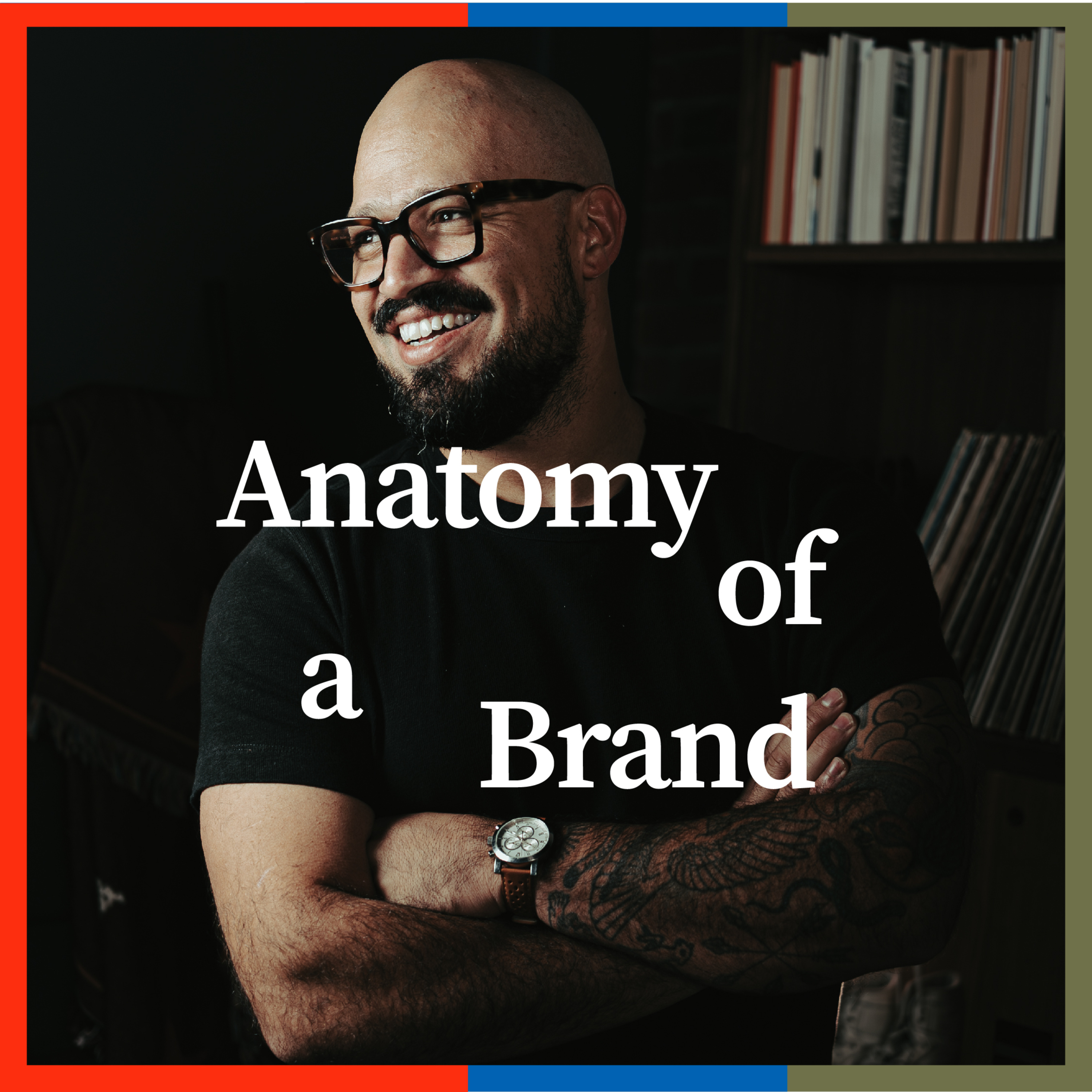
Anatomy of a Brand Podcast With Chris Cruz4 Nov 2026 · 37m
He Designs for Major Brands. He Still Refuses to Send A Questionnaire | Episode 42 w/ Scott Fuller

 Add vo to ChatGPT or Claude to ask about everything you hear
vo listened to this episode to put together the overview and transcript, so there may be the odd mistake.
In short
Identity design and brand strategy built through direct conversation, not questionnaires or “efficiency” shortcuts. Scott Fuller argues that founders’ stories and heritage drive iconic logos, and that meeting clients (in person/phone/Zoom) is essential. He also criticizes mood boards/Pinterest for steering toward superficial matches.
Guest
Scott Fuller, Atlanta identity designer. Has designed identities for Coca-Cola and the Atlanta Hawks’ gaming/e-sports work, plus “hundreds” of brands. Background includes competitive table tennis (Junior Olympics; trained via Atlanta’s Ben Hill community center). Mentors/books include Steph Geisbühler (NBC peacock logo) and trademark design literature.
Key claims
“Your story is your strategy.” No questionnaire beats a real conversation. Logos should be uniquely personal, simple (not simplistic), and timeless. Brand work is collaborative; feedback usually improves outcomes.
Notable examples
“Pearl Dynamics” naming led to an elephant-based logo detail. Atlanta Hawks identity: he challenged “Christmas” colors, used OG Atlanta palette, and rapidly revised a problematic “head” after legal/ownership review.
Transcript
0:00I would challenge anybody in the industry. I said, I'll give you 20 emails and I'll give me five minutes and I'll get more in five minutes than you'll get in 20 emails.
0:07Chris Cruz: Scott Fuller is an identity designer out of Atlanta who's built identities for Coca-Cola, the Atlanta Hawks gaming team and hundreds of brands you know and don't know. But this conversation isn't about design. It's about what happens when you stop optimizing for efficiency and start actually talking to the people you're building for. He told me about a founder who named her company after her grandmother, Pearl. Everyone wanted to design an oyster, a wave, something obvious. Scott asked one question nobody else thought to ask. And then I said, wait a second. This is all based on her grandmother.
0:38Out of the blue. What was your grandmother's favorite animal? And she goes, oh, she loved elephants.
0:46Chris Cruz: Done. Done. This is a conversation about the thing every founder forgets when they're deep in the weeds of building. Your story is your strategy and no form, no algorithm, no shortcut will extract it the way a real conversation will. This is Anatomy of a Brand, episode 42. I'm Chris Cruz and this is my conversation with the studio temporary founder, Scott Fuller. I saw something on your website. Okay. And in your bio, table tennis, like world champ, something in that category. You alluded to it at lunch. On that level, but I still train. I still compete. But did you at some point? Like what was like, there was some part of you that was doing something at a high level.
1:26Yeah. What was that? I mean, I was junior Olympics back in the day. The two silvers way back, way back in the day. Yeah. Traveling all over the Southeast to play and compete. How'd you get into table tennis? So I mean, everybody had, you know, when you're growing up, everybody had like the crappy paddles and table that was all wobbling and everything. Camp tables. Yeah. and then I got to high school I started getting into I'm like this is kind of cool and then I used a paddle with like actual rubber on it for the first time and I'm this is amazing and then turned out I was actually I was actually pretty good at it I went to my first tournament and I actually beat a player on a certain level that I never should have been able to beat and I had never had any training never had any coaching never had anything like that and from there um one of my good friends uh dads um he used to run the ben hill uh community center in atlanta um he kind of discovered me i guess if you want to say that and he's like let's start your training let's start you doing that i found out about all that and then that's how i got to the junior olympics that's how i got to train and play and what and even more it's been amazing and so what
2:36Chris Cruz: made you go from i'm gonna be at a junior olympics level to not continuing like did you what was i got married dude i mean i was training i was training for five six years you know and it was amazing at one point i was training six days a week you know but when you're did you watch marty supreme huh did you watch marty supreme i actually haven't watched it yet okay i haven't watched it yet um i do know they put a couple of pro players in there which i thought was really cool at one point he's playing like one of the most like one of the best tabletonist players in history okay at one point in there but um but yeah i haven't seen that one but i like i said i i play as much as i can you know compete as much as i can train as much as i can which these days isn't as much as i want to but you know i've got other outlets you know so it was competition like a normal part of your like makeup like going like just driven to compete did that is that was that what pushed you excel at becoming a logo designer and illustrator like that?
3:36Chris Cruz: I'd say absolutely. And how does, how do you navigate that? Like, cause sometimes competition, I would, I'm, I'm a very competitive person. Like I bet I'm more competitive than you. I mean, probably until one area that I'm more competitive. So here's the thing. It's interesting, right? Like I, I got, I was super competitive, right? And then I got feedback on you're too intense, you're too competitive. And then your journey goes through this, like having to navigate like this fire personality with the appetite of others, how, and then in business you're trying to win, win, like how has that served you and then hurt you?
4:10Okay. So three part question, five part answer. So I've, you know, so I think for me, I mean, I grew up competing. I grew up playing, you know, I mean, my dad, my dad actually raced a pro supercross back in the day. So I remember like we'd go to the races and everything every year georgia dome upper level 50 yard line every february you know sunday sunday sunday tickets for just 10 bucks like that type of deal and i loved it but they sound like cookie monster the announcer yeah yeah i don't know right cookie no tickets sorry you know so anyway i it was just part of me i played little league i played you know basketball i played street hockey for a couple years you know and i was super i was not only super competitive but i was also into all the bits and pieces of it like why did why was my shot not like in basketball it's like why was my shot missing just this way why not that i started looking at my elbow and this and my release points and all these different things and then i would start watching tape or i would start reading books or i would do different things like that so i was very focused not just on i want to get to this point but like what are the little little teeny tiny little details you didn't overlook with the mechanics right and it comes and it gets into logo design too i'll get to that in a second but as far as the competitive thing goes man i'm like i'll like i said you know i mean my first thing you know i was like yeah it was kind of a joke but it kind of wasn't yeah you know it drives you it does has it caught you in in a way that you're like man i didn't like the way that showed up no no not really because i think it's a couple of things one if you're going to be that competitive you also got to have a personality to match which means like when i like i meet somebody i i come in in a certain way but if somebody's more introverted or whatnot what i'll do is i won't come down to that is i'll kind of bring mine down just a little bit and they'll kind of meet me and i just kind of
6:01Chris Cruz: try to meet in the middle yeah so so there's some awareness of there's an awareness of that but there's an unapologetic quality to me i think somebody said the other day somebody said the the day like when they met me the first time yeah they were like they were a little intimidated they were like today we met for the first time today today we had lunch this is our first time yeah i mean i threatened you within like the first 30 seconds because of your hat but i knew i could take you is the issue is big talk from the mets fan right yeah so but anyway we but competition comes out again yeah but i'm also the guy where it's like yes i'm going and going and then it's like somebody hits you and all of a sudden now we get into it you know but for me i think there's a i think part of it's confidence i'm confident in what i can do i'm confident in what i can bring i mean you don't create a brand called iconic without no competition that drive that internal sense of like and it was so i can get this i can be this i can do this and it was so funny because i remember talking to people like i never used iconic to um to discuss or to um to define what I do.
7:06Everyone else did. And it just made sense. So for me, I grew up, you know, I graduated in college in 2008, man. 2008 was the year of like sustainability. Everything was green and leafy and organic and paper and cardboard and, you know, whatever. And, you know, crushed together pieces of hay or like, you know, all kinds of stuff. My first mentor was Steph Geisbühler, the guy who designed like the NBC logo. That was my first mentor. The first person I really truly learn from and talk to.
7:36Chris Cruz: We're talking about the NBC Peacock thing. Yeah. Okay. Yeah. I mean, he's, he's 80 now, you know, and I remember watching that. My first book was the Shema Yifengaismar, a trademark book. It had just come out like maybe six months earlier. That was the first design book I ever bought. I still have it 20 years later. And that was where I learned. My dad was a machinist. I, when I went into college, my scholarship was for mechanical engineering, not for not for not for art wow i did trig physics calculus in high school i graduated at 16 went straight to college is that because your dad wanted you to do that or is that not i had a head for it yeah i had a head for it just in general right and then um what is it when you know but i always drew you know i always tried that so i didn't know graphic design even is this existed so when i went into college i did fine art for the first like year and a half after a year and a half and I'm really good at it.
8:32I was so bored. I'm like, I'm drawing stuff that already exists. I'm doing in all these different mediums and that's great, but I'm doing things that kind of already exist. And I never felt like I was creating anything or really truly working with my hands to make something. So I was going to throw it all away and go and do mechanical engineering. But I said, I'm going to give it one more semester. The first class in that semester was graphic design. Five minutes into the class, I said, this is what I'm going to do for the rest of my life. And that was 22, 23 years ago.
9:02Chris Cruz: Dang. Okay. So you're, you've got a 14 year old. Yes. And a two year old. Yes. Your drive and competition. How has that impacted you as a father? Um, it's interesting because, you know, you, you want the kids to, you want the kids to be good at certain things so where i where i learned you know especially in the first couple years it's like i had a lot of things that i wanted to do when i was a kid but it was like oh you should take piano it's like i want to take piano i'm a pitcher i need to be out there working on working on this working on that you know we're getting the batting cages doing all this stuff this is taking away from all that so i said when i when we had kids i said i want to have an impact on them to the point.
9:50It's like, I want to do this. Sorry, let's, I'll do whatever I can to help you get to that point. But, you know, obviously I taught them, it's not easy. You're going to have to put in the work. It's going to take a long, long time. And, you know, trying to discover this, trying to, you know, perfect this and whatnot. But at the same time, I'm just so happy that you're doing what you love and I'm here to help as much as I can with that.
10:14Chris Cruz: right so um back to your awareness you're like you know when you can drive but you also know when you need to pull back yeah and you need to like or like not not relegate yourself or bring yourself down but almost be aware enough to go i want you to be in the same place as me so in order to do that i actually have to consider you chris doe did a really really good um live uh kind of demonstration of that okay where he brought somebody up on the stage and you could tell they were nervous and Chris has kind of had this personality good friend you know and I was like you know he said here he's going to talk and then I'm going to kind of bring this down and do that and I think some people do that kind of naturally I think it's I've always been very outgoing very you know easy to talk to people easy to have conversations strike up a good conversation you know but it's good to see that yeah but at the same time I can't come so far one way that I start to lose who I am and that confidence and whatnot.
11:12Chris Cruz: So do you find in the design world, when you're designing logos, do you find that you're wrestling up against somebody wanting something that isn't you that you're like, I've got to, and then, and then you're like, how do I bring that back to me? Or is it always a conversation early on? So here's, I, I, I have a problem with that a little bit in, not in, not necessarily in the way I work, but just in the industry in general, I think, especially with young kids, they're like, I have a style, I have a way of doing this or whatnot. If you look at my work, it's not really a style. It's a, you know, it's an execution.
11:44That's what I'm looking for. There's variety. There's a ton of variety. Nothing looks the same.
11:49Chris Cruz: There's versatility. Yeah, there's range. A lot of versatility. But the one thing they all have in common is they can all last for the next 50, 60, 70 years. Right? So what happens is if people are so focused on, I don't want to take this and I want to bring it to me and I want to put my stake and my this and that on there, they're missing everything that's happening within the brand itself. They're missing that person. You're missing the person who built the company. You're missing their, I like to use the word heritage. You're overlooking that heritage in the favor of making this your style or making this, that, or putting your, and I have no issue with like putting your voice into something, doing that.
12:25There's absolutely me in all my work, but that's not the focus, right? I think that's where I have a lot of trouble a lot of times, you know, industry wise, especially with some of the kids coming up, I must make it look like this, or I must have this, or it must be this type of style. No, you know, especially when it comes to identity design, it's like, you're not an illustrator. You know, we're not talking about illustration. We're not talking about basic design, brand identity design and logo design are two, you know, and then typical design are two very different things. I went into my first project was a logo design.
12:57When I, you know, took that design class, I think I got A's on all three and I'd never
13:01Chris Cruz: designed a logo in my life so i had that natural bent towards designing that so when you're when you started to go on the journey of defining yourself into this field and the mechanical nature of how you assess things the way you look almost scientific even i see the world in shapes yeah you like so you're in that space when you when you have um when you're hearing someone talk who doesn't think in shapes right who doesn't think in those things how are you extracting from them? Like, what are the questions? What are the things that you're doing that you're pulling out so that you feel like you can represent their brand?
13:35It has nothing to do with design. It has nothing to do with colors, shapes, styles, anything. We'll just, it's just a conversation. You know, I want to know about them. You know, there's a personal aspect to every single logo that I've ever done, whether it's for Coca-Cola. I've done some work for logos for Coca-Cola. I've done stuff for my buddy across the street. You know, I've done for sports teams. I've done for rappers I've done for like all these different things. And the way that I'm able to keep my work so different and so versatile is if I'm basing it on a person and basing it on their heritage, it's never going to be the same because we're all created completely different.
14:10So for me, I want to know more about them. There's, I'll never use a questionnaire. I'll never do this through.
14:19Chris Cruz: I, I, I would challenge, I would challenge, I would challenge anybody in the industry. I said, I'll give you 20 emails and I'll give me five minutes and I'll get more in five minutes than you'll get in 20 emails. Why? Why do you think that is? Because you're talking to the person because there's no formula to talking to a person. I'll have a conversation with you. I'll have a conversation with somebody else and I'll have to approach it in two very different ways. So if I send the same forum to 20 different people, there's going to be 20 different reactions to that and ways they think about it and whatnot.
14:54But if you're able to reach across the table like this and just talk to them and have that conversation and get to know them on a personal level. You can't touch that. And that's where, that's what sets me apart.
15:07Chris Cruz: So you're in there, you're essentially studying the conversation. You're studying the person as they're, and you're looking at the mechanics of the words that they use, the way that they say it, the tone even, like how they present themselves. I can tell you what they're excited about. I can take the conversation in any way that I want and say, okay, this is great. Let's talk about this because you seem to have a big reaction to this. And then that opens up 20 other things. It's so true because it's what I say every time when you do brand work, you end up almost feeling like you're doing therapy because you're pulling out so much in the conversation with someone.
15:44Chris Cruz: You're hearing their stories in ways that they may not even think to tell their story. I remember talking to somebody about naming their brand and I asked them about the origin of how they started it. Oh, there's nothing there. And what we start talking about, it's this massive emotive moment between them, father and son that they kind of overlooked. And you're like, that's profound. There's a lot of depth there. Like I'll give, I'll give you one example. Um, I'm speaking at Adobe max later this year, which I'm really excited about my first time. And my talk is called, uh, chop it up basically like building, you know, how to build a, you know, iconic logos, uh, how conversations build iconic logos.
16:18Okay. And the idea is, so like I had one, was a friend of mine uh she runs uh she does uh container design like the shipping containers like she'll she'll build kitchens and like uh uh what is it like medical pods and like okay uh
16:32Chris Cruz: apartments like it's it's right we have a couple we have a food truck park in nashville that has shipping containers yeah locked up on each other like she would she would take that from start to finish and do everything the welding the plumbing the electrical to everything and literally just deliver it right so they started doing this thing with like uh bioengineered materials like to build their own um kind of containers and their in their own you know structures and whatnot so she called it pearl dynamics you know and her grandmother's name pearl okay so you think pearl you obviously there's all these different things that come to mind you know all the oysters and clams and waves and mermaids all the first mentions in your head it's so stupid and i'm like we can't do this you Because we never know how it's going to be seen or used or whatnot.
17:17And then we were having a hard time with it. And then I said, well, wait a second. This is all based on her grandmother, who she still has deep love and respect for. So I said, just out of the blue, what was your grandmother's favorite animal? And she goes, oh, she loved elephants. Done. Side view of an elephant, still had almost a pea-shaped ear. and then the trunk going up like this, pearl, a big pearl at the top. No one's going to get to that. There's not a questionnaire on the planet that will get you to that.
17:52Chris Cruz: I mean, I love what you're saying there because it truly is getting out of the literacy of like pearl, pearl. It's got to equal that. And sometimes it does. Sometimes it has to be that. Sometimes it needs to be that literal because you're like, I'm dealing with that kind of precise thing. I want it to be that way. But what you extracted, what I love about what you extracted here is the idea that the conversation led you there. That it's, there's no form. And I think there's probably the reality of people wanting to save as much time as possible. There seems like there's something I can sense in you like this edge around shortcuts, around trying to get to something quicker than you should.
18:27Chris Cruz: And what's that wrestle you feel? Because I can sense that wrestle. Right now, I mean, this efficiency is such a key word in the industry right now. Efficiency with this, efficiency with that, AI with this, which actually creates more work than it does save. So I'll just leave that here. But what's happened is we've taken so much efficiency, you know, we're focusing so much on the efficiency, we're taking the humanity out of it. And where we have as designers and illustrators and artists and everything have such a, I think, a huge moment right now. Anytime a new technology comes out, anytime a new fad or trend or anything like that comes out, people look in that and they're so focused on that.
19:10So anybody that's doing anything the regular way or doing anything different, all of a sudden, you know, because people want to know, you know, when AI came out, it wasn't initially, it wasn't just, you know, here's all these great new things. It's like, how are you going to deal with that? How are you going to deal with that? So now the spotlight is on people like me, on other illustrators and designers and lettering artists and, you know, muralists and everything like that. So they almost look at what, how we do it as like the old ways, the analog, you know, is another big keyword or whatnot.
19:38And, you know, now I get to say, here's how my humanity and the way I talk to people is something that nobody will ever be able to replicate.
19:51Chris Cruz: Yeah. Right. I can teach it and I can show you how to do that. But in the end, are you willing to put in the work? Are you willing to take the minute to sit down and have a good conversation with somebody? And I've heard so many people using this thing like it's the art of the conversation. like there's no art to what i do i'm just talking which i can do which is kind of like yeah which is like the person who who who doesn't see it's like the person who breathes or like you said you see shapes for them it's not art for them it's not doesn't take that extra work but from the outside in seeing someone who does things intentionally like that it does look like it has a musical tone to it does look like it has a cadence to it like there's even parts of me like man i feel like you get another life you're like a hip-hop artist right and there's this element to you that like, but the, the interesting thing is going to go with you for a while.
20:39Killer Mike is going to, is going to love, I tell him this, you know what somebody said about me the other day,
20:43Chris Cruz: man? Yeah, it works. So we, we won't have you do any freestyle because I don't want to shoot the rest of your reputation down, but we'll, we'll keep you here. So I think the competition is good in this conversation. So maybe this is good for you guys. So, so, okay. But in that, like, even in myself, what we're doing, what we're trying to build, um, the iterations we've gone through already. And we haven't even been around very long, but we wrestle with trying to make things frictionless or trying to make, trying to go, okay, how do we streamline this, streamline that? And you do run up against what you're talking about.
21:16Chris Cruz: You do run up against this thing that says, you know, there's some people that are like, I don't even have to talk to my customer. They drop it in. I don't have to do anything. And I just send and I'm good. I take their thoughts, I create it and it gets delivered to them. And it's frictionless, almost like the, The digital app world, the way that we've delivered software or technologies influences human workflow so much that when there is a step of interaction, it's a friction point versus going, it's an opportunity. Exactly. And I think that's the part I even have to train myself on and going, okay, let's pause.
21:50Chris Cruz: Let's not do any more email exchanges. Let's not do any forums here. This needs a meeting. This needs a sit down. This needs a conversation. We talked a lot about like driving and traveling and everything while we were sitting down at lunch. I mean, I want you to think of something, you know, let's imagine we're driving through like, you know, Kansas, Iowa or something, and it's just flat and green and there's nothing and everything's straight. There's no turns, no curves, you know, no places to stop and pee. Like it's just, you just go, right? After about five minutes of that, I'm just done. I'm like, I'm so tired of this and it's so smooth and it's so effortless and it's so efficient.
22:26But then you start to go through and they got to go mountains, but you're seeing all these things that you would never see before so well a lot of times what i tell folks is like i'm trying to get to the same place with every client and collaborator that i work with but i have to take a different route every time because you're a different person exactly and so when you go from there to um actually creating logos where has the mechanics
22:53Chris Cruz: and all those steps come into play you said i'll i'll mention that at one point like where does that thinking that meticulous perspective come into it when you're designing logos are you beating it to the horse to like to the horse is dead where you're like man i've i've worked too long on this is that kind of the stuff you wrestle with or is it different not necessarily because all of those conversations that i have that's 50 to 60 percent of the project done right there when we finish that brand audit when we finish that conversation because i know which direct even if i don't have a visual direction i have an overall direction that we want to go and everything that we do is placed up against that.
23:29Does it match with this? Right. So all of a sudden I have 10 ,000 options. Now I have 20, right. From that conversation. Now I have a smaller box to work in and now I can focus in on what really matters. Right. So for me, you know, having the conversation, doing that, and then I want to start building this thing out. Um, negative space. Um, you know, I love putting little things in my work has been a huge part of my work. I kind of, I build like an architect. So I'm like from the inside out. So all my logos are kind of built from the inside out. It used to not be that way. But for me, I obsess over, I've got books that are older than any two of us in here combined.
24:11Like all of these books and stuff that have been done over, you know, hundreds of years, you know, 150 years or whatnot. And I'm looking at all these and it's like, I don't want to make anything that looks like this. I want to know why. Why did they do this? Why is this move successful? Not so I can copy the move, but so I can understand the reasoning behind the move. A lot of people was like, I want to do something that looks like this. I want to do something that looks like that. I want to do something that has the same impact and a lasting impact as that. How I get there is a very different thing.
24:56But to get inside of the minds of my favorite designers and some of the ones that have influenced me, Malcolm Greer, he's probably one of the greatest designers in American history that no one's ever heard of. He did the Presbyterian church logo, which is one of the most beautiful logos on the planet. the oh my gosh the um the the shapes and the stories and and everything in there all the
25:21Chris Cruz: little pieces that i love right i love talking to logo designers and identity designers because their their obsessive nature about that thing that logo that piece the way that it sits the way that it lasts the way that it becomes iconic all those things if you had to talk to founders who don't see that and they're and creative directors who don't see it like that quite but you know it's it's so important what are you what are the things you're saying to them that they need to understand that they're not getting about logo design i don't go in there and talk to them about logo design you know i can't expect to walk into a company no matter how big no matter how small and expect them to have the same level of you know obsessive or like that obsessive nature about this that i do i still have to get them excited about it yeah but i don't get them excited about it talking about shapes and colors and hand tones and the unchanging nature of the Presbyterian logo.
26:18Chris Cruz: Exactly. I don't have to do that. What I, what they want to know is, well, I build something for them that will not just, it's not just another, like, you know, notch on my gun or something like that, but like, what is that? I want to, they want to know that it's going to work for them, that it's going to do exactly what they need it to do is something that they can be behind and be, what does a good logo do in your mind? Um, a good logo is, uh, I think Paul ran instead of us, it's like a vessel, you know, logo itself. Just, it doesn't have to say everything about the company. It doesn't have to describe everything that it does, but it has to be a vessel that holds that.
26:50And all of the best lines on a logo and everything, all the experiences and all everything like that, that's what fills it up. Right. So, but I think it needs to be, um, so there are, there are three tenants that I designed by. Um, one is we talked about it to a pretty good extent at this point, uniquely personal. Second one, uh, Albert Einstein said, things should always be as simple as possible, but never simpler. There's a difference between simple and simplistic. There's a huge, there's a Grand Canyon's worth of difference between those two. And then the third one is timeless. I'm not designing around any trends, fads, because if I take all of those things out of the conversation and say, this is not even a, forget not even being a starting point.
27:35This isn't even anything that's in the same universe. If I take all of those things away, what are they left with? Right. They're left with what got them there to begin with. They're left with the dreams and the hopes that they have for this, for this brand or this is great.
27:54Chris Cruz: So, okay, here's where we'll start to get to land on this plane here in a minute. So So if you're sitting across from a founder or a CMO or a chief brand officer, and they're trying to figure out a logo identity question, a new logo identity, you're basically going to the spot of saying, like, how do I get you back to something? What, like, walk me through that a little bit more. Like, you're not asking the typical questions here. How do we get there? How do you get somebody to see that? like what because they're coming to you going i need a logo well even i'll i'll even bring my own work there's a if you if you ever get a um if you ever get a proposal from me it'll start out with you know here's your name and my name and everything in there it's like it's like hi my name is scott fuller you know and it's like this or the studio temporary is an iconic design studio based out of atlanta georgia we've been known to design a spectacular range of items in the brand identity to this and this and this and then it's like we build iconic brands like these and then i'll show like 50 logos or something on a like 49 50 logos on this page black and black logos on like an off-white background and they can just look and they can see and it is all varieties all styles it's like a flash out a tattoo shop it's like all the different ones and then i'll show them some work that is you know typical of like hey here's your industry or something like Here's some things that I've done or that might be kind of in a similar vein.
29:25So they know what they're getting, but they don't. They know that I'm building something that's going to last, which is going to take, might take longer. It might be, you know, more in depth. So I can't, you know, just bring out a bunch of shapes and a bunch of colors and whatnot and just say, let's pick. Oh, here's one. And this is probably going to be very controversial. controversial uh mood boards can suck it yeah i hate mood boards i hate pinterest i can't stand it why for two for two reasons um for the mood boards you might set them in a direction but all they're gonna want in the end is something that looks exactly like the mood board they choose so you've already shot yourself in the foot can i say that yeah these days i can still say that Okay, so they've shot themselves in the foot.
30:19And with Pinterest, you can make Pinterest say whatever you want. You start doing something, it's like then the algorithm is going to pull out things that you like and it has nothing to do with what you're actually trying to do. So I think around that, this goes back to the whole personal thing. I've gotten to the point in my career where, and I've been there really ever since the beginning, if I can't meet you in person, I either have to have a phone call or like a zoom call with you. If you're not, if you don't do those things, I refuse to take the project. No matter how big, no matter how small, if you say, I can't talk to you, I didn't do this.
30:56Just send me an email. I won't take the project because you're cutting my legs out from under me. Without realizing it, you're cutting your, you're cutting your legs out from under you as well. Yeah.
31:05Chris Cruz: So you're, one of the safe things you would say is any brand that's looking to either rebrand or build a visual identity or get a new one, you're, you're, you're really not asking them to go, what things do you like that exist in the market? You're really trying to get them to go, who are you? Like, who are you and you having getting in touch with your own story again? Like, why did you start this? That's partially why our agency, when we call it kid again, is the idea of we make it into one word instead of two words, we put it into one word. We never present it as two words. So even when you read it, you have to interact with the concept.
31:39Chris Cruz: But that, that reality is because we know that there's people who have been jaded by the creative industry and, or just want something like this. And what we're hoping is that when you come in contact with us, that like, that jadedness kind of goes away and you get back in touch with the passion that you started this with. Why did you, what was possible when you first got into this that you got rid of? I tell every client that I've ever worked with, and you can ask any one of them, I'll say, this is a collaborative process. I said, I can't do what I do without you and you can't do what you're doing in this project without me.
32:12I said, so there's a 50, 50 issue here. This is why, yes, there's always going to be some issues with feedback at times, but like there's been times where, you know, everybody's like, Oh, a client like destroyed the project. 99 % of the time that feedback actually made the project better. I'll give you a quick example. I worked with the Atlanta Hawks a few years back, uh, the NBA started a sanctioned NBA 2k league. So every NBA franchise had a, um, what is it ended up having an e-sports team. So I was hired to design the identity for the, um, for the Hawks. Okay. So here's the fun part. We were right about to do a big rebrand for like a new uniforms and everything like that.
32:54At the time we were like Nike's little, you know, pet project or something like we had uniforms that were like red and green they look like christmas wrapping paper yeah they had like some mutated about the hawks right yeah like some mutated haunted yeah bat wing basketball on fire like it was horrible yeah and when they brought me up initially they said i'll bring your portfolio and i'm like it's 2018 why am i bringing a portfolio like this is so what i did is i brought a poster 24 by 36 it had like 200 something pieces of design on it of mine and i had a red and i had a red one that i'd printed out just because like they have a couple extra but i'm like hey it's the hawks so let's go so i brought that up there and they're like what do you have so i rolled that out in the corner office of the cmos up on the 19th floor right and i was like there's over 200 pieces of design here ask me a question about anyone i'm gonna tell you when i did it who i did it for and a funny story to go with it i only had funny stories for about 10 % of them.
33:55So I'm kind of like, I'm going to have to BS a little bit here. After two questions, they hired me. And then the next question was like, can we keep this? And I'm like, if you look at the back of the poster, I've already signed it to you guys. That's awesome. Right.
34:09Chris Cruz: But that's that competitive confidence drive right there coming in. Like, yeah, it's like, I knew, you know? So then we start talking and they're like, all right, here is you know what do you think of our current identity now i'd just gotten the project two minutes ago yeah what do you think of our current colors what do you think of our current identity and i'm like do i you know him and hall around this because i'm so excited i'm like i can't if i do that then i'm i'm just throwing this all away so i said um i think it's horrible i said no one in atlanta wears your merch no one i said we're not a christmas team i said atlanta's red black and yellow i said you look in the 90s you look at that you look the dominique wilkins era you know in the 80s early 70s man that was us i said that is our town i said none of this feels like atlanta anymore and i said the piece that y 'all saw and hired me i used our og colors for a reason i said because that's the atlanta that i know and that's the atlanta these people love she got on the phone and called nike said we're switching our colors up right so then we get into the thing and we're done like the logo looks beautiful we're all excited so if you do anything to the nba you got to go obviously through ownership you got to go through management you got to go through creative then you have to go to the like the owner of the team then you have to go to nba legal nba legal you send it off it is automatic two weeks on the dot not 13 days not 13 and a half two weeks on the dot it's unbelievable i don't know how they do this so apparently went down the line like yes yes yes yes yes and then somebody said look slightly german that destroys everything it was but it was just the head of the mark okay just the head so they were like everything else is phenomenal but we have to do something about the head so i literally chopped the head off of that design the new design that i did i think i did it in like 24 hours.
36:07I think I did like 30 different heads or something like that. The new design I did was 20 times better than what we were all ready to go like ride or die on. And from that moment, I'm like, man, there's something to this. They're not, it's not like they don't know what they're doing. You know, there's a reason that they're here. There's a reason that they're doing this. There's a reason that they're hiring you, but there has to be some give and take on both sides. I think as designers, we talk so much about, you know, client thing with this and client horse stories. Look, we all got them.
36:42Chris Cruz: Yeah. But I never talk about them. Yeah. Because that's not what I want to focus on. Yeah. And I'd say 99 % of the time, there's always that 1%. But 99 % of the time, that feedback is going to make the project even better. Bro. I love it. Thanks for coming on today, man. I appreciate it. Oh, man. It was great to have you.
From the publisher
On this episode of Anatomy of a Brand, Chris sits down with Scott Fuller of Studio Temporary, an Atlanta-based identity designer who has created marks for Coca-Cola, the Atlanta Hawks, sports teams, and rappers. Scott went from Junior Olympic table tennis and a mechanical engineering scholarship to a career building logos meant to last 50 years. We talk about competitive drive, why he refuses to use questionnaires or mood boards, how an elephant became the answer to a brand named after a grandmother, and why client feedback almost always makes the work better.
KEY TAKEAWAYS
A logo isn't about your designer's style. It's about the heritage of the person and company behind it.Conversations do 50 to 60% of the design work by shrinking 10,000 options down to 20.Efficiency can strip the humanity out of creative work. Friction with a client is often an opportunity, not a problem.Scott designs by three tenets: uniquely personal, simple (never simplistic), and timeless.Mood boards and Pinterest tend to box clients into copies of what already exists.
"I'm trying to get to the same place with every client I work with, but I have to take a different route every time." -Scott Fuller
TIMESTAMPS
00:00 Junior Olympics and table tennis
02:18 Competitive drive and how it shows up in business
03:20 Obsessing over the mechanics
05:31 Confidence and being called "iconic"
06:18 From engineering scholarship to graphic design
08:06 Raising kids with drive
10:02 Style vs. heritage in identity design
12:16 Why he never uses a questionnaire
14:55 The Pearl Dynamics elephant story
17:25 Efficiency, AI, and the human side of design
20:05 Friction as opportunity: the road trip analogy
21:44 How conversations narrow the design work
23:31 Studying the why behind great logos
24:39 Getting founders excited without talking about fonts25:52 Three tenets: personal, simple, timeless
28:40 Why mood boards and Pinterest hurt the process
29:19 No call, no project
30:11 Getting back to why you started
31:00 Design as a 50/50 collaboration
31:21 The Atlanta Hawks NBA 2K League identity
34:20 NBA legal and the 24-hour redesign
35:06 Why client feedback usually makes the work better
CONNECT WITH SCOTT
Studio Temporary: https://www.thestudiotemporary.com/
Instagram: https://www.instagram.com/studiotemporary/
ANATOMY OF A BRAND
Anatomy of a Brand is a show for founders, CMOs, and creative leaders on the idea that brand is a self-knowledge problem.
Take the content course: https://www.anatomyofabrand.co/
Work with Kidagain: https://kidagain.com
#AnatomyOfABrand #LogoDesign #BrandIdentity #BrandStrategy #Branding
More from Anatomy of a Brand Podcast With Chris Cruz
All episodesWe use cookies.They keep vo running smoothly and help us improve it. Privacy policy
Scan the code with your iPhone camera
Listen in the app.
- Play everything vo finds for you
- vo remembers everything you hear
Go to the App StoreFree on iPhone