
- Podcasts
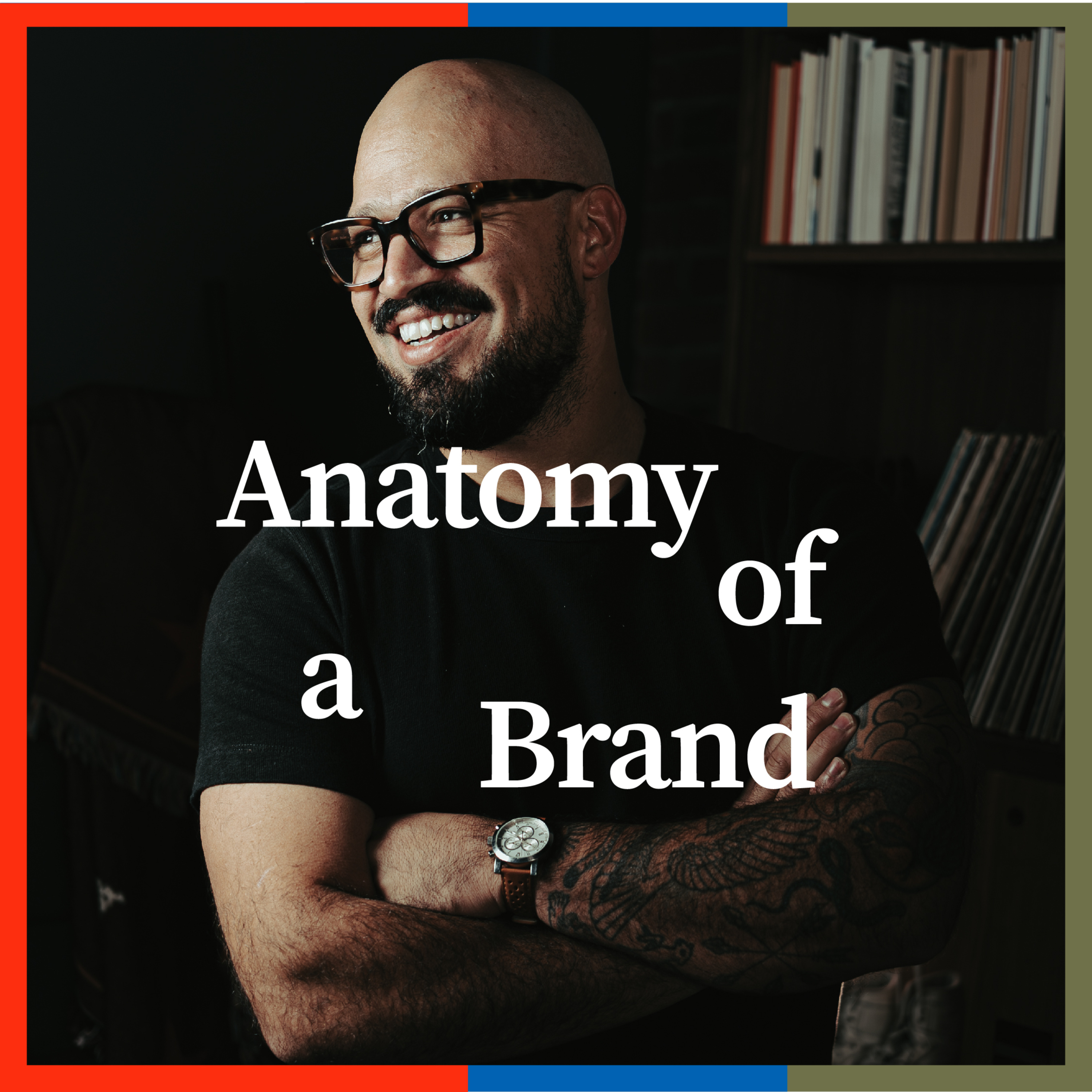
- Anatomy of a Brand Podcast With Chris Cruz
- How a Speaker Bureau CEO Spots a Real Speaker
Anatomy of a Brand Podcast With Chris Cruz22 Oct 2026 · 44m
How a Speaker Bureau CEO Spots a Real Speaker | Episode 41 w/ Shawn Hanks

 Add vo to ChatGPT or Claude to ask about everything you hear
vo listened to this episode to put together the overview and transcript, so there may be the odd mistake.
In short
Sean Hanks, CEO of Premier Speakers Bureau, explains how to spot a “real” professional speaker and how speaker bureaus work—contrasting professional speaking vs public speaking/lead-gen, emphasizing practice, culture, and “do no harm.”
Guest background
Shawn (Sean) Hanks has spent 26 years in the speaking industry and joined Premier as an agent (sales). He became CEO in 2010 after founder Dwayne. Premier is employee-owned via an ESOP completed around Dec 31, 2014/Jan 1, 2015. Premier books about 2,000 events per year with 10 agents.
Key claims
Don’t conflate camera communication with stage performance; professional speakers practice relentlessly (even top speakers rehearse in mirrors). Premier prioritizes culture (“do no harm”), kindness, and fit over money when acquiring competitors. They don’t create momentum for unknowns; they represent speakers who already have traction.
Notable examples
John Acuff and Ryan Leak as “exclusive” success stories; Deion Sanders as a roster example; Taylor Swift as the “music representation” analogy; Premier’s COVID impact (events dropped to ~432).
Transcript
0:00Chris Cruz: There's a line in the speaking business and almost nobody sees it until they've already crossed it or failed to. Shawn Hanks has spent 26 years on one side of it. For every one minute of content, it says 60 minutes on stage. He runs Premier Speakers Bureau in Franklin, Tennessee. 10 agents, 2 ,000 events a year, and he'll tell you the thing most creators don't want to hear. Don't conflate, I'm in front of a camera for an hour a day with, I've been on stage for an hour a day. Or, I'm a great communicator on stage. That's a different thing. Here's the part that should bother anyone who thinks the stage is the reward for a good following.
0:35Chris Cruz: This is the guy at the top of the industry, and this is what his mornings look like. And I go, Jenny, how many times have you heard John's speech? She goes, almost every morning. That dude still gets up every morning and goes and rehearses to some form or fashion in a mirror, him standing in his bathroom with her rolling her eyes going. Good Lord, I've heard this a thousand times. The best in the world are still practicing their craft. Yeah. This is episode 41 of Anatomy of a Brand. I'm Chris Cruz, and this is my conversation with Sean Hanks, CEO of Premier Speakers Bureau. 26 years ago, you came into this company.
1:08Chris Cruz: You've been that, that's like, that's one, that's a run. Were you in the same role 26 years ago? No, I've definitely moved up the food chain. Okay. Yeah. What did you start at 26 years ago? And then now you're the CEO of the company. Like, how does that work? Chris, great question. I always say if you hang around a place long enough, they'll just let you run it because you outlast everyone. I came in as an agent, which is a nice way to say sales. We like the word agent. It sounds interesting. But at the end of the day, an agent's job, I employ 10 of them now, is to take a client who's in need, match them up with a solution, and that'd be a win for everyone.
1:42I came in, we were a much smaller place at the time. I think I was the third agent. And it was just blessed. We grew significantly. I took over in 2010 from the founder, Dwayne, who's still a mentor, close friend of mine, and was running the company. And then we did an ESOP in 2014, which is Employees Stock Ownership Plan. Employees buy the company from the founder. He had the majority ownership. I had a minority ownership. That allowed him to essentially retire. And then at 14, we're fully employee-owned. And so the founder at that point, who had already kind of stepped out of a leadership role, then fully kind of retired.
2:18Chris Cruz: And the main goal, just to educate us, the main goal of someone making that change is so that the founder can essentially sell the company and move out without going with investors or public? That's it. People have knocked on our doors for years because what we do is an interesting, kind of cool, sexy thing. Private equity knocks on the door pretty often. But you know what that looks like is they come in and they start slashing and cutting. We, for years, had pitched this idea of like, join us, we're family, we're company. We really have a very specific culture and ethos at Premier. So the reality is we would have cashed out And God's been very blessed in life.
2:53But I understood that meant a lot of other people would lose their opportunities. Or if we got acquired by a competitor, a friendly competitor, they would have duplicate roles.
3:03Chris Cruz: They would remove people from their position. So an ESOP allows you to cash out, essentially, not in a pejorative way. And then literally, it transacted December 31st, January 1st of 2015. The company ran exactly the same. Okay, pause here for a second because there's a way of thinking that you have that's informing that decision process of going, all right, I knew this would impact people this way, so I knew I couldn't go down that route. Right. Where does that come from? And you're thinking like, what is that? Chris, that's called being a good human being, right? But there's some people who are like, I want to chase that money.
3:43Yeah. I like money too. I'm a capitalist. I am a capitalist. I make no apologies for it. I think it's what has created the greatest country in the history of human civilization, not to politic you.
3:53Chris Cruz: Yeah. The reality is enough money at some point is extra money, right? And that's not to say I don't love. We chase value every single day. Yeah. I can tell you everybody's kids' names, right? So the reality is these are – and we're a small team. There's 22 of us. so if if i had 500 employees i don't know that i could tell you all their kids names and to be transparent i may be less attached to them um but for 22 people i know their spouses and i know their kids like all that stuff the reality is like knowing that some of them would get put out to pasture is just maybe i should maybe i could be more like a hard-nosed or aggressive but we we've never viewed premier as a scale to sell thing and i have a bunch of buddies who are entrepreneurs who view things that way.
4:41There's no commentary on that. That's just not what we've built. And that's, we're not trying to build that. This truly is a thing that will run long after I'm gone. And it has to, because it is part of people's retirements, 20, 30, 40 years into the future.
4:55Chris Cruz: So the process there is going, okay, you're like, I'm a good human, a good leader, thinking through culture, ethos. You're thinking about all of the ramifications, which for us is why we think so differently around brand, not simply like, all right, is it this visuals or is it the logo? Is it the design? Is the website? No, it's all of the culture too. The ethos inside of there. How do you think about that consistently on Premier? It sounds like it's something you think a lot about. I do. I would say culture, I always say or whisper to our leadership team, our first job is to do no harm. I mean, we have been blessed and built this amazing machine that is prospering and growing now we can dig into covid that hasn't always been the case yeah the c word in 2020 wrecked us for about six months i mean you can't be public speakers and we're in the live events business chris it's crazy we have 2 000 events about 2 000 events we book a year so i think we had 432 events in when covid hit and we naively said we'll just reschedule them into the summer guess what chris spoiler alert we did not reschedule them into the summer a lot them when he lost there.
6:02That's right. But to come back to your question, the do no harm is the starting point of you don't introduce. So we've done a couple of acquisitions of friendly competitors. The first thing I look at isn't so much their bottom line. All that stuff matters. But the first thing I look at is marrying their team up with ours. Do they work? And the reality is we have we have sniffed and gotten pretty far down the road with four friendly competitors. we acquired one national speakers bureau they're still the crew that they brought in is still at premiere today because they fit with us we did another one prior to that and there's been two in the last couple years that we've done all the due diligence yeah and at some point it came down not so much to money but i don't know that that team fits well into what we do um how would you
6:49Chris Cruz: say that like that's because there's um steven bartlett diary ceo has this whole like culture assessment test he has everybody take and if they score a certain percentage they get immediately to him so he has people trying to gamify it because they're trying to get immediate access to him people are smart yeah so but with you when you're like oh we're going down the road what made it go now not like what was something that you're like i don't know if you can say it or not say it but is there a way that or way a question or perspective you were taking that made you see this isn't a right fit i wish i had a specific alco or formula hey there's the excel spreadsheet which i love by the way i'm a huge nerd chris um it i call it the coffee or the beer taste test okay like i can impress you in this for 30 minutes you go hanks is sean's a good dude if we go grab a coffee or a beer and grab dinner together after an hour or two you figure out okay was that a hundred percent of the guy that i'm actually talking to was he putting on a show was that 80 you're gonna know a hundred percent of me after grabbing a coffee or a beer or a dinner together um so it's not an exact science but after walking a little bit of path with someone And it's not, I never want that to sound like that's a judgment on the other.
8:01They just do business differently. We do business. We're in Franklin, Tennessee for a reason. We lead with, we're kinder, we're gentler. We take the Southern, you can hear it. I'm nasally. I'm from Texas. I live in Tennessee. I sound like this. That has been weaponized as a good thing for premier speakers over the years. We say, hey, we are friendlier, kinder. And I say that, that sounds like commentary on others. It's not. It is part of our brand promise that I think most of our customers, event partners, would say, yeah, Premier, they just call us back a little faster. They call us back, first of all.
8:35A lot of our competitors, it's kind of a, there's a tone of kind of we're gatekeepers to the rich and famous. We didn't start out with that. We started out as hustling, me included. And as we grew, my charge was always we're never going to pivot and go, okay, now we're gatekeepers to the rich and famous.
8:52Chris Cruz: I mean, you guys have some roster of speakers on your website. Yeah. Like, I think Deion Sanders is on there. Huge Prime fan. Huge Prime fan. He's got to get his team in order. But, like, the idea is, like, you guys are regularly interacting with high-level individuals who people are seeking out. So it would be really tempting to do that. Yeah. But then that makes us like everybody else. What if we continue to keep operating from really a place of need, if I'm honest? I mean, 20 years ago, 25 years ago, we needed to return phone calls quickly, emails quickly. We needed to treat people with kindness and gentleness.
9:33Now, we didn't do it to manipulate them. We did it because that's how we're wired and we think those things are important. It was also part of the brand promise, and it allowed us to beat our competitors often. And then as we grew, my charge inside of the building was still, hey, guys, let's keep that intentional gentleness and kindness that people notice. And they go, that's something different. And as a person of faith and Premier operates as a company of faith, that matters to us. We don't impose that. You don't have to sign a statement of faith to work at Premier. We don't require that of anyone that we work with.
10:08That's something that's valuable to us for a different reason. But people experience that. So then we say, what if we scale up and we're probably, I don't know, out of the galaxy of speakers bureaus now, we're in that top two, three, four, whatever this guy is.
10:22Chris Cruz: When you're comparing to other, like you guys are sitting at that top spot, but you're doing it differently. We're doing it differently. So why would we then start doing what everyone else is doing and just kind of bleed into the atmosphere of the galaxy of speakers bureaus? No, I want people to go, I don't know what it is, but it's something different. It feels a little different to talk to them and interact with them. they're always but one thing i always say internally is we always do the most right thing no one really struggles we make this up for ourselves i don't know what the right thing is yeah you do like most of the time you do you have a sense what i'm trying to do normally is like what what can i how much of the right thing can i do and still win right if you just go what's the most right thing now that gets expensive sometimes like so i'm not this is not a high horse i'm sitting on like i have to get on the horse and talk about it but the reality is like most people you most of the time know what the right thing is.
11:12So pretty often we go, we got to spend a little money to make that situation solve a problem, make this person happy because they got shorted. But a week later, you don't remember where that money went. But that was the most right thing. And they go around and tell their friends, something's different about those people.
11:29Chris Cruz: That experience, the delivery on your promise. So you now, how long have you been CEO now? 12 years. 12 years. Yeah. Leading the company now versus leading the company 12 years ago. What is something right now that you're like, this is really at the forefront of my thoughts. This is eating up a lot of my time and my energy and my thinking. Yes. We, for years, our founder is an incredible guy and is an incredible entrepreneur. I am not entrepreneurally focused. I have buddies who are, and I feel like every day they wake up and go, what can I risk today? Wait, pause there. Yeah, keep going. I love that because I think so many people think, oh, they discredit themselves because they don't think that way.
12:08Chris Cruz: So they don't think about roles that like your role you're in because they're like, I'm not that way. So therefore, I must not be that person. But you're like, no, I'm not that. I was super insecure about that for probably the first 10 years of adult grown up life. We all had a couple of jobs and you found the thing. This might be what I'm called to do. And I sit in the chair today. That is the thing that I was created to do for now, for 26 years at this point. And I was insecure on the front end of that because I knew super charismatic leaders who would get in front. They could get in front of 500 people and fire up the room.
12:41That is not my natural inclination. I am chill and cool with being in the back of the room. I'm not uncomfortable leading, but I don't have a hole in me. And that's not, again, that's not commentary. I know guys who were born to be at the front of the room and women. And if they raise the flag, everyone goes, I don't know what they're talking about. I'm just going to follow them.
13:01Chris Cruz: Yeah, I'm following them. We're going where they're going. Yeah, I have more of kind of that slow confidence where you go, Sean knows what he's talking about. Okay, he's proven his work and his experience. But that was an insecurity for me for a long time. What made you change that? Like not change the behavior, but change the perspective of yourself? Probably some age. At 52, I'm way more comfortable with myself than I was at, especially 32. 32, I was out there hustling like most 32-year-olds. At 40, I was kind of like, all right, most of the people I'm trying to impress are also trying to impress me.
13:32We're all buying an expensive house to impress each other. We're all like, why are we doing this, guys? At 50, I'm probably a lot less caring. But to answer your question, our founder, incredible entrepreneur, and was wired for risk. I mean, he – and by the way, it's been very, very successful for him, and he is an incredible guy. I have buddies that do that. I'm not wired for that. I am – I've been blessed with – I am – I always say I am skeptical, always trying not to be cynical. So I'm always – I start as a skeptic, Chris. If you tell me something, I'm like, yeah, we'll see. We'll see. But then my wife, who's an angel who got put in my life to go stop being so cynical, she'll say, hey, not every – Chris isn't out to get you.
14:14He's just a good dude asking you questions on a podcast. So I am more skeptical, but that naturally causes me to be more risk avoidant, right?
14:24Chris Cruz: Okay. The reality is when I took over Premier, we were doing a number of things pretty well, but not one thing incredibly well. And the thing that I saw is if we could partner with a couple of speakers, a couple that are local, a guy named John Acuff who has crushed it for us. He's a friend and we've built a great thing together. Brittany Hodak lives around here. Ryan Leak. The list goes on and on. If we can invest in eight to 10 speakers, go deep with them and really like say, this is the tip of the spear for us. We do other things. We're very aggressive on tech and all those things. I can unpack that for you if you want.
14:59But we are going to be amazing at speaker representation, 24 hours a day, seven days a week. And that leaning into that was when we really saw the hockey stick start to happen.
15:12Chris Cruz: Is that because you liked that area of expertise more? What was the reason you picked that one? In honesty, it was a thing I was very good at. So it wasn't, if I'm super transparent, I didn't look at all the options and say which one am I best at. It was where I was already thriving and succeeding. And the other piece is over the course of time, the founder spun off a couple of those things and sold them. So it wasn't like they were just put out to pasture. Those things are thriving today. But just not, that's not our core business. Our core business is speaker representation. We then, within a few years, probably doubled our event volume, which is one way to measure success.
15:52And then, of course, your average speaking fee per event matters because it's just math. But we started to see that hockey stick. And then proof of concept, you go, well, that worked yesterday, probably going to work tomorrow. And I'm a big believer it's cliche to say, like, what worked yesterday, what worked tomorrow. I don't think that's true. For like 80 % of stuff, if you're banking off of integrity, doing things the most right way, outworking your competitors, yeah, that stuff's going to be true again tomorrow. Of course, you innovate, iterate up. But what worked yesterday probably will work tomorrow if you do it better and more effectively.
16:25Chris Cruz: So, okay, Speaker's Bureau, this business, explain this business so that when people are like, all right, what is he actually talking about? Explain this. Chris, I started at premiere on Monday, October 16th of 2000, 26 years ago. I didn't know what the heck a Speakers Bureau was. Like the word bureau is an ancient word, right? The FBI. Yeah, what is it? Secret agents showed up in a suit and tie. It's an old dusty word, but it's just speaker representation. So we sit in, I think, the coolest city in America, Nashville, Tennessee, which has an analog, which is music representation. So if you want to book, you know, name all the biggies, Taylor Swift will be our example.
17:03You call someone who represents Taylor Swift and they tell you here's how much she costs. She's available on this date, all that stuff. That's what our 10 agents do all day, every day. You want to book Ryan Leak. He just did a big show with Oprah and he has exploded in the last seven days. He was already huge. If you want to book Ryan Leak, you go to his website. That ends up in our inbox. One of those agents reaches out to you and say, hey, Kate, what are you looking for? What type of event do you have? And then at that point, that's the science of it. Like how do you get in contact with us? And then the art is, the other half is art, which is, is that person a fit for you?
17:40And if so, great, let's make it work. And there's contracts and all that to be done. And then if not, here are some other people. If you love Ryan Leak, you will probably also love this person. And then if finances don't work or location or availability, we can help you find other options to put at your event. But there's an event planner who has an event. They're looking for a speaker. Most often, the problem they're solving is that I need a speaker. It's most often, I need all my salespeople to sell 20 % more next year. They're really solving a problem. Trying to sell tickets. There you go.
18:15Chris Cruz: The core of event planning is going, which speaker will most likely get me the better chance of selling tickets? Yeah, forward-facing events, yes. And then there's a whole world of events that are corporate events that is – guess what? If you're employed by someone, they go, hey, show up tomorrow at 10 a.m. to see a speaker. You don't get to say no. You work at the company. So, yeah, they show up to us and go, I need all of our salespeople to sell 20 % more. Who can you get to help my team? That's it. And then it's – so the problem is that we just need a warm body on stage. So do you guys then – do you – I'm imagining your roster is through agreements.
18:50Chris Cruz: people sign with you and when they sign with you you know what problems they solve that's it so that when that comes up you connect the dots yeah chris 90 of my job well that's okay a big percentage of my job is just always finding and partnering with people who say hey this person is amazing and they're on the come up like keep an eye out for them that's often how it happens and i can track backwards the lineage of like it's almost like a coaching tree how did these people get to us. And the reality is often is we know our clients very, very well. I mentioned I'm a nerd. We're tech heavy. We've got a ton of intel who our clients are.
19:27So when one of the agents reaches out and they go, hey, we'll book another speaker with you next quarter. But my CEO saw this person at an event or they read this person's book. If that happens once we go, that's just how business works. If that happens two or three times, because we know our clients really, really well we say oh that person that speaker is the type of speaker or the type of content that our clients like so pretty often i'll have already bumped into that speaker through just how the universe works um but if not i'll reach out to them and go hey we'd love to like get to know you most often that's i call it dating it's a bad analogy but we book them a few times for different events um and then if that goes really well pretty often they say hey i'd love to make premiere my home and not to get too deep into the ways there's two types of speakers in the speaking universe.
20:16Non-exclusive speakers, meaning they're on 30 different websites. You can book them in a lot of places, Chris. Exclusive speakers, which is where we really go deep. I mentioned John Acuff, who lives down the street here. Ryan Leak. Trying to think of all the others. Liz Bohannon, who's terrific. Brittany Hodak, there's just to name a few. Alex Weber. Those people are exclusive with us. So if you go to their, hit them up on Instagram, hit them up on Twitter, you go to their website. all roads lead to premiere and we're able to really you're betting a lot of stuff for them too
20:49Chris Cruz: yes in that process you're you're not gatekeeping but you're definitely doing a little bit of like uh we're gonna we're not that was not going up the pipe that was not going up the chain yes and we get to help them define we're sitting here talking about branding in so many ways without using that word yeah what does it feel like to work with john acuff like i want to book john if you follow john for the last 20 years like yeah you know who he is i mean john's super transparent on social media and by the way one of the best dudes on the planet like such a good guy so you will if you bump into his amount of times i've seen him in the grocery store that i'm like i just want to go up to you and go like you do great i love what you do do that yeah he'll he'll say hey and you'll probably end up on his twitter or whatever instagram um but if you so you you've known of john know his content if you bump into one of his representatives and they are rude to you and just treat you impersonally or impersonally.
21:41Chris Cruz: And on some level you go, well, that's not, man, right. It's another version of don't meet your heroes. Don't meet your heroes representative. So our job at that point is to make certain, like we are leading with excellence partly because it's, it's the brand promise for us. It's also a secondary brand promise for all these people that we're honored to represent. They, they need to know, and they do know, they have trust in us that we're going to treat their clientele as best as they would. And that is in two paths. I say often we get paid to say no first. I mean, a lot of speakers, Ryan Leak has just had a meteoric rise.
22:16The reality is the people that booked him five years ago, probably can't afford to book him at this level because he's got two boys at home and he changes, has a marriage. He's trying to like also be just a dad. So us being able to gently say, I know you had Ryan seven years ago, like the math doesn't work anymore. But just saying, no, you don't have the money, it's just rude. Nobody wants to hear that. Yeah, nobody wants to hear that. So explaining that, like those people, you're a John Aka fan or friend. You understand when you go, hey, the math doesn't work, man, or he's not available. But if we're rude or unkind.
22:48Oh, for sure. So that's our intent always is those exclusive speakers, going back to that, non-exclusive versus exclusive, they have to really marry up to who we are as people.
22:59Chris Cruz: Yeah, they've got to trust you to be in front and facing them. That's right. Yeah. So, okay. Now let's do a little bit of a pivot to, well, maybe we'll get to COVID, who knows. But what I'm interested in right now is the amount of people right now that build personal brands, entrepreneurs, founders who are either still leading companies or are done leading companies. They see people speaking, growing, all that stuff. You guys are also looking at them going, I guess my question is, are you looking at any of them going you're just not there yet do you have to have that conversation often often and i always say i'm buying lunch chris like i'm buying lunch regardless but we're going to be friends first and then if i can so what is what is happening so when they're they're thinking like i just are they thinking like hey i just want to book with you and you're just gonna book me in front of stadiums now like what's the thought process yep that's a great question it's probably the one some form of that question is the thing i get asked the most often speaker panels whatever it is and I always differentiate into two buckets.
24:01I'm sorry about my ginormous hands, by the way.
24:03Chris Cruz: They're just enormous. So if you get them on camera, I apologize to the people watching. Make sure the angle makes it even larger. You got Kawhi Leonard hands. I got paid. Yeah, exactly. There's a little story there to be told. We'll unpack that separately. You have professional speakers. I'll go back to my music example. We sit in, I think, the most interesting city in America, Nashville, Tennessee. You have Taylor Swift, Garth Brooks, Morgan Wallen, name an artist, Luke and Joel for King Country. They're professional artists. That's what they do for money. And there is a whole machine underneath them.
24:42If Taylor Swift takes a year off from touring, I'm going to make this up. It's totally made up, but it's probably not far off. There are 200 people who go, oh, my job was to travel with her. My job was to sell T-shirts and create branding, all this stuff. That's a professional artist. I'm a recovery musician. I have a music degree. I play in my church worship band. I play in some jam bands from guys from the gym. I'm not a professional musician. I'm a public musician. I have a great time with it. People who make a living at it, people who do it for other reasons. Speaking is the same. Professional speakers, Acuff, Leek, I've named a bunch of people, Mel Robbins, they are professional speakers.
25:21It's monetized as such. They have a whole machine underneath them that does that. a public speaker is someone who speaks for value, but they're compensated differently. I know a bunch of guys who speak often. They might get paid a couple grand. But the reality is they are on stage because it's great lead gen for them. If you do consulting and you get on stage in front of 500 marketers, that's lead gen. You're being compensated. It's just being compensated differently. If you have launched a company and it's -
25:53Chris Cruz: You said it and my brain's like, everything inside of me is just like, no. And people bristle at times because they go, no, I want to be the professional side of it. No, my brain bristles truthfully because I go, how many of them position themselves a room and give less value because they're trying to lead them to an offer versus actually help the room? Right. And I'm going, that room really didn't get anything. What they got was your five steps before you could convert them into something else. A sales pitch. A sales pitch. I was like, that wasn't actually value. What you did was you got the rumor.
26:24Chris Cruz: You're like, I got a captive audience. I'm going to sell something and make it sound like I'm speaking. Yes. And I would suggest to you, everyone is, I mean, what's the old Henry Ford quote about nothing moves until someone sells something. That might be apocryphal. I don't know who said it. Somebody said it. Yeah. Someone said it and there is truth to it. I mean, the world turns on someone selling something to someone else and that's not bad. but a professional speaker is monetized in a way where if you call our office and say hey and we kind of get you through a few questions we can tell you specifically how much a speaker costs what it looks like i mean it's usually a fee plus travel expenses like there's a you know it's a contract involved most public speakers so i've drawn that line there that's professional there's a massive galaxy of public speakers who are speaking for all different other reasons right If you have a book launch, hey, if you'll buy 200 of my books and give them to the room, I'll come and speak to your event.
27:16Now, most often, those are smaller, less formalized. Like this event might have 3 ,000 people. This might have 250. Everyone starts somewhere. Even in the musician analog, like Taylor Swift was playing like Gross Little Bars 20 years ago, whatever the situation was. so you know if a group shows up and says i've got 25 people at you know an event that i'm doing it's not a big room yeah okay well i need chops like i need reps i need to be on stage yeah presenting my content those things are valuable like go do that go do that and i would say to this group the public speakers get always get paid but it's not always dollars like you may say hey there's some great cameras in the back of the room i need video footage to present to the world that i'm a real speaker well i want two cameras shot shoot you know like always get paid in something something
28:06Chris Cruz: get something so what makes the transition when someone goes from that to that like what in your mind like what's that will look like the thing that makes the transition in every other market supply and demand if you say to me hey i'm a professional speaker and i go okay great how many times did you speak last year and you go well three well that tells me the market either isn't aware that you're available to speak that's a that's a marketing and is it and when okay because I find this super fascinating because that's a, that part of it is how much it's like in book selling, right. Or in other industries like that, where they go, I'm, I want to be an author.
28:40Chris Cruz: Nobody's buying my book. And the question is, well, is there a market for it? Did you actually present it in a way? Do you guys engage with that and go, we can get you somewhere? Or are you guys like, no, that's on you until if, if you don't get to a certain level, that's on you to do. That is a great question. And the answer is somewhere in the fuzzy middle, but the reality is speakers bureaus, especially again, just speaker representation. We're not best in interest in getting people who will get booked. Yes. We want you to show up. There's no win for anyone to sign a speaker who we can't book, right?
29:10It may make them feel good for a day. I promise a week later, they're on my cell phone going, Hey dude, what's going on? Exactly. And I'm saying we've pulled all the levers and the rocket didn't take off. Like that's a problem. Um, but the reality is like, if you have some momentum, we are not great at creating momentum. So if you have a, if you're an unknown, I don't know what I mean by that. And you have a brand new book that no one's ever heard of, Chris, we are not going to be able to introduce you to the market in an effective way. If you show up to us, in the early example, I said like, oh, this person, okay, my CEO bumped into them, saw them at a conference.
29:42That only happens because you're in the market. So once we bump into you a few times, we go, okay, this person, a guy named Alex Weber, who we just signed, who was popping for us, Alex, we bumped into him a few times. And our client said this guy is amazing and he's kind of unknown and at the time that was you know like we go okay well great if he's busy and unknown we can make him known because we have tens of thousands of clients in our database so i would say if you get in front of 100 event planners and 10 book you we'll put you in front of a thousand and if we can keep some version of that scale that's a massive
30:16Chris Cruz: change in your career so for you now if we take the people obviously you care you can tell you care a ton about people and their who they are all that if we're looking at it purely as a business model the incentivizing of the model is quality people that we can deliver to quality audiences those two have to go hand in hand together so for you how do you think about growing a growing this brand premiere like are you like i really don't think about it anymore no i definitely that's what i think about most days okay um and there some of that if you'd have asked me 10 years ago voice correct um it when 10 years ago when you hit puberty chris i shave once a week thank that i'm insecure about that but i shave once a week i don't have any facial hair i'm 52 big hands no facial hair crap we're really we're going down the list here is there a couch boys i can sit on to really recline to get comfortable for this therapy session yeah you got this 10 years ago i would have told you i want us to be at this size company okay um which is what did you have do you actually have a number like that i do 100 million is our our gross our growth we're about 40 million today i want to get to 100 um as i and that was to be honest a bit of uh uninformed in the sense that i knew how we could get there i didn't know the the cost that it would incur and some of that cost it would there would probably be at least two big acquisitions for us okay we have always been i'll come back to the esop thing in a second We have always been blessed or cursed, depending on who you ask.
31:47With my mentality, I run very lean. I don't have any personal debt. I don't like corporate debt. We just paid off our ESOP loan in February and had a huge party. And it was awesome. So we are a debt-free company. We're stacking up cash that belongs to the employees. Remarkable. But acquiring those other companies would incur debt. That's the nature of it. The one acquisition we did was the perfect acquisition for us. And it showed me what that would look like. But we would have had to go much larger in acquiring some friendly competitors. And as I looked forward, I thought, you know what? This is kind of an old, dusty industry.
32:23This crazy growing by 50 % a year for 10 years that you see in tech world, that's just not a thing in our space. We're truly acquiring customers for 10 to 20 years. I mean, we will be with them for decades because people, once they're in the industry, they often stay in it for a long, long time. It's just one of those industries. The more I looked at it, the risk of acquiring all this debt to roll in other companies to us, it just wasn't worth the outcome. So the reality is growth is definitely organic growth, and we've been blessed with that. But these other acquisitions that I mentioned, the risk versus reward was we would have jumped in terms of our gross number, our EBITDA and all that stuff.
33:05But it would have brought debt, and it would have brought commitments for five to ten years that I wasn't.
33:10Chris Cruz: So then how does a speaker bureau go from to your number to 40 million or to where you were at that part? It wasn't 40 million probably, but how do you go there outside of acquisition? What's your strategy? It's adding great speakers. That is the number one value add for us. And so you're hunting them down? To some degree. I mean, that is always that. I mentioned Alex. Alex Weber, our newest exclusive. Alex, six months ago, wasn't part of Premiere. Four months ago, five months ago. A couple of people were texting me going, hey, this dude's got it, man. Like I followed him at an event. And there are probably six or eight speakers that I trust, and I've mentioned a lot of those names to you today, that when I get a text from them, they go, hey, I'm speaking.
33:52We've got to run a show. I know where they all are every day. Big Slack message that pops in. If Ryan leaked text me and goes, hey, man, because Ryan is incredibly talented, and this isn't out of arrogance. Ryan is very, very good at what he does. Just like you're very, very good at what you do. So if you texted me and said, hey, this person is very knowledgeable about branding. I go, okay, well, then I respect that opinion. So when Leek or Akoff or someone texts me and says, this person spoke after me, they are really good, man. Like maybe almost as good as me, you know, and that's a compliment.
34:21I go, okay, that matters to me. So then the next time I'm in a room with them, like, hey, I'm buying dinner, man. I want to get to know you. So it is adding those rock stars on top of rock star on top of rock star. And over the course of, you know, a year, that matters. but then five years, 10 years. We've been able to stack up some of the biggest speakers in the industry, serve them extremely well over the course of years. And then they're kind of the flame that attracts the other moths. You go, hey, like every time I go to dinner with Ryan, he brags on his reps, his speakers bureau. He gives me Sean's phone number.
34:53Chris Cruz: I want to get in. Okay, so that's a supply to the demand that is in real life events. How now, so you have this part of the business where you're going, all right, we know that we have the best speakers in this business, and we are the best at representing them. We can get them into all the places. Then you've got this question of like, what people are actually putting on these events, the in real life experiences, making sure, do you guys, are you guys in actively involved in how people are putting on events and making sure that industry is still growing? We're not actively involved on the transactional.
35:23So when I say, you know, Liz Bohannon speaking at an event next month, or next week, tomorrow, we're not involved in planning the event. I mean, we're a vendor at that point providing Liz to that event. Now, I am wildly supportive of the live event space. That's what we live in. I am proud to report that it is thriving and crushing.
35:42Chris Cruz: That was going to be my next question. Like, what are you seeing in real life, the live event space? What are you guys seeing? Chris, after pushing through COVID, I mean, that is, and I hate to even use that word. So many people came back to the reality of live events matter. And I can't tell you one-to-one why it matters. I would argue that we were created for it. And we also didn't create the idea of rallying around an expert to hear what they have to say. If I want to know about branding, we go, hey, let's build a fire. And if this is 6 ,000 years ago, let's all gather around the fire and he's going to teach us how to kill an antelope or whatever it is.
36:17And now it is, hey, let's all rally into a conference room in Orlando with 2 ,000 people. But an expert who is not just pretty good. This person has been selected by the market over the course of time to say, boom, this is an expert. like top of the field expert that covid reinforced that for everyone that expertise matters the person that gets pushed to the front in terms of the market the market selected ryan leak in this case how to work with complicated people the book was on the new york times list for weeks and weeks he's on oprah all that stuff everyone goes all right he's the expert on that let's put him on stage and he can teach us how to do that there is also something very visceral again i would suggest it was innately put inside of us of like communing together.
37:05Virtual's great. That helps our business. It definitely puts our speakers in the market in a different way and it helps them, you know, expands their brand. At the end of the day, like showing up with people that you care about and listening to someone deliver an idea or fresh content to you. It's just human. That's what it is. It is very human. Carlos Whitaker, how to human. And it's just, that's what it is. Yeah.
37:30Chris Cruz: Yeah. I love it. So if you were talking to a room full, we'll begin to land the plane here. If you're talking to a room full of entrepreneurs, how, is there a way that looking at speaking, whether it's getting booked or not, like that you're like, Hey, you need to be thinking about this or is it, or is it only a certain group of entrepreneurs need to be thinking about public speaking? Like what would you be talking to this group saying to them, this is how you need to be looking at public speaking. If you're building a company. Yeah. I love that question because it frames it. I often get asked, like, how do I become a professional speaker?
38:01My first question, maybe after one drink, because I'm not going to give them the answer that they want. So here's a glass of wine. Here's a beer. Okay. You probably shouldn't be a professional speaker, which is not an easy thing to hear. If you have come up in the mentality of, like, those people are on stage. They're important. They're a big deal. That's not necessarily true, but I understand how that feels. right i'm a huge music guy like going to see people on stage you're kind of like and be cool to be a rock star i shouldn't be a rock star most people shouldn't be professional speakers that's a very specific thing most people shouldn't be taylor swift like she can put on a show that no one else can put on right but there is a massive market for people who are amazing singer songwriters to make a living or make an impact not being at the top and being that main professional speaker to stick with that analogy back to what I shared earlier, always get paid for speaking.
38:57Yeah. But for most people, that compensation is not a U S dollar amount. Yeah, it is. You started a business and every time I see you, you want to talk about that business. Like that means that you're passionate about it. And when you lie in bed at night and you go, what's the one thing that like, why am I here? And that thing is in your head. Most people, most entrepreneurs end up starting a business because of that. They can't not. Right. Well, great. Like you speaking as a, as a way to spread that message, but don't feel like you're failing if you're speaking and just talking about your business and not even in a salesy way.
39:33Just so many speakers accidentally become speakers because they're passionate about a thing and the world goes, Hey, we want to hear you talk about that. Right. They don't, most speakers I would say, don't wake up and say like, I'm going to chase the profession. They chase the thing that they care about and the profession finds them. But I also have a bunch of friends who are just speaking for another value prop. Like the value prop is like, no, you have a great idea. Go stand on stages for the next 10 years and talk about it.
40:00Chris Cruz: But you don't need to be this public. You don't have, it doesn't have to be on a website saying you're professional. You can be amazing at something. That makes a ton of sense to me. So my final question here then is, are you guys in the same way in the correlation between the music industry? Are you guys in the same way looking at content creators and saying, hey, this is an individual that's actually getting a ton of traction on social media. We see that their voice is making an impact. We probably could take them and put them into the speaking world and see an incredible run here. Is that something you guys think about?
40:33It is, but it's rarely one-to-one connected.
40:36Chris Cruz: Oh, unpack that. Yeah, most often that looks like someone who is a content creator. They've built a brand and they start – they're being asked to speak, right? There are very few people on planet Earth. I would argue Ryan Leak was put on this Earth. I didn't know Ryan at five years old. I bet he was an amazing communicator at five. Very few people are amazing speakers by accident. It is something – it's harder. Buddies who are comedians who say this is probably cliche, but it's true. for every one minute of content says 60 minutes on stage, which translates out to 60 hours on stage, doing something less than hitting home runs to get a tight one hour.
41:17So if you're a content creator and you're don't, let me say this as a statement, don't conflate I'm in front of a camera for an hour a day with I've been on stage for an hour a day, or I'm a great communicator on stage. That's a different thing. You get on stage and there are 300 people staring at you and they're blinking and you're in front of a podium you have to be amazing for 59 minutes that's impossible it takes one of one kind of talent to be amazing for 60 minutes i got a phone that's always saying be distracted when someone's speaking so content creators often go well i'm in the same business it's a lot like musicians up yeah friendly with and they go hey i'm in front of artists i'm in front of crowds all the time i'm like yeah dude you got a guitar between you and them yeah and telling a story in between a song is not professional speaking yeah that's not bad what you do is amazing and don't feel like you have failed because you can't translate something else but to come back to the content creators if you're being consistently asked to speak and you are going to speak and you're speaking for more than probably 20 to 30 minutes then you are starting to like position yourself towards a speaking career or opportunity and And then at that point, you have to know you're competing against people who wake up every single day.
42:38John Acuff is one of my favorite success stories. I knew John before he was a big deal. He's one of the busier speakers in America and has done extremely well. John, if Jenny was here, we go to dinner with him every year to celebrate. They were in our office last week, signing books. And I go, Jenny, how many times have you heard John's speech? She goes, almost every morning. That dude still gets up every morning and goes and rehearses to some form or fashion in a mirror, him standing in his bathroom with her rolling her eyes going, good Lord, I've heard this a thousand times. The best in the world are still practicing their craft.
43:08You won't ever accidentally become great at speaking. It's like people who say, I don't do CrossFit because I don't want to get bulky. You're not going to accidentally get jacked. That doesn't happen. You're not going to accidentally become a professional speaker. You can chase it. And if there is a world where we become aware of you and we just go, okay, this person has chops, Like we will connect at some point in time. And those are usually providential, just kind of fortuitous things that happen. But it's a craft that you work on for years and years and years. It doesn't accidentally happen.
43:40Chris Cruz: I love it. Well, thank you for sharing all that with us today. That was so much wisdom. Appreciate it. Chris, this is awesome. Thank you.
From the publisher
Subscribe and join our community for operators, marketers, and builders shaping the future.Shawn Hanks has spent 26 years building a business around a simple idea: always do the most right thing.As CEO of Premier Speakers Bureau, Shawn leads an employee-owned company booking nearly 2,000 events a year and representing some of the most sought-after speakers in the country. But Premier's success wasn't built by chasing growth at any cost. It was built by protecting its people, staying true to its culture, and making decisions that don't always look good on a spreadsheet.In this episode, we unpack what it means to build a brand people can actually feel, why bigger isn't always better, and what separates someone with an audience from someone who can command a stage.This isn't just a conversation about the speaking business.It's about the discipline of doing one thing exceptionally well, the courage to turn down opportunities that compromise your values, and why the best in the world never stop practicing.You'll hear:- Why Shawn chose employee ownership over a private equity payout- How kindness and doing the right thing became Premier's competitive advantage- Why the best leaders aren't always the loudest people in the room- What separates professional speakers from entrepreneurs who use speaking to grow their businesses- Why a massive social media following doesn't make someone a great speaker- Why Shawn reconsidered his ambition to grow Premier into a $100 million companyIf you're a founder, marketer, creator, or leader building something you want to last, this conversation is for you.Timestamps00:00 — Why great speaking takes more than a following01:04 — Shawn's 26-year journey from agent to CEO02:28 — Choosing employee ownership over private equity05:22 — The leadership philosophy: First, do no harm08:16 — How kindness became a competitive advantage10:42 — "We always do the most right thing"12:13 — Leading without being the loudest person in the room14:24 — Why focusing on one thing transformed Premier's growth18:04 — What event planners are really buying when they book a speaker24:15 — Professional speakers vs. public speakers27:46 — Why speaking should always pay, even when it's not in dollars29:16 — Why a speakers bureau can't manufacture momentum31:10 — Rethinking the pursuit of a $100 million company35:42 — Why live events are thriving in a digital world40:57 — Why being good on camera doesn't make you a great speakerGuestShawn Hanks is the CEO of Premier Speakers Bureau, an employee-owned speakers bureau based in Franklin, Tennessee. With 26 years in the industry, Sean has helped build one of the country's leading speaker representation businesses through a commitment to culture, relationships, and long-term growth.Get in TouchInstagram: www.instagram.com/anatomyofabrandWebsite: www.anatomyofabrand.co
More from Anatomy of a Brand Podcast With Chris Cruz
All episodesWe use cookies.They keep vo running smoothly and help us improve it. Privacy policy
Scan the code with your iPhone camera
Listen in the app.
- Play everything vo finds for you
- vo remembers everything you hear
Go to the App StoreFree on iPhone