In short
Big Boss Interview Episode #14: St James's Place CEO: Budget Speculation Damaged People's Pensions
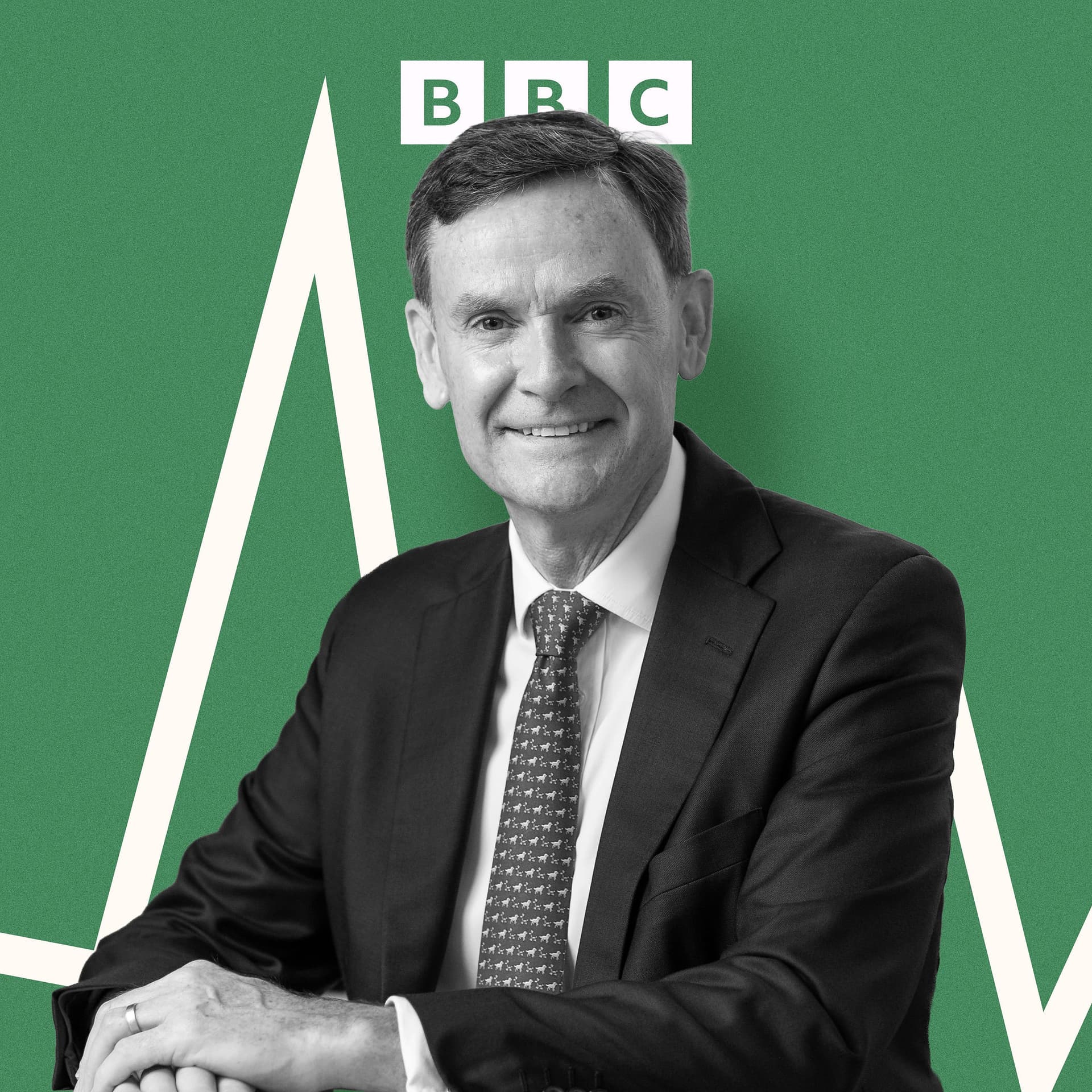
Episode Overview In this episode of the Big Boss Interview, Sean Farrington speaks with Mark Fitzpatrick, the Chief Executive of St. James’s Place, the UK’s largest wealth management company. The discussion centers on the impact of UK budget speculation on pensions, cultural attitudes towards investing, and the role of technology in the investment landscape, including artificial intelligence.
Key Points Discussed
- Impact of Budget Speculation
- Speculation surrounding the UK budget has negatively affected the pension industry, leading to premature withdrawals by individuals who act on speculation rather than long-term strategies.
- Cultural Attitudes Towards Investing
- There is a significant cultural difference between the UK and the US regarding investments. Americans are generally more open about discussing and celebrating wealth and investments, while the UK exhibits more risk aversion and reluctance to talk about money.
- Growth of Female Investment
- Women now hold 45% of wealth in the UK, and this is forecasted to grow. St. James’s Place is focusing on recruiting more female advisors to reflect this shift and cater to a more diverse clientele.
- The Evolution of Technology and AI
- There are concerns about a potential AI bubble. Fitzpatrick emphasizes the importance of balancing enthusiasm for AI with caution regarding overvaluation and the need for human relationships in financial advising despite advancements in technology.
- Ongoing Issues with Fees and Reputation
- The conversation touches on the historically high fees charged by St. James's Place and the need for transparency and improved client relationships. Fitzpatrick discusses recent changes to the fee structure and internal culture aimed at rebuilding trust.
- Advice on Financial Strategy
- Fitzpatrick advocates for a proactive approach to investing and warns against acting on speculation, especially during uncertain times like budget announcements. He argues for the importance of financial education and the need for clear communication about the risks and benefits of investing.
Episode Timeline
- 0:00 – Introduction by Sean and Fliss
- 2:30 – Mark Fitzpatrick joins the conversation
- Discussion on UK attitudes toward investing and cultural differences with the US.
- 10:00 – Growth of female investment
- 14:00 – Discussion on crypto investing and generational wealth
- 18:00 – Analysis of budget impact on pensions
- 27:00 – Discussion about St. James's Place fees and cultural changes
- 36:00 – Concerns around the AI bubble
Key Takeaways
- Investing Education: There is a pressing need for financial education in the UK to encourage more individuals to invest rather than hold cash.
- Cultural Shift Required: Changing the conversation around money and investment in the UK is crucial for increasing participation in the stock market.
- Role of Technology: While technology, including AI, can enhance efficiency in financial advising, the human element remains essential for client relationships.
- Long-Term Planning Over Speculation: The episode emphasizes the importance of long-term financial planning and discourages reactive decisions based on short-term market speculation.
Conclusion Mark Fitzpatrick's insights highlight the complexities of the investment landscape in the UK, the changing demographics of wealth, and the increasing importance of technology in finance. His emphasis on education, transparency, and human relationships in financial advising presents a forward-thinking approach to addressing the challenges faced in the industry today. The episode serves as a reminder of the critical role that informed decision-making plays in personal finance and investment strategies.
Written by AI. May contain mistakes. Listen to the episode to check what was said.
Transcript
Automatic transcript. May contain errors.0:13Hello and welcome to Big Boss Interview. Sean Farrington is with me and Sean you've been speaking to Mark Fitzpatrick, the CEO of St James' Place. Yes, very interesting person to speak to, partly because St James' Place are an investment group that have more than£200 billion of people's money under their watch that they are investing. So, unsurprisingly, he has many thoughts on what should be happening with that money, what his potential customers, his customers he had, should be thinking about doing with their money, and all the things going on in the world that can influenced that whether it was from the budget some interest really interesting stuff he had to say about what the speculation in the run-up to the budget not just this year but last year as well the impact that has had on major decisions people are taking with their pensions that was fascinating to hear that but also right across the board like why is it in the UK we're just not up for investing our cash the way say Americans are we we don't like to talk about doing that kind of thing with our money in a way that many others around the world like to do.
1:18We're much more risk averse. We got into some of the reasons behind that. We had a bit of a debate at times about some of the reasons behind that as well. There was plenty for us to get stuck into. We're used to dealing with some big numbers on this team, but 200 billion quid is a pretty big number, no matter which way you're looking at it. Did you address the elephant in the room, though, with St James's Place? Yeah, well, it didn't feel like an elephant in the room, This is the concerns that many had about St. James' Place for quite a few years, about its level of its fees, what St. James' Place was doing with that money.
1:52The regulator ended up getting involved and, along with changes right across the industry, St. James' Place having to make some pretty big changes. Mark Fitzpatrick came in effectively to carry out a lot of those changes. So there were cultural changes that were needed at the business. He explained to quite some degree about what did change when it came to their fees, was robustly defending St. James' place at times when it came to some of the things that have been heavily criticised for. but yeah we definitely got into that it wasn't an elephant in the room in the chat but it was very interesting to sort of delve into a little bit how the reputation of the investment world has also impacted individuals views of using that investment world when we have so many apps on our phones we have ai willingly wanting to tell us what to do with every aspect of our lives and personal finance being a big part of that as well a crypto took that into the mix and what people want to get out of that new place that they can put their money with great risks attached to it as well.
2:56Lots to talk about with Mark Fitzpatrick. Well, let's hear it then. This is Sean Farrington talking to the big boss of St James's Place.
3:08Mark Fitzpatrick, chief executive of St James's Place. Thank you very much for joining us. Welcome to the big boss interview. Thank you very much, Sean. It's great to be here today. Now, the world of investment is a very, very big place. And what investment actually is maybe up for debate these days, perhaps more than it once was in the past. How do you view our approach to investment in the UK at the moment? I think people in the UK tend to be very risk adverse. There almost seems to be a cultural reticence to talk about money, and yet it is so important. And we saw from recent research that parents believe they are the most influential for their kids when it comes time to talk about money, more influential than social media, more influential than friends and other people.
3:58but yet nearly 60 % of parents are reluctant to talk about money and often because they don't believe they have the answers themselves to give to the kids. So I think it is so, so important that we help educate young people and mature people on investments, on the importance of investing, the importance of working your money hard because everybody works very hard for their money but they don't work their money hard and it's really, really important to do that And investing is a very, very important way of doing that. Is it all about education in America? They have twice the proportion of adults who are investing in stocks than we do here.
4:35I think it's two thirds to a third, something like that. What's the difference? There is a real cultural component in it where they talk about it. They celebrate it. They celebrate wealth. They recognize wealth as a sign of progress and success, whereas here in the UK, much less so. And I think when you get in a cab in New York or DC or somewhere like that, people talk about their portfolio. I can't remember the last time I got in a black cab in London and a cabbie talked about their investment portfolio. It's normally about how difficult the roads are to get around London and what's happening with the one-way systems.
5:15Very seldom do they talk about an investment portfolio. So we needed to become more part of day-to-day parlance. So people are comfortable with it and people recognize that investing is not just for the ultra wealthy at all. If you've got 50, 100 pounds to put away every month and invest it, you are an investor. And you're working that money in a far harder, smarter way than just leaving it in cash. And in the UK, we are over saved and we're under invested. And that's something I think that the chancellor is trying to address. I think it's something that the regulators are trying to address and it's something that we and a lot of other financial services companies are trying to address.
5:55We're trying to encourage people to invest more, to be able to get their money to work harder so they make better returns so that they can afford the extra things in life. And when it comes time to retirement, they're potentially in a better place than they would have been had they just saved and put it into bank accounts. So when you mention the government, you mention regulators, it sort of gives the impression that we've been doing things the wrong way in previous decades. Is there something that needs changing that means all of a sudden households around the UK are going to be willing to take more of a risk with their money?
6:31Well, I think there are a couple of things to that. One is I think we need to be far more overt about the risks of not investing. Traditionally, whenever somebody is going to invest, there's a big flashing red light warning. Your money could go down. You may lose your investments. As against actually investing. Yes, it can go down, but it can also go up. and if you leave your money in cash on a real basis net of inflation today you might be going at best sideways at worst you'll be losing and investing generally over the course of the last decade on average people have been earning north of nine percent per annum whereas if you're saved money in a bank account at best with rates being higher you've been earning three maybe four percent most.
7:19Within that then, are there changes that need to be made, drastic changes that need to be made in our schools? I mean, how are those parents supposed to all of a sudden find the time and the space to improve their financial education? Well, I think there are a couple of things. One is I think all teachers around the UK would acknowledge the fact they're probably massively overworked. So we need to try and find a way to be able to give them a little bit of extra capacity. teachers again will need to be trained and supported because whenever I've gone to schools where my kids are at actually the teachers are interested in having an event for the teachers and the faculty to help them understand more about what they should be doing to take control of their own financial affairs.
8:01We have a lot of our advisors that go into schools to talk to kids about the importance of investing helping them understand what a pension is what a mortgage is what an individual savings account is, an ISA is, the different components of that, helping people understand the investment spectrum, the different opportunities to invest, and how risks change with each of those components. So I think there's a role for that. I don't think we can wait for kids at school this day to grow up to be able to fix a problem. So one of the things that the Investment Association is doing, together with a number of large financial services practitioners is going to be setting up a media campaign, an advertising campaign, where we're looking to advertise and promote the value of investing.
8:49So we need to nudge people to move in the right direction. So I think this is a multi-year program. I think this is going to be a lot of effort from a lot of different players. If everybody in government, if all the major business folk, if major media commentators talk about the value of investing, it will slowly shift the narrative. There isn't a silver bullet. There's going to be a lot of hard work required, but it's so important. At the same time, you need people to have confidence that they'll have that spare bit of cash each month to be able to invest. We hear out of the budget last week and the reports that have been around it that living standards are set to grow at almost their slowest rate, not far off on record.
9:32Does that play into the problems that we have? I think that definitely contributes to the issue where a lot of families are struggling to try and find anything extra, whether it's for Christmas or whatever the case might be. That being said, we do know that there are a lot of consumers in the UK who have a lot of cash saved. I think one of the big banks earlier this year indicated they thought there was nearly£350 billion of surplus cash from individuals sat in savings account that was not working hard for those consumers. So if you can get that money invested, focused, not only is it good for the individual, but actually for the economy, for the confidence in the economy, for the returns, etc.
10:21It starts to build the narrative and starts to rebuild confidence that people need in the UK, in the UK economy, and starts to give international investors a sense that there's something really exciting about investing in the UK. Is it possible for that to happen if we're in an environment now where unemployment is on the up and people are perhaps feeling a bit more insecure about their jobs than they have done for a while? So unemployment is increasing and has been increasing of late. I think the OBR longer term forecast is that number will start to drift down from 2027 onwards. So the expectation is it will be a short term increase.
11:00I think as universities start shifting, as people retrain for different skill sets, different opportunities, I think there is an element, an opportunity for folk to invest even a small amount. insured. It's not putting 10 or 20 ,000 away. If people put 50 away a month, that can make a difference. And if you start young, you start to lay down those behavioral patterns, those skill sets that people start to learn early on, that actually when they're 40s and when they're in the 50s, those savings, those investments will become worth a lot more. And then people have the option about how they retire and what they do with their money.
11:41Has something gone wrong, though where we've actually seen quite a lot of interest in recent years in people putting their money into crypto for example yet not into the traditional stocks and shares that you're talking about that clearly people are looking for a return to their money now to use the word return might be a bit debatable with cryptocurrencies how volatile it has been and we've seen of late if you got in at the wrong time you just in recent weeks you may have lost a fair bit of money on that but But there's a desire there from a group of people that has been a growing group of people to put money into something to get better returns.
12:20So the average profile of somebody investing into crypto is tended to be a young male. And partly I think that is because of the desire and the appetite for a perception of a fast return. As you said, Sean, we've seen over the course of the last quarter or so just how crypto has fallen away in terms of valuation. There's no intrinsic value underpinning it. So it is highly speculative. And in the absence of there being anything else to help people know what to invest in and understand the different risks and rewards, the different categories of investments, then social media influences or others.
12:59And with the speculation and hype around crypto, that'll drown out any potential common sense. So it is important, I think, that we balance an element of that narrative. One of the other things we're also very conscious of in the UK is that wealth is transferring, A, generationally, but B, more and more wealth is transferring from men to women. Today, I think about 45 % of wealth is in the hands of women, and by 2030, that number will grow even more. The advice profession is predominantly pale and male. So we are desperately keen to start adjusting and giving consumers and clients who are women a choice about whether they want to get looked after by a man or by a woman.
13:45Because men and women make decisions and choices in different ways. What they look for, what they prioritize differ. Research has demonstrated that generally women make better investors than men because they're more patient, they're more long-term, they don't chase the latest soundbite. and they generally don't let the element of competition with their friends interfere with the long-term plan. So we're desperately keen to recruit more advisors, women advisors into the profession, train them, support them. We think it's a career that actually can give a huge amount of flexibility in terms of if you're a carer or raising a young family.
14:24And we think that clients and consumers will want a choice about whether they get looked after over the long term by a man or by a woman. And naturally, people are now going to be so used to using AI chatbots on their phone. Long term, short term, you can have that conversation back and forth. It can follow your habits. It can ask you questions all about your life. And we've seen some really interesting Lloyd's data out recently, wasn't there, that said personal finance is the number one use of people using artificial intelligence, some seeing that they were potentially saving£400 a year on what might have been fees elsewhere by getting advice from this.
15:04Actually, anybody now starting to think, men or women, I want to start using my money in a different way, have got a very easy, cheaper way to go about it. So we believe AI will provide us with an additional set of hands. it's not going to provide us with a new face. So we will and we are working very closely with our tech colleagues in terms of how AI can facilitate and improve efficiency and support for clients and support for our advisors. But what our clients get through financial advice is a long-term financial plan. They get a trusted relationship. For example, one of my colleagues has been a client of St.
15:47James's Place for 25 years. Sean, with the same advisor. So who in your life outside your family has been with you for the last 25 years? But would I be right in saying that perhaps that person that we're talking about is quite a wealthy person that has been able to afford higher fees over quite an extended period of time with probably quite a big balance with yourself? Sean, they started very modestly, very early on, and they slowly built. So yes, today they are a wealthy individual by virtue of having the right behaviours, the right support and the right conviction. But it also means that when the world is going through a messy stage, like the run-up to the budget, all the speculation around, what do you do in light of all that speculation?
16:30Our advisors advise clients to pause, not act on speculation. There's a long-term plan. We'll adapt according to facts when they come out. But this is somebody who 25 years ago you were able to get on board when there wasn't really other easier ways of getting advice? So the great thing, Sean, is that a lot of our clients today are in their 30s. So we're still getting new clients who are young because they value the advice of somebody who's been there, done it before, can see the overall perspective, create a plan that's good for them, and actually encourage them to do the things that they know they need to do.
17:09For example, really encourage them to invest into their pension, to utilize some of their ISO allowances, to set things up in a way that actually can protect them from unnecessary tax, but also enable them to be appropriately invested, not in all crypto, but nor putting money all under the mattress in the bank. Given you mentioned a few budget buzzwords there, which is quite all right, whether it's ISAs and the change in cash limits that you could save when it comes to the amount of cash you can put in an ISA before you're taxed on the interest there, pension changes as well, salary sacrifice.
17:49What was your overall upshot of the budget in terms of clearly what you want is people to be saving in the long term? So we want people to be investing in the long term. And ultimately what we are looking for, and I think what any CEO is looking for, and I believe any and every consumer, everybody living in the UK is looking for, is certainty, clarity, and an element of consistency. And we need that in the run-up to a budget, and we need that post a budget. It is really, really important that we have that, because when people have an element of clarity, confidence, and consistency, they can then look and they can make the appropriate decisions about what to spend, what to invest, what to utilise, what to save.
18:33And we saw in the run-up to the budget there was a lot of noise, a lot of speculation. Thankfully the budget is done now and people are able to now move on and plan accordingly along the way. And those policies themselves, the pension one for example, reducing the level, the threshold at which you start paying national insurance on your salary sacrifice and pension contributions in that way. What impact will that have on how people save towards retirement, invest towards retirement? So I think for companies, it will undoubtedly increase their tax bill through paying more NIC. I think for individuals, it may well move and shift a little bit about how they invest.
19:16I think this change, Sean, comes in in 2029. so there is time for people to invest in the interim period up to that and I think in the intervening period a lot of companies are going to look to see how can they adapt and how can they protect their employees and how as well can we continue to encourage people to invest for the long term and pensions are so important because there are long-term commitment and it is truly truly important that the government leave those alone as much as possible because if people have confidence in their pension and in the savings and investing they're making over years.
19:52They want to know that what they've been investing towards, they're going to be able to redeem at the right time when they retire. If that gets picked away at every budget, it undermines their confidence. So it is really, really important that all of the activities that are done, all the actions that are taken, all the discussions around pension are very much based on a long-term window rather than potentially a short-term financial benefit. Does it undermine their confidence, maybe undermine the likes of St James' confidence when so many of these changes are so many years down the line? You talk about 2029 as that one, for example.
20:31There were a lot of the policies that were talked about in this budget that actually don't kick in for many years, leading to questions of will they ever actually kick in? Will we get to that point? Is that an issue when people are trying to plan? Well, I think the government is going to try and lock in as many of the rules, regulations and legislation as they can to confirm the actions that they spoke about last week so that they are locked in so that the OBR and others in the debt market will place some reliance on those and recognise those as future revenue streams from the government going forward.
21:06I think what is so important for people, the rules are changing constantly around pensions, around investing and the like. And unless you have some form of advice, it is quite risky. And therefore, listening, engaging with people, because advice can be massively helpful to clients to give them the confidence in terms of what to do. And if you think of the weeks and months of speculation in the media and from government and the like about what was going to happen, it would have caused considerable consternation and concern from consumers. So our advisors, they're almost the antidote to the chaos.
21:51They calm the chaos. They help people look through the confusion. Did it feel like there was more of that chaos in the run up to the budget? run up to the budget this time was almost long, well, it was longer than last year. And there was a lot of speculation last year, there was a lot of speculation this year. My ask to the government has been one of try and limit periods of speculation, because people act on speculation. And if they take money out of their pension prematurely, then they've damaged their pensions going forward. Did that happen? And it happened last year, significantly, hundreds of thousands of people drew down prematurely.
22:29This year as well, it's happened. So people's pensions have been damaged due to the speculation. It's thanks to advisors that actually they have encouraged clients not to take out their tax-free cash to support them through this journey. And we're getting a lot of clients saying, thank goodness you encouraged me not to take that money out because I would have made a mistake. So there, that's a great example of where, yes, for a modest fee, advisors have saved clients a lot of money, but also given them a lot of confidence. Have you told the government that people's pensions are being hit by the speculation, as you've just laid out?
23:06The government is aware. And what do they say to that? The government is aware. The government desperately tries to ensure formally that there is one fiscal event a year, and they try and hold on to the key messages for the main fiscal event for the budget. But the speculation that has been out, the flying of kites, is unhelpful when it affects people's lives. It's so important for pensions, which are long, long-term investment, where people are saving for 30, 40 years, to have confidence in that. Because when you retire, Sean, you want to know that actually your pension is going to be intact, is going to be there so that you and your family have something to live off to enjoy because you're working hard now and you want to know that you can retire well.
23:57Picking away at that every year is incredibly unhelpful. Just to wrap our budget chat, something else that whether businesses like yours looking to grow as a business or actually the business you're in, investing in companies and you will be looking for them to grow as well, doesn't feel like there was a lot of growth ambition coming out of that budget. That's sort of the vibe we've been getting. Would you agree with that? So I think the government came in talking a lot about growth and it is really important that government and indeed the business community stay focused on the growth potential that is in the UK.
24:34It is very easy to get into a negative spiral. I think the UK is a great place. I've been in the UK 25 years now. It's been very kind to me and my family. My three kids are all English. It is really, really important that we try and find ways to support the UK, to grow the UK, to invest back into the UK. It's very easy to nitpick and get negative about it. And the negativity doesn't actually help us at all. So not looking to be naive, but there are some great companies. There's some great things we do in the UK. If you think of the pharmaceutical industry, if you think of some of the biotech, the FT industry, defense industry, creative industry, like in this great building, there are great, great talented people in this country.
25:17And we should support, encourage, develop them rather than allow a cloud of negativity just to swamp over us and absolutely drown the sentiment. But is the cloud of negativity the asking a question, was there growth or is the cloud the budget itself? Well, I think the element of we need to find the growth, the government has come out with a new budget. We can either react negatively to it or we can look to see, right, how do we adjust for it and how do we continue to grow? In our sector, financial advice sector, there is such a lot of demand. There are less than 8 % of people, adults in the UK, who take advice.
25:56There are millions more who say they want advice but don't know how to access it. So we need to make it easier for them to access advice to be able to provide support. So financial services has got a great growth opportunity. There are a lot of growth opportunities in the UK. The government's made its pronouncements. We now need to adjust to be able to focus on the growth algorithm rather than say it's all too difficult because of what the government's done. We can't be defeatist. Can I ask you, you've already mentioned several times what St James's Place do, giving advice to people on what they should do with their money and mentioned people who've been with you for decades as well.
26:31So we have to reflect on the job you have had to do since you became chief executive of St. James's Place. Because is it fair to say that you had a cultural change of a job on your hands, given in the years before you arrived, the reputation St. James's Place had for high fees and also the way the company was spending some of that money it was earning from its customers? Explain what happened a couple of years ago, what you were dealing with. So we had a situation where the regulatory environment changed and the fee structure that we had was no longer tenable in the new world. So we needed to change the fee structure.
27:12We had a situation where the media was very focused on how we were engaging with our advisors. and there was a real sense that SJP, despite being the biggest in the market, was very expensive and complex to do business with. So over the last few years, we have massively simplified our fee structure. It is now comparable, very, very transparent. We have grown the business significantly. We've spent a lot of money investing in our brand. We're spending a lot in terms of new advisors coming in. We're changing our systems. I brought a lot of new people into the organization, bringing some of the outside world and expertise into the organization, along with people who've been with us a long time who really have longevity of relationships with the advisors to bring the best of both together to be able to prepare the business for growth.
Read the full transcript
28:05we created last year in 2024 we created a very clear strategy for the business going forward set that out to the market and to our advisors that got a very very good reception and we've been we've been delivering against that strategy over the course of the last 18 months so we're finishing up the first phase which we call the strengthen phase almost rebuilding some of the platform, the basis of the business. And from 2027, we go on to our amplifier, our super growth phase, where we have a very, very exciting future, where our technology stack will be stronger, where we think that the quality of service will be more robust, and the product range we have is going to be even bigger.
28:50So clients have a bigger choice set. Because people might sort of hear the timeframes that we've been talking about, the issues, wider issues of why don't we invest. And at the same time here, for quite some time, St. James's Place had a reputation for higher fees at a time where people on the whole were being turned off investing. Is there something in that that the customers who were investing around the UK were taken for granted? So absolutely not, Sean. And I can say that emphatically because what we have done in unbundling the fees. So take, for example, if you went along to the St. James's Place restaurant of old, let's use an analogy, and you had a meal, you paid a fixed price for your starter, your main course and your dessert and coffee.
29:39At other places, you could choose whether you just had a starter, whether you just had a main course or just had coffee. What we've done is unbundle that fee so everybody can see the cost of the component parts. So that's what you've done now. I just wonder, wait, the company you arrived at, did you see a company that wasn't serving its customers well? I saw a business that was serving its customers well because otherwise we wouldn't have had 95 % client retention. So there was a lot of noise. A lot of that noise was coming from our competitors and some of the media who got themselves into a bit of a frenzy around our fee levels.
30:15A frenzy feels like a harsh word when at a later point you've got a£500 million pot that you're preparing to pay out for complaints. Back in February last year, we announced a special provision set up for the fact that we were not able to evidence adequately the fact that people had received ongoing advice over the course of a five, six year period. What we've done is over the course of the intervening period is we have now gone into our advisors' files, found a lot more evidence for them. The rules from the regulator have evolved a bit. So the levels of evidence that they are expecting has changed.
30:57So it's not as demanding as it was originally set out to be across the industry. We've applied that. That allowed us to reduce our provision quite markedly during the course of earlier this year. We're writing out to clients, asking them if they believe that they've missed out periods from their advisors and if they have to come back to us and then we will do a full loan investigation on their case. What we are seeing, though, is a number of clients, quite a lot of clients saying, actually, I know my advisors there. I know my advisors there whenever I need them. And some years I need them five, six times a year.
31:33Another time I may not need them at all. So the regulations are evolving to recognize the swings and the ups and downs and flows and ebbs and flows of a relationship that sometimes has an intensity and other times can be a little bit more distant. All of this does throw a spotlight though doesn't it on how these things work. People may only have sort of realised this year when you stopped having exit fees for you know over that six-year period for some of your products. When you stopped doing that that actually just in the weeks before in August you were still selling products that had that despite clearly a change of strategy that those products weren't good for your customers but in the first half the year you were selling products like that the second half the year you're not that people might wonder people might literally have one of those products in their financial setup at the moment thinking why was i sold this you're not doing it now sure sean the product is exactly the same there is no different to the product but the exit fees but the product is is complete is completely unchanged.
32:39The fee structure is the element that has differed. And the way we charge the fee over the profile of the fee has changed over the period. Are we getting to a crux of what has been an issue here with trying to attract people to invest in? We talk about education, we talk about people's understanding for this. But given that one thing is a product and then there are fees attached and having to work that out when people just want to be able to trust somebody with their money and feel like that's affordable. And that is why we have dramatically changed the fee structure so that it is clear, transparent and very comparable for any consumer, any client to see what they're paying us versus what they might be paying out to anybody else in the marketplace.
33:30What is fascinating is from research that we have done, but also independent people have done around what do consumers value when it comes to advice. The key piece that comes out is trusted relationship, peace of mind, confidence knowing somebody's looking after your affairs. Then comes investment return and then fees. So if you fixate on fees and fees become the issue, you're missing out on three absolutely crucial components that I mentioned up front, which is the element of the trust, the confidence, safe, knowing that somebody's got your back. This is a trusted relationship that takes that builds up over years.
34:09So an advisor understands your hopes, your fears, your concerns, your aspirations, understands your family, understands your family needs up and down. Can I ask you about the culture change that you felt like you needed to carry out and been in the process of carrying out? Because if you go back to the time that the media were first looking into some of the behaviours at St. James's Place, the phrases that come up repeatedly, cruises and cufflinks and the concerns around how advisors and the company were spending their money. Was it in your first year you got rid of the big annual bash? Because clearly, well, why did you get rid of the annual bash at St.
34:50James's Place in that first year? So the examples that you're using are quite dated. I think I go back to kind of 2017, 2018, et cetera. Well, that was the culture before. So the culture has been changing for quite some time. In terms of some of the big events that we used to have, the purpose of those events got a little lost. And what I wanted to do was, and what we are doing, is getting respective audiences together. So we have town halls for our people. We have events for our advisors. We have events for our advisors support teams. And we have events for the community around the charitable foundation that we have, which is a very, very active part of St.
35:36James's Place. Really, really important part. And what we've done is we've shifted the calendar of programs so that we get people together to recognize, to reward, to educate and to create a sense of connection. Just finally, you mentioned in one of your answers about AI bubble, people having questions around that. Interested in your take as we've discussed everything from, you know, cryptocurrencies and the volatility there and why people might get involved in that to long term investing. Where do you put what's going on with AI at the moment? We, from an investment perspective, are looking very carefully at what's happening around the world of AI.
36:19We are underweight the US at the moment relative to the MSCI index, so one of the big global indices. So effectively, you're thinking that the US tech isn't going to perform as well as the bunch of stocks on average? We think there's been quite a run on it and there's a lot of concentration. So what we're looking to do is diversify, provide extra resilience around our portfolio. So we saw, for example, earlier this year, around Liberation Day in April, when trade tariffs were initially suggested, we saw the markets around the world drop significantly. Our portfolios dropped by a fraction of the portfolios that others experienced because of the diversification, because of the resilience that we build into the portfolio.
37:05So AI, I think, is very exciting. I think it's going to revolutionize the way we connect, the way we behave, the way we use technology. I think it's still got a way to go. What's going to be really exciting is I think the uplift in value is going to come from those companies that use AI as against necessarily those that manufacture the element of AI. And we've seen that through generations of new technology and new innovations over the decades. So we think there's something really exciting to be done around the future of AI. We are looking at it ourselves. We're using elements of technology to improve the efficiency, to make the advisors more efficient in how they go about their jobs, giving them more time to spend face to face with their clients.
37:51Do you think there's a risk, though, to the way the world, potentially the investment world, where people are putting their money, are viewing what artificial intelligence can mean for their returns at the moment? Could a bubble pop and be a problem? It is really important for everybody to be very clear on what AI is and what AI isn't. And there can be a lot of AI word bingo out there. And it is really, really important to be very clear what it is and what it isn't. What it isn't is necessarily a silver bullet that's going to solve the world's problems. I think it can facilitate a lot. It can give rise to greater efficiencies, greater breakthroughs.
38:30It can speed up the evolution of medicines. it can speed up the evolution of new ideas it can knock down frontiers that we might have thought were there previously so there's a lot it can do but it's not going to take away from face-to-face human interaction and that is so so important because being able to read somebody's body language understand what somebody is likely to say before they say it have a warm glow when somebody walks into the room appreciate another person. AI is not going to be able to replace that. So that personal connectivity is going to be so, so important. And in a world where technology becomes bigger, the personal connectivity is going to become even more important because it's going to be more rare, less available to people.
39:18And therefore, I truly believe relationships will become more and more important. And I don't think, again, that's something we spend enough time teaching our kids about the power of relationships, how to build relationships, and how to be able to disagree agreeably. Mark Fitzpatrick, thank you very much for your face-to-face time. Chief Executive of St James' Place. Thank you very much, Sean.
39:43Well, that was Sean Farrington talking to Mark Fitzpatrick from St James' Place. Remember, if you want to talk to us, you can. You can drop us an email. The address is bigbossatbbc.co.uk. and if you want to hear more chats like that make sure you subscribe to us on BBC Sounds and they will all end up in your app there's even a bit of a back catalogue
From the publisher
Speculation surrounding the UK budget hurt the UK pension industry, that's according to Mark Fitzpatrick, Chief Executive of St. James’s Place, the UK's biggest wealth management company. He highlights how uncertainty in government policy has led to premature pension withdrawals, with many individuals acting on speculation rather than long-term strategy.
Fitzpatrick also delivers a comparison between the UK and the USA investors saying there's a marked difference in cultural attitudes towards investing. He observes that Americans are more likely to discuss and celebrate investment, viewing wealth as a sign of progress and success, while in the UK, there is a greater tendency towards risk aversion and reluctance to talk about money. This cultural divide is reflected in the proportion of adults investing in stocks, with the US showing much higher participation rates.
The conversation also turns to the role of technology and the potential for an artificial intelligence bubble and its impact on the investment world. He considers whether current enthusiasm for AI could lead to overvaluation and what measures they've taken to soften the impact of any AI bubble bursting. The interview explores the impact of AI on personal finance, the importance of human relationships in financial advice, and the need for balanced perspectives as technology continues to shape the future of investing and pensions.
0:00 – Fliss and Sean welcome 2:30 – Mark Fitzpatrick joins the pod & discuss UK attitudes toward investing 10:00 – Growth of female investment 14:00 – Crypto investing & generational wealth 18:00 – Budget impact on pensions 27:00 – SJP fees issue and cultural changes 36:00 – Ai bubble
Presenter: Sean Farrington Producer: Olie D'Albertanson Editor: Henry Jones