In short
Sir Jim Ratcliffe (INEOS CEO) argues the UK lacks confidence in fossil-fuel industry and carbon capture, driving North Sea decline, higher import dependence, energy insecurity, and “politics of envy” against wealth creators. He discusses INEOS’s Denmark carbon capture and storage launch (“Carbon Destroyer”) and claims UK carbon capture progress has lagged.
Guests
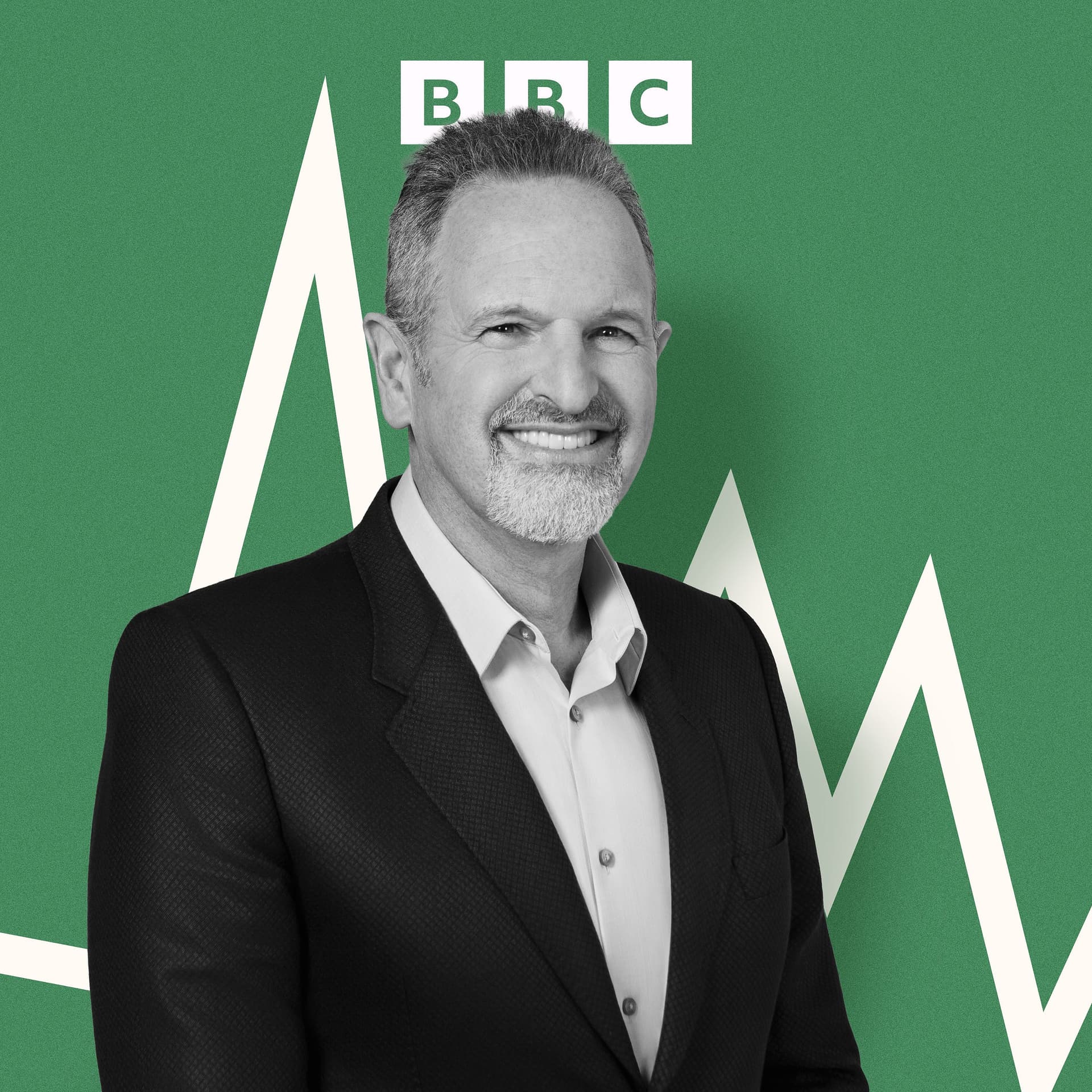
Sir Jim Ratcliffe, billionaire industrialist; INEOS chief executive; minority owner of Manchester United; tax resident in Monaco; previously top-10 richest in Britain. Interviewer Simon Jack, BBC business editor.
Key claims
UK carbon taxes don’t apply to imported products, making UK industry uncompetitive; UK tax/regulation instability (Ratcliffe cites up to 80% tax) deters investment; no new licences for Jackdaw/Rosebank is “insanity”; North Sea production will keep shutting down; winter gas risk is higher due to low UK storage and import dependence; renewables can’t replace fossil fuels quickly enough.
Notable examples
Fortis pipeline decline (from ~1m to ~178k barrels/day); shale/fracking investment example (£250m) and “everything gets fracked” claim; US gas/oil cheaper due to domestic production; Permian Basin as a fracking success example; Fortis/Grange Mountain; King of Denmark blessing for EU-first CCS project.
Written by AI. May contain mistakes. Listen to the episode to check what was said.
Chapters
Tap a time to open that second in VOOverview of Sir Jim Ratcliffe's Views
1:18 to 3:06
Discussion on Ratcliffe's comments about the UK and his business perspectives.
“Sir Jim Ratcliffe is currently the ninth richest person in Britain with an estimated fortune of around 15 billion quid.”
Carbon Capture Projects in Denmark
3:06 to 6:41
Ratcliffe explains the significance of INEOS's carbon capture project and contrasts it with the UK's efforts.
“Here is Sir Jim Ratcliffe speaking to Simon.”
UK's Energy Resource Management
6:41 to 9:06
Discussion about the exploitation of North Sea resources and the impact of high tax rates.
“No, it will do things for prices, ultimately.”
The Future of the North Sea
9:06 to 11:00
Ratcliffe discusses the potential decline of the North Sea energy sector due to current policies.
“As I say, BP, Shell, others have largely turned their back on the North Sea.”
Attitude Towards Wealth in the UK
11:00 to 13:05
Ratcliffe shares his perspective on the UK's treatment of wealthy individuals and creators of wealth.
“And then Boris Johnson comes along and says, oh, I don't want to do that anymore.”
Manchester United and Closing Thoughts
13:05 to 14:00
Discussion briefly touching on Ratcliffe's involvement with Manchester United and his thoughts on the club's situation.
“You've had Lakshmi Mittal leave for tax residence purposes.”
Wealth and Taxation Debate
14:00 to 15:10
Discussing the implications of taxing the wealthy and the non-dom status.
“Oh, I didn't want to get rid of the top five percent of the wealthy people.”
The State of the UK Economy
15:10 to 19:21
Examining the challenges facing the UK, including taxes, immigration, and government decisions.
“Because we've talked to all our big bosses who've made a career.”
Fossil Fuels vs. Renewable Energy
19:21 to 21:48
Analyzing the reliance on fossil fuels in the context of global energy consumption and population growth.
“But wouldn't that put a ton of people out of work, potentially?”
The Practicality of Energy Solutions
21:48 to 23:06
Discussing the feasibility of transitioning to renewable energy and the challenges involved.
“You're not going to survive without your hot shower in the morning, Simon, are you?”
Transcript
Automatic transcript. May contain errors.0:00This BBC podcast is supported by ads outside the UK.
0:30up at Whole Foods Market.
1:00to buy, sell or attain any specific investment or service.
1:17Hello and welcome to Big Boss Interview. I'm Sean Farrington and with me today is our very own business editor Simon Jack, who's actually out in Denmark at the moment, having just recorded an interview with one of the wealthiest businessmen, one of the most successful businessmen in the UK, Sir Jim Ratcliffe, chief executive of INEOS, of course, one of the world's biggest chemical manufacturers and that minority owner of Manchester United with so much influence over how it is run. Simon, hello, what's he been saying? Sir Jim Ratcliffe is currently the ninth richest person in Britain with an estimated fortune of around 15 billion quid.
1:55He was briefly number one in 2018 but he's now a tax resident in monaco and his business interests in oil gas petrochemicals have also been on the retreat from the uk and he's had some pretty withering things to say about the uk's attitude to the fossil fuel industry we're ignoring our own north sea resources he says increasing our reliance on foreign imports and he's also pretty withering about the uk's attitude to what he describes as the wealth creators and says it's no surprise that rich people like him have left the UK, describing politicians as having a green eye towards the wealthy, the politics of envy, I guess.
2:31Sadly, he wouldn't be drawn on the fortunes of Manchester United, of which he's a 25 % owner. He was talking to me at the launch of INEOS's carbon capture and storage system in Denmark, the first in the EU. I'm actually standing right next to a ship called Carbon Destroyer, which some will find strange, given his other interests. But he sees this as a compliment to those activities. We're waiting here for the King of Denmark, Frederick III, to arrive to press the button and give it his blessing. A moment, he says, he can't imagine with Charles III in the UK any time soon. Right then, let's hear it.
3:06Here is Sir Jim Ratcliffe speaking to Simon. Jim, people think of you as an oil and gas kind of guy, refinery sort of person, a carbon creator element. I mean, we're standing in front of a boat called Carbon Destroyer. How are we supposed to think about this? You're a famous industrialist, refiner. How do we place this project when we think about your company? INEOS makes essential products for people. We can't survive without energy these days and plastics for hospital uses, medical, all that type of thing. So there are essential products and it has a carbon footprint. All these products have a carbon footprint.
3:40But we are conscious of the fact that we need to reduce our carbon footprint over time by one means or another. So this is one of the means of reducing our carbon footprint, is to store the carbon back where it came from. Would this project happen in the UK? The UK wants to be a leader in this kind of field. I wonder why we're in Denmark with the king of Denmark, King Frederick III. Why we're not doing this in the UK with Charles III? Well, sadly, the UK, unfortunately, hasn't made much progress in this field. I know the politicians talked about leading the world in carbon capture at some stage, 10 years or so ago, but I'm afraid we haven't done much in the UK, whereas Denmark's got on and done it, sadly.
4:20Yeah. On, for example, oil and gas, Andy Burnham has talked about having a pragmatic approach to that. What do you think that means? What do you hope it means? What I hope it means is that we would exploit the reserves that we have. I mean, if you look at our natural resources in the UK, then they primarily sit in the North Sea. It's those oil and gas reserves. Energy is an essential product for sort of a modern living. so you would expect them to exploit our natural resources and we're clearly not doing that, we're shutting it down. Is it too late to save the North Sea? No, it's not. But if you tax everybody to death, they're all going to leave and that's what's happening, unfortunately.
5:02Aberdeen is closing down, people are shutting in all the oil and gas, closing down their rigs. We operate the Fortis Pipeline so we see the product coming into the UK from about half of the North Sea and every year it declines year on year on year because people are not investing in the North Sea. I mean, if you did what the US do, which is they have a fairly standard form of tax on oil and gas in America, which is corporation tax, about 37%, 40%, then everybody would come to the North Sea and they would invest and they exploit the natural resources and the UK would benefit not only in jobs but value-added and also it's a sort of national security point, of course, because you're not dependent on imports all the time.
5:43And that's where America is. But unfortunately, in the UK, we've put these horrendous levels of tax and we're shutting it down. And we won't give new licences for Jackdaw and Rosebank. I mean, for me, it's insanity. You say it's insanity. Jackdaw and Rosebank, there are documents lying on the Energy Secretary's desk right now. Yeah. Meeta Fanbullar. What's your message to her? Well, you should allow them to proceed. I mean, what is the point in importing those products and not producing them yourselves? We've got great technology in the UK. We've got really skilled people in the UK. We've got the resources in the UK.
6:22We've got the oil and gas just off the coast. Why do we want to import product from Angola or Venezuela? I mean, it's just absurd and employ Angolans and Venezuelans. I mean, that's no sense to me. Because people say the jobs and the economy, we can move to renewables. We can do things like carbon capture and storage and move that transition and create those jobs. Because most people accept it's not going to do anything for prices, is it? No, it will do things for prices, ultimately. I mean, prices are always a function of supply and demand. And if there's more supply, then the prices will benefit from that.
6:50They always, they look at America, the price of oil in America is less than the price of oil in the UK, you know, because they produce the oil themselves. Gas in the US at the moment is one-tenth of the price of gas in the UK because they produce gas, you know. And what do you think this says about the UK and this government's particularly approach to industry? They say they don't want decarbonisation to mean deindustrialisation. What is wrong with the approach? If you look at the pressures we're under in a place like the UK or Europe, it's three factors, really. We've got carbon taxes. So we pay carbon taxes on our carbon emissions, but we don't charge carbon tax on imported product into the UK or Europe.
7:32So our competitors have a considerable advantage over us. we need some protection from imports because people are dumping product into because they can't dump any product into the USA anymore because Trump's obviously put all the tariffs in so they come and dump it into Europe and energy prices are extremely uncompetitive in Europe so if you take carbon tax, energy prices the fact that all the products have been dumped in Europe and the UK then it would just kill off industry in Europe and the UK which is what's happening at the moment So your message is approve Jack Doran Rose Bank and new licences.
8:10Yeah, correct. And reduce the tax rate so people are incentivised to exploit the resources. If you've got 80 % tax rates, nobody's going to come. At the end of the day, it's a risky business. It's an expensive business trying to take oil and gas out of the North Sea. And you need to be rewarded for that. You're not going to be rewarded. You're going to go somewhere else. If they don't change tack, what happens to the North Sea every time? It'll shut down. It's already shutting down. I mean, the Fortis pipeline was built to bring a million barrels per day into Grange Mountain. It's at 178 ,000 barrels a day at the moment.
8:48It's just going to shut. It's all shutting down. And what will that mean for Britain, do you think, if we do let that go? Well, it means you, from a national security point of view, you're completely dependent on imported product. and you've lost all those jobs, you've lost all the technology. As I say, BP, Shell, others have largely turned their back on the North Sea. They're putting their assets up for sale. Is it too late to save it? What needs to happen to save it? Well, the majors have all gone, or are going, because of the tax rates. But, I mean, that's what happens when you put tax rates up to 80%.
9:24So, I mean, people will probably come back and step in, But one of the issues you have now is that if you come and invest in the North Sea, it's got a long turnaround time. So if you invest in the North Sea, you don't get your return the following year. It might take three, four, five, six years before you get the return. If in the meantime, so let's say the government reduces the tax rates and then in four years' time it puts it back up again because of political pressure or whatever. then I mean we I'll give you an example in we we tried to exploit shale in the UK which is which is basically onshore oil and gas and we spent 250 million pounds at the behest of the government looking at shale resources in the UK this is fracking right well no it's just I mean everything gets fracked Simon you know Rose Bank will get fracked okay it's just it's onshore oil on gas.
10:20So people get really excited about fracking, but everything gets fracked. All that means is injecting some water and breaking up the rocks so the oil and gas can't. Creating small earthquakes? No, it doesn't produce... That's what people... No, no, no, I'm sorry, but that just is sort of nonsense propaganda, really. Everything gets fracked. It doesn't create earthquakes. Have you heard of the Permian Basin in America? It's producing 7 million barrels a year. It's huge, wide open spaces. And it's all fracked. It's not next door to Blackpool, is it? And Texas hasn't disappeared in a big earthquake, has it?
10:53No. OK. And, you know, the Americans are about sophisticated with that type of technology than anybody on the planet. They wouldn't allow it if it created earthquakes. But we spent£250 million on fracking. And then Boris Johnson comes along and says, oh, I don't want to do that anymore. All right. So it's the stability of both the regulatory... Are you going to give us our£250 million back? No, no, no, no, we're not going to do that. So it's the stability. We invested a huge amount of money. Yeah. And then where did we get? Nowhere. So one of the issues you have in the UK now is, is anybody going to have confidence in a government that says we're going to reduce tax rates from 80 % to normal corporation tax rates, which is 37 %?
11:25Do you have confidence in the UK? Is that why you're not there at the moment? I don't have any confidence in the UK, really. It's very difficult. It's very difficult. Because you don't have the stability of the ratio on tax or regulation? Correct. I mean, Andy Burnham has said that he may do something about it, but he hasn't done anything about it, has he? Yeah. At the moment. Listen, we've got a very high oil price at the moment, over$100 for Brent crude. Gas prices are triple what they were at the beginning of the year. It looks like a pretty tough winter ahead, doesn't it? You see things in the energy infrastructure that we don't see.
11:59What are we looking at this winter? Well, the risk you've got this winter is that we run out of gas. If we have a really sharp coal spell, then there is conceivably the possibility that we'll run out of gas and we'll have to switch industry off to keep the hospitals. The spending gas will just cost more money, won't it? It won't actually physically run out. Well, I mean, we're going to compete for the gas with China because China imports a lot. They've got 1.3 billion people. They've got some gas, but not enough gas. So when we're bringing gas, because we're importing most of our gas now rather than producing it, so we'll be competing with China for that gas and China can afford to pay more than we can pay.
12:37So if we were producing our own gas, then we'd be importing less gas. And so the risk would be less. But at the moment, our storage, I think our storage is not full. And we don't have much storage anyway compared to our European neighbours because we've never invested in storage in the UK. So it is a risk this winter, yeah. You're known as one of the most famous industrialists in Britain. You've made a huge success of it. We're seeing very successful people leave the UK. You've had Lakshmi Mittal leave for tax residence purposes. You've already gone. You're a tax resident elsewhere in Monaco. So Chris Rockos, last week hedge fund manager, what does it say about the UK's attitude to wealth and wealth creation?
13:17What do you think about that? Well, I think you should, in America they applaud people who create wealth. And the good thing about those people who create wealth is they then spend that wealth in the economy in which they're resident. Unfortunately, the UK has got a bit of a green eye towards wealth at the moment. And unfortunately, with the things that they've been doing, they've been encouraging the people who have created wealth to leave the UK because it's just become uncomfortable for them for tax reasons or whatever. Also, crime on the streets has gone up as well, which doesn't help. But, you know, I think I can't remember the statistic now, but it's something like five, five, the top five percent of the wealthy people in the UK pay 80 percent of the tax.
14:06Oh, I didn't want to get rid of the top five percent of the wealthy people. it doesn't make any sense for me it's nonsense I mean that non-dom stuff which had been in place for a hundred years I mean all of a sudden we've turned it upside down and everybody's leaving as a consequence it's just it's a nonsense really it's just the green eye I think green eye the politics of envy yeah would you I mean you're also a lot of people know you also as a part owner of Manchester United and you're obviously a lifelong fan not everyone's a fan of what's going on at the moment what's your message to Man United fans about how you're getting on there.
14:41Some of your most talented young player wants to leave. You haven't made any big signings. What's your message to Man United fans? It's a very good question, Simon, but we're here to talk about carbon dioxide. Oh, come on. And carbon capture. Be a good sport. No, sorry. OK. Let me ask you one other question. Some people care that you don't seem to care so much about women's football and having to say... I'm certainly not going to talk about that. OK. Well, let me ask you this then. You know, you've made a fortune to be incredibly successful. What drives you? Because we've talked to all our big bosses who've made a career.
15:14A lot of people, if they made a tenth of the money you had, there'd be a revolving chair and they'd be off and they'd be fishing and they'd be doing whatever you're doing or cycling. What makes you want to keep doing it? I think I would get bored sat on the beach and as long as I'm enjoying what I'm doing, which I do immensely, then I'll continue doing it. I can't imagine me, I wouldn't enjoy having nothing to do. And just about the UK as a final thought, you said that rich people are leaving, that you don't trust the UK's regulatory and tax system, and that's leading to what you say is an inevitable decline.
15:52And you also talked about crime on the streets. You sort of apologise for comments about saying overrun with immigrants. What do you reflect on about your position on the UK? I think the UK, unfortunately, is... It was a fantastic place. We had the greatest empire in the world. We were a great people. We won two world wars. We're good, honest folk. But unfortunately, at the moment, I think the UK is on the slide. It's quite difficult to see how we arrest it. But I think, ultimately, we need politicians... Two things. We need politicians who are tough enough to deal with some very difficult problems, and we know what the problems are.
16:34And we need politicians who will make decisions which are good for the country, not good for themselves and their party. And we haven't had one of those for a long time. Give us an example of an issue they should grapple with. I mean, I think we get into difficult... Because immigration is clearly one. You know, they're all sort of... I mean, North Sea, energy. But, I mean, the two big issues, and the two issues which Trump campaigned on when he sort of had a landslide win in the election was immigration and tax. And tax is the economy, really. You know, we expect, if you go back to the 1960s, 1970s, our defence spend was double our benefit spend.
17:19Now, our benefit spend is six times our defence spend. I mean, at the end of the day, you have to balance, you have to balance. You can't spend£350 million on benefits. We don't have a third of a trillion to spend on benefits. So the solution for the future, in my view, or one of the solutions for the future, is that the answer is not to keep raising taxes. The answer is you have to cut the costs. Because eventually if you tax people to death, they'll stop working. And we all know that the Laffer curve, the Laffer curve, you know, if you keep putting taxes up, eventually your tax income reduces because people find ways.
17:54They either leave or they stop working or they find ways. Avoiding paying the tax. But putting taxes up isn't the solution. The solution is to cut your class according to your income. And we're not, nobody's doing that. All we're talking about is spending more money here, spending more money there. And nobody's tough enough to deal with the immigration problem. Nobody's tough enough to deal with benefits problem. But somebody needs to do it. Otherwise, you know, it ends in a bad place, doesn't it? The country goes broke. We've got three trillion of debt, or four trillion of debt nearly now. Immigration and tax sounds like a reform type agenda.
18:26I mean, obviously they've received a big donation from some billionaires. Would you make a political donation? I've never made a political donation, actually, no. What do you make of the view of rich people, sometimes who are residents overseas, making donations into the UK for political parties? Is that OK? I've always been busy running my businesses, and I've never really had time to think about political donations, so it's not an area I have a view on, really. I know it happens quite a lot in America, but I've never been like that. OK. Could you see any circumstances when you return and start to reinvest in the UK?
19:01Things would have to get better. And you don't see that any time soon? Not at the moment, no. I don't see growth. I don't see growth being tackled. I mean, I would like to see the benefits bill cut in half and all the savings spent on robotics and AI. You know, the UK. But wouldn't that put a ton of people out of work, potentially? And then you've got no tax take at all if everyone's got no job. No, no. I mean, you think about the two biggest industries that are going to change our lives in the moment. It's AI and robotics. I mean, they're going to have fundamental changes to the way in which we live, the way in which we work.
19:42And the UK is nowhere at the moment in those two technologies. America is investing trillions in those industries. Europe's nowhere either, for that matter. And the UK is full of clever people. We've always had creative... If you think about the natural characteristics of the UK compared to Italy, compared to Germany, Germany's great at manufacturing, Italy's great at fashion and creative things, and the UK has always been extremely scientific, hasn't it? From the days of Isaac Newton. But where are we in AI and robotics? We've gone all woke in our universities. You know, if you're a middle-class English white person, your kid's not going to go to Oxford or Cambridge, is he?
20:24Because, no, we don't want that. I think the majority are still white. Well, maybe, but maybe I'm exaggerating. But you get the point. You know, we're going a bit worse. I hear what you say, for sure. And, you know, I think that's rather sad. Let me go back one more on your more comfortable turf, which is that some people say that the Iran war, the Russian invasion of Ukraine, and the shooting up of energy prices is proof positive that we need to wean ourselves off oil and gas and stop being vulnerable to those kind of things. The other side say that this is proof positive that we need to have more reliable supplies of our own.
21:00Both sides seem to think that what happens proves their point. Simon, it's really simple. If you look at the world's consumption of energy today, 80 % of it is fossil fuels. It's coal, it's oil and it's gas. 80 % of all of it. So if we include all the nuclear, all the wind, all the solar, all the biogas, 80 % is fossil fuels today. Which is why we're headling towards an environmental disaster some of the time. Yeah, well, no, but if you just think about the practicalities of life, the world population today is 8 billion. By 2050, the world population is going to be 10 billion. Renewables are only just going to be able to cope with the increase in the world population.
21:41There's no way you can get rid of fossil fuels overnight. It will take 50 years to get rid of fossil fuels, maybe 100 years to get rid of fossil fuels. You just have to accept. Well, if we accept that... You're not going to survive without your hot shower in the morning, Simon, are you? What about the explosion in solar? You're not going to want a cold shower. Solar power, explosion of that in China, some of the biggest pollutants are also the biggest renewables. But, I mean, look at the numbers. 80 % is fossil fuel today, and there are going to be 2 billion more people. And if you look at the consumption of energy on the planet, it is completely correlated with the growth in our population.
22:16If you look at the growth in population, when I was at school, 3 billion. Today, it's 8 billion. It's gone like that. The consumption of energy in the world has gone like that. It's just followed the line. It's precisely matched. Now it's going to be 10 billion. So the amount of energy we will require by 2050, it's considerably more than today because there'll be 25 % more people. and renewables can only just about cope with that at the current rate of growth. That's a council of environmental despair then, isn't it? It's not, it's just practical. But what's the solution? Am I going to persuade you to have a cold shower in the morning, Simon?
22:52Maybe, if it costs me£20 every time I do it. But you're not going to vote for me. No. And the political parties dictate those policies. I mean, if you're in India, you have to feed the people. You know how you're going to feed the people? if you can't transport the food. OK, well, Jim, Sir Jim, thank you very much indeed.
23:18Thank you to Sir Jim Ratcliffe and Simon Jack for that. Please check out our previous episodes of Big Boss Interview if you enjoyed it. Give us a subscription. Review as well. You'll get a new episode drop every single week. Balance your trading strategy by adding futures. CME Group helps you manage risk and capture opportunities in all market environments. Capitalize on around-the-clock access to highly liquid global futures and options markets across all major asset classes. Visit your online broker and get started. See what adding futures can do for you at cmegroup.com forward slash podcast.
23:53Derivatives are not suitable for all investors and involve the risk of losing more than the amount originally deposited and any profit you might have made. This is not a recommendation or offer to buy, sell, or attain any specific investment or service. Can politicians improve our economic fortunes? Dave Ramsey says no. I'm Tristan Redmond from The Global Story, and I've been speaking to the massively popular US money guru who says if there's a financial crisis, it's on us. When you borrow on credit cards and take out a$1 ,200 car payment on a freaking Range Rover, you've destroyed your life, not the president.
Read the full transcript
24:27For the full interview, listen to The Global Story on BBC.com or wherever you listen. website.org
From the publisher
Sir Jim Ratcliffe says he has lost confidence in Britain and can see no circumstances in the near future in which he would return and reinvest his wealth in the UK.
Ratcliffe, one of Britain’s wealthiest businessmen and founder of one of its biggest industrial companies, is now a tax resident of Monaco. He argues that high and frequently changing taxes, energy policy and a lack of long-term political decision-making have damaged Britain’s ability to attract investment.
“I don’t have any confidence in the UK, really,” the INEOS founder tells BBC business editor Simon Jack for this episode of Big Boss Interview.
One consequence, he warns, could become apparent this winter. Ratcliffe says Britain could run short of gas during a prolonged cold spell, potentially forcing industrial users to shut down. The UK imports much of its gas and has relatively limited storage, he says, leaving it competing on international markets with countries including China.
His warning comes as production from the North Sea continues to decline. INEOS operates the Forties pipeline, which Ratcliffe says was built to carry around one million barrels a day into Grangemouth but is now handling 178,000. “It’s just going to shut,” he says, while describing Aberdeen as “closing down”.
He blames an effective tax rate of around 80% on North Sea production for discouraging investment and says the government should approve the Jackdaw and Rosebank projects.
He also calls for a fundamental change in government spending priorities. Ratcliffe argues that Britain should reduce welfare spending substantially and redirect the money towards artificial intelligence and robotics, warning that the UK risks falling behind the United States in technologies that will shape future economic growth.
In terms of priorities for the govt? "Immigration is clearly one," he says, pairing it with North Sea energy and tax as the questions no one in Westminster will confront. He points approvingly to Donald Trump's "landslide win", won, he says, on "immigration and tax" — and returns to the same charge that runs through the interview: "Nobody's tough enough to deal with the immigration problem. Nobody's tough enough to deal with the benefits problem. But somebody needs to do it, otherwise it ends in a bad place, doesn't it? The country goes broke."
Presenter: Simon Jack Producer: Ollie Smith & Olie D'Albertanson
Picture: EPA/Shutterstock
02:00 Sir Jim Ratcliffe joins the podcast 03:15 Exploiting North Sea reserves 06:08 Carbon taxes, dumping and the deindustrialisation of Europe 10:22 "I don't have any confidence in the UK" 11:52 The wealth exodus, non-dom changes 14:57 Britain "on the slide" and the need for tougher politicians 17:56 Cutting the benefits bill to fund AI and robotics 19:07 Universities, "woke" and Oxbridge admissions 19:33 80% of world energy is still fossil fuels 22:14 End of pod