In short
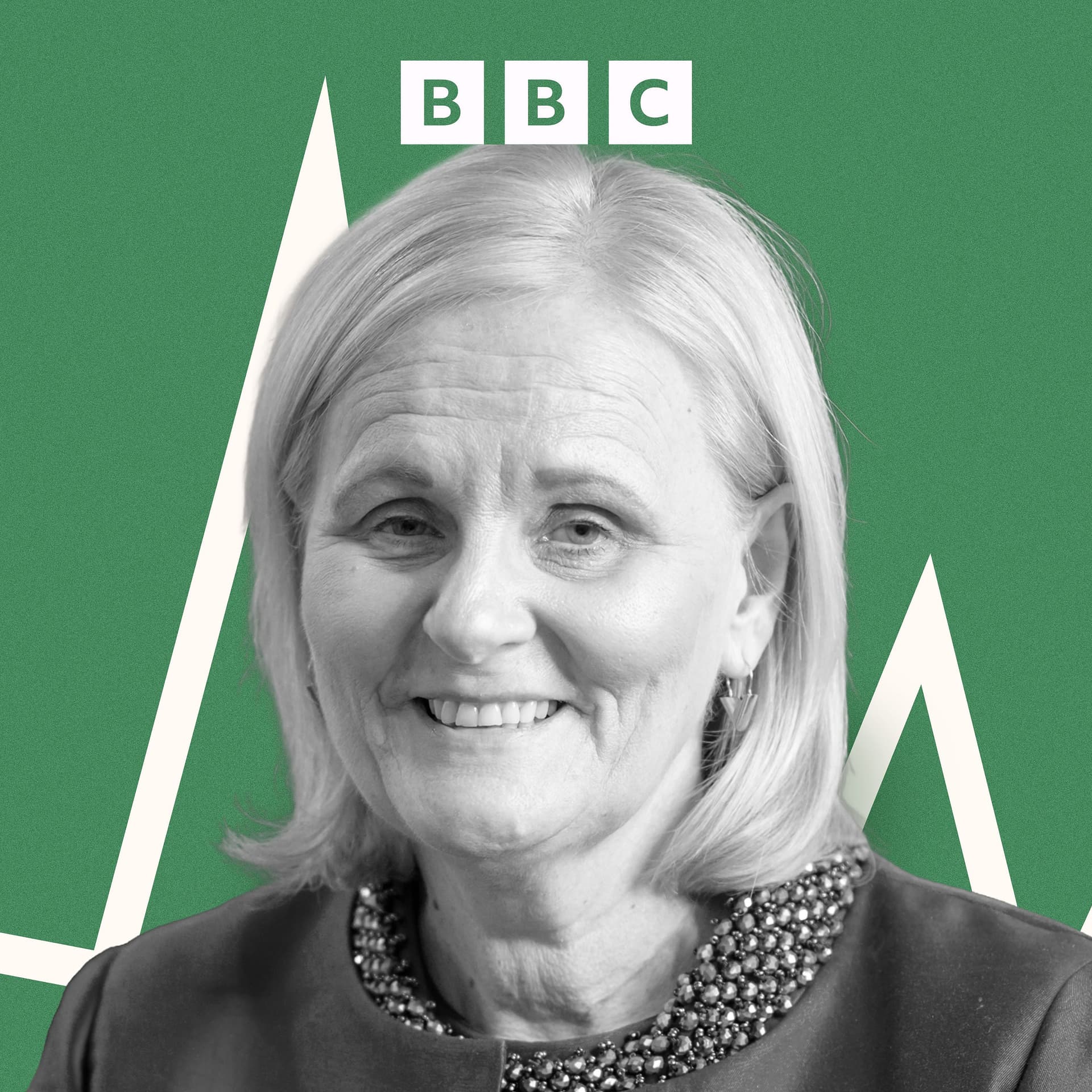
Aviva CEO Dame Amanda Blanc discusses UK investment and pensions, insurance regulation and customer value, and flood risk—arguing that some new homes may become “uninsurable” if built in known high-risk areas. She also reflects on her career turnaround at Aviva and briefly addresses her departure from BP’s board.
Guest
Dame Amanda Blanc, CEO of Aviva (British FTSE 100 insurer). Background: raised in the Rhondda Valley in a mining family; long insurance career starting at Commercial Union (1989); 37 years in the industry; previously worked at AXA; joined Aviva’s board as a non-executive director in Dec 2019 and became CEO in July 2020 (during COVID). Also served on multiple boards/task forces (e.g., National Wealth Fund, British Infrastructure).
Key claims
Aviva invests £100bn+ in the UK and £35bn in UK infrastructure; governments should enable “shovels in the ground,” not just plans. Flood risk is rising: 6.3m homes at flood risk now, projected 8m by 2050; 110,000 homes built in flood areas in last 10 years. Insurance can’t cover “inevitability” of flooding; planning should steer where homes are built and add resilience. She says Aviva accepts 99% of individual protection claims and paid £2bn last year.
Notable examples
Norwich Anglia Square redevelopment (£350m, ~3,500 jobs, ~1,100 homes); Cardiff cancer hospital; housing in Liverpool/Manchester/Birmingham; Carlisle floods; “Cloud9” cafe in Rhondda Valley.
Written by AI. May contain mistakes. Listen to the episode to check what was said.
Chapters
Tap a time to open that second in VOReflections on Coal Mining and Community Impact
2:48 to 6:27
Dame Amanda Blanc discusses her background in a mining family and its implications for communities today.
“Often at the beginning of these interviews, I wonder, you know, there's so much to get into.”
Investment in UK Infrastructure
6:27 to 8:01
Discussion about Aviva’s investment strategy and the importance of infrastructure.
“We speak to so many around the country with trying to make a go and set up something new like that.”
The Need for Action Over Talk
8:01 to 9:16
Dame Amanda Blanc emphasizes the need for actionable initiatives and effective planning.
“We need to hear how he sees this happening.”
Budget Considerations and Pensions
9:16 to 14:00
Discussion on the upcoming budget and the importance of stable pension strategies.
“But I think for too long, we've been thinking about how we should do it.”
Investing in Pensions: Understanding the Landscape
14:00 to 18:14
Learn about the importance of pension investment strategies and the challenges people face in saving for retirement.
“And is there a confidence to invest in the UK at the moment and improving confidence?”
The Role of Regulation and Risk in Insurance
18:14 to 22:27
Explore the balance between necessary regulations and the risks inherent in the insurance industry.
“So the way I look at this is that, well, yes, I would have confidence that they set the right policy because that's their job.”
Rising Flood Risks and Construction Challenges
22:27 to 24:48
Discuss the increasing risk of flooding and the implications for construction practices and insurance.
“Has something changed, do you think, recently?”
Preparing for Future Insurance Challenges
24:48 to 28:00
Understand how insurance companies are adjusting to climate change and increasing flood risks.
“then that means 115 ,000 new homes will be built in flood areas in the next 10 years.”
Preparing for Winter Weather Events
28:00 to 29:29
Discussing operational strategies for dealing with extreme weather conditions.
“Yes, you probably know more about that than most of us, super El Nino.”
Turnaround Strategies at Aviva
29:30 to 31:09
Insights on the strategic turnaround and the current position of Aviva.
“You can just as a raw glance at something, the share price would be one way of looking at that.”
Show all 21 chapters
Decision Making and Business Focus
31:10 to 33:16
The importance of decisive leadership and focusing on core business operations.
“very many changes that I think shareholders have basically said, look, what is Aviva?”
Growth Opportunities Post-Turnaround
33:17 to 35:38
Exploring growth prospects and investment opportunities at Aviva.
“I don't know what it is as you're looking at it now, but it was£7.02 the last time I checked, which was probably about five minutes before I came in here, because it's one of those things you're looking at all the time.”
Leadership Advice for Business Success
35:39 to 37:19
Key leadership strategies for driving business success and team engagement.
“So well, first of all, I think that, you know, many people talk about strategy.”
Reflections on BP and Corporate Culture
37:20 to 40:01
Examining the challenges faced at BP and the importance of corporate culture.
“But you've said now you're going to be leaving.”
Balancing Multiple Executive Roles
40:02 to 42:00
Discussion on the challenges of holding multiple executive positions simultaneously.
“I can keep on giving you the same answer.”
The Importance of Diverse Experiences in Leadership
42:00 to 45:31
Learn how diverse boardroom experiences enhance executive leadership.
“And the reason for doing that is basically to get experience of a different boardroom, to bring that experience back into your boardroom and, you know, for you to continue to learn.”
Reflections on Gender Dynamics in Rugby Governance
45:31 to 48:15
Explore insights on gender issues and governance in the Welsh Rugby Union.
“But if you're talking about the difference between, you know, I was an underwriter for the first sort of seven, eight years of my career.”
Experiences of Gender Bias in Financial Services
48:15 to 51:06
Understand the complexities of gender bias in the financial sector.
“and I think that the opportunity to bring communities together and for Welsh rugby to be important and I think the governance of that game is really, really important.”
Encouraging Future Generations in Business
51:06 to 55:26
Discuss the role of education in inspiring young women to pursue business careers.
“That was at the face-to-face shareholder meeting.”
The Role of Business in Society
55:26 to 56:00
Examine how businesses can be a force for good in communities.
“Does our government see business as a force for good?”
Interview with Mia: Cafe Experience
56:00 to 59:45
Learn about Mia's experience serving Amanda Blanc and the story behind Cloud9 Cafe.
“And chief executive of Aviva also, crucially.”
Transcript
Automatic transcript. May contain errors.0:00This BBC podcast is supported by ads outside the UK.
0:30and spice up fall at Whole Foods Market. Balance your trading strategy by adding futures. CME Group helps you manage risk and capture opportunities in all market environments. Capitalize on around-the-clock access to highly liquid global futures and options markets across all major asset classes. Visit your online broker and get started. See what adding futures can do for you at cmegroup.com forward slash podcast. Derivatives are not suitable for all investors and involve the risk of losing more than the amount originally deposited and any profit you might have made. This is not a recommendation or offer to buy, sell or attain any specific investment or service.
1:19Hello, welcome to Big Boss Interview. I'm Sean Farrington. For this week's episode, I've been speaking to Dame Amanda Blanc, Chief Executive of Aviva, the British multinational insurance company. Of course, big business, part of the FTSE 100, and it's that big. There's many, many different things to talk about, whether it's how it invests, what's needed to encourage it to invest in certain parts of the UK, what the government needs to be thinking around that. The insurance industry as well. She had some really interesting things to say about flood insurance in particular, the homes we're building, and whether they're in the right places.
1:53Are we just bringing more problems for ourselves further down the line with ever-changing weather systems, the threat of cyber attacks and how companies around the country are dealing with that as well? Her journey from being part of a mining family in the south of Wales to getting to the top of one of Britain's biggest businesses is fascinating to hear as well. She has many, many roles that she's taken on over the years too. She's only recently said she's departing the board of BP. There's been some controversies of late about various things going on at the top of BP. We attempted to talk about some of that.
2:30We didn't get too far, but still interesting to broach some of those topics. So lots to hear from Dame Amanda Blanc, Chief Executive of Aviva.
2:47Dame Amanda Blanc, welcome to Big Boss Interview. you. Thank you for having me. Thank you for taking the time. It's fun to be here. Good. Well, I'm glad you think that. Often at the beginning of these interviews, I wonder, you know, there's so much to get into. What do you start off with? And then I see the Chancellor on the same day that we're sitting down to have a conversation is going to be talking in a speech to the Labour Party conference about our coal mines not coming back. And here I am, one of leaders of British business, who, born and unbred Rhonda Valley from a mining family. Yes. So I guess no better place for me to start.
3:26What does that mean for communities around the country when they hear a Chancellor step up, you know, not for the first time perhaps, saying our coal mines are not coming back. It's a new age of industrialisation. Well, look, actually I was in Wales at the weekend just seeing my mum in the Rhonda Valley. And of course, you know, I was brought up in that mining community where both my grandparents were miners. and they were both mining down the pit from a very, very young age until the point at which they retired. And that whole community was built around those mines and there were tens of them, lots of them everywhere.
4:01But I think you have to say, would that be right today? And of course it wouldn't because things have moved on and we have new forms of energy and new ways of developing things. And so I think that the Chancellor's right to say that we're not going back. I think looking back only gets you so far. You have to think about, you know, what are we going to need going forward? What industries are we going to need going forward? How are we going to power them? You know, what's going to be the right thing for Britain as we sit here today? And so I guess looking back to recreating coal mines, that's probably not going to be the right thing, is it?
4:36But nobody's really asking for that, are they? Nobody is. So, no. But what they want is, they want something to look forward to. Is there that feeling there when you go back? So it was really, really interesting, actually, this weekend. So first of all, I would say that when all of those mines were closed, and they were closed so suddenly, that and they were closed without a plan, right? So you know, you effectively had the situation where, you know, lots of people were employed in this industry. And of course, all of the other industries around there, all of the other, the cafes, you know, all of the pubs, everything was sort of built off the mines.
5:08When you lose that, it is really damaging to the community. But there was no plan, you know, if you're moving from this to this. So I think that what's the mood down there at the moment? Look, I think it's never really recovered from that. Areas like the Rhonda Valley have not. You've had, you know, some developments, you know, in Cardiff and in Swansea and in those places. But really, those valley areas have not recovered so well. But I was sitting, you know, in a cafe in Trioche on Saturday. And it was a brand new cafe. And I thought I'd go and try it out. Like have a cup of coffee, you know, have something to eat.
5:41and the lady who had started up the cafe, she'd only started up two months ago and she came out and she goes, oh, where are you from? I said, well, I'm from here, but you know, I live in London. And she goes, oh, that's brilliant. Do you think this has got the London vibe? And I said, do you know what? I actually think it does. I said, I think it's brilliant. Good for you for setting it up, you know, for having the ambition, for taking the risk, for being an entrepreneur. And that's what we need, isn't it? But we need more encouragement for people like her who've sort of probably taken a bit of a loan, taken a bit of a risk on setting something up in the community.
6:13And I think, you know, really fair play to her. And I was really impressed with her. And I said, hey, good for you. And I really hope it succeeds. I'll be back. Definitely. Well, they'll be very pleased to hear that. Do you remember the name of the cafe? Yeah, Cloud9. Cloud9, right. Let's give it a good shout out. Yeah, why not? And you're right. We speak to so many around the country with trying to make a go and set up something new like that. So when the Chancellor talks about a new age of industrialisation, what does that really mean for communities around the country? You're boss of one of the biggest investors into the UK.
6:48Well, look, I think first of all, let's hear what he has to say. I don't think we've heard the details of the speech. So let's hear what he has to say today. But how do we think about it? So as you said, we invest over£100 billion in the UK,£35 billion in UK infrastructure. So that can be schools, that can be colleges, that can be hospitals, you know, that can be wind farms. It can be all sorts of different areas, which I guess is today's industrialisation. So I guess what I would say is we stand ready with capital. We've got that capital. We want to invest. We're a big UK employer. We want to invest in UK infrastructure.
7:20You know, it provides good returns for our pension holders and for them, for the members of those pension schemes. But we sort of need the detail. We sort of need the talk. and the aspiration to turn into reality. So, you know, and then I think, let business go free and do what it does best. And, you know, I do think that there are real opportunities for us to do that all over the UK. You know, if I look at our investment portfolio, from Valinda, you know, Cancer Hospital in Cardiff, you know, to housing, rental accommodation in Liverpool, in Manchester, in Birmingham, electric buses, you know, all over the UK, these are the sort of things that that we are ready to invest in.
8:03But I think we need to hear the detail. We need to hear how he sees this happening. And then obviously the environment needs to be right. We need to be talking about growth. We need to, the regulation needs to be right. Planning needs to be right. Skills need to be right. Those are all the sort of things that we can, you know, that we can get behind. All of those things have been talked about a lot for many, many years. So why are we still sitting here saying they need to be talked about? Look, I think that's a brilliant question. They need to be laid out. Look, it's a brilliant question, isn't it?
8:29We don't want to be the champions of talking. What we want to be is the champions of doing things. Are we the champions of talking? Well, I think there's been a lot of talking. And, you know, I think from right across the piece, you know, you hear lots of plans of things that we are going to do. But what we actually want to see is sort of shovels in the ground, things starting to be built, because that's what actually creates jobs. If I think about something that we're doing in Norwich, we've got a partnership with Norwich City Council to rebuild the Anglia Square in Norwich. It's a£350 million development.
9:02It will create about 3 ,500 jobs and about 1 ,100 homes. Those are all things that will get that Norwich community really buzzing and growing. So we need to see those things move from talking to action and that is happening there now. But I think for too long, we've been thinking about how we should do it. But we need to get planning right. We definitely need to identify what is important to the government, what are the key investment areas that they want, then get the regulatory regime right to say, OK, Aviva, if that's what the government wants and that's backed by a democratic government and you've got the capital to invest in it, you get behind that and invest in it.
9:42Have you been held back in recent years? I don't think we've been held back, no, because I think, you know, we have got a very big brand. We've got, you know, we've got a real assets origination team in our Aviva Investors business that goes out and seeks development opportunities. And obviously, we've got a very big pension annuity portfolio that we need those assets to back that portfolio. So we haven't, but we could do more. So when you hear, say, Andy Burnham talking about Heathrow, for example, over the weekend and being reluctant to explicitly back it, what does that say to you? I mean, I think we have to be bold.
10:21You know, I would say if governments can say we are backing this project or local governments, mayoral authorities, the development corporations, if they say, you know, we are going to back these projects and we are in it for the longer term, then companies like Aviva, we want things to back for the longer term because pensions are a long term game. Then we can get behind that. Is the Heathrow Third Runway one that you think we should be backing? Well, I mean, I don't know the details of the Heathrow. I haven't seen any of the financials. I mean, you have to back things that make financial sense, obviously.
10:52So I don't, you know, I'm not an expert on the Heathrow runway, but it's projects like that. But it's also an image, isn't it? When you, you know, with how many decades, I was going to say years, decades, have we talked about Heathrow third runway? Have we talked about HS2, all of this kind of stuff? And now, you know, you wake up on a Monday morning, you're going into work, you and your colleagues thinking about investing in the UK. And you've got the prime minister not explicitly backing a major infrastructure project. Can that be OK? Well, I think it can be OK if there are lots of other projects to back and there are lots of alternatives that provide better returns.
11:25But I do think some conviction around those areas, it doesn't necessarily have to be specific projects, but it can be specific areas. You know, what's going to be a transition, for example, in terms of energy? What's going to be, you know, what are the schools projects? What are the hospitals projects? Those are things that we can really get behind and we can really invest in. Have you been convinced by the Labour government, both Keir Starmer's government and what you've heard? Well, I think we've seen lots of, you know, if we think about the planning regime, the talk, all the national wealth fund, the British Business Bank opportunities, the investment there.
11:59I think we definitely see that the component parts are there. But now what we need to see is that turn into action. And growth, obviously, we hear the word growth talked about a lot. What we need is to see the investment turn into the jobs, which will then turn into the growth. And I think those are the three things that really matter. So let's get the investment, then we can employ people, and then we can start growing this country. What does that mean with a budget a month away? What does that mean? We've been very well versed in budgets in recent years. It feels like every single one, there's a big buildup.
12:37And this is really crucial for the messaging of the next year. So what's your message to those deciding what this budget needs to feel like? Yeah, well, look, my first message is please do not fry lots of kites in the run up to the budget, which will mean that customers of Aviva do things that they later regret. So if I think about the last couple of budgets where there's been quite a lot of focus on pensions, effectively, we saw in the last year 30 times the normal withdrawal from pensions that we would normally see, which is clearly, you know, something which customers may regret afterwards, because once you take your tax-free lump sum out, you can't put it back in.
13:18So we would say be very, very thoughtful about the things that you are testing, thinking about. The second thing we would say is we've already got, and pensions money is talked about a lot. I mean, I was reading the press at the weekend, you've got everybody talking about pensions money, because it is obviously a massive tranche of money. Today, you've got£800 billion sitting in, you know, the auto enrolled pensions, which will grow to about 1.2 trillion by the end of this decade. So big money. So people see that and say, right, there it is. That's the money that needs to be invested in infrastructure.
13:51And they are right. But effectively, in order to do that, you need to have consistency, you need to have, you know, a real plan, because what you're saying to people is invest in these things, you're taking the risk it's your pension for the longer term we can get you better returns but you can't therefore have changes in pension strategy every time there's a budget because that makes people nervous and that makes people nervous about investing in their pensions. And is there a confidence to invest in the UK at the moment and improving confidence? So I think look as Aviva we are cautiously optimistic if we think about the UK we hear about growth we think about the opportunities that there are to re-industrialise or whatever word you want to use to describe that, we definitely believe that we can put our money to good use behind that.
14:37So, you know, let's think positively about that. We've also got initiatives like the Mansion House Accord, where you're basically saying to people who are in default pension schemes, you should be using that scheme to invest for a better return for you over the longer term. That is perfectly suited to infrastructure investment. But of course today people are keeping money in cash or they're keeping in default pension schemes that are not providing those better long-term returns for them. But they need to know that that's going to be a good return for them and that's going to be a safe investment for them.
15:13Why are people doing that? Well, first of all, there's a lack of understanding. Does that fall on the industry to some extent? It falls on, yes, the industry. It falls on employers who set up the schemes. It falls on the consultants that advise the employees. And then it falls on us as individuals to actually be interested. You know, in the UK today, 15 million people are not saving enough for their pension. So they're not going to live a good retirement. You have to deal with that issues in your 20s, in your 30s, in your 40s. So it's up for the industry to make sure that we really explain that.
15:48We understand what the options are. We need to create funds that people can invest in. And we're doing that today. and then it's up to the employers to maybe not go for the cheapest funds because obviously you can invest in passives, what we call equities, and that's a cheap fund. But if you want to invest in infrastructure, it costs a little bit more. The fees are a little bit more expensive, but the returns are better over the longer term. So I think there's a lot of education. That should start at school. People should understand what pensions mean and then it should continue throughout your working life.
16:21But people might hear that. Employers and small businesses might hear that and think, that just sounds like me either having to risk more of my income in my 20s, 30s and 40s. People might think I haven't got that much spare income to begin with if I'm not saving enough for retirement. And employers might think, well, there's a reason we're going for the cheapest ones. It's because our costs just seem to be going up left, right and centre. I totally understand that. And, you know, in essence, I'm very sympathetic to those employers who are working really hard and they've had increases in national insurance contributions.
16:54However, you know, if we think about the fact that you are taking the risk as an individual for your pension, for your future, what the employer is doing is providing you with the list of funds that you can invest in. you as an individual need to decide how you're going to invest. And I think we need to show you what your future retirement life could look like. We need to say if you invest this much today, this is how much you'll have when you retire. Is that going to be enough for you to live the retirement that you want to live? So, you know, there's lots of analysis by the retirement savings groups to say that to live a comfortable retirement, you need£45 ,400 a year.
17:36That's a lot of money. Most people today would be absolutely, well, 15 million people, nowhere near that. So you need to work out, you know, what are the compromises that you take through your 20s, 30s and 40s to live a better retirement? Or do you just not do that and, you know, you wait until you're 65 and then go, OK, what do I do now? You know, I mean, you've got to make the decisions, haven't you? You will have had a lot more access than many to governments, being on task forces, infrastructure task forces, talking to them about everything you've already discussed. Do you have confidence in those running our country that they are going to be making the right decisions for businesses to invest, for people to be encouraged to invest in the right pension pots?
18:19So the way I look at this is that, well, yes, I would have confidence that they set the right policy because that's their job. Their job is to create the right environment and then to move out of the way to allow us to get on with it. Because I do think that whether you're a small business or a large business, you should be the one making the decisions. But the environment needs to be right. Does that mean the government shouldn't be trying to implement rules and regulations that say there should be more investment in the UK? Well, I don't think there should be mandation, no, because I think, you know, if you're taking the risk as an individual, then you need to be making that decision yourself, you know, whether you're an individual or an individual business.
18:57But I do think they can create the environment to encourage investment in the UK. You know, I definitely feel, you know, we've got a great rule of law. We've got great schools and universities, particularly our university educations are seen as being, you know, really top class. I think we've got a fantastic innovative culture in the UK. I think we're the third most innovative culture in the world in terms of creating new businesses. So why don't we allow all of those things to happen, to come together? And I do believe that we do need to look at regulation. So the government has said that they want the burden of regulation to be 25 % less.
19:38That's their stated aim. We would support that. Just onto the insurance industry then. And you know, almost how people might view that, people might hear that, they'll be very aware of Aviva as a brand, a direct line that you bought in recent times as big brands in the insurance sector. You talk about the high level of regulatory costs, but is that because the protections are needed for the customers around the country who are using these businesses, providing them products? So, of course, there needs to be protection. You know, when you're selling financial products, you do need protections. There needs to be, you know, capital protections to make sure that there's enough capital.
20:16You know, we were talking before we started about the global financial crisis. You know, there was a, you know, obviously at that time, there was a recognition that perhaps there wasn't enough capital held. So, you have to have the regulation. The question is, at what point do you stop? And at what point do you say that you want all risk to be prevented? Whereas, of course, we're in the risk game. So you have to accept that there is going to be some risk in the system. That's inevitable. You know, you are never going to stop every car accident from happening, every home from being flooded. That's just not realistic.
20:50What you have to do is look at the balance of probabilities, and you have to assess that. And you have to say, you know, we need to protect those who are the most vulnerable, those who do not understand. And then, you know, and then we need to create the environment for that balance between protection and growth. But many might feel, I mean, particularly as they've seen insurance premiums go up, up, up over the last decade, you know, a lot higher now than they would have been then. They might feel like the insurance industry isn't really working. If you go through an insurance claim and you need to get something done, it seems to cost a lot more and your premiums go up and overall premiums are going up than if there's just some agreement between the two parties and you can just crack on with your life and get it sorted.
21:32That actually the insurance sector isn't necessarily working for those that are using it every day with the various premiums that we'll be paying across different sectors? Look, I mean, you've got to expect me to challenge that. I mean, I just don't agree with that at all. If I think about the 22 million customers of Aviva, and one of the things, you know, if you've ever listened to a bereavement call or somebody calling in when, you know, they've got a critical illness claim, which I have done many times. In our individual protection business, 99 % of claims are accepted every year. Last year, in our individual protection, we've placed bereavement and critical illness claims, we paid£2 billion in claims.
22:12So I do not believe that this scenario that you are presenting, if we think about motor insurance premiums, for example, quarter two last year to quarter two this year went up about 1%. Inflation, as we know, is mid single digits. Has something changed, do you think, recently? Because there was a period, wasn't there? There was a period where motor insurance premiums were increasing because you saw the supply chain impacts on the Ukraine war and you also saw the post-COVID impact. What you actually saw was during COVID, because there were less claims, because people were driving less, premiums came down significantly.
22:50Of course, when premiums come down significantly, once people start driving again, premiums start to go up. So you saw the combination of that effect, plus the impact of the Ukraine war impacting the supply chain. So, you know, I think genuinely, when people look at the data, you have to make sure that, you know, you are looking at that sort of comparative data. And so I would say that, you know, being there for customers when they need us most, you know, that's what insurance companies are all about. If you have a motor claim, You don't want to deal with the person you've had, that you've bumped into.
23:22That can be a contentious issue, right? I mean, aside from the fact that legally you have to have cover. You've got to think about, you know, that people can do that better than you. We have our own garage network. We can send the car off to the garage, get it repaired for you, get it back to you more quickly than, you know, maybe others can. So we should be making that process for you simple, more straightforward. You mentioned flooding. You led a review for the government many years ago about the flood insurance set up. We've spent a lot of recent months talking about the climate and how it's directly impacting homes around the UK.
Read the full transcript
23:59Warnings of the months to come as well. What would you say about the current environment of flood risk? Is that increasing? Oh, for sure. That is absolutely increasing. And of course, you've seen a very dry summer this summer. And what happens if you then get heavy rain on very dry surfaces is you get more surface water flooding. But Aviva's own research, which we did last year, shows that in the UK today, there are 6.3 million homes which are at risk of flooding. And by 2050, that will be 8 million. So we have to think about how do we deal with this? How do we put in flood resilience measures into properties that are being built today?
24:40So, for example, 110 ,000 homes that have been built over the last 10 years have been built in flood areas. And, you know, if we believe that, you know, that there are going to be significant new homes built over the next 10 years, then that means 115 ,000 new homes will be built in flood areas in the next 10 years. So that doesn't seem to me to make sense. We need to think about where those homes are being built. But then recognising, of course, that in some areas, you know, surface water flooding, you can't always prevent that. Then when homes are built, putting in resilience measures to make sure that should a flood happen, you can get back up and running, you know, more quickly.
25:18So you can get these sort of these air bricks that have got self-closing air vents in them, which means, you know, the properties can be protected. You can do all sorts of different things to your property to make it more or less vulnerable to flood. But when I did the Doncaster review, you know, one of the really big areas there and really the saddest areas there was that there were a lot of properties that were close to the river and they were rental properties. And as soon as those properties were flooded, you know, those people had to vacate those rental properties. And because they didn't have insurance, they didn't have places that they could be relocated to.
25:55And that was the most devastating thing about that review. And, you know, obviously, I made a series of recommendations. And about landlords was a key part of that. But how do you feel about how that part of the review is developed? So there have been some there has been some progress, not complete progress in that. But genuinely just having that cover, which I think when people think about insurance, they think maybe about their sofa or their fridge. But really, the most valuable cover is the alternative accommodation cover, which takes you out of your property, which obviously when you have been in a flood, there's been a flood.
26:28You cannot stay or you often cannot stay in your property because it's damp and it needs to be dried out. And that can take a period of time. That moving to alternative accommodation is a very, very important part of that cover. When you talk about those homes that are to be built over the coming years and saying it maybe doesn't make sense where some of them are being built. Do you think we're building homes that might be uninsurable at some point in the near future? Well, for sure, because, I mean, if you think that there's an inevitability of something happening, that's not what insurance is, right?
26:58So insurance is a pool where, you know, there's a risk that something happens for some people and not for others. When there is an inevitability, I think it makes it very difficult for it to be insured. So we would say you need to think very, very carefully. It's very well known where these flooding areas are. Let's think very carefully about homes that are being built. And if you're on the border of those areas or if you're susceptible to surface water flooding, then think about how those homes are built. So who's not listening to you then? Well, I mean, that will be the planning regulators, I guess, and who are those giving planning permission?
27:35I don't know, the builders? I mean, I don't know. Lots of people. But also there's this optimism, isn't there, that if we build here, we've got planning permission to build here, we can put in things that will make it better. But I think genuinely, if you look at some of the properties that have been built, we have seen flooding on those properties. And we did a very big report on this last year. And it's dangerous. And obviously there is more flooding, more rain, more heavy rain events that we're seeing. Are you preparing yourself this winter? We hear about El Nino. El Nino, the super El Nino.
28:08Yes, you probably know more about that than most of us, super El Nino. What does that mean for how you might be approaching the coming months? So we're always thinking operationally about how do we plan for these things, you know, particularly our teams, because a lot of these events will happen. You know, if I think about, you know, the Carlisle floods, which happened many years ago, which when I went to see some of the properties that had happened over Christmas, devastating periods for customers. So making sure that we've got enough people talking to customers about when they've had previous claims, how do they build back better?
28:42You know, we can provide them with an additional support to be able to build back their properties, but it will mean compromises. So things like stainless steel kitchens as opposed to wooden kitchens, putting your plug points halfway up the wall instead of putting them on the floor, all of that building that requires you to be able to explain to customers that should this happen again? But of course, people think, well, it's happened once, it won't happen again. But of course, in places like Carlisle, for some people, it has happened maybe two or three times. Are we becoming better at preparing?
29:12I think we are making progress, making progress. Sounds like a generous way of saying we're trying, but not quite getting there. But if I think about our Canadian business, you know, over the last, to Canada, you know, it is the third quarter that has a lot of these weather events. We have had, you know, hailstones, we've had flooding, we've had wildfires, all within a three month period. so all of our business in Canada is constantly thinking about how it is preparing for those weather events and making sure that we can get people out into the local areas really quickly to assess the damage to get on with paying the claim.
29:50We've got a very good sense of what it's like running Aviva and all the different aspects of the economy the products that you're producing where you're investing all of this under your watch so I'd like to talk a little bit about what you've done at Aviva because it wasn't in the sort of the strongest, most stable long-term position when you took over and now when people reflect on Aviva now, it's seen in a much sort of stronger light. You can just as a raw glance at something, the share price would be one way of looking at that. Can you just talk a little bit about what you've done there, a turnaround as as many might label it.
30:30How do you do that when you're coming in with a huge business and a huge project? Yeah. So look, I started on the board of Aviva in December 2019. And I became as a non-executive director and then became the CEO in July 2020. So mid COVID, right in the middle of COVID. I'd obviously started my career at Commercial Union, which is one of the founding companies in Aviva in 1989. And I've been in this industry for 37 years. So you sort of observe Aviva and you look at Aviva and you think, okay, you know, you know a lot about it. So you're not coming in from scratch. Aviva had had 10 years of, you know, I think three dividend cuts, you know, very many changes that I think shareholders have basically said, look, what is Aviva?
31:18What does Aviva stand for? So one of the things that I did when I came in was to sort of survey the landscape and say, okay, where do we deserve to win? And I'm a really, really big believer that you have to be sort of number one, two or three in your market to be able to deserve to win because you need scale and you need to be able to sort of be able to influence within your market. And I learned that from one of the best leaders I've worked for, Henri de Castro, who was the CEO of AXA. And I worked for AXA for two periods during my career. And what was clear to me was there were many territories that Aviva had outside of the UK island in Canada where we were not one, two or three.
31:59In fact, we were number six, number seven, number eight. And so the first thing to say was, okay, we should make the UK island in Canada our core business where we are number one, two or three in every product line and we should dispose of the other businesses. And so that's what we got about doing. Was that difficult when you come in? Because obviously they're not doing that already and people might have thought that and I did. I sort of didn't find it that. Yeah. So look, the way to look at it is, do you believe it's the right thing to do? If you believe it's the right thing to do, then it's not difficult.
32:29It may be an execution challenge. It may be that it's complex. But is it difficult to make the decision? No, because you need to be decisive. I think as a leader, you need to be decisive. And particularly when the company is in the position that it was in, where shareholders had lost faith, it was really important to be decisive. And they needed to see that we were going to be decisive. So we made the decision we were going to sell the businesses. And with the money that we had, we were returning some of that to shareholders. And we were going to de-level. We were going to take our debt down within the business, which was another thing the shareholders didn't like.
33:02Once we cleared the decks, we could then see the brilliant things about the business that was left. So we kept some money from those disposals. So we dispose of eight businesses. And we've returned over£11 billion to shareholders in the last six years. The share price when I went in, I think, was£2.73. I don't know what it is as you're looking at it now, but it was£7.02 the last time I checked, which was probably about five minutes before I came in here, because it's one of those things you're looking at all the time. But I think, you know, that is a smaller business delivering a better share price, better returns for our shareholders, better experience for our customers because we're investing in those businesses that are left.
33:41But once we had done the core disposals, we could then look at, OK, how do we invest in the business to make the most of the businesses that we had? And I could see this wonderful diversified business in the UK where we could take you from anything from your junior ISA to your equity release mortgage and everything in between. And, you know, so I could see the opportunity to invest. Did you have an idea of that growth bit while you were coming into the job or were you entirely focused first on the turnaround? Did you just see that almost as all your job needed to be about? So look, I think that no, the growth was not.
34:22If I think about the three priorities at the beginning, it was focusing the portfolio. It was delevering the business or reducing the debt in the business. And it was improving the performance of the business, the underlying performance. So could we make what we had run better? But what became clear once you started to do all the deep dives and you started to look into the business and you started to see what was there was that we had phenomenal growth opportunities. And we had a wealth business where we were the number one player in workplace pensions, which we talked about earlier, the auto-enroll pension, which was going to grow exponentially as more people were taking auto-enroll pensions.
34:59So there was that. There was the general insurance business where I could see that there was real growth opportunities there. the health business where I could see there were opportunities there. So as we were turning around the performance, it became clear that there were real growth trajectories, real growth opportunities where if we put a bit of investment in, we can invest behind those growth opportunities. And of course, then we started to do some M &A. We bought some started small, ended up buying direct line a couple of years ago. And that then has given us even more growth runway. So I can now not just see to you know 2028 but now I can see to 2035 and I can see beyond that because we are planning always in the long term.
35:39What would be your advice to people running businesses small and large whether they're coming into a business fresh trying to turn it around or maybe they've run a business for a while and and realized it needs a turnaround what would you say to them they need to be focusing on because you've talked about you know when you're a market leader and you're huge like Aviva, but just general sort of leadership ideas. Yeah. So well, first of all, I think that, you know, many people talk about strategy. I'm much more of a believer in getting stuff done, because you can have the best strategy in the world on a PowerPoint presentation.
36:13If you can't deliver it, you're not going to do anything. So like, like, focus on the execution. If you have a plan, then deliver that plan. The second thing is, how are you going to bring the people that work with you along with you so that you're one person that are 30 odd thousand people that work for Aviva how do I make sure that they all believe that we can do what we're going to do so focusing a lot of effort on that communication simplifying the communication so that everybody understands what it is we're trying to do then find what you're good at and when you've found what you're good at really focus and invest on that because that's the way you will win that's how you get scale.
36:50That's how you get, you know, whether it's a USP, if you've got something different that somebody else doesn't have, then really focus on that. And, you know, finally, I would say, surround yourself with the best people. You know, if I look at my team at Aviva, my executive team, the leaders that we have, the business that we have, of course, I'm incredibly biased. But I just think they're absolutely brilliant. They've come in, they've done, you know, they've done a brilliant job. And every day, they're looking to make things better. We don't always get it right. but putting good people around you makes a really big difference the share price for what it's worth is about seven pound and a penny well there you go i'm not that far off i don't know yeah nothing to be too panicky about no need to check um mid interview so that i mean that is um you know the your story so far with aviva one of the biggest stories in the city this year one of the biggest corporate stories one of the biggest businesses in the uk that we often talk about is bp and you You, as many sort of executives, chief executives will be non-executives and on boards of other companies.
37:54That's sort of how that world works. And you've been on the board of BP. But you've said now you're going to be leaving. So why is that? Well, first of all, it's been a tough gig, right? There's no doubt about that. And there's been a lot thrown at BP. But if I look at it today and the combination of a new chair, new CEO, I think that's a good combination to take BP forward. And so I think we should now let them get on with running the business. And it's time for me to move away. What happened with the appointment of Albert Manifold and then the departure? Look, I think there's been a lot said about this.
38:35There's no more for me to say today on BP. But in terms of, I mean, no more for you to say, but a lot of people do still want answers, don't they? There's been a chair appointment, there's been a chief executive departure, Bernard Looney, when he departed and under question marks about, you know, not revealing enough about his relationship with other colleagues over the years. and then there was a new chair appointed, the appointment led by yourself. That chair, under that chair, another chief executive departed. Then that chair had to depart. People want questions answered about the culture at BP.
39:13Has there been an issue with the culture at BP? Look, Sean, as I said, I'm not going to say any more on BP today. I think, you know, enough has been said, enough has been written, and there's no more for me to say. Has enough been said, though, when there is so much, you know, turbulence? I mean, are shareholders at Aviva, have they asked you to look at how much time you've been spending on BP? I wonder if you reflect on just your time with BP, given you have such a big job anyway. Do you reflect on what you might have learned from that? Because, you know, we've heard about how the improvements of Aviva have gone.
39:50But, you know, it's another, I mean, it's been a huge job that you've had at BP. How do you reflect on your time there? So look, as I said, no more to say about BP today. But in everything I've ever done, I always look back and reflect and say, what can you do better? And whether that's at Aviva, whether it was when I was at AXA, wherever I've been, every leader always reflects on what they've done and looks at what they could do better but is it hard that you know we can't talk as much about the tougher times at BP as we can about the the positive times at Aviva I mean look I don't know how many more times I can say no today there's no more to say is there is there a reason you can't talk as much about because well I think I think I've said what I need to say we've got a new CEO a new chair no more to say yeah i mean many many might hear it and sort of feel frustrated that they're not getting answers whether that is shareholders staff at bp who you know reportedly have had quite a tough time of it themselves where do they get their answers from from their ceo and from their chair and but you are still you know on the board there and you've had a big role in in all of that should the should the board be answering some of those questions as well those that have been close to it look i think And, you know, very good.
41:08We can keep on talking. I can keep on giving you the same answer. But genuinely, Sean, I have no more to say on BP today. Okay. But what can we talk about the idea then of having multiple roles in being a chief executive of one of our biggest insurers, while also having a major role at another one of our biggest companies? Can that thing work? Because some people listening to this, you know, a lot of people coming to a Big Boss interview, They come to sort of learn about how the world of business works. And they might hear everything we've been discussing there about Aviva and think, what, blimey, you're on the board of BP as well.
41:47You're in charge. You're leading the way to appoint a new chair. Is it right that that occurs? Well, I think that about a third of FTSE 100 CEOs or executive directors will have roles on other boards. And the reason for doing that is basically to get experience of a different boardroom, to bring that experience back into your boardroom and, you know, for you to continue to learn. So I think that it's like saying, you know, once you've done one set of exams, you don't want to do another set of exams because you know everything there is to know. You know, you want to you want to keep learning. So I think as an executive, why did I take the women in finance role that the government asked me to take?
42:28Because I wanted to I wanted to learn more about that. you know why did I sit on the National Wealth Fund why sit on the British infrastructure you can ask that about lots of things why am I on the ABI board you know you could say well but because if you only operate within one environment then that's all you know you have to have the experience of learning from other places. And how do you manage that because again for a lot of people might think well if I'm chief executive of Aviva like that I mean you can see how a diary fills up for a week as it is how do you manage that people do get to a point in their career where they might start to branch out a little bit and look at other things what what's the key to being on top of all of that stuff well I think first of all you need to be very disciplined about your time management and I mean I always have been um you know so I'm always very thoughtful about what I spend my time on I work really hard you know I I'm a sort of so-called workaholic I guess um I get up very early in the morning I I would we were I've been working this morning from 6.30.
43:26So I'm covering everything that way. You've also got good teams around you. And, you know, as an executive, you learn that you've, you know, there's certain things you prioritise and not prioritise. That's just leadership. That's just management. I've been a manager now for a very long time. You sort of learn to be able to do lots of different things. And do you have to learn to sort of walk away when that hour in the diary is done? Do you have to trust the process? It sort of depends on what it is. You know, I think it depends on what it is. I mean, I think if you are, you know, so for example, if we take my day today, I'm going to go back and we've got, you know, we've got a weekly leadership team meeting, then we'll start talking about the plan for the next three years.
44:10Then we've got an investor event coming up in a couple of weeks. So we'll start planning for that. And then one of my team is retiring and I've got his retirement drinks and I'm making a speech later on today. So there are certain things within that if you needed to spend a little bit more time on the plan or on the investor event, you probably would, right? But I mean, there are other things where you'd be a lot more disciplined around to say, okay, well, I think, you know, I'm done with that. We need to move on to something else. You have to be, because you could end up getting pulled into, you know, a huge amount of detail, when in essence, you're not adding any value at that point.
44:45I'm not, you know, I'm not the finance director, I'm not the actuary, I'm not the marketing manager that, you know, they've got they've got the expertise in their area and I you know and I will draw from that. Was there a point in your career where you sort of you thought you realised you wanted to be you had the potential to be the chief executive of one of the biggest companies in your industry because as you described it's the same industry you started off in very different one but the same one or were you you know from that first day in the job always looking to lead? No I mean I I think from the first day in the job, you're just looking to do a good job.
45:25And that probably would apply even to, you know, last Friday, you know, when I was in the office, I'm looking to do a good job. You're always looking to do a good job. That's the priority. And then good things happen from that. But if you're talking about the difference between, you know, I was an underwriter for the first sort of seven, eight years of my career. I loved the technical part of that. But when I started to lead a team, I loved that more. And, you know, I went to be a consultant for a little while and I wasn't leading a team and I did not like that. so you know I like leading teams I like leading organizations I get a huge amount from that you know I think that's what I'm good at and so that's the sort of area that I stay you know stay very very focused on and so you know I never thought I would be the CEO of Aviva of course not um you know because you have to think about doing the job really really well um you know on the day that you're doing it not what your next job's going to be and I'm never a fan of thinking about what the next job is going to be.
46:21One of the array of boards and groups that you've been a part of was the Welsh Rugby Union and when you left the Welsh Rugby Union you had some pretty strong words about how it was being run and particularly the approach towards women, the experiences you had yourself. Just for those not sort of aware of that context it may be best if I just let you summarise in your own words what what that was sort of about because I wanted to just ask you a bit more widely about yeah so so I was on the Welsh Rugby Union board for a number of years a couple of years actually um at the start of 2020 2021 um and as you if you recall because I think the BBC actually did a lot a lot of work on this there was some um there was a lot of concern around um the way that the women's rugby team were treated and I think you did an investigation on this.
47:16And there was a lot written about that. Now, I wasn't involved with that. But in my experience around the board of the Welsh Rugby Union was that being brought in as a non-executive to the Welsh Rugby Union, that effectively, you were not taken seriously as somebody who had something to contribute on a few occasions, where there was some misogynistic comments and, you know, effectively people asking me what did I know about governance when I was running, you know, a FTSE 50 company, which was a sort of slightly strange thing to ask me. And the various experiences around the way that the women's game was being treated.
47:56And, you know, that was all a cause for concern. And as you know, there was a review which was written after that. And I provided my resignation letter to that review so that they could read my own experiences. and I think that it's a shame. I think that it's a shame because I think Welsh rugby is really important to Wales and I think that the opportunity to bring communities together and for Welsh rugby to be important and I think the governance of that game is really, really important. It's a big business and it needs to be run professionally but you had at the time quite a lot of split governance between independent non-executives and the councils that ran the game in Wales.
48:40And that has subsequently changed. And there has been some governance changes which arose out of my resignation and then the subsequent review. But I still think Welsh rugby is probably struggling a little bit. And yeah, a lot more to do there, I guess. What would you do? Oh, no, I'm not going to say that. That would probably be the most controversial thing. Feels like I should ask many more questions. Yeah, I know. Interesting. think you know when you describe what you uh the misogynistic as the word was used you know approach or culture that may have been in existence there is that something you know in your growth through a financial services sector which over the decades has has you know been criticized at time for not being the the best place for women to advance um is that something you've come across in that sector as well?
49:30Not really. You know, I would say that's not to say that other people have not. So, you know, I would very much caveat that because I actually know that other people have, because I have, you know, I have had very, very many people write privately to me, usually using LinkedIn to explain their experiences of what, of their experience in financial services. But genuinely, you know, I was with a group of senior leaders last week from pharma, from tech, and they were also, you know, talking about the same experiences. So sometimes I think that people say financial services is particularly bad. But genuinely, I think if you sit within different industries, I think experiences of being can be can be similar.
50:14So what I would say is that in financial services, there has been, you know, more of a focus around culture, you know, if we think about some of the Lloyds of London, stuff that was written many years ago, and then some of the sort of reporting that has been done around sort of sexism in the city, which, you know, which has been written about, that has definitely something which I have not experienced myself, but I know that other people have. So I think you have to take that seriously from that perspective. I was actually going to ask you, given your position, if people do look to get in touch with you.
50:50Does it feel like that's sort of increased or not decreasing at the rate you would hope? Does it surprise you? I think it sort of depends on the time. So, you know, if I think about the time that I had the experience, whether it was with the Welsh Rugby Union or at my own AGM where I experienced some comments from some of the shareholders. Was that a face-to-face? That was at the face-to-face shareholder meeting. Just explain that. Yeah, so it was my very first shareholder meeting and the AGM and a couple of shareholders asked, was I the right man for the job? And there was a comment made about women were very good at administrative tasks and things like that.
51:33I mean, it was written about at the time. But your emotion in that moment? In that moment, you don't think about it. In that moment, you think about the AGM. In that moment, you think about getting through the topics that need to be covered. It's only when you reflect back on it afterwards and when actually the experience of your team and they say to you, that's not on. You know, what was just said to you, that's not acceptable. It's only then that you think, actually, it's not. That's probably not. And, you know, I did write a LinkedIn post at that time. And it was really, really interesting that I got responses from all over the world from people who had had that sort of experience from Japan, from America, from Canada, you know, from Europe.
52:19And so you can reach a wider audience when you write about topics that really resonate with people and people, you know, very privately telling me about their own experiences, which is really, really sad. You know, it's really sad when you think about the way some people are treated. But I think that what we have to do is make sure that when that happens, you know, that within your own organisation. So in Aviva, you know, you've got proper processes in place to deal with that. You've got speak up mechanisms. You feel that people are protected and that people feel free that they can speak up about these things.
52:52And so it really depends, obviously, on the culture of your organisation, you know, how often that happens. And was it important that those other people had actually almost flagged it to you after the event because you were so focused on the event? Yeah, I mean, I think I would have got it, you know, because it was really obvious and the FT were there anyway and they were writing about it. So it was obvious. But I think them calling it out and saying that's not acceptable. You know, there are some points at which you need to speak up on behalf of other people as well. and almost just to finish the interview along the lines we started it because we've heard your journey and the the roles that you have and the the industries you've been leading do you think that you know you were back in the Rhonda Valley at the weekend do you think a young woman coming through school going into the the next stage of of their learning training whatever that might be still has the potential in the Rhonda Valley to get to the top of a sector the way you did back then are the opportunities there well look look I mean if I did it then I who am I to say that other people cannot I do think that schools can really help by showing what opportunities there are in business you know if I think about at school we had no no idea what business was I I mean, you may know what a lawyer was or you may know what an accountant or a doctor was, but nobody really knew about leading business.
54:20So I think, you know, things like Speakers for Schools and the work that Robert Pesson and the team do there is phenomenal for getting leaders to go back into the school. Often this type of schools that they went to, and I've done that in a couple of schools in Wales, to go back in and talk about your experience. Because I think, you know, if you can't see it, you can't be it. I think seeing that there are opportunities that you could do that, you have to know about them. And, you know, I was very, very fortunate that I made the first right career choice. And then, you know, other career choices happened from there.
54:53But I do think it's possible. Of course I do. But I do think that, you know, people could do more. Schools could do more. Other local businesses could do more. Bigger businesses could do more. You know, I think the education policies could do more to just expose kids to what businesses. Business is good. Business is a force for good. Business is a force for good. It employs people. You know, it can give you further education. It can allow you to develop and look after your family. Don't see business as a force for bad, because I think genuinely businesses are really good things. And, you know, in the right environment, you can really learn a lot from being in a business.
55:29Does our government see business as a force for good? I hope so. I hope so. And I, yeah, I think so. I mean, I would want them to, because I think that if you want entrepreneurs to be successful here, if you want businesses to invest here, you have to think that businesses are good and they're going to do good things. Who's making the investments? It's businesses. Who's employing people? It's businesses. Who's creating the growth? It's businesses. So let's support them to do that. Dame Amanda Blanc, customer of Cloud9 Coffee Shop. In Triorki. In Triorki, yes, crucially. And chief executive of Aviva also, crucially.
56:05Thank you so much for your time. Thank you.
56:11now after that interview there was only one thing for the big boss team to have to do next and that was track down the woman who served amanda blanc in that cafe the cloud nine cafe in the ronda valley at the weekend and that we managed to do hi is that mia yeah mia it's sean here thank you so much for um thanks for taking the time we've been hearing from the boss of you know one of the biggest pension fund investors in the across the whole of the uk one of the biggest insurance companies and and she you you've heard her talking about being in your cafe at your your new uh cloud nine restaurant at the at the weekend what was that like hearing that yeah crazy like if I'm being totally honest I didn't know who she was all our customers I treat the same I get chatting with them and she told me she was from London and our past customers have said like oh this place is giving like a London vibe so someone who's from London I asked her like is this very similar to the coffee shop that you have in London and then we just got we just started chatting and she was really nice then when I found out who she was I was like quite shocked that she chose to come to Cloud9 and especially originally from Trioghe which is just like a little valley um so yeah I was really pleased and I was really chuffed that she enjoyed being here and she had a nice time and she she was really lovely and down to earth yeah well she definitely had a nice time she very much got that point across and and she she was saying she was just you know really impressed with with what you're trying to do there what what has been the plan yeah so um well it is my boyfriend sharp he bought it about two years ago he won it in an auction and he came home one day from rugby training and he was like i've won a property on Triokia Street and I was like oh here we go then is dreams becoming a reality because rugby players they love their coffee and for a good few years he's said he always wants to run a coffee shop and and yeah we've started from from then and two years later is dreams become a reality I finished I worked up in Mardi Primary as a LSA I finished in January and I started working here full time with him.
58:43How long have you been open? So we've been open just over two months. Right. And how have those two months, you know, generally, you know, for you, for your boyfriend, how's it been? Yeah, it's been a whirlwind. It's been, like, it's been amazing. We, our customers are absolutely superb. Like, we can't thank them enough. Um, like our, like, our suppliers, our, like, coffee suppliers, food suppliers, everything is amazing. and can't thank our staff enough, like all our staff go above and beyond. And yes, just the start really of Cloud9 and we're open to continue and grow even more. Love it. What's your speciality?
59:24I would probably say like a classic steak and eggs is really popular. But she had a Greek yoghurt bowl and she loved it. So we must be doing something right with our Greek yoghurt bowls. Well, the world's your oyster. Good luck with it all. Thanks so much for taking the time. Thank you very much. Thank you. Really appreciate it.
1:00:10Derivatives are not suitable for all investors and involve the risk of losing more than the amount originally deposited and any profit you might have made. This is not a recommendation or offer to buy, sell, or attain any specific investment or service. Innovation has always kept the world moving forward, but it also comes with risk. As technology and AI evolve, AXA XL is facing into risk. As a leading global insurer, we constantly push the boundaries to protect your data and network from cyber risks. Axa XL, facing into risk for a future to be imagined. This advertisement doesn't constitute an offer or solicitation nor a description of any products or services of Axa XL.
From the publisher
The boss of Aviva, Britain's biggest insurer, has warned that some homes being built today could eventually become impossible to insure because of flood risk.
Speaking to Sean Farrington, Dame Amanda Blanc said Britain is continuing to build homes in areas exposed to flooding, despite the growing threat from climate change. Aviva estimates 6.3 million UK homes are already at risk of flooding, a figure it expects to rise to 8 million by 2050.
She said insurance works by spreading risk across large groups of people, but once flooding becomes almost certain, cover becomes much harder to provide. She questioned why thousands more homes are still being built in flood-prone areas and called for greater care in planning decisions.
Dame Amanda also used the interview to send a message to the Chancellor ahead of the Budget, urging ministers not to fuel speculation about changes to pensions. She said rumours before last year's Budget led many savers to make decisions they later regretted.
The conversation also covers whether pension funds should invest more in UK infrastructure, the cost of regulation, why millions of people are not saving enough for retirement, and what businesses need from government to drive growth.
And, after a turbulent period at BP, where she is stepping down from the board, Dame Amanda explains why she has no intention of discussing the oil giant's recent troubles.
Presenter: Sean Farrington Producer: Olie D'Albertanson Editor: Henry Jones
01:55 Chancellor's speech and the end of coal mining 05:30 Aviva's £100bn UK investment and new industry 09:00 Heathrow third runway and backing big projects 11:20 Budget warning on pensions speculation 14:25 15 million people not saving enough for retirement 20:00 Are insurance premiums working for customers 22:39 Rising flood risk 25:40 Homes that could become uninsurable 26:57 Super El Niño and preparing for extreme weather 28:54 The Aviva turnaround 36:31 BP board exit and questions on leadership 45:15 Welsh Rugby Union and governance 50:10 Sexist comments at her first AGM 52:17 Opportunities for young people and business as a force for good