In short
Big Boss Interview - Episode #17: CBI Chair: "I'm Shocked at Government's Lack of Business Understanding"
Podcast Overview Podcast Title: Big Boss Interview Hosts: Sean Farrington, Felicity Hannah, and Will Bain Description: An exploration of insights and experiences from high-profile chief executives and entrepreneurs on running major organizations, presented by seasoned business news reporters.
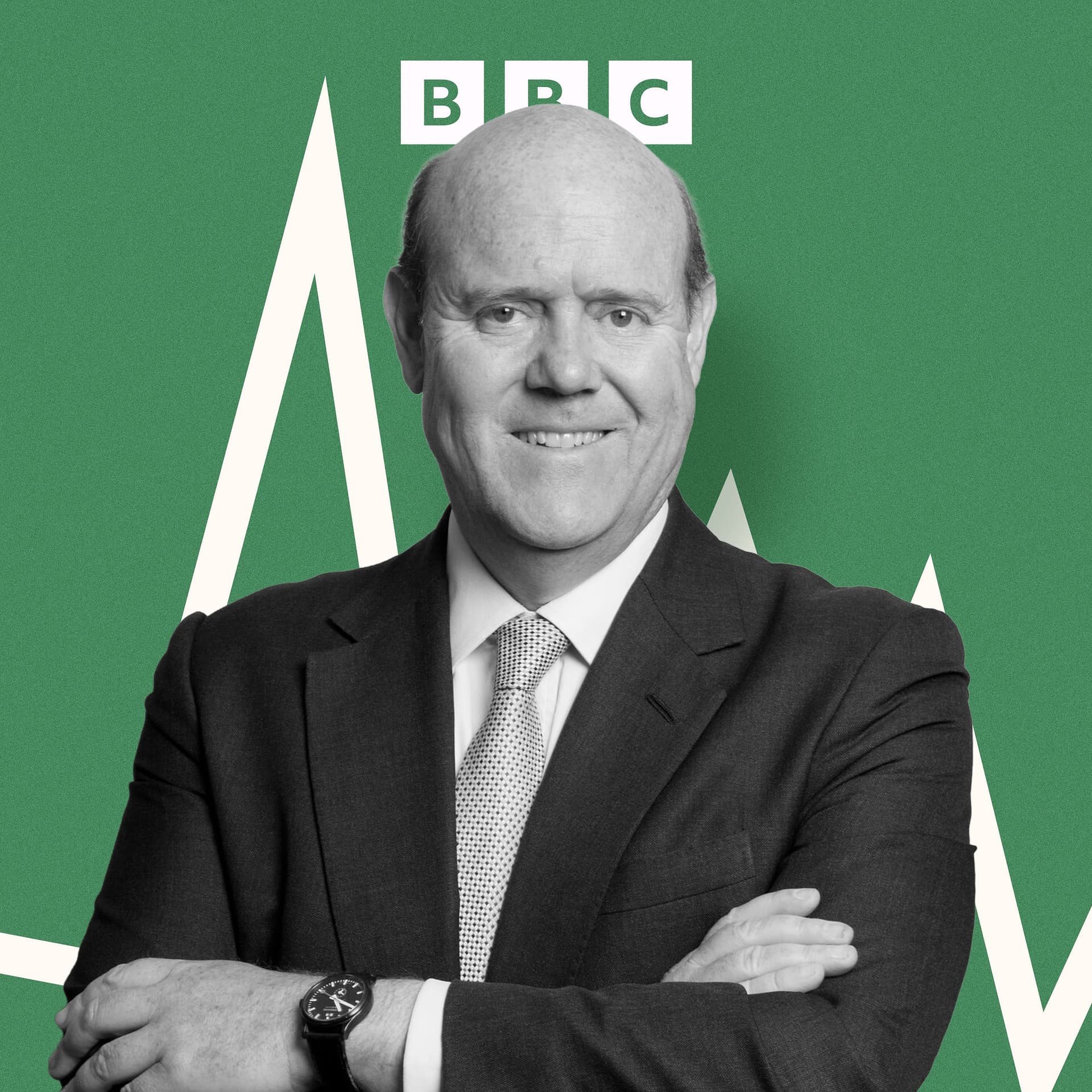
Episode Summary In this episode, Felicity Hannah interviews Rupert Soames, the outgoing chair of the Confederation of British Industry (CBI), where he expresses his shock at the limited understanding many government officials have regarding business realities. The interview delves into pressing issues such as employment rights, the economic impact of Brexit, and the internal challenges the CBI faced following a significant scandal.
---
Key Topics Discussed
- CBI Scandal and Organizational Rebuilding
- Background of the Scandal: The CBI faced serious allegations of sexual misconduct leading to a crisis in March 2023.
- Soames's Role: Brought in as chair to help restore the organization's credibility and membership base.
- Rebuilding Strategy:
- Focused on maintaining the CBI's core capabilities in economic and policy research.
- Engaged in outreach to reassure former members about the organization's safety and integrity.
- Government's Understanding of Business
- Shockingly Low Understanding: Soames is surprised at the government's lack of comprehension regarding business dynamics, particularly in employment and investment.
- Need for Better Communication: Emphasizes the importance of a two-way dialogue between government and business to foster mutual understanding.
- Employment Rights Bill Concerns
- Ping-Ponging Legislation: The Employment Rights Bill is a source of uncertainty for businesses.
- Impact on Employment Costs: Concerns that the Bill could discourage job creation, particularly affecting younger workers.
- Cumulative Costs: Increase in minimum wage and national insurance contributions making it riskier and more expensive to hire young people.
- Economic Implications of Brexit
- Negative Economic Outcomes: Soames describes the economic ramifications of Brexit as "really, really, really bad" for the UK.
- Call for New Approach: Urges for a reset in the UK-EU relationship with a more pragmatic approach to negotiations.
- Government Action and Effectiveness
- Recent Budget Analysis: Compared the current budget to previous ones, highlighting its mixed impact on businesses.
- Need for Action Over Words: Criticism of the government's inability to translate intentions into effective policies, particularly in civil service reform.
- Optimism for the Future
- Potential in AI and Economic Growth: Soames remains optimistic about the future of AI and the UK's role in global innovation.
- Cultural Shift in Business: Encourages businesses to adopt a more ambitious outlook and to invest in growth.
---
Key Quotes
- On Government Understanding: "It’s shocking how little government understands business."
- On Brexit: "Our country is significantly poorer...had we not left the single market."
- On Optimism: "I’m optimistic about life...the human race...what we can do with AI."
---
Conclusion Rupert Soames discusses the challenges faced by the CBI and the broader landscape of UK business. His insights highlight the gaps between government policy and business realities, stressing the need for better communication and understanding to foster a more favorable environment for growth and employment. The episode closes with a hopeful note regarding the potential of innovation and the responsibilities of both businesses and government in shaping the future economic landscape.
---
Contact Information For feedback or inquiries, listeners can reach the podcast team at bigboss@bbc.co.uk.
Next Episode Stay tuned for more insights from prominent leaders in the business world on the next episode of Big Boss Interview.
Written by AI. May contain mistakes. Listen to the episode to check what was said.
Transcript
Automatic transcript. May contain errors.0:13Hello and welcome to the very latest Big Boss interview. Today it's somebody who has been around at the top of British business for quite some time. And it is Felicity Hanna who has been speaking to him. Fliss, who have we got today? Hi, Sean. Yes, I've been talking to Rupert Soames, chair of the CBI, the Confederation of British Industry. Now, this is one of the UK's most prominent business groups. It represents 850 members who together make up 1 ,200 separate registered companies and more than 150 ,000 trade association members. It actually goes back 60 years. It represents some of the biggest names in business, household brands, globally traded corporations.
0:57And one of the things it does is represent their interests to government. In fact, a lot of the big bosses that we speak to on this podcast will be members of the CBI. So plenty to get into about the economy, about how businesses grow, what they want to see, what kind of environment they want to be working in. But for the CBI in particular, the Confederation of British Industry, the last few years have been very difficult. There was a scandal and they've had to come out the other side of that. Tell us a little bit more about that. Yes, so just let me remind you how significant, how awful that scandal was.
1:31In March 2023, it was plunged into crisis following some serious allegations of rape and sexual assault first published in The Guardian. Now, the CBI admitted hiring some culturally toxic staff. It's said as well that a failure to act allowed a very small minority of staff to believe they could get away with harassment or violence against women. There were allegations, particularly of younger female employees, being subject to abuse and inappropriate comments. Now, dozens of the CBI's most significant members cancelled or paused their membership. The government itself boycotted it for a time. There had to be a culture shift.
2:09Rupert Soames was brought in as part of that. He was brought in to be the chair to help save the CBI from what at the time some people thought could be a death spin. So here is Rupert Soames, chair of the CBI, speaking with Felicity Hanna.
2:26Rupert Soames, outgoing chair of the Confederation of British Industry, the CBI. Welcome to Big Boss Interview. Oh, hello. And welcome to your last interview as the chair of the CBI. Well, you never know. Somebody might still want to talk to me next week. So where there's life, there's hope. No, you've promised me the last interview with the outgoing chair of the CBI. Well, then it will be the last interview with the outgoing chair of the CBI. Did you save the CBI? No, the CBI saved the CBI. And I came in after what was a pretty dreadful period, but people like Ray Newton-Smith, John Foster and Tracy Black and Louise Hellman and others saved the CBI because they kept faith with it and kept our core offering, which is to be what I call the Google Translate between government and business.
3:17And to the extent that I was able to help push that along, then I contributed to it. But this is not a single-person gig. When did you first get the phone call? Describe the moment they asked you to come in as chair. Well, I was rung by a headhunter who said, did I know anybody who would like to do it, which is a code that they use for, we know you won't want to do it, but do you know anybody else? And I said, no, I hadn't been to any mental institutions recently, and I didn't know of anybody. And then I put the phone down and I said, well, hang on, this is an important institution. This CBI matters to the UK.
4:00And I rang back and said could I do it and I went through an interview process and it was almost exactly a year ago it was in two years ago it was in sort of mid-December and by the end of December I was I'd been hard. How long did it take you to call back? 24 hours. So it was something you had to think about because this is not actually even a paid role you're a volunteer. Yeah but that's okay lots of people do big jobs on a voluntary basis. I also get paid for other jobs. I'm chair of an amazing FTSE 50 company called Smith & Nephew, and I'm paid for that. And, you know, it's not a matter of pay.
4:39It's been a huge commitment of time. Don't tell anybody how much time it's taken, because it really has been a lot of time, but it's been immense fun. I've learned a great deal. I think that the CBI now is in immeasurably different shape to what it was a couple of years, thanks to a simple fact, which was that our members, the large business and small businesses and medium-sized businesses in the UK, wanted and needed us to survive. And government, politicians needed us to survive because they needed an interlocutor between business and politics and government. They don't really understand each other very well.
5:21And we play, as I say, that sort of Google Translate bit in the business, which is as much reflecting, explaining to business how government is thinking as the other way around. OK, so you came in six months after those stories first came to light in the Guardian newspaper. John Lewis had quit its membership. BMW, Virgin Media 02, NatWest, Mastercard, ITV, I could go on. And then many other big firms, including GSK and AstraZeneca, they'd suspended their membership. Heathrow, Tesco, Sainsbury's, Unilever, ministers were boycotting you. Tell me about that first day. That was a situation when I went in.
6:01And there were, I think there was the most important decision that we took was that we weren't going to reduce in any significant way our core capability around economics and policy research. That's what makes the CBI different. We got one of the largest economic and political research groups in the UK outside of Whitehall. And that's what enables us to add value and to be able to go to government and talk serious policy to government. And for the rest, I think it was when I rang, I went back to being a salesperson. And I used to go and sell weighing scales to Asda and Marks and Spencer and people like that.
6:44I'd been rather enjoy selling. But I hadn't done it for 40 years. And I literally sat down with a call list. And I would make four or five calls to chairman and CEOs a day for, you know, for a couple of months. And it's very, very interesting, because once we'd got a couple to come back, others started to come back really quite quickly. But they did need to be asked, they did need to be reassured that what was said to have happened had been properly investigated looked at and would not happen again that we were a safe organization to to rejoin and over the last couple of years the vast majority of of the members and certainly all nearly all the bigger members have all come back.
7:36And that's been very rewarding. But it was much the easiest selling job I've ever had to do. I can tell you I've had to do some pretty difficult selling jobs, but this was much the easiest one because you were talking to people who were receptive, who wanted to believe that the CBI could flourish, and they wanted to believe that the CBI could have influence sort of government. And at the time, we were running in the run up to an election. So it was fortunate from that point of view. But that this is a really interesting point you're making. This was not just crisis management, you needed a significant culture change.
8:15How do you even begin to turn around the kind of toxic culture? Well, I think these words like toxic culture imply that across the 270 people who were then employed by the CBI, there was a toxic culture. One of the things, I wasn't there when this happened. I came in, I took it as I saw it. And what I found was actually a culture that cared very deeply about serving its members, doing the right thing. And it was really, really weird. It was kind of what I found at Serco, which was then employed 100 ,000 people when I joined. And it was in the headlines for being the font of all evil and fraud and everything like that against government.
9:01And the people in Circo just did not see that the company that they knew, they didn't see it reflected in the behaviors. Now, as far as I have made a self-denying ordinance that I would not go back and rake over the past of the CBI. But I do reflect that, what is it, two and a half, three years on, there were stories of rape and drugs. Not a single charge has been brought against anybody for those events. And the people that I spoke to when I came into the CBI said they did not recognize in a lot of the coverage this so-called toxic culture. So a lot of work was done, A lot of governance was put in place.
9:46There was a lot of legal and investery work which had to be done to build the foundations for an organization that could move on. And I was lucky enough to come in when those foundations were in place and I could sort of pick it up and run with it. But it was an organization that was kind of suffering from PTSD. But I don't think that it is very easy to hurl around things like the word toxic culture. It's easy to say, very difficult to disprove. But I can tell you, we now do quarterly deep surveys of how people feel and in the organisation. And they are absolutely fine. We have... Sorry, there were reports in 2024, again, in The Guardian, that the CBI had used gagging orders to silence victim survivors.
10:40Yeah, that was, as I say, I wasn't there when those so-called gagging orders were done. And much was reported by The Guardian. I think what is critical here, I can't really respond to those things because I just, there was a confluence of issues around whether when people leave the organization, what sort of agreement you have with them. And that is a debate that goes on in Britain today. I don't think that the CBI behaved at all unreasonably in any of these things. But as I say, it was not onto my watch. I don't want to sit there saying, oh, not my fault, Gov. What I do want to say is that a lot of the organization the CBI now is, bears no resemblance at all to what it was portrayed by some as being two and a half, three years ago.
11:38and I can't see the footprints of those allegations when I see the CBI. And I couldn't actually, when I joined, I couldn't see them in the sand then. What I saw is a lot of bemused, upset people who felt that the organisation that they had worked for for a long time was not truly represented by what had been said in the press and wanted somebody to say, it's all right, we move on. Do you think the world of business needs to deal better with these kinds of issues generally, that what happened at the CBI is reflective of a wider picture from, I don't know, abuse the BBC has documented at fast food chains to accusations against fund managers?
12:27Yes, and I think that that is on the whole for the good that effective whistleblowing cultures are really important in organizations. I think companies have got much better at responding to them and dealing with accusations. When I was running other businesses, we used to get quite a lot. And I always said that these were rather like reports of near misses in health and safety. You want to feel that the organization, if you are getting people coming and saying, I am uncomfortable with this. I think there's a problem. That is a good thing because it shows you have an organization where people are prepared to speak up.
13:14And I would far rather have a world where people in an organization felt not only empowered to, but had a responsibility to speak up for things that they feel are not appropriate so they can be dealt with. It's a much, much healthier culture than I had when I started work 40 years ago, where, frankly, it was not the norm. Let's talk about the current climate for British business. The budget was less than three weeks ago. What did you make of it, good or bad for business? Well, I think for business, it depends what your comparison is. If your comparison is the absolute disastrous budget for business, which was the one the year before in last November.
14:03The Labour government's first budget. The first one, where there was£24 billion of additional tax that was put onto business. The burden of this second budget was much more, you know, if you ran a gambling company, it was a horrific budget. There are lots of other little things around the edges, But it was a sort of a melange of relatively small changes and adjustment as far as business is concerned. But it was still a budget that raised a lot of money, a tax-raising budget, with actually precious little action on the other side, which is reducing the cost of government operations, government services.
14:48so I think that the reaction of business ranged from well it could be worse but what is actually happening is what we said would happen back in November 24 is that first budget the Chancellor brought in we said at the time this is going to go and act as a dampener on growth and it is going to act on a dampener on employment. And we see those two things as being parts of government policy that fight each other. So the government wants to get some of the more than 9 million people of working age who are not in employment back into work, and particularly the million young people between the age of 16 and 24 who are not in education or training or employment, getting them back to work on the one hand.
15:40But on the other hand, making work much more expensive, particularly for the young. We all agree that the minimum wage is a good thing. But the fact is, particularly amongst the young, the very rapid increases in the minimum wage and the national insurance contributions, the lowering of those limits, is making it massively more expensive to employ people, particularly the young. And we have the employment rights bill coming down the road, which is going to make it massively riskier to employ people. And we feel We've been calling out to government. These policies fight against each other. And that's unhelpful.
16:18Well, Ruth Curtis on Friday told the Today programme, she's the chief executive of the Resolution Foundation. She said the 8 % hike in minimum wage for younger workers could actually harm their employment prospects in the current economic climate. Do you agree with her? I think it's not only the increase in the wage for younger people. I think it's the dropping of the national insurance. If you take the aggregate cost of employing a young person, it has gone up massively over the last couple of years between the minimum wage and the national insurance. And, you know, I was speaking to one of our members the other day, and they give 16 ,000 young people a year their first job.
17:00and actually the more you make it risky to go and employ younger people and give people a chance particularly those who haven't been in training and the government's been producing various ideas for promising producing a hundred thousand additional jobs they've got to find employers who are prepared to offer people these jobs and there's got to be good outcomes for both sides of for this. So we are profoundly worried about this, not in a nasty sort of boss-like sort of way. We are worried because we think we've got so much of the economy, got so many people in the economy who have not been working for a very long time.
17:42So you've talked about the impact on business. You also feel that this has an impact on those very younger workers. Absolutely. If workers, if you've got a choice between employing somebody who has been at work for eight or nine years and somebody who has been out of work since they're 16, not in educational training and needs a break, but is a risk, it is going to make employers think twice about employing people who have spotty CVs. And the fact is that since COVID, there are now millions of people who have CVs with quite large gaps in them, which may be for health reasons or for whatever reasons.
18:28And if you make employing people more risky, that will cause people to think twice. And I'm worried that you can already see it now. You can see employment overall is reducing. The number of people on PAYE has dropped by 180 ,000. since the government got elected. Now, other people say that actually there's jobs being created, but I don't know where they are because if the PAYE returns have dropped by 180 ,000, which is a pretty solid number, I don't know where these other people got. And the number of vacancies has dropped. And if you look at the latest figures on economic growth, I mean, you'd have to say anemic.
19:12I'll be going through my little dictionary. How many different words can you say this is not the growth that is going to transform or even moderately push along our economy if we're down at sort of 1%, 1.5 % growth? And the latest figures from the ONS are truly depressing. And it's been going on since that last November 24 budget. There's been a steady weakening of economic growth, a steady weakening in consumer confidence. And it's becoming increasingly difficult to see where growth of a type that will help us with to provide the services that we need without incurring more debt, where that is going to come from.
20:00You've talked about the increased risks potentially resulting from the employment rights bill, among other things. I mean, that bill at the moment, it will give workers rights against unfair dismissal after six months instead of two years. Things like sick pay rights from day one. But the government did negotiate that with both businesses and unions. It did change that bill. So, for example, it did scrap plans to grant day one protection against unfair dismissal. Now you've got that six-month period. So they did listen to businesses and they did compromise. Yes, and we're very conscious of that.
20:36We're also very conscious of the fact that in good compromises, nobody gets everything that they want. As we speak, there are still discussions going on because there are – I was not in the room where that compromise was thrashed out. Suffice it to say, as the Queen said once about her conversation with Prince Harry, memories may differ. Was the CBI in the room? Yes, the CBI was. But we're at a very sensitive stage at the moment. And it is not just the – it's become highly political. And all I would say is that politics is a contact sport. The CBI is not a political organization. the government I think is well aware of our views as to what was agreed in that room and at the end of the day they're going to have to take a decision about that what they want to to how they want to take it forward but I can tell you that the compromise of six months probation period a proper probation period was a very sensible decision by the government and Remember, the thing about all these employment things is it affects deeply what it's like to be the largest employer in the land who is, of course, the government.
21:58So day one rights on unfair dismissal would have been as much a nightmare for government as it would be for employers up and down the land. And so we are pleased that we've got something, but we have to see what happens over the coming days and whether the final elements of this as it goes into lands into legislation will be workable and sustainable. And in fact, it's going to ping pong around this week. It was stalled in the House of Lords where peers backed a Conservative proposal to force a review of Labour's plan to abolish a cap on the compensation for unfair dismissal cases. It's going to go now back to the House of Commons, then back to the House of Lords.
22:44What are your thoughts on that plan? Because surely uncapping the compensation won't affect all employers, just the ones who behave badly towards their staff. No, I think that it is – I don't want to get into a conversation about the politics between the House of Lords and the PLP and the government. That is beyond our pay grade. What I do believe, though, is that the principle, certainly as far as removing the cap of 52 weeks pay, was perfectly sensible and livable. But there are other areas of that where people still feel very strongly that there is an issue. But a lot of these things are like sausage making, is that people like eating sausages and they like pigs.
23:39but you don't want to go into the sausage factory and see how it's done. And I wasn't in the room personally. I do hope that a sensible conclusion can be brought to this and we wait and see. Is the government putting in place then the right climate for growth? Yes, I think that the government is doing a lot of good things about growth and I think that one of the things that the CBI has to do is to call out and to get people to recognize where the government is doing good things. So, well, first of all, I think around foreign affairs and around trade deals and that this government has made more progress than previous governments have for the last eight or nine or ten years in reestablishing the UK as being a force in the world that can bring sense and common sense to very complicated issues.
24:36the fact that we have a trade agreement now with India is nobody else has managed to do that. And I think that that is really important. And within domestic scene, they have taken on regulators. We all complain about regulators, but this is the first time, the first government that I have seen in the last 10 or 20 years that seriously has set about this with a will. And it has motivated the regulators, it has changed the way they think and motivated them to think more about how they can get growth going. And around planning, they have done stuff. But the fact is, if I was to be for even a nanosecond, even permit myself a nanosecond of criticism of this government, is that you might say that we'd like to see a bit more dinner and a bit less gong, a bit more cattle and a little bit less hat because there's been a huge amount of talk of stuff that's happening but it turns out and it's not entirely surprising since this is not a government that's been in power for so long that actually ministers are finding it really difficult to get things moved into action and i think that they you know the civil service's heart may be willing and have sort of ideas that there's a conspiracy theory running around the civil service.
26:05If there is a conspiracy theory in the civil service, it is one to a conspiracy in favor of inaction. Is that actually, it's really difficult to get things done in this country and reform of the civil service. And, you know, just let me tell you this. I mean, would you think that a government that wanted to reduce the cost of government expenditure would have at least put a cap on the number of people who were employed in the public service. You would think that that would be a first thing. Let's, OK, we've had a lot of extra people coming, let's stop it there. It's increased since the last election by 90 ,000 people more employed in the public sector.
26:48And it's this disconnect between the words and action, which is, I think, of particular danger and frustration when it comes to delivering growth. Does Rachel Reeves, does this government, in your opinion, get business? Well, I think Rachel Reeves has had more exposure to business and she talks more to business than the many other people in the Labour Party. But I would say that when I go and meet MPs and ministers, I find it really, really shocking, stroke surprising, how little understanding they have of the world of business. There's often a dissent into tropes of, well, in the words of Mandy Rice-Davis, they would say that, wouldn't they?
27:47They seem to believe that business is incapable of saying anything other than sort of being rampant capitalists. And it's simply not true. And actually, when government listens attentively to business and in an intelligent way, and where, thanks to the CBI, the business is able to talk in an intelligent way to government, actually, things can happen for the better. But it is a matter, and I also say, it goes the other way because I think the businesses don't really understand how government works either and that could be better. But I do sense that this government is one that finds it hard to put itself into the shoes of large and medium-sized and small businesses.
28:42And when they talk about things like employment, what it's like to employ people, I think they don't have an understanding of what a difficult and profound process that is, taking somebody onto your books. And they don't have a sense that businesses have a choice as to whether to do it or not. But in other areas, I mean, I think that a lot of the policies they're doing around the introduction of AI are very thoughtful. And we are certainly differentiating a much better job of this than Europe is and probably a better job than the US. It's not all bad. But it does disappoint me. On one hand, the government has very few people who have worked in business in a way that has involved employing people and understanding that.
29:31And on the other hand, they translate that into saying we won't listen to the people who have. Does it disappoint you because before the election things looked quite auspicious didn't they? Rachel Reeves was having business leaders round for breakfast. There was a lot of conversation with business. Do you feel now that the lack of business experience you're pointing to in the cabinet is causing this tension? No I always I never believed it in the first place actually and I think the business people who were seduced by the prawn cocktail circuit and the government when it was in opposition made a huge effort to get out and understand business and I sat in countless meetings where shadow ministers were sitting there with their notebooks and writing down, dutifully taking down all the pearls of wisdom that were coming from business people.
30:25I don't think they were really listening at all. A lot of that was, in my view, quite performative. And I was not at all surprised that when they got into government, there's going to a whole lot of things happen. But I mean, it was ever thus. But they do want growth, and they are committed to growth, as are we all. But to achieve it is very, very hard. And to achieve it kind of requires some sort of national combined effort of business and government working together and understanding each other. And that's where I think organisations like the CBI can be helpful. So how can that be achieved? I'm sure any listening ministers would like to know.
31:11I think that starting from a position that business and government largely want to achieve the same things, point one. Secondly, is that there's a lot of plumbing that needs to be done. So before the spades can go down on infrastructure, we need to have a proper contracting structure that allows government to get investment in. And this comes back to the, you know, all hat and no cattle, is that there's a lot of words about big investment projects coming in. Actually, it's taking a hugely long time for those to happen because a lot of the contracting structure is not there in order for that to be able to happen but I don't want to spend my time saying what's not there because what is there which does make a pleasant change is a desire and willingness to do it but I think they just need to focus if I may dare to make a suggestion more on execution more on reforming the central civil service and more on believing and getting them bleeding in their hearts that business people we really do want to see this nobody in business wants to see this government be anything else other than successful let's talk about brexit one of the dominating stories of the last decade your last decade in corporate life it's creeping back into the political conversation now it feels like quite a long time since everyone had to have a label but you were quite a high-profile Remainer.
Read the full transcript
32:47After the vote happened, you then said you wanted the UK to just get on with it. I wonder what your thoughts are now, how you think Brexit has played out? Well, self-evidently, as an economic proposition, it has played out really, really, really badly. And for those who on the Leave side said, ah, it's all scaremongering, well, actually, if you look at the impact that it has had on our GDP, it turns out that in economic terms, our country is significantly poorer and our ability to finance our public services are significantly worse than they were had we not left the single market. Now, what do you then do about it?
33:32I personally think that we've gone too far. We have to go forward, not back. So what does that look like? What I would say is one thing, and I've been on my high horse about things like the Employment Rights Bill, but the other thing that really worries me, and if I could declare a code red, it would be about this. It's that the space of negotiations of reinventing our relationship, resetting our relationship with the EU is going really slowly and it is falling back into those old patterns of behavior that were so destructive, i.e. nothing's agreed till everything's agreed. the EU making maximalist demands like six billion before we can go and do defence contracts.
34:21And, you know, this is, if you go to business and say to people, I mean, this is out of a kind of negotiating that went out sometime in the dark ages. If both parties genuinely want to make progress, they've got to start from closer to the middle. I agree with the Prime Minister. I think getting back into the common single market will be extremely difficult. I think there's actually quite a lot of reasons why we are now beginning to do things, particularly in the city and around AI, that would make it very difficult and make it for us not to want to go back into that single market. I think what we need is a good relationship with Europe, a strong relationship with Europe, but you can't go and rewind the clock.
35:04And I frankly don't think there's a particular desire in Europe itself to rewind that clock. So let's keep our feet on the ground and let's go forward one step at a time. But for God's sake, let's get on and move on with resetting this relationship in a way. And I am worried by how slow those negotiations are. Your career spans decades, 40 years. The world of business has changed a huge amount in that time. Has that pace of change felt supercharged in the last 10 years particularly? During my career, I saw some huge changes. One thing I saw computing come in when I started as a shop floor worker on the production line in the Marconi factory in Rochester, and it's one of the proudest things in my life that I genuinely did start on the shop floor.
35:59You know, there was only telexes in the buildings. There weren't even fax machines. And I was the first person in the company to get a computer on their desk. So I've lived through the revolution that has been Internet and computing and the way that that is an email. And that has transformed. That's been transformative. I've lived through the transformation of industrial relations that have gone from the 1970s and 80s to a much, much more balanced relationship between employers and employees. What is doing different, I think, in the last, let's call it 15 years, is that we've had two huge existential crises.
36:43One was the global financial crash and the other was COVID. COVID, and both of those have unleashed changes that can be very difficult for the younger generation to manage. Those are, I think, as nothing compared to the possibilities, the opportunities and the threats of AI that that is going to do. I think that the speed with which AI, the difference between AI coming in and when computing really started getting going as a part It's part of everybody's everyday life. It is amazing. So let me tell you, it took 16 years for the Internet to go from no users to a billion. It's taken a chat GPT or AI systems three years to go from naught to a billion.
37:36It is growing at a pace that is quite astonishing. All I can say is that the young people that I meet in my life going around, I think they're rather like I was when I was in my 20s. Give us the keys, we'll drive the car, and you just disappear off into retirement. This is going to be something for the younger generation to sort out, and I'm going to sit with great admiration that they do that. But I think that the pace of change, yes, it's increased. But hell, in my generation, we had some quite big, quite big challenges and beasts to go and dragons to go and slay. And there's going to be more for this generation.
38:17I recently spoke to Peter Tukulva, the Magnum ice cream CEO, and he told me when I speak to American investors, they talk about opportunity, innovation, growth. When I speak to European investors, they talk about problems, risk, what can go wrong. Do we need more optimism? And what are you optimistic about? oh i'm optimistic about life i'm optimistic about everything i'm optimistic about the human race i'm optimistic about what we can do with ai i do think that i mean it's kind of easier to be optimistic in the united states when you are sitting on the world's largest market and But I do sense if business wants to claim, as it does rightly, that it is going to be the engine of growth, business also needs to reflect why it is since 2010 our growth rate has been so anemic.
39:16And I don't think that this is just government. I think that actually businesses themselves, we need to find our inner leopard. We need to get our claws out a bit and we need to be ambitious. And I think that there is a bit of a hangover in the UK market, stock market in particular, of over fondness for dividends. And when you come forward with ambitious investments and growth, lots of people are saying, we're not sure I like that. But I think it's overstated, actually. I think capital is pretty global. And when I go, my privilege of my time at the CBI is going around the country and meeting all these businesses who are doing fantastically well and who are ambitious.
40:03and but but there's no but about it they the uk is a g7 country we have probably the um the best um uh centers for uh research be in drugs in pharma in defense in ai outside of the united states even including the united states and people talk about the oxford cambridge london arc i think that's wrong I refer to as a tomahawk because between Oxford Cambridge and London there's a shaft of a tomahawk that goes down the M4 corridor down to Bristol and the southwest and there's then you've got Manchester and other places there's so much potential in this country and we do sometimes talk each other ourselves down too much but that's partly the British way I think is to speak softly but we've got to be prepared to carry a big stick as well.
40:59Rupert Soames outgoing chair of the Confederation of British Industry, the CBI. Thank you so much. Thank you.
41:09So that was Rupert Soames, chair of the CBI, speaking with Felicity Hanna. Thank you for listening to the very latest Big Boss interview podcast. If you want to hear more of our interviews with some of the top bosses from around the UK and around the world, you can subscribe on BBC Sounds, Big Boss interview there. And if you want to get in touch with us, it's bigbossatbbc.co.uk. Thanks again.
From the publisher
Rupert Soames speaks to Felicity Hannah for his final interview before he stands down as Chair of the Confederation of British Industry (CBI). He describes his surprise at the limited understanding many ministers and policymakers have of the realities faced by business leaders, particularly when it comes to employment, investment, and economic growth.
With the Employment Rights Bills ping-ponging its way between the House of Lords and the House of Commons, Soames expresses concern over measures that have increased the cost and risk of employing people, particularly younger workers. He points to the Bill as a source of uncertainty, saying that while compromise was reached on some aspects, the overall effect may be to discourage job creation and make it harder for those with gaps in their employment history to find work, especially post-covid.
Brexit and its economic consequences are explored with Soames describing the outcome as “really, really, really bad" for the UK’s economic prospects. However, he acknowledged the need to move forward and reset the UK’s relationship with the European Union, but expresses concern about the slow pace of doing so, and the persistence of unproductive patterns in UK-EU relations, calling this "Code Red".
Soames does credit the Labour government with progress in areas such as global trade agreements and regulatory reform, insisting they've done better in this regard than many before, but highlights a persistent gap between rhetoric and action.
The interview also covers the challenges faced by Soames when he joined the CBI in 2024, following allegations of sexual abuse that were reported April 2023 in the Guardian. He reflects on restoring the reputation of the organisation and convincing swathes of major organisation to re-join, after many quit or suspended their memberships.
Presenter: Felicity Hannah Producer: Olie D'Albertanson Editor: Henry Jones
00:00 Sean Farrington and Fliss set up interview 02:40 Rupert Soames joins pod and discusses CBI scandal 13:40 Budget impact on business 20:00 Employment Rights Bill 23:55 Is government creating climate for growth? 25:00 Civil service has grown too large 27:15 Shocking how little government understands business 29:00 Government doing better than EU and US on AI adoption 30:00 Some people were seduced by then opposition govt; It was performative 32:53 Brexit has played out really, really, really badly 38:00 What is Rupert optimistic about?