In short
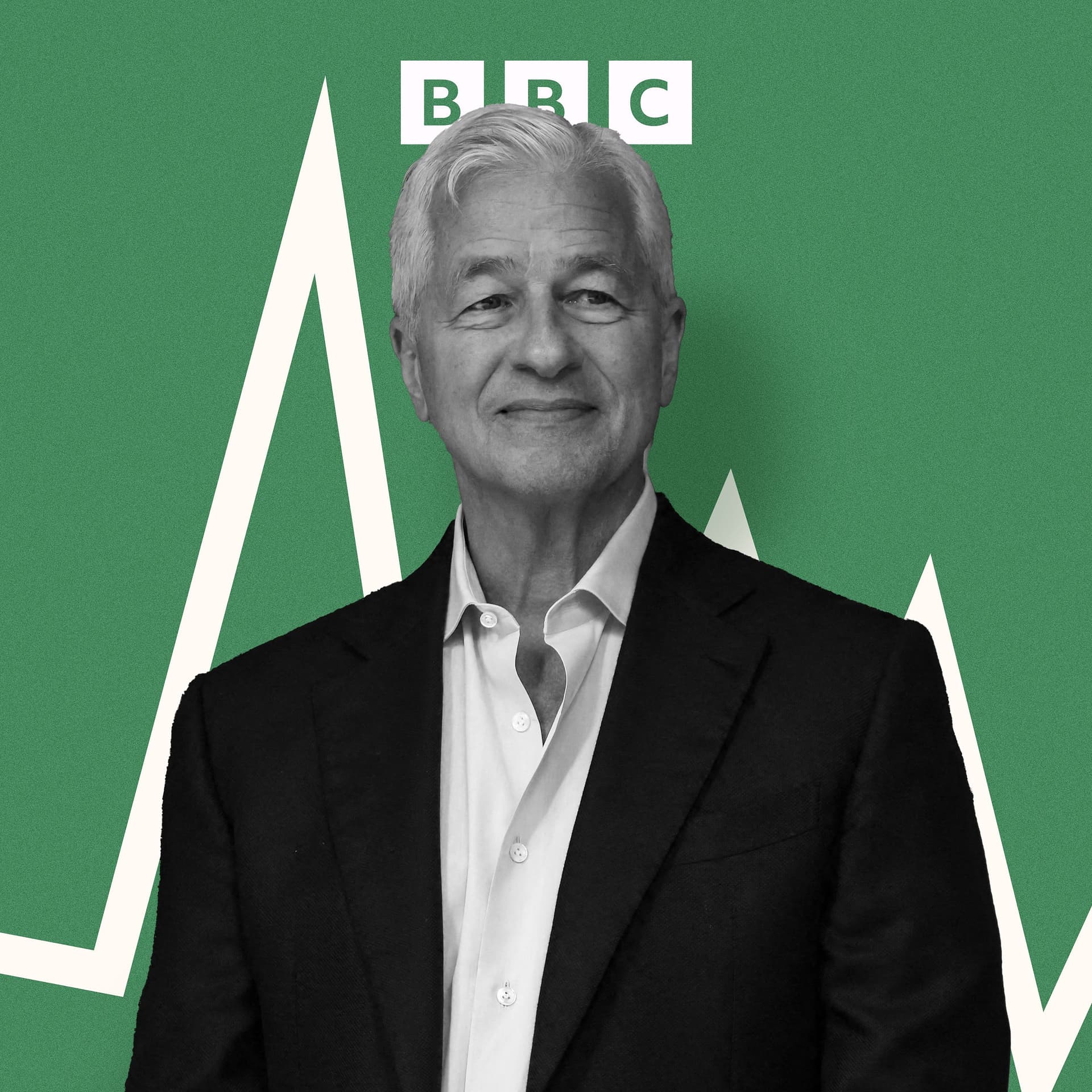
Big Boss Interview - Episode #3: JPMorgan CEO Jamie Dimon: The AI Bubble Will Burst
Podcast Overview Podcast Title: Big Boss Interview Hosts: Sean Farrington, Felicity Hannah, Will Bain Episode Focus: Insights from Jamie Dimon, CEO of JPMorgan Chase, discussing the implications of AI, the state of the US economy, and global financial trends.
---
Episode Summary In this episode, Jamie Dimon, the Chairman and CEO of JPMorgan Chase, shares his insights regarding the current state of the global economy, the AI hype, and geopolitical tensions affecting markets. Dimon expresses concerns about frothy market valuations, the impact of tariffs on inflation, and the shifts in US foreign partnerships due to recent political developments.
Key Themes Discussed:
- AI Hype and Market Valuations: Dimon warns that the current enthusiasm surrounding AI may lead to a market correction as valuations appear stretched, drawing parallels to the dot-com bubble.
- Economic Reliability of the US: He remarks that the US has become a "less reliable partner" on the world stage, attributing this to recent political actions and trade policies.
- Geopolitical Concerns: The war in Ukraine has fundamentally altered global dynamics, prompting a reassessment of alliances and military readiness.
- Investment in the UK: Despite his concerns, Dimon acknowledges the potential for growth in the UK, citing opportunities in sectors like life sciences and technology.
- Future of Financial Listings: Addressing why companies are moving to list in the US, Dimon cites liquidity and market size as significant factors, while calling for the UK to enhance its investment environment.
---
Detailed Discussion Points
- Investment in the UK
- Current Investments: Dimon discusses JPMorgan's £350 million investment in Bournemouth, aimed at expanding their technology and operations workforce.
- Perception of the UK: Although Brexit was seen as a setback, he believes the UK can leverage its strengths, including life sciences and a strong education system, to attract investments.
- Frothy Markets and AI
- Market Valuations: Dimon notes that current valuations in equity and debt markets are high, fueled by significant liquidity from government spending and low-interest rates.
- Concerns about AI: He expresses skepticism about the sustainability of current AI valuations, suggesting that while AI will have lasting benefits, many investments may ultimately fail.
- US as a Global Partner
- Reliability Issues: Dimon suggests the US is perceived as a less dependable ally, primarily due to the previous administration's tariff policies and overall foreign relations strategy.
- NATO and Global Relations: He emphasizes the need for stronger military alliances and cooperation among Western nations to counterbalance rising global threats.
- Global Economic Dynamics
- War in Ukraine: The conflict has redefined global alliances, and Dimon warns that failure to support Ukraine could lead to further instability and a shift in global power.
- Inflation Concerns: He discusses the potential inflationary effects of tariffs and fiscal spending, indicating a complicated economic landscape ahead.
- Future Outlook
- Market Correction Predictions: Dimon predicts a 30% likelihood of a market correction in the coming years, raising concerns about economic stability due to geopolitical uncertainties.
- Skepticism of AI and Other Markets: While acknowledging the hype surrounding AI, he cautions against overinvestment without sustainable business models.
---
Key Takeaways
- Cautious Optimism: Dimon sees potential in the UK and other markets but emphasizes the need for sound economic policies and innovative thinking.
- Risk Awareness: Acknowledging the high probability of a market correction, he urges investors to maintain awareness of geopolitical risks.
- Call for Leadership: Dimon stresses the importance of strong, reliable leadership to navigate the complexities of the modern geopolitical landscape.
---
Conclusion Jamie Dimon’s insights in this episode provide a multifaceted view of current economic trends and geopolitical dynamics. His candid assessment serves as a critical reminder of the intricate balance between innovation, investment, and the broader implications of global issues on economic health.
Written by AI. May contain mistakes. Listen to the episode to check what was said.
Transcript
Automatic transcript. May contain errors.0:00BBC Sounds. Music, radio, podcasts.
0:18Hello, welcome to Big Boss Interview. I'm Sean Farrington, business presenter on the Today programme and Wake Up To Money. The team here is, of course, bringing you interviews with some of our most important business leaders. And today's episode brings one of the biggest names in the world of banking. Jamie Dimon, chief executive of JPMorgan Chase, the biggest bank in America, and our very own business editor, Simon Jack, has been speaking with him. Simon, hello. Hello, Sean. Tell us a bit more about him, his bank, the world of banking. Well, as you say, he's chairman and chief executive of JPMorgan Chase, the biggest bank in America with four trillion in assets.
0:55In fact, the biggest bank in the world, if you exclude China's state-owned banks. And he really is a rock star of the financial world. He's one of the last Wall Street survivors of the financial crisis of 2008. But he's got this kind of folksy, straight-talking but steely charm about him. And more than a Wall Street rock star, he's almost like a world statesman, to be honest. He's been floated as Treasury Secretary in the USAC a couple of times, once by Trump and before that by the Democrats. And in his own shareholder letter, he talks sometimes about honouring responsibility as one of the guardians of the world's financial system.
1:29So quite grand responsibilities taking on there. And he at the moment is very cautious. He thinks things like, you know, recent tariffs might cause inflation, increase the probability of recession in the US. But most of all, I think he's worried about the strength of America's military and economic alliances with some of its closest allies. And he also thinks that Europe is in economic decline. So, I mean, if you look, he's the kind of person who, if he tried to get through to the White House, they put him straight through or get back to him within a few minutes. And he can do that in most countries of the world.
2:01So his view on how the world is doing, what his concerns are, whether it be crypto or gold or interest rates or recession or whatever, are closely watched. And it's a great opportunity to catch up with him. And so no surprise then of the huge influence he has when you roll out the long list of things that he's responsible for and the people he can contact. But it's interesting, a lot of households might sort of think, how can a banker be a rock star? You know, the financial crisis didn't do much good for my mortgage at the time or the way that people's relationship might be with their bank right now might not be quite rock star mood to them.
2:42And he but he takes that on, you know, full front. I mean, he talks about the fact that the middle class in America, where they use that term slightly differently in the US, hasn't really had a pay rise in 40 years. He says we could be doing more on education. so he's got one eye on you know if you like main street as well as wall street but he is project america and he he is very keen that you know it is america first but he says it america not alone so america won't be first if it's alone i think that's a big difference to the slightly you know dividing line you would see between some of the trumpian rhetoric and where he's coming from so that's all you know big simon main street wall street we're talking about world's biggest banks here.
3:23Why is he in Bournemouth? Well, interesting facts, quite apart from being the world's biggest private sector bank, JP Morgan is in fact, good pub quiz question this, the biggest private sector employer in Dorset. They've got 4000 people in their Bournemouth office. Later this week, they're going to be announcing hundreds of millions of pounds worth of investment in their offices there. So that's where I went to catch up with him for a pretty rare broadcast interview. Let's have a listen then. Jamie Dimon, Chief Executive Chairman of JP Morgan Chase on Big boss interview. Jamie,£350 million in Bournemouth.
3:57It's a big investment in this regional area. What are you investing and why? I've been coming here, as you know, for a long time. We have 4 ,000 people here. We're going to go to 5 ,000. We're building a whole new building. But it's a centre of top excellence for us. Technology, operations, marketing. You know, the people here service 100 countries. They move money here. They have control centres here. I mean, you have this kind of talent. It's great. Also, Bournemouth, you know, I just spent time with a bunch of MPs here and stuff. Bournemouth is a great town. The football team is winning or a number two.
4:32It's got, you know, several great universities. They want to come together and, you know, improve it and make it a place, a destination, both for, you know, retirees, but for young people, for SMEs. So it's actually a very good place to invest. And what are you going to invest in? What kind of technology? Is it AI? Is it, you know, what's happening? What's happening to these kind of facilities? I think there's a tremendous amount of programming. So we've won like 6 ,000 applications. We run applications around moving money around the world, back office trade applications. There is AI, there's cyber, there's data center management.
5:08There's an awful lot of that. And there's ops. Bournemouth moves a trillion dollars a day. And I think I'd rather they have 350 ,000 tickets a day. So there's a lot of operational stuff, which is high tech, but it's operations. It's a pretty impressive place. You should come spend a little time here. Take us, help us look through the eye of a foreign investor at the UK generally. What do you see? Look, the UK, you know, as you know, I thought Brexit was a setback and it was a setback for Britain. Put that aside. But Britain has a chance and there are legitimate complaints about state remain, about why they should leave the EU.
5:47but what do they have? So forget the negatives. What are the positives? Life sciences, universities, English language. They can go their own way and build their own culture, build their own stuff. They're not shackled anymore by some of the stuff that comes out of Europe. It's a huge opportunity. And so that's what I see. And we have 23 ,000 people in the UK, and that includes Glasgow, Edinburgh, Bournemouth, and London. London, I think, is 16 ,000 of those people. So you go to these places, the town is extraordinary. They're as good as any talent we see anywhere in the world. And that's why, you know, Britain can do well.
6:22If it's so great, and why is it that so many companies are leaving to list in the US? Do you understand why the likes of Y as a fintech company, why Arm Holdings a few years ago beat a path to New York? Why do you think they do that? And do you understand? Yeah, I would separate financial listings, being a path to New York from the basic economy here. You know, we have a lot of people working. I mean, you actually have Centers of Excellence in Glasgow, and not just us, other people. I remember the last time I was there, you have Amazon and Google. And so there's a lot of things coming here, a lot of things that are successful.
6:58It's a slightly different matter, the financial services, to make sure you remain here. I think the government, I think Rachel Reed has been doing a terrific job, by the way. And I think the government should want to keep companies here. And that's about regulation, disclosures, taxation, the investment environment. So, you know, obviously New York's very attractive, but it doesn't mean they can't compete. And I just spent yesterday with like 800 tech companies. A lot of them are going to list here for a whole bunch of different reasons. But most of them will list there. Do you understand why companies want to list in the US?
7:28It's not because of the cost. I think it's more costly over there. It's huge liquidity. The market's worth$60 trillion. I think the FTSE's worth$400. Both have been losing companies, by the way. There's a bigger problem here about why we're losing companies. And I think it's really a strike. Look at Sweden. They're gaining companies. They have more innovation, more of an equity investing character. So part of it is our liquidity. Part of it is a lot of those companies do more than half their business in the United States. And so that is always a little bit of a tug and a pull. But part of it is here.
8:00They need to make it more flexible. And I think they're doing the right thing to try to consolidate a lot of these money managers, public money managers or not, and have more of an equity investing culture. And they're doing that, I think they're called ISAs. You know, Sweden has a thing called ISKs, which are absolutely brilliant because of that. And they have research around it. I think they've listed 500 or 600 companies in the last 10 years. So if you get these things done, this will remain a financial center. I should point out to your population, a healthy economy and healthy financial center is good for all the citizens of Europe, I mean of the UK.
8:35It's not just good for the banks. And, you know, we have to remind ourselves, investment, growth, matter. Technology matters, and it should benefit everybody. We've seen stock markets at record highs in the UK and the US. A lot of people saying that this is beginning to look a little frothy. You, for example, just at the Bank of England just this morning said it looks like it was stretched valuations, started to remind them of the dot-com, the peak of the dot-com era. What do you make of it? Well, I don't necessarily pay that much attention to what central banks say. But look, they are, if you, any way you measure equity valuations and even debt valuations by credit spreads being very low, it's high.
9:15It's in the 85 % or 90 % of any way you measure it. But of course, bull markets can go on a lot longer than you think when people talk about it. So I don't know if it can go up in the 10 % or 20%, but it is in the high category. That creates another element of risk. And I personally think a lot of that's driven by the money that's been thrown into the system over the last 10 years. Not 10 years, since COVID. I'm going to give you United States numbers,$10 trillion of additional federal debt. And remember, federal debt means that they're selling bonds, but they're giving it to both through individuals and corporations who spend it.
9:51That drives corporate profits. It drives markets. And then QE. These are global phenomena, by the way. We had$4 trillion of QE after COVID. Well, again, capital and money is like liquid. It fills every crevice in the floor. Or that crevice could be venture capital, stock prices. But now you have it in mem stocks and some of the crypto world. And gold is hitting all-time highs. So yeah, I put it in the high category. But that does not mean you don't have a healthy environment that justifies it. You don't see a crash coming? You don't see a correction coming? I am far more worried about that than others.
10:26So if you said, now I'm talking about probabilities, I would give it a higher probability than I think is probably priced in the market and by others. So if the market's pricing in 10%, I would say it's more like 30%. So one third chance of a correction. Yeah, and I'm not saying next year. Because the timing of these things is almost impossible. So it could be what, six months? Could be a year? Could be six months, could be two years. Okay, so sometime in the next six months or two years, you see a high probability of a correction. Yeah, you see a lot of things out there that the amount of uncertainty, and I put geopolitics in that category, fiscal spend in that category, politics in that category, the remilitarization, the world in that category, all these things cause a lot of issues that we don't know how to sort out.
11:08So I say the level of uncertainty should be higher in most people's minds than what I call normal. Normal always has quite a bit of uncertainty, by the way. If you look at some of the things that are going on in the AI, in the tech space, you've got, you know, NVIDIA taking stakes in OpenAI, Microsoft taking stakes in OpenAI, the federal government taking stakes in Intel. There's all these cross-holdings. It looks a bit weird, doesn't it? A little bit, yeah. How would you describe it? Well, AI is a little bit different, you know, and there are some justification for vendor finance and things like that.
11:41So you literally have to go through each one. Regarding America's investments, I think, you know, when people talk about stockpiling, you know, things like crypto, I say we should be stockpiling bullets, guns, and bombs. I mean, the world's a much more dangerous place, and I'd rather have safety than not. But you've got to look at, there is unfair trade. that should be countered by methods, something I call industrial policy. And I'm talking about important unfair trade. It's not terrible, but there is some, and that's why you need some of these things. And then there's also national security related.
12:12And in some of those, the only way to fix it might be industrial policy. I think the government did a great job in MP Materials, which we help bank, but they have a contract for magnets with the government. The government bought some of the stocks, so they've already benefited enormously. Mostly it gives this company a chance to survive and build a great magnet company in the United States, giving us something we need for our military supplies, etc. So you're in favor of an interventionist government in private markets? Very carefully. I'm not going to comment each one, but I have a comment each one.
12:46I wouldn't do all of them, but it is what it is. There's nothing I can do about it. Some of my opinions are kept private on that. Okay. But is it possible to tell whether you're in a bubble before it bursts? It feels like, in terms of AI valuation, some of these companies like NVIDIA and, you know. It's only possible to tell what I said in terms of very high valuations. It's really impossible to tell the burst. And I've looked at, you look at history, the 74 crash, the 82 crash, the 87 market, the 90, the internet one that you mentioned. and no one's really forecasting that. And there's all that hype out there.
13:22And then you also take AI. There's a lot of money going into it. But the better way I look at it, the better way AI is real, AI in total pay off, just like cars in total pay off, TV in total pay off, but most people involved in it didn't do well. So some of this money will be wasted. So think of the internet bubble you mentioned, where I think a trillion dollars was lost at one point. You do have Google, Facebook, YouTube, Microsoft. So you have huge things that came out of it that are hugely beneficial. But does that mean some of the money being spent right now will inevitably be wasted money in the final analysis?
13:56Probably, yeah. Okay. That's why, you know, when you're in the art business, I'm very careful of what we finance. Okay. If you look at the stock market, I mean, when I look at things like crypto, Bitcoin price, you look at gold, some will say that is a symptom of a world that has lost faith in the US dollar, lost faith in US economic leadership. What do you say to that? I don't think they've lost face. I think they're questioning a little bit more. And then you have about the dollar. The dollar is still the best currency in the world. And people forget the dollar is not a fiat currency per se.
14:31For every dollar out there, the Federal Reserve owns the U.S. Treasury. The U.S. Treasury is a full taxing authority of the federal government on the most prosperous nation the world has ever seen, defended by courts, the rule of law, the United States military. That is not replaceable. And if I give you a dollar, you can do whatever you want with it. I do think that people should think about, well, you know, a big portion of our investments are in dollar. Maybe we should reduce that a little bit. That's fine. You know, that is normal, why you see some of the dollar weakness. And so I don't think it's going to go away as a reserve currency.
15:02There's a little less comfort in America today because, you know, all the actions were taken. And, you know, we'll have to deal with that. Let's talk about that because you talk in your shareholder letter saying that you're very cautious. who say recent tariffs you think might cause inflation, increase the probability of recession. And what you seem to be really worried about is the nature of the US's economic and military alliances. Are you an unreliable partner in the US? No, this is very... Less reliable? Yes, a little less reliable. And so I'm always, when I go to the United States, NATO needed to do more.
15:38That was a good point. In fact, I've spoken to a lot of leaders here who say, you know what, that was a wake-up call and we needed it. OK, you might have been delivered differently, but that was a wake up call. And also, if you look at the things about European competitiveness, that is also a wake up call and you need it. Think of the Draghi report. On the other hand, the goal should be, in my opinion, that to make the Western world stronger militarily, more together, not question it. So, you know, we're trying to make NATO stronger and we're part of it. And all these foreign economic things, which are actually more complex, you look at trade and investment and development investments like the Belt and Road thing that China is doing, is to make the Western world stronger and better.
16:20Not to hurt it, not to fragment it, to pull it together. Maybe there's some harsh medicine in that, but that would be my goal. I know exactly what I believe. And I'm much more worried about that. And I wrote in there that I don't want to see the book written, How the West Was Lost. I want to make sure our policies don't fragment what is the wonderful part of the Western world, the democratic world, the free world. And that includes Japan and Korea and Australia and Europe and the Philippines and America and Canada and Mexico. And I believe that is a beautiful thing worth keeping, whatever the flaws are.
16:54But you say in your report, you say you've warned before about those who would dismantle the rules-based system that we've developed. and that includes institutions like NATO, the UN, the IMF. President Trump has attacked all of those. Is he helping? I wouldn't put them all in the same boat. Okay, he's attacked some of those. Yeah, no, but I say, I think the military alliances are critical. That military umbrella has kept the world safe and free. The UN has a lot of flaws, you know, and I listen to some of that stuff. NATO, a lot of flaws? No, no, no, NATO is the one that we should keep together and strengthen.
17:28The flaw was that European countries didn't do enough. And now they want to, which I think is great that they're getting organized and coming together and making sure they do more. But some of those institutions need more than a little reform. They need a real kick. OK, but you watch, if you look at presidents Putin, Xi, Modi, Kim Jong-un, hanging out in China together, high-fiving each other. And, you know, some would say that actually President Trump has played a part in pushing those people into each other's arms. And how did you feel when you saw those guys hanging out? completely separate.
18:02I ran in Russia and North Korea from China and India. You know, we're friends with India. They want to be friends with us. I was just over there. You know, Modi, they're his neighbors. You know, I mean, it's very hard if you're a political leader to act like you're not going to go visit your neighbors with whom you have trading relationships and economic relationships, whether you agree with everything you're doing. So I don't look at that as that bad. I would like to bring India closer. In fact, I've spoken to several of the Trump officials who they want to do that. And I've been told that they are going to do that.
18:36And I hope that's true. You're not going to get them to be non-aligned. On the other hand, as long as Ukraine is a real problem, I think we should be doing as much as we can to help Ukraine. You know, some of these quote non-aligned may find themselves in a very difficult position. You talk about moral power as well. Do you accept that some people think that's been weakened? And you warn failure on that score could be catastrophic. What happens if we don't get this stuff right? You have a fragmented world. It looks a lot like it did before World War II and World War I, and nations will be looking for economic, military, security relationships that may not be what we would like.
19:15And it may not be what the Western world would like. And it could even, if you look at Europe, I think the European Union is one of the great accomplishments of all time, that you all after, not World War I, World War II, but thousands of years, you know, the Hundred Years War, the Napoleonic War, the Franco-Prussian War, the Spanish War, the War of the Rhodes, got together in a room to say, let's resolve our differences by peaceful political means. And it kind of got bogged down. I think most people know it. You know, Brussels takes too long. People don't feel, you know, the reason you had Brexit is people felt they were being, you know, having forces on the UK that they didn't want, whether it was the Polish plumber people spoke about, which wasn't really true.
19:52And I understand that. But I think they're better off finishing it. As all the Draghi report, they have 450 million people, have a common market. Here's one. I think banks should be allowed to consolidate across that. Now, that would be tougher for us, but better for Europe. Well, JP Morgan would buy what? No, I wouldn't buy anything. But that's the only point, that they would be allowed to merge stronger economies to scale, more diversification. But to do that, you need a consolidated regulatory mechanism. so well they don't have the European Central Bank well no you need a consolidated deposit insurance scheme you need you need bankruptcy laws to be the same across countries and to do that you're kind of giving up some sovereign rights but proper capital union in this case proper capital union markets union etc in this case you have a much stronger Europe the people of Europe would benefit enormously from a big common market but not every nation can have its own champion in every business and so So these are hard political things, but I hope, and I think you have some quite strong leadership in the EU now, and I hope that they, and they know this.
20:56I mean, you speak to them publicly and privately, they know that they've got tough work to do to finish the EU. You said that you would stockpile missiles. Why would you do that? I think the world changed after the invasion of Ukraine. I mean, we haven't had a major war in Europe like that. I knew that the day after, you know, we were all lulled into false sense of security. You know, and now other flaws have turned out that we didn't have quite the resilience that we thought we had. COVID showed that, but so did the invasion. I think that if Ukraine does not end up being a sovereign and free nation, then Russia may very well be testing a lot of other things, which they've done recently, with the drones and planes into the airspace of Estonia.
21:36And then it also will cause our allies, American allies, to say, can I rely on you? And I'm talking about Japan and Korea. I was just there. And if they can't, they have to do other things. And to me, the worst part of that is the nuclear proliferation may lead to. Is that all of a sudden, you know, nations may say, you know, the only thing that can really protect me is having nuclear weapons so no one touches me. And, you know, you've seen a little bit of that in North Korea and why people don't want Iran, which I think to let Iran have a nuclear weapon would be a huge mistake of mankind. Let me bring it back to the financial world.
22:15Do you think central bank independence is important? Yes. Do you think it's under attack? Well, it clearly is, isn't it? President Trump has called Jay Powell a moron, a numpskull. He's tried to fire one of the governors. He's sacked one of the people who provide the statistics on the labor market, attacking your own institutions. Is that a smart idea? Let me put this in a different context. I have never met a president or prime minister who wanted higher rates. He obviously voices his opinion. He is going to voice his opinion. I don't necessarily agree with the words or stuff like that. I do not believe it's going to violate the independence of the Fed.
22:53Okay. And in fact, I saw him say it like soon after it was somewhere. And he was on, you know, walking out of the helicopter and said, the Fed should be independent. But I have my strong opinions. So look, okay. Other presidents have strong opinions. They said it privately. And I believe him. Take him out of his word. His Secretary of Treasury has said it. I do think it is important. The other thing about the Fed. Does anything make you wince when you hear some of this stuff? Well, I don't always like the way other people say things. You don't see me calling people names or that. But the other thing that central banks should understand, the Fed is independent on monetary policy.
23:28They started playing a complete outsized role in regulatory, supervisory, some of the stuff around that. That's not independent. And I think that is part of what called into question, like, who controls that? The political leaders or independent banks? And so if I were the Fed, I would remove myself from some of that, be the adult player in the town, independent monetary policy and the oversight of the complexity of the financial system in total, which is very complex. And as you know, there are a lot of things taking place there that if I were them, I'd have my eye on. A lot of people have tipped Kevin Hassett for that job.
Read the full transcript
24:04He obviously is a big cheerleader for the administration. Would you back Kevin Hassett for the Fed governor? Yeah, I know Kevin. I think he's an adult and a smart guy. And, you know, all of us would say the same thing. No, whoever gets that job, the day after they get the job, they're independent. He's in the administration today. You know, and that's a mind thing. You have to ask him, like, are you able to be fully independent if you get that job? If I thought he wasn't able to be fully independent, I would not be in favor of it. But I think he is, and we'll see. But the other thing, very important, too, for the public to know, the Fed doesn't control the thing.
24:39So I've always said the Fed controls short rates. But look what, and they did. And they told you it existed. They had 0 % or 2%. They were dead wrong. Short-term interest rates, basically. I was prepared to go up to short-term interest rates. But they don't control long-term interest rates. But what happened the second inflation went up? The Fed raised rates to 1%, 2%, 3%, 4%, 5%. So did they actually control it? Were they following? And they're following. So if inflation goes up, and I'm a little worried about inflation still. and not just the tariffs we have the full effects and there's probably a one time effect of that but the fiscal spending the remilitarization of the world the infrastructure needs of the world are extraordinary and so I'm not clear so if inflation doesn't go down they may not be able to do the 100 rates of cuts that are priced in the yield curve today So it's interesting you think inflation is not yet dead and we need to stamp on it and actually what we're seeing is I don't even need to stamp on it I just think before we go down 100 basis points, inflation should come down.
25:42And obviously the Fed's going to have a tug. If unemployment goes up, my view is that will trump inflation going up. So because that's people's jobs and livelihood. And they have that as part of their job to try and assure employment. It's a tough job, but that's the job. And just on the tariffs and inflation, what evidence have you seen? You mentioned in your letter that you worried that there might be a bit of inflation caused by tariffs, increased probability of recession. What do you make of it so far? What are you seeing? Yeah, so it's really hard to tell because even when you negotiate 15 % tariffs, it applies to half of the imports in the country.
26:18And some aren't even in yet. Remember, they backed way off the very high liberation day, which I thought was the right thing for them to do. So my view is it's going to add a little bit to inflation in a couple of little waves. Probably true that it's one time. But that does not mean you won't have inflation driven by fiscal spending. Other nations, activities, these geopolitics, things around the world. So wages are going up. Our medical costs are going up 10 % next year. And we think it's going up 10 % in 2027. It's$30 ,000 a family now. So I think there are other forces that are going to drive inflation.
26:54Tariffs is one straw in the camel's back. Good thing or bad thing, tariffs generally? Look, I'm not a tariff guy, but I try to separate when I hear people talk about it. If you are fairly combating unfair trade, and think of China for the most part, we think it's unfair. They're subsidizing in a million different ways, cars, batteries. Yeah, you can use tools, tariff being one tool. If it's national security and you have to resource, insource, or friend source something, I think it's a fair tool. I wouldn't agree with the ones on furniture. I don't think it matters where furniture is made. I don't think it's national security.
27:32And if we all can't buy new furniture for a couple of years, we'd be fine. OK. What are the things that keep you awake at night? What are the risks out there? I think you talked a little bit about, you know, cracks appearing in the bond market. Where are the big risks? Well, economically, I always say, I try to think what might be the surprise. The surprise would be bond rates going up because you have, and worse than economic kind of a stagflation, rates going up and you're actually going into recession. And we've had that. I've experienced that before. I hope it doesn't happen. I just think the odds are a little bit higher than the people.
28:06And then geopolitics. That to me is the one thing. Like I said, I don't want to see the book written, How the West Was Lost. And we, America, and other nations started taking actions that fragmented what happened after World War II. All the Bretton Woods organizations, some of which are quite good, some of which need reform, but I'd rather reform them than break them. But it feels like a kind of dark moment at the moment, doesn't it? I mean, you know, where do you see us? What does right now remind you of risk-wise? So I'm going to answer two ways. If you open a newspaper, and anyone can do this of any week, of any month, of any year, it's pretty dark stuff out there.
28:44So it's always a high level of dark stuff. And sometimes in the current time, you overreact to that. I think it's a little worse than that because of this war in Ukraine, because of Iran and North Korea and nuclear proliferation. And so I think it's a little bit worse than that, and that's what we're about. And we need, really, we need good American leadership. Do you have that, though? A lot of people would say that America is now not the same kind of reliable ally, economically, trade-wise, militarily, that it has been in the past. That's hard to argue with, isn't it? Yeah, but I would argue less reliable is not the same thing as unreliable.
29:20We were so reliable. But you would accept that less reliable. You'd accept the U.S. is less reliable. Yes. Yeah. And at a crucial time. Except, you know, what I also see, you know, President Trump and his folks have gone, this 20-point plan. I've spoken to a lot of people about it. This is good. This would be great for the world. Saudi Arabia, UAE would help peace in Palestine and Gaza, recognize Israel, have long-term... That would be unbelievable. So the president does things differently. I don't comment on everything that Biden did. I'm not going to comment on everything that President Trump does.
29:55But it's not quite what people are saying. They look at what's taken. He's in Ukraine. I would give more support to Ukraine. I would give more weapons, more equipment. I'd free them to do more things with the equipment. I would do something. I don't let the military experts decide. That makes a very strong point about these drones and the sabotage you've had in your own country. And in the Baltic Sea. And do you think this sense of uncertainty globally, is that contributing to things like the price of gold? Do you think gold's at$4 ,000 an ounce? And people look at that. What does it tell you?
30:27You know, I'm not a gold bug. Maybe someone who always thinks that the gold is going higher. But what do you see? It's telling us something about the world. What's it telling us? Well, the world's less certain. You know, you're worried about the dollar. You want something that holds real currency, real value. I'm not a gold bug. Remember, to hold the gold, it costs you 4 % or 5 % a year. So you have to have a lot of confidence that's going to go up. But that's what it's telling me. The other thing which you see, I don't know if you've seen this, central banks are buying a lot more gold. Why are they doing that?
30:59I don't know. You don't know? Like I said, I'm not able to go. But that's their normal job, by the way. America's got like a trillion dollars of gold. Well, I mean, I'll put it to you again. The people are buying gold and crypto because they think that the banking system is antiquated and it's on its last legs. They've lost faith in US dollar leadership and they're looking for something else. And it's actually quite a dismal judgment on the economic system. Maybe, and I wouldn't put gold and crypto in the same category, but I do think they're both being bought and stuff like that. And there are a lot of new buyers out there.
31:39The thing about markets is that whoever's buying it, someone's selling it. You always keep that in mind. I'm not worried about the gold, the banking system, the dollar. I am worried about the global economy for all these various reasons. That is a reason that someone would say, I'll put a little bit of gold in my portfolio. I'm not going to do it, but I completely understand why some people are advising to buy some gold. I'm very comfortable in J.P. Morgan. I'm very comfortable in the dollar. If most people had won all their money and they could only put it in one country, what country would that be?
32:11I'm guessing you're going to say the United States. Well, it's pretty obvious. Still? Yeah. It's the best economy in the world. You can do whatever you want with the dollar. You can buy a house. You can build a company. You're protected by the Atlantic of the Pacific, the United States military. I want to ask you about Europe. You said that there's a danger that it's in structural decline in terms of living standards and relevance. What is Europe getting wrong? What's the warning to Europe? I think it has. One of the numbers I look at, which is tough, is it's gone from like 90 % of the GDP per person of America to like 65 or 70.
32:41And that didn't have to be. and, you know, it's putting strain. Their debt to deficit, they have 100, the average country, 100 % debt to deficit, 3.5 % deficits, debt to GDP, I meant, 3.5 % deficits, very high social costs. I'm not against social costs. That's not the point. It's not that sustainable. You need, and what they're talking about here, which they all talk about, we need growth and investment, and for that we need innovation. We've got to change our mindset. What's holding them back? What's holding Europe back? It's all in the Draghi Report. Capital markets, unions, changing some work rules, having an investment philosophy.
33:19But good news, the innovation here is unbelievable. So if I went 15 years ago to Paris, London, and Berlin, you would not have had as much innovation as you have today. We had 800 people at this tech conference. Now I go to Berlin, I go to Paris, we've got big conferences. It's big. It's coming. It will change the world. you still have to deal with those other issues. And growth is the best way to deal with that. Helping investment is the best way to deal with that. And very often governments do things in the wrong name. Businesses do too, which is, I don't want you to do things in the UK to benefit JP Morgan, even though I don't like the unfair taxes.
33:59I want you to do it because it's good for the UK and it should be good for all of your citizens. I do not. Give us some ideas. Lower taxes, less regulation. I'm just trying to, what's the magic sauce here? It's a little ball of that. Deregulation is this free one. And your government, Rachel, every time I talk to her, and I also think it's great, she sees a lot of people, deregulation is like a gift. Anyone, any one of you looking at this, almost no one who's had to deal with buying a home, doing construction at home, starting a small business, running a small business, dealing with, anyone will tell you how much it is, how crippling it is, and how it's going to change.
34:35And then here, they've got great universities, but you need to also turn out people who've got skills. It's the skills that matter, not the degree that can do a job. And so we know what to do, education, taxes, growth, innovation, and hopefully the growth will pay for itself. And then when I talk about government expenditures of any type, every government should be saying, do I spend that money wisely? So when I get involved in the United States government, I can go one after another. Just programs that are virtually corrupt, that money's misused, it's handed to the wrong people, it shouldn't have happened that way.
35:11And even when it should happen that way, they can't acknowledge that they should fix something that didn't work in it. And I don't want to go through all the various things, but I wrote about that in my chairman's letter, the compendium of public policy issues. Governments also have to earn their stripes by saying, I took your money, and here's what I did with it. I totally was going to educate kids. For example, I would ask high schools, community colleges, colleges to judge themselves on what are the income levels of the kids who leave your school. And therefore put a huge onus to them to say, okay, I better start to teach coding.
35:47And you get 12 weeks of coding and make$75 ,000 a year at 17. And we're just not getting it right. And, of course, all the bad policy hurts the lower paid people the most. Almost all of them. What next for you? You've been suggested as Treasury Secretary twice, at least twice, to my knowledge. Bill Ackman, the hedge fund billionaire, begged you to run for president. What are you going to do now? What's next for Jamie Dimon? I don't think either of those things are in the cards. I love what I do. I think, you know, I'm proud of J.P. Morgan. We just don't finance middle market and consumers. We finance states, schools, cities, hospitals, charities, governments, military.
36:30We've hired 15 ,000 vets in the United States and quite a few vets here. I'm just part of the company, and this is the perch by which I can do the most to help the world. That's what I do. Obviously, I have to keep Jay Moore and Chase, a healthy, vibrant company. I don't think I can... If you gave me the presidency, I'd take it. Would you? I think I'd do a good job. But I don't think there's any chance I'd get elected either through the Democratic primaries or the Republican primaries. Would you abolish tariffs on day one of your presidency? No, I'd look at each one separately, what was fair, what was unfair.
36:58and I always listen to the other side too, if you come here. But I think I want them to resolve all those issues. And when I speak to certainly administrative officials, they're halfway there. What do you mean halfway to where? Finishing India. I saw a quote today that they want to improve the tariffs for the UK, that the wind would be making it a little bit better for the UK. So the administration is telling you they want to improve the tariff situation for the UK? I read that this morning. But they did tell me, and I want to tell you who, that they're close to fixing the India one, which is all about the 25 % extra for Russian oil.
37:38Okay. Well, we should look for that in the coming days. Jeremy Diamond, Chairman and Chief Executive, JP Morgan Chase. Thank you. Thank you. Always a pleasure.
From the publisher
Jamie Dimon, Chairman and CEO of JPMorgan, is the biggest name in global banking. He has a hotline to world leaders, and what he says matters. In a wide-ranging Big Boss Interview with BBC Business Editor Simon Jack, he shares his concerns about a frothy market fuelled by money boarding the AI hype train. He also admits that the USA has become a less reliable partner due to President Trump’s use of tariffs, but says NATO is a stronger force thanks to the current administration. However, he warns that the war in Ukraine has changed the world.
Timecodes: 00:00 Simon Jack on Jamie Dimon 03:55 Interview starts 05:30 Why invest in the UK 08:45 Frothy markets and AI 15:00 USA less reliable partner 21:00 Ukraine war changed the world 25:58 Tariffs and inflation 30:00 President Dimon?