In short
Larry Fink, CEO of BlackRock, discusses how the Iran war could drive extreme oil-price outcomes ($40 vs $150+ per barrel), triggering either abundance or a “stark and steep” global recession. He argues the key issue is the eventual outcome, not how long the conflict lasts. He also covers energy “pragmatism” (use available oil/gas while expanding solar, nuclear, grid resilience), globalization being modified rather than dead, tariffs as a recalibration, and why he sees no similarity to 2007/2008 financial crisis. He addresses AI’s economic effects, inequality, job displacement, and the need for broader share ownership.
Guest
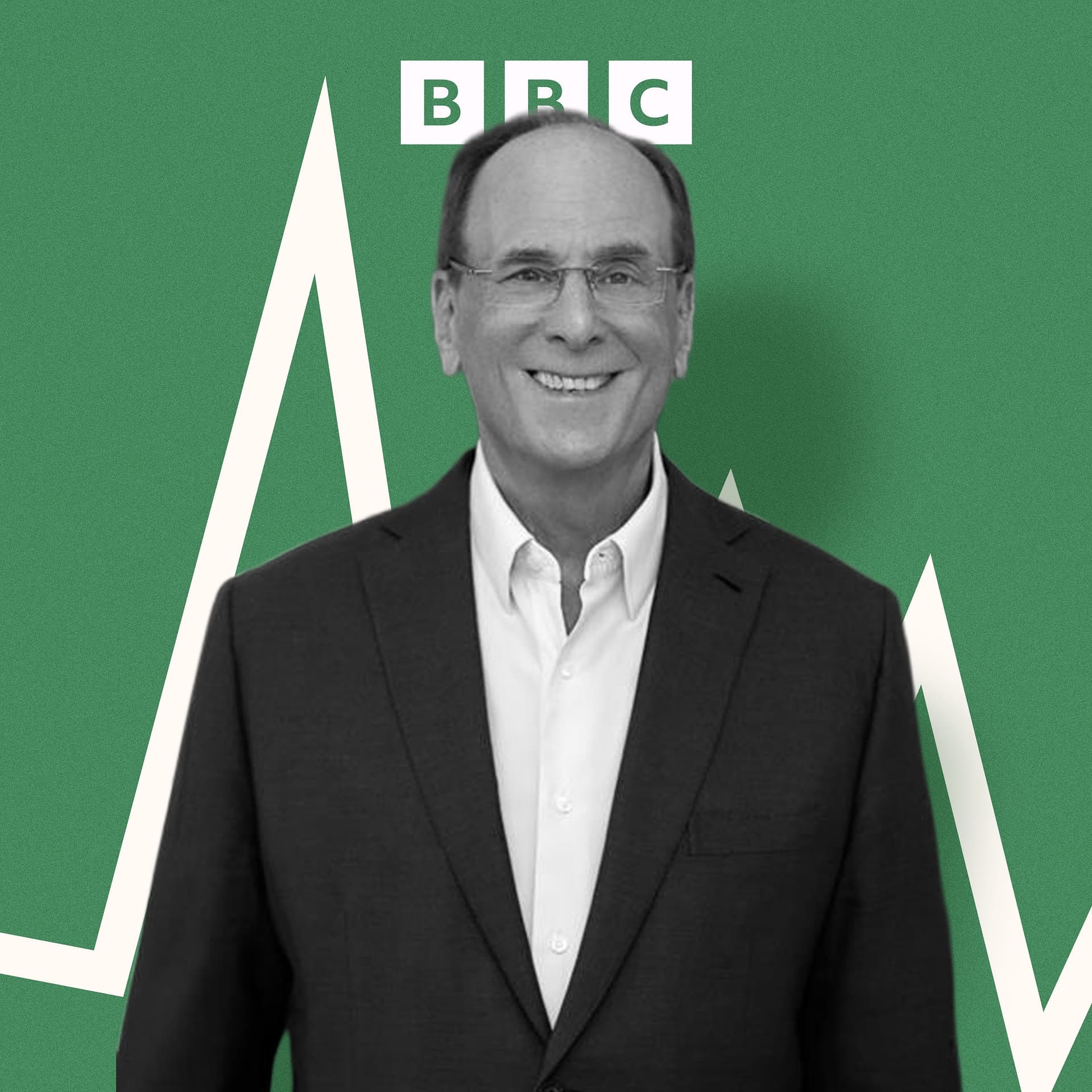
Larry Fink, CEO of BlackRock (world’s largest asset manager; about $14 trillion in assets; major shareholder in many public companies; writes annual letters to investee CEOs).
Key claims/examples
$150 oil would raise fertilizer prices (gas-derived ammonia/nitrogen), disrupt hydrocarbons-based supply chains (e.g., helium for chips), and cause recession. He cites private credit redemptions capped at 5%/quarter as transparent and not “hidden leverage.” He says AI isn’t a bubble; hyperscalers see demand outpacing supply; one data center can cost $50B; China is building large solar and nuclear capacity. Example: Walmart using AI to optimize inventory and sales; he contrasts AI-driven winners vs workers. He argues AI will increase demand for plumbers/electricians and that wages for these trades can rise (he cites ~50% higher wages in the US).
Written by AI. May contain mistakes. Listen to the episode to check what was said.
Chapters
Tap a time to open that second in VOLarry Fink's Insights on Global Finance
2:12 to 4:39
Larry Fink discusses the implications of the energy crisis on capitalism and investment.
“Now, you may not have heard of BlackRock, but it is the world's biggest asset manager.”
Iran's Role in Global Oil Prices
4:39 to 7:16
Fink examines the potential outcomes of the Iran situation on oil prices and the economy.
“Let's hear from Larry Fink, the chief executive of BlackRock.”
The Need for Energy Pragmatism
7:16 to 11:15
Fink advocates for using all available energy resources and the importance of cheap power.
“It's not it does not need to be a regime change if that regime stays, becomes more, I would say, a part of the world community of some sort.”
The Evolution of Globalization
11:15 to 17:41
Fink discusses how globalization is adapting to geopolitical changes and national security.
“In the UK, you have some solar, you have some wind, you do have hydrocarbons.”
Revisiting Economic Foundations
17:41 to 22:31
Discuss the historical context of trading treaties and their impact on modern economies.
“So tariffs are basically, at the end of an era, a reset, a recalibration.”
Current Financial Market Dynamics
22:31 to 24:41
Analyze the current state of financial markets and compare them to previous crises, debunking common misconceptions.
“And you think about even the dot-com era of 2000 when the markets fell 30%.”
The Future of AI and Capitalism
24:41 to 26:25
Examine the race for AI dominance and the capital investment challenges faced by the U.S. and its implications.
“I believe if we do not invest more, China wins.”
Addressing Inequality in AI Growth
26:25 to 28:00
Discuss the potential inequalities that AI could exacerbate and how to ensure economic benefits are widespread.
“But, yes, I think you framed the question about the amount of capital that's necessary to build these things out.”
The Impact of AI on Industries
28:00 to 29:59
Explore how AI technology is reshaping industries and investment strategies.
“And that's one of the fundamental problems.”
Shifting Job Paradigms
30:00 to 32:03
Understanding the changing landscape of job requirements due to AI advancements.
“And that's my fundamental view, that we're going to solve a lot of health issues over time.”
Show all 12 chapters
Reevaluating Career Aspirations
32:04 to 34:06
Discuss the need to reassess what careers are valued in society today.
“That's a big change in aspiration, isn't it?”
AI and Economic Productivity
34:07 to 35:17
Learn about how AI could influence economic productivity and job markets.
“And importantly now, these AI plumbers and electricians in the United States, their average wages is 50 % higher than the average wages in the United States.”
Transcript
Automatic transcript. May contain errors.0:00This BBC podcast is supported by ads outside the UK.
0:30the highest B2B return on ad spend of major ad networks. Spend$250 on your first campaign on LinkedIn ads and get$250 credit for the next one. Just go to linkedin.com slash broadcast. That's linkedin.com slash broadcast. Terms and conditions apply. Self-directed investing, trading, full-service wealth management, automated investing, financial planning, thematic investing, retirement planning. Phew. And to think, that's just a small taste of what Schwab offers. Because Schwab knows that when it comes to your finances, choice matters. No matter your goals, investing style, life stage or experience, Schwab has everything you need, all in one place, so you can invest your way.
1:13Visit schwab.com to learn more.
1:31Hello and welcome to the Big Boss podcast from the BBC. I'm Will Bain and if you've not been with us before, this is where we chat at length with some of the biggest names in business. From FTSE 100 chief executives to the founders of your favourite stores and brands. And often, as a result, we focus on those domestic companies, businesses you perhaps physically see every day. But today, well, we're going global and we're doing so in a big way because our business editor, Simon Jack, has been chatting with, arguably Simon, this isn't going too far to say, and it's not too hyperbolic to say, one of the most influential leaders, handful of the most influential leaders in global finance.
2:08For sure. Larry Fink is the chief executive of BlackRock. Now, you may not have heard of BlackRock, but it is the world's biggest asset manager. What does that mean? It means they have got, wait for it,$14 trillion, dollars,$14 trillion worth of investments on behalf of their customers in all sorts of things. So if you look at any Big FTSE 100 company and you look down the share list, who's the biggest shareholder? It's almost invariably BlackRock. And every year, Larry Fink writes to the chief executives of every company they have an investment in and says, here's the way I see the world. So I sat down with him because he wanted to give his views on, you know, it's a pretty parlous state we're looking at in the world at the moment.
2:53His overall message was basically keep calm and keep investing, which is kind of you might think of a self-serving mantra. But he had some really interesting things to say about what's going on with the energy crisis. He said it's not just about how long it lasts. It's about what the eventual outcome is going to be. If we head towards$150 a barrel, we're going to see a stark global recession. He says countries should need to use all the energy resources that they've got, including new oil and gas. That plays into the debate that we've got going on in the UK at the moment. But he said we're not back in 2007, 2008.
3:29He says he doesn't see any similarities between this and the foothills of the great financial crisis of nearly 20 years ago. And he seemed to be in kind of philosophical form about capitalism, full stop, right, reading the letter. Well, he was saying that for a lot of people, capitalism isn't working for them because the benefits of capital, which has created enormous value. We've seen these trillion dollar companies like NVIDIA and others. The benefits of that have gone to a pretty small number of people. And he wants people, more people to own shares in it. But he's also saying that AI will create an upheaval in the jobs market and really fascinating.
4:05He was saying for too long, we've said go to college, go to college, go to university, get a degree. We've overdone that. and what we should be doing is celebrating things like plumbers, electricians, etc. Those are the kind of people we'll need to service the vast power that needs to go into the data sensors of the future. And like he said, more plumbers, fewer lawyers. Fewer fund managers also, I sort of put to him as well. So yeah, running the rule over not just the energy crisis but also capitalism in general. Fascinating stuff. Well, let's get right to it. Let's hear from Larry Fink, the chief executive of BlackRock.
4:48I want to get into the meat of your letter. I think we just need to spend a couple of seconds on the current situation that we're seeing in markets at the moment. Fatih Birol of the International Energy Agency has said this is a bigger shock than the 1970s and the Russia war combined. Is he right about that? How long does this need to go on before we're looking at a serious threat to the global economy? Well, I think it's too early to really determine what is the scale and what is the ultimate outcome. I could paint a scenario where I could see a year from now oil at$40 a barrel or I could see it above$150 a barrel.
5:28We have two very extreme outcomes. And in my conversations throughout the world with the U.S. government and all that, to me, everybody has to recognize there's not going to be an outcome that's somewhere in the middle. It's going to either be two extremes. Is Iran a country that can be accepted by the international community? Can Iran be a country that participates in the world again? Could Iran be a country in which they are peacefully working side by side across the Persian Gulf with the GCC? That's one very big outcome. And if that outcome occurred, then you could have the Iranian oil back into the marketplace alongside the growth of the Venezuelan oil.
6:14And you could paint a picture where oil prices could be lower than they were prior to the Iranian war three and a plus weeks ago. There's a cessation of war, and yet Iran remains a threat, a threat to trade, a threat to the Straits of Harmouth, a threat to this peaceful coexistence of the GCC region. Then I would argue that we could have years, years of, you know, above$100, closer to$150 oil, which has profound implications in the economy. The$40 oil implication is one of abundance and growth. The other one is an outcome of probably stark and steep recession. So I don't think anybody knows what the outcome will be.
7:03And I try to tell everybody, it's not about whether it lasts a week or a month from now. It's the outcome. What is the result of this? And to me, you know, from my vantage point, there could only be one outcome. And that is the outcome of some form of resolution. It's not it does not need to be a regime change if that regime stays, becomes more, I would say, a part of the world community of some sort. You know, if you just think about what has transpired over the 40 years with Iran, one of the most productive economies in the world before 79. In fact, Iran's GDP per capita was so much larger than Abu Dhabi and Qatar and Kuwait and Saudi Arabia.
7:53It has flip-flopped today. Once again, you see how a government can systematically destroy the lives of the majority of their population. I mean, Iran is being controlled by a member group of a party. they're getting very, very wealthy on the backs of the majority of the Iranian citizens. And so, you know, it's a country of beauty. It's a country of opportunity, but it has not manifested itself. And I think about the same thing about Venezuela. Venezuela was a country that has enormous wealth. One of the largest oil reserves in the world has huge amounts of natural resources. And yet if you looked over Iran over the, I mean, Venezuela over the last 20, 30 years, the degradation of the population because of a very bad government has really destroyed the fabric of it.
8:47In this case, the government that was there is still there, different leadership, and now they're working with the international community to try to rebuild Venezuela as well. And so to me, you know, I don't know if we can have that type of outcome in Iran, if that's even feasible or not. Very different circumstances. But it seems less likely that you'll get that outcome, surely. If the leadership of Iran wants to continue to be an exporter of terrorism, an exporter of fear, then that's a very different outcome. And that outcome, you say it could be$150 a barrel. What happens to the global economy if that happens?
9:28How do we see it? We'll have global recession. Okay. I mean, it will be. Think about what it means for agriculture prices. Fertilizers is a byproduct from gas. You know, you make nitrogens and ammonia from gas. And so that is the main source of fertilizers for agriculture. And that would mean just a huge rise in fertilizer prices. So many different components that are made from hydrocarbons. The need for helium, you know, especially in the manufacturing of chips and all that. So it really does really disrupt a lot of the supply chains. In that case, it behoves countries to be reliant, to build their reliance.
10:15You've talked about energy pragmatism. In your letter, you say you need to expand energy supply. It needs to be abundant and affordable across all different sources, including oil and gas. The U.S. is essentially energy independent. Should countries, other countries, including the U.K., maximize their energy resources, including their oil and gas reserves? I believe, as you framed it, energy pragmatism. You need to use what you have to provide more abundance in your country. and the only way you create abundance is having cheap power, cheap electricity to allow the consumption in other goods and to build industry with cheap power.
11:00One of the fundamental problems of Europe per se, I'll talk about the UK in a minute, is it does not have a large source of power. And so you have different countries doing different things in Europe like nuclear in France and you have hydro in the Nordics. In Spain, you have solar. In the UK, you have some solar, you have some wind, you do have hydrocarbons. To me, it is about being pragmatic and trying to lift more of your population. Rising energy prices is a very regressive tax. It affects the poor more than the wealthy because it's the larger component of their pocketbook. And so we need to be much more thoughtful.
11:48How do we have a more pragmatic, more self-reliant energy? I mean, there's no question in my mind, if we had three or four years of$150 oil, you would have so many countries moving so rapidly towards solar and maybe even wind, but definitely solar. Should you ride all the horses that are available at your disposal then? I've said that for the last few years. We should, to create economic vitality in your country, you see real correlation between countries that can provide cheap power to their population. There's more resiliency in the economy. But I do believe, like in the United States, yes, the United States has enough hydrocarbons to be independent.
12:34In my letter, I talk about the need for the United States to fully embrace solar. We need to manufacture solar panels in the United States. We need to build battery storage and backup and having a resilient power grid. OK, the one problem of the UK and the United States and in Europe, we do not have interconnected power grids. We have more regionalized power grids. And if we're going to move into the AI world, which I talk about in my letter, we need resiliency and we need a lot more power. But on oil and gas, use what you've got is the message. among other things, not just be totally dependent on one source.
13:13And that's what I'm trying to say for every country. Use what you have unquestionably, but also aggressively move towards alternative sources too. Okay. I just want to talk about globalization. You talk about self-reliance in countries, and you say that comes at a price. Correct. So is globalization over? And if it is, to what extent has the U.S., with its imposition of tariffs on other countries, helped kill it? Globalization is not dead. Globalization is being modified, is being adapted to the more recent changes. If you just think about the importation of hydrocarbons, okay, that's globalization.
13:54So if you think about the importation of food when it's cold in the region, that's part of globalization. So it would be really an unfair assertion that globalization is dead. It's being modified. It's being changed. And that's fine. Society moves and evolves. Politics moves and evolves. How we think about globalization is moving and evolving. We should not be that binary, good or bad. OK, but you say it comes out of, but the reduced globalization comes at a price. People will have to pay more for stuff. But it's not reduced globalization. It's a shift in globalization. there's a recognition that many countries in the quest of full globalization probably became too dependent on different sources of materials.
14:40And for national security reasons, we're now re-looking at how we should think about globalization. So if the whole world is dependent on technology and chips and memory, Should we be dependent on one or two countries for all the importation of chips, or should we have more self-reliance? The whole idea of defense. Should we be reliant on other countries' defense technology, or should we have more self-sufficiency? I think there's a greater recognition today, and I think it's globally, by the way. I don't think it's just emanating from the United States. that there's a recognition now that we all have to take more responsibilities, more control of our own future.
15:26And that means having more sufficiencies in things like technology, energy, military. And I don't think that's a bad thing. This is how society moves and shifts. But it's not a black or white. It's not a binary thing. We're changing with the needs of our economies. We're changing the needs and our reflection on the world. It's not bad or good. I mean— Are you a tariff guy? Are you a fan of tariffs, for example? But that's not bad or good either. I mean, I cite tariffs are inflationary in my letter. There's no question that tariffs—that being said— Just the U and the U.S. So let me answer the question.
16:07A, the foundation of globalization was based on a view post-World War II. The United States, as the leading country in the world, believed that we could grow faster if other countries around the world can grow exceptionally fast. And we created asymmetric trading treaties to allow these countries to grow faster, to be lifted. And it worked fantastically well. Think about the great success of what has happened post World War II in Europe. And we allowed more asymmetry in the trading treaties to allow Europe, specifically Germany, to grow and rebuild itself. Think about the trading treaties the U.S.
16:57has had with Korea post the Korean War. Very asymmetric, allowing the Korean companies to be having basic, you know, huge access to the United States where U.S. companies had very, very big firewalls that have access to Korea. Same thing in Japan. And so the question is, the world is quite different today. the vitality of Europe is strong, the vitality of Korea is strong, the vitality of Japan is strong, should there be a review and relook at what was the foundation post-World War II? And should there be more symmetry in the trading treaties of some sort? And that's what's really going on. So tariffs are basically, at the end of an era, a reset, a recalibration.
17:45So in that sense, tariffs are appropriate. You would be a fan of that. Once again, you're asking to pick a pin in the needle. We all evolve. We change our patterns. Because the United States allowed these asymmetric trading treaties, there were segments of the U.S. economy that was left behind. And so now you have a populist view in the United States. You have populism here in the U.K., populism in Europe. And you're trying to just recalibrate these things, and that's what's being done right now. You know, I'm basically a free markets person. But that being said, I do believe that there should be symmetry with all countries right now.
18:27I mean, a great example is U.S. citizens pay the highest prices for drugs. The drug has developed a lot of it because of the U.S. federal government's grants to doctors to create these science. So much of these drugs were created in the United States. They were formulated. There were patents put in there. and yet the drug companies were told in other places in the world you can't charge that much. And so they didn't charge that much there, but the U.S. citizens were paying the highest price for drug price. Do you think that was appropriate? That's a good question. Okay, but that's what was going on and now it's being recalibrated.
19:07I think all, just like things in life, we recalibrate. We recalibrate because of technology. Think about the role of media today with now, you know, and your job with now with the role of the Internet and social media. We are all adapting. We're all growing. Think about our lives today with a smartphone versus our lives only 12 years ago. I mean, 12 years ago, that was the beginning of a smartphone. Think about how your life was so changed. We're adapting. We're changing. We're evolving. And that's what's going on in government. It's not a black or white thing. It's just we're moving. And so I don't get caught up in this noise, and that's what I talk about in my letter.
19:46I don't talk about this noise at all. To me, this is mostly noise. The question is, over 10 years, are we going to be better off? And the answer is, I believe we are. Okay. One of the other things that's being recalibrated is the role of the U.S., and you sort of hinted at it there, in the international community. I guess a lot of people have said, Mohamed El-Erian, the former boss of PIMCO, others have said it all feels a bit 2007, surging energy prices. We're seeing some cracks in the financial system, particularly in private credit. We've seen Blue Owl fund gated. We've seen one of your own funds limiting redemptions.
20:19It feels like those are those little tremors before an earthquake. Are we does this feel very 2007 to you? I mean, I would love to debate Mohammed right now. I don't see any similarities at all. Zero. 2007 was based on hidden leverage, just gigantic leverage balance sheets. This is not a leverage balance sheet problem. And it was the leverage that was the foundation of the fall of 2008. Today you have one segment, a very small segment, it's about$2 trillion of the entirety of the capital marketplace, of which the retail segment of it is about$300 billion. On the front page of a contract, so this is like totally transparent.
21:12Now, the front page of the contract says if you want to be in these instruments, you're investing in something that has less liquidity. You're earning a higher return. but you have to accept the notion that redemptions are going to be limited to 5 % a quarter. I mean, it's in the front page. It's discussed. And that is what is happening now. In this one segment, a very small segment of the capital markets, you have the retail investor who ran into it and now some of them are trying to run out. But the private credit universe is about$2.2 trillion, of which retail is about$300 billion of it. At the same time, institutions are calling and saying, can I get more?
21:57Can I buy more? What is ironic? I could just talk about our fund, HLEND. At the same time we had redemptions, but the contract says we only will allow the redemptions of 5 % of the fund. We actually had more subscriptions than redemptions. So the fund's bigger today than it was. So some people are running for the exit, some people are trying to get in. More people are trying to get in. OK. So there's no similarity to 2007 at all. So we are not in the foothills of a financial crisis, in your view. By no imagination. And you think about even the dot-com era of 2000 when the markets fell 30%. You had P.E.
22:38ratios of 200. Right now, if you look at the growth rates of like a NVIDIA, largest market cap in the world, it's trading in the mid-teens if you believe their growth rate's continuing. And so we're seeing this evolution, the change that is breathtaking. You know, you have people talking about upcoming IPOs that could be worth over a trillion dollars to some companies. This is a very different phenomenon. But I believe in capitalism and that in capitalism will mean you cited some firms. There's nothing wrong with firms failing. OK, when I think about the 2008 and 2009 experience, actually BlackRock benefited during that period of time.
23:22We were able to buy Barclays BGI during the financial crisis. Part of your fund management group. Yes, and we were able to make an acquisition. So I look at these times as opportunities. At the same time, our job is to be making sure we're working with every one of our clients and helping them understand what they're doing. And the key for me is making sure we're living to the contract with every client, that we are fiduciary to each and every client. Getting back to the private credit funds, if I allowed more people to redeem, I'm not a fiduciary to those who are staying in. Because the contract states on the front page, you know, we will allow up to 5 % redemption every quarter.
24:04Those are the rules. Live with it. It's not like it's in page 92 of a perspective. this. It's on page one. Let's talk about the other things that people think might be some imbalances in financial markets. We've seen trillions of dollars pumped into AI. When Jimmy Diamond did an interview with the BBC recently, he said a lot of that money might end up wasted. Are we in a bubble? Will a lot of that money be wasted? What do you make of that? Once again, I've said this in the past, I do not believe we have a bubble at all. That being said, could we have one or two failures in AI? Sure. I'm fine with that.
24:38That's market mechanisms. I believe there's a race for technology dominance. I believe if we do not invest more, China wins. I believe it's mandatory that we are aggressively building out our AI capabilities. And the biggest issue that limits the West, the U.S., Europe, is the cost of power, getting back to energy. At the same time, China is building the biggest solar fields that we've ever seen in mankind. They're building over 100 gigawatts of nuclear, 100 gigawatts of nuclear as we speak. They're moving very rapidly towards the new AI. That's like 30 nuclear power stations, right? I mean, they're just, what they're doing is breathtaking in terms of how they're planning out for this, the need for more power.
25:35You know, what I see in Europe is just, you know, I just see a lot of talk and no action. And in the United States, as much as we are energy independent, we better start focusing on solar, which I write in my letter, that we need all sources of power because we need to have cheap, inexpensive power to move into AI. I'm absolutely convinced AI is a transformational technology. In my conversations with all the hyperscalers, they at this moment are seeing faster demand than supply. And all of them are telling you this, but the market's questioning, is this a bubble or not? But what we are seeing, even as of last week in many conversations I had with CEOs and the leading technology companies, the demand is faster today than the ability to create supply.
26:39And so I don't see it as a bubble. But, yes, I think you framed the question about the amount of capital that's necessary to build these things out. We've never seen anything like it. A one gigawatt data center and all the different things around it is over a$50 billion cost for one data center. $50 billion. And think about it. I was talking to one CEO of one of the large technology companies, and he said, I will need over 23 gigawatts of power between now and 2020 and 2030. That's just one. 23 gigawatts. But on AI, I really want to get into this because you talk about the unacceptable trade-offs and how that you talk about capitalism working and a couple will fail and that's capitalism.
27:28You also say capitalism isn't working for some people. And that AI, it seems to me, and you acknowledge this in your letter, has the potential to put inequality on steroids and the proceeds of this transformational technology will accrue to a very few people. How are we going to deal with that? We need to talk about it. We need to be finding ways of making it broader. And one of the ways I state in the whole foundation of my letter is we need more and more citizens of each and every country to grow with your economy. And that's one of the fundamental problems. Here, even in the U.K., let's go back just 20 years ago.
28:08And the reason I want to pick 20 years ago, that's 2006, right before the market started failing in 2009. If you invested in the FTSE, if you invested in your economy, you'd have been 2.8 times better off. And you couldn't find any other return like that. Now imagine now we're facing a new technology called AI. And if you believe this is going to be the transformational technology, you want to be investing side by side and this is why I spent so much time talking about retirement in my letter talking about the role of of broadening economic success in every country to be a part of it we're seeing in every industry a K economy I mean forget you know the divergency in the ones who are doing well and those who are not every industry the same period of time when Walmart crossed the$1 trillion market cap, Sachs-Chef Avenue declares bankruptcy.
Read the full transcript
29:12I mean, what Walmart is doing, utilizing AI, they're using AI. They know more about their inventory faster than any other retailer because they know exactly what you, the consumer, wants. They see instantaneous what is being bought, what is not being bought, navigating their inventory, reshaping their stores to fit the needs of their clients. And so ultimately they're selling more. They're getting more yield on each of each of their boxes. But that's a great example of how more and more companies can use AI to be better for their clients and their customers. So the owners that the owners of Walmart will do very well because the stock price is a trillion dollars that workers at Walmart may not do so well.
29:54Their wages have gone up. I mean, the key is if you believe in if you believe that we can have abundance through AI. And that's my fundamental view, that we're going to solve a lot of health issues over time. I do believe over the next 20 years, AI is going to help us accelerate finding new sources of power. Maybe that's fusion, maybe whatever that is. And that we're going to have periods of time of more and more abundance. The big issue that I cite, and you're highlighting just AI for a second, AI is going to create an enormous amount of jobs. Most people are not focusing on part of the letter that I wrote about how many jobs is going to be creating related to electricians and welders and plumbers.
30:32At the same time, in some of the white-collar jobs, you don't need as many people to fulfill the same jobs. I'm sure you probably did a chat GBT or some search about me or what questions to ask. But before that, before you used an AI model, you probably had five or, you know, the average firm would have five or six analysts. getting all that information. Now you can get that at your fingertips. To me, that is a very good highlight how we use AI at the individual level. I mean, think about the students now who, you know, they have a topic that they want to learn about. They can go on to an AI thing and get a full array of what it is.
31:13Now, that's still, there's still a lot more work to be done, but the speed in which you could gather information and data. And that's just a good example. you need less people to doing all that. And as AI progresses, and each of us have our own agents doing the work 24-7, while we're sleeping, the agent's doing work on behalf of what you requested to do. And to me, there is a good example where you're going to need fewer people in that one side of the ledger. But the other side of the ledger is to fully build out AI. We've got to upgrade our power grid. So we should be telling our kids to be electricians rather than lawyers or fund managers?
31:52I think for the last 40 years we told our kids not to be in blue collar. Right. And now you think that that's changed. I think for some being a lawyer is going to be the right outcome. But many people who chose an academic pathway probably were not, that was probably not the perfect pathway for that people. That's a big change in aspiration, isn't it? If you think about how the average worker has been portrayed on television, generally the average plumber had their overalls or their pants hanging below their waistline, overweight. I think about all the ways we portrayed these type of workers and we idealize the role of the investment banker, you know, industry as a television series or the role of a lawyer or...
32:48This is, again, society is changing and evolving. We need to embrace that those type of jobs are just as good for many people. And I think what we did wrong, we really put judgment on so many jobs. And so many people who probably should not have gone into banking or media or law probably should have been a great worker with their hands. And we need to now rebalance that approach. And if you think about it, I mean, I can speak more clearly about the United States. post-World War II, we built a foundation of education and we said to all the young people, go to college, go to college, go to college.
33:37And we probably overdid it. Getting back to globalization, we probably overdid it and outsourced too much and we're bringing it back. We as a society probably overdid the value and the need for everybody to go getting a university degree. We need to balance that out. And we need to be proud that we have just as fine, a career can be just as strong in these fields of plumbing and electricians. And importantly now, these AI plumbers and electricians in the United States, their average wages is 50 % higher than the average wages in the United States. What I worry about is that I hope these AI agents in these robots have social security numbers or national insurance numbers?
34:24Because the size of the working population as a percentage of an aging total population is getting smaller. Who's going to pay all the tax for the services and the society that we need if it's going to cull a lot of these jobs? Even five years ago, 10 years ago, certainly 20 years ago, people talked about the demographic time bomb, right? They were all wrong. The countries that have declining population may be the countries that adapt AI faster. Okay, so let's just start there. And those countries that have adapted AI and still have a population of working men and women, I believe AI, as it increases productivity, will raise wages.
35:11And so raising more wages will pay the taxes to offset that. Larry Fink, thanks very much for talking to the BBC. Thank you. Good to talk to you.
35:24Larry Fink, the Chief Executive of BlackRock there, speaking to our business editor, Simon Jack, and for, at this point, literally dozens more conversations, just like that one, with business leaders ranging from the real giants of global business, the chief executives of the likes of J.P. Morgan, and Jamie Dimon, the boss of Google, Sundar Pichai, right down to our big high street brands, brands you'll see every day of the week, Mountain Warehouse, Lush, Super Dry, then do subscribe to the Big Boss interview podcast if you don't saw already on your favourite podcast platform, or you can find us on BBC Sounds.
35:58And while you're there, we'd really appreciate a five-star review if you get the chance. It does help us stand out from the crowd and other people to find the podcast in the future. And you can get in touch with us too. We'd love to hear from you. bigboss at bbc.co.uk to let us know who you'd like to hear from next. Thanks so much for listening. The best B2B marketing gets wasted on the wrong people. So when you want to reach the right professionals, use LinkedIn ads. LinkedIn has grown to a network of over 1 billion professionals, including 130 million decision makers. And that's where it stands apart from other ad buys.
36:35You can target your buyers by job title, industry, company, role, seniority, skills, company revenue so you can stop wasting budget on the wrong audience. It's why LinkedIn ads generates the highest B2B return on ad spend of major ad networks. Spend$250 on your first campaign on LinkedIn ads and get$250 credit for the next one. Just go to linkedin.com slash broadcast. That's linkedin.com slash broadcast. Terms and conditions apply. Why pay for a day at a ski resort when your whole family can enjoy an entire winter weekend in Bryce Canyon for less. At Ruby's Inn, you get a cozy room, a free hot breakfast, an indoor pool, and outdoor adventures like snowshoeing, cross-country skiing, and ice skating, all at the doorstep of breathtaking Bryce Canyon.
37:23Book our hot deal and save 33 % when you stay two nights or more. At Ruby's Inn, you get more play for less pay. Visit rubysinn.com and click the Hot Deals button. you
From the publisher
Larry Fink, is Chairman and CEO of BlackRock - the world’s largest asset manager, overseeing more than $14 trillion in investments on behalf of governments, pension funds and individual investors globally.
He tells BBC Business Editor Simon Jack that oil prices could remain above $100 a barrel for years — and rise to $150 — if the Iranian conflict is not resolved, a scenario he says would trigger a “stark and steep recession”. Higher energy costs would ripple through agriculture, fertiliser, and global supply chains, acting as a regressive tax that disproportionately affects the poorest.
Fink calls for “energy pragmatism”, arguing countries should use all available energy sources — from oil and gas to renewables and nuclear — to build resilience. He highlights Europe’s fragmented power systems as a structural weakness, particularly as energy demand rises with the expansion of AI infrastructure.
On trade, Fink says globalisation is being recalibrated rather than reversed. Post-war trading systems that favoured certain economies are shifting towards greater symmetry, though he acknowledges tariffs are inflationary.
He dismisses comparisons to the 2008 financial crisis, arguing the $2.2 trillion private credit market is transparent, with clearly defined liquidity limits.
Artificial intelligence, he says, will be transformational — driving demand for massive infrastructure investment while creating large numbers of skilled blue-collar jobs. Fink argues societies have overemphasised university education and must reassess the value of skilled trades in the AI economy.
Presenter: Simon Jack Producer: Olie D'Albertanson & Ollie Smith
00:15 Will Bain and Simon Jack set out who BlackRock/Larry Fink is 03:30 Larry Fink joins the podcast - discuss oil price scenarios 12:04 Globalisation and tariff impact 19:07 Are we reliving the Financial Crisis of 2008? 22:53 AI Investment: Bubble or necessity? 30:28 The case for blue-collar careers 32:58 AI, demographics, and the future of taxation