In short
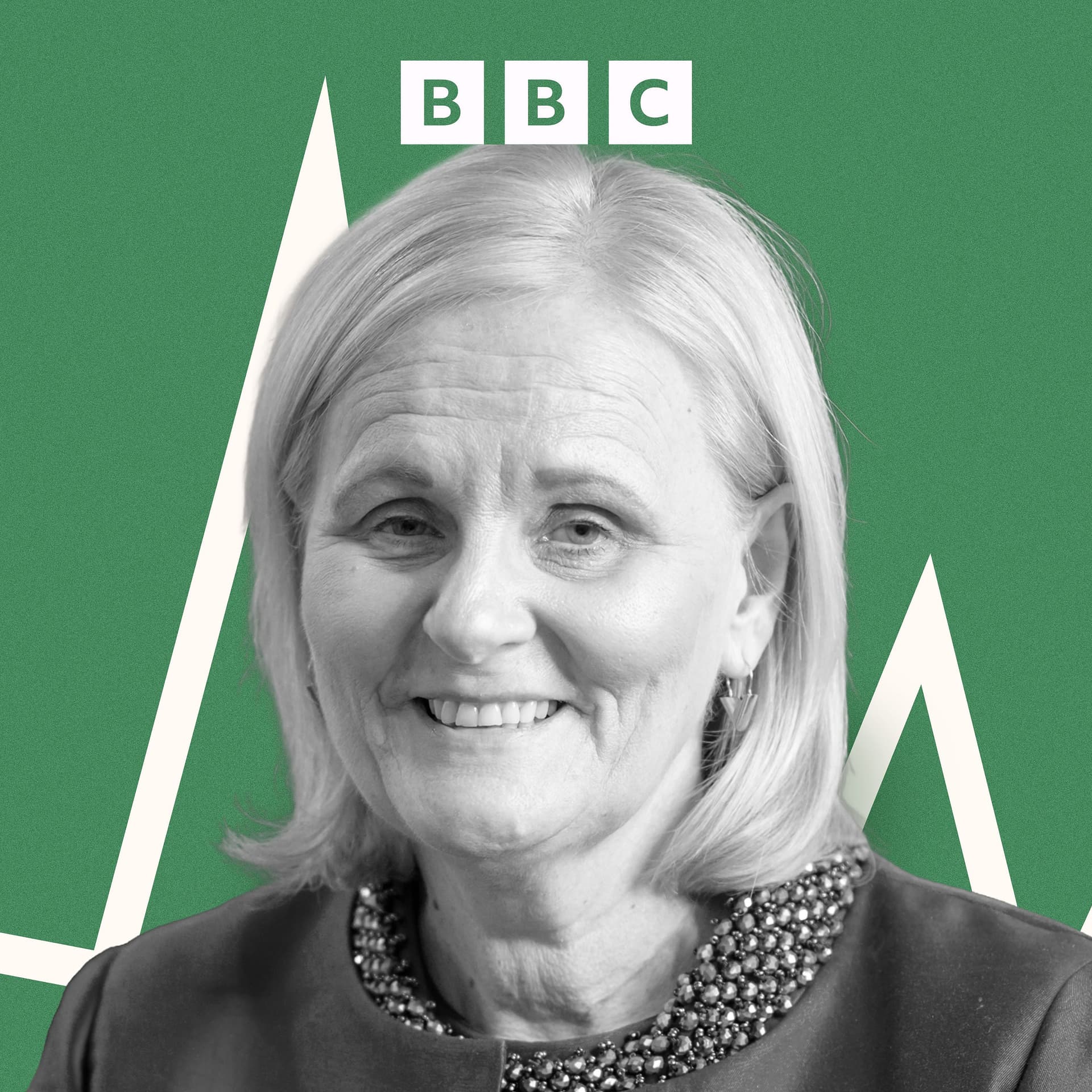
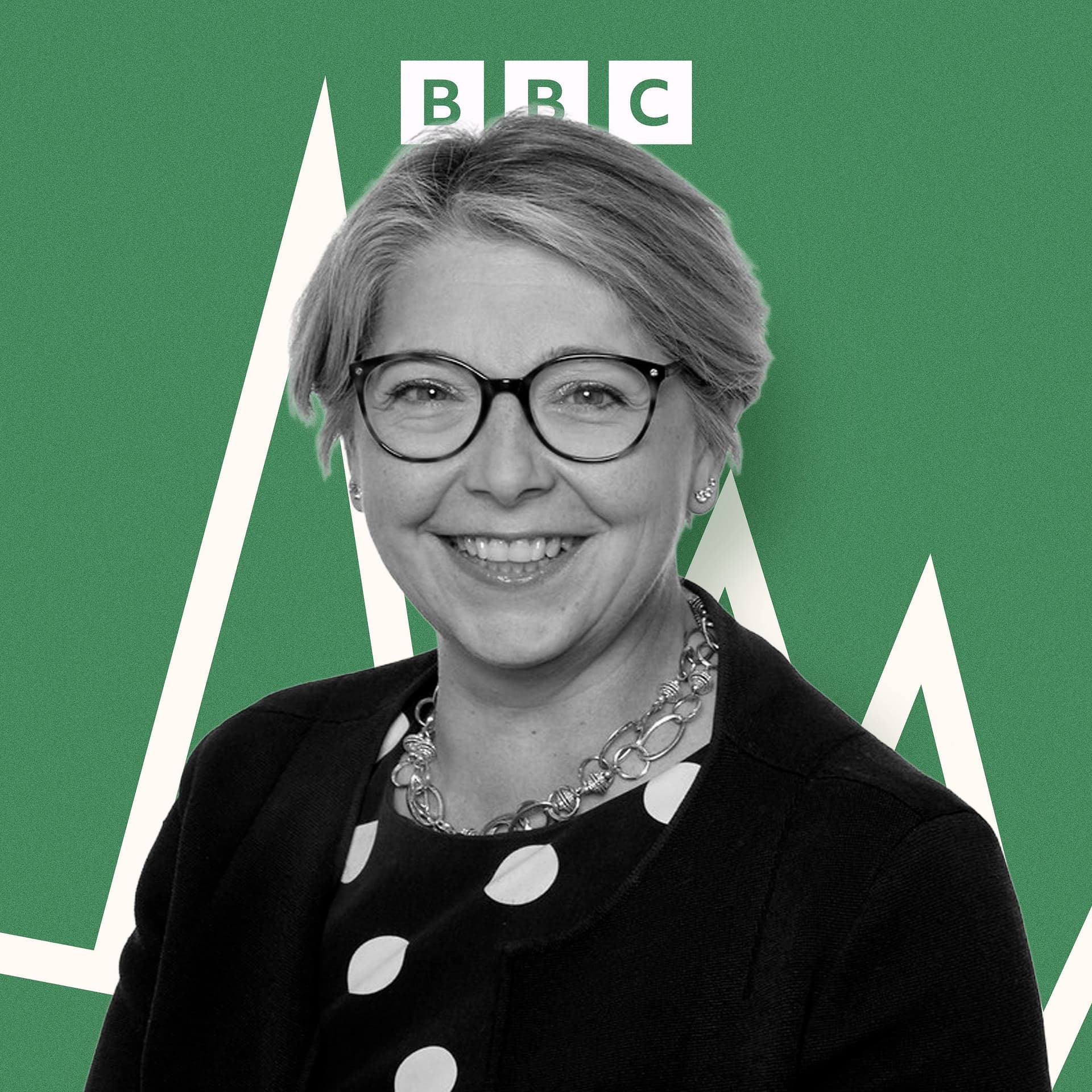
Sarah Breeden, Bank of England deputy governor for financial stability, warns that private credit’s rapid growth (to about £2.5 trillion) shows “echoes” of the 2007–08 crisis. She cites “red lights” from surging energy prices, geopolitical tensions, and a disconnect between all-time-high risky asset prices and real-economy risks.
Key claims
private credit is opaque and not stress-tested like banks; leverage is layered (borrower, fund, sponsor), creating “leverage on leverage”; in stress, investors may gate/withdraw funding, risking a “private credit crunch” and refinancing shortfalls for UK businesses.
Notable examples
funds/players marking down or gating loans—MFS, Tricolor, BlackRock, Blue Owl, Apollo. She says banks are better capitalised now, but tail risks could crystallise together.
Guests
Sarah Breeden (Bank of England deputy governor, financial stability). Interviewer: Simon Jack (BBC business editor).
Written by AI. May contain mistakes. Listen to the episode to check what was said.
Chapters
Tap a time to open that second in VOUnderstanding Financial Stability Risks
2:25 to 3:04
Explore the current financial risks as described by Sarah Breeden.
“There were some cracks appearing in the financial system, you've got surging energy prices.”
Exploring Private Credit Market
3:04 to 4:21
Discussion on the significance and concerns surrounding private credit.
“This is Sarah Breen, deputy governor of the Bank of England.”
Comparisons to Past Financial Crises
4:21 to 6:28
Insights into how current private credit issues echo past financial crises.
“How, to what extent has this market, which has grown massively, been tested?”
Global Implications of Private Credit
6:28 to 7:54
Analysis of the international landscape of private credit and its risks.
“Because I remember there was a couple of funds that started being shut down, some cracks started appearing and then you had a credit crunch.”
Investor Behavior and Market Psychology
7:54 to 12:29
Understanding the psychological factors influencing investor behavior.
“I mean, in a way, the US is the biggest market for private credit.”
Expectations for Market Adjustments
12:29 to 14:00
Discussion on potential adjustments in asset prices and their implications.
“expression by Alan Greenspan back in, I think, 1996 it might have been actually, when he talked about irrational exuberance.”
Market Adjustments and Economic Impact
14:00 to 14:48
Explore potential downward adjustments in asset prices and their economic implications.
“And I guess what we are watching for is how might those prices fall?”
International Cooperation in Financial Stability
14:49 to 15:39
Discuss the importance of international collaboration during financial crises.
“It's not trying to say it will happen today, tomorrow, in 12 months' time, in two years' time.”
Current Regulatory Climate and Private Credit
15:40 to 16:56
Analyze the current regulatory environment surrounding private credit and asset valuations.
“if this does happen we do get a shock that you would see that same level of international cooperation?”
Technological Innovation and Its Challenges
16:57 to 18:57
Examine the impact of technological innovation, including AI, on the financial system.
“Now, I'm not asking you to sort of give any advice to the incoming Fed, if he gets approved, of course.”
Show all 13 chapters
Assessing Risks in the Financial System
18:58 to 21:15
Identify various risks that could impact financial stability and how to prepare for them.
“You add together Middle East war, inflation, stretched valuations, cracks in the credit system.”
Government Interventions and Fiscal Limits
21:16 to 23:19
Discuss the limitations of government intervention in times of financial crisis.
“And as I say, we stress test the banking system regularly for shocks of that kind.”
Market Complacency and Tail Risks
23:20 to 24:46
Highlight the complacency in financial markets regarding potential risks.
“It's certainly the case that sovereign debt levels now are at historically high levels and therefore their ability to step in is less than it has been in the past.”
Transcript
Automatic transcript. May contain errors.0:00This BBC podcast is supported by ads outside the UK.
0:29CFO. LinkedIn has a word for that. Bull spend. Now you can invest in what looks good to your CFO. LinkedIn ads generates the highest ROAS of all major ad networks. You'll reach the right buyers because you can target by company, industry, job title, and more. So cut the bull spend. Advertise on LinkedIn, the network that works for you. Spend$250 on your first campaign on LinkedIn ads and get a 250 credit for the next one. Just go to linkedin.com slash broadcast. That's linkedin.com slash broadcast. Terms and conditions apply. Make Mother's Day even more special at Whole Foods Market. Kick off brunch or dinner with quality cheese and charcuterie with no synthetic nitrates.
1:19Then go seafood. There's an abundance on sale at Whole Foods Market, where it's all sustainable while cod or responsibly farmed. At the bakery, grab seasonal treats like their strawberry pretzel cream pie, and you can't go wrong with a ready-to-heat quiche Lorraine, deviled eggs, and fresh-cut fruits to go. Celebrate mom with Whole Foods Market.
1:53Hello and welcome to the Big Boss Interview Podcast. I'm Will Bain. This is where we chat to some of the biggest names in business shaping the way we work and our daily lives. And today our business editor Simon Jack has been speaking. Simon, not to a chief executive, but certainly someone who has a major role in shaping how the economy works. So Sarah Breeden is one of the deputy governors of the Bank of England and she has specific responsibility for financial stability. So it's her job to sort of look at the horizon and look for risks to the financial system. and she told me that there were quite a lot of red lights winking on the dashboard at the moment and I wanted to know whether there were similarities between what she's seeing now and what we saw back just before the financial crisis in 2007.
2:39There were some cracks appearing in the financial system, you've got surging energy prices. So what does she think the outlook is and what keeps her awake at night? And she was surprisingly honest about it, used language that's a bit more direct than you would usually get from a central bank deputy governor. And so there seems to be a disconnect between stock markets at an all-time high and all the risk we're seeing. So this is her. This is Sarah Breen, deputy governor of the Bank of England.
3:13Let's start with one of the things that has got tongues wagging in boardrooms amongst chief executives in the banking world, and that is private credit. Some people have said, you know, the warning signs of 2007-2008 were when a bunch of funds sort of closed down, BNP Paribas, HSBC, those were the canaries in the coal mine. What do you see both at the borrower, the lender, the market level? Look, I want to start by saying that private credit in and of itself can be a good thing. It's a meaningful part of how Britain finances itself now. That brings diversity in funding, supply investors are deliberately putting their capital to work.
3:59All of that is a good thing. But you raise a really important point, which is, are we confident that this financing is going to be there as we look ahead? if we have economic stress, will this financing still be there for British businesses? And we're looking very carefully at that in our work at the bank. How, to what extent has this market, which has grown massively, been tested? You know, to what extent has it been tested? Private credit has gone from nothing to two and a half trillion in the last 15, 20 years. It hasn't been tested at this scale. And with the degree of complexity and the interconnections it has with the rest of the financial system so far, that is why we're looking carefully at it to see if, having grown up in a world of low rates, are you going to be resilient in a world of higher rates?
5:04And there's been a few warning signs on the dashboard. If you look at some of the borrowers who have gone to MFS, Tricolor, and we've seen BlackRock, Blue Owl, Apollo, either mark down the value of those loans, shut their funds, or gate them completely. So this is long-term funding for business. it's really important that investors go in with their eyes open and they don't expect to be able to get their money back instantly. That is not what this funding is for. But what we're seeing is a bit of a nervousness amongst investors, a lack of confidence, if you like, and they're taking money out where they can.
5:55What that means is there's a danger that as companies come to ask for refinancing, it might not be available. And so what we're looking to do at the bank is shine a light on what's happening in the market to understand how are people going to behave in stress and what might that mean for investors and for UK businesses who invest in and get funding from this market. Does it feel a bit 2007-ish to you? Because I remember there was a couple of funds that started being shut down, some cracks started appearing and then you had a credit crunch. It seems to me that if they can't refinance what you're describing is a mini credit crunch.
6:41It is a private credit crunch rather than a banking-driven credit crunch. That's what we're worried about. That's what we're trying to understand. It is certainly the case that there are echoes of what we saw in the run-up to the GFC in this market. The great financial crisis. That's right. Sorry. Yeah, there are echoes of the great financial crisis in what we're seeing in this market now. We're seeing leverage. There's opacity. there's complexity, there's interconnections between bits of the financial system, private credit with insurance companies, with pension funds and with banks. All of that rhymes with what we saw in the GFC.
7:27But what gives me comfort right now is that the banking system is much better capitalised now than it was then. And so I don't think if we get stressed, it will be on a scale as we saw back then. But it's on us, given the importance of this market to UK businesses and to UK investors to understand what the risks are. And it's not just UK, is it? I mean, in a way, the US is the biggest market for private credit. These firms, BlackRock and Apollo, they're massive financial institutions, and they operate in a way at the margins of what regulators understand, right? Because this is what they call it shadow banking for a reason, don't they?
8:14So it's certainly the case that these are private markets. They're not public markets, and therefore it's much harder to shine a light on what the risks might be. it's certainly the case as well that they're not routinely stress tested in the way that we routinely stress test the banks that's why we're doing an exercise working with the industry to see if we see a serious economic shock where might losses arise how might those losses cascade through the system and what does it mean for the UK economy and what's your preliminary appraisal assessment of that? Because as you say, banks lend to these private credit institutions.
8:58It's not as if it's ring-fenced from the rest of the system, is it? No, there are certainly links between the banking system and these players. And part of the problem is that there is leverage on leverage on leverage. What do I mean by that? There's leverage at the underlying company level, there's leverage at the fund level, the private credit fund, and then there's leverage at the level of the private equity sponsor. So what we want to make sure everybody understands is how that layer cake of leverage adds up. What does that mean in stress? If there's conservative lending at each of those levels, maybe it's fine.
9:48If there's more leverage than the underlying borrowers can cope with, then that's more of a problem. That's what we're looking to explore. One economist, Nouril Roubini, described this as a slow motion run on a bank. Is it? So in the UK, the money that is invested in private credit is in general long-term patient capital. It's not money that's expecting to be able to get out at a moment's notice. That's a bit different in the US. There's been more retailisation of this, and that is what you've seen a lot of their headlines about in the papers recently. So I'm less worried about those things in a UK context but obviously confidence about the market in general is something that will have spillovers from the US to here and so we're watching it carefully.
10:48You say that you have said recently that the hallmarks are different, they're different in character, the rapping is different but the human behaviour is the same, optimism, outruns, caution, I mean can you put that in your own words? What are the hallmarks of things which, you know, if you like, the common denominators that we see? So I vividly remember rereading J.K. Galbraith's book on the great financial crisis of 1929, just after we'd had the great financial crisis of 2008, 2009. And the same themes repeat. You have investors saying, this time it's different, the risky asset prices are grounded in fundamentals.
11:36You have leverage as people look to borrow more to support their being involved in these markets. And you get complex interconnections as different bits of the system work together to support asset prices and this optimism. And what is always a concern is that we have repeated this game. I don't think it's the same this time because the banking system is robust. The banking system has got high levels of capital, high levels of liquidity, that puts us in a much better place to absorb losses as inevitably there it will be when reality hits asset prices. I remember there was a famous expression by Alan Greenspan back in, I think, 1996 it might have been actually, when he talked about irrational exuberance.
12:38I look around the world at the moment, I see quite a lot of risks, not least of war in the Middle East, rocketing energy prices, geopolitical tensions, cracks appearing in the financial system that we've just described. I look at the stock market and it's an all-time high. And I say these things don't seem compatible. What do you think? The disconnect between the risks in the real economy and the prices of risky assets in financial markets is clear. What is clear about it? That there is a gap, that there's a lot of risk out there in the market, and yet asset prices are at all-time highs. We expect that there will be an adjustment at some point, and what we want to make sure is that investors are ready for that.
13:27An adjustment, that means a significant stock market correction or crash? It means that prices readjust, absolutely. That means go down, right? It does mean go down. And let's remember, we've had some pretty serious adjustments already. I remember back in April 25, when the US administration launched its new trade policies, asset prices adjusted then. However, they have increased since. And I guess what we are watching for is how might those prices fall? Might there be a sharp adjustment downwards? And if there is such an adjustment, how will that affect the economy? me yeah and what does it do because one of the commodities that does get battered in these kind of situations is confidence right i just wonder whether you know how important that is let me ask first of all you talk about you think there should be an adjustment in asset prices which means a fall in the stock market when do you see that happening and what might be the trigger i i don't ever forecast what's going to happen.
14:43I think my job as Deputy Governor for Financial Stability is to think about what might happen and ensure that the markets and the financial system is resilient to it. It's not trying to say it will happen today, tomorrow, in 12 months' time, in two years' time. It's ensuring that if it happens, the system is resilient. One of the other things that was, one of the dissimilarities, it seems to me, of the period 2007 to 2009, was that when the proverbial hit the fan, there was quite a lot of international cooperation, both at sort of political and regulatory level, central bank level. you had the Fed talking to the Bank of England, talking to the Bank of Japan, talking to the ECB and at the same time as finance ministers were doing similar things.
15:38Do you have confidence that if this does happen we do get a shock that you would see that same level of international cooperation? So I do want to be a bit reassuring on that. I was in Washington last week talking with my peers around the world and peers in the US authorities about these very issues. The governor here is chair of the Financial Stability Board, where G20 nations get around the table and talk about risk to global financial stability. Private credit, asset valuations, these are the topics we're talking about. And you'll see the US Treasury is actively thinking about issues in private credit and the private markets more generally we're we're talking to them about that work too yeah so so at regulatory level you're all still friends i just wonder perhaps at finance minister geopolitical level doesn't feel like as harmonious a world as it was back then i think we all recognize that financial stability is a global issue and that there are spillovers from one country to another and it's in all our interest to work together and that includes finance ministries central banks and regulators as i say it's the it's the u.s treasury that are leading the work on uh private markets in in the u.s so they're not they've got their eyes wide open just want to talk a little bit about the um some of the other issues which are arising because there's so many the other one it seems to me is um you know inflation is rearing its head at the moment and ai could you know could potentially threaten the jobs market you could see now kevin walsh who's the new pick to be fed governor he says innovation means you can have higher growth without stoking inflation and ai is going to be so consequential that we can afford to have higher growth and we don't need to be so worried about inflation and at the same time, you know, the Fed's other job is to have full employment.
17:46Now, I'm not asking you to sort of give any advice to the incoming Fed, if he gets approved, of course. Do you see, you talked about innovation means it's different this time. What threats, if any, or challenges or, you know, benefits do you see about whatever? Or is that beyond your brief? I mean, is that... So we spend a lot of time thinking about how technological innovation matters for the work of the Bank of England, whether that's AI or whether it's the blockchain and distributed ledger technologies. AI will be used by the financial system. So we need to make sure it's used responsibly. It brings benefits, right?
18:29It can help bolster your cyber defences. It can reduce fraud in our activity in the payment system. One of the things I'm interested in, I say to my friends actually, is that I hope these agents or these robots have national insurance numbers because if we can't tax them at a time, this is one for the Chancellor maybe more than you, but I do think if they're going to take all the jobs, who are we going to tax? Just putting all of this together that we've talked about as we close, you talk about individual risks. You think the banks are pretty stable. You can weather it. You stress test them, whatever.
19:09You add together Middle East war, inflation, stretched valuations, cracks in the credit system. You add them all together. How many of those need to go wrong at the same time? So is there a single thing that you're worried about or is it a confluence of risks? You're absolutely right. The thing that really keeps me awake at night is the likelihood of a number of these risks crystallising at the same time and the ability of the financial system to absorb all of them. I think what that means is all of us as risk managers, us as managers of the financial system as a whole, every individual participant in the financial system needs to think about what happens if a number of these risks crystallize at the same time.
20:00a major macroeconomic shock at the same time as confidence in private credit goes, at the same time as AI valuations and risky asset valuations readjust. What happens in that environment and are we prepared for it? That's about shining a light on risks, a combination of risks, crystallising at the same time before it happens to think through how you would react in those circumstances so that if we find we're in that situation we're all better prepared for it. I do think an important part of what the Bank of England does with its financial stability hat on is explain what risks might crystallise so that all of us can be better prepared in case they do.
20:57Well, this is your chance. Tell us, which more risks do you think are going to crystallise and what are the chances of them happening all at once? Have you got a probability for us? As I say, I never put a probability on it. My job is to manage the tail risks to ensure that we're doing everything that we can in case things happen, not assuming whether they will. The things that worry me are a confluence of events across risky asset valuations falling, private credit coming under stress so that the financing that it has provided to businesses is not there and what does that all mean for the macroeconomic outlook.
21:40And as I say, we stress test the banking system regularly for shocks of that kind. The really good news is they'll be ready for that. If all those things did happen at the same time, are we in 2008 territory? As I say, the thing that gives me reassurance that we shouldn't get into 2008 territory is that the banking system is resilient and you have people like the Bank of England and the Financial Stability Board really focused on what might happen and ensuring both that we're thinking about the risk to the financial system as a whole and that we're building resilience in advance and we're thinking about what might central banks need to do if those circumstances happen.
22:33That means that we're in a much better position to absorb shocks like that. I think my job is to worry about the financial system so that all of the listeners don't have to. And we're doing as good a job of that as we can. I guess we'll see. And one other final thought. In the last financial crisis, you saw the government stepping in, taking equity stakes in banks. There was a taxpayer-funded bailout during the Russia-Ukraine crisis, very substantial subsidising of energy bills. I just wonder, is there any money left in the kitty at fiscal level for the government? Is there any money left for the government to be able to intervene?
23:18That surely has to be a worry. There's not so much dry powder left. How worried about that are you? It's certainly the case that sovereign debt levels now are at historically high levels and therefore their ability to step in is less than it has been in the past. That's why it's so important that we work with the financial system to ensure that it can absorb the shocks that are coming this way, to ensure that it is not adding to economic stress and so reducing the need for the sovereign debt to absorb the pain. But the Bank of England can't subsidise people's energy bills, or can it? I'm not going to talk about energy bills.
24:06the shock that we're seeing now is not on the same scale as the shock that we saw back in after the war in Ukraine and the government have been clear that if they come in it will be temporary targeted time limited and tailored to those who need it most. The one thing I've taken away from this is that it seems to me that financial markets are being rather complacent about the variety of risks you've talked about? It's certainly the case that the tail risk that we've talked about that I'm worried about are not consistent with asset prices being at the high levels that they are right now.
24:53Our thanks to Sarah Breeden, the Deputy Governor of the Bank of England, with our business editor, Simon Jackner. And if you don't do so already, please do subscribe to our podcast, Perhaps leave us a little rating or a review while you're there. It does help other people find the podcast on their feed. And once you do that, you will have literally dozens of conversations just like that with bosses from retail, hospitality, big banks to listen to at your leisure. Just hit subscribe to make sure you get one every week. And you can get in touch with us as well. Big Boss at bbc.co.uk Wise, the app for international people using money around the globe.
25:32When it comes to sending money abroad, many providers claim to offer free fees and competitive rates. But don't be fooled, this can be code for inflated exchange rates. With the Wise account, you can send, spend and receive money in over 40 currencies, without ever having to worry about hidden fees. Sending pounds across the pond? Most transfers arrive in 20 seconds or less. Spending reals in Rio? The Wise Travel Card gives you the mid-market rate on every purchase. No costly markups on your bill. Getting paid in dollars for your side gig. Avoid hidden fees and get the real exchange rate every time.
26:05With 24-7 access to live support, your international transactions with WISE are quick, transparent and safe. Plus, WISE runs over 7 million daily checks to catch and prevent fraud. 15 million people already trust WISE to manage their money internationally. Be smart. Get WISE. Download the WISE app today or visit WISE.com. T's and C's apply.
From the publisher
Sarah Breeden, Deputy Governor of the Bank of England for financial stability, joins Big Boss Interview to discuss risks in the global financial system, the rapid growth of private credit, and whether markets are prepared for the next economic shock.
She tells BBC Business Editor, Simon Jack the private credit market has grown to around $2.5 trillion in less than two decades, and says the BoE is watching the sector closely. She warns it has “never been tested at this scale” and that aspects of the market carry echoes of the period leading up to the 2008 financial crisis — including rising leverage, complex interconnections between funds, insurers, pension schemes and banks, and limited transparency compared to traditional lending.
There are already signs of strain. Investors have begun pulling money out of some funds, while others have been gated or marked down. Breeden warns this could lead to what she describes as a “private credit crunch”, where companies reliant on this form of financing may struggle to refinance their debt. While distinct from a banking-led crisis, she says the consequences for the real economy could still be significant.
At the same time, she highlights a growing disconnect between financial markets and underlying economic risks. Asset prices in some areas remain close to record highs despite geopolitical instability, persistent inflationary pressures and vulnerabilities within parts of the financial system. Breeden says the Bank expects an adjustment — meaning prices will fall — but stresses the key question is not whether this happens, but when and how sharply.
A further concern is the reduced capacity of governments to respond to future crises. Sovereign debt levels are at historic highs, limiting the scope for large-scale fiscal intervention of the kind seen during the 2008 financial crisis or the energy shock following Russia’s invasion of Ukraine. That places greater emphasis on ensuring the resilience of the financial system itself.
Breeden says the scenario that most concerns her is a combination of risks materialising simultaneously — a macroeconomic downturn, a loss of confidence in private credit, and a sharp repricing of risky assets. It is this kind of convergence, she says, that “really keeps me awake at night”. The Bank is actively stress-testing such scenarios and working with international counterparts to ensure the system is prepared.
While she notes that the banking sector is significantly better capitalised than before 2008, reducing the likelihood of a repeat of that crisis, the interview makes clear that new forms of risk are emerging in parallel — and that understanding how they interact will be critical in determining how resilient the global financial system proves to be.
Presenter: Simon Jack Producer: Ollie Smith & Olie D'Albertanson
Picture: Reuters