In short
Big Boss Interview - Episode #5 Summary
Episode Overview Title: Merlin Entertainments CEO, Fiona Eastwood: Our Biggest Competition? Kids On Screens Presenters: Sean Farrington, Felicity Hannah, Will Bain Producer: Olie D'Albertanson Editor: Henry Jones
In this episode, Fiona Eastwood, CEO of Merlin Entertainments, shares insights into running one of the world's leading entertainment companies, which oversees over 100 theme parks and attractions globally. The discussion touches upon competitive challenges, partnerships, financial struggles, and the importance of consumer experiences.
---
Key Highlights
Introduction
- Hosts: Sean Farrington and Felicity Hannah introduce Fiona Eastwood and the context of her role at Merlin Entertainments.
Competition in the Entertainment Industry
- Main Competitor: The primary competition for Merlin is not other entertainment venues but rather the increased screen time of children.
- Significance of "Screen Time": Fiona emphasizes the need to provide alternatives to indoor screen entertainment for children and families.
Customer Spending Trends
- Impact of COVID and Inflation: The entertainment industry has seen varied spending habits due to recent economic factors, including COVID-19 and inflation.
- Experience Economy: Despite tightening budgets, there is a growing demand for immersive experiences as families prioritize quality time together outside their homes.
Seasonal Trends
- Halloween Growth: The Halloween season has become increasingly significant for Merlin, contributing substantially to annual profits.
- Special Attractions: Merlin offers unique experiences and rides specifically for the Halloween season, driving customer interest.
Financial Overview
- Credit Rating Downgrade: Fiona addresses Merlin's recent credit rating downgrade and acknowledges the ongoing financial challenges.
- Call for VAT Reduction: She advocates for reduced VAT in the tourism and leisure sector to remain competitive with European counterparts.
Partnerships and Brand Collaborations
- Strategic Partnerships: Merlin collaborates with major brands like Peppa Pig, Lego, and Minecraft to enhance visitor experiences and attract a diverse audience.
- Brand Value: The choice of brands to partner with is based on popularity and family engagement strategies.
Global Operations
- Merlin in China: The company has operated in China for over 25 years, with recent successful launches, such as the Legoland Park in Shanghai.
- Navigating Geopolitical Tensions: Fiona discusses the complexities of operating in China amid rising geopolitical tensions but remains committed to growth in the region.
Leadership and Personal Journey
- Transition to CEO: Fiona shares her journey from Chief Operating Officer to CEO, reflecting on the challenges and responsibilities that come with leadership.
- Importance of Safety: Emphasizes the focus on health and safety in the wake of past incidents in the theme park industry.
Future Outlook
- Investment in Innovation: Plans for new attractions and improved customer experiences are in the pipeline, including collaborations with trending brands.
- Expectations for Next Year: Despite current economic uncertainties, there are optimistic projections for customer bookings and spending.
---
Key Takeaways
- Consumer Behavior: Understanding shifting consumer priorities is crucial for adapting business strategies.
- Experiential Marketing: Brands that create immersive experiences tend to attract more visitors, especially families.
- Economic Adaptation: Businesses must be prepared to adjust pricing and offerings based on economic conditions.
- Leadership Challenges: Navigating a large organization involves making tough decisions while maintaining a focus on the company's vision and values.
---
Closing Remarks This episode showcases Fiona Eastwood's insights into the challenges and opportunities within the entertainment industry, emphasizing the importance of innovation, customer experience, and strategic partnerships to thrive amid competition and economic pressures.
Written by AI. May contain mistakes. Listen to the episode to check what was said.
Transcript
Automatic transcript. May contain errors.0:17Hello, welcome to Big Boss Interview. you. I'm Fliss Hanna and I'm about to chat to Sean because Sean you've been interviewing someone about the ups and downs of their business. I see what you've done there Fliss. Yes, Fiona Eastwood is the chief exec of Merlin Entertainment. People might not see the word Merlin plastered around the theme parks that they go to around the UK or around the world but they are a huge business. They have lots of their Legolands under their watch, Thorpe Park and plenty more in the off-in as well. So that was actually a key part of what we spoke about is how on earth they come across which brands to partner with which ones might be coming down the line further in the future so minecraft is one that springs to mind why minecraft exactly how when where all of these questions we get into and the running of the business is behind that because actually there have been ups and downs the business has struggled at times it's credit rating has been downgraded never a good thing for a household or a business or a country and so we talked about But navigating that as well, Fiona's been at the business for quite some time.
1:21She was chief operating officer before she became chief executive, as she is now. So we talked about that as well. There's so much to get into. And I think the bit that really stood out to me, maybe as a parent, was just how important Halloween is for this industry. You kind of think of the summer months, but no, this was a big deal, isn't it? Yes, that's fascinating. So one, the growth of Halloween, seeing it down that perspective. but also I was intrigued by then the comparison what is it about spring and summer that isn't smashing it the way it used to and so there were some interesting takes from there as well getting kids off screens was one of the things that they like to talk about a lot at Merlin because you're out and about but there's a link of course when you're having Peppa Pig theme parks and Minecraft theme parks very closely linked to the screen in the first place so a real interesting business to hear how Fiona Eastwood has been navigating recent challenges, where it goes next, and what all of us customers are doing, particularly when we want to take our kids somewhere over a holiday period, and maybe without the kids, not in the holiday period.
2:27Oh no, that sounds tempting. Let's hear what she had to say.
2:32Fiona, welcome to our Big Boss interview. Thank you. Great to be here. Now, the first question you ask anybody who's had theme parks on their mind over the course of a year is how's the summer been for you guys at Merlin? Yeah, so we are a global business and highly diverse. So we have a global leader in branded entertainment destinations. What that means is we have theme parks. We've got resort theme parks. We've got Legoland Park resorts. And we also have indoor attractions. So what that means is we're not, we can hedge in terms of weather because we've got indoor attractions such as London Eye, Madame de Sourds around the world.
3:08And we've also got outdoor parks. and so that means we're perfectly hedged for both weather and for geography because we are in 20 countries, we've got 100 sites and over 5 ,000 hotel rooms. So when you talk about the summer, we're actually only just going into summer in Australia, for example. So in terms of the UK, our summer was pretty good, the weather was fantastic and that always helps to get people out and about in terms of our business. Does it help? Because it also gets people out and about doing lots of other things as well, doesn't it? Yeah, no, it does help. It's much better if you're a thief.
3:42It can be too hot. I think the ideal temperature is about 27 degrees in terms of our business. However, yes, it does help enormously. If there's great weather, everyone feels more positive. But yes, you're often then competing with the beach. However, our big competition in many ways is the home. all of our research shows increasingly parents feel quite stressed in the home and want to escape and what we provide is that perfect antidote to that so getting people off their phones getting them off their gaming sets in their bedroom so we're providing that escapism whatever the weather be it a park or an indoor attraction you know we've got some of the much loved biggest brands in the world in terms of our suite of attractions.
4:27We have the biggest toy brand in the world, Lego is a key partner. We also have Minecraft, the biggest gaming brand in the world and Peppa Pig, the biggest preschool property. And we'll get onto a few of those sort of brands and how they're growing, how they're changing, which ones are, which ones aren't so much. I'm interested, even if you've got that offer for those families that you talk about, they still need to part with some money. Have you noticed trends this summer in the UK about how people are spending, how much they're spending, where they're spending with you? Yeah, I mean, you've got to look at our industry over several years.
5:06So for the last five years, we've had to adapt and be agile. We had COVID opening and closing sites that were open all year round. We then had revenge spending in 2022. So people escaped the home and had cash and savings that were over the last few years. And then we hit inflation, which of course impacted energy costs. It impacted the cost of food and also the cost of living. However, there is a growing experience economy. What is great is we recognise that people want to escape the home, come to an attraction, be together, because the moments to be together are increasingly precious. and what we provide that's quite distinct is what we call play.
5:53It's about creativity, it's about spurring imagination, be the Lego, be Pepper and Minecraft. That's all about families coming together to play. And you would have had that offer in 2024 as well. So I just wonder, almost as a comparison, it's been a big year for everybody, businesses, households, big changes going on. Did you see a change in how people were spending this summer compared to last summer? Yeah, in many ways. I mean, we've had the last few years to get used to a changing consumer behaviour. And we see that in terms of the advanced research we do. And we see it as we look at our performance.
6:32It's been pretty positive. There's certainly our accommodation in particular. So we've got amazing themed accommodation in our hotels. So you can stay in Chessington in a Christmas themed hotel room all year round for those that can't get together at Christmas. And what we've seen is the hotels have actually been very positive. And that reflects that growing short break market that we see in many, many markets. And indeed, we also see that we have to, as we always have, I mean, Merlin's been, its whole ethos has been around every family should have access to a day out and be together. So we've always priced and ensured we're affordable, be that our annual pass, Merlin annual pass which is an annual pass for visitors to come to our attractions.
7:20How much does that cost? It varies so there's different levels we also so we've got from bronze premium and it gives you different benefits and so that can be anything from£80 for the year and above we also have many partners that help us access families so Sainsbury's Nectar through to Kellogg's and this summer to reflect the strain on public on people's finances we ran a fantastic campaign which meant you had two theme parks for one and what that meant was the ticket to a theme park in the summer was 18 pounds. So you're clearly having to react to something that's going on here when you say people are finding their budgets tighter so just almost I guess the straight question is you know average spend per head coming to your places how did that compare this summer to last summer?
8:18We've actually seen growth in the average spend per head we've also seen growth in terms of accommodation because of the premium experiences we offer because people are looking like I said to escape the house and be together so we've seen some fairly positive trends particularly in food and beverage particularly in our secondary spends so but it's a mix it's you can't look at our audience as just one set of people there's different types of people no but for us to get a sense of how you know the economy is doing it's actually you know those those bellwethers are pretty handy particularly when you know we had a budget a year ago that lots of people particularly business those running businesses were talking about and one of the messages was coming out of that budget was that the changes the tax rises that were announced were to try and limit the impact on households and it was businesses that were shouldering a lot of the costs it does sound like from what you're describing that you know there was a level of consumer confidence that you've seen hold up throughout this year to some extent i mean a lot of it is the measures we've taken the investments that we've made you still need people to spend though don't you you need them to think i have this spare cash to go out and look at where i'm going to spend it you might win that battle but they need to have the money in the first place it sounds like they have had from your perspective yeah i mean we've seen some really strong if i look at the current month halloween and it all is we're a very seasonally led business so you have spring break easter you have summer and halloween halloween that we're in now we're seeing some really strong performance and that's in view of the amazing product we have if you take thought park increasingly halloween is almost half of its annual profits and that is because we have special rides in the dark um that you also have mazes there's that whole thrill that we're tapping into so i think if you have an amazing product an amazing experience people will pay i'm not suggesting the cost of doing business is easy right now but at the same time if you invest in the right things, do the right marketing.
10:25And we appeal to 60 million people a year. So we've got a really strong customer base to build on. I want to ask you about that Halloween trend at a moment. I just wonder whether, you know, part of it, when you see that, you know, it's not like Halloween is a new thing particularly, but maybe something you're offering is new. And so therefore, it, you know, attracts people in a different way than it did before. But does it mean that there has been a bit of a struggle in that spring summer offering to keep the levels of growth that you would have seen and people coming at those levels that means that you whatever you've got right halloween time you've not been able to maintain that momentum at other times of years the sort of you know maybe tiredness sometimes you see a word use not about the the concept of the theme park and these activities that people might go to?
11:13Yeah, that's not something we see in our research. We invested 350 million last year in our experiences in parks. And a number one priority for us is to elevate the park experience. We put a lot of effort into our frontline teams as well as those investments. So in terms of trends, last, as I mentioned, last few years, we've had COVID, we've had inflation. And last year, we actually had a pretty good year volume grew. So that showed there's demand for our experiences, demand in experience economy. And we also had a good revenue position alongside profits too. So last year was good. And this year, I'm six months into role.
11:54I've spent the last few months, almost whilst I have in depth and deep experience, I've been at Merlin for 10 years, I also came into the role, you have to as a CEO, looking at it from an outsider. So we've spent the last few months assessing the business whilst also flying the plane, but also looking at what we need to do to be more competitive, to ensure we are driving growth. And so we've moved from one to one business. So economies of scale, we had 100 plus attractions operating slightly differently. So we're consolidating our approach, we're centralising certain functions, and that's enabling us to then reinvest in those experiences and pull and drive demand into them as well.
12:41When you say last year was a good year, you saw that as being a good year for yourselves. I mean, we've seen things like the credit worthiness of Merlin, the way ratings agencies might look at the debt that the business has as a whole and the ability to pay, the confidence they will have in the timeliness of a company or a country to pay that back. We've seen that be downgraded. You know, there was a big net loss last year. There's been some big financial decisions that have been made. Others wouldn't see it as a good, healthy financial picture for Merlin at the moment. Yeah, I mean, that was widely reported.
13:18And that was based on the forecasts of where we were earlier this year. We're actually coming out of this year stronger than we expected because of a lot of those investments. But in terms of last year, that was actually a strong performance. We saw volume improve. We also saw good revenue and profitability. And we're seeing a lot of those investments now pay off. We also, earlier in the year, kicked off a transformation programme, like I mentioned, in terms of going from 100 attractions to one company. That's doing procurement differently. It also is looking at where we had duplication. We had three divisions.
13:55We're now one company, global and regionally led. And that's allowed us to remove greater efficiencies, productivity and take cost out of the business. So we're not resting on our laurels, nor no business would. But I've got a very strong growth platform that shared recently and built with the leadership team that we're really excited about in terms of future growth. And so do you expect this, you know, the winter, the bookings that will be maybe going into next spring, summer, how do you expect customers in the UK to be behaving now? Do you expect them to be spending more with you than they were the year before?
14:34Like I said, we've had a strong year so far. The year's not over. Many of our UK attractions will be up until mid-November and then reopen again for Christmas. In terms of next year... So that Christmas spend, I guess, you know, what's your feeling at the minute about how people are shaping up for this Christmas compared to last Christmas? Yeah, I mean, if you look at year on year trends at the moment and people do book later, but the accommodation is a strong bellwether for that trend. And we're seeing strong accommodation themed rooms. And that's because those are very special short breaks for a family to take.
15:09They're looking pretty healthy, but I can't share too much given the way we're funded in terms of that outlook. But in terms of next year, we have a really fantastic series of investments coming up. So we have the world first bluey ride at Alton Towers as part of CBeebies land, which I believe will be amazing and will be fantastic for us. We also have the first Paw Patrol land coming into Chessington. So really tapping into that broad family audience that will be coming into our parks next year. They are buzzwords, aren't they? And I'm intrigued as to how you end up, which ones you choose or if that is even the right word.
15:46And I'll get onto that in a moment. Just on, I wouldn't, with the Christmas stuff, I know you can't talk too much about sort of forecasting and whatever, as you've said, because of your ownership structure. But we do have a budget that hasn't happened yet, but will happen not long just before Christmas. What are you thinking about what is potentially the consequences of an end of November budget, the way we're teeing it up to be at the minute for your business, for the people who might spend money with you? Yeah, so I'm not only CEO of Merlin, I'm also on the UK Hospitality Board. And as an industry, we have had an impact from last year's budget.
16:28And we also saw at that point consumer confidence dip. The biggest concern with all of this is the amount of rumour and noise that's coming out, because the longer this is delayed, it does, of course, impact customers. They do start to hold back on spending. So the sooner we get to that point, I think it will be a positive. What we really want is a growth-led budget. You can't, just like in a business, you can't cut your way to growth. Higher taxation will also mean you can't grow if we're not careful. So we have three main asks. The first one is a VAT and to be competitive with our European neighbours.
17:06We know when we look through all of our trends, price is a key factor for both inbound and domestic people to holiday in this country and also go to restaurants and pubs and enjoy leisure and hospitality at its best. and so what we want is to have a level playing field with our European neighbours a VAT rate of 12.5%. We saw in Covid when VAT was reduced we saw a bump and we saw demand and we saw people wanting to spend and so we want to be competitive with our European neighbours they're at 10 % so at least get into 12.5 % we're in a better position. On something like that that clearly does impact people's sort of desire to spend if the price is lower and might give businesses more confidence if they think that's the environment they're in.
17:53How would it work, you know, if you saw a reduction there, but you saw an increase in income tax, so, you know, all of your working customers who would see an increase in the amount of taxes they're paying, would that be a better way to do things overall, if, as seems likely, the Chancellor does need to raise some money overall from somewhere? Yeah, look, VAT is massively important. What we saw when the tourism tax, the tax-free shoppings introduced, we saw fewer people coming into the country. So tourism from another country is also important. So I know you're mentioning tax rises versus the, that would be the domestic, but that international tourist is also impacted by VAT and the tourism tax.
18:38We've seen fewer visits coming into London, fewer stays in London, people are nipping to Paris to do their shopping. That means less hotel rooms, it means less flights, and it also means less employment. So by reducing VAT, that will drive growth both inbound and for domestics to spend in the UK. What's at risk for the hospitality industry, the entertainment industry with the budget? If Rachel Reeves doesn't get it right, the way you see it, you'll already be hoping that all these bookings are going to be coming for that Christmas period. Is there something at risk for just even the weeks afterwards if the tone isn't as your customers and you need it to be?
19:21Well, we've seen from the hospitality, it's the third biggest employer in the UK. It's£93 billion and employ 3.5 million people in the UK. We've seen from last year's budget and the changes to national insurance that there are now two pubs closing a week and there's also been 80 ,000 job losses. So not only does it impact the customer, it also impacts businesses in terms of those increased costs. But I guess at the same time, people hearing how Merlin has been doing and there's needed to be lots of cost cutting there for reasons that aren't really to do with a budget last year or a budget this year.
19:57There are ways to make it work in hospitality and at the same time there are business decisions that will need to be made that means cost cutting is required irrespective of what the Chancellor says? To some extent. I mean, of course, our business is impacted by customer confidence. You see it immediately if there is concern. And we're one of the first to see it because of those, because of the experience economy is a growth economy. Do you feel you are one of the first to see it? You know, do you almost, a budget is announced on a lunchtime, we all listen to that speech, and within hours can you detect how people are feeling on the back of it?
20:36To some extent. So, I mean, in terms of the November budget, a lot of our UK attractions are closed apart from the indoor ones. Yeah. Yeah. So, but you almost at this point, it's similar in other markets. If there's a lot of chatter from press and governments, you see it come through in consumer confidence, that's for sure. Now, in terms of what people can expect, you've mentioned a few of those, the brand names. I mean, too many kids are not brand names, are they? They're just like a way of being. but whether it's you know Peppa Pig, Minecraft you mentioned Bluey as well there are others in there what is it how do you go about deciding what is the next big brand that you want to engage in or is it others sort of telling you a little bit because Merlin is what's it 50 % or so owned by the owners of Lego for example so or at least in the last numbers I had I don't know what the Yeah, that's right.
21:32That's about right. So which way is the influence there? Are you sitting there going, do you know what, we need to get into Bluey? Or actually, is there a sort of bigger story going on here where the likes of Lego think, right, we want some toys on our shelves at a Peppa Pig Duplo. And at the same time, we want a theme park opening up. We'll have a word with you, say that's what we're after in a different market. And how does it come to fruition? Well, it's very much led by us. It's our business, whilst they are investors. and obviously we work closely with Lego and it's a fabulous brand, much loved and it's great to see the Legoland parks bring to life on a big scale the Lego product.
22:11And what we do in terms of which brands, it's all about play, it's about imagination, it's more than just the metal. The rides are hugely important, of course, but there's also those small moments. So if you take the Lego brand, we've just launched a new park in Legoland Shanghai and that uniquely has the biggest mini lands. And what's fabulous about that, as well as having the amazing buildings in China recreated in Lego, there's also moments to build. So it's fabulous being at the launch for that and seeing children and parents building in one of the areas, the Great Wall of China, and then, of course, the kids jumping over it.
22:49So we look at data, we look at stats, and for us, it's about partnering with the biggest, most loved properties that we know have huge fan bases that's one of the big levers for our future growth strategy is they're building that fan base we've got 60 million people now we want to get to 70 80 million and that will be driven by those brand partnerships such as lego and minecraft and others and at any point do you end up sitting around a table where you've got chief executive of a huge you know toy manufacturer and chief executive of a big streaming platform and a publisher you know whatever that might be where you're actually all talking at the same time because you know I'm not necessarily sure I'd have asked these questions 10 years ago when I wasn't so familiar with these brands but these days life changes and that's that's where you are it can be quite overwhelming and you feel like everywhere you look it's the same stuff popping up how does that happen look these bands are because they're much loved there's then demand to have them in lots of different spaces my background before was in building brand franchises So I know that there's appetite there and products and experiences and other elements follow after that.
23:58I mean, this summer we launched our first ever Lego Festival, which is a connection of building. It was dance and it was also music. And that was fantastic. Not only does it mean you're providing something much deeper and a deeper relationship with your guests, but you're also giving them a different experience that only we can provide because it's based on that creativity and learning through play. I'm interested though with Minecraft. Do you feel, as somebody who's been around brands for so long, that there's been, is it a changing of the guard a little bit where there's this computer game now that is starting, that's been the essence of Minecraft, that is starting to dominate in different ways?
24:37Because a lot of the others we talk about, you know, they're from our TV screens originally. Yeah, that's a good point. I mean, ultimately, if you take Lego, they also became a game as well. I remember my son when he was little playing the Lego Harry Potter, for example. So gaming's been around for a while. But you're right. Minecraft, of course, started in the game, but now has a merchandising range. And we'll, of course, working with Minecraft, bring to life the first big experiences as well in a few years. Does it mean a different type of customer, a different type of family perhaps? Do they spend it a different way if it's Minecraft rather than Peppa Pig?
25:15I don't think no, because what's unique about all of the brands we work with, and indeed Pepper, Lego, Minecraft, it's about a fan base. So they absolutely love those brands and they want to experience those brands with their family. They want to come to us to play on a bigger scale. And so it's exactly the same in terms of thinking about how you bring those worlds to life on a epic scale, make it immersive, make it feel like you're in the brand. And you want to build stuff, clearly, whether it's on the sites you have or new sites. Are you able to get stuff built amidst all of the things that you have going on at Merlin?
25:57If you decide, right, we want to go ahead and get this done, can you build something as smoothly as you would like to? I think, yes, we can build things. We proved and we've got two new rides coming next year. And we had hotels last year at Warwick Castle and indeed at Legoland Windsor. so yes we can can it be improved absolutely and working with government and working with our partners that's certainly one of the areas of opportunity is how we cut some of that red tape and make it faster and better what what is the sort of biggest blocker because that'll be another one we're starting to get you know wind a little bit aren't we of of more planning changes planning and planning reforms that are on their way and people wondering why hasn't any of this sort of kicked in and got going yet.
26:41What for you, is there a blocker that you've got right now that you feel would just enable you to grow as a business much more quickly if it was removed specifically? There's nothing specific. Like I say, we work really well with our partners, be it local councils, local government, and indeed the main government. And it's something that there's always ways to improve it. There isn't one thing I'd point to other than how can we move a bit faster. Can I ask you about Madame Tussauds? Is that a difficult one at the moment for you to decide sort of what to do with it? The brand value sort of being reduced on that.
27:17We've heard of many of the brands that you've talked about where that brand value is growing and growing. But in every business, there are tougher sides. Is that one of them? Look, Madame Tussauds is a fantastic brand. It's like 150 years old, and it still delivers incredibly well. But all All brands need to be revitalised. All brands need to be reviewed. Who's the target market? How do we reach them? What's the right product? Is it worth less? So do you guys value it less now than you would have done previously? There was part of the question earlier around the impairment. That's just an accounting piece.
27:54It's just around the brand value on a balance sheet. But ultimately, it's still a brand we're absolutely confident in that we back and we can still see growth. It does need some element of being rebooted. And that's what we're working on at the moment with our brand teams and some exciting plans underway. Is that hard in a modern age where people maybe don't need to stand next to a statue of a celebrity to have an image of them doing something with that celebrity? No, you'd be surprised. I mean, not far from here, where I am in London, is, of course, Madame Tassau's Baker Street. There are still queues around the block to get into Madame Tassau's.
28:31it's still an iconic attraction and part of any visitor's visit to London. I mean, our attractions in London, one in four visitors to London come to one of our attractions. So they're still huge. And the Madame Tussauds brand, you still see it's a selfie. So it still taps into that Instagram, that brag factor. And it's just if Madame Tussauds were alive today, what would she be doing? What would she be using? That's some of the questions that we're asking ourselves. There's also an element, the Madame Tussauds brand in particular, because it tends to be an inbound tourist, has been impacted by some of the trends I mentioned earlier in terms of inbound visits to London.
29:10But also many cities around the world still haven't recovered from an international perspective from Covid. So there's still fewer inbound visits to these big cities than there were pre-Covid. And in this portfolio of all of these different brands you've got, when you mentioned Minecraft, is that going to become one of your own parks that you own and run? Is that the plan? The plans at this stage are incredibly exciting. We're working very collaboratively, as we do with Lego, with the Minecraft team. And it's fantastic to see some of the ideas that are coming to life, both temporary and permanent and in different formats.
Read the full transcript
29:46At this stage, I can't share it or I will be killed by the comms team and ruin the launch messaging next year. But what I can say, it's going to be epic. It's going to be amazing. Right. So something in the offing there. In all of that as well, you mentioned China and the importance of the Chinese market to Merlin as well. How difficult is that at the minute? We're hearing every day about escalating tensions between the United States and China. So two big markets for you. I've seen headlines here in the UK about really big question marks over what our relationship with China should be. How do you navigate that?
30:28We've been in China for over 25 years. So there's Madame Tussauds there. We have several brands. And we just launched in the summer the first ever Legoland Park in Shanghai, which was a partnership with government. And we've had fantastic support from government And indeed, what we're seeing in terms of the performance, it's absolutely meeting, if not slightly exceeding our expectations. It's a wonderful park. It has both globally recognised elements and local touches in terms of feeling very uniquely Chinese as well. And so we're seeing very positive trends coming out of China in terms of a Legoland park.
31:05So you don't necessarily, do you feel leaned on at all by whether it's shareholders, even, you know, sort of United States, American stakeholders? We've seen it in other industries that, you know, if you want to play ball with America, then you're maybe going to have to take your eye off or take the foot off the gas with China a little bit. As I've said, we've been in China for 25 years. We know it. We're experts in that market. And we continue to invest both with partners and ourselves in China. So it's very much part of our future. Just to wrap up, Fiona, can I just ask you about your journey at Merlin?
31:40Yeah, sure. Because not only have you gone from being chief operating officer to chief executive, as you are now, but it's a decade now, pretty much. Almost. Not almost. Yeah, we're nearly there. A decade that you've been at the business. And when you joined, people may well remember this story from the time, you joined not long after there was the horrific crash at Alton Towers. 16 people injured and two girls had leg amputations at the time. and it was a real difficult time for those involved in that accident and then the aftermath for the company to have to come back from that. And you joined around that time.
32:21What's it been like? What's been the purpose of your role at Merlin in that time? Do you remember almost what it was like then, what your job description was then when you joined compared to how you might be viewing things now? Yeah, I joined soon after, but I was going through the interview process during that time. And what I saw in terms of Merlin's culture, its reaction, was a very human one. So the then CEO, Nitvani, stood in front of the media, took immediate accountability and made sure that the families and those impacted were looked after. And then also health and safety, hugely important.
32:58It's the red thread throughout everything we do. It's our number one priority. We spend a lot of time on health and safety, both at a site, at a regional, at a global and at a board level as well. So it's massively important in terms of our business. I mean, that's remarkable to be going through an interview process. You know, many people will be able to sort of empathise with, you know, the world changing, the life changing as you're going through sort of personal big moments as well. Did it almost change what the job sort of was in those first few months, years for you when you have such a high profile, but also a really crucial aspect of what you're doing is reputation-wise to try and convince customers that it's safe?
33:41My role when I came in was marketing director and global brands director for the Midway business, as it was then called. So that was the indoor attractions, London Eye, Sea Life, Madden for Swords, Dungeon Brand. So that was my area of focus. and that was a global role as well. So my task at that time was around what do these brands stand for? How do we ensure consistency? How do we drive growth for those brands? But of course, the wider culture was absolutely focused on health and safety, as you'd expect. And then going on to Chief Operating Officer, what is the difference between that role, Chief Operating Officer and Chief Executive?
34:21They're the terms that I use all the time to describe the likes of yourself, but actually behind the scenes day to day what's changed for you in your job yeah so I was chief operating officer of two of the three divisions so about 50 percent of the business and it's funny I get asked that a lot in terms of how is it different and it is incredibly different no matter how many books you read how many things you listen to like wake up to money and other programs nothing can prepare you to suddenly being in that chair everything you say is analyzed you're watched, every expression, but also the responsibility for the business.
34:58It's also incredibly exciting. I've been in the business for 10 years, huge passion for what we do day in, day out. Nothing beats going to a theme park. That is my job. Spending time with the team, seeing kids, having an amazing experience in our attractions. But at the same time, you have to almost take an outside view when you take on a CEO role, particularly from internally, because you could have blind spots, you could have certain bias. So I very much when I came in, treated it as if I was coming in from the outside, assessing the business, having conversations, listening sessions, really to get under the skin, whilst also still running the business from an operational perspective, and then setting out the vision for the company, the future growth areas around becoming the most loved experienced business in the world for families to come together really zeroing in on families we've got six core growth levers alongside transforming the business in the last few months we've got exciting opportunities in terms of transforming our business with AI with digital alongside our everyday investments into elevating the experience thinking about what the guest wants and also growing our people as well yeah I was going to And so you can hear, obviously we can hear the pitch to customers and that's what people are trying to do.
36:18But the pitch to staff as well about, you know, why you would work in a place. But at the same time, you're running the divisions as you did. And now you're chief executive with this restructuring going on. Has there been some really hard conversations you've had to have with people you work with for a long time who maybe are on the same journey or have had to lose their job because of the changes? Any CEO coming in, you look at the culture, you look at the top table, you look at the leadership, and you make some changes. And that's quite normal. I mean, indeed, when you read a book about a CEO, it's often the biggest regret is not moving fast enough on some of those changes.
36:54So I have made changes for the better, both in terms of our cost base, in terms of our talent, and also setting out that future vision, because people will follow someone if they can see themselves in it and they can be excited nobody certainly gets out of bed every day thinking about the opex it's about where are we now where we want to be how do we get there and where will we invest going forwards and how do you get to the front of the queue for nemesis oblivion are they are they on you have you have you done those you're happy to do those yeah well i last summer i actually worked on nemesis um on the front line to be alongside the front liners and see what it was like.
37:33I'm not a big fan of Nemesis. My favourite's actually Wicker Man. I love Wicker Man. I'm at Alton Towers week after next and I'm looking forward to doing that ride in the dark. But yeah, that's my favourite one. I'm not a massive fan when there's a little bit of hype involved. That's okay. Fiona, thank you very much. Fiona Eastwood, Chief Executive of Merlin Entertainment. Thank you very much for your time. Thank you.
37:58what an interesting chat huge thanks to fiona eastwood ceo of merlin entertainment for talking to sean farrington and hey if you want to talk to us then you can you can get in touch by emailing bigboss at bbc.co.uk i wonder if tim davy's going to get many emails to that thanks a lot
From the publisher
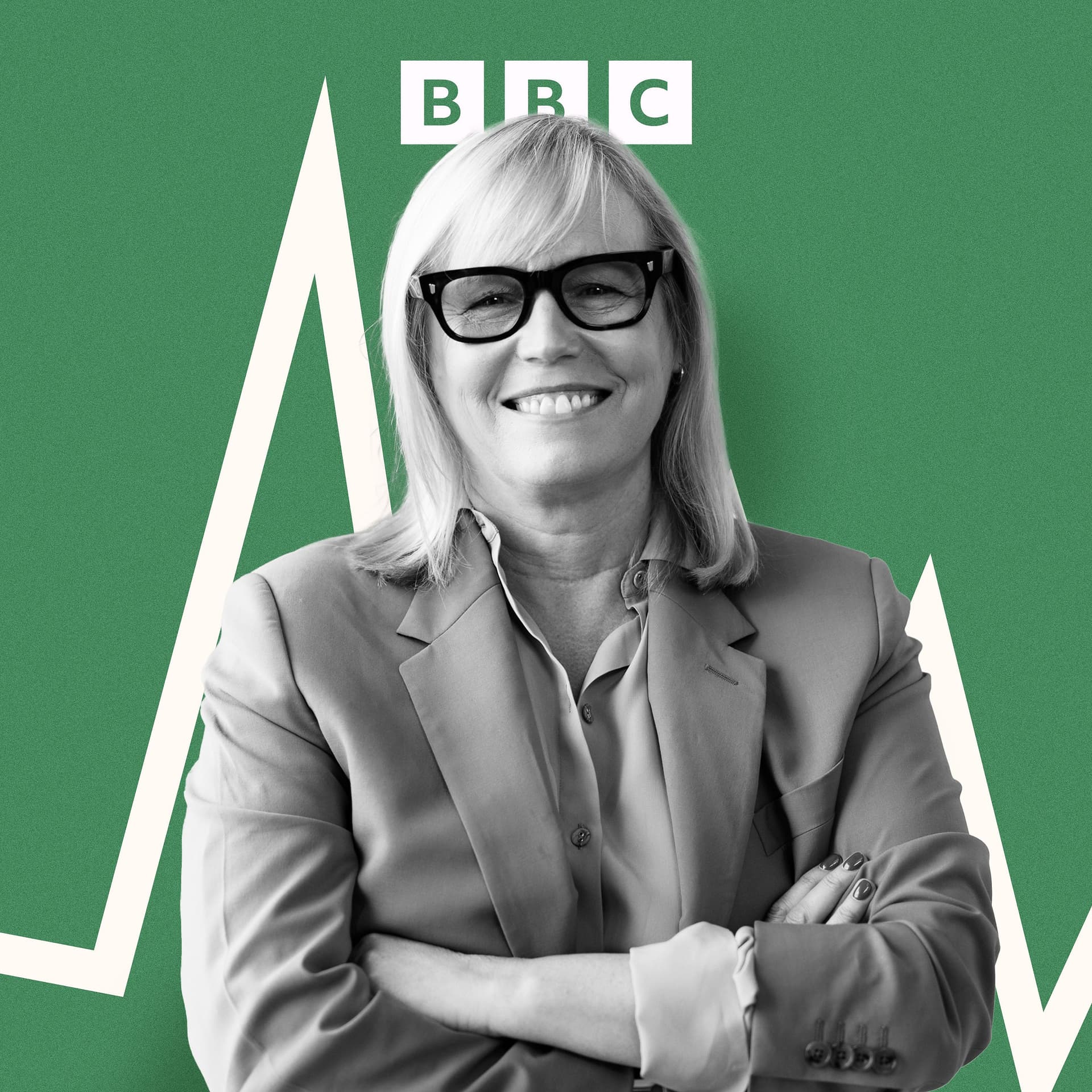
Fiona Eastwood, CEO of Merlin Entertainments tells Sean Farrington what it is like running one of the world’s leading entertainment companies. Merlin runs over a hundred theme parks and attractions around the world from Thorpe Park and Chessington World of Adventures, to Sea Life and Madame Tussauds. She explains how the main competition to her business is the amount of screen-time kids have, and how that influences the partnerships that they make with the likes of Lego, Peppa Pig, Bluey and now, most recently, Minecraft. But the industry has been struggling - from covid lockdowns to the cost of living crisis, in fact Merlin's credit rating was recently even downgraded; Fiona addresses this and calls for a reduction in VAT on the Tourism and Leisure industry and says that there is too much red tape when it comes to planning reforms. And despite being the Big Boss, find out which ride Fiona can't stomach.
00:00 Fliss and Sean Intro 02:15 Interview starts 03:54 Our competition is the home and screen time 04:50 Trends of customer spending 09:35 The growth and importance of Halloween 12:45 Credit rating downgrade of Merlin Entertainments 15:55 Impact of a late Autumn Budget 17:00 We need a VAT cut in Leisure and Tourism sector 20:35 How Merlin develop partnerships with Peppa Pig and now Minecraft 27:00 The role of Madame Tussauds for the business 30:20 Merlin operating in China for 25 years 31:45 How does Chief Operating Officer differ from Chief Exec
Presenter: Sean Farrington Producer: Olie D'Albertanson Editor: Henry Jones
(Picture credit: Getty)