In short
Big Boss Interview: Episode #8 Summary
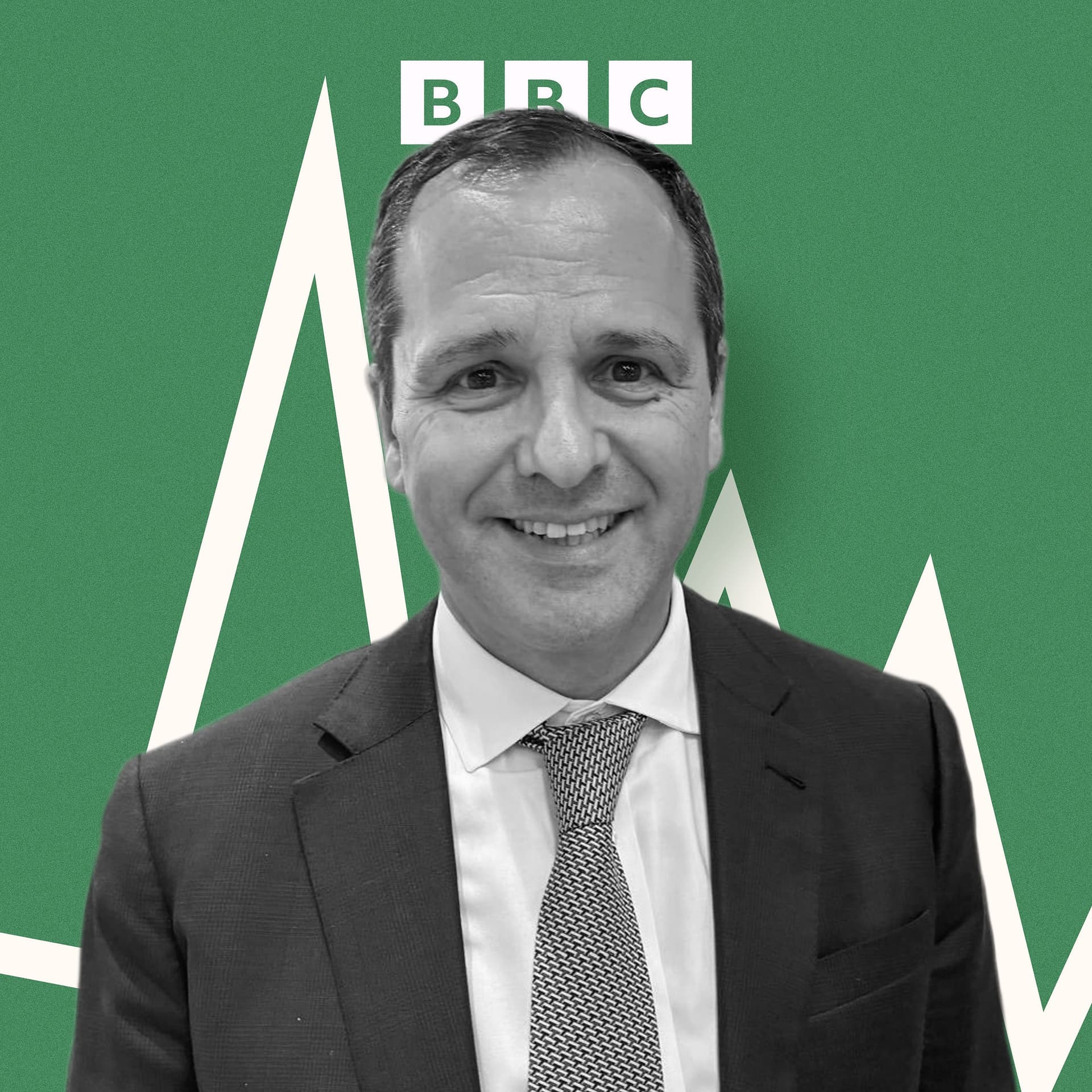
Episode Title VUE International Founder & CEO, Tim Richards: Streaming Giants Aren't Our Rivals
Episode Description In this episode, Will Bain interviews Tim Richards, CEO and Founder of Vue International, one of Europe's largest cinema groups. Tim shares his remarkable journey from a mergers and acquisitions lawyer to a prominent figure in the film industry, highlighting the challenges and successes he's faced along the way, including the impact of COVID-19 and competition from streaming services.
---
Key Themes and Discussions
- Tim Richards' Journey
- Early Career: Transition from M&A lawyer to Hollywood executive after responding to a mysterious job ad in the Financial Times.
- Work at Paramount and Universal: Experiences in the film industry during the 80s and 90s, focusing on global cinema and home entertainment.
- Entrepreneurship: Transition from studio executive to founding Vue International to fill a perceived gap in the cinema market.
- Vue International's Growth
- Warner Brothers Circuit Acquisition: A pivotal moment where Tim raised capital to acquire the Warner Brothers cinema circuit for £250 million, marking a significant step in Vue's establishment.
- Innovations in Cinema Experience: Introduction of stadium seating and a focus on customer experience as competitive advantages.
- Impact of COVID-19
- Pandemic Challenges: Vue cinemas were closed for two years, leading to significant emotional and financial struggles for Tim and the industry.
- Industry Recovery: Post-pandemic, Tim expresses optimism for the future, forecasting record-breaking box office attendance by 2026.
- Streaming vs. Out-of-Home Entertainment
- Not Direct Rivals: Tim argues that streaming services like Netflix and Disney+ are not the primary competitors; instead, out-of-home experiences (e.g., theme parks, sports events) pose a greater challenge.
- Room for Both: Belief that both streaming and theatrical releases can coexist and thrive.
- Targeting Younger Audiences
- Engaging Younger Demographics: Discussion on the importance of attracting under-30 audiences who are seeking social experiences after the pandemic.
- Cinema Accessibility: Addressing the rising costs of cinema visits and the implementation of dynamic pricing strategies to make cinema more affordable.
- Government Policy Critiques
- Negative Impact on Leisure Sector: Tim criticizes government policies that raise operational costs for leisure businesses, arguing they ultimately hurt the intended beneficiaries.
- Future of Cinema
- Upcoming Films and Innovations: Tim is excited about the diverse film pipeline, including major releases expected to drive attendance in 2026.
- New Ventures: Introduction of Lumiere Films to support British and independent films and innovative customer experiences in cinemas.
---
Key Takeaways
- Tim Richards exemplifies the passion and challenges of cinema entrepreneurship, emphasizing the importance of adaptation and innovation in an evolving entertainment landscape.
- COVID-19 has profoundly impacted the cinema industry, but the future appears optimistic with expected record attendance and innovative solutions being implemented.
- The competition extends beyond streaming services, with a recognition that providing unique experiences is crucial for attracting audiences back to cinemas.
---
Episode Details
- Presenter: Will Bain
- Producer: Olie D'Albertanson
- Editor: Henry Jones
Contact Information For inquiries, reach out at [bigboss@bbc.co.uk](mailto:bigboss@bbc.co.uk).
---
This summary encapsulates the key points discussed in episode #8 of the Big Boss Interview, focusing on Tim Richards' insights and the cinema industry's future amidst evolving challenges and opportunities.
Written by AI. May contain mistakes. Listen to the episode to check what was said.
Transcript
Automatic transcript. May contain errors.0:00BBC Sounds. Music, radio, podcasts.
0:17Hello, welcome to Big Boss Interview. I'm Sean Farrington. You will have heard plenty of our interviews with some of the biggest bosses around the UK and around the world. And the latest has been done by Will Bain. Will, who have you got? You've been rolling out the red carpet, I hear. Yes, we've had our very own premiere, if you like, for one of the biggest cinema bosses in Europe. Interesting, you talk about international and British bosses, Tim Richards, originally a Canadian, spent a lot of time in Hollywood working for some of the biggest movie studios in the world, and then came here to the UK and saw an opening in the late 90s, shown to open view cinemas, I'm sure most people have seen them on a high street near them and have expanded across Europe and Asia as well.
0:57So we talked all things about the changing trends in cinema, what you should go and see, what he thinks about when you go to the cinema to try and get you to spend a bit more of your money on popcorn and drinks and things like that as well. And I thought interesting too, Sean, that we're back with not just someone who's a boss today, but someone who founded their company too. Very interesting. Yeah. When we had that with John Roberts, you get a little bit of a different tone, don't you, from those who've maybe only been there for a few years? Yeah, absolutely. And you made this point about John Roberts, the kind of enthusiasm point, you know, that he sort of bounced into the studio.
1:28And Tim Richards, you know, for a man who's done this for 30 odd years at this point, absolutely. And I'm sure you'll hear it through the interview today. Loves cinema, loves the experience, loves films. And that really kind of shines through. but it also means that we talk quite a bit about some of the difficult moments, about when a company is more than just a job to you, it's your life's work. He describes viewers like his firstborn at one point during the interview, so those tough times as well, particularly around the pandemic when cinemas were basically shut for a couple of years as well, so very much a clichéd emotional rollercoaster we're going to go on.
2:04So I'll give a plug for that John Roberts interview, the founder and chief executive of AO. You can go back in the podcast feed and hear that one, But right now, let's hear from Tim Richards, the chief executive and founder of Vue.
2:20So our guest today, Tim Richards, chief executive, founder of Vue International, one of the biggest cinema chains in Europe. Tim, thanks so much for coming on the Big Boss interview. No, a pleasure. It's great to be here. And thank you for the invite. A heck of a lot of change in the time that you've founded Vue, Tim. I know that, you know, if you're going to set out as an entrepreneur, as you did, you expect, I don't know, lots of change. And you know what's going there. That's the excitement, right, isn't it? But could you have imagined quite the journey it's been and quite the kind of twists and turns in that journey?
2:51No, I mean, I think it is something that I'm always caught off guard when anybody actually has even heard of you as, you know, we're a main brand right now. But it's been an incredible journey, actually, over 25 years now. And it certainly has had its ebbs and flows over that period. Well, take us right back then, because that, as you say, wasn't even close to your job when you started out for a lot of your adult life. So tell us about how you kind of came to found this company. I guess by training, I'm a New York M &A lawyer, which I don't always admit. But I had joined Freshfields, and I moved over from New York to London with Freshfields, and this was kind of in the late 80s.
3:35And when the recession hit in 1990, and I think a lot of us who were there remember how bad that was. I think people have short memories about the impact those recessions actually had. It was huge. And I had a great job. I loved Freshfields, but I was doing M &A, and the credit markets had completely dried up. and I was bored. And I answered an ad in the Financial Times for a position with an entertainment company. It didn't even say who or what. And it turned out that it was with Paramount and Universal Studios at the time. And my first two or three interviews, I'm not cocky by nature ever, but I was confident.
4:19And also because I didn't need the job and I wasn't really looking for the job. I just didn't have anything else to do. And by my fourth interview, I realized that this is something that I really, really wanted. And at that point, your interviewing skills are gone. But I joined Paramount Universal, and that was kind of the beginning of my last 35 years in the industry. And so what were you doing there? Well, at that point, I was wearing a lot of hats. I was doing home entertainment, and I was doing cinemas. But effectively, I was opening up markets around the world. I was just living on planes and traveling.
4:52And it was that kind of that proverbial, if you build it, they will come moment in our industry, because a lot of the world had really not seen any investment in any areas in media since post-war period. I was going to ask you exactly that. In the 90s, what was that? VHS? Betamax? Like, people don't remember those sort of warming up. What was it? Well, I mean, if you look in the UK, and this is kind of representative globally, but I think certainly cinema attendance peaked in the post-war period at around 1.2 billion. That dropped down to 54 million attendances in the late 80s. And then when the first multiplex was opened in Milton Keynes in 1984, that was the beginning.
5:35Certainly pre-pandemic, we were looking like we were going to be getting up close to 200 million kind of attendance, which is kind of slipped back again. Mad. Okay. So you're there, you're working for one of the biggest kind of what becomes one of the biggest studios in this emerging area in the world. At what point then do you get that next light bulb moment where you think, actually, I've got an idea about how to grow this and do it myself? Well, I think it was kind of a lot of entrepreneurs that you meet kind of have that eureka moment where everything was crystal clear and the vision was there and how you were going to do it.
6:13I didn't have that at all. I didn't have the vision and I didn't have the mentor. This is something that kind of all came together from a variety of different areas. And I think from the business perspective, working for a studio is the kind of lifestyle that is unimaginable, puts banking to shame and why no one leaves. And, I mean, I look at the studio when I was working there and, you know, we had a hairstylist. We had an incredible gym, three restaurants, a bank. Everything was there and a fun place to work. I mean, they're shooting all the time and you're kind of walking through. And on the economic side, it was, you know, first class travel.
6:51And in those days, as a very, very junior executive, you know, we were flying Concorde. But I took a step back and I looked at all that and I just thought, you know, none of that really meant that much to me. And I kept thinking at the time, you know, when are the shareholders going to wake up and realize how much is being spent? And but it did change. But then again, what happened is in 1996 with the AOL Time Warner deal now with the studio, they in our annual report, our division was called a non-core asset. That's not a good sign. So I kind of knew the writing was on the wall there a little bit.
7:30And so I think when I looked at, I had a new five-year contract on my desk to go forward and continue with Warner Brothers at the time. And I was living in Los Angeles for almost seven years. And doing kind of that distribution side of it still. Yes. Yeah. Well, I mean, and just basically living on planes and traveling way too much. And I think part of this as well, you know, one of the other components was kind of family life and wanting to kind of slow that travel down. I mean, I was looking after everything outside of North America, which is where I was based. So, you know, my closest market was an eight or nine hour flight.
8:08And that was really that was that was tough on the family. Right. And so that begins to get you thinking about what using the distribution skills. Had you seen a gap? Well, yeah, I think as close to a eureka moment as I had was there was a cinema up at the O2 in Finchley Road. And at that time, Warner Brothers were very keen on us using their IP, mostly from their animated features. And we had this kind of nightclub feel to the cinema. It was dark. It was very loud with music. So this is when you're traveling. You're coming to London and you're seeing this place. Well, I was running these. Yeah, I was running them.
8:45Yeah, so we were rolling them out across the world and literally across the world from Asia to Central and South America. But I kind of looked in there and I saw this nightclub and I was just reflecting on it. And as I was kind of doing that, and this was on a Friday night, and there was a couple, kind of a fairly affluent couple, who were standing there looking inside. And it was very clear that they wanted to go and see a movie, but they saw this kind of nightclub feel. They saw the drinks at the time being poured out of Daffy Duck's mouth. They saw Bugs Bunny. They saw Tasmanian Devil on the side.
9:21And they left. And I just thought we're alienating some of our customers here, and that can't be right. And it was around that time with all the other factors that it kind of started to gel a little bit. And I put a business plan together and hit the streets. And it was really tough raising capital at that point because this is immediately before the dot-com crash. and I was sitting down with freshly recruited MBA students or professionals who would lean back in their chair and they'd put their feet up on the table and they'd flick their pen in the air and say, we don't look at anything under 50 % IRR.
9:59And I'd say, sorry, can't do that. So it was tough. It was very tough. But when we had six cinemas open, when we started chasing the Warner Brothers circuit that I used to run in the UK. And again, one of these, unfortunately, lessons that I had to learn the hard way, because I didn't have a mentor telling me all these things. But the importance of kind of as a young entrepreneur watching your costs, which sounds obvious, but and because we chase this deal for almost two years, and the accounting fees and the legal fees and the banking fees probably would have tanked us if that deal hadn't happened.
10:41And we got really close. Fortunately, it happened. And the article, and that was a game changer. It was on May 13th in 2003, 5.30 in the morning. And it was a pivotal moment in the company because I knew we were there to stay at that point. So what was that deal? So we bought the Warner Brothers circuit for 250 million pounds. And it was 36 cinemas at the time. And the headline in the business section of the Times was Unknown Bit Player Buys Warner Brothers. I love that. You've got that somewhere still. Well, I certainly do. Tell us about then getting off the ground and competition in that period.
11:27In a time, and we'll come to this when we talk a little bit more about the industry today, but I guess at a time where competition was pretty fierce. Well, it was a changing time in the industry, but it was interesting because I sat down with the head of Odeon at the time and he invited me out to lunch. We had two cinemas open, and I just thought he called me up and asked me out for lunch. I thought that was really nice. It's a very closely knit industry. And we had lunch, and halfway through lunch he said, Tim, I just want to be honest with you. I'm going to be building across the street from you at every single cinema that you build in this country.
12:07And I thought, whoa, before the food had been served. And he just said, I want to send a message to private equity and investors that this is not a market that you can come into. And I thought like, whoa, I mean, we're not even a threat. We're nobody. and he was kind of taking that approach. But I thought in hindsight now, I think that he had reason to be nervous. In terms of the actual premises themselves, were you doing anything? In particular, when you're talking about quality as well, was there something you were looking for in that pre-pandemic period that made a cinema a great experience to you as a building?
12:48There's really only been two or three major changes in our industry that are game changers. in the last 30, 40 years. One of them was the introduction of stadium seats. And the first generation cinemas were sloping floors. So if there was somebody tall sitting ahead of you, you would get an obstructed view. And with stadium seating, there is a computer-designed perfect sight line from every seat. It's a game changer. And we have no shortage of examples. When we opened up in La Maraleja right outside of Madrid, first multiplex in the country, we found that people were driving past five or six existing cinemas just to come to that.
13:32It was extraordinary. Because they knew they'd get a great view. Absolutely right. And that was kind of one of them. So I think for us, it was really looking at when the cinemas were built and did they have stadium seating, which was kind of a qualifier for us. And then just the look and feel if they'd actually been looked after. And so you talked about this line between the pandemic and now. Is that just simply that people started to spend more money in their home for their home experience and that it helped accelerate the pace of streaming that was kind of already coming as well? So I've spent several years in home entertainment and I kind of know the industry from all sides as a consequence.
14:19I have never looked at what happens in the home as being competition. Our competition is out-of-home entertainment, and I worry more about somebody turning right and going to a theme park or a football game or something else. What happens at home, our biggest, most frequent customers are Netflix subscribers or Disney Plus subscribers. People who love movies love movies in all formats. So I've never looked at them as competition. but as that has got more competitive their sector streaming who's got it first who's got the content wars that have gone on there at the moment we're seeing it play out aren't we in the kind of week that we're talking about going on with your former employer warner discovery and everything that's there that we're seeing the first moves of consolidation aren't we for that that you need massive pockets to to be in this space and to be competitive in this space and that is clearly shaping, right, how much those guys want to share with you, that they certainly see you as their competitor, even if you don't see them as one.
15:21I mean, Hollywood is absolutely going through a major change. And that is, again, that kind of pre and post pandemic. And I think as an industry, we had three consecutive growth years leading to 2019, which is the highest grossing box office movie, box office globally in history,$42.5 billion. It was a massive year. As a company, we broke all records. The industry was going forward on all cylinders at pace. And as a company, we broke all records internally as well. And 2019 for us was one of those bizarre years where I think if you were to ask the industry about us, the response I would hope would be very innovative and very analytical.
16:08And we have a lot of world firsts that we don't always wave the flag on. But in 2019, normally we throw 10 things against the wall, two stick, you're happy, you move on. In 2019, everything worked. I mean, it was amazing. Everything we tried worked. And that's why when the pandemic hit, it was that hard. It was that much harder. Because we literally went from a rolling record-breaking period from the end of our year to the end of February on a 12-month basis. We set another record. And then within three weeks, we closed every cinema in nine countries. And it was just one of those apocalyptic moments.
16:47But we suffered, the studio suffered, everyone suffered. We were effectively closed for almost two years. But they filled their coffers, a lot of those companies, didn't they? They got more subscribers than ever before, lots of those places, Netflix in particular. And I was watching something, Richard Osman, the author of the Thursday Murder Club books, on his podcast, Rest is Entertainment with Marina Hyde, was talking about this the other day, and I thought it was interesting, and knowing we were going to chat, I watched it back again the other night. And he's sort of saying, you know, when he signed, before he even written the first of those books, he signs a deal with Amblin, a distribution company, to have the rights to turn his books into a film.
17:31Even partway through writing that series, that shifted and they're coming back to him and saying, this might not be a film that goes to the cinemas. Actually, at some point we might have to go to a streamer and sell this. And he says, well, you know, you've got the contract, you do what you want, but that's a bit of a shame. I'd like it to be in a film. Then you see what it's become. It's come out this year, hasn't it? It's got every British star that you can think of in the last 50 years, from Helen Mirren and Christopher Columbus is directing it. And it's got presumably got a gigantic budget.
17:59And he ends this anecdote by saying two things. One, only Netflix could afford to make a film like that, that no theatrical studio could. And that he says the reason for that is, is that that his listeners there, people watching films, don't go to the cinema anymore in the same way. Is he wrong about that? Yeah, I would disagree because I think that certainly during the pandemic, there was an increase with subscription services because people had no choice. If you want to watch a movie, you could not watch it at one of our cinemas. So there was a natural increase that happened during that period.
18:37But that has not continued. And unfortunately, as an industry, we kind of shot ourselves in the foot with the strikes. And when the WGA and SAG-AFTRA, the writers and the actors, went on strike in 2023, that was just when we were starting to recover. And what people don't realize is that that actually stopped production for almost 12 months. And it's not something you can restart that quickly. But when you see a big blockbuster film like that, or Frankenstein, isn't it, all over the buses in London, all over the tube, another Netflix one that's coming out for this Halloween. and they've got such limited releases in cinemas.
19:18That's presumably a problem, isn't it? That's a direct challenge to you guys. Have you seen the new Glass Onion? No, not yet. It was made for TV. In fact, I'm not sure if that would have received of Theatro Corollis. Right. We're probably best leaving at that. So they're shaping things as well. So there are some films that actually you think, oh, I don't need them in my cinema. No, but it's not even that. Since literally the beginning of the industry over 100 years ago, there's always been made-for-TV movies. And certainly, if you listen to what Ted Sarandos is saying right now, they brought on Scott Stuber, who was one of the most highly respected filmmakers in Hollywood and also one of the best connected ones, according to Variety magazine, in Hollywood.
20:03And also an amazing guy who came onto our board at the BFI to help us out. and they brought Scott on to really drive films and certainly over time when he realized that those films were not going to be seen by an audience in a big screen, he left. When he left, they then switched course and they've said it publicly several times that they are now making made-for-TV movies in the classic sense and the studios, in effect, curate their films. they're not going to spend a huge amount of money marketing and promoting a film they don't believe in and the films they don't believe in go to home entertainment and that's the way it's always been so there's still room for both basically there's always room for both and as a result then what do you have to do in that challenge with entertainment more broadly and what do you have to do with partners who are still making films specifically to be an experience in a place like yours was how do you match those two things together?
21:06What are you trying to do? Well, I think no industry anywhere can be complacent. You always have to continuously reinvent yourself. And one of the things that I love about our industry is just when you think there's absolutely nothing left to do, you find 20 more things to do. And that's what I love about it. And for us, when we came out of the pandemic, and we had, I mean, you know, I was personally at the gates of hell for at least three years. Remember you having you on the programs? It was very, very tough. And I always believed in the business, but we went through a really difficult time.
21:42And when you're an entrepreneur and you build your company, it's like you're first born. I mean, you feel it's personal. It's not professional. It's personal. And it was tough. I mean, how tough? It was well. I mean, I remember at one point when I was speaking to my father in kind of May or June of 2020. And, you know, halfway through our discussion, he said, you know, are you okay? I said, of course I'm okay. I'm, you know, I'm bulletproof. And I look back on that period then, and I just think, no, I was not okay. You know, I was struggling. But I had a singular focus, save the company and save all of our 10 ,000 employees.
22:19And that was it. And when you have a mission like that, you know, failure is not really an option. So because the consequences are too high. So it was a tough period. But when we came out of it and we had our restructuring and we had our – unfortunately, we had to have a small second restructuring because of the Hollywood strikes. When we came out of that in February of 24, that was like the starting gates opened up for me. And I literally have been going 100 miles an hour ever since with a whole host of new initiatives, new way of doing businesses, and it's working. Like what? Well, we set out, we were looking at the customer journey, you know, the classic customer journey from bus seat, car seat to cinema seat.
23:03And I wanted to make it as easy and frictionless as possible. My goal at the time was to have somebody get off the bus and walk into our cinema, grab a whole range of products and go to their seat without touching their phone or their wallet using facial recognition and AI. Amazon Fresh Style. Now, we were probably a little bit ahead of ourselves technologically, but we were set up for it. And what we ended up doing is we ended up having a tap to get in with new gates. And then we had massive big barcodes on our products with big scanners, made it really easy and really quick, 25, 30 second transaction time.
23:47And we put in a kind of a walkthrough self-serve style concept in the entire foyer. And when you see it, you'll understand it is the future of cinema. It is. And I know that because we've had competitors from Australia, Japan, China, US, Mexico, everywhere around the world have come into our first site in Swindon. And what we're seeing there is we're seeing this halo effect, where people are actually telling their friends and family about this new layout, this new way of going to a cinema. And we've actually increased our attendance pretty materially in Swindon. And we're ruling that out across Europe right now.
24:33Fascinating. So who are those customers now in cinema in 2025? Well, I think, I mean, again, in the post-pandemic period, it's been really lumpy. We've had peaks and troughs, and that's really because when we started out, we were 30 % to 40 % fewer films being released because of the pandemic, because of the strikes. Last year, there was 30%, 35 % fewer films. This year, 20 % fewer films released. But what we've seen is we've seen every single record for every kind of genre of film, for every demographic, broken. When you see a movie like Salt Path, which is a great movie, you know, 10 million pounds.
25:18And then when you see the other extreme, you have Minecraft. We've set new records. I mean, look at Conjuring, the ninth film, and it was one of the biggest ones ever. And it just reinforces that our customers never left us. And we do not have a demand issue. We've never had a demand issue. We've just had a supply issue. and that's what's going to change at the end of this year. Really interesting that you pick Minecraft for that as well. Come to the wider supply chain too, but just in all entertainment businesses, right, whether they be professional sports, theatre, music, whatever, how you get younger people who have grown up very differently to you and I would have done and what we did with our leisure time, how you get them through the doors is a challenge for all of those kind of businesses, right?
26:05The theme parks that you were talking about as a competitor as well. We had Fiona Eastwood on this podcast a couple of weeks ago from Merlin talking about that. How do you take that challenge on? And are younger people still interested in coming to the cinema? So we are a very competitive form of out-of-home entertainment. And when you consider how much it costs to enjoy yourself, to really enjoy yourself for two or three hours, and you compare that to any other out-of-home entertainment, we're very competitive. So for families, for kids, for friends, even for adults, I think that that's certainly why we've been counter cyclical to economic downturns.
Read the full transcript
26:43But what about that window that sort of, I don't know, 16 to 25 year olds under 30s? People have got kind of a little bit of their own disposable income. You know, they're not coming with with mom and dad. How are you persuading them in? Are they coming? Well, the good news is we really haven't had to persuade them. And that's the tail end of Gen Z and the beginning of Gen A. And that group are the group that suffered the most during the pandemic, when they should have been out doing silly things with their friends and they were instead locked down. That is the demographic. There's been a lot of studies done on it.
27:16That is a demographic that are growing up wanting to go out, wanting to spend time with their friends. They're a lot more social than previous generations. And that has shown in our attendance with a lot of our movies. and we can actually see because we spend a lot of time doing exit surveys in terms of our audience and we know and we know generally who is going to go to what film and what about cost because presumably that is a sensitive thing not just for them but i suppose for all your audiences right now we talk endlessly on our program about the cost of living kind of crunch at the moment there's kind of a perception isn't there actually you know to re-reference what i was talking about earlier with the richard osman idea they go on to talk about that being in picture houses and everyman's because those are people with disposable income who want to go to a posh independent cinema has it become a middle class upper middle class thing to do going to the cinema we had objectively the best cinema chain in the uk arguably in europe and we were not shy of premium pricing and every year we did an inflation plus or inflation plus plus price increase and i remember looking and sitting down in 2016, 17 and thinking, looking at a CPI chart of inflation and growth over a 10-year period and looking at our average ticket price and everything on our products, thinking this is not sustainable.
28:41And that together with a recognition that some of our customers were struggling. And at that time, we brought on a pricing expert to really kind of dig down deeply in terms of what we were doing. And we called it a reset, which is probably an appropriate term for what we did. And we effectively cut our prices right across the country almost in half. And we had, depending where you were in the country, but we had two or three brackets ranging from$4.99 to$6.99 for all shows every day. And no one else in the country or in Europe did that. And we took a lot of flack from the studios, as you can imagine.
29:25But what we actually were able to prove is as a consequence, we were creating primary demand growth. And it also was an acknowledgement that there's a demand from our customers. And for some of our customers, they're struggling. And we didn't want to lose those customers. We wanted to make it accessible. And they may not be able to see it on a Friday night at seven o 'clock, but maybe there's some other time that we can accommodate so they can see a great movie. So dynamic pricing, basically. 100%. So are you still thinking about things in the kind of medium term here in the UK, specifically about how you keep people coming through the doors and spending?
30:04Well, the cost base has been a difficult operating environment, you know, between our energy costs, our staff costs, and every single line, it feels has been kind of Squeezed? It has been. It has been squeezed and it's been kind of attacked in some instances. And we have done our very, very best to not pass on those costs to our customers. And we haven't. And we've taken a small hit as a consequence. But we're hoping that the volume which we've seen as a consequence will follow it. Attacked is a strong word. But by whom? By the government? Well, certainly the initiatives that the government have taken recently have not been particularly helpful for the leisure sector generally.
30:50And I think that – We're talking tax and we're talking minimum wage here, right? Correct. Yeah. And I think it's just – it's classic what I hope is basic economic theory that effectively what the government are doing right now is they are hurting the people that they're trying to help. because they're driving the costs so high, it's making it that much more difficult for the leisure sector in particular to hire as many of the staff as they would like. And so your message then, what are we, a couple of weeks out from the budget? Please don't touch it again. Let's round out talking a couple of themes and that pipeline.
31:29Why were you excited? Your eyes lit up when you talked about that pipeline and you're talking about next year being the kind of, what, a turning point year are you saying? Yeah, the turning point, I think like right now, the narrative in our sector because of what we've been through for the last five years is still very, very negative everywhere. And there's moments in time when it picks up. And certainly there was press this summer because we had a very strong summer. I mean, back to pre-pandemic levels of trading as we did in the last quarter of last year. The press was, you know, cinemas were back.
32:04And I kind of thought, well, we never left. But, you know, I think that narrative has been very negative. And at the end of this year, we've got two incredible movies coming out with Wicked and Avatar. And I think when the history books are written 20 years from now, we will look back at this point in time as being that point of demarcation between kind of the old and the new and really the beginning of a new generation of film going. Family film going by the sound of it then. Well, I mean, I just spent one week in L.A. meeting with all the studios. And when I say studios now, all the kind of legacy studios together with Amazon and Apple, which is really exciting because we've got two new groups who are now effectively new studios.
32:48And they are all producing in record-breaking, unprecedented levels of feature filmmaking, movies for our screens. And when I met with them, what was so amazing was, I think people all think that this is just about, you know, Marvel movies or DC or Superman or Batman, whatever it might be. The range of movies that are being produced by our partners right now, the studios, you know, the small, quirky, amazing Fox Searchlight movies at Disney all the way to the Marvel films and Pixar movies. You've got that full range, a little something for everybody. And the studios are doing that. I mean, Universal is the same thing.
33:28They've got these amazing little horror films all the way up to films like Wicked and big franchise movies and with Minions coming back again next year. And there is something for everyone. And next year, we're going to have a full range of movies like we did in the pre-pandemic level. And next summer should be the biggest summer in history. You still seem as excited, as passionate about all of this as ever. But do you ever think about what comes next or what you guys plan to do, what you personally plan to do? Well, I mean, we just launched a new seat that is a big recliner seat with an integrated champagne cooler with pillows and a blanket that we're rolling out.
34:11And we've just introduced an incredible new big screen called the Epic Screen. We've just launched a new distribution company. We saw a gap in the market. I personally have been trying to support British and independent films for most of my career, and 11 years of it at the BFI. And I saw a gap in the market still. And I thought there's an audience that want those amazing British films and some of the quirky little films and comedies. So we started Lumiere Films, and that is bringing those films in. And that's all been done in the last 12 months. We're just getting started. So I believe in the future of our industry.
34:51I love our industry. And I find retirement an incredibly scary concept. And so what does the next 10 years look like then for the industry and for you? Because loads of change isn't there again still coming. I mean, with everything going on with Warner and Discovery at the moment and the changes there, what do you think the landscape might look like over the next 10 years? Well, I think that, I mean, the landscape, I mean, it's pretty much settled in in the post-pandemic period. And I think the studios certainly learned that we are in one small ecosystem. We all need each other. And we all work together promoting and marketing their amazing movies.
35:29Everybody does better. And I think I don't see that changing because during that period, they did try circumventing cinemas. and they acknowledged they lost hundreds and hundreds of millions of dollars. And in my 35 years of the industry, starting at the back end of VHS and the DVDs and Blu-rays and then segwaying into P-Vod and S-Vod, subscription services and premium services, the one thing that's never changed is the driver, the engine, and all of that has been the theatrical release of a movie. and that's what drives the excitement and that's what drives the best way to monetise your movie Tim Richards, thanks so much for your time Thank you
36:19So that was Tim Richards Chief Executive and Founder of View Cinemas talking to Will Will, there's plenty more coming up and plenty more we've had in the past as well there's lots, if people want to get in touch with us it's bigboss at bbc.co.uk and there's plenty more to listen to. Yeah, I don't know about you, Sean. I'm not the biggest cinema buff necessarily. I'm not anti-films, but I'm not one of those people who's going all the time to the cinema. But even listening to Tim Richards there talk about what's coming up and his enthusiasm for it does make you think, oh, maybe I'll pop down the cinema again sooner rather than later.
36:51And I thought interesting too, given we've talked about some of the crossover of some of the bosses myself, yourself and Felicity have chatted to so far. interesting that Fiona Eastwood the boss of Merlin Entertainment so Alton Towers and etc all that kind of outdoor leisure saying she's in competition with people's homes you'd think we're streaming wouldn't you that that would be Tim Richards' view so I thought it was interesting to hear him say no I'm in competition with people like Fiona I'm in competition with experiences to get people out of their houses off their sofas you can hear that interview with Fiona Eastwood of Merlin Entertainment on this Big Boss Interview podcast feed please subscribe thanks for listening
From the publisher
Tim Richards is the CEO and Founder of Vue International—one of Europe’s largest cinema groups. He joins Will Bain for the Big Boss Interview to share his remarkable journey from mergers and acquisitions (M&A) lawyer to major Hollywood player, all sparked by a chance ad in the Financial Times. The anonymous job listing turned out to be for a role at Paramount and Universal, leading to first-class travel on Concorde and a front-row seat in the film industry.
Despite the glitz and glamour, Tim recounts a moment of reckoning when he realised his division was in trouble. That prompted him to seek a new venture—and Vue was born. Raising capital and acquiring the Warner Brothers circuit became, pardon the pun, paramount to Vue’s success. In a scene straight out of a Hollywood film, Tim describes a rival cinema boss who, over lunch, threatened to build across the street from every Vue location in a bid to run them out of town.
Tim reflects on how the industry has evolved over his four decades in it, including the catastrophic impact of COVID-19, which forced all Vue cinemas worldwide to close for two years. He describes the experience as an “emotional rollercoaster,” admitting to moments of real struggle.
The conversation shifts to the rise of streaming and the so-called “content wars.” Tim doesn’t see Netflix and Disney+ as direct competitors. Instead, he views other out-of-home entertainment—like theme parks and football matches—as the real rivals. He’s confident there’s room for both streaming and theatrical releases and is optimistic about the future, especially with a new wave of films and innovations on the horizon.
He also addresses the challenge of attracting younger audiences and keeping cinema affordable, while criticising government policies that raise costs for the leisure sector—arguing they often hurt the very people they aim to help.
Despite the hardships the industry has faced, Tim believes 2026 could break all box office records.
His story has all the trappings of blockbuster movie, but it's unlikely to be streamed first.
00:18 Sean Farrington and Will Bain set out who Tim Richards is and give overview of topics 01:42 Tim Richards joins the interview 02:55 Tim's early career as a lawyer and move into entertainment 04:01 Working at Paramount and Universal; global cinema industry in the 80s/90s 06:05 Tim's transition from studio executive to entrepreneur 09:38 Identifying a gap in the cinema market 11:28 The pivotal Warner Brothers Circuit acquisition 12:48 Innovations in cinema experience: stadium seating and customer focus 14:00 The impact of the pandemic and streaming on the cinema industry 16:21 Theatrical vs. streaming releases; industry changes post-pandemic 19:45 The ongoing role of made-for-TV movies and studio strategies 22:05 The emotional toll of the pandemic and business survival 23:55 Innovations in customer experience: frictionless cinema visits 26:30 Record-breaking attendance across genres and demographics 27:30 The challenge of attracting younger audiences 28:30 Cinema pricing, accessibility, and dynamic pricing strategies 29:45 Navigating rising costs and government policy impacts 30:45 The future of cinema: upcoming films and industry optimism 32:00 Supporting British and independent films; new ventures 36:00 Closing remarks and outro
Presenter: Will Bain Producer: Olie D'Albertanson Editor: Henry Jones