In short
Interview with Mondelez International CEO Dirk van der Poort on global shocks affecting chocolate/snacking—US-Iran conflict and oil/packaging inflation, war impacts in Ukraine and Bahrain, ongoing Russia operations, cocoa supply-chain strain (Ghana/Ivory Coast disease + El Niño), climate/net-zero challenges, UK regulation (HFSS, advertising/ingredient rules), and how GLP-1 weight-loss drugs and health trends affect demand and product strategy.
Guest backgrounds
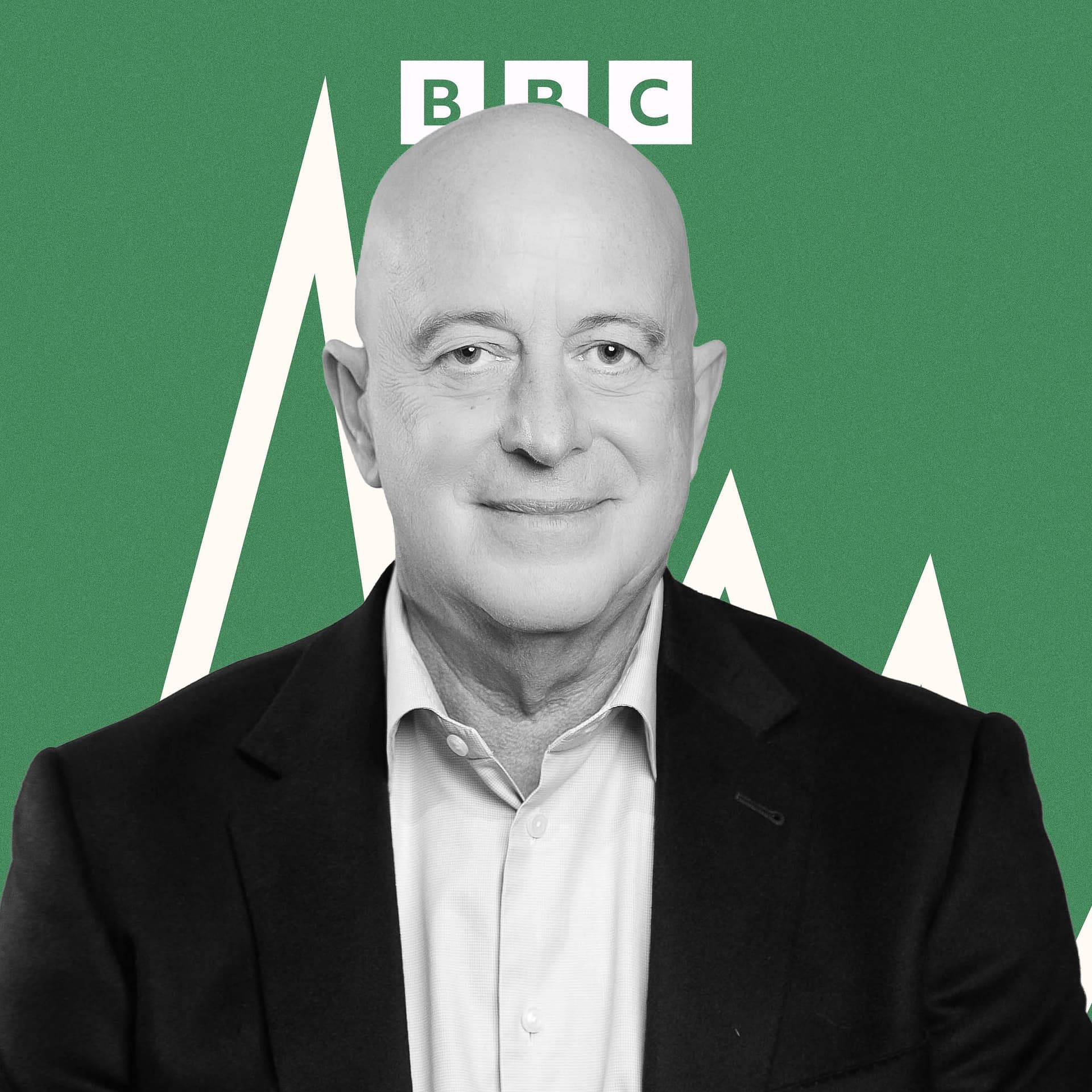
Dirk van der Poort, Mondelez CEO; trained as a veterinarian in Belgium; started at Mars in pet-food PR, then moved into marketing/sales and rose through business roles.
Key claims
Processed food is necessary; HFSS-style regulation changes force costly reformulations (about £40m) and should be paired with education; GLP-1s haven’t sharply hurt Mondelez because snacking continues, but consumers want healthier/protein/fiber; cocoa prices may not fully return; UK may lose investment if excluded from the industrial strategy.
Notable examples
Mondelez plant strikes/rebuilds in Ukraine; temporarily stopped Bahrain production after Iran-related missile risk; Russia taxes fund the war; Cadbury 30% reduced-sugar trial failed; Cadbury with Biscoff line.
Written by AI. May contain mistakes. Listen to the episode to check what was said.
Chapters
Tap a time to open that second in VOIntroduction to Mondelez and Industry Challenges
1:20 to 4:08
Discussing Mondelez's impact on the food industry and current economic challenges.
“I'm Will Bain and today, Leanna Burn is making her debut on the Big Boss Interview Podcast.”
Interview with Dirk van der Poot
4:08 to 9:10
Dirk van der Poot shares his journey from vet to CEO and insights on business.
“Thank you so much for joining us and welcome to the Big Boss interview.”
Global Economic Forces Affecting Mondelez
9:10 to 14:00
Exploring how global wars, tariffs, and climate change impact Mondelez's operations.
“It's interesting that you say you kind of feel like it's almost a personal attack sometimes when you hear those debates.”
Challenges in the European Market
14:00 to 15:11
Learn about the current challenges facing businesses in Europe due to geopolitical and economic factors.
“But if there would be any risk, we would immediately stop production again, of course, and try to bring it in from our other factories.”
Impact of Conflict on Operations
15:12 to 17:23
Discover how ongoing conflicts affect operational decisions and employee safety.
“So job security and job creation is starting to be affected.”
Staying Operational in Russia
17:24 to 19:46
Understand the reasoning behind maintaining operations in Russia amidst controversy.
“We have conversation about how things are going.”
Navigating Corporate Responsibilities
19:47 to 21:24
Explore the balance CEOs must strike between moral choices and business responsibilities.
“Yes, yes It was also a little bit out of context.”
Challenges of Global Business Dynamics
21:25 to 22:39
Learn how global conflicts and relationships impact business operations.
“Secondly, there's the consumers, and we try to provide the consumers.”
Climate Change and Cocoa Supply
22:40 to 25:01
Discover the challenges climate change presents to cocoa production and pricing.
“El Nino is very much in the news at the moment.”
Consumer Pricing Dynamics
25:02 to 28:01
Understand the pricing strategies companies use in response to market changes and consumer perceptions.
“And that's probably Ghana and Ivory Coast need to work on professionalizing the sector, getting rid of the endemic disease.”
Show all 19 chapters
Consumer Preferences and Shrinkflation
28:01 to 30:08
Learn about consumer reactions to price changes and product sizes in the chocolate market.
“But they don't want when they were paying, I say, one pound, suddenly pay one and a half or two pounds for the same quantity.”
Mondelez's Economic Impact and Government Oversight
30:09 to 32:37
Discover Mondelez's contributions to the UK economy and frustrations with government strategy exclusion.
“So, Mondelez contributed more than£2.3 billion to the UK economy last year, supports around 12 ,000 jobs, spent£1.3 billion with more than 1 ,000 UK suppliers.”
Challenges of Regulatory Changes in Food Industry
32:38 to 36:08
Explore the impact of fluctuating regulations on product reformulation and public health initiatives.
“And so if you think about it, food and drinks doesn't get the attention it deserves, in my opinion.”
Balancing Responsibility in Health and Nutrition
36:09 to 38:44
Understand the dual responsibility of consumers and food companies in promoting health.
“And then suddenly the regulations changes again.”
Adapting to Changes in Consumer Health Trends
38:45 to 42:01
Analyze the impact of emerging weight-loss drugs and shifting consumer preferences on the food industry.
“Because I believe that if we can make our products healthier, it's a balance for us.”
Consumer Trends and Health-Oriented Snacks
42:01 to 43:15
Learn about the impact of GLP-1 drugs on consumer snack choices and industry adaptation.
“Of course, we study the consumers that are on the drug.”
Acquisitions and Personal Snack Preferences
43:16 to 44:14
Discover recent acquisitions and personal snack favorites of the CEO.
“is that 18 % of the adult population has tried them.”
The Art of Chocolate Tasting
44:15 to 45:31
Uncover insights on the job of chocolate tasting and the innate skills required.
“and so because we know each other we started to talk and say what can we do together and we developed this whole line of Cadbury with Biscoff, which is a big success here.”
Thank You and Podcast Promotion
45:32 to 46:00
Conclusion of the interview with a call to subscribe for more business insights.
“And so I'm a tasting Neanderthal, I would say.”
Transcript
Automatic transcript. May contain errors.0:00This BBC podcast is supported by ads outside the UK.
0:30Dirk Van de Put:Stop by your local Menards today.
0:36Who's actually won the Iran war? I'm Tristan Redman. And I'm Asma Khaled. And together we host the Global Story podcast from the BBC. The US and Iran say they've struck a deal to end the war. But a key question is what's actually been achieved by nearly four months of fighting. And is the situation better, worse or the same for the region and Iran? For the full story, check out The Global Story on BBC.com or wherever you get your podcasts.
1:20Hello and welcome to the Big Boss Interview Podcast. I'm Will Bain and today, Leanna Burn is making her debut on the Big Boss Interview Podcast. How do you find it? That's great. I had a great time. Yeah, well, no doubt. Because you had a really interesting guest. The company name might not mean a lot to people, but some of their brands are like Cadbury's, Oreo, Toblerone. Definitely things that I think are in a lot of our listeners' households, I'm sure. Yeah, listen, we've indulged in it all. I've definitely indulged in it all. So I've been speaking to Dirk van der Poet. He's the CEO of Mondelez International.
1:54And it comes at an interesting time for the company because whenever something happens in the global economy, a huge company like that is affected by it all. So we're talking inflation, wars, cocoa prices. We get into all of that. Interestingly, about the UK, Mondelez is feeling a little bit left out because it has not been included in the industrial strategy. So the food industry hasn't been included in the industrial strategy. And also it feels like all these new regulations is to do with advertising and also what the ingredients and trying to make these snacks that they make a lot healthier.
2:29It says that the regulation can be a bit too much for the business, that they have to shift and change and invest a lot in reformulating these snacks. So it can be quite tough. And they're actually, you know, kind of saying, if this continues on, then maybe the UK is not necessarily the best place for us to invest. and also spoke about its European business, particularly Ukraine. That day even it said its facility in Ukraine had been hit by a strike and it's having to deal with things like that and having to rebuild that plant all the time when that happens in Ukraine. But then at the same time, it's still operating in Russia and he's having to make moral decisions as to whether or not to continue there.
3:06But he also realises that the tax that they pay in Russia, it is going to fund the war. So yeah, we covered a lot of ground. Another big trend that he's having to deal with too, right? And we've talked about this. You've done a lot of reporting around this. GLP-1 drugs, these jabs, things like Wigobi from Novo Nordisk, the impact that that is having on chocolate consumption. Yeah, it's interesting. He actually said it wasn't having a huge impact on his business. And the reason is, is because it's snacking. And so I said to him, actually, maybe snacking is quite good for you. GLPs might be quite good for you because they're small sizes.
3:42People are just going to continue to snack. So he says he hasn't seen necessarily a huge change for his business. However, he did say that people are looking, if they are snacking, for something a lot more healthy. And that's why he's been making acquisitions in that space. So you can hear all of that and more. Here's my interview with Dirk van der Poot, CEO of Mondelez International.
4:08Thank you so much for joining us and welcome to the Big Boss interview. Your story is really interesting because you actually trained as a vet in Belgium. That's quite a leap. Yes, yes. In fact, I started in Mars. I graduated as a vet and we were just talking about it while I was a student, with some friends, we started a pirate radio. I went into the army. We had obligatory army service. So I did that. And then as I was there, I saw Mars was advertising for a veterinarian to become the head of PR for their pet food division. Right, okay. So, and there really wasn't that many veterinarians with PR experience.
4:52I would think in Belgium. So I was lucky to get the job. And so instead of going into the veterinary direction, I ended up in the business direction. And so that's how it started, basically. Yeah, it was a couple of different avenues you could have taken. You could have become a vet. You could have become a radio host. You could be doing what I'm doing. No, I wasn't good at it. I was the guy in the background of the pirate radio. I was not allowed to be on the broadcast. And what was that first job like? What did you learn from that? What did you kind of get a sense of from working in a big food company?
5:23Well, the job was basically, in those days, to try to convince pet owners, veterinarians, the authorities, that pet food was good for your dogs and your cats. And so it was influencing, explaining. And so what I learned was from the scientific world, a vet, you're in your hospital, and so suddenly there was another world about dealing with people, talking to people, connecting. And I was really intrigued by it. I really liked it. And it was sort of different for me. And I enjoyed it. So I asked Mars, can I continue in this direction? Can I maybe study some marketing? because very intrigued. I knew nothing about the business world.
6:15I knew nothing about P &Ls or brand building or all that. So I said, can you maybe learn me that? And so they sent me to a postgraduate and then they put me in marketing and from there I went into sales and that's how I started to develop, mostly in the commercial direction of the business. Well, let's talk about the scale of Mondelieu's because I think maybe not everybody would necessarily know that name, but they'll know Cabaret, they'll know Oreos, or no Ritz or no Toblerone, Philadelphia, the list goes on. But, you know, you are feeding millions of people every day. What is it like running a company with that kind of reach?
6:50Yes, yes. I travel a lot. I think the best way to describe it is that you are in permanent conversations because my kids always ask me, but what do you actually do there? But my job is talking, talking with myself, thinking, talking and convincing people and following up and see how things are going. So that's the best way to describe it. The other big thing for me is organization. There's so many things going on and so many areas where you can get involved in to be very disciplined with your time and in the subjects you focus on. And then counting on the people, your team that works with you, that they will deal with the rest.
7:41That is a very big part of the job too. As it relates to, I mean, if you go into grocery stores or you go to India, for instance, and you see every little store in India has Cadbury in there, they don't ask, give me a chocolate, give me a Cadbury, they say. And so it's really exciting to see. Or when you come out with a new product and people love it, It's fun to see that. At the same time, when you get criticized, it hurts because you feel like you're the guy responsible. And so you take it very personally, I would say, when the company gets criticized for something. Is there an example that comes top of mind for you on that one?
8:24The discussion about food these days and the role of processed food, that's a tough one for me because I personally believe the world cannot live without processed food. We need to process our food. And the reason why food was being processed, because people for ages have been trying to conserve food, and so processing came because it helped people to keep their food for longer. If you look at it, we couldn't feed the world if there wasn't processed food. So I understand completely the discussion, like, we need to make it better every day, They make it healthier, see what we know now versus what we knew 10 years ago and do whatever we need to make it better.
9:07But it's being vilified a little bit at the moment. And I don't think it's completely fair. That would be one of the subjects. It's interesting that you say you kind of feel like it's almost a personal attack sometimes when you hear those debates. Yeah, it's because I think fundamentally this industry does a lot of good, not only on the employment side of things. and that we're a big company that helps a lot of people. But I think we provide also a lot of happiness and we're in snacking. And so it's a good moment for everybody. Do we try to do that in the best way possible? Yes, yes we do. And so to be sort of accused of not doing that, that is a thing that's tough for me.
9:52Can we do better? For sure. And I don't have a problem to have that discussion. But sort of a not nuanced discussion, that's tough. Sometimes. One of the things that struck me while I was preparing for the interview was that, you know, your business seems to be hit by every force shaping the global economy right now. So whether that's wars, tariffs, climate change, cocoa prices, regulation, even weight loss drugs, which I'm sure we'll talk about later. Yeah. How do you keep all of those plates spinning? I think my role is largely to look forward. My role is to make sure that the company five to ten years down the road is still doing well and recognize what are those factors that could be positive for us and then play on them, use them, build on them, or the ones that could be counter to what we're trying to do and make sure that the company is prepared for that.
10:44So that's my biggest filter for me. Now, in my team or the teams of my teams, it's different. There is something often about how do we do this month, how do we do next year. So it's a different focus for different people. Do I follow up on the day-to-day? Of course I do. But the main thing for me is like GLP-1s or weight loss drugs. Yes, following that up. What do we do about that? how is that going to affect our business? Cocoa, the cocoa supply chain for the next 10, 20 years, how do we as an industry? Those are the ones that I focus my attention on. Well, one supply chain disruptor, let's talk about war.
11:28We've had news that the US and Iran have signed a deal. I'd like to get your reaction to that because that is a disruptor, isn't it? When you've got supply chains and people might be listening and thinking, how would something like the Strait of Hormuz affect your business? But it does. Oh, yes, yes, it does. Well, it's a good thing in the first place. I hope it lasts and that there's genuine intent from both sides. It's basically related to oil. And if oil prices go up, you might not immediately realize that. But oil is in many, many things. The main thing that you will see in the grocery stores is packaging.
12:02Plastic packaging has a lot of oil in it. So if oil goes up, plastic packaging goes up. And I think consumers are already fed up with inflation over the last years. And so for us as a company, it's like, no, again, another thing that's going to go up. How are we going to explain this to the consumer? So that is one. But, for instance, oil is also in fertilizers. And so that means that the cost of any agricultural activity there is will go up. And so that's going to be a secondary effect. Of course, people see it at the pump when they go and fill up their car. So it might seem that this one war suddenly is going to have a worldwide impact.
12:41We studied it, and during the last big oil conflicts where oil price went up, you had a worldwide inflation of 4%, 5%. And so this is going to trickle everywhere. So hopefully there is peace, not only for the oil price, but for all the people involved. And it lasts, and oil prices start to come down because then the whole world will relax. And it's been going on a little bit too long that I think it might still take the best of this year before oil prices really come down. Back in February 2026, you said that after US and Israeli strikes on Iran, you briefly stopped production at your Bahrain manufacturing facility, which then resumed at reduced capacity.
13:24Is that still the case or how are you managing that? Yeah, I mean, it was so dangerous, and we are not too far away from an American military base, and we said, well, it could be that they misfire or so. So we sent everybody home, and we stopped the plant for about three weeks. We started importing our products into the Middle Eastern region, but now the factory has started working again. It's relatively safe. I would say we feel it's safe. And so it's up to normal production. But yeah, you have to sometimes make sure that everybody is safe because you never know. But if there would be any risk, we would immediately stop production again, of course, and try to bring it in from our other factories.
14:11But at this stage, it feels it's okay. We've had in Europe as well, quite similar issues with war and supply chain disruptions. Europe is your biggest market. So, you know, when you're at the center of so many shocks, when you've got war, energy prices, inflation regulation, has Europe become a more difficult place to do business? Yes, it is. Not only would I say it affects your supply chain, like we just discussed, and it affects also consumers. because consumers suddenly, I think consumer confidence around the world at the moment, how people feel about the future is amongst the worst that I've seen it in my career, and I've got a 30-year career.
14:54They don't feel good about the future. Suddenly there's war again. The Russia-Ukraine conflict keeps on going. Now we got this one. You got global inflation. So people don't feel good. And so that's a second effect that you get from all of this. It also affects the economy. So job security and job creation is starting to be affected. So it certainly has become much more difficult to do business. And if I reflect on that 30-year career, I would say this has been probably the toughest two years that I've seen. It might be because I'm now the CEO, but I've been the CEO now for 15 years. In the 15 years, for sure, this was the worst that I've seen it.
15:41If you think about everything that's been going on, it's quite extraordinary. Yeah, it has been quite an extraordinary couple of years. I think you had a very similar situation in Ukraine back in 2022 when you had to shut down production there. It is back open. But it's probably quite similar to Bahrain where you have a manufacturing facility there. It's open, but that's a country that's under attack. Yes, yes. I mean, in fact, I just got news this morning that our office building in the Ukraine got hit. Not everybody's safe. They're fine. It was on another floor. But yes, it's the reality of the situation.
16:21Our plant got hit. We have two plants there. One plant got hit twice. We've rebuilt it twice. First time it was real serious. Tens of millions of dollars of reinvestment. we've agreed that we will rebuild every single time there so we keep on investing in the country we we doubled everybody's salary when the conflict started and we have not fired anybody we at the moment when it was really bad we we evacuated women and children to neighboring countries and they stayed with our with our people in those countries so we've we're committed there But for the people that work there, it's, yeah, it's every day there's danger.
17:04And so it's very difficult for me to completely comprehend that, what it's like. I mean, being in the office and suddenly there's a drone attack, that's not something that we're confronted with all day to day. And I have to say for the people over there that are so dedicated to the company, I really appreciate that. Do you speak to them often? Yeah, yeah, of course. We have conversation about how things are going. But I think even if you talk to them, it's difficult to really imagine those circumstances. I guess on the flip side of that, Mandalay has chose to continue operating in Russia. Now, you suspended new investment in advertising there.
17:44But you argued at the time that leaving could simply hand assets to Putin-linked interests. Do you still believe that that was the right decision? And do you still believe that that could be the case if you pulled out? Yes, yes. The reason why we stayed was in the first place our people and the people that depend of the business. Often I get asked, what is your main job or your main objective? For me, in the first place, it's take care of our people, the 90 ,000 plus, because we provide professional and personal development for them and their families. And then there's a lot of other businesses and people, farmers, that depends on us.
18:20So I consider that my first. And then there is the consumer. That's the second one. So leaving Russia would probably have left 3 ,000 of our people without the job and probably 10 ,000 farmers. I know it's heavily discussed and it's not an easy decision. But over time, I've learned a lot from developing markets and conflicts. I think over time you try to stay, you try to be neutral in the whole conflict. We're not trying to take any side. We do the right thing in Ukraine. I think we did the right thing for our people in Russia. Can we be criticized for that? Yeah, of course. We pay taxes in Russia.
19:08That helps the war. I'm not pleased about that. but I also believe that if we would have seeded they would have confiscated our plants it would have probably given them a much bigger source of income keep on selling our products to fund the war so I feel that in the end it's not the most popular decision but I think it was the right decision the way I think about it is I need to do in the first place what's best for our people and for the business I am not a big fan of CEOs taking big political stances that's not me that's more who I personally am and yes it is a moral choice and if it was just me maybe the decision would have been different but if I took the angle I just explained I thought it was the right thing to do At the time you told the Financial Times that investors don't morally care whether companies stay in Russia do you regret that comment?
20:05Yes, yes It was also a little bit out of context. The discussion was, aren't investors all over you because you stay in Russia? And I said, no, they asked me about it, and I explained our position. I don't remember to be exact if I said don't morally care or didn't. I said, it doesn't seem that they are just focused on that. they're investors and they try to understand the company position. That was really what I was trying to say. But yeah, I mean, it wasn't reflected the way I would have hoped it would be. It's an interesting one, though, even if you said it, you didn't say it. I mean, that comment could be true because corporate social responsibility maybe 15 years ago, 10, 15 years ago was such a big topic, wasn't it?
20:57But perhaps it went too far in the sense that it was asking CEOs CEOs to choose between moral decisions and everything from the environment to making everybody happy. But the reality is with an organization that's for profit, can you really make everybody happy? No, you can't. And that's why I said you have to have filters. You have to be clear on what's your first level of responsibility. My first level of responsibilities are people. So So that always will shine through in the discussion or in the decision. Secondly, there's the consumers, and we try to provide the consumers. There's others.
21:36There's the communities we're part of. There's our investors, of course. So you have to go through all these layers, what makes sense. But you can't make them all happy, that's for sure. And it is important, I think, in advance, no matter what happens, to be clear on how you're going to make, to have that framework on how you're going to make your decisions. That's what I try to do. It's tough these days because with all these conflicts that are going on, governments more and more are trying to use companies. I mean, imagine China. The U.S. and China relationship has improved, but at a certain stage there have been U.S.
22:14companies who have been forbidden to do business in China. So it's tough sometimes to be sort of being... You're caught in the middle. Yeah, you're caught in the middle. And how do you deal with that? It's probably the most difficult aspect of the job and the part that I like the least. I just want to make good chocolate and make consumers happy. But it's not always like that. Well, let's talk about another supply chain disruptor, I guess environment and climate change. El Nino is very much in the news at the moment. Meteorologists are warning about the impact on cocoa production. Wells Fargo is warning that tight inventories and the risk of El Nino could keep cocoa prices elevated.
22:57Is that your view too? Is that what you're seeing? How does that filter into the business? Yes, for sure. If you think about cocoa, which is the main ingredient for chocolate, the cocoa supply chain in the last two, three years has been shaken in a way that has not happened for the last 30, 40 years. Probably never. And so there's something going on. I don't know if you want to go into all the factors, but roughly it is most of the cocoa in the world comes from Ghana and Ivory Coast. Ghana and Ivory Coast, the supply chain there is hundreds of thousands small farmers growing cocoa scattered around the country, a lot of them in the rainforest, sometimes cutting down the forest to do so.
23:45And the plants there have an endemic disease. So every year the cocoa harvest is less and less. So then suddenly there's a big weather event two years in a row. One year too wet, the other year too dry, and suddenly instead of going down 1 % or 2 % the harvest, it went down 18 % that year. So suddenly there's a shortage of cocoa, people start speculating, and cocoa prices go through the roof. Things have normalized now. The last two crops have been quite good, but it was with the last El Nino that this event happened. And so everybody's now saying, well, El Nino is back. Are we going to have another situation like that?
24:28What I know at this stage is there is a surplus of cocoa based on those very good crops of the last two years. The amount for chocolate, because this skyrocketed the prices for chocolate around the world, the demand for chocolate has come down. So you've got more supply, less demand, cocoa prices are normalized. Even if we have a not so great crop, which comes in the second half of this year, I think this year we should be fine. But certainly over the longer period, something needs to be done about the cocoa supply chain. And that's probably Ghana and Ivory Coast need to work on professionalizing the sector, getting rid of the endemic disease.
25:09And the rest of the world should also produce cocoa so that it all gets more balanced. We do that as a company. We are already balancing. But it's clearly a supply chain that needs intervention and that will require a coordinated effect or impact from companies and governments and farmers to make that happen. So the supply isn't necessarily a big issue for you this year. So what does that mean for consumer prices? Are they going to remain steady? Well, the cocoa prices not come back to where it was. We don't need to increase more, but cocoa prices would need to come down more for us to be able to follow that.
25:48that that's really the movement that we're waiting for. This doesn't help the whole discussion around El Nino. I think some people said cocoa prices will go up again. That causes a lot of anxiety. So we'll have to see what happens. But hopefully things will continue to come down. Do you think climate change is the biggest risk for your company at the moment, particularly in 5, 10, 15 years? I mean, it is something that we have to work on for sure. and we've got a net zero plan. I don't know if the listeners are familiar with it, but you have sort of the three levels. The third level, which is the biggest for us of our CO2 footprint, is their suppliers.
26:33So it's the cocoa supply chain, the wheat supply chain, the dairy supply chain, what goes on there. And so it is not the biggest risk, but it's the biggest dilemma. How do we influence that so that the carbon dioxide footprint goes down? And like cows, how do we reduce the CO2 outputs of cows or the methane outputs of cows? How do we bring down deforestation? We're almost at zero deforestation now in the cocoa supply chain. So that is working. But how do we make sure that the CO2 footprint of cocoa comes down and so on and so on? That, for me, is a big challenge because we've taken a commitment that we will have no more footprint or no more negative footprint by 2050.
Read the full transcript
27:22And that's quite a lot of work. We'll get it done in our own operations, trucks, plants, and so we'll get that done. But it's the third part, the supply chain, that's going to be the difficult part for us. Is it fair to say that there's kind of widespread feeling among consumers that they're paying more and sometimes getting less? So you've got smaller packets, smaller bars, higher prices. Is that perception fair? I mean, the big question is what do you do? So you have cocoa prices going up. And from my perspective, what I believe, most consumers love their Cadbury. They want to have their daily Cadbury.
28:04But they don't want when they were paying, I say, one pound, suddenly pay one and a half or two pounds for the same quantity. They would like to continue to buy something at one pound. So what do we do? Yes, we reduce sometimes the size. We don't do that in a malicious way. But if we look at how consumers make their decisions, the price point at which they can buy is very important. People call it shrinkflation and so on. But it's not that we're trying to fool the consumer in any way or so. But it is, to our opinion, the best way to make sure that people can keep on enjoying their caffeine. How do you make the decision between either making it smaller or more expensive?
28:46Well, it is this study of price points. So what we look at is how many people buy at that price point. And then we can study if we move it to one and a half, how many people will drop out of buying it. And based on those studies, we decide what to do, basically. Have you had to change recipes perhaps as well to keep costs down? No, we don't change recipes. Of course, that discussion came up, but we feel that we don't want to bring down the quality of our products. And if you have a Cadbury bar, you want it to be a real chocolate. So that was not an option for us. I understand that you wouldn't necessarily want to go to a consumer and say, hey, this is a little bit smaller, but maybe a bit more transparency for consumers rather than perhaps them seeing somebody on social media giving things, like this Easter egg is smaller than the last year or something like that.
29:41That might be negative for your company. Yes, yes. And yeah, there's always discussions how well did we announce it. From our perspective, we don't always do it on pack, but we do it on our websites and so on. So yes, I mean, we look at that and we will in the future, because you're probably referring to some discussions we had in Germany with the authorities there. We will make sure that we are more transparent about that. Now, you've got a report out. I've got it here next to me. Lots of numbers. So, Mondelez contributed more than£2.3 billion to the UK economy last year, supports around 12 ,000 jobs, spent£1.3 billion with more than 1 ,000 UK suppliers.
30:26But, Dirk, I feel like the reason you've written this report is that you're feeling frustrated because the industry, the food industry hasn't been included in the government's industrial strategy. So what are your issues with not being included in the strategy? Well, it's about 25 % of the industrial turnover, I think, in the country. So it's weird for me that a sector that represents 25 % is not included in your industrial footprint. And that has consequences. You don't get energy subsidies, you don't get R &D subsidies and so on. I think directly the industry the food and drinks industry supplies work to about 500 ,000 people indirectly over 2 million it's about 11 % of employment in the UK so it would be like me saying well Cadbury is big but it's not growing so fast I won't invest in Cadbury anymore it doesn't make sense I mean we do the same we have a portfolio of brands of course we have young up and coming brands in this case technology I would say in industrial or digital or AI.
31:31Yes, we have to invest, but we also have to keep on investing what's the bread and butter of what we do every day. So for me, it's a weird decision. I don't quite understand why you would not include 25 % of your turnover. So do you think the UK government is taking the food and drink industry for granted? I think so. I think they believe that it will just keep on existing. But even there, a lot of things need to be done. We were talking about the fact that consumers are not feeling great. So that industry could suffer, could really have an effect on employment. We talked about sustainability.
32:07We talked about health and wellness. There's a lot there that this industry does for consumers in the country that needs to be developed. And so I think it's a bit of an oversight. I don't quite understand it. But yeah, I think they could have done better, to be honest. I think the other one that is very important for us is the regulatory environment. That has been quite volatile here in the UK. Not quite following why things have to change all the time. And so if you think about it, food and drinks doesn't get the attention it deserves, in my opinion. And on the other hand, you've got a regulatory environment that is very shaky, very volatile, changes all the time.
32:56I was discussing with our team. In the last 20 years, I think we've got 100 different targets as it relates to nutritional targets in the country. And so if you're looking at this from my perspective, the UK is very important for us. It's our second biggest country in the world, so I cannot neglect it. But it makes you doubt a little bit on, okay, how much should we invest in the UK? if this is the environment that we have to deal with. And not saying that we would in any form neglect our business. Like I said, it's very important. We are very proud. But could you see a future perhaps where the UK actually loses out on investment because of government policy?
33:35Dirk Van de Put:Yes, yes, of course. Yeah, we will keep that in mind. That doesn't mean what we have, we will neglect. We will take care of it. And I think we've been good stewards of Cadbury, which has a 200-year heritage. I do think we have been good stewards of that. But yeah, it comes in because we don't everything we do in the UK. We have a lot of local production. We export a lot, too. So we have a good footprint here. But if we have to make future decisions for Europe where to put the next plant, it might not be here because of those reasons. Yeah. Well, let's talk about one regulation that definitely pertains to you guys.
34:11It's HFSS. And for anyone listening who doesn't know what that means, it stands for foods that are high in fat, salt and sugar. And in recent years, the government has introduced tougher restrictions on where they're promoted in shops and how they're advertised. And the aim is to tackle obesity. Now, you're arguing essentially that the problem isn't necessarily the regulation itself, but it's that constant change. But doesn't what we understand about health and food also constantly change? And that's why perhaps they're looking for new formulations or, you know, different placements in shops, that sort of thing.
34:46There's a lot there. So let me try to talk about a few things. First of all, it's our belief that regulation and taxation, as we observe it around the world and as it relates to obesity. And believe me, we don't want obesity either. We want healthy consumers that consume our products with moderation, in the right way, that feel good, don't feel guilty when they eat our products. And we don't want to be associated with obesity. But that means information, education, start in schools, educate kids on, yes, you can have an indulgent product, but not too many a day and keep it under control. For us, that is the solution.
35:24But governments around the world react with taxation and regulation. It can be front-of-the-pack labeling, it can be all the measures we have with HFSS here in the UK. the conclusion of that is it doesn't fundamentally change the habits of people. You change habits because you educate them and they get conscious about it. So that's the first thing that we feel that we should work much harder on our kids and how do we educate them about nutrition. As it relates to this, yes, the constant change is because, let's say, the regulation is you have to make products with less sugar, less salt, and so on.
36:05We start reformulating those. We just spend about 40 million pounds reformulating our products. And then suddenly the regulations changes again. So we have to reformulate again. So we just put 40 million pounds down the drain doing that. That's the thing. And the third thing I would say, a lot of this is not often based on real science, like the whole discussion around ultra-processed food. Nobody can really say what ultra-processed food is exactly. I think the FDA in the US has just admitted that they don't know what the definition is exactly. And so I would say that's the other thing. I think here in the UK now the discussion is around free sugars.
36:47That's a very new concept that's very difficult to sort of put your head around and how do you deal with that as a company. That's the third thing that we don't quite like because it's very vague what it means. I guess I'll pick up on a couple of things. First of all, it's kind of the personal responsibility. Individually, responsibility matters when what you're eating. But companies, they spend billions influencing what people buy. So critics would say that food companies have always downplayed the role of marketing and the formulations as well. What's actually in the food and how they affect people.
37:25So where do you think that balance of responsibility lies between the consumers and the industry itself? Well, both have a responsibility. I think that we certainly as an industry have a role to play. And as science becomes more developed, we need to adapt to it. And we, of course, live in line with all regulations that exist around the world. And as they change, we try to adapt to them. But I think we also need to be realistic. There's only at a certain pace we can make those changes. It's not always easy to make them. So I think there we would need more dialogue. I would say as it relates to what's in the product, yeah, constantly improving the products, reducing sugar, taking out any ingredients that consumers don't understand.
38:18Often they're there because the regulation demands that they're there. They might not have the most appealing name, but they're there because it's required. But working there gradually and improving constantly the food that we make, that's certainly a responsibility we have to take. We embrace it. Of course, we want to do that. But it needs to happen in a dialogue, I think, and not unilaterally. And then we have to deal with the consequences. When you talk about investing millions and reformulating those products to meet the HFSS requirements, if the regulations were scrapped tomorrow, would you still have made those reformulations?
38:57Yes, probably, yes, I would say. Why? Because I believe that if we can make our products healthier, it's a balance for us. Of course, we are a public company. We need to deliver profit. I mean, I won't hide behind that. It's very important. But the day that we know that we can still fulfill that financial objective that we have and do well and make our products healthier, there's no reason why we would not do that. And in a way, it's not bad that everybody has to go at the same time. That evens the playing field, I would say. Because sometimes we, for instance, did a Cadbury 30 % reduced sugar here voluntarily.
39:38It didn't sell. And you could not taste the difference between normal Cadbury and 30 % less sugar. But the consumer, just of the fact that they realized it was 30 % less sugar, they didn't want it. So it was two years of research down the drain. So that's why I'm saying education is very important and keep on trying to do the right thing. And over time, I think the new generations, I can see it, the younger generations are much more concerned about how they eat, they drink less. So there is a change happening, and I think it's coming from the awareness that they have. I think that's going to be the biggest driver for change.
40:17I'm sure some people might be listening, though, and say, you know, there's probably a line between creating certainty for a business like Montenegro that does contribute massively to the UK economy, but then also giving governments the flexibility to respond to public health concerns. Yeah, no, and I think it's a joint responsibility. We want to be part of the solution. We don't want to be the problem. So any invitation we get to have a dialogue and to find the way forward, we're totally open to that. Of course, a government needs to worry about public health. But often it's driven unilaterally without really trying to see what can we do together.
40:55That's what we're asking for. Now, there's a huge shift in the way people think about food and health because of weight loss drugs. They're becoming a lot more common. Pills are now on the horizon here in the UK. They've got the regulatory green light. So do you think we're entering a fundamentally different era for the food industry? How are you coping with that change? And are you seeing a change at all? We don't. There's different ways of looking at it. If you ask us, is your business affected by the drugs? The answer of that is no. Do you think your business will be affected in the next 10 years?
41:27I would say a little bit, but not in a major way. I think we are confronted with a consumer that's going to be healthier, be having means at their disposition, which allows them to work on their weight and so on. There's a lot of side effects. There's also consumers eat in a different way. It means that we will have to reformulate, reformulate, not resize our products. They eat smaller quantities. Actually, if you're in the snacking business, perhaps this isn't such a bad thing if people are just snacking, not eating necessarily full meals. It depends a little bit. Of course, we study the consumers that are on the drug.
42:04They start off with eating a lot less, and then they start to snack gradually more. The other thing I think at this moment is that they don't stay on the drug very long. The average, I don't know the numbers for the UK, but in the US is nine months. And the question is also, do you want to keep on taking this for the rest of your life? Overall, I personally think it's a pretty good thing that it exists. It will make people healthier. And we as an industry or as a company, we will adapt to that. That we will, if it's gradual, we will make the right products that people love and that fit in the diet of somebody on the drug.
42:38Well, actually, I looked at some of your recent acquisitions, Grenade, Clif Bar, Perfect Snacks, Hugh. I guess that reflects changing consumer preferences for protein, like a healthier snack. You could see it as a spectrum, indulgent products to healthier products. And that balance over time will have to change. We change with the consumer. And like I was saying, we clearly see a trend towards more health-oriented. That doesn't mean the indulgent side is collapsing, far from. But yes, so we try to adapt to that. Yeah, what we see at the moment, and that's a consequence we think of some of the GLP-1 drugs.
43:14Because the funny part, for instance, in the U.S. is that 18 % of the adult population has tried them. Only 4.7 % are on them right now. So they go in, they go out. But one of the things that comes with it is that you have to eat more protein because when you start to lose weight, it affects your muscles as much as your fat. And so you want to replace those muscles, hence the more protein. That is a big trend these days. We think fiber because digestion is affected through the drugs. So that's why we see the big fiber trend coming up too. Any more acquisitions you'd like to make in that space?
43:51Yeah, of course. we try to do both develop internally but also if we see a young up and coming company that's doing really well and we could partner with them yeah we love to do that what do you snack on Dirk? what do I snack on? of course our products I love it's a personal thing so I'm from Belgium and there is this company Lotus Bakeries they make Biscoff and so because we know each other we started to talk and say what can we do together and we developed this whole line of Cadbury with Biscoff, which is a big success here. And we're now doing it around the world. That's one of the chocolates that I love.
44:28And so not only there's a personal note to it, it's also probably my preferred snack. I've also have to ask you about, many people would describe as the dream job, a chocolate taster. I've got my CV here, I'm joking. You actually employ people whose job it is to taste chocolate and give feedback. Have you ever done it yourself? Yeah, but I'm bad at it. You're bad at it? You're from Belgium. How could you be bad at it? Well, my wife tells me, I can't believe you're the CEO of a chocolate company. I know chocolate better than you do. And she is. She's a better taster than I am. She could get that job then.
45:01Yeah, she could get it. There's people that have an incredible developed sense of taste. Unfortunately, I'm not one of them. But they can, like you have the people that taste wine. This is the biggest revelation of the interview, I have to say. Well, if you think about wine, somebody tastes wine and says, okay, I have notes of this. I have no clue when I do that. Same with food. Some people can really detect certain tastes. Others can't. It's about one in a hundred. So, yes, it is an interesting job, but you have to have that. You can learn. Well, you can learn it a little bit, but it has to be innate in your palate, basically.
45:36And so I'm a tasting Neanderthal, I would say. So you're not going to farm that job off to AI anytime soon, are you? No, no, that's impossible to do. Although these days they do have lab. It's not AI, but labs that can almost taste like humans and a lab equipment that can do that. Interesting. Very cool. Dirk van der Poort, thank you for speaking to the Big Boss interview. Well, thank you very much for having me.
46:07Thanks to Dirk van der Poort speaking to Liana Byrne there. And if you don't already, do subscribe to our podcast where you can hear more than 40 conversations just like that one with big business leaders and everything from tech to UK retail to our restaurant scene as well. And while you're there, please do give us a rating and review. It does really help other people find the podcast. And if you want to get in touch with us, it is bigboss at bbc.co.uk. We'd love to hear your thoughts on who we should chat to next. Thanks so much for listening. Who's actually won the Iran war? I'm Tristan Redman.
46:43And I'm Asma Khaled. and together we host the Global Story podcast from the BBC. The US and Iran say they've struck a deal to end the war. But a key question is what's actually been achieved by nearly four months of fighting. And is the situation better, worse or the same for the region and Iran? For the full story, check out the Global Story on BBC.com or wherever you get your podcasts.
From the publisher
Mondelēz International, the company behind Cadbury, Oreo, Toblerone and Ritz, has warned that future European investment could bypass the UK if regulatory instability persists.
Chief executive Dirk Van de Put says the UK is the company’s second-biggest market globally and contributes more than £2.3 billion to the economy each year, supporting 12,000 jobs and spending £1.3 billion with more than 1,000 UK suppliers. But he is sharply critical of food and drink being left out of the government’s industrial strategy, despite representing around a quarter of industrial turnover. He says the sector is being taken for granted and warns that repeated policy shifts have already cost Mondelēz £40 million in reformulation work that was then superseded by further changes. Asked whether future investment could go elsewhere in Europe because of government policy, he says: “Yes, of course.”
Van de Put also defends Mondelēz’s decision to continue operating in Russia, despite acknowledging the company pays taxes there that contribute to the war in Ukraine. He argues that withdrawal would have put 3,000 employees out of work, left 10,000 farmers without a buyer, and likely handed confiscated plants to Kremlin-linked interests that could generate even more money for the Russian state. He says: “I’m not pleased about that,” but maintains that staying was “not the most popular decision” but “the right decision”.
The conflict in Ukraine is not theoretical for Mondelēz. Van de Put reveals that the company’s office building in Ukraine was hit on the morning of the interview, and its factories have been struck and rebuilt twice at a cost of tens of millions. He also said staff were evacuated to neighbouring countries during the worst of the fighting.
More broadly, he describes the past two years as the toughest of his 30-year career. Wars, inflation, oil prices, packaging costs, fertiliser markets and weak household budgets have created cascading pressure across the business. He says global consumer confidence is among the worst he has ever seen.
The cocoa supply chain has also suffered its worst disruption in at least 40 years. Concentrated production in Ghana and Ivory Coast, endemic crop disease and back-to-back extreme weather events drove an 18 per cent fall in harvests and sent prices soaring. Two stronger crops have eased the immediate pressure, but Van de Put says the structural fragility remains and the sector needs long-term intervention from governments, companies and farming communities.
He also pushes back against the backlash against processed food, saying: “The world cannot live without processed foods.” He argues that processing is essential to food preservation and global food security, though he accepts the industry must continue to make products healthier.
On GLP-1 weight loss drugs, Van de Put says Mondelēz is not yet seeing a material impact, but expects the trend to reshape consumer habits over time. He sees the drugs as broadly positive and says the company is adapting through acquisitions in protein and health snacking, including Grenade, Clif Bar and Perfect Snacks, as well as developing products with more protein, fibre and cleaner ingredients.
Presenter: Leanna Byrne Producer: Olie D’Albertanson Editor: Henry Jones
0:00 Will and Leanna intro the podcast 03:01 Dirk Van de Put interview begins / His background as a vet 08:53 Forces shaping the business: wars, tariffs, climate, cocoa, regulation, GLP-1 drugs 13:25 Europe as a difficult market / Consumer confidence at historic lows16:28 Continuing operations in Russia / Moral decisions & taxes funding the war 21:51 Cocoa supply chain crisis, El Niño & prices 24:27 Consumer pricing, shrinkflation & recipe integrity 29:30 UK industrial strategy: food industry left out 33:00 Future investment in UK & HFSS regulation 36:07 Education vs. regulation on obesity & weight loss drugs 41:48 Acquisitions (Grenade, Clif Bar) & protein/fibre trends 43:50 Chocolate tasters & "tasting Neanderthal" confession