 Big Take
24 Jun 2025 · 18m

 Add vo to ChatGPT or Claude to ask about everything you hear
vo listened to this episode to put together the overview and transcript, so there may be the odd mistake.
Analysis of President Trump’s announced Israel-Iran ceasefire, recent U.S./Israeli strikes on Iran’s nuclear sites, and whether Iran and the U.S. can return to negotiations like the 2015 JCPOA.
Ernest Moniz, former U.S. Energy Secretary and lead JCPOA negotiator; nuclear physicist; now heads a nonprofit advocating nuclear disarmament. Nick Wadhams, Bloomberg national security reporter covering U.S.-Israel-Iran developments.
The ceasefire is very fragile and could unravel due to undisclosed enrichment sites, lost tracked uranium, or further Israeli targeting. Strikes may be militarily successful but damage doesn’t equal eliminating a weapons program; Iran could move uranium (e.g., uranium hexafluoride) and may have covert locations. A new deal would require “don’t trust and verify” verification, plus incentives for peaceful nuclear use and confidence against covert weaponization.
JCPOA verification approach; U.S. withdrawal in 2018; Iran’s 2015 “weeks vs years” weapons timeline distinctions; references to Russia/North Korea/Cuba under sanctions.
0:00Some people treat ChatGPT like some kind of smart search engine, and some use it to get work done. ChatGPT Work is a new way of working in ChatGPT that can take action across your apps and files, stay with a project for hours if needed, and turn a goal into finished work. It's designed to help you move from a chaotic starting point to a reviewable first version. So all the source materials, briefs, and scattered information that you have to grind through to turn into something useful can just become something useful. Put ChatGPT to work on your most ambitious ideas and projects. Get started at ChatGPT.com by selecting Work Mode, available on Plus and Pro plans.
0:42Never bet against American grit or American energy. Through innovation, Venture Global is not only building some of the largest energy facilities in the world right here in the United States, but delivering American energy at a fraction of the cost and a fraction of the time. So while others are busy talking, we're busy building. That's Venture Global. That's unstoppable energy. for big business ai opened up a world of promise but that world of promise turned into a world of pain costs spiraling data trapped security and governance risks multiplying and roi out of reach that's why enterprises turned to boomi to connect data apps and ai helping them operate securely efficiently and at scale boomi turns a world of ai pain into a world of ai gain as boomi says We got you.
1:39Head to Boomi.com. That's B-O-O-M-I dot com. Bloomberg Audio Studios. Podcasts. Radio. News. On Monday night, President Trump announced on Truth Social that he'd helped negotiate a ceasefire between Israel and Iran. Then on Tuesday, the president criticized both countries for threatening that fragile pause. It just feels like there are so many ways in which this thing could unwind. Nick Wadhams covers national security for Bloomberg. And it feels like we're very far from a situation where we'd be able to enter into diplomacy to come to some sort of longer term resolution. But even if a diplomatic solution seems out of reach, it has happened before.
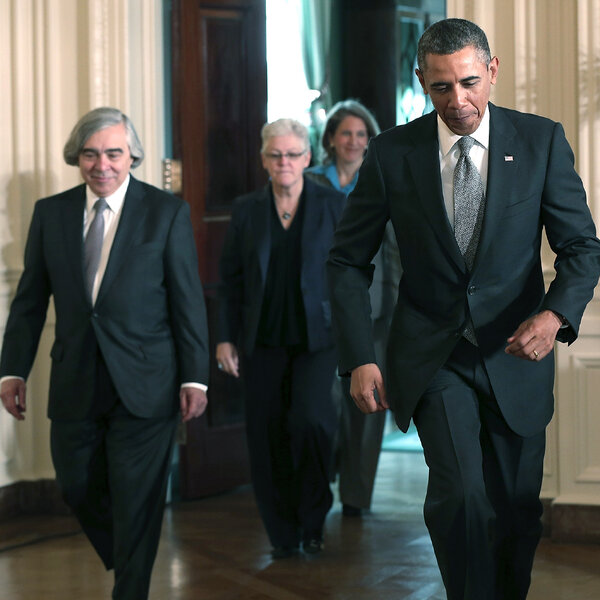
2:28About a decade ago, months of negotiations led to the Joint Comprehensive Plan of Action, the JCPOA. In February of 2015, when the negotiations were at a bit of a standstill, President Obama decided that I would join Secretary Kerry, the Secretary of State, in the talks. Ernest Moniz played a big role in those talks as President Obama's energy secretary. He's also a nuclear physicist. Today, he's the head of a nonprofit that advocates for nuclear disarmament. He's been watching the latest out of Iran closely. And he argues it's time for a new agreement. I think there are many, many ways to go about this, but it's time to go about it.
3:09But with a shaky ceasefire in place, just what would it take to get back to negotiations? And what's at stake if that doesn't happen?
3:23I'm David Gurra, and this is The Big Take from Bloomberg News. Today on the show, I speak with former U.S. Energy Secretary Ernest Moniz and with Bloomberg's Nick Wadhams about President Trump's approach to Iran, the state of the country's nuclear program, and what previous negotiations can tell us about the moment we're in now.
3:47Bloomberg's Nick Wadhams has been tracking the fast-moving developments between the U.S., Israel, and Iran. And he and I spoke on Tuesday morning. I want to ask you first about the ceasefire President Trump announced last night on Truth Social. Help us make sense of it. What is President Trump trying to accomplish here? I think the president chiefly is trying to get himself a foreign policy win and to make it look like he has a greater deal of influence than he actually has. But you have this fascinating situation where the president is essentially conducting foreign policy by tweet and announced this ceasefire that seemed to catch even some members of his own administration off guard.
4:29He basically, via J.D. Vance and Steve Whitcoff, back-channeled with Israel and then got the Qataris to pull Iran on board. And I think the bigger signal there is that in a lot of ways, everybody kind of wants this thing to end. So he found a fortuitous moment to essentially claim victory. We heard his frustration on Tuesday morning as he talked to reporters before he left Washington for a NATO summit. We basically have two countries that have been fighting so long and so hard that they don't know what the f**k they're doing. Do you understand that? How fragile is this ceasefire, Nick? I would say this is a very, very fragile ceasefire.
5:09The president essentially said, you know, there's going to be peace in the region. But I have a lot of questions about that. What if investigators or U.S. intelligence find there's another site, as Iran has intimated, where it's continuing enrichment? Or what if the U.S. finds those 900 pounds of enriched uranium, which they've lost track of, and they decide, okay, another bunker buster bomb is needed to take out that uranium? So there are all sorts of those elements. But then there's the Israel component. What if Israel finds a target of opportunity or a moment of opportunity where it can take out another Iranian scientist who's involved with the nuclear program or another military general?
5:48I mean, it just feels like there are so many ways in which this thing could unwind. And it feels like we're very far from a situation where we'd be able to enter into diplomacy to come to some sort of longer term resolution. I want to dig into one part of that, and it is sort of what it's going to take to figure out how successful those strikes were. How difficult is it going to be to assess how much material was at those sites, how much might have been moved? Well, there are a couple of things. One is in terms of eliminating the material that Iran needs to make a bomb, there is no assessment that currently exists to suggest that that material has been taken off the table.
6:27So the U.S. has basically lost track of where that enriched uranium is. The question is, can Iran produce more? And then could it produce a bomb, a weapon that could deliver a nuclear warhead? And Iran is still seen as being some ways away from that. So, you know, you have assessments now saying that Iran has essentially been pushed back. But the challenge when you look at enrichment, of course, is that Fordow is a facility that's buried underneath a mountain. That's why they needed those bunker buster bombs. At the moment, we're still waiting for a lot of that information to come in. On Tuesday, the New York Times reported the U.S.
7:04strikes didn't collapse Iran's underground nuclear facilities and, quote, set back Iran's nuclear program by only a few months. Former Energy Secretary Ernest Moniz spent a lot of time when he was negotiating the Iran deal on verification, how the international community could assess what Iran was doing and what it wasn't. I asked him how far away he thinks Iran is from developing a nuclear weapon. When you hear these different timeframes, often what you're hearing is apples and oranges being compared. For example, when one talks about weeks pre-attack, that was correct in terms of the time it would take from where they were starting with highly enriched uranium to reach weapons grade for a substantial number of weapons.
7:55That would have been weeks. That's not the same, as you often hear, as building a nuclear weapon. So then you hear some say, well, it's three years away. I think that's a little bit on the high side in the sense that there are many intermediate places you can go in building much cruder weapons, which are nevertheless would make for a very, very bad day if one were to explode. I saw that Antony Blinken, who is President Biden, Secretary of State, and someone with whom you worked in the Obama administration, had a piece in The Times on Tuesday. And he called the strikes on Iran by the U.S. and Israel unwise and unnecessary.
8:33But he added that now that it's done, I very much hope it succeeded. Do you feel similarly about what's transpired here over the last few days? Well, first of all, I think there's no question that militarily it was a success. Whether success means Fordow was badly damaged or obliterated I think remains to be seen. but clearly lots of damage to that facility and also to the Natanz enrichment facility. However, I would distinguish damage of facilities with curtailment of a possible nuclear weapons program. Looking at how much damage has been done, how much time and effort is that going to take? It's likely that we'll never really quite know the exact level of damage, but I don't think it matters that much to me.
9:17it's going to be much more now what they elect to do or not do in covert sites before the U.S. bombing, Iran, made the statement that they had a third undisclosed location. I'd have no idea if that's true or not, but I wouldn't rule it out. And when you combine that with the enriched uranium that was probably moved and hidden, and you combine that with their extensive work on other elements of a nuclear weapon up until 2003. I don't think we should doubt that they have the capability of building a nuclear weapon, certainly a crude one, in a reasonably prompt time. How difficult is it to move nuclear materials around?
10:03So if in advance of these attacks, Iran wanted to move some of that uranium, how hard an undertaking is that? That would be simple. It's just cylinders filled with a gaseous form, uranium hexafluoride to be precise in, you know, in basically metal tanks. And you can just load them onto a truck and move them. We may not ever know how much of that highly enriched uranium escaped the bombing. If I were a military planner, I would be assuming all of it was moved. After the break, what could bring Iran back to the negotiating table after a blistering few weeks of fighting in the Middle East?
10:49Some people treat ChatGPT like some kind of smart search engine, and some use it to get work done. ChatGPT Work is a new way of working in ChatGPT that can take action across your apps and files, stay with a project for hours if needed, and turn a goal into finished work. It's designed to help you move from a chaotic starting point to a reviewable first version. So all the source materials, briefs, and scattered information that you have to grind through to turn into something useful can just become something useful. Put ChatGPT to work on your most ambitious ideas and projects. Get started at ChatGPT.com by selecting Work Mode, available on Plus and Pro plans.
11:31Running a business means you're always on the move. the Delta Sky Miles Reserve Business American Express card is made for frequent travelers who want premium benefits that works as hard as they do. For a limited time, new Delta Sky Miles Reserve Business card members can earn 200 ,000 bonus miles, the highest miles offered this year. And when you need to recharge or find a quiet place to work, the Delta Sky Club can turn a layover into precious productive time or a restful reset. You can enjoy 15 visits each medallion year to the Delta Sky Club when flying Delta and unlock unlimited Delta Sky Club access after spending$75 ,000 in purchases on your card during a calendar year.
12:13Plus, receive four one-time guest passes each medallion year so you can bring a colleague along. That's 15 Sky Club visits plus four guest passes for an annual value of up to$950. Value estimate based on$50 per visit rate to purchase additional visits or bring a guest to the Delta Sky Club. Apply today at www.delta.com slash podcast. Offer ends 11-426. Minimum spending requirements and terms apply. This is Alexis Christopoulos for Bloomberg Surveillance. AI is everywhere. Outcomes are not. Not because AI doesn't work, but because AI hasn't reached the workflows yet. The campaigns, the launches, the quarterly planning.
12:51Those workflows are still run by humans alone. AI is making individuals faster, but it's not making businesses more productive. That's the gap Asana is built to close. Asana is the operating system for human agent teams, your easy button for AI productivity across every team. Ready-to-go AI teammates pre-built for marketing, ops, and IT. No prompt engineering, no setup. They show up where the work is happening, already onboarded in your workflows, ready to deliver. And the more they work with your team, the smarter they get. With Asana, your whole company can work on the same plan towards the same goal, whether you're a team of 10 or 10 ,000.
13:31Asana, where humans and agents workflow together. Try it at asana.com. That's A-S-A-N-A dot com.
13:42On Tuesday, after President Trump announced a ceasefire between Israel and Iran, I sat down separately with former Energy Secretary Ernest Moniz and with Nick Wadhams, who oversees Bloomberg's coverage of national security. We've heard from the president. We have read his posts on social media. What do we know about what he wants to happen next? Is it direct talks? It seems like it is a return to diplomacy in some form. I mean, that is the great question that we have all been trying to answer because it has felt for a long time like the president is not actually interested in the sort of diplomacy that would lead to an ironclad agreement.
14:22I mean, people think of the Joint Comprehensive Plan of action, the previous nuclear deal that was done under the Obama administration, that took more than two years. The president this time essentially said a month or two ago, hey, Iran, you've got 60 days, come to a deal in 60 days. And they had these periodic conversations between Steve Whitcoff, his envoy and Iranian officials. But there's never been a sense that they were actually sitting in a room and hammering out the concrete and difficult details that would produce a lasting agreement. Ernest Moniz was one of the lead negotiators of the JCPOA, working in parallel with President Obama's Secretary of State, John Kerry.
15:02My job was to make sure that the way President Obama expressed it was that if they were to go all out with what they had to produce the material for one nuclear weapon, it would credibly take a year or longer. So that was one requirement. The second requirement was to come back with very stringent verification and transparency approaches. And we did, we came back with unparalleled verification measures. But the deal Moniz and his colleagues worked on didn't survive Trump's first term. He withdrew the U.S. from the agreement in 2018. As I have said many times, the Iran deal was one of the worst and most one-sided transactions the United States has ever entered into.
15:55Nick, has he said anything in the intervening years, intervening period, to give us an indication of what he wants in an agreement with Iran that wasn't there in that first one? Right. So the whole premise of the JCPOA was you put these limits on Iranian enrichment. You don't completely remove their ability to enrich uranium. You just put it so that they can't enrich to weapons grade. And then you essentially put in a time limit, you say, about 15 years. And then after that, they would reassess. And the deal was very explicit in not putting limits on Iran's ballistic missile program, on its funding for proxy groups in the region, on all the other concerns that U.S.
16:36and European officials had. But the idea was, okay, let's sort of fold Iran back into the international community. Let's build goodwill. Let's get its economy humming, give it an incentive to essentially stay on the path on the straight and narrow. And then in 15 years, we'll all come back and reassess and put new limits on. And there will be this unified front with Russia and China and all the other signatories to the deal. So the president in 2018 basically looked at the deal and said, well, this only puts very time-constrained limits on Iranian enrichment but doesn't require anything else, any other limits that are the reason why Iran is also such a threat to the region.
17:13So he blew it up. And then subsequently, the Trump administration had an envoy, Brian Hook, who went in and tried to come to a new deal to impose more strict sunsets to put more limits on the Iranian program. And he was unable to do that, in part because Trump wouldn't sign off on it. The U.S. was talking with Iran again during President Trump's second term. But Iran called off those talks after the Israeli strikes. Nick, where do you see things going from here? I go back to the last time Iran and the United States were negotiating a deal. And it seemed like Iran had more optionality. And I look at the state of Iran, its economy under sanctions, the fact that it's been hit by these strikes from Israel and the U.S.
17:55its proxies in the Middle East have been diminished. You know, it's like a fascinating puzzle piece because you're right. Iran has been severely weakened. It seems that it does not have the hand that it had back then to play anymore. And that's what President Trump is essentially counting on. The flip side is that what you had in 2015 when those conversations were going on was at least some element of trust that if you came to this deal, the two sides would adhere to it. And then once President Trump came in and blew up that deal, you essentially gave the hardliners in Iran all the evidence they needed to say, hey, the Americans can never be trusted.
18:36Why would we ever get into a deal with them? And that was what actually hung up the negotiations from the Biden administration with Iran. So you have this situation where on the one hand, Iran is severely weakened and does have an incentive to get into a deal, but also the hardliners in Iran who oppose that idea have all the evidence they need to show that the U.S. can't be trusted. And then you also have plenty of examples for Iran, countries like Russia, North Korea, even Cuba, where they've been under massive economic sanction for many, many years. And in some ways the regime is only more powerful than it ever was.
19:15So there is an incentive structure for the leadership in Iran to say, let's just hang on and keep up this opposition with the West. I asked Ernest Moniz, what would or could incentivize Iran to pursue a diplomatic solution again? To come back to the table, I think we have to look at what are the strategic needs of all the players in this? What does everybody need out of a negotiation? Well, what Iran said, they need is the ability to use nuclear technology peacefully. They want nuclear electricity, fine. They'd like medical isotopes, you know, cure cancer and the like, fine. We have no problem with those peaceful uses.
19:59What the West will need and Israel will need is considerable confidence that Iran is not engaging, especially in a covert program, to build a nuclear weapon. I, for one, think that an interesting approach to a new negotiation, and I have reason to believe Iran would be interested in pursuing a regional development of nuclear energy and its supply chain. That would include enrichment and fuel fabrication, potentially in various countries in the region, but not under any one country's control. So again, providing some assurance that there will not be a diversion of materials or technology to a weapons program.
20:45Lastly, I want to ask you about the key ingredient to any successful negotiation, and that, of course, is trust. Is it possible, after all that's happened, for these two countries to get together in a room and for the U.S. and Iran to trust one another enough to engage in viable negotiations? Well, you know, in 2015, when we were negotiating the original Iran deal, my phrase was always, don't trust and verify. And I think that's going to be the approach here on all sides. So again, I go back to those strategic objectives. Iran being able to use nuclear technology peacefully, the West and Israel and other countries being confident that if they were to try a covert program, at least the bar would be set very, very high for detection, and that Iran and other countries in the region feel that they have security of supply to pursue peaceful uses.
21:44So I think those are the three objectives. They will not be based upon trust. They will have to be based upon the verification and on processes in which Iran also feels confident that they will have access to what they need.
22:19It helps people find the show. Thanks for listening. We'll be back tomorrow.
22:30If you listen to financial news, you know a lot of time is spent thinking about what's next. The next opportunity. The next investment. The next move. But sometimes what matters most is being ready for what you never saw coming. For more than 75 years, Cincinnati Insurance has worked with independent agents to help protect businesses, homes, valuables, and more. Because planning for the future isn't only about knowing what's next. It's about making sure you're ready for what you can't predict. Let Cincinnati Insurance make your bad day better. Find an independent agent at CINFIN.com. The world of business is constantly evolving, and Comcast Business keeps you totally in step with secure AI-backed networking in more than 100 countries.
23:16They're powering over 90 % of the Fortune 500 and millions of small businesses. That's a lot of muscle. And behind it all, thousands of experts answering your call at 2 a.m. like it's 2 p.m. One partner powering how business gets done for companies around the globe. When you add it all up, no one does business like Comcast Business. Wise is the smart way to manage the currencies you need around the globe. When you send money abroad using your bank, you could get hit with hidden fees and exchange rate markups. There's a better way. Try Wise. Wise uses the exchange rate you'd usually find on Google, with no unwelcome surprises.
23:52Plus, most transfers happen in under 20 seconds, which means your money arrives in less time than you've been listening to me. It's simple and free to sign up when you download the Wise app. Be smart. Get Wise. T's and C's apply. Thank you.
President Trump lashed out at Iran and Israel today over concerns that a ceasefire between the two was already breaking down. But going from a fragile truce to lasting peace is complicated, particularly as Iran tries to advance its nuclear ambitions.
On today’s Big Take podcast, host David Gura sits down with former US Energy Secretary Ernest Moniz, who helped negotiate an Iran deal reached in 2015, and with Bloomberg’s Nick Wadhams. They discuss the current state of Iran’s nuclear program, what’s succeeded at the negotiating table in the past and President Trump’s objectives as he tries to broker a deal.
See omnystudio.com/listener for privacy information.
Scan the code with your iPhone camera
Listen in the app.