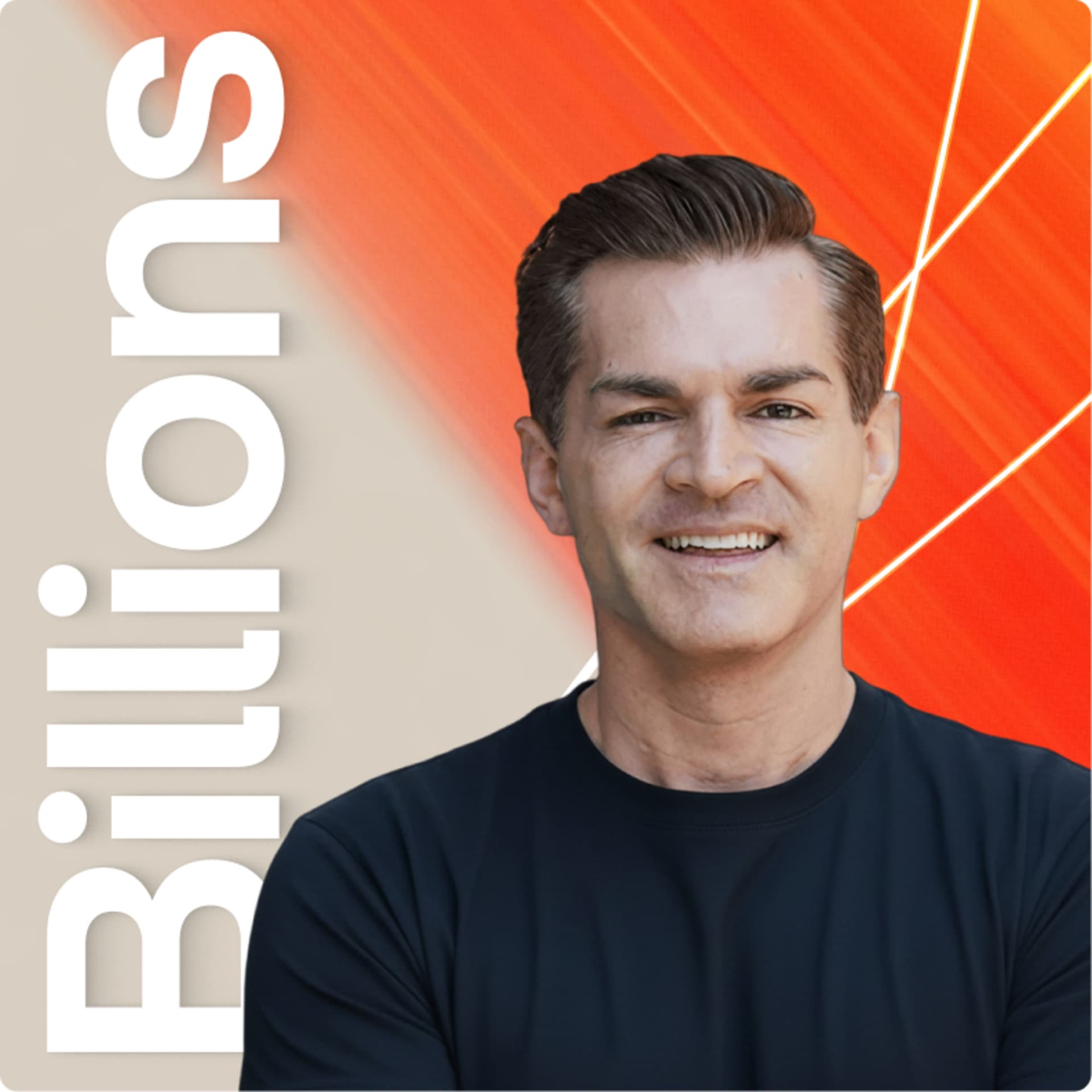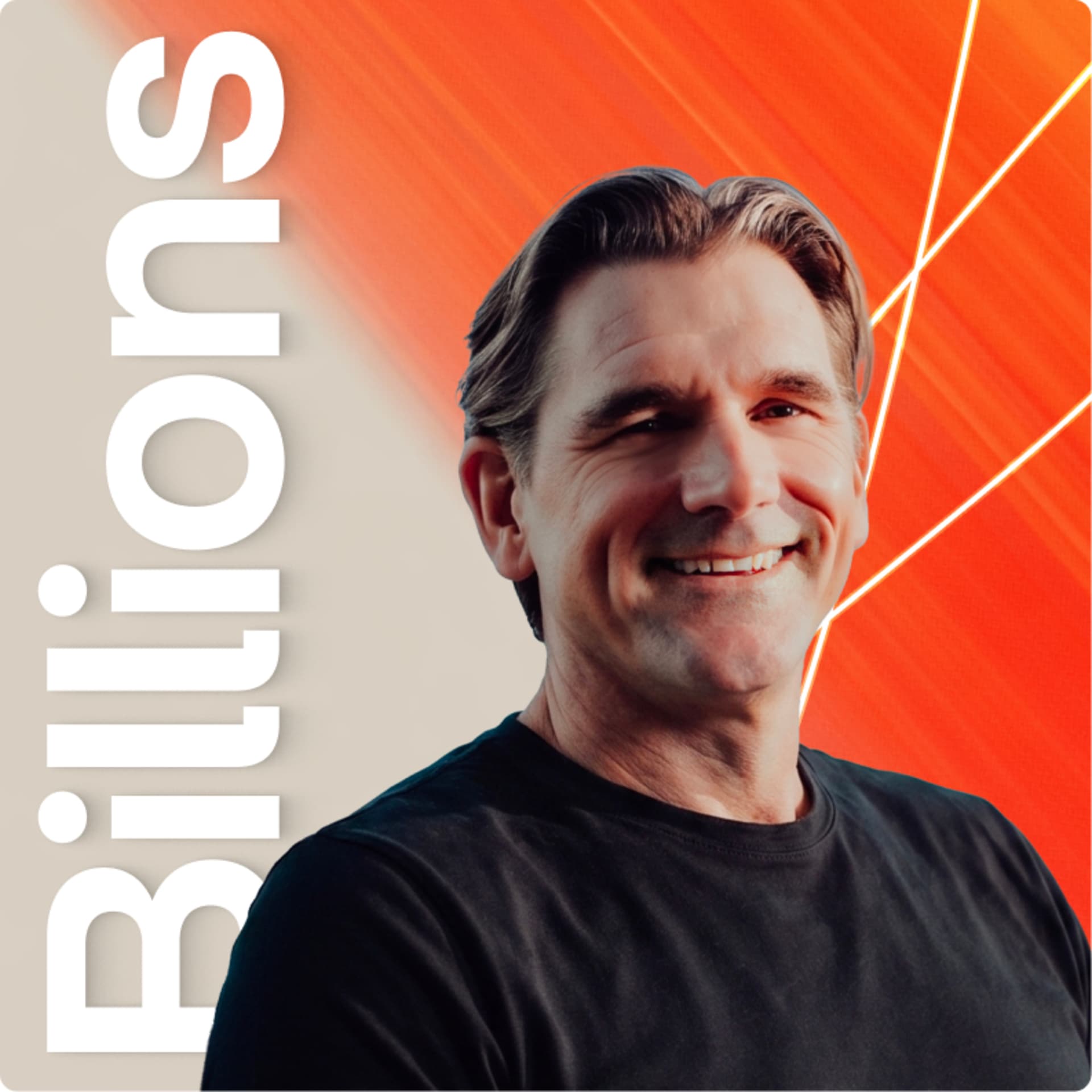

In short
Larry Aschebrook explains how G Squared built the secondary market for private-company employee and early shareholder liquidity, and how the firm targets cash-on-cash DPI in 5–7 years by underwriting secondaries “like a primary” (data + management access), while helping companies stay private longer.
Guest background
Aschebrook previously worked in university endowment fundraising. In 2011 he quit a “safe” university job after personally buying shares of Twitter and Uber and noticing employees held “life-changing paper games” with little liquidity. He founded G Squared, which now manages about $5B and says its market is worth ~$140B/year.
Key claims
Secondary was taboo after financial-crisis regulation; the market was “broken.” G Squared now partners directly with issuers, supports cap-table consolidation, and sells via tenders/secondary blocks rather than relying on public-market liquidity. He warns against chasing paper gains and herd behavior; losses “haunt” him, and process failures (example: QuickCommerce) must be guarded against.
Notable examples
Spotify (turned a ~$150M bet into ~$1B; had to backfill a ~$9M shortfall with a personal loan; record labels were shareholders and used an option/dilution event while headlines were negative). Coursera (made ~$800B on it). Uber/Twitter early buying; Wiz (Google acquisition); Coursera transition to a sovereign wealth fund; QuickCommerce as a painful outcome.
Written by AI. May contain mistakes. Listen to the episode to check what was said.
Chapters
Tap a time to open that second in VOLarry's Journey into the Secondary Market
0:45 to 2:45
Larry Aschebrook shares his background and the inception of his investment journey.
“Companies thought selling shares meant you were failing.”
The Taboo of Selling Shares
2:45 to 4:50
Discussion on the stigma around selling shares and how Larry approached it.
“Little did I know how hard it would be to access some of these businesses, but I think just grinding and not taking no for an answer and really being naive, I think was a godsend.”
Building G-Squared and Early Investments
4:50 to 7:19
Larry explains how he built G-Squared and his early investment strategies.
“the secondary market that most traditional managers wanted to stay away from.”
The Spotify Success Story
7:19 to 10:01
Larry recounts his significant investment in Spotify and its impact on G-Squared.
“Because I know it was a big bet of yours in the early days.”
Risk, Conviction, and Market Insights
10:01 to 14:00
Discussion on the risks Larry took with his investments and market insights.
“It really changed the trajectory of G Squared.”
The Journey of Starting a Secondary Business
14:00 to 17:34
Learn how Larry Aschebrook navigated the challenges of starting a secondary business and the strategies he implemented.
“significantly greater than the value that I thought I'm at.”
Investing in Music Companies: Surprises and Strategies
17:34 to 22:20
Discover the unexpected insights gained from investing in music companies and the strategies that shaped their success.
“in our third pool of capital that we had managed.”
Balancing Risks in Concentrated Investments
22:20 to 26:34
Understand how concentration in investments can lead to significant risks and rewards, and the lessons learned from failure.
“that we were supportive of and they did great work for us and created a lot of value for our LPs.”
Navigating Market Changes and Investment Rules
26:34 to 28:05
Explore how Larry Aschebrook adapts to changing market dynamics and the evolving rules of investment in high-growth sectors.
“We deploy over the course of 18 months a lot of money into QuickCommerce.”
Navigating Investment Strategies in AI Businesses
28:05 to 30:24
Learn how to navigate selling positions in rapidly changing AI market conditions.
“It's something as a LP or excuse me, as GPs, we've really not seen before.”
Show all 19 chapters
Position Management and Liquidity Challenges
30:24 to 33:33
Discover the complexities of managing large equity positions and liquidity issues in public markets.
“Making sure that if you are transacting, you do it with very high quality third parties that can provide value to the companies differently than you.”
Public vs. Private Markets: Trends and Opportunities
33:33 to 36:45
Explore the reasons companies choose to go public and the benefits of staying private.
“We're dollar cost averaging in, very small positions up front.”
Regulatory Perspectives on the Secondary Market
36:45 to 41:58
Understand the regulatory landscape and its impact on secondary market transactions.
“We're seeing like some companies like, I don't know, if you look at Stripe, Revolut, etc, etc.”
Challenges in Private Security Trading
42:04 to 43:26
Learn about the settlement challenges and complexities in trading private securities.
“Outside of kind of the tokenization, there's issues with exchanges to trade private securities, mostly because of the settlement.”
Navigating the Secondary Market
43:27 to 45:07
Explore the nuances of the secondary market and the importance of due diligence.
“And what I've seen, you know, in private markets is a lot of different layers.”
Evolution of Continuation Vehicles
45:08 to 48:25
Understand the need for evolution in continuation vehicles for private investments.
“And I think that's the biggest issue with that.”
Valuing High-Growth Companies
48:26 to 51:00
Delve into the methods for valuing high-growth companies like SpaceX and OpenAI.
“so to speak, with the logos that are getting all the attention today, they have to change their process because it just fundamentally doesn't work for a GP.”
The Importance of Team Dynamics
51:01 to 54:20
Learn about the critical role of team dynamics and grit in building successful businesses.
“Of course, in some of these assets, there are no public comps.”
Investment Strategies from Experience
54:21 to 55:09
Gain insights on effective investment strategies and the importance of selling.
“I steal a line from my friend Mitchell Green at Lead Edge Capital who says all the time and I believe in it too, which is investing is easy and selling is hard.”
Transcript
Automatic transcript. May contain errors.0:00I actually had to personally borrow some of the money to close the transaction, but I didn't have anything to back up the loan. I think that's one of the benefits of coming from nothing is you're not afraid of what that's like. Raising money and raising capital from LPs is difficult. Investing it is easy. Selling it is hard. I enjoy the grind. I enjoy the wins, but the losses haunt me. Don't chase paper games. Don't follow the herd.
0:22Larry Aschebrook:Today on Billions, I'm sitting down with Larry Aschebrook, the guy who invented a market that Wall Street didn't know existed. Larry started personally buying shares in Twitter and Uber on the side, and he realized there are thousands of employees sitting on life-changing paper games with zero liquidity, waiting for companies that might never IPO. So in 2011, he quit his safe university job and launched G-Squared, a fund to solve that problem. Nobody took him seriously. The secondary market was taboo. Companies thought selling shares meant you were failing. Today, he manages$5 billion. He turned a$150 million Spotify bet into$1 billion.
1:02Larry Aschebrook:Also made$800 billion on Coursera. And the market he built is now worth$140 billion a year. Larry, welcome to Billions. Thank you. Thanks for having me. Excited to be here. Yeah, I'm really excited to understand, you know, how all of this started. So initially you spent a lot of time in your career, like raising money for university endowments. And then after like you started buying shares on the side, you started to see like a new category. Can you walk us through a little bit more about how you made your first investment and how you made that happen? Yeah, I wish I could say when I started the business that I had some master plan of how it was going to all go.
1:50and I have to tell you early on people thought I was crazy and that I had lost my marbles so to speak when I walked into a very safe job that I had spent 10 years building a career in and was at the pinnacle of and just quit and I think what I realized early on which is still the same today is these companies that we all are really fascinated by. Every year or two, there's a new batch of them. But in the beginning, it was basically the companies that were starting to run our lives via the smart devices we were all so focused on. And I was no different. I was a major consumer of data just through my smartphone and started to change the way I consumed and behaved.
2:44And I thought there was an opportunity to share in that value creation. Little did I know how hard it would be to access some of these businesses, but I think just grinding and not taking no for an answer and really being naive, I think was a godsend. Because if I knew then what I knew today, I probably wouldn't start the business.
3:11Larry Aschebrook:so so when it's like 2011 you want to make like an investment in uber or twitter at the time like how do you do it like do you message the founder directly like do you send emails to employees there wasn't a robust linkedin uh and uh yeah it was the universities they worked at all had alumni lists and and i worked at five different major universities around the country in the u.s and I had those lists of alumni and I just started calling them. Folks that worked at Twitter and early Palantir and Spotify and early Uber and many others and just started offering to buy their stock and didn't really know how to actually go about doing it but just kind of made it happen.
4:03Larry Aschebrook:So I own a software company and obviously like if an employee wants to sell their share, like the company always has like, or in most cases I would say like a rougher. How do you like overcome that? Like so, why did it? It was so taboo, as you mentioned in the intro, that it wasn't widely done. I mean, secondaries, now I know, were mostly reserved for fund stake purchasing and also large PE deals. the growth venture ecosystem really didn't have many secondaries. In fact, there was the new regulation coming out following the financial crisis for managers who spent their capital on the secondary market that most traditional managers wanted to stay away from.
4:54They were afraid of that. Now you see many managers opting in for the registration. And so I think that there was just a broken market. And employees liked the idea of liquidity and companies just kind of turned their back on it and didn't really care. It was so small, it wasn't meaningful in the beginning. Now the industry has really evolved and we're thankful to be one of the first movers to now be in a position to get the phone call versus making all the calls.
5:32Larry Aschebrook:So now how exactly does that work versus back then when you want to get into a secondary transaction? Well, I wouldn't advise anyone on deploying capital the way I did on the early days because it was mosaic theory. It wasn't full information. There was very little connectivity to the actual management team members. you know today it's it's it's very involved with the management team members we partner with the issuers we work with them directly we support them staying private longer we have a whole tool kit that we've developed over 15 years to really help the company stay private longer it's self fulfilling of course because we could do a lot of work on the secondary market then but yeah the markets mature today in the beginning it it didn't exist and so today we underwrite like a primary investor we want to touch and feel the companies we want to talk to management we want to have full data in the beginning it was you know hiring some analysts out of you know india to write memos for me and when i was working during the day they were sleeping and they were working at night when i was sleeping and it worked well and there was a there's really a business of one in the beginning.
6:45And now we've got to be very thankful to have such a tremendous team at G Squared. And the growth has been unprecedented for us over the past several years. And the returns have been very good for our LPs. And we're kind of at the sweet spot, the intersection of really awesome businesses and access. And that, to us and any manager in the space, primary or secondary, is what you're searching for. And in some cases, that is the definition of success.
7:12Larry Aschebrook:Nice. And can you walk us through maybe like the whole like Spotify story? Because I know it was a big bet of yours in the early days. You know, what an incredible business that Daniel and team have built at Spotify and continues to amaze me today, especially now with the kind of integration of full agentic AI into their business model. It continues to evolve and just inspire artists and compensate artists around the world. So congratulations to them. In the beginning, like the other early investments, I loved consuming music. got to know Spotify through that as a consumer, wanted to buy stock, found employees that had shares, sent the notice to the company, and they didn't respond.
8:15So, you know, I think for me it was natural. Others say it was probably not so natural as I just got on a plane with a young analyst that worked with me at the time and went to Stockholm and begged for a meeting. And finally, they gave me one.
8:33Larry Aschebrook:And that's how the journey started. So, you went to their office? Yeah, went to their office.
8:44No appointment. Just kept showing up day after day. And finally, a young legal officer, I think, took pity on me sitting in the lobby and my colleague and invited us back and basically told us that, you know, there wasn't an opportunity. And we just kept asking. And eventually they started sending a bunch of sellers to us. It got to a point where we put up a sign in their break room that, you know, we will buy your shares. And I think Spotify and a few others were early in this movement to embrace the idea that you could stay private for much longer than most, help your employees, keep them from going to other public tech companies where there's value immediately in the paper they hold.
9:34And it was a good marriage for a long time. You know, there was some stress along the way. They sent us some really large blocks of stock that we were so small, we didn't have the ability to buy right away. And we went out and traveled the world and raised the money to close it. And they were very fond memories for me, the Spotify journey. And when I went public, it was a massive celebration for the company, but also for our business. It really changed the trajectory of G Squared.
10:03Larry Aschebrook:so you did you like keep the shares of spotify after like it goes public or how exactly does that work yeah so um for us at g squared we're focused on a kind of cash in cash out um situation so we we send cash to our to our lps um post public sometime we develop a strategy on on slowly moving out of the position after the company doesn't need our support anymore. But building that position in Spotify was one that I think really set the framework for how we were going to establish our business going forward. Now, it came with a lot of stress. There was a very large transaction they sent to us. We didn't have all the money.
10:52We had to find it. In fact, I actually had to personally borrow some of the money to close the transaction. I didn't have anything to back up the loan. So I put a lot of risk in it and it worked out. Great rewards. Yeah, I mean, it was a very tense time in G-squared's history. but you know the conviction
11:19Larry Aschebrook:Did you have like such a conviction at the time like that your loan would be reimbursed? Like how do you build like such strong conviction on a company? Was it because you had access to all the data and you knew that it was going to be a hit or like Well there was a lot of stress in the market related to streaming services at the time obviously Netflix had gone on to a fantastic journey and that kind of laid the groundwork for music streaming and Spotify had a number of formidable competitors that still exist today with Apple Music being the primary one. And you remember there was a lot of noise about Taylor Swift and Adele leaving the platform.
12:07Yeah. One of the, I think, the benefits today that we still enjoy, and we really figured it out with Spotify and a few others, including Coursera and Uber and Airbnb was that if you can get the information like a primary investor, you can really use the secondary market to have an arbitrage that the market doesn't know about and buy at your option, not at the company's timing of preferred investment. And I think that's one of the major benefits of secondary direct investing. And in Spotify, there was a point in time where there was a lot of noise, but the record labels were also shareholders. Most people don't realize this.
12:50Early on, coming off of the whole Napster debacle, the record labels realized that there was something going to change in their business models. So when Spotify came along, Daniel Ek did a great job and team of getting the record labels on board. Well, as this noise took place, we had data, we had the updates, and we could see that the record labels actually were trying to buy more stock in Spotify. When all this noise and headlines, and not in small ways, you know, a free cash flow of those record label companies were in the, you know, several hundred million, a hundred million dollars a year, and they were spending a significant portion of their free cash flow on buying Spotify stock.
13:37And to me, that was the aha moment that, look, they're here to support it. They're not going to kill it. And let's use the market turbulence to buy a bunch of stock. And we did. And history shows it was right, thankfully. And we became a top 10 shareholder at Spotify amongst giants. And the shares that I purchased through the loan ended up being worth significantly greater than the value that I thought I'm at. And it worked out. I would not advise that to young entrepreneurs trying to start a secondary business today, but that's my mentality and I went with it. I think that's one of the benefits of coming from nothing is you're not afraid of what that's like.
14:24And so it was a great journey. And Daniel and team working with us, developing a strategy to stay private longer, rewarding their employees, and really develop the playbook for us going forward. And that was the foundation that changed the
14:41Larry Aschebrook:trajectory of our business. And how did you get the info that the music companies were actually purchasing like more shares? Was it like publicly documented by the company or? Yeah, so they had this hidden option really to exercise to own a certain percentage of the company. And I frankly didn't know it going into the investments. I don't think most shareholders knew it. And all of a sudden one day we got this notice that we were being diluted by 3 % and the company was getting several hundred million dollars from the record labels. And it was right at the same time of all this headline risk. And that just, for a minute, it was a head scratcher, right?
15:26You're like, well, the record labels and their stars are leaving. Why would they give the company hundreds of millions of dollars? And then the light bulb kind of went off and it was like, well, they kind of know what the future brings and they're going to support it. And let's go load up on stock here.
15:43Larry Aschebrook:Nice. Yeah. And what did you like purchase from? Like at the time, was it employees or other funds who were looking to get some liquidity? Other funds. Yeah. Yeah, I think that today it's very commonplace that funds have very little DPI. And when this time period was taking place, 2012-ish, 13, 14, it wasn't as big of a problem. I think some of the large investors got a little spooked and read the tea leaves slightly differently than we did. And there probably was a higher possibility or chance that they were correct, by the way. Um, and they needed, you know, they wanted to sell. And so we found a large block the company sent to us.
16:30Uh, it was 150 million in size from a very well-known Nordic, um, uh, venture firm. And, uh, we, you know, the Spotify had an interesting transfer process because it was a Luxembourg company. So you would notice your transfer, it would be approved. And then there was like a 60 day settlement. Okay. So during that 60 days, we went around the world and rounded up$141 million. And we were 9 million short. And that's the shortfall that I backfilled with a loan.
17:03Larry Aschebrook:Okay. And that ended up being one of the best investments? Yeah, that ended up being a life changing event. Thankfully, you know, but at the time, you know, you know, half of nothing's nothing. So, you know, there wasn't a lot to back up the loan. And so I wasn't, I wasn't too bad off, but yeah, no, it was a, it was an amazing opportunity for us that they gave us. And, you know, our team worked tirelessly for those 60 days, made it a very large position in our third pool of capital that we had managed. I think it was 40 % of that vintage and 30 % of earlier vintage. So concentration, I love. I'm a very concentrated bet person, kind of my personality.
17:54And the law of large numbers worked out for us there.
17:58Larry Aschebrook:Nice. And how exactly is the whole business structured? because you started with investing. I'm guessing you had like an early fund and you raised like several funds. And on each opportunity, when you can increase your position in terms of size, do you like raise with existing LPs? Do you bring like new LPs? Like how is the world structure? Well, in the beginning, the pools of capital were small. The first pool of capital we deployed out of when total size was close to$35 million. But our LPs, our investors alongside of that vehicle invested several hundred million in co-investment. Wow. Okay.
18:44As the business grew and we had success, it kind of normalized. And today our vehicles are truly committed capital, two and 20 funds, about a billion, billion and a half in size, the last several. And our LPs still enjoy a very robust co-investment business where they top up. Now we've learned a lot of lessons along the way and how to manage that co-investment because it can be a big risk to your firm if handled incorrectly because LPs love the shiny logos, you know, for instance, early days in Uber, great business, but we lost money. and that's it's a head scratcher right because it's such a fantastic company and we bought it at such a low value but at the time of the exit it's just the public market wasn't receptive now it's a juggernaut
19:38Larry Aschebrook:so the thesis was right the execution was not so because at the time whenever it got public I'm guessing you need to like hold a share for maybe like six months or something like this cost IPO. But after that, for you, the goal is to sell and get liquidity and DPI. You don't have a structure that says, hey, let's keep holding on those public stocks because we believe they're undervalued. We're not a public market investor, right? So our value add to companies is helping them stay private longer, consolidating their cap table, doing a lot of tenders, one-off transactions, helping with early shareholders need liquidity.
20:16The price of admission, so to speak, is we need the data to understand what we're doing and connectivity with management. And then the companies, they get to a stage and scale where they need public market investors and they just have a different goal and thesis than us. We're building our business still today on a North Star that's a DPI number in a five to seven year period. And that's what we do. A lot of firms and a lot of institutional investors, by the way, are confused by it. But what we're trying to do is build a business that's like the Jim Simmons of the Renaissance Capital. I want to have realized IRRs in the 30s every year, 30 % plus, and have a track record of 10, 15 years of doing that.
21:08And it's maybe a multiple, Well, it's two and a half to three X in that period. It's not chasing, you know, five, six X multiples over 10 years. So it's just, we're solving for something different for a different type of LP. And the companies inside of our business, um, that we choose to participate in for the most part, they get it. Um, and they, they want the help and consolidation of their cap table. And, and today it's a massive industry and a big business. In the beginning, it was really just me trying to change my life, uh, liking businesses, using the smart device to change how we consume and trying to find an opportunity to take the little bit of money that I had and turn it into something far more.
21:49And that worked. Well, not always. It doesn't always work. I mean, we've had some really, you know, when you invest with concentration, 10 companies will make up 80 or 90 % of our risk in our funds. There's always the good stories of Spotify's and the Corsairs and the like and Toast and Wiz and Anthropic and OpenAI and all these fantastic businesses. And I hate naming logos because I'm leaving out 50 other amazing founders and businesses that we were supportive of and they did great work for us and created a lot of value for our LPs. But for all of those, there's Gorillaz and Gatir and Pagaya.
22:35there's just there's many scars and 23andMe and there's the one yeah can you walk us through
22:44Larry Aschebrook:maybe like one of the story where it didn't like when for example you start seeing a company that's not performing as well as it should you're potentially heavily invested in it I know that because what you were saying about DPI like I've invested in many VC funds And obviously, like for them, they love to share, you know, like paper games. Everybody's got the wins. Nobody ever loses a dollar. I mean, come on. Everybody's perfect. Yeah, exactly. First, nobody ever loses. But also like they love to share, you know, their nav and how much technically on paper, you know, they've made. But I know you also like balance your portfolio.
23:25Larry Aschebrook:So maybe we can go to that a bit later. I think that, look, as a GP, raising money is hard. It doesn't matter what your returns are. Raising money and raising capital from LPs is difficult. Investing it is easy. Selling it is hard.
23:49And typically, your opportunities to sell are when everybody else wants to buy. Yeah. And the herd mentality of Silicon Valley can be difficult to abstain from. and I think one of the benefits we have with being headquartered in Chicago and most of our our team members are Midwesterners and have a different kind of risk tolerance um is it's it's less about you know what is in your book sort of speak and what dinner parties you go to and and and how much money you're managing and it's more about what what are you doing to create real value for your LPs, true alpha. And that is a difficult, difficult item to find.
24:41It's real, true alpha generation, not beta. And so as the markets are up and to the right in privates, just like Publix, it's not alpha. People can pat themselves on the back all they want. And we've been guilty of it too. Well, we're so smart. We're so good. Everything's working. Look at the MOIC. But the real true, real true outcome is what is the value of it when you sell it. Yeah. And in some of those losses, painful ones, and I wear them every day. And I have a terrific co-PM in Spencer McLeod, who's, I think, besides my wife, one of the smartest people that I know. He does a fantastic job of helping us build our portfolios.
25:30I think my value add to our partnership is my willingness and desire to do the hard things. And I think that's from being a former athlete. Like the grind is, I enjoy the grind. I enjoy the wins, but the losses haunt me. And when I look back at the failures at our firm, even with good process, you're going to have bad outcome. I can handle those. It's the bad process that creates a bad or good outcome. You don't reassess on the good outcome of the bad process. It's the bad outcomes that you really look in and say, hey, what did we do wrong? And how in our business, secondary focus, 70 % of our funds are secondary.
Read the full transcript
26:22Try to underwrite like a primary investor. So we can't use the excuse of we didn't have enough information or we didn't have the interaction with management. It's truly our mistake. And it's the price we paid. Because in one example, QuickCommerce, we had a lot of success in Instacart and Postmates, Meituan, Daping, Alibaba. We had great success. Pandemic happens. We deploy over the course of 18 months a lot of money into QuickCommerce. And we all know how that story ended. And we were not immune to it. and so as I look at the process were there points in time that we could have exited our positions and the reality of the answer is yes and we didn't do the work that we should have done for our LPs on on that particular space and those are the things that we have to make sure that we improved upon and put guardrails in place to not have happen again.
27:33Larry Aschebrook:So now do you have like, yeah, sorry, go ahead. No, go ahead. Now I was wondering, now do you have like very specific rules? So for example, let's say you mentioned like companies like Anthropic, OpenAI. I mean, we've seen like the scale and how fast this valuation, I think now we're entering, you know like an era where valuations are going through the roof uh you know like to to access entropic like the last round i'm guessing they were not looking at investors below like 1 billion you know in term of check size so how do you if you have a position you know in these companies when do you decide to sell what amount do you sell do you like reinvest like how do you map out like the strategy yeah i well so leaving well first of all in those two businesses fantastic value creation for lps every day um and for their shareholders and their employees um you know congratulations to both of those businesses and we're fortunate enough to to have exposure to both um i would say you know that the rules of the game are are really changing but you know as we're playing the board game in valuation and growth and underwriting and cash needs of the, you know, AI native businesses.
28:55It's something as a LP or excuse me, as GPs, we've really not seen before. And it's very difficult to underwrite. What I would say about those two assets is they're probably, you know, still in their infancy. So the majority of the people that got in at the right time are going to have a fantastic outcome. Just generally speaking for G squared, what we're after is a North star of this two and a half to three X DPI in a five to seven year period. And as we start to achieve that per fund, um, you see us starting to, to, to de-risk. Um, now in the high flying assets, they typically have an outcome that, that happens on their own quickly.
29:38Um, you know, there's, there's no gravity holding some of them back. Um, uh, you know, Wiz showed it with their Google acquisition. That was a fantastic position for us. It closed recently and really got to know the founders through trips to Tel Aviv. And they trusted our process. And we built a very large position there. And we're fortunate to have an outcome that was generated for us by the company. But for the most part, we have to focus on selling at the right time in conjunction with the company's needs. And so I think one of the struggles of running a concentrated equity portfolio, primary or secondary, is when it comes time for you to meet the needs of your LPs, you have to do it in a way that's beneficial to the businesses.
30:24Making sure that if you are transacting, you do it with very high quality third parties that can provide value to the companies differently than you. and Coursera
30:34Larry Aschebrook:basically you you go with you go to the board saying like hey I've got let's say a very well known like a family office who has great connection in that specific region would like to acquire like let's say a hundred million of my position I think it can be like a helpful partner like can we make this happen or is it family offices to large global financial institutions Um, you know, Coursera is a great example. We were, uh, uh, I think we're the largest shareholder of Coursera at the time it went public. Um, and we worked with the company and a very large, um, sovereign wealth fund to come in and, and transition our position to them.
31:20So we didn't, you know, sell it and drive the stock down over, you know, 180 days, because I think that's one of the issues in the public markets today is there's just ultimately no liquidity for large-scale positions. So, you know, you think about, and we're small, right? And still small. We're bigger than we were, but in reality, G squared, you know, we're approaching 7 billion today in assets. It's still relatively small compared to some of the other players, but we do build very large positions, several hundred million dollars of cost basis. And in the case of some of them, it gets to be north of a billion in net asset value in one position.
31:58When you go to sell that in the public market, it's almost impossible without moving the stock price. It takes forever. And if you are unlucky and have one of those great businesses go public in Frankfurt or the LSE, there is not enough liquidity.
32:19Larry Aschebrook:It's impossible. There is no liquidity. So this idea that the public markets create massive amounts of liquidity for GPs at large scale is really false. It's a false narrative. And so what we've decided to do in our business focused on this DPI metric is when it's time, we work with the companies. We find shareholders that they want to get involved with, and we help transition it to them in a win-win. Similarly to what they did for us building the positions. Now it takes time and energy and patience. But ultimately, we are stewards of trust from the issuers. And do you negotiate that from the start with the company?
33:07Larry Aschebrook:Because I'm assuming, you know, that obviously, you know, when a company gets to a stage where it's like super sexy, everyone wants in and they just want to raise and they don't want like existing shareholders to get liquidity. It's much easier on the way out than it is on the way in. Our business model, we refer to it as the land and expand. You kind of fire the rifle to calibrate the cannonball, so to speak. Okay. We're dollar cost averaging in, very small positions up front. It's when we get to the top 10 or so per fund where we have, you know, two, 300 million of cost basis in a position, and we need to then start to trim it as it gets to massive and scale because we have to have risk controls.
33:53Companies understand that at that point. In the beginning, if I were to show up and say, hey, I'm like, I love your business. I want to buy today. And 18 months from now, I'm going to sell the position to somebody you don't know. It's going to be much more difficult.
34:10Larry Aschebrook:And you just can't. You can't operate that way in our industry today. It is back to a club mentality. but it's more new line growth managers than I would say the old line traditional VC firms with a few exceptions. And when you reach that 2x or 3x in DPI, is it per fund or is it per position that you look at it from a liquidity perspective? Yeah. I mean, our fund models will kind of tease that out, but it's a holistic perspective on the pool of capital. Now, each individual line item you need to meet a certain return, but they balance each other out. And still within concentration, we try to democratize the return a bit, but it's difficult across our four megatrends.
35:08trends. They have different themes within the mega trends that are more, um, uh, you know, are more prevalent during a certain time period. Um, you know, it was heavy consumer in 2015 through 18. Then it was, um, a lot of SAS in 2020, 2022 vintage has, you know, everything is amazing because we bought everything when the house was on fire.
35:34Larry Aschebrook:You know, there's a, You look at all the businesses, you're like, we're so smart. Well, no, I mean, we were. Everyone was scared. Everyone was scared. And that's, you know, as a secondary market player, that's when opportunity takes place is when you have really high tenure yields and federal fund rates, and you have everybody running to cash and commodities for safety. It creates real buying opportunity. And then today it's in the AI native businesses, which are unbelievable. But along the way, there's things from SpaceX to Anthropic to Spotify. And of course, all of these businesses are unbelievable to be around.
36:18And the energy that the management teams bring and the value they create for their shareholders and their employees is unprecedented. We're just a steward of that during the process.
36:31Larry Aschebrook:And, you know, like earlier you mentioned the fact that public markets didn't have like or don't really have now much sense, even when you look at liquidity and how liquidity is managed. We're seeing like some companies like, I don't know, if you look at Stripe, Revolut, etc, etc. Like sometimes I'm wondering, like, why would they go public? You know, like they do tender offer every single year. like they can get liquidity for existing shareholder employees etc they don't have like the pressure of reporting of public market they can keep you know like long-term vision yeah so from your perspective because you've seen like that uh that market evolve what does make one company go public and do you think that's going to change over time i think when companies access the public market, it's for their own reasons, and all of them have probably unique ones.
37:29Companies today that are accessing it for raising their capital likely have some CapEx intensive business model they need to support. And you start to see some of the conversations today that are happening in the public media around some of the big private assets. It's really the ones that require an enormous amount of cash still to continue to grow and to service their customer bases. And I think for the most part, segments of the new revolution in the AI industry have that. And those businesses are probably going to be better served as public companies. Companies like Stripe and Revolut, although they have an enormous amount of AI embedded in their DNA.
38:15It makes them great. We were fortunate enough to be early in Revolut and were in Stripe as well. Those businesses accelerating at scale is probably the most impressive that are profitable. And there's many of them like that. So I'd throw Databricks in that group too where you can stay private, not live your day in 90-day increments, invest in R &D, have great profitability, have programs for your employees that are similar to open periods of selling their stock as a public company and not have to deal with the majority of the cost or the pain of being public. And I like to think that we're a small part of helping those companies do that from the beginning, helping kind of write the rules and the processes within the tender space and the secondary space and seeing it flourish the way that it is today in these fantastic businesses and the reward that the employees are getting and shareholders for creating the value is very rewarding for us.
39:26Larry Aschebrook:and maybe it's a very european thing to say but do you think like at some point there's going to be like a regulation coming into play because if you look at uh so i invest also like in secondary through like friends connection or whatever but what i'm seeing it's like the moment you know like entropic was at 380 billion dollar valuation the the price of people selling on secondary market starting climbing you know at first it was like 400 then 450 then you see blocks of 500 550 so the markets like on private market there are like definitely like no rules things can be kind of like manipulating and changing so what do you yeah i think part of that is i call it chasing ghosts internally um because a lot of what you're saying is is is noise and it's not real it's um kind of the retail movement trying to get access to a very tightly controlled um business and cap table and so you see that in many of the businesses that become mainstream is is is logo recognition I would say Elon backed businesses have taken it to a new level of this and others have seen that business model and are replicating it so I think from a regulatory standpoint yes Europe loves their regulations we have a business in Europe we've had an office in Zurich since 2017 we've backed many of the terrific businesses in Europe and the founders And I think what you'll continue to see is a significant number of those founders continuing to come to the U.S.
41:16to set up their businesses and operate because the shareholder agreements are more flexible, raising capital is easier. The regulatory environment to operate in is less controlled. And I don't see a very heavily regulated secondary market. their private transactions, it would be like controlling you selling your home to someone else and then having regulations of somebody, just the government deciding how you can sell it and when you can sell it. That doesn't seem like a democracy or free trade to me. So I don't think that that happens. What I do think will happen and continue to evolve is the idea of some type of exchange that works.
41:59Today, there's a lot of ideas and a lot of capital flowing into it. Outside of kind of the tokenization, there's issues with exchanges to trade private securities, mostly because of the settlement. We don't have a T3 settlement period. The best you can get probably is a T14. And that's what - What does that mean? What does that mean? Like that's a transaction plus settlement. Like in the public companies, if you buy a share of meta, it settles within three days that stock trains hands for you. Right. So in the private markets, that doesn't exist. It's all paper still. Yeah. Right. Robinhood has figured out how to tokenize it and, and others.
42:42And that's super interesting. But at the end of the day, you're not owning actually any paper of the companies. And until specifically in Europe, until the early stage managers in Europe changed the way they deploy capital into companies, you're not going to see a very robust secondary market and you're not going to see the ability for companies to have an opportunity to get to the place that would be the holy grail is a trading platform. In the US, we're probably closer, but I still don't think by the, you know, I'm 48, 15 years in managing G squared. By the time I decide to walk away, hopefully 20 years from now, I don't think you'll still see it Because it's very difficult to settle private transactions.
43:27And the way the shareholder agreements are constructed, it's nearly impossible to do it outside of approvals that are needed.
43:36Larry Aschebrook:And what I've seen, you know, in private markets is a lot of different layers. So with G-squared, I'm assuming that you're always like direct captable. So you have like the proof of shares. everything is super clean but what we're seeing is layer 1, sometimes layer 2 sometimes layer 3 and people exchanging the shares just because it's easier and it doesn't it's not under the company's right to choose who's selling, who's not selling how do you see that kind of secondary market but that's a lot more on the layers of SPV the shadow market, the SPV market Look, I think that that's going to be very difficult to control.
44:21I think as anybody out there is trying to buy stock from someone, know what you're buying, do as much research as you can. Uh, it reminds me today of similar to when the first kind of craze was happening with this, with the Twitters and the Facebooks and the LinkedIn's and the Spotify's and the Palantir, this early movement that took place in the 2010 to 2014 period. and when it all unraveled, there was a lot of fraud. And I think retail investors that are out there that listen to your podcast or even small firms, like be careful, partner with good partners, do your research, do your due diligence, dig in and know what you're buying.
45:09And I think that's
45:10Larry Aschebrook:the biggest issue with that. So your process, if someone is entering like a layer two or something, it's to check who's on top, like make sure they have the proof of found, et cetera, et cetera. If I were in one of your listeners' shoes, I would start from the first entity. I would dig through it. I would ask for all the documents. I would get all the way down so you can follow the tree all the way to the cap table, tie it out, get audited financials of each of the vehicles. It's onerous and most people don't do it. And there are these SPV shops that are out there that this is their business and many of them are great.
45:48And they serve a place in the ecosystem. But there are, you know, not so great ones. Bad ones. People need to pay attention and they need to do their own due diligence because there will be, in my opinion, stuff that comes out as these companies get liquid and it's inevitable that there is some bad actors out there. So as investors want to play the space, go to the reputable firms that do it and there are those out there and find an opportunity.
46:21Larry Aschebrook:So when you decide to sell a position do you actually use continuation vehicles or do you like We tried. We tried one. And I would say that that industry needs to evolve from where it's at, especially in the growth tech space. The process that's currently put in place for CVs, and I understand why they exist and it's a good business and there's good returns to be had as the investors in those vehicles. It's currently structured for a PE-like transaction. Not in the world that we live in every day. It's not meant, It's currently not set up to have success with managers that have underlying assets that three months is like five years in traditional industries.
47:20The assets move so fast. The best assets in the world are achieving greatness on a daily basis and growing at unprecedented rates that most of us haven't seen before. And when you overlay a complex M &A-like CV process, because that's what it is, it takes months to get done, it puts a lot of risk on the transaction. We did one, we had it all the way to the finish line, and we ultimately didn't close it because the underlying assets moved so much. And you also need the full support of the underlying portfolio companies, which, you know, in our space, they're very protective of who gets on that cap cable.
48:04And it becomes very difficult to get some of those transactions completed. So I do think the CVs as an investor, because I'm an investor personally, and some of the large players in the CV market and they do great work and there are great people behind it. I do think the process needs to evolve. and I think if those players want to be more and more around the hoop, so to speak, with the logos that are getting all the attention today, they have to change their process because it just fundamentally doesn't work for a GP. How would you change it? Like what would you change in the position? It needs to be handled like a traditional secondary, not an M &A.
48:44It just needs to be very simple. It can be done in a matter of weeks. it shouldn't take six months.
48:53Larry Aschebrook:Okay. So it's like selling shares, putting them into a new vehicle, and then like, I guess. It's very simple. It's no different than if you and I decide to transact on an individual name, just transact in 10 names real quick. Time kills everything. And in our space, you know, three months, you just look at some of the businesses and their performances that have been publicly announced. In three months, it's... It's insane. The movement is, the company's raised two rounds of capital in six months. Yeah, it's insane. And whenever you look at the valuation that we're seeing today, so yeah, Entropic close to like 400 billion, SpaceX more than a trillion, OpenAI close to a trillion, like how from an investor's perspective do you like value these businesses?
49:47Larry Aschebrook:So for a lot of people looking at SpaceX, they might think, you know, like, okay, it's doing 15 billion in revenue. How do you make up, you know, that huge gap between the 15 billion? The TAM is so big. Yeah. Yeah, look, I think it's a struggle, right? It's you're paying today for growth tomorrow. and you have to do your own work and decide what's the right value to enter and if you can get access at that value. I would say some of the AI-native businesses are the larger ones, the first movers, the clear leaders, consumer enterprise level, and the two LLMs you mentioned. They're probably a bit easier to underwrite at those prices.
50:37um you know and spacex is now a complex business it's when we invested back in 2014 it was like we want to you know win some nasa contracts and build some spaceships you know that it's very different today um and and the scale of it by the way is unbelievably massive and congratulations talk about the ability to to to create something that nobody thought was possible it's staggering to think about
51:08Larry Aschebrook:never bet against Elon no and never bet against Elon is a good rule I'm going to add that to that we have the G squared 8 now it's G squared 9 don't bet against Elon exclamation point and my friends at Valor Equity would say Larry you know and listen to Guillaume he's absolutely right but yeah I think it's difficult fundamentally to underwrite so how we do it is we use public comps. Of course, in some of these assets, there are no public comps. You have to use a basket of comps. You have to see what you've invested previously. And the history doesn't repeat itself, but it often rhymes. The characteristics of great businesses really don't change.
51:48If they can generate a significant amount of free cash and they're still growing, they're good businesses. It's just a matter of what price you pay. And can you get involved at a price of safety? and a margin of safety embedded in it. And that's what we pride ourselves on doing. And sometimes we miss. We don't get the shiny logo because we can't underwrite it. And other times we come back around. You have terrific business. It's been all publicly reported in Stripe and it's accelerating at scale. And that's unbelievable to see a business where one out of every$60 that transacts on the internet flows through their platform.
52:32It's insane. I mean, one of the businesses that got away early on and now it's like an opportunity, but, you know, nine years ago, we could have invested in Stripe and how stupid was I for not doing it? It's like when the Spotify founders introduced me to the founders at Klarna and I could have done it for, you know,$250 million valuation and I passed.
52:55Larry Aschebrook:I mean I think we're almost running out of time so to conclude what would be one tip you could give to anyone you know like starting a business from scratch and wanted to build something ambitious I think it's all about your teammates hire grinders grinders that will do anything to win people that have had adversity, ones that will show up and have a chip on their shoulder every day to try to prove the world wrong. And founders of businesses, we often back two founders trying to solve the same problem. And it's almost always the founders and team members that have that edge that win. And they might not have the best product.
53:45I think of Turo. When we invested in the car sharing platform and rental car business and Turo, we also did get around at the same time. Turo's pitch deck was something like, um, you know, our children probably put together. It was terrible, but the founders and the leaders of that business were grinders. And today one is here and accelerating and the other business is gone. And the other business raised way more capital, had all the shiny things, all the great investors, and it didn't work. and it's just a true grind mentality. There's that. And then from a GP perspective,
54:25I steal a line from my friend Mitchell Green at Lead Edge Capital who says all the time and I believe in it too, which is investing is easy and selling is hard. You have to sell your winners in order to have a sustainable business. The idea that you can wait and hold and have paper gains and be a new fund manager and go raise a bunch of money. It is difficult as a seasoned manager that has a robust DPI that's in the top 10 % in our industry per dollar invested. It's very difficult to still raise capital. Don't chase moik. Don't chase paper gains. Don't follow the herd. That's what I would say.
55:10It served me well.
55:14Larry Aschebrook:Awesome. Thanks a lot, Larry. It was really great chatting with you. Where can people follow you? What's the best platform to follow you? Our IR team does a great job on our LinkedIn page and our website. I'm pretty off the grid. You can find me at Larry at Gsquared.com. I'm not an avid tweeter. I still call it Twitter. Still dear to my heart. In your heart. In my heart. It's Twitter. You know, but you can find me if you need me. But I really appreciate you having us on, humbling for me. And I'm really thankful for the interest you're taking and what we're building at G Squared. And we'll continue to grind.
55:56Awesome. Yeah, it was awesome. Have a great day. Thank you. Take care. Bye-bye.
56:09you
From the publisher
Today on BILLIONS, I'm sitting down with Larry Aschebrook, the guy who invented a market that Wall Street didn't think existed.
Larry started personally buying shares in Twitter and Uber on the side and he realized: there are thousands of employees sitting on life-changing paper gains, with zero liquidity, waiting for companies that might never IPO.
So in 2011, he quit his safe university job and launched G Squared, a fund to solve that problem. Nobody took him seriously. The secondary market was "taboo." Companies thought selling shares meant you were failing.Today, he manages $5 billion.
He turned a $150M Spotify bet into $1 billion. He made $800M on Coursera. And the market he built is now worth $140 billion a year.
Larry, welcome to BILLIONS.TIMELINE :
00:00 : The psychology of the secondary market pioneer.
01:13 : Quitting a decade-long career for a "ghost" market.
03:23 : The Hustle: Cold-calling alumni for early Twitter and Uber shares.
05:41 : The $150 million Spotify bet and the $9M personal risk with zero collateral.
11:19 : Data Arbitrage: How Larry knew record labels were secretly buying Spotify.
15:43 : Scaling G Squared: From a $35 million pool to $7 billion AUM.
20:05 : Why DPI (Cash Back) is the only metric that matters, and why paper gains are a lie.
25:09 : The Scars: Learning from the "quick commerce" collapse and other losses.
37:09 : The Future: OpenAI, SpaceX, and the evolution of private liquidity.
53:12 : Advice for Founders: Why you must hire "grinders," not just pedigree.
REFERENCES :