
In short
Podcast Summary: Billions - Episode with Anish Acharya
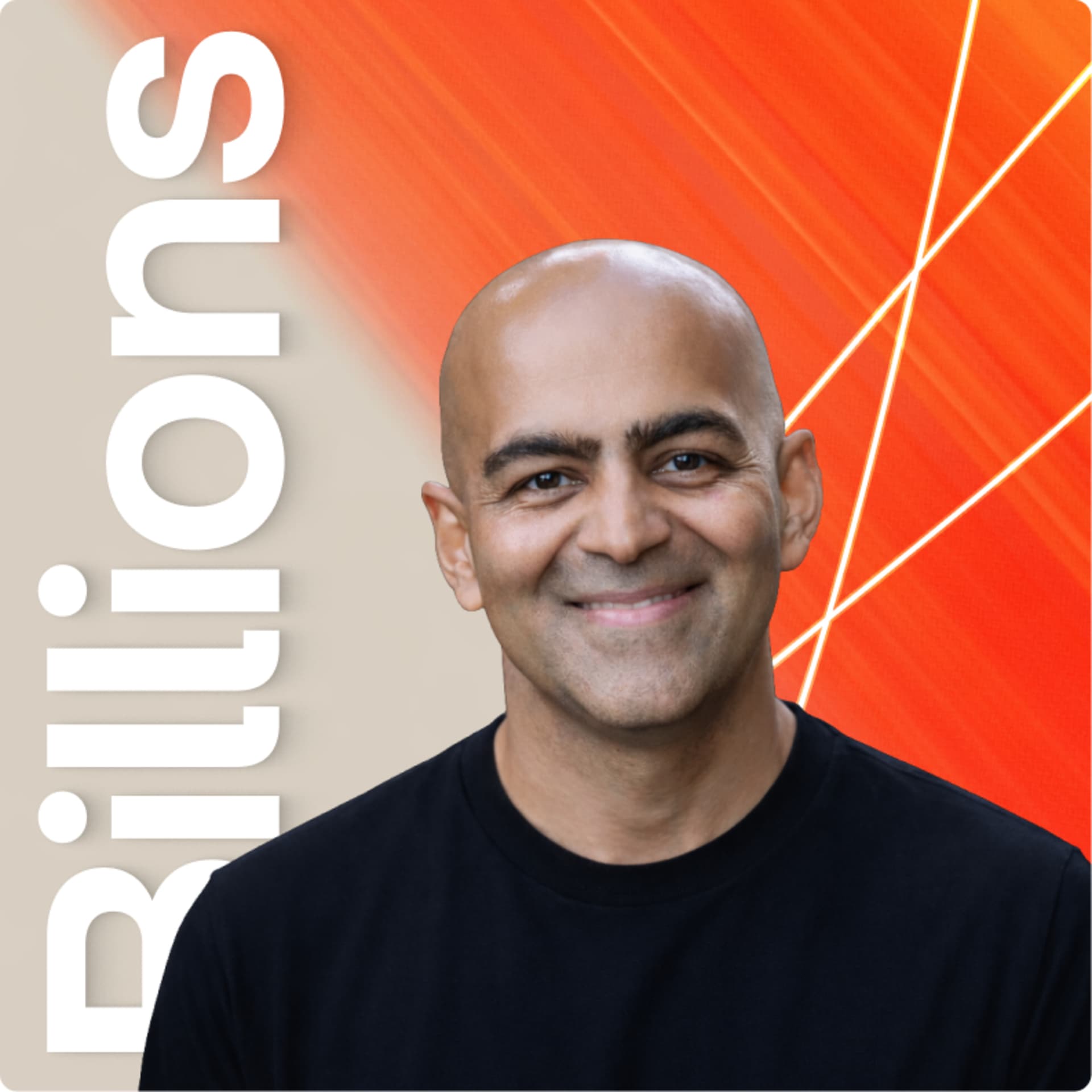
Podcast Overview Title: Billions Host: Guillaume Moubeche Description: In this podcast, Guillaume Moubeche engages with prominent builders to explore insights on scaling companies, understanding the intricacies of startups, and uncovering the psychological challenges that founders face in their journey toward billion-dollar valuations.
---
Episode Details Episode Title: From Selling Startups to Google to Backing Multibillion-Dollar AI Winners - Anish Acharya Guest: Anish Acharya, General Partner at Andreessen Horowitz (a16Z) Key Points of Discussion:
- Anish's entrepreneurial journey including selling startups to Google and Credit Karma.
- Insights on the current landscape for founders and the evolution of AI technologies.
---
Key Themes and Insights
- Anish Acharya's Journey
- Founder's Path: Acharya sold his first company to Google and his second to Credit Karma, where he significantly contributed to scaling their U.S. Card business to nearly a billion in annual revenue.
- Transition to VC: Became a General Partner at a16Z in 2019 and led Series A for Deel, which reached a $17.3 billion valuation in October 2025.
- Current Landscape for Founders
- Exciting Times: Describes the current period as reminiscent of 2008—rich with opportunities for founders due to the emergence of new technologies.
- Distribution vs. Product Problems: Advocates that there are no distribution problems, only product problems, emphasizing the need for ambitious product development.
- Technological Evolution
- AI Competition: Discusses the landscape of AI models, highlighting Google's resurgence and the relevance of multiple emerging models like Gemini and Claude.
- Human-Centric Technology: The new wave of technology is more human and emotional, addressing deeper human experiences compared to previous innovations.
- Impacts of AI on Society
- Loneliness and Companionship: AI can serve as a valuable companion, especially for those suffering from isolation, such as the elderly.
- Opportunities in AI: Emphasizes the potential for AI to create more compassionate and patient interactions in various sectors, including healthcare.
- Future of Coding and Software Development
- Coding as a Universal Language: Coding is pivotal not just for software but can be applied to various knowledge work, transcending traditional roles.
- Consumer Software Creation: Anticipating a surge in user-generated software akin to the YouTube phenomenon—enabling anyone to create and distribute their applications.
- Investment Insights
- Key Investment Criteria: Looks for founders with a sense of inevitability and strong execution capabilities.
- Successful Companies: Cites Deel's success as a case study for integrating software infrastructure in a global hiring context.
- Work-Life Balance
- Trade-offs in Success: Emphasizes the intertwining of work and life, arguing that successful contribution can coexist with personal well-being, challenging the notion of a work-life balance.
---
Conclusion Anish Acharya's insights demonstrate a nuanced understanding of the evolving landscape for startups and the role of new technologies in shaping both the entrepreneurial experience and societal dynamics. His journey from founder to investor provides a compelling narrative about adaptability, innovation, and the shifting paradigms in technology and business.
---
Follow Anish Acharya
- X (Formerly Twitter): [@IllScience](https://twitter.com/IllScience)
- Contact: Anish at A16Z (for pitches or inquiries)
---
This episode of "Billions" offers a rich exploration of the contemporary challenges and opportunities in the tech world, especially relevant for aspiring entrepreneurs and investors alike.
Written by AI. May contain mistakes. Listen to the episode to check what was said.
Chapters
Tap a time to open that second in VOInsights from a Successful Entrepreneur
0:45 to 2:42
Anish shares lessons learned from selling startups and the changing landscape for founders.
“Anish built, scaled, sold, and then learned how to pick.”
The Thrill of Founding Companies
2:42 to 4:25
Anish reflects on the joy and challenges of being a founder versus the current market dynamics.
“Because even if you look at it again, like, what are the kind of attributes of your day to day experience as a founder?”
Excitement Around New Technology
4:25 to 6:20
Discussion on the enthusiasm for new technologies and their impact on consumer behavior.
“difference right now versus like the past?”
Shifts in the AI Landscape
6:20 to 7:59
Anish analyzes the evolution of AI products and their competitive landscape.
“which is like, forget about the internet.”
Innovation in Large Companies
7:59 to 10:26
Exploration of how large companies adapt to new technologies and maintain competitiveness.
“And of course, Grok as well, because they're succeeding in different directions.”
The Role of LLMs in Today's Market
10:26 to 14:00
Discussion on the relevance of LLMs in the current market and the importance of versatile models.
“Because if we look at the usage typically of a chat GPT or a cloud, it has totally changed.”
Understanding the AI Model Landscape
14:00 to 15:10
Explore the dynamics of AI models and their applicability in business.
“And because you almost have this dis-economy of scale where you have distillation, where models can train on the outputs of other models, you really can't stay ahead for more than a few weeks.”
Specialization and Model Use Cases
15:10 to 16:58
Discuss the importance of specialization in AI and how businesses may utilize multiple models.
“Maybe one of them is really good at closing a customer who just doesn't want to sign the deal.”
The Competitive Landscape of AI Apps
16:58 to 19:16
Examine how large companies interact with app developers and the advantages of multi-model applications.
“So even if Facebook wakes up in a year and says, oh my God, we need to replicate this.”
Prompt Engineering and Its Evolution
19:16 to 20:31
Delve into the shift from prompt engineering to automated processes in AI.
“And the way that you would play a game is at least my parents would take me to the library.”
Show all 19 chapters
Navigating the Fintech Ecosystem
20:31 to 22:43
Learn about the challenges and opportunities in the consumer fintech space.
“I mean, you obviously never do that for call of duty or grand theft auto or something like that.”
Consumer Behavior Insights in Fintech
22:43 to 25:46
Discover key insights about consumer behavior and how they impact fintech products.
“So it's just a really tough time to build a new core consumer company.”
Cultural Trends and Technology Adoption
25:46 to 27:48
Understand how cultural trends influence technology adoption and product success.
“And it's something that Credit Karma got really right.”
Episode Discussion
28:00 to 42:01
“and people don't want to share their locations.”
The Challenges of Code Migration
42:01 to 44:17
Discusses the complexities of migrating software and the importance of tools like Notion.
“it's like your yearly salary of someone, you know, that you're spending on just like one or two tools that you could spend like, let's say even$10 ,000 per year.”
Investing in Exceptional Founders
44:18 to 46:48
Explores the qualities of successful founders and the importance of their vision.
“So many of the other companies and who have all done a nice job as well, who have not gotten to the same scale, they really didn't vertically integrate and build all of the necessary global infrastructure.”
The Evolution of Software Creation
46:49 to 48:34
Examines how software development is becoming more accessible and democratized.
“Yeah, I think that there's a lot of interesting trends that are happening right now.”
Companionship and AI
48:35 to 50:43
Discusses the potential of AI in companionship and the unique challenges it presents.
“And in fact, if you add Wabi on X with your app idea, they will make it for you and send it to you.”
Balancing Work and Life
50:44 to 54:27
Reflects on the trade-offs of success in high-stakes environments and the meaning of winning.
“Of course, it's about connection, friendship, being seen.”
Transcript
Automatic transcript. May contain errors.0:00Anish Acharya:I'll say a little bit of a cheeky thing, which is there are no distribution problems, only product problems. Five years ago, the top price point a consumer would pay is$20 a month. You can just build great software and sell it for a lot of money. We're in a world where the kind of LLM wrapper point is not a relevant consideration anymore. Winning is underrated as something that will actually deliver a lot of sort of value and sustenance in your career and life.
0:21Billions Host:Today on Billions, I'm sitting down with Anish Acharya. He sold his first company to Google, his second to Credit Karma, then stayed and helped scale their US card business to nearly a billion dollars in annual revenue. In 2019, Anderson Horowitz made him a general partner. Since then, he's led Series A in deal, which just hit a$17.3 billion valuation in October. Most VCs have never operated anything. Anish built, scaled, sold, and then learned how to pick. Anish, thanks a lot for being here. Thanks for having me. You have like an incredible setup and I'm really excited to have this conversation.
1:01Billions Host:I mean, you started as an entrepreneur, two startups, two acquisitions, Google and Credit Karma. What exactly did you learn from selling companies that you actually can't really learn from building them?
1:17Anish Acharya:Yeah, it's a great question. I mean, I think there's the success of being a founder, you know this, Guillaume, from your own companies. There's a sort of success case for your company. Then there's also just the day-to-day joy and pain of building it. And I will say that there are times at which the ratio of joy to pain, independent of whether the outcome is successful, is much higher and better. And that's how it felt in 2008. You know, despite the fact that it was a financial crisis, it was very hard to raise money. Mobile was new. Social was new. And there was just a lot of things for technologists to work with when building a startup.
1:50Anish Acharya:You know, it was easy to get customers. People were enthusiastic about downloading new apps to their iPhone. So it was a very, very fun time to be a founder. When I did my second company in 2014, it just wasn't as fun. You know, distribution was hard. So you had to spend a lot of time on marketing. There wasn't a big new technology for founders to play with. This technology had sort of settled around mobile. I think today is a lot like 2008 when it actually is like, you know, every single day or week you wake up, there's a whole new set of technologies and capabilities to play with. So, you know, so I will say the kind of day to day experience of a founder changes a lot depending on where we are in the macro.
2:28Anish Acharya:And this feels like a very fun one.
2:31Billions Host:So since like today feels like 2008 for you, like, do you want to go back to being a founder? Are you happy? I mean, I think my founder days are done.
2:39Anish Acharya:But if I was to ever do it again, you know, this would be the moment. Because even if you look at it again, like, what are the kind of attributes of your day to day experience as a founder? You know, I'll say a little bit of a cheeky thing, which is there are no distribution problems, only product problems. And what I mean by that is that, you know, if you have a distribution problem, one way to solve it is by being more ambitious on product, right? We're seeing incredible consumer enthusiasm, tons of organic downloads for some of the best products. And also you have so much to play with from a technology primitive perspective.
3:09Anish Acharya:So I think there is an opportunity to be ambitious on product that didn't exist three, four, five years ago, which is cool. Investors are really excited. Consumers are also paying for software, which is new. If you look at the top SKUs of Gemini, ChatGPT, Claude, they're all$200 to$300 a month. I think Grok Heavy is$300 a month. So this price point is unheard of. Five years ago, the top price point a consumer would pay is$20 a month. you know so now you've got people willing to pay directly which means you don't have to build ad networks and do all this indirect monetization you can just build great software and sell it for a lot of money and and be pretty happy it's it's quite like uh i love what you said you know
3:50Billions Host:about uh distribution and uh because i i feel like i mean i started my company in 2018 and i think in the last five years everyone was talking about distribution i think like everyone wanted to become like an influencer everyone wanted to have like their audience because obviously you can definitely you know like when you have a large audience sell faster but with chat gpt and you know like all these products going from zero to i don't know how many million users in just like weeks it's pretty insane like why do you feel it's uh it's such like a difference right now versus like the past?
4:30Anish Acharya:Well, I think consumers are so enthusiastic about the new technology. You know, they're just so excited about what these technologies can do. I mean, even if you think of the fact that every technology we've had for the last 50 years has been shaped in a really specific way, you know, it's made us better at math, better at doing quantitative exercises. And we've built some interesting human and social products like social networks on top of those foundations. But now we have a new technology foundation that are sort of fundamentally human and emotional in a different way. And that's so much of our experience.
5:03Anish Acharya:Even the very rational things we do, the sort of conscious mind things we do day-to-day as humans, underlying that is often emotional, maybe even spiritual needs. So I think we have a technology that addresses more of the human experience than we've ever had before. How can you not be so excited about that as a person you know and of course there's you know there's also many other things happening there's a lot of press about the new technology people are very curious about the new technology but i think the biggest thing of it is just the nature of the technology is more human than any we've ever seen before
5:34Billions Host:i agree and and since you were also like uh i mean you worked in 2008 and you know like that it was also a very exciting era for sas for apps etc and i feel now it's uh it's kind of like do you feel like the order of magnitude has changed? Like how big can this be now, do you feel?
5:56Anish Acharya:I mean, think of the speed, I think ChatGPT is 900 million weekly actives. The speed of that product to that scale is, it's an order of magnitude faster than the next fastest. If you look at the prices, they're an order of magnitude higher. And then if you just sort of squint at the technology surface and the things you can do, it's gotta be two or three orders of magnitude more powerful than anything we've ever built. You know, Mark said something recently which struck me, which is like, forget about the internet. This is bigger than the wheel. And, you know, I don't think that's an overstatement.
6:26Anish Acharya:I really don't, you know? And I think, you know, for some of us who have seen, you know, Quad Code or Codex 5.2, like I feel like I've seen God. It's the most powerful thing we've ever invented,
6:38Billions Host:I think, in human history or certainly that I've seen. Yeah, it's insane. And talking about distribution, because I think like recently, you know, like Google published like their numbers when it comes to the usage of Gemini. And I think like at the beginning of the year, I think like ChatGPT had around like 85 to 87 % of the total usage. And now they're down like to 60-ish something while Google was around zero. And now is that like 25-ish? like what's what's kind of like your take when it comes to all this model popping up because obviously you have Gemini you have Cloud at Anthropic you have OpenAI etc yeah it's very
7:23Anish Acharya:interesting so I think there's maybe two notes one is if you just look at ChatGPT that's the noun and the verb you know they they have a place on most consumers phones in a way that even Gemini still doesn't so I think that's a very powerful position to be look with that said if we look at the point versus the slope. You know, if you look at the point, you could say, well, from a relative basis, ChatGPT is falling behind. But if you look at the slope, all of these things are growing like crazy. So on an absolute basis, they're all still growing. So, you know, I think if I'm Sam Altman, I'm not unhappy with where they are.
7:54Anish Acharya:And look, it's a real testament to both Google and Anthropic that they're succeeding. And of course, Grok as well, because they're succeeding in different directions. You know, if you look at where Anthropic is succeeding, they've singularly been focused on code and everything downstream of coding agents. And that seems to be working. If you look at Gemini, they've done a really nice job of integrating with the Google ecosystem. I think one of the most under-discussed technologies is the integration of search into NanoBanana. So now if you say, hey, give me an accurate image of this bottle of wine, instead of just coming up with an image of a bottle of wine, it actually can reference the actual, actual real image, which is very useful in cases like product photography for e-commerce websites.
8:36Anish Acharya:So Google is doing the thing that it does best, you know, very practical, low-cost AI. Anthropic is focused on coding. ChatGPT and OAI feels like the most horizontal product of them all. And Grok is doing a really good job of extending the X ecosystem.
8:50Billions Host:Yeah, that's very true. And I'm actually like wondering like what you think of, you know, there was this article about like a founder mode. And that's kind of what happened at Google where, you know, it was code red and then i think it's sergey that came back to the office uh like how do you see it and do you feel like uh because i was talking the other day with um nicola you know was like a former founder of algolia and gp at at yc now and um for him you know it's like he was telling me like google hasn't been innovating a lot you know like in the in the recent years like if you take the last 10 years, 10, 15 years, nothing has really happened, changed or whatever.
9:35Billions Host:But now it feels like something is happening. Like, do you feel like such a big company can still be highly innovative and competitive when a new technology like what's happening right now appears?
9:50Anish Acharya:Yeah, I think what big companies who are capable often do well is using the new technology to extend their current products, you know, so they do a good job of saying, hey, let's the existing markets in which we're very dominant, let's use this new technology to be even more dominant. So I think Google search will be an even better search than it's ever been before. And, you know, Microsoft PowerPoint will be an even better PowerPoint than it's ever been before. So I don't know that those their lead in those markets goes away. But I do think the new markets get created, things like AI native image and video and audio, like they're just not set up to be the winners in those new emerging markets.
10:26Anish Acharya:So I think usually when you have this new technology it's sort of this like wash of value and then there are of course some very specific extreme winners and losers and everybody benefits i think the shape of success for existing companies is usually in their existing markets and do you feel like uh because because
10:44Billions Host:you mentioned you are like obviously like as when you're a big company you can leverage technology to improve you know like uh what you were doing in the past but what you were doing in the past might not be relevant. Because if we look at the usage typically of a chat GPT or a cloud, it has totally changed. So do you think the new generation will still use search?
11:09Anish Acharya:It's a good question. I mean, if you think back to the historical examples, the browser came out and was a huge threat to operating systems, but we still use operating systems. A lot of people still pay for Windows. Now, maybe from a kind of economic value perspective, search has been a lot more valuable than operating systems, maybe 10x more valuable. But operating systems as a market, I don't think has shrunk. So I think the same thing happens, you know, that the sort of models and language models as a front door to the internet, maybe 10x more valuable than search. I don't know if search goes away, though.
11:38Billions Host:Okay, interesting.
11:40Anish Acharya:And the point about Google, you know, and Sergey and everything else, I'd be like, I don't have any inside information. But I will say that it feels like this moment in time where all the technology is new, which I think gives a lot of founders energy, you know, versus working on the distribution and scaling problems with no new technology, which I think, you know, for somebody who's already made it, maybe is a little bit too boring.
11:59Billions Host:Yeah, it's too repetitive.
12:02Anish Acharya:Yeah, yeah, it's just, I mean, they're just not getting energy from it, the way you get energy from waking up every day and being like, oh my god, there's a new, you know, open AI model, there's a new Google model, there's a new capability of video models, like every day is
12:14Billions Host:Christmas and and I think like talking about models you know for when chat GPT came out because I mean for for me like obviously with my company I started using like chat GPT at I mean it was not even chat GPT it was way before like we were just like leveraging AI like to create text etc etc and it was not quite there yet but when chat GPT came out everything becomes like a lot more relevant a lot more useful and they were like a whole shift in the ai market so at that point everyone was saying okay like the the biggest winners are going to be like the large language models and if you are just like a llm wrapper essentially you're dead yeah what's what's your view on that
13:03Anish Acharya:yeah i i don't think that's a relevant consideration anymore so if we look back in history to late 2022, what was unclear at the time, so ChatGPT was November 22, what was unclear at the time was, would one company have the sort of best, you know, best in class model on an ongoing basis? So would OpenAI always be one to two generations ahead of everything and everyone? Was it this sort of compounding network effect style product where there'd be one winner? In a world where there would be one winner, I think that consideration is very relevant because then you have to look at the market and say, well, either we have to train our own foundation model that competes with what OpenAI does, and we have all the sort of disadvantages of being subscale, or we actually have to build in their ecosystem and they can take as much of our gross margin as they want because they're this sole supplier of intelligence.
13:55Anish Acharya:That's not what happened at all. Instead, if you look at what's happened, many models are cutting edge. And because you almost have this dis-economy of scale where you have distillation, where models can train on the outputs of other models, you really can't stay ahead for more than a few weeks. So instead, we actually have this sort of huge supply of foundation models. Now, I still think for the 20 % of use cases, the cutting edge models are better than everything else. So like maybe for coding, you know, Opus 4.5 is a bit better than everything else that's in market than Gemini 3. And maybe for, you know, multimodality, something like GPT Image 1 is a little bit ahead of the others, or maybe Nano Banana.
14:36Anish Acharya:But for the 80%, I think there are substitutes. And I think most businesses and most buyers of the API just need the 80%. So we're in a world where the kind of LLM wrapper point is not a relevant consideration anymore.
14:51Billions Host:And with the switching costs being extremely low, because it's super easy. I mean, you probably work the same way as I do. You have ChatGPT, Gemini, everything's open on another tab. and eventually like uh so so what's kind of your view do you feel like uh people uh will use potentially like three or four models and eventually stick to one or you do think like people would keep like a certain model for certain tasks yeah i i do i mean i i it's sort of like if
15:22Anish Acharya:you have a team of people you know and they all are you know in in a sense if you have five people they can all do a basic set of things pretty capably right they can organize an event they They can send an email, maybe they can program, they can represent you well at a meeting, but then they all have their specializations. Maybe one of them is really good at closing a customer who just doesn't want to sign the deal. And one of them is really good at culture and getting the best out of the team. Everybody has their specializations, which is why even though for the 80%, all those people on your team are sort of substitutes, for the 20%, you need them all.
15:59Anish Acharya:I think we're going to need and rely on all of the models. You know, I think an important question, though, that's implied in yours is, okay, if these companies have infinite budgets and they sort of own the models, which gives them some economic leverage, are they going to move upstream and build the apps as well? And I think that, look, there are some areas in which they are going to build apps, and that is going to be a threat to apps companies. But I think there are many areas in which app companies are advantaged. One of the big ones, and I think Cursor is a great example of this, Kriya is a great example of this, any product where you benefit from being multi-model.
16:32Anish Acharya:So when you actually use a creative tool, you don't want to just use Nano Banana. You want to have access to OpenAI, Nano Banana, Kling, all of them, Quen, you name it. So using a single interface to access all the models is powerful. And Google is never going to actually provide you with an interface to OpenAI's models. So there are examples like that, or even a network effect product. Wabi is a great example of this. You know, it's an app where you can create mini apps and also consume mini apps. that's a classic app platform feedback loop that has a sort of compounding effect. So even if Facebook wakes up in a year and says, oh my God, we need to replicate this.
17:06Anish Acharya:Sure, you can replicate the app, but you can't replicate the network just as it's trivial to replicate Instagram, but impossible to replicate Instagram's network.
17:14Billions Host:Yeah, I agree. And I think it's interesting because, you know, you mentioned the fact that aggregator of different models, because even if it's a wrapper, it can aggregate just like a different model. It can be like extremely helpful and on specific use case, definitely have like a huge engagement and traction and be helpful for the user. But do you see like other companies? So if we take, for example, I don't know, like Lovable. When Lovable got started and I think it's a great company, it's impressive what they've been doing, etc. But then when you see like Claude Cod. Yeah. And so what's kind of like your view?
17:54Billions Host:Do you feel like this is typically an area where like what AI is doing, like what the big models are doing can be like a threat to these companies or how do you see it?
Read the full transcript
18:06Anish Acharya:I admire Lovable. I think they've done a nice job. You know, companies like Replit have done an exceptional job. Cloud Code, obviously, they're doing an incredible job. I think they're pointed at different parts of the market and it's easy to zoom out and say, oh, they're overlapping. You know, to me, a great example of this is legal. You know, if you look around and say, well, you know, Harvey is dominating and legal and they are, they're doing an amazing job. There's never going to be another legal AI company like that's insane. Like if you think of the legal industry, that is infrastructure for capitalism, right?
18:33Anish Acharya:All of capitalism runs on legal and law.
18:37Billions Host:So you cannot just have a single winner.
18:39Anish Acharya:It doesn't really, it's like software is a single category. So I think there is more specialization than we appreciate. There's room for many of these companies to succeed. and then look I think the other thing that's under discussed and by the way this benefits Cloud Code but also Lovable and also Cursor and also CREA is that you get this data exhaust, the RLHF which is people put in prompts and then they get output they respond to the output they're getting all of this feedback and you saw that with Cursor releasing their Composer 1 model so they then are able to train their own model off the kind of unique exhaust from their user base which is sort of another interesting advantage of aggregators
19:16Billions Host:yeah it's yeah it's yeah very true and because you talk about prompting so it's it made me think of something like uh you know at some points there was this uh kind of trend of prompt engineering and i remember when chat gpt was out i would spend like hours on reddit and do like this super long prompting to make sure but eventually you know when i was looking at it i was like okay like this is this is not a feature this is like a bug you know like models eventually they're not going to need you like to prompt so i feel like way we see like way way less prompt engineer job offer you know everywhere so do you feel like there are things like this that are that we currently doing with all these tools that will disappear as models get better and maybe you can share like some business opportunities that you would see from it yeah it's it's interesting i'll
20:08Anish Acharya:tell you a funny story so i got my first computer in the 80s and in the late 80s you couldn't really even buy games, many games. And the way that you would play a game is at least my parents would take me to the library. You would check out a book. The book would have the source code of a game. You would go home, you'd type all the source code in and like heaven help you if you made a mistake and then you would run it. And that's how you would actually play the game, which seems insane, right? I mean, you obviously never do that for call of duty or grand theft auto or something like that. And even back then for a really simple game, it was, it was a lot of work.
20:40Anish Acharya:Um, the same thing I think is true of some of this, like, you know, the workflows from 23. If you even look at this, there was a very viral prompt from Halloween, which is it was this as on TikTok, and it was a sort of take a photo of you. And then it's like you out of bed in the early 2000s. And there's a scary guy coming in with a knife. And it was this Halloween trend. But if you then look at the comments, people would say, Okay, how do I do this? And there would be this three page prompt, which is crazy, right? So now if you look at a company like Wabi, they're taking what would otherwise be shared as a prompt and saying, hey, we're just going to internalize that prompt to a mini app.
21:15Anish Acharya:So I think things like mini apps are interesting containers for what might otherwise be a prompt. And those are areas that I think there'll be a lot of opportunity and growth.
21:26Billions Host:Yeah, definitely. No, it's interesting. And yeah, going back maybe to your entrepreneurial journey and after I want to also discuss, you know, like the investment. I mean, you know like after Credit Karma like when they they acquired like your company you decided to stay and I think you were running like the the US car business and you ran it to like close to a billion in revenue I think a lot of founders when they sell their company you know they they usually like leave or you know they're just wait for the earn out and and go like what what made you stay and what did you see in that company that got you excited yeah it's interesting i mean
22:10Anish Acharya:my personal framework is if you're learning and winning you should stay and by the way even if you're just learning or just winning maybe you should stay but if you're learning and winning you should definitely stay and i think this sort of it's under discussed how much time because the time value compounds when you're inside of an organization so i you know i was learning a ton If you look back at 2015, it was a very tough time to build a pure play consumer company. The main part, sort of Google, Facebook, Apple were highly dominant. They were actively deep platforming companies that they deemed as a threat.
22:43Anish Acharya:So it's just a really tough time to build a new core consumer company. Meanwhile, in consumer fintech, it was this incredible sort of renaissance moment where all of a sudden there is new technology, new sort of legislation, and a new set of founders who said, hey, let's make it really easy for people to save money on their credit card bills and better understand their credit. And I will tell you, it's funny, Guillaume, I remember when I was building some of my social companies, I tried to explain to my parents what they were, what the products meant. And you would always do this very complex explanation of, well, if you look back in human history, people would connect by sitting around the kitchen table, playing a board game.
23:20Anish Acharya:And therefore, this is a social gaming product that's really about human connection. It's just like, okay, what is this? Whereas when you're helping people with their money, it's like, look, people just need more money and they need help with their finances and we're helping them. And everyone's like, oh, that makes sense. That's a great thing to work on. So I think it was both spiritually satisfying as well as fun because it was genuinely new and there was no Google, Facebook, Apple. It was just the banks you were competing with or no one. So I learned a ton. And then the company was incredibly dominant in its market, over 100 million users, 45 million actives when I was there.
23:52Anish Acharya:It was a big, big company. So I had a ton of fun there and, you know, it really did set me up for Andreessen Horowitz. I wouldn't be here if not for that.
24:01Billions Host:No, that's great. And you say like when you learn and you grow, like it's usually the best place to be at. What are the things, you know, that you learn there that right now are quite helpful in the way you address and see the whole market?
24:18Anish Acharya:Yeah, I mean, I'll tell you one big insight. this is both from Credit Karma and Consumer Fintech, is that paternalism kills products.
24:26Billions Host:Okay.
24:26Anish Acharya:So let me tell you what I mean by that, which is especially in finance, but in many parts of software or consumer thinking, we want this set of things for the consumer that they may not want for themselves. Look at America. America is irrationally optimistic in this incredible way about everything, right? Everybody is certain they're going to be rich. Everybody loves spending and hate saving, everybody sort of glorifies or there's more of a glorification of having a big life versus having a cautious, careful life. And we can criticize some of that, but I think a lot of the magic of this country is from that irrational optimism.
25:03Anish Acharya:It gets willed into existence. Either way, if you build a product that is dependent on people not drinking their morning coffee, it's just a bad assumption. It's judgmental. It's a sort of decision in a direction that consumers won't make. And yet so many fintech founders are like, hey, people are just irresponsible. So let's make this product that really helps them understand their own irresponsibility. Like nobody wants that. It's like a guilt trip on steroids. No, I want to feel good about the decisions that I've made. I want to feel informed about the decisions that I'm going to make. And if I'm going to spend money anyway, I want to do it in a smart way, but I don't want to be told not to spend it.
25:40Anish Acharya:And I think there is, you know, there's a thousand fintech companies that have lived and died on that one assumption. And it's something that Credit Karma got really right.
25:48Billions Host:So you feel basically like if you essentially like try to sell against the wind, you will fail. And even though like, because I think I have the more or less the same view, you know, I've seen and I've met like a lot of people who have like, I mean, their interest at heart is quite nice. So typically you would see like all these apps that are, they're going, yeah, you know, like they're going against, for example, like the TikTok, the Instagram, and they say like, stop doom scrolling. Yeah, of course, doom scrolling is bad, you know, and it's like, and they want to help you like learn stuff. Yes, of course, learning is great.
26:27Billions Host:And they have like this card. But I don't, I don't see how like companies like this can succeed when you go against, you know, like the human basic foundation, which is overall, like people try to, you know, like every time they have an effort or whatever, if you simplify it, it works. If you try to make it like harder, it's never going to work.
26:49Anish Acharya:I'll give you a great example of this, you know, so I think it was in the 1970s, there was a bunch of competing studies about human obesity and what caused it. And essentially the best thinking out of Europe was that, hey, it's sugar. And the best thinking out of America was, hey, it's fat. And there's also some commercial interests in both directions. So I think the Europeans were right. And it turns out that we as a collective population of Americans just got fatter and fatter until we all realized the problem was. But even upon realization, I think trying to tell people, hey, don't eat sugar, don't do this, don't do that.
27:23Anish Acharya:We got so extreme. We went to this whole body positivity movement and then Ozempic. So no matter how many times you tell people to sort of operate in a way that is against either human nature or cultural tailwinds, they just don't do it. You often need a new technology breakthrough. And it's amazing how much that technology I think is going to transform our society. So I think just being attuned to what is happening culturally, by the way, it goes in the other direction as well. Like sometimes if you look at location sharing 10 years ago, many people predicted that would fail, especially journalists love to say, oh, it's so the privacy, it's so sensitive and safety, and people don't want to share their locations.
28:03Anish Acharya:And that was just the whole generation, my generation thinking like, this is so crazy. And now if you look forward seven, eight years, you know, people share their locations with everyone, find friends with their friends, with their exes, with their friends, like why? But they do it. So if you were building a product that, and you were early to that sort of cultural change, you could have built a really successful products and a few people like life 360 did or snap i mean if you were one of these big disbelievers you you know you sort of missed it so it goes in both directions and talking about
28:33Billions Host:like sharing a location i think i'm not sure if you read this but uh they kind of like knew where the french president was because of his uh bodyguard on on strava you know we're like running in when he wasn't when he wasn't supposed to be at the at a specific place so they were kind of like a scandal over this so yeah it's it's quite quite interesting and you know like um because you mentioned obviously like uh you know that some technology uh or like at least some you know like new trends so if we take tiktok or like instagram new apps who are like revolutionizing like the way people interact communicate consume content etc um tiktok has been criticized a lot for, you know, like the endless doom scrolling that people can do.
29:25Billions Host:But as you said, you know, you can't go against human nature. With AI, what do you feel are like the risk overall with what's, you know, like with all the models and the chat version, like that feels, as you mentioned earlier, very like human-like?
29:43Anish Acharya:I actually think of it in the other direction. I think, you know, if for all the anxiety about social networks and we can have a separate discussion about whether, you know, the sort of reports on the impact on society are accurate or not. But actually think that social products had some unintended consequences, perhaps that, you know, I don't see in AI products today. If you look at the AI products today, people are using them as a way, one, to improve themselves. So they're using them a lot to sort of reflect, to be able to iterate, to have a safe space to discuss uncomfortable topics. Two, I think that the impact of AI on loneliness is substantial.
30:23Anish Acharya:The founder of Replica, Eugenia, is a really impressive person and she'll tell you stories all day long about people that are in these really tough situations personally because they just don't have anyone to talk to. And Guillermo, you and I, we have this sort of embarrassment of social riches, right? You are like, oh my God, I don't respond to all my texts because all of these people want to hang out with me. Like your calendar is always booked, but that's just not the experience of a ton of people. You think about positive impact on senior citizens and folks like that. Like there's just so much benefit to be delivered to the customer here.
30:54Anish Acharya:And we're seeing the signs of that. so I think that all of the folks that are are sort of critical of the technology maybe are not in a place where they're experiencing those human benefits which I think are really
31:08Billions Host:substantial yeah I agree and I think like what's what really surprised me when chat GPT and I started using it like more and more you know it's like people were obviously like criticizing it etc and and then it's like you look at health and you look at the way you know like doctors would interact you know with with their patients and typically in France like if you want to become a doctor it's very very complex like the the first years are extremely complex but you only do math physics a bit of like chemistry biochemistry etc but it's it has nothing to do with empathy with communication and with and so so you end up with a lot of like doctors who are just like kind of like heartless and and i understand it might be hard for some people etc but when you look at the the test that they've done with it was basically a doctor behind the computer or chat gpt answering or like another llm and you could see that the on the empathy score it it graded like much higher than actual human beings.
32:18Billions Host:So to your point, I think like AI has basically like endless patience, which I think for some people is very reassuring. Yes.
32:28Anish Acharya:What could be more human than patience? You know, and by the way, I think it's not one or the other. I think AI will also create more patient doctors. And the reason for that more apathetic doctors is because it's able to do more of the work that they don't want to be doing so that they can do the work that they do want to be doing. We see lots of examples of this. There are parts of every company, many companies, that are just sort of emotionally draining for the people that do those jobs. So let's say you do collections. You work at the bank and you really aspire to be in sales, but you start in collections.
32:57Anish Acharya:You phone people all day long saying, where's my money? Where's my money? That's a pretty tough job to do day in, day out. And now in AI can do that work. You suddenly free all those people up to do work that they feel good about that they can contribute more to so i think it's not just about efficiency it's also about increasing the nps of the average person's work and and that's happening already yeah i agree and
33:21Billions Host:to your point of um because for a long time you know like there was this saying online that was ai will not replace job it will replace people who don't use ai etc but and it was kind of like the trend to reuse that sentence but the reality is like it's gonna replace jobs like let's face it like eventually like some jobs are gonna disappear like for for jobs you know who obviously like sometimes are not like the best job in the world where people usually like are bored by doing them etc doing like very repetitive tasks etc like yeah what do you feel is gonna do you feel like the yeah I'm curious sorry I'm gonna rephrase but it's like do you feel like the these people are gonna be able to find like new job or like new activities that are gonna be very interesting for them or do you feel like the gap between the very rich we can we can do like a lot more with AI or whatever and the poor are the gap is gonna increase like what's what's your view on that
34:21Anish Acharya:I don't know I think everybody well okay so first of all I think jobs and tasks are not the same thing. Karpathy said this and he's right, which is automation of tasks does not mean automation of jobs because most jobs involve a set of tasks maybe that AI can do, but also a ton of judgment, human interaction. I mean, AI is never going to take your client to a steak dinner. So there's just so much, there's exception handling. So there's so many aspects to every job that can't be automated that even if you have task automation, which has been happening by the way, for a long time. I don't think that means widespread job losses at all.
34:56Anish Acharya:You know, two, I think that there's sort of two ways to look at the technology. You could say, okay, there's a 24 % efficiency increase, so we'll have 20 % less jobs. Or you can say 20 % efficiency increase means we work four days a week. And so far, the way that this sort of technology is impacting work, it feels more like the latter, more of the four days a week, because we still need you to exercise the judgment, handle exceptions, take the client out for the steak dinner um so there's a much more optimistic view than the one
35:25Billions Host:that's being discussed in at least the mainstream media yeah yeah i agree and i think like uh it's it's funny for me because uh you know i've been in the sales space for about like uh 10 years and uh i started as um so by trade i'm a chemical engineer which has nothing to do but i started like a sales sales automation agency and eventually like you know like every single year I would see like sales are going to be replaced by automated like nails then it was sales going to be replaced and every day you know like every year we have like this new thing about a part of the sales rep jobs that's supposed to be automated dead etc etc but in the end you know like I 100 % agree is just like the job is evolving.
36:14Billions Host:It's exciting for people and you still need that connection.
36:19Anish Acharya:And by the way, the latest version of that is AI is going to replace all engineers and programmers, you know? Like, no.
36:25Billions Host:The whole history of computer science
36:26Anish Acharya:is one in which we've increased the level of abstraction. And it's funny because the machine language programmers were always suspicious of the assembly language programmers who were always suspicious of the C programmers who were very judgmental of the C++ programmers. and Java was a total joke for everyone who knew C++, right? Like so on and so forth that all the existing folks are looking at people that are coding with cloud code saying, well, that's not the real way. I think vibe coding, the kind of vibe prefix has done a disservice to what's really happening, which is just a new abstraction layer.
36:59Anish Acharya:Computer science has never mattered more.
37:02Billions Host:Yeah, no, I agree. And I think like it's, as you mentioned, you know, like back in the days, you know, when you would use and you would start coding, like whether in C++ or C or even like use other layers, sometimes, you know, you had to go back down to, you know, decompose the code, go to the assembly if you wanted something to work. And I think it's exactly the same. Like code is just another layer. Sometimes when you're going to use like a new, I don't know, framework or whatever, you might have to go down to understand what's happening. But it's, yeah, yeah, it's very, very true. Yes. But you're still going to need engineers.
37:38Billions Host:Like you need people to understand the framework and how things are built.
37:43Anish Acharya:Well, I think, and I think you're going to need more than ever, because I think what's now happening is so much of work. Like there's information age, there's industrial age. We say we live in the information age, yet even at Google, how much of your work day to day, if you're a PM, or even if you're an engineer is information age versus industrial age, right? How much time do you spend in one-on-ones with your manager, writing status reports for your VP, having discussions and debates and disagreements with other people internally, like those are all industrial age tasks. Those are all going to actually get assisted by software at a minimum.
38:16Anish Acharya:So I think we're going to need more software engineers than ever. And look, we can fact check this in a year and see how the field has grown. I'd be shocked if it hasn't grown significantly.
38:25Billions Host:Yeah, that's true. I agree. And when it comes to like, yeah, like engineers and in the startup you invest in like do how do you see like the shift because you talk to like many many founders like what do you feel is the adoption of tools like cursor of cloud code
38:44Anish Acharya:etc like in the company yeah i mean how can you be a founder and not be using these things yes yeah it's it's a hundred percent uh and i will say the founders these days are they're more technical than the founders from five years ago which isn't a critique of those founders um but it's it's a different sort of shape of founder than we were seeing previously and to just like build up you
39:06Billions Host:know on uh on this thing where obviously like you mentioned vibe coding so some people are able like to code like a lot faster some apps etc like um a use case of cloud code typically in our company it's like our product managers they are not able like to uh copy paste like the code base locally and they can just like just start coding like proper features that way you know they can show it to the dev team validate the code with them and if it's fine like they do the code review and and then it goes live to production but you know like we talk a lot about um the sas era kind of like being over some people were saying like okay if you can code pretty much anything you want like you take a notion uh you know like it's uh it's a doc like where you have like documents etc like Like, what do you think about, like, do you feel like companies are going to create a lot more tools internally?
40:02Billions Host:Or do you feel like that the SaaS era is still there and it continues to grow and it will still expand over time?
40:09Anish Acharya:So this is such a great topic. So one, I think that the point about software, SaaS software can be replicated has always been true. You know, five years, forget about AI. Like five years ago, you could recreate Notion. You could recreate Salesforce. Maybe it wouldn't be as fast as it would be through cloud code, but it's not like those products were, you know, that wasn't, it wasn't self-driving cars five years ago. So why did those products, well, like why is the sort of effect you're predicting or potentially predicting not already taken place? It's because those products have a different kind of positive feedback loop.
40:41Anish Acharya:And that is reference selling in the enterprise, which is in the enterprise, you want to buy the one that is the correct one that all your peers are using, that you're not going to get fired for buying. So there's such a powerful effect of just reference selling in the enterprise and that drives a sort of compounding network effect like outcome for SaaS companies. That's as true today as it was five years ago. Now with that said, I think there's going to be a lot more software out there and there's going to be potentially some business model changes. But look, if you have a SaaS product with reference selling in the enterprise or a consumer network
41:15Billions Host:product your modes are as strong as ever yeah and and do you feel like uh because i was wondering like uh some enterprise have been known for kind of like building their own tools but the issue what i see also it's like the the issue is not so much like the building it's also like the maintaining and all the use case and being able to like update features as you go because the truth is like let's let's say you can build like if because for me you know it's even more on a economical standpoint so let's say like i use cloud code and i replicate like notion let's take notion i love notion but for them no so i replicate like a notion but now i want to maintain my code base so if i need an engineer or someone who's like spend time to replicate my code base it's like your yearly salary of someone, you know, that you're spending on just like one or two tools that you could spend like, let's say even$10 ,000 per year.
42:16Billions Host:For me, it just doesn't make sense.
42:19Anish Acharya:Yes. Well, also you then like to take the Notion case, you have a hundred people in your company using Notion. They're using it in different ways. People have built mini apps on the Notion platform. You know, they're using the Notion API programmatically. There's just some, and then the frequency of updates to the existing Notion is high. So how do you do the migration? There's just so many issues that are totally independent of writing the code. So I don't know that that much has changed from five years ago. But I know, you know, does you see a lot on Twitter about, well, with Cloud Code, it's the end of SaaS?
42:49Anish Acharya:Like, I don't think it is, you know?
42:50Billions Host:Yeah, no, no, I agree. I agree. And talking about like your investment and the company you've invested in, it's funny because I was talking with Harry Stebbings like the other day and Harry like missed deal with Alex and you managed to lead the Series A I think it was in May 2020 today you know deal is worth 17 billion so what did you see in the first meeting with Alex
43:25Anish Acharya:yeah there's two things that I always think about so the first is sometimes you meet somebody and you've met these people you are one of these people Guillaume which is they give you this sense of inevitability, which means you just, when you meet them, you're like, whatever they say is going to happen is going to happen, whether I'm a part of it or not. You know, they're this feeling of momentum and hustle and intensity and commitment. And when you see it, you don't see it that often. When you see it, I think you just have to find a way to be a part of it, whether it's as an employee, as an investor, as a co-founder, you know, whatever.
43:56Anish Acharya:So one, Alex and his whole team, Shuo, have that in spades. You know, they have this intensity where you just know that what they say is going to happen is going to happen one way or another. I think the other thing is that they were not the number one, actually, by revenue scale in the category at the time. Another company called Papaya was. But the difference for Alex and Shua was that they were taking this software first, infra first approach. So many of the other companies and who have all done a nice job as well, who have not gotten to the same scale, they really didn't vertically integrate and build all of the necessary global infrastructure.
44:29Anish Acharya:Part of that is software. Part of that is compliance. And Alex and Shul were focused on that from day one. So the bet at the time was a combination of them, how exceptional they were as founders, but also that the software first approach would win. And that's what we've actually seen happen. I think for many of the companies that took a non-software approach or a light software approach, they've struggled to scale and to get to the kind of adjacent products that you need to, to support a multi-billion dollar run rate.
44:55Billions Host:Yeah, definitely. And also what I love about like what I love about Dill, like we've been customers for for many years, like almost since inception. So I've been giving feedback from time to time to Alex. But it's first I think he's an amazing founder because, you know, like he still replies to pretty much like everyone on LinkedIn. I don't know how he manages, but, you know, I'm really impressed. And also I think like, you know, Dill, they also had like a really good timing because these companies, you know, who can help you basically hire people in different countries. That would only... I mean, the target market would be mainly for big corporations, offices in many different countries.
45:39Billions Host:But with SaaS companies, with tech companies, the market getting bigger and bigger, with remote work becoming kind of like the new norm, we've seen people hiring overseas more and more. And I think like for a deal, they are also benefiting, you know, from the fact that the market is expanding. What's for you right now, a market that is actually expanding thanks to this time, like a technological breakthrough?
46:09Anish Acharya:Yeah, well, so on deal, yes, absolutely. There's been, and if you look at it, all of the companies in that category benefited from that tailwind. But the difference in execution is who benefited the most. And that was deal. So I think that kind of shows you what is the kind of core benefit that everybody gets from just showing up versus what is the kind of incremental benefit from doing all the really compelling things that they've done. And then, look, I think there is a secular trend. I don't even know if it's remote work so much as cross-border payroll and hiring. I just think we are moving to a world that's more software-led.
46:40Anish Acharya:Software is default global, right? When you launch Slack, you don't launch it in just America. You're like, obviously, Slack is going to be Slack for the world. And as there's more software in the world, there's more global products, more global teams, and Deel has done a nice job of being ahead of that. Yeah, I think that there's a lot of interesting trends that are happening right now. To me, the biggest one is I do believe coding. There are two opportunities in coding. One is that coding and coding agents are upstream of all knowledge work. Because if you think about coding in the narrow way, it's like, hey, it's a way to make software.
47:13Anish Acharya:But if you think about it in the broad way, almost any problem can be expressed in the language of code. So there's no reason that like, sure, you know, Codex is great for engineers, but there's no reason that Codex can't also solve problems for analysts and marketers and salespeople. So I think on the B2B side, the idea that, you know, coding, which has made tremendous exponential progress in a year, is going to unlock progress in all knowledge work. That's like one trend that I believe is happening. I also think on the consumer side, the idea that consumers can create their own software now trivially, like we've called this the YouTube moment for software.
47:50Anish Acharya:If you think about YouTube 20 years ago, it's like, hey, we have lots of video and lots of television and it's high production quality. And, you know, it wasn't clear that we needed more. And 20 years later, YouTube's a, you know,$550 billion enterprise. It would be one of the biggest companies in the world if it was independent. I think the same thing is going to happen for software. People want to make software. and for the first time they can and they can distribute it and they can consume it. And look, sometimes it's going to be important software. Sometimes it's going to be totally trivial.
48:17Anish Acharya:It's going to be software for, you know, a bachelor party weekend, software for a joke, software for a prompt. So I think we have this sort of seriousness about software that we had about video and television 20 years ago. And now it's like, no, I just took a video on my phone. It's going to be like, no, I just made an app on my phone. Same energy.
48:34Billions Host:Have you seen any like companies actually that allow you to create very specific apps, but directly on your phone, because there's a lot of desktop apps, and that are very SaaS oriented, and you create apps, but for phones and applications, I haven't seen that many, but maybe you have.
48:54Anish Acharya:Yes, I'm so glad you asked. Wabi, W-A-B-I, is the company. The founder is extraordinary. The product is super well done. And in fact, if you add Wabi on X with your app idea, they will make it for you and send it to you.
49:08Billions Host:Oh, okay. I love this gross hack. It's very simple.
49:10Anish Acharya:It's a product. It's like it's prompt to program, you know, prompt to mini app. And then you can not just build it. You can also consume it, share it. It supports multiplayer, all the integrations. Anyway, I don't want to sell too hard, but that is a product. It's a good product. That's your question.
49:27Billions Host:That's nice. And yeah, I think you were saying also that you were looking at when you invest, at like a weird product that work, especially in consumer AI. So what's kind of like the, what are like the weirdest products that you've seen and that delivered actually like a good customer experience?
49:46Anish Acharya:Oh man, I mean, so many of these products are sort of unusual. Look, I think everything, to me, companionship is such an interesting category, you know, the kind of AI friends market. And I feel like it's underdeveloped relative to how big it's going to be someday. And look, I actually think that startups are really advantaged because if you're at Google or Apple, like they don't want products that can surprise you in that way. You know, guess what? Like human experiences, sometimes uncomfortable, sometimes it's persuasion, disagreement, anger, sexuality. Like these are all parts of people, which means they're all going to be parts of these companion products.
50:20Anish Acharya:And if you're a Google PM or a Google attorney, like my God, that is the last thing that you want to work on. So I just think this is an area where startups are uniquely advantaged. And yeah, some of their products are pretty weird. I think they're going to get weirder and I think that's a good thing because guess what if the internet has taught us nothing else it's that some people are pretty weird and maybe we all are in our own unique way and a lot of what's made it powerful is sort of finding our tribe of fellow weirdos
50:43Billions Host:yeah that's that's interesting and I don't know if you've re-watched recently like the movie Her yes with Scarlett Johansson yeah I watched it again you know like a few months ago and I was like that guy you know like if he could have bet you know on polymarket or whatever like for for a trend he would have been a billionaire yes yeah a hundred percent a hundred percent and and do you see like um because we talked a bit about like uh companionship which i think is uh is extremely like uh important especially like uh i mean there are like a lot of people suffering from depression loneliness etc etc but you also have like uh elderly people you know like who basically like need assistance like the the amount of people who just die because they fell and no one came to see them in like seven days ten days etc it's it's just like uh something that definitely can be solved so how do you see like uh robots and kind of like ai working together and uh the future of that market yeah it's i mean i so i'm not an expert on on robotics so i haven't
51:52Anish Acharya:studied that very carefully i think it's going to happen i will tell you i think though you know to this whole point of like a good question might be why haven't companions worked companionship products were at scale um and then how do we actually get these into the hands of senior citizens and going back to our earlier conversation you know senior citizens somebody who you know our parents you know my parents have gotten older now like they've got a big sense of pride so if you tell them hey i'm going to give you an ai friend or an ai worse like an ai like nurse like they don't want that you know so there's this whole concept i call it a contextual companion which is you have to give somebody this plausible deniability, you know, which is why for a senior citizen, they have people come to, you know, come and like play chess with them because in their mind, they're like, Hey, I'm just playing chess with this person.
52:36Anish Acharya:Of course, it's about connection, friendship, being seen. So I think a lot of this, the trick to getting these technologies deployed into markets like that is going to be creating a kind of pretense. So you don't feel like this weird, sad person who has to have an AI friend. You're like, no, I just play chess with this dude. and like you know we make jokes once in a while like something like that so on so basically like
52:58Billions Host:what you're saying is like you need to have like a first like a very specific use case to enter like kind of in people's life to afterwards like build up and and add like more more feature a hundred percent yes and what do you think what do you think that uh that pretext is gonna be
53:17Anish Acharya:it'll be different for different people you know i mean this is what is the pretext of any like club or friend group you know some people like to play chess some people like to talk about world war ii some people like to tell old stories some people like to hear old stories so you know i
53:29Billions Host:think it'll be different for every person we're just we're almost running out of time so i'm just gonna wrap up with uh with the final question you've been a founder a general manager of a billion dollar business now you're a gp at a16z what does it actually cost to win at that level in time, health, relationships that people, you know, outside like this room and the conversation we're having don't always understand.
53:56Anish Acharya:Yeah, I think that's a little bit of a false dichotomy. You know, I actually think that there's this dog chasing the car thing where we talk about retirement in society, like it's some kind of a destination. And then a lot of people get there and they're not very happy. So I think the best kind of work is the work that you can contribute the most to, you can be successful in. And it sort of intertwines with the rest of your life in a natural way. Of course, there are trade-offs, right? There's no balance, there's trade-offs, but the trade-offs can be made in either direction on a given day. So I would kind of come back to what can you contribute the most to that will lead to success and winning.
54:26Anish Acharya:Winning is underrated as something that will actually deliver a lot of sort of value and sustenance in your career and life. And I think pairing that with a really wholesome rest of your life
54:35Billions Host:is the secret to success. Really love it. Anish, thanks a lot for your time. Where can people follow your updates and also your investment and to get excited about the new companies.
54:47Anish Acharya:Yeah, no, no, no. Follow me on X, please. It's at IllScience, I-L-L-S-C-I-E-N-C-E. It's my DJ name from 40 years ago, so forgive me. You can also get me at Anish at A16Z if you've got a pitch or anything else. We read them all. Awesome. Thanks a lot, Anish. Have a great day. All right, Guillaume. Good to hang with you, man. Take care. Stay safe.
55:15Taste mu
55:19Taste
From the publisher
Today on BILLIONS, I'm sitting down with Anish Acharya.
He sold his first company to Google. His second to Credit Karma — then stayed and helped scale their U.S. Card business to nearly a billion dollars in annual revenue.
In 2019, Andreessen Horowitz made him a General Partner. Since then, he's led the Series A in Deel, which just hit a $17.3 billion valuation in October 2025.
Most VCs have never operated anything. Anish built, scaled, sold, and then learned how to pick.
Anish, thanks a lot for being here !
TIMELINE :
00:00:00 - 00:02:30 : Anish Acharya’s entrepreneurial journey
00:02:30 - 00:06:28 : Why 2008 and today are the most exciting times for founders
00:06:28 - 00:11:38 : The AI model competition and Google's comeback
00:11:38 - 00:14:50 : Why the "LLM wrapper" fear is no longer relevant
00:14:50 - 00:20:07 : Multi-model approach and the future of AI applications
00:20:07 - 00:24:01 : Learning from Credit Karma and the importance of winning
00:24:01 - 00:29:14 : Why paternalism kills products and going with human nature
00:29:14 - 00:35:28 : AI's human impact and why it's different from social media
00:35:28 - 00:42:45 : The future of coding, jobs, and why SaaS isn't dead
00:42:45 - 00:55:21 : Investing in Deel, AI companionship, and what it costs to win
REFERENCES