
 Ask ChatGPT

- Podcasts
- Bold Politics with Zack Polanski
- Are We Looking At The Economy All Wrong?
Bold Politics with Zack Polanski21 Oct 2025 · 39m
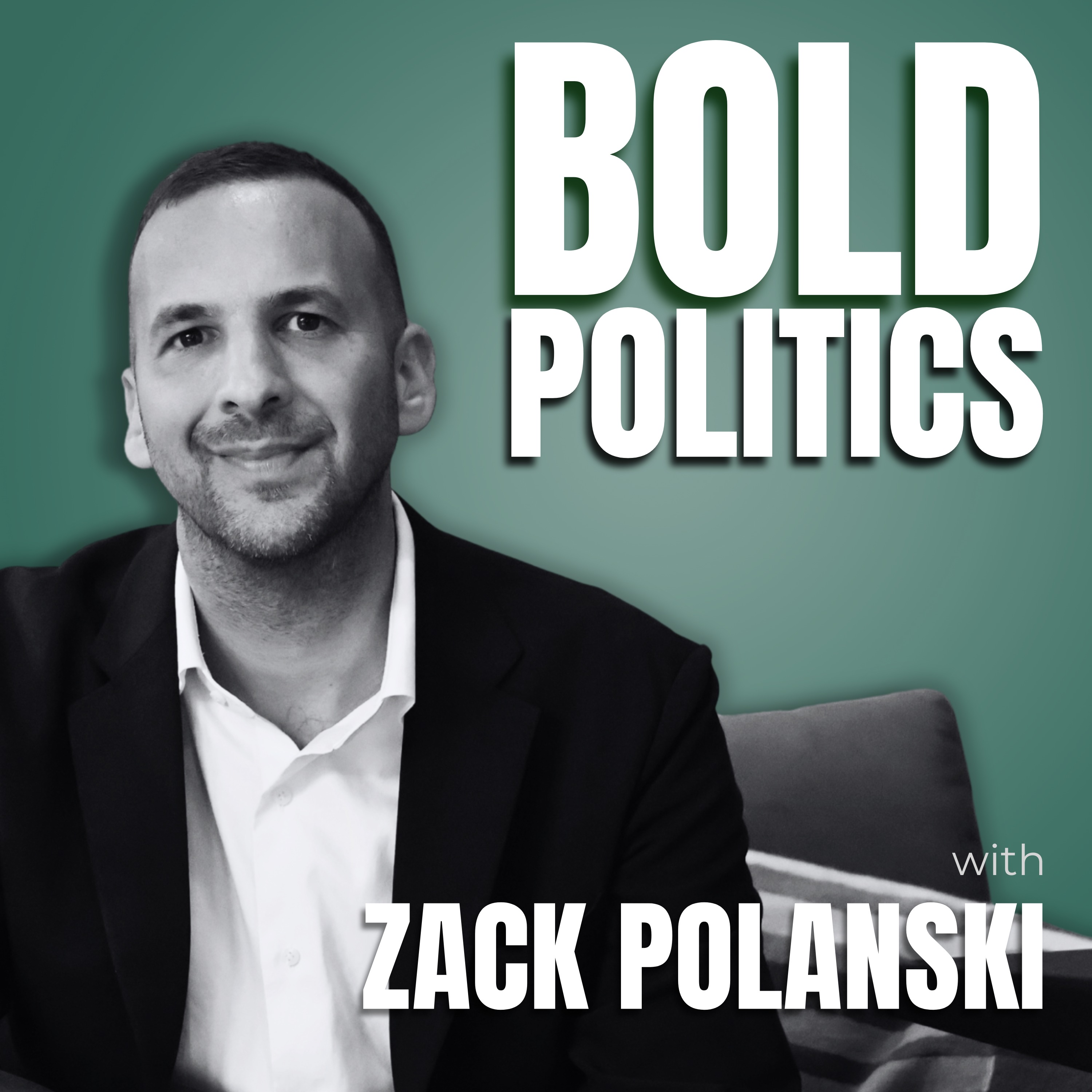
Are We Looking At The Economy All Wrong? | Richard Murphy | Zack Polanski
In short
In this episode, Zack Polanski engages in a thought-provoking discussion with economist, accountant, and campaigner Richard Murphy, examining the assumptions underpinning our understanding of the economy. They explore topics such as the role of the Bank of England, the merits of wealth taxes, and the concept of universal basic income (UBI).
Written by AI. May contain mistakes.

Ask about this episode
Get the gist, explore an idea or ask about something said.
 Claude
On Bold Politics with Zack Polanski, what are the key points of this episode?
Searching your listeningTranscript
Automatic transcript. May contain errors.
0:00What if everything we knew and thought about the economy was wrong? What if we haven't been asking the really important questions that challenge the entire frame of neoliberalism? To ask these questions, I'm joined today by economist Richard Murphy.
0:19Hey, Zach. Chris Packham here. I just want to tell you about something really exciting. EcoTalk. It's a phone company that helps restore nature and it's brilliant. You can find out more about it at ecotalk.co.uk.
0:40Thank you so much for coming on. Since I was elected leader, in quite a few interviews, I've been talking about how a national economy is nothing like a household budget. But the obvious answer to that is, what is a national economy like? A national economy is well like a national economy. And to answer that question is, whatever you imagine a household to be, a national economy is the opposite. And I have been an accountant for 50 years now, which is kind of scary. But when you're an accountant, you understand that there are debits and there are credits and they're the flip side of each other.
1:19And a household is the flip side of the national economy. So in the household, you can get terrified about debt because you can't pay it. But in the national economy, you create the money. So you can always pay your debt. And in the household economy, you can, for example, get rid of a cost. You can throw the children who've reached a certain maturity out of the house and save money. Or you can cut out some expenditure on the holiday and you'll be better off to balance the books. But in the national economy, you can't throw somebody out. Well, you can't if you're humane anyway. And actually, most of the cuts that you can put into your budget only mean you take away somebody else's income.
2:05So you don't actually save. So the difference between the household economy is that there's a ring fence around it. And it's quite tight. And you can push things beyond that ring fence. In the national economy, the number of things you can push out beyond the ring fence is very small. You are responsible for everything. So as a politician, an aspiring politician who wants to lead the country, you have to think about everything and not just your own little part of the world. And that's the difference in mindset between a household and a nation. And a nation doesn't have to balance its books. In fact, you can almost say with certainty that the worst thing a nation can do is balance its books because there wouldn't be enough money to go around.
2:49And that's pretty serious. And Stephanie Kelton famously talks about the difference between the debt and inflation. She's in fact writing a new book, I think, called The Inflation Myth. Could I maybe pick your brains a little bit about is inflation a bad thing? No. First of all, Stephanie is, I think, the biggest and best thinker around modern monetary theory. And I would recommend her books to anybody who's interested in the subject. The Deficit Myth to start with. But inflation is actually quite a good thing. In modest amount. And we've set this limit to 2%. Why? Nobody knows. Like most of these targets, 3 % of GDP is what you're allowed to borrow a year.
3:33Nobody knows why. Why is 2 % inflation the right level? Nobody knows why. Why isn't 3 % or 4 % better? We don't know. We just set a limit and then we make it a rod for our own back. The truth is that if we don't have inflation, we have deflation. And deflation is definitely a bad thing. And deflation is a bad thing because basically people put off spending because they think everything is going to be cheaper next year. And that therefore slows the economy down. Now, I'm not saying we necessarily want to have growth as the only goal of the economy. Let's be clear. I don't think that. But slowing the economy down for that reason is pretty bizarre.
4:10And secondly, in a deflationary economy, the value of people's debts, what they owe to other people in real terms goes up. So people, for example, who've got a mortgage actually find they're paying more over time. Whereas if you go back and look at somebody who's a boomer and I'm a boomer and I bought my first flat in London in 1983 for£28 ,500, which is now worth around half a million, I gather, to put that in perspective. And I could do it very easily on my own salary when I was 24, which I was in the year I bought it. Well, that debt was paid off by inflation. Let's be blunt about it. Everybody who says, oh, I saved hard to buy my own home and who's my age is talking utter nonsense.
4:54Because you didn't. Most of that was paid off by inflation. And inflation does have this great advantage of redistributing wealth as a consequence. But at the moment, all the benefit of that has gone to people of my age and not to younger people because there isn't enough inflation, in fact, in the economy now. So inflation is not a negative, but it does have to be managed. it's the unexpected spikes in inflation that are dangerous and it's the inflation that persists in things like food and energy costs and rental costs many of which by the way are driven by the Bank of England having too high an interest rate that are really dangerous for people on low incomes but which have almost no impact for people on high incomes so there is a distributional consequence of inflation which has to be managed but don't say per se inflation is bad because it isn't Brilliant.
5:41There are so many things I want to ask you in there. And there's so many things that I think I know the answers to, but actually I want the audience to hear. And also, I'm always learning. I guess the three questions I have there, and you can decide which one you want to answer first, is if someone's hearing from you for the first time, what is MMT? You talked about modern monetary theory. And I suppose some people might go, what is that? What are we talking about? And the second is, when I've talked about this on TV or radio, the next question inevitably is, oh, so Liz Truss was right then. So I'd love to hear your reflections on it.
6:10Maybe we just start with those two questions. That's enough to start off with, right? What is MMT? And was Liz Truss the perfect prime minister? I'm going to choose the order and I'm going to put Liz Truss second. I did have the misfortune of having her as my MP at one time. Gosh, that was a misfortune. Commiserations. Modern monetary theory is not modern. It is about money and it's not really a theory, which is why it's so badly named. It is just a description of how money works in a modern economy. It's nothing more than that. And it's not even deeply political, to be totally honest, because in fact, almost every central banker in the world has agreed that this is how money works.
6:49And it's very simple. If you go into a bank and ask for a loan, they do not give you somebody else's money. Everybody thinks that's how it works. They think that the bank has got to bring in depositors' money and then they lend that to you. Well, they can't lend depositors' money to you because they owe it back to the depositor. That's a technical impossibility. You know, you would be stealing that other person's money. That's not how banks work. In practice, the bank does something incredibly simple. It picks up a computer keyboard and if you ask for£10 ,000, it will go£10 ,000 in your loan account,£10 ,000 in your current account.
7:24One of those is a debit. One is a credit. You don't need to know which. It doesn't matter. One's positive. One's a negative. That does matter. They add up to zero. If you cancel the arrangement immediately, you can get rid of it altogether. But you think you've got new money in your current account. And you have because you made a promise to the bank to repay the money that you borrowed. And they made a promise to you that they would pay whoever you wanted to get the£10 ,000 now in your current account. Everything about money these days is a promise to pay. Look at your banknote. This has been the case for centuries, in fact.
7:59It's been written on Bank of England banknotes since 1694, but we still don't seem to recognise it. People still seem to think that there's gold or something in the bank. No, there isn't. So what modern monetary theory says is this is how banks create money, under licence from the Bank of England, because that's the only way in which a bank can exist. So actually with the permission of the state. And the government can do this too. And in fact this is how all money is ultimately made. Because when the Bank of England receives an instruction from the government to spend, it doesn't go and look and check whether there's any money in the government's bank account.
8:39It doesn't need to. Because under a law dating from 1866, unbelievably that long, there is a legal obligation on them to pay anything that the government says has been legally budgeted for. So there is no limit. It's basically, there you go, the bank must pay. And they do that by simply marking up the government's overdraft. Now, by convention, the government then says, oh, if there isn't enough tax that comes in today, it will go into financial markets and either issue short-term borrowing, which is called treasury bills, or long-term borrowing, which is government bonds or gilts. But it doesn't have to.
9:22The money that the government spends is created by the Bank of England always. And it's balanced in three ways. Tax, treasury bills or bonds. And that's what is called fiscal balance. And that is what Rachel Reeves believes is the goal of the economy. But it isn't. It's the real substance of what the money does that is the goal of the economy. And what modern monetary theory makes clear is that, first of all, we don't need to balance. We can choose whether to balance or not. In other words, the government can simply borrow from the Bank of England. And there is no legal constraint. Now we're not in the EU about doing that.
9:59And secondly, therefore, the government isn't in hock to the City of London because if it doesn't have to borrow it can't possibly be held to ransom by bond dealers. And thirdly, this means that tax doesn't fund government spending. There is in fact no such thing as taxpayers' money, it's what modern monetary theory says. There's government money which we use and we have to pay it back. And the reason why we have to pay it back by way of tax, and tax is really important in modern monetary theory, is that if the government kept creating money of course, there would be too much money in the economy, we would get inflation because there'd just be too much money floating around, but also the government would run out of things to buy.
10:40And that is the real constraint that modern monetary theory recognises. The constraint isn't, oh the government can't find enough tax, that's nonsense. It isn't the government can't find enough money, that's nonsense. The constraint is, we've reached full employment. Now the fact is we're a long way from full employment in the UK economy at present, we know that there are a lot of people who are unemployed because we aren't investing enough to get them into work if they want to be in work. People who are unwell, who have mental illness that needs support or have special educational needs that need support or who are working part time at present or are in disguised employment as self-employed people and many people are forced into that situation by the benefit system.
11:19All of those things need to be addressed and corrected. I would actually suggest that the figures for unemployment are massively understated. that the real unemployment rate is much higher. And that's why we also have disguised low productivity. We claim we're working, but in fact we're not. So our productivity data is nonsense as a consequence. But the government could create the money to put it to work. And the fact is, let's go back to that idea of the national economy. If the government spends, it creates a virtuous cycle. And the virtuous cycle is extraordinary. The government spends, it doesn't go into a black hole, it doesn't disappear, it's not lost.
11:55the government spending is always somebody else's income. And when somebody gets that income, first of all, they pay tax on it, VAT, and then income tax or corporation tax, and then they spend what's left over, and then somebody gets that income, and then they pay some tax, and then they spend, and on and on. But what's more, if you spend it in the right ways, like the NHS, and make people better so they can work, you don't just get your tax back, you can actually get more than your tax back by government spending. This is what MMT explains. It explains how money can liberate the economy to work better.
12:26And instead of being constrained by money, we're constrained by real physical resources. And money puts real physical resources to use. And that's why it's important. But it isn't a political system. It doesn't have to be used by the left, although I am obviously inclined towards the left of politics, I admit it. It could be used by anybody. This describes money in any country, anywhere with its own central bank, its own currency and debt that is denominated in that currency like the UK. So all our international debt by the government is denominated in the pound sterling. And that's fine. If we were borrowing in dollars, MMT wouldn't work.
13:02But let's be clear about it. And I know people criticise and say, oh, only America can do this because it's got the reserve currency of the world, the dollar. The pound is a reserve currency. The pound is internationally traded and people want to buy our debt. And we did a podcast on this ourselves very recently, a video on this, and we explained not only is the government going to issue 150 billion of debt to fund the deficit this year, the difference between its income and its spending, but the Bank of England is going to sell 70 billion of extra debt. In fact, the markets are desperate for government debt because it's the only safe place for large organisations to deposit their money.
13:38Our national debt isn't borrowing any more than banks who take deposits are borrowing people's money. Technically, you could say they are. But in practice, that's not what they do. They provide a safe place of deposit. That's what banks do. That's what the government does when it takes people's money. It provides a safe place of deposit. And people are desperate to give their money to the government for safety right now. Because the markets are really in a mess. They are not going to stay at the current highs. There's an AI bubble going on. Long answer, but that's what MMT does and that's what it liberates.
14:11It liberates us to think about full employment and not about a financial constraint. Was Liz Truss a disaster? Yes, of course, Liz Truss was a disaster. She and Kwasi Kwarteng put out a completely ridiculous budget, a totally pro-wealthy people budget, which was totally uncosted and people didn't like it. Did she crash the markets, though? No, she didn't. I know the markets didn't like her, but the reason why the markets crashed was the day before Wasi Kwarteng spoke in September, what was it, 22? Andrew Bailey at the Bank of England, somebody who I haven't got a high regard for with regard to political competence, I admit, hands on the table, that he announced he was going to do something called quantitative tightening.
14:51Never a good word to say on a podcast. Too many T's for comfort. But QT for sure, quantitative tightening, was the reverse of QE, quantitative easing, which happened during the global financial crisis and COVID. He was going to sell bonds back into the market. And the markets panicked because, as I've just said, they want to buy bonds. They want to actually have more government there. And he was saying he was going to take it away from them. He was going to remove their liquidity. They didn't know how to manage that. They panicked. The pension funds in particular were geared up for having more quantitative easing, not more quantitative tightening.
15:25That is what created the crisis, which pulled her down. So she is unfairly blamed. But let's be clear, she was also utterly incompetent. The truth is, she has not a clue about the economy and neither had quasi-quartank. So she was incompetent, but she did not cause the crisis. The Bank of England did that by their incompetence. I have to say, in unexpected people you agree with, a journalist said to me yesterday when I was talking about this, he said, have you been listening to Richard Tice? Let's talk about Richard Tice. A man I don't agree with almost anything that he says on anything, bar one thing.
15:56The Bank of England. And that is the Bank of England. The Bank of England pays interest on what are called the central bank reserve accounts. And boy, are we going geeky now. The central bank reserve accounts are the money that our commercial banks keep with the Bank of England. Let's put this in context. In 2008, of course, we had the global financial crisis. Banks stopped lending to each other. Before 2008, there was only£20 billion in the central bank reserve accounts, the money that was required to keep the banking system working at the Bank of England. And then the banks stopped trusting each other.
16:30They said, no, we won't lend money to you. You've got to pay up in cash tonight. That required the Bank of England to basically create vast amounts of new money to fund the banks so they could pay each other. That was what quantitative easing was actually about. It really was a bailout for the banks. Whatever else you heard, it bailed out the banks. It kept them solvent. And we got up to 900 billion in these accounts in the end. Now, did we need 900 billion? Maybe not. That's what Andrew Bailey is trying to reverse with quantitative tightening. But the point is, for reasons that are not clear, the Bank of England decided to pay full bank base rate on all the money that is deposited with them by the commercial banks, even though they were basically gifted that money in the first place by the Bank of England.
17:14So we have been giving them 4 % to 5 % on between, well, over the last few years, between 600 and 900 billion. So 40 plus billion a year of money going from us, the government, our agent, the government, to the banks, enriching rich people who own the banks, but not helping anybody. And Richard Tice says we don't need to do that. He says we don't need to pay anything. I think he's wrong about that. I think we need to pay something on some of it because that influences interest rates in the whole market. but we certainly don't need to pay at all. We could save 20 plus billion a year. What would you do with 20 billion?
17:49Go on, Zach. What are you going to spend 20 billion on? Well, protecting our NHS for a start. But as we know, we don't need to move money around the economy. No, but we could actually... It was very surreal hearing you ask that question then. But the question... Sorry, decided to turn tables. But the point is, we could then think differently about how we allocate funding. And we can. Well, can I pause you there? So you wrote a blog this morning because I'm spying on you that said you want to ask me about a new paradigm today. And so I'm going to turn the table and say, if you're in charge of this budget that's coming at the end of November or maybe not even the budget, let's take a step back further from that.
18:25What does the new paradigm look like? The new paradigm that I'm trying to describe at the moment is something I've explored in several books over quite a long period of time. The first one was something called The Courageous State. I published that in 2011 and then the joy attacks which is probably my best and most accessible book which came in 2015 or 16. I can't remember which now still available and still highly relevant particularly a lot of the policy chapters at the end. And I did actually do a budget chancellor's speech in that and I would now summarize that as a politics of care. In other words what I want is a politics that is going to put people at the absolute epicenter of what we think about.
19:05So we would protect people. We would try to deliver an economy free from fear. And people are living in fear at the moment. They're frightened of being ill. They're frightened of old age because our pensions aren't good enough. They're frightened that their children won't have a future because we haven't got a green policy anywhere. They're frightened they should not getting the education that is appropriate to what they need. They're frightened of being unemployed. They're frightened of leaving their jobs. They're frightened they're not getting enough pay. They're frightened they haven't got employment protections.
19:31I mean, you name it, they're frightened. And quite reasonably. I mean, this is what I read is going on in the economy. People living in fear because they haven't got the resilience provided by their own financial situations, which have been impoverished by high interest rates, low wages, growth, which has left them behind, but has enriched and divided our society on a wealth spectrum. Taxes which appear too high to them because the wealthy aren't paying enough. And all those other things. I mean, I could keep going on like this for ages, but those things are dividing us. And my point is that we need to actually start again.
20:05We need to put people at the front of this and say, what are we trying to do and how are we going to get that balance right? First of all, we need to be heading for full employment for those who need or want jobs, which doesn't mean everybody has to have a job. That's not the same thing at all. We need to look at the benefit system and get rid of some of those ghastly things that we put in place, which penalise people now. We need to provide a proper social safety net. We need to go back and actually look at what William Beveridge said in the 1940s about the five great curses. We wouldn't call them the same things now, but we would nonetheless say, what is it that we're trying to do to actually create this freedom from fear?
20:37And if you look at Nye Bevan and you look at John Maynard Keynes and you look at William Beveridge, they had this massive idea of this welfare state where people lived free from fear. And I was brought up in that state in the 1960s and 70s. and you would provide education for free. You would provide the NHS for free, whereas I've just had to book an NHS dentist appointment, only I've discovered my dentist is not NHS anymore and just the check-up is£75. Hey? And that's a pensioner's rate. And this is really quite extraordinary. We are not living in a world that is free from fear and the focus would be that.
21:14Could we do it? Yes, but it would be a big challenge. Hold that thought, Richard. We're going to go for a quick break.
21:24Hello Zach, Chris Packham here. I hear you're being politically bold. Well we at EcoTalk are being equally bold. It's the best service going I've got to say. Best network coverage in the UK. Lots of different deals, lots of packages and if you get any trouble you don't speak to a bot. You speak to a real human. But you know the best thing? The best thing is that the profits are going into nature conservation. For beavers and badgers and birds and butterflies and lots of other things which don't begin with B. So, Zach, I'm telling you, if you want to talk bold, mate, you better be doing it on EcoTalk.
22:01And you can switch really easily at ecotalk.co.uk.
22:10So this is where I'm going to push back, because I feel like you're describing the Green Party. And actually, when I talk about the economy, I largely talk about incentivising the goods, disincentivising the bads, spending multipliers. multiplies. I mean, this is all Kaneanism combined with a compassion and care. And the Green Party for a long time have talked about people and planet. I think maybe where there's a disagreement is on the wealth tax, which is central to Green Party policy. Now, over the years, I think the way we talk about wealth tax, certainly the way I talk about it, and I've noticed this in other other spokespeople, has got more nuanced.
22:40I talk about wealth tax to tackle inequality rather than to fund public services. Now, every so often, a word or a phrase can slip out your mouth where, as you say it on live TV, you go, I've just reinforced a bad frame there, actually. And, you know, I hold my hands up on that and say, always looking to get better at communication and be clear about what we're saying. But also as politicians, there is a balance between being a storyteller and finding the quickest, easiest story that feels intuitive to people compared to what you're talking about right now, which I agree with entirely. And I would imagine it's counterintuitive to a lot of people.
23:10It is. Only counterintuitive because we've had decades and decades and decades of neoliberalism. But it's very hard to be able to both change policy in terms of fight back against that, tell an easy story and inform and educate the public all at once. Well, yes, I entirely agree with you on that. And that's why I actually bang out, sad to say, in my retirement. I write five blog posts a day and a video every day to try to create the counter narrative, which I think is really important. On a wealth tax, my problem is this. We need to tax people with wealth a lot more. We are massively under taxing wealth.
23:45If you look at my taxing wealth report, I did a lot of work on the effective rates of tax, taking into consideration both income and capital gains and inheritances and everything else that people with wealth have, including their ability to shift income into companies to pay much lower rates of tax. And I looked at the overall combined rates of tax on capital and income. And you'll see that instead of the line for income being very slightly U-shaped, where the very less people pay a very high rate of tax because basically they don't have very much income and enjoy a lot of non-taxable benefits.
24:17So we can leave them in a sense aside. And at the top rate, it looks very slightly increased because income taxes are very little bit progressive. If you combine gains and capital, then the march is straightforward downward. From over 40 % for the lowest 10 % in the UK population to a little over 20 % on total increase in financial well-being per year on the top 10%. They are winning hands down. So the capacity to increase taxes, I reckon,£170 billion a year. I don't think you could ever get it. I don't think that's desirable. I don't think we want to do that. But what I wanted to explore was where can we most easily correct the situation?
24:58And of all the options available, the wealth tax is the worst. I hate to say that. It would be great if we'd done all the rest. I mean, if I'm asked to sort of promote the idea of a wealth tax, I say, yeah, I want a wealth tax. But only when you've done the easy things. Because let's be honest, taxing the rich is not going to be easy. They are going to scream. They're going to holler. They're going to shout. I've been around in this game for long enough to hear people shout about domicile rule, which I spent many years campaigning against and which is virtually gone, we could equalise the income tax rate and the capital gains tax rate.
25:27We could raise over£12 billion a year by doing that. There is no national insurance on investment income, whether that be interest or dividends or rents or you name it, distributions from trusts, whatever. Why isn't there? Because that means we have a system which is heavily biased against work. But we did have a thing called an investment income surcharge from the 1960s to the mid-1980s. I'm old enough to remember it in operation. I did tax returns with it on. And it was an extra 15 % tax on investment income above a certain limit. The equivalent of national insurance, in other words. It was there deliberately.
26:01Oh, by the way, national insurance, of course, is now only 8%. But there is an employer's rate, which is very high because of Rachel Reeves, as employers know. So the combined rate is 23%. So 15 % on investment income instead of 23 % combined national insurance rate is actually quite generous. That would raise£18 billion a year. Those two numbers themselves, very simple, very straightforward, absolutely one finance act, put them into operation, all the data is available in existing tax returns, I've raised£30 billion. Nobody thinks a wealth tax could raise more than£24 billion. So why not go for the easy bit?
26:40And I could raise a whole load of other changes. We could put VAT on financial services because they're only bought by the wealthy. I mean, the financial services poorer people buy, people just on lower income, are already subject to a tax because they're insurance. And that's got a tax on it equivalent to VAT already. Why don't we charge VAT on that? Eight billion extra a year. And I can keep on rolling them out. In fact, I could find 90 billion and you can pick and choose which ones you want. We could increase corporation tax rates, for example, which are far too low. And that would raise about 12 billion.
27:09So I think what's going on here, and it's interesting to see this reflection, is I don't disagree with anything you're saying. In fact, you're reading off Green Party policies. And when people ask me, you know, what does your budget look like? Talk about bringing capital gains tax in line with income tax. It's outrageous that we're taxing earned income more than we're taxing unearned wealth, for instance. But what I also notice is when I talk to journalists, particularly kind of not economic journalists, but more kind of wide ranging, they already often don't know what I'm talking about. Some of them are very, very good.
27:35But lots of them are going, I'm not, you know, I'm losing them. and I think we'd lose the audience with that and a politician's fundamental job is to communicate with the public and would you agree that a story about so when I was talking about the party political broadcast the whole idea is that hairdressers and plumbers think we're talking about them and the reason why I wanted to do this broadcast was to say I am not talking about you I am talking about people that while you sleep will make more money, make rather than earn make more money than you could possibly earn in an entire year in fact more than this whole street can make an entire year these people could make in a single night just on their assets.
28:08Part of that new paradigm that you asked me about is this idea of social justice. You cannot create a good society on the basis of inequality and division. And Farage is promoting division and the other parties are promoting inequality. So you have to talk about inclusion and embrace the idea that actually we have to be more alike and not be separated, which seems to be the whole basis of the political philosophies of neoliberalism, which is that single transferable party of the Tories and Labour and Lib Dems and sometimes the SNP that I've been talking about and the division that reform are talking about.
28:47That cannot be the basis for the future. Really well said. I want to ask you about power and particularly the bond markets. Very often the whole conversation is the Prime Minister or the Chancellor need to worry about the bond markets. This will strike some people as fundamentally undemocratic because don't we elect politicians and not the markets? Bond market myths are promoted very heavily by people in bond markets. They've got a lot of money to promote the idea that they can withdraw consent from the government. Let's be clear what government bonds are. They are just effectively bank deposit accounts.
29:23That's it. They might be issued over a period of up to 30 years or more and they will have a fixed rate of interest on them. But you could go and get a term deposit account from your building society or bank as well. You put your money in there for five years, fixed rate of interest. That's a bond. That's what the government issues as well. They are just deposit accounts. And let's be clear about who owns government bonds because until we clear through the crap, we can't talk about anything else. Roughly 30 % are owned by the Bank of England, so they aren't really an issue at all because the Bank of England is owned by the government.
29:54Around 30 % are owned by pension funds, life insurance companies and so on. Around 30 % are owned by foreign banks or governments because they want to trade in sterling and they hold this reserve currency in sterling through bonds because it's the only safe place to do it and they want to have our currency. So this idea that we aren't a reserve currency is total nonsense because the evidence is there for us all to see. About 5 or 6 % is owned by banks and a tiny proportion is owned by individuals. So individuals hardly play in this. We're talking about financial institutions or foreign governments.
30:26What do those financial institutions want? They're your pension fund, they're my pension fund, they are a life insurance company or whatever else, they want security. And the only person who in this economy can guarantee to repay them the money they deposit is the government. Because they know, as MMT, modern monetary theory explains, the government can always pay its debts because it can always create the money to make the payment. Therefore, Or they trust the government. They love the government. They need the government. This idea that we're in hock to the bond markets is total and utter nonsense.
30:59They are in hock to us. We give them the favour of saving money with the government and paying interest on it. When in fact, the government doesn't need to do that. It could just borrow from the Bank of England and pay nothing at all. So this is complete nonsense that we are in hock to the bond markets. but the bond marketeers and the wealthy who have their money saved in those organisations. Because remember, most people who have life assurance and most people who have pensions are in the top 10 % of the wealth strata of the UK as well. They want you to think that. And they want to think they're powerful.
31:31And the city spends a lot of money to promote this idea. But it's nonsense. They are not in charge. At this moment, the interest rate on government bonds is quite high. Not that high. and mainly because of, let's be honest, the Bank of England putting up base rates quite high and doing quantitative tightening. I keep on saying that. Darned word. But if the government didn't want to pay 5.6%, which is the current going rate on 30-year bonds, first of all, it doesn't have to issue 30-year bonds. It could issue something else, which has a lower rate, like 10-year bonds. But secondly, it just doesn't have to issue bonds at all at the time being.
32:08It could just borrow from the Bank of England for a while, tell the markets, look, we don't need you. This is a favour to you. It could withhold this process and the bond markets would realise pretty quickly. And the bond markets know the government can play like this because the government created money during quantitative easing and during the, therefore, the 2008 financial crisis in 2020. The power is with the government. The power is not with the bond markets. But our politicians, for some reason, and I hope you're not going to fall into this trap ever in your career, pretend that the city is in charge.
32:42The city definitely needs to be put back in its box and told it serves us, not we serve it. And remember, even in the city, at the end of the day, actually, we are in charge because we're the pensioners. We are the life assurance company holders. We are the bank deposit account holders. Why aren't they serving our interests? Why do they want to use our money to hold our government to ransom? They really are out of control. These guys need a lesson. And just to end on a disagreement, because we're at risk of agreeing too much. So I was at Modern Money Lab in Bristol recently. Yes, I promoted it.
33:18I know them. Patricia Nino, like this is a brilliant economist. And I felt like the audience was really with me. I can read a room up until the point where I mentioned the words universal basic income. And I felt a sharp intake of breath. Yes. What's going on with UBI in light of MMT? Look, MMT. Let me be clear. I'm not a spokesperson for everything to do with MMT, and I don't agree with quite a lot of people in MMT, and quite a lot of them don't agree with me. There's a chap called Bill Mitchell, one of the founders of it, who does not agree with Stephanie Kelton and doesn't agree with me. Let's be clear, he actually doesn't agree with Stephanie as well.
33:52Now, there is a problem with UBI in MMT because they prefer something called a job guarantee, which they say is the automatic balancer instead of the interest rate within the economy. I actually think that's a little naive, so I don't agree with most people in MMT on this because that requires the government to have a pool of jobs available at any moment to offer somebody at the drop of a hat if they become unemployed. And I don't know that... It feels very authoritarian as well. Well, I don't like that aspect of it either. There are quite a lot of aspects of the job guarantee I'm not that keen on, including the fact we can force you into work, and sometimes you don't want to force people into work.
34:24So I don't think that's core to MMT. I think that's a policy consequence that some have chosen to tack on to MMT. I differentiate the two. So we don't disagree. So we don't disagree. But actually, I'm also not completely convinced about UBI either. I did some work a decade ago now with a chap called Howard Reed, who's a great economist, who's now at the University of Northumbria. And we modelled UBI. And the trouble was that to make it work, you're pumping a lot of money out to everybody. We're going to give, we modelled giving people at that time, 16 ,000 quid a year per person, plus half that for children.
34:55So we were talking about a serious portion of median wage at the time being paid out as a universal basic income to guarantee that you could survive. The difficulty was that that required income tax rates, which were into the 80 percents, an income of around£70 ,000 a year. And that would encourage tax abuse. I mean, I have actually debated with Arthur Laffer. Most people in the world can't say that. I've done that and a vote was taken and I beat him hands down. The famous Laffer curve. The famous Laffer curve. This is the guy who says that, you know, high rates of tax are a disincentive. I have met Arthur.
35:32He talks nonsense. But at that rate, you would have a problem. I personally think that UBI would create such distortions in the tax system, not just domestically, but internationally, it would be quite difficult. I'm not therefore convinced by it. But I am convinced by universal basic services. I do think that we must guarantee rights of access to a lot of things which people at the moment don't have. Apart from health care, apart from education, and education is not a right anymore. is to be paid for and it's very expensive for many people. And even transport to education is not guaranteed. Can we not do both?
36:08Can we not have universal basic services and give people money that they're free to spend on? I don't think so at the moment. I think you would actually create too much economic disruption for the economy to manage. And I would love to be a revolutionary. I think it's very romantic, but I'm not, because also deep down inside there's these words accountant inside me. I was a chartered accountant in practice for over 40 years. I'm not a revolutionary, And I think that would be pushing people too far, too quickly for them to be able to manage the consequences. You would create a state of too much flux, disruption and uncertainty that the economy would suffer.
36:43I wonder if we could get the balance right. Right. So we're back to this same point. Grab your low hanging fruits. Take people on a journey with you. You talk about narratives. I talk about narratives as well. A lot of the time I think I'm creating narratives. on universal basic income you've got to start with universal basic services and walk people through that just as with I would say let's have a wealth tax when we've done all the easy bits of tackling inequality through existing taxes and then if we still need to do it to a wealth tax let's do universal basic services let's people get used to all of this see the benefits then you begin to look at whether you want UBI but don't go for UBI first it's not the headline.
37:23Just want to say I've never met someone who can speak at faster speed than I can. I've loved this conversation so much. Please, will you come back so we can do a part two? Because I think there's still loads more to talk about, but this is a kind of introduction for people. You've talked about a very lot of complex subjects here. If people want to know more about you or more in these kind of deep dives, what can they do? Fundamentally, they can go to my blog, first of all. I mean, we have a video channel, which is Richard J. Murphy, really original. You can follow me on Twitter, although I don't use that very much these days.
37:52You can follow me on Blue Sky. Everything's Richard J. Murphy. But most of all, go to my blog, which is funding the future. But if you just put my name, Richard Murphy, into Google, I come up first. It's the reward for writing 23 ,000 blog posts, which I have. And there's also a glossary there, which explains a lot of the technical terms as well. Do that and you will find every day these ideas being explored. There's also about 30 or 40 regular commentators there who add real value as well. So I start the ball rolling and then this wonderful range of comments come in every day and you're invited to participate so long as you're constructive and you're not rude.
38:28This is moderated comments. I do not tolerate abuse, misogyny, everything else under the sun, but it's a great safe space to have these discussions too. So come and join us. And I'm often reading those comments. I often see people saying, Zach must read this blog and I do. So there we go. It's official. Thank you so much. I've really, really enjoyed it. Thank you. And I will come back.
38:50hey zach it's chris packham again i'm ringing to ask if you've switched to eco talk yet come on come on come on the beavers are waiting for you and you can go and have a look at them at ecotalk.co.uk
From the publisher
How is the Bank of England sending money from the public’s pockets directly to billionaire owners of commercial banks? What is the counter argument to a wealth tax? Should we have a universal basic income?
Zack speaks with economist, accountant and campaigner, Richard Murphy.
Join Nature's Network and switch to Ecotalk, the only network service provider that gives all its profits to nature restoration: ecotalk.co.uk.
Email: [email protected]
YouTube: @boldpoliticswithzack
Instagram: @_boldpolitics
X: @_boldpolitics
Tik Tok: @boldpolitics
Disclaimer: Zack does not endorse any automated advert programmed into this content. We have blocked ads from certain categories where possible to try and ensure advertisers align with Zack's values, but cannot absolutely control which adverts you may hear. As such, we're sorry if you hear an advert from a company which is at odds with our principles, and encourage you to skip through them!
Hosted on Acast. See acast.com/privacy for more information.
More from Bold Politics with Zack Polanski
All episodesWe use cookies.They keep VO running smoothly and help us improve it. Privacy policy