
 Ask ChatGPT

- Podcasts
- Bold Politics with Zack Polanski
- How An Education System Became A Mental Health Crisis
Bold Politics with Zack Polanski11 Nov 2025 · 42m
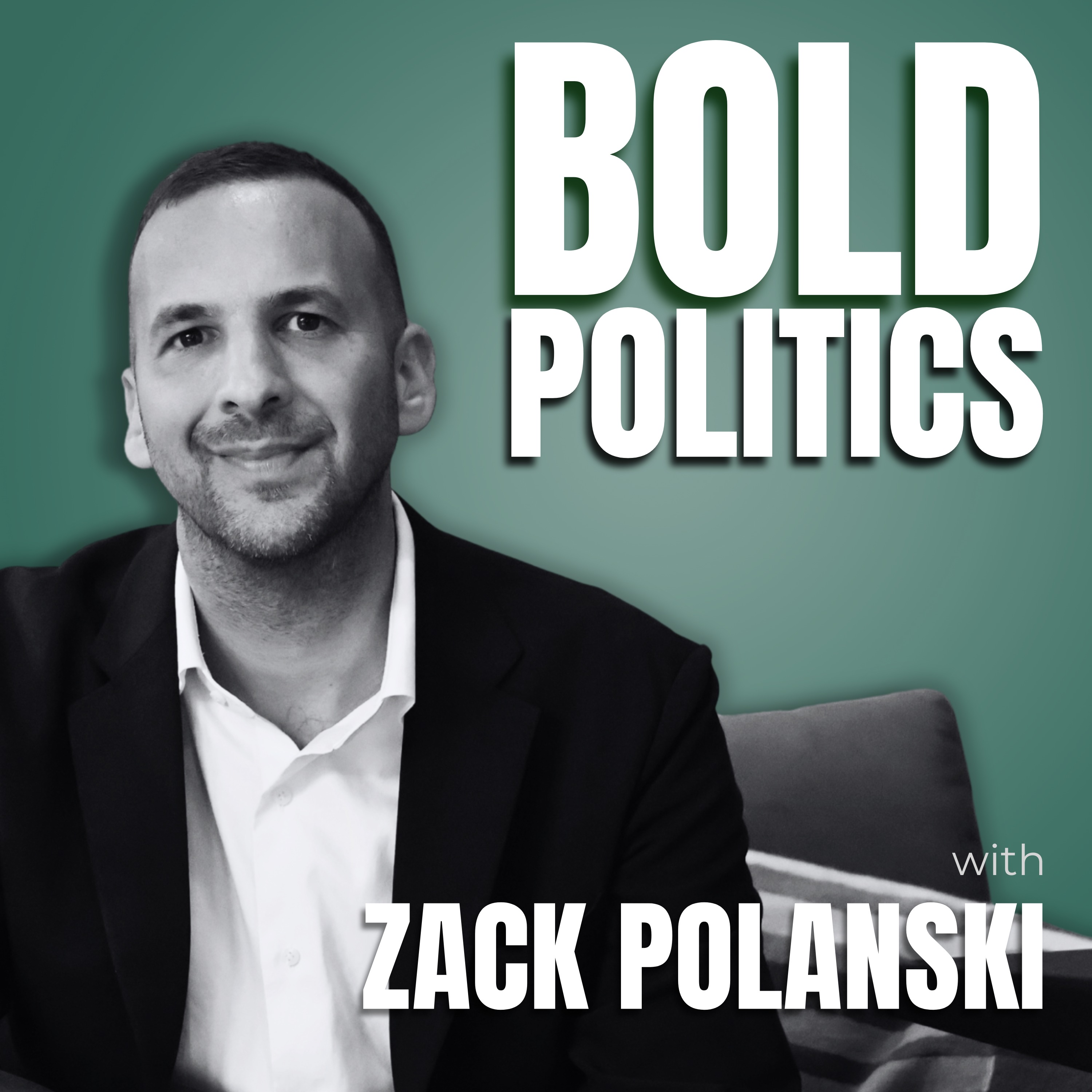
How An Education System Became A Mental Health Crisis | Natasha Devon | Zack Polanski
In short
In this episode of Bold Politics, host Zack Polanski engages with Natasha Devon, a journalist and LBC host, to discuss the critical intersection of education and mental health in the UK. They explore the evolving challenges within the education system, the mental health crisis among young people, and the importance of critical thinking and information hygiene.
Written by AI. May contain mistakes.

Ask about this episode
Get the gist, explore an idea or ask about something said.
 Claude
On Bold Politics with Zack Polanski, what are the key points of this episode?
Searching your listeningTranscript
Automatic transcript. May contain errors.
0:00Why is everything so shit? It's a question we need to keep asking ourselves about all sorts of things from health to policing to the climate crisis. One of the really vital elements, though, is education. We know we are facing a mental health crisis that often originates with young people in schools. Aside from that, journalists' job is to scrutinise me. Some journalists do it in ways that are totally unfair. Others do it fiercely, but it's totally fair. One of the journalists I have huge amounts of respect for, who is always fair, but who always makes sure that she is asking the right question, is LBC journalist Natasha Devon.
0:37Natasha's also been in schools for a long time, talking to young people about their mental health. So today is the day we talk education.
0:48Hello, Zach. Chris Packham here. I hear you've signed up to EcoTalk. That's very bold of you. Brilliant. and if you don't mind me saying very bright of you too if your audience is half as smart as you then they'll sign up too at ecotalk.co.uk
1:12Natasha I obviously know you well as a journalist on LBC but also you do a whole host of other things around mental health and education I guess where would you like to start in terms of how would you like to present yourself and what feels really important to you to talk about today? Thank you for asking me that question because I think most people know me from LBC but what they don't necessarily know is that I've been going into schools all over the UK for 17 years now and what I do is a mixture of research and education around mental health for teenagers predominantly but increasingly I'm working with younger children and I was also very briefly the Conservative government's mental health star.
1:48I forgot that. I lasted for nine months before they fired me for being too outspoken about austerity and Michael Gove's education changes. I can't imagine how that happened. When you look back on it, it was almost an inevitability. You're so shy and tiring about your opinions. But what I think as somebody who I consider myself to have an education background, and I've spoken to so many teachers and experienced so many schools, And I find that often when we're talking about these big sort of sexy subjects at the moment, like economics and foreign policy, people kind of tack education on as an afterthought.
2:25And they'll say, this should be taught in schools. And what I think is that education needs fundamental reform, not with a capital R. Yeah, careful there. With a small R. And I would really like to talk about that, if that's something you'd be open to. Yeah, no, I'm absolutely open to that. It's interesting because I had a conversation with Jordan Stevens and he said to me, what are your education policies? And I didn't know that question was coming. So I listed off the kind of very basics, which is to fund education properly, to move away from privatisation and marketisation to a much more kind of public service and to abolish Ofsted.
2:56So to start these kind of targets for people. And Jordan says, that sounds great, but I think we can be more radical in that. So I said to him, what do you mean by radical? And he talked about essentially what I would call free schools. So where children or the students set the agenda and it's not kind of hit to a curriculum. what does a radical reform small r let's say radical transformation of the education system look like for you well i think what we need to acknowledge is so we evolved in an information scarce environment and we now live in the total opposite environment to that there is information everywhere so remembering stuff and being able to regurgitate it under exam conditions it was never a perfect measure of intelligence but now it's a more useless skill than it's ever been because there's Google and it's right there.
3:40The key skill that young people need is the ability to differentiate between what is a verified piece of information, what's true, what's AI, what's manipulating them, what's trying to sell them something. And it's interesting because I was giving evidence to the APPG on teaching and learning the other day, and we were ostensibly there to talk about misogyny, online misogyny. But we ended up talking about democracy. Democracy is at stake here because what young people in particular, but everybody is being exposed to via online influences, is affecting their political opinion. And it's not that I think that schools should be telling young people what political opinions they should have.
4:22It's more that they need to give them the tools to be able to have. It's almost like scientific literacy, you know, where someone like Tommy Robinson or Jordan Peterson gives a statistic or a study. They sound so credible. but if you have the scientific literacy to go okay what's the difference between correlation and causation where can i verify this um you know how have they manipulated this statistic um or you know nigel farage saying that you know you're more likely to commit a sexual offense if you come from a certain background well you know what's he measuring that against if we give young people those skills then they can practice this thing called information hygiene which is what all of the online safety experts are talking about.
5:02I think the nature of how we debate needs to change as well. So, you know, loads of schools have a debating society and my school had a debating society. And I was so glad I was taught those skills because as a working class girl, you know, it taught me how to compete in sort of middle class and political circles. But it's all about owning the other person and having the most persuasive argument, who's funniest, ultimately and where that ends up is Charlie Kirk and and so I think we need to sort of adjust the education system per the environment that we find ourselves in and go okay you know what can we learn from each other what is active listening what does that look like and that involves and for so many reasons I think we need to do this I think we need to scrap the curriculum it was created in 1980 and the world is radically different than it was in 1980 and just build the curriculum around what we know about child psychology what we know about neurodivergence what we know about well-being but also make it fit for purpose in a post technological revolution and we're having a conversation about education and I want to come back to that but you do present the show on LBC and just as you were talking then I was like I wonder how you might have got to a place where you think people need to be more informed because whenever I listen to your show you have callers come in and you're phenomenal at it.
6:18You have that kind of patient, calm, most of the time non-judgmental stance where you have an opinion but you are just giving people the chance to speak. But it does strike me that sometimes people are just very wrong, like they just have the wrong information and no matter how much you tell them they've got the wrong information they'll almost go well you're presenting a radio show of course you would say that because you're part of the elite and now you're trying to silence me on this radio show. How important is this information hygiene for the whole political kind of system? It's important for everybody, but we can't force adults to go to digital literacy classes, unfortunately.
6:52What I think doing a show on LBC has taught me is I always thought it was a bit of a superpower of mine that I grew up in a low-income household, but then I got, on academic merit, I got into a school in a very middle-class area, which was outside of my catchment area. So then all my friends were middle-class. One of my friends had a cello in her bedroom where the TV should have been. And I was like, what is all your furniture pointing at? Oh, it's a cello. So we were all obsessed with Ab Fab as well when we were growing up. And we thought that Adena Monsoon was really cool. So this is why I talk how I do.
7:22I don't talk like anyone else in my family. And also, you know, I'm mixed, but white passing. I'm bi, which, you know, you can choose to not talk about, you know, certainly if you're in a heterosexual relationship. And I always thought, oh, this is a superpower. I've got access to all of these different communities but I pass you know and then when I started on LBC people started saying things about me that I was like this is just not right apparently you know I speak like someone who's privately educated and I must have come from a privileged background and I've never known struggle in my life and I realized what it was is that people like Nigel Farage have created this idea of the white working class and it's a very specific white working class experience that unless you fit that very narrow idea, you're pushed outside of the definition of working class and you don't belong in that group.
8:17And therefore, these conversations I was having on LBC, I was like, oh, you think I'm the elite that the right wing are talking about? You think I'm the enemy? And that's when my stance on these conversations pivoted because I thought I have to show you that I care about everyone. I want the world to be fairer for everyone. I'm on your side. And I have to do that with this accent, which is my mission at the moment. I think that's a really key point, though. I've been thinking about that a lot as a political leader. Like, what does I'm on your side look like? Because actually I talk a lot about the hate and disunity of the right and trying to create division.
8:59But also I'm aware when I say that, that's almost creating division, right? I'm talking about the right and their division. am I creating division by doing that? And I go, but no, actually, whether you consider yourself on the left or progressive or whatever the label is, we are trying to say, actually, everyone should be having a better experience and actually making sure that everyone's got the right information and we're challenging vested interests, everyone's lives can kind of level up. I think this links in, but I didn't know you've done it for 17 years that you've gone to schools. What is the change that you've seen in young people's mental health and the education system in that time?
9:29I shouldn't lead a question, maybe there hasn't been a change, but I imagine there has been. Oh, it's massive. So I started just before Michael Gove came in. And what Michael Gove's education changes did was they essentially abolished coursework. There is still a bit of coursework, but nothing like what there was. So what you have now in the run up to GCSE is two, sometimes three years of a young person's academic life that is pointing at their performance on one day. So if you're not good in exams, that won't be reflected. Your potential won't be reflected in your grades. they also had this emphasis on so-called core academic subjects.
10:06So whenever the Conservatives boast about our reading and writing and literacy, I remember a teacher telling me it's all about whether they can put a comma in the right place. It's not about whether they have understood the text, whether they can write beautiful poetry. It's not about how they are formulating their thoughts. It's all about the kind of sentence structure. and what went alongside that was this defunding and deprioritizing of sports, arts, drama, PSHE all of the things we know have a therapeutic value and I actually wrote to Michael Gove in 2012 and I said there's going to be a mental health crisis as a result of these changes.
10:49That of course happened alongside austerity which meant that young people didn't have access to those types of activities in their communities either. And so you had this crisis that was building and building and building. And what I think COVID did was allow politicians who had been responsible for that building crisis to blame it all on COVID. And I got so frustrated during the lockdowns. Don't get me wrong, I think that COVID was handled appallingly. And all of the evidence that's coming out now is bearing out that point of view and a lockdown inflicted late or at the wrong time does an enormous amount of harm.
11:28However, there were people who were just anti-lockdown in any circumstances and what they did was they weaponized young people's mental health. You had politicians who had voted to take away mental health services from young people suddenly proclaiming that they cared about young people's mental health because it was a way to argue against lockdowns. And then when we came out the other side, and of course, everything had been exacerbated, they said, well, yes, it's because of COVID. It's nothing to do with us and our political decision making and our policies. So what I have seen in young people is more and more of them experiencing mental health difficulties, more and more unmet need in terms of if they have unique educational needs or if they are neurodivergent and less support available to them.
12:18And then also this kind of exam factory approach because I remember very early on in my career I went into this middle school this really posh middle school that was kind of preparing kids for Eton essentially and I asked them their opinion on something in the class and they all just looked at me and I went what do you think and I said there's no right or wrong answer what do you think and one of them put their hand up and went what do you want us to say what's correct and afterwards I spoke to the teacher about it and I said what's that about and they said um well they take the 11 plus and the 13 plus here so they're so used to learning via you know what will be the correct answer on on the exam um and I thought what a hideous school experience to never be able to you know say what your opinion is and back it up with this evidence and then someone else has a differing opinion you know that's how I was used to learning and now I see that more and more creeping into the state system because they've less time fewer resources and so it's this kind of if it's not on the exam it's not relevant we can't discuss it we don't have time right style approach it reminds me it's slightly tangential but I was speaking to someone yesterday who is looking into the science of right-wing podcasts and how they pick up algorithms.
13:36And they were saying sometimes they'll put out a clip, they'll put out something like 50 versions of that clip, and they're looking for which one catches the quickest, in which exact phrase, which exact picture, and almost this alchemy of how to wind people up or how to find the correct answer, which seems to remove all kind of context, nuance, thought and feeling from the entire experience. And actually it just becomes what's right or what's wrong according to an exact algorithm. I know it's a slightly different point, but it just feels like are we all being pushed into this complete lack of nuance, which I know is something you're writing about.
14:05Yes, it is because there's this peculiar phenomenon where people will support policies which will actively harm them because it's a way to own the libs. That's all they care about is just making people like you and me cry. That feels like a win to them, even if it hurts them as well. And I think that that is a generation of people who have grown up on the type of podcast that you're talking about. How gendered is this? So on this podcast, we had Jimmy Vagin, and we've talked a lot kind of about young men's mental health. Obviously, young women's mental health is incredibly important too. How different is it, and does it need different interventions?
14:41I do think it needs different interventions. I've seen young men and young women become increasingly polarised. I think that that has to do with the fact that they are operating in entirely different online silos, completely different silos. what I am starting to see with young women and it's a completely understandable response but I just think it's the least helpful thing ever is them saying I'm done like I'm straight but I am not going to date men I I'm not going to engage with boys and men because they have become so such a toxic force in my life that I I remove myself for my own peace and and safety what ages are we talking about roughly or is it right 13 14 um i've i've had conversations with with girls where they've felt that way and i get it but then i'm i'm i want to say to them oh but these boys they need conversations but then i think am i being like the teacher that puts the naughtiest child next to the hardest working child because they he thinks that there'll be a good influence but then ultimately just the hardest working child ends up having their life disrupted is that what I'm doing right now.
15:49And it's a difficult thing to balance. But what I would say is that all of these headlines that we're seeing about young people supposedly becoming more far right and loving reform, they have entirely written girls and young women out of that picture. For sure. It doesn't reflect the patterns with them. And actually I'd say this, but there's lots of data to show there's more young women joining or voting for the Green Party than there are young men voting for reform. Not that we should neglect for young men, that's worrying in itself. But I think it's interesting that were not told that story.
16:19Yeah, and I actually wrote a piece for Byline Times about this because do you remember there was a headline that said 52 % of Gen Z want to live under a dictatorship? I do. Right. Absolute bollocks. Like, just total unalloyed bollocks. There's a great substat that I read by a guy called Dr Mark Pack, you know, the Liberal Democrat guy, and he sort of breaks down how polling is conducted and tells you how legitimate it is, essentially. And with this one, he said they've been so untransparent in terms of what they have used in order to conduct this polling that he said, I can't tell you anything other than it's bollocks, really.
17:02That was his conclusion. And they did a robust study, and it's actually about 6 % of Gen Z that want to live under a dictatorship. That's from King's College. That's quite different. Yeah, which is, you know, I can believe that. I can believe that 6 % do. but this 52 % it was done by Channel 4 and Kraft who make the cheese slices those well-known pollsters and the media just took it and ran with it and I was so annoyed by it because it was so not reflective of what I was seeing on the ground that I decided to do my own research with my own very limited resources so this is about 250 young people that I spoke to but from schools all over the country and quite a wide range of different backgrounds And what that showed very clearly was what YouGov has found in their latest study, that actually the Greens were the most popular, if you take women and girls into account, which why would you not?
17:54And then next was Labour. A lot of the boys did say that they like reform because I did gender as part of it. But actually, when there was room to say any other comments at the end of this little poll that I did, they said Trump, but since I can't vote for him, reform. Right. Now I get that. I'm not a fan of Donald Trump. Please don't mistake me. And Dad you clarified that. Yeah. Please don't mistake me. Just because I was looking for the maggot hat. But I'm putting myself in the position of a teenager, right? Now Trump, like, he's got that ludicrous hair and that unblended foundation and he does that punchy dance to YMCA and he takes the piss out of himself and he's funny.
18:35Right. I get why he's charismatic to a teenager. Nigel Farage it's a mystery to me why anyone would think he's a charismatic man but with Trump I'm like I understand why if I you know was experiencing this dopamine spike that teenagers experience which makes them prone to risk taking behaviour and poor decision making and I'm just I just want to have a laugh because I'm young I get why Trump's appealing so actually the popularity that reform is enjoying amongst young men is a reflection of Trump's popularity I don't think it has anything to do with what reform are offering. That's so interesting.
19:13I know this is slightly personalising it a little bit, but I would say Nigel Farage does use humour. I mean, I don't personally find it funny, but I don't know if you agree with that. I've never seen him be funny. He always feels like he's having a good time in the same way Ed Davey kind of pretends he's having a good time through stunts. You always see Farage and he looks like he's having a great day. Oh, that sort of big cheesy grin that he does. Yeah, I've never heard him say anything witty. Right, yeah, I agree with that. I'm not here for team Nigel Farage, just to also clarify on the other end.
19:41But I've been thinking about a lot actually, what is it that Nigel Farage is doing or saying that it's clearly resonating with a lot of people? Because again, I look at him in the same way that I look at Trump and I just don't get it. But then I feel, and I don't want to speak for you, but I imagine it is kind of our jobs to get it, to interrogate what is it that people are getting that we're missing but seems to be speaking to people. Yeah, I think it is our job to understand the emotion behind it. it's so strange to me that it was a it was a right-wing saying wasn't it facts don't care about your feelings and yet when you actually look at it a lot of these right-wing narratives are entirely um they're based on feeling they're they're based on making people feel a certain way and when you look at the facts you you end up in a left-wing position which is why people say oh education is left-wing it's like no there is being informed and there is empathy right and if you are informed and have empathy, it's a terrible time to be alive.
20:37And then you have people who are informed but have no empathy, who are manipulating people who have empathy but are not informed. That's what's happening at the moment. So what the right wing are doing is they are weaponising people's feelings and then giving them a kind of false narrative to attach it to. And I think if you can empathise with the feeling, then you're sort of halfway there. That makes total sense. It reminds me, I saw you interview live Dr. Keon West and his book, The Science of Racism, as a black man he was saying kind of he's not interested in i don't want to paraphrase him badly but um he's interested in why people are racist as opposed to going uh to put a moral judgment on it but actually going what is the data and the science points for why these things are happening and it's so interesting that keon said that because i love that man so much but he is as close to a vulcan as i've ever met and like he is relentlessly logical right um i remember you saying this actually yeah to the extent sometimes i will say oh i feel like this and he he'll go why would you ever feel that there is literally no evidence for that i'm like okay cool um so it's interesting that he even he has arrived at that conclusion so is the answer for us to all get much more emotive all the time i mean i part i spend a lot of time talking about storytelling but i'm interested what what your view is i don't think the answer is for us to get much more emotive all the time i i think actually i've noticed people are appreciating a much calmer approach.
22:02There was a conversation I had a couple of weeks ago on my show with a reform supporter who I actually really liked him because he was listening to what I was saying. He wasn't there to win an argument. He was there to have a conversation, which is what LBC is supposed to be all about. That's what the C stands for. And I was just very calmly saying to him, look, I get it. I get why you feel this way. But what Nigel Farage is doing is this, and that will make that problem worse so you know why do you think he's the answer um and people really responded to that and it's one of those clips that you would never think it would go viral because we weren't having you know this huge screaming yeah this huge slanging match um and yeah i i feel like there's a kind of thirst for that type of discourse at the moment but i think the acknowledgement of okay i understand is and it's logical to feel that way but let's look at what we each think the solutions are because we've converged at some point.
23:05Zach has signed up to EcoTalk. He's taken the great plunge. Why has he done that? Well, he's a man who sees sense. Firstly, brilliant network coverage. Secondly, fantastic customer service. And thirdly, of course, all of the profits are going to nature restoration. Yes, we're spending them on rewilding. And you can go to our website to see what we're up to. You can also get some wildlife tips from yours truly. So come on, follow his lead and sign up to EcoTalk. All you've got to do is go to ecotalk.co.uk and it's simple, absolutely simple. And look at the benefits. Life is beautiful.
23:49so to tie these two conversations together if you feel that people are wanting more kind of nuanced long-form conversations and you're going into schools are you finding that young people are seeing the world as complex and nuanced or are the conversations quite um binary about things i can't speak for every young person yeah i mean young people aren't a monolith a lot of the young people that i speak to seem quite confused at the moment which i i understand they seem a bit overwhelmed by everything and and i'm not surprised because i was thinking back to being a teenager in the 90s i was sort of vaguely aware that we invaded iraq um and that princess diana died obviously um but other than that because i wasn't a political animal at that point in my life didn't watch the news wasn't bothered other than that i was sort of sublimely unaware of everything that was happening throughout the world and i am i wonder what it would have done to my brain to my perspective to have a supercomputer in my pocket with access to absolutely everything on it at that time in my life so there's a lot of a sort of sense of being overwhelmed and desperately wanting guidance and and sometimes I feel like when when I say to them look I'm not here to tell you what to think I'm here to sort of ask you to particularly when we're talking about things like body image because I talk about the relationship between weight and health and how it all gets conflated with ideas about body image.
25:14And I'll say to them, you don't have to agree with everything I say. And if someone had come into my school and said that, I would have gone, oh, what a cool person. But I see them almost look disappointed. They're like, oh, no, I'm looking for somebody. I'm looking for a guru to tell me how to make sense of the world, which I completely relate to. But it's so dangerous at the same time because that's how they end up attaching themselves to somebody like a Charlie Kirk or, you know, a Tommy Robinson or who offers them this kind of false certainty. So, yeah, I guess I'm everything that I do is informed by the conversations I've had with young people.
25:53I'm trying to kind of elevate their voices and ensure that they are represented fairly in media and in some of the political campaigning that I'm doing. But I'm hopeful because working with young people is brilliant. and they make me smile every day and laugh and think about things differently. But I also can't help but reflect how terrifying it must be to be that age in 2025. I love this because I think it reflects everything I know about you. Not only are you obviously affecting those young people, but you're letting them into you too. You must go away from those conversations and you're changed as well.
26:27I think that feedback is really, really important. They radicalise me. Right. Right. Yeah. Well, in 2008, again, I wasn't particularly a political person when I first started doing this job. It was talking to young people. And this is where people get it so wrong, like on the trans issue, for example. People think that teachers introduced gender studies into schools and then suddenly we saw all of these trans and non-binary kids. It's entirely the other way around. it's that because of the social sort of silo they're in, trans and non-binary people suddenly felt confident to start talking about their experiences.
27:04Suddenly there was a realisation, oh, we've got lots of trans and non-binary students, or probably not lots because it's, you know, 1 % of the population, but a few, a handful in our school. Oh, we better do something to make sure that they are acknowledged within the conversations that we have. That's how it happens in education. So yeah, they are responsible for every opinion I have. Since you brought up kind of trans rights, that's something that I really associate you being one of a few journalists who's kind of really had people's backs, as well as being independent and doing the work of scrutinising politicians, you've had a very clear position, which has been trans inclusive and the position of empathy.
27:42How difficult has that been to navigate in kind of such a toxic political atmosphere? I haven't found it particularly difficult personally just because I was so sure I was right from the beginning. Because, first of all, as a queer woman, it was so obviously recycled homophobia. And I was like, we've done this before. I remember this from the 80s. It's the same argument. but secondly because I think because I am tall and big I've always existed outside the kind of parameters of acceptable femininity there's an element of self-interest in it I'm not going to lie because if if we've got these kind of self-appointed gender police in in bathrooms I'm going to be on the receiving end of that you know there are already people out there on mumsnet who think I'm trans and so it was so obvious to me what the right answer was from the beginning and it was very easy to hold on to that having said that I've lost opportunities I've been cancelled from you know tv work I've been disinvited from podcasts and I know that there are people who will not associate with me now because I have those views But it was so clearly a right side of history moment for me that I couldn't countenance an alternative.
29:08Why do you, and I'm aware in this that I'm saying it's difficult for you and you're saying understandably that it's correct and really need to centre trans people in this conversation too. But why do you think is this particular issue that sends people into such ridiculous and absurd positions? It's interesting, isn't it? Because in the States, being anti-trans is associated with lots of other really horrible views. Whereas here in the UK, there's a whole sort of second wave feminism, broadly lefty style of woman who's sort of slightly older than me usually, who has been very anti-trans. And some of those women, I have actually seen them become radicalised.
29:51It's almost a sort of thin edge of a wedge where they start off saying, well, this is anomalous to everything else. You know, I'm not homophobic. I'm not racist. I'm not xenophobic. It's just this one thing. And then I've watched them become more homophobic, xenophobic and racist ever since. And I don't know how much of a role the Internet is playing in that. So it's difficult because you have these women who genuinely feel that their rights are being eroded by the existence of trans people. And they genuinely believe that. And I feel the same way about that as you feel, I think, having heard you speak about it a lot, about Jewish people who say, I feel genuinely threatened by the existence of the Palestinian liberation movement.
30:46that's how they feel yeah it's not correct but it's how they feel um it was an interview you did with me the flip side uh i think it might be the first time you ever interviewed me but your introduction was just so smart which is why i remember it he said normally if a group from a minority say i feel scared you're inclined to automatically believe that minority and then he said you're a jewish man who's saying you're not scared of the palestine protests in fact you're on them how do we kind of balance this having to listen to minorities etc but so to bring it back to to the trans discussion how do we make sure that we're not pushing gender critical women particularly women away by just telling them they're wrong but also not legitimizing that kind of legitimate concerns things I'm just asking questions well I think that the good thing about most gender critical women is that they do genuinely care about women's rights outside of trans issues.
31:40So you get a lot of, you know, perennially online right wing men who only care about women's rights if it's a trans woman or an immigrant that they can say is a predator. But with gender critical women and kind of second wave feminists, they do genuinely care about the issues beyond trans people. So then it's just a question of saying, well, you know, like if we care about women being sexually assaulted in prison, for example which we absolutely should care about the vast majority of those assaults happen as a result of guards perpetrating those assaults so how are we going to make women safer in in prison and and if we do have a finite amount of airtime and energy where is that best placed is it best placed with you know one trans high profile trans prisoner case where where that happened or with the thousands of other sexual assaults that happen every single year.
32:39Can I finally ask you, as a journalist, so I was on Laura Koonsberg a while ago, and one thing I said, I didn't plan to say it, but I was asked a question about the IFS and their independence, and I said, well, yes, they're independent, but also even people who are independent, you know, all of us get our views and our ideas from places, so just because something's independent in and of itself doesn't mean it's right. And just to put my cards on the table, I think Victoria Dobbs, she's an excellent journalist, so this isn't me kind of shading her when she's not here. But I could see she was a little bit confused.
33:08She just thought that was a very, very bold thing to say that was completely out of the frame of network. So I've been thinking about journalism a lot in terms of how journalists expand their frame of reference. And I'm not saying I'm right and Victoria was wrong, but what I am saying is maybe I'm being a little bit more curious about economic policy or more generally for paradigms. And I'm just wondering how, as a journalist, you keep yourself honest to that, to even being curious about things you don't necessarily agree with. yeah it's interesting I've been thinking recently about what we deem to be political because obviously everything's political like what time you have to get up in the morning what you eat for breakfast how you get to work what you do for a job yeah everything is in some way influenced by politics but as soon as you label something as political you make it taboo so I remember when I was briefly the government mental health star and I was trying to talk about funding for mental health services, they were saying, that's political.
34:01You have to be independent. You can't talk about that. And when I was talking about the impact of Michael Gove's education policies, they were like, that's political. Can't talk about that. And then what they wanted to boil me down to was this kind of very bland awareness raising of, oh, I have an anxiety disorder and this is what it's like. But, you know, I'm not going to offer you any kind of way to harness the sentiment that I've made you feel or to push for structural change we're just going to raise awareness which is important but i think we're aware now when it comes to mental health um so i i think when people call themselves independent what they can mean is i'm not even going to entertain any idea that is associated with party politics and in a way that kind of waters their ideas down to an extent.
34:49So for me, I think if there is an opaquely funded think tank, normally I won't have a spokesperson from there on my show. Obviously there are some think tanks that are great. They are educational charities and they do magnificent work, but some of the kind of more Tufton Street-y ones, I'm like, hmm. And then in terms of holding myself to account, I just think I do have commentators on my show that I disagree with. How do I do it? It might just be vibes, which doesn't speak well to my journalistic integrity. I think it's more I look at is there evidence for what they're saying and do they seem to have good motivations?
35:31And, you know, are they punching down? Those are the three questions that I'll ask. I think those are good questions to ask. Yeah. in terms of the the kind of way you'd like to see conversations going so we've talked about nuance a lot more here what do you think people can do in public life or indeed people in their communities can do to create a better space both in terms of information hygiene but also in terms of better mental health for themselves and people around them sorry that's a lot of questions all in one choose which one you want to answer i think one of the best piece of advice i was ever given was see activism like a patchwork quilt.
36:05And we've all got our own little patch. And on its own, it might not look like much. But when we sew all of our patches together, we create this much more all-encompassing thing. I think what we're doing is we're, and George Monbiot talks about this in his book, and I thought it was a really good way of describing it. We're oscillating between two very unnatural states as human beings. One is having access to all the information ever that's ever been created and you know all the furthest reaches of the world what's going on there and then the second is isolation because when you put your phone down or close your laptop or whatever it is for many people they are alone and the midpoint between those two is community and that's the the state in which human beings thrive so I think looking at what you can do in your community to reach out to your community to get to know your community and to make changes in your community, not only is the way to create a movement, but it's also a really good way to nurture your mental health as well.
37:08I really love that. We've talked a lot about online spaces. I don't know if you do have a position, but I'm wondering what you think about the Online Safety Act. I think it's better than nothing, but it has been watered down to the point of, I'm not sure how effective it's going to be. it's annoying because some of the arguments against the online safety act um that have been coming from reform for example i don't have much truck with that i was talking to carol vorderman about this and she said um in the early 2000s she was part of a campaign group when um chat rooms were a big thing at that time it was not a specific offense to groom a child so to pretend to be a child in a chat room and no criminal activity had taken place until a sexual assault took place so carol vorderman was part of a campaign group to make that specific offense and she said all of the same arguments about freedom of speech right were being used then she said it's the same the big problem here is that we've got um these tech oligarchs are enmeshed with the political power now so if you look at what they're doing in the eu you know there are big fines that are being levied at the tech operators for putting certain content on their platforms.
38:28But that's one of the reasons why the EU got a higher tariff than the UK did from Trump, who's like bezies with Elon Musk and Mark Zuckerberg. So that's the dilemma that the government faces. What I am really behind is the National Education Union has got this campaign called Big Tech's Little Victims. And they're calling for compulsory digital literacy in all schools, but they're also calling for these tech companies to fund mental health services. Amazing. Which I think is brilliant because, okay, you've got no money, the government's got no money, but they've got literally all the money in the world and they're causing a lot of these mental health problems so they could put a little bit back in that sense.
39:12So that would be one way you could work around it. I'd say amazing. I guess my caution would be though that they should give them money but not have anything to do with the idea of sponsorship by Elon Musk for people's mental health. Elon Musk's therapy. Don't give him ideas. Another one, yeah. So, yeah, I can see how the government's hands are tied on it, and it is very imperfect, but it is better than where we were before, I think. I think I'm in the same place as you. I find it incredibly complex. I instinctively, and with all the evidence, am largely against it. but then I go with that there's then a position to go well it's clearly not okay right now and we do need something different and so then I think it's incumbent on anyone who's challenging something to go actually here's the better solution young people are clearly accessing things that they shouldn't be and that's putting them in danger but I'm just not convinced these particular reforms are doing what they need to do which I know is partly paraphrasing what you just said but it's good to hear the complexity.
40:06But you said it better I don't know You summarised it nicely. Okay I'll take that I'll take that and then And finally, we've talked about community in particular, and I often kind of end these conversations with something that's hopeful. You've been working with young people for 17 years and you've seen the kind of decline largely through, again, these are my words, not yours, but I'd imagine austerity, underinvestment, lack of youth services. Do you think it's possible to turn this around quickly? Or are we in a long haul now in terms of mental health and education that's going to need kind of, are there any quick fixes here?
40:39I think there are. I think the great thing about children and young people is that they do have this incredible resilience. I mean, I hate that word because it's so often deployed to suggest that people with mental health issues just need to get over it. But children are incredibly resilient. And they actually there's a fact I learned that for an adult past the age of 25, it takes you three months to change a habit. But for a teenager, it only takes two weeks because they've got just more kind of plastic brain. brain and you can really utilise that. You can bring about change really quickly by changing their environment.
41:15I think, for example, if you introduced smaller class sizes tomorrow, that would make this instant, tangible, incredible difference to their education experience. That's a really good place to end it. Thank you so much for coming on. Thank you for having me.
41:35hello zach now listen i've had a text i know improbable but true from the beavers the butterflies the beetles and the badgers it's all sending you big love for signing up they're hoping that your listeners are going to do the same by visiting ecotalk.co.uk
From the publisher
How can we encourage active listening and information hygiene to improve the UK’s critical thinking? What are the series of events that led to an overwhelming lack of services for SEND children? How can we improve the quality of life for all genders in society when a lot of the challenges that face them are being perpetuated by completely siloed digital ecosystems?
Zack Polanski speaks to Natasha Devon, a journalist and LBC host who has been visiting schools around the UK for nearly two decades.
Join Nature's Network and switch to Ecotalk, the only network service provider that gives all its profits to nature restoration: ecotalk.co.uk.
Email: [email protected]
YouTube: @boldpoliticswithzack
Instagram: @_boldpolitics
X: @_boldpolitics
Tik Tok: @boldpolitics
Hosted on Acast. See acast.com/privacy for more information.
More from Bold Politics with Zack Polanski
All episodesWe use cookies.They keep VO running smoothly and help us improve it. Privacy policy