
 Ask ChatGPT

- Podcasts
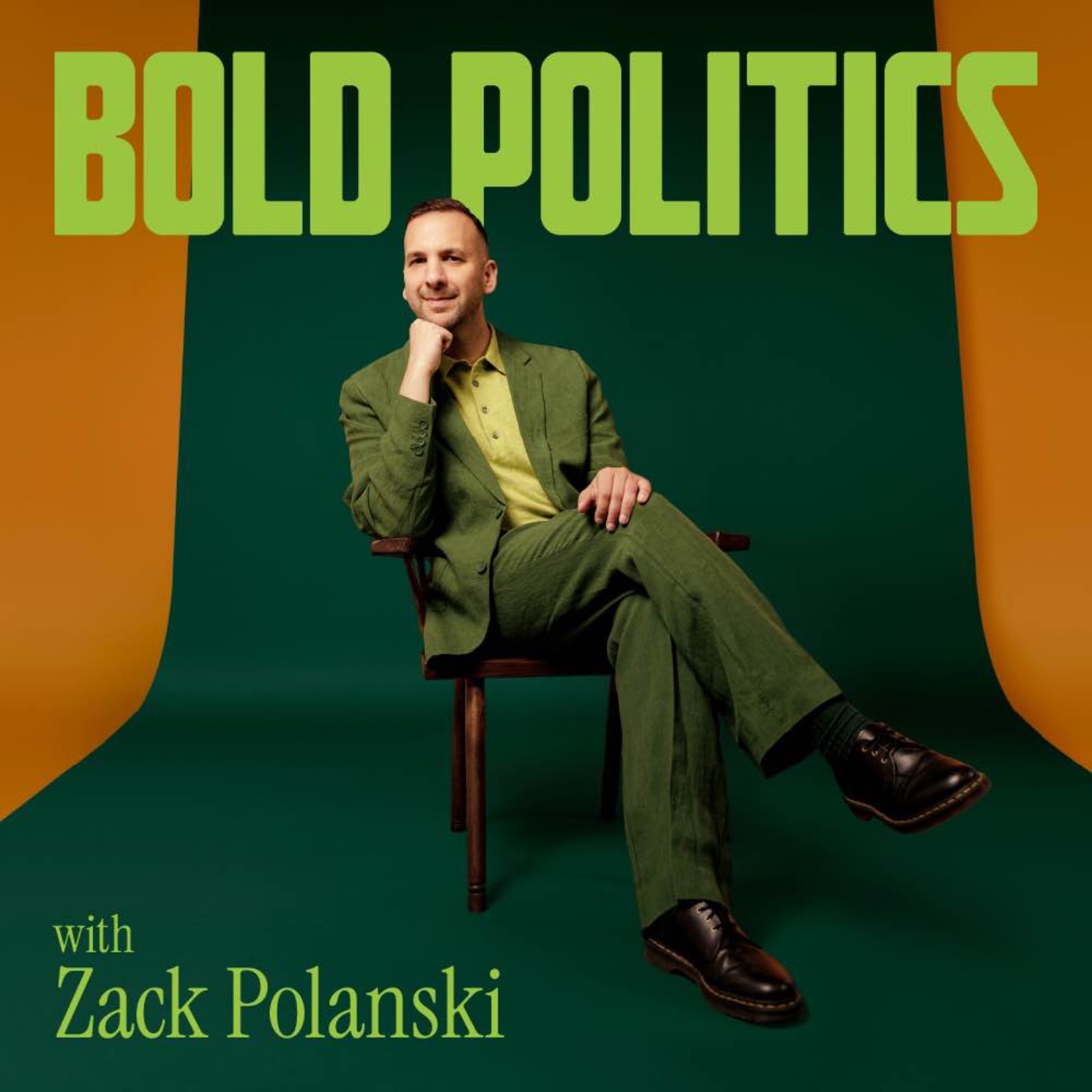
- Bold Politics with Zack Polanski
- How Antisemitism Is Used To Excuse War Crimes
Bold Politics with Zack Polanski7 Jan 2026 · 36m · 17 chapters

How Antisemitism Is Used To Excuse War Crimes | Rachel Shabi | Zack Polanski
In short
How Antisemitism Is Used To Excuse War Crimes | Rachel Shabi | Zack Polanski
In this episode, Zack Polanski engages with Rachel Shabi, author of Off White: The Truth About Antisemitism. They discuss how claims of antisemitism are being used politically to deflect from the ongoing humanitarian crisis in Gaza, the implications of such claims on Jewish identity and activism, and the necessity for an inclusive dialogue surrounding antisemitism that does not perpetuate further racism.
Written by AI. May contain mistakes.
Chapters
1:32
Navigating Antisemitism Conversations
Exploration of the complexities of discussing antisemitism in light of current events.
“and one of the kind of principal examples I often think of this is when I talk about the fact that sometimes the Israeli government's actions make me feel less safe as a Jew.”
2:37
Challenges of Public Discourse on Antisemitism
Discussion on the challenges faced when addressing antisemitism and the reactions to Israeli actions.
“more than one person said, well, I don't want to ask anything about anti-Semitism in case the question itself is perceived as anti-Semitism.”
4:27
Reclaiming the Narrative Around Antisemitism
How to reclaim conversations about antisemitism from those misusing the narrative for political goals.
“How do we take it away from them and reclaim it and build credibility and authenticity in the way that we talk about antisemitism?”
7:05
Diversity of Opinions in the Jewish Community
A look at the diversity of Jewish opinions and the representation in communal bodies.
“and including on anti-Semitism for the sake of their being very staunchly pro-Israel.”
10:00
Understanding the Political Agenda Behind Antisemitism Claims
Examination of how antisemitism is used to advance particular political ideologies.
“Like, I've interviewed many people who self-identify as Zionists and are appalled by all of those things.”
12:45
Balancing Fear with Political Responsibility
Discussing the balance between acknowledging fear of antisemitism while avoiding reactionary politics.
“This absolutely is not what we're saying.”
14:00
Understanding Rising Anti-Semitism and Its Implications
Learn about the complexities of anti-Semitism and its intersection with fears around authoritarian politics.
“But so both of those things, you know, we're now looking at a situation where we have low literacy about anti-Semitism and we have a moment where anti-Semitism, as you said earlier, it genuinely is credibly spiraling.”
15:10
Geopolitical Dynamics and Anti-Arab Sentiment
Explore how geopolitical interests intertwine with anti-Arab and anti-Muslim sentiments in Western policies.
“But I don't see how else we get around it.”
18:50
The Role of Elites and Misconceptions of Anti-Semitism
Delve into how discussions about elites can be misconstrued as anti-Semitism and the nuances involved.
“I think it was a Telegraph journalist said, if he wasn't Jewish, this sounds very close to anti-Semitism.”
21:00
Interconnected Racism and the Need for Solidarity
Examine the connections between different forms of racism and the importance of collective anti-racism efforts.
“So obviously, we have to deal with that.”
Show all 17 chapters
22:10
Navigating Conversations about Israel and Jewish Identity
Learn how to engage in discussions about Jewish identity and Israel within family and community settings.
“What's so obvious about the way that these conversations are playing out is that we cannot be tackling racism in silos.”
28:00
Inspiring Jewish Activism
Learn about the inspiring activism of younger Jewish people in political movements.
“and wider work as part of socialist and left and green and other movements, right?”
28:30
The Naamod Seder Experience
Discover the significance of the Naamod Seder and its reflection on political values.
“I think those people are particularly inspiring and there's a lot to learn from them.”
29:32
Personal Heritage and Identity
Explore personal stories of heritage and the complexities of Jewish identity.
“And not just sort of in culinary terms, although obviously that is significantly and unarguably better than you guys.”
30:32
The Misconception of Judeo-Christianism
Analyze the socio-political implications of the term 'Judeo-Christian' and its historical context.
“And in terms of because you've talked quite a bit about Christian Europe.”
32:25
The Exclusionary Nature of Judeo-Christian Labels
Discuss how the Judeo-Christian label erases Islamic heritage and promotes Islamophobia.
“when I think about when I was single, people would always go, where are you from?”
33:45
Celebrating Judeo-Islamic Heritage
Highlight the rich Judeo-Islamic heritage and its historical contributions to culture.
“You had these great thinkers, you know, Maimonides and Ibn Virol and all of these people who are a product of that Judeo-Islamic heritage and symbiosis that was happening in those years.”

Ask about this episode
Get the gist, explore an idea or ask about something said.
 Claude
On Bold Politics with Zack Polanski, what are the key points of this episode?
Searching your listeningTranscript
Automatic transcript. May contain errors.
0:27Bold Politics will be live in 2026.
0:35As a Jewish leader in British politics, I often face anti-Semitism, particularly in light of Israel's ongoing genocide in Gaza. And I often point out that it's important to centre the voices of the Palestinians. And I think it's important also to take a breath and look more holistically at what's going on across the world, particularly with regards to anti-Semitism. Today I'm going to be talking to Rachel Shabby, who's an expert on antisemitism, talks more widely about race and indeed wrote a book last year called Off-White, The Truth About Antisemitism.
1:08Hello Zach, Chris Packham here. I hear you've signed up to EcoTalk. That's very bold of you, brilliant. And if you don't mind me saying, very bright of you too. If your audience is half as smart as you, then they'll sign up too at ecotalk.co.uk.
1:32I was interviewed by Owen Jones recently around anti-Semitism and I found myself slowing down as I spoke because it often feels there's so many eggshells that even as a Jewish person I thought I've got to make sure that I don't say something that can be accused of being anti-Semitic. and one of the kind of principal examples I often think of this is when I talk about the fact that sometimes the Israeli government's actions make me feel less safe as a Jew. Now that's not to justify for a second or condone anyone. Obviously I'm not justifying it. The rise in anti-Semitism often happens when there's a spike in Israeli activity is clearly unacceptable and it is also something that exists and it's a phenomenon that exists and I've been accused in the past of when I say that saying that you're somehow complicit or justifying the own attack on yourself.
2:19By that, how do we get out of these kind of ridiculous circular discussions that seem to endlessly happen that are so absurd that I do think people lose interest, but often just the smear of an accusation can sometimes end up drifting around like a bad smell? It's really hard, isn't it? And I remember, you know, when I was interviewing for my book, more than one person said, well, I don't want to ask anything about anti-Semitism in case the question itself is perceived as anti-Semitism. And you just think something's gone terribly wrong if that's how people are feeling. Something's gone terribly wrong about the way we discuss this subject.
2:55So I think one of the main things for me, one of the main takeaways is primarily when the left talks about anti-Semitism, it's very reactive. It's in reaction to the prevailing media and political conversation about anti-Semitism, which is garbage, which is divisive, which is unusable, which is polarizing, which sometimes is producing other racisms like Islamophobia and anti-Arab and anti-Palestinian racism and more. And so we react to that rather than creating a conversation of our own. And I can understand why people get there again, because it's such a barrage. It's like constantly surrounded by this barrage of nonsense over the subject.
3:39But I think what would be really helpful for us is to just say, OK, well, look, these people like when the government or when Israel or when the far right, when like Hilt Wilders in the Netherlands or, you know, Francis, Marine Le Pen, when they talk about anti-Semitism, these people are not reliable or credible about anti-Semitism. I do not trust those people to talk about antisemitism and I do not believe that the way they talk about antisemitism is going to produce any more clarity or understanding or dismantle any of the sort of architecture of antisemitism that's just an endemic part of Christian European societies.
4:26so these guys can talk about the subject as much as they want and it will divide us but they are not credible they're not reliable narrators so how do we how do we become the reliable narrators because actually that should be our terrain right tackling racism should be the thing that progressive left-wing anti-racist movements do so how do we plug that gap and take that conversation away from people who are politically misusing it for their own various political agendas? How do we take it away from them and reclaim it and build credibility and authenticity in the way that we talk about antisemitism?
5:07So that for me is quite a key part of this conversation. And I suppose as I'm reflecting there, there's more than two ways of dealing with this. But if I characterize two ways of dealing with it, you've got the Michael Rosen way. And I want to caveat at this by saying I absolutely love Michael Rosen. He's dear to my heart. And when I see him online kind of taking the fight to the racist essentially and standing up for his Jewish identity and for the Jewish community, I'm always proud of it. I always, I'm not entirely convinced that it's changing anyone's mind. And I think there's a role for what he's doing and that's important.
5:38I think there is a space that I don't feel like I've occupied and maybe you feel like you've occupied it. So I guess I'm partly asking for advice where when I say we, I'm very specifically talking about as Jewish people with other Jewish people who see a Tom Robinson and they see him flying an Israeli flag and they are willing to forgive anything else, any other racism, let alone the clear anti-Semitic racism that he's existed because it's all okay because he's waving the flag for Israel. And we know that within the Jewish community in certain sections, waving the flag for Israel almost trumps all else.
6:11Probably an use of a bad word there for Trump. but but um quite appropriate in many ways that's true that's the most important thing presumably we don't just say those people are lost we can never win them over we don't just shout at them or argue with them but how do we create spaces where these conversations can happen when it's such a contested space yeah i mean first of all i would slightly challenge that because actually tommy robinson was was a red line for a lot of people a lot of the usual british communal bodies that are far to the right of us on many, many things. So, you know, the red lines do show up, not as often as you and I would like.
6:49And you're absolutely right that there are sections of the communal Jewish bodies that do throw their lot in with people who are very dubious characters, including on racism and including on anti-Semitism for the sake of their being very staunchly pro-Israel. We see that happening all the time. But again, that's not something that, you know, all Jewish people feel. And so we need to be quite clear about that. And for me, the main thing is, well, I don't want to have a conversation with Jewish communal bodies about why they're doing this. I want to have a conversation with British leftists about why this is happening.
7:31What are the mechanisms by which the far right, with its history of anti-Semitism and contemporary anti-Semitism, what are the mechanisms that make that ideological movement suddenly pretend to care about Jewish people and to care about anti-Semitism for the sake of what? what is it that they're trying to do? They're trying to mainline Islamophobia and, you know, deeply racist anti-migrant ideology. And they're using anti-Semitism as a beard, as a cover. They're proclaiming a defense of Jews, much as they, you know, proclaim a defense of gay people and women and children, right, in order to advance a noxious political ideology.
8:13So I'm interested in having that conversation with the British left that says, yes, it looks like Jewish people are being, you know, quote unquote, privileged and prioritized in this conversation. But what actually is going on? Because that's not in reality, what's happening. It's a performative championing in order to pursue a noxious and racist ideology. And so that for me is a far more important conversation than being in a spat with British communal bodies. Yeah, I take that point. I particularly take your point about Tommy Robinson. I think that's really well made. Where I'd push back on your pushback.
8:49Let's do this. Surely that we can't allow those British communal bodies to continue saying that they're representing Jews if they're not representing a diversity of Jewish opinion. Now, where I'm pushing back is I don't think that involves necessarily having a spat with them. That is what I think it often almost always turns up as is a spat. But is there another way we can have those conversations or are you just saying we just don't think those conversations are necessary? What I would say is constantly and very clearly, those Jewish communal groups do not represent the diversity of Jewish opinion.
9:22If we look at the UK, the most recent polling on this, I mean, what can we take as markers? Let's look at the marker of whether Jewish people self-identify as Zionist or not. We have nearly 30 % of British Jews who self-identify as either non or anti-Zionist. That figure goes up amongst the younger cohort. But also, I'm not entirely sure what the people who do identify as Zionists think about the British communal bodies or the way they cleave to an increasingly right-wing Israel or Israel's policies in Gaza or more widely. I'm not clear. Like, I've interviewed many people who self-identify as Zionists and are appalled by all of those things.
10:06But let's take the 30 % as a minimum. that is not a fringe that is not a minority that is a large constituency that has no representation at the moment in British politics they are not represented by those groups that claim to speak in their name and so I would constantly push back with that which is very different from getting into a back and forth spat with those communal groups. I think yeah it's totally true and it won't have escaped your notice that when the horrendous attack happened in Manchester on the synagogue, I'm a Jewish man from Manchester. I was meant to be on Laura Koonsberg that weekend and was cancelled because of the attack.
10:44One, I would argue, even if I hadn't been from Manchester and Jewish as a leader of a political party, I should probably have a point of view when there's a terrorist attack. But I think it again spoke to that point of unless you are the Jewish person that is part of that communal body or is seen to have an acceptable or legitimate opinion, then your voice as a Jew within the public conversation is considered not the right kind Yeah, and I think we need to keep challenging those broadcasters who make those assumptions. You know, we need to keep pushing back at that assumption that they're making.
11:16But I think also what's important here is that we can see that, as it turns out, you know, really, at its heart, this conversation is not even about Jewish people. Because if it were, you certainly would have been interviewed in that moment because of, you know, all of the things that you just said, all of the reasons you just cited, you certainly would have been interviewed. It's about promoting a particular narrative about anti-Semitism, which advances a particular political agenda that is partly to do with Israel, but also to do with how we look at British society, how we look at other racisms, the sort of authoritarian anti-process measures that the government wants to pass and has passed and all of those things.
11:59So for them, this conversation about anti-Semitism is really a cover. It's a beard for them pursuing all kinds of things that they want to pursue anyway. And so we can see this as a sort of, it's a continuation of a very Christian European perception of Jewish people, which is we may like constantly denigrate and hate and persecute and kill you. We may champion and lord and elevate you. But what this always is, is about how we feel about ourselves. And Jewish people as that foil of being how Europeans understand themselves is the key constant component throughout this. And can I flip this around?
12:43So if someone's watching this and they go, see, this is two Jews agreeing with each other that anti-Semitism doesn't exist. This absolutely is not what we're saying. Absolutely not. So how would you respond to people who think, well, this clearly then is all an artifice? I think that's the real danger that we're in at the moment, right? Because we've had two years of, you know, anybody, anybody, the UN, the BBC, you know, singers, climate campaigners, people going on marches saying, please stop this slaughter in Gaza. All of those people are decried as anti-Semitic. And so inevitably, it becomes a joke, becomes like a punchline, right?
13:24This loses its credibility. And at the same time, we've got two years of the whole Western world, you know, Western governments that are allied with Israel, give it military aid, give it financial support and give it diplomatic cover constantly for two years. And so we have people thinking, well, how come? Why does Israel get to do all this? And that in itself can lead to some sort of confusions about geopolitics and who is the client state of whom, right? Israel is still the client state of all those nations. That relationship has not flipped. But so both of those things, you know, we're now looking at a situation where we have low literacy about anti-Semitism and we have a moment where anti-Semitism, as you said earlier, it genuinely is credibly spiraling.
14:18You know, we're talking about hate crimes primarily, but not only, you know, people being verbally and physically assaulted, desecrations of Jewish buildings, synagogues and schools and so on. And, you know, and people, Jewish people are understandably fearful about that. So, again, for us, I think for leftists, it's how do we speak to that fear while not having that fear being turned into or manipulated or distorted into reactionary, authoritarian, anti-Arab and anti-Palestinian politics? And that's the challenge for us, you know, to hold those fears as understandable while in an environment that is constantly elevating and distorting those fears while at the same time fueling anti-Semitism and anti-Palestinian racism.
15:15and it's hard. That's a lot of work. It's a lot to unpack. But I don't see how else we get around it. I don't see how else we build movements that genuinely are inclusive and are more powerful and effective for it. And can I, because you said client state and I just wanted to be explicit in what I think you're saying, but you can correct me if not. There's a kind of anti-Semitic global conspiracy theory that Jews are running the world and Israel is a part of that. But actually what you're saying is that a flip of that is that Americans or whoever it might be, the powerful elites in the world who aren't necessarily Jewish, although some of them might happen to be, but it's the elites who are utilising Israel as a pawn in which to get what they want and create division.
15:59Yeah, I mean, broadly speaking, of course, we know that there are many factors. When we look at how is it that we've just watched a genocide live streamed on our screens for two years, and Western governments have not only not stopped it, but actively supported and given cover for it. And yeah, we can say there's an architecture of anti-Muslim and anti-Arab sentiment that's, you know, very much in display. And certainly in the decades since 9-11 has been very much amplified and deepened that hostility and suspicion and general dehumanization of people from Arab and Muslim countries. And yes, we can say that Israel does have a very effective lobby.
16:45I mean, of course it does. And it does what it's supposed to do, it lobbies. But I think, you know, one of the things that we keep missing in all of that is that it's not that Britain and the US are acting against their own interests when they support Israel. It's that the establishment view, however much you and I will disagree with it, The establishment view is that British and American interests are aligned with Israel. And so they are supporting them because they perceive that they have some shared interests and some strategic interests that are aligned. And so whether that's, you know, to have this sort of foothold in the Middle East that's a client state, whether it's this vast military industrial benefits of this relationship, which, by the way, has only been exacerbated by tech and particularly in this war, AI, whether it's surveillance, whether it's security, there is a perceived.
17:51And again, you and I will disagree with it, but we are not the brains of the people making these decisions of the establishment figures driving this policy. There is the perception that those goals are shared. And you can see the minute those goals are not shared, it all falls apart. So you look at, you know, one of the reasons why the main driver for Trump actually getting fed up with Netanyahu, the Israeli prime minister Netanyahu and saying, no, no, enough now is because of the Israeli attacks on Qatar. which, you know, that actually did compromise America's perception of America's interests in the region.
18:30And so that was the line. It always surprises me that doesn't get talked about more because I think that it was so obvious that that moment of Qatar, where Trump finally went, OK, now I'm not protecting you and now I'm not willing to make cover. I suppose what underlines this question is something that happened to me recently, too, where I've been talking about in the UK context that the richest 50 families own more wealth than the bottom 50 % of the population. I think it was a Telegraph journalist said, if he wasn't Jewish, this sounds very close to anti-Semitism. And I thought, how can we talk about elites that absolutely do exist?
19:02That's a fundamental fact. And the structure of inequality, both whether it's domestically or both internationally, without being accused of anti-Semitism if you can't talk about this idea of the elites. Now the nuance to that is there are undoubtedly anti-Semitic theories around elites and both of those two things can be true at the same time. Sure. I mean, again, I think, you know, for us, it's important and it's really hard because we just get this barrage of nonsense and it's nonstop. It's really hard not to think outside of that. And I think one of the most important things that we can do as Jewish socialists and leftists is to talk more about the geopolitics, talk more about the drivers of this foreign policy for the US, for Britain, for Germany and so on.
19:53because in a lot of the conversations that I see online and offline, you know, when I tour with this book, there is what one might best describe as an overdetermination around the impact of the Israel lobby and very right-wing pro-Israel organizations. Now, those forces, they may be obnoxious. They may be horrendous in what they do with the conversation around anti-Semitism. And they may, in that horrendousness, produce or be a part of something that is causing material harm to people who stand accused of politicized, misused claims of anti-Semitism. We're talking about reputations, livelihoods, credibility, awards, jobs.
20:50We're talking about all sorts of things that are at stake and that we need to defend. Obviously, that's getting worse in the US where your very freedom is put at risk. So obviously, we have to deal with that. But there's a tendency to then extrapolate from that or overdetermine from that what the geopolitical relationship is or what actually is going on here. And I think, you know, the more we talk about that, the more we can provide a sort of necessary context so that leftist movements can just have a more joined up and genuinely anti-racist conversation about all these things. Really good point, Rachel.
21:30We're going to explore that more in a moment.
21:36zach has signed up to eco talk he's taken the great plunge why has he done that well he's a man who sees sense firstly brilliant network coverage secondly fantastic customer service and thirdly of course all of the profits are going to nature restoration yes we're spending them on rewilding and you can go to our website to see what we're up to you can also get some wildlife tips from yours truly so come on follow his lead and sign up to eco talk all you've got to do is go to ecotalk.co.uk and it's simple absolutely simple and look at the benefits life is beautiful
22:20we're talking about jewish communal organizations and being jewish for obvious reasons as two jews yeah but i'll say there's really important interfaith work here i think we're speaking at a time where we're seeing rising Islamophobia in the country, and particularly the targeting of Muslim community organisations too by the Conservative government, but those have continued under the Labour government. What's so obvious about the way that these conversations are playing out is that we cannot be tackling racism in silos. And we can't be tackling racism in the silos created by racism in the first place, which is the case.
22:54And so, you know, one of the things that I do in the book is I look at the fact that, you know, all these racisms, their origin story is all Christian Europe. And of course, they don't translate word for word or pigment for pigment. You know, racism is different for different minority groups at different times for different reasons. But racists are not very original. And so they're constantly cribbing notes from each other. And so the sort of racism that informed, you know, the demonization of Jewish people in the medieval period in Christian Europe was used, like the mechanisms, the architecture of it was used to produce the racism that produced race that allowed colonialism and slavery and, you know, hundreds of years of the most appalling, horrendous treatment of black people and continues to this day in systemic racism.
23:48So we constantly see there's this back and forth between different kinds of racism. And I think, you know, the more we engage with that, rather than actually fall in line with this hierarchy that's been created for us, very divide and rules vibes, by the way, very, you know, very reminiscent of the way the British Empire and the French Empire operated, including with Jewish communities in the Middle East, like Iraq, where my family's from. So the more we join forces and de-silo ourselves and do not respond to those hierarchies created for us to divide us, I just think the stronger and more robust our anti-racism will be.
24:37And that will include, of course, tackling Islamophobia, which, as you say, is rampant. And it's not only that consecutive governments are doing nothing to challenge it. It's that in many cases, they're actively reproducing it. And in terms of reactions of a book, has this resonated with people? Have you had people saying they've not thought about this in this way before, particularly Jewish people? I'm just interested how people have reacted. Yeah, it's been really great, actually. It's been a really wonderful response. And I should say that, you know, a lot of this work, you know, it's a product of me talking to many, many people who in many different ways are already doing this work.
25:13So people have been thinking deeply and also engaged in a sort of community activist way with precisely these issues that we're talking about. And so the book is a product of, you know, that engagement with all those people who are doing this long, difficult work. but the response has been great you know so many people have been have written and said you know some people have said that they were challenged by it which I always think well great you know that's that's what more could a writer want but a lot of people have written and said you know it's it's helped them to be able to articulate as Jewish leftists some of the things that are going on in spaces where they haven't felt able to or they haven't felt comfortable to or whatever it is.
26:01So the response has been really gratifying. And I think it just is testimony to what we were speaking about before, which is that there is this large constituency in Britain and elsewhere where there are Jewish communities. There is a large constituency of people who are not represented, Jewish people are not represented by this prevailing view put to us by Jewish communal bodies and are seeking and wanting to be part of an alternative. And something I get asked a lot, and you might not have an answer to this because I don't hugely have one, is that part of being Jewish, as with many religions, is the kind of family community dinners, whether it's Sabbath or Pesach, Passover, people gathering together with their family and ironically I think they're quite political occasions very often the stories are about inequality and resistance and to make peace and whatever it might be and people say to me I feel very very strongly about what's happening in Palestine or I feel very strongly about this aspect of my Judaism but when I go to the family table I just feel like I'm silenced or these conversation is just not welcome and so people ask me for advice and um so what do you say well I've just not gone often all the time, which is terrible advice.
27:14Just don't go. Because then you get even further divided and further, further away. And I suppose my advice is always it can't be for one person to have to speak to their entire family or their entire community. But I do wonder if you have any tactics or techniques. That's such a tough one. I mean, I think what's been inspiring for me is seeing all these British Jewish and American Jewish and others who have reclaimed Judaism, sort of taken it, you know, from people who are saying, oh, you're not really Jewish or whatever, all the policing that goes on. and have taken their Jewish faith and practice and rituals and values and integrated them into their Palestine solidarity work and wider work as part of socialist and left and green and other movements, right?
28:07So one of the things that's been most inspiring for me has been to see those quite often younger Jewish people find that way to articulate those values in a way that's meaningful to them as Jews, but also meaningful to them because it is so in line with their political values. So I think, you know, those people, I can't say I'm one of them. I think those people are particularly inspiring and there's a lot to learn from them. So find those groups, I think. I actually went to a Naamod Seder this year, which was lovely because it did sort of reflect political values. It reflected how so many of us feel the sheer horror around Gaza.
28:54So Naamod being the British Jews against the occupation. That's right. Yeah. And they've really grown over the last two years. They've been a consistent presence on the Palestine solidarity, the Gaza marches. and they've seen more and more people sign up because as we say, there are more and more people searching for Jewish organizations that aren't saying what the mainstream ones are saying. For me, you know, I grew up in a family that, you know, my parents are Iraqi. I was born in Israel, but I grew up in the UK. And so for me, those high holidays, which we did mark, were incredibly meaningful because my parents brought that sort of Iraqi Jewish flavor.
29:41And not just sort of in culinary terms, although obviously that is significantly and unarguably better than you guys. But also just in terms of, you know, they had like the text. The text was Arabic, right? Arabic and Hebrew letters. And so, you know, singing these songs that everybody's singing or Jewish people are singing at Pesach, but in Arabic. Right. And hearing my parents talk about their lives in Iraq, which were very hyphenated, steeped in being both Arab and Jewish, with Arab as a way of being Jewish. It was always incredibly meaningful for me to hear those stories and a constant reminder, like a counter narrative to the prevailing narrative that we're steeped in now, which is this idea that the Arab world is inherently or historically anti-Semitic, which is quite a flex when it's coming from Christian Europeans.
30:39And in terms of because you've talked quite a bit about Christian Europe. Yeah. What about Judeo-Christianism? Yeah, it's not a thing, is it? It's a label that we see more and more. And especially, you know, in recent years, we've seen the far right commandeer it. Right. Especially in the way, you know, the way that people have been, the far right has narrated Israel's apocalyptic war on Gaza as some kind of, you know, Israel being the vanguard of Judeo-Christian values and Western civilization, all the rest of it, which Israeli leaders have done a lot themselves over the years to promote. But, you know, the idea Judeo-Christian is primarily a sort of socio-political category that came from the U.S.
31:25or was like pushed into political conversation in the U.S. after the Holocaust and the Second World War, where American politics wanted to bring Jewish people into the fold and kind of go, well, you know, you're not Christian, but you're nearly white. You're not really white, but you're functionally white. And therefore we'll talk about Judeo-Christian. And then you had consecutive Western leaders talk about it. Tony Blair talked about it. Various European leaders, including two German chancellors who talked about Germany being founded on Judeo-Christian values. and you're thinking, that's not very self-aware, is it, for Germany to say something like that, right?
32:14For sure. And does that get to the root of the conversation in terms of my experience of being Jewish is people are never quite sure what category to put you in. And there's a sense of, for instance, when I think about when I was single, people would always go, where are you from? Where are you really from? Which is not to compare my experience with someone who is experiencing that all the time as a black person, for instance, but it is a different experience to someone who is white and their parents are born here and their whole ancestry is here. Well, part of that equation is, I mean, you're right.
32:43It's not the same as someone who, you know, from the moment they walk out the door has to navigate, you know, all the biases, all the many and varied biases and then never-ending biases of racism. But it speaks to something, which is that, you know, even though in the contemporary world, Jewish people, by and large, black Jews, Jews of color, have been absorbed into this category of whiteness. Jewish people just were not categorized as white for far longer, for far, far longer historically. And so there is a contingency to it. But I think one of the things for me about Judeo-Christian, OK, there's two things.
33:24First of all, we can see the far right use it as a way to be Islamophobic. That's the primary function of saying Judeo-Christian. It's to exclude and demonize Muslims and Islam. But the other thing that that does is that it erases the actual label of a heritage, which is Judeo-Islamic, right? The relationship between those two worlds, and we have centuries of it in this sort of so-called golden age, in what's known as the golden age in Andalus when it was under Islamic rule, primarily sort of 10th and 11th centuries were the heyday and you had this incredible like explosion of this sort of symbiotic culture and development carried out in Arabic but actually you know because Hebrew and Arabic as sisters you know it was very easily manifested So you had these huge leaps in literature and philosophy and religion and mathematics, you know, algebra, trigonometry, so many things.
34:33You had these great thinkers, you know, Maimonides and Ibn Virol and all of these people who are a product of that Judeo-Islamic heritage and symbiosis that was happening in those years. all of that completely erased never happened because the only label that we're allowed to acknowledge is one that isn't even a thing which is judeo-christian so there's a real frustration for someone whose you know heritage is from you know iraq but also you know a lot of people with heritage in other places north africa and across the middle east just to see that be completely disappeared in this conversation every time i listen to you it's always historical it's always political it's always religious so and this conversation has been exactly that thank you so much really appreciate you coming on it's a pleasure to speak with you thanks so much
35:30hello zach now listen i've had a text i know improbable but true from the beavers the butterflies the beetles and the badgers it's all sending you big love for signing up they're hoping that your listeners are going to do the same by visiting ecotalk.co.uk.
From the publisher
How are Netanyahu and his allies using claims of antisemitism to deflect from Israel’s genocide? How are some of the conversations we’re having around antisemitism potentially perpetuating the racism against Jewish people? How are Jews around the world standing up for the human rights of Palestinians, not in spite of their heritage, but because of it?
Zack Polanski speaks to author of Off White: The Truth About Antisemitism, Rachel Shabi.
Get your tickets for Zack Polanski and Caroline Lucas at Bold Politics Live in Brighton.
Join Nature's Network and switch to Ecotalk, the only network service provider that gives all its profits to nature restoration: ecotalk.co.uk.
Email: [email protected]
YouTube: @boldpoliticswithzack
Instagram: @_boldpolitics
X: @_boldpolitics
Tik Tok: @boldpolitics
Hosted on Acast. See acast.com/privacy for more information.
More from Bold Politics with Zack Polanski
All episodesWe use cookies.They keep VO running smoothly and help us improve it. Privacy policy