
 Ask ChatGPT

- Podcasts
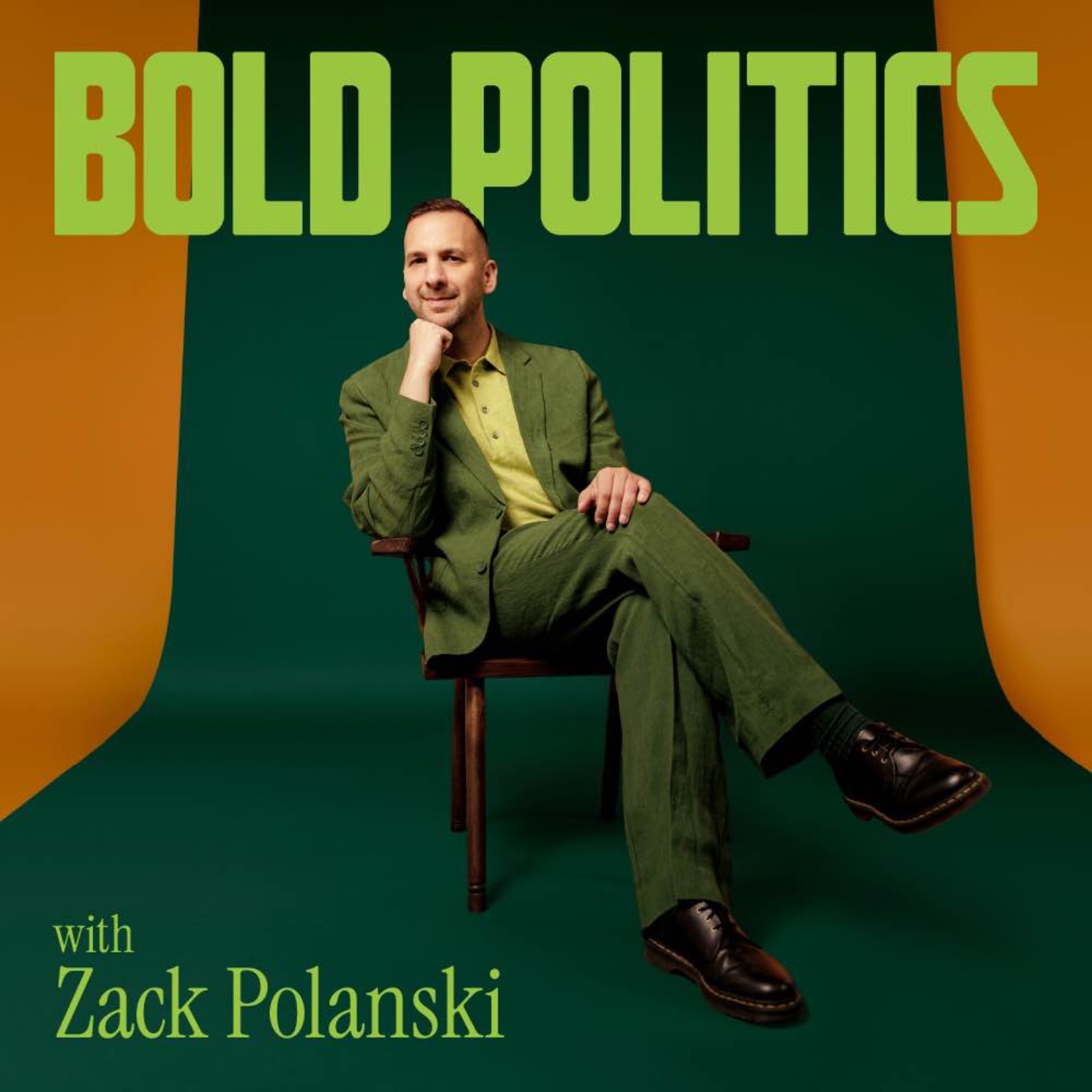
- Bold Politics with Zack Polanski
- How Billionaires Avoid Tax
Bold Politics with Zack Polanski2 Jun 2026 · 39m · 9 chapters

How Billionaires Avoid Tax | Gabriel Zucman
In short
Global and UK inequality driven by billionaire tax avoidance; proposes an international “minimum tax” on super-rich wealth to stop billionaires paying lower effective tax rates than everyone else.
Guest
Gabriel Zucman, economist and author of We Need to Tax Billionaires. Works on global inequality and tax transparency; has collaborated with tax administrations across about 10 countries.
Key claims
50 wealthiest families in the UK own more than the bottom 50% (34 million people). Global billionaire wealth rose 40% (Mar 2024–Mar 2026). Super-rich often report little/no income via holding companies/shell structures, causing a “cliff” where effective tax rates drop to ~20–25% versus ~40–50% for working/middle classes. Wealth taxes failed historically due to exemptions and weak anti-exile rules.
Notable examples
ProPublica revelations about Jeff Bezos/Elon Musk paying almost no income tax; France’s 1981 wealth tax exempting “professional assets” leading to ~0.005% effective rate for billionaires; G20 minimum-tax precedent for multinationals; proposed 2% annual minimum on wealth above £100m and continued taxation for 10 years after moving abroad.
Written by AI. May contain mistakes.
Chapters
0:59
The Billionaire Wealth Explosion
Discuss the significant increase in billionaire wealth and its implications.
“Over 4 million businesses have skipped the line with Stamps.com.”
1:49
The Billionaire Wealth Explosion
Discuss the significant increase in billionaire wealth and its implications.
“Gabriel, thank you so much for joining me.”
8:00
Wealth vs. Income Taxation
Understand the differences between wealth and income taxation and their impacts.
“Something that's often put to me is the idea, though, that there are lots of very wealthy people who do pay a lot in income tax.”
11:50
Proposals for Tax Reform
Explore proposals for taxing the super-rich and ensuring fair contributions.
“And I noticed that your pitch is for there to be a minimum amount that a billionaire has to pay, as opposed to, for instance, what we've been advocating for in the UK.”
14:00
Debating Wealth Tax and Equality
Explore the implications of a proposed 2% minimum wealth tax on billionaires and its role in ensuring equality before the law.
“More right-wing people, they favor less progressivity, more left-wing people, they favor more progressivity, and it's normal to disagree.”
28:00
Wealth and Responsibility
Discussion on the responsibilities of the wealthy towards society and taxation.
“then immediately starting January 1st of next year, you don't have anything to pay to the UK.”
32:33
International Cooperation on Taxation
Exploration of how countries can cooperate on taxing the wealthy effectively.
“You know, it's not the end of the world, as we were told.”
33:58
Learning from Wealth Tax Failures
Analyzing historical failures of wealth taxes and discussing potential solutions.
“But very often, the people who oppose these kind of policies say, well, look at these examples, there's no example where this has worked.”
36:56
The Future of Wealth Taxes
Discussion on the potential for new wealth taxes and the global movement towards them.
“You don't need any exemption whatsoever.”

Ask about this episode
Get the gist, explore an idea or ask about something said.
 Claude
On Bold Politics with Zack Polanski, what are the key points of this episode?
Searching your listeningTranscript
Automatic transcript. May contain errors.
0:0050 of the wealthiest families own more wealth in this country than the bottom 50 % of the population. That's 50 families versus 34 million people. It is very clear that UK has an inequality problem. But it's not restricted just to our own country. This is happening right around the world. And brilliant economists like Gabriel Zucman have been sounding the alarm for a long time on global inequality. Today I'm delighted to be talking to Gabriel about what does international solidarity look like, What does an international wealth tax look like? And how do we make sure that we challenge our opponents?
0:34Here's my conversation with Gabriel Zuckman.
0:59Over 4 million businesses have skipped the line with Stamps.com. Join them to save up to 90 % off carrier rates from your computer or phone right now. Print postage for certified mail, registered mail, and packages in seconds. Then schedule a pickup right from your home or office. For a limited time, go to Stamps.com and use code PODCAST for a free welcome gift. Taxes and fees apply. Security program on spreadsheets, new regulations piling up, and audit dread? It's time for Vanta. Vanta automates security and compliance. brings evidence into one place, and cuts audit prep by 82%. Less manual work, clearer visibility, faster deals.
1:36Zero chaos. Call it compliance or call it compliance. Get it? Join the 15 ,000 companies using Vanta to prove trust. Go to vanta.com slash com.
1:52Gabriel, thank you so much for joining me. Thanks for having me. You've just released a book, We Need to Tax Billionaires. Do we? Absolutely. The explosion of billionaire wealth has been one of the most striking evolution of the world economy of the last decades. And that's very much true also in the UK with an acceleration since the financial crisis of 2008, 2009, and an acceleration of the acceleration over the last two years. Now, you know, just between March 2024 and March 2026, the wealth of global billionaires has increased by 40%, 4-0, coming on top of everything that has happened before.
2:31And so we are now in a situation where in 1987, global billionaires owned in wealth the equivalent of 3 % of world GDP. And now they own the equivalent of 17 % of world GDP. That's 3 ,000 households who, if they spent all their money, they could buy the equivalent of 17 % of all the goods and services that are produced in a given year globally. And of course, with the explosion of their wealth, there's been an explosion of their power, an explosion of their influence. And frankly, a lot of what's happening in our democracies today is downstream from this upsurge of billionaire influence. So that's the first element.
3:14The second element, and this is the story that I tell in the book, is that we now have evidence, hard evidence, that the super rich pay much less tax relative to their income than the rest of the population. And we suspected that it was the case, right? Many people suspected that. So, for instance, you had revelations a few years ago from the U.S. media, ProPublica, the taxes paid by U.S. billionaires, and you saw people like Jeff Bezos or Elon Musk paying almost no income tax. There's even one year where Jeff Bezos receives a tax credit. He receives family benefits for his children because he says, look, I'm so poor that, you know, I'm eligible for those tax credits.
3:57As CEO of Amazon, he didn't pay himself a wage. The company didn't distribute dividends. He didn't realize any capital gains. So his taxable income was really low, even though his true ability to pay taxes is really high. And so, you know, we had those stories like the billionaires don't pay taxes. But what the research has shown is that this is a structural problem. This is not just a few isolated individuals. It is true in all countries past a certain level of wealth. you know, think people who have tens of millions or hundreds of millions in wealth, the income tax vanishes. It's just very easy to ensure, like Bezos, that you're not going to have any taxable or any significant amount of taxable income to report.
4:44That's the situation we're in today. Their wealth is skyrocketing. Their power is skyrocketing. And they pay very little in tax. And of course, those two things are connected, right? One of the main reasons why their wealth is growing so fast is precisely because they pay so little in tax. And so they earn income. And you and I, we earn a wage. We first have to pay our taxes before we can save and accumulate more wealth. But for the billionaires, they earn income. They pay no tax. And so they can save 100 % of their income and become even richer like that. So that's the situation we're in. and to stop this spiral, to stop this trend, we need some kind of tax, a mini tax revolution, so to speak.
5:32We need to create a new principle, which is what I explained in the book. The principle that if you're extremely rich, you have to pay an unavoidable minimum amount of tax each and every year. You know, there is no right if you are a billionaire to pay zero. That just doesn't exist. Everybody agrees with that, right? And so there has to be a minimum and the minimum to be effective must be expressed not as a fraction of income, because the whole problem is that they find ways to report no income, but as a fraction of wealth. Hence the proposal that I developed initially for the G20 in 2024 and then that was almost adopted, came very close to being adopted last year in France.
6:16the idea of an annual minimum tax equal to 2 % of wealth for the super rich, defined as those who have more than 100 million pounds, let's say, in wealth. And we need it in France, we need it in all countries, and very much so in the UK, where just like globally, there's been this explosion of billionaire wealth. You look at the Sunday Times rich list, they've been compiling this since 1989. In 1989, the 200 wealthiest families, that's roughly the top 0.001 % richest people in the UK, they owned in wealth the equivalent of 5 % of UK GDP. Today, the same group owns the equivalent of 25 % of GDP.
7:0525%. It means if those 200 families spent all their wealth, they could buy a quarter of everything that's produced in a given year in the UK. And so even if you don't care about inequality, even if you don't care about fairness, even if you care only about public finance, like balancing the budget, like bringing in more revenue, and I think the UK certainly needs that, even from that narrow perspective, you cannot ignore the problem anymore. You have to be serious about taxing those super rich individuals just because now they have so much wealth. In the 1990s, you could say, well, okay, perhaps they don't pay their taxes, perhaps that's unfair, but they are so few in number.
7:51And, you know, the revenue stakes involved are not very large. But today, that's not true anymore. Government revenue at stake from taxing the super rich is now first order. That was fascinating. Something that's often put to me is the idea, though, that there are lots of very wealthy people who do pay a lot in income tax. And I think in the UK, when you look at the statistics, it's obviously the highest earners who are paying the most in tax and income because of the way basic maths works. Why is it important then that we're talking about wealth rather than income? Well, a lot of the work I've been trying to do with many colleagues all over the world is precisely to create more transparency about that issue.
8:30Who pays what? Who pays what is one of the most fundamental questions in our democracies. There is some opacity about that, especially when it comes to the super rich, because there's no official public statistics about their wealth, about their income, about the taxes that they pay. And it's this opacity that we've tried to dissipate over the last few years in about 10 countries by working in partnership with tax administrations. Here's the picture that has emerged from that international research effort. If you try to compute how much tax the different social groups pay, all taxes included relative to their income.
9:14For the working class in a country like the UK or France or other European countries, the working class is going to pay all included around 40, 45 % of their income in tax. When you add up VAT, other taxes on consumption, payroll taxes, income tax, everything, you know, depending on the country, 35, 40, 45%. But contrary to a widely held view, everybody pays taxes, right? There's no social group that's kind of outside of the system, especially not the working class. They pay a lot of tax. The middle class pays around 45, 50 % in a country like France, 45, 50 % of their income in taxes. The upper middle class perhaps is going to pay a bit more than that.
9:56And then there is an anomaly. There is a cliff. You know, the tax rate collapses everywhere to about 20, 25 percent for the ultra wealthy. So it's true that relatively high people like upper middle class people who have high wages, usually they pay a decent amount of tax. You know, that's not where the problem is. The problem is with the super rich, the super rich who live in their own parallel society tax free. Because above a certain level of wealth, what happens is that they structure their wealth so that it will not generate any income. And in particular, the way they do that is that they use holding companies.
10:43You know, that's a simple trick. Like it's great, like creating shell companies, right? They put their wealth in shell companies, known as personal holding companies. And then it's those companies who receive income, typically dividends, free from the individual income tax, sheltered from taxation. And, you know, to do that, you need to be really extremely wealthy. But past a certain level of wealth, what the studies have shown is that this is systematic. Okay, it's kind of an inherent failure of our modern tax systems. Or to put it differently, what we've discovered is that the progressive income tax, which was a major invention from the beginning of the 20th century, 1909 in the UK, more than a century after its creation, it remains an incomplete revolution.
11:36You know, the super rich are still not in the system. And that's the failure that we need to address today. And there are not 50 ways to address the problem. You need for the super rich to complement the income tax with some form of taxation that's going to be based on wealth, just because wealth is much harder to manipulate for them than income. And I noticed that your pitch is for there to be a minimum amount that a billionaire has to pay, as opposed to, for instance, what we've been advocating for in the UK. And I know around the world is a specific tax on assets or to bring capital gains tax in line with income tax.
12:15Is there a reason why you're not being more specific? The idea of having a minimum tax was born out of work that I did with the G20 in 2024, when Brazil had the presidency of the G20. and they wanted to put on the agenda of the G20 some new ideas for international cooperation. And so they asked me what I thought about all of that. Here's what I told them. I said, look, in 2021, there was an agreement among 130 countries to create a minimum tax for multinational companies, for big multinationals. And the G20 had been instrumental in this. And I thought, okay, that's interesting. Why don't we try to do the same for the super rich?
12:56The problems are the same. These are the economic actors who've most benefited from globalization, but they pay very little in tax. And the idea of a floor of a minimum tax is powerful because it addresses all possible forms of tax avoidance. Now, the idea is that at the end of the day, no matter what you do, whether you use holding companies or trust, you will have to pay a minimum. And so that's a powerful tool. and there was this precedent for the minimum tax on multinational firms and so that's what I told to the Brazilian government and to my surprise they said, okay, let's do it. Let's put it on the agenda of the G20.
13:31The G20 has existed for 25 years and not once since its creation had they discussed issues like this, like inequality, extreme wealth, coordination on taxing the rich, which are some of the most pressing issues of our time, frankly. and so it all changed at that time in 2024 and the reason why i tell this story is to kind of explain the nature of the proposal the idea was to put something on the agenda in a form like the g20 and so for the idea to viable in a context like that it has to be somewhat consensual and deep down i think this proposal you know everybody should be able to agree with it or to put it differently, there's a very legitimate debate to have about the proper degree of tax progressivity, meaning the extent to which the rich should pay more tax relative to their income than the rest of the population.
14:25More right-wing people, they favor less progressivity, more left-wing people, they favor more progressivity, and it's normal to disagree. And it's always going to be a central dimension of the political debate. And personally, I'm in favor of a lot of progressivity, and it's normal to disagree. But we should all agree that the super rich shouldn't be allowed to pay less than the rest of the population. That's just a blatant violation of the basic principle of equality before the law, which is at the center, at the core of the rule of law, at the core of our modern democracies. And so my idea was to say, okay, look, what's the proposal that can bring everybody on board?
15:06And it's minimum tax based on wealth equal to 2%. The rate of 2 % is precisely the rate which according to the different studies that have been made, would ensure that the super rich would pay as much in tax, all tax included relative to their income than the average taxpayer. Okay, and so in my view, there's just no good reason to be against that. You know, being against that proposal would mean being in favor of the right of billionaires to pay less. And look, you always have a small fraction of the population in every country who maybe thinks that it's normal for the super rich to have more lenient laws and that the law should be harsher on the poor, on immigrants, and more lenient for the rich and powerful.
15:55But it's always a small fraction of the population. you know, perhaps 10%, most of the population in our countries, they want equality before the law. And they just don't accept the possibility that, you know, there should be two separate types of laws and that there should be one fraction of the population who should be allowed to live, you know, in some other society. And how would you respond to the idea that maybe 2 % isn't enough? And I feel like I'm coming at you from the left here, which is unexpected. But ultimately, this isn't about just creating revenue. In fact, it's a lot more about stopping the hoarding of assets.
16:31And even on 2%, my understanding, if you tax 2 % on asset, there would still be accruing lots of money on the asset. And actually, you're not really truly dealing with the problem of the hoarding of wealth. Yeah. So I'm very sympathetic to that argument. And that's something that I emphasize very regularly, which is that with a tax rate of 2 % on the wealth of the super rich. It would be a big progress relative to the current situation, but it would not be enough to fix our inequality problems. So it's important to understand what problem it fixes and what problem it doesn't fix. It would fix one well-defined specific problem, which is the fact that the billionaires today pay less tax, have lower effective tax rates than the rest of the population.
17:16I think it's a serious problem. I think it's really about issues, as I said, that are about equality before the law central to our democracies. It would fix that problem, but it would not fix the other problem, which is just the explosion of inequality. Because just think about the arithmetic. The wealth of billionaires has been growing 10 % a year on average over the last four decades. When the wealth of the average person has been growing about 4%. So if you want just to stabilize wealth concentration, you would need a tax rate of like 6 % on billionaires. If you want to reduce wealth concentration, you would need rates of more than 6%.
18:00And I would totally support that. For instance, I worked with Bernie Sanders in 2019 when he was running for president on his tax program, and he proposed a wealth tax that went up to 8 % on wealth above$10 billion. I think that makes a lot of sense. That being said, we need to start from something. And for me, what's been kind of important in my thinking is to study how things unfolded for the progressive income tax. The progressive income tax, initially it started, you know, quite modest in the UK. It was in the famous People's Budget of 1909 that Lloyd George introduced a super tax of 2.5 % for the highest incomes for the 10 ,000 wealthiest people in the UK, which came on top of the regular flat proportional income tax.
18:52So that was the birth of progressive income taxation in the UK. And, you know, it was quite small, like 2.5 % on the super rich. And that's what kind of cornered the conservatives and they were forced at the end of the day to accept it. You know, the House of Lords, which initially vetoed the bill was forced to accept it at the end, then the income tax became very progressive during the course of the 20th century. You know, we stopped tax rates in the UK, which at some point were close to 100%. And I think something like that might well happen in the 21st century when it comes to wealth. Today, we don't tax extreme wealth.
19:30We have to start somewhere. We would fix a serious problem of equality before the law just with 2%. But we will also have to experiment with bolder proposals. So, for instance, on some level, we all agree that there should be some wealth cap. It's obvious, right? We cannot, for instance, accept the idea that someone should be able to own 100 trillion pounds in wealth and control 99 % of the world's wealth. I know that would be giving way too much power to a single individual. So, on some level, we all agree there has to be a cap. And a cap means there has to be a tax rate of 100 % on wealth above the cap, right?
20:07And so whether the cap should be 100 trillion, 1 trillion, 1 billion, 10 million, I don't know. Nobody knows. The only way to know is to experiment and to try a little bit. And I think there will be probably this process of experimentation over the 21st century. But we have to start with something. And again, I think the right starting point is that proposal, 2 % minimum tax on wealth. If you have more than 100 million, you cannot reasonably argue that it's going to harm the economy because it's already the fairest and most targeted tax that you can think of. It's not only on the wealthiest people in the country, but it's on those among the wealthiest who avoid taxation today.
20:48So it's a kind of anti-avoidance measure. Those people are not going to be double taxed. It's just if they pay too little today, they would have to pay the difference to reach the minimum of 2%. So look, not much is going to change for them. Their wealth, instead of growing 10 % per year, is going to grow 8 % per year. The one thing that's going to change is that just with this very modest, by design, minimum tax, the UK could get 15 billion pounds in additional tax revenue. 15 billion pounds. Think of it like Keir Starmer, for instance, fought hard to get rid of winter fuel allowances for retirees and he was expecting 1.5 billion pounds from that.
21:30We're talking about 10 times more money that you can get by taxing about 1 ,000 super rich families who avoid taxation today with just a modest 2 % rate. So even though it's very modest, the revenue stake involved is large. And the economic effect, because the debate is often about that, like is it going to kill investment? And if you try to model this rigorously in an economic model, the net economic effect of such a policy would be positive. It would be positive because the super rich are not going to change whatever they're doing today just because they have to pay a little bit of tax. The only thing that's going to change is that the government is going to get 15 billion.
22:12And with 15 billion, you can invest in education, in healthcare, in public infrastructure, which is the key engine of economic growth. Now, this is the big lesson from economic history. the reason why countries like the UK have become prosperous much more so than a century ago is because of the mass public investment in education, in healthcare, in public infrastructure. And that's the reason why productivity has been multiplied by 10 since the beginning of the 20th century. And this is this trend that we need to continue. We're going to have more public revenue needs in the future because of population aging, which means we need more health care because of the energy transition, because of many, you know, we need to invest in research, in higher education for many, many reasons.
23:07And it's those public investments that are going, just like in the past, to be at the core of our future growth. It's a really interesting framing because often a wealth tax gets pitted against business. But actually, the argument you sound like you're making is actually a wealth tax is a pro-business policy. It is a pro-growth. I'm not claiming that it's going to kind of double GDP growth, right? It's modestly pro-growth. If you try to think about the arguments that people make against these proposals, there are kind of three arguments. There's one argument, which is the super-rich are going to stop doing whatever they're doing.
23:45They're going to stop investing. And no, that's, you know, we're talking about 2%. So nothing of substance is going to change for them. There's another argument, which is that it's going to discourage people from creating businesses. Like, you know, that makes no sense, right? I've been a professor in California, Berkeley, in the San Francisco Bay Area for 10 years. I've met thousands of students who created their startups and wanted to kind of innovate, do AI or what have you. And not once have I seen someone come to my office and say, oh, you know, look, what really worries me is the prospect that if I become super rich, I would have to pay 2%, you know, and hence I'm considering another career choice.
24:27You know, that's nonsensical, right? Because what matters for startups, for innovation is millions of things other than what you would personally have to pay in the extremely unlikely event where you have so much success that you're going to own more than 100 million in wealth. So that argument really doesn't make sense. There is a third argument, which is the most serious argument. And it's really important to have a conversation about that, which is the idea that try to tax the super rich. they will flee. They will move to Dubai, to Monaco. And so it will be like shooting ourselves in the foot to do it.
25:04What's really important to understand is that we can debate the magnitude of this kind of out migration. I don't think it's zero. I don't think it's as high as what you can read often in the newspapers. Those threats tend to be exaggerated. But what's more important to understand is that this migration is not a law of nature like gravity it is something that we collectively decide to allow to tolerate or even to encourage but that we can decide to fight so what this means very concretely is that if the uk tomorrow were to adopt a tax on the super rich The UK could and should, at the same time, should say the following.
25:52If you've become very rich in the UK and you've lived for a long time in the UK and now you decide to move to some other country, that's all right. The UK will keep taxing you as if you are still a resident of the UK for five or ten years. So that it's neutral from a tax perspective for the super rich to live in Dubai or in London or in Switzerland. It makes no difference, right? So if you move to a country that taxes you as much as the UK, you wouldn't have any extra tax to pay to the UK. But if you move to a country that taxes you less than the UK, then the UK would collect the difference, would essentially collect the taxes that your new country chooses not to collect.
26:34That's crucial, you know, because once you've understood that we can do that, then this puts this whole issue of tax exile, migration to bed. You know, it's really a striking illustration of the idea that tax competition is not a kind of God-given law. You know, it's a choice that we make. And we've chosen, perhaps not very democratically, or at least it was not debated very transparently, but we've chosen to accept international tax competition. But we can make other choices, and any country on its own can make that choice. And then sometimes people say, well, you know, it doesn't exist anywhere.
27:13So it's some kind of pipe dream, certainly. And the answer is, no, no, look at what the U.S. does. The U.S., they have taxation that's based upon citizenship, meaning someone who has U.S. citizenship has to pay taxes in the U.S. no matter where they live. Okay? And so that's somewhat extreme in some sense. For instance, you could be born in the U.S. and so have U.S. citizenship, and then your parents move when you are two months old. and you never set foot again in the US and yet you have to pay taxes in the US until you die. What the other countries like the UK do is the opposite extreme, which is way worse because what we're doing at the moment is we're saying, if you've spent all your life in the UK and became a billionaire in the UK and now you decide to move to Dubai, then immediately starting January 1st of next year, you don't have anything to pay to the UK.
28:07You can secede from society and allowing this secession, You know, that's truly radical. And that's what we need to end. We need to just say, if you've become extremely rich, it's of course because you've benefited from education, from healthcare, from public infrastructure. It's also because you've benefited from all the knowledge that's been accumulated over centuries by all of humanity. And so you have a duty towards the rest of humanity. If you move to a country that doesn't tax you or doesn't tax you enough, that's their choice. That's the choice of this country. But then the country where you built your wealth has to step in and say, no, no, look, you have duties towards us, towards humanity more broadly.
28:49So we will collect the taxes that your new country chooses not to collect. And now a quick break with our friends from Crowdfunder. This episode is brought to you by Crowdfunder. There's a street in Walthamstow where nobody used to talk to each other. Old Victorian houses freezing in winter and gas bills going through the roof. Then Hillary and Dan at number 44 had an idea. What if they turned the whole street into a power station? Solar panels on every single roof. So they got their neighbours together and they fundraised for it. And at the same time, they built a community. Together they raised over£350 ,000 on crowdfunder.
29:35Dan and Hillary were fed up with rising energy bills And the government doing nothing about it So they got together and they did something radical They turned their whole street in London Into a renewable power station 20 homes, solar panels on every roof 340 tonnes of carbon dioxide saved And now their blueprint is spreading across the country What's your bold idea? Start it at crowdfunder.co.uk forward slash bold.
30:32trust stamps.com go to stamps.com and use code podcast to try stamps.com risk-free for 60 days security program on spreadsheets new regulations piling up and audit dread it's time for vanta vanta automates security and compliance brings evidence into one place and cuts audit prep by 82 less manual work clearer visibility faster deals zero chaos call it compliance or call it compliance. Get it? Join the 15 ,000 companies using Vanta to prove trust. Go to vanta.com.
31:15And so the obvious follow-up to all of this, and I think you're one of the leading voices in the world on this particular issue, is about international cooperation. Obviously, we're in a place where the UK has left the EU. We can see across the world more generally, the international order feels like it's breaking down. How do you create this kind of international cooperation and make sure that everyone's playing by the same rules? So there are different ways to do it. So one way is to try to have an international agreement, a little bit like what we had for multinational companies in 2021. It's not the best way, frankly, to do it, because if you insist on having a kind of unanimity or having an international agreement with many countries on board, then de facto you're giving a veto power to tax havens or to the countries who like the status quo, who like it because they benefit from it, they benefit from tax competition.
32:06So that's not great. The other way to achieve cooperation is to have one country or a small group of countries leading by example. Doing it and saying, look, we're going to tax our billionaires. If they move abroad, we'll keep taxing them. So let's do it. Let's see what happens. You know, it's the UK were to do it. It would generate 15 billion pounds per year. And the sun is still going to rise in the morning. You know, it's not the end of the world, as we were told. And so very quickly, you would see other countries imitating, you know, doing the same. And that's how you can get to an international cooperation from the bottom up.
32:47And that's how it happened for the income tax. You know, the way we created a progressive income tax, It's not that we had a big summit of countries in 1900 saying we are all going to tax the highest incomes. No, no, it's some countries that started doing it on their own, like the UK was a leader. And then it became the thing to do, the new norm. And that's how almost all countries then adopted their progressive income tax. And so I think something like that will happen in the future for the taxation of the wealth of the super rich. And I think, in fact, we are at the beginning of this international movement.
33:19France could have been, last fall, the first country to do it. Perhaps it will be the first country to do it in just a few months when they discuss the budget again in September. Perhaps it will be California, which is going to have a referendum in November, a ballot initiative to create a 5 % tax on the wealth of California's billionaires. It will be put on the ballot during the midterms. Perhaps it will be the UK. I mean, it could be any country, but once one country does it, That's what will kind of create this dynamic and this eventual cooperation. My competitive spirit now is wanting the UK to be the first.
33:55So we'll try and speed up on that. You've said a few times during this conversation, we just have to wait and see, or we're not entirely sure, we have to experiment. But very often, the people who oppose these kind of policies say, well, look at these examples, there's no example where this has worked. Now, I'd refute that anyway, because I think there's places like Switzerland, the place famously with lots of wealthy people that have wealth taxes. But how do we deal with the fact that it is true also that there have been examples of wealth taxes that haven't worked? Yeah, frankly, I'm sympathetic to that argument, that the historical record, the historical experience with wealth taxation, by and large, is a failure.
34:32Pretty big failure. And I'm going to explain why in a second. But what I want to say is that there are two ways to look at that failure. You can say, well, we've tried wealth taxes in the past and it didn't work brilliantly. Hence, it will never work. Forget about it. And we have to accept that the billionaires, they live in their own bubble and we can't do it. They're untouchable. There's another way to look at it, which is, okay, let's look at that experience. Let's try to learn. Let's try to see what mistakes were made, what lessons we can draw, and whether those problems have solutions. That's what I've tried to do in my work with many of my colleagues in different countries.
35:07And so the lessons are that the wealth taxes that have existed in the past, they had two big problems. But these are problems that have solutions. The first problem is that most of these taxes were full of exemptions. And one example that I mentioned in the book, which is particularly striking and frankly quite disturbing, is the case of the French wealth tax, which was created by the Socialist Party in 1981, when they came to power. And immediately, they exempt the wealthiest people in the country from the wealth tax. They invent a new notion of so-called professional assets. It doesn't exist in any economics textbook.
35:51They make it up and they say, okay, we're going to define professional assets as owning more than 25 % of the shares of a company. And if you own a lot of shares, more than 25 % of a company's stock, all of that wealth is going to be exempt from the wealth tax. But that's exactly what it means to be a billionaire. You know, it means owning a lot of shares in a company. They did that. And the consequence is that the effective wealth tax rate for billionaires in France was 0.005%. So essentially, they were totally exempt legally. And, you know, it's a big political and intellectual failure. But the lesson is don't do it, right?
36:30Don't write the law like that. and perhaps it's easier to have a law that's without any kind of exemption if you start really high in the wealth distribution. You know, when you start at 1 million, some people are going to complain, they're going to lobby and that's going to be exploited by the very wealthy to get exemptions that benefit them. Now, my idea was, okay, if we start at like 100 million, like everybody understands that if you have more than 100 million, you can pay taxes. You don't need any exemption whatsoever. And the second thing is, You need to make sure that people cannot avoid the tax just by moving abroad.
37:08And no country except the U.S. to some extent has done that. But now we can do it in particular because I think the reason why European countries didn't do that, the type of anti-exile shield that I described earlier, the idea that the tax should keep applying after you move, the reason why they didn't do that is I think their fear was that they would not be able to collect the tax because they would lose the information. And because if you move to Switzerland, there's bank secrecy. It becomes impossible to track their income and their wealth. And that was true at the time. But since 2018, there's an automatic exchange of bank information, meaning that HMRC automatically receives each year information about the bank accounts of all British people in Switzerland, in all the wealth tax havens.
38:00And so now it becomes really easier to actually say, okay, look, even if you move to Switzerland, we'll keep taxing you. We'll be able to observe your income and your wealth. And so it becomes possible to do this. So there were these two problems, serious problems, but they have solutions. And the solution is, look, the bill, the law has to be kept extremely short and simple. And if it's too long, it's a sign that we're not doing it right. Paragraph one, if you have more than 100 million pounds, there's an unavoidable minimum compulsory amount of tax, of personal tax you have to pay each year equal to 2 % of your wealth, period.
38:43Paragraph two, if you move abroad, it keeps applying for 10 years. End of story. If you do it like that, it's going to work. It's going to work much better than any wealth tax that exists today that existed in the past. Finally, because that sounds really hopeful, it's just so clear and so obvious. We've got this movement around the world, so if I may, the Green Party and also people like Gary Stevenson in the UK, we've got Zora Mamdani in New York, and you mentioned California, also in France for movement increasingly growing in strength. How hopeful are you that we can move towards wealth taxes around the world and what needs to happen in terms of that international cooperation?
39:20I think we are at the beginning of an international movement. indeed. It started with Brazil putting the issue on the agenda in 2024. It continued when France, the French National Assembly passed it last year. It's continuing today with what's happening in New York, with what's happening in California. You also have to realize that you have a number of countries in the European Union like Belgium, like the Netherlands, like perhaps soon Spain, who are in the process of introducing legislation that's modeled on the French law that was passed before being blocked by the Senate. And so my feeling is that we are getting there.
39:58And of course, it's hard to predict the exact timing. Is it a matter of months? Is it a matter of years? Even though the proposal is a minimum tax, it's not extraordinarily ambitious, these are always hard fought battles. That's another lesson from history. Now, the billionaires, they like the current situation. and they are going to fight with all the weapons that they have, all the power that they have to preserve their privilege. And I've seen that firsthand in France. And sometimes there's a temptation to think that, oh, well, you know, it's too late. You know, the power of oligarchic forces is so extreme and, you know, the ownership of the media and we can't do anything and we're kind of stuck.
40:42I don't view it that way. I'm a big believer in the power, not only of ideas, but also the power of democratic forces who prevailed, that prevailed in the past and they will prevail again in the future. Now the question is, is it going to be a matter of months, a matter of years? Which country is going to be the one starting the movement? Which is going to be the country leading by example? And so I count on you. I count on the UK. I'll take that challenge on. Thank you so much, and thank you for all the work you do. Go ahead. Thanks a lot. This episode was brought to you by Crowdfunder. What's your bold idea?
41:16Start it at crowdfunder.co.uk forward slash bold.
41:46That's why over 1 million small businesses trust Stamps.com. Go to Stamps.com and use code PODCAST to try Stamps.com risk-free for 60 days.
42:16Get it? Join the 15 ,000 companies using Vanta to prove trust. Go to Vanta.com slash com.
From the publisher
How do billionaires manage to pay less tax than the average British citizen? What needs to happen for wealth taxes to be implemented? And has wealth inequality become a bigger issue than it was at the start of the millennium?
In this week’s episode, Zack Polanski is joined by economist, Gabriel Zucman
_____
What's your bold idea? Bring it to life with Crowdfunder: https://www.crowdfunder.co.uk/bold?utm_source=boldpolitics&utm_medium=referral&utm_campaign=cf_boldpolitics_spotify
_____
Pre-order the new book, Hope Is Here now.
Email: [email protected]
Bold Politics Live is at Crossed Wires Festival in Sheffield on July 5th.
Pre-order the new book, Hope Is Here now.
Email: [email protected]
Hosted on Acast. See acast.com/privacy for more information.
More from Bold Politics with Zack Polanski
All episodesWe use cookies.They keep VO running smoothly and help us improve it. Privacy policy