
 Ask ChatGPT

- Podcasts
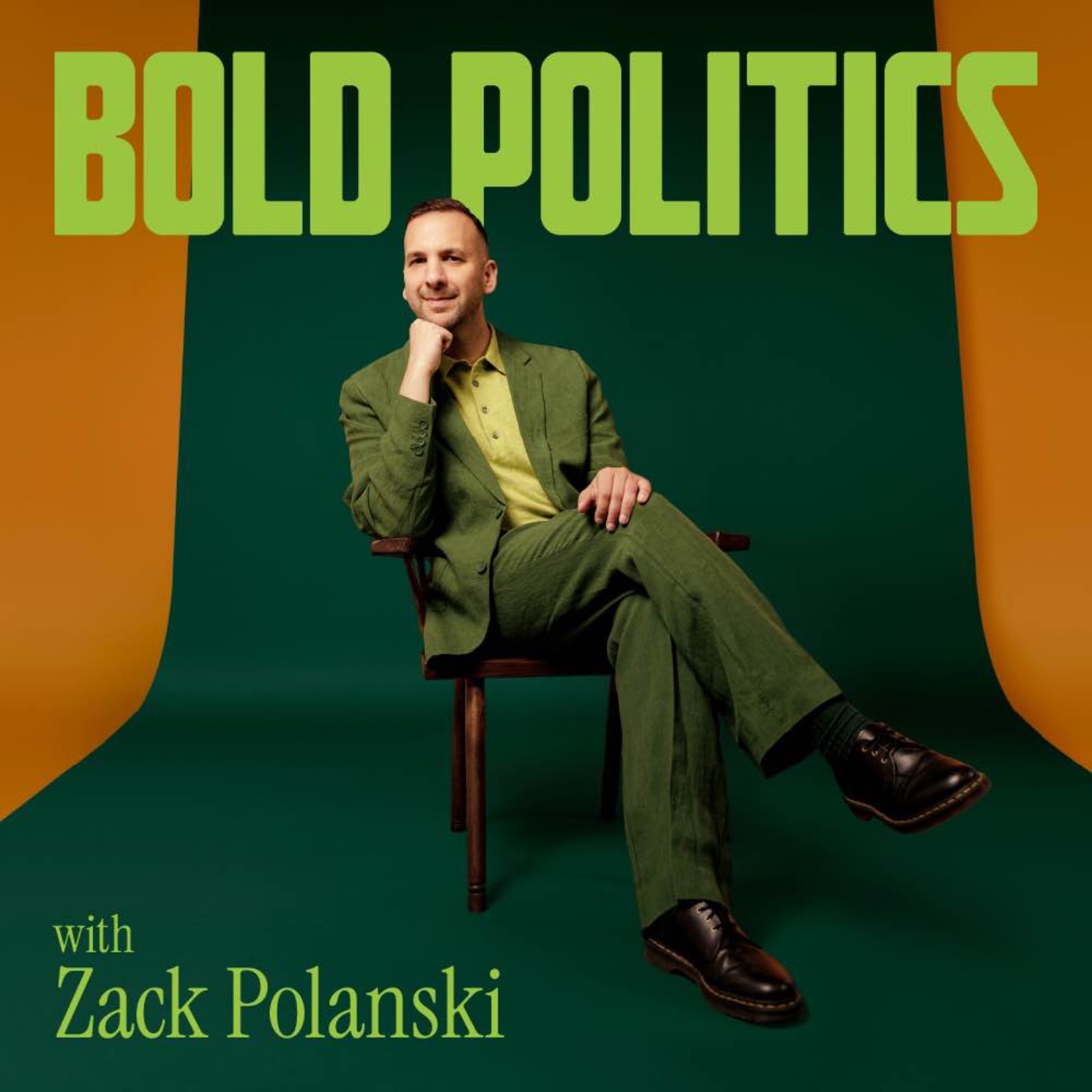
- Bold Politics with Zack Polanski
- How Can The Left Be Louder Than The Right?
Bold Politics with Zack Polanski28 Nov 2025 · 31m

How Can The Left Be Louder Than The Right? | NoJusticeMTG | Zack Polanski
In short
In this episode, Zack Polanski engages with YouTube streamer Helena (NoJusticeMTG), discussing the challenges faced by progressive voices in political discourse, the implications of energy pricing in relation to socioeconomic disparities, and the current state of the Labour Party. The conversation highlights the importance of effective communication and grassroots engagement within leftist politics.
Written by AI. May contain mistakes.

Ask about this episode
Get the gist, explore an idea or ask about something said.
 Claude
On Bold Politics with Zack Polanski, what are the key points of this episode?
Searching your listeningTranscript
Automatic transcript. May contain errors.
0:00How do you build a movement? There are lots of ways from community organising to mobilising to campaigning. And one of the bits I'm really interested in is how do you make sure that you're connecting with people every single day so they're hearing you and you're hearing from them. One group of people who excel at that are YouTube streamers. And in fact, one of my favourite YouTube streamers is Helena, NoJusticeMTG. And I'm delighted that today she's in the studio.
0:29hello zach chris packham here i hear you've signed up to ecotalk that's very bold of you brilliant um and if you don't mind me saying very bright of you too if your audience is half as smart as you then they'll sign up too at ecotalk.co.uk
0:54so first of all welcome on the show it's good to be here something i don't know if i've necessarily ever told you in person is uh this is going to sound a little bit random first of all but i cycle everywhere around london i have a helmet on i'm only saying that because people go what you're listening to podcasts while you cycle around but actually the helmet doesn't have ears so it kind it blasts the sound out as I'm cycling around. And very often when I'm cycling around, I'm listening to your streams. So from the night before. And it's funny because often on your streams, I've heard you say, I'm sure Zach listens to this stream because I said this thing and then I heard it on this interview a few days later.
1:26And it is to confirm that actually, I think you're so often spot on in your analysis and the way that you put things. I think one of the reasons why you put it so well, and this is, I guess, an interesting first question, is because you stream for so many hours an evening and you have to keep an audience. If you're boring or dull or overly repetitive, the audience will just disappear, right? But I think the way that you talk about the nuance and complexity of politics, but in a way that's really accessible to someone, whether they've been listening to you for three hours, or they've just popped into your stream for five minutes, you just have a really good way of holding an audience.
2:00Is that something that's deliberate? And how have you developed that? I mean, the thing with the UK, especially when it comes to British politics is that because our society is so old, the kind of very specific parts of British politics that have led to us to get to this point, they're obviously difficult to be able to master the full complexities of them, as you say. But one of the important things is so rigid, especially with the class structure in our society and the ways in which the different material change in politics has created the kind of political environment that we see today, that being able to understand that and the political economy of that in the way that it represents itself, especially in electoral politics, which is mostly what I talk about on stream, is really easy to be able to get the audience to understand how things have happened.
2:45Obviously, I believe in historical materialism and that things happen because of the material circumstances that brought them to be where they are. That's how society moves forward. And be able to get my audience to understand that within the context of British politics is one of the things I'm trying to do with my stream, right? rather than try and make everything a microcosm of the times that it's in, make people understand how that's reflected in all of the different decisions that led up to that point. That's the kind of, again, the complexity that I would like to impart upon my audience. It does help when you're live streaming in my specific kind of realm.
3:23Obviously, I do Novara Live. It's what most people will know me for if they don't watch my stream personally. When you do Novara Live, it's a set script and you're reading straight to camera and there's no audience interaction other than checking for super chats and things like that between stories. But when you're streaming live, as you say, two, three hours every day, I stream six days a week, the audience gets to know you and you get to know the audience and you're directly interacting with chat every single minute of every single stream that you do. So if there's ever any point where the audience doesn't understand or where the audience have got something that responds to what you say or they counteract what you say, you can always keep that conversation going so it's much easier to be able to continue riffing off of what the audience are telling you in real time which you don't get if the show is scripted which I think is important it also helps that when you're reacting to the kind of stuff that I react to which is usually daytime politics or question time or things like that is that there's always something there to keep the audience hooked and to keep them engaged with the content and if I need to take a break and I need to be able to find a new direction to take the stream, there's always something on in the background to be able to find a new way to riff off of that, to be able to explain or be able to exposit something important to the audience about what's being talked about, if you see what I mean.
4:41Absolutely. And you talk a lot about populism. It's very cathartic for me to get this out of my system. But what do you mean by populism, Helene? I mean, populism has always been, you talked about this with Lewis Goodall, the newsagents, this difference between the interest of a set of elites, a specific subset of elites that is prioritised in politics and it is everybody else who's outside, like the broader people who are being undermined or who have their interests less pandered to than that set of elites. That's the way I would talk about it. That's the kind of framing that I use. And this is why I think left populism is so important because fundamentally the basis of socialist politics, especially since Marx until today, has been about class conflict.
5:24It's been about the broader proletariat versus the bourgeois, right? That's a populist framework of looking at political economy. And I think understanding the kind of world we live in now through that lens is really important. I mean, you've made it that point very succinctly and very cogently in many kind of political appearances, where it is a very small subset of international, supranational megacorporations who have inordinate amounts of control over our economy. And you have individual multimillionaires and billionaires who have an inordinate amount of sway within our politics, right? And it's not just in terms of having their interests represented politically in terms of the fact that they can say we're taking our business elsewhere, for example, through our factories into the sea, as Gary would point out.
6:07Or it's about them be able to have their own interests be given more prominence than everything else because they're spending money on think tanks, for example. Their funding will come from dark money and that are used to gain their ideas and things that benefit them more prominence in the body politic. but broadly in terms of the power they have economically as well to shape the economy and their interests because in a free market the people who have the most money are the easiest at competing within that market they also hold a huge amount of sway there as well so especially economic left populism I think is where we need to be looking in the terms of framework to win over people especially people who are kind of only tangentially following politics so more in common have these kind of seven categories and the breakdown of how modern society in Britain is stratified.
6:57And they have this group called the Skeptical Scrollers, for people who don't know that, people who can only pay attention to politics now because it's being put through social media. I think this is a really good lens in which we on the left can approach these people, because one of the things that those people share with us on the left and also with what more in common describe as the dissenting disruptors, these people on the far right, who are at least voting for the far right and supporting the far right, is this scepticism of big business. It's the scepticism of the super rich because everyone can see it.
7:29Everyone looks at what's happening in our day-to-day lives in terms of politics and they're seeing these people's interests prioritised over their own and being able to find a way of harnessing that scepticism from the left is going to be important, I think, politically in the coming years. Listening to you then, it just really strikes me because very often you watch things like Politics Live and for the audience that might not know you, I'm sure lots do, but you pause it and then you often give the answer you would have given or give a critique of the answer that's given. It seems to me in any fair media minded world, you'd be on the panel in these shows because you speak brilliantly and you have a lot to say.
8:03Thank you. On the right, we have constant talking heads from the IEA or random commentators or people who work for the spectator. But we rarely have that kind of same system on the left. We do, of course, in independent media, but we don't see that on mainstream TV. I'm trying to find a way of creating a coherent question, which isn't just obvious. My question is, why are we not hearing more left-wing voices on TV? I guess I will just ask that question. I mean, yeah, well, you kind of laid out the reason why is that we don't have billionaire backers, right? It's important that the right wing do kind of think that we do because there are broad liberal voices, not leftist voices, but broader liberal voices, liberal capitalist voices, who have like socially progressive opinions, but not necessarily economically progressive opinions, who have been boosted by money that's come from billionaires and millionaires who share those socially liberal values, which is what most people in common parlance think of when they hear the left, especially in modern politics, since the class link to especially the Labour Party has broken down over the last 20, 30 years or so.
9:03So when they think left-wing, they think liberal. But in terms of left economics, there would be no reason for anyone from the billionaire on supranational corporations to want to back us to put funding into what we do, because our explicit goal is materially in conflict with what these people want. We want the billionaires to be taxed more. We want the supranational corporations to have less power, to have less control over the government, which is what they want to do, right? So, for example, one of the big conspiracy theories on the right is this idea of the World Economic Forum having so much control over our governments.
9:36In reality, what the World Economic Forum is, it's just a lobbying. It's a big lobbying organisation for supranational corporations to come together and give governments an idea of what they want, right? So, for example, really good, important kind of case study of the power of the people who frequent these kind of organisations is that Rachel Reeves and the Labour Party, in the run up to the election, they had this£28 billion plan for public investment into green energy. I think most people supported that. It was one of their most popular policies. And then in the run up to the election, when bond yields were pretty high or whatever, they said we're scrapping this policy.
10:12They said openly when they were interviewed, it was because they wanted to make sure that they had economically viable plans. I don't buy into that nonsense. You know how I feel about capital expenditure and what governments can use sovereign currency to be able to fund. but they briefed out to the press that it was they thought they couldn't win an election whilst running on this plan the conservatives would say they're reckless with spending you can't win it's an albatross around our necks is how they briefed it to the press but in reality what happened was is that rachel reeves met this woman from what's called the green finance institute at the world economic forum in davos and she was like don't do public investment do private investment with public partnerships right and so that's when the 28 billion pound promise got cut down and it was entirely because there was someone from the private sector who had lobbying power because they'd met at this meeting of the supranational corporations and political operatives and had made this connection to be able to convince them to do something that was more for the private sector with more private ownership than what we do want from a left populist lens is for the people to own whether it's public ownership or cooperative ownership or local authority ownership in terms of energy, which was originally the plan, right?
11:25Ed Miliband had this thing called the local power plan, which was to have more power owned by local authorities. You can use that to cut council tax, or you can use that to increase the coffers for local authorities. And that's got scaled back because somebody from the Green Finance Institute who has this institutional power because of the kind of areas they frequent, they're capitalists who have capitalist ends and capitalist profits in mind. And that's why we don't have the policy that we wanted in the run up to the election. So there's nothing conspiratorial about what's happening with the power these people have in terms of the World Economic Forum, whatever it is.
12:01They're just capitalists doing capitalist things. And when you listen to right-wingers talking about the World Economic Forum, they act like there's this kind of communist cabal that's trying to control everything. Like the line they go with is, well, you will own nothing and be happy. And I'm like, well, that's just what landlords and people who own assets do. They make money off of owning. They have the power to buy those assets so that working and middle class people don't get access to those assets. And they make continual passive income off of that, right? Like that's just capitalism in action.
12:29It's rent-tier capitalism in action. And the lobbying power of these institutions like the World Economic Forum is not individualized. That's not specific to the World Economic Forum. It's broadly how all these lobbying institutions work, Chamber of Commerce, et cetera, et cetera. It's all about those specific interests of those corporations rather than everybody else. And that's why they fund the Institute of Economic Affairs. They'll fund like the Centre for Policy Studies or all these other think tanks so that they can get policy which is deregulatory, which is lower taxation, which is stripping workers' rights away because that's in their material interest, right?
13:04Like if workers pay as low, you can make more profit. If, I mean, up until they can no longer buy your products, I guess. but if you pay lower tax on corporations they have more power and more money to be able to interact with the market and to be able to subsume those assets and if you take away things like antitrust laws which one of the big things from like the Reagan and Thatcher era was this rolling back of antitrust laws then you don't really have this power to interact with monopolies it's why fundamentally right-wingers really wanted us to leave the European Union especially is because whilst I don't think the European Union is perfect, one thing they did do well was antitrust and monopolies legislation.
13:43And now we don't have access to that, right? That is the lobbying power of the super-rich. And here on the left, we have a total material opposition to that. We want higher wages, we want higher taxation, we want assets more fairly distributed, and that's what a wealth tax is for, to make sure those assets go back into the market so the working and middle-class people can be able to own them again, or governments indeed as well, the public sector. and that is materially opposed. So why would they fund it? There's just no reason for them to fund it at all. It's really interesting that you talk then about wealth tax being about taking assets back into public ownership as opposed to what people would go, oh, surely a wealth tax is to raise investment.
14:20And I had this conversation with Victoria Derbyshire, who I think is a good journalist, but you could see that it was so outside the frame that these conversations normally happen that she just went, oh, that's really interesting. And then the conversation... Henry Zethman said the same thing on the newscast as well, didn't he? Ah, I hadn't seen that. Yeah. Part of this for me is a comms question. So on this podcast already, we've had Gary Stevenson, who I know the audience will be very familiar with, who is saying it's time for a wealth tax. We then had Richard Murphy come in, though, and talk about actually a wealth tax is a distraction because actually there's all these other things that you need to do.
14:53I'm paraphrasing there, but people can go back and watch for the full conversation. From a comms point of view, is this just about pushing the Overton window? Is it about like drip feeding new information into the kind of public sphere? so people can change the paradigm? Do we need to be bolder with that? This is called bold politics. Or do we need to work within the existing framework and kind of tinker at the edges? I think it's not the latter option. Yeah, obviously I would agree with that. But I think that what a wealth tax is, it's a very specific point, especially Gary will make, that looks at asset ownership and who owns what, right?
15:27Fundamentally, what's interesting is watching Gary's politics from the last five years when he's been making content or when he's been relevant in terms of political discussion. It's interesting watching him kind of iterate Marxist viewpoints kind of from first principles, because that's what Marxism basically is or what the kind of Marxist socialism is. It's talking about who owns what, analysing who owns what, and then using that as a material basis to make kind of predictions about politics or to make statements about political economy. And what a wealth tax does is it puts into the frame of how people look at our economy and look at our society in a framework of ownership.
16:04And I think that's really important. Fundamentally, I think that in terms of economic solutions, in terms of how we approach policy, we actually need to look broadly at ownership, right? We talk about nationalising the water company is a really important thing because it's very easy for people to see that if you're purely profit-driven, as the companies who own our water companies are, then you don't have to care about social utility, i.e. the idea of what's good for the population at large for reasons other than profit. because they have a captive market. It's a monopoly. So they can pollute as much as they want.
16:37And they know that they can increase your bills because you have no choice but to pay. You have no choice but to pay because water is the basis of being able to exist. So that is a set of ownership problems because unless it's owned by somebody who has democratic accountability, i.e. the state or a local authority, like the regional water boards kind of used to be before they were privatised under Thatcher, then at the very least, if it didn't reach some level of social utility, then they would fail democratically and a new government or a new local government would be elected to look after that resource.
17:12When it's a private company, they have no such kind of public holding them to account. And that's an issue. It's also in terms of where that money goes, right? Once you understand the water companies are owned by not just any core company, they're usually asset management firms like Macquarie is one of the famous ones because I believe they were partners at Southern Water who had huge problems with taking on debt, using that to pay shareholder dividends and then leaving the corporation, leaving the company, leaving it with that debt that then has to get paid down by higher bills on consumers, is that not only is that a company that's doing a bad thing for our environment, they're also taking money out of our country because Macquarie is based in Australia and that's no longer staying in our local economy either.
17:59that's a really big problem i think grace talks about this in vulture capitalism grace blakeley for people who don't know about the the issue with kind of like the asset management problem and right-wingers have noticed this you see like i keep in touch with kind of right-wing conspiracy tech talk and things like that and they rightly will point at the level of asset ownership of blackrock and vanguard and these asset management firms without realizing that well unless you have a robust and powerful state that's able to stand up to these again supranational they're bigger than countries and a lot of these corporations are at least in terms of their remit then all you can do is be at the mercy of the power that they have especially in a monopoly market like water that's the issue that you need to understand with asset ownership is that if it's not in control of the people and it's something that everybody needs then they'll be able to extract whatever they need from you to be able to satisfy the only thing that matters to them, which is generating revenue for shareholders.
18:58And who says that the shareholders of Macquarie are more important than our rivers and our seas and our beaches, and indeed, the bills that we have to pay? That was a banging line. That's another line I'm going to steal. Yeah, love it. I'm also quite shocked that you're in touch with right-wing TikTok conspiracy theorists. I'm like, that sounds like quite a job. So thank you for doing that. I mean, that's one thing is that it's interesting is that I've spent the last five years, how long I've had my YouTube channel, covering right-wing politics a lot. I will respond to right-wingers very, very frequently.
19:27That's one of the things that we watch a lot of the time. Obviously, when we're watching mainstream politics shows, there'll be a right-wing guest and a Labour Party guest. So basically, they're the right-wing guest at this point. And you'll be able to take the points that they make and either debunk them in terms of the facts they're saying or give a response from kind of a left-wing ideological standpoint. and in none of the interaction have I become any less left-wing. If anything, I've become more left-wing over time. So it shows you how convincing a lot of their arguments are. I love that.
19:54And because you explain things so well, I think there's something that often confuses the audiences and that's around energy, particularly around nationalisation, but the step before that, around decoupling. Are you able to explain what decoupling would mean? Oh, so at the moment, basically, we set the price for what we pay for energy at the marginal price, i.e. the form of energy generation that is the highest is what we will pay. And so when demand is low, we will use only the cheaper ones to make sure that the bill stays as low as possible when demand is low. But as soon as demand reaches a certain level and we start having to turn on certain forms of power generation that are more expensive, rather than paying like a gradient in terms of those bills, as soon as you turn on that extra, that extra level of energy generation, which is usually gas, and most times it is gas that is the most expensive, that will set the price for all of the bills, not just that little bit extra that's been used for everything, is now the marginal price that's been set.
20:52So you will have to pay for gas prices, right? And this is why I fundamentally think that we need energy nationalisation, especially the grid. Like, there is very few good arguments for privatisation, for the energy generation and for energy supply, right? There are precious few good arguments, right? but there are zero good arguments for having a privatised grid, which is essentially the reason that we're in this place in the first place, is that the grid as a private company is buying energy from private companies who generate it and then to maximise, to ensure that you can have the market incentives that's available.
21:23If people aren't being paid what the highest bidder is being paid, which again would be gas at the time which it gets turned on in terms of demand, then there's no financial incentive for those private companies to invest if you're not paying that marginal price. It's why I think we need a nationalised broadly energy system is so that we aren't hamstrung in terms of the high bills that we pay due to this marginal pricing. I know that the current government is looking at regional pricing. That might be a good change. I need to look further into the efficacy of changing to that specific system. But we wouldn't have to worry if it was nationalised because then we can just set the price that is affordable and we can subsidise the remainder from the state.
22:07and indeed if it generates so much energy that it turns a profit, then that's all going back into the public coffers anyway. That's being kept in the public realm. Again, rather than at the moment where we have our grid owned by, I believe, a Canadian multinational, we have our supply owned by loads of different companies, but they're either based with a shareholder model, so money's going to shareholders, which may be overseas, or they're just owned by the French government in the case of EDF, which is Electricité de France, which is now a fully state-owned company. Like even Emmanuel Macron, centrist neoliberal king Emmanuel Macron, during the energy crisis nationalised the remainder of EDF to ensure that he could keep bills.
22:47I think it was only a 4 % increase they saw in that period. And why can we not do something very similar here? It's ludicrous to me that we have this over-privatised system where not only are we sending money overseas, but also they're just taking a pound of flesh every single time a transaction is made. Like you pay a surcharge to do grid upkeep and to pay for the shareholder dividends for this multinational company that owns our energy grid. Like it's so silly to have a privatised grid. Even Neil Kinnock in 1992 ran on renationalising the grid. That's how much I just think that it makes no sense to me.
23:26And so I guess the final segment I want to go into is the politics of all of this. That as you're saying all that, I go, there's no way Keir Starmer and Rachel Reeves are going to do this. They push themselves into such an ideological corner that it would now be incoherent for them to be admitting that they've got everything wrong and everything they've been saying is lying. Do you think there could be a future Labour leader who goes in this direction? Do you think the Labour Party as a project is fundamentally dead? Could there be somebody from the Labour Party who would do that? I think so. There are still people in the Labour Party who share our viewpoints.
23:58I mean, you've been speaking to them behind the scenes. You know the kind of people in the Labour Party who are amenable to the kind of politics that we want to see. The question is, are they ever going to get the institutional power within the Labour Party to make internal change that will help us get to that point or that will make sure that Labour can do that? And fundamentally, I think that that's not non-complete, non-starter. Not only do I think that the kind of what I would describe as the Politburo that surrounds Keir Starmer, so you've got Morgan McSweeney and all of those people around him who fought so hard.
24:29They fought so hard in terms of undermining Corbynism, undermining the left wing of the party. I mean, they've all become Green members now in a lot of cases. that they would never want to relinquish that power. And because they have disabused the actual left wing of the Labour Party from wanting to be a part of it by essentially saying, we don't want you, the door is open and you can leave, the very famous thing that Keir Starmer said, or what they briefed to the press, they were shaking off the fleas, that the kind of people internally they would need who would support a left wing leader that would do that, they've all left the party now.
25:00I think the kind of leadership that we would see from somebody in the deputy leadership role that is most likely to win this weekend which is Lucy Powell, probably the furthest you're going to get in terms of a centre-left candidate. And unless you're taking real, bold change in terms of especially the economic paradigm that the Labour Party represents, which I don't think someone from the Labour centre-left would do, I don't think you're going to get the kind of level of change that is necessary to fix all of the problems with our economy.
25:34zach has signed up to eco talk he's taken the great plunge why has he done that well he's a man who sees sense firstly brilliant network coverage secondly fantastic customer service and thirdly of course all of the profits are going to nature restoration yes we're spending them on rewilding and you can go to our website to see what we're up to you can also get some wildlife tips from yours truly so come on follow his lead and sign up to eco talk all you've got to do is go to ecotalk.co.uk and it's simple absolutely simple and look at the benefits life is beautiful
26:18what are your thoughts about your party i genuinely don't know this actually i'm just interested because on paper in some ways that would be a project that i would go actually you'd probably be really interested in that. I mean, I was interested immediately from the start in seeing what it would turn into. You know, I have huge amounts of respect for Zahra Sultana and Jeremy Corbyn. I would not be the person that I am today without Jeremy Corbyn. I would not have found the interest in politics. I wouldn't have been inspired to be politically active if it wasn't for Jeremy Corbyn. I wouldn't have understood a lot of the issues that we see in terms of our broader economy today if it wasn't for Jeremy Corbyn.
26:52So I have huge amounts of respect for these people. But seeing the way that it has started so far, the way that it has kept all of the trappings of the problems of the internal politics of the Labour Party, that's taken that along with it, obviously, from a different perspective, because it's a broadly far more left wing pitch to the public in terms of the kind of policy they would pursue. again it's people that I admire and I would like to work with but fundamentally there's two problems right first of all I think that they take a lot of positions that whilst are things that I agree with I think are things that you would never be able to win the public over especially the kind of coalition you'd need to build to be electorally successful and I think that we're polling at 15 % now the Green Party are we are polling so well we have huge amounts of support in the kind of areas where I think that your party would also be very successful.
27:47And when I'm purely thinking about electoral politics, I don't see why there needs to be more than one left-wing party at this point. What I think is really important, though, is that having your party exist and if things find themselves in a more conducive position or a position that's more conducive to success moving forward, at the very least, having them in the political discourse will have yet more voices there to move the Overton window. They can probably win some seats that we can't win electorally as well in post-industrial areas, the kind of the Labour heartland base, whereas we're more, what I can see in more rural areas, which is our current, more ecological base.
28:26And in terms of very young people, that's very much in inner cities in the way in which we've seen in the move to a service economy, young people have left all of those areas and all moved in. They've piled into cities because it's where the universities are, that's where the jobs are. So the kind of base that we have of this broad coalition of kind of neo-socialists and progressive liberals that was kind of the backbone of the Labour Coalition 2017, which are very much based in cities, I think we have a really good market there, but we don't really win in those post-industrial areas as well. I think we can.
29:04I was about to say, Esby, anything I was disagreeing with, I was thinking we've got a really strong story to tell in post-industrial heartlands, right? I think that's true. I think we do. But lots of people will have preconceptions. And until we break through those preconceptions, having another party that can speak to those people, first of all, it might win them round to our side too. But it's also a way of being able to have a multi-pronged kind of attack in terms of electoral politics. But we'll have to wait and see. And very finally, if people love you as much as I do, they can find you on Thursday nights on Navarra.
29:32But also, how do they find you for your own personal content? If you search Act No Justice MTG on every platform, I think I've got that right. I think I've got it at No Justice Empty on every single social media site. I stream on YouTube and Twitch six days a week. So the only day I don't stream on my stream is Thursdays because that's when I'm doing Navarro, but I will stream every other day of the week. So you can catch me there. It's usually in the evening, sometimes in the afternoons. And I upload little clips from my streams once a day. I'll hopefully get up to twice a day on YouTube if you want to be able to catch up without having to spend three hours watching me babble on.
30:06so there's plenty of stuff for you to be able to get involved with by the way just so people who are unaware the MTG stands for Magic the Gathering it doesn't stand for Marjorie Taylor Greene so if you're wondering what that stood for that's what that stands for I love that and please do keep babbling on because I absolutely love it and I would love this so thank you very much much appreciate it's been an absolute pleasure
30:30Hello Zach now listen I've had a text I know improbable but true from the Beavers the butterflies the beetles and the badgers it's all sending you big love for signing up
From the publisher
Why don’t more progressive voices get booked on political panels? Why are energy prices the perfect example of how systems are stacked against the 99%? Is there any hope left in the Labour Party?
Zack Polanski speaks to YouTube streamer and Novara Media commentator, Helena AKA NoJusticeMTG.
Join Nature's Network and switch to Ecotalk, the only network service provider that gives all its profits to nature restoration: ecotalk.co.uk.
Email: [email protected]
YouTube: @boldpoliticswithzack
Instagram: @_boldpolitics
X: @_boldpolitics
Tik Tok: @boldpolitics
Hosted on Acast. See acast.com/privacy for more information.
More from Bold Politics with Zack Polanski
All episodesWe use cookies.They keep VO running smoothly and help us improve it. Privacy policy