
 Ask ChatGPT
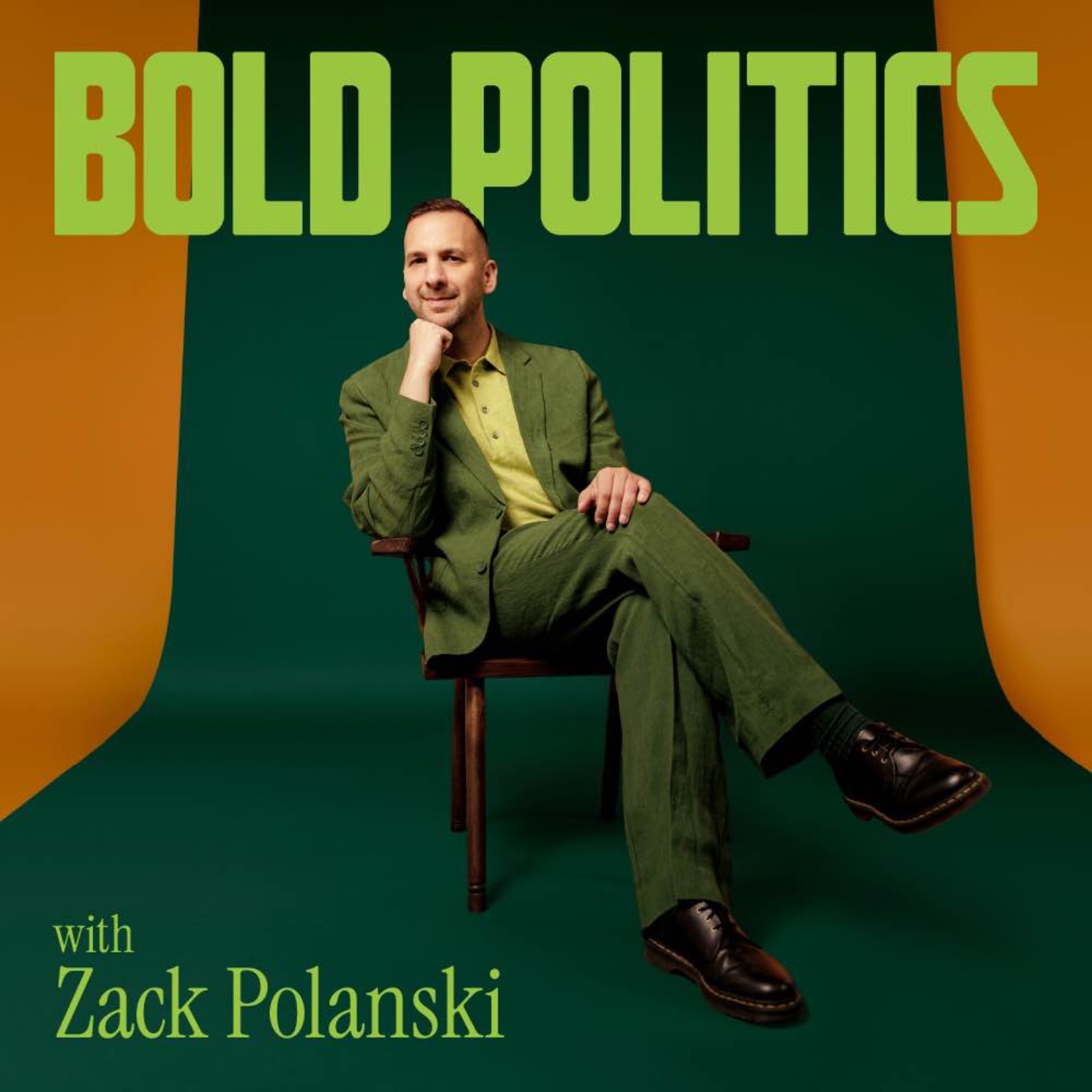

- Podcasts
- Bold Politics with Zack Polanski
- How Right-Wing Media Polarises Us
Bold Politics with Zack Polanski28 Jul 2026 · 46m · 20 chapters
How Right-Wing Media Polarises Us | Natasha Devon
In short
How right-wing media and social platforms polarise politics by rewarding short clips, exploiting fragmented attention, and amplifying extreme content; whether far-right growth is real or a “social media bubble”; and what regulation (especially of X) should look like.
Guest backgrounds
Natasha Devon is an LBC journalist/commentator and host of Bold Politics. She wrote The Nuance Drought, interviewing scientists about how binary, stressed thinking affects the brain.
Key claims
Polarisation is driven by the attention economy (legacy media and social media chase 30–60 second traction). It’s not technology itself but who owns platforms. Government “under-16s” social media bans risk expanding tech-company power via age-verification data. Algorithms can push far-right content regardless of user interests, making the “town square” undemocratic.
Notable examples
Brexit rationales tied to North–South resentment (Carol Vorderman). Sky News/Centre for Countering Digital Hate findings on X. Claims that Rupert Lowe is amplified on X. Buckingham Palace animal-cruelty projections (Led by Donkeys/Project Slingshot/Diane Morgan) allegedly ignored by mainstream outlets.
Written by AI. May contain mistakes.
Chapters
0:51
Exploring The Nuance Drought
Discussion on the themes of Natasha's book, The Nuance Drought.
“Bring your bold idea to life at crowdfunder.co.uk forward slash bold.”
1:59
Exploring The Nuance Drought
Discussion on the themes of Natasha's book, The Nuance Drought.
“Natasha Devon, you are our first ever guest on Bold Politics who has come back a second time.”
2:36
Media's Role in Polarization
How media influences public perception and behavior in a polarized society.
“So the book is divided into three sections.”
4:06
Attention Economy and Media Consumption
Discussion on how the attention economy shapes media and audience consumption.
“And now, interestingly, because of Andy Burnham, that idea has become much more mainstream.”
6:04
Challenges in Focusing in a Fragmented World
The struggle to maintain focus in a world of fragmented attention spans.
“A few weeks ago, we had the guest, William Darenpol, the historian on the show.”
8:13
Technology and Its Implications
The impact of technology on society, particularly regarding regulation and youth.
“Or have we got past the point where actually that's patronizing, people don't need to focus, we have busy lives?”
10:34
Digital Literacy and Misrepresentation
Discussion on the need for digital literacy and the issues of misrepresentation online.
“And a lot of this is about technology, right?”
14:00
The Impact of Social Media on Political Discourse
Explore the role of social media in amplifying far-right narratives and its implications for democracy.
“You know, it was it was a trend for a while, but it's a trend that they've largely, I would say, left behind.”
18:04
Public Perception vs. Social Media Representation
Discuss how social media shapes public opinion and misrepresents reality compared to in-person interactions.
“Yeah, and Rupert Lowe was exactly who I was thinking about, actually.”
22:32
Political Leadership and Responsiveness to Public Issues
Analyze the responsibilities of politicians in addressing significant issues such as the Israel-Palestine conflict amidst public indifference.
“They say, if you don't understand the plight of the Palestinian people, how can I trust you with anything else?”
Show all 20 chapters
26:32
Media Influence on Public Issues
Examine how media narratives can distort public understanding of critical issues like climate change.
“If you are the government, at what point do they kind of go, people feel we're unfair or people feel like we don't have vision and stop moving in the same direction?”
28:00
Media's Influence on Public Perception
Explore how media shapes public views on critical issues like climate change.
“But this is also my experience most places I go.”
28:50
The Impact of Immigration Narratives
Discuss the long-term media focus on immigration and its effects on public thought.
“And yet it's not reflective of the populations.”
30:16
Public Fear of Change Versus the Status Quo
Examine the psychological resistance to change and its political implications.
“There are a lot of reform councils in Essex.”
31:46
Cognitive Bias and Climate Change Perception
Learn about cognitive bias in relation to climate change and public belief systems.
“you're calling for requires real overhaul of the system they're frightened of that change as much as it's needed, they're frightened of that change.”
33:03
Media Strategies for Activism
Delve into tactics for leveraging media narratives in activism and outreach.
“So we would make that money back and be into profit really quickly.”
34:40
Navigating Anti-Semitism and Racism
Discuss the complexities of addressing anti-Semitism and racism in political discourse.
“No matter what I did, the media would report on it, particularly the right-wing media, to go wild.”
37:21
Government Responses to Racism
Analyze the disparities in government responses to different forms of racial hatred.
“When you look at the official definition of anti-Semitism, there are so many things in there that are tied to Israel.”
39:41
The Future of Political Movements
Consider the potential shifts in political dynamics and public sentiment.
“Well exactly what you've said and you're absolutely right.”
42:01
The Political Landscape Shift
Explore the changing political dynamics and the potential for new leadership.
“And Farage and the Reform Party are declining in popularity.”

Ask about this episode
Get the gist, explore an idea or ask about something said.
 Claude
On Bold Politics with Zack Polanski, what are the key points of this episode?
Searching your listeningTranscript
Automatic transcript. May contain errors.
0:00There is so much noise in politics at the moment. We all know that. I particularly know that because often I'm in the whirlwind. And so often when you stop and actually listen, the noise is nonsense. There's just a lack of facts, a lack of actual evidence and a real nuanced drought. Today, I'm going to be having a conversation around things like, are the far right really growing or is it just a social media bubble? What is the use of technology? Is it an opportunity for us or is it actually a danger? And of a left-right or of a right-right? Well, actually, what we probably find is things are quite complicated.
0:36To have that nuanced conversation, I've got an LBC journalist, a commentator, and an all-round brilliant human being. This is Natasha Devon. This episode is sponsored by Crowdfunder. Bring your bold idea to life at crowdfunder.co.uk forward slash bold.
1:24Minutes. Create your own AI agent today on Monday.com. Shipping, billing, admin, payroll, marketing. You're managing all the things. So why waste time sending important documents the old-fashioned way? Mail and ship when you want, how you want with Stamps.com. Print postage on demand 24-7 and schedule pickups from your office or home. Save up to 90 % with automated rate shopping. That's why over 1 million small businesses trust stamps.com. Go to stamps.com and use code podcast to try stamps.com risk-free for 60 days. Natasha Devon, you are our first ever guest on Bold Politics who has come back a second time.
2:06I am honoured. Thank you. People loved the episode the first time, so it just made sense. And also, being a host of a radio show, you're kind of a bit like a politician or a party leader. You have to know a little bit about everything. And so we focused last time on education and mental health because their personal passions of yours. But it also struck me that there's literally any topic in politics that you would have an opinion and thoughts that would be useful and interesting for people to hear on. Before all of that, though, something else that's happened since we last spoke is you have written a book called The Nuance Drought.
2:33What is The Nuance Drought? So the idea behind The Nuance Drought is that we live in a very polarised world and it's affected the way that we think and behave. So the book is divided into three sections. The first looks at how we live in a binarised society where everything is this or that. There's no room to say it's a bit of both or it's 25 % this and 35 % that. And we're always encouraged to go for the least worst choice, particularly in our political decisions. And then the second part of the book, which is actually my favourite part, looks at what impact that's had on our behaviour, but also on our actual neurobiology.
3:09I interviewed some really interesting scientists who were talking about how it impacts our brains when we are encouraged to think in these highly stressed and binary ways. And then in the third section, I look at what we can do about it. Amazing. Were you particularly surprised in some of the interviews? Or what was the most surprising thing that you discovered interviewing people? I think probably the most challenging interview I did was with Carol Vorderman. OK. Because she was talking about how a lot of the rationale behind Brexit has to do with the North-South divide and the perception that a lot of people who live in the north of the country have about the south being prioritized, getting all of the funding and getting things like the Eurostar, for example.
3:55And her theory is that what got Brexit over the line was people in the north wanting to send a message to the south and almost go, that'll teach you, kind of thing. And now, interestingly, because of Andy Burnham, that idea has become much more mainstream. But at the time when we did the interview, it genuinely hadn't occurred to me. So that really did challenge me to sit and think. The question I want to ask, but it's an unfair question to ask you, so I'll ask it and then caveat it, is how much of the media are responsible for this? And the reason why I say that's unfair is it's your whole thing, right?
4:30To have a radio show where you platform different voices and you kind of get into the detail as opposed to just running for the next clip. The conclusion that I come to in the book is that it's the attention economy that is the problem. Social media and legacy media, as we're now told that we have to call it, have the same imperatives. And it's all about the clip that's going to get the traction. So legacy media has become obsessed with the content's second life on social media. Because newspapers, radio and television, generally their listening and viewing figures are going down, unless you're James O 'Brien.
5:05But for most people, it's going down. the way that they justify their existence is they say, well, we have this whole second audience. So if you look at GB News, for example, five people watch that channel, but it's watched a lot online, often by people who really disagree with the content. And that is what they'll take to the shareholders as evidence of their reach. So what that means is there's an incentive for the people creating media to think in 30 to 60 second clips. And that's something I am really trying to push against with my radio show. I really wanted to create a space for people who enjoy thinking.
5:43I wanted to make it kind of borderline philosophical, some of the questions that we're asking. And for that reason, the people who love the show really love it. But I very rarely have a clip go viral. And that's the direction that everything is going. That seems counter though as well to the the kind of resurgence of the podcast. I think, I mean, I can speak personally now. A few weeks ago, we had the guest, William Darenpol, the historian on the show. And he talked about his podcast Empire a couple of times. Since we recorded that podcast, I have listened to more hours of Empire than I probably should while I'm doing other things.
6:17But I've really been enjoying the kind of, this is with no disrespect to William, in fact, the opposite, very long-winded descriptions of events in history that sometimes an episode can be an hour long. But actually, I really enjoy, here's an hour to focus on this particular battle or this particular period. Why is this happening at the same time as this kind of clip chasing? Well, when I first started writing the book, I actually thought the same thing as you. I thought I'll podcast the solution to all of this. But then I interviewed a woman called Dr. Caitlin Reiger, who wrote a book about smartphones called Smartphone Nation.
6:49And she said it's all about fragmented attention. So you know how in TV now they have this thing called, I think it's called two screen ability or something like that. but where the plot of a TV show has to be so simple that you could be on your phone at the same time and still follow it. Did you see the last series of Stranger Things? Yes. You know how it was all them running into rooms going, this has just happened. And you're like, I know, I just watched it. And you're thinking, why is this happening? And it's because they thought people would be on their phone at the same time as watching it.
7:17Same thing with podcasts. These three-hour long podcasts very often that are put out are designed to be consumed alongside other activity. People are at the gym, they're driving, they're gaming. Which is literally what I just said to you, actually. I'm listening to a podcast while I'm doing other things. Exactly. Yeah. So it's still fragmented attention in a way. I actually spoke to Gemma Forte and Marina Perkis, who I know you've had on this podcast. And I said, you know, do you think that podcasts are going to save us? And they said, well, it really depends on the nature of the podcast, because longer form podcasts can mean longer form harm if you're talking about radicalizing content.
7:53And I think about Hassan Piker, for instance, or I think they're called the Twitchers, where they will stream sometimes for five or six hours a night. And I suppose people are kind of half paying attention. But even Hassan, while he's streaming and giving sometimes excellent political commentary, is like eating his dinner at the same time, which seems like, yeah, really proving your point about fragmented attention. How do we get people to focus? Or have we got past the point where actually that's patronizing, people don't need to focus, we have busy lives? Like anything, it is a skill. and one of my best friends actually is a woman called Sharu Izzadi who is she's a habit change specialist and she works in the NHS mainly with people who are addicted to heroin and crack but she had this best-selling book called The Kindness Method and the idea is it's a framework and you can apply it to any habit that you want to change and one of the things that she said is the mistake people make is they try and change everything all at once or they go well this is my goal.
8:48And so from tomorrow, I'm going to start doing that. You're not ready for that yet. So her advice, I was talking about meditating and how I couldn't do it. And she said, okay, do you think you could sit still and do nothing for a minute? And I was like, yeah, of course. And she was like, okay, we'll do that and do that until it's easy and then make it two minutes and then go up to five and build it gradually from there. I do think we need to reclaim our ability to focus but you're not going to be able to sit down and read a book in the way that you used to probably you know most people can't but you can challenge yourself to read three pages today and build from there and it's interesting though actually because reading is still one of the things i personally do that i used to do and still do it in the same way when i find the time to do it which is quite rare it's also a little bit meta but the amount of people who stop me in the streets and tell me they listen to this podcast while they're driving somewhere or they're delivering leaflets or doing something, say definitely never telling someone how to consume it.
9:46But I suppose the problem, and it probably comes back to your book, is if we do have fragmented attention and we're only getting half of a story or sometimes 5 % or 10 % of a story, and I certainly have been the victim of this where GB News kind of say a tiny bit and they don't give the full detail, then that is a nuanced route, right? Yes. And it's the detail that matters. And I've seen this ability to cut through whilst giving caveats that I really admire. I see you do it when you're being interviewed and you're like, well, obviously what I'm about to say doesn't apply in this, this and this situation.
10:20But generally speaking, I would say this. And so few politicians do that. They make these sweeping generalisations because they know that it's the soundbites that cut through. So where you're being misrepresented, you are being very deliberately misrepresented, I would say. And a lot of this is about technology, right? and that technology has a huge opportunity to harness our imagination, to help us find facts and information, but there's also dangers. Where do you sit on the wider issue of technology and, I guess, regulation? This is the thing. It's not the technology that is the problem. It's who owns it.
10:53We are at the mercy at the moment of these tech oligarchies that are largely unaccountable because they're wealthier and more powerful than governments. And something that really irritated me about Keir Starmer's announcement about banning social media for under 16s was he presented it as I am standing up to big tech. But if you think about it, there's one of two ways that they are going to be able to verify everybody's age. They're either going to have to have us give quite sensitive ID documentation to the platforms themselves, which they will use as a huge data grabbing opportunity, or they'll have to employ a ID verification tech company to do that job, which will probably be within that kind of Silicon Valley.
11:42Or Palantir. It would be someone like Palantir, exactly. So if anything, it's the opposite. They're giving even more power and influence to the tech companies. And we really, really desperately need politicians who will stand up to them. I was outraged not to put words in your mouth, I'm interested in your reaction to see Lisa Nandy as DCMS, Department of Culture, Media and Sport, leave X, which I understood her reasons for doing so, but to kind of have a go at Elon Musk and X and then leave as if she didn't have the ability of a platform to be able to regulate X. It just felt a little bit like there's this huge problem over there.
12:17I'm just going to leave it over there and go somewhere else. As a personal individual, she has every right to leave X on Twitter. And I know that was something you did that makes total sense to me. But as minister, it felt like a real abdication of responsibility? I have a certain amount of sympathy for the government because they keep asking and the tech companies have no incentive whatsoever. Even the fines that are being administered by Ofcom, these companies are saying, well, we're not domiciled in the UK. So this means nothing. We don't have to pay these fines. So they do have a limited amount of power.
12:50And I got the impression that they were saying, well, we tried to ask nicely and they haven't made the platforms safer for young people. That's why we're putting in this ban for under-16s. But I think the danger with that, and it's symptomatic of the same thing that Lisa Nandy did, is that they say, well, we have no responsibility to try and regulate them now because there's no children on there. So they can do what they like. Where do you sit on the argument? I think the NSPCC might have been making this argument that actually for lots of under-16s, things like YouTube and education, like it's really important to actually be able to educate young people.
13:25The 16-year-olds that I speak to about it, I mean, I must have done 100 focus groups with teenagers about it. And they are incredibly mature. They understand the rationale for a ban. They don't think it will work on the ground. But they're also really resentful, which I get, because they feel like they are being punished for the mistakes of older people. And if you actually look at who is most likely to be radicalized into misogyny by an Andrew Tate type figure, statistically, it's Gen X men. Right. Right. So why are we punishing 16 year olds who most of them have outgrown Andrew Tate and his ilk by this point and just think it's kind of sad?
14:05You know, it was it was a trend for a while, but it's a trend that they've largely, I would say, left behind. Why are we punishing them for something that older people are doing? Well, the place I get the most abuse from this is just anecdotally, but it's actually Meta or Facebook. And that feels like that's not a younger audience. And I think there's two things going on there. again this is all anecdotal one i'm sure is just bots like just people who say repeatedly the same things i mean you click and they've got one friend or they've done two posts in 10 years but the second and there's more worrying for me is um often there's graphics of my face with a quote which is just something i've not said yeah so it's not like i've been misrepresented or spun or taken out of context it's just something i've not said and then you'll see thousands and thousands of comments from people who i do think are real and not always of a certain generation but often of a certain generation where I just go, actually, you've not grown up with this stuff.
14:58And does there need to be some sort of digital literacy? There's a quote that is attributed to lots of different people, but it's, a liar's halfway around the world before the truth has got his boots on. One of the people that that has been attributed to is Goebbels. And one of the things that I reflect on in the book is how much the Nazi regime would have loved social media and how the far right have harnessed it. And social media is not just a weapon of the far right, but it also is that. And there seems to be relatively little appetite to properly do something about it at governmental level.
15:33I find it really frustrating because they're making so much noise. They're not actually doing anything that matters, I don't think. And what do you think that specific action looks like? I'm not asking you to design an entire technology plan, but what would you say are the kind of big headlines that need to happen? I think that there's a very good argument for banning X in the UK. Right, okay. And I also think that proper regulation, but they need to do it in partnership with other governments. The EU have been looking at this very seriously, which means that there's an opportunity to partner with other European countries so that it really does hurt these tech companies in their pockets.
16:08That's the only thing they care about. They don't care about anyone's well-being. And I suppose when we talk about nuance, it's odd that I'm saying that I want to expand because I use X all the time. but it's also very clear to me it's become a far-right propaganda channel if not a right-wing propaganda channel and the fact that the algorithms are being used to push certain politicians and it just feels fundamentally undemocratic that all being said at the same time as major journalists are on it major government departments and the prime minister it feels like for me not to be on there well one i'd have to create a fake account or like a shadow account so i could keep up with the news so that feels dishonest and two it just feels like abandoning the town square where the arguments are happening.
16:48But those arguments are not happening in any kind of democratic or leveled way. So I would rather see X regulated. And if we're not going to do that, then I think it should be banned. But it's holding the nuance of still being on there, but at the same time it's saying it should be banned, that I can understand why it's easy for someone to point at that and go, hey, hypocrite. Yes, it's a complex one. But I'm sure you're aware that Sky News and the Centre for Countering Digital Hate did an investigation into X. And they found that algorithmically, regardless of your political affiliation or your interests you will have far right and extreme content pushed into your feed so it always used to be historically that the algorithm would respond to what you were looking at and tech and cyber experts used to be very accurate in predicting if you look at this you'll end up with more of this and they could see what you would get now because in many instances the people who own the tech companies have an agenda of their own They're tweaking the algorithm so that the content, the platform becomes a reflection of their mind and their ideology.
17:50So one of the things is Rupert Lowe, for example, his tweets are being amplified more than any other politician in the UK, which is fundamentally undemocratic. And I don't know how you fight that other than just everybody as one says, OK, we're not going to use this anymore. Yeah, and Rupert Lowe was exactly who I was thinking about, actually. But I also didn't want to necessarily amplify him on this channel. But since we've gone there, it just strikes me that you look on X and he seems to have all of his support and then you go out into the real world and there is the odd person who's heard of him or even supports him.
18:26But actually, generally, like a very unimpressive individual compared to social media where he seems to be like the leader of this some sort of strange movement of bots and angry people. And you can always tell when a politician spends too much time on X. because they have a completely warped idea of what the British public are like. I would say that from what I have heard her say, Kemi Badenok is probably spending too much of her time on X. And I don't know about you, we were talking about this earlier, but during the past six months, I've felt a sea change. And I feel like there was a time when I was really worried we were going to become the 51st state here in Britain.
19:05And I no longer worry about that, because I think the British people have shown through a series of by-elections and various other things that have happened that actually there isn't as much appetite for the far right as perhaps the newspapers and social media would have us believe. There's an enormous amount of, I think, nuance in the way that the British public act. There's an enormous amount of kindness out there. There's an enormous amount of sense out there. You won't find any of that on X. Yeah. So here's the nuance for me, because I spend an inordinate amount of time on social media. And that's often because I'm traveling around on trains or going from place to place.
19:43So it's just a lot of time where I'm either reading or just on my phone. And I think there's a beauty in that in terms of if people write to me. I used to be much better at it. It's harder now as my profile's got bigger. But I try and respond to everyone, whether they agreed or disagreed, to have those quick interactions. And my reasoning behind that is I used to spend hours and hours knocking on people's doors. And actually, this is a bit like someone's knocking on my door and going, hey, I want to chat. So actually, if it takes 10 minutes to have a quick kind of conversation with someone, that's great.
20:08The same time, though, because I'm going places lots, I also spend a lot more time with people in the real world. Yeah. And I feel that real kind of contrast between the things that people ask me about online that people, I think, do care about online. So I'm not dismissing what they care about. But they often feel very different to when you're in a community. And people are usually talking to you about a local thing that they really care about in the local area. And the kind of national or international politics is on their radar. whereas online it often feels like everyone every single moment is thinking about the big wider picture yes although i do think um i was talking to somebody involved with the labor party yesterday at an event and i was trying to get her to understand because she she had been talking to a polling company who had done some polling which showed that across the uk apparently most people don't care about israel and palestine and apparently the the advice that she'd received was most people just feel sorry for both sides.
21:02They're not really aware of what's going on. They couldn't point to Palestine on a map. Don't worry about it. Right. And I said to her, well, you will obviously be aware of this, but of the people that voted Labour in the 2024 general election, 6 % voted reform in the recent local elections, 22 % voted green. And of that 22%, two thirds said that Gaza was a factor in their decision making. So if you want to win back that large chunk of your support, then yes, you know, Palestine is a long way away. And maybe it isn't on the radar of every single person in the UK. But that's a community of people that you need to show that you're listening to their concerns.
21:44I agree. And I think it's two other things too, is sometimes you can have an issue that's totemic. And it's about the issue, obviously, to the Palestinians and to their freedom and to their right to life. That's incredibly important. It's the first priority. I'd say more widely, though, it speaks to what is a party's values or what is a government's values. And so whether anyone is embedded massively in the detail of that issue, it's sending a signal about are you on the side of the military-industrial complex or are you on the side of people who want people to have the right to live? And then the second thing, which I think is a slightly different conversation to one we're having but one I'm interested in your views on, is how much is it a politician's job actually to not listen to focus groups or necessarily what, you know, you have to listen to what people care about.
22:24But there's also a role in leadership in saying there's an issue going on here that we should all care about for X, Y and Z reason. I think if you do too much of that, you're just preaching at people. But I think there's a huge important role actually to really feels like in politics, we've got to the point where politicians follow where the crowd is, as opposed to go, I'm going to show political leadership and courage and say these are the things that I care about and you should too and here's why. Well, the two things that you've just said are related, I think, because the people that call my show on LBC who are hugely concerned about the government's role in supplying arms and intelligence to Israel, for example, they will describe it as totemic.
22:59They say, if you don't understand the plight of the Palestinian people, how can I trust you with anything else? Because you obviously don't care about fairness. It's a fairness thing. And the number one criticism of Keir Starmer that I heard from, again, from the people that call my show, which is not necessarily a representative sample, but they would just say, I don't know who he is. I think that those two things are absolutely intertwined. And here's a quick message from our friends at Crowdfunder. We're stronger when we're together. But the reality is there's been a deliberate shift to make us forget about the things that matter in life.
23:35Kindness, community, looking out for each other. Decades of austerity and growing regional inequality has left so many towns, districts and villages with community projects underfunded. Green spaces neglected. Vulnerable people slipping through the cracks. And the flip side of that is if we're only looking out for ourselves, it's only going to get worse. That's why Bold Politics have partnered with CrowdFinder to inspire people across the country to do something amazing for their communities. Whether you want to create a local litter picking group, start a community garden,
24:19or turn an unused building into something useful like a food bank. And whether you've got a big idea that needs a lot of money or you just need a little bit, Crowdfunder have raised over£300 million for charities, projects and communities. And there's a crowd of people out there waiting to turn your bold idea into reality. Hey, we'll even give you 50 quid towards your first project if you raise£250 from at least five donors. What could you do for your community? Turn your bold idea into a reality at crowdfunder.co.uk forward slash bold.
25:00Still waiting in line? Again? That's time you'll never get back. Save time and money with Stamps.com. Over 4 million businesses have skipped the line with Stamps.com. Join them to save up to 90 % off carrier rates from your computer or phone right now. Print postage for certified mail, registered mail, and packages in seconds. Then schedule a pickup right from your home or office. For a limited time, go to Stamps.com and use code PODCAST for a free welcome gift. Taxes and fees apply. This Monday.com ad was created by a team of people and AI agents. Reese, our content agent, wrote the copy based on our best practices, like mentioning Monday.com three times.
25:40That was the second. Johnny, our coordination agent, built the timeline and kept everyone aligned. Olivia, our human creative director, stayed in the loop because agents are great, but they don't always know when a joke lands. She had one note. Tell listeners it only takes minutes to build an agent. So, minutes. Create your own AI agent today on Monday.com.
26:26to stay hydrated wherever life takes you. So shop now at liquidiv.com. Liquid IV hydration that goes wherever life takes you.
26:40If you are the government, at what point do they kind of go, people feel we're unfair or people feel like we don't have vision and stop moving in the same direction? Such a good question, which I genuinely don't know the answer to because if I was prime Minister, that point would have passed so long ago. I feel that the chasing the reform vote, chasing the same 20 % of voters, all parties apart from the Greens and the Liberal Democrats, I would say, seem to be moving in that direction. It's so obviously not working in any sense that I would have abandoned it a long time ago. I remember being on Question Time the first time with Zia Youssef and he made a point quite early out in the gates that immigration was the number one issue that the public cared about often flips with cost of living and the economy.
27:29And I said, do you think it's the thing that people care about? Because you get pretty much unlimited time on channels like this to keep talking about it to the point that people care about. So it's for tail wagging the dog or vice versa. And I just remember the audience really responding and really, really applauding. And so often when you see these shows, particularly in the ways that they relate to reform, it doesn't reflect the way the media often talk about reform. Now, if Zia Yusuf was here, and thank God he's not, he would say that, well, that's because the BBC are biased and they stack the audience with people who are anti them.
28:00But this is also my experience most places I go. You get people who sometimes do support reform. It's very rarely with kind of enthusiasm or hope. It's usually in a kind of we need to burn the system down way. And these are the people who are going to do that for me. Being able to spot when the media is mirroring the public and when they're setting the agenda, I think is really key. I was reading a really interesting bit of analysis in the big issue the other day about net zero. Two thirds of the UK population support net zero and an even bigger percentage think the government needs to do more to fight climate change.
28:31And yet, if you were just reading the newspapers and looking at a lot of the broadcast media as well, you would get completely the opposite impression. And this whole agenda of saying, well, it is too costly. One day, just keep kicking the can down the road. They've been doing that since at least the 90s, if not the 70s. This has been an agenda, a fossil fuel sponsored agenda to say we can't afford it right now. And that's all we ever hear. And yet it's not reflective of the populations. That's an example. And I think immigration is another one. It's worked because for decades now, the newspapers who do set the agenda and tone across all media have led with immigration.
29:12And a lot of people have been so kind of flooded with immigration content that that is forefront of their minds a lot of the time. So it just goes to show that if you do it for a sustained enough period, it does work. But I don't think that that's where the population started. It's interesting when I knock on doors, you'll sometimes hear a new line. And because I don't watch GB news, the first time I hear it, it'll just strike me as, oh, that sounds a bit odd. I don't know where that's come from. and then that same day you'll sometimes hear it three or four times and you go wow this is something that's it's a line that's really really been pushed out and people are now repeating it now i'm not being patronizing people can have their own thoughts and i'm not saying that everyone who has a view that they disagree with gets it from gb news um sometimes though it is verbatim with a clip that you then see uh on social media part of me goes well the counter to that is just to make better social media but also that does feel like we just get into this war off between I mean, who can do the better soundback clip that is more persuasive with more effective frequency?
30:13It's difficult because people are operating on vibes. You know, I was thinking about you the other day because I'm from Essex, as you know, and Essex is a very Tory county, which has now gone to reform. There are a lot of reform councils in Essex. And I have family and friends back in Essex who are right wing. and the thing I hear again and again from them, I ask them, are you concerned about Farage becoming prime minister? Because for me, that's existential. And they go, yeah, even they don't like him. Like a lot of them voted for form, but they're not a fan of Farage. And they go, yeah, a bit, but, you know, I'd be more worried about Zach Polanski, right?
30:54They've got kind of reasons. When I say why, they think that legalising drugs means that like heroin is going to be available in Tesco. And open borders. And open borders, right. Okay, so very vibe-based things, not having looked at the content of the policy. But do you know what it made me think of? It made me think of, in the book, I talk about an experiment that's been done in many, many different iterations about how human beings deal with change. And the simplest way to do it is you give people two buttons and you say, if you push the right-hand button, you will definitely get a very painful electric shock.
31:26And if you push the left-hand button, there's a 50-50 chance. so you either get one or you won't most people choose to press the right hand button and what this tells us about human beings is we would rather deal with pain than uncertainty so as much as reform present themselves as the party of burning everything down people understand that they're a continuation of the same and what they're scared of with you is that a lot of what you're calling for requires real overhaul of the system they're frightened of that change as much as it's needed, they're frightened of that change. And I think that that's what it boils down to.
32:01It's so interesting, because when you're talking about the polling earlier about people who want to tackle the climate crisis, the extra bit to that is that includes reform voters. There's a big block of reform voters that when you ask them, they're concerned about the climate crisis. Now, when you drill into the detail, a lot of them don't support the idea of net zero. And that's because they don't want the climate crisis to be tackled off the backs of working people. Sure. And you know what? I agree with that. Yeah. And so it's about how do we make sure that we're focusing on actually what the real problem here is, which is the corporates who are destroying the environment and our democracy and our communities and the multimillionaires and billionaires.
32:34We're straight back to the same conversation, though, that the multimillionaires and billionaires often control or own the broadcasting organisations who are able to then push out that propaganda. And it's all based on vibes. There's an example, again, in the book about climate change, where the fossil fuel company sponsored an advertorial that was children saying to the government, oh, please don't gamble with our futures because anti-climate change action is going to harm the economy and harm our family's income kind of thing. That was cited as one of the reasons that the president didn't sign a climate change international agreement at that time, because it's just it's a feeling when you look at the statistical evidence is three hundred and forty billion pounds that net zero would initially cost, but we would make back 40 billion pounds a year.
33:25So we would make that money back and be into profit really quickly. But people don't feel that in their hearts. Something I learned recently from another book I read, which is so interesting, is that the part of your brain that understands something is the same part of your brain that agrees with something. It all happens in the same bit. So if there is a belief that you have that is central to your identity and somebody presents you with irrefutable evidence that that belief is not true, as a survival coping mechanism, your brain will not allow you to understand it. Because if you understand it, you might agree with it and you will have a mental health crisis, essentially.
34:07And when I learned that fact, so many things clicked into place. The amount of debates I've had with people where I'm like, look at this, look at this, look at this, look at this. And they're like, no, I just don't really agree with that. And I'm like, but it's the Office for National Statistics. It's the metadata. These, you know, the average of thousands of different studies that have been done, but it wouldn't matter how much evidence I presented them with. Their brain would not allow them to understand it. That's a difficult thing to fight. And is this the same thing as cognitive dissonance?
34:35Yes. Okay. Yeah. Yeah. It's all part of the same thing. An experience I had recently that I'm really curious about is there was a period where no No matter what I did, the media would report on it, particularly the right-wing media, to go wild. And so I decided, how am I going to harness this? So I went outside Buckingham Palace about half an hour before midnight with the Led by Donkeys crew and a group called Project Slingshot and then the comedian Diane Morgan. Oh, yeah, I love her. And we projected onto Buckingham Palace images of animal cruelty and factory farming. And Diane Morgan, in her brilliant kind of accent and funny way, went, does the king know about this?
35:09and I'd just say it was brilliant narrative in terms of capturing a moment for the attention of a really serious issue and ending the cruelty of animals in factory farms I think pretty much not a single mainstream media organization reported on it and I thought oh they're getting even cleverer at the game now they've realized if they keep amplifying the things that I'm saying yes it will outrage lots of people but actually a much bigger group get to see the message that I'm providing and so it feels a little bit like I'm in a game of chess at the moment with with the Daily Mail or the Telegraph in particular, where they want to kind of keep telling scare stories.
35:43But once you've learned how to harness the scare story to go behind the scare story, there's a really important thing here that will benefit your life or stop your life getting worse. It feels like, again, it's about control and power, right? That they have the choice of when to tell those stories or not to. Well, they also don't want you to have the ammunition to be able to do what Farage has done and stay the mainstream media against me. So it's easier to ignore you, right? Because then you don't have the evidence to say they've misrepresented me here. And that's something that you do so brilliantly as well.
36:13You just go, look at what they're saying. And then you'll see hundreds of comments underneath refuting it or saying that's ridiculous. I think they've probably cottoned on to the fact that that's helping rather than hindering your cause. That's really interesting. I'm going to have to find some new tactics. It also struck me, anti-Semitism is an issue that without a doubt, like needs tackling. At the same time, we had a prime minister who was kind of attacking me and my party, but showed me absolutely no allyship in the fact that the Telegraph and Times were printing some pretty disgusting caricatures of me.
36:46And I guess it's on my mind because at the time of recording, Keir Starmer's had his last prime minister's questions. And he took one final swipe at Jeremy Corbyn calling when the Labour Party were named as institutionally antisemitic. An allegation that Jeremy Corbyn straight out the gate said, actually that never happened. And this is perpetuating another myth. And it just made me think again about the nuance about how not just antisemitism, but Islamophobia and all forms of racism, like how we navigate these spaces at the same time as them becoming political tools, which is incredibly dangerous because that distracts away from the real fact that we need to deal with racism in our society.
37:22When you look at the official definition of anti-Semitism, there are so many things in there that are tied to Israel. But when people hear anti-Semitism, they're not necessarily thinking of that. They're thinking about a hatred of Jewish people. And they don't take the time to look at the detail. I actually wrote a substack recently because I thought it was ludicrous that the Labour Party were looking for anti-Semitism everywhere apart from the Nazis, the modern iteration of the Nazis, because there is a resurgence of proper 1930s-style anti-Semitism at the moment. People talking about cabals and globalists being obsessed with George Soros.
38:06The Great Replacement Theory, which is beloved of the far right, they're saying that it's Jewish people who are somehow responsible for demographic replacement. All of that is totally ignored and is on the rise while they're focusing on people who are correctly critical of what Netanyahu's government is doing in Gaza, in the West Bank, and now in Lebanon. And that seems insane to me. Absolutely insane. I'm going to do another one of my caveats, but anti-Semitism on the right is definitely a thing, as you've just outlined. What I find really difficult to navigate is anti-Semitism on the left because again I want to be really clear there are definitely examples of where the Israeli government have used false flags.
38:52In fact I think there's the Hannibal directive which basically demonstrates within the Israeli defense force that if a Israeli soldier is captured they would rather kill that Israeli soldier than allow them to be captured. All of that is evidence and true and I think it's anti-semitic at all to name any of that at the same time though people then get distracted or they see false flags of conspiracy theories in places where we don't have evidence for it and what i think it does is it undermines both the criticism of the israeli government and the apartheid state but also i think it undermines the real fight against anti-semitism that we have in this country which is a left-wing movement we stand against all forms of racism so that has to be part of it too.
39:33I can understand why people are angry. I really understand why people are angry. I can understand why people want to hold people to count as soon as possible. How do you harness that true motivation and at the same time encourage people to take a breath and say when we make accusations or when we put things out there it has to be based in evidence otherwise we're undermining our own movement. Well exactly what you've said and you're absolutely right. Antisemitism on the left is a thing and I've encountered it and I always challenge people on it just because it's the right thing to do, but also because, as you quite rightly say, it completely undermines the movement.
40:06If you turn a blind eye, you allow it to creep in. It is absolutely a legitimate form of racism. What I think is sometimes missed, and I said this on Sky News and it went completely viral and there was a little bit of backlash, but when we do see attacks against the Jewish community, we have what I would call the right response to that. The response I would like to see in any form of racially or religiously motivated hatred. So when after the Golders Green attack, we had Cobra meetings, we had more funding being given to the Met to protect Jewish communities, prime minister giving statements. That's what I want to see when it happens to Muslims, when it happens to black people.
40:49And I think there is a perception that anti-racism campaigners don't care about Jewish people. But what's actually happening is anti-racism campaigners are looking at where there's need. And because Muslims aren't getting that response from government or from police or from media, that's where they're putting their energies. I feel like we're touching every hot button topic I could get into trouble. But I really see a parallel with Ukraine. I really stand with the Ukrainian people. I really stand with their right to defend themselves against an aggressor. At the same time, though, the government are doing the right things I'd want them to see do there.
41:26So people sometimes say, why don't you talk about it more? Or, you know, why do you talk about Gaza? Or why do you talk about Saudi Arabia and Yemen? Because I'm like, well, that's exactly where our government are doing what they shouldn't be doing. And so it's finding time to say positive reinforcement of when they do things right. But actually, I feel like our time is so much better spent going, actually, there's a gap here. And part of our role is to draw attention to it. You only have so much energy and there are only so many hours in the day. When you look at the government's response to Ukraine, you go, oh, good.
41:53They're doing the right thing. They've got that. I can focus on something else. Yeah, exactly that. So I wanted to ask you a question. I have felt this sea change and it's being reflected in the polls. And Farage and the Reform Party are declining in popularity. I feel like people are starting to see through them. and there's a real thirst for something different, which it doesn't look like Andy Burnham's going to be able to provide. How are you going to capitalise on that? I think it's a real moment where there's no choice but to capitalise on that. And that can sound cynical, but actually I think in the spirit of the question, it's about going, what is this opportunity to say to people who have been in Labour for a long time because their parents were or their grandparents were, and they were just hoping after Keir Starmer things were going to get better of the Labour Party was finally going to return to what it was under Attlee or Nye Bevan or etc.
42:45And so I think it's about how do we return to those values and actually say this is a moment to tax wealth fairly. This is a moment for rent controls. This is a moment for water nationalization. These are all really popular policies. I know that from being out and about but we also know that because the polling shows it over and over again. I could reverse it back at you but I think the reason why the Green Party hasn't capitalized as much as it could do although we're certainly doing much better than we ever have, is because people go, well, I want to work from the inside to change the Labour government, because I think that's where influence is.
43:16And I think what we've demonstrated over and over again is you can have as much, if not more, influence now from being in the insurgent party that is challenging them from the left. Now, I said on my first day of my leadership, I didn't want to keep being concerned or disappointed by Labour. I wanted to replace them. And people found that quite a kind of bold, audacious statement. But I think it's demonstrated to be true, both physically in Gorton and Denton, where we have Hannah Spencer doing wonderful work now in Parliament, but also at the local elections, where, as you say, the Green Party took four times as many votes from the Labour Party as reform.
43:46And I think it looks like doing it more and more as we have by-elections and when we get to the next general election. That's not to say there's no space in politics for people who are in the Labour movement. In fact, quite the opposite. The Labour movement is the exact movement I'm championing. I think my point is that what Andy Burnham and the Labour Party are not doing is representing the Labour Party. And I think it's evident in the MPs. Under Keir Starmer, you had 70 corporate lobbyists, literal corporate lobbyists, who were Labour MPs. Andy Burnham now has those same 70 corporate lobbyists.
44:14I wouldn't say it's just for corporate lobbyists, though. There's other people who aren't corporate lobbyists, but still very much have their eye on protecting vested interest, power and wealth. Anna Turley, who writes me multiple open letters, who's the chair of the Labour Party, she was literally on the body of a gambling company, we know the kind of harms that gambling have had. Now, this isn't like a personal attack on Anna Turley. I think there's lots of Labour MPs I could attack for the same reason. I just think that kind of politics has utterly failed. Now, to answer your question directly, it's not good enough for me to say the politics has failed.
44:45There's a big vacuum because that is then giving space to Nigel Farage. I think it's about how does a movement of hope then go, actually, we don't just need to reject the bad stuff to come to your very first answer about not having the binary of bad or worse, but actually go, we can have something that people believe in, that feels credible, that is based in data and evidence. And I think the number one challenge I see at the moment is actually a storytelling one. In a world which lacks nuance, where the rights arguments are so easy to just go, I almost don't want to repeat them because I don't want to amplify them, but I am because we know the arguments.
45:19Stop the boats, it's all the immigrants, etc. It's such an easy argument. Whereas arguments on the left can sometimes feel counterintuitive because for decades we've been told they're not credible, they don't make sense, or that the rich will just leave, for example. Or I had a remarkable interview, I won't name a journalist because they never put it out there, where I sat down to talk about rent controls. And the journalist said to me, but where will the houses go if the landlords sell up? And I wasn't trying to be rude. Did they actually ask you that? I said, well, the houses aren't going to go in smoke.
45:49They'll still be there. And they said, yeah, but the landlords will just leave. So who's going to own those houses? And I was like, well, if there's a sitting tenant, they could have first right refusal and the council could buy them. I looked in my journalist's eye and I realized they're not gottering me. They just don't understand rent controls. And I don't mean that patronizingly. There's lots of journalists whose economic knowledge, because they've been doing it a lot longer than I have, will surpass mine. And I've still got catching up and research to do. But there was one time where I was like, oh, you're just not on your brief.
46:14Like, you just genuinely think if we have rent controls, houses will disappear. And so I think it's about how do we counter the stories that people have been told for so long. that are based in evidence and data where people feel safe and go, actually, this is a plan that is both transformational and radical. But also to your point about certainty, I feel certainty that it's going to be okay. And that's a really hard challenge. But transforming the country and stopping the rise of right was never going to be easy. So I'm up for it. In terms of kind of finishing off, coming back to nuance, what are your hopes, not just from the book, but more widely from this conversation?
46:50Well, this is where I'm just going to descend into total left wing cliche, but it's community. Community is the thing. And sometimes those communities are found online. But I think real life communities getting into rooms with people. That's one of the things that I say in the book in the third section where I talk about solutions to this. I talk about empathy and I talk about community because we have stopped seeing certain people as human beings. and that's when violence becomes inevitable and it's those flames of violence that the far right is trying to to fan and that's what we really need to to fight back against I think when you say we what does that look like to you every single person I think can do this it's it's a sort of look up type thing since I wrote the book I have it sounds so stupid but it's a really little thing but I've changed the sort of headphones that I use because like you I'm often walking around listening to podcasts.
47:46And I realized there's a guy who lives four doors away from me, who I know, who I like, who I've seen at events. I didn't know he was my neighbor because I have been walking around with my headphones in, concentrating on a podcast. So I switched to outer ear headphones so I can still listen to my podcast, but I can also hear the sounds around me. and I'm so much more aware, I didn't know how many times people were saying hello to me in my streets, you know, and I want to be plugged into my community. I want to connect. It's connection that we need. I love that. And that seems a great place to end.
48:25Thank you so much. Thank you. This episode was brought to you by CrowdFunder. What's your bold idea? Start it at crowdfunder.co.uk forward slash bold.
48:41Still waiting in line? Again? That's time you'll never get back. Save time and money with Stamps.com. Over 4 million businesses have skipped the line with Stamps.com. Join them to save up to 90 % off carrier rates from your computer or phone right now. Print postage for certified mail, registered mail, and packages in seconds. Then schedule a pickup right from your home or office. For a limited time, go to stamps.com and use code podcast for a free welcome gift. Taxes and fees apply. Monday.com AI agents took over my work. And I absolutely love it. Chasing deadlines, writing status reports, updating stakeholders.
49:20Agents handle the daily grind now. I stay in the loop only when it matters. Create your own AI agent in minutes on Monday.com. Hi, I'm Jack Cavicci, Kramer host of The Best One Yet. At T-Boy, we're always talking about small decisions that can have an outsized impact. One of the simplest is staying hydrated. Whether I'm traveling, getting a workout in, or heading into a busy day, I keep Liquid IV on hand. It's clinically demonstrated to hydrate faster than water alone and contains three times the electrolytes of the leading sports drink, plus eight vitamins and nutrients. It's an easy addition to your daily routine and helps support hydration when you need it most.
49:54Shop now at liquidiv.com. Liquid IV hydration that goes wherever life takes you.
From the publisher
Is the media responsible for a lack of nuance in today’s public debate? Should government ministers be leaving social media platforms, or regulating them? Why are online controversies and issues often not reflective of local politics and concerns? What has been the effect of decades of fear mongering over immigration?
Is this week’s episode, Zack Polanski speaks to broadcaster, writer and campaigner, Natasha Devon.
_____
What's your bold idea? Bring it to life with Crowdfunder: https://www.crowdfunder.co.uk/bold?utm_source=boldpolitics&utm_medium=referral&utm_campaign=cf_boldpolitics_spotify
_____
Bold Politics Live is at Crossed Wires Festival in Sheffield on July 5th.
Pre-order the new book, Hope Is Here now.
Email: [email protected]
Hosted on Acast. See acast.com/privacy for more information.
More from Bold Politics with Zack Polanski
All episodesWe use cookies.They keep VO running smoothly and help us improve it. Privacy policy