
 Ask ChatGPT

- Podcasts
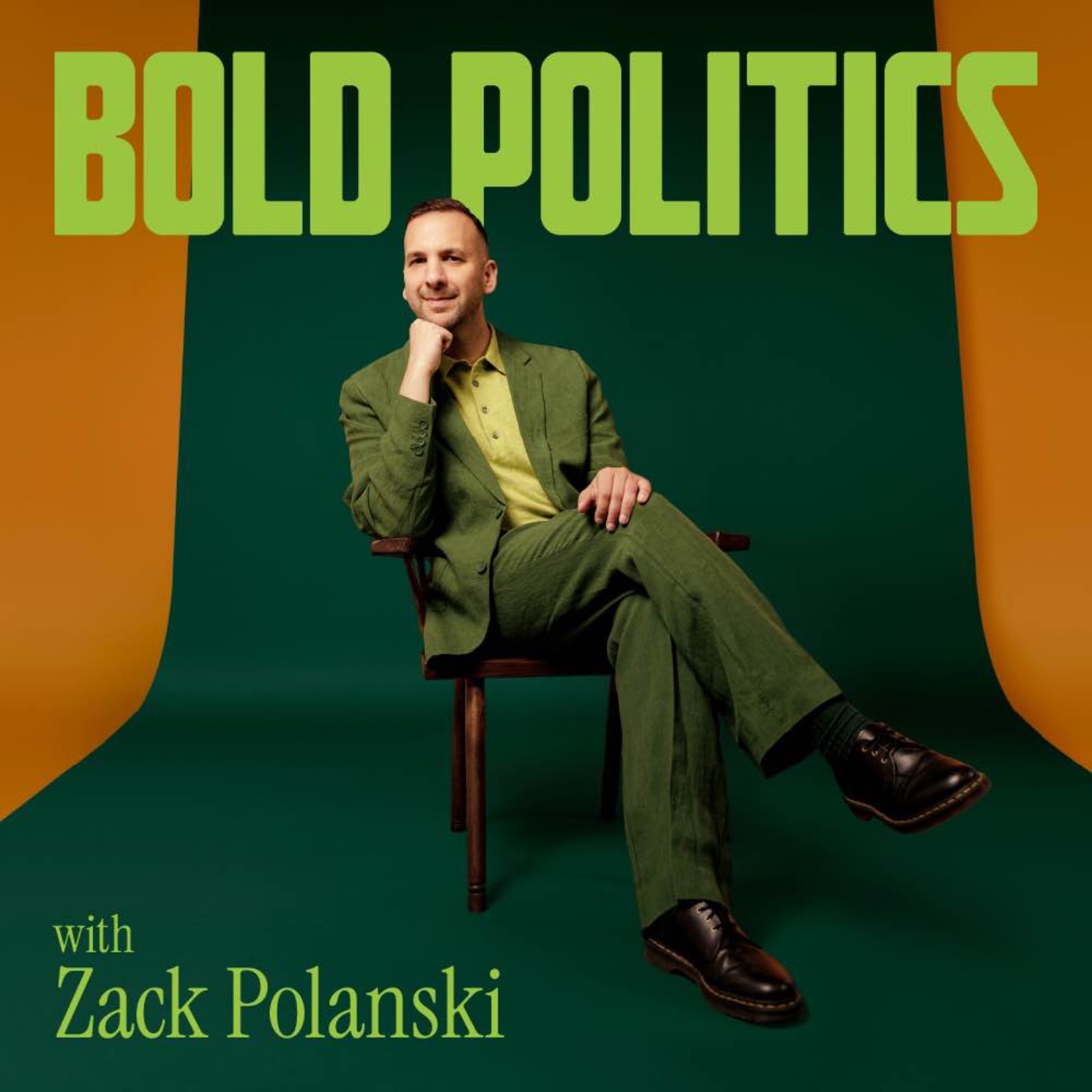
- Bold Politics with Zack Polanski
- How The Economy Is Rigged Against Women
Bold Politics with Zack Polanski14 Jul 2026 · 42m · 20 chapters
How The Economy Is Rigged Against Women | Daniella Jenkins
In short
Feminist economics and how the economy is “rigged” against women by excluding women’s work (care, social reproduction) from GDP and policy design; links to climate crisis, AI governance, disability, pensions, education, housing, pay gaps, and social care funding.
Guest
Dr. Daniella Jenkins, CEO of the Women’s Budget Group (feminist economics think tank founded in 1989). Background: PhD in pensions; focuses on gendered economic precarity and policy impacts.
Key claims
Classical economics omits women’s work; GDP misses it, helping explain earnings gaps (e.g., women earning ~£250bn less in 2018; ~12% of UK GDP “opportunity cost” not counted). Systemic outcomes repeat globally, so solutions must target the system, not “women’s issues.” Climate and AI decisions need “equality by design.”
Notable examples
social care failures shifting costs onto unpaid women; proposal for a national care service; housing unaffordability hitting women (mortgage access, single older women); gender pensions gap (UK second-largest in OECD; women retire with ~£88k vs men ~£155k); deliberative citizens’ assemblies; carers credits limited; disability intersectionality and women in their 50s becoming economically inactive.
Written by AI. May contain mistakes.
Chapters
1:29
Understanding the Women's Budget Group
Discussion about the purpose and history of the Women's Budget Group.
“So it might be worth me just explaining what I mean by feminist economics.”
3:08
The Invisibility of Women's Work
Exploration of why women's contributions to the economy are often overlooked.
“encapsulated within classical economics.”
4:34
Measuring Economic Value: GDP and Gender
Analysis of how women's work is not adequately represented in GDP calculations.
“This work can get financial recompense and this work can't.”
6:41
The Systemic Nature of Economic Inequality
A discussion on how systemic issues perpetuate economic inequality for women.
“because we're not recognising that in some way, shape or form.”
8:04
Care Work and the Climate Crisis
Linking the importance of care work to environmental sustainability and climate issues.
“Rather than thinking, what is it that I as an individual woman or you as another woman or why can she not do that in some way, shape or form?”
10:09
Governance, Representation, and Decision Making
The importance of diverse representation in decision-making processes.
“alongside UCL, which is around gender and intersectional response to climate adaptation.”
14:00
Addressing Systemic Care Issues
Explore recommendations for government policies to improve care systems.
“And then just on care, are there very specific recommendations or things that you would say these are kind of what we'd want to see from a government or from policy to help deal with some of these systemic issues?”
14:48
The Crisis in Social Care Funding
Discuss the dysfunctional social care system and its impact on women.
“And so often where we see those failures within the social care system, what happens is that that is taken up by the unpaid work and labour of women specifically.”
16:14
Housing Crisis and Its Gendered Impact
Analyze the intersection of housing affordability and women's vulnerabilities.
“And if I can move on to the housing crisis, what needs to happen here?”
18:43
Understanding the Gender Pay Gap
Dive into the systemic issues surrounding the gender pay gap.
“And I think it's a point just worth making that coming all the way back to that fundamental about, you know, most of what women do in terms of women's work often doesn't get paid.”
Show all 20 chapters
24:46
The Intersectionality of Disability
Examine how disability disproportionally affects women in the workforce.
“How does disability come into this, particularly the kind of disproportionate impacts on disabled women as opposed to disabled men?”
26:34
The Gendered Nature of Employment Data
Understand the significance of accurate data representation for gender issues.
“what's the process to go find the reason?”
28:03
The Gendered Pension System in the UK
Explore the significant gender disparities in pension outcomes in the UK.
“It is the largest single area of social security spending within the UK.”
29:55
Understanding Pension Inequality
Learn how structural design flaws contribute to women's lower pension outcomes and the impact of welfare on retirement.
“And we also know that more equal pension systems are less gendered.”
33:51
The Role of Education in Women's Economic Opportunities
Discuss the importance of education in creating opportunities for women and recognizing undervalued care work.
“And then it will mean that we can spend all of this money on other things.”
36:35
Fiscal Devolution and Gender-Informed Policies
Understand the concept of fiscal devolution and its implications for gender-sensitive economic policies.
“And you're two months into the role, as we said at the beginning.”
40:08
Rethinking Decision-Making in Politics
Examine the flaws in current political decision-making and the potential of deliberative democracy.
“And so that that falls under a completely different line.”
42:04
Deliberative Democracy and Representation
Explore the merits of deliberative democracy and the importance of representation in decision-making.
“And it's fine if you don't, you're not coming here to fix democracy, but I'm just interested.”
43:37
Women's Budget Group Overview
Learn about the Women's Budget Group, their resources, and their annual budget analysis.
“And Daniela, if people have been listening to this and they want to know more about the Women's Budget Group and indeed you, how can they find out about you?”
44:19
Engaging with the Women's Budget Group
Find out how to engage with the Women's Budget Group through their social media and website.
“You know, we are a service economy from that perspective.”

Ask about this episode
Get the gist, explore an idea or ask about something said.
 Claude
On Bold Politics with Zack Polanski, what are the key points of this episode?
Searching your listeningTranscript
Automatic transcript. May contain errors.
0:00Care work, housing, the climate crisis. These are all subjects that come up regularly on this podcast. Today we're going to be taking a deep dive from a feminist economist position. What is that? Well, who better to talk to than the chief executive of a women's budget group, Dr. Daniella Jenkins.
0:18This episode is sponsored by Crowdfunder. Bring your bold idea to life at crowdfunder.co.uk forward slash bold. Shipping, billing, admin, payroll, marketing. You're managing all the things. So why waste time sending important documents the old-fashioned way? Mail and ship when you want, how you want with Stamps.com. Print postage on demand 24-7 and schedule pickups from your office or home. Save up to 90 % with automated rate shopping. That's why over 1 million small businesses trust Stamps.com. Go to Stamps.com and use code PODCAST to try Stamps.com risk-free for 60 days. Your team just added its 67th AI tool and also your 67th security blind spot.
1:05The good news? The Vanta agent works like a GRC engineer in the background, finding every app your team uses, scoring the risk, and drafting fixes for you. Vanta is the platform used by over 16 ,000 fast-moving companies like Ramp, Cursor, and Harvey, who are shaping the future with AI and staying ahead of AI risk. Get started at Vanta.com.
1:28welcome daniella you are the ceo of a women's budget group lots of people will know exactly what that is and some people won't so should we start with what is the women's budget group yeah let's assume that people don't know what a women's budget group is so the women's budget group has existed since 1989 and we are a feminist economics think tank so people might know what a think tank is they probably know what economics is they probably don't know what a feminist economics think tank is. So it might be worth me just explaining what I mean by feminist economics. Well, our tagline is just that we put the feminism into economics and the economics into feminism.
2:03And a lot of people kind of think that feminist economics is lots of feminists talking about economics, and it often is. A lot of people think that feminist economics is a lot of feminists talking about women being poor. And often it is about women talking about economic precarity. But that's not the root of feminist economics. The academic roots of feminist economics actually sit within classical economics. And for that, we've got to go all the way back to Adam Smith. So Adam Smith sat there in the 1700s and things were changing. And he came up with this whole landscape and way of conceptualising economics.
2:39But within that moment, what he wasn't able to do or chose not to do, we don't quite know, was to include what we tend to call women's work within that classical framework of economics. So that work of literally labour, so giving birth, of social reproduction, of education, of care, of food, of food preparation, domestic work, none of that is actually encapsulated within classical economics. And so what feminist economics is about is about a corrective to that oversight about how do we make sure that what is invisible within what we count within economics is actually accounted for. because the twist in the story is that every single economy, every single country is ultimately entirely dependent on precisely that social reproductive labour in order for us to be able to live, thrive, perpetuate ourselves, or indeed be economically active.
3:47Such a concise answer there. And you're quite new to the role. And it's important to say that it's an apolitical organisation. That's right. And you often present a kind of alternative budgets, don't you, at budget time? Absolutely. So if you think that we're only counting part of what we see, part of the role of Women's Budget Group and really how Women's Budget Group came together was recognising the fact that there is an alternative view of what we can see, both in terms of what can not currently be counted within the economy, but also the impact of policies that often arise as a result of those structural oversights of women's work, women's labour.
4:24I feel like maybe the answer is obvious, but I'm still going to ask, why is women's work so often invisible or not considered in terms of economically viable? So childcare, for instance, so often isn't considered as a job. So I think when you go back to that source code, like that source code of what we count and what we don't count, we recognise that actually all of those inequalities stem from that root cause, that root cause of the fact that we're saying that this work deserves pay, right? This work can get financial recompense and this work can't. Now that operates on both a micro scale. So if I clean my house, for example, no one's going to pay me to do that.
5:07Sadly, sadly, no one's going to pay me to clean my own house. but if I need to command pay I either need to pay somebody else to clean my house and I might even need to displace that same time and effort in order for me to be able to get paid. Does that make sense? So I need to be able to pay somebody else I then need to be able to earn enough to pay that person and myself in order to do the activity that I would otherwise be doing for free. So we We see that displacement right because we've got that distortion in terms of what we pay for and what we don't pay for. And far too often, that distortion sits upon the shoulders of women.
5:50And how does this relate to measuring things in GDP, for instance? Like what's for correlation here? Quite frankly, it ain't there.
6:00That's a quick one. So, you know, all of that work that we see, it's not there within GDP. So we're not counting all of this work that happens. And yet we can see that women didn't earn approximately 250 billion pounds in 2018 compared to men. Now that's things like non-participation in the labour market. That's things like earnings gaps, for example, as well as not being able to command that pay for the work that they did do. Now, if we look at that in terms of the UK, that equals approximately 12 % of what we do count in terms of GDP, in terms of that opportunity cost of what women are providing or not providing, that's not even coming into the economy, because we're not recognising that in some way, shape or form.
6:44And the obvious thing here is we have a female Chancellor, and obviously it can't be the job of one woman to kind of speak up for all women. But that suggests it's not just a problem of representation, it's so deeply embedded that we're not counting women's work. I think it's so important that we don't problematise women, because that tends to be what happens, right? You go, what is it about women that, and then you kind of lead the sentence on from there. And so we tend to look for the things that are specific about women, why that's happening. And what we don't do is problematise the system that we exist within and that we perpetuate.
7:20And so instead of sort of saying, well, why is it that the system continually creates these same outcomes over and over again? We see these patterns in terms of women earning less. We see these patterns in terms of where unpaid work takes place and not just within the UK. We see this globally in different cultural contexts. Now, I don't know about you, but I'm not the same as all other women. And yet, why is it that we see those trends and patterns in terms of outcomes over and over again? And one of the real merits of taking that feminist economics perspective is that we can start to say, well, how can we change the system to improve that?
8:04Rather than thinking, what is it that I as an individual woman or you as another woman or why can she not do that in some way, shape or form? individualizing the responsibility for what is ultimately a continuous systemic failure, but to come in on that, that fails both men and women. Listening to you there, it strikes me that we need to do this anyway because of the climate crisis. Like care work is a green job, for instance. How does this link with the climate crisis? I think it's really important that we conceptualize care in a different way. and we think about care in terms of individuals, but we also think about care in terms of planet.
8:43And what does that mean? And when we talk about this kind of fallacies and the limitations of GDP, that is one of them, right? There is so much that we are not including within our measures, and therefore we really don't have effective ways of defining success. We know that both in terms of the root causes of those issues, a part of that is because we give primacy to a particular form of growth, and we don't necessarily capture the externalities of those. We also know that they're agendered. And when I say gendered, I mean that the impact of things that fall differently upon men and fall upon women, so that we know that there are gendered outcomes in terms of the climate crisis, so that women are much more likely to be negatively affected on a global scale by the negative externalities that are caused by a climate crisis.
9:30We also know that the ways in which we conceptualise things like infrastructure, again, gives primacy to jobs which are much more likely to be carbon intensive in terms of those types of roles that are performed. And actually, part of that means that if we look at investing within, say, social care roles, that actually we could create growth, more care, but actually reduce the carbon emissions that would be associated with that. So that we can see that there were lots of different impacts, both on the sort of supply side, both in terms of the conceptualisation, but also in terms of the negative impacts of not doing those things.
10:08I'm here to ask you about your work, but I did release a report a few years ago alongside UCL, which is around gender and intersectional response to climate adaptation. I spoke to women from all over the world, including Sri Lanka, in India, and in Spain, who are on the front line of the climate crisis. And it was really clear some of the disproportionate effects that are facing women, particularly women who are in work, from kind of rising heat, for instance. One of the kind of key recommendations was around citizens assemblies and bringing women's voices to make sure they're at the table, the decision making table.
10:39How much of this, in your opinion, is about representation and about making sure that the people who are making the decisions are diverse? I think it's important that we have good governance in our decision making. Just to reiterate, I think you might have said, we are a political organisation. So part of this is about advocating for gender equality with every single party. It is not a political issue as we see it. But I don't think it's feasible to offer up cultural solutions to what are deep-seated economic and structural problems. Having representation about who you move as the waters come up, about who gets exposed to chemicals, that's too late, right?
11:24So I think when we talk about representation, when we talk about decision making, a lot of people didn't vote for the system that we have at the moment and the decisions that are being made, but they're having to live with that. And I think that it's really important that when we think about governance, when we think about the voices that come in, that part of that is about making visible at the point at which we are actually structuring those decisions, who is engaged in those discussions. And a really good example of that, of something that's happening in real time, is the decisions that we're making around AI.
11:59So we know that there are climate-linked consequences to that. We know that there are potentially gendered outcomes in terms of how we deploy AI, about the displacement of jobs. if we choose to deploy it in that way, how we invest within technology, for example. And actually, we're not necessarily doing that within a deliberative way, but potentially we'll have to live with the consequences of walking in blind. So I do think that it's really important that we think about equality by design up front, rather than thinking about representation when it's far too late just to deal with the consequences.
12:39And that's really interesting on artificial intelligence. So is there specific work you're doing looking at AI through a feminist lens? And are the recommendations that the women's group are making? Not for the women's budget group. But we as an organisation work with women's organisations, but other organisations everywhere. Really, our role is to help to shine that gendered light on what is happening at all stages of the thinking, the policy development processes. And so we know that there are organisations like Fawcett, for example, who are doing work around AI. We know that government, for example, are setting up things like APPGs.
13:12They're looking at the impact of technology. They're not necessarily thinking about both the climate and the intersection of the climate and gendered issues that are happening right now. And so really, this is much more of a clarion call to say, let's not walk in blindly and then say, how did we get here? Actually, there's real opportunity for us to be deliberative, for people to say, actually, am I voting for this? And do I know what I am entering into? And are we creating the correct market conditions, for example, that enable those discussions to be able to be had in a transparent and informed way?
13:47It reminds me a little bit of the conversation around live facial recognition technology, for instance, that often if there's biases in society, those biases are then baked into the technology. Absolutely. Unless people are there from the very beginning to say, we already have this issue in society, let's not replicate it in technology. And then just on care, are there very specific recommendations or things that you would say these are kind of what we'd want to see from a government or from policy to help deal with some of these systemic issues? Absolutely. I think that, first of all, it's really important to not frame so many of the gendered issues as women's issues.
14:19Because already up front, you're kind of like, oh, yeah, let's just deal with the women or we'll come to that afterwards. We'll deal with the big stuff, first of all. I think one of the key aspects is actually centering care in terms of decision making, not just adult social care, which is obviously a key aspect to actually well-being in the UK. At the moment, we have a dysfunctional system that is not well funded. It's funded at local level, for example, local government level. We know that the areas which have the most acute social care needs are often the areas which have the fewest resources to be able to provide that.
14:56And so often where we see those failures within the social care system, what happens is that that is taken up by the unpaid work and labour of women specifically. So women end up being both the shock absorbers, the sponges of dysfunction for our inability to be able to provide an effective, sustainable, well-resourced care system from which everyone will benefit. And we've just had a set of local elections in this country and I was very aware that up to 80 % of some council budgets are spent on adult social care. Is it right that that's being spent at council level or is this something that we should be looking at the NHS more systemically?
15:33We certainly at the Women's Budget Group have looked at what a national care service might provide. And actually, from our perspective, we think that a well-funded, well-resourced national care service, similar to what we have in terms of the NHS, both would provide more jobs, ironically, which in turn would bring in more in terms of tax revenue. So we tend to think of this in terms of cost and spending, but actually we're not thinking about the revenues that will be created by creating good, high quality jobs and roles, as well as, of course, the impact, the positive impact of enabling more people to be able to be in paid employment rather than supporting what is currently a failing social care system.
16:14And if I can move on to the housing crisis, what needs to happen here? Yeah, no pressure. Yeah, I'll just solve the housing crisis. I mean, I think that it's important that we recognise the role of decent housing in terms of a caring society and economy, right? You know, decent housing is really the minimum threshold of what people can expect within the UK. What we know as the Women's Budget Group is that housing is unaffordable, regardless of gender. We know that it is particularly unaffordable for women. If you look at women having lower earnings, it means that women are much less likely to be able to get a mortgage, for example.
16:56So if you look at the multiples that you would need in terms of your income and in terms of being able to access a mortgage, but also in terms of private rent as well. And so we see that where housing is unaffordable for basically most people on median earnings within the UK is particularly unaffordable for women on median earnings. And that really makes vulnerable women who live on their own, either single households, single parents, but also women increasingly. We see older women who are living in private rented accommodation kind of in the lead up to and post retirement as well. And so we can see that there are real acute vulnerabilities that really come through, again, as a result of our failure to be able to provide a stable, sustainable housing infrastructure that enables people to be able to move on with our lives.
17:47Is there an obvious cause of why we're seeing older women in private rented accommodation on their own as opposed to older men in private rented accommodation on their own? Well, one of the fundamentals is that women live longer. Right. So, but always have done, right? So this is not shock news. So women have always lived longer. Whether we see women who survive their partners, for example, and so end up living longer within poverty in old age. We also see that as the result of relationship breakdown as well, that women are moving forward into towards retirement again in single households. And we also recognize the fact that as home ownership, which was sort of sold within the 1980s, that the assumption was that everyone not only would own their own home by the time they got to 60 or 65, but they would have paid off their mortgage by that point as well.
18:38You know, so those assumptions just haven't panned out at all. And so what we see is people who are within what has been a really, again, precarious rental market, entering old age now and to the point at which they are no longer able to be economically active, even more vulnerable to the vagaries of the rental market and having to make rent or indeed need housing security at the same time in which they might be only living effectively on pensions or social security. And I think it's a point just worth making that coming all the way back to that fundamental about, you know, most of what women do in terms of women's work often doesn't get paid.
19:21We know that women are much more likely to be reliant on public services because it's more difficult for them to get paid for the work that they do. Right. I guess that links us to the gender the pay gap, which has been an issue for a long time. What is the way to kind of fix this issue? And I take your point about not fix the women's issue, but fix the systemic issue. Yeah. I mean, what's the systemic issue there, right? You know, the systemic issue often is like, well, you know, we've normalized this, this is just a thing. But what we see in terms of the pay gap, as opposed to the gender earnings gap, which relates to how many hours people would work as well as what they get paid, is that on its most fundamental level, people pay women less than they pay men to do the same work.
20:09And so what that really demonstrates is the difference in terms of, well, perceived and real value. By dint of my gender, I'm expected to work harder, more hours to earn the same pay as an equivalent man. Now, even when you move all the way up the sort of deciles, we're looking at 15.9 % in terms of pay differential at the highest earning levels. So this isn't just about poor women. We're talking about all the way through. And so that fundamental idea that everybody is not born equal. And we see that actually, even with kids, we see little girls are given less in terms of pocket money than little boys.
20:53And then that feeds its way right the way through. And then it has a cumulative effects through the life course in terms of your housing, in terms of how long you have to pay off your student loan, if you've got a student loan, in terms of how much pay you can command, in terms of your pay differential, if you're within a relationship or within a household, for example, in terms of your pension, my special interest subject. So all of that really stems from the idea that we value women as being less than men. And here's a quick message from our friends at Crowdfunder. We're stronger when we're together, but the reality is there's been a deliberate shift to make us forget about the things that matter in life.
21:34Kindness, community, looking out for each other. Decades of austerity and growing regional inequality has left so many towns, districts and villages with community projects underfunded. Green spaces neglected, vulnerable people slipping through the cracks. And the flip side of that is, if we're only looking out for ourselves, it's only going to get worse. That's why Bold Politics have partnered with Crowdfunder to inspire people across the country to do something amazing for their communities. Whether you want to create a local litter picking group, start a community garden,
22:19or turn an unused building into something useful like a food bank. And whether you've got a big idea that needs a lot of money or you just need a little bit, Crowdfunder have raised over£300 million for charities, projects and communities. and there's a crowd of people out there waiting to turn your bold idea into reality. Hey, we'll even give you 50 quid towards your first project if you raise£250 from at least five donors. What could you do for your community? Turn your bold idea into a reality at crowdfunder.co.uk forward slash bold.
23:23Transcription by CastingWords trust stamps.com. Go to stamps.com and use code podcast to try stamps.com risk-free for 60 days. Your team just added its 67th AI tool and also your 67th security blind spot. The good news, the Vanta agent works like a GRC engineer in the background, finding every app your team uses, scoring the risk, and drafting fixes for you. Vanta is the platform used by over 16 ,000 fast-moving companies like Ramp, Cursor, and Harvey, who are shaping the future with AI and staying ahead of AI risk. Get started at Vanta.com. Here's a tip for you. There's a podcast out there with fans waiting to be your next customer.
24:04They tune in every week, they trust the host, and that host wants to talk about brands like yours in their own words to their audience. The problem is, You just haven't been introduced yet. We're Acast, where that introduction happens. As the world's largest podcast marketplace, we let you browse shows, see who's listening, and book host-read sponsorships or run your own ads all from one platform. Transparent pricing, real-time data, complete control. Start advertising on podcasts by visiting acast.com slash advertise.
24:45We've talked about intersectionality a lot in this conversation already. How does disability come into this, particularly the kind of disproportionate impacts on disabled women as opposed to disabled men? I think it's important to say that, you know, when we talk about intersectionality, what, again, we tend to be talking about is the combined effects of different forms of discrimination or different forms of disadvantage as they fall onto an individual. And they can be different things in different ways, right? So you can have a higher education level, but you could be discriminated against in terms of your gender.
25:16But we know that disability is, regardless of gender, regardless of other factors, it's probably one of the biggest areas of employment discrimination in terms of the impacts on that. What we also see is that there are gendered patterns in terms of the form of disability and the different types of disabilities that women might have in relation to men. And then again, that impacts things like women's ability to be able to access benefits for those disabilities, for example. And one of the sort of emergent things that we see coming through, which even us at Women's Budget Group, we haven't quite fully come to understand, is that it's women within their 50s who are most likely to be economically inactive out of all groups in relation to health and disability.
26:02So we know that there is something happening out there that means that women are less likely as a result of disability to be able to access paid employment. and then taking that into account with all of the other factors that I've been talking about in terms of gender discrimination as well, we recognise that that becomes more challenging for women to be able to live with dignity, to be able to support themselves and are much more likely to then ultimately become dependent upon the state as a result of the intersection of those different factors. And when you spot a gap like that that you don't necessarily know the reason for, what's the process to go find the reason?
26:40you're asking about research now yeah um one of the things actually that you know that the kind of boring end of research or if you're geeky like me becomes the kind of interesting end of research is actually understanding where those data gaps are right people often sort of go you know data and it's the answer and there's a single answer there and then when you look at it and you go well actually you know how you categorize things actually very often means that there are data islands in terms of what you see. And then that in turn frames or distorts your understanding of an issue. So you can understand something in a particular way, but only because you've only seen half the picture in terms of what's available.
27:18Now, again, coming back to that fundamental that we know that so much of what women do in terms of labour, in terms of what gets recorded, isn't there, you can see that so many of the decisions that are being made are being made on the basis of poor, incomplete data. And you mentioned pensions being, I think, you said a specialist subject? It's what I did my PhD in. Amazing. Well, the floor is yours. Let's talk about pensions. Gender pensions gap. Yeah. Where do I start? Pensions are a huge issue within the UK. And And you can look at this from so many different angles, right? You know, there is a sustainability angle in terms of, you know, our current financialized pension system and, you know, how we invest.
28:02You know, there's over£3.6 trillion of assets under management just in terms of private pension funds at the moment within the UK. So it is a huge part of our economy. It is the largest single area of social security spending within the UK. So even when you look at things like fiscal rules and you sort of say, well, you know, we're going to peg how much we spend in terms of welfare, we have an increasingly aging population. So we know that pensions and we know that our pensions liabilities as a state are going to go up. So ultimately, we know that we are squeezing what is possible and what we're enabling ourselves to be able to spend under the current fiscal rules in terms of welfare spending overall.
28:44And then we look at the individual, you know, and how that falls upon individuals as well. And the UK has a very kind of specific pension structure and systemic design, whereby most of our pension income comes from private occupational pensions rather than the state pension. And actually, because of the nature of that, it means that we have a highly gendered, as in different outcomes for men and women, pension system. Now, all pension systems are gendered, and I could go on about why. But the UK has the second largest gender pensions gap across the whole of the OECD. The only country that outperforms us in terms of the size of that gap is Japan.
29:26And part of that really comes down to the design of our system and the inability to recognize the very normal patterns that women are likely to go through throughout the life course, whether that's taking career breaks, for example, and taking, you know, maternity leave, earning less, for example. And so what we see is that there is an accumulative effect right the way through that leads to women having much lower pensions outcomes. Now, that's the geeky version of that. The shorthand that I think is really important that people take away, because this is one of those areas that I think is really important that people kind of mobilise and they understand this isn't your grandma's issue, right?
30:06This is happening right now. And we also know that more equal pension systems are less gendered. So again, this isn't just about, you know, women's pensions versus men's pensions. Part of why we've got that problem is because we've got a really unequal pension system at the moment. And even if you're 16 to 24, we know that there is a 20 % gender pensions gap. For women aged 30 to 34, that jumps up to 56%. So that gap is getting larger and larger. And by the time you get to sort of retirement, we know that men retire with around£155 ,000 in terms of pensions, wealth and pensions, and women retire with around£88 ,000.
30:47So that really rolls up over time. And there is an opportunity for us to do things about it. But one of the reasons why that doesn't happen is because people don't necessarily see it. They don't necessarily understand it. And by the time they do recognise that that is an issue, it's very difficult for them to unwind a lot of what has led to that. How do other countries get it right? I think that structural design. So, I mean, you could, you know, we have decided to put more into, you know, private financialised occupational pensions than, say, state pension, for example. So something that looks a bit more like the state pension leads to much greater gender equality in terms of pensions outcomes overall.
31:28In fact, increasingly, you see that there is almost no difference in terms of what men get and women get in terms of state pensions. So that's one of the ways that you can start to resolve that. You could also look at things like how you reward and how you accumulate. So you might have things like carers credits. Now, we've got that, but only for people who get like carers benefits, for example. And that tends to be a very small number of the people who are actually providing unpaid care. So there's other ways that you can structure that. And then you can look at things like how you pull, right?
31:57You know, so when we go back to the days of the gold watch and the defined pension scheme that most people probably still conceptualise and have in their heads when they're thinking about pensions, actually, the risks are with your employer. So if you didn't have enough in your pension, that was your employer's problem. It wasn't your problem. Now we've pushed all of that onto the individual. And so really what we have is a crystallising structural problem that's arising because of the decisions that we've made. And there's been an increasing conversation in this country around divestment of pensions as well.
32:31And something I've noticed as I go around the country is often people don't exactly know what that means. Is there an easy way to explain divestment to people? Probably not. And I also think that as someone who literally did a PhD in pension, I'm like, you shouldn't have to be an expert in finance to feel like you've got a secure retirement. Right. Like, why is that? Like, you shouldn't have to do that. What you should have is confidence in a system and know that that system is there to support you through your life course and when you get to the point where you can't work anymore. And I think that we put far too much stock on expecting people to become sort of experts in finance and investment mechanisms and really to sort of socialize them into the idea that it's about financial returns rather than thinking that this is a system that is supposed to serve you in terms of providing well-being and security and that that should be universal.
33:30And the conversation so often in the national discourse, particularly from some parties without being party political, is we need to cut welfare. But very often it's not talked about, as you said, that so much of a big part of our welfare bill, in fact, the biggest part is pensions. And it feels important to tell the story of why that's important to protect the people in future life. Yeah. And also just to say, because very often people sort of say, well, you know, if you means test the state pension, then that will free up all of this money. And then it will mean that we can spend all of this money on other things.
34:01But actually, when you look at it, most people in retirement are to some degree financially reliant on the state pension. And so this idea that, you know, that you've got these, you know, billionaire pensioners who were somehow stealing the futures of others that are coming forward. We need to have some big girl politics conversations about what it means to protect and support financially our entire population, particularly in the point when they get to old age. So what I wanted to move on to next was around education and particularly the role of education through a feminist lens in terms of creating opportunities for women and also making sure that we're giving opportunities throughout society.
34:42So talk to me about education. It's very interesting because we increasingly, and in the UK, have discussions about the value of education. And when we talk about the value of education, we're often talking about the financial return of education. And we often, again, in coming back to those kind of feminist economics principles, educating and supporting societies is part of that social reproduction, you know, and socializing people to become, I don't want to say, you know, good moral citizens. But actually, that is a role and there is a public benefit in doing that as well. I think it's really important that we, again, move away from the idea that education needs to be oppositional in some way.
35:24You know, either you fund people to go to university or that you have to do something else. Because really what we see fundamentally is that it's the absence of graduate level jobs, which means that people aren't getting necessarily that financial return in terms of their education overall. And that doesn't come down to the individual. That comes down to us as a country. There's also really, and this links much more to social class than really anything else, when we think of roles as sort of graduate level or not, and when we think about high quality care, for example, we can invest within the ability to recognise those as high skilled jobs.
36:03And we can recognise that care is probably one of the highest levels of human endeavour that we can do and that we can have and that we can invest in and recognise what good quality care is and that we can also recompense that in a way that high quality, well qualified and educated carers, whether that's childcare, whether that's adult social care, whether that's people working in special educational needs, for example, can be well qualified and well recompensed. for the valuable work and contribution that they make. And you're two months into the role, as we said at the beginning. What do the next few months look like?
36:43Where are you wanting to focus the work? So Pensions Commission is coming through. So that is obviously going to be a kind of key area of focus for us as the Women's Budget Group. But we also recognise that there is an opportunity for the country to start to ask questions about social care overall, not just how it's funded, but actually what does that look like as a care system. And I think that's really important. We also recognise that there are questions being asked currently about fiscal devolution and recognising that so many of the policy areas that affect women's day-to-day lives from transport to education, you know, special educational needs, send, as I said, social care, for example, happen on a local and regional basis, that we can really start to think about what are the questions that we really need to ask to ensure that those decisions, that allocation of resources is happening in a gender informed way.
37:43And so you use the phrase fiscal devolution there. Do you mind kind of spelling that out? Sure. So this is Rachel Reeves and not me. So this is not something that I made up. But fiscal devolution really talks about devolving down, particularly within England, the ability to be able to raise revenues. So that might be through taxation, that might be through business rates, for example. There is some degree of openness around that, but also spending at a level that is sort of devolved, so brought down from Westminster. And the UK and England in particular has a really outlying position where sort of 90 % of our sort of fiscal responsibility sits within sort of Westminster and Parliament.
38:27And actually there is a real possibility to bring that much closer to where people are and to make that much more specific and tailored to where people are, both in terms of the decision making, but also the allocation that reflects the environment in which people live. I think we live in one of the most centralised economies and democracies. Absolutely. And if you were to give advice to a chancellor or indeed give advice to a national party leader, what would you want to see from fiscal devolution? I think that it absolutely needs to be gender informed. And I think that that's really important to recognise that.
38:58And again, you know, it's so easy for it to be invisible and to say, you know, we'll do the grown up stuff and we'll do the buildings and we'll build the big skyscrapers and we'll get the units involved. but we're not measuring those aspects of social infrastructure that we really think are important. Again, when we think about how we treat social infrastructure, so we at the Women's Budget Group think that it's not just about building trains and infrastructure in a way that we kind of recognise hard, classic infrastructure. We consider that care and social care and health, that those two can be counted as social infrastructure.
39:35so they provide long-term benefit it's not a trade-off actually you know if you want to if you think of a good society and a good country in a place that you want to live you want it to have good transport but you also want it to have good you know health service education services as well so actually the way in which we treat that fiscally at the moment we treat sort of building a building and building a train line as you know capital investment and then we treat you know actually paying social care workers, building sort of communities of workers that actually support those communities, we treat that as consumption.
40:10And so that that falls under a completely different line. We at the Women's Budget Group think that there should be a transfer of that, that we should recognise that these are public goods, ultimately, that we all benefit from, and that ultimately, if we want to invest in ourselves as communities, as a country, we need to treat social infrastructure as a form of investment. And how much, I suppose, this is my presupposition, so I'm not putting it on to you, but how much do you think electoral cycles are a problem here? Because I think of someone like Boris Johnson when he was prime minister and loved those kind of big infrastructure projects that he could point at and say, this is my legacy, this is what happened.
40:47And a lot of the things we've spoken about in this conversation are more intergenerational. They will take a while. But if you don't do that work, you do have these legacy projects. but actually as a society of kind of cohesion is crumbling. Yeah, I mean, there is actually lots of research around the sort of glory of big vanity projects, which are actually, evidence shows, much more likely to go over budget and fail than you would think. You know, and we probably can all think of examples of those. So people putting their names to those might want to think otherwise about it. I think that you talk about electoral cycles.
41:20And before you sort of spoke about deliberative democracy, I think that our decision making around these things is flawed. I mean, I'm not a politician and we are not a political organisation. But I think that what happens is that the decisions come through elections. And I think if we think about governance of those things, it's probably not the right mechanism for us to make the right sorts of decisions. or indeed to have the right kind of big arguments and discussions about where and how we want things to be done is doing that in a kind of all or nothing election over a form of cycle. Maybe we need a more consistent form of decision making and oversight that happens over a longer period of time.
42:03Do you have any idea what that would look like? And it's fine if you don't, you're not coming here to fix democracy, but I'm just interested. No, that's fine. I think that I'm personally a big fan of deliberative democracy measures. I mean, you can see that, you know, in Canada, they had, you know, good discussions around that. And actually, I think that there are real merits in having representation. You know, I don't mean sort of cultural representation, but you can actually look at demographic representation of different groups. And actually, you put forward, you don't hide away from those difficult discussions and those difficult decisions, that you put those forward and you deliberate them transparently and openly.
42:41and that you recognise that, yeah, businesses have a role, that employers have a role, but citizens have a role within that as well, that we all have a stake. We all have to live with the consequences of those things. And I think that what happens is that we end up in too much of a kind of zero-sum game and that we end up in a sort of oppositional view where, one, we're dealing with, you know, limited information in order to be able to make those decisions. Two, that we're skewed in terms of who has power and influence to be able to influence how those decisions are both seen, framed, the consequences of those are read as well.
43:17And so I think that building in mechanisms that allow people to be able to take time to really think about what is it that they want, what they don't want, and to have discussions around that means that we're not pretending that things are going to be easy, but that we can at least allow people to engage within those discussions in different ways. I'm so beautifully put. I'm really glad I asked the question. And Daniela, if people have been listening to this and they want to know more about the Women's Budget Group and indeed you, how can they find out about you? Oh, absolutely. We have an amazing website.
43:47I say, you know, coming in, you know, I'm two months into post, I sit on the shoulders of giants. So we have a huge store of research and evidence and data to support people who are working within civil society. If people want to understand the issues and challenges better, you know, going back 30 years, every single year we do every autumn, we do our feminist analysis of the autumn budget as well. And so you can hear and you can engage with a different perspective in terms of what's happening, but use and utilise that work. You know, we are a service economy from that perspective. So please do come to the Women's Budget Group and use and utilise our work to help take forward what it is that you want to do.
44:28And the Women's Budget Group, how do people find out about their social media? So we are on Blue Sky, we're on LinkedIn, we are on Instagram. So you can find us on all of those sites and you can also come to our website as well. Well, thank you so much for coming on the show. No problem. It's been a really brilliant conversation. Brilliant. Lovely to meet you. This episode was brought to you by CrowdFunder. What's your bold idea? Start it at crowdfunder.co.uk forward slash bold.
45:10have skipped the line with Stamps.com. Join them to save up to 90 % off carrier rates from your computer or phone right now. Print postage for certified mail, registered mail, and packages in seconds. Then schedule a pickup right from your home or office. For a limited time, go to Stamps.com and use code PODCAST for a free welcome gift. Taxes and fees apply. Your team just added its 67th AI tool and also your 67th security blind spot. The good news? The Vanta agent works like a GRC engineer in the background, finding every app your team uses, scoring the risk, and drafting fixes for you. Vanta is the platform used by over 16 ,000 fast-moving companies like Ramp, Cursor, and Harvey, who are shaping the future with AI and staying ahead of AI risk.
45:53Get started at Vanta.com. Do you keep hearing podcast ads, like this one for example, but always wonder how you actually get involved with them for your own brand or organization? Well, it's easier than you think. We're Acast, and we give you the platform to do it all yourself. Browse thousands of popular podcasts, choose the shows that match your perfect audience, set your budget, and launch. And if you want a hand, our podcast specialists are there to help you launch with confidence. This is podcast advertising without barriers. Get started at acast.com slash advertise.
From the publisher
Why is women’s work so often neglected within traditional economic theory? How have pensions become affected by gender? Why does the gender pay gap still exist? And what should governments do to deal with these systemic issues?
Is this week’s episode, Zack Polanski is joined by Executive Director of Women’s Budget Group, Dr. Daniella Jenkins.
_____
What's your bold idea? Bring it to life with Crowdfunder: https://www.crowdfunder.co.uk/bold?utm_source=boldpolitics&utm_medium=referral&utm_campaign=cf_boldpolitics_spotify
_____
Pre-order the new book, Hope Is Here now.
Email: [email protected]
Bold Politics Live is at Crossed Wires Festival in Sheffield on July 5th.
Pre-order the new book, Hope Is Here now.
Email: [email protected]
Hosted on Acast. See acast.com/privacy for more information.
More from Bold Politics with Zack Polanski
All episodesWe use cookies.They keep VO running smoothly and help us improve it. Privacy policy