
 Ask ChatGPT

- Podcasts
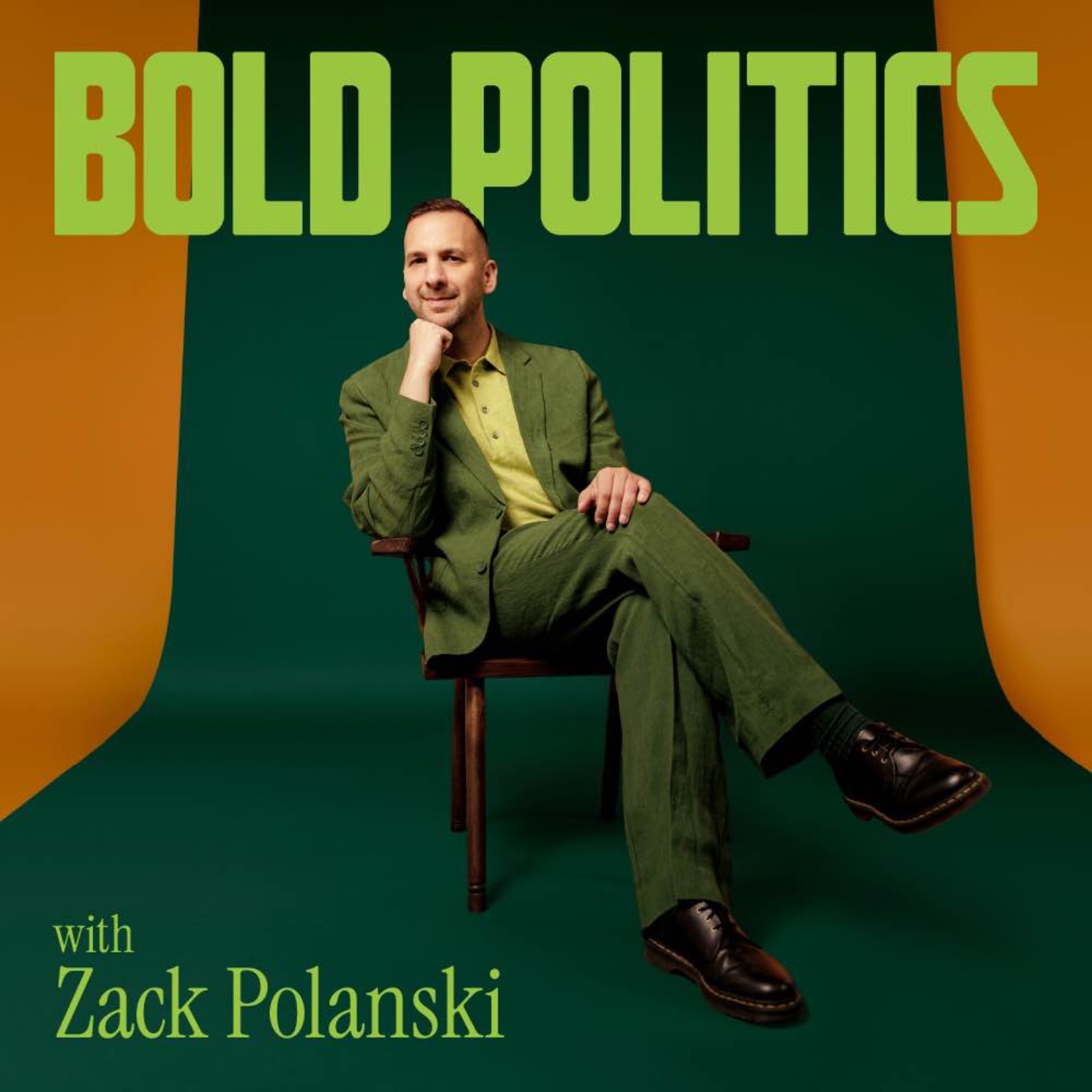
- Bold Politics with Zack Polanski
- How The Left Can Come Together To Beat Reform
Bold Politics with Zack Polanski25 Nov 2025 · 1h 4m

How The Left Can Come Together To Beat Reform | Yanis Varoufakis | Zack Polanski
In short
Guest: Yanis Varoufakis
Description
In this episode, Zack Polanski engages with Yanis Varoufakis, discussing Britain's relationship with the European Union, the implications of nuclear weapons, and insights from the political formations like Jeremy Corbyn and Zarah Sultana’s new party. The conversation explores the challenges and opportunities for the left in uniting against reform.
Written by AI. May contain mistakes.

Ask about this episode
Get the gist, explore an idea or ask about something said.
 Claude
On Bold Politics with Zack Polanski, what are the key points of this episode?
Searching your listeningTranscript
Automatic transcript. May contain errors.
0:00Truth be told, I've been involved in the deliberations about the formation of your party, because I'm very close to Jeremy Corbyn. As you know, I've been close for a very long time. I consider him to be a friend and a comrade, more of a friend than anything else. I have known Zara Sultana. I don't have much hair. If I did, I would be pulling it out. You know why. One of my favourite things during this podcast is the amount of voices I get to speak to and the range of voices. And I really have genuinely enjoyed every single guest. Today's guest, though, is a particularly surreal moment. It's someone who I've looked up to my entire political consciousness.
0:41He was former finance minister in Greece. He's a writer, a commentator, and also he is very involved with bringing together the left right across Europe, but indeed here in the UK. So I can't wait to speak to Yanis Varoufakis and ask him in particular what I can do personally and what the Green Party can do right now to bring people together to take the fight to reform.
1:06Hello, Zach. Chris Packham here. I hear you've signed up to EcoTalk. That's very bold of you. Brilliant. And if you don't mind me saying, very bright of you too. If your audience is half as smart as you, then they'll sign up too at ecotalk.co.uk.
1:31Janis, thank you so much for joining us. I want to start with a two-part question. So the first part is to say how much I admire you, how incredible your legacy is, but not just your past, everything you continue to do. And I'm hoping in this podcast we'll agree lots. But the second part is I'd like to start with an argument. You said something very kind about me recently on Newsnight. You said, Zach Polanski is a breath of fresh air, but you went on to say that you didn't agree with the word populism. From everything I know about your work and what you represent, I would put you in the category of populist, but you clearly wouldn't.
2:04So I'm just wondering what you mean by populist. Yes, well, it's a semantic difference. It's not a deep ideological rift that you have identified here. But, you know, words do matter. Look, in my political tradition, populists are people, not those who are of the people, but they are the demagogues who, this is my understanding of the word, who promise all sorts of things to all different people and then hook them and then at some point they betray them. To be popular is absolutely essential. To look after the people is where the left and the Greens have consistently failed in the past. So it is essential.
2:51But at the same time, we have to do what Mamdani did the other day after his election. And he was very clear that there's going to be blood, sweat and tears, that this is not going to be an easy fight. Some people are going to lose and they will lose big. That is, you know, big capital, big business. And that there will be a cost to pay even for the middle classes and the working classes as we are coming up against the resistance of the oligarchy. There is, of course, a populist tradition which is very progressive. And it harks back to the beginning, the late 19th century, the United States. But I want to draw a clear distinction between those of us who look at the people out there, the majority who are suffering, and look at them in the eye and tell them that, you know, there are going to be costs.
3:42If you take the risk of staging the political revolution that we need in order to make our societies and our planet sustainable, you know, there are going to be costs. It's not going to be an easy ride for everyone. if you elect people like us. I experienced that in 2015. It was clear that the message was not a populist one, not, you know, we will do all sorts of wonderful things for everyone and everything's going to be hunky-dory. No, this is going to be a struggle. And, you know, we're going to come up against vested interests that are going to make us suffer for a while. But that's an investment into your future.
4:21You know, populists don't say that. Unless, of course, you define yourself as a populist, in which case, as I know you do, But I just don't think that it's a good idea. You know, Farage and the radical centrists, they're populists. They're telling the world, you know, elect me and everything is going to be easy. If you accept the strictures of the market and austerity, that's what the radical center says, you know, everyone is going to be in an escalator moving up all the time. Farage says, you know, if we target the Muslim, the migrant, the Jew, whatever, you know, the other, the trans, then we are going to purify our nation and everything else will be fine.
5:00We have to become popular by defending the people while telling them the truth that this is going to be a difficult struggle and there will be costs that we will need to incur. I think that's really well put. And so where I guess I differ semantically, and the reason why I think it matters, is I also put this in the same box as the word patriot. So we have people like Farage and Trump, and we see these people all over Europe who claim to be patriots. They claim to speak for the nation. But actually, when you drill down, maybe drill is a bad metaphor, when you dig down into what they're talking about, they very often are the 1%.
5:39They're the people who are selling off the public assets to private wealth. They're selling them off to people who aren't even in the country. And this seems like a strange form of patriotism. So for me, the reason why the populist conversation is important is because for me, populism is the 99%. It's the working class people. It's the unemployed people. It's the small business owners. It's everyone that isn't what we would say is the oligarchy or you framed and we'll get onto it in a minute. It's the techno feudalists. I think that's a really interesting frame as well. But for me, it feels like the start of that conversation has to be to reclaim this word populism from them, because it feels like they should have no right to say that they stand for the 99 % and not the 1%.
6:19Well, there's a tactical decision that we have to make. And I respect yours. I make the distinction between, maybe because I'm Greek, Zach, between oligarchy and democracy. you know aristotle defined democracy as the a system in which the poor courtesy of being in the majority govern and by the way aristotle was an anti-democrat he didn't like democracy but that was his definition of it i think it's a very good definition so i don't need the word populist you know i use the word democrat i try to reclaim the word democrat from those who molest it by presenting themselves as liberal democrats social democrats and you know in the end they're just a Keir Starmers and the, you know, the Margaret Thatchers of the world.
7:06When it comes to patriotism, look, I grew up in a country that was ravaged by the Nazi occupation and the civil war that followed after that. And, you know, the greatest nationalists, that people who were covering themselves and wrapping themselves in the Greek flag and speaking up in favor of the nation state and so on. You know, when the Nazis came over here, they became Nazi collaborators. Whereas the left, the progressives, were up on the mountains fighting the Nazis, and they were the real patriots. So I make the distinction between nationalism and patriotism. Patriotism is about loving your country.
7:48And nationalism is about targeting the other, both within your country and without. And people like Nigel Farage or, you know, Donald Trump, They're not patriots. They really don't give a damn about their country. When Donald Trump says America first, he doesn't mean America first. He means my class first, the realtors, the Wall Street bankers, and empire, empire first, against the interests of the vast majority of the people of the United States. Similarly, Farage. Farage is prepared to sell the United Kingdom down the line, especially to Donald Trump. if he were interested in purchasing the United Kingdom.
8:28Farage would give it away. So these people are not patriots at all. They're exactly the opposite. And the proof of the pudding is in the Nazi occupation. Look at what happened across Europe when the Nazis took over the whole of continental Europe, more or less. The nationalists in Hungary, in Italy, in Greece, in Holland, and so on, the nationalists, the right-wing nationalists, and some of the liberal Democrats essentially became Nazi collaborators. You mentioned Mamdani earlier on and something the right keep trying to do in the UK is compare me to Mamdani as some sort of insult, which seems very strange when he's just won this big election and he's clearly an excellent communicator that's really speaking to people who haven't engaged with politics before.
9:15And there's two things I really want to ask you about. The first is sometimes it's being used as a way to undermine this kind of what they would describe as a new politics, although I think you put it well that this politics has been around for a long time. It's just been communicated in a different way, which is to describe it as social media politics, the idea that it's not in the real world, it's not of material conditions, it's just some kind of strange phenomenon that's happening online in a very kind of niche group because it's an attempt to contain it. But the second thing, and it's a self-criticism, and I'm wondering what your analysis of this, is I'm aware of the dangers of some of it is based on social media, and social media is clearly very problematic.
9:51We have multimillionaires and billionaires who have no interest in democratizing a country of the world. In fact, the very opposite. Elon Musk's is the very obvious one. And how do we meet this moment where social media is clearly a tool that can be used for good and can be used for social progression, but also as a resilient method of changing anything is clearly deeply problematic in the long term? Well, what you describe is not new. It goes back centuries. the invention of the Gutenberg press was the first instance where a technology that could communicate to the masses ideas and manipulate their desires and their ideology and so on posed that dilemma of progressives because initially of course it was used in order to publish not just the Bible, but the propaganda of the rulers of the time that had two faces, the king and the bishop.
10:54And, you know, progressives very quickly realized that they had to snatch that technology from the hands of the oligarchy and use it in order to produce pamphlets to propagate ideas that were favoring the interests of the majority. So, you know, We always had that. And we also had the problem that when it came to awakening the conscience of the masses to help them realize that which Condorcet, the great 18th century French philosopher, described as the true cause, the true bastion of tyranny. And he said, that has always stayed with me he said that the the secret for absolute tyrannical power does not lie in the weaponry of the tyrant but in the mind of the oppressed to awaken the oppressed you know to effectively tell them you know folks there is an alternative uh you need the presses you need uh books you need periodicals today you need social media so by definition you need to use the machinery of the tyrant to turn the spotlight on the essence of their power and to awaken the masses but to do that you need to be an intellectual you need to be able some you know to read and write and today you have to have you know the studio that you have we need to use zoom we need to use the instruments of the devil essentially okay and when we do that you know you and I now, we are privileged because it's the middle of the day here in Greece, I'm speaking to you.
12:38I have the capacity, I'm privileged enough not to be working in a factory or in an office or at the checkout counter of a supermarket. And so, you know, people can accuse me and they do accuse me, I'm sure they accuse you too, that, you know, oh, we are privileged middle-class guys, white men who, you know, can preach a revolution. But nevertheless, you know, that was always the case, since the Gutenberg press. To use it in order to break the monopoly over the conscience of the masses of the tyrant, you needed to use the tyrant's machinery and you needed to have some privileges so that you would have the time and the education to be able to do it.
13:20Our tragedy, and okay, let me not talk about you, you can speak for yourself, but my personal tragedy is that, you know, I'm a white privileged man and I'm struggling to get through to the underprivileged people who don't have my, the gifts that I inherited from the historical accident of my birth. I was born in a middle-class family and trying to get through to them. So, you know, I don't know what your posters are telling you regarding the penetration of the Green Party, in the proletariat, in the precariat, in the United Kingdom. But for instance, Mamdani, since we mentioned Mamdani, the blue-collar workers of New York didn't vote for him, but they voted for Cuomo.
14:04And it was the middle classes, the young people, the younger people, the young generation, and the more educated who'd voted for him. This is an obstacle that we have to face up to. What is new? And I think you are alluding to my penultimate book, which was called Technofidelism, is there is a fundamental profound difference between what lives in here, you know, our social media, algorithmic machinery, and the Goodman Press, or even free-to-air television or radio, as it used to be. And the difference is that the media so far have been a one-way channel. So, you know, you got hold of a book, right?
14:46Right, here's a book, and it's one way. Somebody wrote it, published it, and you read it. And it goes from the book into your brain. If it influences you in a good way, that's great. But that's where it stops. It's a one-way process. When you're watching free-to-air television or television, it's a one-way process. It influences you. It goes from the screen to you. When you're listening to the radio, it's one way. But when you're engaged with Google's capital, capital good, you know, machinery, or with Amazon, or with Uber, or with Twitter, for that matter, or X, as that madman is calling it now, it's no longer one way.
15:24This is a new form of machinery. I call it cloud capital, to distinguish it from standard capital, whereby you are training the machine to train you to know you better, so that the machine knows you better, to give you good advice about what books to read, what music to listen to, what podcasts to listen to. And then once it has won over your trust as a result of giving you good advice, because I have to admit, you know, when Amazon recommends books to me, I like them or love them. That's the range of my response to the Amazon.com book recommendations. It wins over your trust. And then suddenly it can directly change your preferences, your desires.
16:08You trust it with your actions, with your choices, and so on. That is a very different kind of machine, very different kind of technology. It's a technology that effectively destroys capitalist markets because, you know, once Amazon.com has convinced you to buy a particular electric bicycle, you know, you press on the button and you get the bicycle. It arrives at your bolster. You don't even need to go to marketplace. So the markets have been usurped by the digital freedom that Jeff Bezos owns. He doesn't produce the bicycle. He collects 40 % of the price you've paid for it. Okay? And simultaneously, it has destroyed the marketplace.
16:48There is no competition because Amazon.com is not a market. It's a digital trading platform, but it is totally centrally planned by a man, not by Gosplan, the Soviet ministry of planning, but by one man's algorithm. So, you know, we have to find ways. In other words, what I'm saying is that our task is simultaneously harder and simpler than that of previous generations of activists, of revolutionary scholars, what you might, who were trying to change the agenda, who were trying to throw the spotlight on the needs of the many and the capacities of humanity to save itself and to save its planet.
17:30we have to do this using machinery which is many times more powerful which is a good thing because then you can use them like you and i are using them now but at the same time they have a power to subvert us and to subvert our societies and effectively to poison our conversations and our discussions that you know the good and wooden press or free free to air television never did have this is fascinating and i think it cuts through to something even deeper actually which is we're talking about the method of communication here. I wonder if it's even in the way we communicate too. So to give you the most example, you know, I'm, I'll speak for me and not for you, as you just said, but I consider myself a compassionate leftist.
18:10I want to talk about solidarity and community. I want to talk about people belonging and love and these topics, which I have increasingly started to introduce in my own way into the national conversation. I also know most of the time when I talk about those things, unless it's on this podcast, it gets seen a lot, but another podcast, it just isn't the thing that cuts through. The thing that cuts through is when I'm saying I'm going to take a fight to reform, or we're going to push back against Nigel Farage for conflict, is what drives the kind of the algorithm of the attention in an increasing attention economy.
18:42How do we make sure that we're staying relevant, we're really heard, but we're not losing our core values of compassion and love or whatever your core values might be? Well, I think we need to get out there. I think it's not enough to communicate through this. This is a necessary tool, but it's not sufficient. So the way to retain our humanity is by retaining our actual human physical interaction with people on the street, in the shops, in the factories, in our communities. Get out there and to go offline. Maintain our online campaign. Be ruthless the way we use it. use it a lot and use it well but not to fall prey to what I call the techno-feudal counting machine which makes us feel great when we have 2 million views not having a clue of what the people who are viewing us are actually thinking or what they've taken away from it of how this changes their determination to go out there and do things that usurp the tyrannical powers of the very, very few.
19:55So to sum up, we need to not become hostages to our own social media campaigns. And we need to remind ourselves that in the end, holding somebody's hand, putting your hand around somebody's shoulders, looking into somebody's actual eyes and reflecting backwards and forwards. Doing with people physically that which the algorithm is trying to do with us. To train us, to train us. We must find a way of maintaining the dialectics of recognition with people out there because it's the only way to learn and it's the only way to create a sense of hope. What Zoom can do, what social media can do, is it can channel the rage, which is important, but it cannot channel the hope.
20:48I don't need to tell you this. You're from Greece and you've lived through it, but we had, if I give a UK context, Margaret Thatcher said, there's no such thing as society, and then successive Tory governments, but also now a Labour government, have physically taken away the means for people to gather the community spaces, the libraries. They don't exist anymore where people can eat together, pray together, or even disagree together. And then we now have a government or reform in particular saying people aren't integrating. And it just strikes me as particularly obvious, like how do you expect people to integrate?
21:18How do you expect people to do anything but channel rage together online if they can't actually meet in the physical space? Do you think it's been as calculated as this or do you think this is the natural consequence of decisions that are made and this is where we just are now? At the risk of shocking you and our audience, let me say that I truly admired Thatcher. she was i mean in answer to your final part of the question uh yes she she planned all of it she knew exactly what she was doing and she was a committed class warrior she fought for her social class in a way that the labor party has never done at least not since the early 1920s she fought for large, big-scale capital, even though she was a daughter of a grocery owner, of a grocer.
22:12She never fought for the groceries, for small business, never. She destroyed them. She was in the business of enhancing the empire of big business. And she did it ruthlessly and so beautifully. You mentioned her dictum that there's no such thing as society. You know what? I admire that. Of course, you know, I loathe every signing of the argument, but I admire that she said this because, you know, if you do believe that all that matters is the freedom to trade, and in the end, all that society is, is a series of commercial contracts between human beings and some, you know, implicit contracts, not that you sign everything on paper, but, you know, this is the neoliberal Thatcherite perspective on the world, that, you know, this is a marketplace, we all come to it with something to sell, and what we get out of it is the result of, you know, our productivity and our capacity to trade.
23:19And every impediment to this free flow of exchanges is a kind of tyranny. If you believe that, then you can't believe that there is such a thing as a society. You've got to state, you know, courageously as she did, the proposition that all that society is, is, to quote Adam Smith, the realization of the human tendency to track, barter, and exchange. If you have that view of the world, which is essential in order to justify, you know, the sale of the waterboards, the privatization of railways, the total annihilation of the NHS by selling all its services from within while keeping the show as a public national health service.
24:10If you believe in all that, that's what you need to say. And, you know, I remember when, you know, Zach, I'm much older than you, as everybody can tell. I cut my political teeth in your country between 1978 and 1988. So, you know, I suffered the full blast of the Thatcherite tsunami. Indeed, I remember it was June 1987 when she won her third term, when I decided to migrate from Britain. but all alone you know what i was thinking if only we progressives had somebody like thatcher fighting on the side of the majority the world would have been some you know so much better place than it is so having talked about your age i want to now talk about your wisdom because i think there was something you were doing in 2015 2016 that i believe and you can correct me if i'm that I didn't hear anyone else high profile doing, which was being critical of Europe, very strongly critical of Europe, but making the case that we needed to remain in Europe.
25:16You were very clearly someone who believes that the UK's heart is in the European Union, that it's really important to have a union for democracy, and at the same time that the European Union described as a democracy is a bastardisation of words with some of the activities that happen there. Can this argument be remade? have we lost it? I think we've lost it. And I think we've lost it not in Britain. We've lost it in the European Union. But before I try to explain that, and maybe upset some people in doing so, let me say, Zach, that back then, in 2015, 2016, I crisscrossed Britain, sometimes, quite often with Caroline Lucas, the Green Member of Parliament, great friend and comrade of mine.
26:07We were crisscrossing, we went almost everywhere, advocating a vote, a radical Remain vote. And the argument, you see, why I thought I was useful to the Remain campaign, to the radical Remain campaign, was because nobody could accuse me of being a lackey of Brussels. The people in Brussels actually loathed me. And it was reciprocated, the feeling. I was going around saying that, you know, there's no democratic deficit in Brussels. Brussels is a democracy-free zone. But at the same time, from an ecological perspective, from a financial perspective, what I was saying was that, you know, the fossil fuel industry, they are like brothers in arms.
26:50You know, it doesn't matter whether they're Belgian or American or Nigerian or South African or French. you know the peddlers of toxic fuels fossil fuels showed immense brotherhood and solidarity with one another the bankers the same didn't matter whether they were cis bankers greek bankers british bankers they you know they go to divorce and they they show um they put on a show of solidarity with one another which even if they hate each other which if only the left uh the greens could master and it was time that we, you know, we understand across Europe that, you know, climate change, climate change, climate catastrophe, it's not something that the British can fix, the Greeks can fix, the French can fix.
27:36Same with poverty, same with austerity, same with banking crisis. You know, it's very hard to fix a banking crisis within one nation state. Whereas what I was saying is the European Union has the tools. It doesn't use them. It doesn't want to use them. But it's got the tools that we can snatch and put them to work to solve these collective action problems. You know, climate catastrophe, poverty, austerity, banking crisis, and so on. And this is why, together with Caroline Lucas, together with Greens from Belgium, from the Communist Party of France, Podemos in Spain, comrades from De Linke in Germany and so on, back then we put together, even after the Brexit referendum was lost.
28:28And by the way, why was it lost? Because you had people like, you know, Christine Lagarde from the International Monetary Fund back then and Volker Schäuble and, you know, Barack Obama telling the British people, if you dare vote for Brexit, you know, you will be destroyed. Every time I heard them say that, I thought, OK, right, Brexit will win. So I closed this bracket. And we put together what we call the Green New Deal for Europe. and tragically not even the left or the greens supported it even though they contributed in bringing it together and putting it together and bringing it home and having a great document of about 150 pages of how we were going to find 500 billion years something like 350 370 billion pounds every year to plow into green green tech and the green transition and jobs and education and so on and so forth.
29:25It was a great plan. But even the progressives in Europe didn't support it. The Green Party didn't through Caroline. The Labour Party didn't. And at that point, we lost the European Parliament elections of 2019. And Ursula von der Leyen became the President of the European Commission. And you remember, the first thing she did was she dropped one of her words. the Green New Deal became the Green Deal. That was ideologically and semantically significant, but I'm not going to go into this. And people rejoiced. So, well, some version of the Green New Deal is being adopted. It was all smoke and mirrors.
30:06She promised 1 ,000 billion euros worth of investments over a five-year period. Of that 1 ,000 billion, you know how much it was spent between 2019 and 2024? 28, not 1 ,000. 28. And most of it was subsidies, hidden subsidies to the fossil fuel industry, right? So we missed that chance in Europe. We had a pandemic. It was a great opportunity to create a kind of aggregate investment plan, another green new deal for Europe, to consolidate fiscally so that we wouldn't have austerity. That was ditched. It became the so-called next generation EU, the recovery fund, which is essentially taxing German workers to fund Greek oligarchs, not a very good foundation for European unity.
31:00And now after the invasion of Ukraine by Putin and the deindustrialization process in Germany, which of course is a clear and present threat to the European Union. So the reason why the European Union is now entering a period of permanent stagnation and decline. What was their great solution to it? Military Keynesianism. We are going to rearm. We are going to, because Volkswagen cannot sell cars anymore. They're not, because they haven't invested in electric vehicles. And so the Chinese are far better than them or Tesla, right? So they can't sell cars, Volkswagen. So what they're doing is they're transferring whole production lines to Rheinmetall to make tanks, which we neither want nor need.
31:46Not even the Ukrainians want them. They are death traps. They would want drones or missiles, but they don't want these leopard tanks. So the great plan of the European Union, instead of the Green New Deal, instead of consolidating fiscal policy, anti-austelity drives, aggregate investment, is now to go berserk and to try to create a military-industrial complex, which we can't even create. We can't even emulate what the Americans are doing. Thank goodness, because they wouldn't want us to do it. But this is the way Europe is moving. And, you know, the fact that now we have essentially a takeover of Brussels by warmongers.
32:28Every day you will see new articles coming, leaking out of the Brussels machinery about, But, you know, Russia is about to take over Scotland or Norway or, you know, Berlin, for that matter. It's all rubbish. They are just beating up. I mean, Putin is a threat to Russians primarily and, of course, to the Ukrainians. But they're making him into an existentialist threat for Europe, which is just the epitome of irrationality because, you know, that really serves his purposes. The reason why Putin is getting stronger is because the Europeans are prolonging the war in Ukraine. The longer the war in Ukraine continues, the stronger Putin is going to be, the stronger his military Keynesianism is proving, because he does practice military Keynesianism.
33:20the russian economy has taken off as a result of the sanctions and of the war effort in the same way that hitler's economy in the 1930s took off because of military kengenism okay um and they're you know by painting him as they knew hitler or that europe has to rearm against they're actually bringing about an increase in the likelihood that he's going to become at some point a threat to Europe. So this is now what the European Union has become. The single market is gone. You know, Caroline Lucas and I and with John McDonnell and Jeremy Corbyn were conversing in favor of maintaining the United Kingdom within the single market.
34:04How can you make this argument now when the single market is gone? It only exists in name because now, as a result of this fragmentation of failing to do all that which we were proposing, now you've got Berlin and Paris picking winners and effectively creating monopolies. There is no competition happening and there is competition policy without competition. As Peter Thiel, the awful and toxic owner of Palantir said, these days, especially in Europe, competition is for losers. So it is very hard. If you were going to run a campaign in Britain for Britain to re-enter this European Union, I would find it very hard to support.
34:48I mean, I would support the Green Party in the same way that I support, you know, my great friend and comrade Jeremy Corbyn will come to this at some point. And by the way, I think all of you should work together somehow. It's a great opportunity, a historic opportunity to have real change in the United Kingdom. But that's me speaking. But I will find it very hard to mount an argument for entering the EU. The cost of exiting was horrific. There's no doubt about that. That's why I was against exiting. But now you've suffered it. I don't think the benefits from entering a fragmenting and collapsing European Union are worth the risk at the moment.
35:28Zach has signed up to EcoTalk. He's taken the great plunge. Why has he done that? Well, he's a man who sees sense. Firstly, brilliant network coverage. Secondly, fantastic customer service. And thirdly, of course, all of the profits are going to nature restoration. Yes, we're spending them on rewilding. And you can go to our website to see what we're up to. You can also get some wildlife tips from yours truly. So come on, follow his lead and sign up to EcoTalk. All you've got to do is go to ecotalk.co.uk and it's simple, absolutely simple. And look at the benefits. Life is beautiful.
36:12There are so many threads here that I don't even know where to begin. This is fascinating. I want to park for a second the left, because a few times you've said the left and the Green Party, and every time I've gone, I want to jump in and go, the Green Party are the left. But also, that doesn't mean you can't work with other people too. And so we'll get to that conversation in a moment. I want to stick with Europe. I've been very heavily criticised in the press recently, the right-wing press, because I said that if I was Prime Minister, I would negotiate with Putin. I can't even begin to say how absurd it seems to me that you wouldn't negotiate with anyone, because that sounds to me like you're just ready to go to war with them if you're not even willing to have negotiation on the table.
36:51I think you've put it really well that I think Europe is clearly vital in this moment. In the same way that we stand with the Palestinians, we also stand with the Ukrainians and their right to sovereignty. and at the same time it's very clear that there are European nations who are absolutely gagging for war and to continue to escalate the mounting tension that there is already as part of the military industrial complex for fossil fuel industries and everything you've already articulated. This June in the UK we're coming up to 10 years since the Brexit referendum and I feel on almost any measure particularly economically but obviously socially culturally things are going in the wrong direction and so I'm not here for a moment Jan is saying I have the answers to this and joining will solve everything and I certainly think joining the European Union as it stands is definitely from the frying pan into the fire and then I'll come to my question I can't see a route how we can deal with some of these big international problems unless you create some sort of union of international countries that's ideally a left or socialist bloc and once you've started to form that have you not reformed the european union well of course of course i'm an international zach um i don't believe in um hiding behind uh fortified electrified fences and and borders uh clearly clearly i am a member of the n25 it's a transnational pan-european movement which actually in fact works also functions in the united kingdom not as a party but as a movement together with Bernie Sanders and others who created the Progressive International.
38:28So we are on the same page here. But allow me to come to an issue which I think is of great importance to you and to the Green Party. And your courageous point that you would negotiate with Putin. Allow me to agree with you, but also go a little bit further, maybe, than you would have gone. I hear the argument, I mentioned that before, that Hitler, the new Hitler is Putin, or Putin is the new Hitler. And therefore, any negotiation with him is tantamount to appeasement. And what I say to these people is this, to Kierstammer, to Emmanuel Macron, to Friedrich Merz, the Chancellor of Germany. If you think that, if truly think that Putin is the new Hitler, why are you not sending troops against him?
39:12Because when we had the older, the original Hitler, this is what we did. Yeah, we tried to invade Germany and drive him into the bunker and get him to commit suicide. And if he hadn't committed suicide, we would have dragged him to Nuremberg to have him tried. Okay, but you're not doing that. You're not sending troops there. So clearly, you don't think that he's a new Hitler. What you're doing is very hypocritical. You keep sending weapons to the Ukrainians to do that which is militarily impossible, to effectively win the war and get Putin off the map or into a bunker or in some international court.
39:48So this is hypocrisy at work. So all you are doing by not negotiating with Putin and not sending troops to Putin is you are making sure that Ukrainians are going to be suffering ad infinitum. Putin is going to be getting stronger. And what is the alternative to that? The alternative to that is to ending a pointless war that is exacting a huge price on Ukrainians, but also on Russians, on Russian Democrats. My comrade Karkarlytsky, a great Marxist economist, is now in solitary confinement in a prison somewhere in Siberia. And you know what? His fate gets worse every time the West is continuing this war, which is strengthening Putin.
40:31So negotiating with Putin and, you know, DEM25, we came out back in 2022, immediately, almost immediately after Putin invaded Ukraine. And what we said was, there has to be an immediate ceasefire. There must be an agreement that keeps putting something. And what is that something? Ukraine neutrality. And don't tell me that by speaking in favor of Ukraine's neutrality that we are handing over Ukraine to Putin. Let's remind our audience that Austria was a neutral state throughout the Cold War. okay and that was the price that we had to agree to the west for austria to remain sovereign liberal social democratic and a very free place now you we could have the same thing with uk so of course but of course to do that you need to use the uh confiscated frozen assets of the russian state as a bargaining chip not plunder it in order to buy more weapons from trump to send them to Ukrainians so more Ukrainians can die.
41:35And then what happens when the money runs out? The chances of peace are further diminished. So absolutely, there has to be a Europe. And there, I would like to see a joint European-British peace plan that is to be put to Putin. And if he doesn't want to go along with that, that's fine. But you are going to create cracks in his regime if you propose to him a deal that the majority of Russians consider to be a good deal for them, and he says no. So this is the power of diplomacy. It's not to say that you will convince the tyrant, but you are going to create cracks in his system. And now all you're doing is we're cementing his system by promoting war forever.
42:20Where I would do things slightly differently from you. On the question of nuclear weapons, I personally don't have any doubt that if I were in your place, representing the United Kingdom, and I went to Moscow and I said to him, look, let's jointly disarm. He would say, bugger off. He wouldn't do it. I have no doubt that he wouldn't go along without. And here I am echoing something Tony Benn once said. The campaign for nuclear disarmament always said. I was a member of the CND. back in my student years. And I remember we were making the point, which I would like to reiterate, that the problem with nuclear weapons is that they're utterly useless.
43:05Unless you are a threat to humanity, a biological threat to humanity, you would never use them. And when is the threshold that you say, I press the button? People say to me, oh, Ukraine's great mistake was that they ditched their nuclear weapons after the Soviet collapse, if they had kept their nuclear weapons, there would have been no invasion by Putin. Rubbish, of course there would have been. Because what would Kiev do? Let's say that they had kept their nuclear weapons and the Russian troops stormed in the way that they did. Would Zelensky press the button? Only if he was a complete madman.
43:43I don't think he would. I wouldn't. It's a non-credible threat to have nuclear weapons unless you are prepared to use them for first strike purposes, which the United States has used before in Hiroshima and Nagasaki and which they claim that they are not going to commit to not doing again. Now, would you do that? Would you advocate your right to a first strike, a nuclear strike? No. If you don't, then you don't need nuclear weapons. And, you know, I would, and this is, you know, I'm saying this as a political leader here in Greece. Our parties here, Mara 25, the party that I lead in Greece, is we are very clear.
44:21We are against having nuclear weapons. And the reason is because they are utterly useless. All they do is they create huge, concentrated political and bureaucratic power because when you have nuclear weapons, then you need a very tight security system to make sure that they are not stolen, that they are not usurped. And that is a state within a state. That was the point that Tony Benn had made in the 1970s. That you're effectively making it impossible for your state to be, your government to be democratic when you have nuclear weapons that you will never use anyway. And I don't think we're in disagreement.
45:01I think I wouldn't expect Putin to denuclearize either. I think the important thing here, though, and again, it's slightly semantics, but I think semantics are important. is in any negotiation, particularly with someone you could regard as an enemy or someone you regard as at least hostile to the intentions of what you want, you shouldn't go in assuming that you know anything about them. And actually you should start from the beginning of the conversation of assuming the best of them. And then once you've eliminated that, then you can have another conversation. But the idea that we wouldn't even be willing to broach a conversation about denuclearization feels like if we're not willing to do it with Putin, then why would we be willing to do it with anyone, particularly Finland, for instance?
45:40And so I think it's and I can understand why Finland, for instance, are a country that often feel deeply under threat in terms of expansionism and imperialism. But we can only begin that conversation if we're willing to be really clear about what we want and what we want to work to as an ideal and then work out why we can't have our ideal, because I accept we don't live in an ideal world. But let's start from the ideal and then work backwards. But this seems to have blown the minds of certain parts of the media. Can I interject just for one second? And also, the United Kingdom does not have an independent nuclear capacity.
46:15This is, you know, this is similarly delusional with the idea that Britain has a special relationship with the United States. If the United States don't want you to use your nuclear weapons, you're not going to use your nuclear weapons. They have a kill switch. You will press the button and nothing's going to happen. and you know you are utterly you effectively be a vassal pseudo nuclear power why do you want to do that if you're a patriot you really don't want that you don't want those nuclear weapons that you can't even use without the okay of the united states i feel like all of this is a distraction it's a really really important conversation and it's a conversation i think we're both passionate about and i think it is used often again by right-wing media but centrist media too to get into these conversations that scare people or make people put off by alternative politics when actually the real thing we could be doing is focusing relentlessly on inequality, relentlessly on the affordability in the exact way that Mamdani has in New York and accept New York as a city.
47:14We're talking about countries. In fact, we're talking about a continent. I sometimes get criticised for not using the word socialist or saying that we're a party of the left. I'm very clear I'm a socialist. I think, though, if words can put people off why use the words as opposed to present, you know, do rather than say. What's your kind of observation? What's going on with the left in British politics at the moment? Truth be told, I've been involved in the deliberations about the formation of your party because I'm very close to Jeremy Corbyn, as you know. I've been close for a very long time.
47:50I consider him to be a friend and a comrade, more of a friend than anything else. I have known Zara Sultana I don't have much hair if I did I would be pulling it out you know why as a result of all this but look, on the question of socialism I also am reluctant to use the word socialist only because, not because I'm not one but because socialists have done so much to drag that word through the mud over the last century the same same with the word communism. So I share your reluctance. So what matters is the essence. You talk about inequality, you talk about the green transition. Let me give you just a couple of examples as a demonstration of what I mean by socialism and eco-socialism for that matter.
48:46So take the energy sector, which was privatized by Thatcher very successfully to the extent that I mean, it is quite preposterous. Britain is almost, almost, it depends on the day, self-sufficient in energy. And yet, that doesn't matter. You pay the same prices, sometimes higher prices, than countries that are totally dependent on the energy on imports. And why is that? Because they created a market. And that's what they call it. But there's no such thing as a market. Because electricity can never be sold through a marketplace. because, you know, in the studio where you are, in your home, there's only one wire coming out of the wall, right?
49:29So it's a monopoly. And the government tries to simulate a market when in reality what it has created is a cartel of oligopolists. Now, here is where the ecological side and the social side come together. There is no way you can serve the interests of the many, even of businesses who are, you know, paying through the nose, through the roof for their electricity bills without actually burning this pseudo-market down and creating a decentralized, socialized network where benefits of technological progress and of the green transition and of windmills and solar and all that, the benefits are shared by the population.
50:16At the moment, any technological advance, or, you know, whether it is the intersession or whatever, is only shared by the shareholders of that cartel, which is not even the market. So that needs to be socialized. I don't believe in creating a top-down, top-heavy bureaucratic organization like that, which existed prior to privatization in the 1970s, because now with these technologies, the green technologies, you don't need a huge factory. You can, you know, solar, wind power, and so on, can create energy communities that are linked with one another and which belong to the societies and to the communities.
50:55So that is where you bring socialism and ecology together. But more generally, take, for instance, AI and these technological innovations. You can't think about them in a way which is helpful to the majority of the people, to the 99%, as you would say, without being a socialist. And here's a simple example. Suppose you have a company that has 100 employees and they produce gadgets, whatever, widgets. And let's say that there's a new AI-driven technology which can produce the same number of widgets, same cost, with only 50 employees. Now, when this company is owned by an outside shareholder, a private equity fund or some capitalists.
51:43Then, of course, what they will do, what the management is going to do, is going to take the AI and fire 50 of the workers. And you and I and our state and our welfare state and the treasury will have to find ways of financing the 50 unemployed people. There will be problems of a psychiatric nature as they get depressed with their families and the multiplier effect of all this depression, economic and psychological, spreading and damaging the community. Now, suppose this was a cooperative, a company functioning at the basis of one person, one vote. One person, one employee, one share, one vote.
52:24They get together and say, look, there is this technology here, right? We can produce the same number of widgets with half of the labor power. So here's an idea. How about cutting our working hours by half? So we all stay in work, all 100 of us, but, you know, we take half of the day off and we can use it for educational purposes, to care for the elderly, to care for a community, leisure, read poetry, you know, try to write a novel or even do nothing. So, you see, ownership of the means of production, as we all Marxists said, is essential. And also, you can also have a decent discussion. Do we really want this AI if it consumes too much electricity and drinks up too much of the water of the community?
53:12This is a discussion we can have. But if it's owned by a private equity fund or a capitalist who only cares about maximizing profit, this discussion cannot be had. and finally you said earlier actually before i say finally i want to come back to to the left more broadly um you're not jeremy and zara so i'm not looking to to mediate between you and by the way there are two people that i get on with enormously as well and and share a lot of politics with i think everything you just described is exactly where the left needs to be which is uh not necessarily using these labels but a socialist ecological vision of what the future looks like that puts workers at the heart of it and particularly the minoritized people who have the least power and we're redistributing power and wealth so that people can own their own means of production and they're able to self-organise within their communities the Green Party is a one-member one-vote party so we're a fully democratic party that has these policies and we are relentlessly focusing under my leadership on inequality to the point where I've been criticised several times for not focusing on the environment more but I think you've put it really well for why you cannot be an environmentalist without being a socialist or without caring about inequality, because it's for fossil fuel companies and the polluters that are doing this.
54:23And I feel, or I don't feel, I've seen it, that particularly from Zahra, in the need to differentiate between a new party and the Green Party, we're increasingly having conversations around NATO, around Russia, around Palestine and Zionism. In a way where, by the way, oppositions are pretty much aligned. But it feels like it's unhelpful for the left, because what we're doing is we're pushing conversations on the left onto these international grounds, rather than focusing on, and they're undoubtedly really important issues we should talk about, but there are agreement about, and it feels like we're finding false disagreement rather than actually talking about the inequality.
54:59And I don't know how we resolve that situation. I'm just wondering as an outsider, if you have thoughts. Well, I do have thoughts. And, you know, here I'm going to focus on the first-past-the-post system, which is a terrible system. It's created in order to impede democracy, but at the same time, it answers your question, I think, because if you had an electoral system like we have here in Greece, where effectively the whole country is one large constituency, it would be very hard to do that which I would suggest you do. Not just you, but the progressives in Britain. I recognize and I appreciate the different histories and origins of the Green Party, of the people around Germany, and the people are in Zara because there are two different demographics amongst the old labor, let's say, from my own personal experience.
55:53Jeremy can really speak to blue-collar workers up in Yorkshire, in Doncaster, in ways that Zara cannot. Zara can speak to particular urban demographics in ways that you can't and Jeremy can't. you can speak to a much larger demographic that the others can't. Well, you know, that to me says that, well, what it proposes is not that you create a common political platform. I think the Green Party clearly now has a first mover advantage in uniting those who are disaffected with the oligarchy, but there is a place for your party, for both Jeremy and Zara, and let them develop their own program. It's going to be a work in progress.
56:49They're going to have a conference. It's interesting how they are using sortition in order to overcome the oligarchy, top-down structures of the old Labour Party. And just, you know, stay respectful of one another. and find a way of collaborating, not so much in the program, allow your program to develop differently from them, because I think that this will be a very interesting process of bringing about new ideas, whereas if you're trying to push everything into one program, then you're going to lose a lot of the freshness of your party and of their party. But, you know, come to an agreement when it comes to election time where you support each other, where one of the two sides or three sides maybe is stronger and to utilize in other words exploit the only good thing the the first past the post system is presenting you with and that is the the possibility of a progressive alliance uh electoral fact not so much in terms of the program of your parties so i said to you before we came uh on air i said i wasn't going to say on there but i will say it now you're one of the voices that i respect most in the world and I think you're making a fundamental premise error which is the same error that I think some of the people who are supporting the new formation of the party are missing which is when you go to the North East the Green Party have clearly strong roots now in those working class communities and I've been there enough times now to see that that is cutting through so I think this is an old presupposition that the Green Party can't reach these communities that all being said in the same breath I do agree with you that I think it's about remaining respectful It's not for me to dictate to anyone else what they want to do.
58:34And I'm saying there's a premise error here. But I've clearly not won that argument because there are routes growing whether I like it or not. But I worry about that creates more division as opposed to a stronger kind of one force or one solidarity. But I take your point entirely that this is still a work in progress. And the best thing I think I and the Green Movement can do is just to continue to stay in our lane, to continue to grow and to continue to make the argument why the Green Party, I believe, is the home for the left and to remain respectful to others who don't agree with that. I guess, so I'm not being disingenuous, though, there's a level of...
59:12It feels... Impatience in terms of the threats that we are facing in this country, particularly from the rise of the right, but from Starmer as well, where I go, do we have time for new things to form when there is already a formation of a party that is one member, one vote, that can reach these communities, that's starting to reach these communities. And this feels like an unnecessary distraction. Well, I'll be very, very happy if the Green Party, under your leadership, not previous leaderships, but under your leadership, making it clear that, you know, you are eco-socialists, grows much stronger roots all over the place.
59:47I don't mind who does as long as it's the right agenda. And, you know, my best wishes. And if I can do anything to help, I will. But what I want to avoid, I don't want to see the following happening again, Zach. I remember 2017 when my great friend and comrade Jeremy Corbyn was leading the Labour Party. I remember I was trying to convince his team that they shouldn't stand anyone against the Green candidates in Brighton and Hove and in a few other constituencies where the Greens were ahead. And I just couldn't get through to them. and I wouldn't want to see the same thing being repeated on either the Green Party or your party.
1:00:29I would like to see some flexibility when it comes to that and a way of, you know, realizing in practice, in action, what you said earlier, that the programmatic differences between the two sides of this particular divide are not that great. And when you have Keir Starmer, who has not seen a moral void in which he has not jumped headlong over the last year and a half, right? Or, you know, the Tories who have been taken over by xenophobia and racism, or Farrar, who is about to sell the United Kingdom to Donald Trump, Inc. under those circumstances you have to use the whatever capacities the first pass the post give you in order to create a kind of electoral pact that maximizes the presence of these progressive views in the house of commons we're definitely a point of agreement so to finish off then earlier on you said techno-feudalism was your penultimate but i just suppose if you want to spend a moment And if people want to find out more about you, Janice, or what you're up to next, what's your project at the moment?
1:01:44Well, I'm leading Mera 25. Here, progressives suffered a loss equivalent to the general strike in the 1920s in Britain. we had managed to essentially secure the support of 62 % of the vote of the people 10 years ago to go against the oligarchy in the way you're going, the way Mamdan is going, the way that you know, J.M. is going and we had 62 % of the people. We've gone from 4 % to 62 % and our leadership betrayed like Ramsey MacDonald did back in the 1920s in Britain and we're still reeling from that And a small party, we didn't manage to be re-elected in Parliament in 2023. That was a major blow.
1:02:37The oligarchy went all out, demonizing us and succeeded. We made some mistakes, of course, as well. But now we're up in the polls. So, you know, you know what it is to be leading a party. It's a full-time job. On top of that, I'm involved in the Palestine campaign. I'm involved in Britain with my comrades there trying to bring people together that need to be brought together. Same thing in Germany same thing in Italy. I'm part of Progressive International. We are actively trying to move against the mentality of the new Cold War and the hot war in Ukraine. I write books for therapy and I play the piano badly in order to recover just about before I go to bed every night.
1:03:28I love that. That sounds like a whole podcast series of Yannis Varoufakis playing the piano badly. Thank you so much for your time, Yannis, and everything you do, not even in your own country, but to bring the left together in a constant work of solidarity and hope and optimism. And I do believe we can get there in the end. And I want to thank you, Zach, because as I said, and I meant it from the bottom of my heart you have been a breath of fresh air in british politics thank you it means a lot thank you
1:04:01hello zach now listen i've had a text i know improbable but true from the beavers the butterflies the beetles and the badgers it's all sending you big love for signing up they're hoping that your listeners are going to do the same by visiting ecotalk.co.uk
From the publisher
How we lost the argument on Britain’s relationship with the European Union forever? What is the point in our nuclear weapons if Donald Trump’s America has such power over whether we can use them or not? What has the left learned from the formation of Jeremy Corbyn and Zarah Sultana’s Your Party?
Zack Polanski speaks to Greek political party leader Yanis Varoufakis about playing a role in the formation of Corbyn and Sultana’s new party, how our nuclear weapons actually function and why we’re approaching artificial intelligence through completely the wrong lens.
Join Nature's Network and switch to Ecotalk, the only network service provider that gives all its profits to nature restoration: ecotalk.co.uk.
Email: [email protected]
YouTube: @boldpoliticswithzack
Instagram: @_boldpolitics
X: @_boldpolitics
Tik Tok: @boldpolitics
Hosted on Acast. See acast.com/privacy for more information.
More from Bold Politics with Zack Polanski
All episodesWe use cookies.They keep VO running smoothly and help us improve it. Privacy policy