
 Ask ChatGPT

- Podcasts
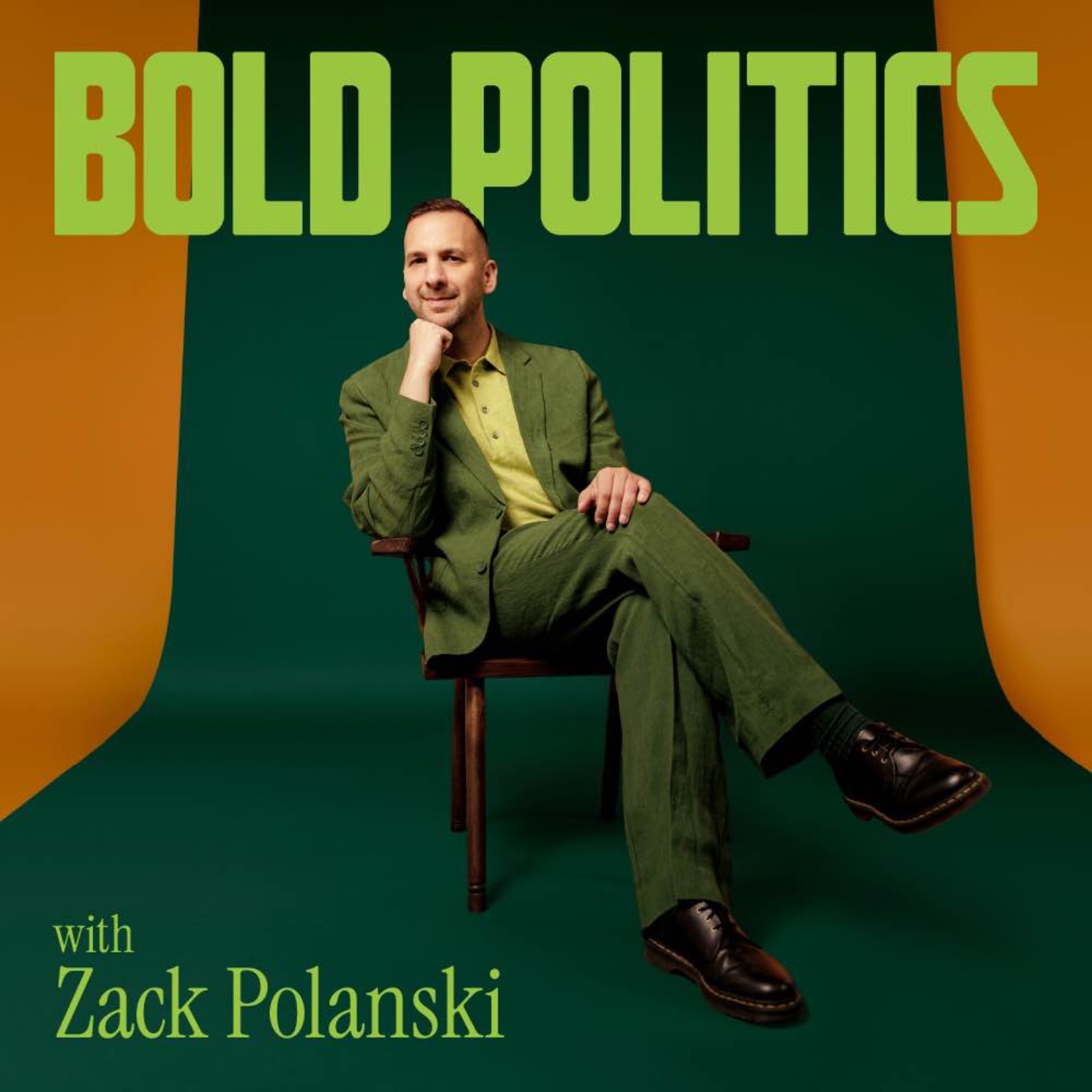
- Bold Politics with Zack Polanski
- How To Beat The Anti-Immigration Playbook
Bold Politics with Zack Polanski9 Sep 2025 · 25m · 11 chapters

How To Beat The Anti-Immigration Playbook | Zoe Gardner | Zack Polanski
In short
Episode topic: Zoe Gardner and Zack Polanski discuss how to counter anti-immigration narratives in the UK, arguing for rights-based, well-managed migration and correcting misinformation about asylum and “small boats.”
Guest backgrounds
Zoe Gardner is an expert and advocate on migration, known for clear public messaging defending refugees, asylum seekers, and migrants.
Key claims
“Small boats” are about 5% of immigration coverage and should not dominate the debate. Refugee definitions are too narrow; safety includes rebuilding a life, not only escaping immediate danger. Borders can exist without “spaces of death” or stripping rights. Migration can be self-regulating if managed, and circular migration supports “brain gain” rather than “brain drain.” EU “first safe country” rules don’t apply post-Brexit; the Refugee Convention doesn’t require asylum claims in the first safe country.
Notable examples
EU free movement; 511 million EU citizens who could theoretically move but largely didn’t; examples of asylum patterns (Afghans in Iran, Venezuelans to Spain, Congolese to Belgium/France).
Written by AI. May contain mistakes.
Chapters
1:12
Clarifying Immigration Terms
Zoe discusses the confusion surrounding different groups of immigrants.
“You're so clear, unapologetic about standing up for people who need us to stand up for them, whether that's refugees, people seeking asylum and migrants.”
2:19
The Misrepresentation of Immigration
Zoe explains how media narratives distort public perception of immigration.
“Even if it was 10 times more important than other types of immigration, Does it make up only 50 % of your coverage?”
4:06
Open Borders and Migration Management
Zoe argues for a balanced approach to migration and open borders.
“And our refugee system doesn't reflect that reality.”
6:04
Perceptions of Immigration in Northern England
Zoe and Zack discuss the impact of immigration perceptions in Northern England.
“And I think that the real challenge to an expansive open borders position is that it needs to be done internationally and it needs to be done in cooperation and regionally.”
7:40
The Economic Necessity of Immigration
Zoe emphasizes the economic contributions of immigrants to the welfare state.
“So much more immigration comes into the South and comes into London in particular.”
10:53
Addressing Brain Drain and Migration Systems
Zoe and Zack tackle the challenges of brain drain and the need for effective immigration systems.
“And there have been no charismatic politicians going out in the last few years talking about the dangers of a shrinking population.”
14:00
Understanding Circular Migration
Explore how circular migration benefits both migrants and their home countries.
“you would never be able to come back um then you know you you're you're in a situation where you You can never have that circular migration.”
15:36
Understanding Circular Migration
Explore how circular migration benefits both migrants and their home countries.
16:07
Refugee Responsibilities and Asylum Claims
Delve into the complexities of asylum claims within the EU and the Refugee Convention.
“The other question that's so often asked is about people arriving at the first safe country.”
20:30
Political Cowardice on Migration
Discuss the political challenges and cowardice surrounding migration policies.
“The podcast called Bold Politics, and I feel like this is one of the subjects that politicians are often least bold on.”
Show all 11 chapters
23:16
Public Sentiment on Immigration
Examine the British public's views on immigration and how it's influenced by narratives.
“The majority of people do not want people to be coming over on boats.”

Ask about this episode
Get the gist, explore an idea or ask about something said.
 Claude
On Bold Politics with Zack Polanski, what are the key points of this episode?
Searching your listeningTranscript
Automatic transcript. May contain errors.
0:00This podcast is brought to you by Thomson Reuters. The best don't just do their work, they change what's possible. Cases won, audits completed, jobs saved. Behind every one of those moments is a professional who needed to get it right and did. Thomson Reuters builds the technology that sharpens insights, speeds up decision making, and powers the outcomes that matter. So when professionals act, the impact is felt by everyone. Be a changemaker. Visit tr.com forward slash changemakers.
0:32So do you just advocate for open borders then? Can everyone come to this country? These are the things that the right-wing press ask me constantly and if I'm really honest I think I've got some pretty good responses. I think it's always important though to get better and make sure you're listening to experts. So today I'm delighted to have an expert in migration and an amazing advocate, someone I listen to whenever I'm thinking about how I'm going to take on these challenges. delighted to be joined in the studio by Zoe Gardner
1:09Zoe incredibly excited to have you on the show thank you very much for joining us thank you for having me whenever I'm about to do an interview with a horrible right wing journalist or any of the various people that we speak to if it's about immigration I tend to go on your social media first because I'm like what has Zoe been saying about this because you have been incredible in the way that you go there. You're so clear, unapologetic about standing up for people who need us to stand up for them, whether that's refugees, people seeking asylum and migrants. I guess that's my first place to start.
1:41People are always jumbling these terms. How do you get people to have more clarity about the different groups of people we're talking about? Basically, 95 % of our conversation about immigration in this country focuses on the 5 % roughly who come in on small boats and people get very, very confused about the proportion that are made up by each group. I think it is quite an effective line to just always remind people every time that I'm being asked about it on TV or, you know, ask people why are you talking about boats again when that makes up only 5 % of immigration? You know, do you think that it represents 5 % of your coverage of immigration?
2:19Even if it was 10 times more important than other types of immigration, Does it make up only 50 % of your coverage? No, it probably makes up at least 95 % of what you're talking about. So I feel like that message has at least started to bed in with some people who are journalists and so on. They're starting to say that in their interviews and they need to say it a lot more because we've seen that the public perception is way off on this. And actually, most people think that the majority of immigration is coming through a regular means to the UK. so I guess it's just you know the the right have this megaphone across the media they repeat their message endlessly we have to repeat the truth endlessly something I'm always trying to balance is when we talk about people seeking asylum I find that the easiest group to defend often because they're fleeing war and persecution and then the kind of twist to it now is people go yeah but what about people who are just seeking a better life or just seeking to migrate now my opinion I'm pretty sure you share this is actually anyone who wants to come to this country for a better life and is contributing to our system, etc.
3:20should be welcomed here. Is there a problem, though, that we are being divided between people who really need to come here and everyone else? Yes, and I think actually my perspective on this has changed a bit over the years. It is and remains true that there are people who just simply must never be sent back to where they have come from because they may be tortured, they may be locked up, they may be killed, and those people should have a status that protects them in the law that prevents them from ever being sent away. but at the same time I think that we have leant too far into this distinction and it sometimes plays into the idea of the deserving and the undeserving where actually it's always a grey area it's always a grey area the fact of the matter is in this world that we live in that is governed by a capitalist economic system you need work to put food on the table for your family and you need that to survive to have a house so our economic needs are not really any less about survival than, you know, I need to be safe from war or I need to be able to grow crops, you know, if you're escaping from climate change.
4:24And our refugee system doesn't reflect that reality. And the truth is, I mean, everybody makes a combination of movements for immediate physical safety and then for a choice of where you can rebuild safety. Safety is, you know, being able to have your feet on the ground, being able to have a place you call home, being able to support your family that's real safety so our understanding of what is a refugee can be too narrowly defined and I think we actually need to broaden that out and recognize that you know people people who come here for all sorts of different reasons can then become part of this country and make a massive contribution to it but if we're trying to sort of nitpick them out this system doesn't actually serve us very well and it ends up wasting more time wasting more money I love how you put that that's brilliant I'm like download it into my brain the thing that always gets thrown is so do you just want open borders then is everyone allowed uh in this country now I have my answer that's pre-prepared but I'm just wondering what your answer is I won't do my best Nick Ferrari impression but well I mean what I fundamentally believe is that you shouldn't lose your rights whether that's as a human being as a worker in any way um just because you crossed an international border that's what I believe I don't I think you know nations can continue to exist they can continue to have borders without those borders being spaces of death and of pain and of people losing their rights and that's what I care about so I think I think yeah I mean you know you can characterize it as open borders because I do believe that migration fundamentally if it's managed well is self-regulating you don't have to have a cap on the numbers so you can allow anybody who is seeking to come to the UK to come here if you do have systems to manage that well.
6:07And I think that the real challenge to an expansive open borders position is that it needs to be done internationally and it needs to be done in cooperation and regionally. But I mean, I think that there's endless evidence to support the fact that open borders or borders that do not prevent people from crossing them work excellently well. In the EU, when we were part of the EU free movement zone, a lot of EU people came to live here. And overall, that was extremely beneficial to us. I'm sure beneficial to many of them. But also, you know, out of 511 million people who could theoretically have just shown up on our doorstep, they actually didn't.
6:51And this is the thing that people are terrified of when you talk about really much more radically rights-based migration systems. People are just very, very scared that everybody's going to show up tomorrow and demand something. And that's not how the world really is. And we need to push back against that idea that, you know, we only have this much cake. And so if you take a piece and then someone else takes a piece and then we run out of cake. And the idea is like, you know, we're bringing in a lot of bakers. People make things. The country only is people. You know, like keeping people out. Health care is provided by people.
7:26Houses are built by people. like the entire country only is people so actually a growing population is a very good thing and people who have segregated rights just because they crossed a border is a very bad thing for all parts of society and presumably if you're well i was going to say presumably i'm from the north of england and i don't feel like this so i don't know why i'm saying presumably but there are some people in the north of england or other places who go but we don't have any cake or decades of austerity have destroyed destroyed things yeah i was just um arguing online arguing online with a stranger yeah what to do with your morning before you get out of bed while you're drinking coffee um uh yeah with somebody who added coffee to that stand coffee in a fight with a stranger that's my morning um and it was someone and they they were from somewhere in the north i presume because they were speaking for them and they were saying you know that we in the red wall have been uh you know the most impacted by immigration I was like no you haven't you've been the most impacted by the rich people who are taking wealth away from the you know common people right there by the fact that you know housing has been bought up land has been bought up by the fact that people are avoiding tax and that that money is therefore not being fed back into your communities you have been the most impacted by that more so than us down here in London but you have not been the most impacted by immigration we have and that's also another reason why we're doing better than you, frankly, because that immigration is helping us to do well.
8:53So much more immigration comes into the South and comes into London in particular. I think it's, I think it's 40 % of all foreign born nationals who live in the UK live in London. So these are places where people's grievances, which are legitimate, because they have been left out, left behind, and they have had a total lack of investment in their towns and so on, are places where they're being told the only sort of language people have to express that grievance at the moment is foreigners bad. And in fact, there are places where they have very, very few foreigners and the problems come from somewhere else.
9:33They come from the rich. And how do you think we change the story? And you could flip that back and go, well, that's your job, Zach. So the things I often talk about is that if you use the national health service for a person who treats or cares for you is so much more likely to be a migrant and the fact that so many migrants are paying more into social security or welfare than taking out. But if these aren't people's perceptions, then we're dealing with very emotive kind of fears, fears around security, around my borders, etc. How do you think we cut through? Well, I think you're doing a brilliant job.
10:01Well, thank you. A really brilliant job. I brought you on to say that. I'm joking. No, and I think that one of the things you do very well is linking it to the economics, like pushing it back and like who is actually the enemy here and you've brought back this language about the 99 % and the 1 % which is really really important messaging because then you know we alongside migrants are part of the 99%. I think that the other thing that is starting just is starting to see a few people start talking about more is you know the real risk to us and to our welfare state of a shrinking and aging population.
10:35People want to think that pensioners are going to be taken care of, that we're going to run a care service and NHS service, you know, for all of the vulnerable people in our society. Understanding that without migration, that can't happen. And we can't have a welfare state and very low immigration in this country. It doesn't work just on the facts, on the demographics. And there have been no charismatic politicians going out in the last few years talking about the dangers of a shrinking population. That's a very bad situation to be in a shrinking population. And so I think we need to make clear what's being risked.
11:10Because I think when I talk, as you do, about all the migrants who make so many different types of contribution, who build houses, who work in the NHS and all of that stuff, people say they have this perception of a young man who came on a boat and who isn't in work, brackets, he's not allowed to be. And you're talking to me about doctors and nurses, but he's not that. And that's who I care about. And I think we need to just widen the discussion of why immigration is good. It's not just because some people are doctors and nurses and so on, and they are, and it's brilliant. It's also just because we literally need people.
11:44And that is good. And, you know, young men of working age coming here is good, as long as we give them opportunities to, you know, get into good work that's well compensated and so on. but yeah that danger of what a shrinking and stagnating and aging population actually means needs to be hammered home. Yeah really well put I think there's attention here too I was about to give my answer but I won't ask you questions I give the answer. No I want your answers too. But about brain drain because there is that thing about training British workers as well right and if we're bringing some of the best talent away from countries that are war-torn how do we get that balance right between making sure we're protecting and nurturing countries that need their best talent but also filling the gap that we have too well i mean yeah and that's a really that's a really key one so the question of the brain drain is is very complicated but like with most things on migration it's like if you run a system well then you get a brain gain that's what the evidence tells us in fact so it can be beneficial for sending countries receiving countries um and migrants themselves obviously uh if you run a system badly which unfortunately we've been doing for a while, then yeah, you can have a real severe impact.
12:56And we have been, we've been seeing some of our aggressive recruitment tactics for trained doctors and nurses in countries where they really need those people. Now, I fundamentally believe that individual people do not belong to the state of, you know, where they happen to have been born and so on, and should have individual freedom. But at the same time, if we manage an immigration system that instead of aggressively recruiting in one area, and then like pushing people away to the extent of it being deadly in another where they're crossing the border and instead embrace the arrival of those people and aim to train them and of course our local population into the areas of the economy that we need then we can reduce our reliance on people who have been trained elsewhere and specifically we should do that strategically in areas where those people are desperately needed in their economy but also sorry to bang on on this point but I do think a lot of people worry about this is again it's about making our borders more flexible areas where you can if you come here and your your livelihood depends on just staying put not being seen not being um ever attracting the attention of the authorities you can't leave the country because you would never be able to come back um then you know you you're you're in a situation where you You can never have that circular migration.
14:13And naturally, if we don't have border controls in the equation, most migration is circular. Most people go somewhere, stay for a while, come back again, go again, come back again, whether seasonally or over several years. And what that allows is actually for knowledge to be built up, skills to be built up, relationships between countries to be built up. And that is where you get that brain gain effect, in fact, because, you know, people come to the UK, practice medicine, return to their country of origin when they're slightly older, more senior, with experience, bring that, you know, knowledge and experience into their countries of origin as well and it actually has a net benefit.
14:54I love the phrase brain gain as well. I don't think I've heard you say that before, but I'm definitely going to bank that one and you'll hear me repeating it and people will know where I got it from, so thank you. I'm going to go for a quick break. This podcast is brought to you by Thomson Reuters. The best don't just do their work. They change what's possible. Cases won, audits completed, jobs saved. Behind every one of those moments is a professional who needed to get it right and did. Thomson Reuters builds the technology that sharpens insights, speeds up decision making, and powers the outcomes that matter.
15:27So when professionals act, the impact is felt by everyone. Be a changemaker. visit tr.com forward slash changemakers
16:02With that, back to the show.
16:07The other question that's so often asked is about people arriving at the first safe country. And there's so much information both around the Schengen Agreement, but also people saying, why don't people stop in France? France is a safe country. I hate repeating these things. I guess let's take those in turn. So first of all, around the misinformation around the Schengen Agreement. Yeah, so essentially, within the EU, there is a system for managing which state has responsibility for an asylum claim. And one of the criteria that can be used to determine who has responsibility for taking on an asylum claim is the first country of entry to the EU.
16:41We're not in the EU anymore. So that's frankly irrelevant to us. Our refugee system is governed primarily by the Refugee Convention, where there is no obligation whatsoever of a refugee to claim asylum in any particular country and certainly not necessarily in the first country of safety. If you think about it, that makes a lot of sense because the purpose of the Refugee Convention is to ensure that all signatories will protect refugees. If the purpose of the Refugee Convention was to say the country right next to a country experiencing war, for example, must accept refugees, we wouldn't be signatories of it.
17:17It wouldn't. We wouldn't need to be because lately Ireland and France have both been countries at peace. So the purpose of the Refugee Convention is so that people can share responsibility, so that we can share responsibility around the world for refugees. The place that has the most refugees is, I think, Iran, right? Iran is usually top of the list. So ironically, yeah, the most Afghan refugees find shelter in Iran and most Iranian refugees find shelter in Afghanistan. Yeah. And then the list continues with, I mean, the top five are all Middle Eastern and African countries. And then Turkey is in there.
17:55Germany just about makes it into the top 10. But other than that, yeah, it's all countries that are closer to it. Because, again, just as most migration is circular when it's done naturally, actually most people, if they leave their country at all, they go to the next country over or a country close by because most of the time and this isn't just refugees this is all types of migrants we want to be close to what's familiar to us we want to you know the food the customs the traditions the people that we know and love that's what we want to stay near it's actually a tiny tiny proportion even of people who are migrants at all which is a very small proportion of people who ever go on a very long journey to far away from where they come from.
18:40And then there was the other part of your question was about the people wanting to get to England. Yeah, rather than France. I mean, France is a safe country. And so is the UK. You know, and this is the trick is like, do you really think that that France should just have to take refugees, but that the UK shouldn't like on what basis could that ever be a realistic it's just not I get accused sometimes. when I say things like, you know, migrants are just humans, no worse than anybody else, of being naive. I'll tell you what's naive is believing that the French are going to accept all the refugees who want to seek asylum in France plus all the refugees who want to seek asylum in the UK and that that's going to be fine and we don't have to bother about it.
19:25I'm afraid that's, you know, fantasy land. It's absolute fantasy land. The truth of the matter is the UK has to be part of this equation, always will be. And, I mean, quite aside from anything else, we had, you know, colonized a quarter of the world. A lot of people around the world who are in countries where it's unstable, human rights, are poorly protected, speak English and have community here in the UK. And that's not just us who experienced that phenomenon, right? Most people who seek asylum coming from previous French colonies, well, they seek asylum in France. if you're seeking asylum from the Democratic Republic of Congo, the likelihood is you're going to seek asylum in Belgium.
20:06And people who are seeking asylum from Venezuela, they almost all go to Spain in Europe. If you can't go to the closest neighbouring country, you go to the place where you will have some kind of cultural affinity, where you speak the language, where you have communities who can support you. That's natural. And yeah, I mean, it's just a simple fact of history. The UK is going to be part of that picture. The podcast called Bold Politics, and I feel like this is one of the subjects that politicians are often least bold on. There's just kind of and I don't know if that's because they don't know the facts that he worried to get into the conversation or they're worried about essentially racism in the country.
20:44And they think that's higher than maybe the sentiment actually is. What's your take on it? Oh, I totally agree. I think I think actually this is the truth is, is that over time, even moderate voices on migration have been silenced. they've been told you're out of touch you're tiring anyone who's anti-migration as racist how dare you speak like that and they have been shut down and silenced and people who are in positions of power and therefore really have no excuse have been cowed have been you know they have rolled over like huge cowards and I'm so angry with all of them honestly it makes me so furious that you know labour politicians would triangulate this hard on migration.
21:28Show me the Labour politician that wanted to get into power and the first thing they wanted to do in their first year in power was remove the right for refugees to ever obtain citizenship in this country. What did you grow up wanting to beat? Like, I really want to give them a shake, honestly. And it is a total cowardice, an idea that, well, we just have to. And the thing is about the we just have to thing is that one, obviously, it's morally repugnant. Two, everyone can see when you're doing it because you think you just have to and you don't mean it. And so they're going to vote for the one who means it.
22:05Right. And then three, obviously, as we've seen like so many times, study after study, historical case study after case study and looking at the polling in the UK. If you lean into the far right's messaging on migration, you empower not yourselves, but the far right. and that's the part where I'm like even if I can have no more trust in them as moral actors even if I don't believe that they're skilled politicians anymore don't they have the self-interest to recognize that they are fueling the far right and not themselves and this is not going to work I think they're scared that they can't achieve the change that needs to be achieved they're scared that to turn this around you really have to get to the root of it and change our immigration system and how it works very very radically and they don't know how to do that and it and it sounds really difficult and there will be pushback and so in the lack of being able to do what they know they should do they've just fallen into this incredibly cowardly um lazy pathetic i mean despicable the humanization of migrants and refugees tell us what you really think so well put and there's a former reform mp whose name i don't want to say because i don't want to make him any more famous but i saw that he messaged the prime minister on social media to say this is demonstrating that we've won the argument um are we losing the argument on migration and how do we get it back you know what i think is really heartening now we don't get me wrong we're going through a really really bad time on this issue specifically but what's quite incredible given the absolute onslaught and pile on and and unanimity of the media voice and the political voice almost against migration is how resilient the british public's fundamental decency on this issue actually is there is there is a small hard core of people who are horrific racists and like I never want to engage with them.
24:09They are not the majority. The majority of people do not want people to be coming over on boats. That includes me. Hi. We want this to be managed well. The majority of people realize we need immigration. They may not realize to what extent we need it, but they realize that we need it and that it's overall beneficial. But they just want to see it managed well. The majority of people do not hate people just because they're Muslims or just because they were born somewhere else. They just want to know that it's being managed well. Unfortunately, in a circumstance where it's being managed so disgracefully poorly, and the boats being the most visible part of that, essentially, it's the entire system that's managed very poorly, people then react against it and people are in opposition to it.
24:48But you dig down a little bit, you know, the polls that say, oh, people overwhelmingly say they want less migration. Who do they mean by migration? They mean the small boats. Actually, if you ask them, do they want fewer students? Do they want fewer doctors? Do they want fewer farm workers, construction workers, hospitality workers, you know, all of the actual large groups that make up migration? They don't. So people are much more decent on this than we give them credit for. Unfortunately, there is a very racist messaging that is cutting through at the moment that is being funded by, you know, the newspaper owners and the billionaires who are funding the Reform Party.
25:27and a whole lot of far-right influencers as well who are being funded to produce this messaging. And that is very difficult to fight back against, but that's the only option we have that isn't, as I said before, completely despicable. Fighting talk feels like a good place to end. I started the interview by saying how much I'd learned from you and this discussion was no exception. So thank you for everything you're doing. It's hugely important. Thank you so much for having me and it's great to have been here. My pleasure.
26:00This podcast is brought to you by Thompson Reuters. The best don't just do their work. They change what's possible. Cases won, audits completed, jobs saved. Behind every one of those moments is a professional who needed to get it right and did. Thompson Reuters builds the technology that sharpens insights, speeds up decision-making, and powers the outcomes that matter. So when professionals act, the impact is felt by everyone. Be a changemaker. Visit tr.com forward slash changemakers.
From the publisher
Why don't people fleeing war or persecution stay in the first safe country rather than the coming to the UK? Would asylum seekers be treated better if we allowed them to integrate properly in society with homes and jobs? Is regional inequality in the North a long-lasting effect of Tory austerity, or is it because of immigration?
In this episode of Bold Politics, Zack Polanski chats to migration expert and policy maker, Zoe Gardner about how to build a convincing argument when taking on the anti-immigration sentiment which is currently being felt across the country.
Email: [email protected]
YouTube: @boldpoliticswithzack
Instagram: @_boldpolitics
Tik Tok: @boldpolitics
Disclaimer: Zack does not endorse any automated advert programmed into this content. We have blocked ads from certain categories where possible to try and ensure advertisers align with Zack's values, but cannot absolutely control which adverts you may hear. As such, we're sorry if you hear an advert from a company which is at odds with our principles, and encourage you to skip through them!
Hosted on Acast. See acast.com/privacy for more information.
More from Bold Politics with Zack Polanski
All episodesWe use cookies.They keep VO running smoothly and help us improve it. Privacy policy