
 Ask ChatGPT

- Podcasts
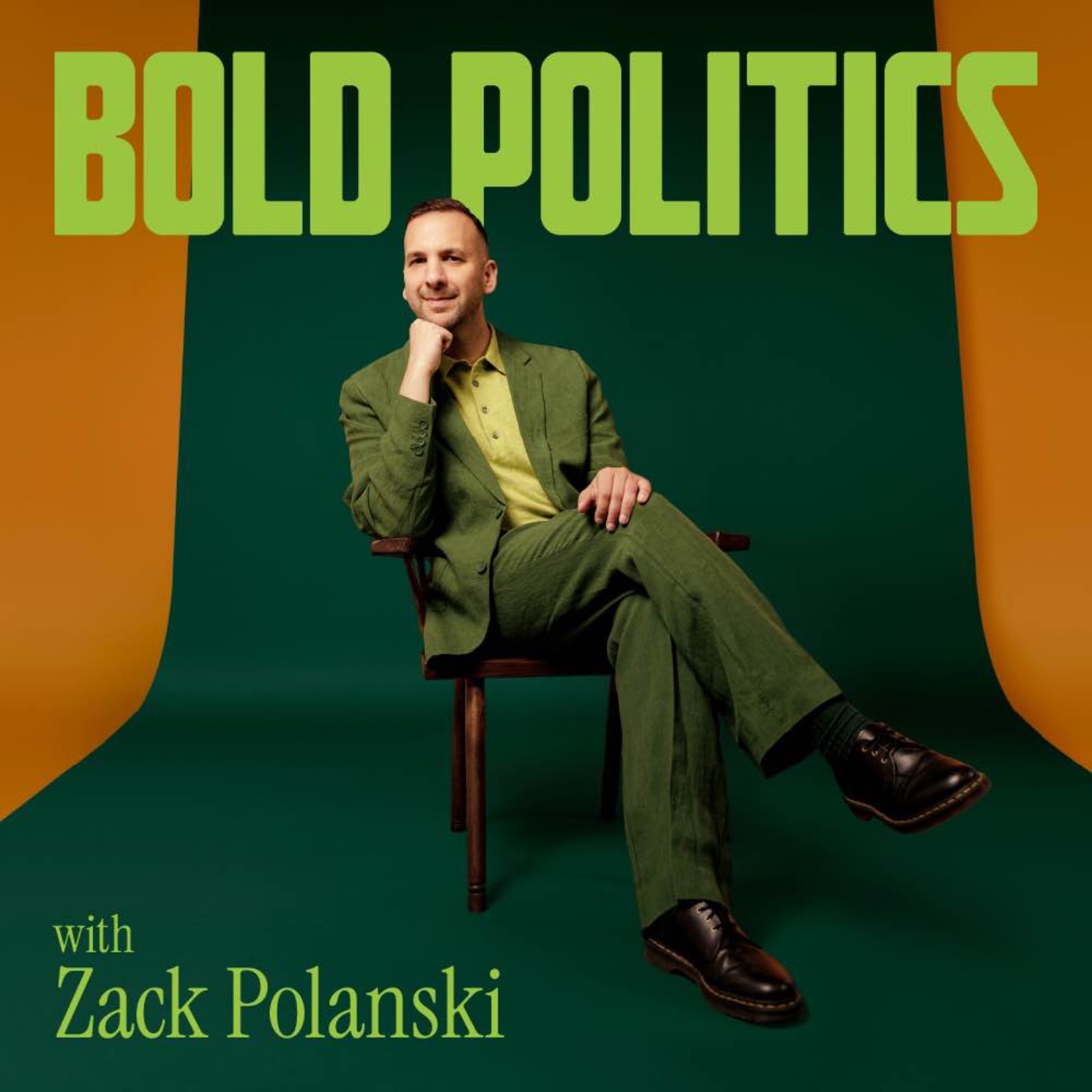
- Bold Politics with Zack Polanski
- How To Platform Socialist Ideas Through Billionaire Owned Channels
Bold Politics with Zack Polanski19 Nov 2025 · 40m

How To Platform Socialist Ideas Through Billionaire Owned Channels | George Monbiot | Zack Polanski
In short
How To Platform Socialist Ideas Through Billionaire Owned Channels
Main points
- Zack Polanski (Host)
- George Monbiot (Author, Journalist, Political and Environmental Activist)
In this episode, Zack Polanski engages with George Monbiot to discuss the intricate relationship between capitalism, social justice, and the environment, particularly in the context of the UK's housing crisis and the increasing concentration of wealth among billionaires. They explore the mechanisms by which the government uses the housing crisis to justify environmental degradation, the commodification of social care, and how to mobilize the 99% against the interests of the wealthy 1%.
Written by AI. May contain mistakes.

Ask about this episode
Get the gist, explore an idea or ask about something said.
 Claude
On Bold Politics with Zack Polanski, what are the key points of this episode?
Searching your listeningTranscript
Automatic transcript. May contain errors.
0:00Why don't you talk about the environment anymore, Zach? Why are you always talking about social justice issues? Well, here we go with the writer, author, activist, general troublemaker, the phenomenal George Monbiot.
0:15Hello, Zach. Chris Packham here. I hear you've signed up to EcoTalk. That's very bold of you. Brilliant. And if you don't mind me saying, very bright of you too. If your audience is half as smart as you, then they'll sign up too at ecotalk.co.uk.
0:40I don't know if I've told you this, but I've read nearly every single one of your books. Good grief. From the very beginning, and there's not many authors I can say that to. We're in a particular moment where the climate crisis and inequality are so obviously interlinked, yet we seem to have a media landscape who seem obsessed with this idea that these are separate conversations. and if you're talking about inequality, you've completely abandoned the environment. What do we say to these people? So divide and rule isn't just a matter of dividing people against each other. It's a matter of dividing ideas against each other as well and to box those ideas up and say this is one issue, this is an entirely separate issue and we must deal with them individually.
1:22And, of course, you know, what Greens understand and what anyone on the left, the anti-colonial left particularly understands, is that you can't separate these things out. Social justice and environmental injustice are one and the same thing. if you try to split those two things apart you end up counteracting your own efforts because you might say well for the sake of social justice we need more coal mines and then oh my gosh look all these people are being driven out of their homes by environmental disasters right we well we need fewer coal mines and and what you have to do is is to try to create a system which works for everybody at all times without creating those perverse effects.
2:10And you cannot possibly do that unless you're looking at the system as a whole. And as we speak right now, we've got COP30 going on. And I actually spoke earlier today to a friend of mine, Tyrone Scott, who's a climate activist. And he's on a flotilla called the People's Summit, where essentially it's a group of people advocating with indigenous people to say we absolutely have to have a place in these climate negotiations. you're someone who spent a lot of time around the world and a lot of the time with in fact so many of your books detail this do you have hope feels like a very glib question but are things moving in the right direction or are they moving completely in the wrong direction because it's confusing so if we start with the cop process that's that's going nowhere i was going to say going nowhere fast it's actually going nowhere slowly it's been 30 30 30 of these summits now you know one of the definitions of madness is doing the same thing again and again and expecting different results.
3:03That is the COP process. Now, it fails by design, because in the design is this idea of consensus, and every single nation has to agree to a position for that position to be adopted. That idea was deliberately inserted by Saudi Arabia in 1994. And that means that stasis is the default position, that things don't happen because a single country can say, I don't want it to happen. There are much, much better ways of doing this. There's been centuries of political design, which show us ways to create broad agreement among a large number of players with different interests. So there's something called the modified border count, which is an interesting way of making decisions.
3:47Or there's a treaty creating process, a bit like with the Anti-Personnel Mines Treaty or the Nuclear Non-Proliferation Treaty, where you start with a kind of coalition of the willing, a few nations which are happy to sign up to that, and then you grow it and grow it and grow it until it becomes a global norm. But starting at the other end, saying we can't do anything unless we've got everyone's agreement to do that, commits you to failure. So along the lines of the current process, I have no hope at all. There is no hope in that process. And it's designed to prevent hope from materializing. But in the extraordinary creativity and mobilization of the world's people, well, I have tremendous hope there.
4:34Because every time in the past, I've thought, oh, God, that's it. We're doomed. There's nothing. Nothing is going to save us now. Someone somewhere proves me wrong. It might be a 15 year old schoolgirl sitting outside the Swedish parliament. It might be a new leader of the Green Party in the UK. It might be a new mayor-elect of New York. You know, people come often from very unexpected places and just smash the status quo apart. And they say, look, there's a new way of doing things. There's a new way of seeing things. There's a new way of mobilizing people. And it's in this creativity, this collective creativity, that hope lies.
5:15That's beautiful. And that's a very nice group of people to be associated with. So thank you for that. Just last month, the UN Secretary General said that we're pretty much going to miss every single target, particularly the Paris Climate Agreement. I think you would agree with this, but I would argue that every little bit of a degree that we can reduce our emissions by or maintain by really, really matters. But we're not hearing that story. In fact, what the UN Secretary General did, I imagine most of the population don't know. How can we cut through with these stories? I mean, first to say, you know, he's been great on this throughout and massive respect to him because you could be a UN Secretary General who said nothing about this at all.
5:55In fact, several UN Secretary Generals have been markedly silent on climate issues. So fair play to him. And of course, that's absolutely right. We have to do everything we can. And just because it won't be perfect doesn't mean it's not worth striving for. and there is a sort of sub-movement in the West of people saying, we might as well give up. Let's just walk away. There's a whole sort of bunch of rage quitters who are just saying, oh, it's all a waste of time. We'll just walk away. We'll preside over the ruins one way or another. Let's look at what happens with collapse and let's make the best of collapse.
6:34Well, A, they have absolutely no right to speak on anyone else's behalf, to say, on behalf of the world's people, we give up. particularly if you're in the rich nations like ours, where us giving up means imposing horrendous impacts on other countries. You know, it's not up to us. We can't unilaterally decide that we're going to walk away from this. We are all enmeshed in it. And of course, there is no way to walk to. There's no place on Earth which is not going to be affected by climate breakdown or by ecological breakdown in general. Also, you know, we don't know which particular increment of harm will push us past a tipping point.
7:20And that's the thing about complex systems. They have tipping points and you generally don't know you reach one until it's too late and it's already tipped. and what happens after a complex system has tipped from one equilibrium state to another is that it's then subject to what systems theorists call hysteresis which means that the energy required to push it back to where it was before is far greater than the energy required to tip it into that new equilibrium state so it's a bit like falling off a cliff it's very easy to fall off a cliff it's very hard to get back up again once you've fallen off especially if you've got injuries as a result of that fall, which is the situation we would find ourselves in.
8:04So we can't afford to discover the hard way where those tipping points lie. So it's not just that every increment of global heating we don't have is a good thing not to have in and of its own right. But it's that every increment we enable, we allow ourselves to have takes us closer to a potential tipping point, at which point all bets are off the table because we really don't know just how drastic that could be and how devastating to life on earth it would prove. I mean, it would be a great extinction which would rank alongside the other great extinctions that the planet has suffered. And then I'm observing a tension right now between climate adaptation.
8:51So as investing in climate adaptation, but we've got people like Bill Gates saying pretty much what you've just said. it's over we can't do it let's just invest in climate adaptation I guess in polite words what do we say to the likes of Bill Gates? Well there's a very non-polite answer which came into my head which which could be... I mean it is bold politics. Yeah I mean look he's never made a useful rhetorical contribution on climate in the whole time since he very belatedly accepted that climate breakdown is a real thing. And ever since then, he's been a delayer. He's been dragging his feet.
9:30He's been playing one thing off against another, just like we were saying at the beginning of this conversation. Oh, well, we can't deal with global poverty if we concentrate on climate issues, as if you can't do the two things at the same time. And he constantly says, there's not enough money, says a man with$118 billion. A man in a country, the US, where the mere increment of the wealth of the 10 richest billionaires last year was just under$700 billion would be enough to stop extreme poverty annually 10 times over. for 10 people the increment in their wealth would solve extreme poverty annually worldwide 10 times over and so to say oh there isn't any money what could we possibly do there's no money i mean it's it's just it beggars belief it's it's beyond parody and it does i don't know if it's my naivety as a relatively new political leader but it does feel like things are shifting in terms of the fact you just gave there's the other one that the 50 richest families in the uk own more wealth than the bottom 50 % of the population, which is about 35 million people.
10:44And I saw The Telegraph just either today or yesterday said that Green Party policies were fantasy policies or things like that. And I think there's only so long the media can continue to attack when people are starting to really, really hear for the first time. I know people have been saying it for a long time, but I feel like something's shifting. People are registering it differently. I don't know if you have that same impression. So I think two things are shifting. I think, first of all, economic power is growing and growing. The rich are becoming much richer and they're translating that wealth into political power.
11:15As they translate it into political power, they become richer still because the political environment enriches them. Taxes are cut or not levied. Regulations are cut. All the things they want, they get. And there's been a whole tranche of political science on this, showing that governments listen to the ultra-rich much more than they listen to the population as a whole. It doesn't seem to make any electoral sense because what you surely want are votes, but that's not actually how politics happens. Politics is generally transactions among an extreme elite, a tiny number of people. And I don't mean elite in anyone who went to university, the sort of Dominic Cummings definition of it.
11:58I mean people who are stinking phenomenally rich. That is the elite. And it's not just an economic elite, but it de facto becomes a political elite as well. So we see that trend, what Thomas Piketty calls the patrimonial spiral of wealth accumulation, that you become rich, so you become richer and you become richer and richer. and down the generations, your family becomes ever richer. And the only thing which is going to break that, the only peaceable thing which is going to break that, other than the guillotine, is much, much higher taxes on the rich. And then you've got the counter movement, which you so rightly point to, of people saying, well, to hell with all this.
12:42Sorry, excuse me, we've got this phenomenal amount of wealth sloshing around in the world, but we don't have any of it. It's highly concentrated. in the hands of a tiny number of people. And ambulances are queuing up outside NHS wards because they can't get beds for the patients and potholes are ripping the roads apart and very basic public services are visibly falling apart. Even while all this wealth exists, why the hell are they able to harvest so much of the wealth which you, I and the rest of the population has created into their own pockets? And why can't we get it back through tax? And these are the questions which are in the front of many people's minds now.
13:31And of course, one of the things which you and I seek to do is to link those to the environmental crisis, which is being driven by exactly the same forces. And so jumping straight in there with nature. So we live in one of the most nature depleted countries in the world. And we have a government and property developers that seem to be trying to pit the housing crisis against our very kind of existence. It's interesting, isn't it? So it's always, you know, the reason we don't have enough houses is not because council houses were sold off. It's not because these huge development corporations, which basically have mopped up all the house building in the country, are sitting on their land banks and refusing to use it.
14:13It's not because they're lobbying against having a quota of affordable housing. No, no, no. It's bats and newts and snails and spiders. This is what I call the cauldron principle, that the species which stand in the way of development are the species which you might find in a witch's cauldron. Bats, newts, snails and spiders. And you see it goes around again and again. But I think there is something about people find badgers or beavers cute. Yeah, yeah, yeah. So it's never going to be dormice. It's never going to be nightingales. It's never going to be otters. even though all these species are protected in exactly the same way as bats and nukes and snails and spiders might be.
14:49But of course, it is all about denigrating nature. And we've got to find the nature which people think is creepy, which is associated with bad stuff. So, yeah, let's concentrate on. I mean, I happen to think all those species are amazing, but let's concentrate on these evil, ugly species and say they're responsible. The reason you don't have a home is because of bats and spiders. Spiders are doing this to you. And it's like, oh, you know, it's Philistinism. I mean, if we saw this in culture, if they were saying, right, you know, you have to rip down the National Gallery to build housing. Those Rembrandts, they are standing in the way of you having a home.
15:30And if it weren't for those Rembrandts, you would have a home. Now, we would instantly say, what utter Philistines, what barbarians, you know, socialism or barbarism. Here you can see the barbarism. It's exactly the same thing. Why don't we identify this as ecological Philistinism? And why do they get away with it? Well, because they are the media environment principally. You know, we live in a world where the means of communication are dominated by extremely rich people. You know, it's all about economic power always. This is constantly the problem. The biggest problem in politics is money. The biggest problem in the media is money.
16:10And whether it's legacy media or social media, the great majority is owned by extremely rich people, largely billionaires, because you have to be one to own it. And even those outlets, most of those outlets which aren't owned by them, are heavily influenced by them. We see this constant pressure on all media outlets to conform to the demands of economic power. And, of course, that pressure is also on political parties. If you step out of line, if you challenge economic power, if you say something which the very rich don't like, they will unleash the hounds of hell on you, as you yourself know very well.
16:52And I saw your article recently explaining what they've been throwing at you. And of course, they did the same with Jeremy Corbyn. They've done the same with anyone who seeks to challenge this consensus of extreme concentration of wealth and power, this highly undemocratic consensus. And without personalizing it too much, you strike me as a bit of an anomaly in all of this, that you worked for the BBC for a long time. you are still pretty regularly platformed by a lot of the mainstream media organizations and you're saying things that are without a doubt i would class as a huge threat to the establishment but they seem to let you through just occasionally i mean they slip up yeah i mean it's it's it is frustrating you know because you'll you'll see you know people like i mean And you've done incredibly well to break through.
17:44And, you know, and your voice has been heard in places where it's been very, very difficult for people of our sort of politics to get heard at all. And that's a fantastic thing. But mostly it's a real desert. It's really hard to get on to any mainstream media and say the things that you and I are saying. and one of the things I greatly welcome about what you've brought to politics is that you seem to have been cracking open part of that consensus of silence and I'm grateful to you for doing so. I mean, look, the basic problem here is that democracy is a problem capital is trying to solve. And propaganda is one of the effective means of trying to solve the problem of democracy.
18:35Democracy and capital are completely at odds with each other. They cannot exist in the same room without one trying to destroy the other. When I talk about capital and capitalism, I distinguish it from commerce. I think it's a totally distinct economic system or system of economic practice. Capital can exist without commerce. Commerce can exist without capitalism. Capitalism emerged from the colonial economy. follow the geographer Jason Moore, who traces it back to the island of Madeira in roughly 1450. It's the first place where the system we call capitalism emerged. And it's by its very nature, highly exploitative system.
19:17And it greatly resents democracy. And it does everything it can to try to shut it down. And until 1945, it had started, it was supporting a very effective means of shutting down democracy, which was called fascism. That ran into little local difficulties in 1945. But just in the nick of time, in 1944, the two seminal tracts of neoliberalism were published. Friedrich Hayek's Road to Serfdom, Ludwig von Mises' Bureaucracy. And they latched onto neoliberalism as a way of solving this problem of democracy. Well, that's still running, but hey-ho, fascism is coming back as well. So let's pour money into that too.
19:58and so this is the constant tension, the constant battle which we're in the middle of and until we understand this as a battle between capitalism and democracy we won't be equipped to fight that battle and one of the battlegrounds is the media which is almost entirely captured by capitalism but wherever we can find an opening in it we should seize that opening and try and pull it further apart. Thanks George. From one legend to another, here's Chris Packham from EcoTalk.
20:32Zach has signed up to EcoTalk. He's taken the great plunge. Why has he done that? Well, he's a man who sees sense. Firstly, brilliant network coverage. Secondly, fantastic customer service. And thirdly, of course, all of the profits are going to nature restoration. Yes, we're spending them on rewilding. And you can go to our website to see what we're up to. You can also get some wildlife tips from yours truly. So come on, follow his lead and sign up to EcoTalk. All you've got to do is go to ecotalk.co.uk and it's simple, absolutely simple. And look at the benefits. Life is beautiful.
21:16and something i think you speak powerfully about so without putting words in your mouth but i think i've heard you tell this story before is the dehumanization of what capitalism does to people i think the care experience young people or the social care sector i know you is one that always resonates with me i don't know if you're happy to share yes so um uh it's quite amazing you know Social care is one of these things which has been quietly privatized, privatized piecemeal. And what happens particularly to children in care is almost shocking beyond belief because children in care have become a commodity, which is traded now between corporations.
21:56And a child in care is worth roughly£100 ,000. So you will, I mean, you don't, there isn't that sort of stock market listing for children. but effectively that's what you're doing. You're buying children as units of provision. You have the right to provide the care setting for that child and what you'll do is get as much money for that child as you possibly can from a local authority while cutting your costs as much as you can. So then you will get accommodation for that child in the place where it's cheapest to find accommodation. So often in de-industrialized towns, in places where there's effectively no social support, no infrastructure, you're a long way from schools, you're a long way from any of the things which children might need, places where there's derelict housing in effect and they will buy up blocks of derelict housing and just cram children in there.
22:54In one case I came across a child was placed in a tent. And so they're keeping their costs as low as possible. They're charging huge amounts of money from the public purse to take these children because local authorities' budgets are cut and cut and the local authorities have been, well, just completely savaged administratively. they just have to go with the emergency provision that they're offered and they sort of can't get ahead of that point in order to create a strategic provisioning service of their own they're just always at the mercy of these private providers and so these kids are kicked from pillar to post one child I came across I met she'd had 40 foster placements and of course it's just utterly devastating utterly I mean this is a sacrificial cast of children they're being sacrificed to money that that's that is frankly what is happening and you know they might be in one part of the country where whatever's left of their family might be their friends are any connections any training courses they might be on any charitable connection any other things which might be allowing them to find a way into society, suddenly they're swept away from that and they're dumped in some place far from anyone they know, far from anything they know, far from the provision they need in a basically derelict quarter of a city where there's nothing for them.
24:34And is it remotely surprising that 62 % of the children in corrective institutions, in other words, prison, come from the care system. I mean, there's so many things about the way our country works that piss me off, but whenever I've heard you tell that story before and I just felt it again, it feels like there's no nuance here. That is one of the deepest injustices. It's evil. I don't often use that term. In fact, I very rarely do, but this is evil. Just to come back round, although all conversations are connected to the climate crisis. As you were talking then, I was thinking about how we hold two paradigms together.
25:13And let me give an example. So I've chaired the Environment Committee in London for the last few years. And Mnadi Khan have had many disagreements on things like private jet use. I asked him, for instance, if anyone should be using a private jet and he refused to condemn them outright. That being said, I think, you know, he's not the worst politicians on climate and there are actions he's taken, cleaning air and new leads, for instance, which I absolutely support. He's accepted a lot of money from Bloomberg Philanthropies. and as a leader of a national party I don't want the private sector anywhere near our climate action or the work we need to do as a politician in London who's looking to do what I can do today when he accepts that money if the money is not coming from national government and it should come from national government I go well I'm glad he's got the money from somewhere even if it's Bloomberg how do we operate both in this kind of short term where we're trying to put out the fires right now but actually have a longer conversation about how we how we fund tackling the climate crisis.
26:05It's very difficult, isn't it? Because this philanthropic capitalism is part of the problem. And the more it's able to fill the gaps in public provision, the more it's able to extend its power into new spheres, which is part of the aim. Now, there's no question that ever more institutions and ever more good causes are dependent on philanthropic capital. And I don't blame anyone individually for being dependent on that there's very few other options other outlets what we urgently need of course is structural change so that we we tax those billionaires and we make sure that that money is democratically available not available at the whim of those billionaires and what we've seen there's a lot of work on this has shown how funders distort the outcomes that charities and other organisations pursue, that they end up tailoring their work to what they think will be funded.
27:07And so they end up effectively as part of the machine that they might be contesting. And that's going to be a problem, exactly that same problem in the public sector as it is in the third sector. In the short term, it is very hard to escape from that conundrum. But this is why we need the sort of thing that you're offering, where we say we take a systemic, radical approach to this. Instead of living at the whim of the ultra-rich we bring the ultra-rich to heal we make billionaires history we bring that money back into the public domain we redistribute it we spend it on public services we rebuild the infrastructure of a just and ecological society and where does the narrative there come for the cost of inaction as well.
28:04So this is always, always ignored. And, you know, in any of the calculations of austerity, it's all about what is the cost of spending this money rather than what is the cost of not spending this money. Now, I ran into this problem in a very literal way a few weeks ago where my bike hit a pothole. I was going downhill at night. There was a pothole which hadn't been there before. And I had my bike lights on, but I didn't see the pothole. I hit it, went over the handlebars. I was incredibly lucky. I landed on my face at some speed, but I took nearly all the impact on my helmet and on my glasses, bizarrely.
28:48And, you know, I did have a few cuts and bruises, and my clothes were torn, my bike was written off, my glasses were written off. It cost me about£450. In fact, well, that's what I thought initially, because I thought I could repair my bike a bit more now, probably about£600. That pothole would have cost about£50 to fill. And I'm not going to be the only one who's gone into that pothole or who will go into that pothole. And many people who go into that pothole will be a lot less lucky than me. They might have life-changing injuries. They might be killed. It might cost the NHS tens of thousands of pounds, that one pothole.
29:28now why is that pothole there not because local authority are evil bastards and they're not you know they're trying their best under extremely difficult circumstances it's because the costs of austerity have been visited upon them and the biggest cost for them is a social care crisis one small part of which we've just discussed and because they're spending such a huge proportion of their budget on this underfunded social care where the austerity has basically been dumped onto the local authorities, they can't spend on anything else. So the costs for the NHS of other people falling into that pothole should be actually seen as part of the costs of the social care crisis, which is the result of austerity.
30:14So it's a false economy. And even when you can show we made a net saving to the exchequer by cutting this public service all you've done is to transfer costs onto other people like me with my bicycle and my glasses and my torn clothes and or people who have to take months off work because of their injuries and this is you know this is a very obvious and crude example of of how this operates but basically it's pretty well always a false economy now the current government says well we're not doing austerity anymore because look you know GDP uh public spending as a proportion of GDP is rising is that their definition of austerity means nothing to to people struggling to get by in this country the sensible definition of austerity is the decline in public services caused by underspending that that's what any one human would recognize as a definition of austerity And what we're seeing in many public services is a continued decline despite a change of government.
31:25Yeah, absolutely. Well put. The other area that you've spoken about very powerfully in the last few years is immigration. Particularly, you were very vocal against the Rwanda scheme and the performatively cruel or indeed just cruel approaches of the government. What do you think needs to happen in terms of immigration and public sentiment? I mean, for a start, the rhetoric has to change. You know, when you've got even a Labour prime minister talking about an island of strangers, when you have a succession of ministers standing up, apparently competing with reform to show that they're even harder and crueler than reform can be.
32:06I mean it's just in terms of politics is absolutely insane. I mean all you do is you legitimise reform while delegitimising yourself. I mean it's just strategically incomprehensible but it also creates this climate of cruelty and we just have to stop this. You know who is coming to this country? Often the most vulnerable people on earth. Those who are seeking asylum here. People to whom terrible things have been done. people suffering immense trauma often in wars which we've helped to ferment or because of climate breakdown which we've helped to cause and then we say nothing to do with us gov and we wash our hands people now obviously you know there has to be some policy which says this is this is how many people that we're going to take and these are the circumstances under which we're going to take them and we're going to have an agreement with other European nations like rather like we did have before a certain thing happened which was going to sort this whole problem out and and you know and and but we have to have a grown-up polite civilized conversation about how we're going to do this how we're going to navigate this situation where you know we cause these disasters around the world and then we refuse to do anything to help the people who are fleeing those those disasters and you know and the people who fleeing often you know they've tried everything else first you know that's the last thing you want to do i mean i don't want to leave my home it would have to something really really terrible would have to happen to make me leave my home and yeah i have and I'm sure you do as well, sort of ancestral experience of this, that both my grandfather was a refugee himself, my grandmother was the granddaughter of refugees.
34:07They, in fact, it was my grandmother's family which formed the welcoming reception committee for my grandfather's family when they turned up at Tilbury Docks here because my grandmother's Jewish family had recognised that if they had not effectively been granted asylum, those terms weren't used in those days, but if they'd not been able to find a safe refuge here, they would all have been killed. And so they wanted to put something back. And so they would be at Tilbury Docks day after day, picking up refugees, finding homes for them, resettling them. And that's how my grandfather was able to integrate into this country.
34:49That's how he met my grandmother. He was eight, she was six. And much later, they went on to get married. And here I am. And that's an ethos of mutual aid. That's been destroyed. And we have somehow to reclaim our humanity. And you mentioned that this is strategically incomprehensible. And I suppose my gentle pushback on that was I feel a lot of this is very comprehensible and it's political lobbying. And I'm just wondering, what role do you see as political lobbying playing in a whole democracy, not just in immigration, but more generally? And what do we do about it? Well, you see, lobbying is another of the tools which rich and powerful interests use in their constant battle against democracy.
35:34And it's very effective. They get the ear of government, whereas the great majority of citizens do not get the ear of government. And often those lobbyists have some very dark agendas indeed. And what we see with Labour, it seems, is that they're subject to lobbying from donors. They're subject to the sort of endless background hum of media attacks. Any sign of weakness towards refugees or whatever, as it's perceived, will be ruthlessly punished. no good deed goes unpunished and so they constantly live in fear of this but the art of politics is to overcome that fear and to map out a position of hope and to say despite the pressures of powerful economic interests this is the right thing to do so we're going to do it And that's what inspires people.
36:40And of course, you know, yes, there are tactical reasons for them coattailing reform. In other words, immediate short term reasons. But the result is what we see every week in the polls now where they're absolutely tanking because they've completely alienated their own base. the people who might vote Labour, the people who might have voted Labour at the last election, while appealing to a group of voters who are not going to vote Labour in a million years. You know, why vote? You know, if you want harsh anti-immigrant policies and sort of dog whistle racism, why would you vote Labour? You would vote reform.
37:23And so they're chasing a phantom voter while alienating their own real voters. And that's why it's a strategic nonsense. And we started this conversation by talking about the hope of communities and movements coming together. And then we've gone to various grim and depressing places, which I'm glad we've discussed. But I suppose to end the conversation, what hope are you finding in those movements? And does it feel like that's coalescing? Does it feel like it's breaking up? And what can someone watching this do to get involved? Well, the first thing is never do anything by yourself. Right. You know, we are effective when we come together.
37:57The first thing we discussed was divide and rule. And, you know, there's a constant effort to atomize us, to keep us in our boxes, to tell us we're consumers rather than citizens. And, you know, if you want to change the world, just buy a better brand of biscuits. No, we get together and we do the three things which are the only three things which have ever worked and the only three things which ever will, mobilize, mobilize, and mobilize. Those are the three things. And we do so collectively, you know. And so you've got a brilliant vehicle, great platform in the form of the Green Party. But of course, there are many, many other platforms which we need to use simultaneously.
38:38And all effective change is an ecosystem. And people say, well, I don't want to sit on the street, so I can't be involved. Fine. Only some people are in a position where they feel they can sit on the street, especially with the horrendous new anti-protest laws. But that's not the only role. We need radical accountants. We need radical lawyers. We need radical teachers. We need radical psychotherapists. We need radical administrators. Whatever you're already good at, use that skill as part of the broader mobilization that we need because that skill is going to be essential. It might be building.
39:18It might be, you might be a drainage engineer, but we're going to need drainage engineers. You know, there's so, so many roles which you can use in your free time, maybe, or in your working time to push towards this wider goal of social and environmental change. And so, you know, don't despair because you think you've got the wrong skill set. You've definitely got the right skill set. It just needs to be pointed in the right direction. George, whenever I listen to you, I always get a sense of we are all going to be okay. Everything makes sense. We can spot what the problems are. We know what the solutions are.
39:58We just need to do it. I really feel like that right now. So thank you very much for coming on. It's been a total pleasure. Thanks, Zach. Appreciate it. Cheers.
40:09Hello, Zach. Now listen, I've had a text, I know, improbable but true, from the Beavers, the Butterflies, the Beatles and the Badgers. It's all sending you big love for signing up. They're hoping that your listeners are going to do the same by visiting ecotalk.co.uk.
From the publisher
How is the government weaponising the housing crisis to excuse the depletion of nature in our communities? How can we mobilise the 99% when the means of communication are owned and dominated by the extremely wealthy 1%? How did we get to a point in capitalism where it became acceptable to trade the social care of children like commodities and assets?
Zack Polanski speaks to author, speaker, journalist and political and environmental activist George Monbiot about how the UK and it's assets ended up in the hands of billionaires, and how there is still hope to bring it back into the hands of the public.
Join Nature's Network and switch to Ecotalk, the only network service provider that gives all its profits to nature restoration: ecotalk.co.uk.
Email: [email protected]
YouTube: @boldpoliticswithzack
Instagram: @_boldpolitics
X: @_boldpolitics
Tik Tok: @boldpolitics
Hosted on Acast. See acast.com/privacy for more information.
More from Bold Politics with Zack Polanski
All episodesWe use cookies.They keep VO running smoothly and help us improve it. Privacy policy