

 Ask ChatGPT

- Podcasts
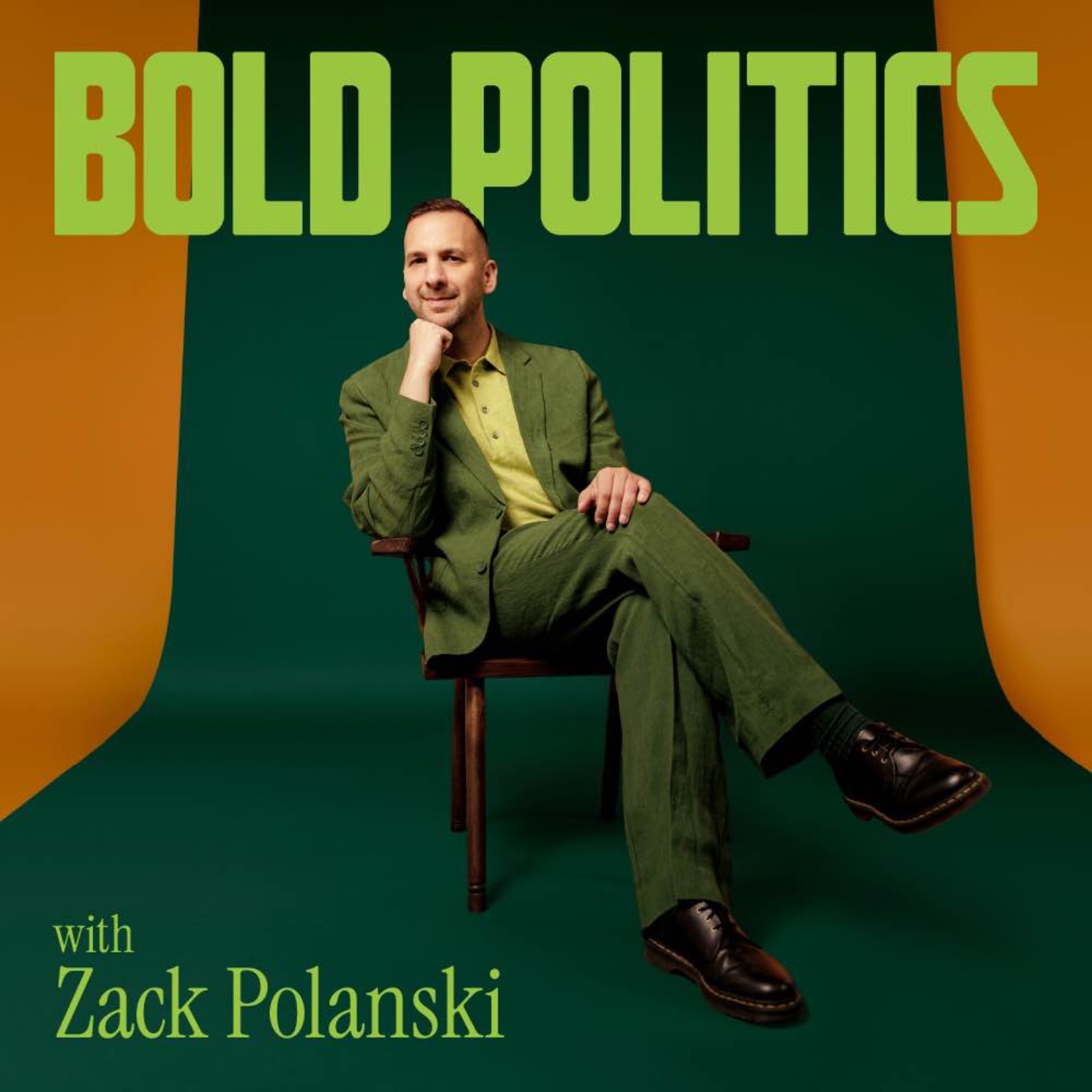
- Bold Politics with Zack Polanski
- The Green Future
In short
In this episode of "Bold Politics," host Zack Polanski engages in a compelling conversation with Caroline Lucas, the first Green Party MP, about the evolution of women's roles in politics, climate change, and the pressing nature crisis. This discussion, recorded live in Brighton, addresses how society can navigate the challenges of climate change while fostering a sense of community.
Written by AI. May contain mistakes.
Chapters
1:05
Assessing the Climate Emergency
Caroline discusses the current state of climate action and government inaction.
“And actually, what you really wanted to focus on was the climate emergency and the nature crisis.”
3:10
Community Resilience and Climate Adaptation
Exploration of climate adaptation and building community resilience.
“And when we're talking about climate adaptation, if you do it strategically, there's a way of doing it which is about really strengthening communities.”
6:15
Hope and Action Against Climate Fear
Strategies for discussing climate urgency without inducing fear.
“a Farage-led government at the next election.”
8:32
The Evolution of Political Climate Discourse
Changes in political discourse regarding climate action over the years.
“And did it change in any meaningful way or was it kind of superficially people learned the words?”
10:46
The Role of Arts in Climate Awareness
The importance of the arts in communicating climate issues and inspiring action.
“You know, we used to think if we just put more words in a leaflet, if we used maybe a font 10 so we could get more words on that leaflet, then that was going to persuade people.”
14:03
Exploring 'Another England' and English Identity
Learn about Caroline Lucas's insights on Englishness and the narratives surrounding it.
“And I just think it's incredibly dangerous if we leave that story to the right, because there are so many fantastic stories that we could be telling that are much more positive.”
18:41
The Complexity of the English Flag
Discover the dual meanings of the English flag in different contexts.
19:46
Historical Perspectives on Land Rights
Caroline discusses the importance of remembering historical land rights and access.
“Incidentally, I thought we got rid of an elected bureaucrats in 2016, but anyway, that's a side note.”
24:41
The Evolution of Women in Politics
Caroline reflects on the changes for women in politics over her career.
28:06
The Empowerment of Green MPs
Discover how the growing number of Green MPs is changing political dynamics.
Show all 18 chapters
29:41
Academic Contributions to Sustainability
Learn about the innovative educational initiatives on climate justice at Sussex University.
“So it's the science of climate, but it's about how, as you know, the climate change issue isn't an environmental issue.”
31:04
The Role of an End-of-Life Doula
Explore the significance of end-of-life care and the philosophy behind being a doula.
“And then as well as that you've also been training to be a death doula and I don't know if you want to explain what that is first of all and then how you found it.”
35:08
Reviving Kindness in Politics
Discuss the importance of incorporating love and kindness into political discourse.
“And so much of this course actually is about reinstating ritual in our lives, because we have lost so much by the lack of ritual.”
37:15
Challenging Economic Growth Paradigms
Unpack the issues surrounding economic growth and alternatives for a sustainable future.
“I mean, Starmer literally says his aim is growth, growth, growth.”
42:03
Economic Myths and Future Vision
Explore the misconceptions of economic growth and envision a more meaningful future.
“Listening to you, I almost want to get up and start running again, but I won't, don't worry.”
43:16
Imagining a Harmonious Society
Caroline Lucas discusses what a good life looks like and the importance of community and nature.
44:38
The Essence of Life Beyond GDP
Emphasizing love and relationships over material metrics like GDP.
“You know, we want to be thinking about our loved ones and the special times we've had together and our kids and other people's kids.”
44:54
Final Thoughts on Rewilding
Zach discusses a phone bill that contributes to environmental restoration efforts.

Ask about this episode
Get the gist, explore an idea or ask about something said.
 Claude
On Bold Politics with Zack Polanski, what are the key points of this episode?
Searching your listeningTranscript
Automatic transcript. May contain errors.
0:00Caroline Lucas: Hey Zach, guess what? EcoTalk has tripled the number of customers that it's got in just the last six months. Now that's got to come down to the fact that when people are paying their mobile phone bills, they like helping nature. Of course, they like the service too. They've got the best network coverage in the UK. It's powered by green energy. And when they engage with our customer service, guess what? Well, that's powered by real people. Yes. Martin, Susan, Nemesha have all contacted Trustpilot and said that making that switch was much easier because they were speaking to those real people. And of course, we're very excited because we've got more land.
0:42Caroline Lucas: We're going to be doing more restoration, more rewilding, more replanting. We're going to be making the UK a much better place for wildlife. So why not join us on EcoTalk? Just go to ecotalk.co.uk slash bold politics and we'll see you there.
1:04Caroline Lucas: Caroline Lucas and Zach Polanski.
1:18Caroline Lucas: I feel like I want to say welcome to Brighton but that's probably not the right way around here welcome to Brighton there we go thank you very much Caroline and when you step down from from being an MP and we're going to get to what you've done since because you've been pretty busy one of the main reasons you've said is because you are essentially, you didn't say this, but I'm saying it, carrying the entire party on your shoulders and having to cover every single portfolio. And actually, what you really wanted to focus on was the climate emergency and the nature crisis. Now, we've had the UN Secretary General say this is the crucial decade of action.
1:54Caroline Lucas: And it doesn't feel like there's a whole lot of action going on. And what is your assessment of where we're at and what needs to happen.
2:01Zack Polanski: You know we've had this joint intelligence committee report that was suppressed by the government. They tried to suppress it. They commissioned it from MI5, MI6 and then they saw what they actually said about just how serious the climate and nature emergency is and they decided not to publish it. They didn't want to be too alarmist perhaps or perhaps they just didn't want to demonstrate how little they were doing to actually rise to the occasion. A freedom of information request was lodged which forced them to release something earlier this year but even that wasn't the full unredacted report yet even in its diluted form it is truly shocking what it talks about in terms of the impacts of ecosystem collapse the title of the report actually has the phrase ecosystem collapse in it it talks about the tipping points that we're getting ever closer towards in terms of the impact that we're having on climate and nature and just how easily it would be for a self-fulfilling cycle to happen once you know for example more of the ice is melting and then the sea then absorbs more of the sun and then on it goes so it's a pretty terrifying prospect so that's one part of the equation but I think that there is so much to welcome from people's action on the ground because right across the country right across the world there is stuff that we can we can take some comfort from some reassurance from some inspiration from and one of the areas I'm looking at in particular actually is around climate adaptation now people who are following this more closely will know that there's mitigation which is about getting your emissions down and adaptation which is about trying to adapt to the amount of climate change that's already baked into the system.
3:48Zack Polanski: And when we're talking about climate adaptation, if you do it strategically, there's a way of doing it which is about really strengthening communities. It's about community resilience. It's about enabling people to know each other in their local communities and feeling the kind of solidarity that perhaps we saw a glimpse of through COVID. And when I see those communities coming together to talk about how they're going to look out for the vulnerable people in their society, how they're going to work out how they can grow food, for example, if the emergency, when the emergency happens, how they're going to help one another.
4:24Zack Polanski: It really is the glue that holds those communities together. And it's so inspiring. And in some kinds of strange ways, it's quite joyful as well. And what's so important about it, I think, is that it's a way of reaching people for whom climate change still is, you know, weigh down their priorities, quite understandably so when people are just so struggling to put food on the table and just to make ends meet. But if we can talk about climate change, not just in terms of abstract emissions that need to be eradicated at some time in the future, but talking about climate change as growing your community, as about really supporting one another, about that kind of real local resilience where you are, that place-based rootedness, then I think we can both engage people who perhaps haven't been more widely engaged with the climate story, and crucially, we can try and protect those communities from the politics of the far right, the politics of reform, because you will know that just as sea levels are rising, tragically, the far right is rising too.
5:34Zack Polanski: They are weaponizing climate change and climate policy. And one of the ways that we can try and push back against that, I think, is by not using the language of net zero, which frankly, most people don't even understand. And if they are going to talk about zero, could we please have real zero, not net zero? But it's also about making this conversation real to people. And I think if we can do that, if we can talk about climate change as being about power and redistributing power, if we can talk about it in terms of justice, if we can talk about it in terms of tackling the economic system that is leading to the climate impacts that we've got, then we've got a better chance of of both making change happen but also crucially, hopefully, reducing the chances of, God help us, a Farage-led government at the next election.
6:27Caroline Lucas: so beautifully put now something we've both um had a moment to pause tonight already is when we talk about how awful everything is and then we're trying to balance that with the hope and i think it's something i certainly have recognized as as leader i i think about a lot how do you talk about how serious the situation is and make people or help people to really understand it but also not paralyze people with fear um i suppose do you have any advice
6:54Zack Polanski: well my advice would be to read the wonderful u.s writer rebecca solnit and um she has wonderful ways of talking about hope not hope being an optimism that isn't really based in evidence it's not about sitting on your sofa clutching a lottery ticket feeling optimistic that you might just win but frankly doing bugger all to achieve it what it's about is hope as an acts to break down doors within an emergency hope isn't about smiles and sunshine it's about facing the fury of oppression and really tackling it it's about showing up it's about actually being there and doing everything we can without knowing if it's going to be successful but knowing that that's what we have to do and so I think when you define hope as that kind of action
7:48Zack Polanski: when you see hope as as action not not just as a kind of a vague emotion then it can make us think about these issues differently and there was a wonderful quote another quote from a guy called Daniel Berrigan who was a Jesuit priest turned anti-war activist and he basically said there are just so many evils against which to try and get your moral lance to try and pierce. There are too many of them. But there is always something that you can do. And the difference between doing something and doing nothing is everything.
8:28Caroline Lucas: And in the time you're in Parliament, I presume in 2010, you were one of the only voices talking about the climate crisis and the nature crisis. Did you feel that change? And did it change in any meaningful way or was it kind of superficially people learned the words?
8:41Zack Polanski: Well, I do remember every single budget. I mean, I could write my speech before it was actually given and every single queen's speech and then king's speech. I would get up and say the same thing, which is there is a climate and nature-shaped hole at the heart of what you're saying. And that went on for a long time. I guess around 2018, 2019, once we started to see things like Greta Thunberg and XR, Extinction Rebellion, and Fridays for Future, then enough MPs realised that actually something was happening, that they at least needed to give some lip service to it. But actually, in a way, that made it harder, you know, because it was almost easier to point to the total absence of them talking about what really mattered and the fact that all of these policies they're talking about are actually meaningless on a dead planet, essentially.
9:32Zack Polanski: That was an easier case to make in many ways than trying to pick through all of the greenwash and all of the kind of rubbish that they would say and all of the ways in which in the same sentence they would say that they cared about sustainability and then they would be giving the green light to airport expansion or to more oil and gas drilling in the North Sea. And just the kind of cognitive disjunction, I mean, just pure hypocrisy really, I should just say, was really hard to deal with. So yeah, things did change and they changed on the ground, but it's been really hard to demonstrate to governments that if they are serious about this agenda they can't just say the words they've absolutely got to change their actions too
10:16Caroline Lucas: and I suppose that leads to the inevitable question because the government have learned the language of carbon capture and storage and sustainable aviation fuel and so it feels like a lot of the people who might have been climate deniers have simply turned to climate delayers
10:28Zack Polanski: how do we take that on I mean you're absolutely right and I think it was Bill McKibben the wonderful US campaigner who said that basically climate delay is the new climate deny and there is such a thing as being too late so I think that we we need to use every every tool in our armory and one of the things I wanted to talk about one of the things I've been getting slightly more involved in now I've stood back from from being an MP is actually around the role of the arts I think the arts can do so much to touch people's hearts you know in the old days in the Green Party if I go back sort of, not even that long actually, but if I go back 20 years or so.
11:06Zack Polanski: You know, we used to think if we just put more words in a leaflet, if we used maybe a font 10 so we could get more words on that leaflet, then that was going to persuade people. And we know now that actually the kind of information deficit model of change isn't the most effective one, that actually what we need to do is to touch people's hearts. And I do think that the arts have such an important role to play here because essentially the failure of politics is the failure of imagination. The failure to imagine both what it's like to be someone fleeing on a small boat, the failure to imagine just how terrifying that must be and how awful whatever people are fleeing from must be to make them take that option, but also the failure to imagine a better world, to imagine that we can actually turn this around.
11:51Zack Polanski: And that's why I just think the arts have got such an important role to play and why I got really excited to see that you know they are taking more and more of a of a central role in this and if I can just tell a little story about about just something I saw the other day if I can try and remember the anecdote but basically it's to do with Felix Mendelssohn okay so who was the composer obviously and in 1829 he composed a piece called the Hebrides Overture and in 1829 there were 30 ,000 humpback whales and somebody I can't imagine who sat down and worked out that not only were there 30 ,000 humpbank whales in 1829 but there were also around 30 ,000 notes in his Hebrides overture so what they did and a big shout out to Matthew Argerwalla at Sussex University what they did was to change that piece of music so that it starts off as Mendelssohn wrote it but then at each decade that went by they kind of chopped up the music decade by decade and took out the same number of notes as there were a lack of whales during that time so that the music literally breaks down so you hear the beauty of the music to begin with but then as it goes on more and more notes are being taken out of it it gets more and more ragged more and more ugly because the natural world that it's reflecting has also lost its humpback whales and it is so moving and you know maybe somebody who wouldn't read the leaflet would feel something in their hearts around that so I just feel we need to use every tool we possibly can including and especially the creative industries and the arts to come to our come to our aid because in some ways politics has failed I mean I know that's perhaps an odd thing to say as one past Green Party leader to a new Green Party leader and you're doing an amazing job it goes without saying but the fact that it's taken us so many decades the fact that we've known for so long what we needed to do but haven't done it is such a reflection I think on the failure of politics so I think we need to be calling out to to writers and musicians and artists and poets and everyone else as well to help us with this because it's a huge job I want to come back to the nature crisis
14:10Caroline Lucas: but unsurprisingly I can't help but get involved with the arts because I was rereading your book Another England I've been on lots of trains to Gorton and Denton for some reason recently and it really struck me rereading it yesterday how much it talks about storytelling and how much it talks about the differences between Englishness and Britishness and you wrote this before flags started to appear everywhere and so I suppose it's two questions really one for those who haven't read it yet what's another England about and second how do you reflect on it now that we're in this moment where where these flags have appeared thank you so the book essentially
14:45Zack Polanski: is about saying that it is enormously dangerous to leave it to the to the right and the far right to define England and Englishness because we know how they're going to define it they will define it in extremely exceptionalist exclusive nationalist and ethnic nationalist terms and yet what was really frustrating me was that on the left generally it felt like there's such a squeamishness about talking about England and Englishness that we've kind of left the pitch empty you know and and Keir Starmer for example you know just has not got into that space and tried to push back against the definitions of Englishness that are associated with racism with empire with nostalgia with exceptionalism.
15:32Zack Polanski: And I just think it's incredibly dangerous if we leave that story to the right, because there are so many fantastic stories that we could be telling that are much more positive. And that's not about whitewashing, greenwashing our past. It is about facing up to empire and what happened at that time. And unless we do that, we won't have a chance of knowing who we are or who we could be. But it's also about saying, you know, there are some really amazing things to celebrate here, whether you're going right back to the Chartist movement, and they were there with their demands to try to make sure that we had a more functioning democracy, whether you go back even further to the levellers and the diggers who were trying to re-establish a different relationship to the land.
16:14Zack Polanski: You know, and even today, we know that 1 % of the population in this country owns 50 % of the land, so we've got a job on our hands. But there are so many positive examples that we can cite. You know, I even went back to The Tempest because as you say the story that the book is about stories and I use literature as a way of of trying to tell different stories of England and I vividly remember Michael Gove as do we all I'm sure but I vividly remember Michael Gove saying you know the reason that he wanted to take out any mandatory education about empire was because it was far too woke it's this modern fad and we're going to get over it.
16:55Zack Polanski: And yet, if you look back at The Tempest, written around 1609, for people who will remember, it's to do with a shipwreck and Prospero and Miranda end up shipwrecked on this island. And there's a really legitimate reading of The Tempest, I think, which suggests that they think that that island, first of all, is uninhabited, but then it's very clear that it's not, that Caliban is there and his mother Sycorax. and yet they're not bothered about the people that were already there they still plant their flag on that island and there really was what's interesting there really was a shipwreck at that time apparently and that ship was on its way to um to virginia to to restock the uh the the the the slave colonies there so it was a very topical thing at the time shakespeare was writing it but i think in the tempest you can absolutely see shakespeare suggesting that rocking up on someone else's island and sticking your flag in it isn't necessarily a very cool thing to do so it's nothing to do with wokeness of just now we've got a long tradition of of people suggesting that actually england can be better than that and i love i love billy bragg's definition of patriotism because this isn't about nigel farage's union jack socks and it's not about boris johnson blathering on about world beating this that and the other billy bragg basically says that patriotism is giving a shit about your country.
18:20Zack Polanski: I can go along with that one. It's about saying, it's about saying essentially that we want it to be as good as it can be. That doesn't have to be about rule Britannia, but it might just be about Jerusalem, about saying, you know, if we want to try and have a green and pleasant land, then we better set about doing things differently. So the book is about telling different stories about England. And the reason I suppose it's become more relevant now of course is that we now have the far right telling very untruthful stories about england and englishness in many ways so for example they will as just today god damn it there's there's zia yusuf wasn't they and in dover uh basically um saying that he's going to get rid of indefinite leave to remain he's going to deport everybody and everywhere and of course the reason for doing it in Dover is you've got the White Cliffs and and and you know it it harks back to the Second World War and yet if you look at something like the Battle of Britain about one in ten of those RAF pilots in the Battle of Britain were actually refugees from occupied Europe so this idea that we were this plucky little nation all on our own right from the start has never been true and it's not true now and I just hope that everybody will respond to that kind of bile and hate and cruelty that is coming from reform on this issue with the kind of forceful denial of that's what we're about because we are not that country we are better than that
19:55Caroline Lucas: for those of you who want to see this in real time too you might have seen caroline on news night with uh said zia yusuf absolutely eviscerating every point reform have but with a the grace and class and calmness that Caroline typically has and it was so cathartic to watch. Incidentally, I thought we got rid of an elected bureaucrats in 2016, but anyway, that's a side note. And then to come to this issue of the flag, because I remember when you were in Parliament, there was that, I think Emily Thornberry at one point resigned because she took a picture of a house with flags and kind of mocked or disparaged the house.
20:27Caroline Lucas: And there's a real care and sensitivity to be had, isn't there, in the way that we talk about the flag and what the flag means to people. and the way that we tell this story of England and how do you think we get that balance right?
20:41Zack Polanski: Well I think context is everything for that flag you know there's a world of difference between being out on the streets with that flag when the lionesses are coming back having won a world cup there is a world of difference between that and spray painting a flag on a mosque you know so I think we do need to take context into account and seeing people waving those flags outside an asylum hotel for example I think for people inside it is pretty terrifying so I think we can have a bit of nuance between saying there are times when that flag is a celebration of who we are and who we can be and there are times when it's basically a tool of intimidation and hate and both of those things can sometimes be true I mean the flag can be both of those things at different times so I suppose I've got a bit of a plea for recognizing nuance recognizing complexity um again there's um another shakespeare quote i studied literature so that's why i keep going back to uh literature but i'm not complaining i'm here for shakespeare but i think my favorite four words from the whole of king lear are the four words where uh gloucester says to edgar and that's true too just four little words and that's true too and if we could just hold more than one possible truth in our heads at the same time, then maybe, just maybe, we'd have a better chance of pushing back against the polarization and the hate.
22:11Zack Polanski: Because life is complex and it's nuanced and that's fine. You know, England has been, you know, an invading power and it has been a nightmare from an imperial point of view. It's been a colonizer, it's been an exploiter, and an extractor and all of that is true but it's also true that England has a different heritage and we can go right back to the charter of the forest many people know about the Magna Carta but just a few years later there was the charter of the forest which is an extraordinary document it was the strongest declaration of land rights I think that we've ever had in this country which gave landless people access to the land for foraging for food for for wood and for timber and it was my most extraordinary thing and it had to be read out in every church about four times a year it's just an extraordinary bit of our history that perhaps we've forgotten and I think if we remember some of those things we can feel more inspired when it comes to some of the amazing campaigns now like the right to roam campaign that I am a great fan of fighting for access better access to the land has been something we've been doing for centuries and it's something we need to keep doing given that in England we only have a legal right of access to eight percent of the land in England in Scotland just by way of contrast the assumption is that you have access to the land unless there's a very good reason otherwise and sometimes there is a good reason like you know ground nesting birds or whatever but there's a total reversal of the assumptions around around access to land as an example so yeah let's tell all of the stories.
23:44Caroline Lucas: This feels like a great moment for the podcast to have a break and hand over to Chris Packham, who's going to talk to me about the beavers.
23:55Caroline Lucas: Zach, I'm so excited about this year. EcoTalk has new land coming for rewilding and habitat restoration, and we're bringing back beavers. Any week now, yes, I'm also going to start live streaming the garden birds from my home. And all of this happens because EcoTalk has customers. That's people who pay their mobile phone bills to us. They make a call, they send a text, or they just surf the net and British wildlife gets a boost. That's it. No shouting. Just go to ecotalk.co.uk slash bold politics to find out more.
24:40Caroline Lucas: so welcome back to the second part of the podcast thank you smooth i want to talk about the future and what you're up to next but i just did want to take a moment to reflect on your 14 years at parliament and we did a double act interview just before this and actually one of the questions we were asked was about the brilliant hannah spencer and being a woman in politics and actually that triggered me to want to ask you from 2010 to now how has it changed for women in politics has it got better worse or different I think that's going to be one of those questions to
25:13Zack Polanski: which the answer is complex in a way I think in some ways it's got better in some ways it's got worse I mean I think in terms of the number of women in parliament then that's definitely better and you certainly feel less unusual and less of an endangered species now in parliament than you did when I arrived in 2010 and of course people like Harriet Harman would tell the stories of decades back when they were literally were just a handful so on that measure things are definitely better but in terms of the hate-filled bile on social media then clearly things are an awful lot worse and it does feel as if women are particularly targeted I know everyone is targeted on on social media but the kinds of of language and and the way in which women are responded to on social media I think is is different um and I was just interested because when when we were talking in that interview just before this you you were saying that sometimes you would put out the same kind of tweet as one of your female colleagues on the London Assembly so you'd be saying roughly the same thing and yet the kind of the kind of backlash that you would get would be very different
26:21Caroline Lucas: do you want to say because yeah i was saying that so a shout out to my amazing colleagues zoe garbert and caroline russell that if we put out the same thing i might get abused because i'm a dangerous man but their accusations would be they would be incompetent to which the interviewer said to me oh were you sad that you weren't incompetent too that wasn't the point of the story but the point of the story was that the misogyny and sexism in politics still feels very rife in terms of the way uh women get treated differently and the useful thing about podcast is I can get asked a difficult question in an interview and then ask for advice.
26:52Caroline Lucas: Because something else I said to the interviewer was, I always have to rethink about this question, because I want to tell the truth for women who might be thinking about getting into politics. But the thing I absolutely don't want to do is scare them off, or make them think that it's going to be too difficult. So how do we encourage more, particularly young women, but frankly, women of any age, that actually they're really needed in politics and their voice is important?
27:14Zack Polanski: I think it's important to really emphasize that there is a strong sense of solidarity among women in parliament. I mean, obviously among the Greens, but actually wider than that. And at its best, and it's not always at its best, but at its best, it is something that can run cross party. And I've had experience of that. So I think it's about saying to young women, politics needs you and you don't need to look much further than, you know, PMQs. cues the prime minister's questions on a Wednesday afternoon to see how he needs a different way of doing politics which is more likely to come about I think when you've got some common sense sensible women in there kind of saying why are we all braying at one another and shouting and you know it doesn't really but I think the scary thing would be to feel that you were alone in that and I think so the the positive message to say to you to young women and any women would be you know we've got your back we've got your back and we're with you and we will be with you and it's not just
28:15Caroline Lucas: you on your own and I know that you were saying a Labour MP said to you it's like a bus you wait all those years for another Green MP and then four hopefully five um arrive at once and how is it kind of watching that team and what they're doing right now I mean it is off the scale of amazing
28:33Zack Polanski: um I mean I have to confess one thing which was that Kath who was my chief of staff and a dear friend um I'd asked her what dossiers the different MPs were working on and she sent me this spreadsheet with all of it laid out who was doing what and I just looked at this spreadsheet and burst into tears because I just felt my god they've got each other and they can do this and they don't have to be in 25 places at once they can maybe just settle for 10 or something um so I mean it is wonderful because one of the things I found most stressful was the sense that every single room as you will know needs a green in it because a green in the room changes the conversation and one of the things I found most difficult was that there weren't enough of me to go around the different rooms and so you know you'd go to a bit of a meeting and then you'd try and work out when was the best bit to leave so you could then run to another bit of a meeting and it was deeply unsatisfactory for all concerned and so the way in which they've got up to speed on all of the issues that they're working on the way in which they're holding government to account the way they're bringing new ideas into the chamber I mean it is just so inspirational so yeah I take
29:37Caroline Lucas: my hat off to them they're doing a fantastic job and it's important to say you've been very busy ever since I know one of the things you've been doing is professor of practice and what's that work been like and what are you up to so it's yeah it's a nice term
29:52Zack Polanski: it's half a day a week at the University of Sussex but basically what's happening in Sussex Sussex University has always been known for its interdisciplinariness and they're taking that to the next level. So they've set up a thing they're calling a school of progressive futures which is really just bringing together cross-disciplinary ways of looking at things and so the area that I'm taking a lead on is around environmental sustainability and someone else is on human thriving and obviously those need to come together because the one isn't possible without the other and then digital features. And so one of the things I'll be involved in is a little bit of the work around a new undergraduate degree that's going to start in September, which is the very first undergraduate degree in the country that is on climate justice.
30:37Zack Polanski: I mean, how cool is that? So it's the science of climate, but it's about how, as you know, the climate change issue isn't an environmental issue. It's not really an economic issue. It's not a technical issue. It's not a scientific issue. it is an issue of justice and that's what we need to have front and centre and so I think that things like that are going to really be yeah pretty groundbreaking actually so it's it's it's really important I'm enjoying it.
31:04Caroline Lucas: And then as well as that you've also been training to be a death doula and I don't know if you want to explain what that is first of all and then how you found it.
31:12Zack Polanski: Yeah I'll tell you I'll tell you an anecdote an end of life doula I think sounds a bit better otherwise it sounds like I'm going around sort of giving people.
31:19Caroline Lucas: Bad point.
31:22Zack Polanski: The anecdote I wanted to tell, because a lot of people have said, why are you doing this? And I was in Japan in the summer, gone, just gone, because CND, I'm a vice president of CND, and they very kindly asked if I would go to Hiroshima and Nagasaki for the 80th commemorations of the bombs being dropped on Hiroshima and Nagasaki. and I was on a panel talking about nuclear issues and one of the other panelists came running up to me with a book and he said, please will you sign your biography? And I thought, that's odd because I haven't got a biography. So I said, yeah, can I have a look? And so the picture on the front of the book is my head and then it had a bright orange jacket.
32:05Zack Polanski: Now, anybody who knows me knows I'm not going to wear a bright, I love bright orange and other people, but I don't love it on myself. So that's not my jacket. Actually, that's not my body. so my head had been stuck on someone else's body on the front of this book that i hadn't had anything to do with but what the great thing about the anecdote the great thing about the anecdote is but when i read it because of course i did go out and buy it why wouldn't you um and i assume that it was all done by ai but they had this wonderful chapter about at the end about why i had become an end of life doula and it was all framed it was all framed in the in the context of of crossing thresholds and different kinds of transitions and how green politics is like the next transition away from the kind of industrialized fossil-fueled economy and then we have a transition or a threshold to a green economy.
32:54Zack Polanski: And so they had this whole philosophy about how this end-of-life doula work was basically a new transition, the obvious next threshold was between life and death, which isn't why I did it, but I did think it was a good story. but I I've always been somewhat obsessed by by end of life I've been just really interested in it and I and I got more involved when I found out about an organization again just up the road in Lewis called Living Well Dying Well and what's so important about that organization is that they put just as much stress on the living well as they do on the dying well and they would probably argue that in order to live well, it would help to maybe think a little bit more about end of life while we've still got a chance to change it.
33:39And the philosophy behind it really
33:43Zack Polanski: is that we've over-medicalized death and dying. Now, don't get me wrong, sometimes a very overly medical thing might be exactly what people need. But for many people, towards the end of their lives, an overly medicalized approach isn't necessarily what people want and most people want to die at home and most people don't get the chance to do that and it just feels like as a community we've lost the skills that our grandmothers might have had in the past and in our drive to ensure that people can live longer we've forgotten how to ensure that they can also die well and being with someone towards the end of life I think is is such an extraordinary privilege because it it just strips back life to what's most important and of course what's most important at the end of it is love and that's what it's about and it just reminds you about that and so I've just been so inspired by and and nourished by this course which gets you to reflect a little bit on on your own thoughts and feelings about death and dying but also about how we can make death and dying much more of a community a community kind of process not kind of under the carpet not kind of brushed away where people can't see it but something that we accept is a part of life and the more that we can try to incorporate that into our into our beings then we've got a better chance perhaps of reaching that moment with with a little bit more equanimity than we might otherwise have and of course it's my moment to
35:18Caroline Lucas: say thank you to everyone who's working in palliative care conflict of interest to my boyfriend Richie but also everyone who's working in that sector are truly amazing people and and
35:27Zack Polanski: I mean better palliative care is absolutely front and center that has to be there obviously but I think alongside that it is just about feeling a bit more confident about about end of life I mean to tell a little story and this sounds so ignorant and I was so ignorant I didn't know that rigor mortis wears off so one of my big anxieties when my mum died was that she died in her nightdress she was in a care home and I knew that she would not want to be buried or anything else wearing this nightdress she would need she would want to have her smarter clothes and it really caused me so much anxiety thinking how are they going to put those clothes on her when she's got rigor mortis and are they going to break her arms I mean I was I was so upset by it I didn't know that rigor mortis wears off I didn't know that bodies could stay at home for several days more than that actually if you've got cooling blankets and you can you can use things to keep the body um preserved at home so that sense that some people have that as soon as the death has happened they've got to get the body out the home you don't you've got time to have ceremony, to have ritual, to have a way of saying goodbye.
36:40Zack Polanski: And so much of this course actually is about reinstating ritual in our lives, because we have lost so much by the lack of ritual. And just the smallest things around the flowers or the poems or the candles can just make the world of difference.
36:54Caroline Lucas: It struck me though, then, as you were talking, I rarely hear politicians talk about death or care or love for that matter um how important is it that we we bring these back into our kind of natural language and our stories or is it a bit much for
37:08Zack Polanski: for politics oh and i i love that question um no you won't be surprised to hear me say that i think we do need to bring back kindness and love and and just to talk about what the purpose of our lives actually is you know because we are not primarily economic beings whose whole purpose is to be good for the economy and once we've got that clearer then I think we can take that kind of fairly basic assumption into our education system for example and say you know when the Tory party bangs on about all of these courses they're going to get rid of because they don't have an economic purpose I say I did a PhD in 16th century literary romance and I'm going to absolutely say let's hear it for anybody else who wants to study and love different aspects of our lives for their own sake the intrinsic nature of education is important
38:05Caroline Lucas: and in terms of the future so it was interesting you mentioned earlier on about extinction rebellion and it really felt um at that time that there was this real moment where things were going to shift um and i would argue i think this is against contrary wisdom a little bit i think things did shift a little bit in public consciousness they just didn't shift enough yeah um and then you're also talking there about economic growth and it feels like that frame is the frame i mean it's dominated for a long time but it feels now with this labor government it's utterly dominated how do we find a way to break down this paradigm and at the same time reassure people that will still lower their bills protect the national health service rebuild public services but there's a way of doing it that's not just about economic growth?
38:48Zack Polanski: Very good question. Very big question. I mean, you're right. I mean, Starmer literally says his aim is growth, growth, growth. And never once does he say growth of what, for whom, at what cost? And so just applying a little bit of common sense and saying lots of things grow, but most things sort of stop growing at some point. I mean, cancer, let's face it, is growth. And not many people think that's a great thing. most people finish growing when they're somewhere between five foot and six foot we don't kind of just keep going there's a there's a kind of a a logic to when you need growth and when you don't and what worries me about well lots of things worry me about Keir Starmer but one of the things that worries me about Keir Starmer is that he's using growth as a way of not having to deal with redistribution it means that he doesn't have to address the obscene levels of inequality in this country he's just going to try and persuade us with a little bit more growth and it's going to trickle down and eventually will reach the rest of us well we know that the trickle down theory of growth doesn't work and we know that redistribution is perfectly possible and all credits act to everything that you have done to put wealth taxes front center back side everywhere you know in the sixth richest economy in the world the idea that we don't have the resources that we need to enable everyone to lead decent lives is just an obscenity and it needs to be challenged at every single stage.
40:17Zack Polanski: We do have those resources, they're just in the wrong hands. And I think the other thing we can do to reassure people maybe is to point to other parts of the world where different bits of the alternative economy that we're talking about are already happening you know so this isn't completely uncharted territory so new zealand for example had well-being budgets and they shifted away from gdp being the be-all and end-all of their economies or you had um bhutan as the famous example where they had gross national happiness instead of gdp you have um denmark where they've got much better standards of of health and education because they've kept those as real public services paid for by taxes and paid at a level where those public services can be delivered you know in wales you've got the well-being of future generations act all of the things that we need are happening somewhere the challenge is to bring them together in one place and demonstrate how all of these different parts of the equation work together and can mean that we lead more fulfilling better lives and that at the end of the day is what all this is about and I think that the evidence is there for us to demonstrate that it is perfectly possible to have those better lives that better quality of life without depending on the myth of a growth paradigm which at the same time is not delivering for us and keeping the power in the hands of the oligarchs and the big media and the big tech it's certainly not delivering for us but it's not delivering for the environment and for future generations either it is trashing future generations and the natural world and so there is absolutely no justification for that kind of economic rubbish that we still have being you know being being taught in our in our in our schools and our universities being spouted by our ministers as long ago as 50 years ago the economist Kenneth Balding said anyone who thinks that exponential potential growth is possible on a planet of finite resources is either a madman or an economist.
42:35Caroline Lucas: Listening to you, I almost want to get up and start running again, but I won't, don't worry. One of my favourite things about this podcast, because people say, oh, you started this podcast, is I knew when I became leader that I was going to take briefings from lots of people. And I thought rather than just keep it a secret, I might as well let everyone hear the briefing. but also the other thing is when I'm asked tricky questions or interesting questions I think oh I could have brilliant speakers and ask them the same question so the question I'd love to be asked and I kind of give a different answer every time is what does a good life look like or what is the vision of a future society look like um if we get what we want so I'm going to give you a few moments to think about it because I know it's a big question um and it's a I give a different answer slightly every time I'm asked but I'm really curious what for Caroline Lucas is the vision or what does the good life look like?
43:17Zack Polanski: I mean let me just say you know three cheers for the question because I think keeping our eye on what we're trying to aim for and being able to paint those pictures in ways that are compelling and vibrant and meaningful is so much more effective than looking at a chart or a graph or something and say well what we're aiming for is GDP to be three and then everything is going to be fine so I think we want to tell stories about about communities where inequality is no longer the corrosive force that it is today I think we want to tell stories about about when we are living in harmony with the natural world where it is totally normal for education to be happening outside as well as in our classrooms where people work much fewer hours and they use the time that they're not working when I say working I mean working for a for an income they use the rest of that time to be caring and repairing and meditating and singing and dancing and just remembering that life is short that kind of links back to the issue around end of life work you know it just reminds me all the time that none of us know how long we're here for and we don't want to be on our deathbeds thinking if If only GDP had just clocked up a little bit more, I'd feel so much better.
44:38Zack Polanski: You know, we want to be thinking about our loved ones and the special times we've had together and our kids and other people's kids. So it is about love and it is about tackling inequality and it is about living in harmony with the natural world.
44:53Caroline Lucas: The amazing Caroline Lucas.
45:13Caroline Lucas: Zach, final words for me? If you're paying a phone bill anyway, like nearly all of us are, of course, why not pay a phone bill that funds rewilding, reintroducing and replanting? The three R's. You can even watch it happening on your phone. That's bloom scrolling, not doom scrolling. To find out more and to join the thousands of people helping British wildlife, go to ecotalk.co.uk slash boldpolitics. Join the Bloom Scholars and the Blooming Nature Revolution.
From the publisher
How has the experience changed for women in politics over the last few decades? Why do we allow those in power to get away with telling the story that unlimited growth on a planet with finite resources won’t just end with inequality? Can we build a better, fairer and more equitable society by looking at the fundamentals of life, death and love from a different cultural perspective?
Zack Polanski speaks to author, campaigner and the Green Party’s first ever MP, Caroline Lucas, live from Brighton Dome to an audience of 1600 people.
Get your tickets for Zack and Caroline Lucas at Brighton Dome on 23rd February.
Bold Politics Live is at Crossed Wires Festival in Sheffield on July 5th.
Join Nature's Network and switch to Ecotalk, the only network service provider that gives all its profits to nature restoration: ecotalk.co.uk/boldpolitics
Email: [email protected]
Hosted on Acast. See acast.com/privacy for more information.
More from Bold Politics with Zack Polanski
All episodesWe use cookies.They keep VO running smoothly and help us improve it. Privacy policy