

 Ask ChatGPT

- Podcasts
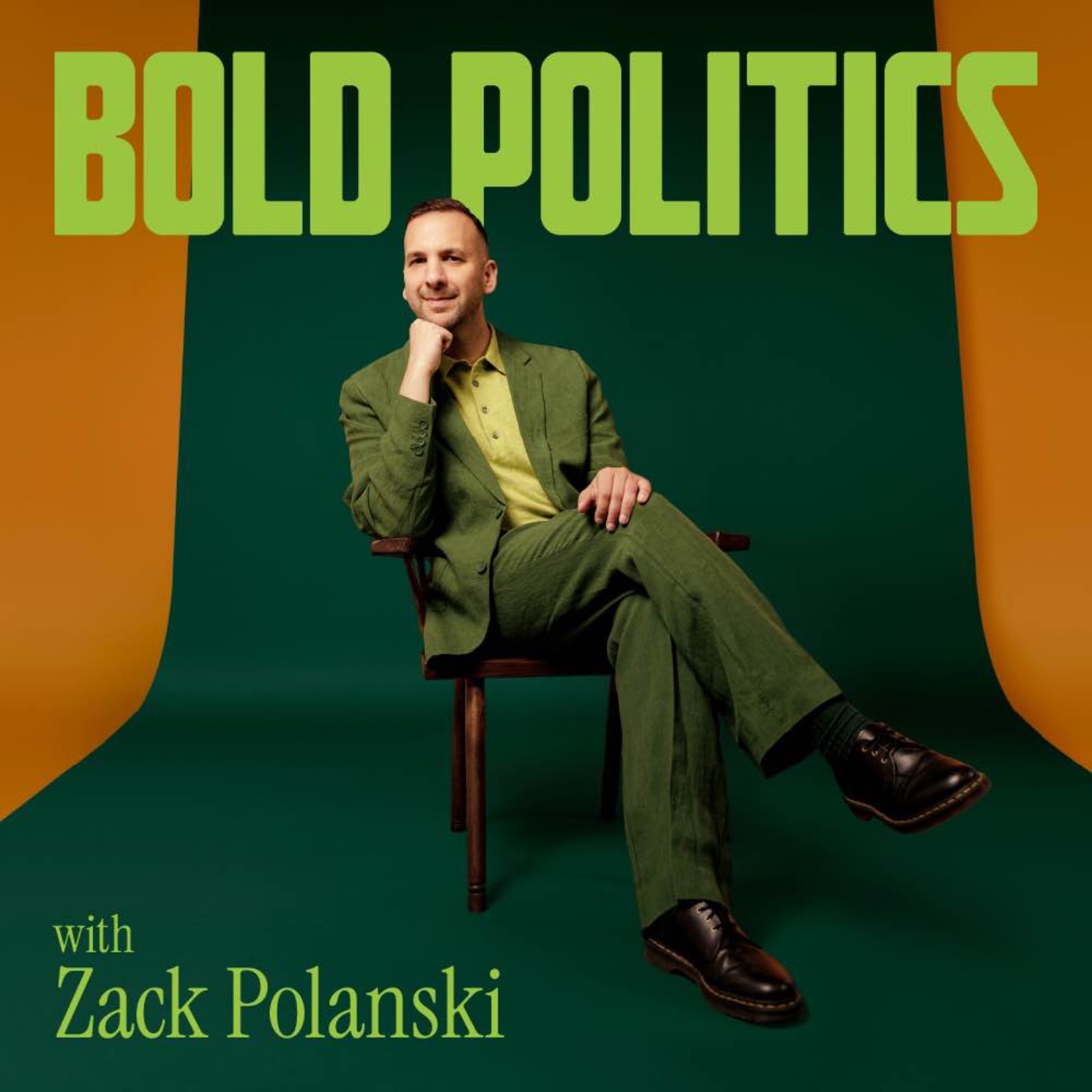
- Bold Politics with Zack Polanski
- The Science Of Prejudice
In short
In this episode of Bold Politics, host Zack Polanski engages with Professor Keon West, author of The Science of Racism, to explore the psychology behind prejudice, racism, and unconscious bias. The conversation aims to analyze how societal narratives around racism often overlook scientific data, and how prejudice manifests in everyday scenarios, including media representations.
Written by AI. May contain mistakes.
Chapters
2:14
Exploring the Science of Racism
Delve into Dr. West's views on racism and the importance of scientific understanding.
“I'm meeting the boss to give him an update on EcoTalk, but I'm feeling good.”
4:26
Reality TV and Unconscious Bias
Discussing the impact of unconscious bias in reality TV shows like 'The Traitors'.
“Fundamentally, I think if empathy and if perspective taking was enough, then we would have figured out the facts about racism a long time ago, and we clearly have not.”
7:59
The Complexity of Intersectionality
Understanding intersectionality and its relation to racism and sexism.
“And I find the unconscious bias rhetoric deeply uncomfortable.”
11:19
Racism Within Politics
A discussion on how politicians of color can exhibit racist behaviors.
“And can I ask how intersectionality comes into this?”
14:03
EcoTalk's Impact on Wildlife
Discover the positive effects of EcoTalk on wildlife and community growth.
“company chris we'd be talking about turnover rates of return shareholder dividends all of that kind of stuff but you know that we're not a conventional company and our bottom line is a very different It's about nature.”
17:02
Conversations on Racism and Bias
Explore the author's experiences and insights on racism and bias.
“I think people now know me as a racism guy, but I've done a lot of research on sexism and on anti-gay prejudice, anti-immigrant prejudice, you know, religious prejudice.”
19:14
The Nature of Prejudice
Understand the various forms of prejudice and their underlying patterns.
“But what I was surprised by was the reception of the book afterwards on a number of grounds.”
22:28
Political Messaging and Racism
Examine how language and messaging influence political beliefs around racism.
“That's for me the biggest similarity that comes out.”
26:14
Changing Perspectives on Beliefs
Learn about strategies for shifting beliefs and addressing racism.
“So you are better off saying we are in this together because you are much more likely to end up with the five pounds and you will be happier with the five pounds than you will with the three.”
28:03
Changing Minds: The Mechanics of Beliefs
Explore how beliefs function as predictions and how they can be tested against reality.
“Beliefs are prediction generating mechanisms, right?”
Show all 15 chapters
29:38
Cognitive Bias and Emotional Ties
Discuss the impact of cognitive bias and emotional connections on belief systems.
“At some point, even people who don't want to change their mind have to sit up and say, well, what do I really want here?”
31:39
Politics of Smaller Parties and Voter Sentiment
Analyze how smaller parties like the Greens can gain traction within a two-party system.
“So after your brilliant talk, I bought a book and I came up to you and you signed it very kindly.”
36:24
Shifting the Overton Window and Political Change
Examine strategies for shifting political discourse to empower marginalized voices.
“So is it part of your deliberate strategy when you say you're talking to people who are like labor curious, which I love because it sounds a lot like bi-curious in my head.”
42:00
Political Shift: From Status Quo to New Possibilities
Explore the shifting political landscape and potential outcomes in future elections.
“central parties have disappointed people enough.”
43:26
Personal Reflections and Aspirations
A light-hearted discussion on personal aspirations tied to political ambitions.
“and what tangibly happens within our public policy and set up a Green government for the next election.”

Ask about this episode
Get the gist, explore an idea or ask about something said.
 Claude
On Bold Politics with Zack Polanski, what are the key points of this episode?
Searching your listeningTranscript
Automatic transcript. May contain errors.
0:00Zack Polanski: When everything is moving all at once, your workforce, your tech stack, your business, you don't need more tools. You need one solution. That's why Paylocity built a single platform to connect HR, finance, and IT with AI-driven insights and automated workflows that simplify the complex and power what's next. Because when everything comes together in one place, growth comes easy. Experience one place for all your HCM needs. Start now at paylocity.com slash one. The hustle doesn't have to hurt. If performance pressure is making it hard to breathe, Grow Therapy helps you navigate stress, set boundaries, and actually feel like yourself again.
0:40Zack Polanski: Whether it's your first time in therapy or your 50th, Grow makes it easier to find a therapist who fits you, not the other way around. You can search by what matters, like insurance, specialty, identity, or availability, and get started in as little as two days. There are no subscriptions, no long-term commitments. You just pay per session. Grow helps you find therapy on your time. Whatever challenges you're facing, Grow Therapy is here to help. Grow accepts over 100 insurance plans, including Medicaid in some states. Sessions average about$21 with insurance and some pay as little as$0 depending on their plan.
1:16Zack Polanski: Visit growtherapy.com slash start now to get started. That's growtherapy.com slash start now. growtherapy.com slash start now. Availability and coverage vary by state and insurance plan. Racism is a very emotive subject. And so today I'm going to speak to an expert. What's really noticeable about this expert, though, is he very much prides himself on being based in evidence, data, and practically being quite unemotional. In fact, he wrote a book called The Science of Racism. A couple of years ago, I went to a book launch of The Science of Racism and saw him speak. He was being interviewed by the LBC presenter and friend of this show, Natasha Devon.
1:59Zack Polanski: He took question after question and each answer had a really interesting way of both answering the question and telling a powerful story. So I'm delighted today to welcome Dr Keon West.
2:14Zack Polanski: Hi Zach, it's a big day today. I'm meeting the boss to give him an update on EcoTalk, but I'm feeling good. Spring's in the air, feels like the new year's really starting and good things are coming. If your listeners want to do a good thing, they should switch to EcoTalk. Then they can be part of helping nature. All they need to do is go to ecotalk.co.uk slash bold politics to find out more.
2:48Zack Polanski: Kion, we've actually met before. You launched a book, The Science of Racism, that you wrote. You're interviewed by a friend of the show, Natasha Devon. Yeah, and a friend of mine as well. I love Natasha Devon. And I don't say this to every guest, but it was amazing, the book launch, particularly actually the way that questions were asked. I don't know if you remember because you probably did a whole tour of these questions.
3:08Keon West: Yes, there have been a lot of questions, but I think you probably have one in particular on your mind.
3:12Zack Polanski: Well, no, there was one man in the audience actually who challenged you on the entire idea of racism. Yes. And I would say he did it in what I perceived as quite a disrespectful way. And you were not emotional about it at all. You just engaged in a very kind of fact-based and information way.
3:25Keon West: Yes, I prefer fact-based ways of answering questions. It's interesting that you say that, because if we're thinking of the same person, the person I'm thinking about was black. Is that the person you were thinking of? No, I think this was a white man in the back of the room. See, so I'm so, I didn't even catch, so I wasn't even aware of which one was being disrespectful.
3:42Zack Polanski: But one thing I really took away from it is you said the book is called The Science of Racism. Yes. But you're almost more interested in the science than the racism part, or maybe I'm paraphrasing.
3:50Keon West: I'd say I'm equally interested in the science than the racism part. So the thing about the book is that there's a lot of really good books about racism that exist. and I would paraphrase these books as you know the history of racism the politics of racism and then there's a ton some of which I like some of which I don't like quite so much that are the opinions of racism the rhetoric of racism the hurt feelings of racism and while I think it is important to have a space for people to witness their genuine experiences this is incredibly important and it's important for us as a society to empathize with other people going through negative experiences.
4:26Keon West: Fundamentally, I think if empathy and if perspective taking was enough, then we would have figured out the facts about racism a long time ago, and we clearly have not. So as a society, every three years, we ask ourselves the same question. There'll be a BBC special out saying, does racism exist in Britain? And for someone who studies that scientifically, that is about as depressing as every three years of special coming out saying, you know, is the common cold caused by a virus or by fairies? And all the scientists would just hang their heads and rub their temples and think, what are we doing?
4:57Keon West: We know exactly what racism is. We know exactly what it looks like. We know how much of it there is. We know how to test for it, how to measure it. We know what it looks like, and we know how to stop it. And so this kind of thing where we're pretending we don't know these very basic answers is ridiculous. And I wrote the book hoping I could elevate the conversation a bit so that the next time something racist happened, And people wouldn't just be out talking about, oh, it hurts my feelings. They'd say, well, what are the facts around racism? What does it look like? How do we test for it? And that would make it a better and more productive conversation.
5:28Zack Polanski: It's maybe an unusual entry point, but you've just sparked it off me. One of the more recent conversations about racism, which in some ways is absurd, but in some ways I would say has pierced through to public consciousness, is about reality TV, and particularly the programme The Traitors, where contestants over and over again who are of colour seem to get pushed out. And then there's been this conversation around unconscious bias, or are people just playing the game? Do you have a take on all of that?
5:50Keon West: I have so many takes on that. And I have many bold takes, which is impressive since I've never watched a single episode of The Traitors. And you know what? I love Claudia Winkleman. I've seen everything she's done when it comes to Strictly Come Dancing. I love it. She's hilarious. I just never really felt like I need to watch other people play Mafia. I'd rather watch people do something like dance, something that requires a kind of skill I like to see a bit more. Although we've seen it on Strictly as well, right? We have seen it on Strictly. And in fact, I wrote a paper about it on Strictly. And I have two things to say.
6:17Keon West: So one, I have to be a bit cautious having never watched traitors. So I can't come out and say definitively, yes, people on traitors, they're being racist. I'd want to watch an episode first. But what I would say is that there's quite a lot of scientific evidence. So we know what happens when you show, for example, jurors, exactly the same evidence. So, you know, we draw up a brief of evidence and say, this is the DNA evidence we have. This is a location. This is the footage that we have of them. And all you do is you change the name of the defendant. You change the name of the person who was accused of the crime, and you can make that person sound white or sound black.
6:49Keon West: You can make them sound like white Christian, or you can make them sound brown Muslim. And you send those packets of evidence out to jurors. And what we know for a fact is that reliably, they will find the black person, the Muslim person, guiltier than the white person. And that even when they find them both guilty, they will sentence the black person to longer sentences than the white person. And that when black people do exactly the same behavior as white people, they are treated more suspiciously. And not just when it comes to courts of law, but if you send, I mean, any black person listening will laugh because they say, of course we know this.
7:20Keon West: But there are experiments in which you put black people and white people in the same clothes and send them to the same stores and have them walk around and pick up the same products. And then the security guards will follow the black people around and they won't follow the white people around. So these are the scientific experiments we do to know how racism works. We know that people of color are treated with more suspicion than white people are for doing exactly the same things. And then you have a game like traitors where the whole thing is to guess who is being suspicious based on gut feeling and almost no evidence at all and it's essentially just a big playground to be as racist as possible so it's not terribly surprising to me given what the science says that they'll be
7:56Zack Polanski: kicked out first and what's the answer about it now i'm asking about reality tv which is trivializing the entire thing but it's too big a question to say what do we do about racism in society yeah maybe it's not too big a question answer whichever one you choose so i would say um you know keeping
8:09Keon West: to traitors just for a little bit, I'd say the question of unconscious bias and traitors has come up. And I find the unconscious bias rhetoric deeply uncomfortable. And it's not because there isn't evidence that there's something going on, on what I think most social psychologists would rather call the implicit level, not the unconscious level, because unconscious says you're totally unaware of it. While implicit says you're probably not willing to just say the bad part out loud, but you know something's going on. You understand that you feel more suspicion when you're walking down a dark street and you see a black man walking across the other way than if you see a white man walking the other way.
8:43Keon West: People understand this in the same way that they understand that, well, they feel just slightly more comfortable when there's a man flying a plane than a woman flying the plane. And they won't say that it's unconscious. They know what they're doing. It's just that they have ambivalence about it or they discuss it in a way that tries to avoid the idea that they're prejudiced. So I don't like the unconscious part because when people say unconscious, I think it's really, really navel-gazing on the person doing it and not on the thing that's being done.
9:10Zack Polanski: Can I clarify, do you think it can be unconscious and it's not implicit?
9:13Keon West: I think unconscious is a very, very funny word. I think the idea that people are 100 % totally unaware of some of their bias, I think that is a difficult thing to show. But I think there is enough evidence that I am willing to accept that some bias is unconscious. But what I would also say is there's absolutely no evidence that unconscious bias is the only or even the major guider of people's behavior. Not at all. Actually, people have run meta-analyses on these and you find that unconscious or implicit and explicit bias both predict behavior incredibly well and in separate domains and incredibly reliably.
9:46Keon West: And that if we pretend that most bias is unconscious, which is again, something that science has not said, just something that people say, but if we pretend most of it is unconscious, the overall effect is to make us less interested in the bias, less concerned about it, and less likely to do anything about it. And so I just like to say bias. I'll leave it up to other people to figure out how much of it is unconscious. But scientifically, the idea that all of it is, is almost certainly absolutely nonsense. And why do we hear this phrase all the time, unconscious bias? Because it's so comfortable.
10:15Keon West: It's incredibly comfortable. Who wants to be in the UK? It's so hard to have a frank conversation about racism or sexism. You won't hear people say, I did that and that was racist. That was a racist thing to do. Nobody will do that. So you can get on television and say literally anything. You know, you could say that you hate seeing a bunch of black and brown faces on television, and then you cannot be racist. It must be a misunderstanding. It must be something else. It must be impolite. But nobody will say that's racist. And similarly, men will get up and say all sorts of things, but we'll never say, well, that was sexist.
10:48Keon West: We just won't do that. I think that's considered so impolite and so hurtful to own up to that bias that we sneak in a word in front of it like unconscious. And then suddenly, well, we don't have to feel quite so bad. It's unconscious bias. It's everybody has it. And while I accept that, you know, there's some idea of the strength of implicit bias and the pervasiveness of it, I think that focus, which makes us feel calmer about the bias and makes us feel better, that's really for the benefit of the people being biased. And it's not at all for the benefit of the people who are on the receiving end of the bias.
11:18Zack Polanski: That's so well put. And can I ask how intersectionality comes into this? So if we look at power and inequality, we have a leader of the opposition, Kemi Badenokh. We've had Rishi Sunak. We've had plenty of people who I would argue have cared, not really cared about inequality, but they have been people of color. Yes.
11:34Keon West: So for me, intersectionality would more be about, you know, Kemi Badenow being both black and a woman, having to juggle those two things at the same time. So I'm black, but my experiences would not be the same as hers. She has a different set of challenges to face. And that's because there are challenges that come with being a woman. So when men and women, so when black people and white people apply for the same jobs, what you tend to find is that white people are accepted in the UK. So you do the CV test, you get 1 ,000 CVs, and you put white names on half and black names on half, and you send them out.
12:06Keon West: What you get is really stark, reliable differences in who gets hired. So the white people are invited for interviews and the black people are not. Gaps as big as 50 % in the UK. That's what we're looking at. These are quite big. For women, you get something that is, I mean, you also get gaps depending on the job. But for some jobs, women are hired more than men. What you get, which is incredibly reliable, is a difference in how much they're offered in pay. that women are just paid less to do the same work. That's where that joke comes from, that men have more money because they do high-paying jobs like doctor and lawyer and women do low-paid jobs like female doctor and female lawyer.
12:40Keon West: And that's true. That does come out in the data. We offer women a lot less money. Kemi Bednock is both black and a woman and therefore has to deal with both of these things at the same time. And for me, that's the intersectionality of it. But I think what you're asking about is more the tricky question of, well can people of color do racist things and the answer is yes it's very much yes and some people will argue with me and say well that's not possible because people of color can't be beneficiaries of you know what they call the white supremacist system i'm like absolutely but what i mean by it is if i run that experiment again where i do a thousand cvs and half of them have black names on them half of them have white names on them and i send them to all black employers or all Indian employers or all Chinese employers, I do that.
13:25Keon West: Do we get a situation in which the black people over select black people like the white people do? And the answer is largely no. Black people tend to be much more moderate. So they're much more in the middle and often to over select white people as well. And so in that sense, yes, they can be racist in that way. And so just because a politician is black or brown, the idea that they therefore can't be doing racist things scientifically is completely idiotic and they can be doing the most racist things that does not stop them it might not even slow them down chris packham here chief ecologist for ecotalk
14:02Zack Polanski: it's been a big day for me because i've come to answer to the boss if we were a conventional
14:07Keon West: company chris we'd be talking about turnover rates of return shareholder dividends all of that kind of stuff but you know that we're not a conventional company and our bottom line is a very different It's about nature.
14:18Zack Polanski: It's about birds, bats, bees, ponds, beavers. Tell me, how are we getting on? Well, I'm pleased it's not the former because I don't know anything about that. But I can tell you that EcoTalk is paying massive dividends for wildlife. Yes, the ponds are in, the trees are in, the wildflowers are in, the bird boxes are up, the barn owls are prospecting in the boxes. And we've got beavers and more beavers coming. Dale, the company is booming. Fantastic. And subscriber numbers are booming too. I mean, I think we have quadrupled in six months we're at 20 ,000 people and this is what's powering the whole venture people's mobile phone bills allowing us to do this for nature i love it it's absolutely fantastic do think about joining up ecotalk.co.uk slash bold politics the hustle doesn't have to hurt if performance pressure is making it hard to breathe grow therapy helps you navigate stress set boundaries and actually feel like yourself again.
15:11Zack Polanski: Whether it's your first time in therapy or your 50th, Grow makes it easier to find a therapist who fits you, not the other way around. You can search by what matters, like insurance, specialty, identity, or availability, and get started in as little as two days. There are no subscriptions, no long-term commitments. You just pay per session. Grow helps you find therapy on your time. Whatever challenges you're facing, Grow Therapy is here to help. Grow accepts over 100 insurance plans, including Medicaid in some states. Sessions average about$21 with insurance and some pay as little as$0 depending on their plan.
15:47Zack Polanski: Visit growtherapy.com slash start now to get started. That's growtherapy.com slash start now growtherapy.com slash start now. Availability and coverage vary by state and insurance plan. Every idea starts with a problem. Warby Parker's was simple. Glasses are too expensive. So they set out to change that. By designing glasses in-house and selling directly to customers, they're able to offer prescription eyewear that's expertly crafted and unexpectedly affordable. Warby Parker glasses are made from premium materials like impact-resistant polycarbonate and custom acetate. And they start at just$95, including prescription lenses.
16:27Zack Polanski: Get glasses made from the good stuff. Stop by a Warby Parker store near you. Guys, it's no use putting it off. The best time for an underwear refresh is now. Tommy John underwear is designed for a perfect fit that stays put all day. There's zero chafe thanks to four times more stretch than competing brands. And their innovative horizontal quick-draw fly is a game changer. With over 30 million pairs sold, there are thousands of men out there more comfortable than you. Don't settle for less. Go to TommyJohn.com today for 25 % off your first order with code COMFORT. That's TommyJohn.com slash comfort.
17:01Zack Polanski: Tommy John, comfort perfected.
17:29Zack Polanski: anything surprise you or did you change your position on anything based on the evidence where you went actually what i thought was wrong and this is now true ah so because of the way i wrote
17:37Keon West: the book um no that wasn't it wasn't really possible to be surprised because uh i i wrote the book in nine months which is very quick that's what my editor tells me she tells me i'm one of the fastest writers she's ever met which is quite good you know she's had quite a lot of experience in the area and i felt very proud of that uh but it's it's the way the book was written I started doing research on bias in general. So not just racism. I think people now know me as a racism guy, but I've done a lot of research on sexism and on anti-gay prejudice, anti-immigrant prejudice, you know, religious prejudice.
18:11Keon West: But I was doing all of this research and I started to understand how it worked. So I got what the system looked like. I understood the intersecting pieces. I could see what was happening and what we could do about it. And then I'd go out and I'd have conversations with people and they'd say, no, no, no, no, no, racism doesn't exist. I think, no, this is very easily provable. And I'd walk them through the experiments. And then someone else would say, yes, yes, yes, it exists. But everywhere has always been racist. I'm like, well, perhaps, but we can measure that this town here is a lot more racist than that town there.
18:40Keon West: So we can do something to make this town resemble that town. This is a thing we can do. And I would have these conversations for two decades. So when the time came to write the book, it was essentially a work of immense frustration, which some people say you can actually feel in the book. I've tried to write it as a completely unemotional book. And I think that's easier for me than for many people. I'm not a terribly emotional person. But I just, I kind of vomited it all out because I said, these are the conversations I've been having for 20 years, and we can have a better conversation now. We don't need to keep having these.
19:10Keon West: So I wasn't surprised by the process of writing the book. But what I was surprised by was the reception of the book afterwards on a number of grounds. So first of all, I am still waiting kind of nervously, but also with some excitement for somebody, someone extremely disinterested in the idea of racism, someone who doesn't believe in it and doesn't want to talk about it and hates it. I want someone to read it and tear the evidence of the book to shreds. And no one has done this. It's been a year and I keep waiting. Where are you? Gone that throne. Come on. I wrote the book in part for this wonderful Socratic experience, and you have terribly let me down.
19:51Keon West: So the conclusion I must come to is that I must be right. And that's why they're not doing it. I have had some criticism of the book, but this criticism is generally what I would call at a very base level of conversation. It's the kind of, this isn't science at all. It's just anti-white racism or the occasional person who will just say a racial slur, which, while interesting, does not do much to dismantle the evidence in the book, which I think therefore has shown itself to be quite strong. But the other thing that surprised me was other people's responses to it. And this started with my editor, who told me she'd stop reading the book because she was going through it, and she'd cry.
20:24Keon West: She'd find herself crying on the tube. And I'd say, well, this is literally a series of scientific experiments. And she'd say, yes, but they're terrible experiments. They show how awful it is, how badly we're treated, how much it gets into everything we do in our friendships or relationships or doctors or police or children. And it's heartbreaking. And I didn't write it to be heartbreaking, but I took a step back and I reread it with that thought in mind. And it is heartbreaking, but also at the end, optimistic. Because as I say in the book, racism, like all the other isms, racism, sexism, all of them, anti-Semitism, every last bit of it, we made all of it up, all of it.
21:05Keon West: and at any moment we could stop it and that is within our power to do and you mentioned that you
21:10Zack Polanski: also specialize or you're also interested in the other isms i am interested in the other is it the same pattern of inequality or structural difference through all of them or do they all have their
21:18Keon West: particular um criteria they all have their particularity so when you have um so like i said with black people you know versus women which i know is a ridiculous thing to say because some black people are women and some women are black people but when you run the black white experiments you find black people just aren't invited to interview as much. When you run the men-women experiments, what you find more is that women are offered much lower pay. So there's similarities, of course, sometimes, depending on the job, women are invited less, and sometimes, depending on the job, black people are offered less pay.
21:44Keon West: But you find different patterns. You find it's less likely that, for example, segregation is not a strategy that people who don't like women typically take. Most men, even the ones who really don't like women, still want women around. whereas white people who don't like black people don't want black people around and that's that there are differences in the the particular nature the particular natures of the prejudice but there are also a lot of similarities a lot and the similarities often come out in the excuses in the um the way we justify the prejudice things that we do in the reliance on bad science or phony science or things that are just made up rather than cold hard facts the ways that we try to do the things and tell ourselves we're not doing them.
22:30Keon West: That's for me the biggest similarity that comes out.
22:33Zack Polanski: And something I struggle with when I listen to you is if you were giving advice to a politician or say a political leader of a party. I remember when I was preparing for Question Time recently which was an immigration special and I was working with my team and we were talking about what arguments do we really want to centre. And it won't surprise you that when you go on national TV you often think they're a group of people who already agree with me about things and so I don't necessarily need to speak to them. They know who I am, they know my values, I'm not going to betray them but they don't need to speak in that language the language you really need to speak to is in those kind of waivers or middle we had a moment where we kept butting up where i remember at one point asking the question is there a group of people in this country that are fundamentally racist and actually the language of legitimate concerns is not a language that can be used without appeasing what is fundamental racism and we have the science for that or is it the role of a politician through emotion and storytelling which sounds like it's not necessarily your bag but there's also evidence that emotion and storytelling can shift people's attitudes.
23:28Keon West: Yes, so I think you're right, of course. Emotion and storytelling does shift people's attitudes. I don't like the term fundamentally racist because for me it rings a little bit too much of trying to understand, again, the secret heart of people, which I only very scarcely think exists. What I'm much more interested in is what can change the patterns of their future behaviour and I suppose in your case specifically their voting behaviour. So what's the thing that will take them over the edge? And there are a number of ways of doing that, even with people who are what someone would call fundamentally racist.
23:59Keon West: So people, to different extents, are self-interested. So let me give you an example. Let's pretend that I had a tenner in my wallet, which I don't, actually. So this is how poorly we're doing. Or perhaps we're in a cashless economy. And so I have a tenner. And here's the thing. We can split this tenner one of two ways. You can get five pounds, and I can get five pounds. Or you can get three pounds and I get one pound. And which of these is more attractive to you? I'm trying to second game it because I remember hearing about this experiment and people's sense of fairness. I think what would surprise you is that there's a number of people who would go for three pound, one pound.
24:35Keon West: It does surprise me. And so what I'm trying to do when I deal with people is understand their motivations, which to me aren't always logical. To my logical motivation, the thing that leaves me with the most money is the better option. Always, all the time. But not everyone wants the most money or the most resources. What they want is a bigger separation between themselves and other people. And so they are willing to go down with the ship if that means that the other people they don't like are even worse off comparatively. And I think that explains a lot of the difficulty sometimes when we're talking across political aisles, because we think we're making sense and swaying people by saying, look, you will get five pounds.
25:13Keon West: And they're saying, I'm not interested in five pounds. I am interested in making sure the difference between me and them is higher. And right now, the difference between me and them is nothing. So that, I think, might be the difficulty. And so whether they're fundamentally racist or not, for me, that's more of how do we operationalize this? How do we change it? How do we reach people who really are concerned with the fact that they as, let's say, homegrown, 10-generation white British people, they should feel better. They should feel more British. They should feel higher up in status than immigrants or dark-skinned people or whatever else.
25:46Keon West: And that might genuinely be what they want, even if that's not what they're willing to say out loud. But that'd be something we need to understand and we need to convince them. No, no, actually, think about this really carefully. You are much better off with a functioning NHS. You are much better off with more public services and fewer private services. You are much better off with less in the profit margin, less for you to potentially one day, hypothetically, become a billionaire. Something that is provably less likely to happen today than it was a generation ago. So you are better off saying we are in this together because you are much more likely to end up with the five pounds and you will be happier with the five pounds than you will with the three.
26:21Zack Polanski: And is there a common set of criteria that can be seen or observed between people who want the three pounds and the one pounds to the five pounds and the five pounds?
26:28Keon West: Yes. I mean, I don't like to say, but there is a bit of a political skew when it comes to the three pounds and the five pounds. So when people run this experiment, they also find that it matters with the in-group, out-group, where you think about things. So it's another way that racism tends to show itself that if you put two white people in the scenario, they're much more likely to just go for the five pounds. But if you put a white person with a black person, then they're more likely to say, well, I want the three and give them the one, which is one of the most interesting ways that we show that racism actually hurts the people who are being racist.
26:58Keon West: And I don't want to harp on that too much, because I think it's much more important to talk about how racism hurts the person who's a recipient of the racism, the person who ends up with the one pound, which would be me, by the way, to be completely clear about that. That's why I don't like it very much. But I think it's also important to recognize that when we talk about racism or anti-immigrant prejudice or prejudice against asylum seekers or prejudice against Muslims or prejudice against Jewish people, all that stuff, there's this idea in some people's minds that if we can push all these people down far enough, then we must be better off.
27:30Keon West: That's not true, actually. A lot of research shows that sometimes you can take resources and time and energy from them. But sometimes these ugly political divisions make you much worse off as well. And if you keep making those mistakes, you end up in a devastating position. And I don't think that that extra, I think you would have rather just taken the extra two pounds than invested in a bunch of hatred and ended up poorer.
27:53Zack Polanski: And so my final question, I promised for now before you can ask me some questions, is has there been any research about what to do about that? So if someone prefers for three pounds to one pound, how to shift them?
28:02Keon West: Well, there's a ton of research on how to change people's minds in general. Beliefs are prediction generating mechanisms, right? So I believe that if I step in the road and I'm hit by a car, I'm going to die. I think so. If I step in the road and I'm hit by a car and the car crumples, you know, like one of those Marvel movies, a car just crumples into nothing and I just stand there. I am forced to alter my belief. I have to because what I expected to happen did not happen. And if, you know, conversely, I think I can walk into the road and be hit by a car and it'll crumple like I'm Superman. And actually, I just break both my legs.
28:37Keon West: I am forced to alter my beliefs because what I wanted to happen didn't happen. And I think we often see situations in which we are told that something will happen if we do something else. If we reduce immigration, you will be richer. If we privatize this part, so if we privatize water, if we privatize mail, if we privatize the NHS, you will be better off. These are prediction generating machines. And I think one thing that's useful to do is to get people to recognize the predictions they have. Like, I will feel better once we get rid of a bunch of immigrants. Really write that down and clarify it.
29:14Keon West: And then see what happens every time we take a step in this direction. Is this making you better? Are you richer? Are you happier? Are you getting along better with your neighbors? Are your children in a better position? These are real beliefs people have that are testable. And that, I'm going to be completely frank, are wrong. And they're easily provable as wrong. And so if we continue to generate these predictions or these facts that do not align with people's predictions, get them to make a prediction over and over again and see how wrong it is. At some point, even people who don't want to change their mind have to sit up and say, well, what do I really want here?
29:47Keon West: Do I want this or do I want that? Because if I want that, I'm clearly not getting it by going this way.
29:52Zack Polanski: I've lied to you, which is never a good look. One more question. Just one more question. Cognitive bias, though. Isn't it an issue that sometimes people just get further entrenched in what is objectively not true?
30:02Keon West: It is. people can get further entrenched if they have a real emotional tie to something. And we've all seen people do that. I don't want to talk too much about anyone's political beliefs, because let's just stick to something personal. But you can see the person who's obviously in a friendship or in a relationship where the person's taking advantage of them, and everyone can see it except them. And they need to believe that this person is on their side for whatever reason, self-esteem or whatever else. But generally, when we do this kind of bias, we don't do it by repeatedly making honest predictions and then butting up against the facts, the reality of the world that doesn't agree.
30:38Keon West: We do this by altering our predictions, by playing games with ourselves where we forget what predictions we made. That's why I'm like, get them to write it down, get them to commit to a prediction. We get them by being really selective about the information we pay attention to. So there's a lot of pigeonholing and siloing and echo chambering. So I just don't want to see anything, any experiment, any data that would ever contradict anything I say. People do this. And some people do it a lot more than others. But if we can break people out of that, the mere necessity of constantly butting up against a world that does not align with the beliefs that you say you have makes it very difficult to keep them.
31:15Keon West: And most people then, even if they don't want to, are forced to adjust a bit. So if I believed that, you know, by going out into the road and standing in front of a car, I would be completely unharmed and the car would crumple up like a piece of paper. I would probably just avoid roads because I don't want to be confronted with reality. But what you might do is just push a trolley with a box against me and see that the trolley is oddly fine and I am now in some pain. So maybe I should avoid doing anything more drastic than that because the evidence isn't on my side.
31:43Zack Polanski: So after your brilliant talk, I bought a book and I came up to you and you signed it very kindly. I was very honoured to sign it. I think Natasha introduced me back then as the deputy leader of the Green Party. Yes. And you immediately fired some questions at me. I had a question.
31:56Keon West: I had a big question for you, which admittedly I'd say is a question that you have, I think, answered through behavior. So you don't have to answer through words, you know. So with the actions, you've shut me up. So I will own that. But I still think it's a useful question because I asked you then, like, look, let's say that I completely agree with everything that you stand for. Wonderful. Sure. Great guy. However, practically, we live in what is effectively a two-party system, that for a long time, it's really just the conservatives and Labour, that this is the likely outcome of a vote. And so I'd say to – actually, I've said this exact conversation with my wife, so I hope she doesn't mind me outing her in this way.
32:35Keon West: But she'd say something like, well, I'll vote for the Greens. And I'd say, you know, the only outcome you're not going to get if you vote for the Greens is a Green government. You're going to get a Labour government or a Conservative government. This is what you're going to get. So in what's effectively a two-party system, how do you then convince people to join with the smaller parties? Now, this is now a different question because you've obviously done that. So now when you look at the polls, you can see that the Greens are now above, depending on which poll you're looking at, Labour and the Conservatives.
32:59Keon West: So clearly you've said, well, this is possible. But I guess the question would be still, how do you do that? How do you convince people that the smaller party is where it's worth going?
33:09Zack Polanski: Yeah, I think there's three responses. So one, you pretty much was in the presupposition. I think you get bigger, so you're not referred to as a smaller party. And we're doing that as membership and polling. But we'll put that one to one side because you're only in so much control of that. But I think there's a real question right now of we have Keir Starmer, who seems to have a strategy of whatever Nigel Farage does. He then tries to replicate in some sort of more potentially respectable way or he does it with a sad face. But I would argue, I don't think I would even argue, I think it's objectively true at this point that he's pulled the Labour Party to the right.
33:37Zack Polanski: and so I said over and over again when I was elected that actually I wanted the Green Party to make Labour more scared of the Green Party than they are to reform what I believe is going to happen is they're going to attack us and they're going to carry on going even further down in the polls and I think people especially people who are Labour curious are going to go guys we're not voting not supporting you because you weren't right wing enough we're not supporting you because you're not changing our material conditions now I think it comes back to the entire conversation we've just heard about race and class and sexism and all the isms.
34:10Zack Polanski: Emotionally, I would hope in this country that people would say, we're not voting for you because you're not showing enough compassion or humanity, you're being too racist or you're not representing the working class. If I look objectively at the evidence, that's not necessarily true. However, if I look at the evidence, it is true that people ultimately want to change their material conditions. They want to not worry about their bills. They want to make sure that they can afford rent. they want to make sure that a family is supportive and their kids can go to school etc and when i say evidence i'm partly going off focus group there and partly going off uh anecdote which i know you will say it's not evidence in the plural as i'm going to be very careful with the scientists there and but also you know it's not like i've knocked on a few doors i've knocked on huge amounts of doors and again plural of anecdote is not data but i think at some point you i'd be interested this is a side conversation what you think about that because i'm not someone who's that keen on focus group because my argument is I speak to a lot of people and that is not self-selecting I'm literally randomly going to communities and knocking on doors and having conversations with whoever will answer the door of course whoever answers the door is partly self-selecting because there'll be some people who just want to answer the door but they don't know who's knocking the door you know and they introduce myself what I'm hearing over and over again though is people are worried about the cost of living crisis and yes they're worried about these other things but actually the cost of living crisis is ultimately what will cut through So the third thing I was going to say is I believe if the Green Party can present a program that can tangibly change people's material conditions, both in vision in terms of what we'll do at the next general election, but more practically at local elections by getting Greens elected and people seeing in their local areas, oh, things are tangibly changing and I feel happier.
35:46Zack Polanski: My life is changing in my local area. It feels like I'm more empowered, not just feel more empowered. They are more empowered because they've got a space at the table. I think that change is a more important question than who is in government. And that sounds like a big question. But the more important question is who are we as a society? How empowered are our citizens? And how much agency do people actually have on the ground? And so I think the Green Party can do two things at once. Both act as the pressure to whoever is in charge as the government. But I'm not going to stop there. I'm not leading a party that just wants to be a pressure group or a lobby group.
36:19Zack Polanski: I think effectively you then demonstrate your theory of change. and then you do eventually become the government.
36:24Keon West: Are you concerned? So is it part of your deliberate strategy when you say you're talking to people who are like labor curious, which I love because it sounds a lot like bi-curious in my head. You're talking to people who are labor curious. And the idea is that what you're saying is you think labor is making a mistake trying to capture people from reform, which isn't going to happen. That's not what's happening. Instead, they're losing people from more left-wing circles. Is it then part of your explicit mission to shift the Overton window. So are you saying the Overton window has been shifted to the right and now you're shifting it back to the left?
36:57Keon West: And I'm just curious, then how far to the left are we shifting it? Are we talking about free Wi-Fi everywhere? Are we talking free public transport? Are we talking free school meals? Are we talking, I mean, I assume we're talking at the very least the stabilization of the NHS, but how far is this Overton window being shifted?
37:13Zack Polanski: I think there's two things there. And so I should clarify, Labour curious voters are absolutely part of the coalition and part of the people that want to vote for us. but actually again reflecting on the entire conversation we've just had i'm as interested and genuinely as interested in people who might be thinking about voting reform uh because very often speaking to lots of these people they are sick of the old party politics of the labor party and conservative party i was about to say they feel like they've been left behind they don't feel it they have been left behind they've been promised things over and over again but decades of austerity that's continued under a labor government has meant they are feeling more and more disenfranchised and more and more disillusioned and i was really struck when i released a recent party political broadcasts that focused entirely on the cost of living crisis that there were people who self-identified as right who were posting it and saying he's right about the problems i just don't agree with him on the solutions and so i see that as the beginning of the connection you go okay we are diagnosing what the problem is here you just think the problem is people of color or they probably wouldn't even phrase it like that most of them the problem migration or stop the boats or whatever it might be and i believe the problem is multi-millionaires and billionaires or more specifically governments who are not taxing them properly and allowing them to buy too much of the media, which is buying our democracy.
38:24Zack Polanski: And so there's a difference in diagnosis of what the solution is. I'm going to answer your question directly, but there's one other story I want to tell you. I've never told this story before. In my second month of being leader of the party, we saw the dial shift slightly on wealth tax, on people's support of wealth tax. And a friend of mine who works in political comms said, it's great to see this dial shifting, and you know you're a big part of that. and I said yes and absolutely there's campaigners, Gary Stevenson, Tax Justice UK, left-wing Labour MPs, there's lots of people who are pushing on this area so this was not a single-handed mission either of me or the party, it's lots of people coming together.
38:56Zack Polanski: It's also undoubtedly true I was getting immeasurably more airtime than the Green Party have ever had and I was talking repeatedly about wealth tax and I was like why would I do this job if I didn't think that I was going to shift the dial and he said I've worked with lots of politicians for years and it's so refreshing to meet a politician who believes they can change things through their arguments and their narrative and so often i think in politics or in campaigning people kind of go through the motions and think just have to say and do these things but i'm not really changing people's minds i'm totally uninterested in having a moment on a microphone where i'm not looking to change people's minds sometimes to make people feel unity and solidarity is important so sometimes you're not always changing people's minds you're saying someone else thinks and believes what you're saying and can we just feel good and hopeful for a moment but the majority of the time i'm thinking about how can i change someone's mind now there's a question there do you go so far out of uh where your kind of politics are that you're reaching as far as possible or do you shift the overton window slightly to people who are wavering and say very often it's about dealing with risk adversity so you don't have to be worried about what my plans are because this is the impact it's going to have and i can prove it because of x y and z and there's particularly difficult areas for that.
40:06Zack Polanski: I think the economy is the biggest area or they're worried about defence, about national security and that's something that really preys on people's fears and as you know fear is an incredibly powerful emotion to create risk adversity. And so yes to shifting the Overton window, yes to shifting it as much as possible but shifting it in rapport with the people that you're trying to convince so you don't shift it so fast that you lose that connection and you lose credibility. So I want to shift it as far as it needs to shift eventually to deal with all the problems that we have in our society which I think a lot of the suggestions you were just making are the exact things to make.
40:36Zack Polanski: I would say keeping our National Health Service nationalised is a low bar for me. There's lots more that I want to do than that. But I think at the most basic, when we have a health secretary who's taken over a quarter of a million pounds in private healthcare, we have Palantir, a military surveillance company who specialises in artificial intelligence who have a renewable of their contract next year, despite their active participation in a genocide in Gaza. I would say a low bar is what we need to face right now is to stop the damage and put out the fires and do the most basic. But I don't believe that's enough and it shouldn't be enough.
41:10Zack Polanski: I think you need a hopeful, credible alternative vision that is propositional and looks very different to just we're going to stop the bad things happening. I think the hope comes from the great things. But if you run straight to hope without tackling the immediate crises, then that's just as incredible.
41:25Keon West: No, I hear that. And I can respect all of that position. And what say humble in your positioning of yourself is a recognition that there are similarities between the Green Party and reform in that similarly, I could have had a conversation with someone else who said, oh, I'm going to vote for reform. And I could have said, well, one thing you absolutely will not get is a reform government. And I think one thing that I think is a fairly uncontroversial factual statement now is that these things are no longer true, that the parties people thought were the fringe parties, the unelectable parties have now shifted things enough, or perhaps the central parties have disappointed people enough.
42:02Keon West: But in any case, the numbers have now shifted so that there's a much greater likelihood of these parties who previously wouldn't have been seen as having a shot as now really having a legitimate shot. You can now, it is possible to get a reform government or a green government. These are now options that exist on the table. And so I think I admire that humility of recognizing the similarity and recognizing that the similar thread running through them is a belief that people are no longer happy with what they've been given. They're dissatisfied with what's been served. And they're just thinking about changing restaurants.
42:34Keon West: And they don't know whether it's this restaurant or that restaurant. And your goal is to show them that yours is in fact the better one.
42:38Zack Polanski: I'd go one step further too, which is, I would say the only thing that seems pretty predictable to me is that the status quo won't maintain, that the centre has collapsed. And so the question becomes, what do we shift to? Do we shift to what I would describe as the creeping rise of the far right, whether that's Tommy Robinson, what we're seeing in the United States with ice and certainly what I believe Nigel Farage represents in terms of his vested interests and the rhetoric he presents, well, are we going to shift towards what I would class as a more socialist, progressive vision of what the future can be like under a green government?
43:11Zack Polanski: Does that happen at the next election is a question that the audience often tell me that I'm not being ambitious enough. But I believe at the next election, the key really is to get as many green MPs as possible to hold the balance of power, to start to shift or to not to start to to shift dramatically the discourse in this country and what tangibly happens within our public policy and set up a Green government for the next election.
43:33Keon West: Well, I would wish you, I don't know if I'm legally allowed to wish you all the best of luck. I suppose I am as an individual. I cannot, as a representative of any particular organisation, I cannot wish you anything. But as an individual, I can wish you the best of luck with it. Well, thank you very much.
43:47Zack Polanski: And very much appreciate you coming on. It's been fascinating.
43:49Keon West: No, it's been a genuine honour. I'm very pleased about this. So, you know, one of these days when you're, you know, sitting in the Houses of Parliament, I'm going to show my children the picture that we're going to take and say, look, that's the prime minister. And daddy was on a podcast with him. And I'll be very pleased about that.
44:04Zack Polanski: I mean, that's one of the nicest things I've said to me on the podcast. So I'm going to quit while I'm ahead. Thank you very much, Keon.
44:14Zack Polanski: Hey, Zach. EcoTalk was set up to use its profits to help restore nature. There's a biodiversity crisis going on and we need bold ideas to solve it. You're a bold guy, Zach. Your audience like bold actions and we're bold at EcoTalk. We're making a difference at our rewilding sites across the UK. The more people that join EcoTalk, the more great work we can do. So come on, join us. Go to ecotalk.co.uk slash bold politics. Guys, it's no use putting it off. The best time for an underwear refresh is now. Tommy John underwear is designed for a perfect fit that stays put all day. There's zero chafe thanks to four times more stretch than competing brands.
44:59Zack Polanski: And their innovative horizontal quick draw fly is a game changer. With over 30 million pairs sold, there are thousands of men out there more comfortable than you. Don't settle for less. Go to TommyJohn.com today for 25 % off your first order with code COMFORT. That's TommyJohn.com slash COMFORT. Tommy John. Comfort perfected.
From the publisher
What is the psychology behind prejudice? Are some people fundamentally racist in our country? Is there such a thing as "unconscious bias" and how does this manifest on media like reality tv?
Zack Polanski speaks to Professor Keon West, author of The Science Of Racism.
Get tickets to Bold Politics Live with Zack Polanski and Cody Dahler at Hackney Earth.
Bold Politics Live is at Crossed Wires Festival in Sheffield on July 5th.
Join Nature's Network and switch to Ecotalk, the only network service provider that gives all its profits to nature restoration: ecotalk.co.uk/boldpolitics
Email: [email protected]
Hosted on Acast. See acast.com/privacy for more information.
More from Bold Politics with Zack Polanski
All episodesWe use cookies.They keep VO running smoothly and help us improve it. Privacy policy