
 Ask ChatGPT
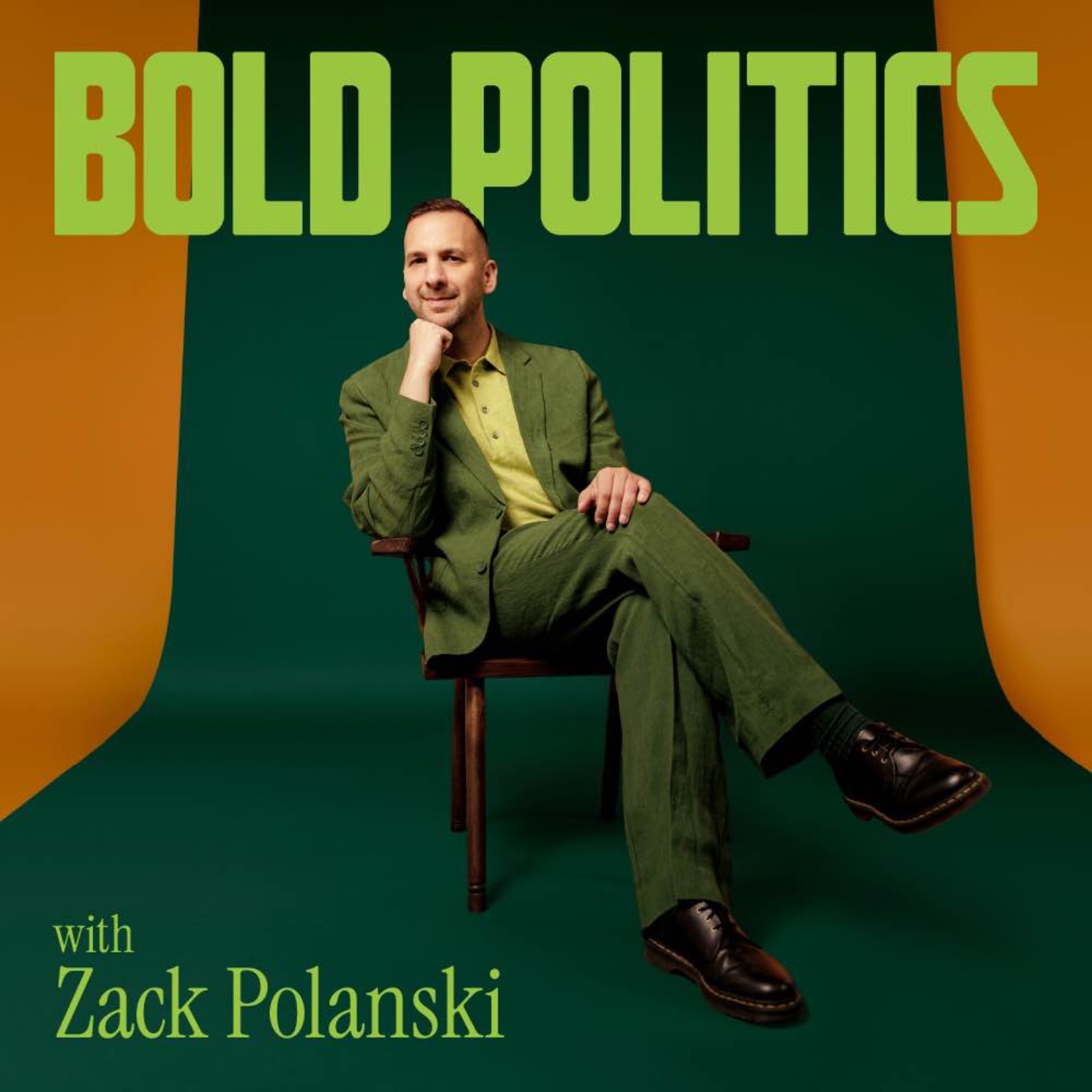

- Podcasts
- Bold Politics with Zack Polanski
- What Does A Green Coalition Look Like?
Bold Politics with Zack Polanski26 May 2026 · 35m · 24 chapters

What Does A Green Coalition Look Like? | Ernest Urtasun
In short
Ernest Urtasun (Spain’s Minister for Culture, Greens) explains what a “Green coalition” looks like in government, arguing for eco-socialism, international solidarity against far-right politics, and climate action tied to cost of living and social justice. He describes Spain’s stance on international law (Palestine; blocking U.S. base use), coalition identity management, and policy examples on wages, labor, housing, migration, wealth taxes, AI regulation for creators, and cultural empowerment.
Guest backgrounds
Ernest Urtasun is Spain’s Minister for Culture and a Green eco-socialist figure; he previously worked as a theatre actor and has an activist background (arrested with Extinction Rebellion). He also served in the European Parliament.
Key claims
“Wars of aggression” and “genocide” require progressive internationalism; appeasement fails; far-right gains are fought by reconnecting with abandoned neighborhoods (housing, inequalities); eco-socialism links climate and working-class inequality; culture is a “wall” against far-right narratives.
Notable examples
Spain’s minimum wage raised 60% and labor law reforms reducing precarious contracts; housing disputes over foreign investment (80% of residential investment) and rent caps/renewals; regularization of over 500,000 irregular workers; EU-level rules for AI training authorization/transparency/remuneration; free public transport during Ukraine-war period; cultural vouchers enabling creation (books, guitars, microphones, podcasting).
Written by AI. May contain mistakes.
Chapters
1:37
Introducing Ernest Urtasun
Zack introduces his guest, Ernest Urtasun, emphasizing his role in government.
“Acast helps creators launch, grow, and monetize their podcasts everywhere.”
1:57
Spanish Government's International Stance
Ernest discusses Spain's strong international stance under his government.
“As a former theatre actor, I have to talk to you about culture.”
2:34
Public Sentiment on War and Law
Ernest reflects on public sentiment regarding wars and international law in Spain.
“Look, you need to understand, Spain has a very strong memory of what happened in 2004 when we illegally invaded Iraq together with your Tony Blair.”
3:46
Media Reactions and Diplomatic Tensions
The discussion covers how Spanish media reacts to the government's decisions.
“And how are the Spanish media taking this?”
4:25
Rising Far-Right Challenges
Ernest and Zack discuss the rise of the far-right and the need for solidarity among progressives.
“And well, of course, that has created lots of tensions and Donald Trump has threatened with new tariff spreads and things like that.”
5:04
The Role of Eco-Socialism
Ernest defines eco-socialism and its relevance in the current political climate.
“We're seeing the rise of the far right, including here in the UK.”
6:54
Labor Reforms and Social Impact
Ernest outlines key labor reforms and their impact on society in Spain.
“Eco-socialism for me is to understand that both the climate crisis and the neoliberal politics are both affecting the lives of the working class in our societies.”
7:58
Housing Crisis in Spain
The ongoing housing crisis in Spain and government strategies to address it are discussed.
“And also we are trying to do politics and policies that affect the cost of living.”
9:56
Coalition Government Dynamics
Ernest talks about navigating coalition politics and maintaining political identity.
“One of the things that we are most discussing now at the moment is that we want a mandatory prolongation of the rents in order to stop housing rents to increase.”
12:20
Addressing the Climate Crisis
The conversation shifts to strategies for tackling climate change and public engagement.
“And for instance, I can tell you the measures that are trying to forbid, as I said before, foreign investment in housing in our country, the Social Democrats do not agree on that in Spain.”
Show all 24 chapters
14:01
Investing in Clean Energy and Public Transport
Learn about the importance of investing in clean energy and public transport for tackling the climate crisis.
“And we have been fighting for free public transport in Spain.”
14:50
Navigating Migration Conversations
Explore how Spain navigates the complex issue of migration and public services.
“It's such a breath of fresh air listening to you because obviously these are conversations I have, including in the studio all the time.”
15:39
The Role of Public Services in Migration
Understand the connection between public services, migration, and responsibility.
“And at the end of the day, you cannot allow the far right to start saying that migrants are responsible for problems in social services.”
16:46
Cultural Conversations on Migration
Discuss the cultural implications of migration and the need for principled stances in politics.
“That has been massively attacked by the far right, of course.”
18:01
Taxation and Wealth Inequality in Spain
Examine Spain's approach to taxation and the importance of wealth taxes in addressing inequality.
“I think that since 2020, the wealth of the ultra billionaires in the world has increased for more than 80%.”
21:00
The Future of the European Union
Delve into the challenges and potential of the European Union in addressing global issues.
“I have a lot of respect and time for the European Union.”
22:55
International Solidarity and Cooperation
Explore the need for international solidarity to achieve progressive governance in Europe.
“And it's true that for some years, the European Union worked as a machine for imposing austeritarian policies.”
24:14
Regulating Artificial Intelligence in Creative Sectors
Understand the impact of AI on creative sectors and the need for regulation.
“So I think that also when talking about having more international cooperation, having you more engaged with us in Europe, I think we'll be very positive, yes.”
25:59
Empowering Communities in Cultural Creation
Learn about initiatives in Spain to empower underrepresented communities in cultural creation.
“And I think you have these debates in the UK as well, because I think that both cultural sectors in the UK and Spain are outraged by the situation at the moment.”
28:00
Cultural Empowerment in Spain
Learn about Spain's initiatives aimed at empowering communities through cultural creation.
“there's a certain privilege to be able to have a podcast studio and have a microphone in front of you.”
29:24
Finding Hope Amidst Despair
Explore the sources of hope in political engagement among youth today.
“And finally, we're on a podcast which is about bold politics.”
30:42
Challenges with Traditional Media
Discuss the difficulties faced by political leaders regarding media representation.
“I said final question, but actually you've sparked one more final question.”
32:07
Alternative Communication Strategies
Learn how political leaders are adapting strategies to engage with citizens effectively.
“And we are, of course, using more and more alternative ways of communicating with people.”
34:28
Community Support and Resilience
Understand the importance of community support in political activism and resilience.
“from the fact that corporations are destroying our environment and actually we need to take a fight for corporations.”

Ask about this episode
Get the gist, explore an idea or ask about something said.
 Claude
On Bold Politics with Zack Polanski, what are the key points of this episode?
Searching your listeningTranscript
Automatic transcript. May contain errors.
0:00I was really proud a few years ago to be arrested with Extinction Rebellion. I'm so proud of the activist tradition within the Green Party, both in England and Wales, but frankly all around the world. I'm also really proud of Greens across the world, many of whom who have been in government, who are there ready to bring in change and make it happen. One brilliant example right now is in Spain, in coalition with Pedro Sanchez, is a Green eco-socialist movement. People often talk to me about what would compromise look like if Greens were in government. What does a coalition look like? And so it's really exciting to talk to an eco-socialist today about how you hold your space to make it clear what you stand for and what are your crucial red lines.
0:38Here is Ernest Ertasen, who is Minister for Culture in the Spanish government.
0:45This episode is sponsored by Crowdfunder. Bring your bold idea to life at crowdfunder.co.uk forward slash bold.
0:58Acast powers the world's best podcasts. Here's a show that we recommend. As we all live through the chaos of another Donald Trump presidency, it can be easy to lose sight of his most troubling legacy. The U.S. Supreme Court has reshaped the country's legal landscape on abortion, guns, religion, and more. In Slate's new season of Slow Burn, we're taking on Trump's first Supreme Court pick. He is the most unpredictable vote on this court. Slow Burn, becoming Justice Gorsuch. Out now, wherever you get your podcasts.
1:37Acast helps creators launch, grow, and monetize their podcasts everywhere. Acast.com.
1:47Ernest, thank you so much for coming on. Thanks for having me. You're our first government minister on the podcast. So this is a big moment for us. Okay, well, it's a big moment for me to be in your podcast, Zach. Thank you so much. I really appreciate that. Now, you're a culture minister. As a former theatre actor, I have to talk to you about culture. But I want to begin with Spain. As someone who doesn't know a huge amount about Spanish politics, I know what I observe. The biggest thing I think about your government recently is actually the leadership it's shown on international affairs. So both in terms of recognizing Palestine, but also in standing up to Donald Trump, removing the use of U.S.
2:20airspaces and the use of U.S. military on Spanish soil, which is a position that I strongly wanted the U.K. to take, which we haven't taken. And I found myself, I kept referring to Spain. How's that position gone down in Spain and how has it been able to hold? Look, you need to understand, Spain has a very strong memory of what happened in 2004 when we illegally invaded Iraq together with your Tony Blair. And with Bush, society was very much against that war. It was a huge demonstrations in the street and going around. And we managed to change the government mainly because of that illegal war of aggression.
2:52And our troops were removed from Iraq at that time. So I'm saying that because there's a very strong memory of Spanish society that we were already once trapped into an illegal war of aggression. And we are not going to go down that path again. So that's why, I mean, the Spanish society is very strongly against this kind of wars of aggression that is happening in Iran. I'm very proud that we have taken as a government a very strong stance. And yes, indeed, we have also decided not to allow the U.S. to use the bases. They have two bases in southern Spain for the illegal attacks. Of course, this has created diplomatic troubles with the current administration.
3:24But I'm very proud that we're standing on the side of international law and the U.N. system. And it's the same a bit with Palestine. I mean, what we are defending in Palestine is international law. And we are very strongly saying that what is going on in Palestine is completely unacceptable. That there's a genocide going on. I mean, we are really taking a position which I know at the moment is followed massively in the world. But I'm very proud of what we're doing at the international level, really. And how are the Spanish media taking this? Because in the UK, the thought to me that if we had denied Donald Trump access to our military, the media would have just gone wild.
3:57How are you dealing with the Spanish media, who I presume are owned by similar billionaires to the UK media? Yeah, yeah, yeah. Well, of course, we are massively attacked for that, for certain media and right-wing media, also in our country. But also, look, it's very straightforward. the agreements that we have with the US, they very basically state that the basis can be used only for missions that are covered under international law or UN. Otherwise, they need to ask specifically for mission to Spain. So that's why we are able to deny that. And well, of course, that has created lots of tensions and Donald Trump has threatened with new tariff spreads and things like that.
4:31I have to tell you also very honestly, so far, nothing has really happened. And on the other hand, I think that what has happened in Europe is that Spain has taken that position. And then other countries that were more reluctant to take that position are now following. So more and more, I think that we have opened the door for other European countries to start saying no. And at a certain moment with Donald Trump, we know that the only way it works is to say no. All these appeasement strategies that we have seen in the last month, they are a complete failure. It doesn't work. At a certain moment, we need to stand up and defend international law.
5:01And that links in with a wider question that we both have as progressives, that we're seeing the rise of Donald Trump in the States, but right across Europe. We're seeing the rise of the far right, including here in the UK. We have Nigel Farage and reform for the right and Tommy Robinson marching through the streets. And I know that you have similar problems in Spain. What role do you think we have internationally as progressives to make sure that there's solidarity to stand against the far right? Well, and that's one reason why I'm very happy to be here with you, because I follow a lot of your work, Zach, and everything that you are doing.
5:28Well, I think there are two things that are very important. Firstly, I think it is a moment where the wars of aggression come back in the international arena. It's very important that we internationalist, progressive, that we work together, that we are not isolated, that we work together. One of the things that I liked the most in the last months was when we marched in Budapest. All progressive people around Europe just to say no to Orban when he wanted to ban the LGBTI demonstration there. So this kind of solidarity at the moment is very much needed. And the fact that we are having this conversation and other conversation among progressives in denouncing illegal wars of aggression, the genocides in Palestine, etc., I think is very important.
6:06But the other thing I think is that it is a moment where we need to discuss also among progressives. How do we fight the rising far right in our countries? You have a problem. We have a big problem also in Spain. I have to say we have a rise in far right. And one of the things I have followed you most is that idea that we need, again, to talk to people, to talk about housing, to talk about inequalities, to talk about cost of living. I think we need to reconnect with people and particularly to people in certain neighborhoods that have been, after years and years of austerity, completely abandoned in our society and completely decoupled from politics, which is what also has been happening.
6:40So one of the things, and I love to see a green politician doing that, is really we need to speak to those people again. And this is something we need to learn from each other as well. We need to engage with communities that have felt that during the last years, austerity has killed their lives, really. I think the label that maybe you described for your politics is eco-socialist. Absolutely. What is eco-socialism for you? Eco-socialism for me is to understand that both the climate crisis and the neoliberal politics are both affecting the lives of the working class in our societies. And we need to understand that both fighting climate change and fighting inequalities fighters, those big billionaires, are at the end of the same battle.
7:16There's one sentence in one of your videos that I saw that I loved it when you said, the same system that is poisoning our rivers is poisoning our minds and our lives, which I fully agree with that. So basically being an eco-socialist is to understand that both fights are completely interlinked. Look, very modestly, I have to tell you, when we arrived in government as a junior partner of the Social Democrats, our main main concern was indeed ecological transformation but also to start taking decisions that affect the most deprived in our society we have raised minimum statutory wage more than 60 percent in spain that was very very important that was very very important and and particularly for women because we all know that it's mainly women who are receiving the minimum statutory salary in our country so it's 60 percent of increase it's very very important We have created a reform of the labor law enabling permanent contracts where we had in the past 80 % of newly created contracts that were precarious and temporary, which was really, really bad in Spain.
8:14And also we are trying to do politics and policies that affect the cost of living. And particularly the big challenge that we have ahead of us now is housing. So housing is really an issue. So what does it mean to be an eco-socialist in the 21st century? It's to understand that the fight for our lives is the fight against climate change and the fight for social justice. Well, I think you beautifully put it. And I'm aware we're wearing the same costume as well. Exactly, exactly. It feels very fitting. My team told me, just take off the costume when you will do the podcast. If Zach is skipping it, I'll give it to you.
8:46No, it's great. So I started the podcast by being complimentary about Prime Minister Sanchez. And obviously you are in a coalition. And that doesn't mean you have to agree on everything. and I think we definitely agree with him on international affairs. I know there are points of disagreement and housing is one of them. Could I ask what's happening with housing in Spain? Look, we have a major problem with housing because 80 % of the investment in residential housing in Spain is done by foreign investment, which is basically treating housing as a financial asset. And this is the same, I assume it's the same in London, it's the same in Paris because this is a global issue.
9:18So we really have a problem with that. We have a policy that we share with the Social Democrats, which is to build more and more public housing, which we agree. I mean, in Spain, we only have 2.5 % of the housing is in public hands, which is very limited. We are working in a long-term plan to build public housing, we agree. But then we have a strong disagreement in measures that are more targeted on market intervention. So, for instance, we are very much pushing to forbid having foreign investment schemes buying or investing in housing in Spain. We have other countries that have created schemes at national level to prevent this kind of investment to happen.
9:53And we need to forbid that investment in Spain. And also we want to have a mandatory cap of the rents. One of the things that we are most discussing now at the moment is that we want a mandatory prolongation of the rents in order to stop housing rents to increase. Because we have increases. I mean, this year we have, I think, 300 ,000 contracts that will be renewed. and people will have to face increases in their rents of 300, 400 euros. For many of them, it will mean they would have to leave. So this capping is absolutely important. So these kind of measures that are direct market intervention, sometimes it's true the social democrats are more reluctant to take.
10:29And there we have differences at the coalition level. Yes, we do. And I suppose asking these questions as someone who maybe might be interested in coalition or supplying confidence in the future, how do you maintain your own sense of identity and be really clear what you stand for, what you've needed to compromise on, and what you won't compromise on because it's unacceptable. How do you juggle those balls? Yeah, well, it's not an easy one. I mean, of course, when you're in a coalition government, you have to compromise. I think it was a wise decision to enter government and to be in a coalition because sometimes the social democrats, they treat us as their junior partners.
11:01They only want their votes, but they want to be in charge. And this is not how it works any longer. I mean, not in Spain, not in any other country. I mean, the Social Democrats have been for the last decades applying neoliberal policies. Many, many people do not believe in their solutions any longer. And in fact, they look for other political options. And I think in that sense, when we have enough strength, we need to be in government. And look, many of the labor policies that I just mentioned to you, that was only possible with our ministers in government. I can also tell you we have the health ministry is also in the hands of one of our green colleagues.
11:33So she's basically developing new laws to protect public health, to stop privatization in some areas. So she's doing a fantastic job. This happens because we are in charge in those ministries. So I think being in the government, I think it's an important issue. And then, of course, what is very important is to have at the beginning of the government a very, very concrete governmental agreement where the issues that you want to have are very clearly stated. And then, of course, it creates fractions. That is life. So one of the important things that the junior coalition partner needs to do is not to forget that we are an independent political project.
12:07And in some areas, you will not agree with your partner. And that creates tensions, of course. But those tensions, I think, are sometimes manageable. But the most important thing is not to lose your political profile. That is very important. And so was there an explicit agreement that you could disagree in public, for instance? I mean, fighting is one thing, but just saying this is our position, this is the government's position, and it's fine, we disagree. Yes, we have had that in the past. And for instance, I can tell you the measures that are trying to forbid, as I said before, foreign investment in housing in our country, the Social Democrats do not agree on that in Spain.
12:36I can also tell you the very, very fast increase of the minimum statutory salary that we had in Spain, the former Social Democrat economic minister was not in favor of that. He was using the kind of arguments that this is going to kill our competitiveness, that this is not going to work, you cannot go that fast. And that created tensions too. But in order for those policies to advance, it's better to be in charge of the portfolios. That is also very important. I think that we would have been less successful just being in a position of supporting the government from the outside. That is very clear for me.
13:07And as eco-socialists, obviously a huge part of our program is about tackling the climate crisis. I think we're both in agreement that the best way to approach it is to come at a cost of living and a quality angle. Absolutely. But it is also that we make sure that in government we get the policies we need on a just transition or investing in renewable energy. And what is your government managing to achieve? Are you as a party on tackling the climate crisis? Well, I think that there are two ways of tackling the climate crisis. There's one way of tackling the climate crisis that I do not agree on that, and I'm sure we have the same view on this, is a kind of blaming policies.
13:39That is terrible. That is terrible. Your comfort footprint is too high. Your car pollutes too much. These kind of policies, they do not work. You need to engage with citizens by trying to create a just transition, by fighting climate change, improving their working conditions and their cost of living. That is very clear. So how do you do that? Indeed, public transport. This is extremely important. And we have been fighting for free public transport in Spain. During the beginning of the war with Ukraine, we took very strong measures in guaranteeing public transport for everybody. And that was very, very important.
14:13Also, you need to invest in clean energy and housing. And also, we need to be aware that when you invest in clean energy and housing, your energy bill massively goes down. And this is something you also need to tell citizens that investing in green policies for housing, it also have a positive effect in an energetic bills. So this kind of policies is the way we see and we think we need to tackle the climate crisis. So I think that building a fair transition is the game changer and is what can really work. Otherwise, you can derail the transition. If people do not follow you, the transition will derail.
14:47And in Spain, I think we have been more or less successful in that. Yes. It's such a breath of fresh air listening to you because obviously these are conversations I have, including in the studio all the time. Yeah. But to know someone is in government with what I would say is basic common sense. Yeah. We're pushing for this rather than for corporate profit or for donations. We're doing this because it's the right thing to do. It's so lovely to hear it. It feels a bit surreal, but a little bit. Okay. It also strikes me too that maybe it's because of the questions I've asked, but you've avoided what we would call in this country the culture war type stuff.
15:15Yes. Like you've just talked about basic cost of living and inequality. I've noticed that Spain has had more positive stances on things like migration than the UK has. How has that conversation been to navigate? Well, the conversation, sometimes it's complicated to navigate, but I think that we took the correct choice. The correct choice when it comes to migration is first to tell the truth about what happens with migration. And at the end of the day, you cannot allow the far right to start saying that migrants are responsible for problems in social services. Now, look, the problem with social services is lack of investment.
15:49The regions in Spain are in the hands of the conservatives, and they have cut it massively, investment in health and education. And you cannot blame the migrants for that. You cannot have a society where public services are cut. On the other hand, the ultra-billionaires are gaining more and more money, and you blame the migrants. So these kind of conversations, we have taken the decision not to allow that to happen and to be very explicit about this. And this has worked. And we just have taken the measure to make legal more than half a million people in Spain who are working irregularly in our country and living irregularly in our country, which was a shame because these were people working in our country and contributing to the wealth of the country without no social protection, with no labor rights at all.
16:30That was really a shame. And we have taken the decision to regularize them. And, of course, this has created a strong debate against the far right. But I think that in those kind of debates, in this kind of cultural wars, when you stand principled is when you win. This is my opinion. And for the moment of debate, I have to tell you, goes pretty well in Spain when it comes to that measure. That has been massively attacked by the far right, of course. It sounds like a parallel universe I'm listening to because obviously we have labor in this country as social democrats who have been so toxic on migration.
16:59And actually just a measure as simple as whether it's an amnesty or regularizing people to get into the system. I just think it's something they would just never accept. No. Do you think it's just a different culture in Spain or has it just been a different type of conversation? I'm kind of listening, thinking, how can we have the conversation and respect that you've had in Spain and in this country? But look at the social democrats in Europe that have taken the decision to imitate the right when it comes to migration. It's a massive failure. Absolutely. Everywhere. Everywhere it's a massive failure.
17:28If you begin running after the arguments of your opponents, you're going directly to the defeat. No, on that we need to be very, very strongly defending the principles. And also I have to tell you, in Spain we have the memory in 2004, we already took the decision to regularize more than, in that time it was even more, 800 ,000 people. And it was very successful. And those are people, they are our neighbors, working in our communities, going to schools. It worked pretty well. So I think at the end of the day, in those kind of debates, and you do that very successfully also in your campaigns, we need to very explicitly say that the problem will never be the workers in our communities, that we have had in the last years a massive amount of wealth being amassed by the ultra-billionaires that are really cutting our social services.
18:15And here is where the problem lies. I think I was looking at the statistic. I think that since 2020, the wealth of the ultra billionaires in the world has increased for more than 80%. And here is where the problem lies. We can never accept that this is put into the shoulders of migrants. I mean, this is very, very clear. And a few years ago, I think it's still going on. You have the solidarity tax in Spain, which was looking at tackling inequality. Do you still have a position on that in terms of how it's working? Well, in Spain, we do still have a lot to do with tax. It's true that we have created a tax for wealth in Spain.
18:47Why tax for wealth? because what happened in the past is that we had regional taxes for wealth that were dismantled by the right, and then we decided to create a nationwide wealth tax that has been working pretty well. We still have a lot to do in taxation in Spain. We still have a system where labor is much more taxed than the capital profits. It's the same everywhere in Europe. But we are more and more trying to tax wealth. But also on wealth taxation, I have to tell you, it is very important that we cooperate at European level because it is true with that capital flights. We know how that works.
19:19And we have also found difficulties in taxing wealth when it's not coordinated at European level. And that's why I think that we, on that, we need to be more and more coordinated to really have taxation at the international level. In the last years, there have been efforts to create wealth tax at the international level, but of course now the administration of Donald Trump, who is working for the ultra billionaires, is cutting everything that was done in the OCDE in the last years. And now a quick break with our friends from Crowdfunder. This episode is brought to you by Crowdfunder. There's a street in Walthamstow where nobody used to talk to each other.
19:54Old Victorian houses freezing in winter and gas bills going through the roof. Then Hillary and Dan at number 44 had an idea. What if they turned the whole street into a power station? Solar panels on every single roof. So they got their neighbours together. and they fundraised for it. And at the same time, they built a community. Together, they raised over£350 ,000 on crowdfunder. Dan and Hillary were fed up with rising energy bills and the government doing nothing about it. So they got together and they did something radical. They turned their whole street in London into a renewable power station.
20:3720 homes, solar panels on every roof, 340 tonnes of carbon dioxide saved. And now their blueprint is spreading across the country. What's your bold idea? Start it at crowdfunded.co.uk forward slash bold.
20:59So on Europe, we get onto the easy topic. Let's go to Europe. I have a lot of respect and time for the European Union. I think it was a disaster for the UK that we left both economically, socially, culturally, and indeed for our military. And at the same time, I have a sensitivity or respect to people who are on the left who point out the European Union is a deeply neoliberal organization that was problematic 10 years ago when we chose to Brexit, but has arguably got even worse. With some rare exceptions like Hungary moving in maybe a better direction than Norban, there's still a lot of creeping of the right across Europe.
21:36My argument, I suppose, would be I would rather be in there to be able to challenge that rather than be watching it from the outside. Absolutely, absolutely. No, look, I think that we progressives, I think we need to understand that the main battle that we have is with international capital. International capital flying and ultra-billionaires amassing huge amounts of wealth. This is probably the fight of the 21st century together with the fight against climate change. Those are the two most important fights. And I think for that, we need strong international and European institutions. We were talking about taxation before.
22:09I think we will be more successful if we manage to have strong European taxes that can really tax wealth. Also, I mean, if we discuss, for example, technology and we discuss the ultra big tech companies that come from the U.S., if we want to better regulate them, we need to do that at European level. So that's why I'm a strong defender of the idea of having a strong European Union, a strong European corporation, because I see it as a way of creating more instruments to fight international capital and to really regulate international capital. And that is why I would love to have the UK back with us at the EU level and trying to build a better Europe.
22:48Because it's true that in the past, the European Union has not only been serving those goals, but it has acted otherwise. And I was a member of the European Parliament when the austerity policies were massively imposed in Greece. And that was terrible. And it's true that for some years, the European Union worked as a machine for imposing austeritarian policies. It also happened in Spain. In Spain, during the financial crisis, the European Union imposed budgetary cuts and austerity policies. But I think, well, that changed a bit in the last years. But the most important is that we need to be within the EU to have the correct policies to be applied and to build really this public power that can face international capital.
23:27And there's a campaign organization in the UK, but it's across Europe, called Another Europe is Possible, which imagines another European Union if there were more left progressive socialists running things. Again, are we back to kind of what international solidarity looks like in terms of supporting each other to get the right people into government and the right MEPs so Europe can be run differently? Yeah. No, no, no, absolutely. And by the way, when I was at the European Parliament, you Greens from the UK, you had fantastic MEPs. I remember very well Jean Lambert and others who are really, really fantastic.
23:59Molly Scott Gato, who was a really good friend of mine, she was working with me on economics. And basically, we were hand in hand working together in order to trying to build a strong taxation system at European level. And that we were working together with you guys. So I think that also when talking about having more international cooperation, having you more engaged with us in Europe, I think we'll be very positive, yes. Makes total sense. Yeah. You mentioned technology a few moments ago. And it wasn't kind of on my mind to ask you about, but since you're in front of me, is the kind of the benefits of artificial intelligence, but the risks as well.
24:34How are you as Culture Minister kind of navigating the role of artificial intelligence, particularly in the creative sectors where I know musicians, actors, artists are increasingly worried? I'm very worried about that because you know what happened. All these AI language models have been trained with pieces of art and cultural creations with no respect at all for their creators. So nobody asked them whether they wanted the works to be used to train AI models. Nobody paid them a cent. There was no transparency at all about what kind of works were used to train those models. So at the end of the day, what happened, and this is something I'm very strongly advocating for real change here as a culture minister, is that the big tech companies are making huge profits using works of our creators all over Europe, also here in the UK.
25:20So we are working also, again, at EU level to have a strong framework regulating that. What do we want? We want, first, authorization. I don't want no big tech company using any song, any book to train their AI models without their permission. transparency. I think creators have the right to know whether their works have been used to train AI models. And thirdly, remuneration. So if they allow their works to be used to train AI models, they need to be paid. And at the moment, it's the law of the jungle. It's not regulated at all. And we have all those big companies making huge amounts of profit on the shoulders of our creative sectors.
25:56And I'm very, very much working on that at the EU level. And I think you have these debates in the UK as well, because I think that both cultural sectors in the UK and Spain are outraged by the situation at the moment. Yeah, for sure. I think it's a very live debate. Moving towards your culture briefing in more positive terms. I'm not just saying this because you're in front of me, but I really genuinely believe culture secretary is, I don't know if the most important, but most powerful position in terms of how we're going to get ourselves out of the mess, the various messes we have. And that's because I think so much of this comes down to storytelling.
26:29The storytelling of who we are, who is paid to tell those stories, who is allowed to tell those stories or a platform that is provided to tell those stories. How strongly do you feel this? I feel it very strongly. And I have to tell you that I feel that the most important wall that we can build against the arrival of the far right in the Spanish government is our culture. Our culture, the capacity that our culture can have to create stories around fundamental values linked to social justice, to freedom, to gender equality. And I have to tell you I'm very honoured as a Spanish culture minister that our cultural sector is very much engaged.
27:06It's very much engaged. As a cultural minister, I'm very proud to see Javier Bardem in Hollywood fighting for the Palestinians. And I can tell you, our cinema is particularly engaged in defending fundamental values of social progress. And I agree with you. This is probably because at the end of the day, politics are just a translation of the values and of the cultural waves that go through society. And if we want to hold, And if we want to continue building a progressive society, we need our cultural sector to continue being engaged. I'm proud to be a minister of a country where I think culture is very much engaged.
27:42Yes. And I don't know if you have the same parallel in Spain, but we have a real issue in the UK that the stories that are told are very rarely by working class communities because of the fact that whether it's drama schools or art schools, they've become increasingly expensive. So the people who write the stories or commission the films or in fact are able to produce their own things. there's a certain privilege to be able to have a podcast studio and have a microphone in front of you. Is it the same issue in Spain? And what are you doing to kind of empower particularly communities? It is. And for many years, cultural politics in Spain was basically targeting making cultural consumption easier.
28:16But that was it. There was nothing about creation. There was very little about creation, about giving the possibility of communities creating culture. And it's true that we have developed certain policies to allow certain communities that have always been excluded from cultural creation to be able to do that. We have some particular programs of cultural creation in deprived communities. For every young people in Spain, when they arrive at their maturity, we give them a voucher for culture. And we have changed that voucher for them also to be able, for instance, not only to buy a book or not only to go to a cinema, but also if you want to buy yourself a guitar, if you want to create or buy yourself a microphone, if you want to organize a podcast.
28:53And we are trying that these vouchers are also arriving to the most deprived communities in our country. So yes, I think that we need to give opportunities for everybody to participate in cultural creation. And that is very, very, very much important. We are also trying now to support some particular associations that do cultural creations in some particular neighborhoods. So I think this is indeed very, very important. So we cannot allow to have culture to be seen just as a consumption tool and then creation is just for one small elite. And this is what we need to break. And finally, we're on a podcast which is about bold politics.
29:27What does bold politics feel like to you? And where do you find hope? Because we could easily get into a very kind of despairing conversation about inequality, the state of wars happening around the world and the state of polycrisis. But where do you find your hope from? Where do I find hope? Okay, I would say I've seen more and more young people engaged in politics. Some years ago, I saw lots of young people engaged against the climate crisis and we had all the green wave and the Fridays for Future movement that was very important. And I have to tell you that during the last month, I have seen also lots of young people engaged against the genocide in Palestine.
30:06So really feeling this internationalism. There is a general feeling, and this is very much discussed in certain media, that young people do not care about politics or they are turning massively to the far right. I have the feeling that that is not correct. I mean, we have more and more young people engaged in politics and associations. Also, if you see the housing crisis in Spain, all the housing movements are led by young people. And here is where I think I find my hope. And then I find my hope also in things of particular political experiences in some countries in Europe, where I think there are very positive developments happening.
30:41And you are leading one of the most important political developments as a Green Party leader at the moment in the UK. this gives us hope because everybody talks about reform and about the possibility that reform comes to government but when we saw the success of the Green Party in the last local elections here in the UK that gave us hope too so thanks for that Thank you I mean I massively appreciate that and as I think I've said a couple of times in this podcast I feel incredibly hopeful that I think lots of people associate the Green Party with activism and community organizing which absolutely is a huge part of us but I want people to increasingly associate us with governance and governing and actually making the decisions to run a country and to have someone who's a living embodiment of that is really exciting.
31:21I said final question, but actually you've sparked one more final question. Because I would say one of the biggest challenges I'm experiencing at the moment is the role of the traditional media in terms of for a long time they were smearing kind of the message, which is about wealth tax and inequality. And now that they've realized they can't smear that because it's incredibly popular, the wealth tax, they're starting to kind of attack me as an individual. And that's fine. That's, you know. I saw that. They did the same in Spain with us. Right. Sure, I imagine so. And I think it's the most common story as all this time that you go for the message, and then if the message becomes popular, then you go for the messenger.
31:56How much are you thinking about alternative ways to connect that kind of go around mainstream media? Because I'm presuming you have the same problem that, you know, the media aren't just kind of allowing you to say your message unfiltered. No, no, no, absolutely. And we are, of course, using more and more alternative ways of communicating with people. We try to have a more direct communication with citizens using all the tools that we have. And particularly when we want to pass certain messages, to put you an example going back to housing, it's sometimes difficult in some media in Spain to make your message pass when you want to talk about cutting speculative investments in housing because the interests that are behind those media do not allow certain message to pass massively.
32:36So these kind of issues are very common in Spain and other countries, and we need to find other ways to engage with citizens. thankfully in today's society you have all kinds of ways of getting to citizens. And again to come back to your previous comment indeed we have also lived that in Spain for many many years that all kinds of campaigns of digital harassment were created and organized against our leaders just because they're defending certain ideas. So when I saw the different Twitter attacks but not only Twitter as I can see but also some media attacks to you. I think what you need to think when this happens to you is that this happens because you are taking the right decisions and you're speaking the truth.
33:21And that's why they attack you. So at the end of the day, you need to be very proud of what you're doing when you receive those attacks. And it's very uncomfortable because, of course, receiving those attacks permanently is very uncomfortable. They have a political objective. The political objective is that you get to the conclusions that getting engaged in politics, it's too complicated and then you just decide not to do politics any longer. This is what they aim when they organize those campaigns. I would like to tell you not to get yourself demoralized because of that. Because I think that's the other aim here as well, and I'm not just talking about my experience, but more generally around the world, is to, we saw this with Zohar Mamdani, is to kind of discourage people from going out to campaigning because it all starts to feel quite dark and scary.
34:02But one alternative we found here, which I've been really proud of and it comes back to culture, is we've been organizing in nightclubs and community spaces to hold like raves and parties. and it's always so nice that like you just remember that it's a small bit of noise from a few billionaires who happen to own the media but as you get out there with real people and they're just particularly young people but frankly intergenerational really excited about a movement that wants to tackle the climate crisis tackle inequality absolutely and sure people can make mistakes and that's fine it's important to own mistakes but also to go that doesn't take away from the fact that corporations are destroying our environment and actually we need to take a fight for corporations.
34:36No, no, absolutely. No, and I have the impression also, seeing your experience, it was the same in our case. When our leaders, when we get those attacks, our communities and our people, they really defend you. They really are around you because they know what this is about. By the way, I was just coming here and I just saw in my Instagram, it was Owen Jones making fun of the attacks you received. And this is the kind of things that are also that you need to think of. At the end of the day, your people knows why this is happening. And the people who are really engaged in politics are absolutely ready to defend you because they are ready to defend the ideas that you're taking with you.
35:14I feel like this has been a pep talk, which wasn't what it was intended, but I really appreciate the pep talk. Thank you so much. And thank you for everything you're doing. It's been a pleasure to have you. No, no. Thank you. And good luck in the UK. Thank you. Thank you, Zach. This episode was brought to you by CrowdFunder. What's your bold idea? Start it at crowdfunder.co.uk forward slash bold.
36:00landscape on abortion, guns, religion, and more. In Slate's new season of Slow Burn, we're taking on Trump's first Supreme Court pick. He is the most unpredictable vote on this court. Slow Burn, becoming Justice Gorsuch. Out now, wherever you get your podcasts.
36:21Acast helps creators launch, grow, and monetize their podcasts everywhere. Acast.com.
From the publisher
Why did Spain decide to challenge Trump on the International stage? What’s it like being a green minister in a coalition government? How can European alliances and institutions come together to take on the billionaire class?
In this week’s episode, Zack Polanski is joined by Spanish Minister of Culture, Ernest Urtasun.
_____
What's your bold idea? Bring it to life at http://crowdfunder.co.uk/bold
_____
Bold Politics Live is at Crossed Wires Festival in Sheffield on July 5th.
Pre-order the new book, Hope Is Here now.
Email: [email protected]
Bold Politics Live is at Crossed Wires Festival in Sheffield on July 5th.
Pre-order the new book, Hope Is Here now.
Email: [email protected]
Hosted on Acast. See acast.com/privacy for more information.
More from Bold Politics with Zack Polanski
All episodesWe use cookies.They keep VO running smoothly and help us improve it. Privacy policy