
 Ask ChatGPT

- Podcasts
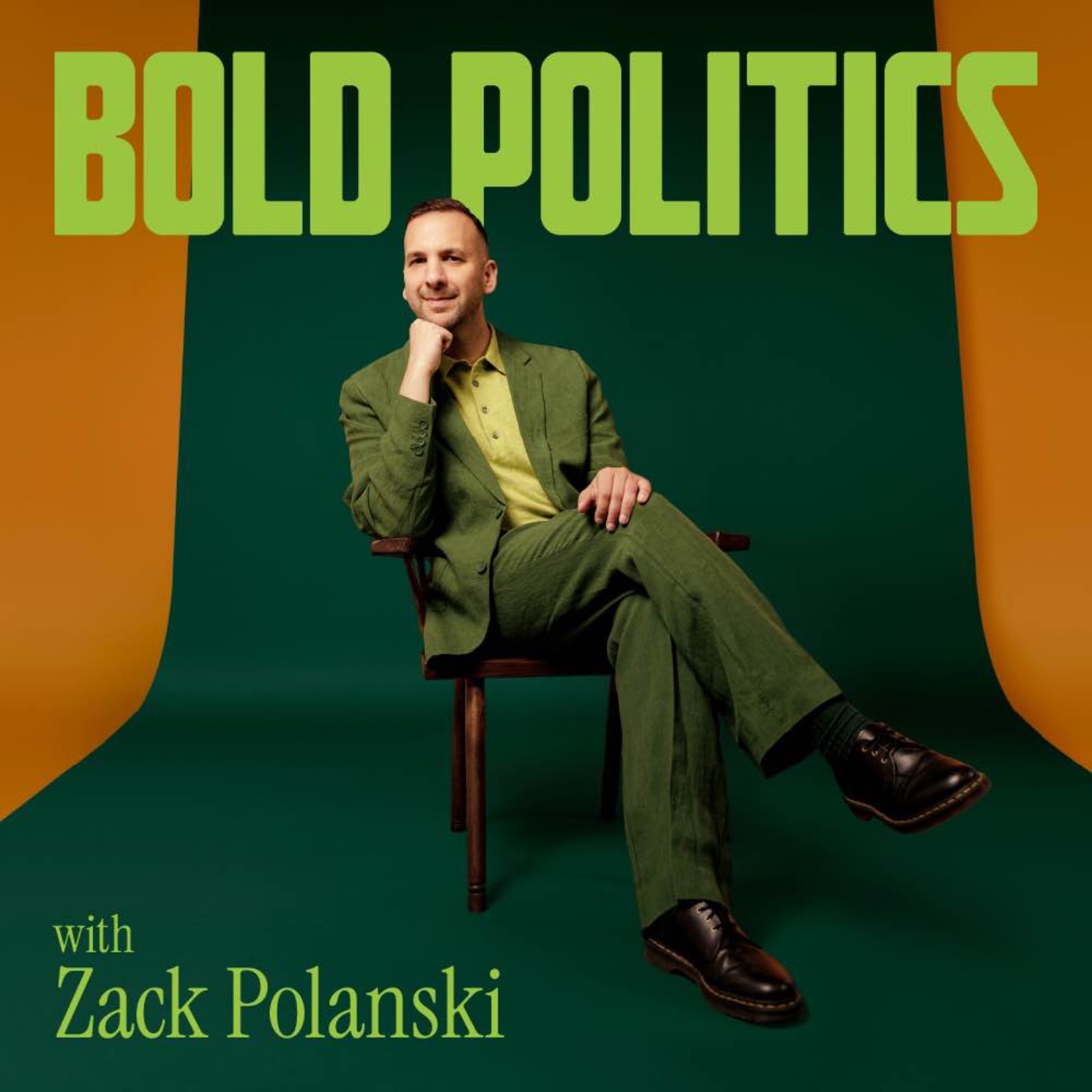
- Bold Politics with Zack Polanski
- What Happens When You Underfund Education
Bold Politics with Zack Polanski3 Feb 2026 · 36m · 15 chapters

What Happens When You Underfund Education | Daniel Kebede | Zack Polanski
In short
In this episode of Bold Politics, host Zack Polanski talks with Daniel Kebede, the General Secretary of the National Education Union (NEU). They explore topics such as the underfunding of education, the role of trade unions, special educational needs (SEND) provisions, and broader societal issues affecting the education system.
Written by AI. May contain mistakes.
Chapters
1:17
Understanding the NEU and Trade Unions
Exploration of the NEU's role and the significance of trade unions in education.
“I want to talk about the trade union movement more generally and your general secretary.”
2:28
Trade Unions in Wider Social Movements
Discussion on how trade unions connect with broader social justice movements.
“And almost whenever I'm at a rally, at some point, I'll see you.”
4:04
Campaigns for Education Funding
Insight into NEU's current campaigns focused on funding and resources for schools.
“We saw education funding decimated, so it dropped from 5.5 % of GDP to 3.9 % today.”
5:17
The Crisis in Teacher Retention
Addressing the challenges faced by teachers in the profession and the need for support.
“And obviously, you know, we've seen the economic choices that this government is making at the moment.”
7:40
Special Needs Education Challenges
Examination of the crisis in special needs education and necessary reforms.
“And it does make us quite an exciting union.”
10:11
The Importance of Universality in Free School Meals
Discussion on the significance of universal free school meals and the associated stigma.
“Well, I mean, everybody recognises the crisis that exists here.”
14:03
The Case for Universal School Meals
Discussing the benefits of universal school meals in reducing stigma and costs.
“And presumably the stigma as well, if you're a kid in school and you have to go to one line, for instance, because you're getting a free school meal as opposed to another line because you can afford the dinner at school.”
16:37
Rising Behavioral Issues in Schools
Exploring the crisis in pupil behavior since the pandemic and its causes.
“It's totally fine if you don't have an answer to this.”
19:39
The Flaws of Ofsted Inspections
Critiquing Ofsted and the need for a supportive inspection system in schools.
“problems, but look at them as structural, societal issues that we need to all work together to come to a solution and find solutions to.”
22:28
The Importance of Arts in Education
Discussing the decline of arts education and its consequences for children's development.
“The issue is, you know, that high stakes single word judgment that was, you know, low information and incredibly damaging for schools.”
Show all 15 chapters
26:36
The Together Alliance and Its Purpose
Outlining the need for the Together Alliance to combat rising far-right sentiments.
“If any of you have a position on home education, and if there's support for home educators or is that separate outside the kind of union?”
28:07
The Together Alliance: Combating Hate Politics
Learn about the Together Alliance and its aim to counter hate politics in the UK.
“On the 28th of March, we have a national demonstration in London.”
29:46
Rising Toxicity in Society and the Role of Education
Explore the increasing toxicity in societal discourse and the vital role of education.
“I think we have the realistic prospect in three years' time of a hard right government being elected.”
31:16
Deconstructing the Politics in Education
Understand the politicization of education and its implications for teaching standards.
“You know, it's a discourse that's really pushed so that they can weaken the profession, weaken their trade unions so that they can attack terms and conditions over the long term.”
33:05
Identifying the Anti-Racist Majority
Delve into the belief in an anti-racist majority and the need for community engagement.
“And finally, you mentioned a few moments ago that you believe there's an anti-racist majority in this country.”

Ask about this episode
Get the gist, explore an idea or ask about something said.
 Claude
On Bold Politics with Zack Polanski, what are the key points of this episode?
Searching your listeningTranscript
Automatic transcript. May contain errors.
0:00Education, education, education. No, don't worry, I'm not going totally down that route. But it is absolutely important. Teachers and educators are at the root of who we are as a society and what kind of country we want to be. Now, this conversation isn't just about education. This is the first trade union leader that we've had on Bold Politics. So today I'm delighted to welcome you to the General Secretary of the National Education Union, Daniel Kebady.
0:30zach i'm so excited about this year ecotalk has new land coming for rewilding and habitat restoration and we're bringing back beavers any week now yes i'm also going to start live streaming the garden birds from my home and all of this happens because ecotalk has customers that's people who pay their mobile phone bills to us. They make a call, they send a text, or they just surf the net, and British wildlife gets a boost. That's it. No shouting. Just go to ecotalk.co.uk slash bold politics to find out more.
1:16Thanks so much for joining us, Daniel. So I want to talk about the NEU. I want to talk about the trade union movement more generally and your general secretary. For those who aren't embedded in the trade union movement or don't know a lot about trade unions, what is a general secretary and why is trade unions more generally really important? So the General Secretary really is like the elected leader. I was really lucky in 2023 to be elected by the membership of the union. And we represent half a million teachers and support staff across education. You know, I was a teacher beforehand, so it's a profession I love.
1:51I adore education and it's a real privilege, really. And the NEU is relatively new as a trade union. Yeah. So we were formed out of two unions, really. the National Union of Teachers and the Association of Teachers and Lecturers. But before, you know, I was in the NUT, we just represented teachers. The NEU was really formed out of the idea of professional unity so that you would be, you know, one school, one union. So we take into membership everybody who is in the school or college and we advocate for the education and children more broadly. And besides the trade union, we've shared platforms quite a lot together.
2:31rallies. And almost whenever I'm at a rally, at some point, I'll see you. And that's across a whole range of issues from social justice movements to the climate movement to kind of tackling the far right. What are trade unions' roles in these kind of wider movements? So I think, you know, trade unions should play a vital role in those wider movements. Actually, I got first involved with the NUT at the time through the anti-far right work that I was doing in the northeast. So I was, you know, taking part in anti-fascist demonstrations. And I saw my trade union banner on there. And that was my starting point to getting much more involved in the trade union.
3:08So we're quite lucky with our union. We have a tremendous history that goes back to taking on the national front, being really central to the anti-racist movement, but also on those bigger political questions around Palestine and so on. You know, we don't want just to see teachers' terms and conditions improve, but we actually think to do that, we have to also work towards building a much fairer society for everyone. And that's why we are very much involved in all of those big questions. And in terms of the questions for education right now, I mean, it's a big question, but what are the key things that the NEU are kind of campaigning on and that teachers or educators or people working in the sector are talking about?
3:45Well, I mean, like you, Zach, we want to see an end to child poverty in particular and the extension of free school meals. We want to see that society in which all children can flourish. Really, right now, though, we are trying to take on austerity in schools. You know, the Conservative government were a disaster for education. We saw education funding decimated, so it dropped from 5.5 % of GDP to 3.9 % today. Now, lots of our members voted Labour last year. Two years ago now. Two years. God, is it right? It feels like it's been a lifetime now. It does. Yeah. So our members largely voted Labour, 60 % of them.
4:27And of course, they voted for them on the promise of change. They wanted to see their schools and colleges improve materially. And it's fair to say that the government haven't delivered on their promise in education. So at the moment, schools have got the worst funding settlement since George Osborne left the Treasury. It really is dire. And, you know, on the ground, you know, that looks like leaky roofs. that's not enough support staff, not having enough resource to meet the needs of your children. So really, we are now launching a campaign on the 28th of February that will have, is a direction of industrial action, but it is really to save education.
5:09We need government to invest in the teaching profession and in support staff, of course, but we also need to see funding go up quite dramatically. And obviously, you know, we've seen the economic choices that this government is making at the moment. It's far more willing to spend on defence rather than invest in children. So it's highly problematic. If someone watching or listening to this is involved with school or education more widely, how do they get more involved with the union? So, you know, we're quite lucky in the sense that teaching is a really unionised profession. So lots of teachers will join a union normally for that sort of insurance policy protection at work.
5:46But we are a growing union and we want to see reps and activists in every school. Now, we're quite lucky. We do have an organised presence in the majority of them, but we want to be active in all of them. And so we want people to be getting along to their local meetings, but most importantly, getting involved in our big campaigns, whether that's on social media, whether that's on free school meals and child poverty, which you've been incredibly supportive of, Zach, whether that is on our educational campaigns around assessment, around Ofsted. There really is something for everyone in the NEU to get involved in.
6:22We're a real broad church, but we're going to really need active participation this year because the pay recommendation from government is abysmal. It's 6.5 % spread over three years. The funding settlement is, of course, abysmal at the moment, But there's also the risk that the Secretary of State is going to remove the limit on teachers' working hours because she wants to see enrichment happen in all schools, which we all want to see. But I think she's going to try and make that happen by ensuring that teachers can be directed to do more work for longer, which is going to be a real problem. And so, because I don't quite understand the cabinet minister's argument there of the Secretary of State, sorry.
7:05Yeah. And maybe that's because the argument doesn't make sense. But rather than working hours doing the formal teaching, then there's extracurricular activities which are counted as enrichment, but you're just extending the day for the teacher. Absolutely. So there's not a teacher in the country that could imagine being able to do more than they currently already are. The profession feels really overstretched, you know, and there is a real crisis in recruitment and retention at the moment, Zach. So, you know, we're not, although there's been some improvement in the recruitment figures, we're losing around a third of teachers within five years.
7:38So those experienced teachers that sort of brought me through the profession and brought so many other teachers through the profession are largely absent right now. And it does make us quite an exciting union. The overwhelming majority of our members are under 40. So we've got incredibly young membership. But actually, that makes our union very vibrant and exciting. But it's a real problem for education because, you know, teaching is no longer a job that people view that they can do throughout their life. And just to spell that out, why is it that people are then, because we know lots of teachers are leaving their profession.
8:14Yeah. Is that to do with pay? Is it to do with working conditions? Is that a combination of those things? I mean, it is a combination of those things. Obviously, pay has been really held back. So teachers now earn around 20 % less in real terms than they did in 2010. So, you know, compared to other graduate professions, it has really, really been held back. Obviously, this is a familiar story amongst the public sector workers at the moment. There is that real issue around workload and work intensity. So, you know, teachers are on average working around a 50-hour week at the moment. And you've got to bear in mind, teaching is a gendered profession.
8:4975 % of the profession is female. And, you know, the reality is that teaching is just not a job that's compatible with family life anymore. But then also there's that emotional burden that teachers are experiencing. So that day-to-day mental burden of going into the classroom and not having enough support staff, not having enough resource to meet the basic needs of your children. And that can be a really demoralizing experience for teachers that has an emotional toll and, of course, is driving them out of the profession. So yesterday I was at a strike rally. We have a huge strike on at the moment across the West Midlands.
9:33It's a 24-school trust called Arthur Terry. They're about to make 100 jobs redundant. And we've got the entire trust out on strike. I met a teacher there. She has a class of 33, no support staff, and there is rising pupil need. I mean, the idea that we can continue to make cuts to education is just a fantasy. And can I ask you about special needs education? Because every time I talk about this on TV or radio, I always get lots of messages from people that say, thank you for speaking about it, my son, my daughter, my brother, my sister. What specifically needs to happen for SEND education? Well, I mean, everybody recognises the crisis that exists here.
10:16And, you know, there's a number of issues. Young people have just come out of the pandemic and there was not that investment in post-COVID recovery, neither by the Tories nor by this Labour government. You know, there's been far too much focus on just getting things back to normal without recognising that children went through quite a horrific experience of, you know, lockdowns and a pandemic and so on. We've got rising pupil need and we also have the restrictions on funding. Now, the issue around SEND is an interesting one because I actually believe in inclusive education. I think, you know, no adult will go through life without experiencing people who are different to them.
11:00So where possible, we should all aspire for children's needs to be catered in a mainstream provision. Now, the current Secretary of State talks about inclusivity, which we agree with. But she is not investing in education to allow that inclusivity to happen. We're in a really unique moment at the minute, Zach, because there's a record low birth rate. There's a declining pupil role. We have some of the largest class sizes in Europe. if we brought them down to a European average of around 20 in a class instead of over 30, you know, you could cater for more children with additional needs in a mainstream setting.
11:41So I think that's one thing that the government should do. I also do think, though, there needs to be a renationalisation of SEND provision. So at the moment, and, you know, you hear lots about the local authority spend on SEND. And at the moment, local authorities are spending in excess of£2 billion a year on independent private provision that are owned by private equity firms. So profit making. So there does need to be whole scale reform. The secretary of state needs to be quite brave, but she also needs to ensure that there is the funding in place to take the profession, families and children with her.
12:24And that's where I think there's going to be a huge problem. Yeah, it's really well put. I think the first time we met was in my role at the London Assembly where you came to give evidence to the Economy Committee. Yeah. And it was around the time that Sadiq Khan was talking about, and he has, to be totally fair to him, introduced a free school meal programme. That's right, yeah. I remember that you were criticised or scrutinised at the time by some of my Conservative colleagues about this principle of universality. They were saying, why are we giving free school meals to families where their parents can afford it?
12:53That's obviously not my argument. I go clipping that. I remember your response being brilliant, but it would just be great to hear it. Like, why is universality so important? I mean, it's just that everybody should recognise that crushing burden of poverty, the stigma that is attached to it. And I think universality, particularly when it comes to free school meals, is vital because, you know, it takes away that stigma. But also, you know, policymakers all love just focusing on things that can be measured through data. You know, it is immeasurable, I think, you know, that the absolute value to young people from sharing food together is, you know, community.
13:41It's, you know, a learning experience and it's vitally beneficial. I think universality is massively important. And now we're in this strange situation where, you know, we essentially will means test free school meals. It's right the government extended it to all those on universal credit. But I actually think the administrative costs of, you know, working out who has it and who doesn't is probably more expensive over the long term than just making it universal and free for everyone. And presumably the stigma as well, if you're a kid in school and you have to go to one line, for instance, because you're getting a free school meal as opposed to another line because you can afford the dinner at school.
14:21Yeah, I mean, absolutely. I mean, schools are getting much better at poverty proofing. And they are. And, you know, schools really do take active steps. But everybody still knows who is the children on free school meals and who isn't. And, you know, it's a real often embarrassing feeling for these young people. You know, they feel diminished by that and they shouldn't.
14:50Hey, Zach, guess what? EcoTalk has tripled the number of customers that it's got in just the last six months. Now, that's got to come down to the fact that when people are paying their mobile phone bills, they like helping nature. Of course, they like the service, too. They've got the best network coverage in the UK. It's powered by green energy. And when they engage with our customer service, guess what? Well, that's powered by real people. Yes. Martin, Susan, Nemesha have all contacted Trustpilot and said that making that switch was much easier because they were speaking to those real people.
15:29And of course, we're very excited because we've got more land. We're going to be doing more restoration, more rewilding, more replanting. We're going to be making the UK a much better place for wildlife. So why not join us on EcoTalk? Just go to ecotalk.co.uk slash boldpolitics and we'll see you there.
15:59Hello, Nish Kumar here. And Coco Khan. We're dropping in from Pod Save the UK, your weekly fix of political news from a staunchly progressive perspective. It's been a dramatic start to 2026 and we're here to help you make sense of it. We ask the big questions like how can the left find common ground? Has reform peaked? And can we fight back against tech billionaires? And there's always time for the little questions too like Nish, what is your woke sandwich filling of choice? I've got to be something vegan. Whatever the opposite of a beef sandwich covered in petrol is. I don't know what that is, but I guess something vegan.
16:31Listen to Pod Save the UK every Thursday wherever you get your podcasts. A wider question. It's totally fine if you don't have an answer to this. So a good friend of mine, Nick, is a Spanish teacher in Bristol. And shout out to Nick and indeed all the teachers who are doing this amazing work. But she says, and it's anecdotal, she's seen the kind of rise in poor behaviour from students, particularly since the pandemic. And she said it's been kind of much worse in recent years. Is there evidence to kind of more difficult behaviour from students? or is this a result of increasing class sizes and lack of mental health provision or is it all of these things at once?
17:05So it is true that at the moment there is a crisis in pupil behaviour. The right-wing press often like to label this down to sort of feckless parents, poor parenting, not enough boundaries, schools are too woke, too soft. But I really do implore people just to sort of imagine being that young person these days. You know, I would hate to be a child these days, actually. I think they experience a much tougher childhood than we did. You know, they're online often and a lot, far more than we were as young people, often in front of screens. We've had rising child poverty. We have a pandemic that was really disruptive for their development.
18:00So I think we have to look at it in those terms. But also we then have to recognise that the school system isn't working for many young people. The curriculum is incredibly rigid. It is focused heavily on rote learning. So particularly in primary school, you know, children will do English and maths all morning. The average primary student only gets around 40 minutes of art a week. I mean, you know, so it's really high stakes. Then they've got to do high stakes tests through primary school. That continues into secondary school. Again, it's high stakes assessment in which everything is geared to this single exam.
18:43There's no diversity of assessing children anymore. They all have to do a single high stakes exam at the end of their GCSE course. So it's an incredibly rigid experience for young people. So when you take into all of these considerations that young people have to experience, is it any wonder that there are some issues around behaviour? And then when you add on to all of that, austerity in schools where we've seen class sizes increase exponentially, where there's not enough support staff, where there is not enough subsidiary services to support that need. when all of the support networks around families that were in local authorities have been completely cut to the bone.
19:28Why are we expecting any different from our young people? It's the policymakers, it is those in power that are really driving the crisis in behaviour. We need to stop looking at behaviour and poverty as individual problems, problems, but look at them as structural, societal issues that we need to all work together to come to a solution and find solutions to. Absolutely. Beautifully said. I know I'm missing the point, but I wish I'd gone to one of those woke schools. That sounds great. It would have been a nicer time of it. You mentioned that a lot of NEU members voted Labour at the last election.
20:04And I think it's important to say that the NEU don't affiliate to any political party because I know there'll be lots of comments saying, why am I not loving you in this space? There was a poll recently that demonstrated that a huge amount, a vast majority of N-EU members were now supporting the Green Party or at least intending to vote for the Green Party for the next time. Now, I would think that'd be for a whole host of reasons, but one issue I particularly want to zone in on is the issue of Ofsted. So is Green Party policy to abolish Ofsted? It sounds a bit like I'm saying, tell me why I'm right.
20:32Tell me why the party's right. But why is Ofsted so problematic? And do you have a kind of view of what should replace it or what it's trying to do that it's not? Yeah. Yeah. Well, let's let me start about the green surge. You know, because I mean, what's happened is phenomenal. Over 60 percent of our members were Labour supportive and that support has completely collapsed. And now the Greens, you in particular, are our members favoured politicians, Zach. It is quite, quite significant. And of course, it is down to Labour's mistakes on education, Ofsted being one of them. As well as the Green Party platform, I think.
21:13It's not just Labour fucking up. Well, absolutely. I swore on my own podcast. Well, to be fair, Zach, when we look at NAU policy and green education policy, they are very, very much aligned. And of course, Ofsted being one of them. Everybody recognised that Ofsted needed to change after that tragic death, the tragic death of Ruth Perry. the headteacher who took her own life following a negative Ofsted inspection. In fact, you know, Ruth Perry, that tragic event is symptomatic of, you know, a real negative experience that headteachers and school leaders are feeling more broadly, you know. And, you know, I know that she is not the only one, essentially.
22:00Everybody recognises that there needed to be fundamental change. We were hopeful that the Secretary of State would have listened to the profession and brought about a system of inspection that was supportive, one that brought expertise rather than judgment. Because everybody has a shared responsibility for education And we all want to see education improve. The issue is, you know, that high stakes single word judgment that was, you know, low information and incredibly damaging for schools. You know, headteachers had less job security than a football manager, for example. That needed to change.
22:53And what has replaced it actually is going to be much worse. So we've seen a new HMI, a new chief inspector brought in to alleviate pressure on the system. And now what we have is essentially like a Nando scorecard. So instead of a single word judgment, you have like, you know, a color coded one to five scoring of, you know, lemon and herb to extra hot, really. So, you know, that embarrassment and shame that a headteacher and school and community could feel from a single word judgment isn't being alleviated in the new system. In fact, it's going to make it much more, much more pressurized. But as I say, the sort of system of inspection or support that we want to see for schools is one that would be much more collaborative where people brought their expertise rather than their judgment.
23:46But unfortunately, that's not the situation we're in. My last question specifically about education and then we'll broaden out is as a former theatre kid about arts and culture in education and the role of this and how much it's been slashed and the kind of short termism of not allowing kids or young people to be able to express themselves creatively. Yeah. So this is, I think, a class issue. We are now in a situation where if you are working class, you just do not have access to arts, music, in education at all. It's now becoming a real preserve for the rich, for those who can afford fee paying schools.
24:24And that is horrific. Everybody recognises that there's an awful lot of soft skills that you learn from taking part in theatre or taking part in the choir or, you know, or being able to explore creative subjects. The issue is that, you know, the system of education now for mainstream comprehensive provision is so high stakes for schools around English and maths exams in particular that the curriculum narrows. So if you have a primary school, for example, that is going to be entirely judged on how it's done in its year six sats on English, reading and math, you know, the entire curriculum to the school for the school will be geared to that.
25:09And that's why we're in this tragic state where, you know, young people are getting no more than 40 hours of art and creative subjects a week. And I mean, you know, when I was young, I'm sure it was similar when you were young. You know, I remember the art, the music. Those subjects made the school day really bearable, you know. And we wonder why there's this crisis in child mental health when they have, you know, no fun in school. You know, we've got some of the most unhappiest teenagers in the OECD in this country. And it is because of the school system being so rigid. I should add sport in there as well.
25:46That was showing my bias. I hated sports school, but actually that's also, I imagine, a really good avenue for kids to find community and physical exercise and teamwork. Yeah, and confidence, you know. I don't know why, you know, we should never really be surprised that, you know, we see a society in which those who went to fee-paying schools, you know, are dominant in politics, in media and so on. because, you know, the confidence that you get from those sorts of activities and subjects, sport and drama and so on, is immeasurable. But this is the issue. We have had successive governments, you know, focused on scores in tests, not on developing children as well-rounded adults and human beings.
26:35And can I ask, sorry, I said finally, but one final question about education. If any of you have a position on home education, and if there's support for home educators or is that separate outside the kind of union? So it is largely separate outside of the union, but I would say that the NEU wants to see schools to be such inclusive places, so well-funded and so excellent, really, that, you know, people want to be in school rather than home educate. I can certainly appreciate if you have a child with specific SEND needs at the moment that are not being met in mainstream provision and you're not able to get an EHCP and your child is not able to have their needs met while you're considering that sort of avenue.
27:24I implore everyone, though, we've got to change the system. That's what needs to be done. That's really interesting. We talked at the very beginning about how the trade union movement is part of the wider movement. And right now, both the Green Party and the EU are supporting the Together Alliance. That's right, yeah. Do you want to, for people who might not have heard about it, kind of outline some of why, what is the need for this alliance and what are we looking to do? Yeah, so we, I think, are incredibly concerned within the NEU and wider, clearly, by who goes well beyond us in the Greens, Zach.
27:59There's, you know, I think widespread concern around the growth of racism, the far right and indeed reformer Nigel Farage. The Together Alliance is being pulled together to try and be some sort of antidote towards that, to push back and turn the tide on the real horrific discourse around migrants, refugees, racism, you know, this whole sort of anti-woke agenda that Farage and Trump and those awful Tommy Robinsons of this world are pushing. On the 28th of March, we have a national demonstration in London. And it really was formed following that huge far-right demonstration by Tommy Robinson fairly recently, that Unite the Kingdom rally.
28:45Because we can't just allow the politics of hate to sort of fester on as it is doing throughout the country. So we're really hoping that the Together Alliance sort of forms that springboard into activity, into, you know, well, into some hope, really. It's going to be a huge, huge demonstration. Of course, there's the NAU, there's the Greens, there's Lenny Henry, there's UB40. There's a whole list of celebrity endorsements, isn't there? I can't even listen. Paloma Faith, there's no end. But it has to be the springboard. We pull to get everyone together on the 28th of March in central London. And then we want to be out in communities combating the politics of hatred and division.
29:28And I'm really glad you said that last bit, because I think we both agree that criticisms of these kind of movements in the past has been you do a rally in London. Everyone has a great day and you feel some unity and solidarity. Now that's important. Yeah, I'm not rejecting it. But the second bit, I think, is the more important bit. Once you've met, how do you then organize to take that into your community? Yeah, absolutely. I mean, I do a lot of traveling around the country. I don't remember a time in my lifetime, Zach when things have been so toxic actually I don't know whether it's the same for you but it certainly feels that there has been a real increase in anti-migrant, anti-refugee sentiment levels of racism are incredibly high at the moment there's been a real demonisation of trans and LGBT communities and this isn't the sort of society I want to see my child grow up in And I don't suppose it is that anybody really does want to see their child grow up in either.
30:21I think we have the realistic prospect in three years' time of a hard right government being elected. And that will fundamentally change British society. You know, Britain, I still believe there's an anti-racist majority that exists in this country. But Nigel Farage in a reform government would be a disaster for our public services, but also a disaster for our communities. And to tie all of this together, I would say and I imagine you would agree that education has a huge role to play in this. Yeah. Both educators and schools, but also young people being the society that we're handing over to.
30:55Yeah. What would you say though to people who criticize you say there's become too much politics in education? So, you know, this is hyperbolic nonsense that gets pushed by the right that, you know, teachers are indoctrinating children, that, you know, the teachers are radical, radical left. You know, it's a discourse that's really pushed so that they can weaken the profession, weaken their trade unions so that they can attack terms and conditions over the long term. It comes with, you know, there is a motive for these sorts of attacks. Of course, teachers are politically neutral. That is part of the teacher standards.
31:36But all teachers believe in diversity. They believe in inclusion. They believe in democracy. And actually, these are values that fundamentally Trump et al disagree with. And that's why we consistently come under attack, whether it's in the UK, America or around the world, where hard right governments are elected. And what do we do about that? Because obviously diversity has become so politicized. Yeah. But actually what you're really talking about there is basic human rights. Everyone has the right to kind of get through the school day and receive the same treatment and the same fairness and same equality.
32:13But it does feel like all of that is under attack. It's completely under attack. And the only antidote, I think, to what's happening in this world really is obviously support progressive politics, but also build trade unions. You know, over the last 40 years, trade union membership has significantly declined. We only have five and a half million trade union members. Now, we're lucky in education that it's a highly unionized sector. But, you know, in the private sector, only 6 % of workers are in a trade union. And it's a real concern because as trade union membership has declined, people's living standards have declined.
32:48And as people's living standards decline, you know, it leaves pools of bitterness where the politics of hate can fester and grow. So I view it, you know, as very much central to sort of pushing back the politics of the far right is to build trade unions. That's amazing. And finally, you mentioned a few moments ago that you believe there's an anti-racist majority in this country. What makes you say that? Do you know, people can have reactionary ideas and they can have a contradictory consciousness, I find. And, you know, that exists. I often spend lots of time speaking to people who disagree with me but when you actually unpick what do people want they want people to be treated with dignity they want people to be able to live lives freely and they want people to be able to have a good standard of living I fundamentally believe that there is an anti-racist majority that the majority of people are appalled by racism.
33:57And actually, I don't think every reformed vote is a racist. And we have to do some hard work, I think, in communities trying to convince people that actually refugees are not to blame, that the enemy isn't, you know, those who've come over on boats from Calais. Actually, it's Nigel Farage, who's a city boy, Spiv, and his mates in the City of London who've speculated and crush people's standards of living. They're the issues. It's the billionaires, not the poor people on small boats. We've got far more in common with those people, Zach. Maybe you'll come on one time and say what you really think, Daniel.
34:38That was brilliant. I was about to say, if people want to find out more about you or the NEU, how could they find? I do want to say as well, though, that we share a member of staff in common who used to work for me and then worked for the NEU and has gone on. So huge shout out to Anisha Chowdhury, both everything she's done for the Green Party, but also for the NU and is amazing. Absolutely. She's fantastic. Look, if you work in a school or a college, get in contact with the union rep and get involved in the NU. But the NU is certainly a trade union that wants to build coalitions around a new economic model against the politics of hate and against child poverty.
35:14Thank you very much. Thank you, Zach. Cheers.
35:22Zach, final words for me? If you're paying a phone bill anyway, like nearly all of us are, of course, why not pay a phone bill that funds rewilding, reintroducing and replanting? The three R's. You can even watch it happening on your phone. That's bloom scrolling, not doom scrolling. To find out more and to join the thousands of people helping British wildlife, go to ecotalk.co.uk slash bold politics. Join the Bloom Scholars and the Blooming Nature Revolution.
From the publisher
Should we scrap OFSTED completely? Why are SEND provisions so inadequate? Are we really seeing a rise in behavioural issues in schools or are we just seeing austerity play out once more?
Zack Polanski speaks to General Secretary of the National Education Union, Daniel Kebede.
Get your tickets for Zack Polanski and Caroline Lucas at Bold Politics Live in Brighton.
Join Nature's Network and switch to Ecotalk, the only network service provider that gives all its profits to nature restoration: ecotalk.co.uk/boldpolitics
Email: [email protected]
YouTube: @boldpoliticswithzack
Instagram: @_boldpolitics
X: @_boldpolitics
Tik Tok: @boldpolitics
Hosted on Acast. See acast.com/privacy for more information.
More from Bold Politics with Zack Polanski
All episodesWe use cookies.They keep VO running smoothly and help us improve it. Privacy policy