
 Ask ChatGPT

- Podcasts
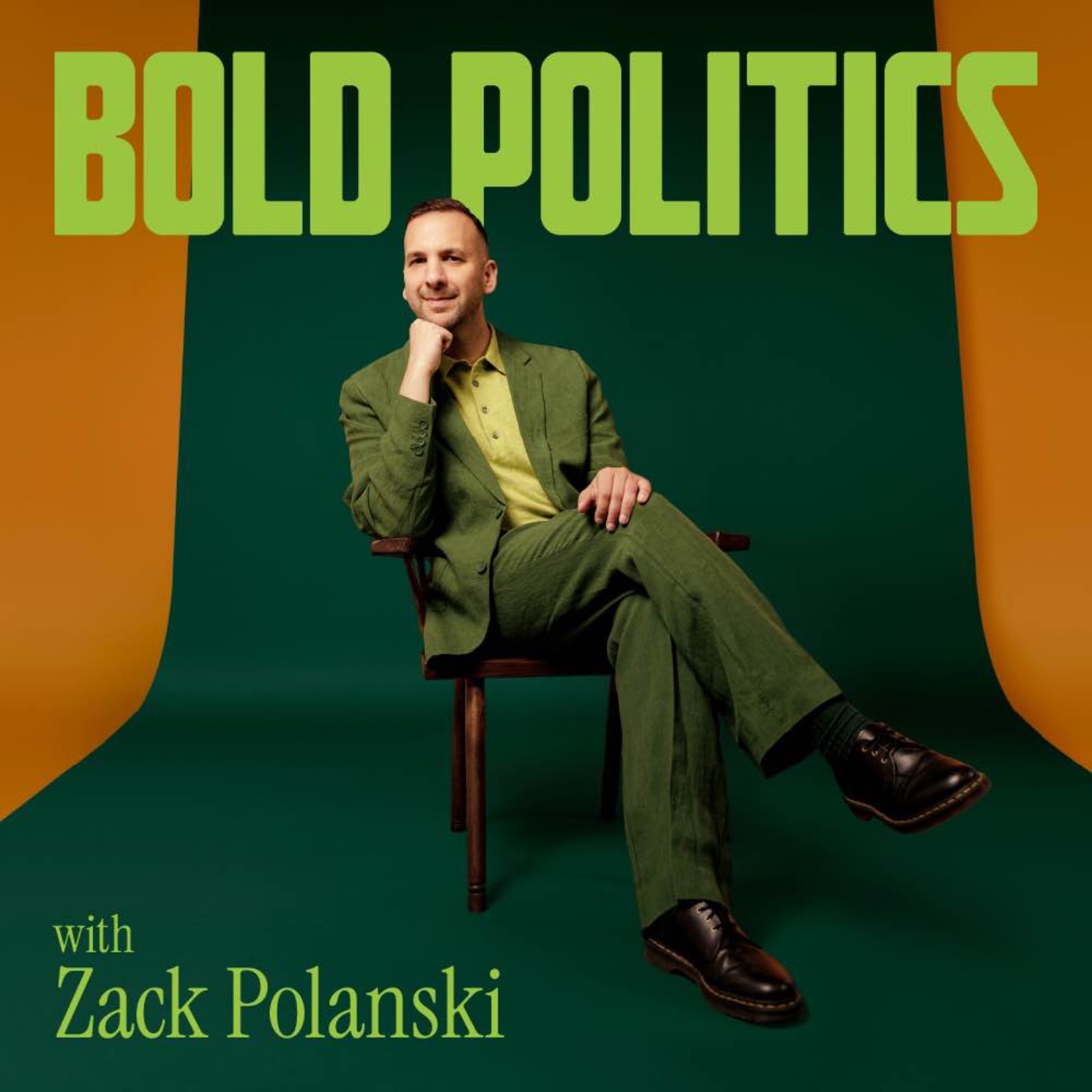
- Bold Politics with Zack Polanski
- Why Did Starmer Really Block Burnham From Running In Gorton and Denton?
Bold Politics with Zack Polanski28 Jan 2026 · 34m · 14 chapters

Why Did Starmer Really Block Burnham From Running In Gorton and Denton? | Paul Holden | Zack Polanski
In short
Why Did Starmer Really Block Burnham From Running In Gorton and Denton? | Paul Holden | Zack Polanski
In this episode, Zack Polanski speaks with investigative journalist Paul Holden about the inner workings of the Labour Party, particularly focusing on the influence of Morgan McSweeney and the broader implications of factional politics within the party. The discussion touches on themes of democracy, corruption, and the manipulation of political processes.
Written by AI. May contain mistakes.
Chapters
2:56
The NEC Decision on Andy Burnham
Discussion on the NEC's decision regarding Andy Burnham and its implications.
“But sometimes the news moves faster than we could possibly imagine.”
3:56
Morgan McSweeney's Political Role
Exploration of Morgan McSweeney's influence within the Labour Party.
“Shibana Mahmood, who is now the chairperson of the ANEC.”
7:00
McSweeney's Strategy Against Corbynism
Analysis of the strategies used by McSweeney and his faction to undermine Corbyn.
“So in July 2017, Morgan McSweeney and a couple of other people, including Steve Reid, convened in Steve Reid's office.”
10:40
Labour Together and Ethical Concerns
Discussion on the ethical implications of Labour Together's actions and funding.
“Half the Labour Party membership resigned in protest at the way in which the Labour Party ran.”
13:44
Misdirection and the Future of the Labour Party
Examining how Labour Together's misdirection affects the party's future.
“Now, I think that's a fundamental issue.”
14:05
Labour Together and Misdirection
The discussion highlights the misdirection of Labour Together and its impact on transparency.
“And I have real doubts about that, right?”
19:17
The Role of Transparency in Politics
Exploring the lack of transparency in Labour's funding and its implications for trust in politics.
“We must strengthen after-school programs.”
28:00
Erosion of Trust and Democracy
Explore the impact of trust and accountability on politics.
“and I'm almost sat here thinking, oh, I want to check some things.”
28:54
The Struggle Against Authoritarianism
Understand Paul's commitment to preventing authoritarian regimes.
“which was to the right of the apartheid government on certain things.”
29:53
Investigative Journalism Journey
Discover how Paul became an investigative journalist focusing on corruption.
“And I wanted to make sure that that could never be repeated.”
Show all 14 chapters
31:05
Institutional Corruption Explained
Learn about the concept of institutional corruption in politics.
“And when I first started researching this book, and the way I came to it was actually entirely by accident.”
32:29
Labour Party's Factional Capture
Examine the changes within the Labour Party's structure and ideology.
“And that's what I think has happened through this project with the Leo Party.”
33:56
Lobbyist Influence in Politics
Investigate the extent of lobbyist influence within the Labour Party.
“There's a journalist called Ethan Schoen, who I think is absolutely brilliant.”
35:04
Concerns Over Political Donations
Delve into the implications of undisclosed political donations.
“And then it emerges after the election that actually Quadrature has made this£4 million in donation.”

Ask about this episode
Get the gist, explore an idea or ask about something said.
 Claude
On Bold Politics with Zack Polanski, what are the key points of this episode?
Searching your listeningTranscript
Automatic transcript. May contain errors.
0:00The hustle doesn't have to hurt. If performance pressure is making it hard to breathe, Grow Therapy helps you navigate stress, set boundaries, and actually feel like yourself again. Whether it's your first time in therapy or your 50th, Grow makes it easier to find a therapist who fits you, not the other way around. You can search by what matters, like insurance, specialty, identity, or availability, and get started in as little as two days. There are no subscriptions, no long-term commitments. You just pay per session. Grow helps you find therapy on your time. Whatever challenges you're facing, Grow Therapy is here to help.
0:36Grow accepts over 100 insurance plans, including Medicaid in some states. Sessions average about$21 with insurance, and some pay as little as$0, depending on their plan. Visit growtherapy.com slash start now to get started. That's growtherapy.com slash start now. growtherapy.com slash start now. Availability and coverage vary by state and insurance plan. Youth mental health is a complex challenge that requires comprehensive solutions. We must strengthen after-school programs. We must make digital literacy tools available in our schools. We must work with mental health professionals to support children.
1:15And we must empower mentors, educators and parents to keep kids happy. Learn more about our commitment to finding lasting solutions at empowerourfuturecoalition.com slash solutions. Paid for by the Coalition to Empower Our Future. Today I'm going to be speaking to an investigative journalist, someone whose work has led to criminal investigations of the current government. He has spent hours upon hours documenting the Labour Party and the current government, someone who has laid out their homework. Now look, I'm the leader of the Green Party. What the Labour Party do is frankly none of my business and I'm busy growing our alternative movement.
1:55However, how this government behave and how they behave before they're a government is worth asking some questions about. So today I'm really pleased to be speaking to Paul Holden.
2:09Zach, I'm so excited about this year. EcoTalk has new land coming for rewilding and habitat restoration and we're bringing back beavers. Any week now, yes, I'm also going to start live streaming the garden birds from my home. And all of this happens because EcoTalk has customers. That's people who pay their mobile phone bills to us. They make a call, they send a text or they just surf the net and British wildlife gets a boost. That's it. No shouting. Just go to ecotalk.co.uk slash bold politics to find out more.
2:55So whenever we record episodes, we try and be as topical as possible. But sometimes the news moves faster than we could possibly imagine. And so we're recording this on a day where the NEC is saying either there's going to be an all women's shortlist or they just won't let Andy Burnham there. There's quite a few characters that swim around in this kind of cesspit, I suppose, of what's going on. Now, Andy Burnham's one conversation, but I think this probably speaks to a more wide issue in politics around how rules are decided. One is Morgan McSweeney. So could you explain what his role in all of this is?
3:29I think that the Andy Burnham thing is a very good... We now have a national illustration and a national example of what the particularly authoritarian top-down politics of the Labour Party actually looks like in practice. And in particular, the way in which the Labour Party has effectively been captured by this very small factional project, which is sort of headed by or run by Morgan McSweeney, but in conjunction with people like Shibana Mahmood and Steve Reid. Shibana Mahmood, who is now the chairperson of the ANEC. I mean, Morgan McSweeney is at the heart of this political project. His background is that he's originally from Ireland.
4:04He moved to the UK in the early 2000s. And sort of legend has it that he took up a job as a receptionist at the Labour Party, where he soon became quite close to Peter Mandelson. But his closest political ally is Steve Reid, MP, who's the Cabinet Secretary for Housing. And I think particularly in my investigation, he merges as quite a chilling, alarming, quite disturbing figure, in fact. He walks around with baseball caps on saying, Bill, baby, Bill. So you're literally getting inspiration from Donald Trump, which I think speaks to the character of politics. Absolutely. And I'll tell you some of the things I found out about Steve Reid, which I think are genuinely quite toe-curling.
4:40But Morgan McSweeney and Steve Reid are deeply factional characters. So according to, I think it's Anushka Steiner, Gabbo Pogger, and Patrick Maguire, all journalists quite well-known, have all written books about this project. And they all relay as well that Morgan McSweeney just absolutely despises left-wing politics. He actually, there's one quote where he thinks that left-wing politics is evil, like genuinely evil. For a long period of time, he works with Steve Reid at a local level in Lambeth, and then he goes and works in the local government association. So he's sort of in the local government sphere, which is also roughly where Steve Reid is hanging out.
5:14But he really emerges into prominence in July 2017. And the trigger for his emergence as a character is the elections in June 2017. And the elections in June 2017 is when the Labour Party under Jeremy Corbyn exceeded all expectations to win 40 % of the national vote, which is only the third time the Labour Party has done that since 1974. But for people like Morgan McSweeney, this was like a total emergency. Because for people like Morgan McSweeney, he was part of a, you know, quite a right-wing faction in the Labour Party, very close to right-wing bureaucrats in the Labour Party, they all believed that when Jeremy Corbyn first came in touch with the public and first confronted the public in election, the public would run in horror.
5:56He'd lose disastrously. And then they could displace him and then they could go back to sort of the Blairite mode they've been running for a long period of time. But 2017 means that suddenly Jeremy Corbyn's in the ascendant. He's proven that a left-wing politics can succeed in the country. And he personally in the Labour Party can't be dislodged. But this faction understands that their own political relevance is at stake because they have no role in the left-wing Labour Party and they also have just this deep faction antipathy towards it. And it's at that point that Morgan McSweeney goes to work, literally days after that good showing in the election, he goes to work with this think tank Labour Together, this very anodyne-seeming think tank.
6:39The Labour Together had originally been set up by an MP called John Crudus and its motivations were generally noble. What John Crudus was worried about was that the Labour Party might have fractured along fractional lines. And he was trying to convince right-wing Labour MPs and right-wing Labour members not to flee the party under Jeremy Corbyn, which is perfect cover for Morgan McSweeney's project. So in July 2017, Morgan McSweeney and a couple of other people, including Steve Reid, convened in Steve Reid's office. And Steve Reid prints out this document, this planning document that Morgan McSweeney has written to strengths, weaknesses, opportunities, and threats analysis, which sets out their plan for the next two and a half years.
7:21And the plan is very simple. We will destroy Corbynism from within and then we will make sure that we choose a leader that we think is appropriate for our political faction to replace Jeremy Corbyn. And then once that's done, we'll use the leadership to remake the Labour Party. Of course, they phrase it in terms of they're going to renew the Labour Party or return it to the working class, which is highly ironic because the working class has just returned to the Labour Party. under Jeremy Corbyn, constantly creating this public persona of we are non-factional actors, we are trying to resolve issues in the public domain.
7:57And it's fascinating to watch if you'd go back and read what they were saying at the time. Somebody like Shibana Mahmood, for example, kept on doing videos for Labour Together. And Shibana Mahmood was part of this project. She was part of the executive management team. And she was doing all these videos at the same time saying Labour Together is working to heal these divides, to unite the Labour Party. This is a fundamentally deeply problematic political project that relies on political misdirection for its success. And it's that methodology they use to both get Kirstama elected and then which they then, I think, apply again in 2024 to get the Labour Party elected, which is part of the reason why I think the Labour Party has become so deeply unpopular.
8:35So you said that Kirsten was set up for this project. Could you not argue that this is democracy? Like a group of people said, we have a political ideology, we're going to get enough support, make sure that we occupy those seats by winning in a democratic process. And now we're making sure that the people who represent us represent the values that we have won at a leadership level. Sure. I mean, I think the fundamental mistake with your question is to believe the Labour Party is a democracy, which it really plainly isn't. It's always had a problematic tension between its bureaucratic structures and how it's very rule-bound culture, very bureaucratic.
9:11There's these constant factional battles about how those rules would be used to benefit one faction or another. But this political project that now controls the country is a fundamentally different beast. In fact, I argue that this political project is not just undemocratic. It is actively anti-democratic, right? So when I say Keir Starmer is the factotum or the front man or the puppet for this project or the person that choose to lead it, I say that very confidently because I know this political project precedes Keir Starmer's leadership ambitions, right? This is a very small section of the Labour Party that started in 2017.
9:47So to give you an example, one of the things that Morgan McSweeney did before he became Keir Starmer's chief of staff is that he ran Liz Kendall's leadership campaign. That's sort of his intellectual political home in the Labour Party. And she won 4.5 percent of the vote when he was in that campaign. That's the size of the faction they actually represent in the Labour Party. And they understood very clearly that if they actually told the Labour Party membership what they intended to do when they took over power, they'd never win. So they confected this image of Keir Starmer, which is utterly unrecognizable from the man he became two months after he became leader, is not even the same person, I would argue, to the person who now leads the Labour Party and leads the country as this radical, genuinely radical eco -socialist who was an inheritor of the Corbynite tradition, who went on peace marches, who was friends with Jeremy Corbyn, had Diane Abbott in his promotional videos, wanted to abolish the House of Lords.
10:41he wanted to nationalize all the key industries all of those things that he's dumped that was specifically constructed to win over a Labour Party membership that Lent left probably the most appalling promise they made was that they would use the Labour leadership to foment unity in the Labour Party because they've been so faction driven and instead what they did was as soon as Keir Starmer became the Labour leader it gave them immense power to take control of the bureaucracy and pursue the most aggressive factional excision that's ever happened in Labour Party history where you had vast numbers of MPs losing the whip.
11:15Half the Labour Party membership resigned in protest at the way in which the Labour Party ran. And it became this very intolerant, censorious, authoritarian faction that has moved the Labour Party so far to the right on pretty much every aspect of policy that it appalls its own membership and appalls its own base. I want to zoom out for a moment because obviously I'm a leader of the Green Party. You won't be surprised to find that I find the internal workings of the Labour Party pretty messy and pretty destructive. And also I kind of go, that's not my problem. But it kind of is my problem. It's everyone's problem in this country.
11:48Why does this matter for the wider country rather than just for Labour Party? There's such a deep and fundamentally disturbing heart to the story of the political project that now runs this country. So Keir Starmer is Prime Minister of the United Kingdom. Shibana Mahmood is arguably the Home Secretary. Morgan McSweeney is the Chief of Staff. Steve Reid is the cabinet secretary for housing. And it all flows from this project, the Labour Together. That project was funded by multimillionaire and pro-Israel donors, right? There were£739 ,000 that Labour Together took in donations between February 2018 and roughly mid-2020, which they were failing to declare to the Electric Commission.
12:33Now, this is not complicated stuff, right? The Electric Commission is very clear rules. If you're a members association, which they are, and you receive any donation worth more than seven and a half thousand pounds, you must report it within 30 days. For the entire period that Morgan McSweeney and his political allies are covertly working to destroy the Labour Party, they're also not reporting this money to the Electoral Commission. In fact, it's only a report to the Electoral Commission in late 2020, and the Electoral Commission finds them guilty. Now, so it's plainly this is unlawful behaviour.
13:04This is not a debate. Like Labour Together destroys Corbynism. And then they have themselves said that they were fundamental to choosing Keir Starmer as the next Labour leader and then running his Labour leadership campaign. During the period in which Morgan McSweeney was both the campaign chief to Keir Starmer and the company secretary for Labour Together between January and April 2020, Labour Together was still and continually failing to report its donations to the Electric Commission. literally Labour Together, of which another director is Steve Reid, another director is Lisa Nandy, was breaking the law by failing to report donations while it was helping Keir Starmer get elected leader of the Labour Party.
13:44Now, I think that's a fundamental issue. And I do not understand how we're not having a conversation every day about how insane it is that we have a prime minister who thinks it's okay to have a chief of staff who broke the law for such a long period of time. I What makes it more difficult is that Labour Together's argument is that it was all a big mistake. There's some administrative error, right? And I have real doubts about that, right? And I don't just have a hunch. I have like a substantive set of arguments around that, not least because I've done FOIs in the Electric Commission. My book is based on a very substantive leak of documents within the Labour Party, which is actually how I came on to the topic of Labour Together in the first place.
14:24And this is what we know about those donations, right? At the same time, we know, for example, that Labour Together is purposefully misdirecting the public by telling them that they are working to unite the party's various factions while they're doing the opposite. They're running a public campaign of misdirection, which they actually give an internal code name. They call it Operation Red Shield because they make sure that nobody notices what they're actually doing. Second of all, I did FOI's electoral commission at the end of 2023. And FOI's being Freedom of Information Act. Freedom of Information Act.
14:52And they sent me this incredibly interesting set of correspondence, which shows that in November 2017, Morgan McSweeney calls the Electric Commission and says to them, Labour Together doesn't campaign in the public domain. We're not front facing. I don't think we should report our donations. Can you give me advice? And the Electric Commission says, well, we'll review it. And they write back to Morgan McSweeney. And they say to him, we've looked at your query. And yes, you're a members association. You have to report donations. This is how you report donations. These are the forms you have to fill in to report donations.
15:20Then over an extended period of about two months, Morgan McSweeney is talking to the Electric Commission about how to report donations, right? Then in early 2019, Morgan McSweeney hosts, there's a Labour Together meeting in Parliament where MPs ask him, is Labour Together required to report donations and are there reporting donations? And he says, we are required to report donations and we are reporting donations. Then in April 2019, Labour Together's website, they put up a bloke about the organisation and it says, we have to report donations and we are reporting donations. in February 2020 Shibana Mahmood on behalf of Labour Together writes an article on Labour List where she describes the work of Labour Together tells the entire public entirely incorrectly that Labour Together has no role in Kiyos Dama's leadership campaign which I think speaks to the fundamental dishonesty of this political project and she says we are reporting we are required to report donations and here you can see the donations are being reported this entire time they're not reporting donations and this is a real concern because money is destroying British politics You know, the amount of money that went into the last election was staggering.
16:24And the way in which dark money is being funneled into places like, you know, think tanks that then write the policies that then reform adopts or the Tories adopt or think tanks that write policies that the Labour Party then adopts really, I think, corrodes our trust in democracy at a very fundamental level because we are led to believe that our policies are being written by politicians who are representing our interests. But when a politician or an organisation takes vast amounts of money from hedge funds or from multimillionaire donors or from pro-Israel donors, then the public has to think to themselves, well, whose interests are you actually working in?
16:59Are you working in my interests? Are you working in the interest of the millionaire person who is paying for your office assistant or running your campaign?
17:12Hey, Zach, guess what? EcoTalk has tripled the number of customers that it's got in just the last six months. Now, that's got to come down to the fact that when people are paying their mobile phone bills, they like helping nature. Of course, they like the service too. They've got the best network coverage in the UK. It's powered by green energy. And when they engage with our customer service, guess what? Well, that's powered by real people. Yes. Martin, Susan, Nemesha have all contacted Trustpilot and said that making that switch was much easier because they were speaking to those real people.
17:51And of course we're very excited because we've got more land. We're going to be doing more restoration, more rewilding, more replanting. We're going to be making the UK a much better place for wildlife. So why not join us on EcoTalk. Just go to ecotalk.co.uk slash boldpolitics and we'll see you there.
18:37specialty, identity, or availability, and get started in as little as two days. There are no subscriptions, no long-term commitments. You just pay per session. Grow helps you find therapy on your time. Whatever challenges you're facing, Grow Therapy is here to help. Grow accepts over 100 insurance plans, including Medicaid in some states. Sessions average about$21 with insurance, and some pay as little as$0, depending on their plan. Visit growtherapy.com slash start now to get started. That's growtherapy.com slash start now growtherapy.com slash start now. Availability and coverage vary by state and insurance plan.
19:16Youth mental health is a complex challenge that requires comprehensive solutions. We must strengthen after-school programs. We must make digital literacy tools available in our schools. We must work with mental health professionals to support children. And we must empower mentors, educators, and parents to keep kids happy. Learn more about our commitment to finding lasting solutions at empowerourfuturecoalition.com slash solutions. Paid for by the Coalition to Empower Our Future.
19:54So we've talked a lot about Labour Together and think tanks and we've also talked about the role of the Electoral Commission in that. I presume that you're not saying think tanks themselves are necessarily the problem. The problem is the lack of transparency and accountability about funding. Sure. I don't have a problem with think tanks. Think tanks, you know, produce very good work and there's very good think tanks. The problem is when you have a think tank like Labour Together, which is not declaring its funding, there's a fundamental problem because they're exercising influence without declaring it.
20:20And we deserve to know it. And it becomes a bit of like a broader tendency within this political project. So to give you like two good examples is that during the period that Keir Starmer is running for Labour leader between January and April 2020, Rebecca Long-Bailey and Lisa Nandy, who will be standing again, say, well, we will reveal all our donors. We'll publish a list of who all our donors are, which they do. And Keir Starmer says, I don't intend to do that. I'm not going to do that. I'm going to do it via my parliamentary disclosures. And what that means is that he only discloses his full set of donors after he's elected leader of the Labour Party, right?
20:56By the time he's elected leader of the Labour Party, he's declared, as far as I remember, less than half of the donations that he's received. After he's elected leader of the Labour Party, it's suddenly declared that he's taken money from Martin Taylor, who's a wealthy hedge fund manager. But he's also taken money from Sir Trevor Chin. Sir Trevor Chin is a very well-known pro-Israel figure in the UK who, in 2024, won the Israeli Presidential Medal of Honor for services to Israel and greater humanity, they say. Also donating to Steve Reid and several Labour members. They're also the biggest donors to Labour together.
21:29So for the entire period between January and April 2020, you have a fundamental lack of transparency because nobody knows, first of all, that Labour Together are running Keir Starmer's leadership campaign. Nobody knows that Martin Taylor and Trevor Chen are donating to Labour Together. Nobody knows that Keir Starmer is also getting donations from Martin Taylor and Trevor Chen, who's also the vice chair of the Jewish Leadership Council, which has called Corbynism an existential threat to British Jews in the UK. And one of the things, and this is an interesting theme, one of the things that is not disclosed at all, hasn't actually been disclosed properly in British politics in any sort of meaningful way up until very recently, is that in the same period between 2017 and 2018, where Morgan McSweeney is trying to undermine the Labour Party, he's also playing a fundamental, very disturbing role in the flame of the anti-Semitism crisis that impacts Jeremy Corbyn.
22:19And also, Kirsten obviously created those pledges that said things like to stand by migrant rights, to challenge climate injustice, and to have a fair democracy and to do things like abolish the House of Lords. Actually, I don't know if the House of Lords is on the plate. Well, so this is the thing that's interesting about that election campaign, which I think is actually a very interesting, that election campaign is very interesting to understand, because it predicts the behavior that they then plays out in 2024. So what I've identified is pretty much the primary political tactic that this Labour faction has is what I call shadowing.
22:52What they do is they identify an opponent, who their opponent in the election is, and then they get as close to them as possible on certain policy points, even maybe overtake them on certain things, to basically make it impossible for that person to distinguish themselves from the candidate they're running. So in 2020, their challenge is Rebecca Long-Bailey. And what you actually see throughout the campaign is that Keir Starmer starts leftish. By the end of the campaign, he's to the left of Rebecca Long-Bailey. And so in January 2020, Keir Starmer doesn't commit to nationalizing all the key industries.
23:24Rebecca Long-Bailey says, actually, I'm going to commit to nationalizing the big four. And then suddenly Keir Starmer says, oh, you know what? I'm going to nationalize the big four. Of course, later on, he says, I never committed to it, even though he's literally on TV putting up his hand saying, I will nationalize these four industries. Then, later, Rebecca Long-Bailey says, well, I want to abolish the House of Lords and I want to replace it with the Senate of Nations. And then Keir Starmer comes out and says, oh, you know what? I want to abolish the House of Lords, too. But, hold on, wait for this.
23:53If I become leader, every person who goes to the House of Lords on a Labour ticket will be forced to write a letter saying how much they hate the House of Lords. Which, of course, never happens, right? Absolutely never happens. Because First Pass for Post being another one as well. He said it was a fundamentally broken system. I think the key thing with that leadership election campaign is it's not just policy pledges he made. He made statements of principle that he then contradicted. So the very, very, one of the most clear things he says throughout that leadership campaign, he says that I believe fundamentally because I'm an eco-socialist, that if it's bad for the environment, it's bad for the economy.
24:28There's no such thing as bad for the environment and good for the economy. And he said that. I've never seen that quote. He said that, right? Gosh, OK. And this he repeats this again and again. And it's one of his go-to lines in that election campaign, a point of principle, which is violating almost immediately he becomes Labour leader. But, of course, under the Labour government, we've had them approving the extension of Heathrow Terminal 4, where Rachel Reeves literally went to journalists and to commentators and said, I think economic growth is more important than net zero. Yeah, and the fight against the bats and the noots as well.
25:00Exactly. I mean, there's actually a very strong anti-environmental tendency within this particular Labour Party. Now, this is not just he made a pledge and things changed, then he changed his mind. This is the point of principle. That's the key thing here. You know, it's one thing to say, I want to nationalise these industries. Oh, but actually the economic system has changed. You still have to explain to me why you think nationalisation isn't the right. But I can accept that. What I can't accept is you saying I have this deep abiding fundamental principle and then within six months I no longer hold this deep fundamental abiding principle.
25:33That is not congruent with somebody who I think is principled because that's not what a principle is. And I think one of the things that is very clear to me about Keir Starmer is that he has no deep fundamental principles. I think he has a series of instincts and traits. I think he has like a tendency towards authoritarianism and all sorts of things. but he has no deep abiding principles that I can discern because every principle he's enumerated through his life and his career he's then violated in leadership and he's violated in office. Now the thing that's interesting about 2020 is it's not just sour grapes because then it predicts exactly what the Labour Party does in 2024 which is they run an election campaign where they hue as close as they can to the Tories on all sorts of key issues like immigration.
26:13They also run a campaign which I believe was fundamentally misdirected to the British public about what they were going to do in power. So they published this manifesto, which if you go and look at it, is this rather like quaint document, sort of absurd document when you read it, which bears no relationship to what they intend to do in power. There's no mention, for example, they're going to bring digital IDs in. There's no mention they're going to scrap the jury system. There's no mention that they're going to come into field allowance. The only thing that they do for a while is that they agree that they're not going to do the two-child benefit cap, which is the most despicable policy you could not undo.
26:45And the thing that's interesting is at the time, there were loads of economists and there were loads of commentators saying this platform the Labour Party is running on is nonsense. We know it's nonsense. They are lying to the public about the state of the public's finances and what needs to be done to. First of all, we all know there's going to be a fiscal crisis as soon as they get elected a 22 billion pound black hole. We know this because the Tories published an autumn statement that said as much. Whatever you've committed to this manifesto is rubbish. It's nonsense. None of it is reasonable or is going to be implemented.
27:15And, of course, as soon as the Labour Party is elected, what do they do? They suddenly dig around the chancellorship of the Treasury and find in the cupboard the real set of public accounts, which shows this is black hole, which then justifies them cutting welfare. Now, if they told the public ahead of time, we plan to run our government in this way, they would be as popular as they are now, which is they would have 16, 17 percent support. And they don't tell the public because if they do tell the public who they are, then they won't get elected. and it creates a, it's such a hugely damaging political project.
27:47All of us are so damaging because it really deeply erodes trust in our politics, which is like really fertile ground for the far right to move into. And that's your, I think that's your point here because it's unusual for me to be in a conversation where someone is more annoyed with Keir Starmer than I am and I'm almost sat here thinking, oh, I want to check some things. One, to check how you know all of this, but it's all in the book and also it's all freedom of information. Act and that stuff is all public. But two, I think that's the point I do want to confirm here that this isn't kind of an anger at Keir Starmer as a person.
28:15This is about the erosion of trust and democracy and accountability, not politics. Yes, I think that's true. So, I mean, people probably don't even know who I am. So, I mean, my background is that, you know, I'm South African. I grew up under apartheid South Africa. And I came through my sort of quite unusual upbringing. My father was gay in South Africa. And I grew up in... My father basically had to pretend to be straight when I was growing up in South Africa because he was so terrified of coming out under the apartheid regime. And he only came out when I was about eight or nine years old as the apartheid regime was ending.
28:47And one of the things that did was it was very difficult for us as a family. I grew up in a very right-wing part of South Africa, which was to the right of the apartheid government on certain things. I was brought up casually using racist slurs, for example. And what my dad coming out did was that he immediately became very involved in sort of the LGBTQ pride movement. And as a very young person, I basically got sort of mainlined into this like progressive, liberatory politics at the time that apartheid was in. It was actually an incredibly amazing time to be a young person and to be enlightened about the way in which politics work.
29:24But I came away from that experience, not even consciously, but subconsciously, I decided sort of by my late teens that I would dedicate my life to making sure that systems like apartheid could never reappear, right? That we would, that in South Africa in particular, I would defend the constitutional order as best I could because I believed that the struggle for freedom in South Africa had liberated so many people like my dad, but so much of the country from 300 years of colonialism, right? And I wanted to make sure that that could never be repeated. And I started realizing around about, you know, a couple of years later, almost by accident, that one of the greatest threats to that in South Africa was corruption, right?
30:04So I initially just wanted to be a historian in South Africa. I wanted to study why apartheid had happened to prevent it happening again, to prevent another authoritarian system emerging. And I realized, you know, this is around 2008, 2009, I got obsessed with this very corrupt arms deal in South Africa where BAE Systems paid over 100 million pounds in what they call commissions to various middlemen to win deals. and and i understood at that point that this was very threatening to south africa's new democracy that if you have an a corrupted or an untransparent political project it creates all these cascading effects that undermines the ability of democracy to function so at that point almost by accident i became an investigative journalist and by accident i became i basically have spent my last 15 years of my life investigating what we call state capture or ground corruption like serious abuses of state power, the ways in which money, very big money, corrupts our politics and produces entirely malignant outcomes.
31:05And when I first started researching this book, and the way I came to it was actually entirely by accident. Again, the sort of moment of luck where in 2021, I suddenly lucked into this very substantive leak of Faza, the Labour Party, which forms the basis of my book. And when I was going through that material, I initially thought I would just see like Like, you know, the stuff I was coming across was mostly very anodyne, boring, internal party management stuff. Like, you know what parties are like. They can be quite tedious. But then I basically found McSweeney in this pile of documents and sort of pulling the thread around him was actually my partner, Jess, who was the person who found the first documents.
31:40We were pulling it together, pulling the thread. And we realized that actually this wasn't just – this political project that we had encountered was unusual. I think it's unusual in British history. It's very unusual in Labour Party history. So you have a small faction that has captured one of the grand institutions, one of the great institutions of British public life, which is the Labour Party. And they've institutionally corrupted it. And what I mean by that, why I draw the phrase institutional corruption from is there's this phenomenal professor and academic based at Harvard called Lawrence Lessig.
32:10And he has this theory of institutional corruption, which is this idea that institutions can be corrupted from their original purpose. It's not criminal corruption. So, for example, in Congress, if everybody's taking donations from the arms industry and they're constantly voting for the arms industry to get more money, but that's not in the interest of ordinary people, that's been institutionally corrupted. And that's what I think has happened through this project with the Leo Party. I think the Leo Party has been institutionally corrupted by this project. It's been turned into this extremely narrow factional project, which is really intolerant of debate in the party, but also intolerant of debate in society.
32:43And we see this because it is such a draconian political project. that does things like prescribed Palestine action, that does things like introduce new police bills that will make it easier for them to stop protest, that I think has played a really very disturbing role in the way it intervenes in the public domain around the issues of anti-Semitism in Israel and Gaza, right? And Palantir. And Palantir, right? Fundamental. These are really fundamental issues. And this political project, which I think has captured the Labour Party, has also one of the features of this political project, especially from 2023 onwards, is it took a party that for a while was moving away from being captured by corporate interests, was moving away from being captured by lobbyist interests, return back to its hyper-playwright mode of being utterly open for business, completely open for business.
33:33In fact, they were bragging from 2023 onwards about just how open for business they were. So to give you an example, in 2024, the Labour Party selected, I think, 219 new potential parliamentary MPs. 10 % of them, 20 % of them were former lobbyists or communications advisors, right? There's this massive churn between the Labour Party and lobbying organizations. There's a journalist called Ethan Schoen, who I think is absolutely brilliant. He broke the story about quarter-churn. Open democracy, right? Open democracy journalist. Really great. And he's one of the few journalists that's really pulled the thread of the extent to which lobbyists have infiltrated the Labour Party.
34:09So he made a calculation, none of which is publicly declared, by the way, because the disclosure on lobbyists is really problematic. What Ethan did was he basically just followed what people were saying on LinkedIn, what people were bragging about. And he calculated that over a two-year period between 2022 and I think 2024, the Labour Party accepted secondments from the lobbying industry worth£1.8 million. And this is also£4.1 million from Quadrature Capital. Indeed, yeah. So Quadrature donates£4 million to the Labour Party in the 2024 general election. It's the largest donation Labour Party has ever received.
34:40It's the second largest political donation to a political party in British political history. Quadrature makes the donation in this one-week gap in reporting during the election period, which means the Labour Party doesn't have to declare that it's received a donation until after the election. Same trick as Tom have laid in his leadership. Exactly. Precisely the same methodologies, right? Shadowing, misdirection, a lack of transparency about money in particular. And then it emerges after the election that actually Quadrature has made this£4 million in donation. Now, Quadrature is a hedge fund.
35:10is run by two sort of quite high-profile billionaires who are on the 100 times rich list. The pairing company for quarter shares registered in the Cayman Islands. And if you actually look at the shares that the quarter share trades in and holds, it's very concerning. So The Guardian, for example, reported in 2023 that it held shares, and I think it was 40 different fossil fuel companies. And then in 2024, for Open Democracy, I went and again, I looked at quarter shares filings of the United States to see what shares they were trading. And they were trading shares in all sorts of arms companies or companies involved in what has been called the plausible genocide in Gaza.
35:47This is really problematic. I just think it's fundamentally a huge problem that Labour Party members and Labour Party voters didn't know who was funding their political party. That is one of the most basic requirements of our democracy, which this political project repeatedly fails to meet as a test of good governance. In fact, I'd say this political project is almost defined by its opacity and its misdirection and its lack of disclosure. And I suppose I want to finish by saying that the Green Party don't accept donations from multimillionaires or billionaires or oil and gas companies or private health care, arms trade companies or gambling companies.
36:27And although I say that half-jokingly, I think that's incredibly important for all the reasons that you said. So thank you for all the work you're doing, Paul. and I know that people can check out the fraud in all good bookstores and online.
36:42Zach, final words for me? If you're paying a phone bill anyway, like nearly all of us are, of course, why not pay a phone bill that funds rewilding, reintroducing and replanting? The three R's. You can even watch it happening on your phone. That's bloom scrolling, not doom scrolling. To find out more and to join the thousands of people helping British wildlife, go to ecotalk.co.uk slash boldpolitics. Join the Bloom Scholars and the Blooming Nature Revolution. Youth mental health is a complex challenge that requires comprehensive solutions. We must strengthen after-school programmes. We must make digital literacy tools available in our schools.
37:28We must work with mental health professionals to support children. And we must empower mentors, educators, and parents to keep kids happy. Learn more about our commitment to finding lasting solutions at empowerourfuturecoalition.com slash solutions. Paid for by the Coalition to Empower Our Future.
From the publisher
How has Morgan McSweeney architected the Labour Party over the last eight years to control democracy? Who has been funding Starmer’s ascent to Prime Minister? Who really calls the shots in Westminster?
Zack Polanski speaks to investigative journalist and author of The Fraud, Paul Holden.
Get your tickets for Zack Polanski and Caroline Lucas at Bold Politics Live in Brighton.
Join Nature's Network and switch to Ecotalk, the only network service provider that gives all its profits to nature restoration: ecotalk.co.uk/boldpolitics
Email: [email protected]
YouTube: @boldpoliticswithzack
Instagram: @_boldpolitics
X: @_boldpolitics
Tik Tok: @boldpolitics
Bold Politics Live is at Crossed Wires Festival in Sheffield on July 5th.
Join Nature's Network and switch to Ecotalk, the only network service provider that gives all its profits to nature restoration: ecotalk.co.uk/boldpolitics
Email: [email protected]
Hosted on Acast. See acast.com/privacy for more information.
More from Bold Politics with Zack Polanski
All episodesWe use cookies.They keep VO running smoothly and help us improve it. Privacy policy