
 Ask ChatGPT

- Podcasts
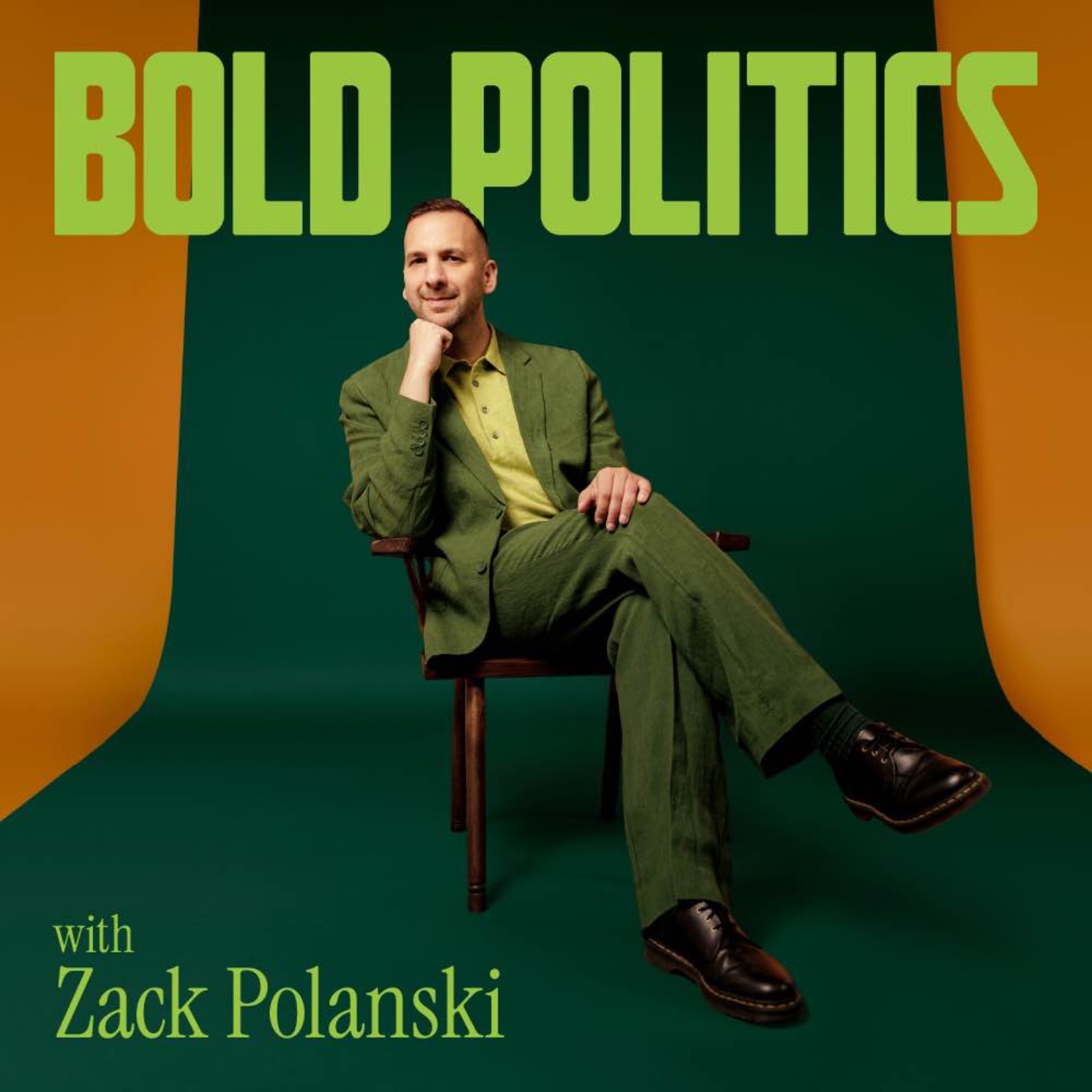
- Bold Politics with Zack Polanski
- Why Rachel Reeves Is Obsessed With Growth At Any Cost
Bold Politics with Zack Polanski23 Sep 2025 · 33m · 9 chapters

Why Rachel Reeves Is Obsessed With Growth At Any Cost | Grace Blakeley | Zack Polanski
In short
Left-wing critique of “growth at any cost” politics in the UK, arguing that mainstream media frames debates around narrow questions while power remains concentrated among elites; focuses on wealth taxation, power/representation, and building grassroots counter-power rather than relying on winning government.
Guests
Grace Blakeley, Marxist political economist and author of Vulture Capitalism; previously a frequent UK TV commentator (e.g., GMB, Politics Live, Question Time) who stepped back due to hostile media framing. Zack Polanski is the host of Bold Politics.
Key claims
Capitalism is portrayed as centralized planning/control benefiting big business, government, and finance; mainstream debates (e.g., wealth tax) get reduced to “will billionaires leave?”; growth can be compatible with stagnant wages and rising inequality; sustainability requires power shifts; AI investment concentrates benefits for big tech while worsening energy/climate impacts.
Notable examples
post-financial-crisis asset-price increases; cost-of-living crisis with high interest rates; AI data centers increasing water/energy use; Corbyn-era strategy criticized for late movement-building; Greens organizing and Greens Organized cited as a model.
Written by AI. May contain mistakes.
Chapters
0:47
The State of the Economy
Exploration of the problems within the economic system and its impact on society.
“I love our country and I recognize that so many parts of it are completely broken, particularly when it comes to economics.”
1:54
Understanding Vulture Capitalism
Discussion on vulture capitalism's myth and its consequences for society.
“So, you know, big businesses, governments, financial institutions often tend to cooperate to kind of create an economy and a society that benefits them.”
6:16
The Role of Mainstream Media
Analysis of how media shapes the conversation around important economic issues.
“Luckily, you know, we're also living in a particular moment where there is just this incredibly vibrant and exciting and broad media ecosystem.”
8:04
Left-Wing Economic Perspectives
Diving into the differences among left-wing economists and their views on capitalism.
“It's something I really enjoy that you do around processes that you don't just engage with them for the sake of it, but actually that constant self-reflection of what's the point of this and is it working?”
12:42
Growth at Any Cost
Examination of the implications of growth-focused economic policies.
“That's always been how the left has worked.”
14:00
The Nature of Economic Growth and Inequality
Explore the dynamics of economic growth, its impact on inequality, and the sustainability of such growth.
“And obviously, the cost of living crisis has exacerbated that dynamic.”
22:35
Grassroots Movements and Political Power
Discuss the importance of grassroots organizing in challenging powerful vested interests and creating sustainable change.
“There's never been a better time to get outside and experience the benefits of nature.”
28:00
The Power of Grassroots Organizing
Explore the importance of grassroots organizing in political movements.
“There's Greens Organized, right, which is trying to like build out this, you know, this ecosystem and infrastructure to create new organizers, which I find super exciting.”
35:19
Podcast Recommendations
Get insights into other podcasts worth listening to.
“And we are back for another season of Here to Make Friends!”

Ask about this episode
Get the gist, explore an idea or ask about something said.
 Claude
On Bold Politics with Zack Polanski, what are the key points of this episode?
Searching your listeningTranscript
Automatic transcript. May contain errors.
0:00There's never been a better time to get outside and experience the benefits of nature. Discover nearby trails and explore the outdoors with AllTrails. Download the free app today and find your outside. Most of us are one good deal away from finally replacing that worn-out rug, fixing up the backyard, or getting the bedroom we actually want. Good news! That deal's almost here! Wayfair's Black Friday in July sale. Get up to 80 % off area rugs and up to 60 % off outdoor and bedroom furniture. Shop Wayfair's huge selection of styles and find the piece to fit your style, budget and space. Plus, free shipping.
0:38Black Friday in July ends July 27th. Shop today at Wayfair.com.
0:47I love our country and I recognize that so many parts of it are completely broken, particularly when it comes to economics. we have millions of people who are absolutely exhausted and really struggling every single day whereas a tiny minority who hold power and wealth seem to do whatever they want this doesn't just arrive by accident it's been going on through generations sometimes it's important to take a step back and look at what are the systems and processes that are allowing this to happen who better to talk to than economics expert grace blake
1:26Grace, you wrote a book I loved called Vulture Capitalism. What is Vulture Capitalism? Well, thank you so much for saying you love the book, Zach. It's really looking at the myth that we live in these free market, democratic, decentralized societies and instead exposes the kind of concentrations of economic and political power at the heart of all capitalist economies. So I show that capitalism is really a system based on kind of centralized planning and control rather than free markets. So, you know, big businesses, governments, financial institutions often tend to cooperate to kind of create an economy and a society that benefits them.
2:13And in a way that kind of undermines competition and free markets. While everyone else is exposed to this idea that we live in a market, you have to compete to survive. You've got to be ruthless. You've got to push everyone out of the way to get to the top. If you fail, it's all on you. Whereas meanwhile, the consequences of failure for a massive financial institution is that you get a bailout and get to go straight back to what you were doing before. Whereas the consequences of failure for everyone else is you might lose your house, you might lose your job. So it's just really kind of exposing this myth of a competitive capitalist economy and showing that those at the top are able to use their power to protect themselves whilst everyone else is exposed to this kind of hyper-competitive system where, you know, all of the consequences are on you.
3:00Now, you're someone I've seen on mainstream media many a time absolutely smash out of the park, particularly in hostile environments. But you've said that you're just not going to do that anymore. What's going on there? Good question. Yeah, so I recently wrote on my on my sub stack this long piece, why I'm not going on TV anymore, basically. And I've been doing this for what feels like a very long time now, like I was doing lots of media appearances during like the kind of Corbyn period. more broadly. I was quite involved in that project. So I was often kind of getting wheeled out to go on GMB and Politics Live and Question Time as the kind of lefty economic and political commentator.
3:43And I did a lot of training for that. I did some training with the New Economic Organisers Network, who I know that you're familiar with as well, and became a pretty kind of prominent face, I guess, in the British media, which came along with a lot of hostility and a lot of kind of anxiety and all that sort of stuff. And it was kind of after Corbyn sat down as leader of the Labour Party that I took a bit of a step back to kind of think, okay, right, where do I want to go next? And I just started thinking a little bit more critically about how the media ecosystem in this country is set up, the way in which all of the questions are framed in this kind of very combative style that also doesn't really allow us to dig into the questions that matter.
4:29You know, for example, if we're talking about like a wealth tax, you'll end up being brought on and the debate will be, will a wealth tax mean that billionaires leave the country, right? And that will be the entire focus of the debate and the question. It will be, will this tax lead to billionaires leaving the country? You won't get to talk about why we need a wealth tax. You won't really get to talk about the levels of inequality. You won't get to talk about the extent of tax evasion and avoidance. You won't get to talk about the climate crisis, the crisis of democracy that is a consequence of this massive inequality.
5:03it'll just be focused really rigidly on this kind of like marginal question which whilst it's very important to politicians and decision makers and of course the billionaires themselves isn't really that relevant to most people's lives and it certainly isn't relevant to the kind of broader political topic under discussion but because that's the way the debate is framed those are the only terms in which people think about the issue so then you'll go out and start talking to people about a wealth tax and they'll be like oh won't that mean that billionaires will leave the country. And then you'll end up getting into the same debate of no, it won't.
5:34Yes, it will. So it really pushes you into defending ideas on a fundamentally hostile terrain and prevents you from doing what the left should be doing, which is questioning the purpose of this whole system, right? Not just like tweaking around the edges and saying, should we have a little bit more tax there or a little bit more tax here? But being like, why do we live in an economy that is dominated by billionaires so wealthy and so powerful that they're able to destroy the climate, undermine our democracy, exploit workers, and just completely and utterly get away with it all. And there's no one there to kind of create any accountability.
6:12Like those are the questions that we should be asking, but the mainstream media doesn't allow you to ask those questions. Luckily, you know, we're also living in a particular moment where there is just this incredibly vibrant and exciting and broad media ecosystem. And also a few people are watching TV anyway. You know, a lot of people are just like, you know, have the news on in the background or something. But if you're talking about people, content that people are really kind of engaging with and using to form their opinions and ideas, it's much more likely to be stuff that's on social media, on YouTube, podcasts, etc.
6:44And that just gives you much more of a chance to ask the right questions and have the right discussions rather than just, you know, taking the questions that are given to you by Piers Morgan, which is something that I, to my great despair, spent quite a lot of my 20s doing. I love all of this. And the irony that I've just come off GMB talking about wealth tax, where they did shout at me several times, won't they all just leave? So I think what you're saying is prescient. Exactly it, right? Like, look, I'm not saying that it's not useful to go in the media sometimes. It often really is. And a lot of the times as well, you can get some really good clips that you can post on your social media that you can use as a setting off point for a wider discussion um and for that reason it could be really useful but i just don't think it's worth making it the be all and end all certainly of my career as like an economic commentator um and equally it's it's certainly not worth structuring i don't think a political campaign like yours just entirely around engaging in mainstream media i mean look at like Zoran Mamdani, right?
7:50Like he did some big interviews that like did really well. But ultimately, the momentum from his campaign came from like a grassroots organizing effort alongside a kind of non-traditional media strategy of using different forms of social media in a really effective way. I love how reflective you are of it. It's something I really enjoy that you do around processes that you don't just engage with them for the sake of it, but actually that constant self-reflection of what's the point of this and is it working? And use the phrase left-wing economists. I was just thinking I'm privileged to talk to you.
8:19I've got Gary Stevenson in my ear talking to Richard Murphy, James Medway. What is a left-wing economist? Because I know you all agree on kind of the important stuff, but there's some big disagreements about the kind of how we do it. Really good observation. I actually don't really think of myself as an economist. I'm a Marxist, right? Which means I study capitalism. I write about capitalism and capitalism is not just an economic system. It is a system that influences how our politics works. It influences huge dynamics within society more broadly. It is this huge, all-encompassing social system, really, that affects our relationships with each other.
9:02It affects our work. It affects our politics. It does affect how we earn money and all that sort of stuff. But it is linked to all of these other much broader, much deeper social, political, ecological, systems. So I really don't like to think of myself as an economist. Marx himself, of course, when he wrote Capital, kind of framed himself as a critic of political economy. And what that was basically saying was that he was critiquing the ideas and the frameworks and the assumptions of the kind of big mainstream economists of the day that would then have referred to themselves as political economists, people like Adam Smith and David Ricardo.
9:42And he was kind of coming at this from a completely different framework, almost like what I was saying about, you know, the framework of the mainstream media versus like how I think the left should analyze these issues. He was saying, why are Adam Smith and David Ricardo asking these questions? The first thing he looks at is, why do they focus on exchange in markets, right? When actually, if you really want to understand capitalism, you need to understand how the stuff that is sold in markets is produced. So there's this famous line in Capital where he says, we need to enter the hidden abode of production, if we want to understand how this system works.
10:14And of course, if you look at how things are produced, you see this deeply unfair, hierarchical, exploitative dynamic between bosses and workers, not just happy little entrepreneurs trading things with each other in financial markets. So that was really Marx's role. It wasn't like doing economics in a way that showed that capitalism was unsustainable. It was reflecting on the ideas that we hold about how a capitalist economy works from a different perspective, right? Looking at it from a historical perspective rooted in an analysis of production, really, and of class. And I kind of see what I do as similar to that, right?
10:55I'm not really studying capitalism to see how we can increase growth or productivity or boost profits, right? Which is how an economist will study it. And a progressive economist will have a different view on how you do that than a right-wing economist. Progressive economists will say, well, you know, we need to make sure we have high employment, that we have high public investment. And a right-wing economist might say, you know, the state needs to be smaller, etc. That's not really what I'm doing. I'm studying the system to say, is this system just? Are its goals the goals of kind of, you know, human prosperity and well-being?
11:32Who has power within this system? How does that power shape the way that we think about this system? And how can we start to ask questions that allow us to see what's really going on under the surface, rather than all of the headlines about growth and inflation and wages and all this sort of stuff? How can we kind of really understand the deeper dynamics that underpin this? And of course, that does often require you to think about the inner workings of that system. And so, you know, a lot of the stuff that I'll talk about in terms of policy on a daily basis, things like a wealth tax, for example.
12:02I'm looking at that not from the perspective of what's going to make the economy grow more over the long term. I'm looking at what's going to increase the power of workers relative to bosses, what's going to increase the power of ordinary citizens relative to governments so that we could create powerful movements that allow us to then shift this system away from like how it's currently working right now. So you'll see different opinions coming from left-wing economists on that basis. Sometimes we'll all agree about something like there should be a wealth tax or the government should be investing more in clean energy, but we'll be coming at it from very different perspectives.
12:42That's always been how the left has worked. You've had progressive liberals alongside socialists, democratic socialists. And when things have been fairer, those groups have worked together really effectively to push for things like stronger unions, higher taxes on the rich, etc. et cetera. It's fascinating. And obviously, we live in a time where Keir Starmer and Rachel Reeves are pushing growth at all costs, pretty much every turn, and the media are parroting it. Would you say growth in of itself is a bad thing? Or are you agnostic about it? It's just interesting to hear where you're coming from.
13:15So again, you know, I think we need to study this question, not just as like, is growth a good or bad thing? We need to study it from the perspective of our fundamental values about this system, right? And so for me, two of those core values are the relative power of people relative to elites and the kind of sustainability of that economic model. Are we destroying the long-term foundations of our own prosperity, right? So, you know, when it comes to this kind of balance of power question between workers and bosses, it really depends on what type of growth that you've got right on the one hand you don't want a massive recession because contrary to what a lot of kind of some marxist thinkers have argued in the past capitalist crises don't generally tend to strengthen the working class they don't generally tend to strengthen movements against capitalism because they basically make it hard for people to survive and when people are just focused on meeting their daily needs on you know like keeping a roof over their heads they are much less likely to do things like join a union get engaged in any form of kind of campaigning or political organizing they're just literally focused on um on getting through every day right so you know recessions and economic crises can really undermine and do tend to kind of undermine the organizing strength of left political movements even though they sometimes strengthen narratives that we need to change the system um so you know in that sense in the sense that it's tied to people's incomes like deep questions around GDP are important right but it's also possible to have a very fast growing economy in which the rich are getting richer and everyone else is basically staying the same or even getting worse off and that is really what we've been seeing um in recent years well we've had a kind of slow growing economy but like most of the gains from that growth have been going to those at the very top of the income spectrum.
15:16And particularly those who have wealth. We especially saw that in the period after the financial crisis where you had this kind of government-driven increase in asset prices that made people who had wealth even wealthier, even while the rest of the economy just stagnated and even as wages stagnated. And obviously, the cost of living crisis has exacerbated that dynamic. You're seeing high interest rates, which means that, you know, the banks lending you money are doing quite well and making good amounts of money, whereas everyone else is struggling to pay their mortgages or, you know, struggling to just even put food on the table.
15:53Right. So you can have growth that doesn't strengthen workers' power. Right. All of these are questions about like, how is this growth taking place? What is the nature of it, et cetera? which is why i'm kind of like we need to move beyond this idea of degrowth because you can have degrowth i.e a recession that makes it harder to change the system but you can also have a kind of growth that um kind of brings workers together in such a way that allows them to kind of form movements that can push that kind of change and the second consideration is obviously sustainability because ultimately none of this really matters if we get to a point where you know which is what where we're heading to the entire economy crashes in you know 100 years maybe less because we have reached or exceeded any sort of sustainable rate of exploitation of the natural world we've obviously succeeded all of the exceeded all these planetary boundaries that allow human beings to not just like produce things using our natural resources, but just to live in this kind of natural environment that we basically completely and utterly take for granted.
17:02And on that front, you know, it's just very, very clear that we need to think, well, not even that we need to think differently, we need to kind of be wresting power back from the institutions and organizations that are pushing so clearly for growth at the expense of everyone else and start pulling power back down to everyone else. I mean, the best example of this right now is the kind of AI revolution, right? We're seeing vast amounts of our social resources being pumped into growth that is benefiting a tiny number of extraordinarily powerful people at the heads of big tech companies. And that is, you know, exposing communities to a loss of water, which is being used to call data centers, which is massively increasing our energy usage.
17:50so worsening climate breakdown and creating huge costs for most of the rest of the planet, right? That is obviously a question of growth that is both unsustainable and undermining the power of ordinary people relative to these big tech companies. So this is why I kind of don't really like focus on growth per se. I would always focus on like who has the power and where are the resources coming from? And at the moment, we live in an economy which, whether it's growing or not, the power is stuck at the top and our use of resources is completely and utterly unsustainable. So, Cain said, anything we can do, we can afford.
18:29And obviously, there's been a big conversation around wealth tax versus funding public services through other ways. Where do you stand on this? I kind of think the question of wealth taxation versus funding for public services are slightly separate, right? So, the issue around wealth taxation is not just an issue of raising revenue. It's also an issue around reducing inequality, which is why I think when we get drawn into these debates about, you know, how much revenue will it raise or how many billionaires will it push out of the country? We're kind of missing the point. Like the whole idea here is to constrain the wealth and power of those at the top, you know, regardless in some senses of the impact that that has on revenues.
19:08Because when you have the levels of inequality that we currently have within our society, you have the emergence of a tiny elite that is able to use its wealth and power to influence political outcomes in a way that corrupts the entire system. So for me, that's really the main argument for wealth taxation is about constraining the wealth and power of the wealthiest people in this country. And in that sense, it should come alongside things like strict limitations on lobbying, on political donations, on all that sort of stuff. But then there is this question of how we are able to fund the provision of services that we need over the long run, as well as fund and finance investments that are required to do things like decarbonize our economy.
19:49And on that sense, we do need to broaden the tax base because currently a kind of moderately sized number of middling earners fund a significant proportion of the tax base and a small number of high earners also fund a significant portion of the tax base. And the issue is that there is a tiny, tiny number of extremely rich people who do not contribute very much revenue to the government. And that comes from all sorts of reasons. Obviously, they are able to purchase advice that allows them to avoid or even evade tax without being pursued. They're able to move their assets around the world in ways that allows them to avoid tax.
20:40And they can constantly wield this threat of we will leave if you tax us when measures to tax them properly are mooted. So, again, coming back to this first question, you know, the fact that these guys don't contribute really to taxation makes them into this political class of their own character, really. that is able to wield so much influence without actually contributing to the way in which our society works. So regardless of their threats to leave the country, regardless of whether or not we say, oh, is it going to cost more money to enforce measures against tax avoidance and evasion than it's going to raise?
21:20We still need to be doing this because it is a question of power and politics. It's not just a question of economics. But yeah, you know, also we obviously do need to expand the tax base to be able to fund the expansion of social security, to be able to fund investments in decarbonization, all that sort of stuff. And there are lots of ways that you can do that. Wealth taxation is one. Corporate taxation as well. We don't tax corporate profits sufficiently. And all of that needs to go alongside measures to reduce avoidance and evasion and the way that corporations move all their money around the world, which is another issue that you also need to tackle internationally.
21:58But again, you know, I think the main argument is this argument around power and representation. Hold that thought. We're going to be right back after the break. Most of us are one good deal away from finally replacing that worn out rug, fixing up the backyard or getting the bedroom we actually want. Good news, that deal's almost here. Wayfair's Black Friday in July sale. Get up to 80 % off area rugs and up to 60 % off outdoor and bedroom furniture. Shop Wayfair's huge selection of styles and find the piece to fit your style, budget, and space. Plus, free shipping. Black Friday in July ends July 27th.
22:33Shop today at Wayfair.com. There's never been a better time to get outside and experience the benefits of nature. Discover nearby trails and explore the outdoors with all trails. Download the free app today and find your outside.
22:55Welcome back to Bold Politics with me, Zach Polanski. I don't necessarily endorse any of the messages you just heard, unless there was something there that was great for the planet, in which case go buy it if you want it. The point here, though, is podcasts are not free to make. They're quite expensive, so we do need sponsorship. We're as diligent as we can be about the people who advertise on the show, but we are not in full control of it, and I just want to be really transparent about that. With that, back to the show.
23:24This brings on to the next topic, really, because you also wrote another substack. Keep promoting your substack here. I'm glad I have at least one avid reader. I love it. And no one's coming to save us. And I didn't take it as a personal attack, but it was this idea of future leaders. The change will not come from the top down. And actually, I fully agree. How do we get people out of that mode of looking to a Zoran Mamdani, a Jeremy Corbyn? How do we look at grassroots power? That was not meant as a personal attack on you, by the way, Zach, because I think you embody the kind of leadership that we need, right?
23:58Which is, you know, there's like leaders who are able to lead and follow and leaders who focus on empowering movements rather than trying to control them. um and i think too often on the left we've had this view of political change which is basically very like mainstream it's like you build a political project you get control of the state and then you do policies that change things the other thing that i look at in the book vulture capitalism that we mentioned at the top of the show is the relationship between um capital in the state. So between big corporations, big financial institutions and governments, right?
24:44And part of the reason that it's so difficult for left-wing projects to succeed is that the state is not a neutral institution. So even if you get a progressive government in power and control of the state, you've also got all of these extremely powerful vested interests who have links to state institutions at every single level, at local government, in the treasury, at the central bank, in regulators. So you've got all of this pressure pushing you towards a particular outcome. It's why, for example, you know, even is why governments tend to kind of end up moving towards measures that are more favorable to capital, even if they've come in saying they're going to change everything and, you know, make everything better.
25:30It's not just that they were lying. It's also that doing that is much harder when in office because you're exposed to all of these pressures. So if you, as a left political leader, say, right, I'm going to get power, take control of the state, form a government, and then change everything, you will quickly find that you are exposed to much more pressure on one side than you are on the other side. So the question then becomes, how do you build a movement from the ground up that is able to wield counter power against those vested interests that are pushing you from that direction? How can you start to create a movement that pushes back from this direction, right?
26:07And creates, yeah, just a more kind of stable equilibrium that allows you to move forward with progressive policies. And that is the challenge that the left faces today. It's not just winning kind of government power, winning power within the state. It's creating a social movement, a political movement that is capable of meeting and maybe even overpowering the power exerted by those extraordinarily influential, you know, the Elon Musks of this world that they're able to influence over the state. And that isn't something that you can just do, you can just retrofit, right? I think that was the problem with Corbynism.
26:50It was like you had this charismatic leader who was able to develop this really powerful narrative and build a political project in the Labour Party focused on taking over the state. And then they were like, oh, wait, we also need a political movement to support us. So we're going to have to retrofit that. What do we do with all these hundreds of thousands of people that are turning up to these rallies that are joining the Labour Party? How do we actually mobilise them in their communities, in their workplaces, on the streets, to make sure that they're not just turning up to vote once every four years, that they're actually becoming political organisers?
27:21And that was something that I think the Corbyn Project only started to think about really late in the game. And that was a big problem, because ultimately, when the powers that be encircled and decided that they were going to use every single tool at their disposal to destroy this movement, that is what happened, because that countervailing movement wasn't strong enough. Whereas I think what I see with the Greens right now is really exciting because, you know, it's not just that we've got you pushing these progressive narratives that everyone wants to hear. It's also that the Greens have this kind of institutional legacy and organizing legacy across the country.
27:56So you guys have seats in, you know, councils across the country. There's Greens Organized, right, which is trying to like build out this, you know, this ecosystem and infrastructure to create new organizers, which I find super exciting. And that is powerful because you're not just bringing people into a movement to vote and to follow. you're bringing people into a movement to become leaders and to push for change and to become organizers which just makes the project so much more sustainable over the long run it means you have a pipeline of leaders who can fill these positions and you have this movement that can provide you with support against all of these powerful vested interests i'm really interested thank you by the way around community organizing if this is best within a political party or is it best outside of a political party so it can overthrow the political party if it becomes unhappy with them.
28:52I do think that things like community organising, and in fact, most forms of organising are best placed when they take place outside of the formal structures of political parties, but with close links to those political parties. So the classic example historically would be the relationship between the Labour movement and the Labour Party, right? You had independent unions that were nevertheless affiliated to the Labour Party that were fighting and winning battles on their own, organizing with their members in their workplaces across the country with their own budgets, their own kind of organizational priorities, but which were also affiliated to a political party that they could then pressure to implement certain policies that were of benefit to their members.
29:32And I think that's the same thing today with kind of community organizing, right? With this kind of community wealth building agenda, there's been some really exciting stuff going on from the council level all the way down to the kind of grassroots community level. But I think the strongest projects I've seen in the community wealth building movement, which, by the way, is all about kind of like building community institutions locally that can create kind of sustainable economy, create jobs locally, you know, allow communities to have control of things like energy infrastructure, housing infrastructure, etc.
30:03The most successful ones I've seen have been ones that have grown up outside of the orbit of political parties before linking up with those political parties to basically support each other. Because you want to have organic, active roots in a community. You know, this is the kind of point of like the no one's coming to save us piece. If you want to have a sustainable long term political movement, it has to be something that people own themselves. It has to be like, I started this community energy project because I noticed that I live in an area with plentiful sunlight or wind. And yet there's loads of people living in my community in fuel poverty.
30:36And I wanted to change that. Right. And that can then become a really powerful organising force. It can bring people into politics who maybe would otherwise not at all be interested in politics. They just want cheap energy, right? But if it immediately emerges as something done by a political party to a community, you're not going to have that same level of buy-in. Yeah, I think that's really well put. And I've seen it with the Labour Party several times where they kind of co-opt a community and the community then can't get rid of them. Finally, we're not really in the job of kind of predicting the future, but what do you think is going to happen for the future of UK politics?
31:12Oh, Zach, that's a big question. You know, I just think the future is kind of in our hands, really. I know that sounds a little bit cliche. With you entirely. But like, I don't think it's predetermined. So the choices and decisions that we make now will have massive effects on the kind of political landscape that we see in five or 10 years. Look, I think there are certain big trends that are taking place, right? Like, obviously, mainstream political parties are broken. They've lost trust with the electorate for lots of different reasons. But, you know, for me, I think the main reason is basically that those main political parties, both the Tories and Labour, have become completely unaccountable and in some senses actively corrupt.
31:52You know, we've seen multiple examples of overt corruption. And that is the type of thing that just destroys people's trust in those political institutions. We already know that trust in political parties is at all time lows, right? And so people are looking for alternatives. That I think is only going to increase the desire to kind of push outside those two main parties. but that doesn't necessarily mean good things for the left right because it also means the rise of reform even the rise of even more far-right parties than reform um the you know extraordinary popularity of people like tommy robinson right now is again uh a reflection of people thinking elites don't do what i want them to do they aren't responsive to my interests so i'm gonna kind of go for this outsider now what i actually think the differences between the left and right on this issue is that the right comes in with this narrative of we are here to save you.
32:43Nigel Farage is here to save you. He's going to take on the elites. He's going to burn down the whole system. He's going to take on these marginalized groups who are attacking you and make you feel strong and powerful because you identify with the strong and powerful leader. I don't think that the left can adopt that same strategy and win. I think that if we are going to build an alternative to the far right. It has to be an alternative that's not just rooted in policy, but that's rooted in the type of politics that we're pursuing. And if we're able to do this project of building out a network of organizers, of drawing people into politics, deploying them in their communities, in their workplaces, on the streets, linking up all of these extraordinarily vibrant political movements that we have right now, from the climate movement to the peace movement, to the labor movement, and giving people a sense of power that doesn't come from projecting their agency onto a strongman, but a sense of power that comes from organizing with other people to achieve their goals, to make their lives better.
33:50That's the way that you draw people back into politics who are alienated and do so in a way that aligns with socialists, with progressive political values. um so yeah i think if we're able to do that then this will be a real moment of opportunity for the left um and a moment where we can really start capitalizing on people's rage with this deeply unaccountable fundamentally corrupt economy and political system and for the first time in a really long time transform that into a kind of energy that can actually start changing things from the ground up. Grace, every time I listen to you, I know everything's going to be okay because it's in our hands.
34:34Thank you so much for coming on the show. Zach, thank you so much for everything you do. I'm so glad that you exist and I'm so glad I'm a member of the Greens. So yeah. We love having you. Thank you.
34:50Most of us are one good deal away from finally replacing that worn out rug, fixing up the backyard or getting the bedroom we actually want. Good news. That deal's almost here. Wayfair's Black Friday in July sale. Get up to 80 % off area rugs and up to 60 % off outdoor and bedroom furniture. Shop Wayfair's huge selection of styles and find the piece to fit your style, budget, and space. Plus, free shipping. Black Friday in July ends July 27th. Shop today at Wayfair.com. Wayfair, every style, every home. ACAST powers the world's best podcasts. Here's a show that we recommend. Hi, I'm Jessi Klein.
35:32And I'm Liz Feldman. And we are back for another season of Here to Make Friends! Which is our podcast that is really just a long con to invite amazing guests onto our show and trick them into being our friends. Great guests like... Linda Cardellini. Jeff Hiller. Paulina Poroskova. Other people. And we'll also give you a sneak peek into what our text thread looks like. The kind of stuff we write about, like, should I buy this? Am I a unicorn? Do you think I'm a unicorn? Follow Here to Make Friends wherever you get your podcasts. and watch us on YouTube. Acast helps creators launch, grow, and monetize their podcasts everywhere.
36:06acast.com
From the publisher
What are the deeper dynamics behind growth, inflation and wages? Why does the current Labour government create their policies solely based on increasing GDP per capita, regardless of impact on people and planet, instead of focussing on the welfare of the population? Who really holds the power when it comes to unlocking better living standards, increased public services and a higher quality of life for everyone?
Zack Polanski speaks to economics expert, Grace Blakeley on the structures that underpin our society and where the current inequality crisis stems from.
Email: [email protected]
YouTube: @boldpoliticswithzack
Instagram: @_boldpolitics
X: @_boldpolitics
Tik Tok: @boldpolitics
Disclaimer: Zack does not endorse any automated advert programmed into this content. We have blocked ads from certain categories where possible to try and ensure advertisers align with Zack's values, but cannot absolutely control which adverts you may hear. As such, we're sorry if you hear an advert from a company which is at odds with our principles, and encourage you to skip through them!
Hosted on Acast. See acast.com/privacy for more information.
More from Bold Politics with Zack Polanski
All episodesWe use cookies.They keep VO running smoothly and help us improve it. Privacy policy