
 Ask ChatGPT

- Podcasts
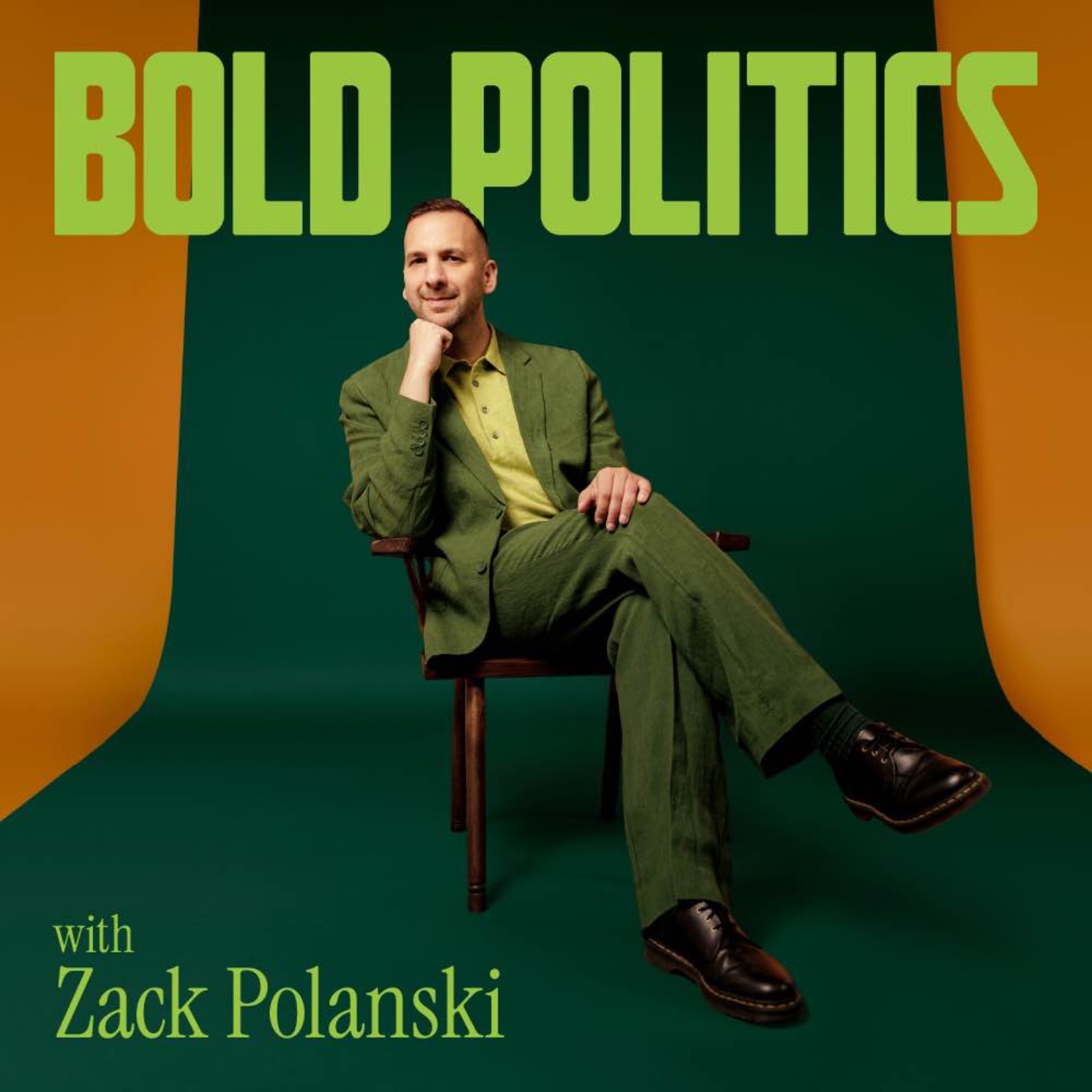
- Bold Politics with Zack Polanski
- Why The Left Can’t Agree On Everything
Bold Politics with Zack Polanski29 Jan 2026 · 49m · 17 chapters

Why The Left Can’t Agree On Everything | Zack Polanski | Kieran Andrieu
In short
Bold Politics features Zack Polanski engaging with thinkers, activists, and those whose voices need to be amplified. The podcast discusses progressive politics across various issues, including immigration, economy, inequality, and leadership.
Main points
- Guests: Zack Polanski and Kieran Andrieu (Novara Media journalist)
- Focus: The complexities within leftist politics, particularly regarding diplomatic relations and the nature of progressive movements.
Written by AI. May contain mistakes.
Chapters
2:48
Challenges of Left Cohesion
Exploration of why the left struggles to unify and act cohesively.
“But we also, we care very much about the way that politics plays out.”
5:52
Democracy and Individualism in Politics
Discussion on the balance between collective decision-making and individualism in left politics.
“Democracy should be democracy properly rendered and properly understood, which is the same, you know.”
8:00
Communication Strategies in Political Campaigns
Analyzing the role of effective communication in successful political campaigns.
“That's, you know, you start with that as the fundamental.”
11:32
Balancing Winning and Changing the Conversation
Debate on the need to balance immediate wins with broader ideological shifts in politics.
“And the right has, just put it in very sort of crude terms, the right has thrown up a great many very effective populist communicators over the past 15, 20 years.”
14:03
Navigating Radical Politics and Immediate Change
Learn about the balance between radical political goals and achievable immediate change.
“But then, like you say, you tie it to broader objectives.”
18:27
Declining Political Vision in Leadership
Explore the reasons behind the loss of political vision in leadership and its consequences.
“So I think there's slightly distinct challenges, but they're broadly part of the same process.”
23:03
Insights from a Flotilla Experience
Hear about personal experiences aboard a flotilla and the realities of Israeli occupation.
“You've spoken about this a few times, I believe, but if there's something you wanted the audience to know where you thought from this experience, this is what people need to know.”
28:02
Exploring the Two-State Solution
Discussion on the complexities surrounding the two-state solution for Israelis and Palestinians.
“as humans i think so so well put um i've not brought you on to find peace in the middle east so it's okay if you don't have an answer to this but i do want to jump into a two-state solution conversations.”
28:39
Palestinian Liberation and Israeli Statehood
Debate on the future of Israel as an ethno-supremacist state and its implications for Palestinians.
“That just seems absolutely the wrong way to go around things.”
29:26
The Right to Existence of States
Discussion on the philosophical question of a state's right to exist, particularly in the context of Israel.
“It will apply to what they call greater Israel, which is all of our territories under international law.”
Show all 17 chapters
30:48
Humanity and Dignity in Conflict
Exploration of how to ensure protection of humanity and dignity amid conflict.
“I mean, a lot of people feel uneasy when I say this kind of thing.”
32:08
One Person, One Vote: A Simple Solution?
Debate on the practicality of implementing one person, one vote in the context of Israel and Palestine.
“And so I come I guess to a bit where I don't have an answer and I also think that's okay.”
32:59
The Oslo Accords and Palestinian Disillusionment
Analysis of the Oslo Accords and their impact on Palestinian perspectives and trust.
“You know, when you think about it in terms of the South African model, Now, there are loads of differences between apartheid South Africa and Israel.”
34:40
Assessing Israeli Political Tendencies
Discussion on current political tendencies in Israel and their implications for peace.
“And I think, but I think that there was serious.”
39:24
The Role of the UK in Facilitating Peace
Discussion on how the UK can facilitate genuine equality and dignity in the Israeli-Palestinian conflict.
“And I think that we all have a really vital role to play in that disintegration.”
42:04
Diplomatic Relationships and Accountability
Discussing the complexities of diplomatic relations with Israel amidst ongoing conflicts.
“To hold Israel to account in accordance with international law.”
46:40
Grassroots Support for Palestine
Exploring grassroots movements and the importance of community engagement for Palestine.
“It's the same principle I'm criticised for saying that I'd negotiate with President Putin.”

Ask about this episode
Get the gist, explore an idea or ask about something said.
 Claude
On Bold Politics with Zack Polanski, what are the key points of this episode?
Searching your listeningTranscript
Automatic transcript. May contain errors.
0:00Are you noticing your car insurance rate creep up even without tickets or claims? You're not alone. That's why there's Jerry, your proactive insurance assistant. Jerry handles the legwork by comparing quotes side by side from over 50 top insurers so you can confidently hit by. No spam calls, no hidden fees. Jerry even tracks rates and alerts you when it's best to shop. Drivers who save with Jerry could save over$1 ,300 a year. Don't settle for higher rates. Download the Jerry app or visit jerry.ai slash ACAST today.
0:56and get started in as little as two days. There are no subscriptions, no long-term commitments. You just pay per session. Grow helps you find therapy on your time. Whatever challenges you're facing, Grow Therapy is here to help. Grow accepts over 100 insurance plans, including Medicaid in some states. Sessions average about$21 with insurance, and some pay as little as$0, depending on their plan. Visit growtherapy.com slash start now to get started. That's growtherapy.com slash start now. growtherapy.com slash start now. Availability and coverage vary by state and insurance plan. What's the most dangerous thing you've done this year?
1:38I always want to platform people who do amazing things, particularly people who put their own lives on the line and their own safety on the line to tackle inequality and to speak out against injustice. There's one particular story I won't tell because I want them to tell it themselves, But today I'm going to be speaking to Navara Media's journalist, Kieran Andrew.
2:02Zach, I'm so excited about this year. EcoTalk has new land coming for rewilding and habitat restoration. And we're bringing back beavers. Any week now, yes, I'm also going to start live streaming the garden birds from my home. And all of this happens because EcoTalk has customers. that's people who pay their mobile phone bills to us they make a call they send a text or they just surf the net and british wildlife gets a boost that's it no shouting just go to ecotalk.co.uk slash bold politics to find out more
2:48i don't want to embarrass you but i do want to oh yeah i do want to before we go live so used to navara live before we go on there and you can tell me you know whether you're comfortable with me saying this on there but i do want to thank you okay because you have just been able to i can't understand that water water very good very good it's all been thought through yeah thank you for basically professionalizing the left's operation now obviously the left is a like a kind of non-porous that you know it's a broad you know heterogeneous thing but i think that you are clearly making significant waves and like it's so difficult to get the left organized and like obviously some parts of the left won't come along with you or might never come along with you but you've definitely injected some serious momentum into things well that's a nice way to start a conversation why do you think it is that the left um traditionally haven't always managed to get its act together you might argue that the left is you know a place of at least ostensibly morals in politics ethics in politics and that creates problems because we don't all see the world in the same way we have basic principles that unite us, you know, red lines, fundamentals and so on.
4:16But we also, we care very much about the way that politics plays out. We care very much about justice and the way that society looks. That, I think, you know, comes with inherent difficulties. I wouldn't exchange us for the mercenary jackal-like right, who seem to be able to get their act together very easily, because maybe you could say they, first of all, have all of the institutional power on their side and they have the interests of billion you know they're working in the interests of very very very powerful and very very wealthy but also you could make an ideological point that you know it is more easy to cohere uh a mass you know it's more easy to cohere a political machine or a political operation when inherent in your ideology is a kind of political or social Darwinianism, a kind of cutthroat approach to politics and an individualism, a kind of atomistic individualism, which says that, you know, ultimately man is selfish, people are selfish, and that that is the correct, that's not just our nature, it's also something that's admirable and something that we ought to use as a guiding star, if you like, in politics.
5:36It's so much easier to build a political operation from that starting point than from the starting point of everybody is essentially equal. We might have different strengths, but fundamentally we're all equal. We all have to be listened to. Democracy should be democracy properly rendered and properly understood, which is the same, you know. And we all have a conception of justice, you know, and through that conception of justice, an idea of where the world, Britain, the wider world ought to move in the 21st century and beyond. I think it's much more inherently difficult to build a coherent political program from the latter than the former.
6:19But I think the main thing is the class thing, right? It's the fact that we start from a position of opposition to the super powerful forces and institutions in our society. I mean, what do you think? Well, it's interesting because when you first phrased it, I thought, oh, I don't know if I entirely agree. And then I was questioning my own assumptions. So what you said was, you said some very lovely words. And then you said, you might not be able to take the left with you or the whole left with you. And I often think, so the Green Party is a genuinely democratic party. It's one member, one vote.
6:55So even where there are those kind of power structures in place, there are the mechanisms to be able to transform them if they're being problematic. It feels like there's a genuine root place. Now, I think there's some other important conversations that are probably outside the scope of this conversation because they just get dull for people. But in a society that's already unequal, if you're having a democratic conference, some people can't afford to be there at that conference. But then we've put in remote options. But some people can't afford to be at a remote conference because they've got childcare arrangements or they're literally just trying to survive through their jobs.
7:23So that's a slightly separate conversation. But if you get that right, a genuinely democratic party that says, a leader that says our values are essentially socialist values. It's about challenging wealth and power. It's about transforming our economy, transforming our society. It's about equality. and crucially what really resonated that you were just talking about was the collective versus the individual right i think there are maybe aspects of the left where that would not appeal to them because they are looking for a more top-down this is the program and we don't have time for mass negotiation or mass grassroots organizing we've just kind of got to get it done and then i suppose my question it really genuinely is a question rather than me deciding what the left is but is that left because i go actually for me one of the fundamental principles of the left is that everyone has an equal space to that decision making table and if you're not happy with the decisions being made there are democratic routes to be able to challenge wealth and power and the decisions are being made not by the wealth and power but by the collective wisdom of the whole I think that's true I think that you have succeeded in in part because of a kind of combination of qualities or a formula if you like which is first and foremost that very democratic party base and the party, you know, the architecture of the Green Party as it currently stands permits for a greater deal of horizontalism or, you know, genuine democracy in the party than any of the other major parties right now.
8:53And that's the basis. That's, you know, you start with that as the fundamental. But I do also think that leadership matters. I do think that, you know, if you have that kind of horizontal structure in place, there then is room for, you know, a political operation on top of that. And we see that, obviously, the, you know, comparison par excellence with you at the moment is Zoran in New York. And clearly it was a very slickly rendered operation. it was a very very it was a very very powerful campaign it was very well communicated and i think but you know again people i think the left sometimes tends to feel queasy about that kind of thing and recoil from it and we've got to get over that yeah it's interesting to see zoran got himself in trouble quote-unquote almost on day one or two with some of his policing decisions now i'm be really honest i'm not across the detail to either condone or criticize but it was just striking that um how quickly people have gone from here's someone we should really celebrate to who he's getting this wrong yeah we should always hold people to accountable and no one is immune from making mistakes or being told that their shit stinks like we've got to hold these people to account but also it does feel we're back into that old familiar thing of the left finds traitors yeah that exactly and the left likes setting loyalty tests that nobody can pass or only they can pass when they don't have power or you know i mean it is always going to be difficult because we talked about the institutions briefly earlier, the path dependencies in those institutions, that's sort of highfalutin language, but basically just the way those institutions have operated forever, which is serving the interests of the powerful, serving the interests of the establishment and so on.
10:42Obviously, when the left gains power, it gains complex, large institutions that govern over, depending on what level of governance it is, that govern over large numbers of people with certain things that are in common for all of us. I mean, one of the best things Zoran did in that campaign was when he was asked, why should conservatives vote for you in New York? And he said, because they have to pay rent too, right? But that isn't just a kind of isolated thing. That speaks to the wider messaging of his campaign.
11:15And so, in a way, this is a long way of saying that all of those kind of more superficial features, the kind of slick campaign, the effective communication, it means nothing if it's not a means to an end. And if it is a means to an end, it means a lot because you can't, I mean, certainly, unfortunately, the experience of the past 15, 20 years is you can't really reach that end, those desired goals, whatever they might be, emanating from a kind of left-wing conception of justice or left-wing politics without having an operation that rivals the millions upon millions of pounds that's poured into Farage and all of those guys.
12:00And the right has, just put it in very sort of crude terms, the right has thrown up a great many very effective populist communicators over the past 15, 20 years. The right and the far right and the fascist right. we need to get serious about providing a counterweight to that and you know I compliment you because I think that that you are you're embodying that to an extent in the UK and I believe that it will only grow stronger. I suppose there's one other element which I'm interested in your thoughts on because it's something that I feel is a creative tension within myself. I'm aware there's two strategies here and I think both of them have a place but it's about working which one to really go for so one is i would say it's more the zoran strategy which is not to radically transform things or um smash through things but actually to win so just to have one message that you know appeals yeah and it's uh it's truthful but it's not the whole truth right so for instance i could keep talking about wealth tax right now in an affordable country and i have no doubt that that would be popular and i believe it is popular and i think there is one strategy there to keep going on about that and I think when you're sick of saying something you know people are just starting to hear so you've just got to keep saying it then there's a second part though which is changing the conversation now I don't see these things as polar opposites I think you absolutely do need to change the conversation and to win but changing the conversation can push you away sometimes from winning and to give an example when I was on Greensburg I talked about the difference between a household budget and a national economy a more kind of esoteric conversation which isn't as easy as saying let's tax multimillionaires and billionaires and their assets.
13:39But I believe an equally important conversation to start shifting the dial about how we move conversations about subjects. I'm sure we're also going to get onto this, but we can see this with Palestine too. You can talk about ending the genocide, something that you know is unsurprisingly popular right now because it turns out the British public aren't sociopaths and don't want to see this continue. But then there's another conversation to have about ending the occupation. Now, you could argue if you're not talking about ending the occupation you're not talking about transforming the economy you're not really doing uh radical bold politics because you're just doing what you need to do to win and get immediate change but also if you float too far into kind of those bigger wider overton window shifting conversations you move away from what is the simple win right now right i'm just yeah curious what your reflections would be on that well i think there and again this is i suppose harks back to what i I was saying that it's a formula and you have to kind of try and test things, not in some crappy spin doctor-y, focus group-y crap way, but in a way that doesn't lose view of or doesn't lose sight of either of those two horses, if you're trying to ride, if you like.
14:50So, yes, there are flagship policies which have become part of the zeitgeist, part of the national discourse, wealth tax being one, And there are reasons that that's become, you know, a kind of watchword or a buzzword right now. But then, like you say, you tie it to broader objectives. I mean, it is part of a means to an end. And the end, obviously, is a more just society, a more equal society, a society where you don't have such extreme divisions. And a wealth tax is a mechanism, one mechanism by which to accomplish that. I think with Palestine, and we can talk more about Palestine in a moment, I think with Palestine, the problem there is the same but also different.
15:38The problem there is that we risk collapsing into kind of shibboleths. We risk collapsing into two-state solutionism and saying two-state solution and Palestine deserves a state of its own. That means nothing now. And so I think the problem is that the shift of public opinion toward a position that's broadly pro-Palestine has been massively expedited by a genocide. And that is, if you take it as part of a much larger process, one of the few good things that's happened to Palestinians in Palestine in the past 20 years. not the genocide part obviously but the part where international solidarity exists for us because i can remember a time when we had to deal with you might not say all-out genocide but we had to deal with occupation and apartheid and ethnic cleansing and all those aspects but it was as if we didn't exist it was as if i mean i remember going to demonstrations in london there were always a few thousand people, but it was only a few thousand people.
16:47And so you kind of had the worst of all worlds. I mean, of course, the extent to which Palestinians in Gaza have suffered extermination, all our extermination since 2023, is on a completely different scale and is of a different order of magnitude. But it is important to Palestinians that the world sees them, however frivolous that might seem to people, because I get it. I understand that people are so frustrated that we can't actually put our hands on the levers and just stop the machinery of genocide, which in many cases is being supplied by our own governments, which we ostensibly vote for. So I get it.
17:29I get that it's such a despairing set of circumstances. Nonetheless, I do think that it is important to Palestinians that civil society, global civil society is on our side. And now knows, and this is the flip side of it, knows what the state of Israel is about. Because I think part of the profound frustration for so long was that we would also have to listen to people talking about Israel in romantic terms or idealistic terms. So I think, OK, so to relate it back to your question, to bring it back there, I think that with Palestine, it's about finding things like end the occupation, end the apartheid without collapsing into those kind of, might say, more liberal kind of resting positions like two state solution.
18:21because practically speaking on the ground, that is not viable. Right. So I think there's slightly distinct challenges, but they're broadly part of the same process. You need to have those leading kind of shop window policies, whether it's a wealth tax, whatever else. But they need to be part of a wider suite of policies that amount to a vision, you know, amount to a vision. And again, that is a key distinction. I mean, look, you'll have your views on this and I want to ask you about them. But why is it that Keir Starmer's majority has evaporated in such a short space of time? Well, it's for multiple reasons, but I think I always thought it was going to happen.
19:07And I don't take pleasure in saying that because I would rather have been very pleasantly surprised. But it's happened because the guy has no vision. He has no politics. And the people around him, you know, the fish rots from the head. None of the people around him have any vision for this country. They have no idea around politics. They certainly have no ideals. And so we end up getting what we've got as a result of that. I don't even think it's much deeper than that, to be honest. I think if you take vested interests, you don't have a vision. You already have a deeply broken society and you promise to fix it.
19:42And people go, things don't feel like they're getting better. In fact, they feel like they're getting worse. And it's not a surprise that you start to plummet in the polls.
19:54Hey, Zach, guess what? EcoTalk has tripled the number of customers that it's got in just the last six months. Now, that's got to come down to the fact that when people are paying their mobile phone bills, they like helping nature. Of course, they like the service too. They've got the best network coverage in the UK. It's powered by green energy. And when they engage with our customer service, guess what? Well, that's powered by real people. Yes. Martin, Susan, Nemesha have all contacted Trustpilot and said that making that switch was much easier because they were speaking to those real people.
20:33And of course, we're very excited because we've got more land. We're going to be doing more restoration, more rewilding, more replanting. We're going to be making the UK a much better place for wildlife. So why don't you join us on EcoTalk? Just go to ecotalk.co.uk slash bold politics and we'll see you there. You know what's wild? Most people are still overpaying for car insurance just because it's a pain to switch. That's why there's Jerry. Jerry's the only app that compares rates from over 50 insurers in minutes and helps you switch fast with no spam calls or hidden fees. Drivers who save with Jerry could save over$1 ,300 a year.
21:15Before you renew your car insurance policy, do yourself a favor. Download the Jerry app or head to jerry.ai slash ACAST. Ryan Reynolds here from Mint Mobile with a message for everyone paying big wireless way too much. Please, for the love of everything good in this world, stop. With Mint, you can get premium wireless for just$15 a month. Of course, if you enjoy overpaying, no judgments, but that's weird. Okay, one judgment. Anyway, give it a try at mintmobile.com slash switch. Upfront payment of$45 for three-month plan, equivalent to$15 per month required. Intro rate first three months only, then full price plan options available.
21:51Taxes and fees extra. See full terms at MintMobile.com. The hustle doesn't have to hurt. If performance pressure is making it hard to breathe, Grow Therapy helps you navigate stress, set boundaries, and actually feel like yourself again. Whether it's your first time in therapy or your 50th, Grow makes it easier to find a therapist who fits you, not the other way around. You can search by what matters, like insurance, specialty, identity, or availability, and get started in as little as two days. There are no subscriptions, no long-term commitments. You just pay per session. Grow helps you find therapy on your time.
22:26Whatever challenges you're facing, Grow Therapy is here to help. Grow accepts over 100 insurance plans, including Medicaid in some states. Sessions average about$21 with insurance, and some pay as little as$0, depending on their plan. Visit growtherapy.com slash start now to get started. That's growtherapy.com slash start now. growtherapy.com slash start now availability and coverage vary by state and insurance plan
23:03the flotilla so you went on board a flotilla that was carrying aid to Palestine my understanding is that it obviously is not enough aid for what was needed but it was symbolic and that you were detained and kidnapped by the Israeli army. You've spoken about this a few times, I believe, but if there's something you wanted the audience to know where you thought from this experience, this is what people need to know. Yeah, I mean, I think, you know, I mean, I did it. I won't go too much into the personal stuff, but I did it because, you know, I have a Palestinian family in East Jerusalem, close family, siblings, father and so on.
23:42And they've lived very difficult lives, as you can imagine. And so I, by some quirk of personal history or whatever genealogy, ended up here rather than over there and raised by a European mother. And so they've had much harder lives than I've had. And I kind of feel like, you know, I feel guilty sometimes, basically. And, you know, obviously I had no say in where I was born and certainly not in the history. but I've always felt I've always carried a bit of guilt with me and usually it's not crippling guilt it's not the kind of guilt that's rooted solely in pathos it's more of a kind of guilt that informs action drives action I've always wanted to be as active as possible partly because I'd like to think if I weren't Palestinian I'd be just as active but I'm sure there is some truth in the fact that that you know I get a little bit of extra energy from the fact that my own siblings are suffering under the yoke of Israeli occupation.
24:47And so I went on the flotilla to report for Navarra. So I was formerly there as a journalist, but there was obviously an understanding from the beginning that I was also kind of to an extent embedded in the values and the, you know, driving the mission. and it was, I mean, the thing that I came away from it thinking was, you know, Israeli society is precisely as I suspected it was from afar and lots of things were creaking at the seams. You know, when you're there, you have this idea that it's Israel so it's going to be this super slick operation, highly sophisticated machinery and they're going to know everything about us.
25:35Actually, they only really knew Greta. I mean, of course, they knew her. They knew a couple of the organisers, but they didn't really know anybody else. And there were some, not me, but there were some people there with large social media followings, high profile, whatever, some politicians. They weren't really interested. And I think that ultimately, this kind of view that Israel is, you know this super slick kind of operation that knows everything about you that's is is false it's a false interesting it's a false one and it's one that actually benefits israel right it's one that benefits israel and it's perpetuated and i don't doubt by the way that when you know i mean israel certainly did have uh very advanced technology lots and lots of support for the United States.
26:26That doesn't hurt, but it did have good, very good R &D science sectors, did have, yeah, does have, did have good, very good universities. And obviously a lot of that was translated into military research, military hardware, military technology. You can't colonise a people who are a million strong or roughly a million strong, and you can't subjugate them so effectively. And you can't do that with the opposition of neighbouring populations, if not governments, effectively without that kind of... And so it certainly did exist at one time or another, and I don't doubt that Mossad is still highly advanced and has amazing capabilities and knows lots about all of us, but it was on the ground, looking people in the whites of their eyes.
27:15It really felt like everything was gimcrack. Everything was really falling apart at the seams. and you know you come face to face with some very very very troubled and deranged people I don't know how else to put it in as compassionate a way as I can because we can monster people and of course they have allowed many of the people who run the prisons and all the rest of it they are monsters in the sense that they've allowed themselves to become monsters but they are underneath that or before that human and so uh i don't like to kind of appeal to that in some wishy-washy kind of let's find the the heart of these people way but i do think that you have to try your very hardest to see that people allow themselves to become monsters but they started as humans i think so so well put um i've not brought you on to find peace in the middle east so it's okay if you don't have an answer to this but i do want to jump into a two-state solution conversations.
28:11It's actually something people ask me a lot. And I'm happy to give my views, but I'm actually more interested in yours. And my views generally are that I think I agree with you on the shibboleth point. And the thing I often pivot to is the fact that actually ultimately it's got to be for Palestinians and Israelis to decide what that future looks like, rather than British politicians or commentators kind of wading in and saying this is our solution. I think the very kind of worst extent of that is Donald Trump kind of bulldozing. I, as Donald Trump, have decided my peace plan, whether that's in Palestine or Ukraine, you're going to sign up to it.
28:39That just seems absolutely the wrong way to go around things. The follow-up question that no one's ever really asked me where I go, actually, I don't know what the answer to that is. What does getting Israelis and Palestinians around the table look like? Because clearly it cannot be the warmongers. Clearly it can't be Netanyahu. Like, clearly there are people who absolutely must not be at that table. But how do we decide which civil groups, which Palestinians and which Israelis do get to speak, essentially on behalf of their nation, and what does that process look like? There's two answers. I think the reality is that the best hope for Palestine now is that Israel, as it's presently constituted, as it currently exists as an ethno supremacist state written into the Constitution, this is a state for Jewish people and everybody else will be second class citizens.
29:24And that's not just limited to 78 % of historic Palestine. It will apply to what they call greater Israel, which is all of our territories under international law. I think the only hope for Palestinian liberation in this context is a collapse of the state of Israel as it's presently constituted. And I actually think that that's likely to happen. I think it's likely to happen in the next kind of 50, 60 years. I don't know. You know, any predictions about the future are always suspect. But I do think that the antagonisms that writhe Israeli society and Israeli politics are so extreme and the contradictions that writhe it are so extreme that I don't think it can survive for very long as it presently exists.
30:20And I want to emphasise that. I'm not saying I want everybody that lives there who's Israeli Jewish to have to leave. I'm not saying that people who are born there and whose parents may have been born there have no right to be there in the future. I'm not saying that at all. What I'm saying is that the state of Israel, as it presently exists, an efno-supremacist, apartheid state, practicing genocide, has no right to exist. And I think the international community has a role to play in that disintegration through BDS and through other forms of international pressure, which can be exerted on Israel to precipitate that process.
31:02I mean, a lot of people feel uneasy when I say this kind of thing. I'm interested, though, if you do. But I think that actually it shouldn't be a controversial thing to say. a state that's practicing genocide that has always been in its bone marrow, i.e. its constitution, a state for one ethnic group on stolen land,
31:27nobody on even the most faintly progressive wing of politics should want such a state to exist long into the future. I think there's two things. I think one is more esoteric, but a caveat that it's obviously not esoteric, It's people's lives and it's people being able to breathe and literally exist. But what I mean by esoteric is what we mean by state. And what actually we hear this over and over again where people say, does this state have a right to exist? And you go, well, actually, no state has a right to exist. That's not how states work. I think the bit I don't know, which is partly I'm asking the question is what that process looks like and how you make sure that everyone and literally everyone's humanity and dignity is protected.
32:07I know the question often around right of return for instance was how do you make sure that one group isn't being outnumbered but I also know that's a lazy argument that was used in South Africa in apartheid South Africa too. And so I come I guess to a bit where I don't have an answer and I also think that's okay. Yeah of course absolutely it's about absolutely I mean why would you have an answer right it's it's it's a very very upsetting and difficult situation and we're very far away from that right now right. It doesn't mean we don't toil with that objective or aspiration in our minds, but we're a way away from that.
32:43Like you said, it's about stopping for genocide now, then also talking about what happens to ensure that the Palestinians can live in dignity and safety going forward. In one sense, it's really, really simple, isn't it? It's like one person, one vote. You know, when you think about it in terms of the South African model, Now, there are loads of differences between apartheid South Africa and Israel. It is true that ultimately you can say, well, one person, one vote. What's so difficult about that? But then, of course, you have to have a roadmap of how to get there. And this is where I resort to a kind of, as I say, a kind of answer of collapse, because I actually do not see.
33:28And I've been there a few times, most recently, obviously, in a prison in Israel. I've been there a few times before that to visit my family who live there, who are Palestinian, live in East Jerusalem. And I cannot see any way in which some tendency in the Israeli character or the Israeli population just springs up and becomes hegemonic, becomes dominant over those that want to destroy Palestinians and destroy Palestinian life. and unfortunately, you know, are getting their way right now. I cannot see a situation in which such a tendency even exists in Israeli society right now, but if it did, would become hegemonic and overpower the kind of Netanyahuist and everything to the right of him, and sadly, some to the left of him as well, tendency in Israeli society, which has basically always predominated in Israeli society.
34:25I mean, it's a myth that, you know, there have been times where we've been closer to peace, There have been times where there's been less death, but there haven't really been times where we've been any closer to Palestinians receiving or getting what's owed to us. Not even around our fight. It's a good point. And I think, but I think that there was serious. So people always point to Oslo, right? The Oslo Accords. And again, I don't want to be part, I really almost cringe at having to be this kind of lefty in which I say, you know, no, nothing's ever been, it's all an illusion. You know, but actually, unfortunately, it really was an illusion.
35:07And for several good reasons. So number one, the kind of politics that Rabin, you might say Rabin was trying to implement with Clinton and Arafat through Oslo is not a dominant tendency in Israeli politics and never has been. And actually, if you look at what was going on in the Knesset at the time and in Israeli society at the time, Rabin, who, by the way, was a war criminal. I mean, he was involved in the Nakba and, you know, commanded all sorts of terrible, terrible activities towards Palestinian villages and so on. But nonetheless, if you take him as this kind of more dovish figure, if you accept that and put aside all of the caveats, he really was kind of out on a limb in 1992, 93.
36:01And those around him, even people in his own party, were saying, if you do pass this, we're not going to abide by it. And as soon as the election cycle delivers a new government, we're going to rip it up. So, of course, Palestinians were, for that reason, among many others, had absolutely no faith in Oslo. Arafat, by that point, had become discredited. He discredited himself. In the 1960s and 70s, Arafat's a very important figure in Palestinian resistance because he, as much as anything else, keeps us on the world stage very effectively. I have an uncle who was reasonably close to Arafat and was part of the PLO in the 1970s.
36:42He was murdered by the state of Israel in the late 1970s. I never got to meet him. But nonetheless, it's pertinent to point out that by the point of Oslo, so the early 1990s, Arafat was largely discredited by the majority of Palestinians. Most Palestinians did not have faith in Arafat. And so the Fatah government going off and doing this thing was almost immediately seen as treacherous by the Palestinian people. And so to speak to what you were saying earlier about, you know, maximum number of people having input, maximum amount of democracy and so on, it just wouldn't have flown among the majority of Palestinians.
37:25And we can say with hindsight, well, that's recalcitrance. You know, they didn't, you know, I mean, look at the wreckage that's followed. and we could say all of that with hindsight. But it was a very intractable problem in the early 1990s. The other thing I'd say about Oslo as well is that most of the concessions were placed on the shoulders of the Palestinians, who, if you look at it through the long view of history, had already sacrificed 78 % of their homeland. So to then ask us to bear the burden of additional sacrifices and compromises that basically had no standing in international law or natural justice, slightly more hysteric thing.
38:13But I think, again, was completely unfair and completely illegitimate. Illegitimate. And again, as I say, we can look at the wreckage that followed, but ultimately that wasn't there as a frame of reference in the early 1990s. There was only the situation as it existed at the time. So yes, to answer your question, in a lot of detail, even the kind of Arafat moments in the late 80s, early 90s, I think where Arafat was most effective was the 1970s. But no, there was basically never a time when Palestinians had more justice. There was only a time when fewer of us were being murdered. And so I don't see a situation.
38:57I cannot think of a viable situation in which or a scenario in which Israel, as it currently exists, participates in a process in which one person gets one vote. And the only way we're going to arrive at that is by Israel eating itself. And I think that process has started long ago. I mean, I don't think happy countries commit genocide. And I think that we all have a really vital role to play in that disintegration. And again, it's a disintegration that leads to one person, one vote. So it's not, in my conception, it's not a disintegration that leads to ethno-supremacy of Palestinians. It's one that leads to genuine equality.
39:48So we all have an important role to play in that process. We all have our inputs. And I think that those reside mainly in BDS and anything else we can be doing using your platform, using everything available to us, all the resources available to us. This is fascinating. your grasp of history is amazing so i want to put the caveat in there that you know i know a fair bit about this subject but you're leaks ahead in terms of the history so it's very interesting to listen i guess i have a much more personal response which i'm just really sorry like you casually talked there about family members being murdered etc and i understand why you're talking about casually but i think it's important for me not to normalize that um i suppose where i disagree is probably too strong a word but um i agree with the roadmap it sounds like you're you have a roadmap but you kind of feel like you know where it's going to end up in the end which is totally understandable you've got ties to the country and we'll talk about that in a moment and family there um and i guess i'm listening to that and going actually what i want is the first steps of those roadmaps which is a process without knowing at that end of that process maybe everything you've just said comes true maybe israel can't can't find itself you know a way of finding dignity or equality and that looks like that probably is on the cards but at the same time I feel speaking as a British politician rather than someone engaged with the region in an emotive way, although those two things aren't necessarily opposite, it feels the important thing for me to do is to hold that space to go, actually, what does genuine equality and dignity look like?
41:13And what are the first steps along that road that the UK, as a third state, can just make sure that we're facilitating in whatever way we can? Obviously, there's loads of steps to get to even that place. In terms of the present day, so you decided to take action. Can I just make a point on that last thing? Because I think I don't disagree with you but I would maybe change the I don't know, the generative grammar or something. So say we have Prime Minister Polanski sorry to embarrass you say we have Prime Minister Polanski what you would have to do initially, say we have Prime Minister Polanski but the lay of the land is still the same, right?
41:53Somehow we're in a weird alternative universe where everything's as it is right now over there what you would have to do first is offer Israel, use the machinery of the British state to disinvest, right?
42:10To hold Israel to account in accordance with international law. Yeah, there's no disagreement there, absolutely. Right, those are the things that you would want to do. So there's no disagreement from me either. And so what I mean in a way is reflected in that. Rather than, okay, let's start a Clintonian peace process, right? We've been there before, Groundhog Day. Let's do that. You wouldn't do that straight away. What you would do is you would say, first of all, we are getting our ducks in a row, we are getting ourselves out of this genocide. We are not going to be implicated in the mass murder of people of Gaza, children, and so on.
42:49So I want a list of, you'd say to your civil servants, I want a list of all of the investments we have, all of the legislation around this, loads of advice on how we begin the process of essentially sanctioning Israel until it stops doing what it's doing. In a way, what you're doing is you're compelling. You're using the British state to the extent that it can to compel Israel to stop. Can I insert an argument here? Because I'm interested in what you think. So I've been criticized sometimes for saying I'd maintain diplomatic relationships with Israel. But what you're talking about right now, I would say, is a diplomatic relationship.
43:22So it's a diplomatic relationship they wouldn't like because you're disinvesting, you're refusing to sell arms, you're carrying on with boycott and divestment sanctions in order to get a desired outcome, which is this roadmap to get to equality. For me, if you don't have a diplomatic relationship with someone, I'm not sure what the alternative is. Presumably, we're not going to war with Netanyahu's government. We're not talking about literally rolling in the tanks or rolling in soldiers. That seems clearly absurd. And so I think the language here becomes really important, too, in terms of what would a UK relationship look like with Israel.
43:49Yeah, what I would say is Israel may want to cut off diplomatic ties with you when you start to do those necessary things. And that is Israel's lookout. And so personally, I feel agnostic about that as long as you're doing the material things. And this, in a way, I mean, this is your bread and butter. This is what kind of has been different about your campaigning so far. I mean, I know you're not formally campaigning, but you know what I mean, your leadership so far. And also we talked about Mamdani. Mamdani's campaign was all about hardcore concrete issues, you know, like paying your bills and so on.
44:25We're talking about what we're saying is we need to totally invert what we've had over the past two years from this government, which is froth and bubble and, you know, rhetoric about Israel and then just business as usual. And not just business as usual, ramping up the contracts. More than under the Taurus. Exactly. And military assistance and all of that, you know, disgraceful business. So really, it's a kind of perfect inversion of all of it. You're basically saying, let's do a complete 180. You would be saying, let's do a complete 180. Let's, sure, of course, we need to speak out. Use your platform to speak out, whether that's in Parliament or on Laura Kruinsberg or whatever.
45:08But the main thing, the thing that really counts, the thing that's actually going to sting Israel is cutting those economic and military ties. I would say if it were me, I'd probably be more comfortable cutting diplomatic ties maybe than you based on what you said. But I think that's secondary. I think the most important thing is that stuff. And I would guess, Zach, that if you did do that, Israel would want to cut diplomatic ties with the UK. Because what Israel does very, very well, what it understands very well, which our government could take a leaf out of their book on, is that relationships with other states are only...
45:54And I don't believe this, by the way, but this is what Israel understands. the stands, its relationships to other states are only cherished insofar as they actually benefit Israel. Right. And so, you know, I know very confidently that Netanyahu and his coterie would do absolutely nothing to protect Keir Starmer or save a Keir Starmer or anything like that. You know, laughingstock in Tel Aviv, those guys. So I think that it's extremely important that the material stuff is done first. And, you know, the other stuff, the diplomatic stuff, if you want to keep a door open, that's important and fine.
46:38But I suspect that they would probably say, well, we're getting nothing out of this relationship. It's the same principle I'm criticised for saying that I'd negotiate with President Putin. But I just think the moment that you say you're not going to negotiate with someone, you're at war with them. you know that's effectively where that ends and so I think it's always important even with people you vehemently disagree we need to maintain a relationship by the way I think your position on Putin is brave and good thank you we've talked about some pretty grim heavy things but it's been an excellent conversation I really really appreciate just the way in which you speak and the very obvious thing that you're Palestinian and I'm Jewish and we're having this conversation it's hopeful how can people help What would you want people to do?
47:21It's a really great question. I do get asked it sometimes. And I think that the best answer I can give, and it's not a particularly granular answer, but I think it's hopefully useful when it applies everywhere. In Britain, we have the largest pro-Palestine demonstrations. We have, which suggests, and I've said this on another podcast, suggests we have not only a groundswell of support among people, but also a very large pro-Palestine paraphernalia or apparatus or infrastructure. And that means that there is stuff ready made there waiting for people in most communities, in most parts of the country.
48:00Of course, there are parts of the country, I'm not going to stereotype, but there are parts of the country where I'm sure people watching or listening to this would say, well, there isn't a local PSC branch where I live. Well, they'd be surprised sometimes. I've seen them in the most unexpected places. Okay, so since you say that, I'm going to digress very briefly. absolutely right and it's one of the things that and this is earlier on when I say there's a groundswell of international public support civil societies on our side and it sounds frivolous right but it really really isn't it's it's absolutely fundamental and it's material and it's grassroots so brief anecdote I went to last summer I was in Suffolk and I was in the middle of nowhere in Suffolk um and we stopped my partner and I at a farm shop now and this is important for people to know as well because I didn't know this.
48:47Suffolk produces samphire and if Suffolk isn't producing samphire, if it's out of season, the main place that we import samphire from is Israel. So we went into this farm shop to buy samphire and the woman behind the till was, sorry to do the identity politics bit, but it is relevant. She was white. She was middle-aged and she was a local. And she'd lived there. She told us afterwards she'd lived there all her life. And she was working at a farm shop. And we said to her, you know, is the Samphire local? She said, no. Where's it from? And she looked and she said, it's from Israel. And we said, OK, we won't buy it.
49:31And she said, why? And I said, because of what they're doing to the Palestinians. And she said, I completely agree. I completely agree. It's absolutely disgraceful. Free Palestine. Now, that's one anecdote. And but like you say, it's everywhere. People everywhere in this country now feel that the promise of Israel, the illusion of Israel is just that, an illusion. And feel very strongly that genocide is wrong. And, you know, it might not be the top election issue for them, But they feel very strongly that Palestinians have been wronged in some dramatic and important way. And so there is a lot of pro-Palestine infrastructure in this country.
50:14People need to use it. People need to get involved. People need to pull their resources. They need to share the knowledge that they have and they need to use themselves as consumers, understand their power as consumers in the economy and they need to retreat from any kind of economic activity that supports Israel and they need to be involved with those pro-Palestine groups, local or national. And I know that that sounds, you know, maybe like, oh, well, I'm doing that already, just do it more. Yeah, well, there's places like Stokescraft in Bristol where the shops have apartheid-free zone on them and they've completely stopped stocking Israeli goods.
50:56Right. And I suppose my highlighting all of that is to point out that the infrastructure exists. We don't need to invent it. We don't need to reinvent the wheel. The stuff is there. We just need to build it out more. Now, the fact that Italy and Spain were able to shut down their economies and get support for the flotilla in the form of naval frigates suggests that there is a big disjuncture between what we can do and what they can do. And I think that the answer to that lies in the way in which their economies are, their labour relations are embedded in their economies, right? And in the formal politics of the countries.
51:36That, for various reasons in the 1980s and beyond, doesn't exist. It's like our conversation is looping back to the beginning. Right, exactly, exactly, exactly. So that's the longer term challenge for the left and anybody that cares about Palestine. Amazing. Thank you very much. Cheers.
51:58Zach, final words from me? If you're paying a phone bill anyway, like nearly all of us are, of course, why not pay a phone bill that funds rewilding, reintroducing and replanting? The three R's. You can even watch it happening on your phone. That's bloom scrolling, not doom scrolling. To find out more and to join the thousands of people helping British wildlife, go to ecotalk.co.uk slash boldpolitics. Join the Bloom Scholars and the Blooming Nature Revolution.
52:52witness history as me and my Howie Do It gaming team take on Gilly DeKing and Wallow 267's million dollars gaming in an epic Global Gaming League video game showdown. Four rounds, multiple games, one winner, plus a halftime performance by multi-platinum artist Travi McCoy. Watch all the action and see who wins and advances to the championship match against Nioh right now at globalgamingleague.com. That's globalgamingleague.com. Everybody games.
From the publisher
Should the UK retain diplomatic ties with countries, even if those relations exist purely to place sanctions? What are the first steps to take in approaching any form of international agreement? Are progressives purely factional by nature or can there be a more socialist, democratic future that provides everyone with a voice?
Zack Polanski speaks to Novara Media’s Kieran Andrieu.
Get your tickets for Zack Polanski and Caroline Lucas at Bold Politics Live in Brighton.
Join Nature's Network and switch to Ecotalk, the only network service provider that gives all its profits to nature restoration: ecotalk.co.uk/boldpolitics
Email: [email protected]
YouTube: @boldpoliticswithzack
Instagram: @_boldpolitics
X: @_boldpolitics
Tik Tok: @boldpolitics
Bold Politics Live is at Crossed Wires Festival in Sheffield on July 5th.
Join Nature's Network and switch to Ecotalk, the only network service provider that gives all its profits to nature restoration: ecotalk.co.uk/boldpolitics
Email: [email protected]
Hosted on Acast. See acast.com/privacy for more information.
More from Bold Politics with Zack Polanski
All episodesWe use cookies.They keep VO running smoothly and help us improve it. Privacy policy