
 Ask ChatGPT

- Podcasts
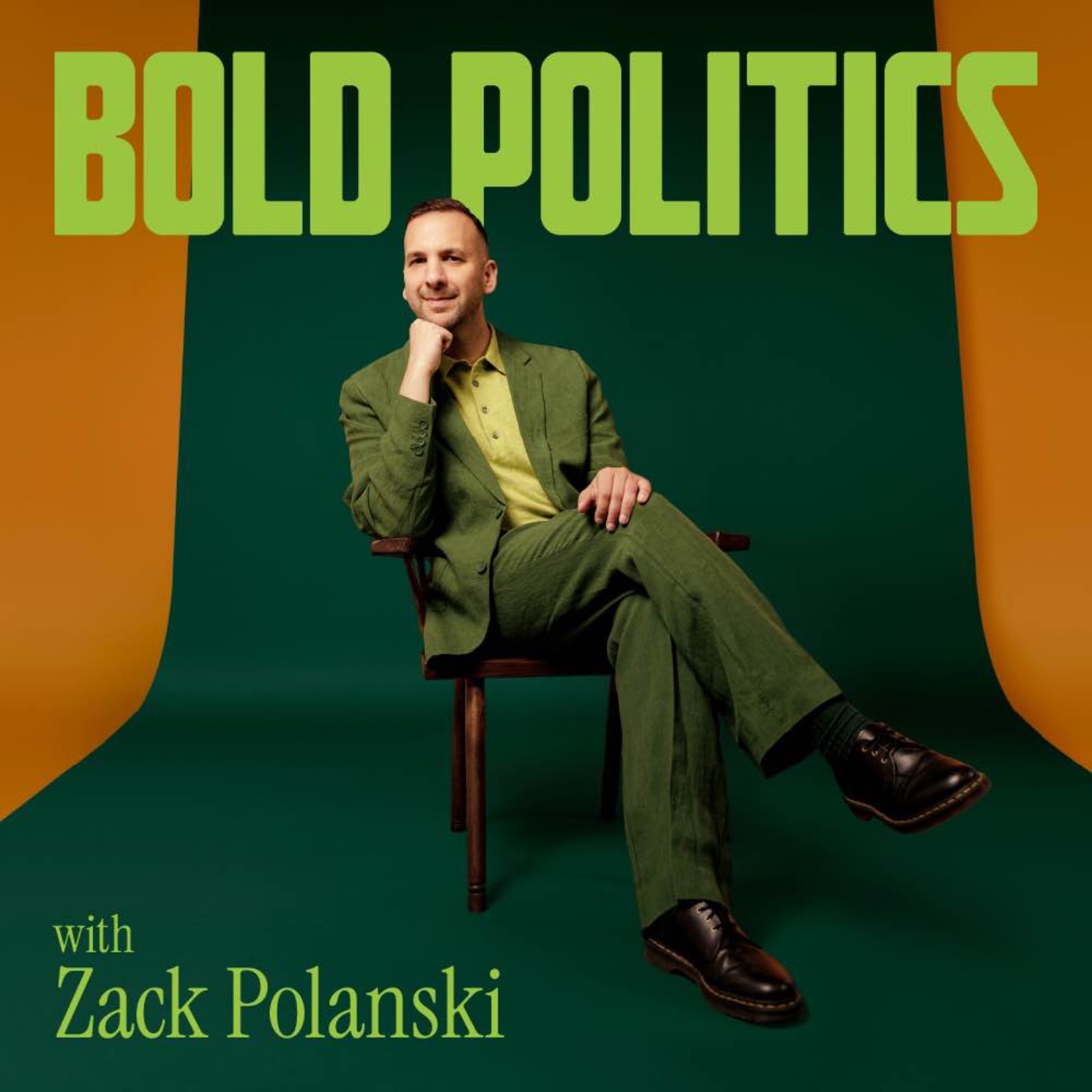
- Bold Politics with Zack Polanski
- Why The Media Is Looking At Economics All Wrong
Bold Politics with Zack Polanski17 Dec 2025 · 44m

Why The Media Is Looking At Economics All Wrong | James Meadway | Zack Polanski
In short
Description: A progressive podcast exploring topics from immigration and economics to inequality and leadership, featuring diverse voices from activists and thinkers.
Why The Media Is Looking At Economics All Wrong | James Meadway | Zack Polanski
This episode features a discussion with James Meadway, former economic advisor to John McDonnell and founder of the think tank Verdant. The conversation revolves around the misinterpretation of economics by the media, highlighting the role of global corporations in profit-making during crises, the Bank of England's functions, and how government borrowing for infrastructure could be managed without alarming investors.
Written by AI. May contain mistakes.

Ask about this episode
Get the gist, explore an idea or ask about something said.
 Claude
On Bold Politics with Zack Polanski, what are the key points of this episode?
Searching your listeningTranscript
Automatic transcript. May contain errors.
0:00The economy, storytelling or numbers. Today I'm with former advisor to John McDonnell and the host of a Macrodose podcast, James Mead.
0:13hello zach chris packham here i hear you've signed up to ecotalk that's very bold of you brilliant um and if you don't mind me saying very bright of you too if your audience is half as smart as you then they'll sign up too at ecotalk.co.uk
0:37So James, I don't want this to turn into a therapy session, but I do want to share a story with you. I went on The Rest is Politics with Rory Stewart and we had an economic conversation. I think the bit that hasn't been told is The Rest is Politics said to me very specifically, we're going to record pre-budget, we're going to put out after budget, so we're not going to talk about the budget. and this is going to be an evergreen interview, which means you're probably not going to be talking about, you know, for me, about numbers or economics. So I knew I was going into a conversation about being gay, about being bullied at school, about anti-Semitism, about that kind of more emotional storytelling thing.
1:11So that was very much what I was prepped for. And then when the interview ended, I said to Rory, if you told me we were going to talk about economics, I could have learnt those numbers and it would have been a less interesting interview. I'm an actor and I would have just been firing off numbers at you. I don't think that was the best way to do an interview. And then obviously when it finished and I'd left the room, he bastardized that story to say, oh, I said it was unfair because I was an actor and that's not quite how it went. Now, having said all of that, I do hold my hands up. As a politician, you kind of got to be ready for any question.
1:43And so I will absolutely go away and memorize numbers like three trillion pounds of a national debt and 95 % is the debt to GDP ratio. But I have a wider question, How helpful is it to treat politicians like spreadsheets where we just remember numbers and churn them out and then that's for political conversation? It's not remotely helpful. I mean, I have to say, I think this whole business of like you drag someone in and they become a speak your weight machine. They just chant out numbers at you. Numbers that don't really mean anything. By the time you're talking about billions of pounds, this is not a number that means very much.
2:15You've done a good job of trying to describe just how big a billion pounds is. Right. And it's absolutely enormous. It's way beyond anything any of us can really conceptualise on a day-to-day basis. You're just churning out numbers, don't mean anything. They just sound big. The debt, you just did it,£3 trillion. Rory, I noticed, got that wrong, by the way. He said it was£1 trillion. Because the danger with this, by the way, you can always slip up. It doesn't matter. You can sit there looking all clever and maybe you've got a prepared sheet of numbers to interrogate on. But what are you actually getting out of that?
2:41What is anyone getting out of that? The particular problem I think we've had in this country now for, I hate to say it, But it's like going on at least 15 years is the way that these numbers get used to bash out and clear out of the way any other conversation we could have about the economy. Right. So why is the debt like this? Why is the deficit like this? That's the sort of question that's a bit more interesting. Right. Why is it that the economy isn't working well? And it isn't really for most people, particularly for most people. And a few people kind of doing all right, which Gary Stevenson is absolutely right to always make this point.
3:14A few people are doing OK. You know, if you're not doing too well, but somebody else is doing really well, like in an economy that isn't growing so much, and that's what we have, that's a straight transfer from you to them. And you've seen this over the last sort of few years or so. Loads of people paying more and more for their energy bills, but fossil fuel companies making their all time record profits off the back of it. Right. You're worse off. People who own these companies are better off. It's a straight transfer. That would be a better story to tell. Right. That's a better story than just here's a number.
3:43it's really big, we better do austerity because that's what we had for like 15 years now in various different forms. Well, it's interesting because again, Rory, I think on a podcast in the last week said, ultimately the question, the conversation I was having with Zach Polanski is, do we, as we're to talk about myself in third person, do we want a bigger state or not? And he was arguing against the bigger state. And I thought, well, we're really getting to the root of this now. Really what you're committing to there is austerity, whatever name that you call it. And it feels like that's at the heart of this argument.
4:12I also observe, I think there's probably three different conversations going on here, and I'm interested in your reflections on this. I feel like there's a conversation going on about inequality, which you were just alluding to. I think there's a conversation going on about borrowing. And then I think there's a conversation going on about bond markets and how any kind of budget makes sure that we're keeping all of those things in flow. So should we start with inequality? Let's do that one. How bad is it? It's bad, and it's got worse, and it's got worse sort of dramatically. On a reasonably long-term basis, I mean, essentially my entire life is a period over which inequality has got worse.
4:42Inequality of income, inequality of wealth, and that's uniform. I mean, the place where the biggest single rise in inequality has been China, but that's also been attached to very, very rapid growth and development and this sort of thing. Where it's a less impressive story is countries like this one, so the old developed world, so-called. So here, look across Europe, look to North America, where you have a big increase in inequality, but you don't have this fantastic transformation of society. What you get is this process of a transfer of wealth upwards, which particularly since the crash of 2008, it was bad before then.
5:14And then, you know, you can sort of get into some nuances. You can say, well, New Labour kind of restrained it a bit when they were in government and people who support New Labour will be really keen to tell you that. And like there's some nuances around that, but basically that's the pattern. You hit the crash and it goes kind of haywire because you have mechanisms like quantitative easing, so the Bank of England's big intervention to print money, to hand it out to banks. And then this turns into rising asset prices, which, of course, benefits people who hold assets, who own assets, but isn't so good for people who don't have many assets, like they don't own a house, that sort of thing.
5:45So you get this problem of inequality that the government is almost actively encouraging at that point, or at least the Bank of England and other central banks are actively encouraging. And this, I think, is also part of Gary's story that I think he gets right. So this is the general pattern of inequality for a period of time. The bit we're starting to move into now is a sort of, it's a new kind of inequality. Like if you've got the first bit over 40 years, which is like Margaret Thatcher, Ronald Reagan, cut taxes on the rich, inevitably you get this big increase in inequality because rich people aren't paying so much in tax, right?
6:15It's as simple as that. It's why the demand for wealth tax is really critical now, you know, because it's like you've done this, you've removed, you've reduced those tax rates right at the top. And people at the top have been doing extremely well and everybody else hasn't. So you've introduced wealth tax. It's a pretty clear, simple argument, right? That's one form of it. You then have the sort of post-crash inequality, which is centred on what the Bank of England and what other central banks are doing. And it gets a bit technical, but this whole business of quantitative easing and the impact of that on society.
6:42The new kind of inequality is a very peculiar one, which is that as the climate crisis is playing out, for example, you find that, for instance, 60 % of the world's cocoa is grown in Ghana and Côte d 'Ivoire. It's a real concentration of farming there. The farmers themselves, most of them are paid about$2 a day. They don't see the amount of money that we have to pay for chocolate bars that their cocoa means produce. issues what's happened the last few years is because of climate change in el nino there's been droughts and there's been floods and cocoa harvest has been kind of wiped out right been really bad harvest so because there's fewer cocoa beans around the price of the thing because it's a market starts to go up but the cocoa farmers don't see that money and we have to pay more over here for all your chocolate bars are all shrinking uh and you're paying a lot more for your easter eggs and you can see the reports on this.
7:34It's really obvious to go to the shops. Same thing with lots and lots of food. Sitting in the middle of that arrangement are three or four really large companies who are making all-time record profits in the last few years. Cargill's, which is one of the world's largest agribusinesses, one of the top four or five in the world. People tend not to have heard of it because they sit in the middle of these great big supply chains. It's family-owned. It's a private business. The Cargill family owns the majority of it. Last year, they don't report, by the way, because they're a private business. They don't really report how much money they're making, but there was a leak.
8:04And it said they paid a record dividends to their owners, the Cargill family, of$1.5 billion. In the report, it says we did so well in part because of problems in growing cocoa in Ghana. So it's profiteering driven by climate change. This is the new kind of inequality we're starting to see. Now, that's kind of terrifying because it's climate change, but there's something you can do about it because it's also capitalism that's sitting on top of that. So well put. you alluded there to the money that Bank of England loaned to commercial banks do you mind explaining a little bit more about what that's about?
8:40Okay so this is quantitative easing gets called with sort of technical name the short version of it is the Bank of England being a bank like any other bank can create money and it can create really valuable money because it's the Bank of England's money it's the best kind of money you can get in our economy at least and what the government did in 2009 so this is back with Gordon Brown as prime minister straight out of the financial crisis. The thinking at the time was that the banks are in deep, deep trouble. They're not going to lend as much. If banks aren't going to lend, the economy will seize up.
9:10The recession will get worse. So the thinking originally was that the Bank of England could issue new money, could give it to these commercial banks and some other financial institutions, and buy from them government debt. So it's a kind of swap of government debt. You buy in the form of these bonds that you buy and the Bank of England holds, and it hands out money to those commercial banks. The banks have more money, this really high-powered money, they call it, Bank of England money, the best sort of money you can get that's got a pound attached to it. They'll go off, feel a lot more confident, lend loads of money, the economy will pick up.
9:39That's kind of not what happened. What actually happened is the banks go, we've got loads of money, we can stick it into investments of various sorts and make asset prices go up, and that's really good if you've got lots of wealth, but it's not so good for people trying to buy a house, for example, right? That's the side effect of all of this. And you do this for a period of time, and it kind of stabilises the economy. This is what the Bank of England will tell you. And there are separate rounds of this. And then when it comes to COVID, when there's this rush to really finance huge amounts of government borrowing, the furlough scheme, the extra spending in the NHS, the Bank of England steps in and does the same thing then.
10:10At that point, it's quite close to the Bank of England's just paying for government spending. Right. It's kind of it's a bit indirect, but that's what's going on. That's quantitative easing. What you get at the end of it is the Bank of England owns a great deal of UK government debt. So, in other words, UK government is effectively got a load of its debt that owes to the Bank of England. It's about 20 % of all of our debt is owed to the Bank of England like that. Now, of course, what you can do at this point is say, well, you know, this is the government, which is public. This is the Bank of England, which was nationalised in 1948 by the Labour government.
10:42So that's publicly owned. So we, the public, are owing another bit of the public a load of this money. So how are we going to manage that? How are we going to deal with this sort of peculiar situation we've created? What the Bank of England is doing at the minute, because the Bank of England, like any central bank, is fundamentally there to look after the banking system. That's the first task of what a central bank does. And then later, you find that central banks get asked to also try and manage inflation. That's something that's happened in the last 20, 30 years or so. It becomes a real thing for central banks to do.
11:13But primarily, they're there to look after the banking system. And the Bank of England's version of that is to try and steadily get rid of and try and wind down its holdings of government debt over time so as not to disturb the markets. This is having all sorts of pretty bad impacts on the rest of us. It's not helping with the price of government borrowing. It's not helping with the state of the wider economy. It's kind of a bad way to do things. It's also not helping, and you've made this point very correctly, because the government is owing that money to the Bank of England. The government is paying interest on the money it owes to the Bank of England.
11:45And the Bank of England is taking that interest and handing it out to the commercial banks on the other side of the equation there. So, in other words, we, as the people who are paying taxes to the Treasury, are seeing the Treasury handing over about£20 billion a year at the minute to the Bank of England. So, the Bank of England can carry on paying out interest to the commercial banks on the other side of this quantitative easing arrangement. So, that's just a subsidy for the banks at this point. And you're right to say, why are we doing this? Now, the Bank of England has its own reasons, again, associated with trying to look after the banks.
12:16The Bank of England, in the end, wants the banks to be happy and content, and the banks are very happy to take that money, thank you very much. We don't have to pay that, or at least we don't have to pay all of that. So we could cut those payments. We could immediately save, maybe not 20 billion, but a great chunk of money. And that would mean that you don't have to then think about, as we've seen with the government we've got, scrabbling about saying, oh, well, maybe we'll put up income taxes, even though we said we wouldn't, or palming off into the future the potential for more austerity, the sort of general chaos that we see.
12:44Completely unnecessary if you had a government that was prepared to take on the relationship that the Treasury has with the Bank of England and change it, and that's what you'd need to do. You were very kind in saying I was correct to say that, and in fact I was talking about this yesterday in an interview and talking about tiered reserves, which I think is partly what you're explaining. The truth, though, is also it's immensely complex, and you explained it so much better there than I think I could possibly imagine doing. How do politicians, or it's a comms question really, I feel like we need to be focusing on the price of milk, the price of food, the price of bus travel.
13:17But the media want to often pull us into these quite complex conversations because I think it's ways of catching people out on a single number. What would be your advice on how to kind of tackle that? Well, this is a tough one because I think you're right. Because I find it kind of interesting, some of these technical questions, which is just as well because it's sort of my job to find this stuff interesting. And you can get a long way into it. And there's all sorts of very, very involved arguments you can start to start to have around this sort of stuff. But for a politician, it's I think Owen Jones keeps quoting him, but it's Ronald Reagan's old line about if you're explaining, you're losing.
13:49Right. Like what you really want to do when you're talking about economics is exactly as you say. It's like, concretely, what is the economy? And it is what most people experience on a day-to-day basis when they go out of their front door and they walk off down the high street and they see how many shops are closed. Or they go to the shop and how much is a pint of milk nowadays, right? How much money do they have in their pocket? When they go to work, how are they treated? That's what the economy actually is. What's that experience like and how would we make it better? Now, that's a long way from what I've just given you, a kind of reduced version of the technical arguments about the Bank of England and all this sort of thing.
14:23But the two things are related because the fact that we're paying that 20 billion to the Bank of England means there's less money for public services, right? Which means that austerity is still kind of built into the system that we have. That's the actual impact of it. But we need to talk about the day-to-day experience and we need to get to that point. And I think we've got to try and think about how you cut through this presentation of economics as like this horrible, technical, difficult, very elitist thing. It's all the way up here, right? Don't talk about it. It's big. It's complicated. It's frightening.
14:52saying, you won't understand it, little person, right? Cut through that and say, no, this is your life. This is how you are getting affected by these things. This is what it lands and looks like on your doorstep when all these effects play out. I think that's going to get more and more important, by the way, over the next few years and looking into the future. And the biggie there is climate change. I mean, I keep coming back to this. We underestimate severely and most discussion about the economy underestimates severely the impact already of climate change and the kind of costs it's imposing.
15:20Why are food prices riding so much? I've touched on one version of that already. A large part of this, an increasing part of this, is because climate change is disrupting farming. It's disrupting the transport of food. If you have the Panama Canal dried up because there's a drought, you can't sail things through it so much, so the price of transporting stuff around the world goes up. That's an effect of climate change. You have a drought that makes it more expensive to move things around. Same thing happened to the Rhine, the big river in Europe, over the last couple of summers. it makes things more expensive.
15:50So you go out to the shops and things are more expensive. And the day-to-day experience that people have of climate change is that sometimes it's big, it's terrifying, it's awful. We can see that. It's reported on the news. But the day-to-day experience is just this grind, right? Things are getting harder. And the worst bit about that is that if you're paying more for something, it's likely as not somebody else is making a lot more money out of it, right? And that's economics because that's about power. And that's about who has power and how they use it. And how do we cope with a world that's changing in the way that it is?
16:20That's what climate change is doing. How do we cope with that? And how do we do so in a way that protects most people and squeezes out the profiteering and squeezes out that imbalance of power that exists? So that brings us to the second strand, borrowing. Now, someone wrote to me yesterday and said, I keep hearing you talk about spending multipliers and you're quite right. Yes. But why are you phrasing it like that? Why are we not talking about a Green New Deal? I admit that I read lots of messages people send me, which I probably shouldn't admit because they'll just encourage lots more. But actually, a lot of them are helpful.
16:46And I did reflect and I thought, I have stopped speaking about a Green New Deal, but it feels like the left largely have stopped speaking about a Green New Deal. Is it time to revitalise that concept or have we got better ways of talking about it now? I mean, my issue with this, I suppose, is that the Green New Deal emerged at a very particular time, right? So the original report, there's various sort of fairly eminent lefty economists involved with it. It was about 2009. And this is a response to this crisis, the financial crisis, 2008, the recession, and saying we could use this opportunity of a big crisis and the failure of this sort of neoliberal financial system on a global basis.
17:21We could use the opportunity to rebuild the economy in a way that is both going to reduce our impact on the environment and create loads of jobs for people. And there's a window of opportunity where that works. The challenge at the minute is, first of all, I think that climate change is here. It's actually been here for a while. Like if you live elsewhere in the world, not places that are relatively protected like this country, that has been pretty obvious. But I've given you an example already, right? Inflation is high because of climate change. The effects are here already. But that also means that people are going to get flooded out of their homes more often.
17:52It means that there's a bunch, there's 200 ,000 people in this country. You can't get home insurance because of the risk of flooding, right? So you have to go into a government-backed scheme instead. That's already happening. That number has shot up over the last few years, by the way. So the question isn't what do we do to prevent this thing happening in the future? It's increasingly like what are we going to do? We still have to decarbonise. We still have to reduce the amount of carbon emissions we're putting out. But it's also what are we going to do to protect people as best we can? What is the best and fairest way to do that?
18:21And that's what we really need to think about at this point. Now, that wasn't really in the original Green New Deal. But that's like the nub, I think, of the arguments we're looking at now. And should we be borrowing to do that? We could do. I mean, this is the other challenge. It's like once upon a time, it's a painfully long time to think about, but it's 10 years since Jeremy Corbyn was elected leader of the Labour Party. And he asked John McDonnell to be the shadow chancellor and John asked me to be his economic advisor. And at the time, and I worked on the manifesto in the run up to the 2017 election and prior to that acting as kind of advisor on all matters economic to John.
18:58At the time, coming out of the crash still, we had the lowest interest rates in human history. There has never been a point that we know of all the way back for as long as there is a record of any borrowing at all with interest attached to it. And you're back to ancient Samaria at that point. There has never been a point where interest rates as low as they were in around about 2014, 2015, a bit onwards. Inflation was basically zero. Even when negative in this country, which is probably hard to imagine now, you know, prices on average actually falling for a while. So inflation really low. Borrowing costs basically zero.
19:27At that point, it's like the markets are begging you to borrow money. They're saying you need to borrow money. We want to give you money. We'll even accept a negative rate of return on this money. That's how much we want you to just borrow the money. And we had governments. This is the madness of it. We had governments that said we must not borrow money. This is the one thing we must not do. We must do austerity. So it's not just cuts to the welfare budget and lots of parts of public spending, local authorities, judicial system, all sorts. It also cuts to infrastructure spending. So they're spending on the really big stuff that we need that makes the public transport work, that would improve the national grid so we can build lots of renewables and it will work properly, right?
20:04This is the essential bits that keep a modern economy together, things you often don't think about, but it has to be there. The government at the time, this is George Osborne as Chancellor, slashed spending on that massively. And it's part of the reason now we're in such a state. It's part of the reason things don't work and increasingly breaking down. It's because we had a government that looked at the lowest interest rates ever, ever in the history of humanity, and saw inflation at basically zero and went, what we've got to do is cut spending and not borrow anything. So it's madness, right? So we wrote a manifesto that said, hey, we're just going to borrow a load of money because we can, right?
20:36It's really cheap and easy to do. The problem now is that actually inflation has gone up, and I think it's gone up in a way that's going to be very hard to deal with because, like, you know, it's not just climate change. When Vladimir Putin invaded Ukraine, we saw this big surge in the price of gas. Now, standard economics and the way the Bank of England thinks about this and the way that the Treasury thinks that the Bank of England should think about this is to say, oh, OK, inflation's gone up. We better put up interest rates. But it's like how is putting up interest rates going to stop Vladimir Putin invading Ukraine?
21:07How is it going to make rains fall in Panama so the canal works properly and the price of transport goes down? How is it going to make tomatoes grow in Spain when they're hit by massive droughts, successive years running? Right. It's just useless. So we've got inflation that's really hard to deal with the existing tools, so it's going to be locked in. And we also live in a world that because it's increasingly unstable, we'll find that because inflation is also there, that the people who want to lend money to government will be demanding at least the inflation plus a little bit more on top. So interest rates are going to stay high.
21:38So we're in a difficult situation. So I think you're right to talk about, for example, what you've just described, tiered reserves, this business of cutting the amount of money we give to the Bank of England because we don't really need to do this and it's just subsidising banks. And I think you're also right to introduce something that Jeremy Corbyn, as leader of the Labour Party, never really talked about, which is a wealth tax, because it's actually going to get some money in. Because that is the tight constraint we're up against now. The problem for Britain is that, yeah, for sure, we have, as I said, about 20 % or thereabouts of the government's debt is sitting with the Bank of England, which creates all sorts of problems by itself.
22:12And you have to think of how you're going to manage that. But the plurality, at least, I mean, it's a whacking great chunk of the debt is actually owed to the rest of the world. and that's a real danger because the rest of the world, if you lend money to the British government but you're God knows where else, right, wherever, you don't really, you know, you don't really care too much what happens in this country in a certain sense, right? You have no attachment to it. But you do care if the government starts doing things that mean you don't get your return. So if the government starts saying, hey, we're just going to not pay interest, oh, we're just going to cut the amount we pay, this sort of thing, you say, okay, I don't like this at all.
22:45I'm going to sell my debt. And that means the price of that debt on the market goes up And it means the value of the pound starts to drop because people are getting rid of British assets because they think the interest rate on it is too low. They'll sell it. The value of the pound drops. And that's a real problem because we import 30%, 50 % of the food we eat. Half the gas that we use to generate electricity comes from the rest of the world. If the value of the pound drops, that will in turn mean it costs more to buy from the rest of the world, which means inflation here goes up. So we've got this horrible tangle.
23:14We're a very internationalised economy and really quite a small economy. Britain's about 2 %-ish of the world GDP. So we're not a very big economy in the general scheme of things, and we're very exposed in lots of different ways to the rest of the world. So there's a real challenge in getting through that in a way that doesn't turn into the kind of crisis, because that's what it'd be, that I've just described, where you have rising price of government borrowing, because people in the rest of the world are running off and saying, we're not going to lend you money, and a falling price of the pound, which turns into inflation, in things that people really need to buy, like food and energy to keep their house warm and the lights on, that turns into a real problem straight away.
23:50So there's a difficulty here. So if we're thinking about what a future government might do to try and get through this, it starts to become quite a complicated mix, unfortunately, of can we cut payments to the Bank of England? Yes. Can we introduce a wealth tax? Yes. Can we think of some other forms of taxation that we might want to introduce there? Can we change how the council tax operates? Can we change, you know, we can start to think of other things, gambling, actually, as the government has started doing. you know there's things that you can think about trying to get that balance right but it's going to be difficult the analogy i used previously was that it's like trying to diffuse a bomb you know if you've got a bomb and it's going to go off you could just kick it and see what happens right and maybe get rid of the thing it goes off somewhere else maybe kick it hard enough right or more likely you're going to have to try and cut those wires carefully so the thing is diffused and there's order you need to do it in so there's a plan to do that and then the bomb's diffused and you're fine that's kind of the situation i think we've got with the british economy at the minute Super interesting.
24:45Now, if this was a podcast that was just looking for clicks, what I would do at this point is present the fact I've spoken to Richard Murphy and try and put you in oppositional spaces. I don't want to do that because, and you can correct me if I'm wrong, having spoken to both of you at length for various reasons, I think you agree on an awful lot. And I think actually often the focus becomes on what do left-wing economists or people on the left really disagree on and we get hyper-focused on that. So I want to point out, first of all, that I think you're both talking essentially about Keynesian economics and about investing and being anti-austerity.
25:13What I imagine he would say to some of what you just said though is a wealth tax is not going to raise as much as we need for the problems we have. And I don't want to put words in his mouth, but I think part of what he's saying is kick the bomb. Like he's saying we need to entirely change the model, not just to Richard, but to generally to people who are saying actually what we need is a complete economic transformation rather than tinkering around the edges. And it's not fair to say what you said was tinkering around the edges because I don't think it is. But if we made that basic argument, what would be your response to that?
25:41Oh, no, we need a complete economic transformation. But we also need people to be on board with what you're doing. I mean, think back to Liz Truss. Arrive in office and say, we need a complete economic transformation, not one that you or I would agree with, but that's what they said. And this is me being fair to Liz Truss, let's say, but they identified there are serious problems with the British economy. We need to do things differently. And their version was kick the bomb. And then what happens, of course, the bomb goes off, right? And she's prime minister of 40 odd days in the end, right? That's the kind of blowback from it.
26:09in part her problem was that she also didn't have a public support for that just radical do everything all at once see what happens because she didn't have that support it's part of the reason why people trading government bonds internationally think there's a serious difficulty with the claims this government is making about how it's going to repay this money in the future so I'm going to start selling these bonds the interest rate is going to go up the value of the pound collapses this sort of thing that's the difficulty you get to I thought there was something very interesting that Andy Burnham said in his New Statesman interview before Labour conference where he talked about, he got picked up on because I think he was somewhat misinterpreted saying, oh, we can just ignore the bond markets, right?
26:47I wish we could. I wish we could, but we can't because we've got this whacking great stock of debt that's owed out there and we're hugely internationally exposed in all sorts of different ways, which we can have lots of fun talking about, but it's there and it's a problem and you have to work out what to do. He said something interesting, which wasn't just ignore the bond markets. It was, we need a social majority for a plan on how to rebuild the economy. Right. If you have that, if you had a big majority in government and you had a government which said, look, OK, we're doing wealth taxes. Now, to be honest, if I'm holding government bonds from the British government elsewhere in the world, I'm a big institution somewhere that's holding on to these things.
27:23And the British government's introducing a wealth tax. Do I care? Not really. What I care about is am I getting my money? Would a wealth tax potentially make it more likely that money will get back to me? Yes. Right. Because it's actually money coming in. So you think, fine. So sometimes people get this idea of bond markets are very political. They're not. It's just people trying to make money or institutions really trying to make money. It's disagreeable in all sorts of different ways that this happens. But we live in a big old capitalist world and the British economy is 2 % of that big old capitalist world.
27:50So you just sort of have to deal with it. You can do things that are transformative, right? And you can do things that would change that experience people have of what the economy is like. So how do we get more money into people's pockets where we can have a higher minimum wage? We can also do something that starts to support small businesses and workers' cooperatives and transforms what high streets look like. And we can do this in line with some bigger principles we have about dealing with climate change. We can say we are actually going to properly subsidise loft insulation and the money will go to local authorities so they can pay to small businesses to go off and deliver that because it kind of has to be a localised thing, right?
28:25You need building companies with some knowledge in local areas to do this properly. That is a transformational change in how people are living their lives and their houses because they're going to save serious amounts of money out of it. The government funds, local authorities, small businesses deliver. You start to change what the economy looks like, right? But it has to fit into a broader plan. That broader plan is what you need the majority for. So you're able to say in five, ten years, we will have a deficit that looks like this. We will have a debt, therefore, that looks like that. If you have that plan and you have public support for it and political support for it, there's a majority in the House of Commons most obviously, then the bond market thing starts to look like less of a problem.
29:01Now, that isn't being in hock to the bond markets. That's how do you manage the bond markets? How do you do it seriously? How do you develop a plan that lays out what this economy is going to look like running into the future? That's diffusing the bond. Because we are gradually reducing the risk of exposure to these bond markets internationally. Because that's what you're doing if you're saying we're shrinking the deficit and all the rest of it over time. But you're doing it in a way that isn't going to spark off the kind of crisis that I don't think we would command the public support for. I mean, I don't know.
29:30Things could look radically different. Right? Financial markets blow up and suddenly there's a real demand. You're already in a terrible state. There's a real demand to move immediately and make things look very different. Financial markets are blown up. So you move immediately to nationalise the domestic part of the British banking system and let the international part, which is probably where the problems will emerge, go hang. Like, just let them fail. But you protect everybody's savings and that's what you do. And you nationalise the entire banking system. In the event of a crisis, you could do something like that.
29:54But we're not in a crisis. And if you end up in a crisis and the blame lands on you, that's not good for what everybody else is thinking about what your government's doing. So that's why I'm always quite careful to say, yeah, we're going to be transformational. We would have to be. We have to be. So much about what we're doing just doesn't work. The poverty pay, the insecurity, the fact that public services are falling apart, you just go through it and it's going to get worse. I'm really sorry about this, but it is. That's just climate change by itself guarantees a lot of this stuff is going to get worse.
30:21So we have to do something different, but we have to do it carefully and methodically in a way that isn't going to spark off a whole load of other problems elsewhere. So you need a plan and you need a clear strategy and you need a way of thinking about what is the order of the wires that I'm going to cut to get to the point where we want to be. And could a counter-argument not be we absolutely are in a crisis? Like there's an inequality crisis, a climate crisis. And isn't some of this conversation about what is the timeline? Like are we in the crisis right now or is the crisis coming? And at what point do we make this radical transformation?
30:50I mean there's a bit of an issue here I think which is like this slightly overused word crisis. Because instead of making it say, God, these things are really bad. Inequality, right? Obviously. Poverty, obviously. Public services just like falling apart. The states of the NHS, this sort of thing. You say all of these things look like a crisis. I think we have to be careful with the use of that word because there's the other thing that's happening is that we are kind of moving into a world where these things are normalised and this is just part of how life is, right? You get this, particularly I think with the second Trump administration.
31:21I mean, it's continual talk about it's crisis, it's failure, this sort of thing. Actually, no, it's kind of stabilising the world economy in a weird new way. There isn't some point in between that we're in, the interregnum, to use the grand words. We're not in between the neoliberal order and something else. We're in something else. The world is working differently now. And that interacts with climate change in a particular way, which is, yeah, for sure. There's a version of climate change where some really bad, terrible sort of blowback happens. You know, AMOC collapses, you know, the Gulf Stream reverses, this sort of thing.
31:54There's real sort of major issues that might turn up and immediately change in a radical direction the environment that we're all living in. Iceland just passed a law saying that it was going to treat these risks as a national security threat. And they kind of are. And, like, you do need to have some sense of, like, this is what a real national security threat would look like. But that's a national security issue. The day-to-day issue is this weird sort of shift of how the world economy operates. Donald Trump's tariffs are not going away. They're changing the orientation of how the American economy operates, the reorientation of Europe potentially as part of that, what China's doing.
32:31This is the big sort of geopolitical stuff along with climate change reshaping where and how and for how much we can grow food or how we transport things or actually a whole stack of things in our daily lives that look different because of climate change. It's not really a crisis, right? It's difficult and it's a problem. You have to deal with it. But it's not like the sun sharp shock in quite the way that we probably ought to use when we're talking about crisis in this sense. Thanks, James. Just going to pause you there. More after the break.
33:02Zach has signed up to EcoTalk. He's taken the great plunge. Why has he done that? Well, he's a man who sees sense. Firstly, brilliant network coverage. Secondly, fantastic customer service. And thirdly, of course, all of the profits are going to nature restoration. Yes, we're spending them on rewilding. And you can go to our website to see what we're up to. You can also get some wildlife tips from yours truly. So come on, follow his lead and sign up to EcoTalk. All you've got to do is go to ecotalk.co.uk and it's simple, absolutely simple. And look at the benefits. Life is beautiful.
33:47To go back to where we began, which I think is partly storytelling, and actually on your own podcast, Macrodose, I remember we had a conversation about this maybe a year or two back. When we talk about the bond markets, one of the answers I've been trying to give is similar to what you just said about they're not political, but actually inherently they just want stability. And actually if you're telling a stable enough story and people believe in that story, then they will continue. And I said this to, I think it was Christian and Guru Murphy, and he predictably and I like him so it's it's not kind of a knock at him but he just said but it's not just story is it there are actual numbers and for instance I was challenging the household metaphor that you know a national economy is like a household budget and he's like but it is true that we have to take and we have to give and that has to balance in some way and so I was trying to find the counter story to that so my question is is how much of this is storytelling and how much of it is an exact science and where does that meet in the middle?
34:36Economics is a particularly weird sort of way of thinking about the world. I mean, an ideal society would have no economists in it, right? You shouldn't have a specialised function of people whose job it is to try and describe back to everybody else how they're all living their lives, right? Because economics is sort of describing how your existence is and how much stuff costs and all these different relationships. An ideal society would have no economists in it. And it's actually a pretty good indicator of how badly wrong things are going if you count the number of economists, I suspect I think that's not a bad marker over time.
35:07So that's the first bit. The second bit is like... You just make yourself redundant. Well, I'd like to be. Honestly, I think if you're talking about what does utopia look like, then no economists, clearly. What I'm doing shouldn't be a thing that anybody is doing, right? Because we have better ways of organising than this peculiar specialism of saying that, oh, this is a big, complicated process that only a few people at the top can really understand. And P.S. the way they understand it is going to be of benefit to a few people at the top, typically. Right. I mean, a very great economist, Joan Robinson, absolutely brilliant economist, once said the only reason to study economics is to know when economists are lying to you.
35:44Right. And there's kind of a strong element of truth in that. And taking that one to the bank. Yeah, yeah, yeah. I would honestly, and she's slightly overdoing it, but it's true. But it is this really weird sort of thing that you're doing, which has all this sort of paraphernalia of science. like there's numbers and you if you have the misfortune to study a conventional economics course, any university in the country really, almost any, or anywhere in the world, it's just maths, maths, maths, three years of just doing sums, I mean I had to do this myself and you come out the other end, it's really weird because you're like, I can do quite a lot of maths by this point, but I can't really tell someone what's going to happen to interest rates, you know, you end up with a very, very weird sort of version of how the world operates because part of it is, how do we justify the fact that there's a few people right at the top and the system works pretty well for them, not so well for everyone else.
36:28So there's always this mix of how you're going to justify what is happening rather than just explain it. So that's kind of where some of the science thing comes in. Now, I'm certainly not against the use of maths, of technical methods, of these sort of things in economics, but it has to be allied with something that one of the very first economists spoke about, which is economics as a moral science, which is a really interesting way of thinking about it because, yeah, OK, it's kind of got these features of science as precision. It's never quite as precise as it pretends to be, but it's there. You can always question something like GDP.
36:57Why does GDP not include the vast amount of care work that mostly women do, right? This is clearly of benefit. It's essential. It's not in GDP. So you can question the numbers always, but there's some precision about this. But it's a moral science in the sense that also it's attached to the values that we have and we hold. So if you're approaching any economic question, the other part of it is always, and conventional economics spends a lot of time pretending you don't need to do this, but you do, is to think about what do the outcomes that we like look like, what is the kind of society we want to live in, and how do we get there?
37:26And these are the questions that you need to start to think about with economics, which means it's a storytelling process as well, right? It has to be. So if someone's saying, look at this number, look at this number, OK, there's a number, right? And the technical bit about how you measure debt, there's about five different measures that the ONS will give you straight off, right? This thing goes up and down. So, OK, so you pick one of those technical measures, and you can have a mad sort of technical economics argument about what this number is and what's happening to it. And Rachel Reage literally did this, didn't she?
37:50With the fiscal headroom, it kind of transformed overnight by changing the rules. Yeah, yeah. So she did this almost as soon as she got in as Chancellor of the Exchequer. She changed the form of debt, the count of debt that we use. And it suddenly creates a whole load of new capacity for the government to borrow. And that's just an accountancy switch. So there's a real fuzziness around this. It doesn't mean these things aren't real. Debt is real. If you owe someone money, that is a power relationship of a particular kind. Usually means that you're in a bad position and your creditor is in a better position, right?
38:19That's a power relationship, which is why things like, hey, let's just cancel the debt is always going to have consequences because what you're saying there is, hey, let's change the power relationship. And if you do that to your benefit against somebody in power, they will likely object, right? I suppose the point I really want to explore with that, though, is, again, I suppose the counter-argument would be, though, people want that debt. Yes. Like, holding that debt is a powerful way of being connected to this country's economy. Yeah, we're a developed country, right? I think just about one of the five or six economies that hasn't really ever defaulted on its debt.
38:52In other words, Britain has always, for as long as there's been a national debt, which you can count back to like 1700, 1600, that sort of time, Britain has always repaid its debt and it's always made good. There's some fuzzy cases in the 1920s when things got a bit sketchy, but basically that's true. That's actually a very small number of countries that have never defaulted. It's like us, France, I think, after the revolution, the US and a few others. Everyone else has always defaulted on their debt at some point. They've always said, in some form, we can't repace on this debt. This actually happens really quite a lot.
39:23It just doesn't really happen for that fairly elite set of often former empire or at least very wealthy countries. They haven't really done that. So you're a big shock if you start to think about this. Although, interestingly, Stephen Miran, who is Donald Trump's chair of the Council of Economic Advisers, had a paper out before Christmas last year which basically says, hey, the US is really big and powerful. The dollar makes us big and powerful. It helps reinforce our power. Everybody wants a dollar still. So why don't we exploit that by cutting the price that we have to pay in national debt and everyone else will just have to put up with it, right?
39:54So that's a plan to do something like that from the US. And there's a whole load of other paraphernalia attached to it. But that's basically the plan. Britain's not in that position because I would say we're 2 % of the world economy rather than whatever percentage the US is quite significantly larger. We're not that big, powerful country with the dollar that gives it a command over the world economy. Like we have the pound and it's like, OK, it's a pound. Some countries still use it as a reserve. Some institutions still want to lend our government money, but it's not the dollar in the same way.
40:22So our options in this are far more limited. So it becomes difficult to think about default as a way through any of this. Now, speculatively, you can imagine a really, really big crisis turning up in some form. The global insurance market collapses because we've had a series of really big typhoons and hurricanes occurring more or less simultaneous in different parts of the world. So there's a major financial crisis in the back of that, right? That's something that could happen. Our banks, our financial institutions have about 550 % of GDP that they owe as liabilities elsewhere in the world. That's not pound liabilities.
40:58This is money that they borrowed in dollars or whatever currency, typically dollars. So our financial institutions very much expose the rest of the world. That will turn into financial crisis. This could be the point where you might start to think about maybe default is part of the set of things you do. But again, this is a deep crisis that you're talking about. it's not let's go into this and do that right let's think a bit more about how to manage the situation rather than go okay it's already a crisis let's just kick kick the bucket kick the bomb into the distance and see what happens this has been a fascinating conversation thank you so much it's uh been so rich with detail i just want to uh finish we've we've gone very deep into into issues which i've taken you say thank you for going there just want to zoom out actually to the present day government so they have put their mission on economic growth and it seems like all predictions are saying they're not even going to achieve, whether we agree with that mission or not, they're not even going to achieve their mission on their own terms.
41:46What do you see happening with this government and can they turn things around? Well, no, I don't think so. Not on their current setting. I mean, they've done their own version. It's not quite kicking the bomb, but it's kicking the can at least, where every year it's like, okay, we've got this as the first budget, oh, we're going to have to put up taxes. And then we get to this one, it's like, oh, we're going to have to put up taxes. And then they kind of back off a bit from that. They create a bit of space themselves. Most likely next budget is going to be, oh, we're going to have to put up taxes, right?
42:09We're just sort of continually going round and round. Their underlying problem is that they are not getting the growth that would magically make all their numbers make more sets. And they're not going to get the growth in part because they have this setting where they have what you call a tight fiscal policy. In other words, they're kind of leaning. If you're saying we're putting up taxes, you're sucking money out of the economy. That means people out there in the real economy have less money to spend. And that's going to be bad for growth because they're not spending so much. So overall growth doesn't really happen.
42:35So the one thing that they say they want to do isn't going to happen. A load of schemes that they have where they go, oh, this is going to produce growth. Like, let's build data centres everywhere. I'm just not particularly good for growth and really bad for jobs. So this doesn't make sense. The kind of we're going to build a new Silicon Valley between Oxford and Cambridge. I mean, it's just into like these usual sort of treasury fantasies. We'll build Heathrow, a third runway at Heathrow Airport. Well, you know, the serious work on this by people like Alex Chapman at the New Economics Foundation says that, look, this is building an airport.
43:06You're not going to add that much to growth. It doesn't really have that impact. It's not a thing that's going to happen. So none of it stacks up and makes sense, even on its own terms. And I have to say, if we're thinking about what a radical transformation the economy would look like, we should not just be thinking about can we make the magic number of GDP go up. It should be what is the quality of people's lives like? Are public services better? Are people secure in their jobs? Can we think about even things like reducing the amount of time people have to work for? Can we think about making education free for everyone?
43:34Can we get to that vision of a good society and what's the plan to get there, not make the magic number go up? It's all going to be great if we do that. Amazing. And if people want to find out more about you and Macrodose, where can they find you? Oh, just go and listen to Macrodose, I think, is the first one. But I'm on Twitter at Meadwaj. Amazing. Well, thank you very much, Mr. Meadwaj. Thank you, Zach. Thank you, James. Appreciate it. Thank you.
44:01Hello, Zach. Now listen, I've had a text, I know, improbable but true, from the beavers, the butterflies, the beetles and the badgers. It's all sending you big love for signing up. They're hoping that your listeners are going to do the same by visiting ecotalk.co.uk.
From the publisher
How are global companies in the middle of supply chains making billions of pounds by profiteering off both the increased cost of living and the impact of climate change on farmers? How does the Bank of England serve owners of commercial banks instead of the British public? What would be the best way for a government to borrow for investment in long term infrastructure without causing investors in British bonds to dump their assets?
Zack Polanski speaks to former economic advisor to John McDonnell and founder of new think tank Verdant, James Meadway.
Join Nature's Network and switch to Ecotalk, the only network service provider that gives all its profits to nature restoration: ecotalk.co.uk.
Email: [email protected]
YouTube: @boldpoliticswithzack
Instagram: @_boldpolitics
X: @_boldpolitics
Tik Tok: @boldpolitics
Hosted on Acast. See acast.com/privacy for more information.
More from Bold Politics with Zack Polanski
All episodesWe use cookies.They keep VO running smoothly and help us improve it. Privacy policy